Witchy Things, by Mariasole Brusa/Illustrated by Marta Sevilla, (Aug. 2020, NubeOcho), $16.95, ISBN: 9788417673604
Ages 4-8
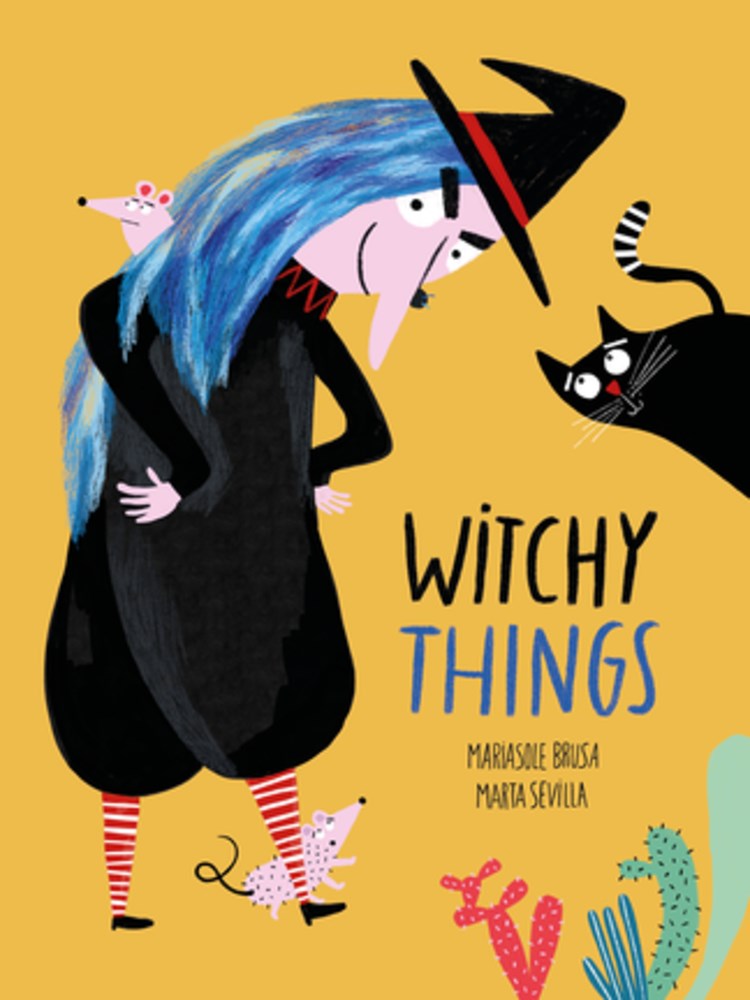
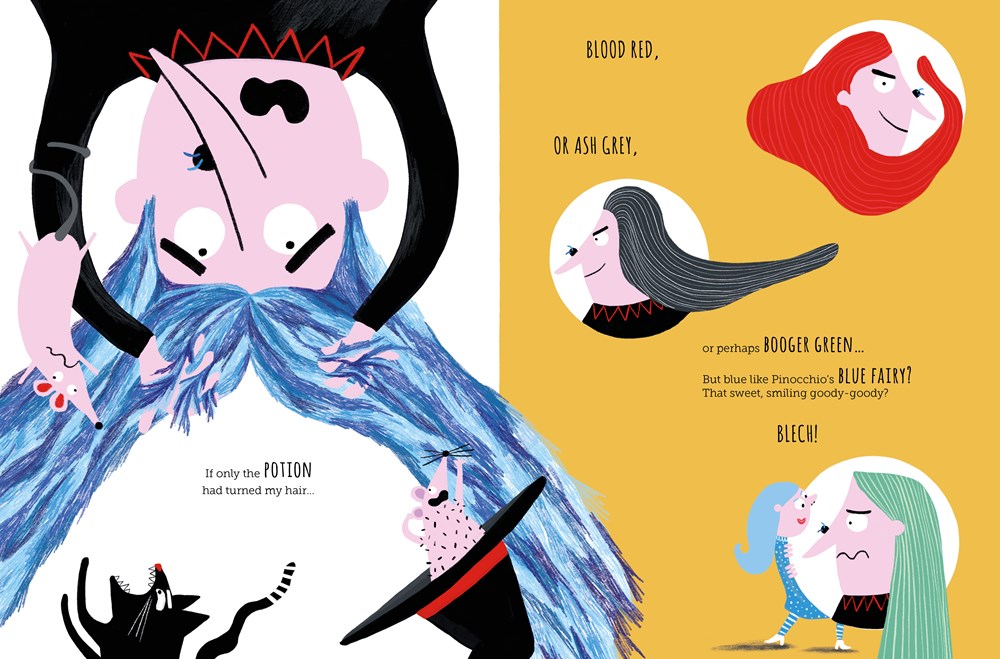
Oh no! The witch is furious! A potion explosion turned her hair blue! BLUE! Not Blood Red, or Ash Gray, or Booger Green, but BLUE FAIRY BLUE! The Witch is furious, so she’s off to prove that blue hair doesn’t make her any goody-goody: she’s going to snatch a kid. She discovers a boy named Adam playing in the park with some dolls and immediately thinks he’s some rotten kid stealing his sister’s dolls, but she discovers that making assumptions about others is just as wrong as people making assumptions about her! Adam proceeds to drop some wisdom on the Witch, telling her to stop doing what she thinks she’s supposed to do, based on what people think, and do what makes her happy. And isn’t that the best advice you’ve heard today?
Originally published in Italy in 2019, Witchy Things is available in Spanish as Cosas de Bruja. The text won the Narrating Equality contest. It’s a story about looking past appearances and assumptions and celebrating just being oneself. The artwork is cartoony fun, with a furiously blue-haired witch, complete with hairy wart (kind of looks like a cute spider) on her nose and her very expressive familiars, a black cat and two rats. Fun, sweet, and with a good message, Witchy Things/Cosas de Bruja is a Halloween story about which witch you want to be. (See what I did there?)
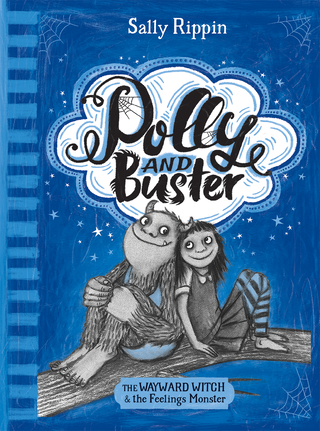
Kane Miller sent me a middle grade fantasy trilogy about Polly & Buster, a young witch and a young monster who are best friends despite monster and witch society not always seeing eye to eye.
Polly and Buster: The Wayward Witch and the Feelings Monster (Book 1), by Sally Rippin, (Sept. 2019, Kane Miller), $6.99, ISBN: 978-1-61067-926-8
Ages 7-11
The first book in the series introduces us to Polly, a 9-year-old witch who just can’t seem to get her witching schoolwork right. Her older sister, Winifred, is the star sibling, and her widowed mother is often frustrated by Polly’s inability to excel like Winifred, and by her friendship with Buster, the monster next door. Polly and her family are still reeling from her father’s death in the mines a few years ago, which seems to be the tipping point for witch-monster tensions. When Polly casts a powerful spell while trying to protect Buster from bullies, her actions are misinterpreted, and the relationship between witches and monsters grows dangerous. Polly and Buster have to work together to salvage their own relationship and keep one another safe as witches and monsters choose sides in what could be a brewing war.
I was pulled right into this easily readable adventure. Polly exhibits some ADHD, dyslexic, and OCD tendencies, which could be linked to her burgeoning witch power: think Percy Jackson and the similar issues exhibited by demi-gods in that series. Buster is a kind-hearted monster who tries to hide his sensitivity from other monsters; his feelings manipulate his size and color, leaving him open to bullying. Witch and monster society in this series is symbolic of our own society: racism, intolerance, and exclusion abounds in witch society, while monsters grow increasingly tired and angry of being considered second-class citizens. Throw in a mean girl bully, and her equally mean, manipulative mother, and Polly and Buster goes from being a sweet story about acceptance and friendship to a powerful look at inequality and revolt.
Polly and Buster: The Mystery of the Magic Stones (Book 2), by Sally Ripkin, (Sept. 2019, Kane Miller), $6.99, ISBN: 978-1-61067-927-5
Ages 7-11
The second book in the Polly and Buster series brings the action and the tension up several notches as readers witness the breakdown of relations in witch-monster society. Polly and Buster are on the run from witches who have determined that Buster is dangerous and needs to be taken prisoner (or worse); Polly turns to her favorite teacher, the sympathetic Miss Spinnaker, for help. Meanwhile, a handful of mysterious stones that Polly’s father left to her start to glow and feel warm to the touch; Polly feels them beckoning her… to the mines where her father died?
The Mystery of the Magic Stones brings the action on quickly – witch and monster society are breaking down, and the story has a very Harry Potter feel as a group of vigilante witches start taking policing matters into their own hands as monsters form gangs to protect one another and defend themselves against witches. There’s a feeling of urgency throughout the story, as Polly tries to unravel the mystery of the stones while she and Buster are running and hiding for their lives. No sophomore syndrome here; the second book in the Polly and Buster series will leave readers waiting to find out how this is all going to shake out: make sure you have that third book ready to give them.
Polly and Buster: The Seach for the Silver Witch (Book 3), by Sally Ripkin, (Sept. 2019, Kane Miller), $6.99, ISBN: 978-1-68464-095-9
Ages 7-11
The third book in the Polly and Buster series brings things to a big close. Polly and Buster have been on the run through all of the second book as relations between witches and monsters threaten to descend into violence. Polly has made discoveries about herself that will change how others see her – if she can stay safe long enough! Seeking out her aunt – an outcast from witch society – for answers, Polly hopes to unload the burden the stones have put on her. Meanwhile, there’s a dark power brewing in Polly and Buster’s neck of the woods, and it’s making everything worse!
In this third book, Polly learns that she’s far stronger than she ever dreamed – her inner strength will give her the power she and Buster need to make things right between their two communities, and will help her defend everyone she loves against the biggest danger that her village has ever faced. Polly has her hero’s journey across these three books, but Buster also comes into his own as a monster who accepts his feelings and can put aside his own fear to jump in and help when he’s needed.
The whole series, originally published in the UK, is great for emerging readers who are ready for a little more of a challenge in terms of book content and length. It’s an intermediate-level series with more heft and big social issues to unpack. There’s fantastic world-building, solid character development, and sympathetic heroes and villains alike. Black and white illustrations throughout will keep readers interested, and help with pacing and imagining. This series will be super-popular with your fantasy readers. U.S. publisher Kane Miller has a bunch of extras, including a free word search, discussion questions and activities, and some discussions points from the author herself.
I’m so excited to be kicking off the blog tour for Trisha Speed Shaskan and Xindi Yan’s adorable story about being small yet mighty, The Itty Bitty Witch! I reviewed this fun story about a little witch with a big spirit back in July, so today, I’ve got an interview with author Trisha Speed Shaskan. Enjoy!
The Itty Bitty Witch by Trisha Speed Shaskan/Illustrated by Xindi Yan,
(July 2019, Two Lions), $17.99, ISBN: 978-1542041232
Ages 4-7
“Caregivers and teachers will be pleased with the multiple extensions the story offers, all wrapped up in a Halloween theme. Proving size does not matter, this itty-bitty witch casts a bewitching spell.” —Kirkus Reviews
“A familiar portrayal of [a] determined, lone underdog who discovers her sense of worth.” —Publishers Weekly
And now, the Trisha Speed Shaskan interview. Thank you so much to Trisha and to Barbara at Blue Slip Media!
MomReadIt: As someone who was always first or second on the size order line at school, I love and appreciate Betty’s story! What inspired you to write THE ITTY-BITTY WITCH?
Trisha Speed Shaskan: Thank you! I’m so happy you enjoyed The Itty-Bitty Witch. When I was a child, Halloween was magical because the neighborhood kids took over the streets at night, in costumes. Because of my love for Halloween, the first book I chose at a RIF event was Tilly Witch by Don Freeman, a story about a witch who feels happy instead of wicked on Halloween! Drat! That story inspired me to write and read witch stories as a child and into adulthood.
As a child, I was also one of the smallest or shortest kids in my class. And I played many sports—too bad I couldn’t race atop a broom like Betty! I was often the one girl athlete on a team of boys. Kids called me “short” and “Tommy” since I was seen as a tomboy. I didn’t like being labeled because it set me apart from other kids. And although my height and ability to play on any team was often an asset, I didn’t always see it that way. In The Itty-Bitty Witch, Betty is similarly given a nickname she doesn’t like (“Itty-Bitty”) but learns that being small can be a strength.
MomReadIt: Betty starts out being bullied because she’s small, but her bullies change their tune when they see that Betty wins the Halloween Dash! As an educator, how did you teach younger kids about self-acceptance and resiliency?
Trisha Speed Shaskan: My husband/children’s book author and illustrator Stephen Shaskan and I teach kids how to create comics and graphic novels. Recently, we taught a class that had only two students in it, which allowed us to get to know them. Eleven-year-old Brian told everyone he wasn’t a good artist. He clearly felt insecure. But by the end of the class he said he created the best drawing he’d ever created. He built that confidence and in turn self- acceptance in a couple hours. How? First, Stephen and I built a relationship with the kids in the room by listening to them. We learned Brian’s favorite TV show (“Zig and Sharko”), and the names of the cows on his family’s farm. We joked around. Stephen and I modeled the drawing activity. The students made suggestions and Stephen drew a character out of simple shapes. Next, we set out tools for the students to use, such as geometric templates. The template helps kids who don’t feel they can draw the shapes consistently. I praised Brian for his focus and for using the template. I sat down next to him and drew. I’m not a trained artist so I had a hard time drawing the hand. I failed. Stephen gave me an example of a how-to-do it from a drawing book. Brian encouraged me. Brian had a difficult time drawing part of the snowman from a new angle. I encouraged Brian. By the end of the day, Brian invented a hexasnowman, drew it from different points of view, and told us he was going to draw it more at home. How do you get kids to accept and love themselves? First and foremost, build a positive relationship with them. Give them tools. Give them specific praise that focuses on the process, not result. Be honest. Take risks alongside them or share your mistakes or failures. Lift them up.
MomReadit: Will Betty return in another adventure?
Trisha Speed Shaskan: Betty’s return is yet to be determined, but I do have more stories about her brewing!
MomReadIt: How would you encourage younger kids to start their own storytelling?
Trisha Speed Shakan: I write from my own experiences and imagination. But I also write to learn about myself and the world. If kids want to write stories, I encourage them to explore the world through activities and books! Take a walk outside. Develop a hobby. Learn about a subject you enjoy. Learn about an animal you love. While exploring and learning, you’re sure to collect story ideas! Pay attention to the stories you love and why you love those stories, whether it’s a book, a TV show, or a movie. When you set out to write a story, think about those elements and how to incorporate them in your story.
Thank you so much!
When Trisha Speed Shaskan was a child, Halloween meant bobbing for apples, daring to touch brains (which may have been noodles), and—best of all—wearing costumes. She still loves dressing up for Halloween. Trisha is the author of more than forty children’s books, including Punk Skunks and the Q & Ray series, both illustrated by her husband, Stephen Shaskan. Trisha lives in Minneapolis, Minnesota, with Stephen; their cat, Eartha; and their dog, Beatrix. Learn more at www.trishaspeedshaskan.com.
Xindi Yan grew up in a small city called Wuhu in China, and like Betty, she was always the smallest in her class. Standing a little shy of five feet, she still can’t reach the high shelves in grocery stores and sometimes finds that shoes made for kids fit her best. But her size didn’t stop her from chasing her big dreams of being a published artist in New York City. Xindi is the illustrator of Sylvia Rose and the Cherry Tree by Sandy Shapiro Hurt and the Craftily Ever After series by Martha Maker. She lives in Brooklyn with her husband and hopes to have a puppy one day. Learn more at www.xindiyanart.com
Twitter: @xindiyan
Instagram: @xindiyanart
One lucky winner will receive a copy of The Itty-Bitty Witch, courtesy of Two Lions/Amazon (U.S. addresses). Enter the Rafflecopter giveaway here!
I’m excited to be a stop on The Okay Witch blog tour! I picked up a copy of this graphic novel at BookExpo this year, and loved it. Now, without further ado…
Magic is harder than it looks.
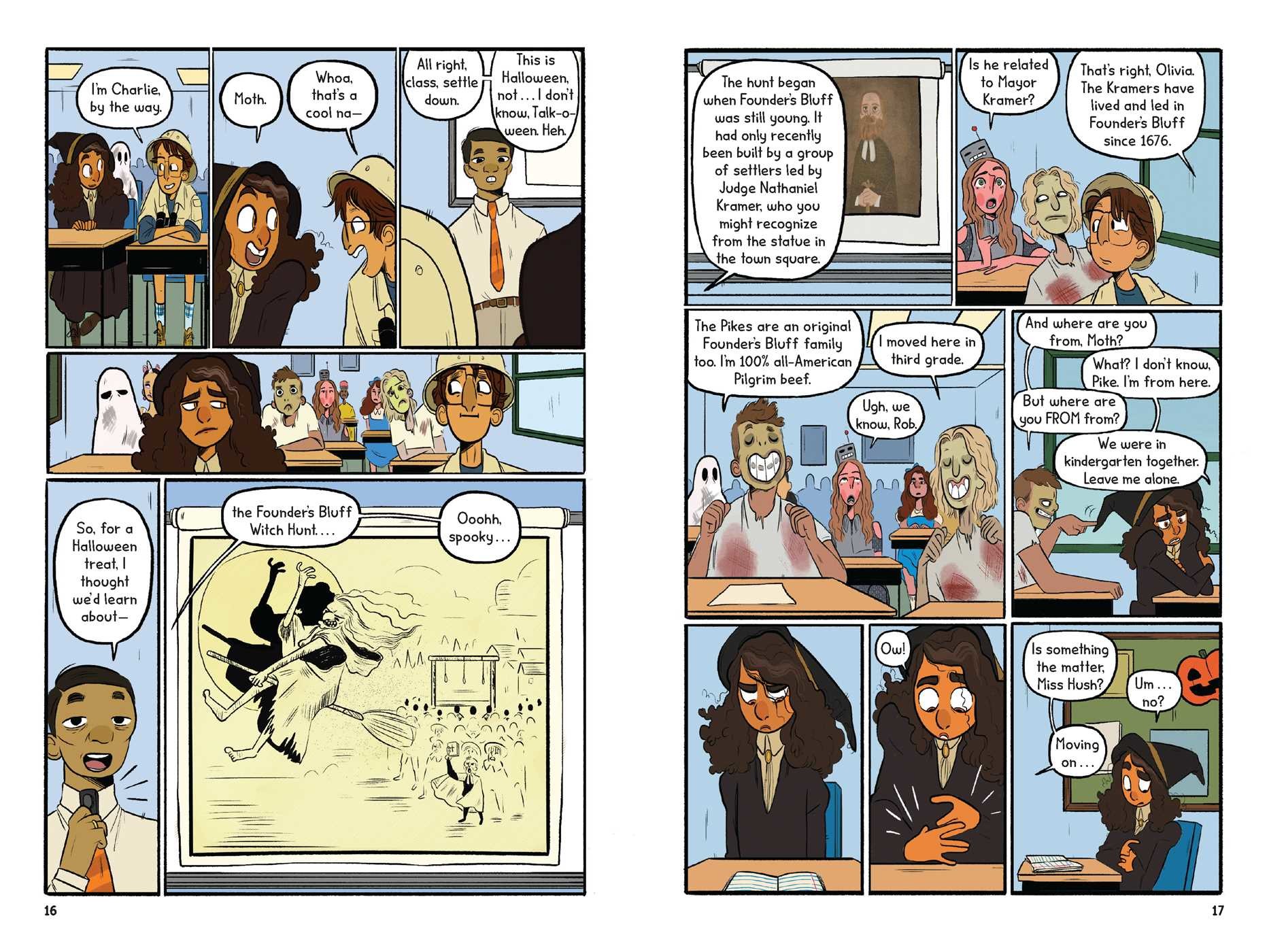
Thirteen-year-old Moth Hush loves all things witchy. But she’s about to discover that witches aren’t just the stuff of movies, books, and spooky stories. When some eighth-grade bullies try to ruin her Halloween, something really strange happens. It turns out that Founder’s Bluff, Massachusetts, has a centuries-old history of witch drama. And, surprise: Moth’s family is at the center of it all!
When Moth’s new powers show up, things get totally out-of-control. She meets a talking cat, falls into an enchanted diary, and unlocks a hidden witch world. With that revelation, Moth’s adventure truly begins – an adventure that spans centuries, generations, and even worlds – as she unravels the legacy at the heart of her life. (from the publisher)
Where to start gushing about The Okay Witch?
The story stars a heroine of color, and the main storyline addresses it from the beginning: Founder’s Bluff’s leader wanted, as Moth’s mother, Calendula states, “a town of sober, obedient, lily-white Pilgrims”. Women – especially women of color – who had any kind of independent spirit? Women of color? That didn’t fit into Judge Kramer’s mold, and it didn’t fit into colonial America’s mold, so they were hunted until Moth’s grandmother and her coven tore the fabric between worlds to create a safe space of their own: Hecate. Moth is a child of color in a mostly white town, where she’s bullied by young white men, one of whom happen to be a descendant of one of the founding families, who even asks Moth where “she’s FROM from”. Moth is a teen coming into her own power and struggling with the decision to embrace it or suppress it to “be normal” as her mother, who eschews magic and witchcraft, begs her to. When Sarah, Moth’s grandmother, shows up to see her granddaughter, there’s a power struggle on either side of Moth that represents her internal struggle.
We also get a sassy talking cat, Moth and Calendula’s friend reincarnated; who also happens to have the sweetest backstory (and gives the story an LGBTQ nudge, further establishing Moth and her family as awesome socially aware folks). Using witchcraft and witch hunts to address prejudice and racism, The Okay Witch makes history and current events equally relevant – and sadly, we see that not much has changed.
The Okay Witch is a fantastic coming-of-age story with characters you’ll love and return to long after you’ve finished the book. Give this to your Roller Girl readers, your BabyMouse readers that are ready to take on more challenging material, and your Raina Telgemeier readers.
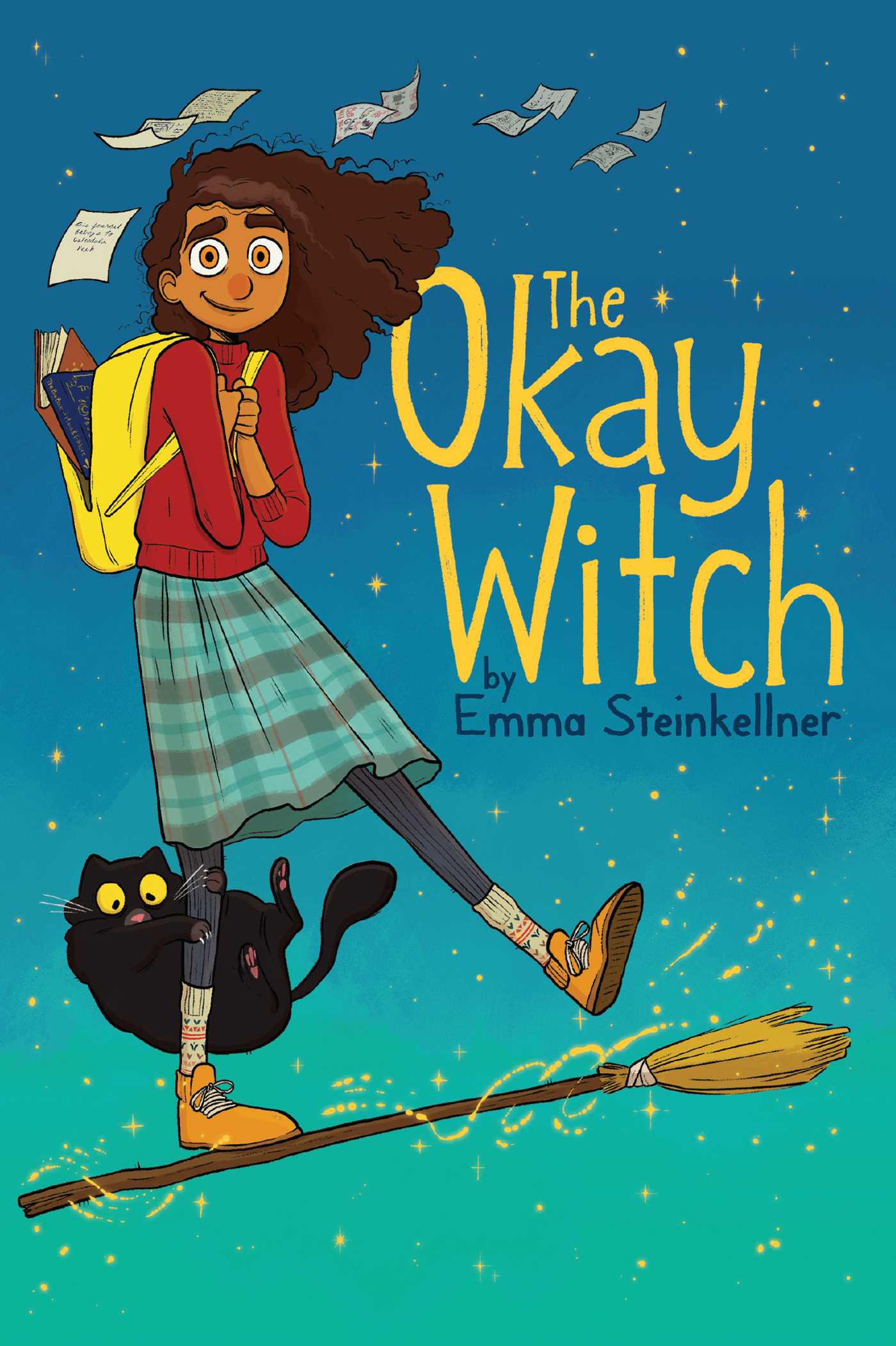
The Okay Witch, by Emma Steinkellner, (Sept. 2019, Aladdin)
$12.99, ISBN: 978-1-5344-3146-1
Ages 8-12
About the Author
Emma Steinkellner is an illustrator, writer, and cartoonist living in Los Angeles, California. She is a graduate of Stanford University and the illustrator of the Eisner-nominated comic Quince. The Okay Witch is her debut graphic novel as an author. You can visit her webpage to see more of her illustration work.
The Itty Bitty Witch by Trisha Speed Shaskan/Illustrated by Xindi Yan, (July 2019, Two Lions), $17.99, ISBN: 978-1542041232
Ages 4-7
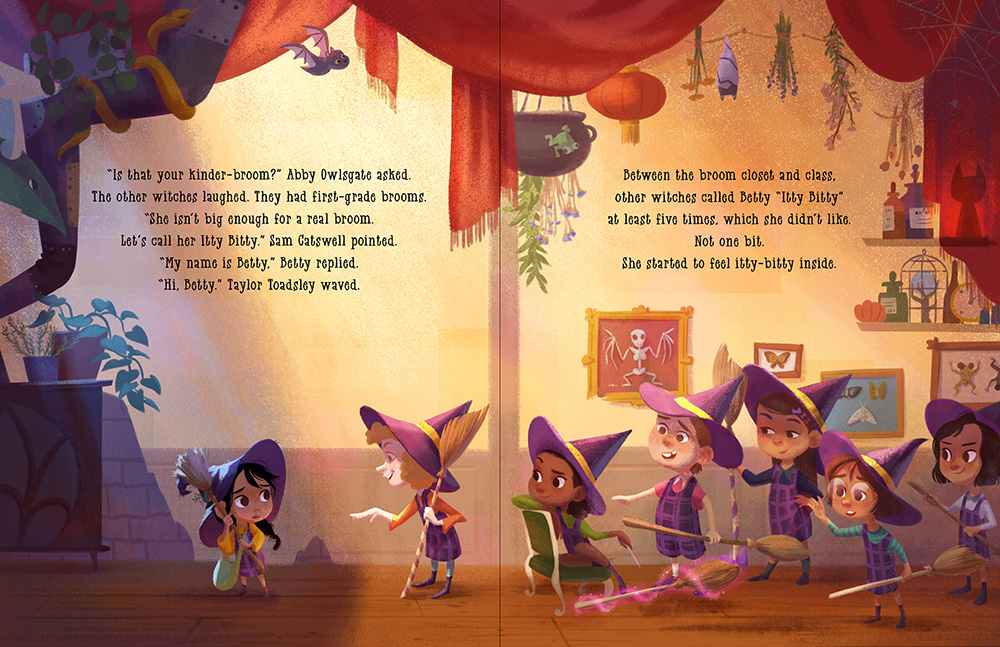
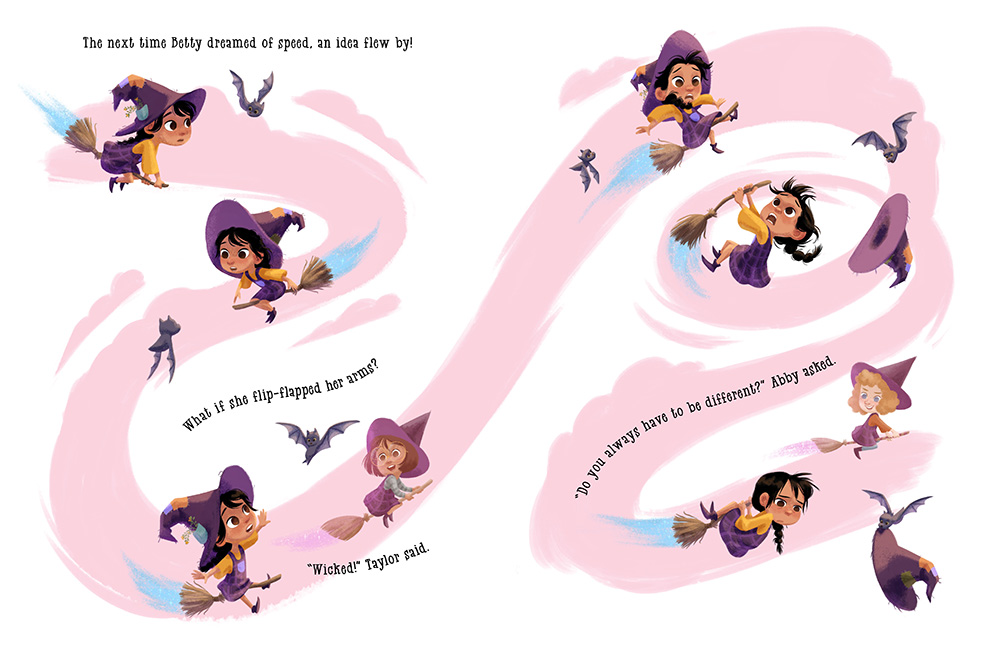
Betty Ann Batsworth is a little witch who can’t wait to start first grade, but she ends up being teased by some of the kids for being small and still having her kinder-broom, calling her “Itty Bitty”. The nickname makes Betty feel itty bitty on the inside, but when her teacher, Ms. Fit, tells the class that they’re going to prepare for the Halloween Dash – a big broom race – Betty is determined to win, and shuck that Itty Bitty nickname!
Coming from the kid who was ALWAYS first or second in height order, I am right there with Itty Bitty Betty. Being small is something we all have to grow into. The Itty Bitty Witch is a sweet story about overcoming childhood teasing, thinking outside the box, and determination. Betty discovers, during the course of the race, that being Itty Bitty is pretty handy – we can fit into places bigger folks can’t, after all! The digital illustration is bold, with cartoony characters and vibrant color. It’s full of teachable moments we can discuss with our kids like teasing vs. encouraging, and loving ourselves in any package.
The Itty Bitty Witch is good Halloween reading, and it’s good anytime reading. Size matters not!
Visit Xindi Yan’s illustrator page for more of her adorable artwork, and author Trisha Speed Shaskan’s author page for more info about her books.
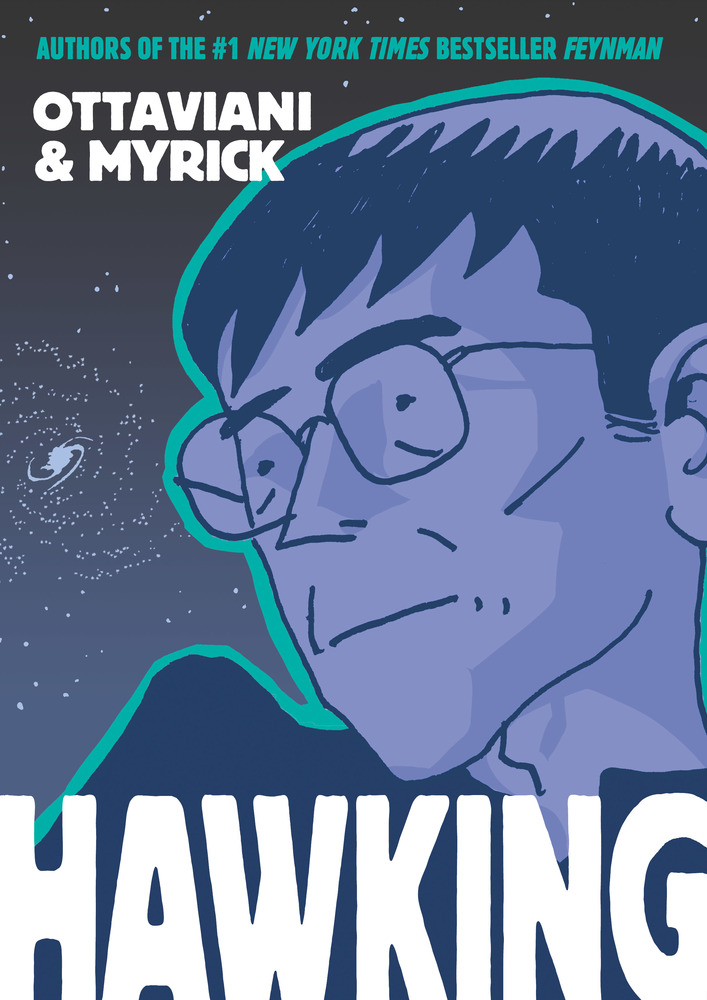
Hawking, by Jim Ottaviani/Illustrated by Leland Myrick, (July 2019, First Second), $29.99, ISBN: 9781626720251
Ages 12+
If your science and biography sections don’t have an Ottaviani/Myrick section yet, you may want to get to work on that. This is the second collaboration the two have worked on; the first being Feynman, a graphic biography on physicist and Nobel laureate Richard Feynman.
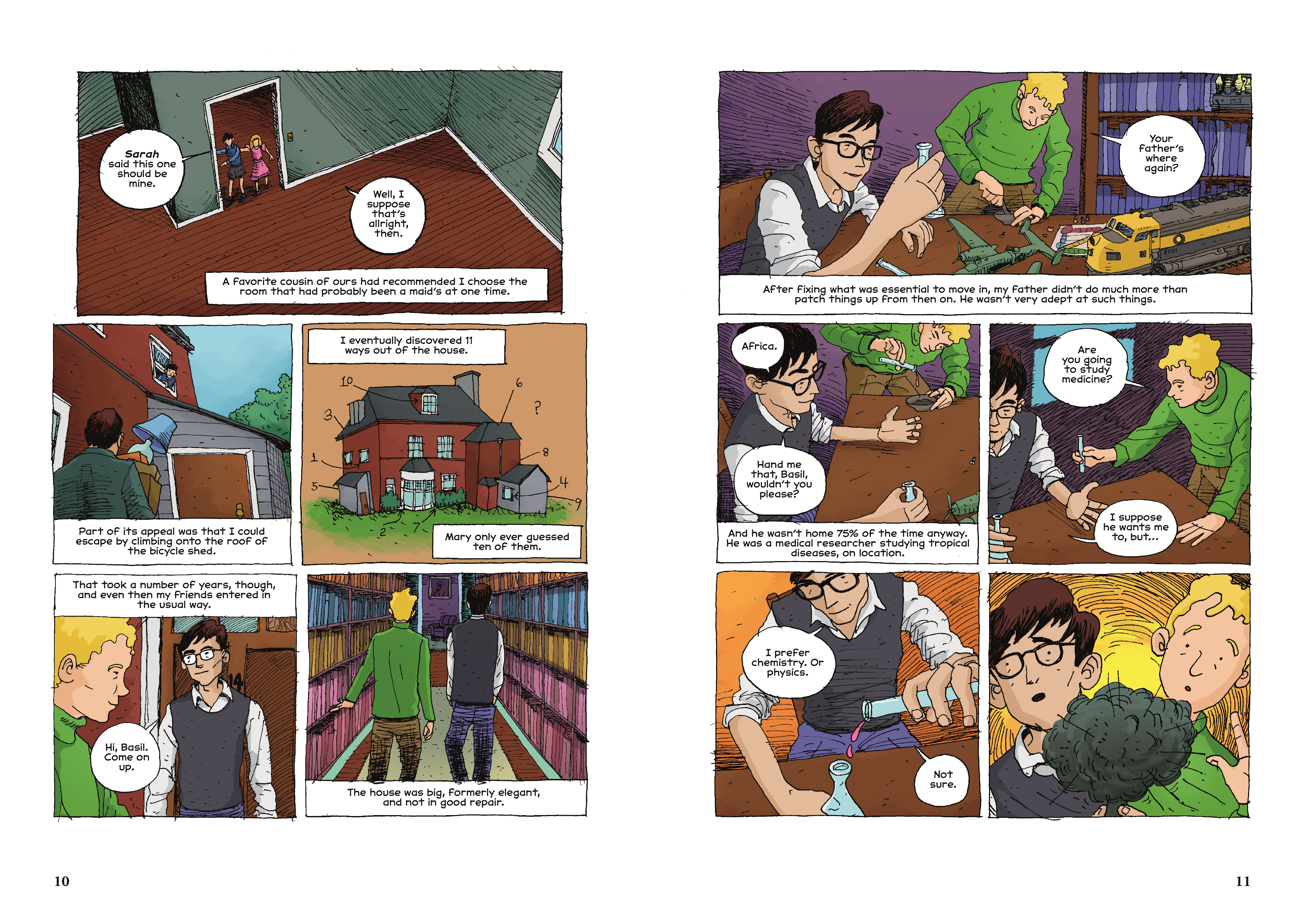
Hawking is in parts biography and science comic for teens and adults, moving easily back and forth between Stephen Hawking’s life story and explanations of physics, black holes, and the universe at large. The story begins with Hawking’s birth, 300 days to the day after Galileo’s death, wanders through his early adolescence as a teen who speaks “Hawkingese” and appears socially awkward; his marriage to Jane Hawking and his diagnosis with motor neurone disease, also known as ALS; his research and ultimate pop culture fame, and his later years, second marriage, and the degenerative path of his disease. First and foremost, this is a story about science; there are pages devoted to discussions between defining voices, including Newton, Faraday, and Einstein, about cosmology, light, and gravity. Jim Ottaviani captures Hawking’s voice – the graphic novel is narrated by a fictional Hawking – and shows up a glimpse of the man behind the legend. Award-winning illustrator Leland Myrick‘s artwork is unfussy, providing scientific sketches as easily as he captures Stephen Hawking’s wry smirk and his ability to disappear into a cloud of physics, even in a crowded room. The end of Hawking’s story will catch readers right in the feelings – I choked up a bit. An author’s note discusses how graphic novels are a good medium for narrative nonfiction, and I couldn’t agree more. Jim Ottaviani is an New York Times-bestselling author whose graphic biographies also include The Imitation Game (Alan Turing) and Primates (Jane Goodall, Dian Fossey, and Biruté Galdikas), so the man knows how to plot out a graphic biography. There is a nice list of references that will give interested readers even more material to look through.
I love graphic novel bios – they’re a great way to get tweens, teens, and adults interested in reading biographies, and the graphic medium allows for great explanations of topics that may be difficult in solid print (like physics!). If you have readers who have aged up from Science Comics, hand them Hawking. A definite must-add to your (growing!) graphic novel biographies.
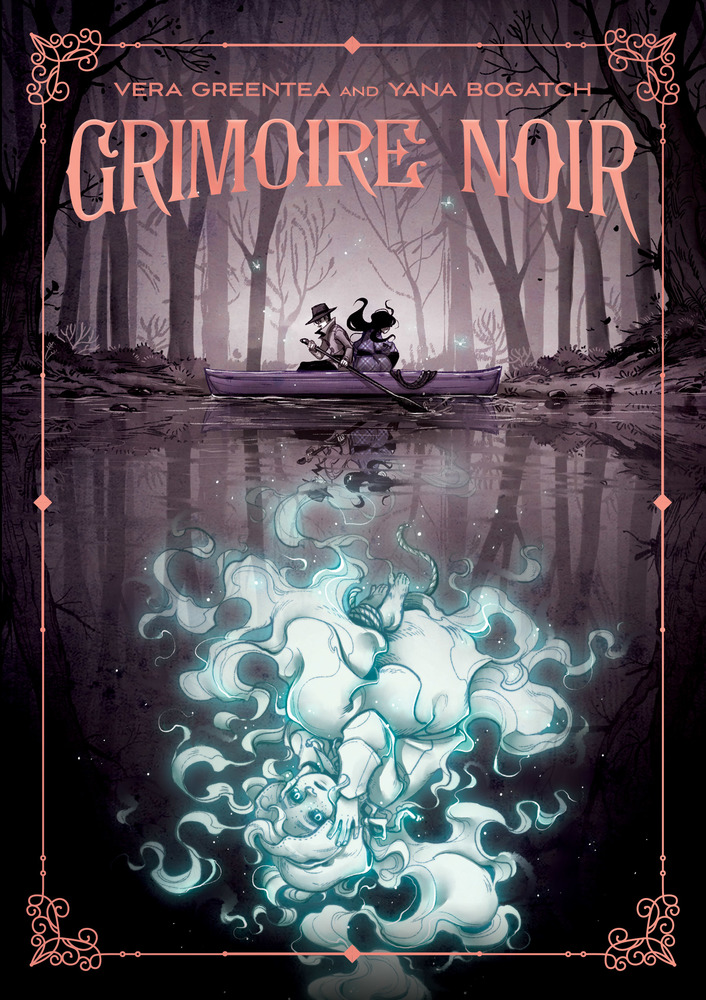
Grimoire Noir, by Vera Greentea/Illustrated by Yana Bogatch, (July 2019, First Second), $17.99, ISBN: 9781626725980
Ages 12+
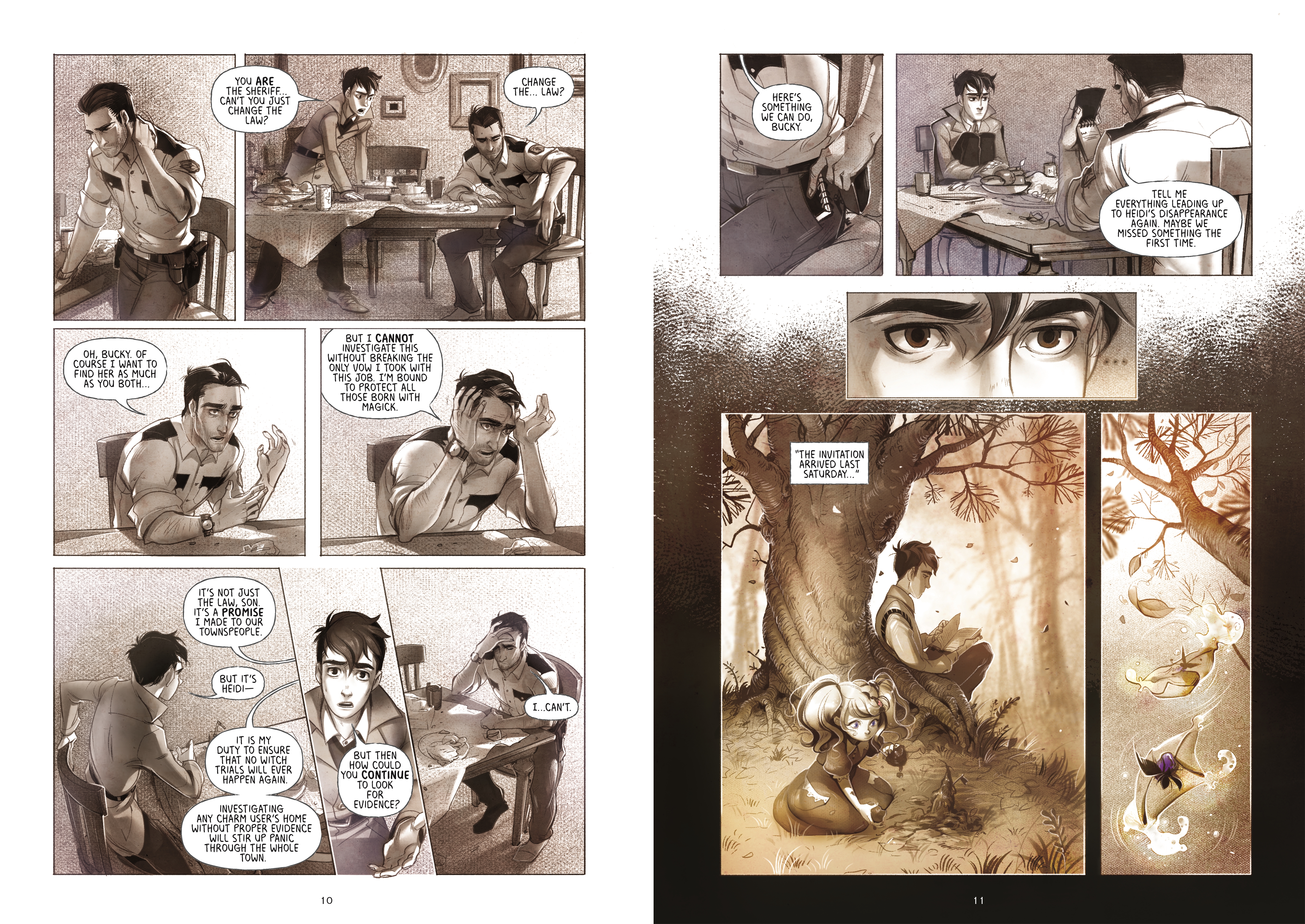
This beautifully illustrated graphic novel has a few plots going on at once: set in a town called Blackwell, where all the girls are witches, a teen named Bucky yearns for power of his own – despite the fact that no witch can leave the town. Ever. Bucky’s younger sister, Heidi, is kidnapped, and Bucky joins forces with his estranged friend, a teen girl named Chamomile, to look for her. Within this main story are threads of other plots; the hostility Chamomile’s father, Blackwell’s deputy, has toward Bucky (who also happens to be the sheriff’s son); a coven of Mean Girls/The Craft witches called The Crows, who want to set plans in motion that will set them free to leave Blackwell, and a ghost of the very first witch, a child named Griselda, whose death at the hands of witch hunters set the curse on Blackwell’s daughters into motion.
The storyline has moments where the storyline becomes confusing to follow, but has some touching relationship bits that I’d like to have seen more about. The relationship between Chamomile and her father runs deep, and we only get a surface glimpse, for instance. Will we get more Blackwell stories from Vera Greentea and Yana Bogatch? We can sure hope so; I think there’s a lot more to tell in a town with a history like theirs. Tween and young teens will enjoy this human, paranormal tale with a twist.
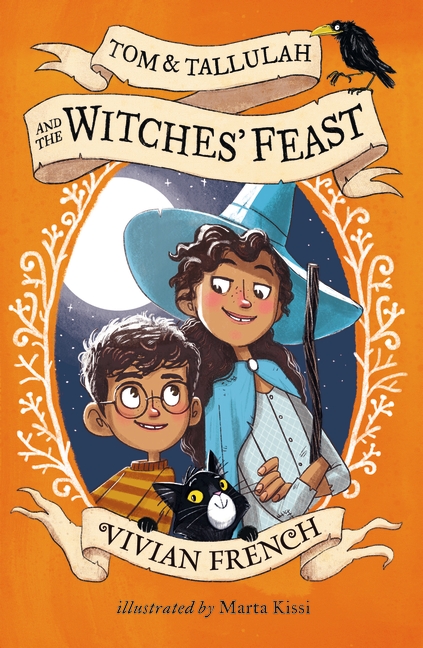
Tom and Tallulah and the Witches’ Feast, by Vivian French/Illustrated by Marta Kissi, (Sept. 2018, Kane Miller), $5.99, ISBN: 9781610677349
Ages 7-11
The latest fairy tale outing from Vivian French and Marta Kissi has a brother and sister duo working against time to save their poor grandmother from becoming a chicken after falling under an evil spell. Tallulah Tickle wants to be a witch, but her apprenticeship has not been going well. She’s always late, her food is terrible, and – unbeknownst to her – Gertrude Higgins is secretly plotting against all the witches in her coven, starting with Talluah’s grandmother! Tallulah has one more chance to complete her apprenticeship, and it’s a toughie: she has to guess each witch’s favorite food, and make it. Flawlessly. In three days. Lucky for Tallulah, her brother Tom has a gift in the kitchen, but she’s going to need some help figuring out what everyone likes to eat, too. They’ll have to think fast, though – they need to save poor Grandmother from an awful spell that’s turning her into a chicken! Add a wily cat (or two) and crow to the mix, and you have a heck of an adventure!
Earlier this year, I read The Cherry Pie Princess and The Adventures of Alfie Onion, also by Vivian French and Marta Kissi, and enjoyed this new generation of fairy tale characters. Tom and Tallulah are a smart sibling team that work together to get the job done. Tallulah stubbornly tries to do it all on her own, but she has to grow up enough to understand reason and admit her weaknesses. We’ve got villains with ulterior motives, talking animals, and a loving grandmother that needs saving; all good story elements that come together to give readers a magical adventure. Black and white illustrations throughout bring the text to life and create a relationship between readers and characters.
The Cherry Pie Princess and Adventures of Alfie Onion are already popular with my library kids. I can’t wait to introduce them to Tom and Tallulah! Give these to your fairy tale readers and your fantasy fans.
Bethan Woollvin’s back with another fractured fairy tale; this time, taking on brother-sister duo, Hansel and Gretel. We meet Willow, who, as Ms. Woollvin asserts multiple times, “is a good witch”. She only uses good magic, she takes care of her neck of the forest, she’s a nice witch. So when she sees Hansel and Gretel leaving breadcrumbs all over her forest floor, she politely asks them to help clean up their mess. They’re rude, and they blow her off. Then she catches them eating her home! But she figures they’re hungry, so she invites them in and cooks for them. Because Willow is a nice witch. After a few more indignities at these bratty children’s hands, Willow’s house collapses, and then Willow gets mad. And what happens when you push a nice witch too far?
Bethan Woollvin gives readers an uproariously funny tale of comeuppance in this latest fairy tale installment, flipping the whole Hansel & Gretel story on its head. Her trademark three-color art – in this case, orange, black, and gray – is bold and loaded with mischievous fun. Hansel and Gretel sport impish smiles and shifty eyes as they take over Willow’s home. There are loads of details to spot in the artwork, including a little mouse that stays around to watch the action unfold. The endpapers extend the story, as Willow watches the two careless siblings toss breadcrumbs in the opening papers and stands next to a very large black cat (read the story) and a candy castle – her home, rebuilt? – at the end.
I love Bethan Woollvin’s fairy tales. Give her more Grimm, please! Make your own Hansel & Gretel puppets by printing out these free activity sheets.
10 Busy Brooms, by Carole Gerber/Illustrated by Michael Fleming,
(Aug. 2018, Doubleday), $7.99, ISBN: 9781524768997
Ages 2-6
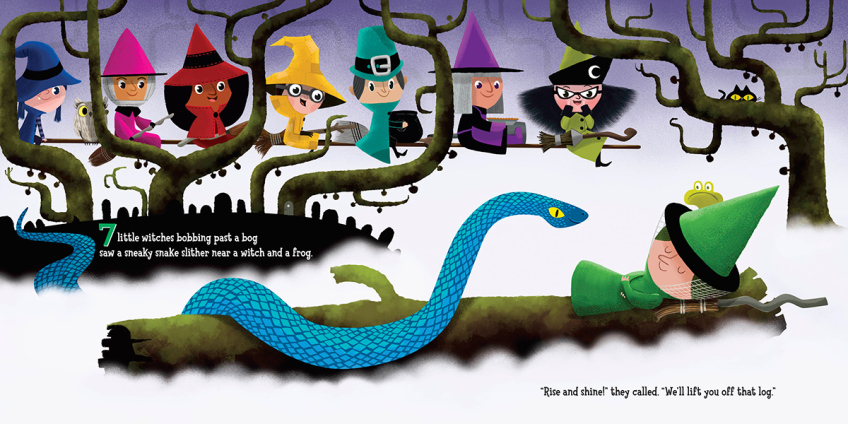
Originally published in hardcover (2016), this board book version of the rhyming, counting story follows a group of little witches as they rescue one another from mischievous skeletons, ghosts, and goblins. The digital artwork is bold and bright, and the witches have eschewed basic black for jewel tones and fashionable hats. There’s some diversity among the witches, too; something always nice to see. One witch even sports a hijab under her hot pink pointy hat! The fonts are bold and white, set off against the nighttime backgrounds of each spread, and the numbers are brightly colored, large, and bold. It’s a fun story for little Halloweeners to enjoy, and the sturdy board book will hold up to multiple readings.
How to Scare a Ghost, by Jean Reagan/Illustrated by Lee Wildish,
(Aug. 2018, Knopf), $17.99, ISBN: 9781524701901
Ages 3-7
The team that brought you How to Babysit a Grandpa, How to Raise a Mom, and How to Catch Santa are here to teach readers How to Scare a Ghost! First, you have to attract a ghost. There are several different ways to do this. Then, you have to make sure you have a real ghost, and not some kid dressed up for Halloween. Once you’ve got those two points down, you’re ready to scare! But wait! You’ve gone too far, and you’ve really rattled your ghost? Okay, the book has that covered, too, with ways to comfort, play, and choose a costume for your ghost. A combined handbook and story, How to Scare a Ghost features a brother-sister duo and a friendly ghost enjoying a Halloween together. Endpapers offer a variety of kids and ghosts in a variety of costumes, and the digital art is upbeat and cheerful. This one’s a cute add to holiday collections and great for readers who are a little shy around monsters and spookier fare.
Bone Soup: A Spooky Tasty Tale, by Alyssa Satin Capucilli/Illustrated by Tom Knight, (July 2018, Simon & Schuster), $17.99, ISBN: 9781481486088
Ages 4-8
Naggy, Craggy, and Scraggy are three hungry witches. Alas, their cupboards are bare, but for a single bone. A single bone, you say? Piff-Poof! Naggy Witch has a plan: Bone Soup, the perfect Halloween treat! The witches travel throughout the town, gathering delights from the local monsters: a bit of water here, an eye of a giant there, some old toenails and some slimy sludge, until the entire town has contributed to a bone-chillingly delicious meal for all! Based on the classic tale, Stone Soup, Alyssa Satin Capucilli puts a wonderfully fun spin on this perfect read for preschoolers and, Kindergartners (and more!).
There’s repetition here that invites readers to join in: “Piff-Poof!” Naggy Witches cries as each ingredient goes into the cauldron, and the witches chant, with each stop, “Trick-or-treat! Trick-or-treat! We’ve something unusually good to eat. It’s bone soup, soup from a bone. A savory morsel is all it needs!” Get the kids chanting, let them be little monsters or witches, and pull out a cauldron (it’s Halloween season, you can find a $1.99 trick or treat cauldron anywhere) to let them throw goodies in.The charcoal and pencil art is adorable, with green, crazy-haired witches, giant blue monsters, and googly-eyed mummies and skeletons. The fonts are big and readable, changing size and color for emphasis. There’s a recipe for Naggy Witch’s Bone Soup at the end of the book, with thoughtful substitution suggestions for those of us who may balk at juice of a toad or colored flies. Author Alyssa Satin Capucilli has a great storytime activity kit for free download on her site, complete with word games for older readers, and a printable recipe to hand out to parents. My kids and my library kids know and love Ms. Capucilli’s Biscuit books, so that could be a good intro when telling parents about the author.
This would be a great feltboard storytime activity, or you can get creative and make your own eyeballs (ping pong balls are good), toenails (cut up some index cards into slivers), and a bone or two (it’s Halloween, there are plush or plastic bones to be found everywhere). I love this story, and can’t wait to get it in front of a group of Kindergartners next week for a Halloween storytime!