Tag: science
A Laura Gehl two-fer!
I love Laura Gehl’s books: from Peep and Egg to One Big Pair of Underwear and beyond, her stories have been hits at my storytimes and they’re just fun to read. Now, I’ve got some nonfiction by Laura Gehl to rave about that’s every bit as fun and unputdownable as her fiction is. Join me!
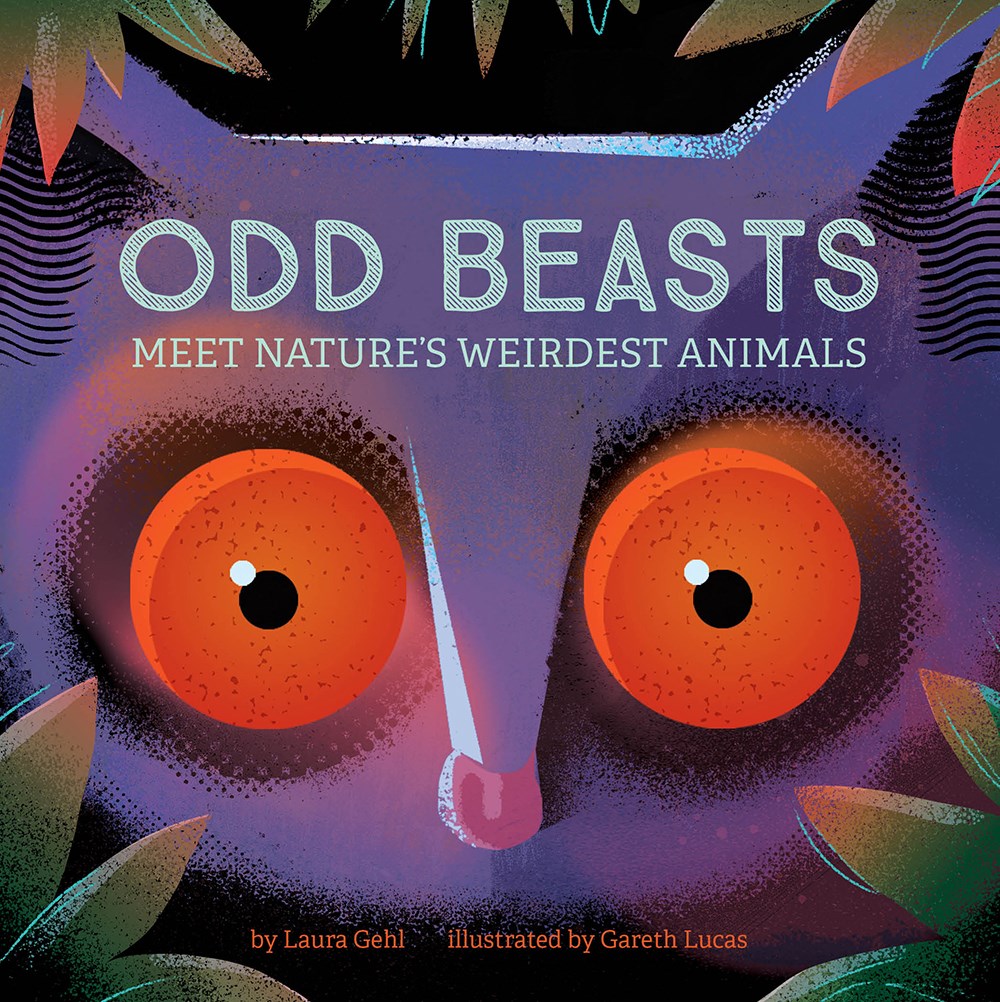
Odd Beasts: Meet Nature’s Weirdest Animals, by Laura Gehl/Illustrated by Gareth Lucas, (Nov. 2021, Abrams Appleseed), $8.99, ISBN: 9781419742224
Ages 2-4
A very happy book birthday to Odd Beasts! This rhyming board book introduces readers to some of nature’s wildest citizens: an armored pangolin, a frog with see-through skin, and a fish that weighs a ton are just a few of the animals waiting inside. This board book has back matter: two spreads include photos of each animal mentioned, with a brief factual paragraph. The artwork is incredible, offering colorful illustrations of each of the eight animals; they’re the perfect mixture of kid-friendly, expressive illustration and realism, making this a book readers will pick up and enjoy again and again. Sturdy pages hold up to multiple readings and definitely pass the “mom’s bag” test; I carried this one around with me for a couple of weeks. Great for an animal storytime.
Visit Laura Gehl’s author webpage for more info on her books, and great educator/caregiver resources, including coloring sheets for Odd Beasts!
Who Is a Scientist?, by Laura Gehl, (Oct. 2021, Millbrook Press), $9.99, ISBN: 9781728441085
Ages 4-9
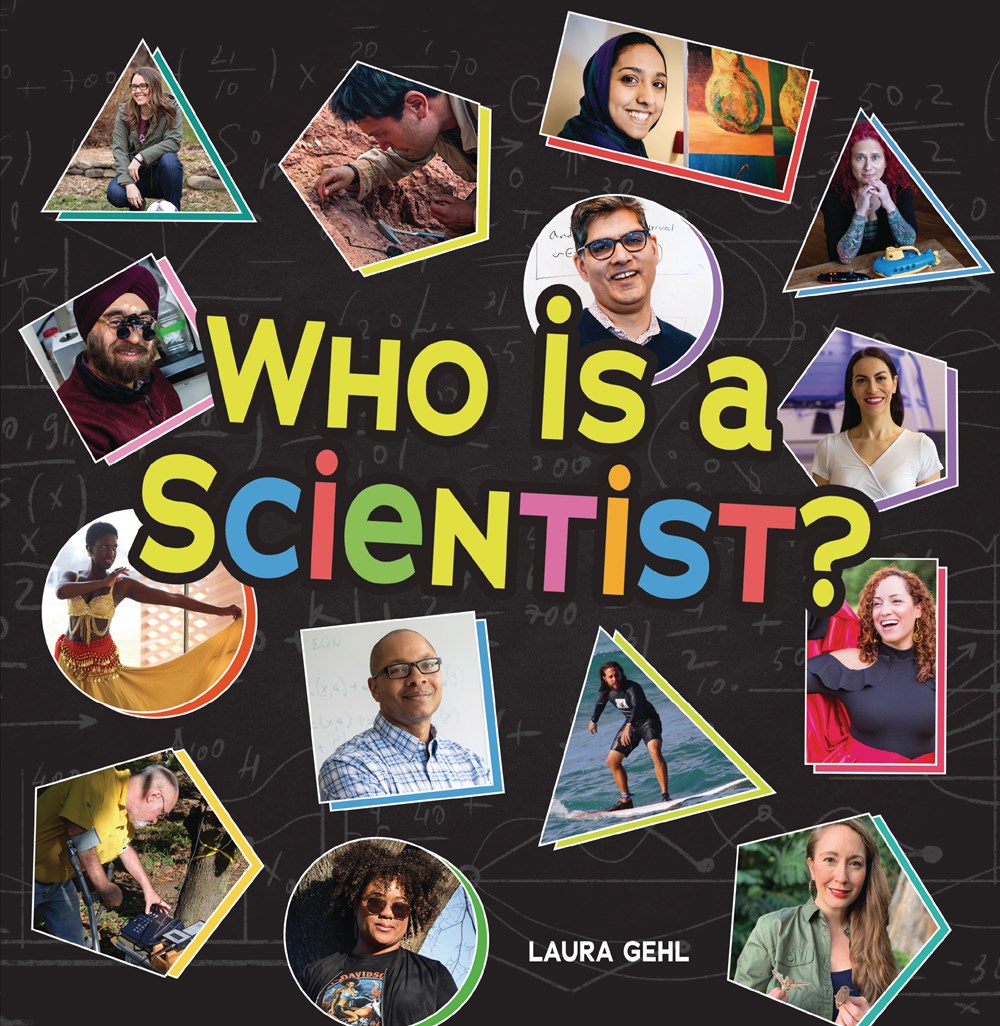
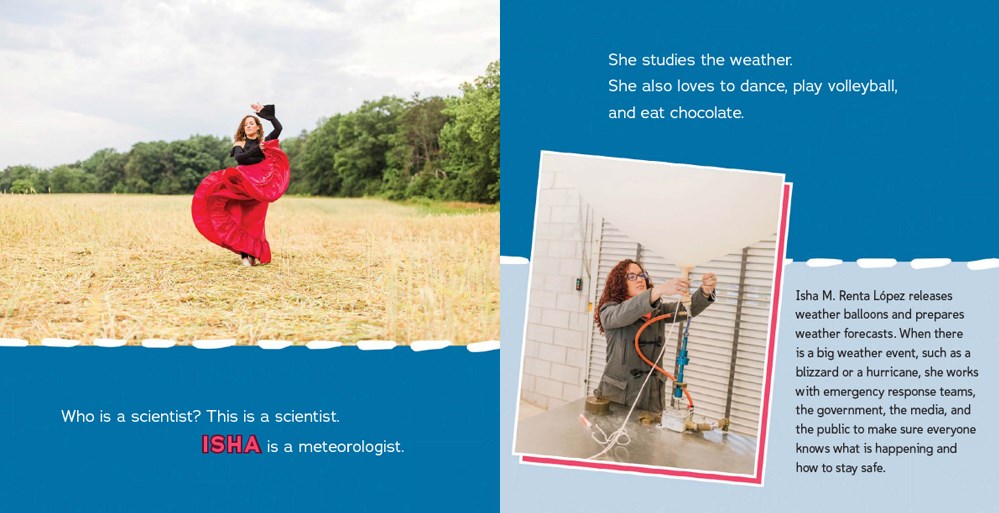
Scientists are people, too! Who Is a Scientist? humanizes the science providers by providing profiles on 14 different scientists; who they are, what they study and do, and what they like to do when they’re not science-ing. Isha is a meteorologist who studies the weather, and also enjoys dancing, playing volleyball, and eating chocolate. She’s photographed dancing in a flowing red skirt on one page and operating a weather balloon on another. Names appear in bright colors to personalize each scientist, and fun photos like Isha’s show readers that scientists like karate, surfing, cooking, and painting: just like they do. Each descriptive paragraph explains what the scientists study, introducing them to fields like astronomy, neuroscience, and mechanical engineering. The group is diverse, and really encourages kids to see themselves in this book, offering a QR code to learn more about the scientists, and a flow chart to help guide readers to a field of study that may be right for them, based on their own interests. What a great way to inspire the next generation of scientists, right? Who Is a Scientist? makes science playful and fun, like it should be. A guide to phonetic pronunciations at the end of the book help readers learn to pronounce Laura Gehl’s name, and the names of each scientist.
Visit Laura Gehl’s author page for a Who Is a Scientist? educator’s guide.
Jurassic Pets! Dr. Dean Lomax and Mike Love gives us Preshistoric Pets
Prehistoric Pets, by Dr. Dean Lomax/Illustrated by Mike Love, (Sept. 2021, Templar), $17.99, ISBN: 9781536217148
Ages 5-9
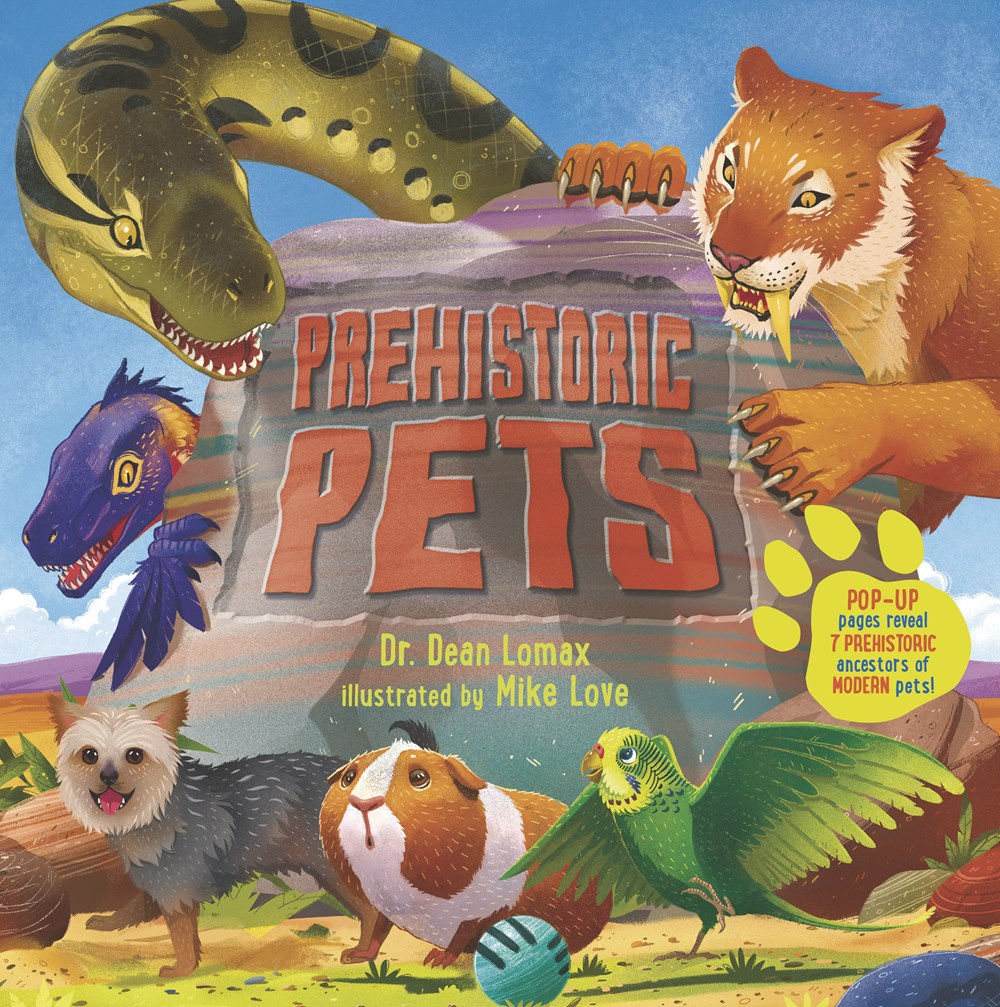
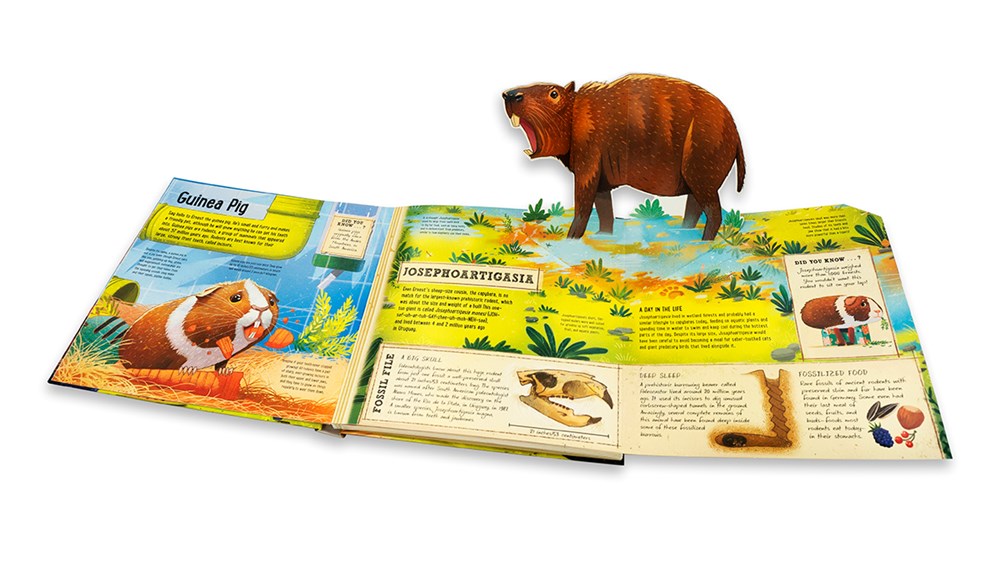
Cat people all know that our little furballs think of themselves as savage, saber-toothed tigers on the hunt, whether they’re stalking a daydreaming dinosaur or a dust bunny. But did you ever imagine what your guinea pig’s ancestors may have looked like? Paleontologist Dr. Dean Lomax has you covered. Prehistoric Pets looks at the evolution of seven favorite kinds of pets: guinea pigs, parakeets, corn snakes, cats, goldfish, dogs, and horses. Using the fossil record to trace each pet’s lineage, Dr. Lomax goes back through the family trees of each of these popular pets to give us an idea of their prehistoric parentage. That chatty parrot likely descended from the Velociraptor; your corn snake can trace its heritage back to the giant Titanoboa. Each spread folds out into a pop-up gatefold, with the prehistoric beast rising up from the pages. Loaded with facts about both the modern animal and its primeval counterpart, and filled with colorful artwork, this is a home run for your prehistory collections. Display and talk up with one of my favorite read-alouds, Steve Jenkins’s Prehistoric Actual Size. The pop-ups are going to seal the deal for readers on this book – get a couple if your budget permits.
Starting off Earth Day right!
Earth Day is coming at the end of the month, so expect to see lots of books about our big blue dot here over the next few weeks. Today, I’m starting with the earth – the ground itself – and what it gives us.
A World of Plants by Martin Jenkins & James Brown, (March 2021, Candlewick Studio), $25, ISBN: 9781536215328
Ages 7-10
The latest in the “A World of…” series from Martin Jenkins and James Brown is all about plants. Organized into 30 areas and fully illustrated with 2-color artwork and infographics, this oversized book covers plants from seed to bloom; how they spread, who eats them and who they eat; plants that thrive in different habitats, and more. A Plants in Peril section covers conservation and environmental awareness, with an eye to different plants that are threatened, overharvested, and facing habitat destruction. A section on symbolic plants discusses the link between religion and nature. Fun facts abound: learn your climbing plants, for instance, by identifying which are twiners, which are tendrils and leaf twiners, which are clingers, and which are hook climbers. How do plants defend themselves? A World of Plants goes beyond thorns and looks at the dumb cane, a plant that accumulates needlelike crystals that can pierce an animal’s mouth, or the passionflower, whose leaves mimic dots that look like butterfly eggs, so butterfiles will pass them by. A World of Plants is a nice addition to a beautiful nonfiction series. Sample a chapter at publisher Candlewick’s website.
Fungarium (Welcome to the Museum), curated by Katie Scott and Ester Gaya, (April 2021, Big Picture Press), $35, ISBN: 9781536217094
Ages 8-12
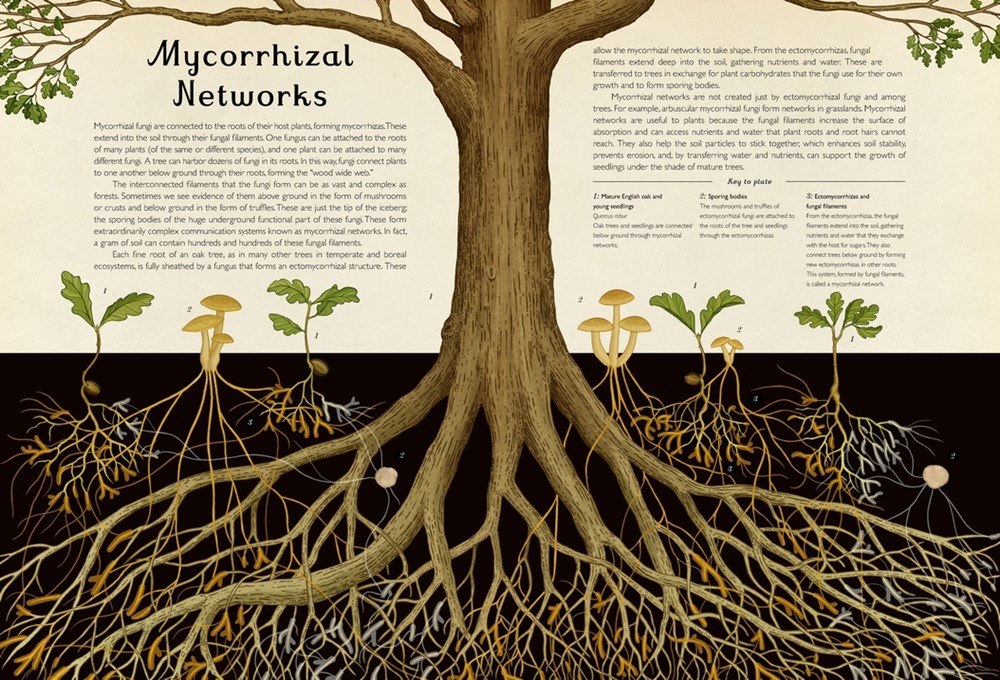
Another good nonfiction series, Welcome to the Museum, introduces its newest wing, Fungarium. It’s all about the mushrooms here! Organized into four galleries, readers will get the full scoop on Fungal Biology, Fungal Diversity, Fungal Interactions, and Fungi and Humans. Fungi get a pretty bad rap (myself included: not a mushroom fan), but this book seeks to clear up a lot of issues people have: without fungi, there would be no coffee, tea, or chocolate, which is reason enough for me to fully support my local mycologist. Beautiful scientific illustration brings the diversity of these organisms to life on the page, and detailed keys to each plate provide helpful information at a glance. Entries on each section in the galleries give readers plenty of information to get them started on learning about fungi, from what’s growing on that tree we pass on the way to school every morning to what’s in cans at the grocery store. Worried about what not to eat? The section on Poisonous Fungi makes sure you know how to identify a Death cap, False morel, or Destroying angel. If that’s too much of a turn-off, head over to Wonder Drugs and learn how fungi are also the source of many modern medicines, including that wonder drug, penicillin. Fully indexed, with a list of further resources and brief bios on the curators behind the book, Fungarium is a nice addition to the Welcome to the Museum series. Publisher Candlewick has a sample chapter available for viewing.
Fungarium has starred reviews from Booklist and Kirkus.
Indie author/publisher spotlight!
I’m back with more independently published authors! You’ve seen them here before: both Lois Wickstrom and Riya Aarini have been kind enough to share their books with me in the past, and I’m happy to feature more of their books today. Let’s see what Carefree Ollie and Alex the Inventory are up to, and meet some new friends along the way.
How to Make a Flying Carpet, by Lois Wickstrom/Illustrated by Janet King, (November 2020, Independently Published), $24.99, ISBN: 978-0916176778
Ages 7-11
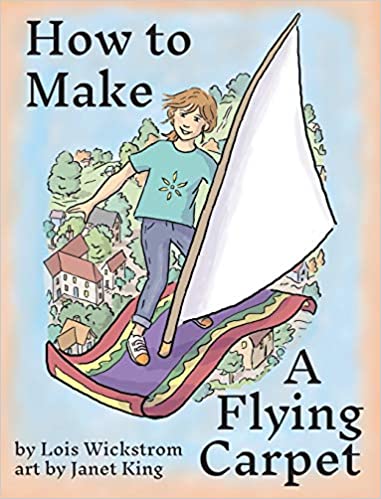
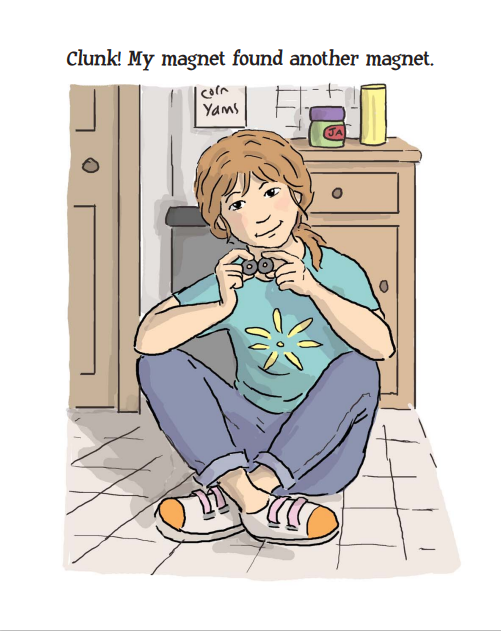
Alex is a girl who likes science and likes repurposing broken things, so when a frog magnet falls from her refrigerator and breaks, she sees opportunity. Taking the magnet, she discovers that she can rescue her father’s key from the heating vent where it fell, and she can make paper clips dance. She begins experimenting with the magnets to find out what else she can do, and when she discovers a cache of magnets in the garage, she gets an idea… can she use the repelling powers of magnets to make a real flying carpet? Filled with fun and easily creatable experiment with magnets, How to Make a Flying Carpet is a fun STEM/STEAM story that will work really well with a science club/Discovery Club. The illustrations help kids visualize how to work with magnets, especially in a household setting: super-helpful these days, when finding things around the house is the best way to keep kids busy during remote and blended learning days! Alex’s interest in learning and in expanding the scope of her experiments will motivate kids to dig deeper and embrace the fun in learning. If you’re interested in more magnet experiments, Babble Dabble Do has four easy magnet experiments that you can easily do with household items or with a quick trip to the 99-cent store.
Visit author Lois Wickstrom’s website, Look Under Rocks, for more information about her books, including What Do the Plants Say?, her first Alex the Inventor story.
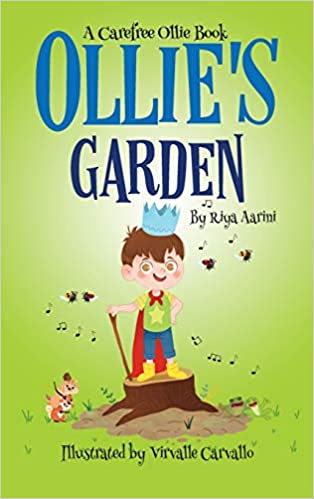
Ollie’s Garden (Carefree Ollie #3), by Riya Aarini/Illustrated by Virvalle Caravallo, (Nov. 2020, Independently Published), $15.99, ISBN: 978-1735347325
Ages 6-10
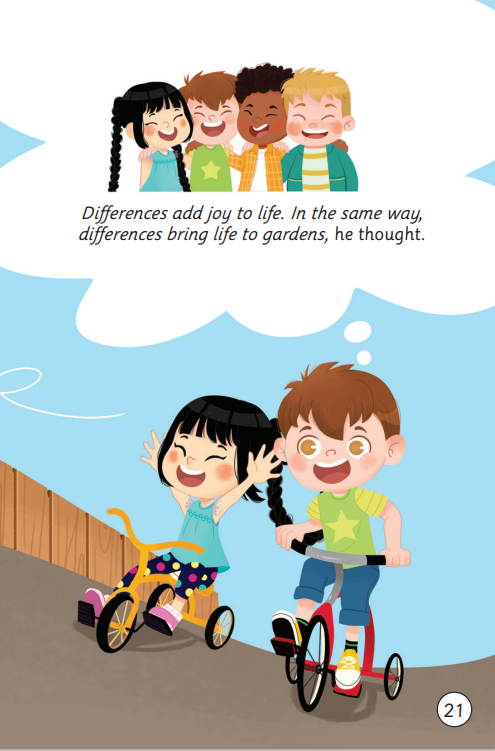
Carefree Ollie has to negotiate between bickering groups of animals in his garden kingdom in his latest adventure. The orange ladybugs won’t let the red ladybugs near the daisies; frogs are chasing toads away from the water because they “ribbit” while toads “croak”; chipmunks and squirrels are quarreling over their tails. With Ollie’s garden kingdom in chaos, it’s up to him to stop the fighting and help bring peace, tolerance, and understanding to the kingdom once more. A sweet parable on equity, diversity, and inclusion, Ollie’s Garden is a good way to approach embracing our differences and how those differences make us wonderful. Digital artwork is kid-friendly and colorful, and the storytelling is a good starting point for your own discussions about how diversity makes us stronger.
Education.com has some great activities on diversity, including a Kindergarten lesson plan on Appreciating Diversity, a second grade lesson plan on Appreciating Diversity and Differences, and a Welcome All activity for Kindergarten and first graders that helps develop an appreciation for differences and building social awareness.
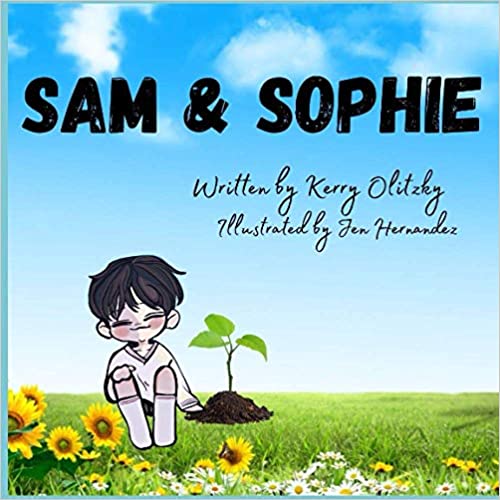
Sam and Sophie, by Kerry Olitzky/Illustrated by Jen Hernandez, (March 2021, Higher Ground Books & Media), $12.99, ISBN: 978-1949798838
Ages 3-7
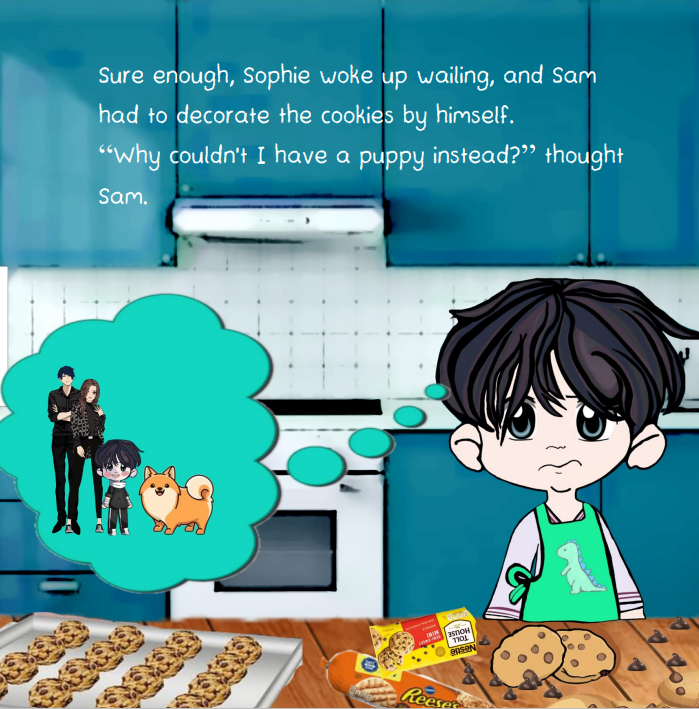
Sam has just become a big brother to baby sister Sophie, but he’s frustrated. There doesn’t seem to be much time or energy left over for him, and he’s not happy with all the attention baby Sophie is getting. But when Baby Sophie gets sick, Sam finds himself worrying and trying to make her happy and feel better. A moving story that grows from the Jewish tradition of planting a tree when a new child is born, Sam and Sophie includes back matter on the tradition and on trees, people, and their relationship to God. Mixed media artwork has a manga influence. Sam and Sophie is a good book to begin a talk on sibling jealousy and how to navigate complicated feelings that arise when a new baby arrives.
#HomesCool Pop Up Books for Little Learners
Twirl Books is releasing incredible new books for little learners. I was thrilled to receive a big box of their new and upcoming books, and I’ve loved everything I’ve read so far. This post looks at two pop-up nonfiction titles for preschoolers that are going to love. Make space in your easy nonfiction and board book libraries: Twirl is taking over.
The Pop-Up Guide: Space, by Sophie Dussaussois/Illustrated by Charline Picard, (March 2021, Twirl Books), $16.99, ISBN: 9791036325199
Ages 3-5
A pop-up guide to space is just what the budding astronomer ordered! Ten spreads open up to reveal 3-D starscapes, our solar system, the lunar landing, the International Space Station, and more. Brief paragraphs provide a factual overview of each spread, and pictures are labeled to increase readers’ science vocabulary, with terms and proper nouns including “observatory”, “centrifuge”, “Buzz Aldrin”, and “Curiosity rover”. Illustrations are colorful and informative, with detail to engage readers. The pages are sturdy, but you’ll want to buy a copy to keep in reference to be on the safe side. Elastic bands on the corners of the front cover make for a nice hands-free reading experience, letting kids examine every inch of the illustrations on each spread. I can’t wait to see what other Pop-Up Guides Twirl has planned!
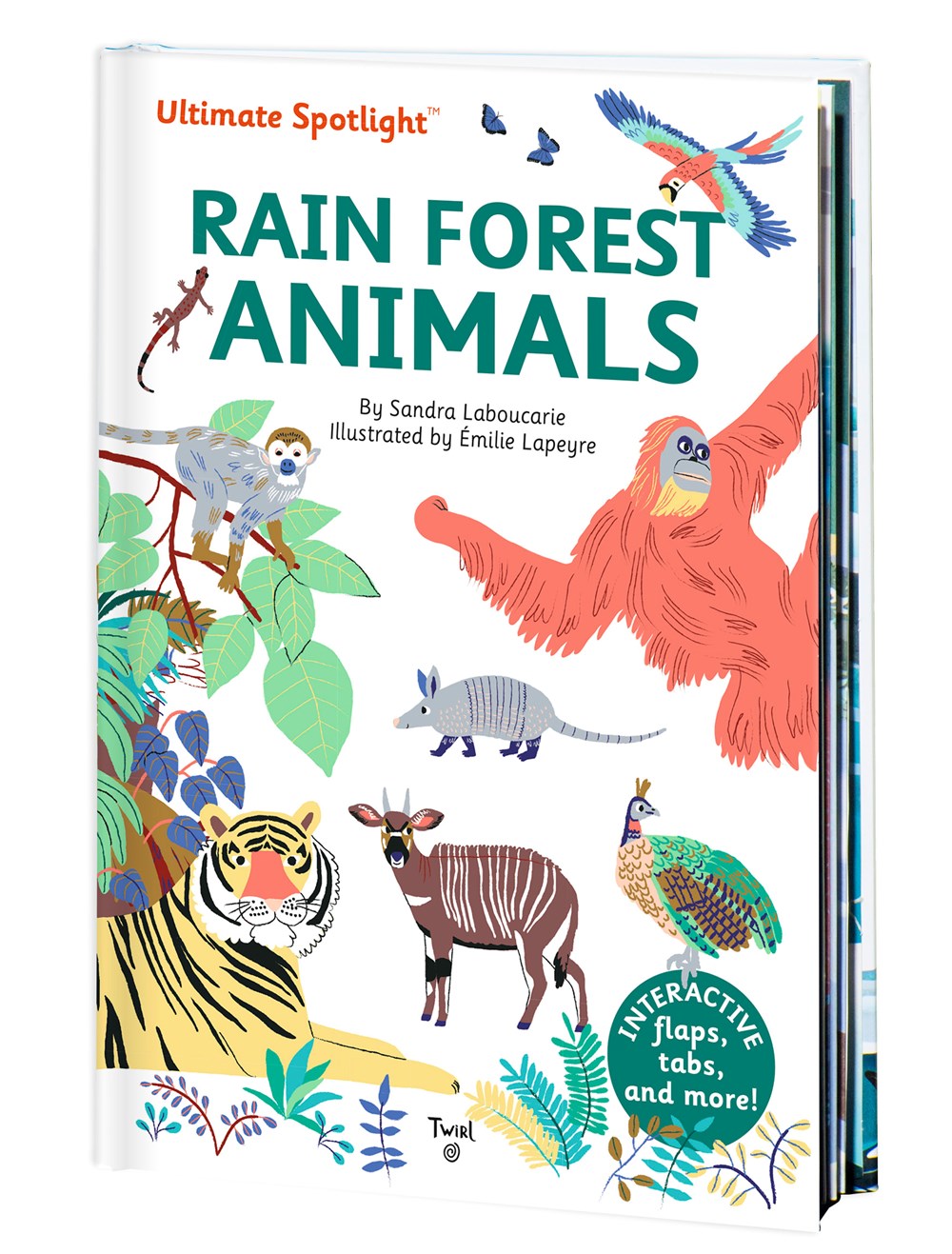
Ultimate Spotlight: Rain Forest Animals, by Sandra Laboucarie/Illustrated by Émilie Lapeyre, (March 2021, Twirl Books), $16.99, ISBN: 9791027608775
Ages 4-7
The Ultimate Spotlight series from Twirl is also has pop-up panels, but adds other interactive features like lift-the-flaps, movable tabs, and turn-the-wheel. Five spreads take readers through a rain forest, where they can see a 3-D representation of the layered forest, from ground up through emergent layer; play hide and seek with camouflaged denizens of the forest; meet animal families; discover gliding animals and see how they move, and explore a foldout visualizing of the rain forest by day and at night. Animals are clearly labeled and brief, factual sentences provide exciting new facts for animal fans. Pages will hold up to a lot of reading, but I’d consider a backup copy if your budget allows. I’d also reinforce the spines of both books with library tape if you have it; these are going to be heavily circulated. Illustrations are colorful, with the vibrant colors of the rain forests and its citizens nicely represented. Kids are going to love this and the other books in the Ultimate Spotlight series: Savanna Animals, Dinosaurs, Firefighters, Trains, and Astronauts.
Blast off on the Sadie Sprocket Blog Tour!
Let’s hear it for Science Kids! I’ve got a rhyming STEM/STEAM story that’s going to rock(et) storytimes!
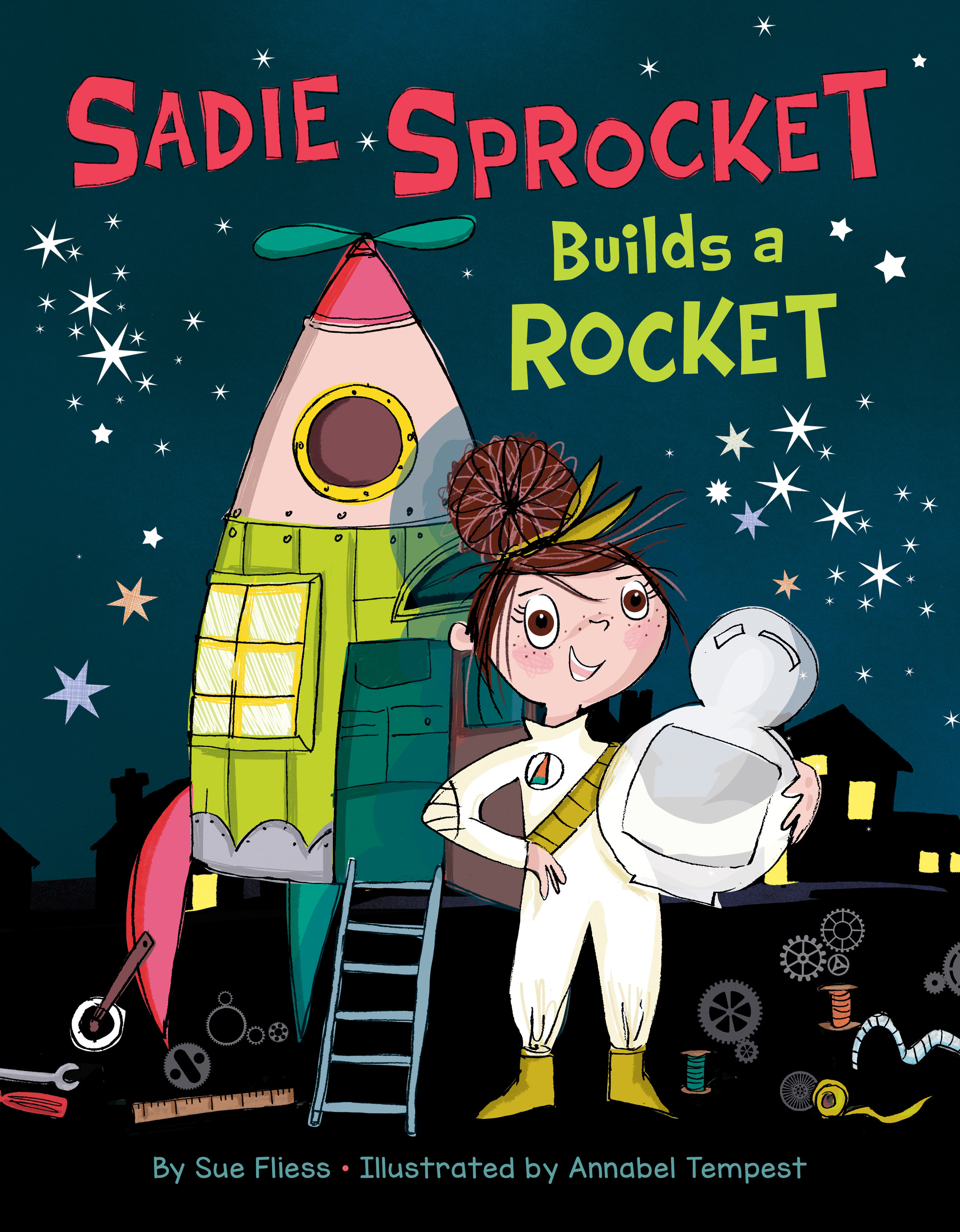
Sadie Sprocket Builds a Rocket, by Sue Fleiss/Illustrated by Annabel Tempest,
(Feb. 2021, Two Lions), $17.99, ISBN: 9781542018036
Ages 4-6
Sadie Sprocket is a little girl with a big wish: she wants to go to Mars! She maps out the distance, puts together a crew of her most trustworthy stuffed toys, and gets to work building a rocket. They blast off from Earth and arrive at Mars, where they take pictures and gather samples, but when it’s time to head back to Earth, there’s a problem: can Sadie get herself and her friends back home? Lively rhyme and adorably bright and friendly, cartoony artwork make this an eye-catching readaloud. Sadie is a smart cookie who knows how to plan a mission and lay out the problem in order to solve it – just like our Kiddos learn at school. Facts about Mars and women in space make up the back matter, and make this a phenomenal choice for Women’s History Month in March, too. Pair with Andrea Beaty’s Questioneers series, Sol Regwan’s Geraldine series, and Ken Wilson Max’s Astro Girl. Consider adding some Mars picture books, like Brianna Caplan Sayres’s Night Night Curiosity, or Buzz Aldrin’s Welcome to Mars for Kids. Remind kids that nothing is out of reach by inviting them to create coffee filter planets after reading.
“Inspiring, adventurous fun for aspirational kids.” —Kirkus Reviews
Sue Fliess is the author of more than thirty children’s books, including Mrs. Claus Takes the Reins, illustrated by Mark Chambers; Shoes for Me!, A Dress for Me!, and Books for Me!, all illustrated by Mike Laughead; and Let’s Build, illustrated by Miki Sakamoto. She lives with her family and their two dogs in northern Virginia, where they admire the moon, stars, and sometimes even planets from their backyard. Learn more about Sue at www.suefliess.com.
On Twitter: @SueFliess
Facebook: Sue Fliess Author
Pinterest: Sue Fliess
Annabel Tempest is the illustrator of a number of picture books and board books. She holds a degree in fashion and textiles and has worked as a freelance illustrator on everything from maps and packaging to greeting cards and children’s books. She lives in the beautiful Somerset countryside in the UK with her husband and a houseful of muddy boys and dogs. Learn more about Annabel at www.annabeltempest.com.
On Instagram: annabel.tempest
Another post about Bears…
(It’s a joke, based on one of the book’s titles. Keep reading.)
Who loves bears? We love bears! Teddy bears, polar bears, brown bears brown bears, bears are children’s book gold. I’ve got three books about bears to crow about today, so let’s start with the inspiration for this post’s title.
Another book about bears., by Laura & Philip Bunting, (Jan. 2020, Kane Miller), $14.99, ISBN: 978-1-68464-084-3
Ages 3-7
I love a story that breaks the fourth wall! Have you ever thought about how many books there are about bears? Did you ever consider that every time a bear stars in a story, that bear may have been in the middle of something “really good – like sleeping, or snoozing, or napping”? Well, the bears have had it and are going on strike! This hilarious book is all about one bear’s fight for justice. The omniscient narrator tries their best to nudge the bear into compliance in a silly series of moments like dressing it up in a tutu or suggesting the bear kiss a frog, but Bear stands firm, even calling up other animals to serve as a proper stand in. Kids will laugh out loud at the deadpan humor, and the ultimate solution that works for everyone is priceless. Originally published in Australia in 2018, Another book about bears is storytime hilarity just waiting to be revealed.
Visit Philip Bunting’s webpage for free, fun downloadables for kids, too!
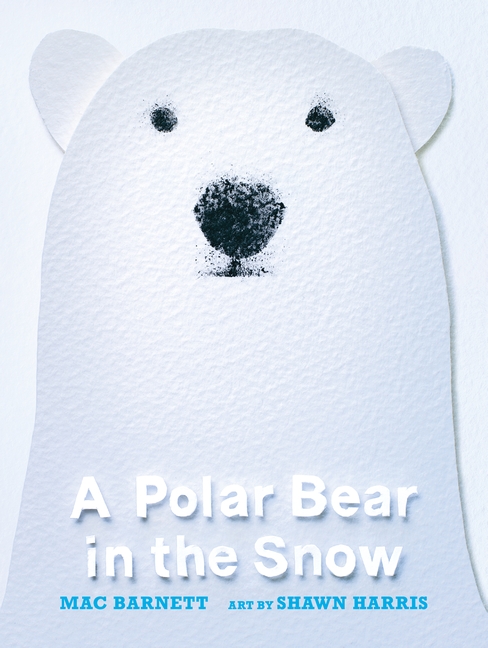
A Polar Bear in the Snow, by Mac Barnett/Illustrated by Shawn Harris, (Oct. 2020, Candlewick Press), $17.99, ISBN: 9781536203967
Ages 3-6
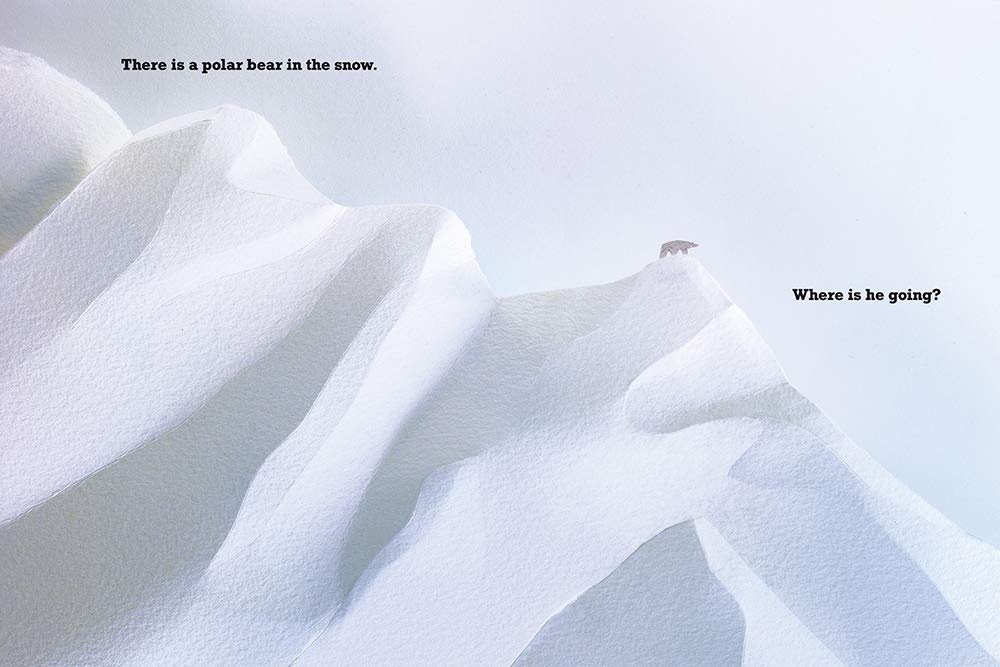
Gorgeous cut paper and ink artwork presents a polar bear’s meandering through a brilliant white world and a deep blue sea. A polar bear wakes up in the snow and begins walking… but where is he going? What does he want? Award-winning author and illustrator Mac Barnett builds curiosity and excitement as readers follow the bear past seals, through a storm, and as he rebuffs a human in a very polar bearlike fashion, to end up at his destination. Shawn Harris’s illustrations give such texture and motion, layering shades of white upon white and blue upon blue, giving us a feeling of purpose and joy. Simple sentences and facts about polar bears (he clearly eats seals, but he’s not hungry right now; his coat protects him from the snowstorm; he likes to swim) are a wonderful introduction to young readers about the natural science of bears and the Arctic. A final question leaves much open to discussion. There’s so much presented in this book, so beautifully, and respects its youngest readers in its presentation. Teacher Tips are downloadable from Candlewick’s website.
A Polar Bear in the Snow has starred reviews from Kirkus, School Library Journal, Booklist, and Publishers Weekly.
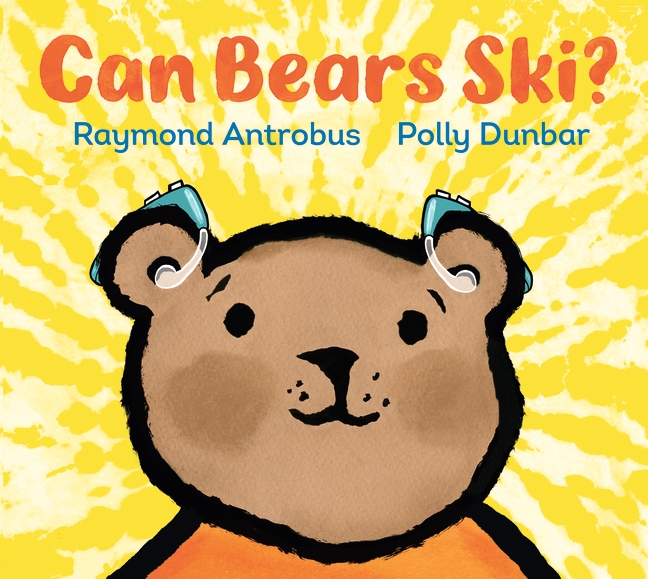
Can Bears Ski?, by Raymond Antrobus/Illustrated by Polly Dunbar, (Nov. 2020, Candlewick Press), $16.99, ISBN: 9781536212662
Ages 3-7
Little Bear can feel the world around him – all its rumbles and shakes, trembles and wobbles – but hearing his world is a little more difficult. He doesn’t hear things clearly, and thinks he hears everyone asking him, “Do bears ski?” Dad takes him to an audiologist one day, and is fitted for hearing aids that make his world way too LOUD. He resists them at first, hiding them around the house, but with his dad’s love and support, he understands that it’s just something new to get used to – and he also learns that everyone has been asking him not whether or not bears can ski, but “Can you hear me?” A touching story about self-discovery, Can Bears Ski? is essential for bookshelves and can start many conversations with children. Author Raymond Antrobus is a Ted Hughes award-winning deaf poet and teacher who wrote Can Bears Ski because “It’s the book I could see myself reaching for as a child, and I can’t wait to have it exist in the world.” Colorful ink and paint artwork made this a gentle, comforting story about a big topic. The CDC’s Kids Quest webpage has helpful facts for kids on hearing loss.
I’m back with more graphic novels!
Hi all! I gave myself a mental health break for the holidays. I didn’t get anything done around my home, as I’d hoped, but I did take a break, knit, and read for a bit, and it was nice. I hope you all had warm and happy holidays, and are safe and well. Let’s finish this year strong and look forward to a better 2021.
In the meantime, I’ve got some graphic novels to crow about.
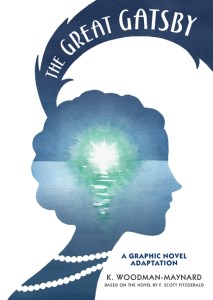
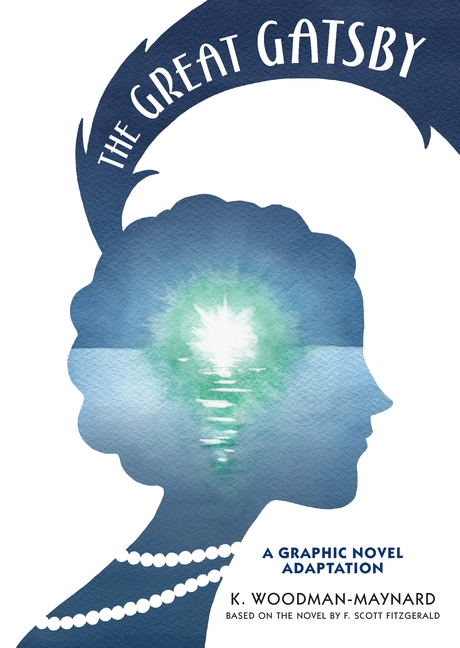
The Great Gatsby, by F. Scott Fitzgerald/Illustrated by K. Woodman-Maynard, (Jan. 2021, Candlewick Press), $24.99, ISBN: 9781536213010
Ages 12+
The Great Gatsby is getting lots of graphic novel love lately; Fred Forham’s vision was a 2020 CYBILS graphic novel nominee. K. Woodman-Maynard’s envisioning of the Fitzgerald classic is much more surreal, with dreamlike watercolors and narration blended into the background: Nick’s words wander around rugs and through lightbulbs, run over sidewalks, and curl into cigarette smoke. The story of Jazz Age love and murder feels like a series of beautiful watercolors, but a large chunk of the story is missing, making this hard to follow for readers who haven’t read the original story. In her author’s note, Woodman-Maynard even states that she was excited by the metaphors in the story, and it was not her intent to be “an exact literal interpretation of the novel”. As a surrealistic exploration and companion to the original, Woodman-Maynard’s book certainly provides a compelling look. Get a look at a chapter excerpt here, thanks to publisher Candlewick.
Beetle & The Hollowbones, by Aliza Layne, (Aug. 2020, Atheneum Books for Young Readers), $21.99, ISBN: 9781534441538
Ages 9-13
First, I have to make a huge apology here: I was invited to a blog tour for Beetle back in August, which also happened to be a point where things were falling apart here, and I blew the date. I am still embarrassed and mortified, because I really work to keep to things like that. So I hope this post makes up, in some way, for the oversight. That said, Beetle & Hollowbones is adorable! A homeschooled goblin-witch named Bettle befriends Blob Ghost, a blobby ghost that inhabits space at the local mall in the town of ‘Allows. Blob Ghost – or, BG, as Beetle calls them – is relegated to the mall, so Beetle happily visits, and is sad when she has to leave. Beetle’s old friend Kat shows up for a sorcery apprenticeship with her intimidating Aunt Hollowbone, and Beetle is fascinated: Kat’s cool, she’s social media famous, chic, and great at magic, to boot. The two start spending time together, to BG’s disappointment, but when Aunt Hollowbone’s awful plan to raze the mall becomes public news, Beetle realizes she has to save BG and find a way to release the mall’s hold on them.
A story about friendship, doing the right thing, and standing up for yourself, Beetle & The Hollowbone’s illustrations are beautiful and vibrant, with adorably creepy creatures that I could easily envision in an animated series. This is the kind of story my library kids love: warmth, family, and friendship, with some magic to infuse the tale.
Beetle and the Hollowbones has starred reviews from Kirkus, School Library Journal, Publisher’s Weekly, and Booklist. It is also a CYBILS 2020 Graphic Novels nominee.
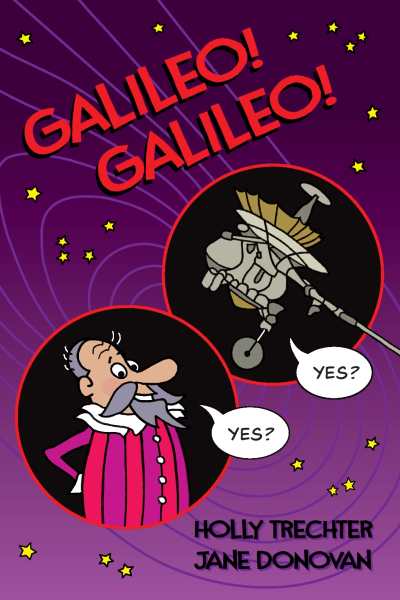
Galileo! Galileo!, by Holly Trechter & Jane Donovan, (Aug. 2020, Sky Candle Press), $13.99, ISBN: 978-1939360083
Ages 8-13
Narrated by the historical Italian astronomer Galileo Galilei, Galileo! Galileo! is the story of NASA’s mission to Jupiter. We get a brief recap of Galileo’s life, for an understanding of why the mission bore his name; the narrative then moves into a comprehensive, illustrated lesson on the history of aeronautics and space missions. Holly Trechter’s time as a NASA Ames History Archives intern provides great insights, including a peek at Carl Sagan’s letter-writing campaign that saved the Galileo after budget cuts by the Reagan administration. Holly Trechter and Jane Donovan make Galileo Galilei a cartoony, amiable character who explains the science and politics of space travel in friendly, understandable terms, and the artwork is colorful and includes diagrams, maps, and colorful illustrations. Back matter includes discussion questions. Give this to your Science Comics and History Comics readers for sure. Galileo! Galileo! is a CYBILS 2020 Graphic Novels nominee.
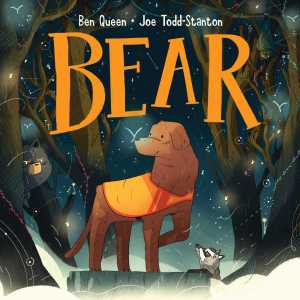
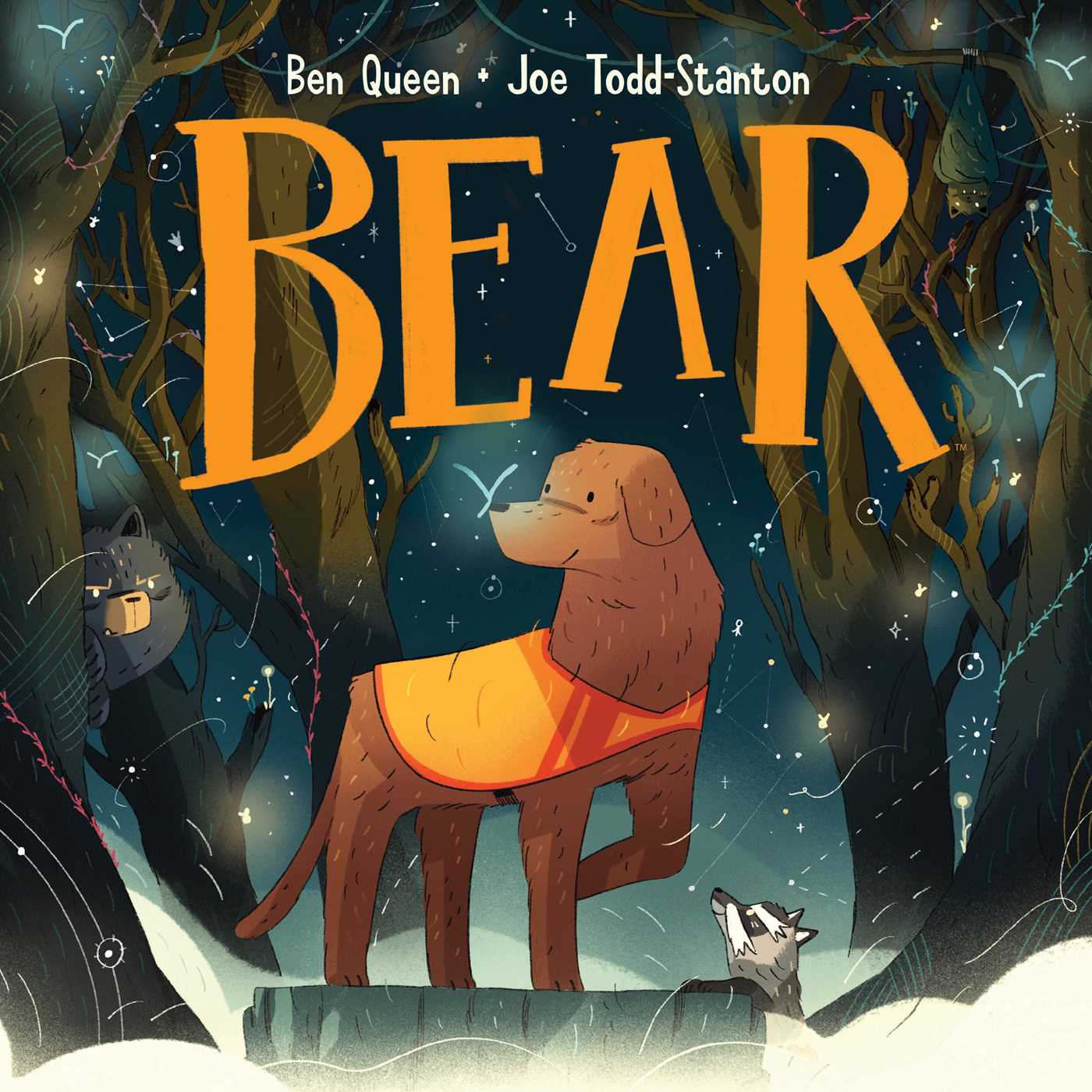
Bear, by Ben Queen & Joe Todd-Stanton, (Aug. 2020, Archaia), $24.99, ISBN: 978-1684155316
Ages 7-12
This is another CYBILS 2020 Graphic Novels nominee that I really enjoyed. An original graphic novel from Pixar writer Ben Queen and illustrator Joe Todd-Stanton and published by BOOM! imprint, Archaia, Bear is the story of the relationship between a guide dog and his human. Bear is service dog who lives with Patrick, the blind man he takes care of. Bear and Patrick are happily living together, but when Bear suddenly loses his vision; he worries that he’s lost his purpose. He gets separated from Patrick while trying to get advice from a raccoon, on getting his vision back, and ends up on a grand adventure where he’ll meet bears, run through the streets and subways in Manhattan, and try to find his way back to Ulster Country. Bear is gentle and noble; he will do anything for Patrick, and in turn, Patrick will stop at nothing to find Bear. I loved the relationship between these two, and I thoroughly enjoyed the raccoons, largely played for comic relief, and Stone, the bear who takes it upon himself to keep Bear safe on his travels. The story is also a positive portrayal of a blind character: Patrick repairs vending machines, is a passionate reader and “a decent athlete” who applies for a guide dog in order to pick up more machines on his service route; he hears that having a guide dog will allow him to travel faster than walking with a cane. The book also gently corrects ableist language; when Patrick mentions having a “seeing eye dog”, the trainer responds that they are called “guide dogs”.
Beautifully illustrated with gentle colors and empathetic characters, Bear will make my graphic novel shelves when we reopen. Until then, I’ve handed this one to my Kiddo. Results to come.
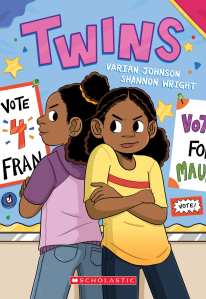
Twins, by Varian Johnson/Illustrated by Shannon Wright, (Oct. 2020, Graphix), $12.99, ISBN: 978-1338236132
Ages 8-12
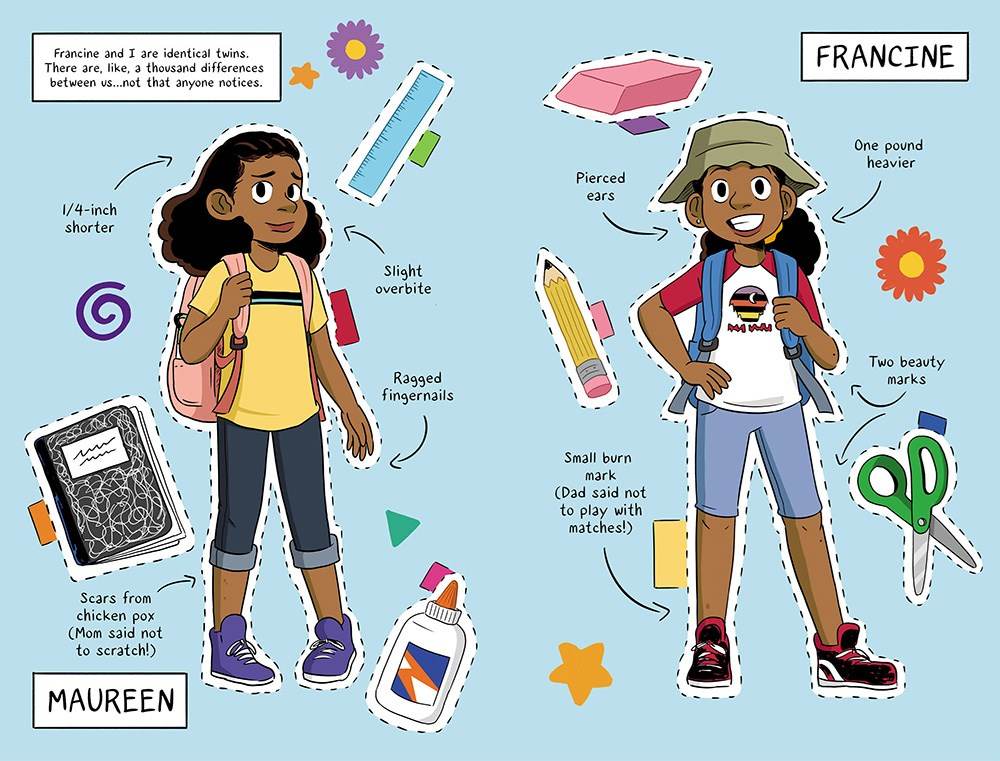
Twin sisters Maureen and Francine share a room and a life, but starting sixth grade is BIG. Francine, the more extroverted, can’t wait for the chance to start meeting new people and having new experiences, but Maureen is more introverted, more hesitant. She misses dressing like her twin, and she’s really not thrilled that she has no classes with her; when Francine starts calling herself “Fran”, Maureen doesn’t know who this alien who took off with her sister is! Maureen is also intimidated by her school’s Cadet Corp, especially her instructor, Master Sergeant Lucinda Fields. Maureen, the straight-A student, is frustrated by her difficulty in getting marching in formation down and the overwhelming experience of middle school, so discovering that Francine and their parents were behind the decision to put the girls in separate classes AND enroll Maureen in Cadet Corp makes her take action: she decides to run against her sister in the race for Class President. A story of growing up and facing adolescence with all its challenges, Twins features main characters of color in a strong family and a relatable story that anyone with siblings – and close friends – will recognize. It’s hard enough growing apart from one’s best friend, but what happens when that best friend is your sister – and a person you share a friendship group with? I loved the story, the relationship between the sisters and the relationship between family members, the realistic frustration of sharing friends when you have a falling-out, and the challenges of taking on new experiences. Give to your Varian Johnson readers and your graphic novel fans that loved the Invisible Emmie, Becoming Brianna, New Kid, Class Act, and the Nat Enough books.
Twins has starred reviews from The Horn Book, School Library Journal, Publishers Weekly, Kirkus, and Booklist. Twins is also a CYBILS 2020 Graphic Novels nominee. See the full list of honors at Varian Johnson’s webpage.
Holiday Goodies: Gift book shopping guide!
I hope everyone enjoyed their holiday break! If you celebrate Thanksgiving, I hope you had a wonderful and safe holiday. And now, the shopping season heats up, so let’s get another gift guide together. This one is all about the gift books, and remember: today is Small Business Saturday, so if you’re able to, please support a local business!
Anatomicum (Welcome to the Museum), by Jennifer Z. Paxton/Illustrated by Katy Wiedemann, (Sept. 2020, Big Picture Press), $35, ISBN: 9781536215069
Ages 8-13
The Welcome to the Museum series is a great nonfiction series that lets readers recreate a museum in their own homes. Every museum wing you can imagine has a book: Dinosaurs, Animals, History, and so many more; many of the books have companion workbooks. The latest book, Anatomicum, dives into the inner workings of the human body: how our cardiovascular systems and respiratory systems work, how facial muscles contribute to facial expressions, the development of a baby in the reproductive system, and how our immune and lymphatic systems help fight disease are just a few areas readers will explore. Katy Wiedemann’s scientific drawings in 2-color sepia-tones are detailed and Jennifer Z. Paxton’s accompanying text provides factual explanations and overviews on each area. Think of this as a Grey’s Anatomy for younger readers; artists and budding biologists and medical professionals alike will love this.
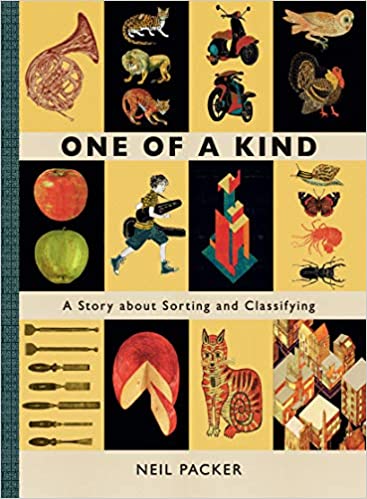
One of a Kind: A Story About Sorting and Counting, by Neil Packer, (Oct. 2020, Candlewick Studio), $22.99, ISBN: 9781536211214
Ages 7-10
A story wrapped within a book on classification, this is an excellent introduction to scientific classification and organization for kids. Readers meet a boy named Arvo, and get a look at his family tree. They meet his cat, Malcolm, and see his family tree, too. As Arvo moves through his day, readers discover how many ways there are to classify and organize information: as he learns to play the violin, we see where it fits into a grouping of musical instruments; when he needs to fix his bicycle’s tire, we get a look at different types of tools. Arvo visits the library, where the books are laid out by subject: can I get a print of this for my library? Back matter describes the classifications discussed throughout the story, and the mixed media art is interesting; each piece looks like a museum piece. What a great next step for sorting and classifying for kids!

The Language of the Universe, by Colin Stuart/Illustrated by Ximo Abadía, (Oct. 2020, Big Picture Press), $24.99, ISBN: 9781536215052
Ages 8-12
A visually stunning of the intersection of math and science, The Language of the Universe examines the history and application of math in the natural world. Discover the Fibonacci sequence in a sunflower and investigate the atom patterns in the periodic table; lift with levers and use math to encrypt messages. The text is easy to understand and lends itself to fun new projects for readers to think up. The art is colorful and there’s always something exciting to look at. Another great addition to shelves for young scientists and artists everywhere.
Space Encyclopedia: A Tour of Our Solar System and Beyond, by David A. Aguilar, (Nov. 2020, National Geographic), $24.99, ISBN: 978-1426338564
Ages 8-12
The latest update of NatGeo Kid’s Space Encyclopedia is out just in time for the holidays! The latest updates on our universe, all accompanied by breathtaking, full-color photographs, wait for readers in these pages. Sections on the stars, a tour of the solar system, life on other planets, and our future inclue Amazing Space! Milestone timelines, fun facts, and easy-to-read quick data bursts throughout. Spotlights on key figures in space exploration include Galileo Galilei, Albert Einstein, and Copernicus. The book is indexed and includes resources for additional reading and websites. A great gift idea for your budding astronomers and astrophycisists.