Posted in Graphic Novels, Middle Grade, Non-fiction, Teen, Tween Reads, Young Adult/New Adult

Graphic Novels for Tweens and Teens

I’m back with more graphic novels! It’s an all-consuming joy of mine; I love them all. I’ve got some newer and up-and-coming books, and some backlist that shouldn’t be missed. I’ve got books for middle grade/middle school, and I’ve got teen/YA, so let’s see what’s good!

Sylvie, by Sylvie Kantorovitz, (Jan. 2021, Walker Books US), $24.99, ISBN: 9781536207620

Ages 9-13

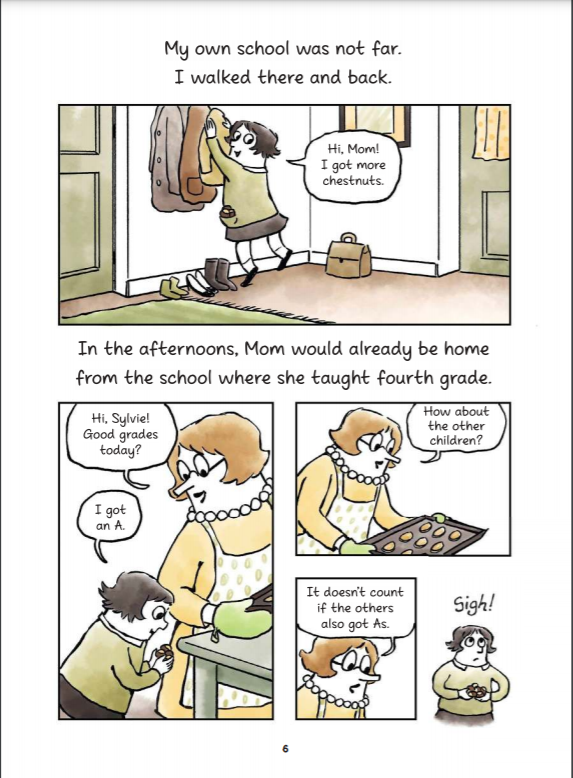
An autobiographical graphic novel that really hits the sweet spot for middle schoolers but will also appeal to upper elementary and high schoolers, Sylvie is the story of the author and illustrator’s life, quirks and all. She grows up in a school where her father was principal. She loves art from an early age, but her mother is focused on her pursuing a career in math or science. The book follows her family as they add more children to the family and Sylvie’s mother doggedly pushes her academically. As she grows in confidence, and seeks her father’s council, Sylvie takes control of her own future. Artwork is cartoony and friendly, and easy-to-read, first-person narration makes Sylvie readers feel like they’re talking with a friend. Discussions about racism and anti-Semitism in ’60s and ’70s France sets the stage for discussion.

Candlewick/Walker Books US has a sample chapter available for a preview.
 

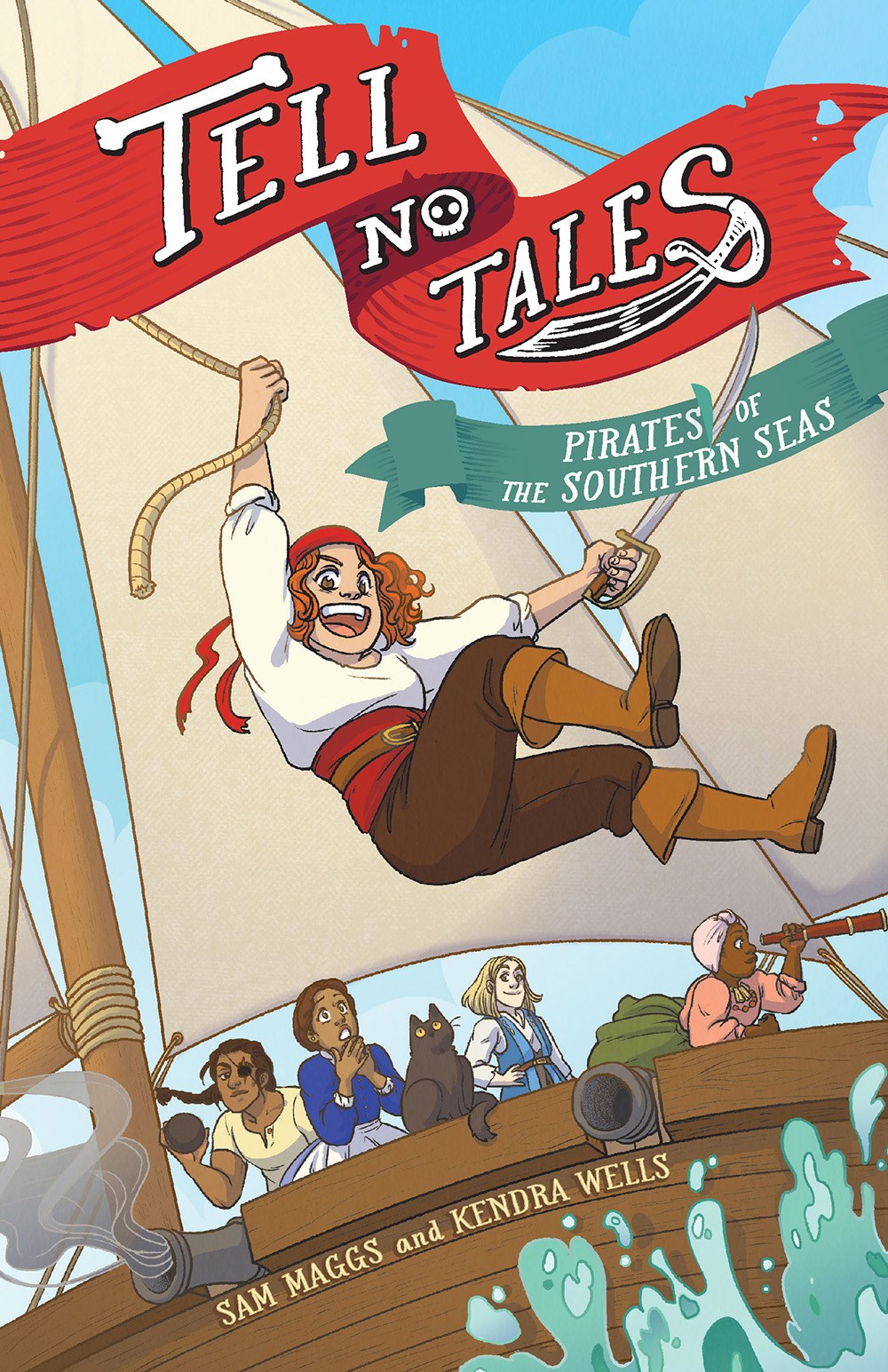
Tell No Tales: Pirates of the Southern Seas, by Sam Maggs/Illustrated by Kendra Wells, (Feb. 2021, Amulet), $21.99, ISBN: 9781419739668

Ages 10-14

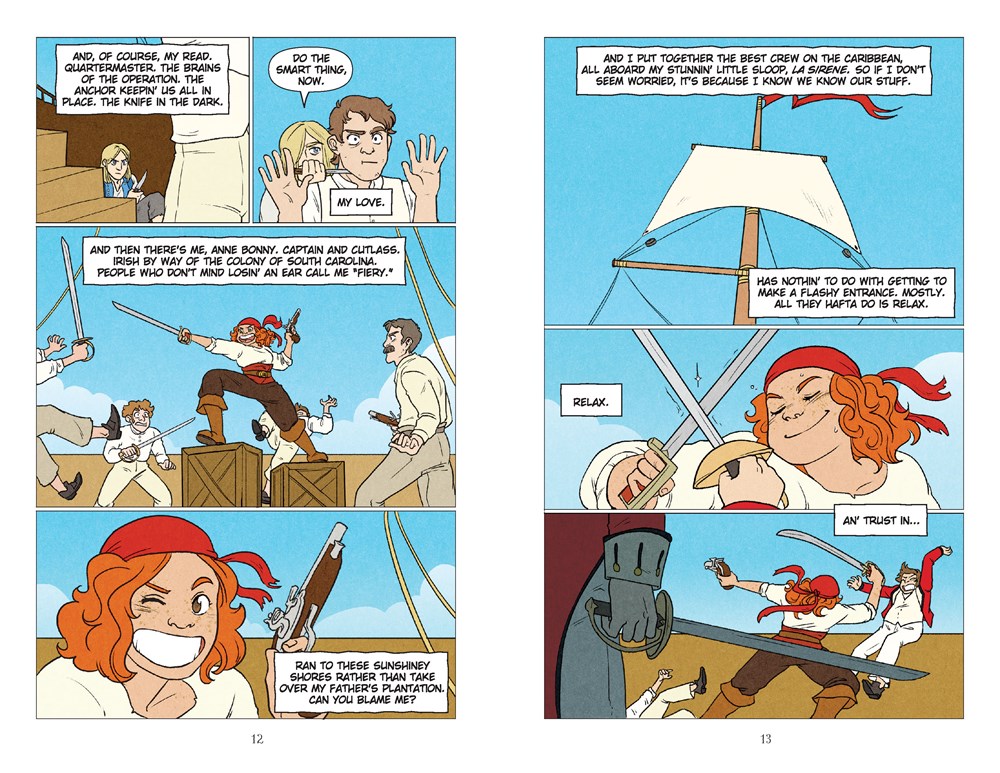
Another middle school-geared book, Tell No Tales is a fictionalized account of pirate Anne Bonny, pirate Mary Read, and their female and non-binary pirate crew. They have a growing reputation, but a privateer is on their heels: Woodes Rogers, a failed pirate turned pirate hunter for the Crown, has sworn to wipe the stain of piracy from the seas. There are strong positive female and non-binary characters, based on characters from history, but the overall story falters, leaving readers to look for the thread in between the individual stories of Bonny’s crew, all of which are fascinating. The artwork is colorful, manga-inspired, and will grab viewers. Back matter includes a word on the real-life exploits of Anne Bonny and Mary Read, notes, and a bibliography.

Publishers Weekly has an interview with Sam Magga and Kendra Wells. 
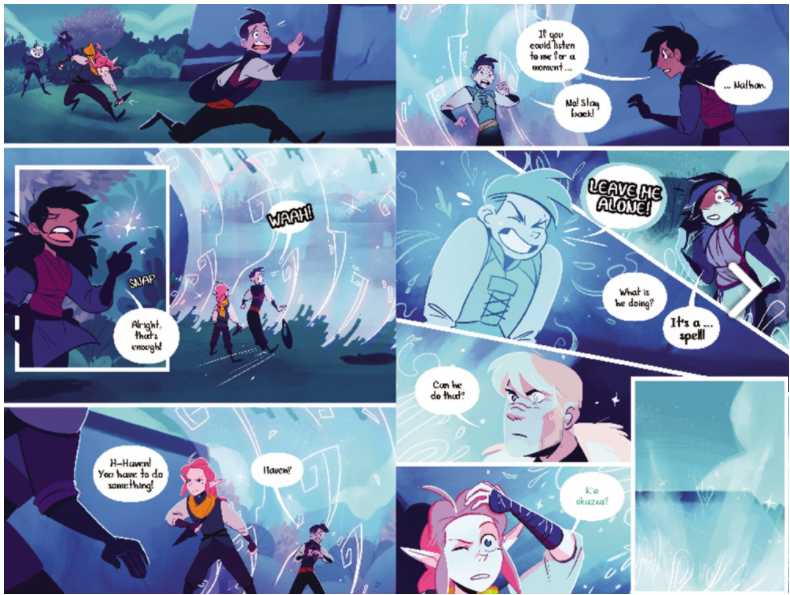
Fantastic Tales of Nothing, by Alejandra Green & Fanny Rodriguez, (Nov. 2020, Katherine Tegen Books), $12.99, ISBN: 9780062839473

Ages 8-13

One of the most beautifully illustrated graphic novels I’ve ever seen, Fantastic Tales of Nothing is one of heck an epic fantasy for middle graders and tweens, and early teens. Nathan is a human living what he considers a pretty ordinary life until that fateful day when he wakes up in the middle of nowhere and meets a being named Haven and a race of shape shifters called the Volken. As the unlikely group find themselves on a quest, Nathan also learns that he isn’t that ordinary – he has mysterious power in side of him, and the fate of Nothing lies in his hands. Vivid color, breathtaking fantasy spreads, and solidly constructed worldbuilding lays the foundation for what could be a groundbreaking new fantasy series for middle graders, with nonbinary and Latinx representation to boot. Where are the starred reviews for this book?

Tales of Nothing received IndieNext Honors. The website has more information about the characters, authors, and upcoming projects.
 

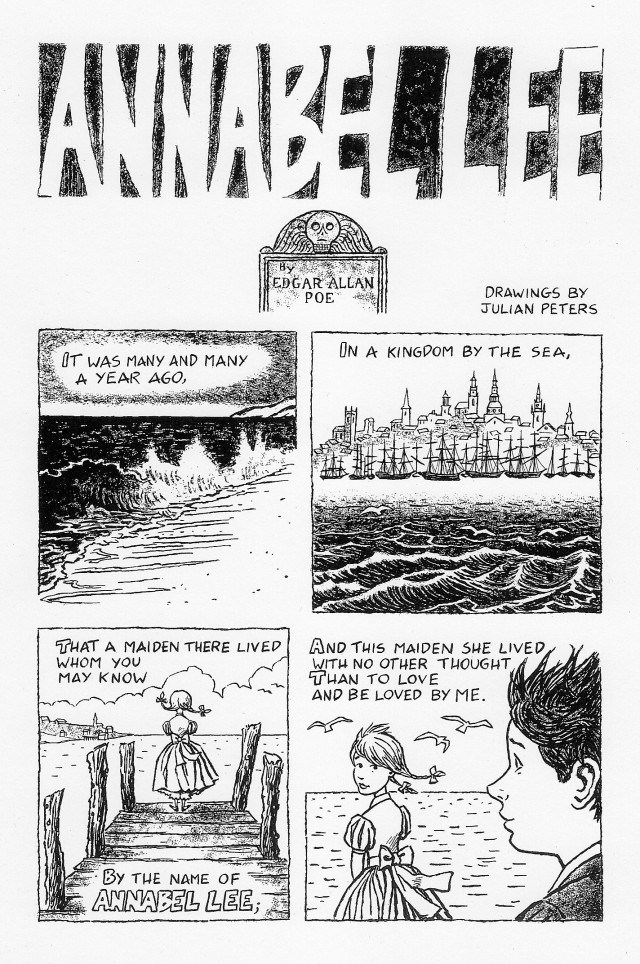
Poems to See By: A Comic Artist Interprets Great Poetry, by Julian Peters, (March 2020, Plough Publishing House), $24, ISBN: 9780874863185

Ages 12+

Illustrator Julian Peters has taken 24 poems by some of the most recognizable names in the art form, and brought them to life using different art forms, from manga to watercolor to stark expressionist black and white.  Organized into six areas of introspection: Seeing Yourself; Seeing Others; Seeing Art; Seeing Nature; Seeing Time, and Seeing Death, Peters illustrates such master works as “Caged Bird” by Maya Angelou, “Annabel Lee”, by Edgar Allan Poe, and “Juke Box Love Song” by Langston Hughes. It’s a great way to invite middle school, high school, and college students to deep dive into some of the greatest works of poetry.
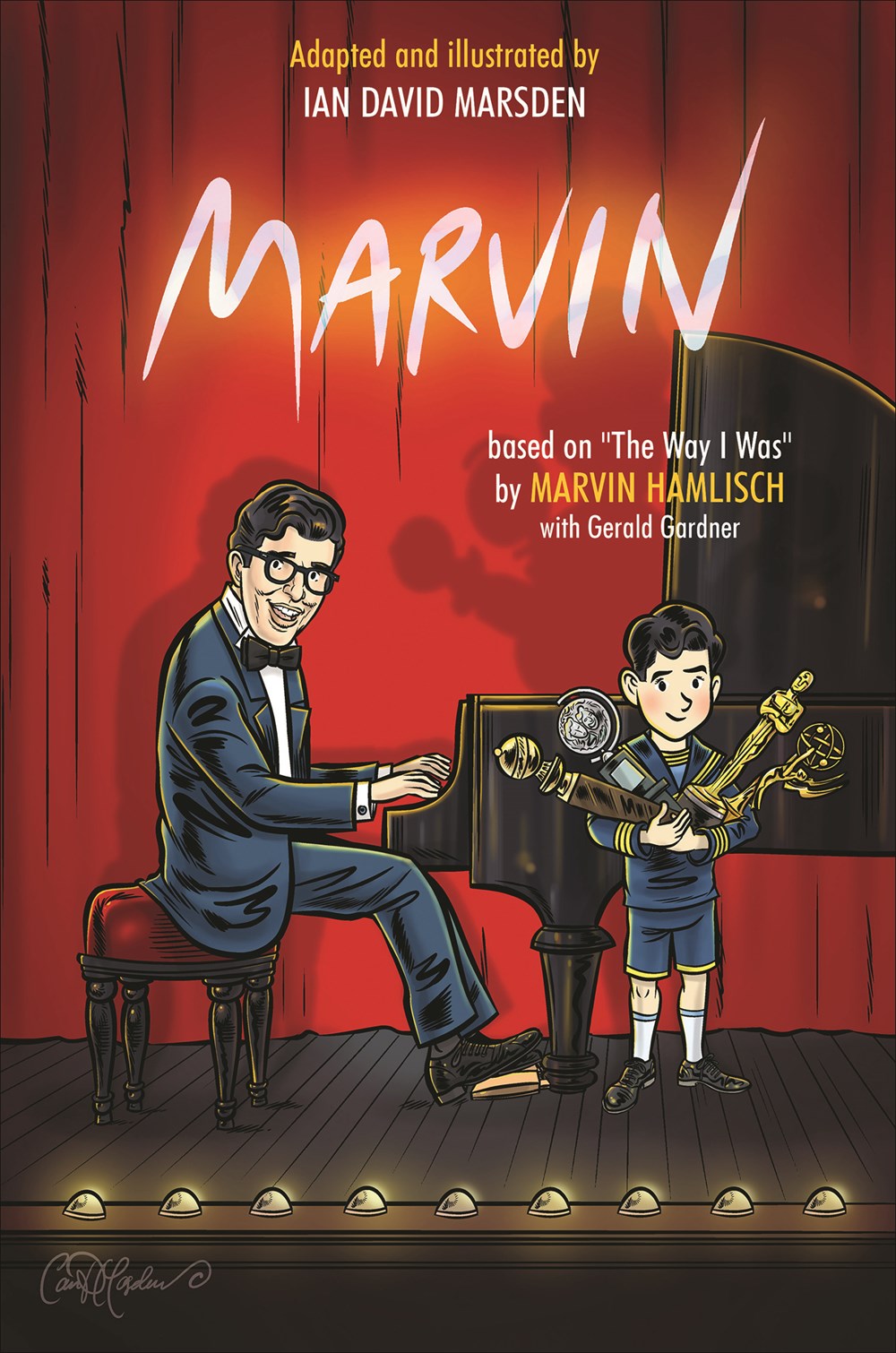
Marvin: Based on The Way I Was, by Marvin Hamlisch with Gerald Gardner/Adapted and Illustrated by Ian David Marsden, (Feb. 2020, Schiffer Kids), $12.99, ISBN: 9780764359040

Ages 9-13

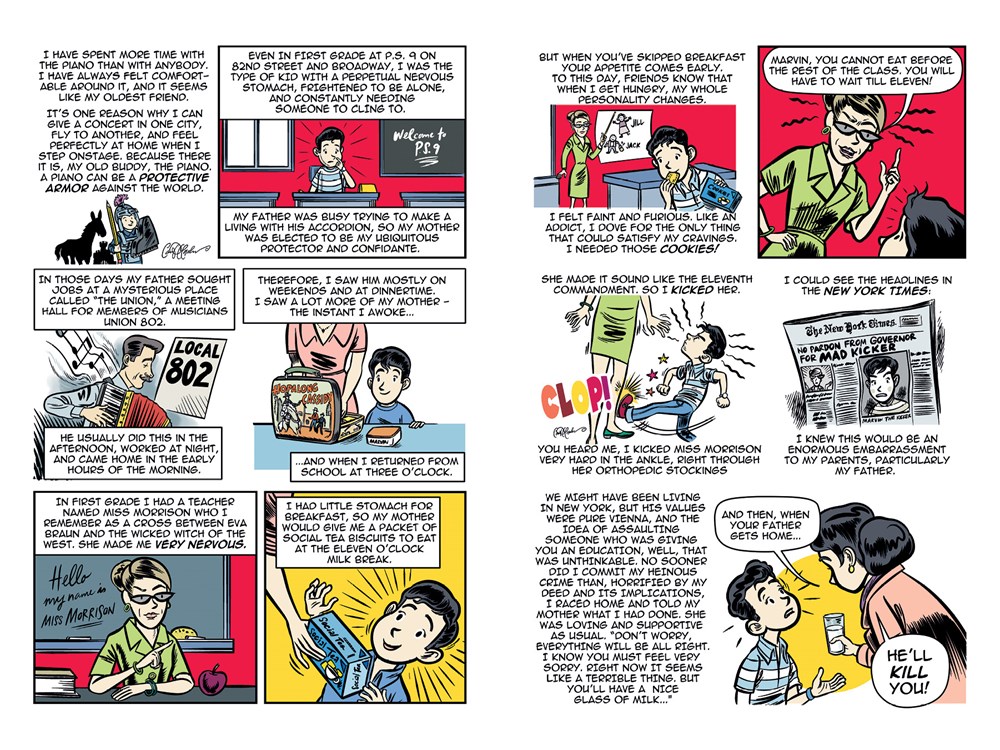
This graphic adaptation of PEGOT (Pulitzer, Emmy, Grammy, Oscar, Tony) winner Marvin Hamlisch’s biography is one I did not see coming! The legendary musician, composer, and conductor discusses his family’s flight from Hitler’s Austria and settling in America, Hamlisch’s admittance to Julliard at the age of 6, and the intense anxiety that plagued him before every performance. He tells readers about attending high school with Christopher Walken and Liza Minelli, and playing the piano for Judy Garland as a teen; about composing pop radio hits and learning to compose music for a motion picture as he went along. By the time he was 30, he’d won his first major award. Hamlisch’s voice is funny, warm, and conversational throughot, and Marsden’s realistic art has touching moments, particularly between Hamlisch and his father. A great read for theatre and music fans – this one is going to be my not-so-secret weapon.
Posted in Fantasy, Graphic Novels, Non-Fiction, Realistic Fiction, Teen, Young Adult/New Adult

More graphic novels to add to your shelves and your TBR

I have been reading a metric ton of graphic novels over the last year. I mean, I’ve been reading comics and graphic novels forever, but I found them comforting this past year in a whole new way. When my mind couldn’t focus on words and putting thoughts together, graphic novels were there to guide me through, with artwork and words coming together for storytelling. And there are such great books coming out now! My Kiddo and I are reading them together (most of the time… there are some that aren’t appropriate for him just yet) and sharing laughs and talking about big things, little things, lots of things. Here are a few of the books I’ve read over the last couple of weeks: these are a little less appropriate for littles, much better for teens and young adults.

Freiheit! The White Rose Graphic Novel, by Andrea Grosso Ciponte, (Feb. 2021, Plough Publishing), $24, ISBN: 978-0-87486-344-4

Ages 12+

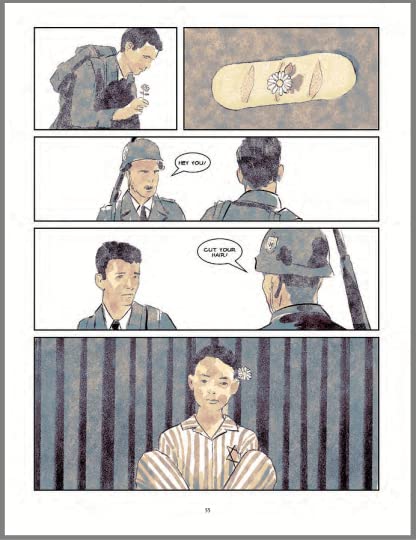
In 1942, a group of students joined together to oppose Hitler and the Nazi Party. They questioned the system and distributed leaflets encouraging their fellow Germans to do the same. The White Rose engaged in passive resistance in a time where speaking against the government carried a death penalty; by the time  the short-lived movement came to a halt in 1943 when the core members were arrested and sentenced to death by guillotine by the Nazis, their actions set a resistance in motion. Freiheit! chronicles the story of the key members of the White Rose: siblings Sophie and Hans Scholl and Christoph Probst. The narrative was tough to follow at moments; more of a collection of memories than a cohesive, linear narrative. That way of storytelling works for some, so keep that in mind when considering it for your library. The moody, often murky artwork gives heavy atmosphere to the pacing.

If you’re interested in further reading on the White Rose, the National WW2 Museum has an article on Sophie Scholl, the Jewish Virtual Library has an essay on the group, as does Smithsonian Magazine. There are lesson plans on the resistance available online: ELT-Resourceful has a lesson plan on Sophie Scholl and the White Rose, geared toward ESOL students; Study.com has study aids, and A Teacher’s Guide to the Holocaust has a detailed lesson plan for grades 6-12 complete with Sunshine State Standards.


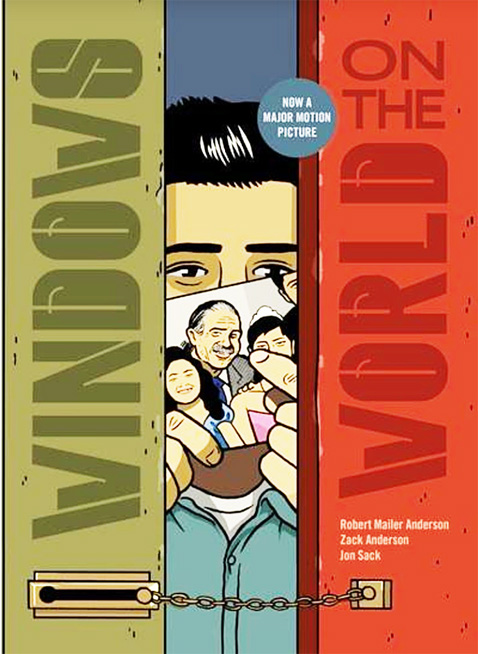
Windows on the World, by Robert Mailer Anderson & Zack Anderson/Illustrated by Jon Sack, (June 2020, Fantagraphics), $24.99, ISBN: 978-1-68-396322-6

Ages 17+

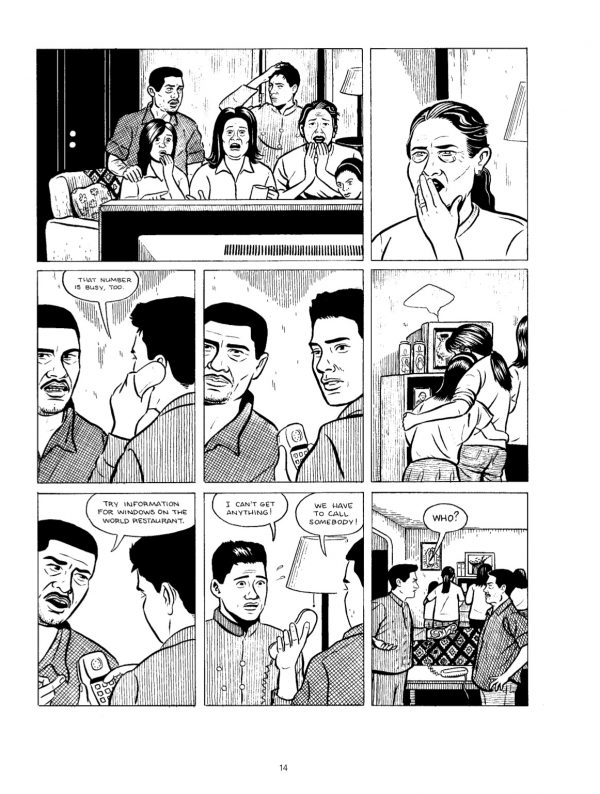
Based on the screenplay from a 2019 film, Windows on the World is, on the surface, a story about a young man searching for his father in the aftermath of 9/11; upon reading, you realize that it’s also a blistering commentary on America and its treatment of undocumented people. Fernando is a young man living with his family in Mexico, watching September 11th unfold on TV; for his family, the terror hits hard: Balthazar, Fernando’s father and the family patriarch, works at Windows on the World, the restaurant at the top of the World Trade Center. Fernando’s mother refuses to believe he’s a casualty of the attack, a belief seemingly confirmed when she swears she sees him on a newsreel, escaping the Towers. Fernando heads to New York to learn his father’s fate, but discovers a very different America: He must pay coyotes – predatory smugglers who take immigrants across the US/Mexico border – to sneak him into the country. When he arrives in New York, he discovers that his father, undocumented, working in the States and sending money back to Mexico to support his family, has disappeared into the morass of people. Because he was undocumented, he isn’t on any of the employee lists, as he didn’t “officially” work in the Towers. Fernando has no money and no place to stay, so he takes to the streets, encountering racism and danger as he desperately tries to locate his father. A strong commentary on how America, as Solrad magazine states, went from “9/11 to Build The Wall”, Windows on the World is a hard, necessary, relevant look at racism in America.  Content warnings for younger readers.

Windows on the World has a starred review from Publishers Weekly.

The Cloven, by Garth Stein/Illustrated by Matthew Southworth, (July 2020, Fantagraphics), $24.99, ISBN: 9781683963103

Ages 13+

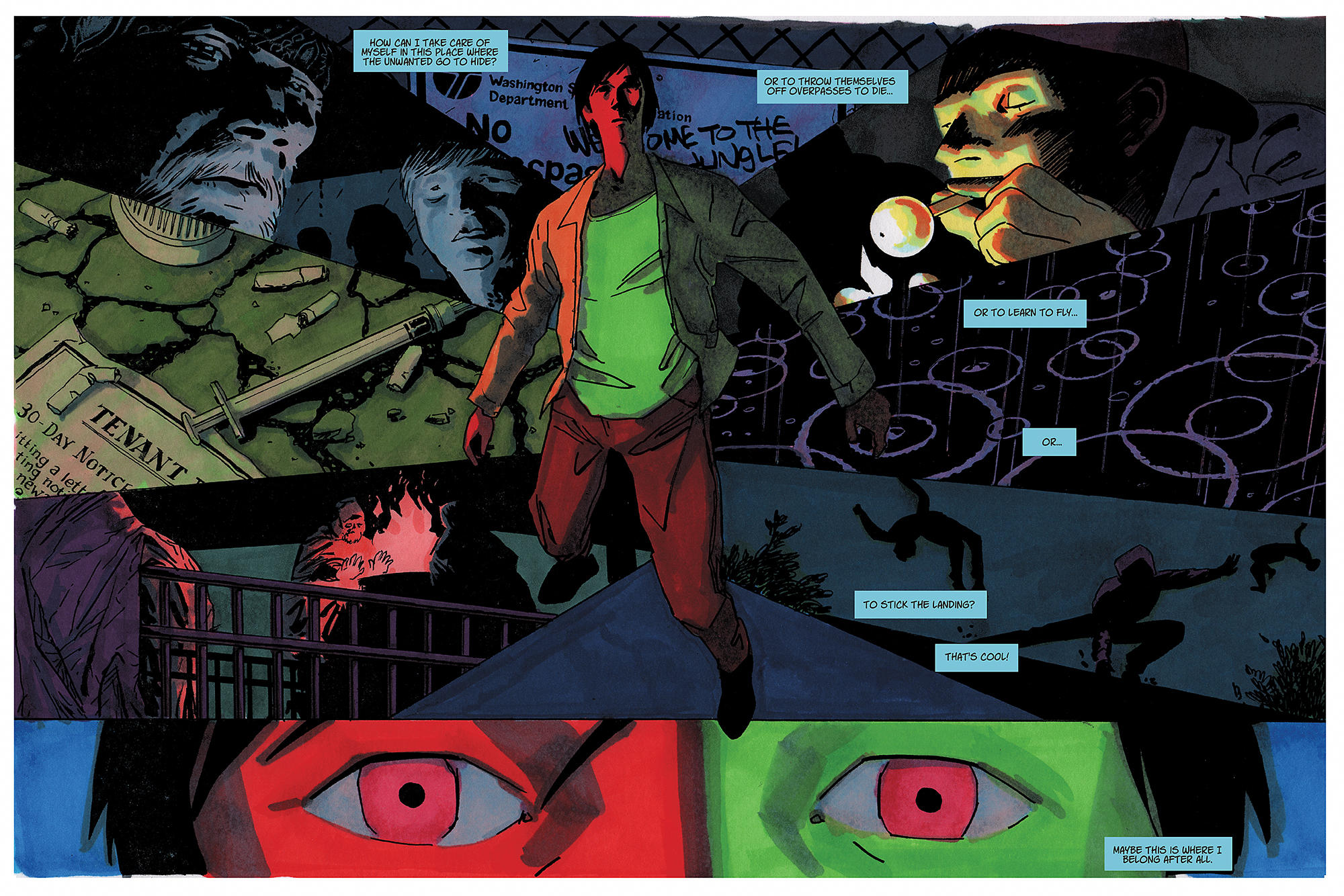
Garth Stein, better known as the author of The Art of Racing in the Rain and co-creator of the TV series Stumptown, released his first graphic novel; number one of a planned trilogy. James Tucker is a young man who’s different: he’s a genetically modified science project, created in a lab, and he’s a cross between a human and a goat, a species called The Cloven. Tuck just wants a normal life, but he’s on the run and searching for answers. Flashbacks flesh out Tuck’s story and the story of the Cloven project, which reminded me of the Weapon X program that created Wolverine’s offspring, X-23/Laura Kinney.  Artwork makes great use of moody lighting and shadows to help tell the story. A skillfull mix of science fiction and thriller, teens will love this book and want to see where Tuck’s story takes him.

Posted in picture books

An unexpected nature preserve crops up in the DMZ

When Spring Comes to the DMZ, by Uk-Bae Lee, (March 2019, Plough Publishing), $17.95, ISBN: 9780874869729

Ages 4-8

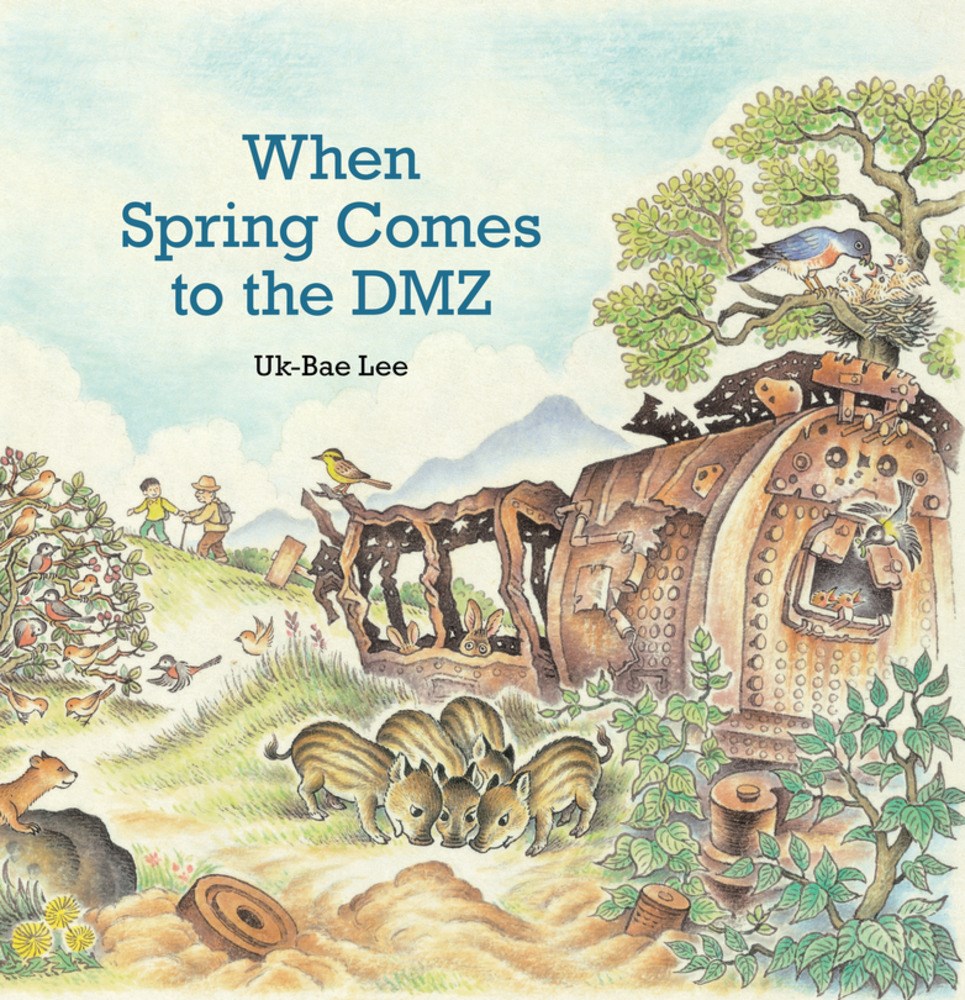
Established in 1953, The DMZ – the demilitarized zone separating North and South Korea – has, over time, become a nature preserve, with plants and animals living and thriving amid the razor wire, soldiers, and military machines. When the Spring Comes to the DMZ introduces readers to the DMZ throughout the seasons, illustrating how wildlife lives almost effortlessly – razor wire ever-present in the background, husks of man-made machinery now home to animal families – and through the eyes of a boy and his grandfather, who visit the DMZ so grandfather can look out at his former home with bittersweet longing. It’s a reaffirmation that life goes on for some, but for others, that life is painfully halted in place, while years pass.

The artwork is beautifully subdued, with soft greens and browns dominating the pages. The story is told in simple, sweet, almost heartbreaking statements: “When spring comes to the DMZ, green shoots spring up in the meadows./But you cannot go there because the razor wire fence is blocking the way”. This spread, viewed as through a telescope, puts us in grandfather’s place, and communicates some of the heartache he must feel; having home be so close, yet unreachable.

When Spring Comes to the DMZ is a book that works for social studies and current events read-alouds, and would pair nicely with similar books about refugees and immigrants, including Anne Sibley O’Brien’s Someone New and I’m New Here and Bao Phi’s A Different Pond. Reading When Spring Comes to the DMZ alongside Nicola Davies’ When War Came allows for a discussion about the aftermath of war; while DMZ doesn’t mention the Korean War in the story itself, the back matter fills in necessary information, along with an exhortation for peace. There is little in print for children about the North Korea and the DMZ, making this an important book to include in social studies and current events collections.

When Spring Comes to the DMZ has a starred review from Kirkus. Shelf Awareness has a wonderfully detailed review.