Posted in Intermediate, Middle Grade, Non-fiction, Non-Fiction

New York City gets a park: A Green Place to Be

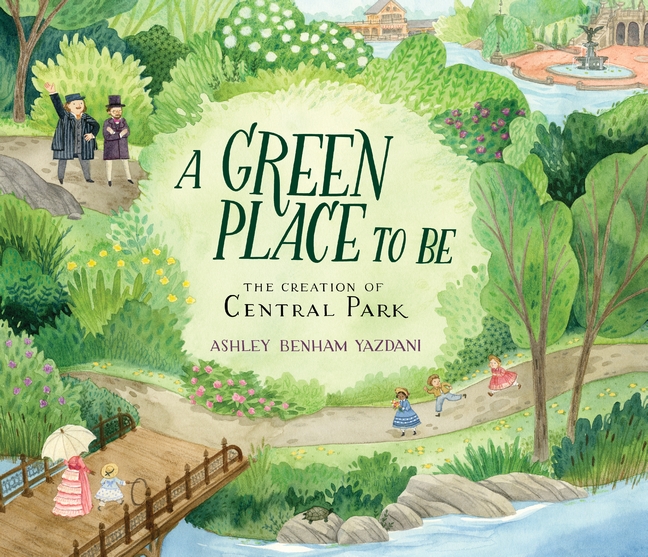
A Green Place to Be: The Creation of Central Park, by Ashley Benham Yazdani, (March 2019, Candlewick Press), $17.99, ISBN: 9780763696955

Ages 7-10

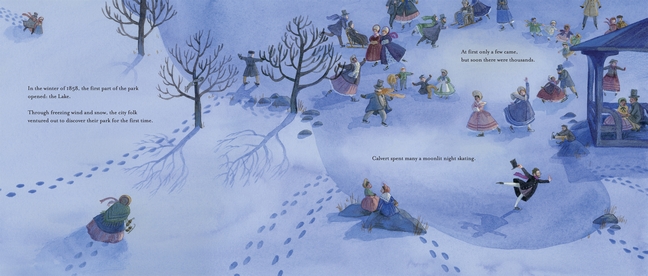
This beautiful and lushly illustrated history of Central Park starts with the land’s beginnings, as a barren area where farm animals and industrial waste left much to be desired, and the design contest devised by architect Calvert Vaux – a contest that he also entered with every intention of winning. A Green Place to Be follows Vaux’s and park superintendent Frederick Law Olmsted’s vision, focusing on their planning, execution, and invitation to artists to join in the effort. The winter of 1858 saw the first park of the park, the Lake, open for visitors; in the summer of 1859, the woodsy Ramble joined the landscape, followed by the Children’s District.

Illustrated in watercolor and pencil, this is a loving tribute to an iconic green space and the men and women who created it. Back matter includes profiles of both Olmstead and Vaux, and a Q&A on spaces within the park. Sharp-eyed readers will love returning to the illustrations again and again to find squirrels, bridges, and other affectionately placed details. There is an author’s note and bibliography for further reading.

A Green Place to Be is a love letter to New York’s green spaces and creativity. Central Park’s website has extensive information about the park, including a calendar of events and links to social media. Planetizen has a good article on teaching urban planning to preschoolers; this could be a fun activity where kids can learn and create their own green spaces! National Geographic has a fun Design a Park activity for middle grade kids, and the STAR Library Network has a printable Design a Park activity that will work with large groups of kids. It’s a fun springtime program!

Posted in Animal Fiction, Fiction, Fiction, Graphic Novels, Intermediate, Middle Grade, Non-Fiction, Teen, Young Adult/New Adult

Springtime reading: April Graphic Novels

Cannabis: The Illegalization of Weed in America, by Box Brown, (Apr. 2019, First Second), $24.99, ISBN: 9781250154088

Ages 14+

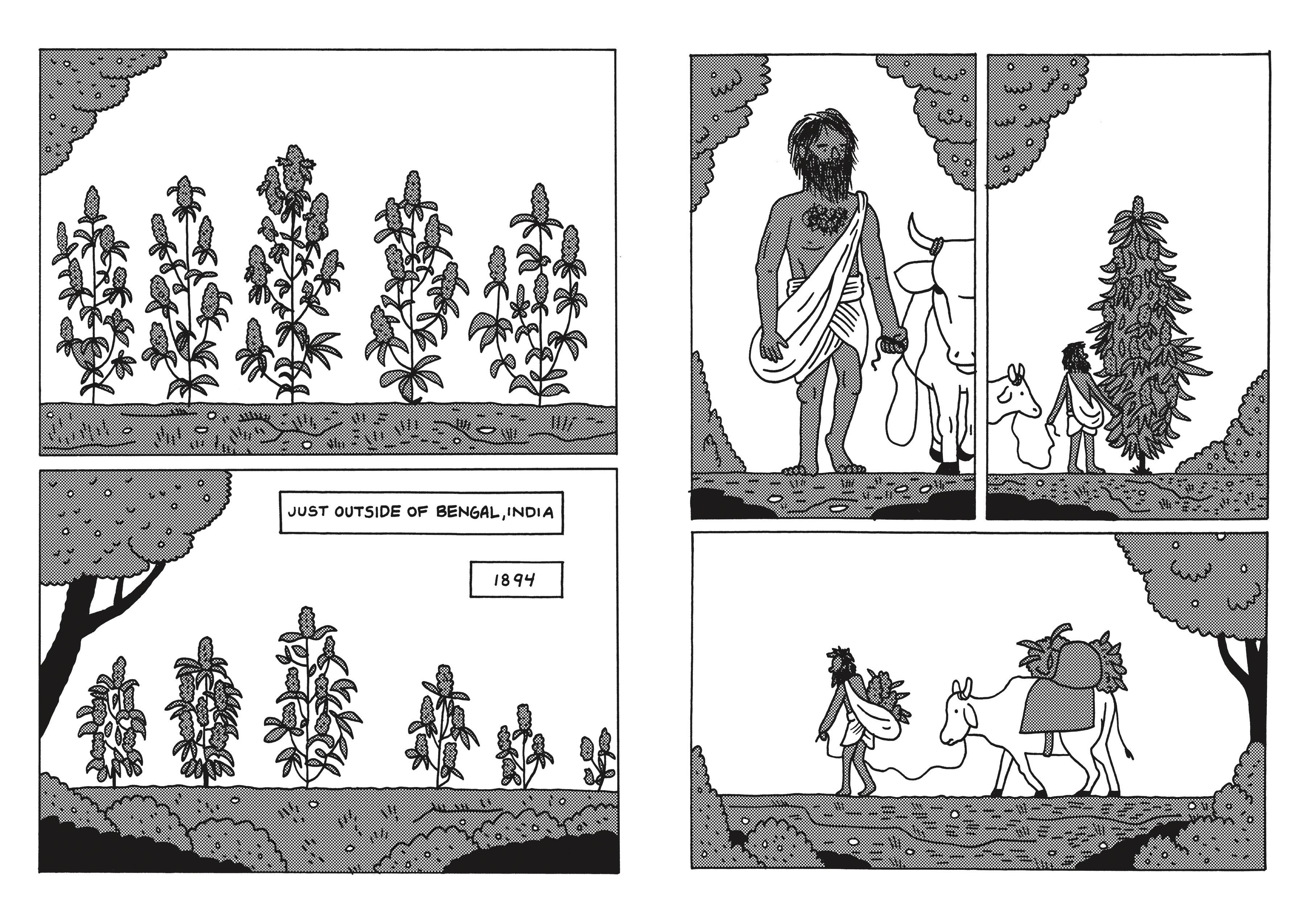
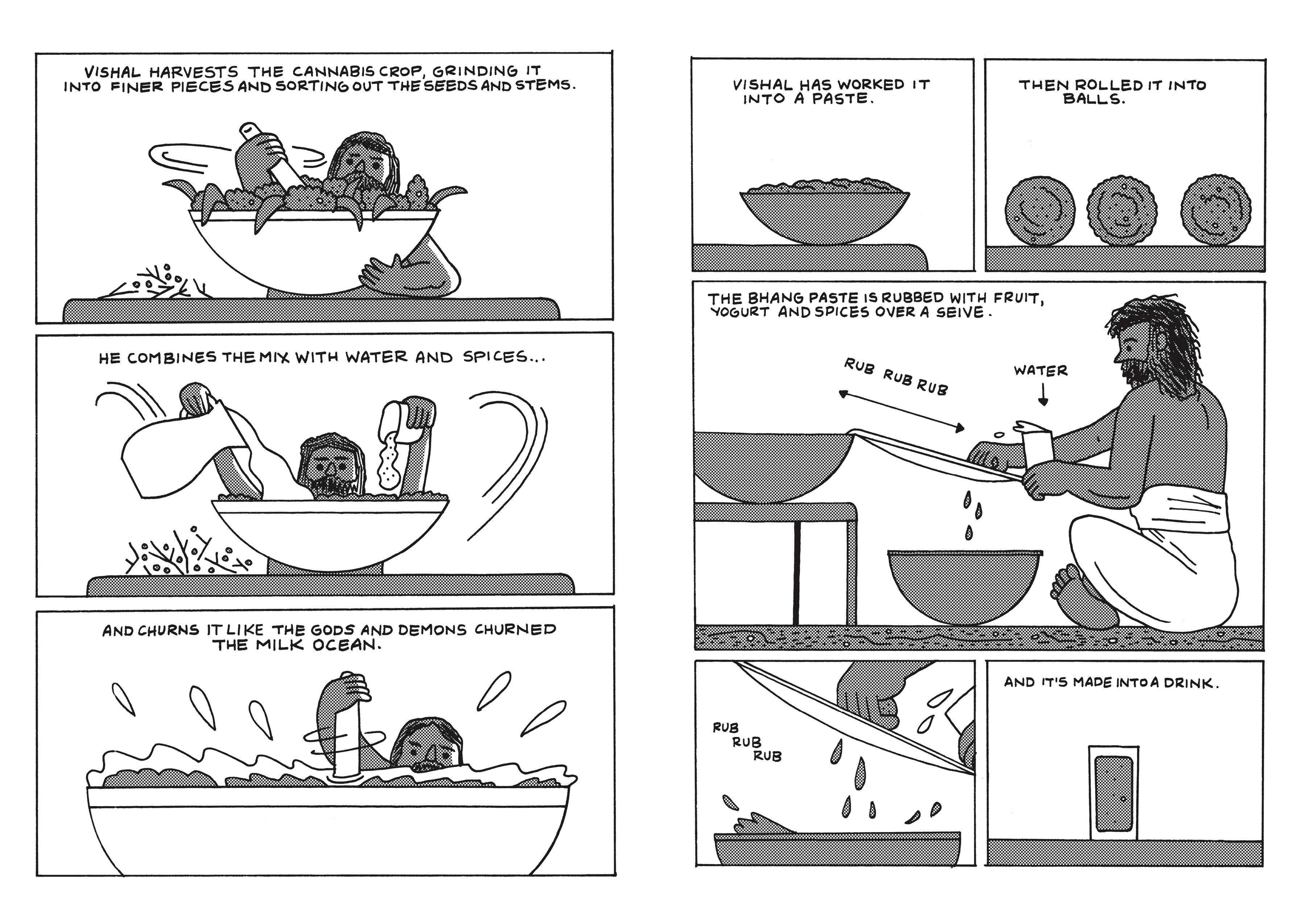
Award-winning graphic novelist Box Brown is back with the real story of how cannabis – weed, marijuana, reefer – went from being a plant used for spiritual purposes to being labeled a gateway drug that caused “reefer madness”. How did it happen, you say? Racism. Politics. Propaganda.  Scare tactics. The usual song and dance. Box Brown has done his research and, combined with his minimalist artwork, presents a tale that will have you seeing the politics of marijuana (the origin of that name is in here, too, and it’s a doozy) in an entirely new light.

The War on Drugs started long before Nancy Reagan went on Diff’rent Strokes and told kids to “just say no”, and the fallout has targeted minorities – primarily young black men – and left thousands imprisoned for minor infractions. Studies have purposely included falsified data and allowed Harry J. Anslinger, the first commissioner of the Federal Bureau of Narcotics, to perpetuate his war against narcotics by weaponizing moral outrage and using propaganda to get the plant a schedule 1 classification, putting it on par with heroin.

Ignatz Award winner Box Brown has a gift for nonfiction. While he’s primarily done biographical graphic novels thus far, including Andre the Giant, Andy Kaufman, and the rise of the video game Tetris, Cannabis is a thoroughly researched, fully realized, history of marijuana, from its earliest recorded uses through the present day. It’s a good add for your young adult/new adult collections and could be a good selection for a book group, especially with its increasing legality and medicinal usage.

Peter and Ernesto: The Lost Sloths, by Graham Annable, (Apr. 2018, First Second), $17.99, ISBN: 9781626725720

Ages 6-10

It’s the return of my favorite sloth buddies! Peter and Ernesto are back, and they’ve got a new adventure when a hurricane blows their beloved tree away! Peter, Ernesto, and the rest of their sloth friends must set out to find a new tree. A great tree. A tree just like the one they had, preferably. As they journey through the jungle, there are new dangers to brave: angry ants, slithering snakes, running pigs, and a very hungry jaguar! Ernesto is up to the challenge, but poor Peter… well, Peter’s going to need his best friend next to him as they lead their friends to a new tree. And maybe, a new friend or two along the way.

I love this new series! The two friends are like the Bert and Ernie of sloth civilization, with idealistic, upbeat Ernesto and cautious, nervous Peter acting as counterbalances to each other. The new animals the group meets as they venture through the jungle are hilarious, and the twist near the end will have your readers cheering. It’s emotional to see the sloths survey the damage to their tree, and it adds a depth to Peter’s and Ernesto’s characters as they take on the responsibility of shepherding their group to a new home. It’s just as emotional to see them find a new tree and the final resolution will just make you feel good. Peter and Ernesto is feel-good reading, and who doesn’t need more of that?

I can’t wait to see where life takes them next. Add this to your graphic novels collections and talk them up! Make a Best Friends display and make sure to include Frog & Toad, Elephant and Piggie, Narwhal & Jelly, and Duck and Porcupine.

Posted in picture books, Preschool Reads, Toddler Reads

February Picture Books: little elephants, fabulous females, and being your own self!

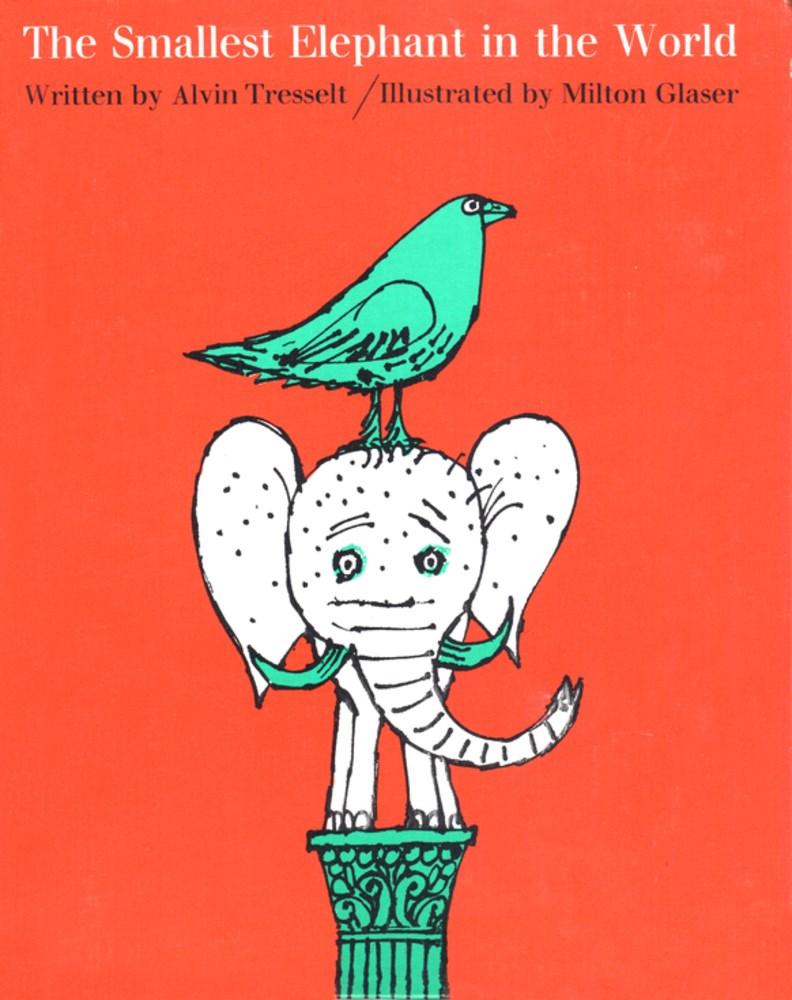
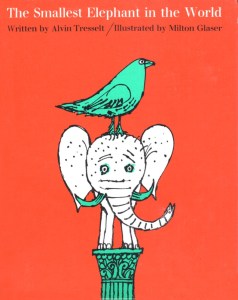
The Smallest Elephant in the World, by Alvin Tresselt/Illustrated by Milton Glaser, (Feb. 2019, Enchanted Lion), $16.95, ISBN: 9781592702619

Ages 4-8

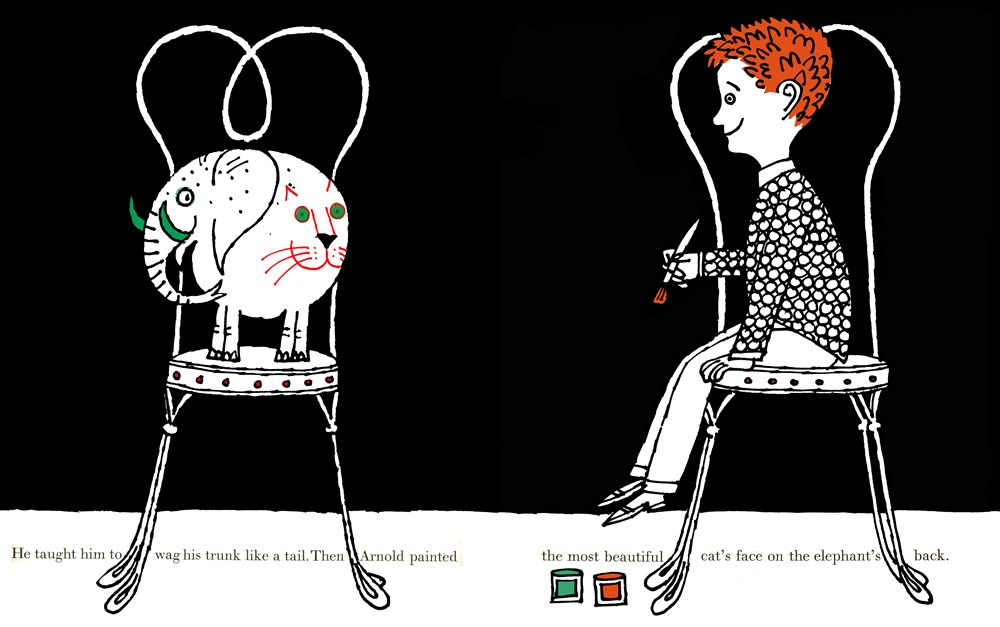
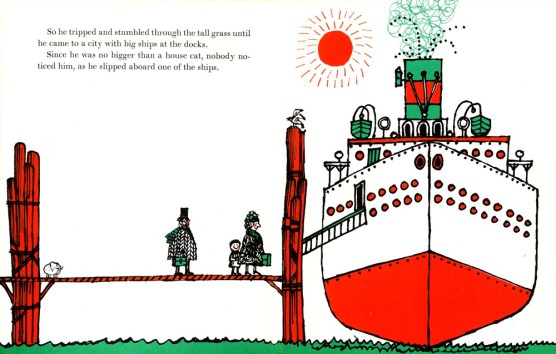
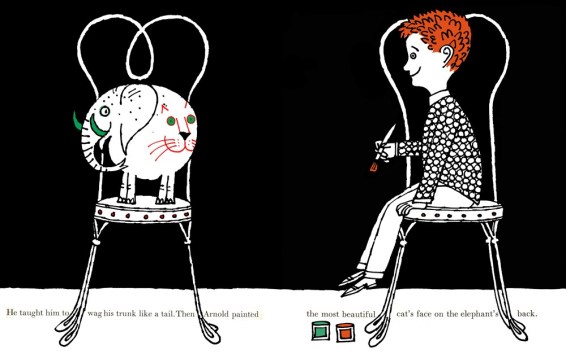
Originally published in 1959, The Smallest Elephant in the World is back in hardcover! A small elephant, no bigger than a housecat, leaves the jungle to get away from the bullies who make fun of him. He ends up in the care of a boy named Arnold, whose mother does NOT want an elephant for a house pet. Arnold tries some creative fudging to convince his mother otherwise, but Mom’s not fooled that easily. Where will the Smallest Elephant find a home?

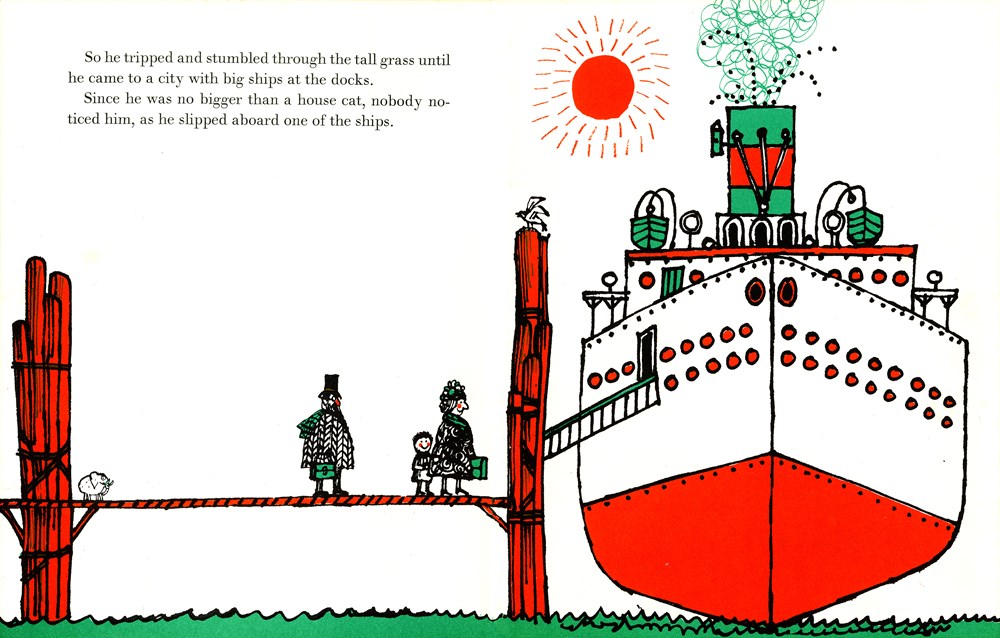
This adorable story about friendship and finding one’s own place in the world is as relevant and sweet today as it was when it was released 60 years ago. Milton Glaser’s vintage illustration is bold, with bright oranges and greens standing out against the black and white page backgrounds. The elephant’s face is expressive; sweet and friendly, and he’s adorably tiny when shown in scale.

The Smallest Elephant in the World brings a nice touch of our childhoods back to our children’s collections. Gen X kids like me will fondly remember the art and silly-sweet storytelling, and pass that love onto a new generation. Let your kiddos draw their own tiny elephants, and give them things to measure against: a book, a shelf, a ruler, or your foot!
 

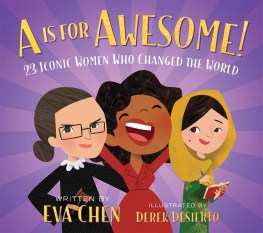
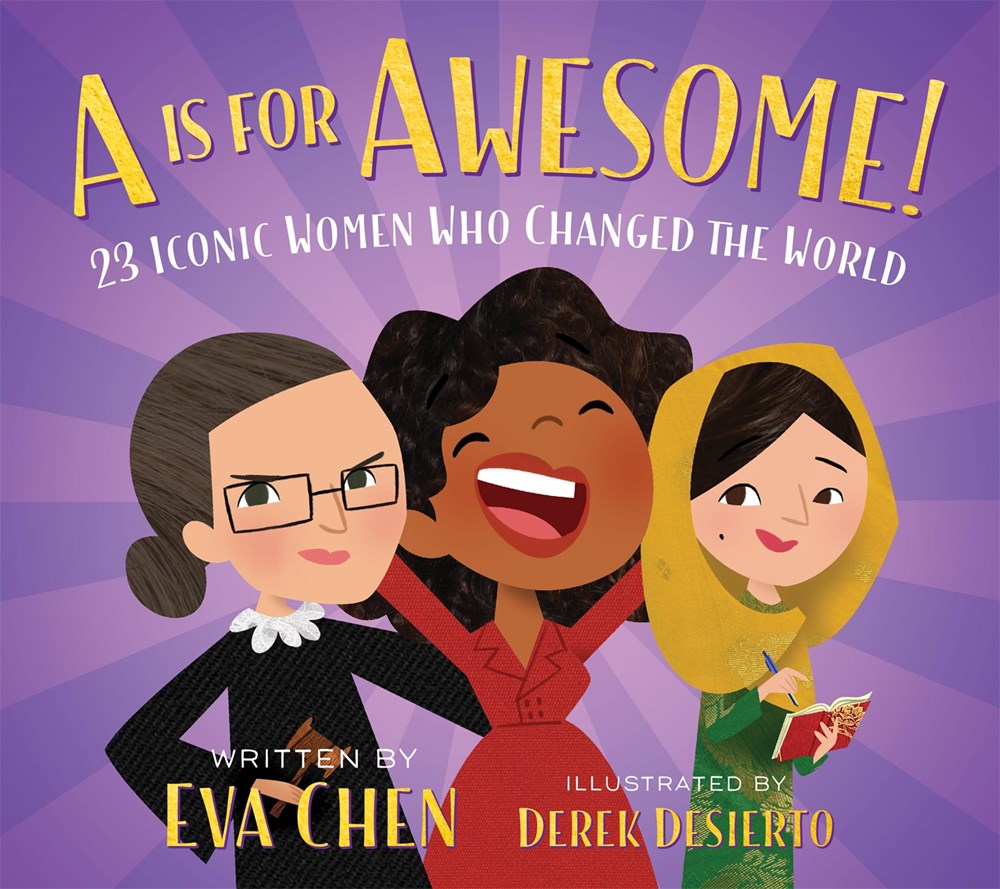
A is for Awesome! 23 Iconic Women Who Changed the World, by Eva Chen/Illustrated by Derek Desierto, (Feb. 2019, Feiwel & Friends), $9.99, ISBN: 9781250215994

Ages 2-5

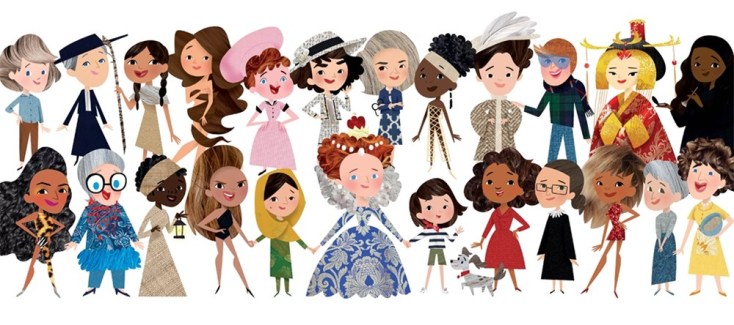
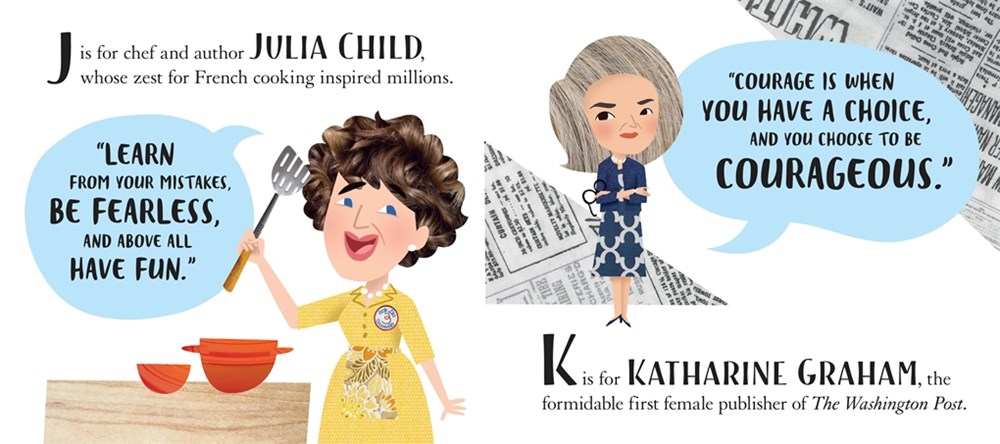
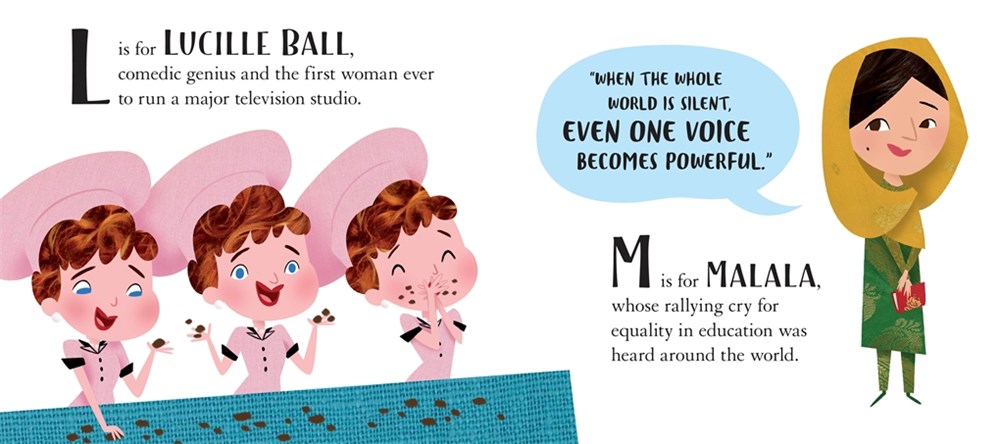
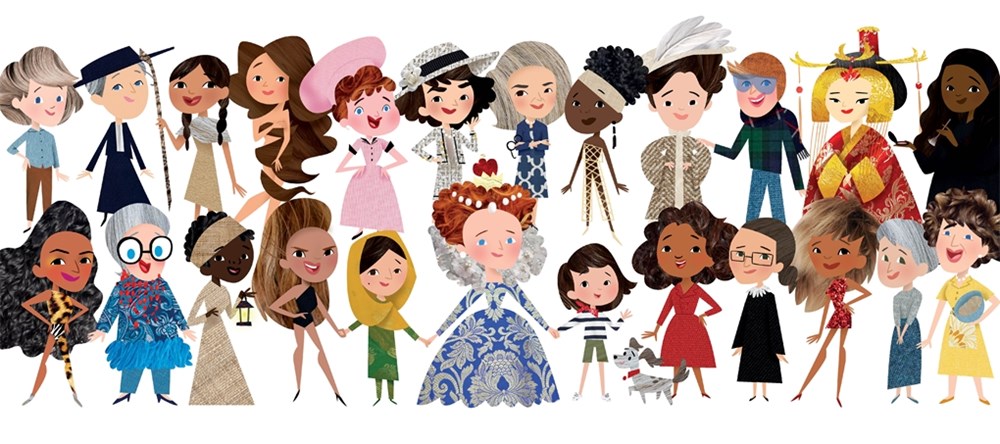
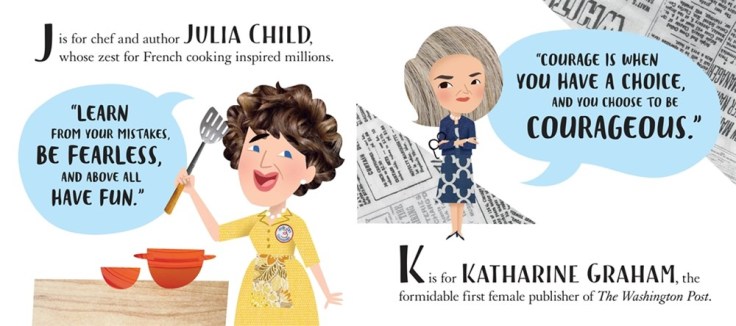
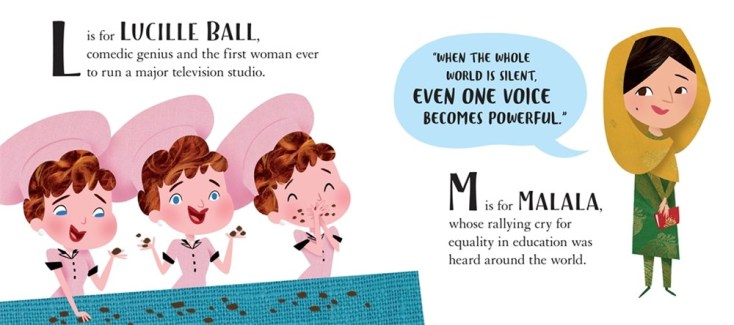
An Instagram star and creator of Juno Valentine and the Magical Shoes spotlights outstanding women in this abcedary. Juno Valentine is our guide, introducing readers to some of her favorite “sheroes”. There are standard favorites here: Amelia Earhart, Harriet Tubman, and Malala are all here, side by side with feminist figures like megastar Beyonce, Nobel Prize-winning scientist Dorothy Hodgkin, fashion icon Iris Apfel, and author Ursula K. LeGuin. There’s a mirror here for “X, Y, Z: the Extraordinary You, and the Zillions of brilliant, brave adventures you will have”, which makes for big fun during storytime. Collage artwork is bright and textured, with differing fabrics and hairstyles. The addition of Roman goddess Venus feels a little off, but every other featured female is flesh and blood real, and the grouping has a nice diversity. Each woman has a one-line description; some have quotes attributed to them.

I love a good board book, and this one makes my cut. Add this in time for National Women’s in March, and plan your storytimes now.
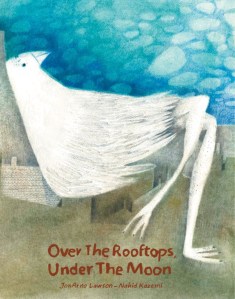
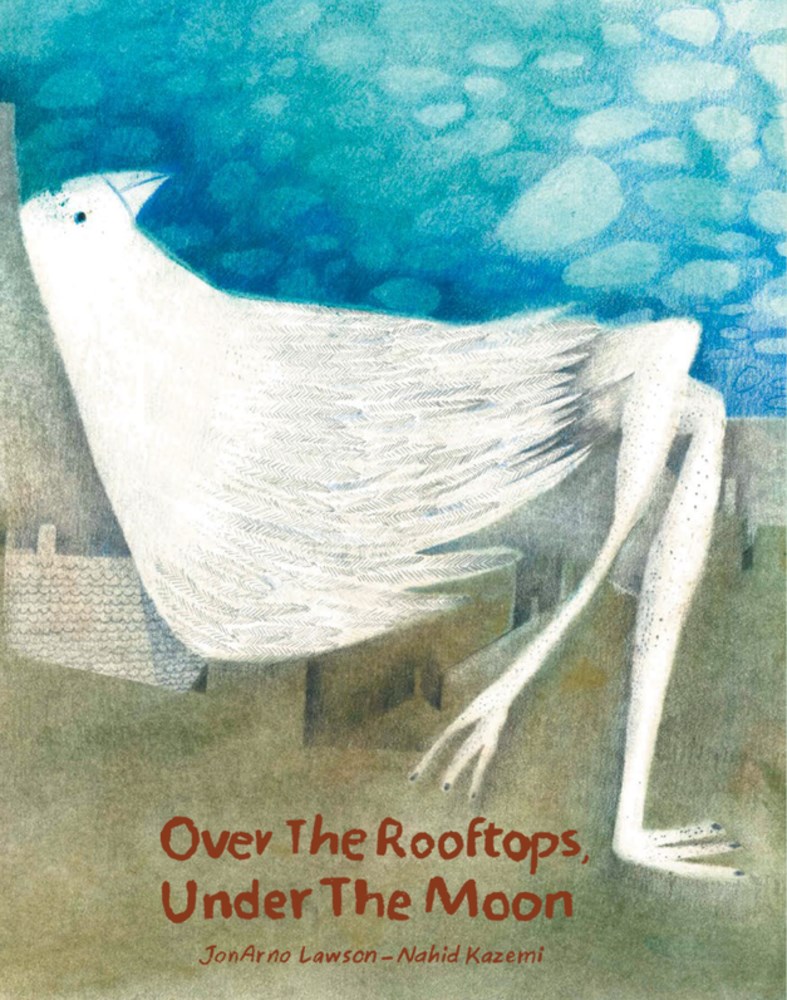
Over the Rooftops, Under the Moon, by JonArno Lawson/Illustrated by Nahid Kazemi, (Feb. 2019, Enchanted Lion), $17.95, ISBN: 9781592702626

Ages 4-8

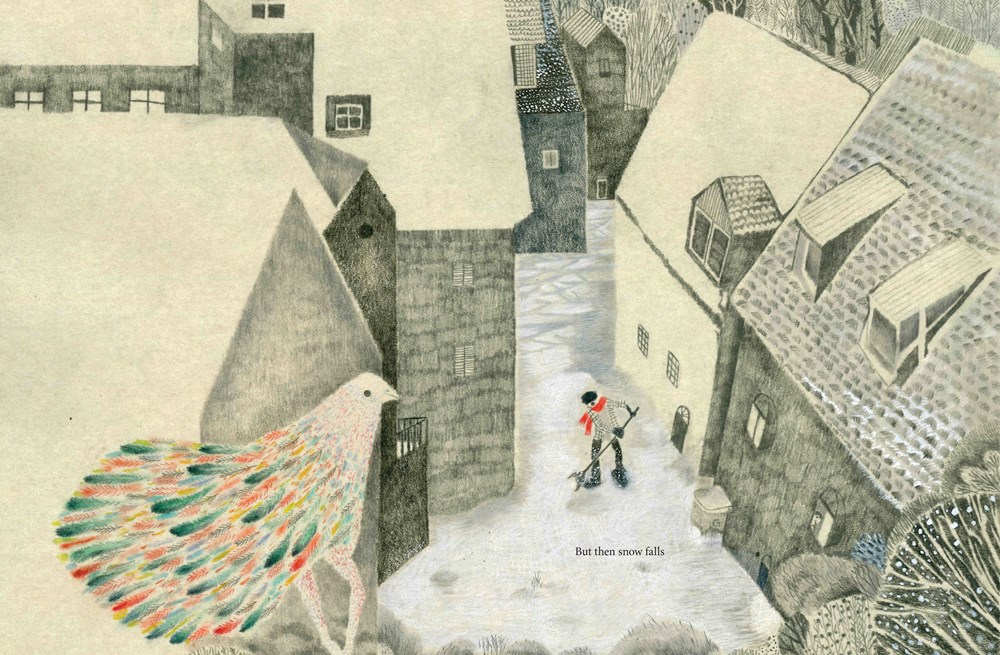
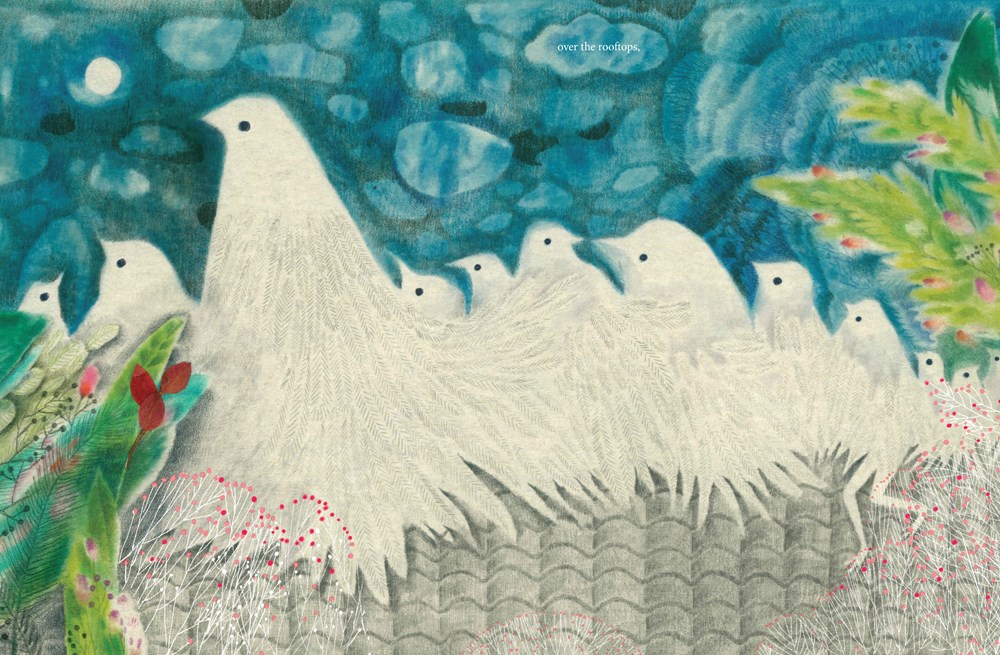
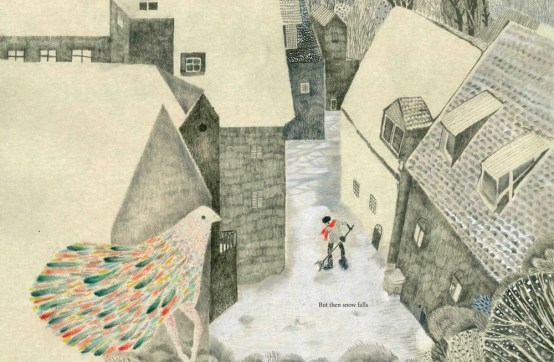
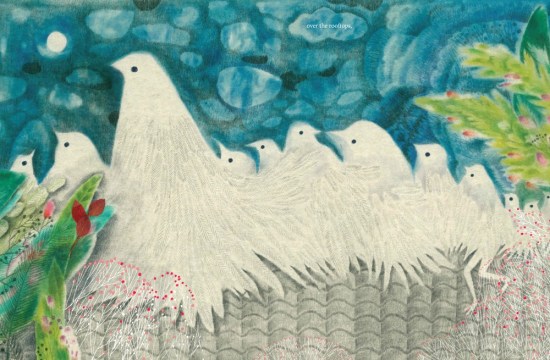
A long-legged white bird doesn’t feel like he fits in with his flock, but feels a connection when making eye contact with a little girl. The bird ponders his existence and explores the human world, not noticing until the snow falls that his flock has migrated without him. He catches up with his flock and they sit together on a rooftop, “alone and together, over the rooftops, and under the moon”.

I’ll be honest, I had to read this one a few times to really get it. It’s very open to interpretation, and while the gist of the story is about a bird who isn’t sure about his relationship to himself and within his community, I’ve seen other picture books handle this in a more linear fashion. and I’m not sure that little ones will get it. Some of the text gets lost in the mixed media collage artwork, which could impede a readaloud. The collage artwork tells the story in surreal, dreamlike fashion, which may be the best way to get the message of this story across: the bird feels alone, connects with humans, explores, and ultimately, finds peace within himself and within his community. It’s a beautiful message to communicate to younger children who are starting to socialize in groups and may feel out of place; it’s also a strong message to older children, who can break down the introspective message here. I’d love to see this as a school-wide readalong in elementary schools that still have them, so kids from K-5 can each take a turn at deciphering its meaning to them as individuals.

It’s an interesting book that may take a few reads to unpack, but worth it for the discussions that can follow.
 

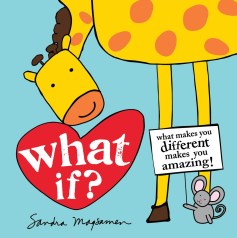
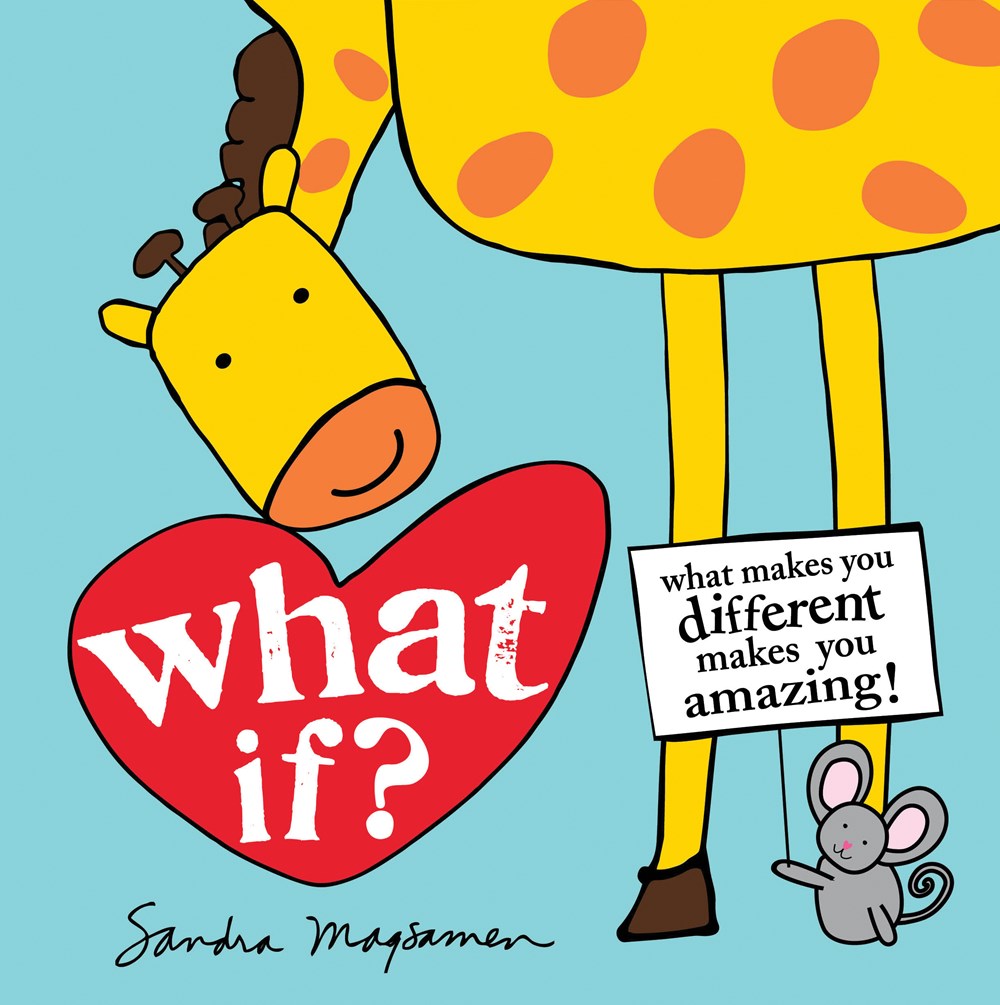
What If? What Makes You Different Makes You Amazing!, by Sandra Magsamen, (Feb. 2019, Sourcebooks Jabberwocky), $10.99, ISBN: 9781492637103

Ages 0-4

“What if your hair was big and orange and really bright? What if one eye was green and the other eye was blue as night?” The rhyming text takes readers through all sorts of ways we can stand out from the crowd, with adorable illustrations – a purple lamb, a swaying monkey – and extols the virtues of individuality. The text assures readers that being different is special, and good for you: it can give your spirit a lift; it would be dull if everyone were the same. Sandra Magsamen embraces uniqueness, and makes sure her readers do, too, pointing out how being different can help in certain situations. After all, someone quiet can be a big help when putting a bandage on an injured crocodile. Pair this with Todd Parr’s books, especially It’s Okay to Be Different and Be Who You Are, for a feel-good readaloud. The artwork is colorful, never overpowering, with upbeat, yet calming colors and bold outlines.  What If? is a cute picture book for collections where Todd Parr does well.
 

Posted in picture books

More Hanukkah books to brighten your celebrations!

I’ve got two modern classics to get into today, both by authors I’m a big fan of. Let’s jump in!

The Story of Hanukkah, by David A. Adler/Illustrated by Jill Weber, (June 2012, Holiday House), $6.99, ISBN: 9780823425471

Ages 5-8

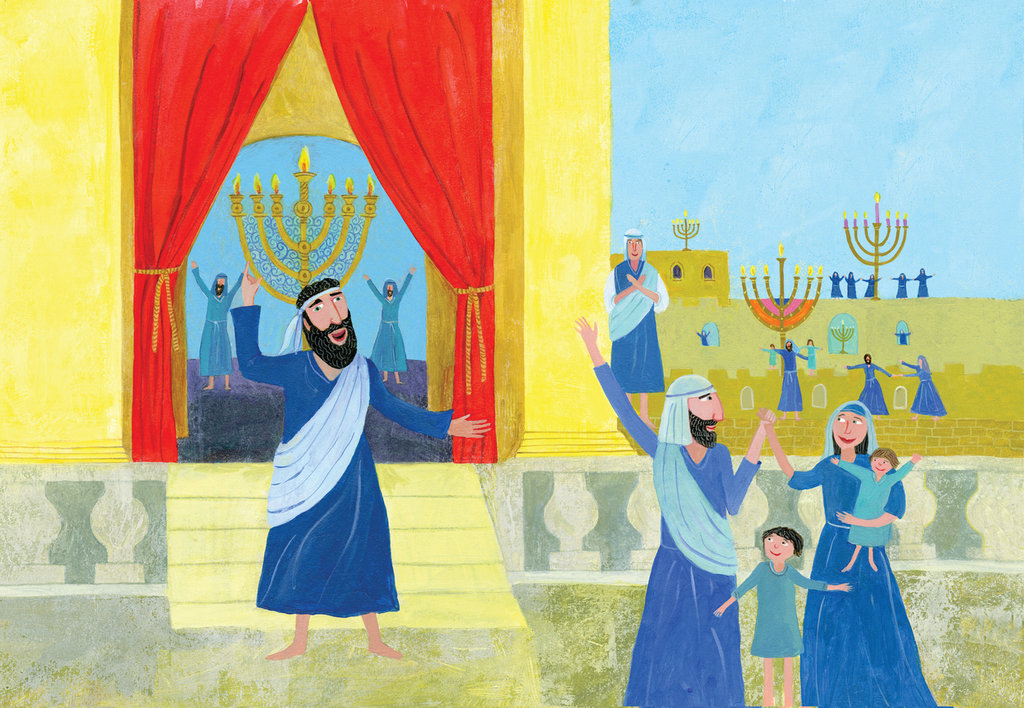
My biography shelves are loaded with books by David A. Adler. He does phenomenal nonfiction writing for kids, and his Story of Hanukkah is a wonderfully comprehensive history of the holiday helped me understand more about the Hanukkah celebration. Adler’s factual text is enhanced by Jill Weber’s acrylic illustrations, portraying life in Biblical Judea, the Greek push to dominate, and Mattathias’ refusal to worship the Greek gods, along with his flight into the hills and subsequent rebellion against the Greeks. The bright, primary color artwork shows an epic battle between the Greek soldiers and the Maccabees, with a spreads featuring charging horsemen and war elephants, and hand-to-hand combat (the combatants look more knocked silly than anything else, for more delicate readers), and there are heart-warming modern family moments to conclude the story, as today’s families celebrate, Adler writes, “one of the first fights for religious freedom”. A tasty latke recipe and instructions on how to play the dreidel game round out the back matter, and blue endpapers with Hanukkah symbols – dreidels, scrolls, menorahs, gelt, and more – make this a lovely addition to your nonfiction holiday collections, and a great gift for your younger celebrants.


Zigazak! A Magical Hanukkah Night, by Eric A. Kimmel/Illustrated by Jon Goodell, (Sept. 2001, Doubleday Books for Young Readers), $16.99, ISBN: 978-0385326520

Ages 4-8

A hilarious tale of Hanukkah magic, Zigazak! takes place on the first night of Hanukkah, in the Belarus town of Brisk. Two little devils – they’re more tricksters than flat-out evil – decide to have some fun by starting some trouble around the town. They make dreidels sprout limbs and dance, they make latkes fly, they even make candles explode! The people are up in arms! What can they do? They ask the rabbi for help, and help he does: he finds the fun in the devils’ mischief, and tricks them at their own game. When he offers to free the devils and turn them into spirits of light, they push back: they like being bad! But try as they might, the rabbi will not be intimidated, and manages to convince them to turn themselves into cockroaches. One crunch later, the town of Brisk is back to celebrating Hanukkah, devil-free.

Zigazak! is a story that’s just made for out-loud reading, with the repeated magic titular phrase providing the perfect opportunity for getting the kids involved. Expect squeals and shrieks, because cockroaches are just awful. Eric A. Kimmel (whose similar tale of Hanukkah mischief, Hershel and the Hanukkah Goblins, received a Caldecott Honor in 1990) weaves a masterful tale of mischief and morality, with delightfully goofy goblins illustrated by Jon Goodell. Goodell’s realistic artwork gives readers expressive characters reacting in horror as Hanukkah icons come to life, and a wise rabbi who exudes calm and wisdom. The most important part of Zigazak? Eric A. Kimmel’s belief, via the rabbi of Brisk: “…if we look hard enough, we can find the good in all living creatures”.
If you’ve never enjoyed this tale before, run to your holds list and add it. You’ll be happy you did.


Posted in Middle Grade, Non-Fiction, Non-fiction, Tween Reads

When you absolutely need to know Absolutely Everything…

Absolutely Everything! A History of Earth, Dinosaurs, Rulers, Robots and Other Things Too Numerous to Mention, by Christopher Lloyd/Illustrated by Andy Forshaw (Oct. 2018, What On Earth Books), $21.99, ISBN: 9781999802837

Ages 10-14

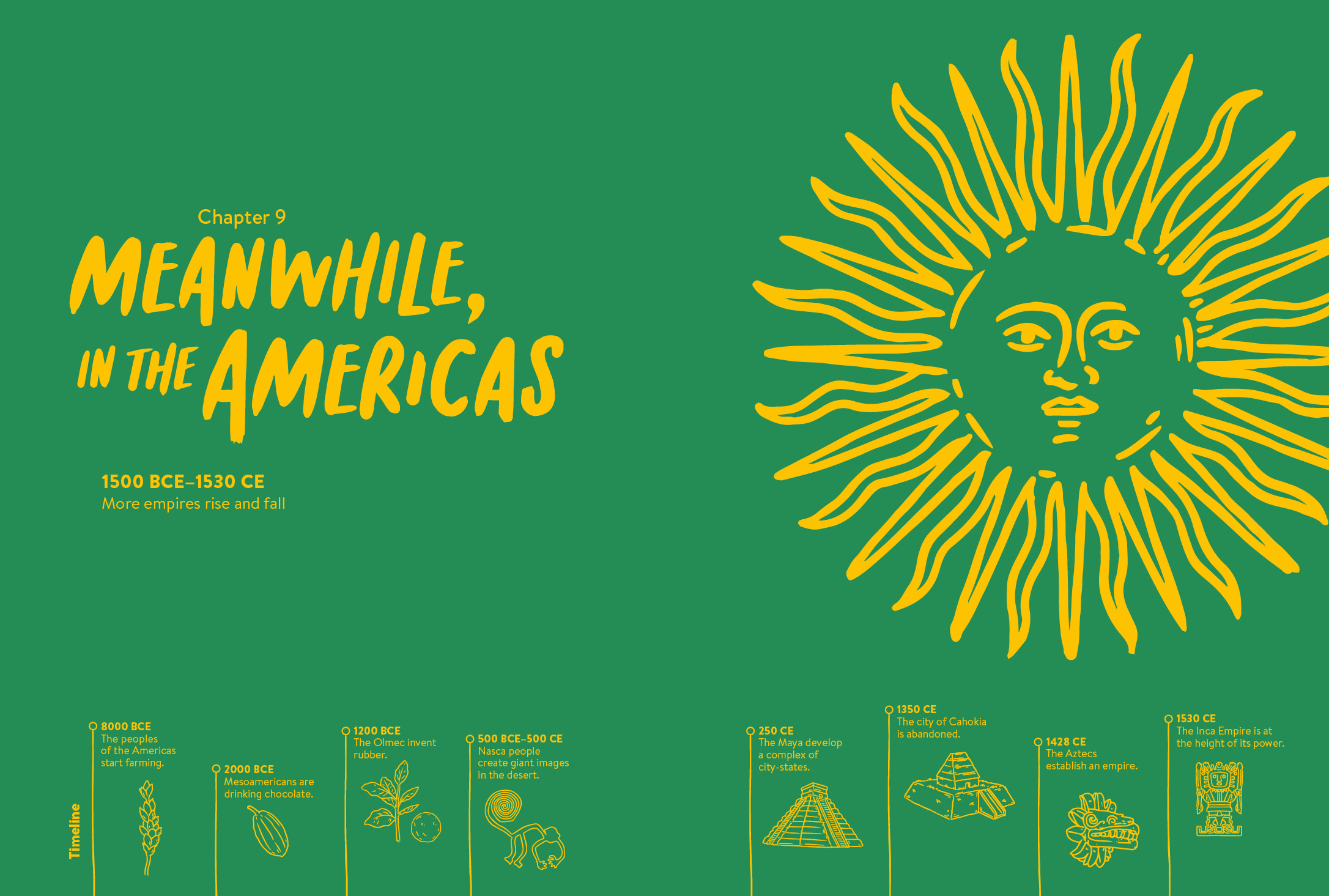
Absolutely Everything is the history of the world, organized into 15 chapters with catchy names like, “Nothing to Something” to describe the Big Bang and formation of the universe; “Meanwhile, in Asia”; “Medieval Misery”, and “To Be Continued”, which takes readers from 1945 to the present. Each chapter and era starts off with a two-page timeline of the time period covered, and is color coded along the page side, so readers can go directly to a desired time period with ease. The text is illustrated with color renderings and photos of animals, galaxies, people, and places.

The text never speaks over kids’ heads or down to them; it’s engaging, smart, and taps into the cool factor of nonfiction by inviting readers to join the author on a journey. Christopher Lloyd uses inclusive, inviting language, whether he’s inviting readers go on an imaginary dive to check out Paleozoic creatures or asking them to imagine our brains as mind-reading technology that helps decode other languages. He makes learning a cooperative activity, and he does it by letting the reader guide his or her own experience. Back matter includes further reading, a glossary, and an index.

Absolutely Everything! is a nice desktop reference for students, and is a good jumping off point for nonfiction readers to find something they like and seek out more. If you have Christopher Lloyd’s Wallbooks, get them up and displayed – those fold-out timelines are great! The What on Earth? activity zone offers free downloadable teacher guides.

Posted in Non-Fiction, Teen, Young Adult/New Adult

1968: A year of revolution, through the eyes of YA authors

1968: Today’s Authors Explore a Year of Rebellion, Revolution, and Change, edited by Marc Aronson & Susan Campbell Bartoletti, (Sept. 2018, Candlewick), $18.99, ISBN: 9780763689933

Ages 12+

1968 was an intense year: we lost Dr. Martin Luther King and Robert F. Kennedy to assassins’ bullets; the Vietnam war raged overseas while protests raged here in the States; Olympic athletes raised their hands in protest and military police marched on the Plaza de las Tres Culturas in Mexico City, killing students and civilians during a protest. Fifty years later, where are we? You may be surprised. Fourteen authors share their memories and discuss pivotal events in 1968 in this anthology. David Lubar (Campfire Weenies and Nathan Abercrombie, Accidental Zombie series) discusses stand-up comedy in 1968, while Lenore Look (Alvin Ho and Ruby Lu series) researches  the Chinese Cultural Revolution of 1968 and the lasting impact on China’s citizens. National Book Award longlist nominee Elizabeth Patridge (Boots on the Ground) unites the anthologies with a running “Nightly News” prose poem that gives readers the stark cost of war: month by month tallies of American combat deaths, Vietnamese enemy combat deaths, and Vietnamese civilian deaths.

Each and every piece in 1968 is oustanding; it’s nonfiction that reads like fiction, bringing readers back to that contentious year. Black and white photos throughout capture moments like the Olympic Black Power salute and choppers over Vietnam. There are small moments and sweeping movements, but each observation helps draw important parallels between where we were and where we are; how much we have changed, and how much we have, sadly, remained the same.

The contributor list is an all-star cast of middle grade and YA writers: Jennifer Anthony, Marc Aronson, Susan Campbell Bartoletti, Loree Griffin Burns, Paul Fleischman, Omar Figueras, Laban Carrick Hill, Mark Kurlansky, Lenore Look, David Lubar, Kate MacMillan, Kekla Magoon, Jim Murphy, and Elizabeth Partridge. Publisher Candlewick offers a sample chapter on their website, and I’d love to see a reader’s/educator’s guide written, too. 1968 is an essential add to YA collections, and I’d love to see this on summer reading (and school year reading) lists. This needs to be added to curriculum, DOE.

1968: Today’s Authors Explore a Year of Rebellion, Revolution, and Change has a starred review from Kirkus.


Posted in Middle Grade, Non-Fiction, Non-fiction, Teen, Tween Reads

Don’t read on an empty stomach: NatGeo Kids Food Fight

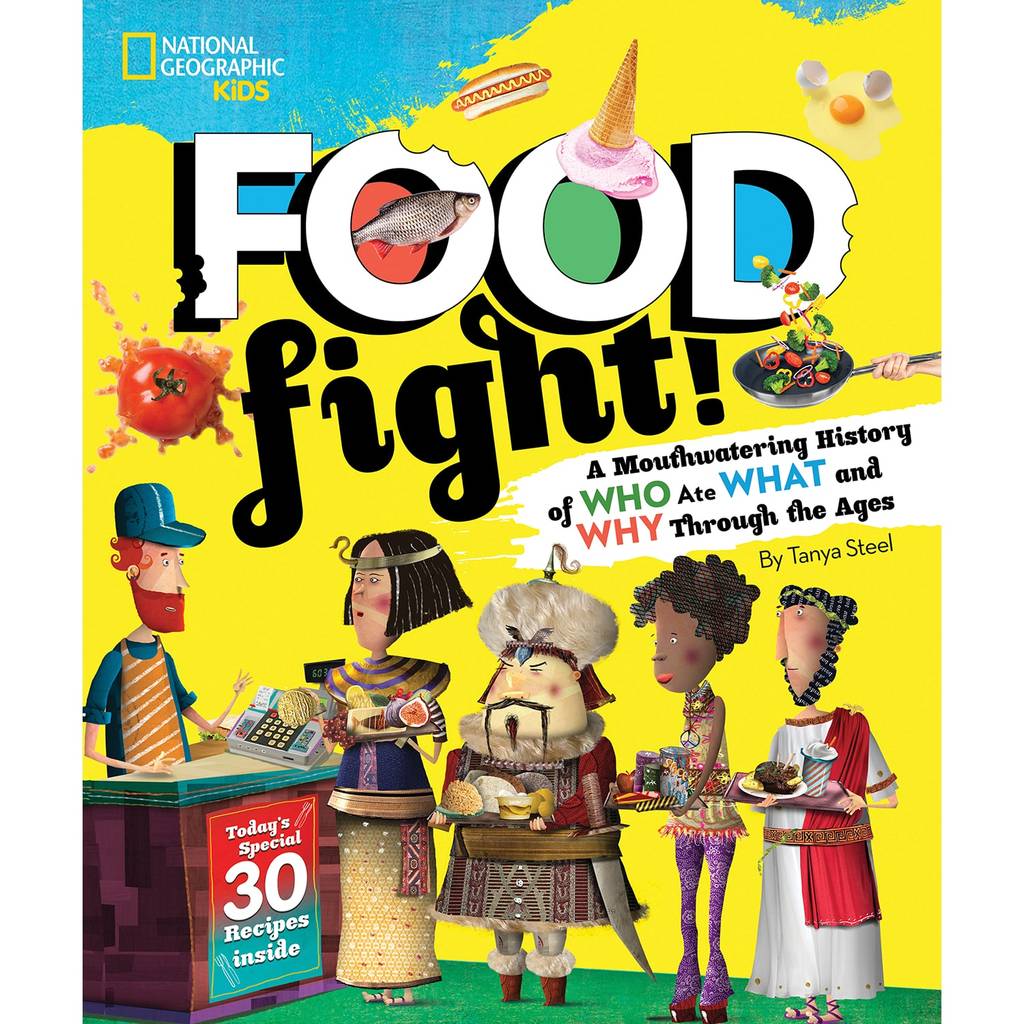
Food Fight! A Mouthwatering History of WHO Ate WHAT and WHY Through the Ages, by Tanya Steel, (Sept. 2018, National Geographic Kids), $19.99, ISBN: 9781426331626

Ages 10-14

Did you know that the Visigoths demanded 3,000 pounds of pepper as a gift when they conquered the Western Roman Empire in the 5th Century AD? Or that some medieval bakers whitened their flour with ground bones or chalk? Those are just a few of the wild food facts readers will pick up when they pick up Food Fight! by former Bon Appétit and Food & Wine editor Tanya Steel. Food Fight! is a history of food, combined with some fantastic (and frightful) facts, and recipes. The book covers food fads and eating habits from 14 different moments in history, from the prehistoric era through the 1960s, and there’s a special chapter imagining a future life (and food) on Mars! There are fun Popcorn Quizzes (you can’t have a plain pop quiz in a book about food) throughout, and amazing and hilarious photos, plus quotes from kid chefs who’ve made and enjoyed the 30 recipes you’ll find here. The book kicks off with safety tips, and a food timeline, recipe index, bibliography, and further reading and resources rounds everything out.

Kids in my library are big nonfiction fans, and Food Fight! offers history, fun, and kid-friendly recipes all in one volume. It’s a fun add to collections, and a good gift for budding chefs and food historians. (Psst… introduce older tweens and teens to Alton Brown’s excellent Food Network show, Good Eats, for more food history and cooking tips.) It’s a big plus that author Tanya Steel is a major name in the food journalism, so she knows how to write about food and food history, and she makes it accessible to younger readers. Plus, she originated the White House’s Healthy Lunchtime Challenge & Kids’ State Dinner, hosted by First Lady Michelle Obama, which brought recipes created by young chefs from each state to the White House. Kids are invited to make and upload photos of their Food Fight dishes – check out the Instagram tag #natgeofoodfight, and check out the Food Fight webpage for more info.

Posted in picture books, Preschool Reads

Alma and How She Got Her Name is a beautiful family story

Alma and How She Got Her Name, by Juana Martinez-Neal, (Apr. 2018, Candlewick Press), $15.99, ISBN: 978-0-7636-9355-8

Recommended for readers 4-8

Alma is a little girl with a big name: Alma Sofia Esperanza José Pura Candela! She asks her Daddy how she ended up with six names, and her dad tells her the beautiful story behind each name.

I adore this book. So many of us have interesting origins for our names: some of us are named for family members; some for historical figures; some, just because our parents really thought the names were cool and interesting. Here, little Alma learns, through beautifully illustrated spreads, about her family history and her place within that history. We tend to put our hopes and dreams into a child’s name; Alma reveals those inspiring stories through Alma’s father, as he tells Alma her own story.

The drawings are largely monochromatic; black pencil on ivory pages, with washed reds and pinks (and the occasional blue) to liven things up. The names get star treatment, with beautiful, expressive fonts and pictures of namesakes throughout.

I can’t say enough good things about Alma. She belongs in every storytime and every shelf, because every family deserves to explore their history together. Candlewick has a great activity kit that will help kids create their own family trees and research their name(s); it’s free for downloading through their site.

Alma and How She Got Her Name has starred reviews from Publisher’s Weekly, Booklist, and School Library Journal. The book is available in English and Spanish.

Posted in Middle Grade, Non-fiction, Preschool Reads

NatGeo Kids is going to the dogs!

NatGeo Kids has two books on dogs out, and they are ADORABLE. We’re in the Lunar Year of the Dog, May is National Pet Month, and today is National Pet Day – so what better time to celebrate our best friends? (Full disclosure: My cat scoffed at me as I ran this by her. But she’s a cat, so…)

Dog Days of History: The Incredible Story of Our Best Friends, by Sarah Albee, (March 2018, NatGeo Kids), $19.99, ISBN: 978-1-4263-2971-5

Recommended for readers 8-13

Dogs have been our companions from the beginning: humans have had canine companions for more than 15,000 years. Dog Days of History is a kid-friendly look at that relationship through time; author Sarah Albee starts with the origins of the dog, from wolf to domesticated companion, to mixed breeds, and then takes us through an illustrated history of this long-lived relationship: from dogs in the ancient world, through the Middle Ages and Renaissance, to the present day and the future. We learn about dogs as pampered companions and hard workers; dogs like Balto, the famous sled dog who braved the Alaskan snow to bring medicine to the people of Nome, Alaska, and Laika, the canine cosmonaut who went to space in 1960.

There are great photos – it’s a NatGeo book – and fun facts aplenty throughout the book. One of my favorites is the list of common names for dogs in Ancient Egypt, which include “Good Herdsman”, “Grabber”, and “Blackie”. There are Algonquin names, too; my favorites are “Where’s That?” and “Ask Him”. Top Dog callouts highlight famous dogs in history, like Stubby, a stray bull terrier found by an American soldier in 1918, smuggled into France, and who went on to win medals of valor after warning a sleeping sergeant about a gas attack, locating wounded soldiers on the battlefield, and capturing a German spy. Want to translate dogspeak in other languages? There’s a list of how other dogs say “Bow-wow” in other languages. A comprehensive biblidography (that is not a typo) and list of rufferences (that’s not one, either), index, and further sources and places to visit make this slim volume a perfect gift for dog fans or an addition to your domestic animals collections.


It’s a Puppy’s Life, by Seth Casteel, (March 2018, NatGeo Kids), $16.99, ISBN: 978-1-4263-3069-8

Recommended for readers 3-6

Join the cutest group of puppies ever in this easy-to-read, fully illustrated chronicle of a puppy’s day! Join these pups on a daily routine of adventure as they wake up, explore and play, nap, have a nighttime treat, and get ready for bed. Is it ruff to be a pup? You be the judge.

This is one of those books I still haven’t been able to get through without squealing. Several times. My kiddo and I will be cuddling and reading, and I’ll just squeal, “LOOK AT THIS PUPPY FACE!”, which leads to my son looking at me and saying, “Mom. You SAY THAT ALL THE TIME.” But I digress.

There are spreads and standalone pages of full-color photos of puppies eating, playing, cuddling, and sleeping. The simple text is big, easy to read and great for storytime, and has colorful backgrounds to set them apart from the rest of the page. It’s a great way to talk about daily routines: ask the kids what they have in common with puppies!

I’m currently building up my pets and domesticated animals collection at my library, so these will be a nice, eye-catching add to my shelf. Make a nice doggie display with Science Comics’ volume on Dogs, and put some fun picture books and fiction on the shelf, too. Mainstays like Clifford and Carl books are great, as are books like Peter McCarty’s Hondo and Fabian, Jane Yolen’s Henry and Mudge and Puppy Mudge Easy Readers,  Beverly Cleary’s classic, Ribsy, Ann M. Martin’s Autobiography of a Stray, and Because of Winn-Dixie. If you’re like me and don’t want to read doggie tearjerkers, From the Mixed-Up Files has a suggested “No Dead Dogs” reading list.

Posted in Animal Fiction, Fiction, Graphic Novels, Intermediate, Preschool Reads, Toddler Reads

Books for your Spring radar!

Spring always brings some good books to read. In April and May, there’s a little something for everyone – come and see!

April Books

Dr. Coo and the Pigeon Protest, by Sarah Hampson/Illustrated by Kass Reich,
(Apr. 2018, Kids Can Press), $18.99, ISBN: 9781771383615
Recommended for readers 4-8
Dr. Archibald Coo is a sophisticated pigeon who’s tired of the way he and his fellow pigeons are treated by humans. They’re shooed at, swatted, and treated like a general menace. Dr. Coo remembers when pigeons enjoyed a higher profile in history: in ancient Greece, they delivered news about the Olympic Games; during World War I, they carried messages across battlefields. Now? pfft. So Dr. Coo and his pigeon friends organize and decide to strike: they disappear from every public space, leaving a confused public wondering what happened. Dr. Coo heads over to the mayor’s office a history of the pigeon and a note, asking for tolerance, opening the door to a new era of pigeon-human relations. It’s a cute urban story with a wink to New York and other urban spaces, and has a nice thread about inclusivity and diversity running through the book. Gouache paint and colored pencil art makes for a soft illustration, with attention to the different types of pigeons – there are! – in the cityscape. This would be cute to booktalk with James Sage’s Stop Feedin’ Da Boids!

My Teacher’s Not Here!, by Lana Button/Illustrated by Christine Battuz,
(Apr. 2018, Kids Can Press), $18.99, ISBN: 9781771383561
Recommended for readers 4-6
Kitty gets to school and knows something’s up when her teacher, Miss Seabrooke, isn’t there to meet her. What’s going on? There’s another teacher there today! How does school even work when your teacher is absent? This sweet rhyming tale about a student’s first substitute teacher is great for younger kids who are just getting into the swing of school routines and provides some fun advice for coping with and adjusting to unexpected change. Kitty teaches readers some coping strategies, including helping out her friends and the teacher by contributing to class and modeling good behavior using cues she learned from her teacher, that the substitute may not be aware of. This is an animal story, so kids will enjoy seeing the “ginormously tall” teacher, a giraffe named Mr. Omar; pigs, elephants, bears, a whole menagerie of students. Hand-drawn artwork and digital collage come together to create colorful, textured, cartoony fun. This one’s a good addition to preschool and primary collections.

Tinkle, Tinkle Little Star, by Chris Tougas,
(Apr. 2018, Kids Can Press), $9.99, ISBN: 9781771388399
Recommended for readers 1-3
One of my favorite books coming out this season is this adorable board book! Set to the tune of everybody’s favorite classic song, this sweet and funny version is all about where not to go: not in a plane, not on Grandpa’s knee, not at a puppet show. Luckily, the poor Little Star gets relief by the story’s end, and sits on a potty to… “Tinkle, Tinkle, Little Star”. It’s adorable with the cutest digital art. Little Star is beyond cute, and gender neutral! Sing along at storytime – I know I’ll be throwing plenty of voice inflection (“Did you just pee on this page?”) and leg-crossing as I read this one. Absolutely adorable, must-add, must-give for collections and toddlers everywhere.

May Books

Polly Diamond and the Magic Book, by Alice Kuipers/Illustrated by Diana Toledano,
(May 2018, Chronicle), $16.99, ISBN: 9781452152325
Recommended for readers 7-9
Polly Diamond is an aspiring, biracial young writer who discovers a magic book on her doorstep one day. Not only does the book write back to her when she writes in it, Everything she writes in the book happens in real life! At first, Polly is psyched: who wouldn’t be, right? But you know how it goes… for every magic journal action, there’s a pretty wild reaction! Written in the first person, with excerpts from Polly’s book, including a pretty great intermediate-level book list for awesome display purposes (“Read Polly Diamond’s favorite books HERE!”). Chapter book readers who love books like Juana and Lucas (on Polly’s favorites list), Jasmine Toguchi, and Katie Woo will thoroughly enjoy Polly’s adventures. There are short, descriptive sentences and a nice amount of new words – Polly is an aspiring writer, after all! Lots of fun for chapter book readers; I’d have kids create their own aquariums as a related craft.

Old Misery, by James Sage/Illustrated by Russell Ayto,
(May 2018, Kids Can Press), $16.99, ISBN: 9781771388238
Recommended for readers 5-10
Readers with a darker sense of humor (and parents who are Gorey fans) will get a chuckle out of Old Misery, the story of a cranky old woman named – you got it – Old Misery, and her old cat, Rutterkin. She’s broke, and the apples keep disappearing from her apple tree! Lucky for Old Misery, she’s not completely heartless and feeds a wandering visitor, who grants her one wish: she wants all the apple thieves to be caught in the tree until she lets them go! Old Misery decides to play a little risky game when Death himself shows up at her door – and she sends him to the apple tree. Be careful what you wish for! The black and white, pen and ink artwork has a creepy, quirky feel to it, which will appeal to kids who like Lemony Snicket’s work, but may go over some kids’ heads. Old Misery narrates the story, offering an opportunity for a fun read-aloud.

Binky fans, Gordon’s got his own adventure! For readers who love Ashley Spires’ Binky the Space Cat graphic novels will love Gordon, fellow member of PURST (Pets of the Universe Ready for Space Travel) and Binky’s house-mate, as he finds himself traveling through time to stop an alien invasion. But Gordon travels back too far – before PURST even exists! He’s got to get back to his normal time and set things right! This is fun reading for graphic novel fans, and a nice addition to a popular series. There’s time-travel, problem-solving, aliens, and humor, along with fun art.

See How We Move!: A First Book of Health and Well-Being, by Scot Ritchie,
(May 2018, Kids Can Press), $15.99, ISBN: 9781771389679

Recommended for readers 5-8
Author Scot Ritchie’s multicultural group of friends are back together again. Last time we save them, they visited a farm to learn how to grow grains and vegetables in See How We Eat!; this time, Pedro, Yulee, Nick, Sally, and Martin are training as their swim team, The Flying Sharks, prepares to compete. They learn about using proper equipment for different activities, warming up before beginning your activity, teamwork and encouragement, goal-setting, nutrition, the mind-body connection, and more. There are suggestions for fun activities and words to know, all coming together to give kids a fun story about a group of friends staying strong and having fun together while encouraging kids to create lifelong habits of health, nutrition, and physical fitness. I like this See How! series; it offers a wealth of information on healthy living, made accessible to younger readers. I can easily read this in a storytime and get the kids talking about the different ways they play, how they eat, and good habits to get into.

The Bagel King, by Andrew Larsen/Illustrated by Sandy Nichols,
(May 2018, Kids Can Press), $16.99, ISBN; 978-1-77138-574-9
Recommended for readers 4-8

Zaida, Eli’s grandfather, gets bagels from Merv’s Bakery every Sunday morning. One morning, when no bagels show up, Eli gets a phone call: Zaida’s fallen on his tuchus and can’t get the bagels! Eli and his family aren’t the only ones waiting on bagels, either – Eli visits Zaida, only to discover that Zaida’s friends are verklempt, too. No bagels! What a shanda, as my stepdad would say! Eli helps care for his zaida and keep him company, but he knows the best way to cheer Zaida up, and heads to the bagel store on his own the very next Sunday. This story is the most charming book about grandparents and grandchildren, loaded with compassion, a wink and nudge type of humor, and loads of fun, new Yiddish terminology. If you’re an urban dweller, like me, these words are kind of a second language: Zaida is grandfather, and tuchus is your bottom; there’s a little glossary of other Yiddish words that show up in the story, too. (Verklempt is overwhelmed with emotion, and shanda is a shame – you won’t find them in the story, but all I could hear was my stepdad when I read this, so there you go.) I loved the sweet storytelling, the compassion and the decision to act on Eli’s part, and Zaida and his group of friends were wonderful. It’s got an urban flavor that everyone will enjoy, and is good storytelling. Use this story as an opportunity to get your kids talking about relationships with their grandparents: what do you call your grandparents? Do they cook, bake, or shop for food? Do you go with them? (I’d love to get some bagels to hand out with my group… hmmm…) The acrylic artwork has a soft, almost retro feel, but really emphasizes the relationship story with colors, gentle expressions, and soft lines.

The Golden Glow, by Benjamin Flouw,
(May 2018, Tundra/Penguin Random House), $17.99, ISBN: 9780735264120

Recommended for readers 4-8
A fox who loves nature and botany goes on a quest for a rare plant to add to his collection. The Golden Glow is a plant from the Wellhidden family, and only grows high in the mountains. There’s not even a picture of it; it’s never been described. Fox packs his supplies and heads off to the mountains, meeting different animals and noting different plants and trees along the way. When Fox finally reaches the mountaintop, he waits… and discovers the Golden Glow! It’s stunning! It’s breathtaking! And Fox realizes that “the golden glow is more beautiful here on the mountaintop than it ever would be in a vase in his living room”. Part story and part nature journal, The Golden Glow is just gorgeous and teaches a respect for nature. The angular art draws the eye in; there’s so much to see on every page, every spread. Flouw creates detailed lists of Fox’s hiking pack, plus trees and flowers that he encounters on his way, and a map of different zones on the way up to the mountain, from the foothill to snow zones, all in beautiful detail for younger readers to enjoy. Fox’s decision to leave the flower where it is presents a love of and respect for nature that can lead to a great discussion on conservation. Bright red endpapers with angular design could be a topographic map of the area – talk about how different areas look from above! I know it’s way early, but I’ll quietly whisper this one now: Caldecott contender.