Posted in Adventure, Fiction, Middle Grade, Realistic Fiction, Tween Reads

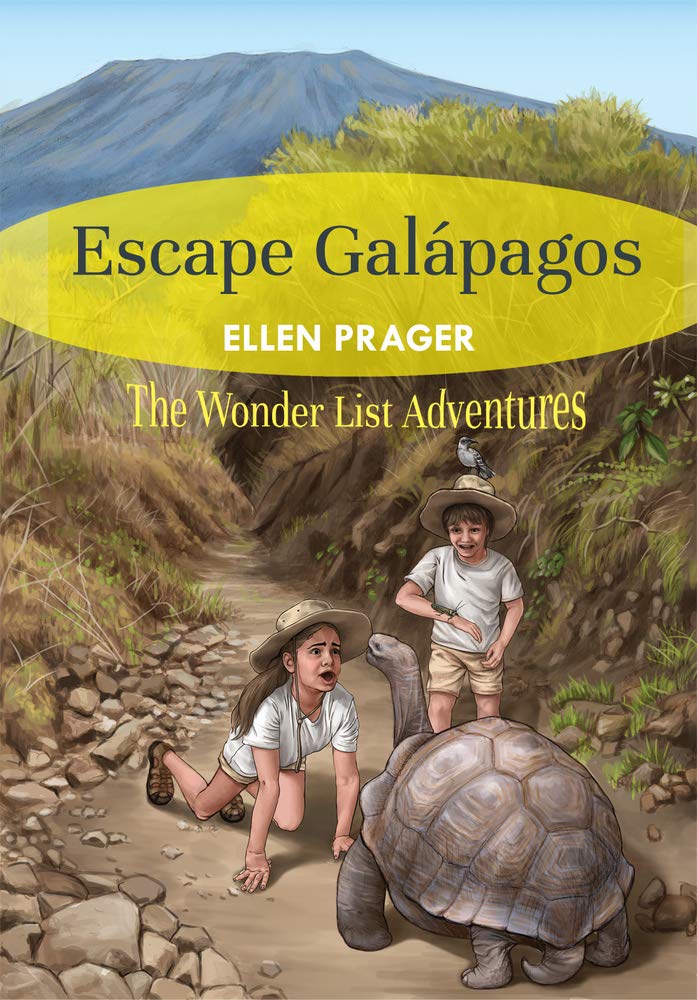
Ellen Prager’s got a new Conservation Adventure: Escape Galápagos!

Escape Galápagos, by Ellen Prager, (Oct. 2019, TumbleHome Learning), $13.95, ISBN: 9781943431557

Ages 8-12

I am so excited! I loved Ellen Prager’s Tristan Hunt and the Sea Guardians series (2015), so when she emailed me and told me she had a new book coming out, and wanted to send me a copy, I fangirled (just) a lot. I loved her combination of action/adventure and conservation in the Tristan Hunt books, so I dove into Escape Galápagos with glee; Dr. Prager is a scientist and an author, so she creates exciting stories and backs everything up with science and an understanding of nature and marine life, plus a genuine love and concern for our world that becomes contagious.

Escape Galápagos introduces readers to tween Ezzy Skylar, her younger brother, Luke, and their father, Dr. Skylar. Ezzy and her family are still reeling from their mother’s recent death, but their dad is determined to keep his promise: to take his children to all the places on his wife’s “wonder list”. First up: the Galapágos Islands. The problem? Ezzy is not a fan of animals out in nature. They’re too… wild. So a vacation roaming around in the Galapágos, with all its wild beauty and animals who just wander along freely, makes her very nervous. She won’t have long to worry about that, though; she’s got bigger problems when their cruise ship is hijacked by animal poachers. Ezzy, Luke, and Aiden, another boy on the cruise with his family, have to use their wits work together to save themselves, their families, and the animals on the Isabela Island.

Escape Galápagos is an exciting story with a conscience. As with the Tristan Hunt books, Dr. Prager shines a light on the villains we don’t always get to read about: those people whose main purpose is to get rich at the expense of the planet and its resources: in this case, the animals of the Galapágos. It’s a brilliant way of bringing conservation issues to light and making readers aware and engaged. Ezzy is a likable character who has to dig deep and overcome her fears and discomforts (which include tortoise poop. A lot of tortoise poop) to help save her father. Luke, her younger brother, is an interesting character to watch; he reminds me of Tristan Hunt, and I wonder (okay, I hope) if he has a similar “gift” to Tristan and his fellow Sea Guardians. How fantastic would it be if this were to take place in the Tristan Hunt universe?

In short, Escape Galápagos is a great new adventure for your realistic fiction readers and your fantasy readers that like reality-based fantasy. If you have any of Dr. Prager’s nonfiction books, display them and talk them up! Dr. Prager includes some real vs. made-up facts at the end of the book, which could make for a fun book discussion activity/Discovery Club activity.
Posted in Non-Fiction

Galápagos Girl/Galapagueña Blog Tour Stop: A note from author Marsha Diane Arnold!

So now that you’ve read about how I loved Galápagos Girl/Galapagueña, here’s a little somethin’ extra: a guest post from author Marsha Diane Arnold about the editorial process, and “the words that got left behind”. Enjoy the post and photos, and thank you so much to Ms. Arnold for sharing with us!

The Words I Left Behind – Galápagos Girl by Marsha Diane Arnold

Thank you, Rosemary, for inviting me to blog about my newest picture book, Galápagos Girl, coming September 18th. This book is dear to my heart. It began on my 2007 trip to the Galápagos where I met Valentina Cruz, our naturalist guide. She was born and raised on the Galápagos Island of Floreana. She and the unique animals of the islands inspired my book. I wanted to write about the fantastic Galápagos creatures from the perspective of a young girl who grew up on the islands, surrounded by wild nature.

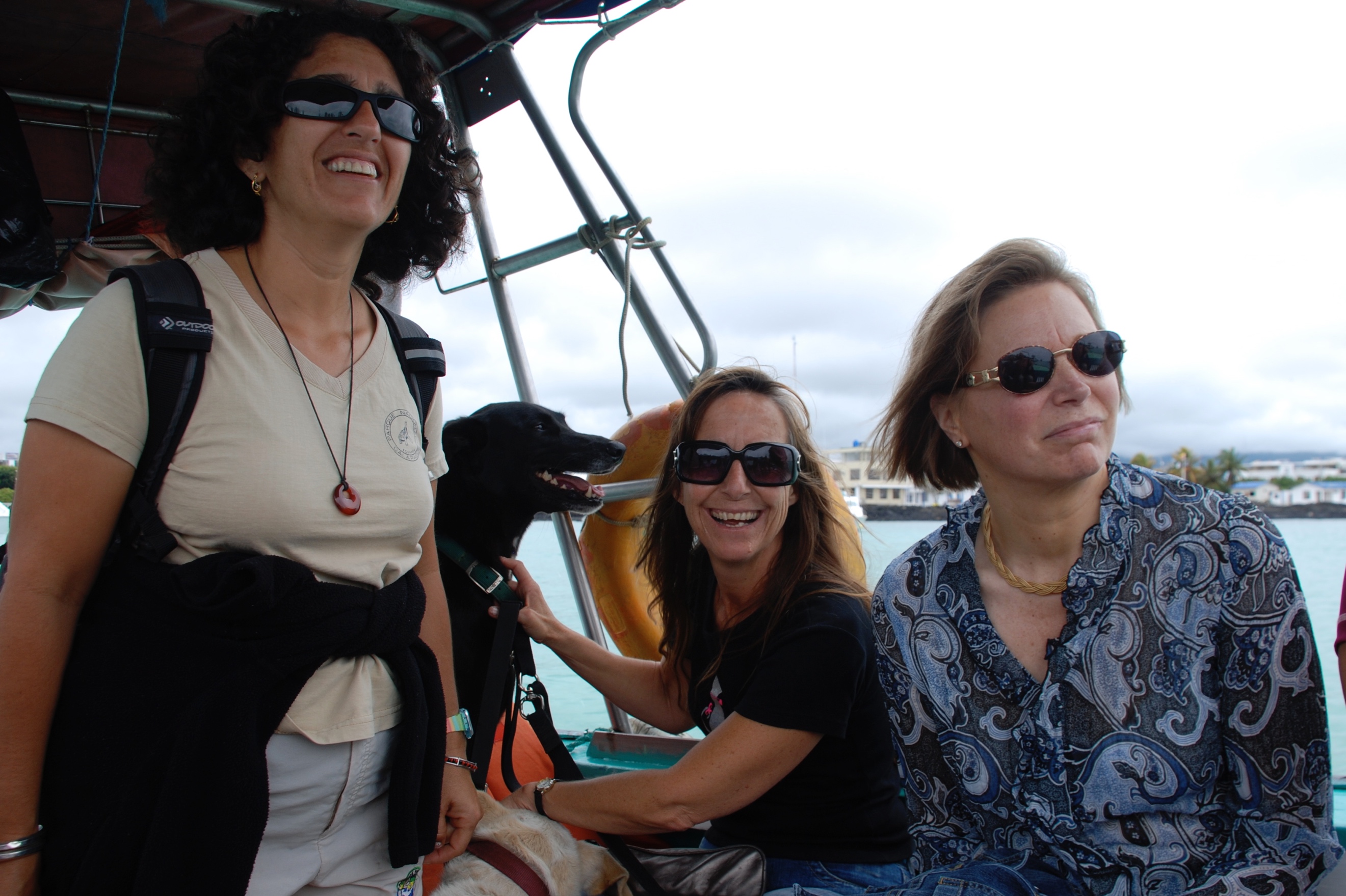
Valentina on left, with fellow travelers.


But it’s now 2018! This book was a long time coming. There were so many stories Valentina told me about her family and growing up on these exotic islands. I wanted to share them all with the world, but of course, I couldn’t. Cut! Cut! Cut! There are dozens of unique animals on the islands. I wanted to share them all in my book too, but they wouldn’t all fit. Cut some more!

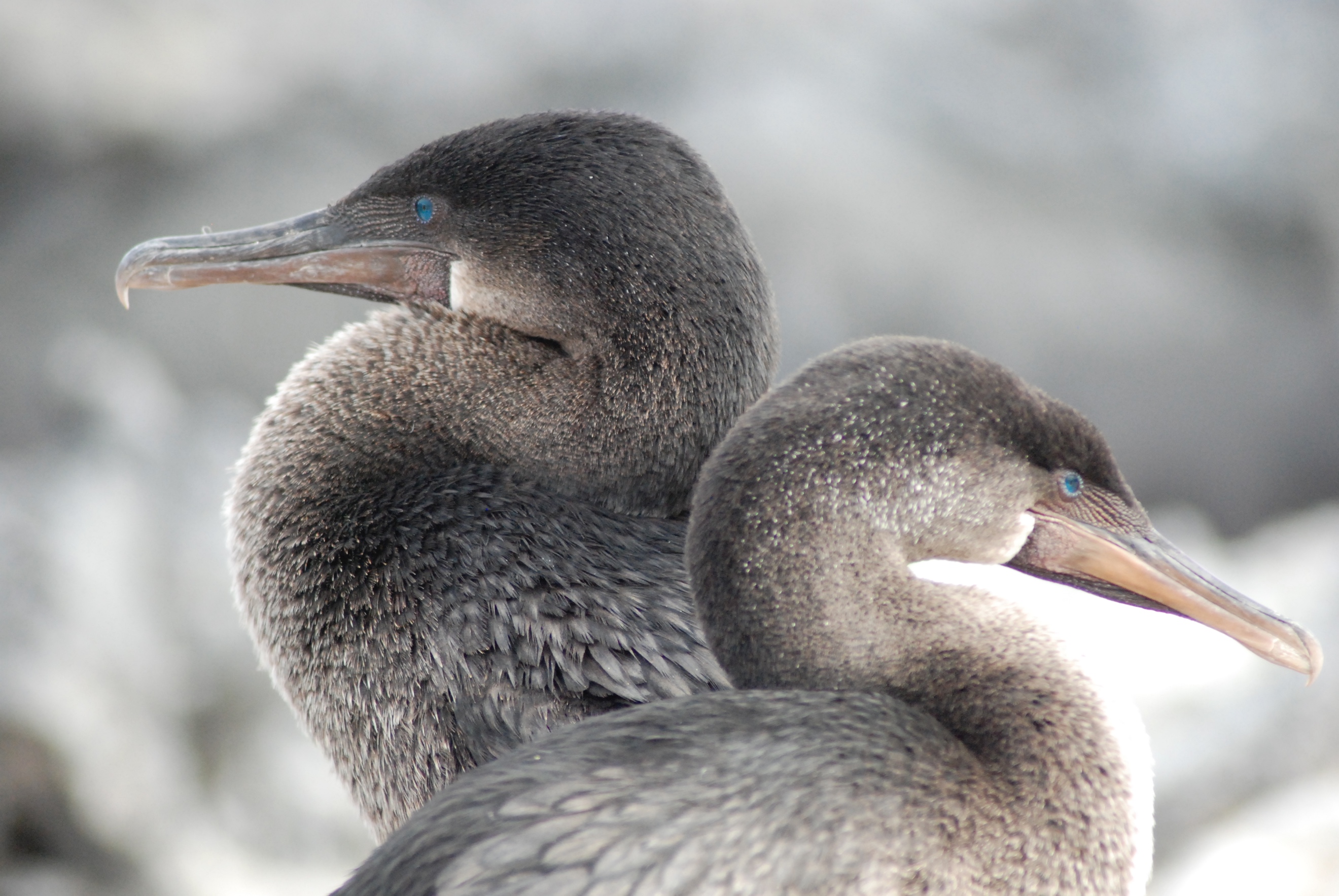
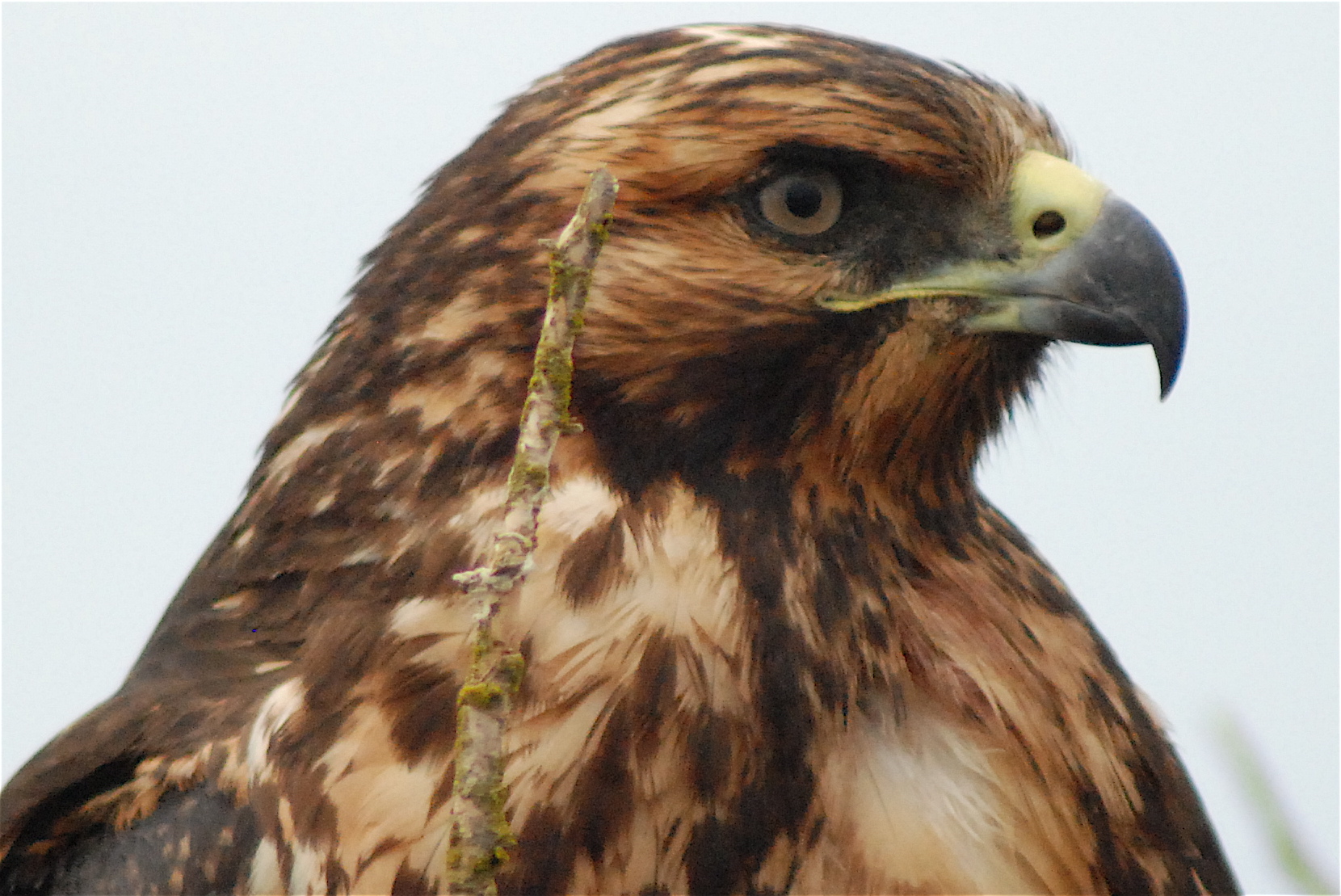
Some of the beautiful Galápagos birds that didn’t make it into the book.


Top left – Galápagos Hawk, top right – Nazca Booby


Bottom left – Oystercatcher, bottom right – Flightless Cormorant

“Kill your darlings” is advice that has long been given to writers. It’s a challenge to us to delete extraneous text and get rid of phrases we hold closest to our hearts. But our books all have to face the “killing of darlings.” Galápagos Girl was no exception.

I wrote scores of drafts, trying to decide which stories, which animals, and which words to keep. In the manuscript I submitted, Spanish words and phrases were sprinkled throughout. I’d spent hours deciding where to place these and confirming my translation was right. When it was decided to make the book entirely bilingual, most of these phrases were deleted. Also, because we were now approximately doubling the words that would fill the book, the text needed to be…Cut!

Valentina shared many stories of her father. They could easily make a book of their own. Once, she wrote to me that her father, who loved the ocean, “had the scent of the sea in his skin.” Now her young son tells her she has “the scent of the sea in her skin.” I loved this thought and included it in a few drafts. But my writers group didn’t think it worked. Cut!

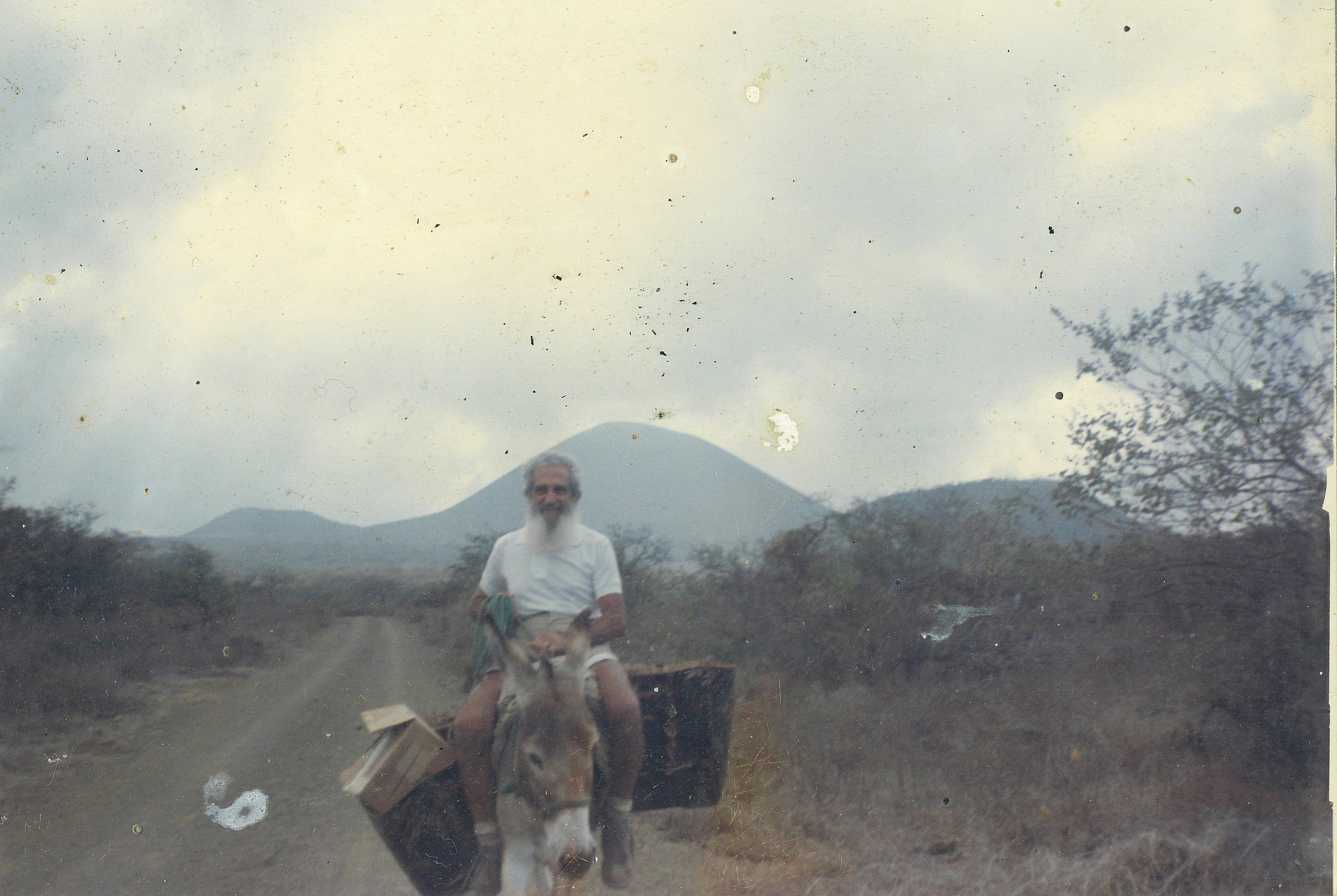
The text below is from a 2009 draft, where I again drifted toward telling Papá’s story. Valentina’s tales of him where inspiring me, just as his life had inspired her. Valentina even had an old photo of him riding their donkey, Pepegrillo. But I needed to get back to Valentina’s story. Cut!

“Papa, the teacher, the sailor, the fisherman, the farmer,

taught Valentina to read and showed her the ways of nature.

He liked to ride his donkey into the village

and take a book with him to read along the way.”

Eliecer Cruz Cevallos and Pepegrillo


Looking over more old drafts, it was obvious I wanted that cute Pepegrillo to be in my book. In a 2010 draft, I wrote:

“Sometimes Valentina walked the two miles to school barefoot,

Sometimes she wore old shoes,

Sometimes her older brother and sister carried her on their back.

On special days, she got to ride Pepegrillo, the donkey.”


You guessed it.  Pepegrillo and these lines had to be…Cut!

When I asked Valentina if there was anything she didn’t like about growing up on the Galápagos, she emphatically replied, “No.” She loved every minute of it and felt it was a privilege to be able to live there with her family. Her stories made me want to be part of her family too; these feelings show up a little in the following text. It also mentions the broken tortoise shells Valentina found, which was a plot line I had followed. Yes, this was all…Cut!

“The family’s farm was called The Well – El Pozo.

In the kitchen, Valentina helped Mamá make papaya and guava jam.

From the acacia tree, Valentina and Papá watched boats come into port.

When Valentina’s eleven older brothers and sisters

milked cows and weeded gardens,

Valentina fed bananas and plums to Santa Cruz and Isabela.

When they searched hillside caves for pirate treasure,

Valentina searched for a Floreana tortoise

to keep Santa Cruz and Isabela company.

All she found were broken shells.”

I originally called the turtles Santa Cruz and Isabela, but in the book, they are Carlitos and Isabela. There’s a story behind that too.


A few of the amazing Cruz family.


Though many stories are not in the book, we now have the delightful Galápagos Girl, thanks to my agent Karen Grencik, my editor Jessica Echeverria, the entire Lee & Low team, many helpful scientists and researchers, the wonderful artist Angela Dominguez, and, of course, Valentina Cruz.

Just a few words now, that were not cut!

“And every day she danced.

Bopping up and down

With lava lizards

Stamping her feet with

Blue-footed boobies

Twirling pirouettes

with sea lions.”


If you want to hear more Galápagos stories, I’d love to share them with you when I visit your school or festival. You can contact me on Facebook https://www.facebook.com/MarshaDianeArnoldAuthor/, www.earthsvoices.wordpress.com., or the “Write Marsha” link at  www.marshadianearnold.com, my main website, which is being restored.

Posted in Intermediate, Non-Fiction, picture books, Preschool Reads

How islands raised an activist: Galápagos Girl/Galapagueña, by Marsha Diane Arnold

Galápagos Girl/Galapagueña, by Marsha Diane Arnold/Illustrated by Angela Domínguez, translated by Adriana Dominguez, (Sept. 2018, Lee & Low Books), $18.95, ISBN: 9780892394135

Ages 4-8

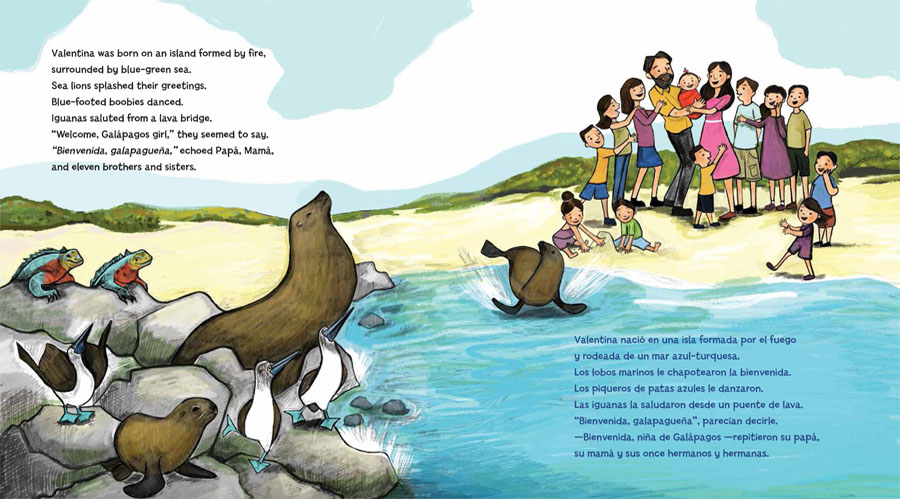
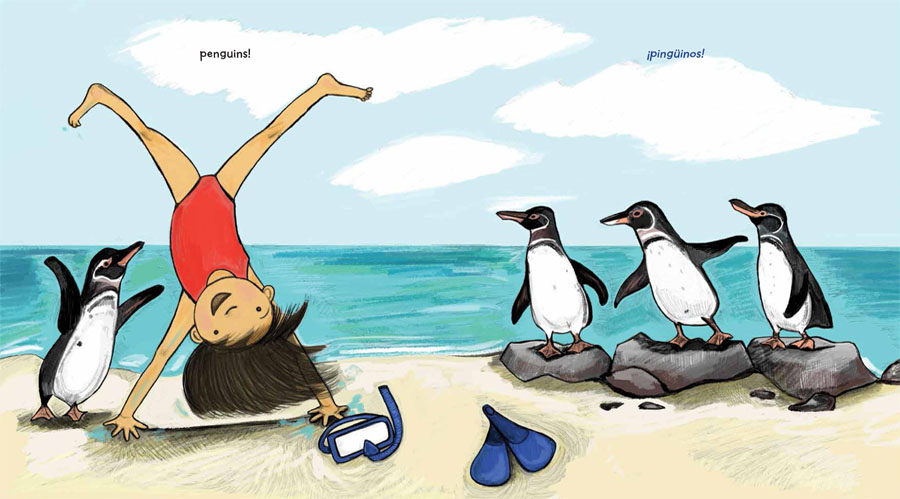
This bilingual English/Spanish story is based on the life of Galápagos Islands conservationist Valentina Cruz. Raised on the island, Valentina grew up surrounded by beauty: the blue-green sea, the playful penguins and sea lions, the sounds of the waves crashing against the rocks, and her father’s two tortoises, Carlitos and Isabela. Valentina goes away to school, but promises the animals and her islands that “I will not forget you… And I will help to keep you safe.” It’s a promise she keeps, returning to the islands on school holidays, camping out on remote islands to live and learn among the different flora and fauna, eventually becoming a biologist who returns to the islands to teach visitors to love her home as she does, and about the importance of preservation and conservation.

Author Marsha Diane Arnold met Valentina on a 2007 trip to the Galápagos and was inspired to write Galápagos Girl in the hope that readers would learn, as Valentina did, to help keep nature safe. Under threat from invasive species, active tourism, and encroaching humans, plant and animal life on the Galápagos is increasingly vulnerable. With bright, tropical colors and bold illustration, Pura BelprĂ© Honoree Angela Dominguez transports readers to the magical islands; she communicates the feeling that we’re seeing something truly special as Valentina moves among unique plants and animals that aren’t found anywhere else on Earth. We’re given a special, secret pass to paradise as we turn each page of Galápagos Girl, and reading it with an unabashed sense of wonder will inspire that spark in a storytime group. An author’s note and a note about the Islands explains Marsha Diane Arnold’s first meeting with Valentina and provides background on the Islands. Five pages of information about the animals introduced in the story adds nice background information to the story, as does a solid bibliography. The bilingual text makes it accessible to Spanish and English-speaking readers.

The storytelling gives readers a glimpse at Valentina’s passion for conservation and illustrates how growing up with a respect for nature creates a better world for everyone. Galápagos Girl is a worthwhile add to storytime collections, bilingual collections, and natural history collections. There’s a free Animals of the Galápagos matchup download available at the Lee & Low website.

Marsha Diane Arnold is an award-winning picture-book author. Her past titles include the Smithsonian Notable Book The Pumpkin Runner and Lost. Found., which received three starred reviews. Marsha was inspired to write this story after traveling to the Galápagos Islands, where she met Valentina Cruz and had the opportunity to swim with sea lions and dolphins. She lives with her family in Alva, Florida. You can find her online at marshadianearnold.com.

Angela DomĂ­nguez is the author and illustrator of several books for children, including the Children’s Book Press title Let Me Help! / Quiero ayudar!, Marta Big and Small, and Maria Had a Little Llama, which received the Pura BelprĂ© Illustration Honor. In 2016, she received her second Pura BelprĂ© Honor for her illustrations in Mango, Abuela, and Me by Meg Medina. When Angela is not in her studio, she teaches at the Academy of Art University, which honored her with their Distinguished Alumni Award. She lives in Virginia. Visit her online at angeladominguezstudio.com.