Posted in Uncategorized

Porcupine’s Pie: Friendship is the best ingredient of all!

Porcupine’s Pie, by Laura Renauld/Illustrated by Jennie Poh, (Oct. 2018, Beaming Books), $16.99, ISBN: 9781506431802

Ages 3-7

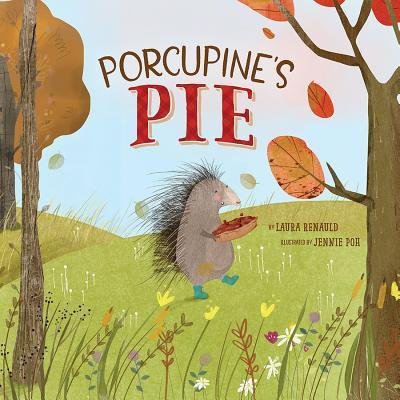
It’s Fall Feast Day, and Porcupine is so excited: she’s going to make her famous Cranberry Pie! She sets out to wash her cranberries, and comes across her friends Squirrel, Bear, and Doe, along the way, each of whom has their own delicacy Porcupine is looking forward to. Each of her friends is missing a crucial ingredient for their signature dish, so sweet Porcupine offers them use of her stocked pantry. But when Porcupine arrives at the river – oh no! – she discovers that her pail of cranberries is empty, something sharp-eyed readers will notice as they read along. When Porcupine’s friends find out about Porcupine’s cranberries, everyone comes to the rescue with ingredients of their own, and Porcupine makes the best pie of all: Festive Friendship Pie!

This is a sweet story of friendship and sharing that kids will love and that makes for a great Thanksgiving/Harvest storytime. Jennie Poh’s illustration has a lovely, textured feel to it and concentrates on details like the burlap feel of a sack on one shelf, the cloth of Porcupine’s apron, and the oh-so silent falling of her cranberries as she heads to the river. There’s a sweet little ladybug who shows up in every spread and on the endpapers: challenge your readers to find it! The colors are warm autumn shades of green, brown, and dark red; the titular “Pie” appears in a dark red plaid tablecloth filling, with a big, bold font. The story font alternates between plain black and plain white (against a darker background), not interfering with the story, allowing the atmosphere to take center stage.

Porcupine’s Pie is a sweet book about friendship and being grateful, and it’s perfect for preschoolers and Kindergarteners. A recipe for Friendship Pie at the end is the perfect ending to the story, and an invitation to some holiday baking. Display and with readalikes, Karma Wilson’s Bear Says Thanks, and Stone Soup.

Author Laura Renauld’s author website offers links to the KidLit community, her blog, and information about her books. You can see more of Jennie Poh’s illustration on her Instagram.

Posted in Intermediate, Non-Fiction, Preschool Reads

Show kids the excitement of cooking with Kids Cooking!

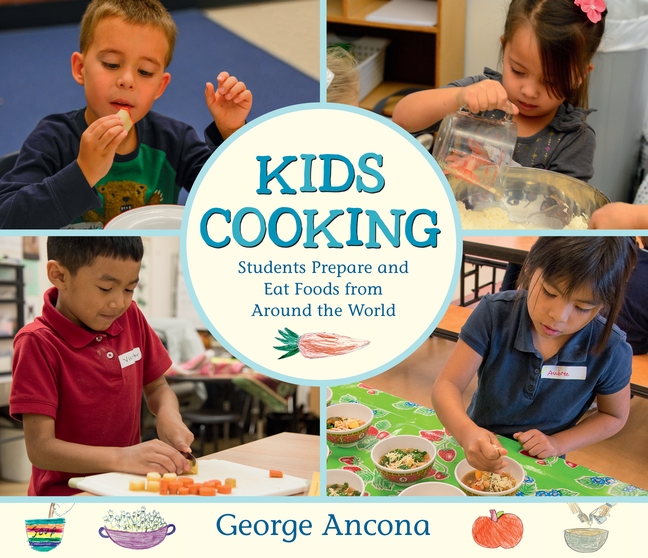
Kids Cooking: Students Prepare and Eat Foods From Around the World, by George Ancona, (Oct. 2018, Candlewick Press), $16.99, ISBN: 9780763698768

Ages 4-7

When my son (now a high schooler) was in first grade, his school participated in a great program called CookShop. The teachers ran the program, and we parents volunteered as helpers, and a couple of times a month, kids learned cooking skills: chopping (with plastic knives), mixing, and the math involved in putting together a recipe. I loved it, and he loved the process of creating meals. No, he didn’t eat anything he made (that honor went to me), but working together brought us even closer, and the whole class came together as a group to prepare and share food. I may have enjoyed CookShop more than he did – I still have my apron! – and am glad it’s still a program in NYC schools. When I read Kids Cooking: Students Prepare and Eat Foods From Around the World, I was immediately brought back to that first grade classroom and the warm memories.

Kids Cooking is photographer George Ancona’s venture into classrooms where a similar organization, Cooking with Kids, brings children from diverse backgrounds come together to prepare healthy meals from different cultures. They roast vegetables and prepare a Moroccan sauce called chermoula; make Chinese-American fried rice with sweet and sour cucumbers; work together to cook up an Italian minestrone soup with breadsticks, and learn about different tomatoes that go into making a Mexican salsa with tortillas and tamales. They draw pictures as they go; teachers use a globe to demonstrate where different meals originate, and parents and teachers make sure that everyone’s cooking experience is safe and exciting.

The book presents photos of the kids and grownups at work, along with some of the children’s artwork, and phrases from the cultures whose meals they’ve prepared. It’s a celebration of food, friendship, and different cultures: meals prepared and shared together are the best meals. An author’s note mentions the Cooking With Kids program and the schools that participated in the book.

With the holidays on the horizon, Kids Cooking is a great book to read to kids and get them talking about meals they enjoy at home. A recipe link included in the book didn’t work for me, but the Cooking with Kids website has recipes available: see if your family wants to try a few out!

You can find more of George Ancona’s photos and learn more about his children’s books here.

Posted in picture books, Preschool Reads

Bone Soup puts a Halloween spin on a classic!

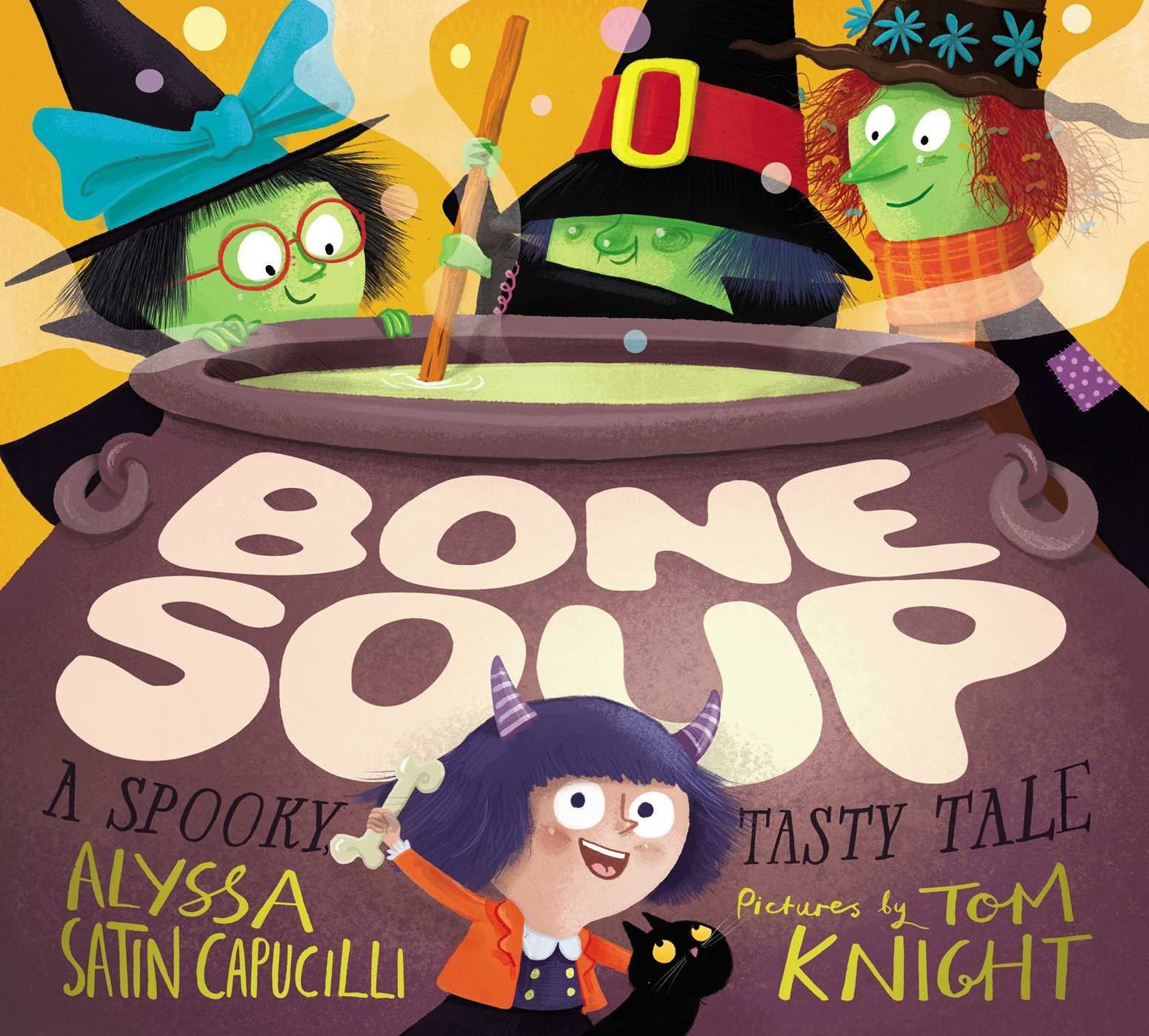
Bone Soup: A Spooky Tasty Tale, by Alyssa Satin Capucilli/Illustrated by Tom Knight, (July 2018, Simon & Schuster), $17.99, ISBN: 9781481486088

Ages 4-8

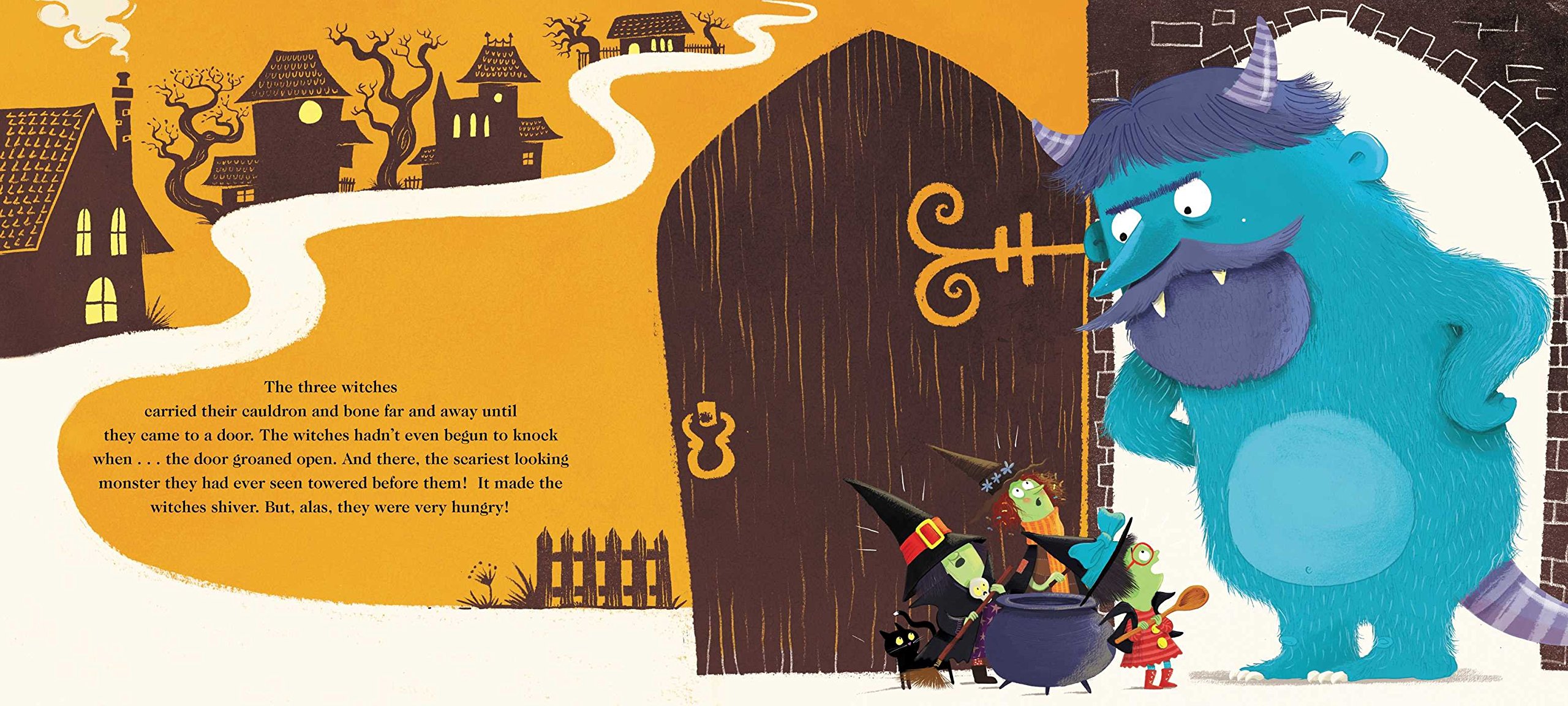
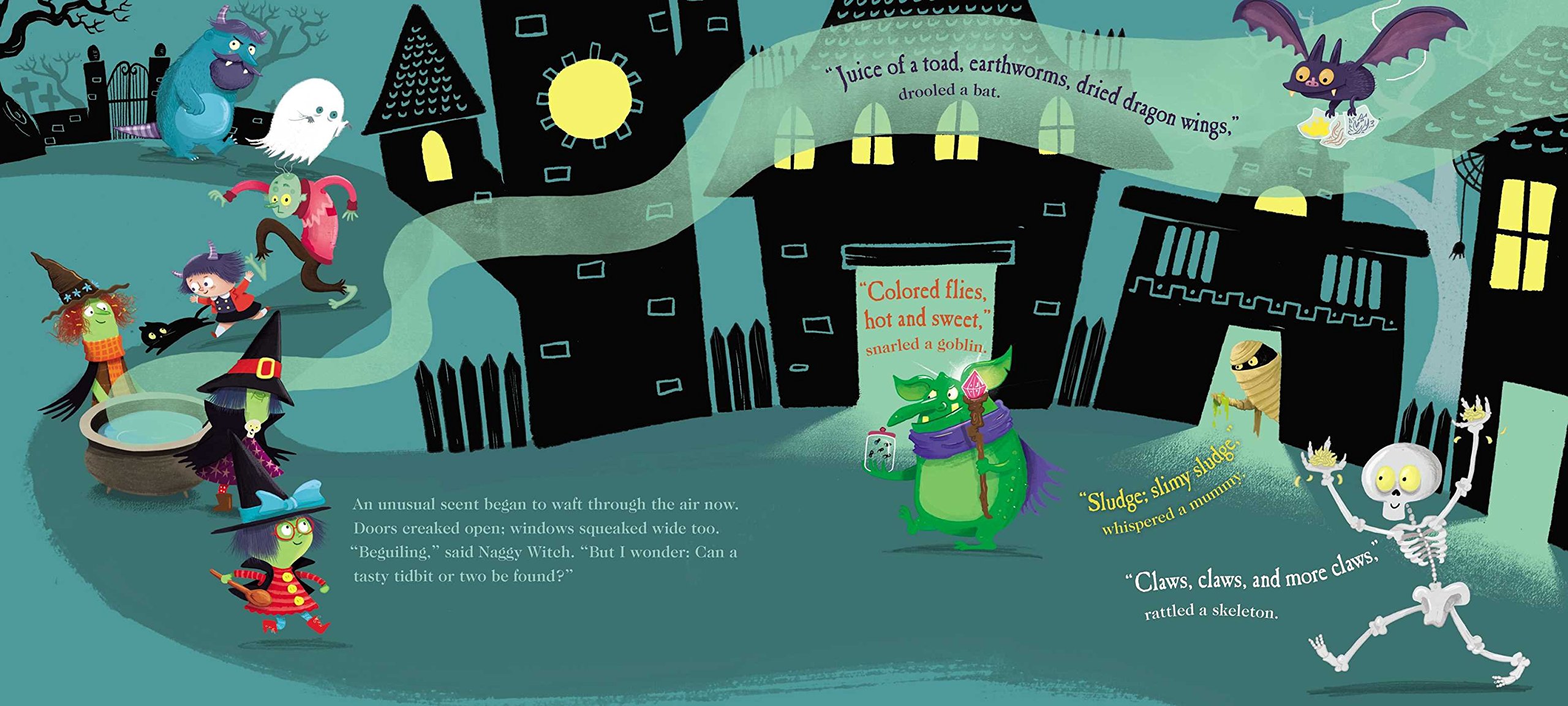
Naggy, Craggy, and Scraggy are three hungry witches. Alas, their cupboards are bare, but for a single bone. A single bone, you say? Piff-Poof! Naggy Witch has a plan: Bone Soup, the perfect Halloween treat! The witches travel throughout the town, gathering delights from the local monsters: a bit of water here, an eye of a giant there, some old toenails and some slimy sludge, until the entire town has contributed to a bone-chillingly delicious meal for all! Based on the classic tale, Stone Soup, Alyssa Satin Capucilli puts a wonderfully fun spin on this perfect read for preschoolers and, Kindergartners (and more!).

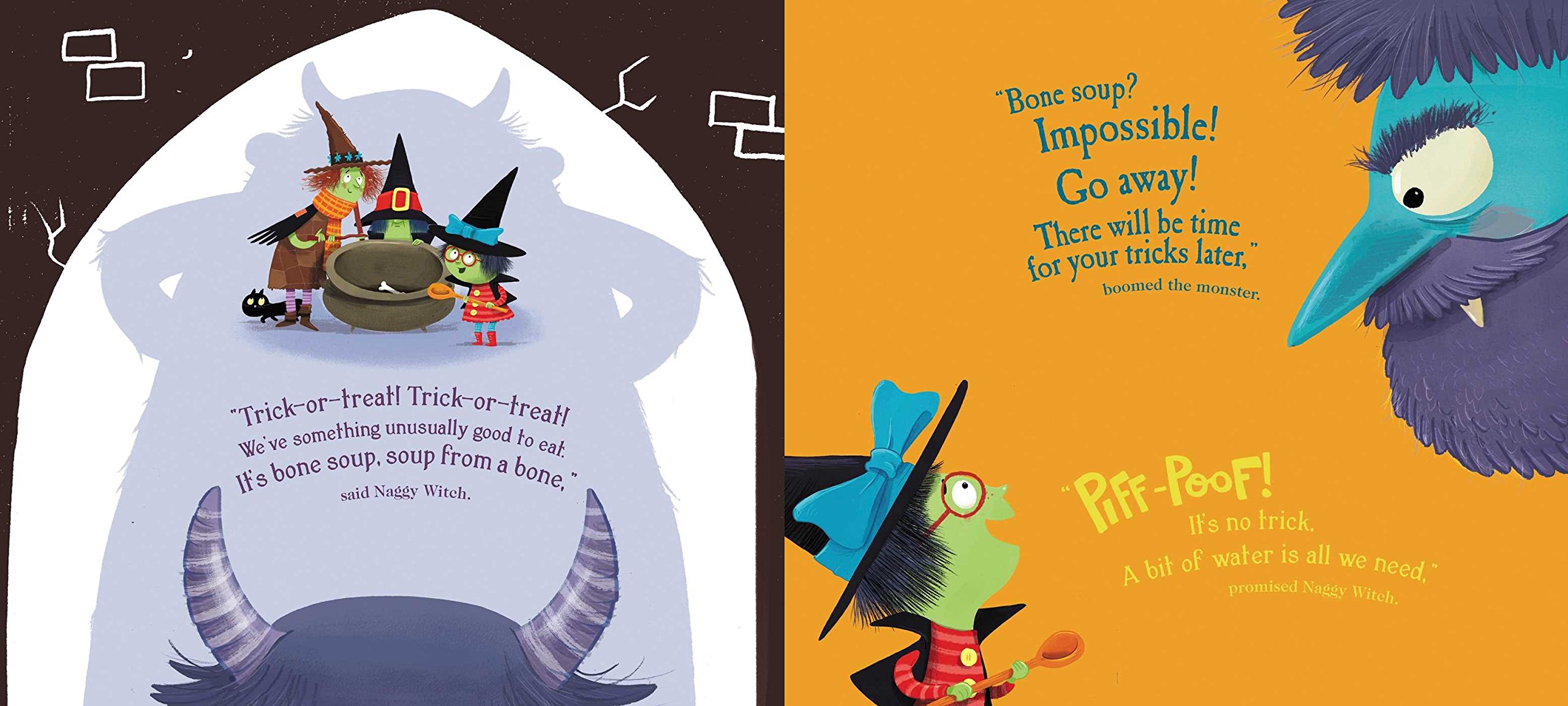
There’s repetition here that invites readers to join in: “Piff-Poof!” Naggy Witches cries as each ingredient goes into the cauldron, and the witches chant, with each stop, “Trick-or-treat! Trick-or-treat! We’ve something unusually good to eat. It’s bone soup, soup from a bone. A savory morsel is all it needs!” Get the kids chanting, let them be little monsters or witches, and pull out a cauldron (it’s Halloween season, you can find a $1.99 trick or treat cauldron anywhere) to let them throw goodies in.The charcoal and pencil art is adorable, with green, crazy-haired witches, giant blue monsters, and googly-eyed mummies and skeletons. The fonts are big and readable, changing size and color for emphasis. There’s a recipe for Naggy Witch’s Bone Soup at the end of the book, with thoughtful substitution suggestions for those of us who may balk at juice of a toad or colored flies. Author Alyssa Satin Capucilli has a great storytime activity kit for free download on her site, complete with word games for older readers, and a printable recipe to hand out to parents. My kids and my library kids know and love Ms. Capucilli’s Biscuit books, so that could be a good intro when telling parents about the author.

This would be a great feltboard storytime activity, or you can get creative and make your own eyeballs (ping pong balls are good), toenails (cut up some index cards into slivers), and a bone or two (it’s Halloween, there are plush or plastic bones to be found everywhere). I love this story, and can’t wait to get it in front of a group of Kindergartners next week for a Halloween storytime!


Posted in Non-Fiction, Teen, Young Adult/New Adult

Great crossover YA: You and I Eat the Same brings the world to the table

You and I Eat the Same, edited by Chris Ying & René Redzepi, (Oct. 2018, Artisan Books), $19.95, ISBN: 9781579658403

Ages 13+

MAD, the Danish word for food, is a cultural symposium founded by chef René Redzepi and editor of the food magazine, Lucky Peach, Chris Ying. You and I Eat the Same is the first in a series of MAD Dispatches the two plan to release, with essays on how food brings different cultures together and how we can work on making food better – better for the environment, better for the people who farm and curate it, better for all of us, because we consume it.

There are 19 essays in this first volume, each running anywhere from 2-12 pages, on such topics as sesame seeds, flatbreads and how every culture wraps their meat in some kind of one, and, my favorite, “Coffee Saves Lives”. Ask any of my coworkers, family, or friends, and they will heartily agree.

Each essay looks at culture and food’s role in those cultures. The writing is light and instantly readable, bringing diversity into our homes and our lives. Tienlon Ho’s “One Seed Rules Them All” says of sesame seeds that “a dish can feel of one place, while being from another”; really, the sesame seed can bring about world peace: “Humans have a remarkable ability to agree on hummus’s deliciousness while disagreeing about everything else.” Redzepi’s “If It Does Well Here, It Belongs Well Here” exhorts that “the day we can’t travel and move and learn from each other is the day we all turn into crazy nationalists” – a very timely statement. Did you know that there’s a Mennonite community in Mexico? Read Michael Snyder’s “Mennonite Cheese is Mexican Cheese” and learn the history of this colony’s move. “People Will Eat Anything” is an alphabetical rundown of culinary delights, from abalone and confused flour beetle to zebra.

There are gorgeous, full-color photos throughout, and the writing praises culinary and cultural diversity in the best ways: breaking bread together is great, but growing it and helping others do it is even better. As Redzepi says in his foreword that, “If we can share a meal, maybe we can share a conversation, too.”

I’d love to get this into my YA collection; I think teens will appreciate this message. We live in Queens, a community where we can travel the world by going outside and visiting a food truck, a dim sum house, and a mozzarepa vendor all within a 10-block radius. I’m looking forward to more MAD Dispatches and would love to see one of their symposiums. In the meantime, though, I’ll content myself with videos on their website.

You and I Eat the Same is a great add to any collection, any foodie fan’s bookshelf, and is a smart YA crossover bet.

Posted in Middle Grade, Non-Fiction, Non-fiction, Teen, Tween Reads

Don’t read on an empty stomach: NatGeo Kids Food Fight

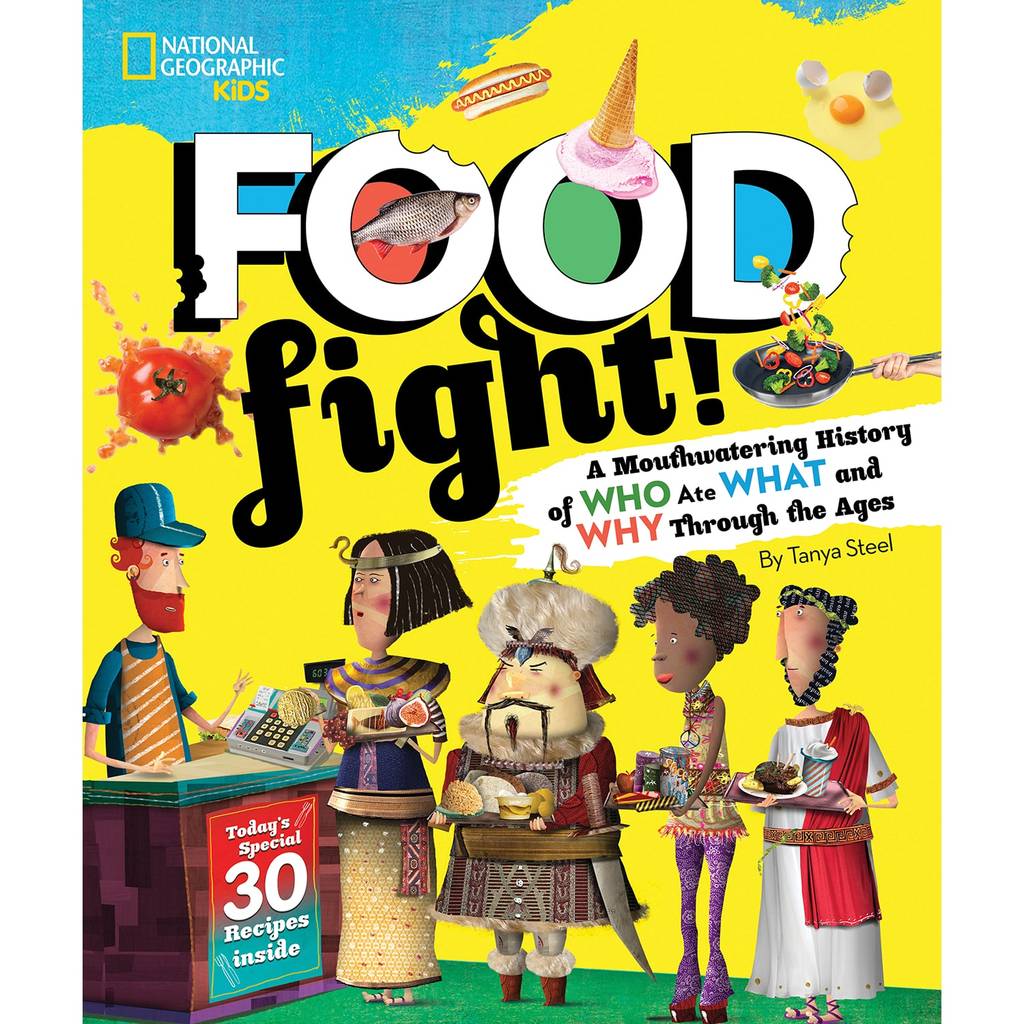
Food Fight! A Mouthwatering History of WHO Ate WHAT and WHY Through the Ages, by Tanya Steel, (Sept. 2018, National Geographic Kids), $19.99, ISBN: 9781426331626

Ages 10-14

Did you know that the Visigoths demanded 3,000 pounds of pepper as a gift when they conquered the Western Roman Empire in the 5th Century AD? Or that some medieval bakers whitened their flour with ground bones or chalk? Those are just a few of the wild food facts readers will pick up when they pick up Food Fight! by former Bon Appétit and Food & Wine editor Tanya Steel. Food Fight! is a history of food, combined with some fantastic (and frightful) facts, and recipes. The book covers food fads and eating habits from 14 different moments in history, from the prehistoric era through the 1960s, and there’s a special chapter imagining a future life (and food) on Mars! There are fun Popcorn Quizzes (you can’t have a plain pop quiz in a book about food) throughout, and amazing and hilarious photos, plus quotes from kid chefs who’ve made and enjoyed the 30 recipes you’ll find here. The book kicks off with safety tips, and a food timeline, recipe index, bibliography, and further reading and resources rounds everything out.

Kids in my library are big nonfiction fans, and Food Fight! offers history, fun, and kid-friendly recipes all in one volume. It’s a fun add to collections, and a good gift for budding chefs and food historians. (Psst… introduce older tweens and teens to Alton Brown’s excellent Food Network show, Good Eats, for more food history and cooking tips.) It’s a big plus that author Tanya Steel is a major name in the food journalism, so she knows how to write about food and food history, and she makes it accessible to younger readers. Plus, she originated the White House’s Healthy Lunchtime Challenge & Kids’ State Dinner, hosted by First Lady Michelle Obama, which brought recipes created by young chefs from each state to the White House. Kids are invited to make and upload photos of their Food Fight dishes – check out the Instagram tag #natgeofoodfight, and check out the Food Fight webpage for more info.

Posted in Non-Fiction, picture books, Preschool Reads

Baby Animals Eating is the cutest book you will read today.

Baby Animals Eating, by Suzi Eszterhas, (Aug. 2018, OwlKids), $14.95, ISBN: 9781771473170

Ages 3-7

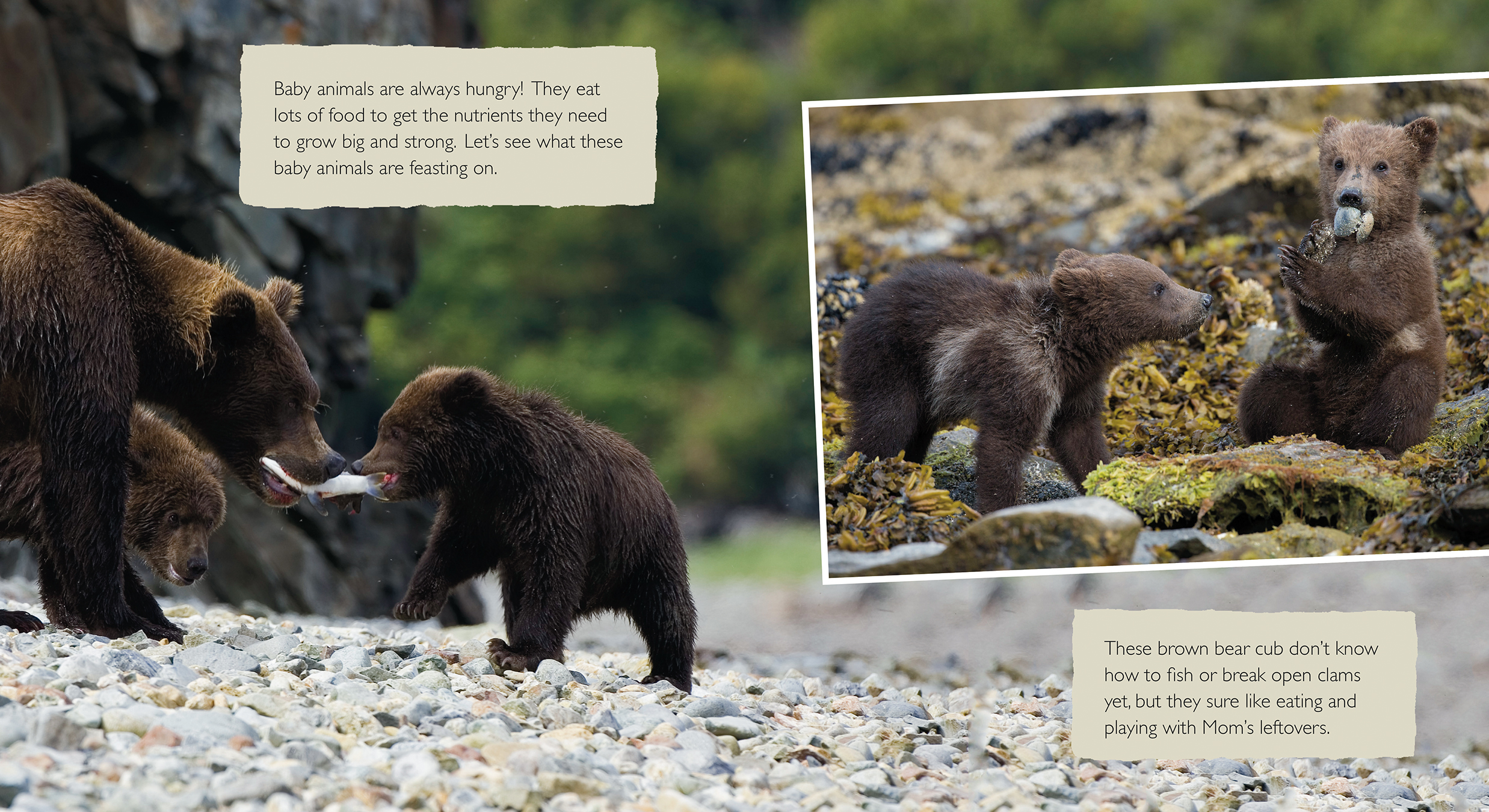
Wildlife photographer Suzi Eszterhas’ third Baby Animals book, Baby Animals Eating, spotlights more adorable baby animals, and their parents, enjoying foods from eucalyptus leaves to mother’s milk. The pictures are vibrant, and the text teaches readers about animal behavior and differing food needs. The previous books, Baby Animals Moving and Baby Animals Playing, come together to form a great introduction to natural science for early learners, and can lead to a good discussion on nutrition. Ask kids what they like to eat; ask for similarities and differences (Bears like to eat clams and fish; do you? Koalas eat eucalyptus leaves; what leaves do you like to eat?) Notice the relationships between parents, siblings, and babies: does your grownup carry you? Do you and your siblings like to eat the same things? Back matter includes more information about Suzi Eszterhas and some behind-the-scenes photos.

This is a great book for storytime, and the crisp pictures allow for early and pre-readers to explore independently. A nice series to add to early nonfiction collections, and a great book to give little ones who love animals. (Go around the room and point out different toys and stuffed animals, and see how many kids can point out from the book.)

Keep Suzi Eszterhas’ webpage on your list of reference links. She’s got a fantastic amount of information on the page, including her books, newsletter, tours and workshops, and a gallery with some of the most incredible wild animal photos you’ve ever seen (perfect for animal reports!). There’s also a link to Girls Who Click, an organization founded by Eszterhaus, empowering young women to enter the field of nature photography and further global conservation efforts.

Posted in picture books, Preschool Reads

Book Birthday: Who Eats Orange?

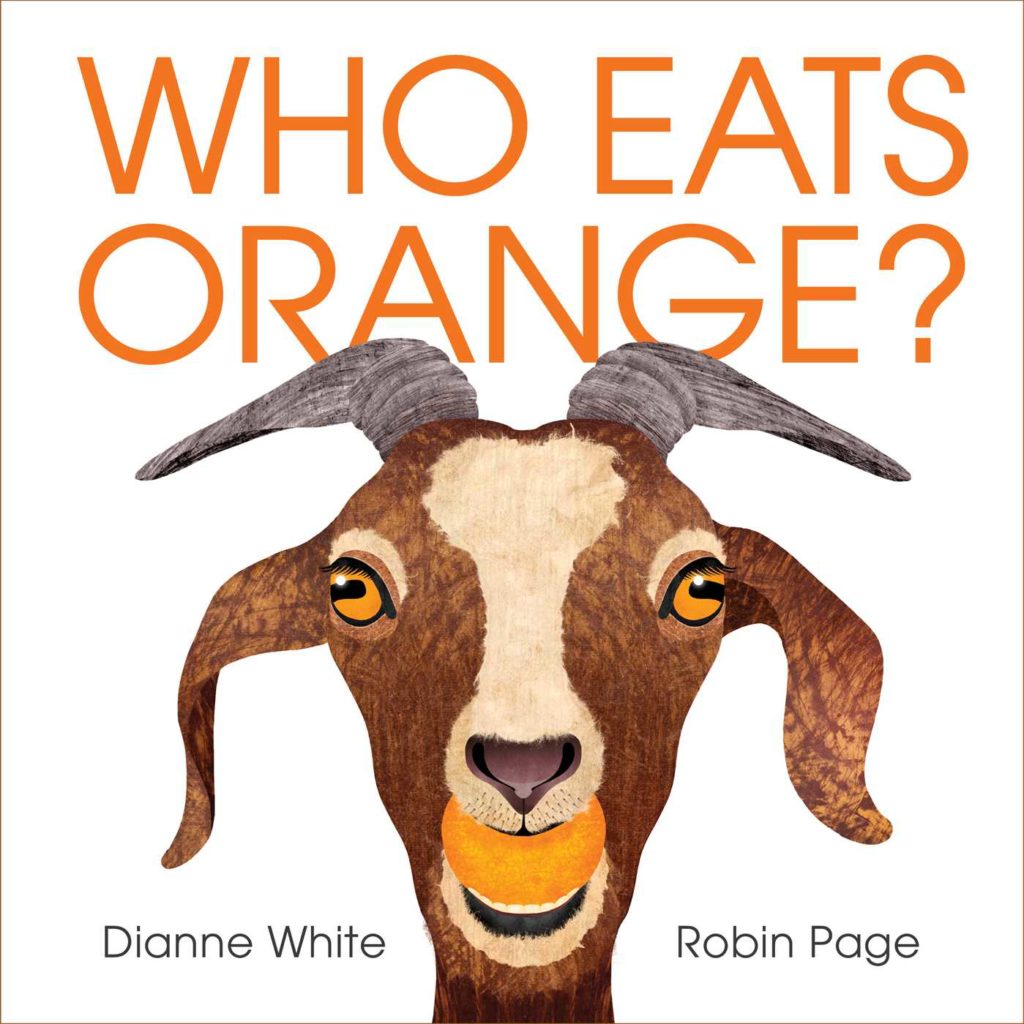
Who Eats Orange?, by Dianne White/Illustrated by Robin Page, (Aug. 2018, Simon & Schuster Kids), $17.99, ISBN: 9781534404083

Ages 3-6

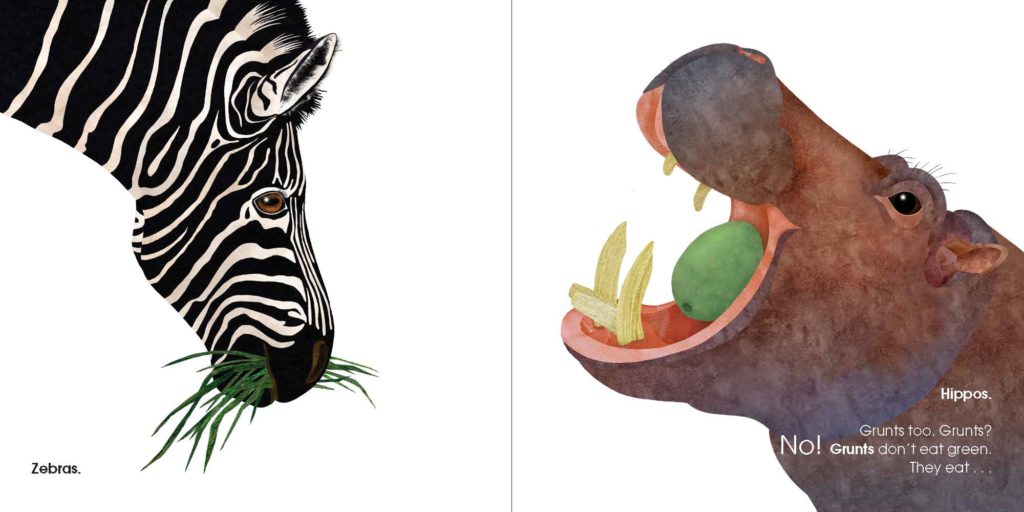
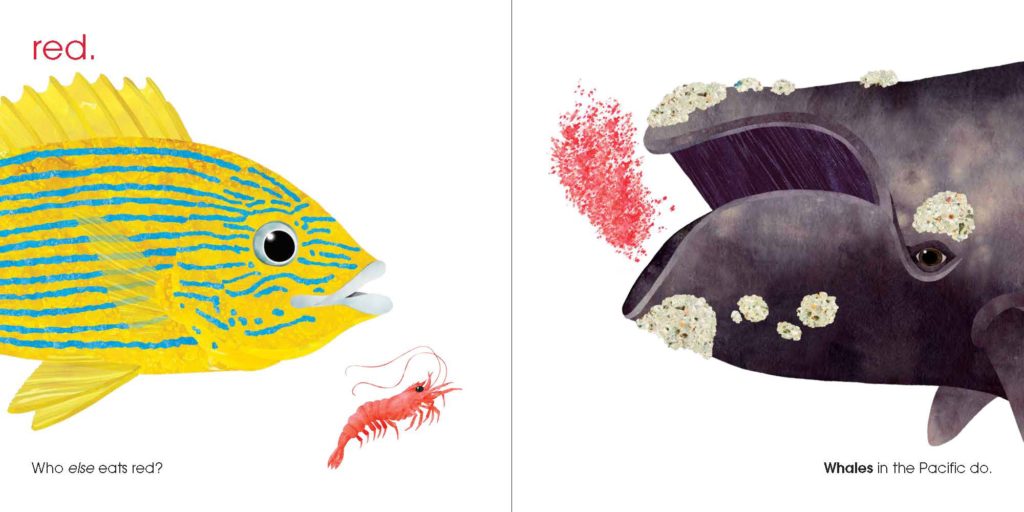
Need a fun, new concept book on your shelves? Who Eats Orange looks at the eating habits of animals from bunnies to bears. Four animals eat one color, and the fifth doesn’t – but eats a different color, which brings us into the next group of animals. There’s quite a bit of information, broken down into simple, easily understandable bites, to be found here: colors, animals and what they eat, and their habitats: “Who eats orange? Bunnies in their hutches do. / Chickens in the henhouse too. / Who else eats orange? Goats. / Pigs. Gorillas too. Gorillas? NO! The repetitive text pattern gets kids ready; they’ll learn quickly who doesn’t eat a chosen color, and join in with a hearty “NO!” when the time comes. The text brings things right back to kids, encouraging them to eat the rainbow, with a colorful spread of fruits and vegetables. The back matter organizes the animals, and their foods, by habitat (farm, Africa, ocean, forest, rainforest, tundra) and provides more information on animals and their culinary tastes.

The digital art is wonderful; reminiscent of one of my favorite realistic animal artists, Steve Jenkins. (Robin Page also dedicates the book to Steve Jenkins, which was pretty great to see.) The vivid artwork stand out against stark white backgrounds, inviting readers to imagine the roughness of a hippo or the bushy fur of a fox and marmot. The faces are gentle, with expressive eyes that will draw storytime fans right in. It’s such an interactive book, with opportunities to get the kids talking about animals, food, and color. There’s an activity kit available for download that comes with animals masks to cut out, a rainbow recipe, and writing activities.

I read Who Eats Orange, along with one of my old favorites, Who Hops?, to my 6-year-old. Who Hops? works in a similar manner, introducing different animals who hop, swim, crawl… and then one animal that obviously cannot! Anyway, we had big laughs, he pronounced Who Eats Orange “so much fun”, and laughed at me when I suggested he start eating the rainbow with me. Hey, I tried.

Who Eats Orange is way too much fun for toddlers and preschoolers! A fun add to concepts and animal collections, and a good gift book for rising preschoolers and kindergarteners.

Posted in Fantasy, Fiction, Fiction, Middle Grade, Realistic Fiction, Tween Reads

Fiction plus food is a winning reader combo!

Who doesn’t love curling up in your favorite reading spot with a snack and a book? These middle grade reads feature yummy treats as part of their stories – perfect for reading groups and snack suggestions (minus the flying pig cookies: read on)!

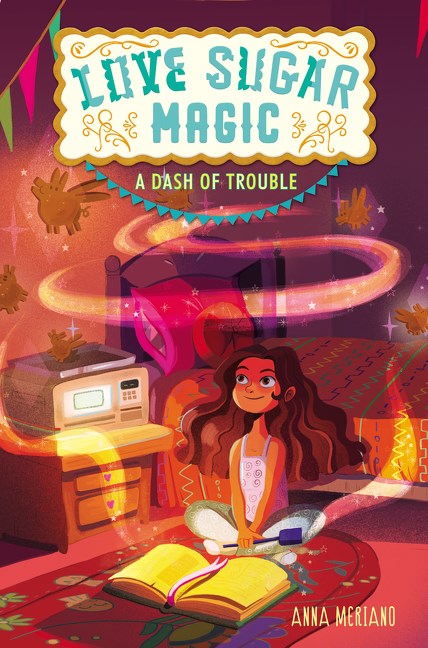
Love Sugar Magic, by Anna Meriano/Illustrated by Mirelle Ortega, (Nov. 2017, Walden Pond Press), $16.99, ISBN: 9780062498465

Recommended for readers 8-12

Leonora Logroño’s is an almost 12-year-old whose family owns Love Sugar Magic, the local bakery that makes the most delicious cookies and cakes. She’s the youngest among her five sisters, and she just knows the family is keeping something secret from her. With a little snooping and gentle, sisterly nudging, Leo learns the truth: her family are brujas – witches – who infuse their baked goods with rich magic. Leo discovers she has some magic ability already – it usually manifests in early adolescence – and decides to put it to the test by helping Caroline, her best friend, with a crush on at school, but things go upside down pretty quickly… Leo may need to draw on her sisters to make things right!

I adore this story! It’s got humor, great characters with a rich Mexican heritage, and they’re strong, smart young women. Leo is headstrong, sure – what tween isn’t? – and reacts to feeling left in the dark about family business by taking matters in to her own hands. It’s one thing, after all, to enchant flying pig cookies, but it’s entirely something else to play with someone’s free will. But the magical mix-ups are largely hilarious and mostly harmless. Readers can relate to Leo’s frustrations about being considered “too young” for the secret stuff, and author Anna Meriano makes Love Sugar Magic into a nicely handled cautionary tale about rushing into things without taking the time to think. I’m thrilled that this is the first book of a new series – I want to spend more time with the Logroño family. Especially that feline snitch, Mr. Gato. There are some tasty-looking recipes at the end of the story – you’re on your own for the magic – and the book is sprinkled with Spanish and English phrases that really bring readers into its world.

Love Sugar Magic: A Dash of Trouble has starred reviews from School Library Journal, Kirkus, and Shelf Awareness.


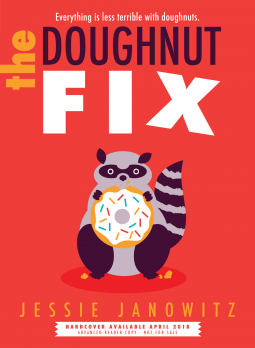
The Doughnut Fix, by Jessie Janowitz, (Apr. 2018, Sourcebooks Jabberwocky), $16.99, ISBN: 9781492655411

Recommended 8-12

Eleven year-old Tristan is a New York City kid who’s pretty happy with life as it is until his parents announe that they’re moving upstate. Petersville, New York, to be exact. It ain’t Westchester, this is up in the mountains. There’s one road, no restaurants, and a general store that used to sell legendary doughnuts, as Tristan discovers one morning, as he rides around town trying to find something to do. But Millie, the general store proprieter, stopped making the donuts, and if Tristan – a baking enthusiast who’s sold on the legend of these doughnuts – wants the secret recipe, he has to provide Millie with proof that he’s going to use it wisely. He needs a business plan. Luckily for him, Petersville does have a public library (whoo hoo!), and with the help of his new friend, Josh, Tristan starts pulling it all together to bring the chocolate cream doughnuts back to Petersville.

The Doughnut Fix surprised me with its depth and its readability. It’s very readable, very engaging, and provides smart tips on starting one’s own business for kids – throughout the story, Tristan refers to his library copy of Starting Your Own Business for Dummies, and drills things down into kid-digestible bits. It’s empowering! Teachers can challenge kids to read this book and create their own summer job business plans, or librarians (and caregivers) can produce a similar challenge as a summer reading program. There are recipes and a recap of important information for starting a business at the end of the book. The story emphasizes themes of friendship, collaboration, planning, and budgeting, offering solid life lessons for middle graders.

Both books are great reading group selections that lend so much to deeper exploration, from Mexican culture and its celebration of ancestry, to life in a small town versus life in a city. Food is the easy in to discussing these books, but there are great ideas waiting to be touched on in each. These are great adds to your shelves or your gift list.

Posted in Animal Fiction, Fiction, Graphic Novels, Intermediate, Preschool Reads, Toddler Reads

Books for your Spring radar!

Spring always brings some good books to read. In April and May, there’s a little something for everyone – come and see!

April Books

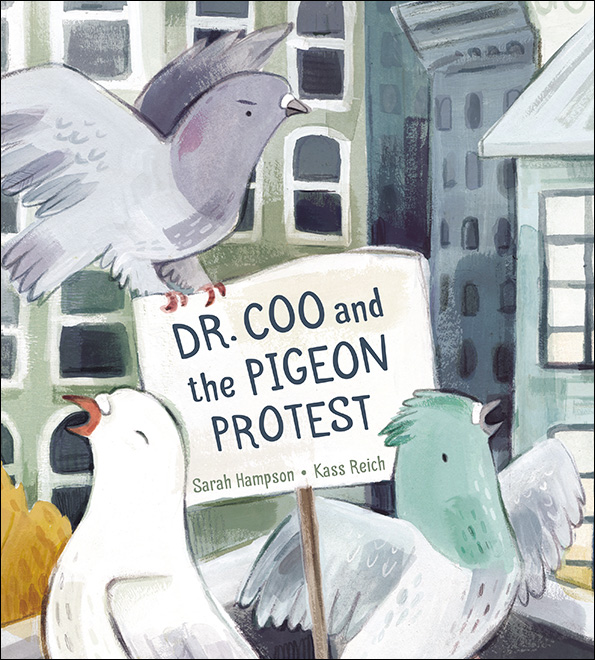
Dr. Coo and the Pigeon Protest, by Sarah Hampson/Illustrated by Kass Reich,
(Apr. 2018, Kids Can Press), $18.99, ISBN: 9781771383615
Recommended for readers 4-8
Dr. Archibald Coo is a sophisticated pigeon who’s tired of the way he and his fellow pigeons are treated by humans. They’re shooed at, swatted, and treated like a general menace. Dr. Coo remembers when pigeons enjoyed a higher profile in history: in ancient Greece, they delivered news about the Olympic Games; during World War I, they carried messages across battlefields. Now? pfft. So Dr. Coo and his pigeon friends organize and decide to strike: they disappear from every public space, leaving a confused public wondering what happened. Dr. Coo heads over to the mayor’s office a history of the pigeon and a note, asking for tolerance, opening the door to a new era of pigeon-human relations. It’s a cute urban story with a wink to New York and other urban spaces, and has a nice thread about inclusivity and diversity running through the book. Gouache paint and colored pencil art makes for a soft illustration, with attention to the different types of pigeons – there are! – in the cityscape. This would be cute to booktalk with James Sage’s Stop Feedin’ Da Boids!
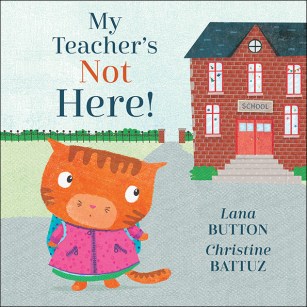
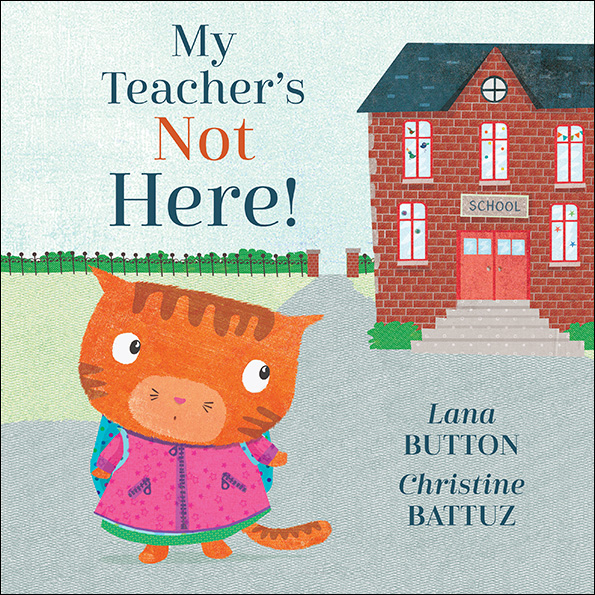
My Teacher’s Not Here!, by Lana Button/Illustrated by Christine Battuz,
(Apr. 2018, Kids Can Press), $18.99, ISBN: 9781771383561
Recommended for readers 4-6
Kitty gets to school and knows something’s up when her teacher, Miss Seabrooke, isn’t there to meet her. What’s going on? There’s another teacher there today! How does school even work when your teacher is absent? This sweet rhyming tale about a student’s first substitute teacher is great for younger kids who are just getting into the swing of school routines and provides some fun advice for coping with and adjusting to unexpected change. Kitty teaches readers some coping strategies, including helping out her friends and the teacher by contributing to class and modeling good behavior using cues she learned from her teacher, that the substitute may not be aware of. This is an animal story, so kids will enjoy seeing the “ginormously tall” teacher, a giraffe named Mr. Omar; pigs, elephants, bears, a whole menagerie of students. Hand-drawn artwork and digital collage come together to create colorful, textured, cartoony fun. This one’s a good addition to preschool and primary collections.
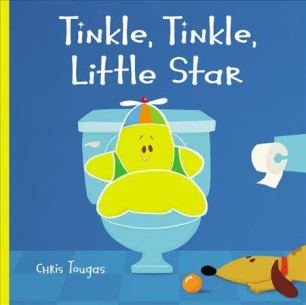
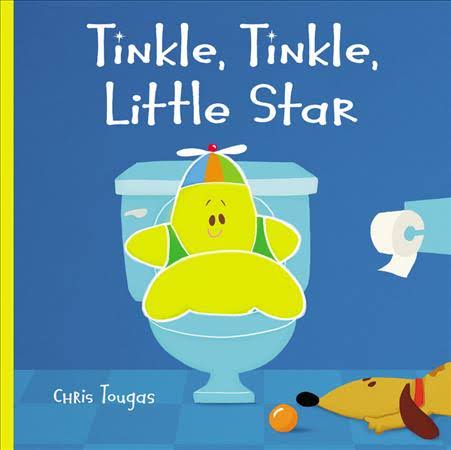
Tinkle, Tinkle Little Star, by Chris Tougas,
(Apr. 2018, Kids Can Press), $9.99, ISBN: 9781771388399
Recommended for readers 1-3
One of my favorite books coming out this season is this adorable board book! Set to the tune of everybody’s favorite classic song, this sweet and funny version is all about where not to go: not in a plane, not on Grandpa’s knee, not at a puppet show. Luckily, the poor Little Star gets relief by the story’s end, and sits on a potty to… “Tinkle, Tinkle, Little Star”. It’s adorable with the cutest digital art. Little Star is beyond cute, and gender neutral! Sing along at storytime – I know I’ll be throwing plenty of voice inflection (“Did you just pee on this page?”) and leg-crossing as I read this one. Absolutely adorable, must-add, must-give for collections and toddlers everywhere.

May Books

Polly Diamond and the Magic Book, by Alice Kuipers/Illustrated by Diana Toledano,
(May 2018, Chronicle), $16.99, ISBN: 9781452152325
Recommended for readers 7-9
Polly Diamond is an aspiring, biracial young writer who discovers a magic book on her doorstep one day. Not only does the book write back to her when she writes in it, Everything she writes in the book happens in real life! At first, Polly is psyched: who wouldn’t be, right? But you know how it goes… for every magic journal action, there’s a pretty wild reaction! Written in the first person, with excerpts from Polly’s book, including a pretty great intermediate-level book list for awesome display purposes (“Read Polly Diamond’s favorite books HERE!”). Chapter book readers who love books like Juana and Lucas (on Polly’s favorites list), Jasmine Toguchi, and Katie Woo will thoroughly enjoy Polly’s adventures. There are short, descriptive sentences and a nice amount of new words – Polly is an aspiring writer, after all! Lots of fun for chapter book readers; I’d have kids create their own aquariums as a related craft.
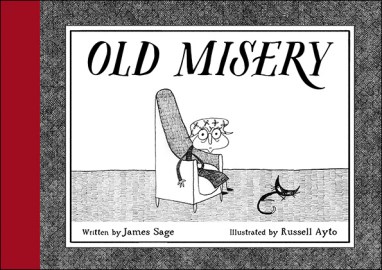
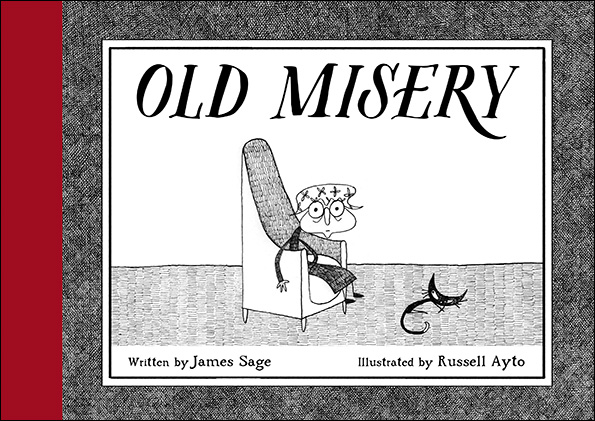
Old Misery, by James Sage/Illustrated by Russell Ayto,
(May 2018, Kids Can Press), $16.99, ISBN: 9781771388238
Recommended for readers 5-10
Readers with a darker sense of humor (and parents who are Gorey fans) will get a chuckle out of Old Misery, the story of a cranky old woman named – you got it – Old Misery, and her old cat, Rutterkin. She’s broke, and the apples keep disappearing from her apple tree! Lucky for Old Misery, she’s not completely heartless and feeds a wandering visitor, who grants her one wish: she wants all the apple thieves to be caught in the tree until she lets them go! Old Misery decides to play a little risky game when Death himself shows up at her door – and she sends him to the apple tree. Be careful what you wish for! The black and white, pen and ink artwork has a creepy, quirky feel to it, which will appeal to kids who like Lemony Snicket’s work, but may go over some kids’ heads. Old Misery narrates the story, offering an opportunity for a fun read-aloud.
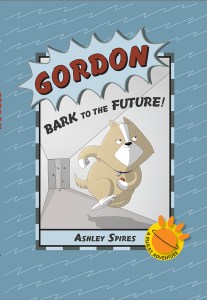
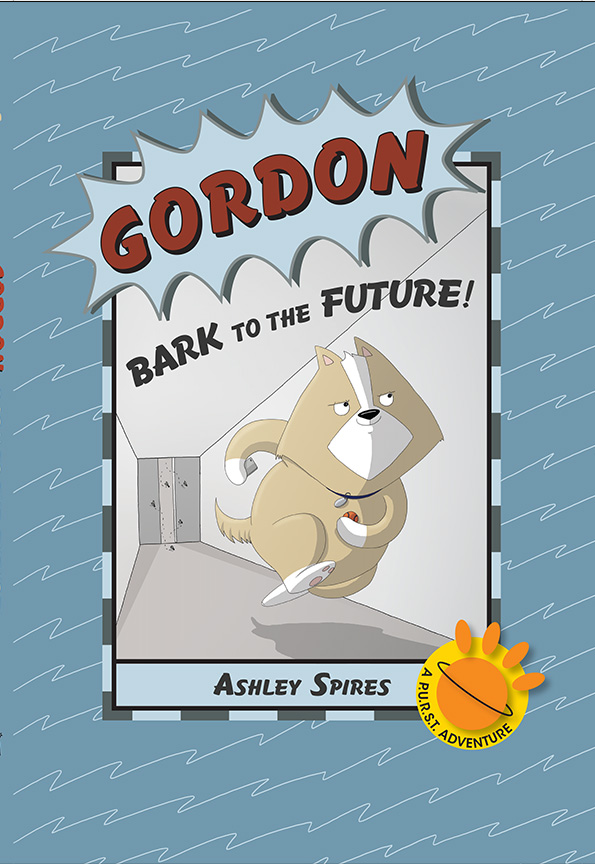
Binky fans, Gordon’s got his own adventure! For readers who love Ashley Spires’ Binky the Space Cat graphic novels will love Gordon, fellow member of PURST (Pets of the Universe Ready for Space Travel) and Binky’s house-mate, as he finds himself traveling through time to stop an alien invasion. But Gordon travels back too far – before PURST even exists! He’s got to get back to his normal time and set things right! This is fun reading for graphic novel fans, and a nice addition to a popular series. There’s time-travel, problem-solving, aliens, and humor, along with fun art.

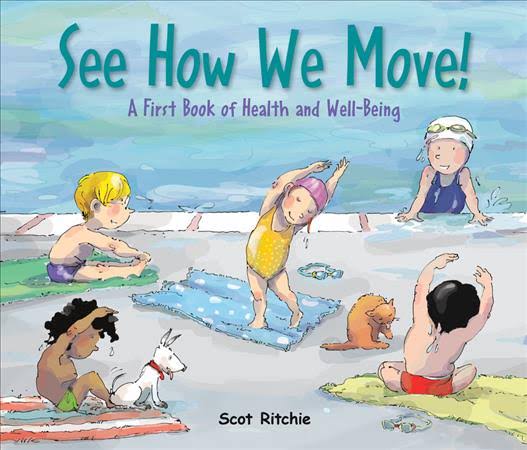
See How We Move!: A First Book of Health and Well-Being, by Scot Ritchie,
(May 2018, Kids Can Press), $15.99, ISBN: 9781771389679

Recommended for readers 5-8
Author Scot Ritchie’s multicultural group of friends are back together again. Last time we save them, they visited a farm to learn how to grow grains and vegetables in See How We Eat!; this time, Pedro, Yulee, Nick, Sally, and Martin are training as their swim team, The Flying Sharks, prepares to compete. They learn about using proper equipment for different activities, warming up before beginning your activity, teamwork and encouragement, goal-setting, nutrition, the mind-body connection, and more. There are suggestions for fun activities and words to know, all coming together to give kids a fun story about a group of friends staying strong and having fun together while encouraging kids to create lifelong habits of health, nutrition, and physical fitness. I like this See How! series; it offers a wealth of information on healthy living, made accessible to younger readers. I can easily read this in a storytime and get the kids talking about the different ways they play, how they eat, and good habits to get into.
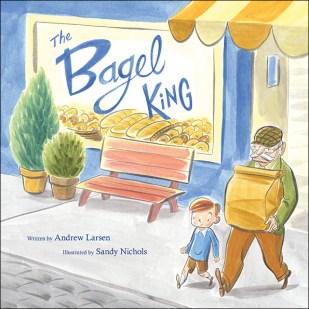
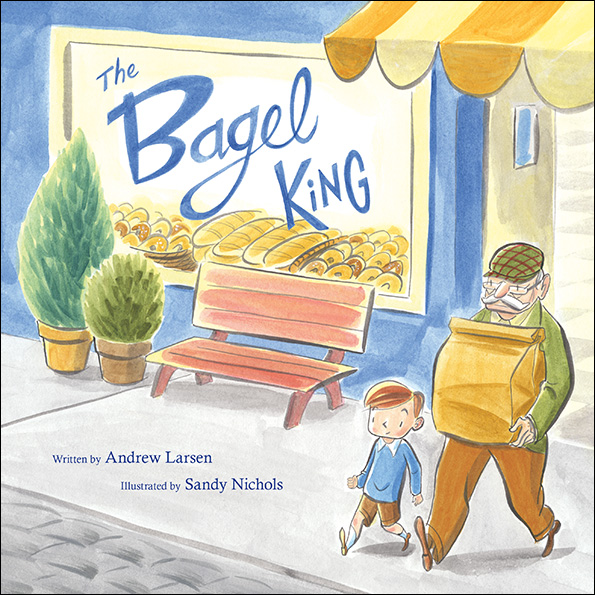
The Bagel King, by Andrew Larsen/Illustrated by Sandy Nichols,
(May 2018, Kids Can Press), $16.99, ISBN; 978-1-77138-574-9
Recommended for readers 4-8

Zaida, Eli’s grandfather, gets bagels from Merv’s Bakery every Sunday morning. One morning, when no bagels show up, Eli gets a phone call: Zaida’s fallen on his tuchus and can’t get the bagels! Eli and his family aren’t the only ones waiting on bagels, either – Eli visits Zaida, only to discover that Zaida’s friends are verklempt, too. No bagels! What a shanda, as my stepdad would say! Eli helps care for his zaida and keep him company, but he knows the best way to cheer Zaida up, and heads to the bagel store on his own the very next Sunday. This story is the most charming book about grandparents and grandchildren, loaded with compassion, a wink and nudge type of humor, and loads of fun, new Yiddish terminology. If you’re an urban dweller, like me, these words are kind of a second language: Zaida is grandfather, and tuchus is your bottom; there’s a little glossary of other Yiddish words that show up in the story, too. (Verklempt is overwhelmed with emotion, and shanda is a shame – you won’t find them in the story, but all I could hear was my stepdad when I read this, so there you go.) I loved the sweet storytelling, the compassion and the decision to act on Eli’s part, and Zaida and his group of friends were wonderful. It’s got an urban flavor that everyone will enjoy, and is good storytelling. Use this story as an opportunity to get your kids talking about relationships with their grandparents: what do you call your grandparents? Do they cook, bake, or shop for food? Do you go with them? (I’d love to get some bagels to hand out with my group… hmmm…) The acrylic artwork has a soft, almost retro feel, but really emphasizes the relationship story with colors, gentle expressions, and soft lines.
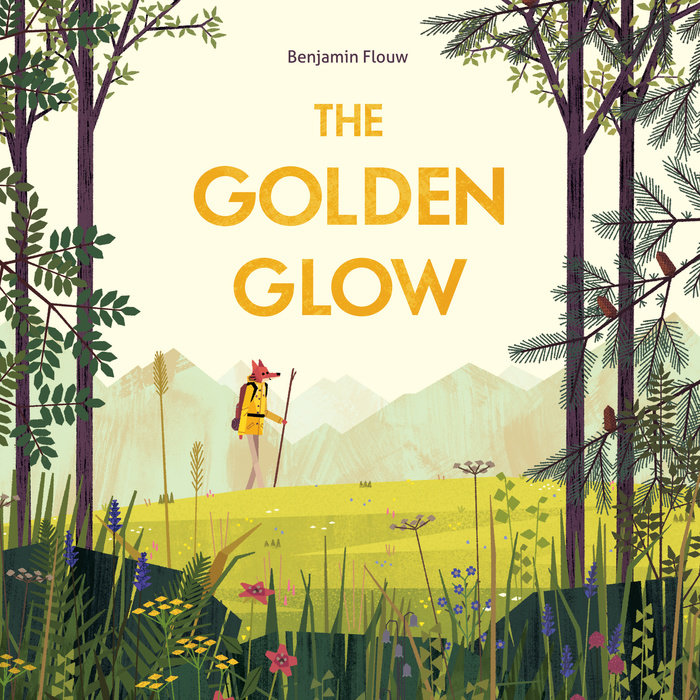
The Golden Glow, by Benjamin Flouw,
(May 2018, Tundra/Penguin Random House), $17.99, ISBN: 9780735264120

Recommended for readers 4-8
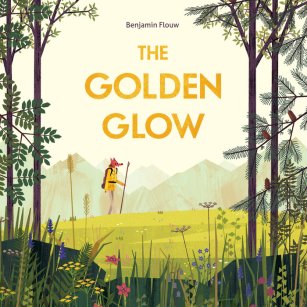
A fox who loves nature and botany goes on a quest for a rare plant to add to his collection. The Golden Glow is a plant from the Wellhidden family, and only grows high in the mountains. There’s not even a picture of it; it’s never been described. Fox packs his supplies and heads off to the mountains, meeting different animals and noting different plants and trees along the way. When Fox finally reaches the mountaintop, he waits… and discovers the Golden Glow! It’s stunning! It’s breathtaking! And Fox realizes that “the golden glow is more beautiful here on the mountaintop than it ever would be in a vase in his living room”. Part story and part nature journal, The Golden Glow is just gorgeous and teaches a respect for nature. The angular art draws the eye in; there’s so much to see on every page, every spread. Flouw creates detailed lists of Fox’s hiking pack, plus trees and flowers that he encounters on his way, and a map of different zones on the way up to the mountain, from the foothill to snow zones, all in beautiful detail for younger readers to enjoy. Fox’s decision to leave the flower where it is presents a love of and respect for nature that can lead to a great discussion on conservation. Bright red endpapers with angular design could be a topographic map of the area – talk about how different areas look from above! I know it’s way early, but I’ll quietly whisper this one now: Caldecott contender.
Posted in Humor, Preschool Reads

Fun with Food: The Great Pasta Escape

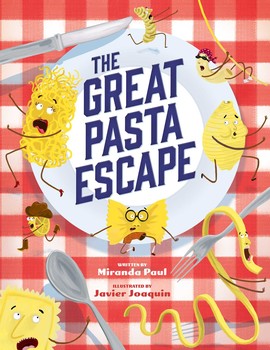
The Great Pasta Escape, by Miranda Paul/Illustrated by Javier Joaquin, (Aug. 2017, Little Bee/Bonnier), $17.99, ISBN: 978-1-4998-0480-5

Recommended for readers 3-7

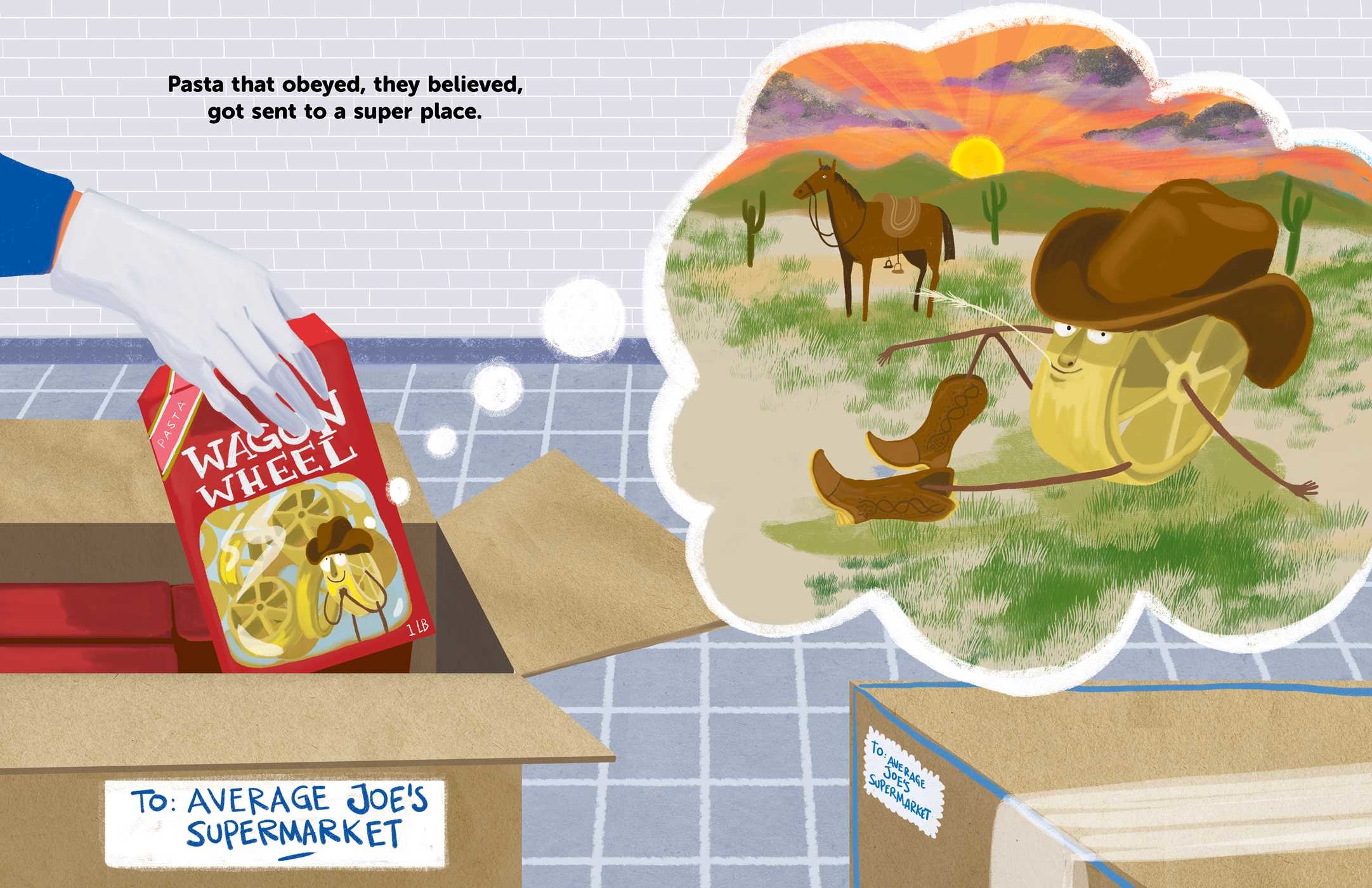
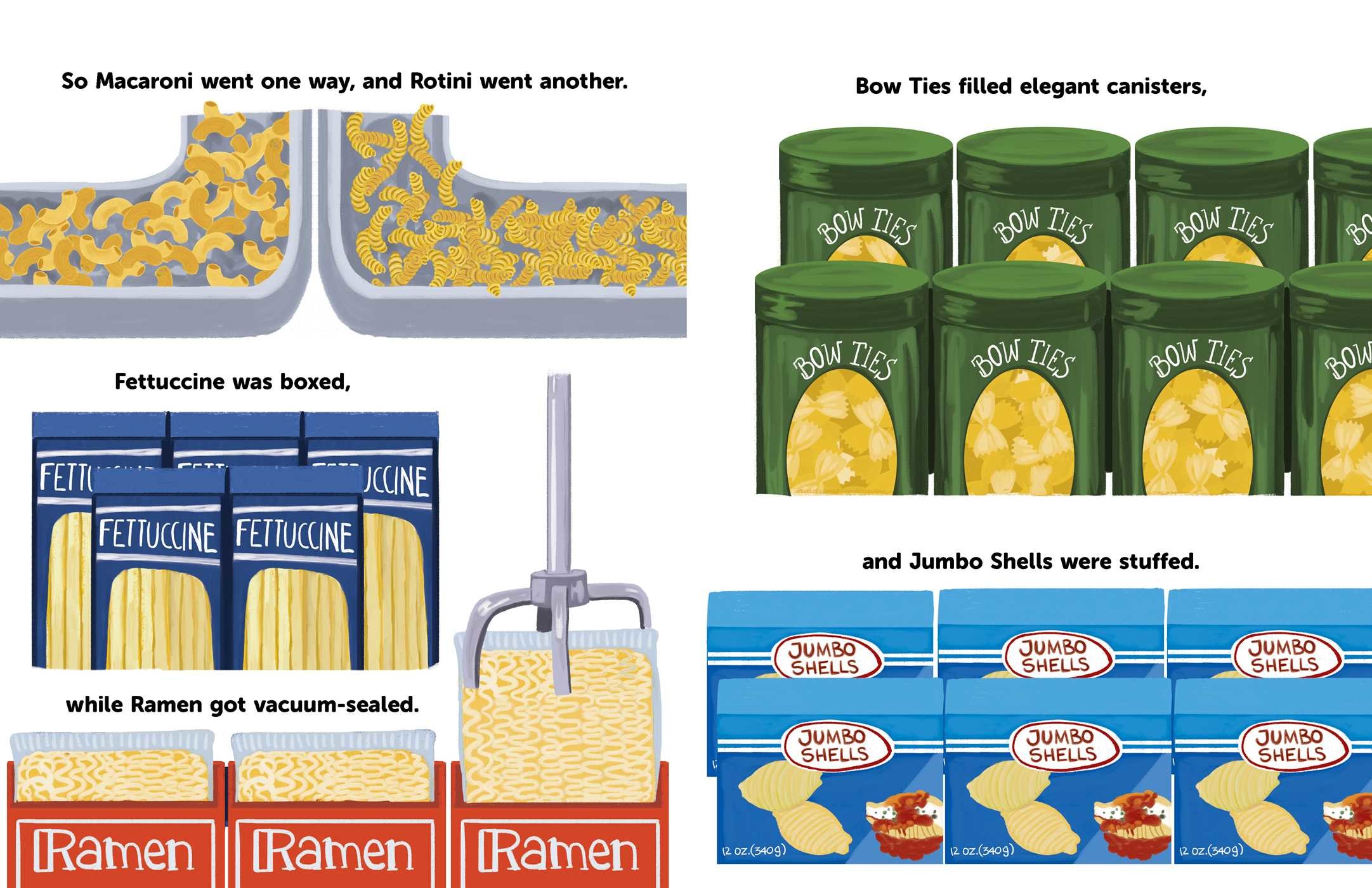
Different types of pasta learn the ugly truth about where they really go once they leave in those cute little packages, and take action in this hilarious story.  Pasta followed the rules: they stuck to their own kind; they stayed still in their packaging, and they NEVER spoke to humans. They thought they were bound for a better place; a happy, carefree existence, until the fettuccine overhears some factory workers talking about how hungry they are… *needle scratch* and what they plan to eat. Fettucine panics, and the rest of the pasta gets ready for action: Bow Tie tries to stay logical; Ramen is ready to rumble; elbow-shaped Mac just wants everyone to chill. Together, the different pasta types come together to carry out the greatest escape in pasta history.

This book is a current favorite at home because it’s so funny. The pastas have their own personalities, some of which tie into their shapes, like the professorial Bow Tie. My favorite is Mac, the elbow pasta who has a total New Age look on life and envisions himself by the water, doing some yoga. It’s a fun adventure story; pure escapism and laughs, with a Menu – sorry! I mean, Guide to Pasta Shapes – at the end. The art is vibrant and bright, and the endpapers sports different types of pasta in the front, and a boxed spaghetti-look at the back.

I pair this one with an oldie but goodie, Food Fight! by Carol Diggory Shields/Illustrated by Doreen Gay-Kassel, for a fun food storytime. You can read Tomie dePaola’s Strega Nona for a story about pasta that gets out of control, and pasta necklaces are perfect for a craft pairing. Ask your kiddos what types of pasta they recognize in the book, and see what you’ve got in the house to identify.

Miranda Paul is an award-winning author who has a great author website where you can find resources, including downloadable teacher guides to her books (and a blobfish coloring sheet!!!) and videos. She’s also the chair of the We Need Diverse Books Mentorship Committee. You can find more of illustrator Javier Joaquin’s illustrations at his website, including a section of his children’s book work, where you can filter by subject or style to see everything from nonfiction to board books to classics and more.