Posted in Fantasy, Fiction, Graphic Novels, Middle Grade, Tween Reads

Cucumber Quest: Bunny Siblings Save the World!

Cucumber Quest, Vol. 1: The Doughnut Kingdom, by Gigi DG, (Oct. 2017, :01FirstSecond), $14.99, ISBN: 9781626728325

Recommended for ages 8-12

If you’ve never read the webcomic Cucumber Quest, now’s your chance to dive in. The seven kingdoms of Dreamside are in trouble when the evil queen Cordelia plans to unleash some serious havoc. Cucumber – who’s all packed and ready to start his studies at Puffington’s Academy for the Magically Gifted – gets a letter from his dad, telling him that it’s up to him to save the kingdoms. His brave and way-more-heroic sister, Almond, offers to go in his place, but their mother and father seem to have some pretty outdated ideas about gender, and tells her it’s too dangerous for her. Almond joins Cucumber’s Quest, regardless, and the two head out in search of the Dream Sword: the only weapon powerful enough to defeat Cordelia’s supernatural thug, the Nightmare Knight. On the way, Cucumber and Almond meet a batty Dream Oracle, a trio of hare-brained guards, and a host of other wacky characters.

Beginning life as a webcomic (that you can still read online), Cucumber Quest: The Doughnut Kingdom collects the first 137 pages of Cucumber Quest (the Prologue and chapter 0); Cucumber Quest 2: The Ripple Kingdom will continue collecting stories from the online archive. Forty pages of additional comics, including Reader Q&A for various characters, and short bios for each character, complete with ability ratings in trading card format, concept art, and a tour of the world of Dreamside, home to the seven kingdoms.

The story is light and fun; the artwork is cute and Chibi-inspired. Manga fans will love it, as will adventure fans. Give this to your Adventure Time and Steven Universe readers; for your fantasy fans that want some lighter summer reading (or aren’t really passionate readers… YET), this will be a welcome addition to shelves.

Want to learn more? Check out the Cucumber Quest wiki and Cucumber Quest page, where you can access the complete comic archive and learn more about the characters.

Posted in Preschool Reads

Happy Book Birthday, Space Boy and the Snow Monster! Plus, a giveaway!

Space Boy and the Snow Monster, by Dian C. Regan/Ilustrated by Robert Neubecker, (Oct. 2017, Boyds Mill Press), $17.95, ISBN: 978-1-59078-957-5
Recommended for readers 3-8

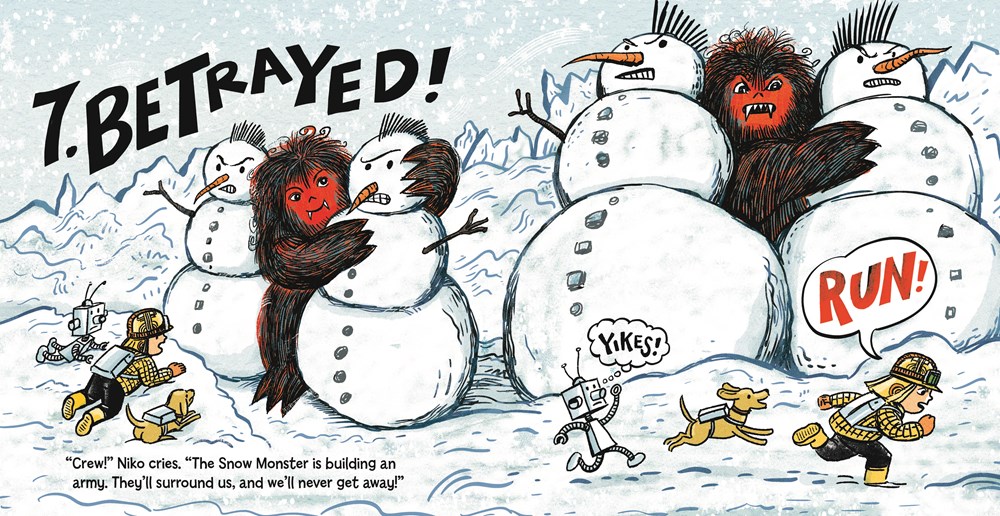
Niko the Space Boy blasts off on his third adventure! This time, Space Boy’s trusty friend Radar is missing on Planet Ice (don’t worry, he’s never far out of the reader’s sight) and a horrible Snow Monster – who looks a lot like Niko’s sister – is menacing him! His space dog, Tag, wanders away from him, leaving him all alone to battle the Snow Monster, who’s building an army of mohawked snow soldiers. Luckily, Niko manages to locate Radar and get to the ship, re-acquire Tag, and get to safety. Maybe.

This fun book is perfect for readers of all levels. With a layout that feels part picture book, part comic book, with comic-like panels cartoony art that includes mohawked snowmen, kids and adults alike will be waiting for a snow day to go on an exploration of their own. There’s a real Calvin & Hobbes feel to the story, as we see the story through Niko’s imagination; little hints keep us grounded in reality, but not too much that we can’t surrender to the adventure. My son immediately asked me to start saving cardboard boxes, so we can make our own spaceship, when I first read him this one; I suggest you start saving your own delivery boxes now. Split into mini-chapters (or episodes, for old school serial sci fi fans) lets kids come back to the adventure if they need to take a break. The fonts are wild and exaggerated, and the art is loaded with movement across spreads.

SPACE BOY AND THE SNOW MONSTER; text copyright c 2017 by Dian Curtis Regan, illustrations copyright c 2017 by Robert Neubecker,
published by Boyds Mills Press. All rights reserved.

Space Boy and the Snow Monster is an enjoyable addition to the Space Boy series, and a fun standalone picture book on its own. Put this one with your snow day books and your maker books, like DK’s Out of the Box, to give kids some adventuring ideas of their own.

Want to blast off with your own copy of Space Boy and the Snow Monster? Enter this Rafflecopter giveaway for your chance! (U.S. addresses only, please!)

SPACE BOY AND THE SNOW MONSTER; text copyright c 2017 by Dian Curtis Regan, illustrations copyright c 2017 by Robert Neubecker,
published by Boyds Mills Press. All rights reserved.


Dian Curtis Regan is the author of more than 60 books for young readers, ranging from picture books to YA novels.  Her books have received many honors, including Best Books for Young Adults, Children’s Choice Awards, Junior Library Guild selections, Los Angeles Times Recommended Book, and New York Public Library’s Best Books.  Space Boy and the Space Pirate was a 2017 finalist for the Colorado Book Award, and the winner of a 2017 Crystal Kite Award from the Society of Children’s Book Writers & Illustrators. Space Boy and the Snow Monster is brand new this fall. Dian lives in Colorado Springs, Colorado.  To learn more, and to download a curriculum guide, visit diancurtisregan.com and spaceboybooks.com.


https://i0.wp.com/illustrationfriday.com/wp-content/uploads/2012/09/IllustrationFriday_RobertNeubecker12.jpgRobert Neubecker is the award-winning author-illustrator of Wow! City!, Wow! America!, and Wow! School!, and the illustrator of The Problem with Not Being Scared of Monsters and its companion The Problem with Not Being Scared of Kids. He lives in Park City, Utah. Visit neubecker.com.

Posted in Uncategorized

MAD Magazine gives Superman a Miserable, Rotten, No Fun, Really Bad Day

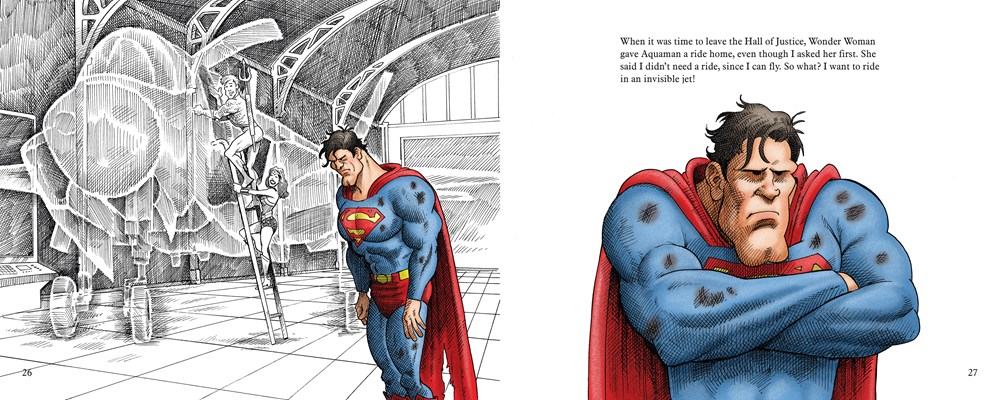
Superman and the Miserable, Rotten, no Fun, Really Bad Day, by Dave Croatto/Illustrated by Tom Richmond, (Oct. 2017, Mad Magazine), $14.99, ISBN: 9781401276119

Recommended for readers 5+

MAD Magazine, I love you. I grew up laughing at your Star Wars parodies, your Spy vs. Spy comics, and  host of jokes I probably didn’t get until I was older. And now, you bring me a series of superhero parodies based on childhood classics. You get me. You really, really get me.

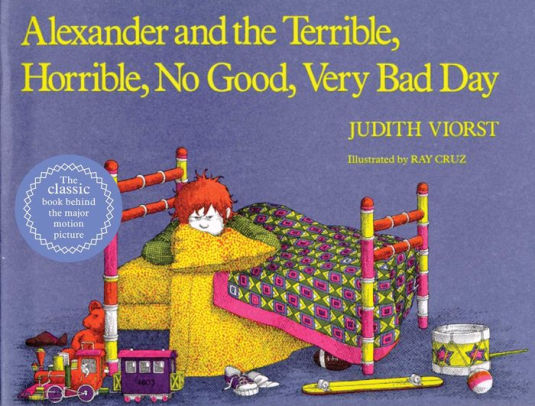
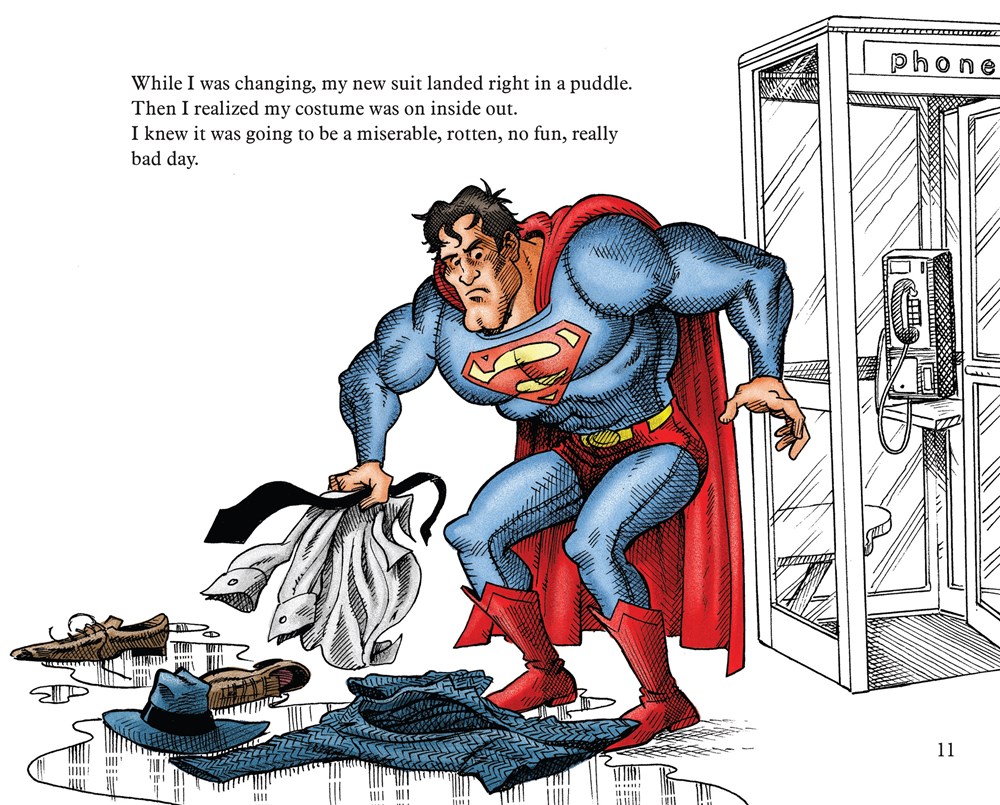
The fun began with last year’s Goodnight, Batcave: narrated in the gentle bedtime style of Margaret Wise Brown’s Goodnight, Moon, we peeked into Batman’s bedtime routine. Now, we get Superman having the lousiest day ever in the style of Judith Viorst’s Alexander and the Terrible, Horrible, No Good, Very Bad Day, and it is hilarious. Whether he’s listening to kids argue over who the better hero is – Batman or The Flash – or being relegated to monitor duty by the Justice League, Superman has the same petulant, endearing voice that makes Alexander such a fun storytime read. Supes tends to get dinged a lot by Batfans (cough, cough) that  call him a boy scout, and seeing that reflected here is just perfect. Lois and Jimmy Olsen get sent on super cool assignments, while Clark goes to a flower show. Where Alexander is ready to move to Australia, Supes is ready to abandon it all for the Fortress of Solitude. But as with all the best bedtime stories, Ma is there to tell him that some days are like that, and sends him off to bed – and hopefully, a better day the next day.

Tom Richmond’s classic MAD-style artwork meets Ray Cruz – the illustrator on Judith Viorst’s Alexander books – gives an instantly recognizable feel to the story – even the cover is a perfect sendup of the original. This is absolutely perfect for a Superhero Storytime, or just a really fun laugh-along. Read it in the same pouty voice that you use for Alexander, and make sure to be extra offended by the Batman-is-Better inferences.

What’s next? Make Way for Lanterns? Where the Amazons Are? I NEED MORE.

Posted in Intermediate, Non-Fiction, Preschool Reads, Toddler Reads

Feed your brain with picture book nonfiction!

There is so much good nonfiction out for younger readers this Fall!

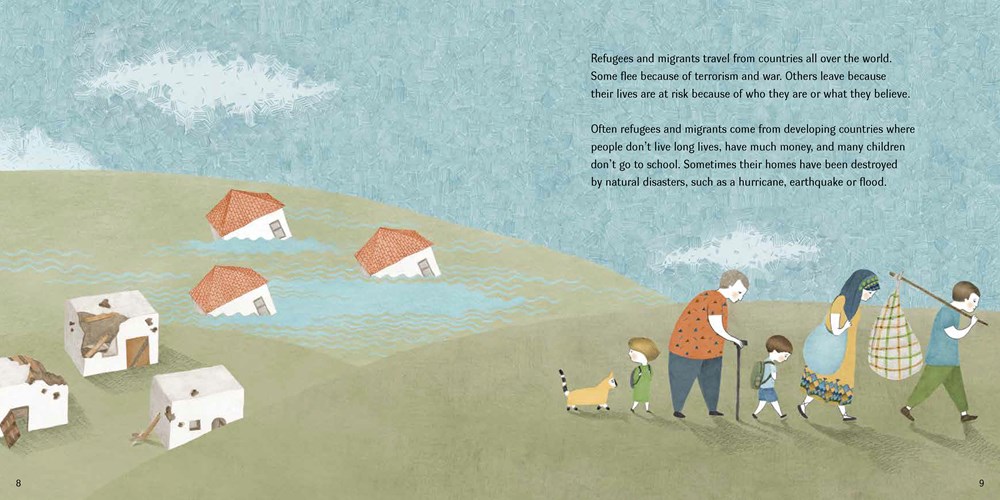
Refugees & Migrants (Children in Our World), by Ceri Roberts/Illustrated by Hanane Kai
(August 2017, Barron’s Educational Series), $9.99, ISBN: 9781438050201
Recommended for readers 6-10

A hot-button topic today, Refugees & Migrants answers the tough questions that children ask: “Why would people leave their homes?” “What is a migrant – or a refugee?” Illustrations and concise text offer explanations that seek to foster empathy and empower kids to make a difference in the world around them. Barron’s Children in Our World series addresses difficulties that too many children in our world face today, and sensitively explain these issues to readers while giving them the power to make changes. Additional titles look at Poverty & Hunger, Racism & Intolerance (2018), and Global Conflict (2018). These books are a strong addition to elementary nonfiction shelves and provide a great opportunity to talk to your kids about what they see on the news, how they feel about it, and what we can all do, together, to make the world a better place.


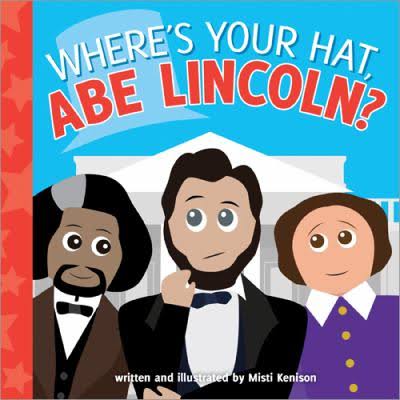
Where’s Your Hat, Abe Lincoln? (Young Historians), by Misti Kenison,
(Sept. 2017, Sourcebooks Jabberwocky), $9.99, ISBN: 9781492652502
Recommended for readers 2-5

Poor Abe Lincoln can’t find his hat, and he needs it in time to read the Gettysburg Address! Harriet Tubman is leading slaves to freedom, and Frederick Douglass is writing a book. Can any of his friends help him? This is the second in Misti Kenison’s Young Historians board book series (the first, being Cheer Up, Ben Franklin!). Each book features historical figures from periods in American History, with cartoony expressions and simple, one-sentence character actions that lay the groundwork for future learning. Everything ends on a happy note, and the end of the book includes historical figure profiles and a timeline. Fun for every historian’s library, no matter what your age.


Dangerous Jane, by Suzanne Slade/Illustrated by Alice Ratterree,
(Sept. 2017, Peachtree Publishers), $17.95, ISBN: 978-1-56145-913-1
Recommended for readers 4-8

Jane Addams was an activist for the poor and for peace. She founded Hull House, a settlement house in Chicago, where she took care of her neighbors by providing food, childcare, English lessons – anything anyone needed to live their lives with dignity. When World War I broke out in Europe, Jane organized the Women’s Peace Party, and led the International Congress of Women, to talk about ways to bring the war and suffering to an end. She endured angry press from those who would call her a traitor; that she cared more for people overseas than in her own home – she was even named The Most Dangerous Woman in America by the FBI! Ultimately, Dangerous Jane was the first American woman to receive the Nobel peace prize. Through all the press, good and bad, Jane maintained her dignity and continued caring for others until the end of her life. Dangerous Jane is an inspiring story rendered in washed-out watercolors that communicate quiet strength, like the book’s subject. Jane stands out in her green dresses and skirts, against the bleak landscape of war and poverty. A biography, timeline, and selected bibliography completes this book.


Baby Animals Playing, by Suzi Eszterhas
(Oct. 2017, OwlKids Books), $14.95, ISBN: 9781771472975
Recommended for readers 0-6

Wildlife photographer and advocate Suzi Eszterhaus put together one of the cutest books ever. It’s all right in the title: Baby. Animals. Playing. Who wouldn’t squeal at just the expectation of what’s to come? Full-color photos of baby animals (and their parents) at play will make anyone fall in love, instantly. Brief nonfiction text gives some background information on how Momma bears teach their cubs to fish for salmon, or how jackal pups fight over who gets to play with a ball of elephant poop. Which will, doubtless, be most kids’ favorite part of this book (it was for my 5 year-old). Eszterhas invites readers to connect with animals and nature by looking at photos, reading books, and going outside and immersing themselves in nature, just like baby animals do; it’s a nice call to get the kids outside and away from TV and electronics.


Bugs From Head to Tail, by Stacey Roderick/Illustrated by Kwanchai Moriya,
(Oct. 2017, Kids Can Press), $18.99, ISBN: 9781771387293
Recommended for readers 3-7

The third book in the “From Head to Tail” series gives readers an up-close look at bugs. We get rhinoceros beetle horns and luna moth antennae; tarantula hair (eeeek) and millipede legs, and a trick question! There are more facts to discover (tarantulas flick hair from their bellies at attackers… I know it would make me run screaming), with cute, wide-eyed bugs to attract readers. Kwanchai Moriya’s paper collage art continues to be visually exciting, popping off the pages. Additional bugs profiled at the end, plus a note about arthropods – the bugs profiled in this book – make this a great addition to bug books in primary collections. And if you have a kid like this young lady, whose love of bugs got her published in a scientific journal at 8 years old, you definitely want this book around to foster them!


Animals at Night, by Anne Jankéliowitch/Illustrated by Delphine Chedru
(Oct. 2017,Sourcebooks Jabberwocky), $19.99, ISBN: 9781492653196
Recommended for readers 6-10

This is a fun look at nocturnal animals in 12 different habitats, from the forest to more urban settings. You know when you see a museum display, with information about each animal in the display? That’s how nocturnals are presented here; each spread shows animals interacting in their environment, with a descriptive paragraph about each creature in the margins. Glow in the dark adds some more fun to the mix: a question is presented in each spread, answerable when readers turn off the lights to reveal the answers (answers are also at the back of the book, for any party poopers). With bright, bold animals that stand out against their night time backgrounds and glow in the dark challenges to find answers, it’s a fun addition to nonfiction collections for intermediate readers. Originally published in French in 2016. Pair this one with Tracey Hecht’s Nocturnals books for a nice fiction/nonfiction display.


Posted in Graphic Novels, Middle School, Teen, Tween Reads

A boy deals with his grief in Cast No Shadow

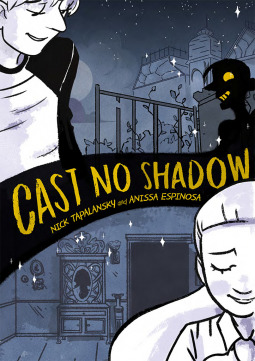
Cast No Shadow, by Nick Tapalansky/Illustrated by Anissa Espinosa, (Oct. 2017, :01FirstSecond), $16.99, ISBN: 9781596438774

Recommended for ages 12+

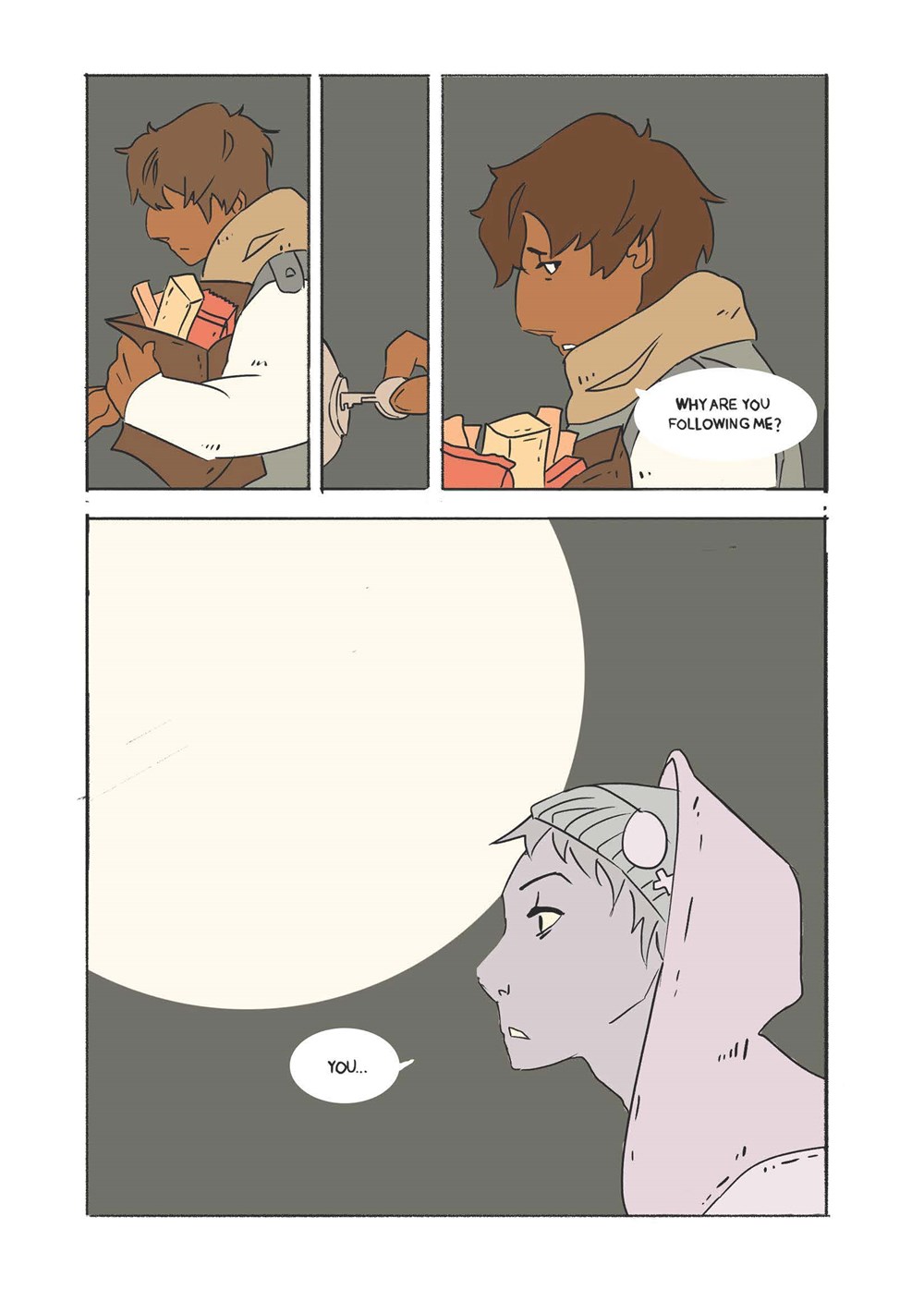
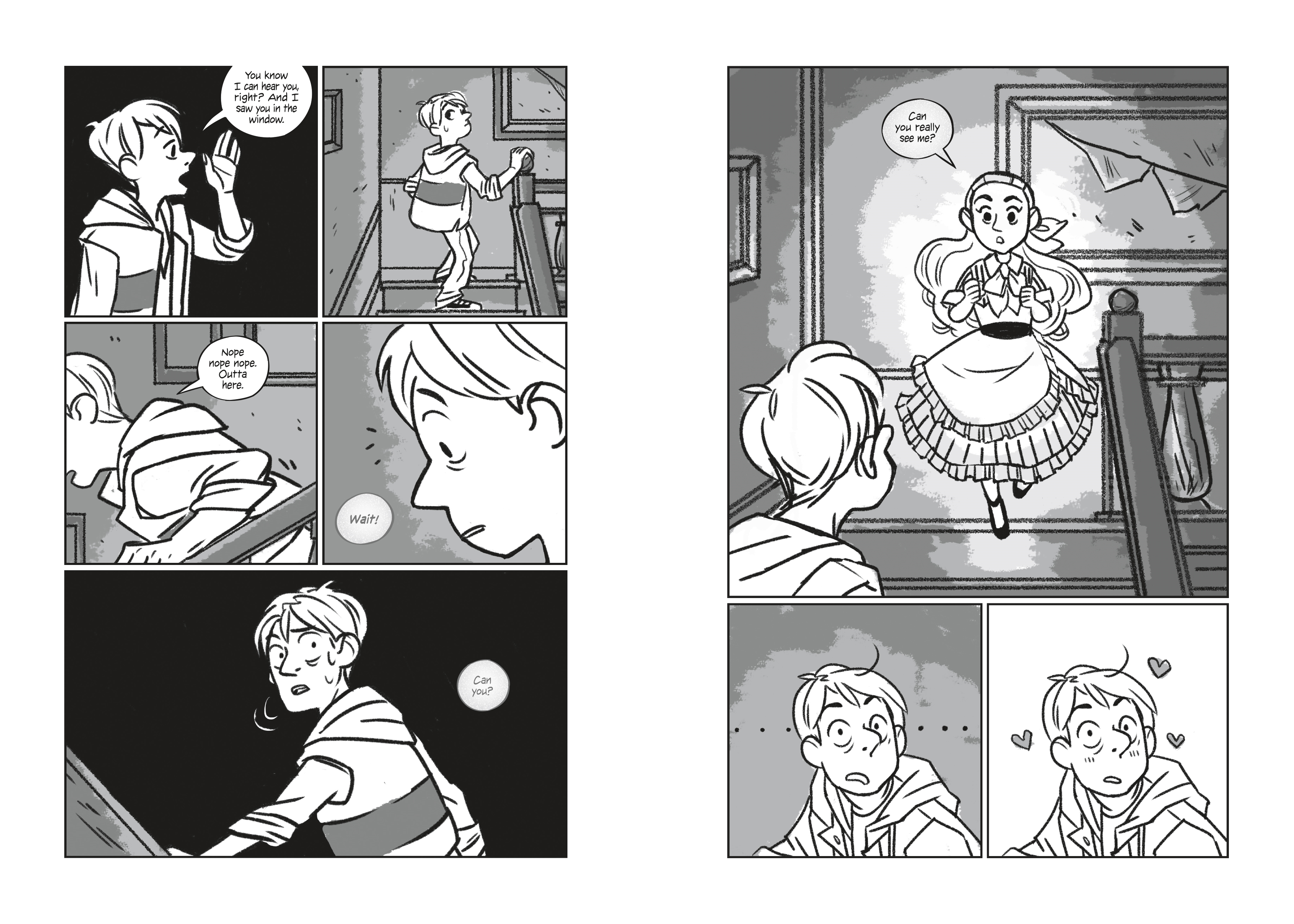
Greg and his friends live in Lancaster, in a town that’s lately become obsessed with tourist traps. This latest one is a giant hairball. No lie. Greg is kind of an attraction on his own: he was born without a shadow. He’s normal in every other way; he just doesn’t have a shadow, which just makes him one more quirky thing in a town full of quirks. When Greg explores an abandoned mansion just outside of town, he meets Eleanor, who could be the perfect girl for him – “smart, beautiful, funny, and man, she totally gets me” – if only she weren’t dead. Eleanor is a teenage ghost, living in her family’s old mansion, and chasing out the creepy living that go in and mess up her home, but she has a soft spot for Greg.

Greg’s got a lot going on in his home life, too: his dad’s girlfriend, Joyce, has just moved in, and Greg isn’t happy about it. He doesn’t want anyone taking his dead mother’s place. As he deals with the frustration of having a new person in the house, and a girlfriend who can’t leave her haunt, something is set in motion; Greg has unwittingly set a dangerous entity loose on his town. What are the chances he can save his town, smooth over his relationship with his father and Joyce, and have a happily ever after of his own?

Cast No Shadow is a touching exploration into grief and loss. Greg retreats from the world to cope with his mother’s loss and his father’s subsequent relationship; aside from his female best friend, the strongest relationship that emerges in the book is with a dead girl. Greg’s suppressed feelings find another way to emerge, causing destruction and danger for everyone around him. It’s a great story to put into older tweens’ and teens’ hands, helping them cope with feelings that may be too overwhelming to confront head-on. The black, white, and gray illustrations add a nice, ghostly feel to the story and come in handy when finer plot points fall into place.

A nice addition to middle school and teen graphic novel collections, and a good secondary reference for kids dealing with grief and loss. Find more of author Nick Tapalansky’s work at his website, and illustrator Anissa Espinosa’s work at her Tumblr.

Posted in programs, Storytime

Harvest Festival Programming

The Mid-Autumn Festival starts tomorrow, October 4th, so I’ve been doing some programming with the kids here to celebrate. Yesterday, I had a Fortune Bookies workshop where we made fortune cookie bookmarks with felt. The glue didn’t hold so great – I really need to get a hot glue gun – but the moms jumped right in and made the best of a Make It Work Situation and saved the day with a few discreetly placed staples.

PictureNot one of my Fortune Bookies – this is Heidi Fiedler’s model.
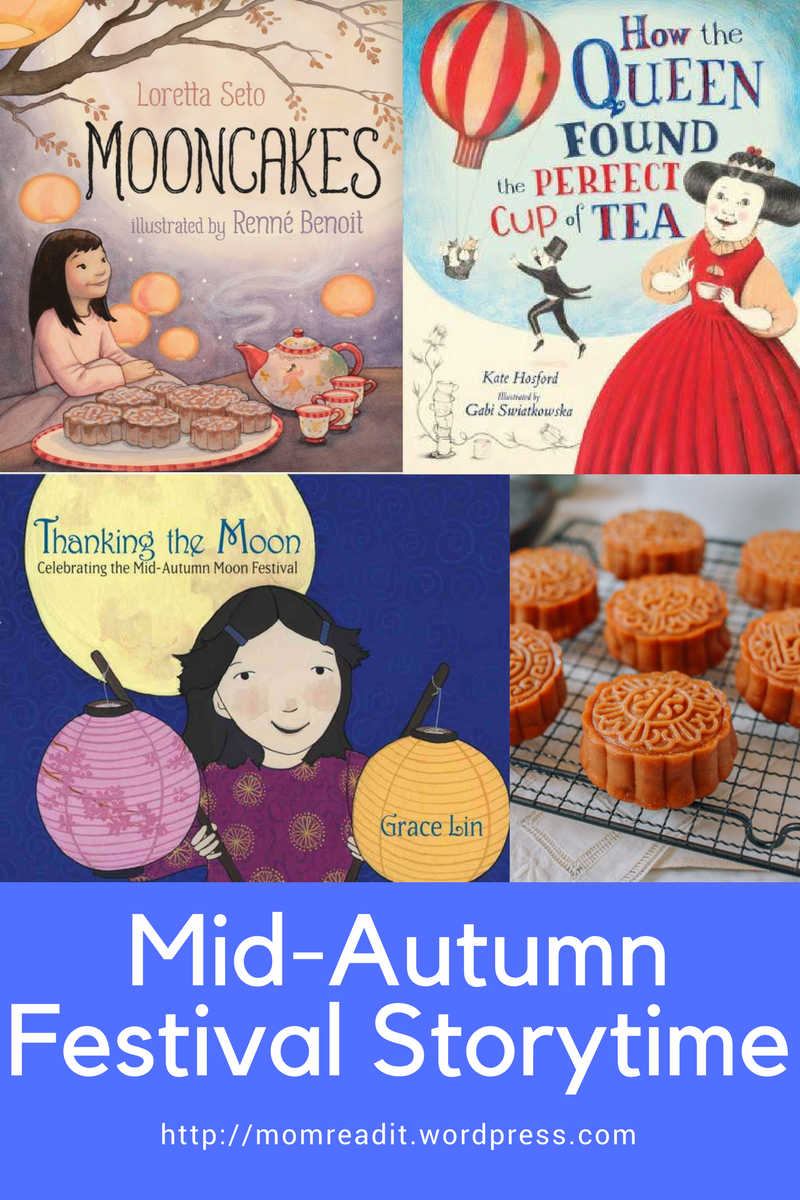
 

Today’s program was more successful. I had a tea party! Ever since reading How the Queen Found the Perfect Cup of Tea, I knew I wanted to use the story in a tea party setting. The Festival provided the perfect time. I bought some moon cakes, palmiers, and milk tea and set up a proper tea table, cutting the moon cakes up so everyone could share, laying out bags of palmiers so I’d have extra food on hand, and pouring cups of milk tea for everyone. I was able to accommodate 10 kids and 4 parents, with no leftovers and a very happy group!

The reception to How the Queen Found the Perfect Cup of Tea was good; they were engaged and interested in the different teas throughout the book. Next up was Loretta Seto’s book, Mooncakes, which I loved. It’s the story of a little girl sitting with her parents, underneath the full harvest moon, and telling the three most popular stories about the Harvest Moon: the story of Chang’E and how she flew to the moon; of how Wu Gang chops away at a tree to gain immortality, and the Jade Rabbit. This one seemed to be the biggest hit with the families as a whole. I finished up with Grace Lin’s Thanking the Moon, for my younger kiddos, and had one QH Kid say, “That’s a really short one.”

All in all, a nice little party to welcome the harvest.

Posted in Middle Grade, programs, Tween Reads

Annabelle Fisher visited me and brought some fairy tale magic with her!

I meant to get this post up earlier, so apologies for that. When I reviewed the first Pixie Piper adventure last year, Annabelle Fisher, the series author, sent me a lovely email thanking me for my review, and offering to visit my library. I wanted to jump all over it, but for various reasons, I held off. I’ve finally settling in here, at my new library, and thought this would be a great opportunity to ask Annabelle if her offer still stood. Not only did she say yes, she offered to make no-bake snickerdoodle cupcakes with my Queensboro Kids after her author talk! She came in, we set up the room, and a gathering of kids formed outside our meeting room. Because, food. And because there was a new person in the library, too, but seriously, food. With everything set up, Annabelle donned her Mother Goose hat and we let the masses in.

I couldn’t believe how many kids crammed in for this program. We had about 23 kids in the room, and a couple of parents that wanted to see what was going on, too. First, Annabelle gave a great author talk where she engaged the kids about writing stories and even shared some photos of one of her first stories as a child – it was supposed to be a science report, but where’s the fun in that, right? She talked about the Pixie books, took the kids through a slide presentation, and then it was snickerdoodle time.

Can I just say how excited I am that I can put stickers on photos now, so I can post pictures from my programs and protect the kids’ identities?

The snickerdoodle cupcakes were so easy and quick to make, and Annabelle engaged the kids right off the bat. They were thrilled, and we ended up banging out three batches of batter and frosting. It was all worth, it, though: everyone was thrilled, and left satisfied. And then, it was picture with the author time!

Did I get my books signed? You betcha I did! And will I finally review the second book, Pixie Piper and the Matter of the Batter? Yes, I will! Promise.


And whose library has no Pixie Piper books in at the moment, because they both went out immediately after the author visit? This gal’s! I promoted the visit with a flyer I put together, and a Pixie book display at my desk. Here’s a copy of the Pixie Piper author visit flyer, if you’re interested.

Thank you SO MUCH to Annabelle Fisher for her fantastic (and tasty) author visit!

Posted in Preschool Reads, Toddler Reads

Build that Baby STEM Library! The ABCs of Mathematics and Physics

Quantum theorist and Dad Chris Ferrie adds two more board books to his Baby University library: The ABCs of Physics and The ABCs of Mathematics!

The ABCs of Physics, by Chris Ferrie, (Oct. 2017, Sourcebooks Jabberwocky), $9.99, ISBN: 9781492656241

A is for Atom; B is for Black Hole; C is for Charge… The ABCs of Physics is a bright, entertaining introduction to physics. Not your run of the mill ABCedary, The ABCs of Physics works for all ages – for babies and toddlers, it’s a pretty board book with all sorts of interesting pictures to look at. For older kids and adults, it’s an intro to physics terms and concepts. I am here to tell you, unabashedly, that I found this book fascinating. Did you know that a newton is a standard unit of force? I did NOT. I also learned that my little book scanner works thanks to photons – and you can trust and believe that I will pass on little bits of this information in my day to day at work and at home.


The ABCs of Mathematics, by Chris Ferrie, (Oct. 2017, Sourcebooks Jabberwocky), $9.99, ISBN: 9781492656289

The ABCs of Mathematics is even more little one-friendly, because it introduces basic concepts that our kids are going to be learning soon enough. A is for Addition: Addition is the mathematics of counting. D is for division: Division is the mathematics of fair sharing. It’s wonderfully to the point, and illustrations help reinforce simpler concepts like union: a Venn diagram, something that most school-age kids are familiar with, or addition, which stacks apples over numbers to illustrate the concept.

Want to close that word gap? Introduce some of these terms to your little ones. Let them explore and play with the books. Just expose them to the words and ideas in the books; if they hear it enough, it won’t be a scary thing when they hear it in school. Any book that teaches me something as much as it does my kids is a good book.

Posted in Fiction, Middle Grade, Tween Reads

A new sleuth: Super Max and the Mystery of Thornwood’s Revenge

Super Max and the Mystery of Thornwood’s Revenge, by Susan Vaught, (Aug. 2017, Simon & Schuster/Pamela Wiseman), $16.99, ISBN: 9781481486835

Recommended for readers 9-12

Max is a 12 year-old girl living with her grandfather, Toppy, who also happens to be the chief of police in their town of Blue Creek. Her mother, an artist, lives in California, which is just fine with Max – ever since she and her mother were in the car accident that left Max wheelchair-bound at 4 years old, her mother has had trouble fitting Max into her life. She and Toppy lead a pretty happy life together; that is, if she’d stop getting in trouble for tinkering with her wheelchair to give it more power! When a cyber-bully starts a Facebook page and Twitter account slandering her grandfather and the town mayor, Max and Toppy try to blow it off, but things ramp up quickly, and the bully starts causing trouble for local businesses, too, all under the guise of an old town legend, Thornwood’s Revenge. Thornwood Manor is an abandoned mansion right next door to Toppy’s house, and it carries a lot of history with it, not all of it good. Is the bully really the ghost of Hargrove Thornwood, come to take his revenge, or is it someone with a grudge against an entire town? Max is going to get to the bottom of it.

I’m a Susan Vaught fan, so I was thrilled to read one of her middle grade books (I’ve only read her YA to date) and I’ve only read her heavier subject matter. This was good mystery reading all around. She’s got a very likable group of characters; I loved Toppy, gruff but lovable, whose disciplinary methods are creative and hilarious. Max is willful, complicated, and strong, like a middle grade heroine should be. She may be in a wheelchair, but she’s no victim: she’s an engineering whiz who loves to tinker in her eternal search for more power. Her relationship with her mother is complicated, and I liked Vaught’s exploration of that relationship. Max is driven by her desire to appear strong, not weak, not dependent; often to the point of frustrating her friends and family. She deals with her anger issues by reciting the names of Marvel and DC superheroes in alphabetical order, adding a nice geek check to the mix. I’d like to see another book or two starring Max and friends, and I think mystery fans will like this new supersleuth.


Susan Vaught is the Edgar Award-winning author of Footer Davis Probably Is Crazy (2016), and Trigger, which received three starred reviews and was an ALA Best Books for Young Adults. She is also a neuropsychologist at a state psychiatric facility, specializing in helping people with severe and persistent mental illness, intellectual disability, and traumatic brain injury. Her author website has more information about her books, essays, and links to her blog.

Posted in Preschool Reads

Bethan Wollvin’s Girl-Power Fairy Tales: Rapunzel

Rapunzel, by Bethan Woollvin, (Oct. 2017, Peachtree Publishers), $16.95, ISBN: 978-1-68263-003-7

Recommended for readers 3-8

Last year, Bethan Woollvin gave readers Little Red; her spin on Little Red Riding Hood. Little Red didn’t need a huntsman to help her out; she had things handled. Woollvin’s newest tale, Rapunzel, gives us another heroine who can take care of herself.

The story starts out the same: kidnapped by a witch, living in a tower, the witch climbs up her hair, snips it to sell, and threatens her. But Rapunzel isn’t worried – she’s too smart for that. She starts figuring out that if the witch can use her hair to get in, Rapunzel can use her own hair to get out. We see her exploring the forest, reading a book called, “How to Defeat Witches”, and we just know this isn’t a princess that needs saving. Heck, no prince even shows up in this story. When the witch confronts Rapunzel after discovering she’s been out, the girl takes matters into her own hands. Literally. And that, my friends, is that: Rapunzel is free and becomes the bane of witches everywhere.

I  love Woollvin’s flipped fairy tales! The two-color art stands out; it’s dramatic and bright. Where Little Red was black and red, Rapunzel is, naturally, yellow and red. The endpapers give readers the short version of the story: the opening endpapers show a witch pursuing Rapunzel through the forest, and the closing endpapers show her masked, on a horse, with two witches hiding from her this time. The art is simple, fun, and gets to the point. Readers can make their own Rapunzels and witches (or Little Reds) with printables aplenty – hold a flipped fairy tale/girl power storytime and let your readers transform!

A great add to storytime collections and fairy tale bookshelves everywhere!