Posted in Fiction, Middle School, Realistic Fiction, Tween Reads

Just Under the Clouds shows us the working poor

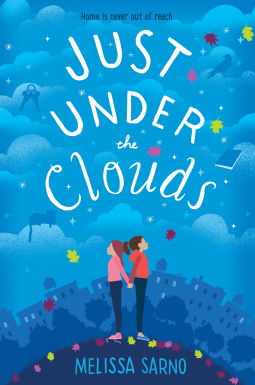
Just Under the Clouds, by Melissa Sarno, (June 2018, Knopf Books for Young Readers), $16.99, ISBN: 9781524720087

Ages 10-14

Middle schooler Cora, her Mexican-American mom, and younger sister, Adare, are homeless. After her father died, she and her family have lived in a series of temporary homes and shelters in Brooklyn, New York, while her mother tries to make ends meet at an hourly retail job, giving up her art to keep her family going. Adare sustained brain damage at birth, so Cora must look after her when their mother isn’t around. When they get back to their room at the shelter and discover it’s been broken into, the family heads to Cora’s mom’s childhood friend, Willa, a successful lawyer with an apartment of her own, hoping to stay until a better, safer, placement comes through. Cora loves life in Willa’s stable home, but the girls’ mother is frustrated by what she sees as Willa’s meddling. Meanwhile, at school, Cora struggles with math and bullies, and meets a friend named Sabina, who lives on a houseboat and was homeschooled until this school year. Cora has both parents’ passions within her; she keeps her father’s tree diary with her and searches for a special tree that her father wrote about, paired with her mother’s artistic talent – with an arborial bent. She has the stress of caring for Adare, the stress of being homeless, and being bullied.

Just Under the Clouds is narrated in Cora’s voice; author Melissa Sarno creates a strong, moving narrative where we meet a family that often falls through the cracks in our society: the working poor. Cora’s mother, Liliana, is working at a job that doesn’t cover the cost of living for a family of three, let alone in metro New York, and her daughters are in school, clean, and fed, if not full. It’s a tale of poverty, grief, empathy, and hope. The book addresses childhood stress, which comes with long-lasting fallout, and caring for a special needs child, and how poverty affects those children receiving necessary services to help them. It’s a sensitive, painful look in our own backyards and courtyards, our own classrooms and workplaces, and deserves a space on bookshelves and in readers’ hands. Pair this with 1958’s The Family Under the Bridge, by Natalie Savage Carson, and ask readers how things have changed – and how they’ve stayed the same – over 60 years. Start a booktalk by asking your readers, “How would you feel if you lived in a place that wasn’t safe to go to alone?”

Posted in Fiction, Middle Grade, Realistic Fiction, Teen, Tween Reads

#AmalUnbound is unputdownable!

Amal Unbound, by Aisha Saeed, (May 2018, Nancy Paulsen Books/Penguin Kids), $17.99, ISBN: 978-0-399-54468-2

Recommended for readers 10-14

Twelve-year-old Amal is a girl living in a Punjabi village in Pakistan. When she has a rough interaction with the village’s wealthy and cruel landowner, Jawad Sahib, he demands payment for her “insult” by taking her on as an unpaid servant to work off her family’s debt. Charged for room and board, yet receiving no pay for her labor, it becomes clear all too quickly that Amal may be doomed to spend the rest of her life there. Jawad antagonizes her, and other servants are initially cruel to her, but she finds some solace as servant to Sahib’s mother, who is kinder. Amal fears her dreams of education and teaching are gone for good until a Sahib family venture opens the opportunity for Amal to attend school – and possibly, give her the chance to regain her freedom.

Inspired by Malala Yousafszai and young women like her, Amal Unbound is a compulsively readable upper middle-grade story about indentured servitude, gender inequality, and the right to education. Amal is a bookish young woman forced to drop out of school when her sister is born. She’s angry at the reaction that the birth of a girl, rather than a boy, brings not only to her family, but her neighbors. Furious that women are valued less than men, and angry that she must put her own dreams on hold, she lashes out at the local landowner, who takes advantage of her family’s debt to get even with her. She refuses to feel powerless, which further aggravates Jawad Sahib; his mother Nasreen Baji intervenes on Amal’s behalf, but she’s still part of a corrupt system that lets her family keep indentured servants – essentially, slaves – as labor. Amal discovers that Nasreen Baji is in a gilded cage of her own, but does that excuse her own injustices? It creates a good discussion point; one of many readers will discover in the pages of Amal Unbound. Publisher Penguin has you covered with a free, downloadable discussion guide.

Aisha Saeed creates complex characters and a strong story that you won’t want to put down until you’ve turned the last page. I hope I get summer reading lists with Amal Unbound on them; I can’t wait to booktalk this one to my library kids.

Book Riot has a good interview with Aisha Saeed and Shehzil Malik, designer of that beautiful cover, that you should check out and add to your booktalk info. Amal Unbound has starred reviews from Publisher’s Weekly, School Library Journal, and Kirkus, and is on my Newbery shortlist.

Posted in Fiction, Intermediate, picture books, Realistic Fiction

Baseball is the great uniter in The Hometown All Stars series

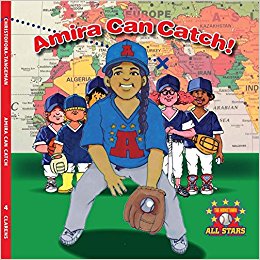
A New Kid in School: Amira Can Catch! (The Hometown All Stars #4), by Kevin Christofora/Illustrated by Dale Tangeman, (March 2018, Clarens), $12.99, ISBN: 9780986349331

Recommended for readers 5-8

Amira is a new student in a Woodstock, New York classroom. She and her family are Syrian refugees, looking to start a new life in the States, and she’s a little shy and nervous. Luckily, Nick, the narrator of the story and the student Amira’s seated next to, is on it. He asks her if she needs help, and the two become fast friends. As the school day progresses, Nick learns about Amira’s life in the refugee camp; she tells him that three kids at the camp would have to share what amounts to one student’s lunch serving in the States, and that a refugee camp is where “families who have lost their homes and have nowhere else to go” live. At the end of the school day, Nick invites Amira to baseball practice and draws her a map, showing her how to get to the field, and Amira arrives to find even more friendly faces waiting for her. From here, the narrative shifts into a teamwork and baseball-focused story, with the Coach a positive, encouraging figure who keeps the kids motivated and learning. A floating baseball with game tips and thought-provoking questions appears throughout the book, and realistic but cartoony provide helpful illustrations for kids looking to improve their ballgame. A note at the end about what it means to be American emphasizes the diversity of American culture and there’s a list of new words learned in the book; mostly baseball-related. With detailed, yet easy-to-read text and appealing illustrations, this is a positive look at friendship, diversity, and teamwork, all connected by the love of baseball.

This is the fourth book in the Hometown All Stars series, and I think I’ll look into the others for my collection here at the library. It’s nice to see an upbeat, positive book where kids are open to meeting new people and learning about different cultures. The Hometown All Stars books are available in 13 languages, and you can check out other books in the series at the Hometown All Stars webpage.

Posted in Fiction, Middle Grade, Middle School, Realistic Fiction, Tween Reads

The Miscalculations of Lightning Girl is wonderful!

The Miscalculations of Lightning Girl, by Stacy McAnulty, (May 2018, Random House), $16.99, ISBN: 978-1-5247-6757-0

Recommended for readers 8-12

I am so excited to talk up this book, because it is SO GOOD. I was lucky enough to be on author Stacy McAnulty’s “street team”, so I have evangelized this book to my library kiddos, bending the ear of everyone I talk to (including grownups) at the library and at home, and generally shoving this book at people to tell them that they need to read it immediately.

Lucy is a gifted tween, thanks to a lightning strike at age seven that left her with savant abilities in math. She loves math. She sees and smells the numbers and equations; they reveal themselves to her and tell them all their secrets, but social relationships have eluded her. She struggles with OCD behaviors and has been homeschooled by her grandmother, who finally decides that Lucy develop socially, and enrolls her in middle school, which doesn’t really go over so well with Lucy, who’s more ready for college applications. But Lucy promises her grandmother that she’ll make one friend, join one activity, and read one book that isn’t a math textbook. Lucy’s OCD automatically makes her a target to the local mean girl, but she persists, finding ways to use her talents in a class project, and making two pretty good friends, while she’s at it.

I can’t find enough great things to say about Lightning Girl. Stacy McAnulty gives us a strong, funny, sweet, and complex group of characters that reader will recognize bits of themselves in; supportive parental figures that are doing their best, and parents that need a bit more work. It’s a glimpse at everyday life with a touch of the extraordinary, and it’s a touching look at the power of caring about something bigger than oneself. Lucy goes through tremendous upheaval, but she rides it out, and grows through the course of the book. Before the events that form the narrative, she sees life as a series of problems that can be worked out, but learns that some of the toughest problems bring rewarding solutions. Even if the final answer isn’t correct, the work to get there makes a difference.

The Miscalculations of Lightning Girl is compulsively readable, discussable, and perfect middle grade reading. Teachers, PLEASE put this on your Summer Reading lists, so I can hand this book to every middle grader I see this summer. Lightning Girl has starred reviews from School Library Journal, Kirkusand Publisher’s Weekly. Author Stacy McAnulty is on a book tour for Lightning Girl right now: head to her author webpage for a schedule!


Posted in Fiction, Fiction, Historical Fiction, Middle Grade, Realistic Fiction, Tween Reads

Never That Far: They never really leave us

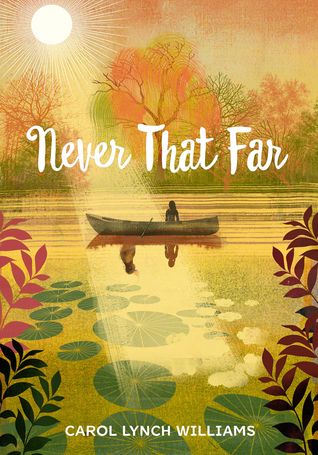
Never That Far, by Carol Lynch Williams, (Apr. 2018, Shadow Mountain), $16.99, ISBN: 978-1-62972-409-6

Recommended for readers 9-12

Twelve-year-old Libby is devastated when her best friend, her grandfather, dies at home. Crippled by grief, her father can barely get out of bed to work in the family’s Florida orange groves. On the night of Grampa’s funeral, though, Libby has a visitor: Grampa’s spirit shows up in her room, telling her that “the dead ain’t never that far from the living”, and that she has to search the lake for something he left for her. Sadly, he tells her that her father can’t see him; he doesn’t believe. To him, “the Dead are dead”. Libby joins forces with her friend, Bobby, to discover the treasure at the lake, but her father spirals further into grief and depression and threatens to derail Libby’s entire mission.

Never That Far has a touch of the supernatural set into a realistic fiction about grief, loss, and family. The Sight, Libby’s family gift, allows her to see and speak with dead family members. Her father has been worn down by grief, enduring the deaths of his siblings, wife, mother, and now, father; he has spent years arguing with his family about their “gift”, refusing to accept it for what it is. Libby’s revelation is unbearable to him, threatening an even greater rift between father and daughter when he tries to stop her from her mission. Together, Libby and Grampa, with some help from Bobby, work to save Libby’s father, who’s in danger of becoming a shell of a person and leaving Libby alone in the world.

The characters are gently realized, revealing themselves to readers little by little over the course of the book and packing powerful emotional punches as they come. Libby witnesses her grandfather’s grief at not being able to connect with his son in a scene that will have readers reaching for tissues. Taking place in the late 1960s in rural Florida allows the plot to remain character-driven. This is a moving story of grief, loss, and renewal that will appeal to certain readers: it’s a good book to have handy for your tough times lists, and for comfort reading. It’s spiritual, rather than overtly religious, and is soothing for readers experiencing loss and moving on.


Posted in Fiction, Fiction, Middle Grade, Realistic Fiction, Tween Reads

The Battle of Junk Mountain is underway

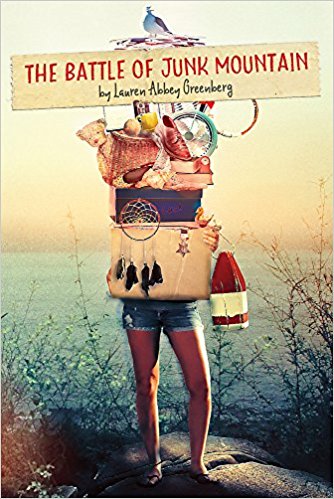
The Battle of Junk Mountain, by Lauren Abbey Greenberg, (April 2018, Running Press), $16.99, ISBN: 978-0-7624-6295-7

Recommended for readers 8-12

Twelve-year-old Shayne is not having the summer she expected. Normally, she loves spending time with her grandparents and her “summer sister”, Poppy, in Maine, but things are different now. Her grandmother, Bea, hasn’t been quite the same since Shayne’s grandfather died in a fishing boat accident, and Poppy’s more interested in boys and makeup than she is in their summertime rituals. Shayne’s in Maine to help Bea get her home cleaned out: she’s always “collected” stuff, raiding yard sales and thrift stores, but she’s gotten a bit carried away since Grandpa died. Shayne refers to the pile of junk (“treasures”) on top of one table as Junk Mountain, but Bea just pooh-poohs any talk about there being a problem. But there are problems: Bea’s spending is out of control, and any attempts at getting the house cleaned up and selling her “treasures” off ends up getting Bea upset. Alone and conflicted, Shayne ends up befriending Linc (short for Lincoln), the Civil War-obsessed grandson of her grandmother’s next door neighbor. Shayne’s got to figure out a way to keep the peace in her shifting relationships this summer, or it will be the worst summer ever.

Told in the first person by Shayne, The Battle for Junk Mountain looks at how relationships shift over time; Poppy and Shayne’s friendship is going through its growing pains as the two start coming into themselves as tweens, but the big story here is the relationship between Bea and Shayne. What happens when that relationship changes? Shayne has some big ticket items to face in Junk Mountain: her grandmother’s collecting has turned into something bigger than she is, and she’s on her own for most of the novel while dealing with it. She also navigates two friendships: a changing longtime friendship and a new friendship with someone who doesn’t fit in with her usual summer traditions. It’s a gentle coming-of-age story that also has the ability to start a talk about big responsibilities kids face today.

There’s a free, downloadable study guide, with discussion questions and Common Core Standards, available through the author’s website. The Battle of Junk Mountain is good summer reading: easy to read, but filled with realistic, relatable characters that will leave readers thinking and talking.

Posted in Fiction, Middle Grade, Realistic Fiction

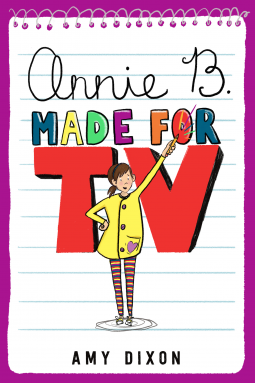
Annie B is Made for TV!

Annie B, Made for TV!, by Amy Dixon, (June 218, Running Press), $16.99, ISBN: 9780762463855

Recommended for readers 7-10

Annie Brown is an 11-year-old who always seems to come in second to her best friend, Savannah. Savannah seems unable to do any wrong: she wins the big awards at school, she’s the MVP of the school track team, and she’s a straight-A student. Savannah tries to be a supportive best friend, and when a local web show called The Cat’s Meow holds auditions, Savannah just knows that Annie has to try out! After all, no one comes up with wacky “As Seen on TV”-type products like she does! Annie’s own dad calls them her “wrinventions”, and they include things like Apology Armor (extra padding on those knees). But Annie freezes at the audition… and Savannah lands the role of announcer, which causes a rift in their friendship – even when Annie is brought on as a show writer. Can Annie outfit herself in some Apology Armor and patch things up with Savannah?

This is one of those middle grade novels that so many readers will understand! Who hasn’t felt jealous of a good friend, especially if they seem to have it all? Who hasn’t felt the disappointment of missing out on something like being cast for a school play, or making a sports team? Amy Dixon captures realistic scenarios and real feelings in the form of a spunky, funny protagonist who wants to be Lucy, but maybe is a little more Ethel. Annie B. Made for TV reminds me of Sarvenaz Tash’s Belle of the Ball, a great story from the anthology The Radical Element. It’s not always about being the one in the spotlight, but about knowing your strengths and how to work them. This one’s a fun, smart read for middle graders, and is filled with black and white line drawings of Annie’s best “wrinventions”.

Posted in Fiction, Graphic Novels, Middle Grade, Realistic Fiction, Teen, Tween Reads

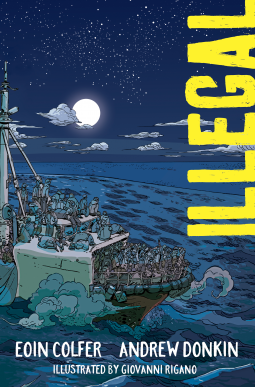
Eoin Colfer’s Illegal is a powerful statement on behalf of refugees

Illegal, by Eoin Colfer & Andrew Donkin/Illustrated by Giovanni Rigano, (Aug. 2018, Sourcebooks), $19.99, ISBN: 9781492662143

Recommended for readers 10+

The Artemis Fowl graphic novel team assembles to bring readers a powerful, emotional story about the struggles of undocumented immigrants: in this story, three African siblings. Ebo’s alone. Orphaned and living in squalor, his sister set out months ago to find her way to Europe and a better life, promising to send for Ebo and their brother, Kwame, when she gets settled. But the boys can’t wait any longer, and Kwame sets out next. Ebo follows Kwame, and the brothers endure a journey across the Sahara Desert to find their way to the sea. The journey is inhumane, often unbearable, but Ebo will not be denied. He deals with loss, hunger, and thirst; filthy living conditions; and brutal treatment by nature and man, but he holds out hope to be reunited with his sister, and the promise of a better life somewhere else.

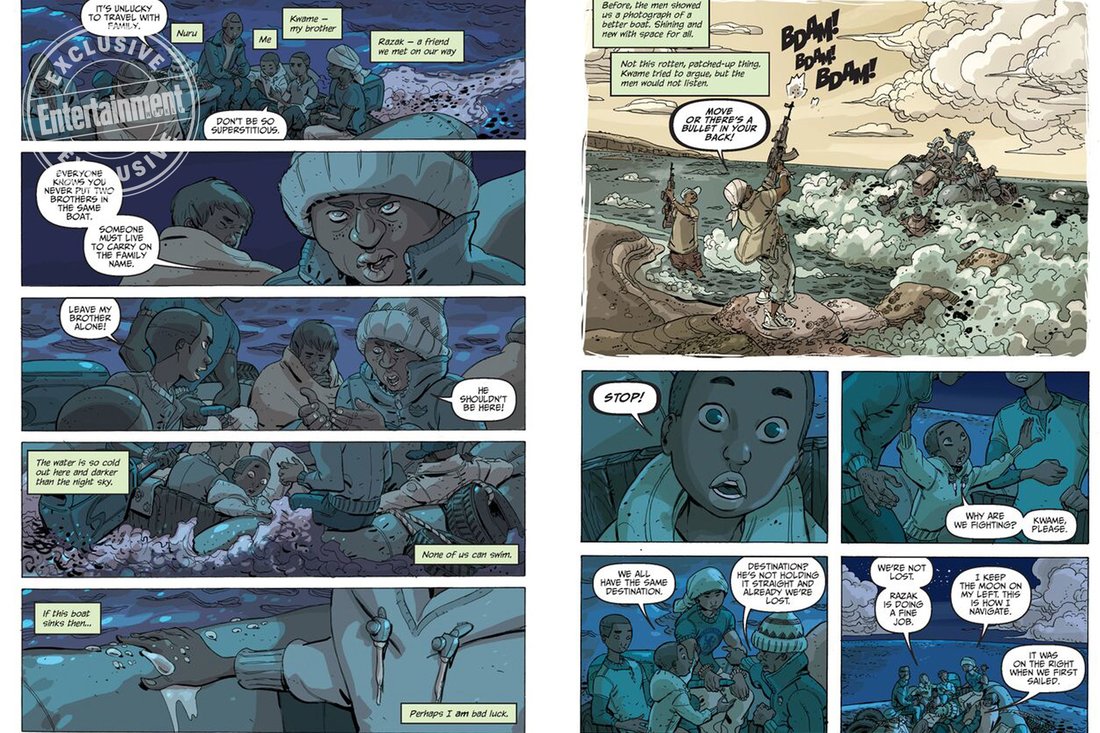
There’s been quite a bit of attention focused on undocumented immigrants, and it’s a conversation we need to continue. War, disease, poverty, and hunger are global problems that force men, women, and children to undergo unthinkable scenarios for the sole purpose of cultivating a better life. Illegal, while fictional, is inspired by true events: just pick up a newspaper or turn on the news. Ebo’s story is one story of millions: the United Nations records 65.6 million people are forcibly displaced worldwide. Told in Ebo’s voice, readers will feel like they are reading a private journal. His voice is strong and clear, and evokes anger, grief, and the desire to do more. The artwork supports the text, laying out the slums of an African neighborhood; the devastating stretch of desert, and the terrifying expanse of the ocean. Ebo’s face will stay with readers long after they finish the book.

(Images courtesy of Entertainment Weekly‘s article)

Illegal should be on every middle school and/or high school’s Summer Reading list, and needs to be discussed in our classrooms and in our homes. The book is currently out in the UK, and there are teaching materials online, including this downloadable one from the U.S. publisher, Sourcebooks. Author Andrew Donkin has articles about Illegal on his website, and Eoin Colfer has the US and UK covers on his website. Entertainment Weekly has a featured excerpt and The Guardian made it the Children’s Book of the Week when it was published in the UK in October 2017.

Illegal was shortlisted for the 2017 Irish Book Awards and was chosen for EmpathyLabUK’s Read for Empathy List (a downloadable copy of which can be found here). I’ve embedded the trailer below:


Booktalk and display Illegal with Michel Chikwanine and Jessica Dee Humphreys’ Child Soldier and Barron’s Children in Our World books (Refugees & Migrants, Poverty & Hunger, Racism & Intolerance, and Global Conflict).


Posted in Fiction, Historical Fiction, Middle Grade, Realistic Fiction, Tween Reads

Social Justice, Union Organizing, Dairy Wars, and an Orphan Band!

The Orphan Band of Springdale, by Anne Nesbet, (Apr. 2018, Candlewick Press), $18.99, ISBN: 9780763688042

Recommended for readers 8-12

It’s 1941, and things are tense in the U.S. as the world is at war in Europe. Eleven-year-old Gusta is on the run with her father, a German labor organizer, heading toward Maine to stay with her grandmother, when her father disappears. Gusta shows up on her grandmother’s doorstep with the clothes on her back and her beloved French horn. Her grandmother and aunt, who run an orphanage, take her in, and Gusta starts adjusting to life in a place very different from New York. American nationalism runs rampant in Maine, and Gusta’s last name and status as a newcomer brings some suspicion with it, as does her talk about unions and workers’ rights. Her uncle, a mill-worker whose hand was mangled at the factory, can’t work, so Gusta takes it upon herself to approach the owner of the mill to ask him to consider helping with her uncle’s bills. What Gusta doesn’t realize is that her desire to do the right thing puts her at odds with the mill owner, who has a history of his own with her family.

There is such rich and relevant storytelling here. Gusta is a wonderfully realized character with a strong background in social justice: a background that makes her an outsider in her own country. She comes to Small Town America during a time when there of alien registration drives (it really happened) and extreme patriotism; when something as innocuous as a last name aroused suspicion. Gusta is hyper-aware of injustice and determined to do what’s right, whether it’s bringing union reps to her town or point-blank asking for compensation for her uncle’s work-related injury. It’s her unflinching sense of right and wrong that puts her at odds in her community – and her father’s reputation certainly doesn’t help. Thank goodness her tough but loving grandmother is there to lean on. The Orphan Band of Springdale moves at a good pace, has believable characters in relatable situations, and readers can easily draw parallels between 1941 and today.

An author’s note reveals the very personal connection between the author and Gusta’s story. Readers can download a discussion guide and author’s notes from Candlewick’s website. The Orphan Band of Springdale has starred reviews from Publisher’s Weekly and the Bulletin of the Center for Chidren’s Books.


Posted in Adventure, Fiction, Middle Grade, Science Fiction, Tween Reads

Art takes on a new dimension in The Maker

The Maker, by D.F. Anderson, (Jan. 2018, Underdog Books), $14.95, ISBN: 9780991800346

Recommended for readers 9-13

Thirteen-year-old Nate loves to draw. It’s one of his lasting connections with his father, who’s been gone for months, with no word. His mother’s boyfriend, Ted, goes at Nate whenever he gets a chance, insulting his artwork and attacking his grades; his mother is no comfort. Things change rapidly for Nate when a group of aliens show up at his window one night, telling him that he and his father are Makers: artists with the talent to bring their drawings to life. Nate’s father hasn’t abandoned them, he’s been kidnapped, and the aliens from the planet Meer are relying on Nate to help them save his father and the other kidnapped Makers before a cruel alien race wipes them out – and then heads for Earth.

The Maker has a great concept: using living beings as 3-D printers, when you think about it. By channeling their talents, Makers can give life to their drawings to create starships, cities… the sky’s the limit. The Makers connect with an energy source, mica, to give shape to their ideas; they can collaborate on large projects, or work individually to create small, detailed pieces. Readers will get into the sci-fi adventure story and relate to Nate, a kid who’s been put down to the point where he doesn’t believe in his own talent until put to the test – and then exceeds his wildest dreams. The evil parent/boyfriend situation is addressed in a neatly wrapped-up plotline. There are warring alien races, planet-eating machines to stop, and strong relationships that sci-fi and fantasy fans will enjoy, plus some moments of humor, including an evil alien who can be tortured… by pulling on his toe. Made you smile!

Add this to collections where you have sci-fi readers. Display this with some maker titles, and have a booktalk ready when kids come over and ask why it’s there.