Posted in Fiction, Middle School, Realistic Fiction, Tween Reads

Just Under the Clouds shows us the working poor

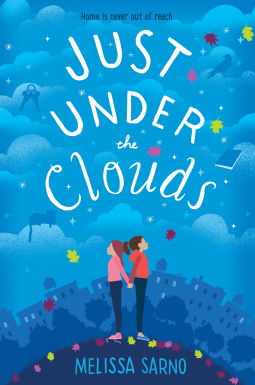
Just Under the Clouds, by Melissa Sarno, (June 2018, Knopf Books for Young Readers), $16.99, ISBN: 9781524720087

Ages 10-14

Middle schooler Cora, her Mexican-American mom, and younger sister, Adare, are homeless. After her father died, she and her family have lived in a series of temporary homes and shelters in Brooklyn, New York, while her mother tries to make ends meet at an hourly retail job, giving up her art to keep her family going. Adare sustained brain damage at birth, so Cora must look after her when their mother isn’t around. When they get back to their room at the shelter and discover it’s been broken into, the family heads to Cora’s mom’s childhood friend, Willa, a successful lawyer with an apartment of her own, hoping to stay until a better, safer, placement comes through. Cora loves life in Willa’s stable home, but the girls’ mother is frustrated by what she sees as Willa’s meddling. Meanwhile, at school, Cora struggles with math and bullies, and meets a friend named Sabina, who lives on a houseboat and was homeschooled until this school year. Cora has both parents’ passions within her; she keeps her father’s tree diary with her and searches for a special tree that her father wrote about, paired with her mother’s artistic talent – with an arborial bent. She has the stress of caring for Adare, the stress of being homeless, and being bullied.

Just Under the Clouds is narrated in Cora’s voice; author Melissa Sarno creates a strong, moving narrative where we meet a family that often falls through the cracks in our society: the working poor. Cora’s mother, Liliana, is working at a job that doesn’t cover the cost of living for a family of three, let alone in metro New York, and her daughters are in school, clean, and fed, if not full. It’s a tale of poverty, grief, empathy, and hope. The book addresses childhood stress, which comes with long-lasting fallout, and caring for a special needs child, and how poverty affects those children receiving necessary services to help them. It’s a sensitive, painful look in our own backyards and courtyards, our own classrooms and workplaces, and deserves a space on bookshelves and in readers’ hands. Pair this with 1958’s The Family Under the Bridge, by Natalie Savage Carson, and ask readers how things have changed – and how they’ve stayed the same – over 60 years. Start a booktalk by asking your readers, “How would you feel if you lived in a place that wasn’t safe to go to alone?”

Posted in Fiction, Historical Fiction, Middle Grade, Tween Reads

The Turnkey of Highgate Cemetery is keeping watch

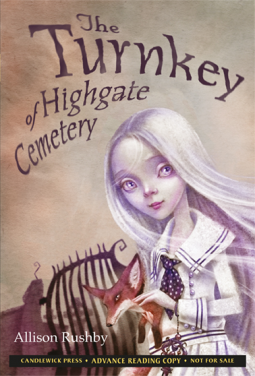
The Turnkey of Highgate Cemetery, by Allison Rushby, (July 2018, Candlewick Press), $15.99, ISBN: 9780763696856

Recommended for readers 9-12

Flossie Birdwhistle is a ghost, but that’s beside the point. She’s got a very important job as Turnkey at London’s Highgate Cemetery; making sure her fellow souls are at rest and cared for. She’s a young ghost – she’s only 11- and while some may have something to say about that, she’s good at her job. Right now, her big concern is World War II, currently raging over Britain, and disturbing her dead neighbors. Flossie encounters the ghost of a German soldier up to no good, so she starts investigating, and learns that he’s somehow managed to bridge the gap between the worlds of the dead and the living. She has got to stop him before he – and the enemy army – can destroy Britain!

This is thoroughly enjoyable historical fiction with a nice dose of the supernatural. Flossie has a nicely sketched out backstory, and we learn just enough about her fellow ghosts and familiars to keep us satisfied and turning pages. I like how author Allison Rushby incorporated Hitler’s well-documented fascination with the supernatural into the story, making this a “what if” type of alternate history novel for younger readers, and I like Flossie’s determination and ability to think while under (often literal) fire. Mystery and ghost story fans will enjoy meeting Flossie and friends. Want to give readers a fun website? Let them visit the actual Highgate Cemetery’s webpage, where they can find war graves (including soldiers from WWII), take a virtual tour of the cemetery, and visit a few luminaries.

Posted in Fantasy, mythology, Teen, Young Adult/New Adult

The story of Midas, continued: A Touch of Gold

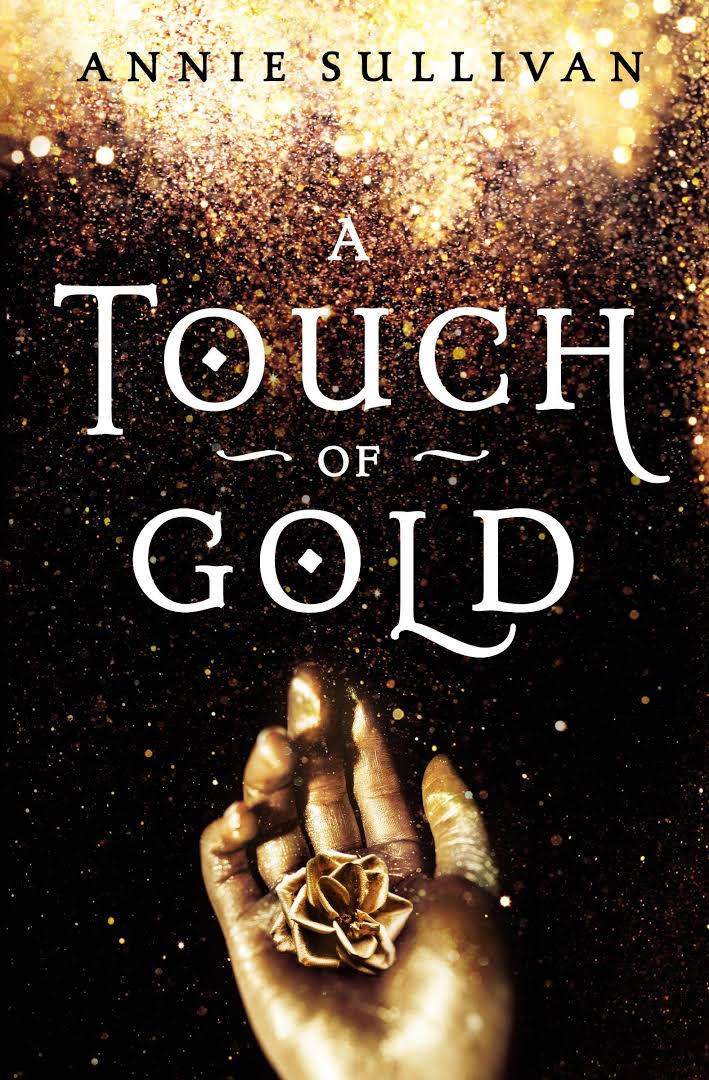
A Touch of Gold, by Annie Sullivan, (Aug. 2018, Blink YA), $17.99, ISBN: 978-0-310-76635-3

Recommended for readers 12+

I mentioned A Touch of Gold in my Argos review last week, as part of my Go Greek! summer reading post. I was still reading it at the time, but I’m all done and dying to talk this one up. Let’s dive in!

We all know the story of King Midas, right? Has the ability to turn anything he touched to gold, which sounds pretty great at first, but try to eat a candy bar, or have a swig of water: see where I’m going? Literally everything he touched turned to gold, which was stressful enough, but when his daughter went to him and transformed into a golden statue, that was it. He begged the god Dionysus to take away the Golden Touch, but gods have a sense of humor – which is where A Touch of Gold begins.

You see, Midas needed to bathe everything he turned to gold in a nearby river. Being a loving dad, he grabbed Kora, his daughter, first. Once he saw she was okay, nothing else mattered. Except to Dionysus, who tends to be a stickler for playing by his rules. Midas didn’t bathe the other objects in the river, so Kora’s skin became gold. Not a statue again; more of a gold sheen, and Midas was condemned to keep the other gold objects nearby, or he’d be weakened to the point of death. Kora, now a teen, has been sheltered within the palace walls for most of her life; her father’s brother, Phaeus, taking on most of the day-to-day crown duties, while Midas grows weaker, needing more time close to his gold, to retain any energy. When someone sneaks in, kills a guard, and steals the gold, Kora must undertake the quest of a lifetime: find the gold and restore her father’s health. Along with her would-be suitor, Aris, and her cousin, Hettie, Kora sets out aboard a ship captained by Aris’ sometime friend, Royce. Kora quickly finds herself up against a superstitious and fearful crew, a bloodthirsty pirate who collects skulls, and someone working from within to bring harm to Kora and her family.

A Touch of Gold moves along at a good pace, building on an established story and adding new adventure, romance, and intrigue. Narrated by Kora, readers meet a heroine who is strong but vulnerable, smart but unsure, who undertakes her own heroine’s quest to grow into herself. She feels like an outcast; she’s treated like an outcast, until she believes in herself: a relatable character with a nice growth path. Readers may or may not see the villains coming, but A Touch of Gold is a good summer read that your Percy Jackson fans who are ready to take on something more will enjoy.

Posted in Fiction, Historical Fiction, Teen, Young Adult/New Adult

The Unbinding of Mary Reade

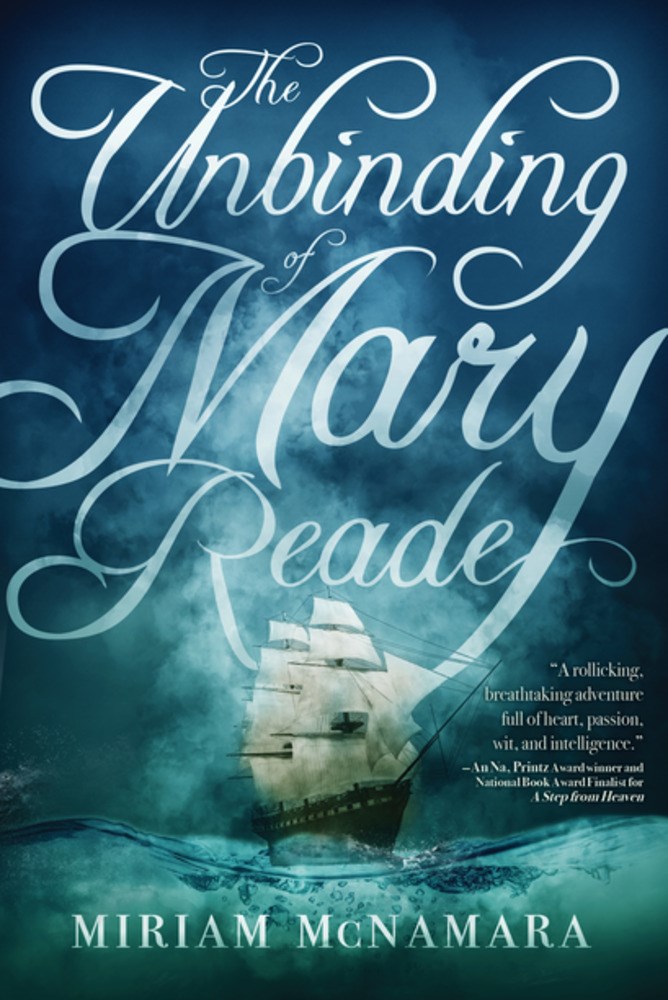
The Unbinding of Mary Reade, by Miriam McNamara, (June 2018, Sky Pony Press), $16.99, ISBN: 9781510727052

Recommended for readers 14+

Raised as a boy to take the place of her dead brother, Mary Reade spent her formative years as Mark, mainly to get her drunken mother money from her wealthy grandmother, who would never name a female heir. Eventually, Mary took to the high seas, where her life depended on passing as male. She joined pirate Calico Jack Rackham and Anne Bonny after they raided a merchant ship she sailed with, finding herself fascinated with the fiery redheaded Bonny, who wore dresses and wielded weapons with pride and bravado.

This could have been so much more. I found the nonbinary, bisexual Mary Reade storyline brilliant, capturing the sheer terror of living in a male-dominated, homophobic society. Mary is constantly afraid for her life because of who she is, and the men around her shove their hands down her trousers and pull up her shirt, seemingly at will, to confirm rumors. She’s powerless to say or do anything, because in this society, different equals death, and it’s always over her head. She finds relief in living as a male, yet feels uncomfortable being gendered at all – despite the fact that the novel always refers to Reade as “she”. Anne is a study in frustration, appearing as a tragic, yet scheming, woman who attaches herself to any male – or male figure – that will help her navigate 18th Century society. Is she bisexual, or is she just using her sex to gain favor? There’s a lot of slow burn relationship work here between Mary and her childhood love, Nat, and some tumultuous relationship beginnings with Anne Bonny that never quite gain footing. I wish the book concentrated more on the two pirates’ adventures together, and that Anne emerged as a stronger female character. Mary’s gender confusion and self-doubt may resonate with nonbinary and trans readers, and engender empathy in all readers. It’s an add to consider for historical fiction and LGBTQ collections.


Posted in Animal Fiction, Fantasy, Fiction, Middle Grade, mythology, Teen, Tween Reads

Go Greek this Summer!

Ready to move on from Percy Jackson? (Just kidding, you’re never ready to move on from Percy Jackson.) I’ve got a new book for you:

Argos, by Ralph Hardy, (March 2018, Harper) $6.99, ISBN: 9780062396792
Recommended for readers 9-12

Set in the world of the Greek classic, The Odyssey, by Homer, Argos tells the story of Odysseus’s 20-year trip home after the Trojan War, through the eyes of his beloved dog, who waited for him. Argos is a strong, loyal dog who protects his master’s home and family and tells readers all about his beloved Odysseus, the awful suitors who pursue Odysseus’ wife, Penelope, night after night, and Telemachos, Odysseus’ young son, who grows to manhood throughout the story.

Narrated from Argos’ point of view, we get the full story of The Odyssey through reports Argos gleans from animals – primarily birds – who have encountered the hero and his crew on their ill-fated journey home. We also walk with Argos as he hunts those who would do his family ill – wolves and men alike. He has his own fame on the island Ithaka, too: he’s known as the Boar Slayer after being found as the sole surviving pup in his litter, gnawing on the body of a dead boar who slaughtered his family. We read along as he falls in love and experiences heartbreak, and we read his frustration and sadness as he ages and fears dying, leaving no one to protect his human family, and never laying eyes on his master again. If you’ve read The Odyssey, you know what’s coming; if you haven’t, this is an excellent entry point to the Greek classics. Argos is a noble and wonderfully fleshed-out character, given a history of his own that Homer would likely be proud of. Perfect for animal fiction fans and fans of Greek mythology and adventure books. I’m going to booktalk this one to my many, many Percy fans this week!


Next up will be a YA novel I’m currently reading, also set in Ancient Greece, so I’ll just give a quick summation here: Annie Sullivan’s A Touch of Gold tells the story of King Midas’ daughter, Kora. Turned into gold by her father, she remembers dying and coming back to life when the curse was broken, but the gods have an interesting sense of humor. Her skin is gold, and she has secret powers whenever she’s near gold. She lives, sheltered from society, to escape the looks and whispers of curses, and to avoid coming into contact with gold, until her father falls ill and she’s the only one who can save him. So far, I’m enjoying this novel, but I’ll report back when I’m finished with it, soon enough. It’s not due out until August, so you have time: go read Argos! It’s great for tweens and teens alike. Display and booktalk with The Illiad and The Odyssey: there are versions available for young readers. Ask kids if they think the gods are any different between these books and the Riordan universe. See what you learn!

A Touch of Gold, by Annie Sullivan, (Aug. 2018, Blink YA), $17.99, ISBN: 978-0-310-76635-3


Posted in Fiction, Historical Fiction, Intermediate, picture books

Blacksmith’s Song: An entry into African-American folklore

Blacksmith’s Song, by Elizabeth Van Steenwyk/Illustrated by Anna Rich, (Feb. 2018, Peachtree Publishers), $17.95, ISBN: 978-1-56145-580-5

Recommended for readers 6-10

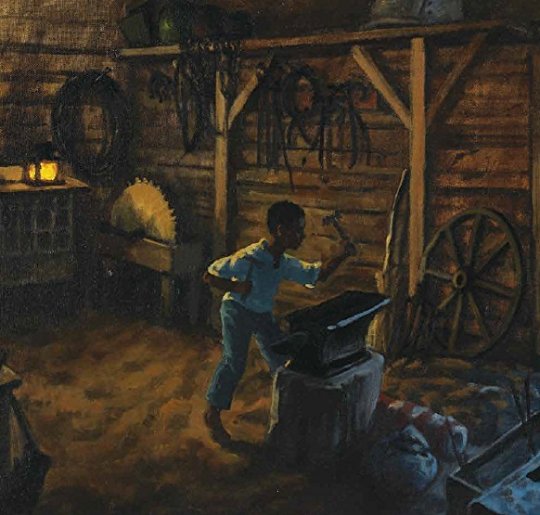
An enslaved boy realizes that the rhythm of his blacksmith father’s “song” – the hammer striking the anvil as he works – changes when he sends word to other slaves that it’s time to escape. He waits for it to be his family’s turn, but when his father falls ill, he takes matters into his own hands: for himself, his family, and the slaves who rely on his father’s message.

Inspired by stories from the Underground Railroad, Blacksmith’s Song gives readers a new entry into African-American folklore: some may have heard of the quilts and the messages they provided; some may know that dances and songs like “Wade in the Water” provided coded messages; now, we have the rhythm of the smith’s hammer. Anna Rich paints stunning portraits in oils: the forge’s flame and sparks; the grim slave catchers riding out in search of escaped slaves; the watchful eyes of the boy and his family, and the warm glow of the firelight as the boy takes up his father’s hammer for the first time. A good addition to historical fiction picture book collections and to readers interested in American folktales, particularly surrounding the Civil War-era South.

Posted in Fiction, Fiction, Historical Fiction, Middle Grade, Realistic Fiction, Tween Reads

Never That Far: They never really leave us

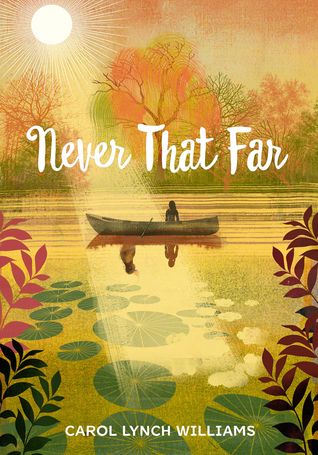
Never That Far, by Carol Lynch Williams, (Apr. 2018, Shadow Mountain), $16.99, ISBN: 978-1-62972-409-6

Recommended for readers 9-12

Twelve-year-old Libby is devastated when her best friend, her grandfather, dies at home. Crippled by grief, her father can barely get out of bed to work in the family’s Florida orange groves. On the night of Grampa’s funeral, though, Libby has a visitor: Grampa’s spirit shows up in her room, telling her that “the dead ain’t never that far from the living”, and that she has to search the lake for something he left for her. Sadly, he tells her that her father can’t see him; he doesn’t believe. To him, “the Dead are dead”. Libby joins forces with her friend, Bobby, to discover the treasure at the lake, but her father spirals further into grief and depression and threatens to derail Libby’s entire mission.

Never That Far has a touch of the supernatural set into a realistic fiction about grief, loss, and family. The Sight, Libby’s family gift, allows her to see and speak with dead family members. Her father has been worn down by grief, enduring the deaths of his siblings, wife, mother, and now, father; he has spent years arguing with his family about their “gift”, refusing to accept it for what it is. Libby’s revelation is unbearable to him, threatening an even greater rift between father and daughter when he tries to stop her from her mission. Together, Libby and Grampa, with some help from Bobby, work to save Libby’s father, who’s in danger of becoming a shell of a person and leaving Libby alone in the world.

The characters are gently realized, revealing themselves to readers little by little over the course of the book and packing powerful emotional punches as they come. Libby witnesses her grandfather’s grief at not being able to connect with his son in a scene that will have readers reaching for tissues. Taking place in the late 1960s in rural Florida allows the plot to remain character-driven. This is a moving story of grief, loss, and renewal that will appeal to certain readers: it’s a good book to have handy for your tough times lists, and for comfort reading. It’s spiritual, rather than overtly religious, and is soothing for readers experiencing loss and moving on.


Posted in Fiction, Fiction, Middle Grade, Realistic Fiction, Tween Reads

The Battle of Junk Mountain is underway

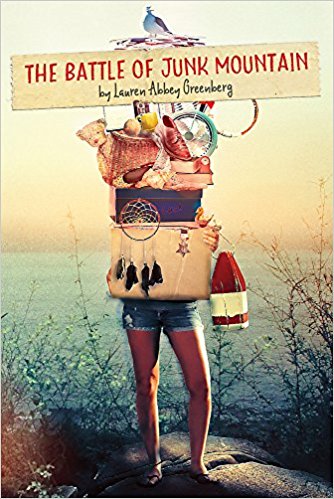
The Battle of Junk Mountain, by Lauren Abbey Greenberg, (April 2018, Running Press), $16.99, ISBN: 978-0-7624-6295-7

Recommended for readers 8-12

Twelve-year-old Shayne is not having the summer she expected. Normally, she loves spending time with her grandparents and her “summer sister”, Poppy, in Maine, but things are different now. Her grandmother, Bea, hasn’t been quite the same since Shayne’s grandfather died in a fishing boat accident, and Poppy’s more interested in boys and makeup than she is in their summertime rituals. Shayne’s in Maine to help Bea get her home cleaned out: she’s always “collected” stuff, raiding yard sales and thrift stores, but she’s gotten a bit carried away since Grandpa died. Shayne refers to the pile of junk (“treasures”) on top of one table as Junk Mountain, but Bea just pooh-poohs any talk about there being a problem. But there are problems: Bea’s spending is out of control, and any attempts at getting the house cleaned up and selling her “treasures” off ends up getting Bea upset. Alone and conflicted, Shayne ends up befriending Linc (short for Lincoln), the Civil War-obsessed grandson of her grandmother’s next door neighbor. Shayne’s got to figure out a way to keep the peace in her shifting relationships this summer, or it will be the worst summer ever.

Told in the first person by Shayne, The Battle for Junk Mountain looks at how relationships shift over time; Poppy and Shayne’s friendship is going through its growing pains as the two start coming into themselves as tweens, but the big story here is the relationship between Bea and Shayne. What happens when that relationship changes? Shayne has some big ticket items to face in Junk Mountain: her grandmother’s collecting has turned into something bigger than she is, and she’s on her own for most of the novel while dealing with it. She also navigates two friendships: a changing longtime friendship and a new friendship with someone who doesn’t fit in with her usual summer traditions. It’s a gentle coming-of-age story that also has the ability to start a talk about big responsibilities kids face today.

There’s a free, downloadable study guide, with discussion questions and Common Core Standards, available through the author’s website. The Battle of Junk Mountain is good summer reading: easy to read, but filled with realistic, relatable characters that will leave readers thinking and talking.

Posted in Historical Fiction, Teen, Young Adult/New Adult

Get Radical with Fierce Young Women from U.S. History!

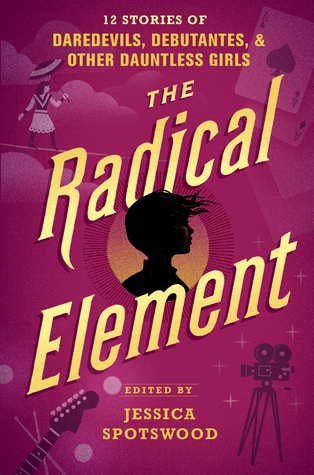
The Radical Element, edited by Jessica Spotswood, (March 2018, Candlewick), $17.99, ISBN: 978-0-7636-9425-8

Recommended for readers 13+

This anthology gives readers snapshots of young women at pivotal moments in their lives and U.S. history, from 1838 to 1984. Written by YA literary powerhouses including Anna-Marie McLemore (Wild Beauty), Marieke Nijkamp (This is How it Ends), Dhionelle Clayton (The Belles), these 12 stories are about young women who are the “radical element” in their time periods; their communities; their families. A young Jewish woman living in 19th century Savannah, pushing to learn more about her faith; a Cuban immigrant, living in Queens (whoo hoo!) and walking the line between her parents’ traditional world and the new, modern world; a 1950s debutante whose idea for her future doesn’t quite line up with her mother’s.  All of their stories are here, expertly told and starring a fabulous and diverse group of females: multicultural and LGBTQ characters all find a home here.

The authors alone make this a must-add to bookshelves and book collections; the stories contained within present strong characters and exciting adventures, with backstories that still hold relevance for readers today. Characters here deal with gender identity, racism and religious persecution, and sexism. These are perfect for quick reads or to binge read like the best Netflix series. Contributor bios at the end introduce readers to the authors.

The Radical Element, a companion to A Tyranny of Petticoats (2016), has a starred review from Kirkus.

Posted in Historical Fiction, Teen, Young Adult/New Adult

Historical fiction in verse: Blood Water Paint

Blood Water Paint, by Joy McCullough, (March 2018, Dutton Books for Young Readers), $17.99, ISBN: 9780735232112

Recommended for readers 13+

It’s an historical fiction type of review day. Blood Water Paint is a stunning story based on true events, told in quiet, powerful verse.

Artemisia Gentileschi is the 17-year-old daughter of Renaissance artist Orazio Gentileschi, but her talents far outweigh his. At the mercy of her cruel father, Artemesia is her father’s assistant, model, and – all too often – the chief artist on the paintings he signs his name to. Her father hires artist Agostino Tassi to work with Artemisia and refine her talents, and she is at first thrilled to have someone recognize her work on its own merit. But when Agostino rapes her, she refuses to play the passive any longer, and brings him to court to keep her honor and reputation intact. As she goes through the grueling judicial process, she remembers the stories of strong women, told to her by her deceased mother, and draws on their strength.

This is feminist historical fiction at its finest. Through Artemisia, we see that women have always had to push back against male society. The very women she paints tell the story: Susanna and her Elders depicts a woman leered at by a group of “respectable” elders; the Biblical heroine Judith, who took matters into her own hands when her husband was murdered by foreign invaders. Artemisia’s relationship with her father is complex: he’s jealous of her talent and berates her, even humiliates her, but when she tells him about her rape and intent to bring Agostino to court, he stands by her – even though he knows, and tells her, that Agostino will not be the one on trial. It will be Artemisia. Sound familiar? Sound like it could be taken from the news this week? Not much has changed.

Artemisia persists, and in that persistence, she empowers every person to pick up this book. She persists in her artwork, and she persists in bringing her attacker to justice. It may not be a justice that suits the crime – sound familiar? – but she accomplishes what most women of the time would never be able to. And this is a true story: Bustle has a brilliant article on the real-life Artemisia, and how author Joy McCullough discovered her thanks to Margaret Atwood.

This book is captivating; a powerful combination of verse and prose that will spark readers’ emotions and start discussions. Blood Water Paint examines issues that are all too relevant today – the perception of women and believing abused women who come forward – and is ultimately an empowering story of a young woman who takes her power back. Put this on your shelves and make sure your teens know about it.

Blood Water Paint has starred reviews from Kirkus, School Library Journal, Booklist, Shelf Awareness, and Publisher’s Weekly.