Posted in Early Reader, Fiction, Fiction, Intermediate, Realistic Fiction

A school can be anywhere: Armando and the Blue Tarp School

armandoArmando and the Blue Tarp School, by Edith Hope Fine, Judith Pinkerton Josephson/Illustrated by Hernán Sosa (March 2014, Lee & Low), $12.95, ISBN: 9781620141656

Recommended for ages 5-8

Armando’s family are pepenadores -trash pickers – living off things they can use, recycle, and sell from the city trash dump community where they live. Armando works with his father to help support the family, but dreams of being one of Señor David’s regular students. Señor David sets up a blue tarp in his colonia and teaches the children how to spell, count, and learn words in English, and says a school can be anywhere – even on a tarp in a colonia. At first, Armando’s parents discourage him from attending the school, saying that they need him to help the family and that they have always been pepenadores, but slowly, his father sees the importance of an education and allows Armando to attend the school. Shortly after, a fire burns down several homes in the colonia, Armando’s included, and it’s Armando’s picture of the blaze that runs in a newspaper and calls support to the colonia. Money and support come into the community, allowing for a new school building to be built.

Inspired by the real-life Señor David: a New York City special education teacher in the 1980s who went to Mexico to teach children living in the Tijuana colonia – Armando and the Blue Tarp School shows kids that education is a privilege not every child enjoys. Armando desperately wants to learn; he saves bits of erasers, paints, and paper he finds while working alongside his father in the trash dumps, and is thrilled when Señor David returns to his area. Kids will also see that not all parents understand the value of education: Armando’s father scoffs at his son’s “dreams of school”. To many parents in poverty-stricken areas, education takes time away that could be spent working and earning money for the family. For many families, work is survival and education is an expense they can’t afford.

This is a great book to use in classroom, library, and home discussion about how education is perceived throughout the world, and it opens up a chance to find out from kids what they think about education. Do they understand how important it is in the long run? Ask themselves to think about Armando, and put themselves in his place. There are some activities at the Blue Tarp website, some discussion questions, and suggestions for expanding on the story’s theme.

Armando and the Blue Tarp School was a nominee for a California Young Reader Medal and was turned into a stage production in 2009; kids can listen to one of the songs from the show and watch video taken from the show at the Lee & Low blog.

An author’s note at the end of the book provides more information about David Lynch, his Responsibility organization, and the Los Angeles Times article about his work in Mexico that prompted an anonymous donor to donate money to build a school in the Tijuana colonia. There are photos of Lynch and his colonia students, success stories of previous students, and a glossary and pronunciation guide.

A valuable addition to #weneeddiversebooks and school-age collections.


Posted in History, Intermediate, Middle Grade, Non-fiction, Non-Fiction, Tween Reads

Titanic survivor stories: 10 True Tales

titanicTitanic: Young Survivors (10 True Tales), by Allan Zullo, (Dec. 2015, Scholastic), $5.99, ISBN: 9780545818391

Recommended for ages 10-12

Another solid addition to the 10 True Tales series, Allan Zullo researched survivor stories of the kids who survived the Titanic sinking and told their stories. With heartbreaking statistics – only 86 of about 195 young people under age 17 survived – and tear-jerking stories of children saying goodbye to their fathers as they were lowered into lifeboats, these stories are tough to read, but create an emotional link between readers and the kids who survived the tragic sinking of the luxury liner over 100 years ago. It’s a good additional book to add to nonfiction collections; one that will go beyond the facts and straight to the heart of the people and what they lost. Each story includes a brief epilogue that details what happened to the survivors after arriving back in New York, and any information about the recovery of the survivor’s family members.

If Allan Zullo’s name is on it, I buy it. He’s written over 100 nonfiction books for kids, and knows how to write series nonfiction that reads like page-turning fiction. He knows the subject matter that kids like to read about, from war heroes to surviving sharks, and he makes sure to get a kids’-eye view with books like Kid Pirates and Teens at War. He puts the real face of history into nonfiction text by telling the stories of people affected by world-shattering events.

The book includes a glossary, and Zullo mentions several reliable Web resources, including Encyclopedia Titanica, Titanic-Titanic, and the Titanic Inquiry Project.

Allan Zullo’s author webpage offers more information about his books and an FAQ that features questions kids have asked him.

Posted in Animal Fiction, Fantasy, Fiction, Humor, Intermediate, Middle Grade

The Nocturnals: The Mysterious Abductions introduces a new bunch of woodland friends

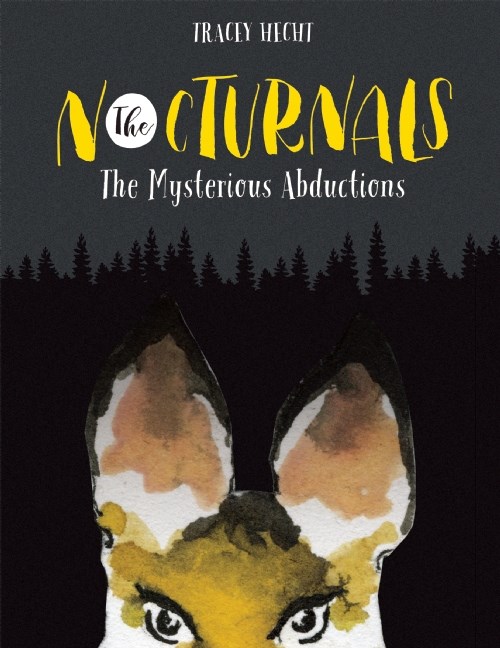
nocturnals_1The Nocturnals: The Mysterious Abductions, by Tracey Hecht/Illustrated by Kate Liebman (April 2016, Fabled Films), $15.99, ISBN: 9781944020002

Recommended for ages 7-12

Animal fiction fans, get ready: there’s a new group in town, and they only go on adventures at night. The Nocturnals, or as they refer to themselves, the Brigade, are Dawn, a smart and serious fox; Tobin, a very sweet pangolin, and Bismark, a loud, well-meaning but self-centered sugar glider. (Don’t call him a squirrel or a bat!) Shortly after the three meet, they find themselves investigating a mystery: animals are disappearing! As the Nocturnals search for answers, they meet other animals along the way that will help them – but can they avoid being kidnapped by the mysterious culprit?

The Nocturnals is a fun, packed with humor and a little shot of adventure for intermediate and middle grade readers. Color artwork by Kate Liebman adds interest and kicks off each chapter, and she captures the various personalities created by author Tracey Hecht. Bismark is almost hilariously over the top, slipping into different languages, professing his love for Dawn, the fox, and making sure everyone within earshot knows he’s the star of the show, if only in his imagination. Dawn is observant, often serious, and quick to figure things out (she is a fox, after all), and Tobin is the kind peacemaker who finds his self-esteem on this first outing.  Book 2, The Ominous Eye, is due out in September.

I like the positive messages in the book – teamwork and keeping promises among them – and I like the use of animals we don’t normally discover on adventures: sugar gliders, wombats, and tobins! The book provides a great opportunity to introduce these animals to children’s vocabulary, and indeed, The Nocturnals website has some excellent educator resources available, including printable animal fact cards, book club questions, coloring sheets, and resources for ELA and Science education. I was excited to see a book club script suggestion, so I can get my readers busy acting the parts out (since book discussions don’t work with my kids, this is an interesting and fun project to approach them with). The Nocturnals website also offers to send a free cape for your stuffed animal if you join their Brigade!

Animal fiction is great for intermediate and middle graders – The Nocturnals should be a good fit with collections. Booktalk and display this with your Erin Hunter books (Warriors/Seekers/Survivors), the Spirit Animals series, and Kathryn Lasky’s Guardians of Ga’Hoole and Horses of the Dawn series.

Take a look at the book trailer for The Mysterious Abductions.

Posted in Early Reader, Fiction, Fiction, Humor, Intermediate, Realistic Fiction

Is Jasper John Dooley Public Library Enemy #1?

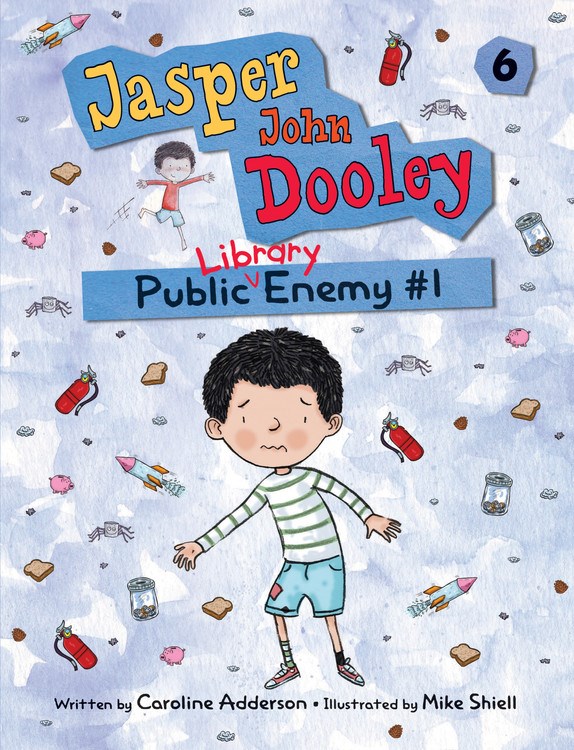
jasper john dooleyJasper John Dooley: Public Library Enemy #1, by Caroline Adderson/Illustrated by Mike Shiell (Apr. 2016, Kids Can Press), $15.95, ISBN: 9781771380157

Recommended for ages 7-10

Poor Jasper! He borrowed a book from the library, so he could practice reading. He wanted his skills to be sharp when it was his turn to sit on the big, comfy chair at the library and read to Molly the dog, that’s all! But Jasper accidentally dropped the book in the tub and drowned it, and THEN, his father set it on fire by trying to dry it in the stove. And THEN, he shot it with a fire extinguisher! Now, Jasper and his dad are Book Killers, and he’s terrified that he owes the library $2500 for the book! How can he raise that much money before Wednesday, when it’s his turn to read to Molly?

This is the sixth book in the Jasper John Dooley early chapter book series, and it’s adorable; great for young readers who are ready to advance from Easy Readers to chapter books. Jasper is very likable, and his reasoning will click with readers: his mom reads in the bathtub, so it should be easy, right? He misjudges a decimal point when trying to determine the price of the book he needs to replace, and comes up with $2500 instead of $25. He feels huge responsibility for the library book in his care, which provides opportunities for discussion about responsibility and taking care of others’ belongings, as well as realizing that everyone makes mistakes – even parents – and that, yes, accidents happen.

This is the first Jasper John Dooley book I’ve ever read, but I would like to get these on my library’s shelves, because they’re great reading. Like most series fiction for emerging and newly independent readers, you don’t need to read from book one to pick up the series; they’re independent stories with characters that you’ll get to know right away. Black and white llustrations add to the enjoyment of the story. You can easily have a read-aloud with this book: classes will get a kick out of it! Good role models, sweet humor based on misunderstanding, solid discussion points make this a good addition to your series collections.

Learn more about the Jasper John Dooley series on the Kids Can Press webpage.

Posted in Intermediate, Middle Grade, Non-fiction, Non-Fiction

That’s Not Fair! introduces kids to rights, freedoms, and making choices

notfairThat’s Not Fair! Getting to Know Your Rights and Freedoms, by Danielle McLaughlin/Illustrated by Dharmali Patel  (Apr. 2016, Kids Can Press), $18.95, ISBN: 9781771382083

Recommended for ages 7-11

The latest book under Kids Can Press’ CitizenKid imprint, That’s Not Fair! is a companion introduction to civics for middle graders. Using a series of six case studies/short stories starring Mayor Moe and his fellow councilors, each study looks at a problem that arises, a decision to address the issue with a new law, and the consequences – intended or, more usually, unintended – of that law. Bug, the only councilor that seems to think things through, is the first to exclaim, “That’s not fair!” and points out why proposed legislation is unfair, leading to a deeper discussion on the topic. It’s a smart way of explaining the often convoluted legal process to kids, who are quick to point out when something is fair versus unfair (bedtimes were big battlefields in my home).

Each story concludes with talking points for readers: Why did the councilor(s) make their decision? Did the new law achieve its purpose? Were there any unexpected results? These aren’t right/wrong answers; they’re jumping off points for discussions to provide understanding. A Note for Parents and Teachers and definitions of the rights and freedoms covered in each story are included at the end of the book. Dharmali Patel’s illustrations are brightly colored and fun, keeping kids’ interest as they visualize each scenario. Bug is depicted as a somewhat literal lightning bulb literary reference, buzzing and lighting up to call attention to problematic legislation and ideas.

A good companion book for collections that feature books on how communities work and function, and the legislative process.


Posted in Fiction, Fiction, Graphic Novels, Humor, Intermediate, Middle Grade, Tween Reads

Papercutz brings The Sisters to the USA

sister_cover_01_RGBThe Sisters, Vol. 1: Like a Family, by Christophe Cazenove/Illustrated by William Maury (June 2016, Papercutz), $9.99, ISBN: 9781629914930

Recommended for ages 8-12

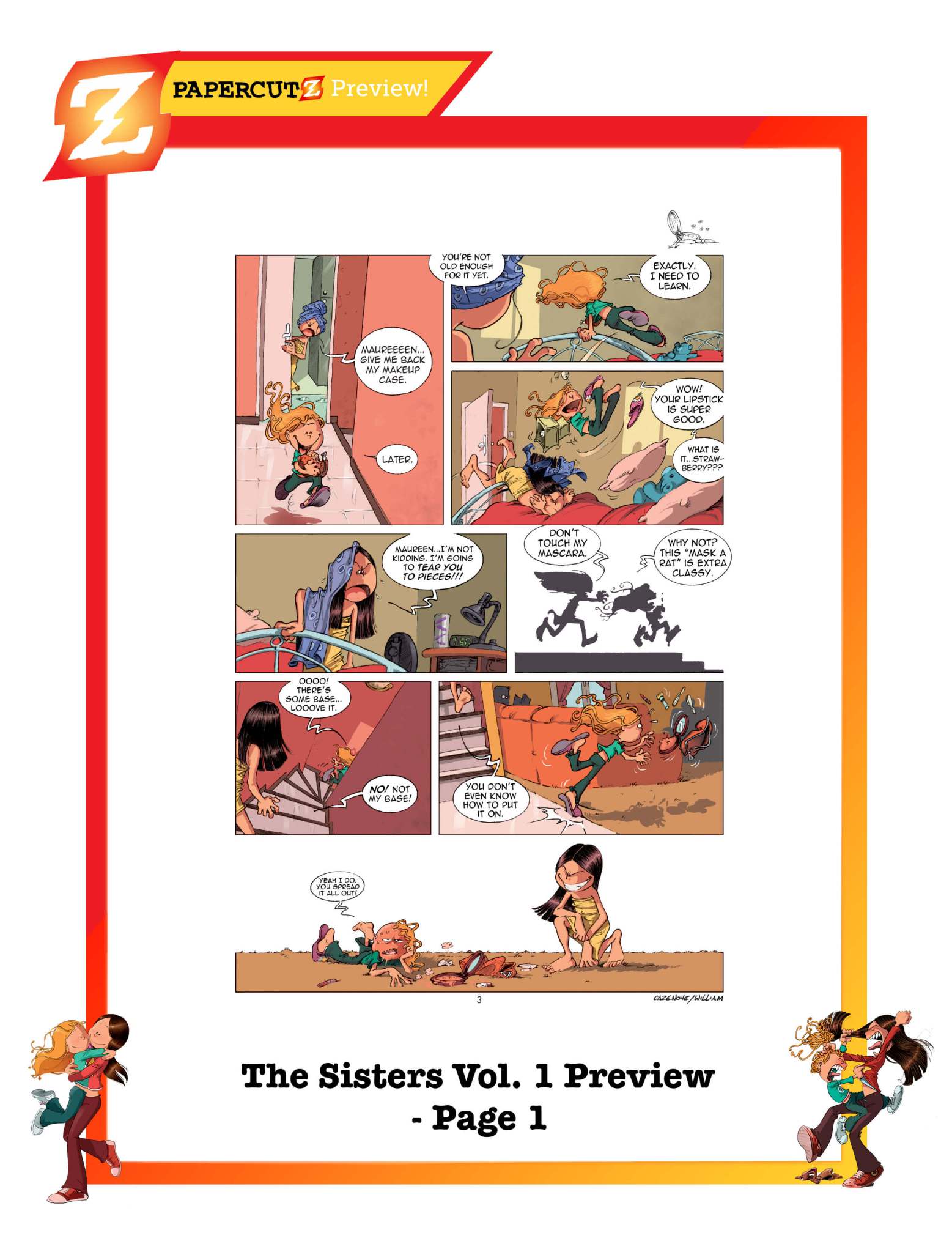
Wendy and Maureen are sisters who adore one another as much as they drive each other crazy – like most siblings. They both have strong personalities, are independent, and have firmly established likes and dislikes. Wendy is a teen who’s discovering makeup, boys, and cute actors, and Maureen is school-age, tries to emulate her sister (even when she thinks she’s a little weird), and can’t stop trying to break into Maureen’s secret diary.

This first volume of stories about Wendy and Maureen features a series of short vignettes about the two siblings, giving us a little look into their life: we meet some of their friends, their parents (whose faces we don’t see), and most importantly, we see the girls together. Even when they’re at their worst and separated by their parents, they want to be together. And that’s the sweetest part about The Sisters: it’s a fun, upbeat look at siblings and family life. The series was originally published in France; Papercutz is giving the girls their U.S. debut.

Give this book to your Raina Telgemeier fans and your Amelia Rules fans. They’ll love you for it. Take a look at some more of the book courtesy of the Papercutz website.

Sisters_PREVIEW_page_01 Sisters_PREVIEW_page_02

Posted in Animal Fiction, Fiction, Graphic Novels, Intermediate

Everyone has their purpose. What’s Hippopotamister’s?

hippo_1Hippopotamister, by John Patrick Green (May 2016, First Second), $17.99, ISBN: 9781626722002

Recommended for ages 6-10

Things haven’t been exactly bustling at the zoo. The habitats and the animals need maintenance, the zoo is a little dingy, and no one is really breaking down the rusty gates to get in and see the zoo. Red Panda takes off to see the world, and tells great stories of life on the outside. One day, Hippopotamister decides he’s going to join Red Panda; the two friends set out to find their fortunes. The only problem? They can’t seem to hold a job for long! When the two friends return to the zoo to visit the other animals, Hippopotamister discovers the perfect job for him.

This is a great story about finding your own groove. Hippopotamister is a nice guy who is actually really good at almost everything he sets out to do; Red Panda is a free spirit who wants to does his own thing, his way, but most of the time, his own thing is kind of a mess. Still, Hippo sticks by his buddy, wandering off with him to the next adventure. Once they return to the zoo to visit, though, Hippo sees that all of his adventures have really been training him to take on the job that’s perfect for him: running the zoo.

Hippopotamister is a good friend, always ready with an encouraging word, and a positive outlook: when one job falls through, he’s ready to go find another. He’s flexible, willing to try different jobs and industries, and he’s a smart cookie: he recognizes things he can fix, once he returns to the zoo, and embraces his calling. There are good morals for kids here, the main one being, everyone has their purpose. Sometimes, you need to wait until you discover yours.

This is a great independent read for readers who are ready to take on a little more of a challenge, but it’s a great storytime snuggler, too. My 3 year-old loved it, and was easily able to work out the humor in the story by using the cues in the pictures (patient wrapped in dental floss at the dentist, the bone house vs. the dinosaur skeleton in the museum). I love comics for young learners because it’s a great way to work out sequences and cause and effect, and Hippopotamister is a great book to use for this kind of discussion.

Take a look at some of Hippopotamister below, and make sure to get yourself a copy! Great for young reader graphic novel collections.

hippo_5 hippo_6


Posted in Adventure, Animal Fiction, Fiction, Humor, Intermediate, Science Fiction, Uncategorized

Finally! Ricky Ricotta and the Naughty Nightcrawlers from Neptune!

ricky ricottaRicky Ricotta’s Mighty Robot vs. the Naughty Nightcrawlers from Neptune, by Dav Pilkey/Illustrated by Dan Santat (Jan. 2016, Scholastic), $5.99, ISBN: 9780545631440

Recommended for ages 5-10

FINALLY, the last two books in the Ricky Ricotta series are here! You don’t understand; about a decade ago, my son – now a junior in high school – devoured the first seven Ricky Ricotta books. He loved them. I loved them. And then, there was nothing. We were down two planets! We waited. We watched. We hoped. We saw new Captain Underpants books hit the shelves, but Ricky remained silent. And then, a glimmer of hope: the entire line of existing Ricky Ricotta adventures were re-released, with Dan Santat’s amazing and colorful art taking the whole series up a notch. I ordered two sets for my library and booktalked this series like my rent depended on it (which, kinda, it does).

VINDICATION! In January, we got Ricky Ricotta’s Mighty Robot and the Naughty Nightcrawlers from Neptune! Patience pays off!

Ricky and Robot are finally back, and trying to think of something fun to do that won’t cause a giant mess. They find an old building that they can use material from to make a giant fort, and it looks like they’re going to have a great, stress-free day after all. Nah, just kidding: grumpy Farmer Feta next door is annoyed about the noise the two friends are making, and lets the evil Neptunian scientist, Nimrod Nightcrawler, use his property to dig a tunnel over to Ricky’s property to wipe them out! With some help from Ricky’s cousin, Lucy, and the now-tame Jurassic Jackrabbits from Jupiter, Ricky and Robot have to save the day again.

The adventure is laid out like the other Ricky adventures, with Dan Santat’s art really rebooting this whole series. He’s managed to leave in the most fun part of the books, though: the Flip-O-Rama fight sequence, where readers can flip the right hand page back and forth to make the picture look animated (and add their own sound effects). Nimrod ends up in jail with the seven previous bad guys, and we see one more cell waiting…

My son now considers himself too old for Ricky Ricotta. I, however, am just the right age; I’m also a completist – how could I not finish the series? I had a great time reading this book and revisiting a series that I enjoyed then and I still chuckle at now. Kids are drawn to Dan Santat’s art, and when I tell them that the same artist write and drew Sidekicks AND Beekle: The Unimaginary Friend, they’re even more excited, because they love seeing how they can recognize his art and yet spot the subtle differences in a picture book, graphic novel, and a chapter book.

Bottom line: this is a great series for libraries and collections. If you’re familiar with the series, you’ll love it; if you’re not, and you like fun humor with over the top robot fights and villains, you’ll love it.

Be on the lookout for Ricky Ricotta’s Mighty Robot vs. The Unpleasant Penguins from Pluto in May!

Posted in Intermediate, Middle Grade, Non-fiction, Non-Fiction, Tween Reads

Let’s Sew: DK helps you get started

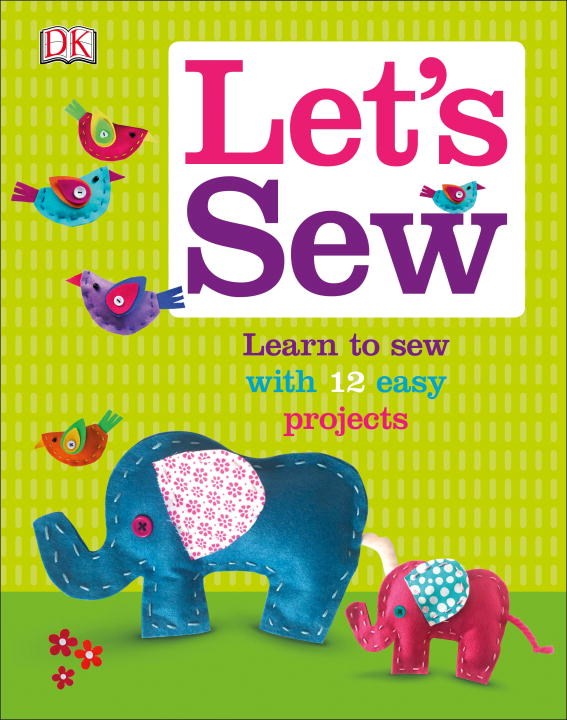
letssew_1Let’s Sew, by DK (March 2016, DK Children), $15.99, ISBN: 9781465445087

Recommended for ages 6-10

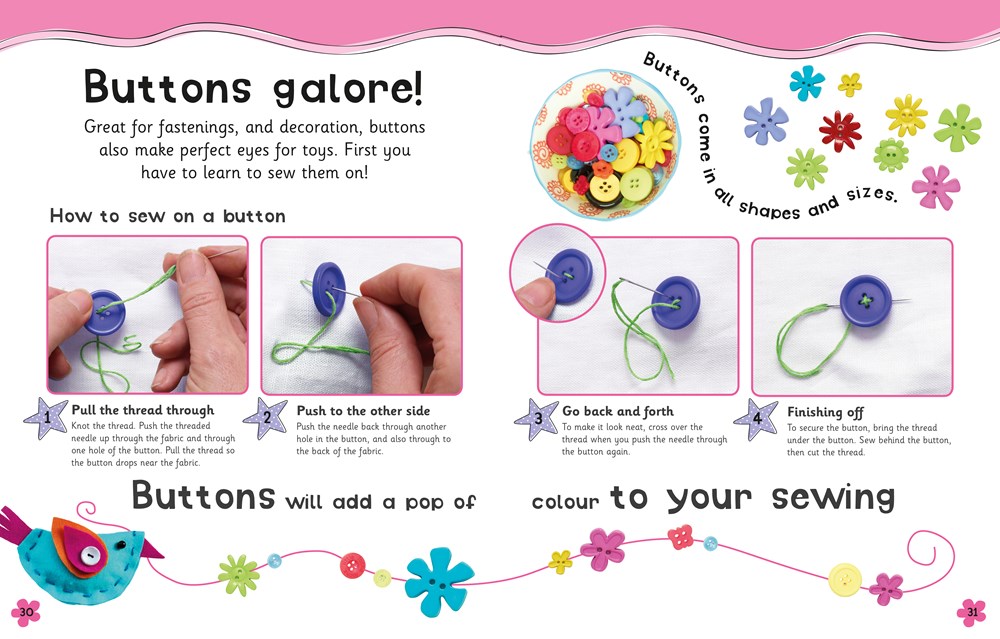
Ready to get crafty but need a little bit of help? DK to the rescue with a step-by-step guide to beginning stitches, the tools you’ll need to begin sewing, easy, fun projects, and templates, too!

DK books are great because they’re beautifully photographed, incredibly detailed, and full of simple, explanatory text. Let’s Sew has bright, fun crafts projects, many made by using household items like that one missing sock that always seems to emerge from the dryer, or with affordable materials you can find at your local craft store.

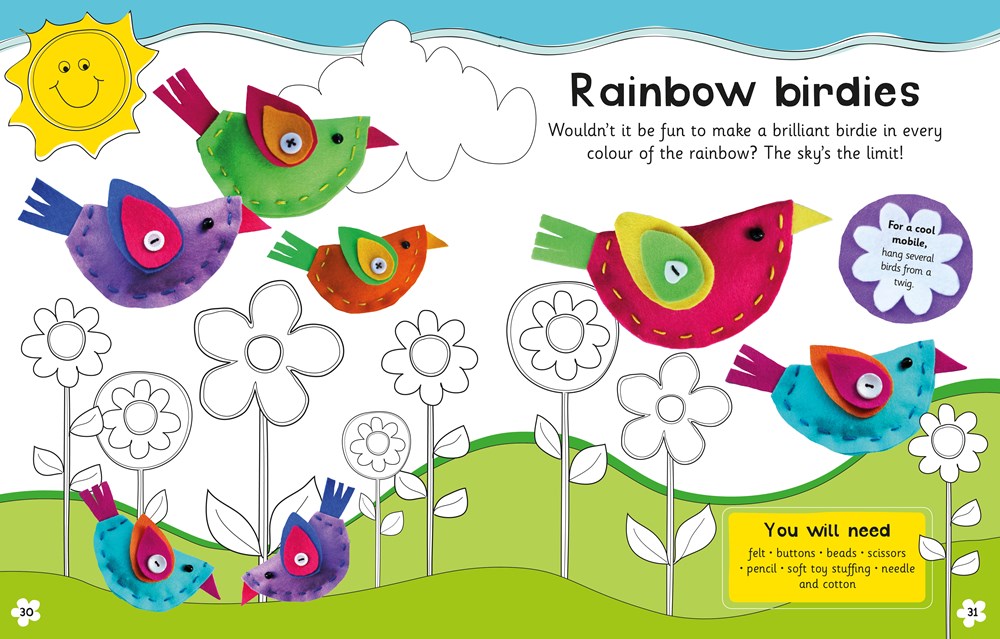
Let’s Sew is a kid’s book, but it’s a great resource for any age. When I started knitting, I’d borrow children’s project books because of the simpler language and projects: books are for everyone, after all! Just starting up a sewing club or looking for a quick maker space project? This is your book. There are helpful templates for projects like a whale and a bird in the back of the book: just photocopy, trace onto your material, and begin!

The book includes a warning that kids will be working with sharp needles and scissors, and strongly suggests that an adult oversee or handle the tools as necessary. This is a fun, affordable addition to crafting collections; a good purchase.


letssew_2


letssew_3


Posted in Middle Grade, Non-Fiction

DK shows kids how to eat the rainbow with Eat Your Greens, Reds, Yellows, and Purples!

eat your redsEat Your Greens, Reds, Yellows, and Purples: Children’s Cookbook, by DK Children (May 2016, DK Children), $12.99, ISBN: 9781465451521

Recommended for ages 8-12

Article after article tells adults and kids alike to “eat the rainbow”, but what does that really mean? Skittles, after all, tells us to “taste the rainbow”, but I’m pretty sure that’s not exactly the same thing. Simply put, to eat the rainbow means to eat a variety of fruits and vegetables; each color comes with different benefits. DK’s newest cookbook, Eat Your Greens, Reds, Yellows, and Purples teaches kids and adults alike what it means to eat the rainbow, with fun facts and 25 vegetarian recipes for kids to try. There’s a section on food prep: how to slice an avocado, seed a tomato, or dice an onion. Knife skills and cooking instructions are noted with an exclamation point, so readers know to get an adult to help.

There’s something for everyone here – honest! Detailed, step by step instructions and photos let readers know what materials we need – equipment as well as food! – and tasty recipes, including spinach and phyllo tarts, black bean and guacamole quesadillas, red pepper hummus, cornbread, and mango-pineapple ice pops.

Helpful callout signs and arrows provide fast facts on the benefits of each food color; for instance, did you know that greens like spinach and broccoli provide vitamins and fiber, while red foods like tomatoes and cherries protect your body’s cells? Purples help fight disease, yellows boost the immune system, and oranges contain beta-carotene, which helps keep your eyes, skin, hair, bones, and teeth in working order.

A good addition to a children’s collection where you have older kids that are ready and able to start making simple recipes with adult assistance. You can also check out this printout from the Whole Kids Foundation on “eating the rainbow”. It would make a good class handout!