Posted in Fantasy, Fiction, Humor, Intermediate

The Goblin Princess: Dust that house, and untrain your dragon!

Originally published in the UK, The Goblin Princess is a sweet chapter book series perfect for kids who are ready to branch out from easy readers. Let’s meet The Goblin Princess and her family.

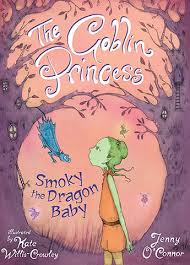
The Goblin Princess: Smoky the Dragon Baby, by Jenny O’Connor/Illustrated by Kate Willis-Crowley, (Oct. 2018, Faber & Faber), $8.95, ISBN: 9780571316588

Ages 7-10

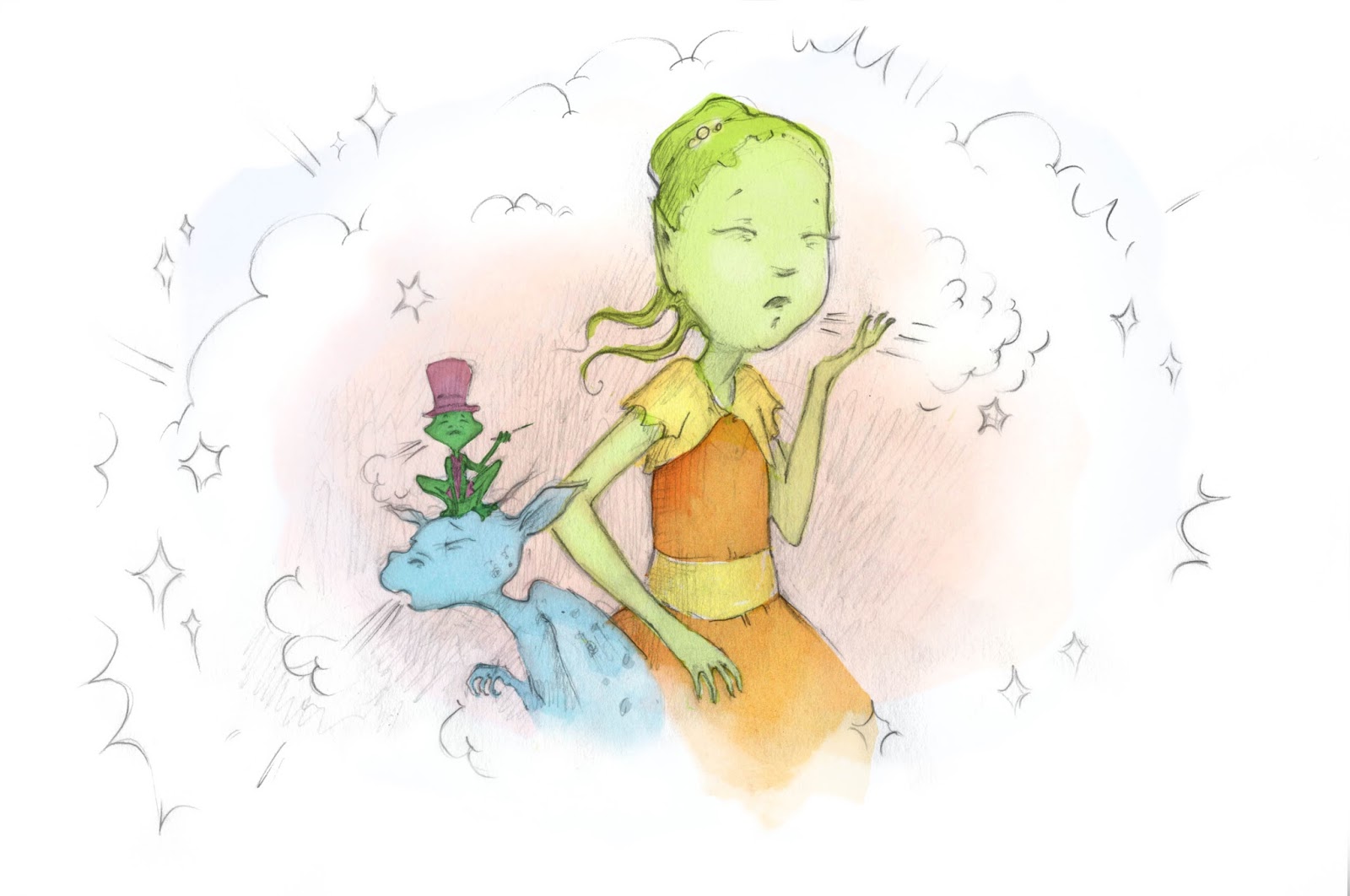
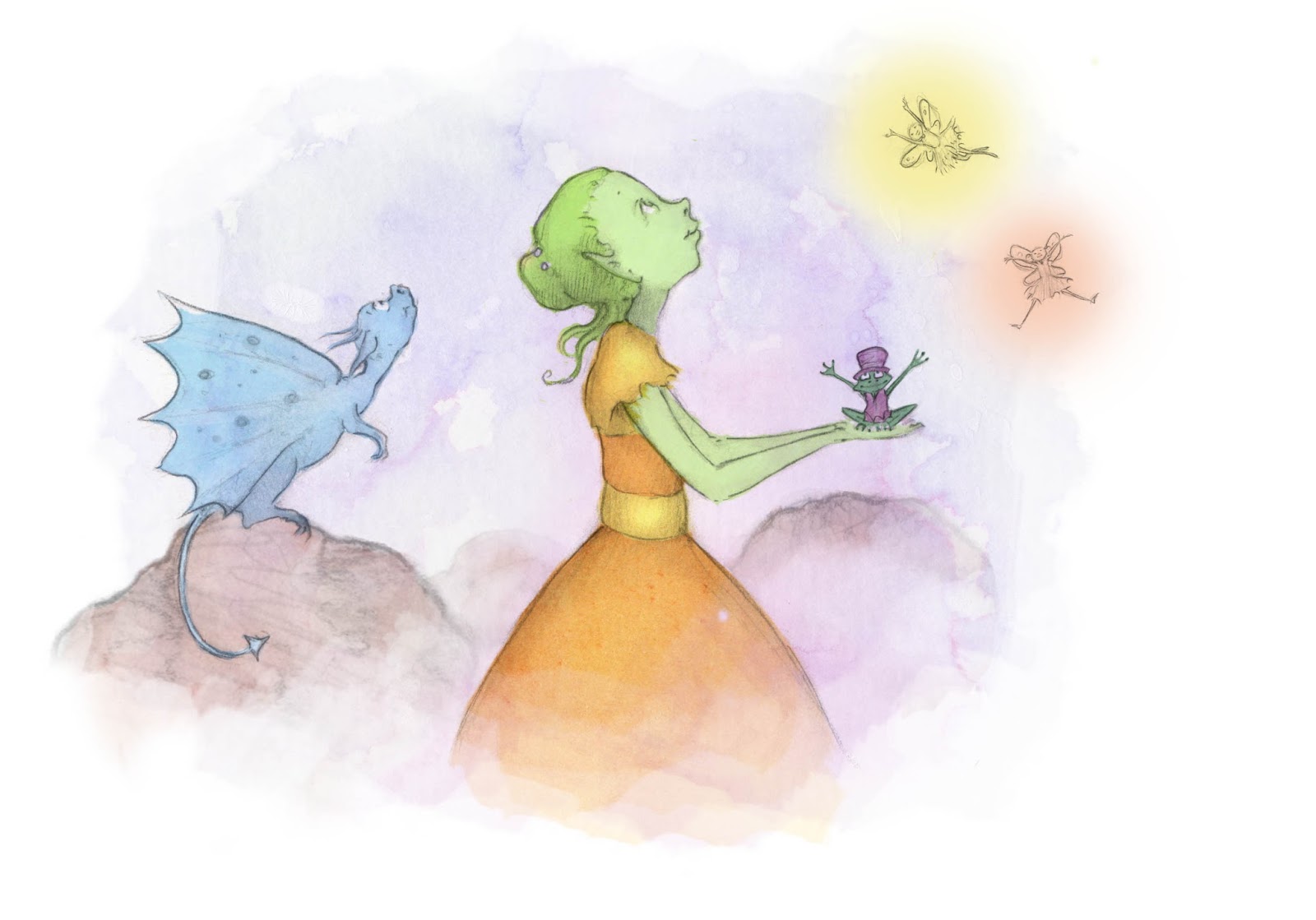
Matty is a goblin princess, but she’s also the odd goblin out in her family. She’s always being told to untidy her room, and eat up her slug porridge; her family – like most goblins – is also terrified of pretty things, like kittens and butterflies, and reading fairy tales are sure to give them nightmares, but Matty just doesn’t fit in. When the family dragon, Sparks, lays an egg and a sweet little blue dragon emerges, Matty falls in love. But little Smoky is polite and sweet, and the untraining her father, the Goblin King, calls for doesn’t quite take. Luckily for Matty, little Smoky finds some talent in burning the toast (a goblin delicacy)! When Matty and her family go on a goblin family picnic at the Dragon Lagoon, Matty and Smoky have a little side adventure of their own, meeting nasty hobgoblins and kind Forest Fairies (who aren’t at all terrifying) – and maybe Matty can convince her family that she and Smoky are just naughty enough after all!

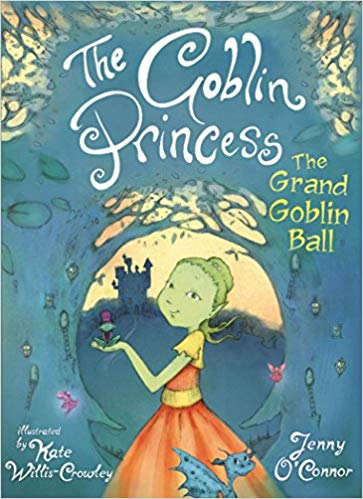
The Goblin Princess: The Grand Goblin Ball, by Jenny O’Connor/Illustrated by Kate Willis-Crowley, (Oct. 2018, Faber & Faber), $8.95, ISBN: 9780571316601

Ages 7-10

The next book in the Goblin Princess series picks up fresh off the heels of Smoky the Dragon Baby. The royal Goblin Family is preparing for the Grand Goblin Ball, but there’s trouble afoot: the hobgoblins are planning to crash the party and CLEAN! And PAINT! And worst of all, they’re planning to capture Smoky! Luckily, some of the Forest Fairies overheard the plot and warned Matty in time. Matty and Smoky join forces with their new friend, Dave – a Frog of Mystery and Magic – to beat the hobgoblins and save the party! Recipes for Scary Potato Faces, Ghoulish Goblin Drinks, and Peppermint Cream Bugs let readers plan a Goblin Ball of their very own!

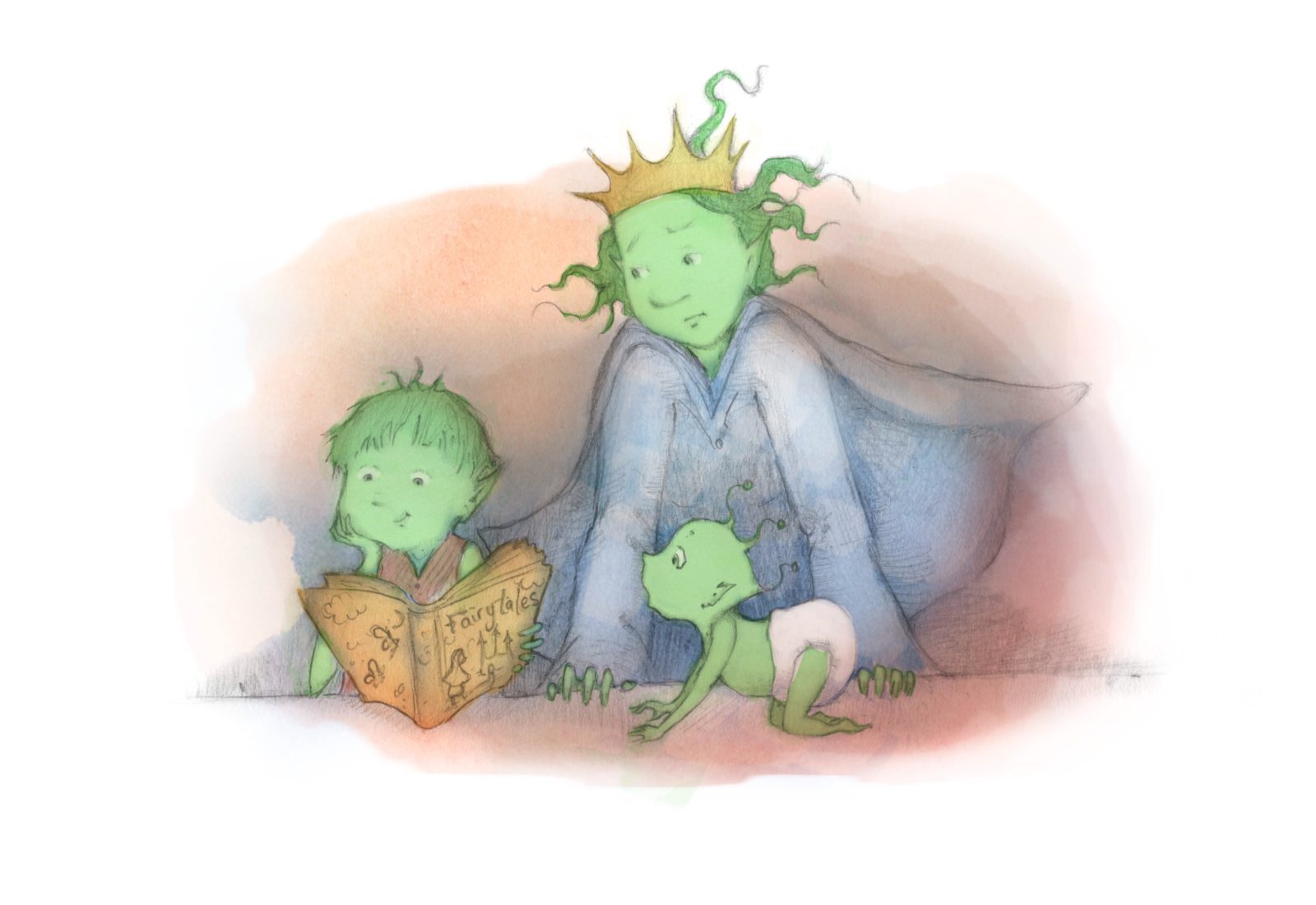
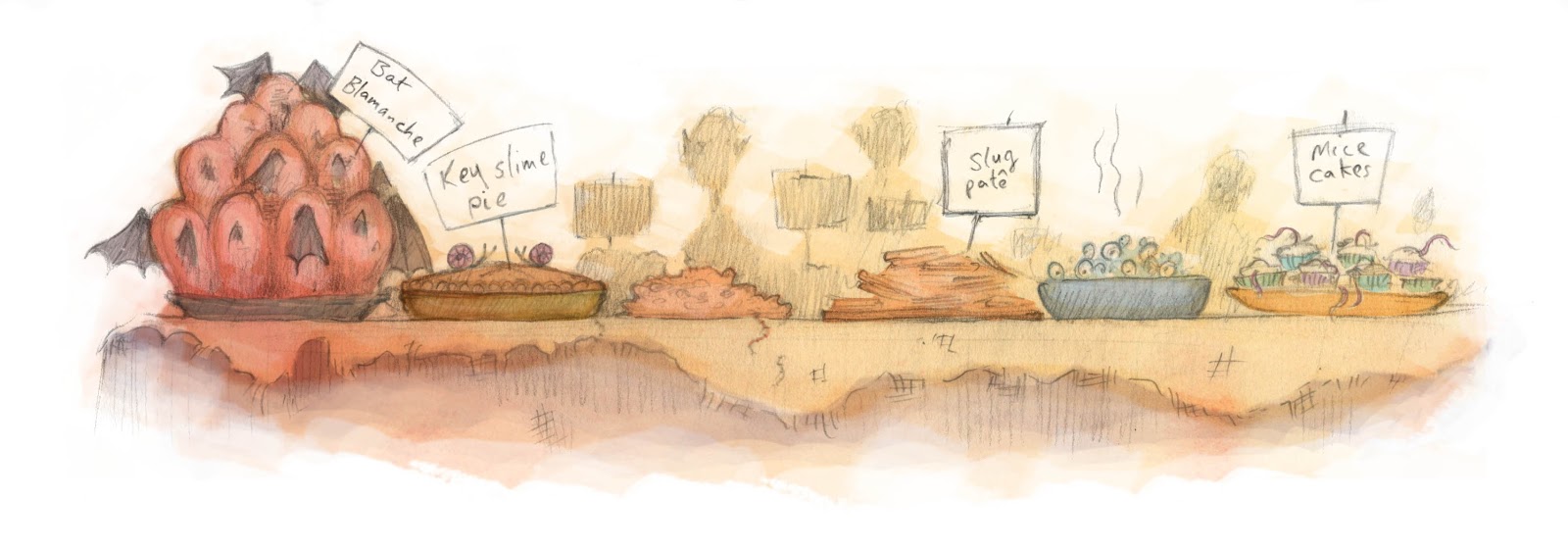
The Goblin Princess books are sweet, entertaining, and upbeat. Kids are going to get a kick out of the backwards world that the goblins live in: messing up your room? Eating sloppily and having food fights? Untraining your dragon and being an irresponsible pet owner? It sounds awesome, right? Which makes poor Matty and Smoky outsiders in their worlds, and sets the stage for some hilarious happenings. Kate Willis-Crowley’s watercolor artwork adds an incredible cute factor to the storytelling, with adorable characters like Smoky the Dragon and Matty the Goblin, and great visuals for events like the Goblin buffet, complete with Key Slime Pie and Mice Cakes.

Pictures all come from Kate Willis-Crowley’s blog.

I enjoyed the first two Goblin Princess stories, and look forward to the third one, The Snow Fairy (it looks like it was just published in the UK… can we get a copy stateside soon?) Readers who love enjoy fantasy will enjoy the close friendship between Smoky and Matty, and get a kick out of Smoky’s baby talk. The bad guys aren’t terribly bad. The hobgoblins, for instance, really just want Smoky around to warm up their food; nothing truly nefarious (unless you count cleaning and painting the Goblin castle: that’s just horrible). Give this to your Unicorn Princesses/Hamster Princess/Princess in Black fans.

Posted in Fiction, Intermediate

Webcomics on Wednesday: The Bug Zapper!

“In a town full of bug villains, it’s up to one superhero to keep them all in line!” With that, we begin the saga of The Bug Zapper, a superhero who defends his neighborhood against buggy bad guys like Butterfly Bob, who defaces public parks, and a car thief who goes by the Mean Mosquito. But has Bug Zapper met his match when he meets Bumblebeezy, a bank robber who teams up with the Bear-acuda?

The Bug Zapper started life as a webcomic, and has since moved onto books, but there’s a nice, extended preview available at writer/artist Tom Eaton’s website, and The Bug Zapper Tumblr has sneak peeks at art and appearances for kids who are interested in following. It’s a good series for younger graphic novel readers – Kindergarten through third grade – that features a fun superhero and supervillains that are more goofy than terrible. Bug Zapper faces off against bugs, superheroes, robots, and bears, in his future issues, but the extended preview offers his origin story: we all need to start somewhere, right?

Give The Bug Zapper a space on your webcomics list, and see how the kids respond! The first two collected issues of The Bug Zapper are available for purchase on Tom Eaton’s website.

Posted in Intermediate, Middle Grade, Non-fiction, Non-Fiction

The Holiday Shopping has started… buy some books!

It’s that time of year again, where I dig deep to find all sorts of great books to add to your holiday shopping lists. This is the first round, so I’m thinking this post will suggest books and goodies to bring when you celebrate Thanksgiving, or the Fall Harvest, with your families and friends. These books will be fun for the kiddie table – before the food, naturally!

City, by Ingela P. Arrhenius, (Sept. 2018, Candlewick Press), $22, ISBN: 9781536202571

Ages 3-7

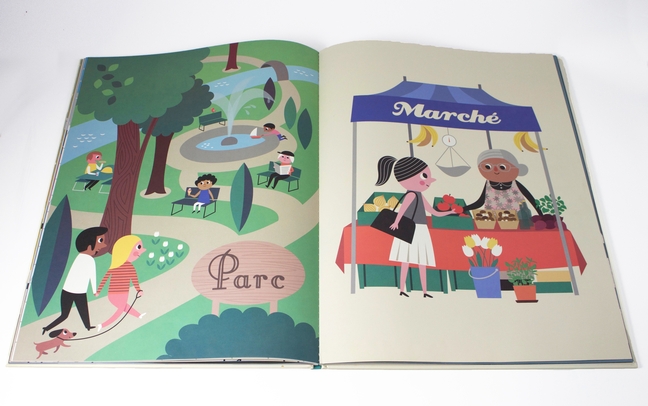
This book is just too much fun. First of all, it’s huge: over 40 inches high by over 17 inches wide, making it almost as big as some of the kids you’ll be seeing this holiday season! My niece giggle-shrieked when I stood the book up next to her, and that was that. She was hooked. It’s a gorgeous, funky concept book, introducing readers to different sights of city life: streetlamps, subways, coffee shops, fountains, zoos, even skateboarders are all here, with retro chic, bright art. The only words are the descriptive words for each picture; the endpapers are loaded with pictures of the smaller details of city life: a cat, a server, a scale, a shrub.

Put this in front of the kids, and let them have at it. My niece and my son loved talking about things they recognized: my niece remembers taking a train to work with her mom, and my son talked up the subway when I took him into the city on our winter break. And they both pretended that I was in the coffee shop and the bookstore, so it’s nice to know they think of me.

City is a gorgeous gift book that can be a coffee table art book for kids, or a prompt for creativity. Its only limit is the imagination.
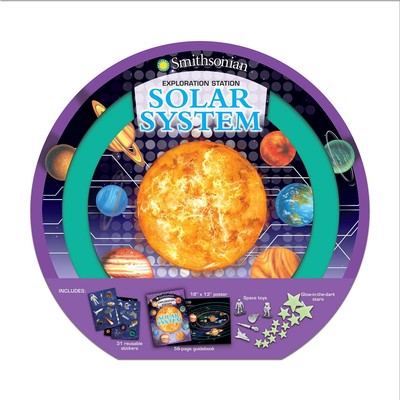
The Smithsonian Exploration Station sets are fantastic gifts. Bring one or two of these with you, and set the kids up in their own personal science labs while the food cooks.

Smithsonian Exploration Station: The Human Body, (Nov. 2018, Silver Dolphin Books), $21.99, ISBN: 9781626867215

Ages 4-10

The Smithsonian sets are contained in a nice, sturdy box that holds a lot of stuff. The Human Body box includes a 56-page fact book, 30 stickers, a plastic model skeleton kids can put together, and 25 fact cards. It’s similar to the Adventures in Science kit Silver Dolphin put out earlier this year, and my son loved them both. Learn what makes your blood pump, your muscles stretch and how your different systems come together to make you walk, run, eat, sleep, and play. Older kids can help younger kids with some basic terms and reading, and the littlest ones can still enjoy putting the stickers on the skeleton body while bigger kids help put the skeleton together.


Smithsonian Exploration Station: World Atlas, (Nov. 2018, Silver Dolphin Books), $21.99, ISBN: 9781626867208

Ages 4-10

This set was hands-down my son’s favorite set. A blow-up globe, a world map and stickers of landmarks from all over the world, and cardstock puzzles of the Eiffel Tower, Taj Mahal, and a Mayan Pyramid? Plus, a 56-page fact book that tells readers all about the cool landmarks as they decorate their maps? SOLD. We spent three days working on the map, at which time he told me that he wants to see every single one of these sights. We built the cardstock models, which called for much dexterity – so I called my eldest son in to help, because I tend to become a little exuberant, shall we say, with my papercrafting. My son also loves his inflatable globe, and asks me to point out cool places to him; some from the map, some, the countries that his friends at school hail from, some, names of places he hears about on TV. It’s a great set.
 

Smithsonian Exploration Station: Space!, (Nov. 2018, Silver Dolphin Books), $21.99, ISBN: 9781626867222

Ages 4-10

Kids love planets! The Space! Exploration Station includes a 56-page fact book, astronaut and rocket plastic figurines, stickers, and glow in the dark stars to make their own constellations. There are incredible, full-color photographs and text that explains the makeup of our solar system, galaxies, planets, and constellations. Let the kids decorate your dining room to and eat under the stars!

Every single one of these kits is such fun, and urges kids to be curious and explore the world inside them and around them. If you have the budget for it, throw these in your distributor cart and get a few sets for your STEM/STEAM programming, too. The Smithsonian has a good science education channel on YouTube, with kid-friendly videos that make for good viewing.


Where’s Waldo? The Spectacular Spotlight Search, by Martin Handford, (Oct. 2018, Candlewick Press), $18.99, ISBN: 9781536201765

Ages 5-9

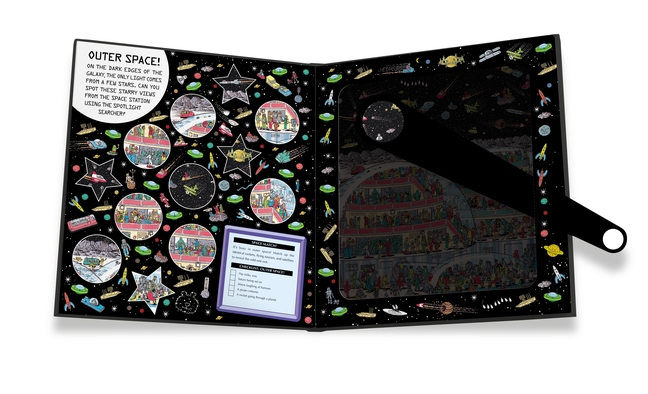
Waldo’s back with a new trick: this time, the spreads have all gone dark! Luckily, the Spectacular Spotlight Search comes with a cool spotlight viewer to help you find him, and the challenges he sets out for you. There are six puzzles and a magic slider that slides into the scene to “light up” small sections – like a spotlight. Find Waldo and other familiar characters, plus other hidden challenges and games on each spread.  My 6-year-old and my 3-year-old niece had a blast with this book, eventually recruiting me for my Waldo-finding skills (narrator: The children were better.)

If you have puzzle and game fans in your family, this is a great gift to bring along. If you’re looking at it for your library, I suggest keeping it in reference; that spotlight will go missing or get beaten up in no time. But it’s good Waldo fun.
I have so much more to come, but I think this is a good start. A little something for everyone and plenty of hands-on fun!

Posted in Fantasy, Fiction, Fiction, Intermediate, Middle Grade

Webcomics on Wednesday: Dylan Campbell’s Scared by the Bell

I’ve been meaning to do something like this for a while, now: create a list of webcomics that I could post by the computers at my library, so the kids could check them out and maybe discover a comic to follow. They’re huge graphic novel fans, and this would give them something new to read while they’re waiting for the next volume of Amulet/Pokemon/anything by Raina Telgemeier to publish.

I started going through my inbox, and lo and behold (and with much embarrassment), I found an email from Dylan Campbell, a creator who let me know about his new webcomic, Scared by the Bell, back in January 2017. It is insane, how one thinks, “Oh, I’ll get to that in a second”, and a year later, it’s still in the inbox. But the good news is, there are three issues online now! But I’ll get to that. First, Scared by the Bell.

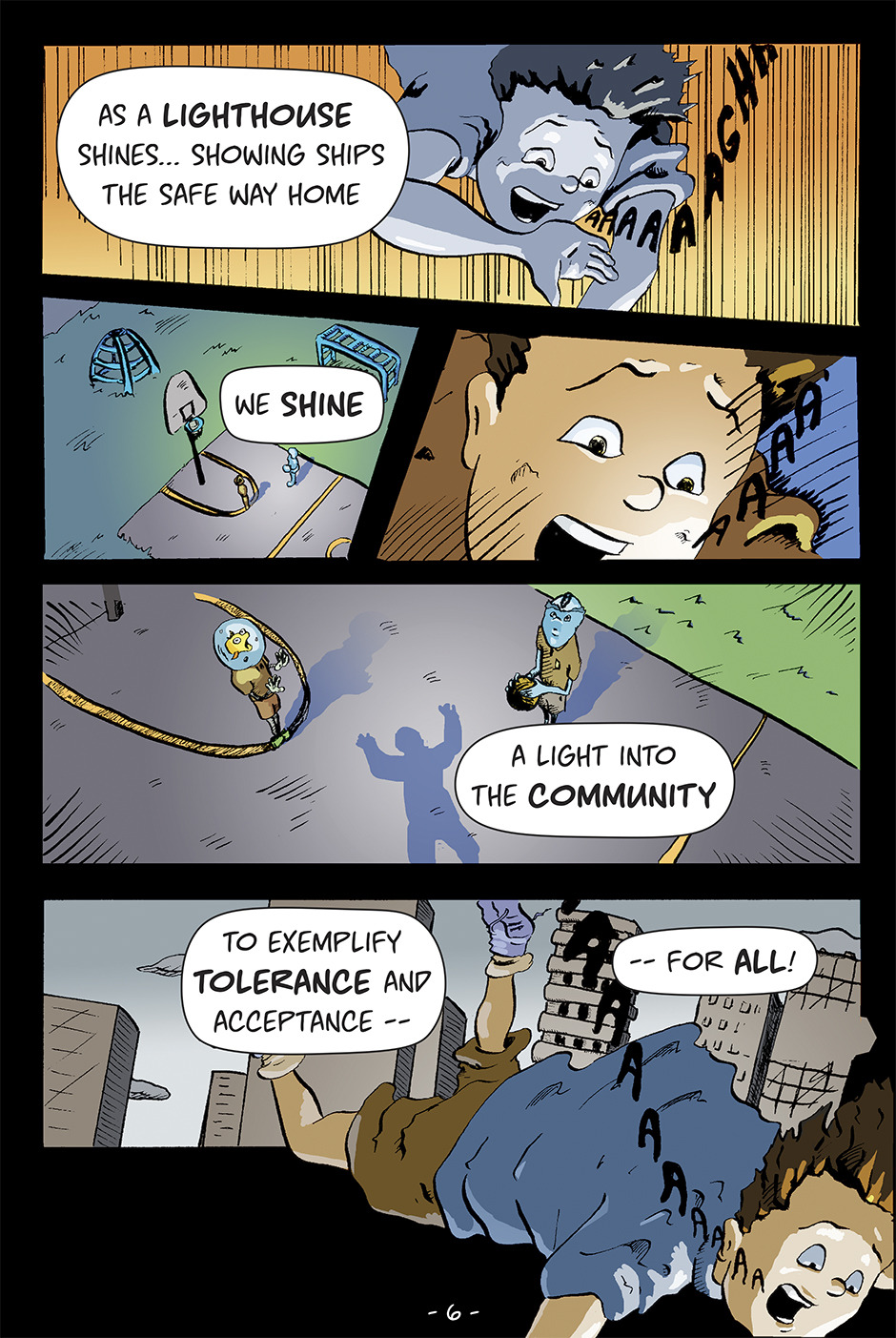
Peter is a kid on his first day at Lighthouse Middle School, but this is no ordinary, run of the mill school. Peter’s classmates include Maggie (a Medusa), Vlad (a vampire), Frank (Frankenstein), and Marv (a werewolf), for starters. Principal Merlin takes Peter under his wing to explain a little bit about Lighthouse, but Peter’s still baffled: how did he get here, and how is he going to make it through middle school when his classmates want to snack on him?

Scared by the Bell has three complete issues under its belt, and Dylan Campbell had a successful Kickstarter earlier this year, all great signs. The art is cartoony and fun, and the classmates are familiar and inspired; there’s a Cthulhu-faced kid (and you know how I love my Lovecraftian monsters); a mummy, a skeleton, even a scary looking teddy bear. Now that the infamous Goldilocks has also joined the crew, I’m looking forward to even more adventures. Scared by the Bell updates on Fridays – a great way to end the week! For Spanish speakers, Dylan offers “Asustado por la Compana” (http://asustadoporlacampana.smackjeeves.com/), and translates it himself, which is pretty fantastic. He welcomes comments and suggestions!

Also – I have a Spanish version of “Scared by the Bell” called “Asustado por la Compana” that updates every Friday as well.  You can find the link to the Spanish version over here at: http://asustadoporlacampana.smackjeeves.com/  


Dylan, I am so sorry that it’s taken almost a year to get on board with your comic, but Scared by the Bell is going on my list of webcomics. I like the writing, I like the character interaction, and I enjoy the artwork.

If you’ve got graphic novel readers, let me know if webcomics are working for your readers!

Posted in Fiction, Intermediate, picture books

Dad’s Camera explains Alzheimer’s to children

Dad’s Camera, by Ross Watkins/Illustrated by Liz Anelli, (Oct. 2018, Candlewick Press), $16.99, ISBN: 9781536201383

Ages 5-10

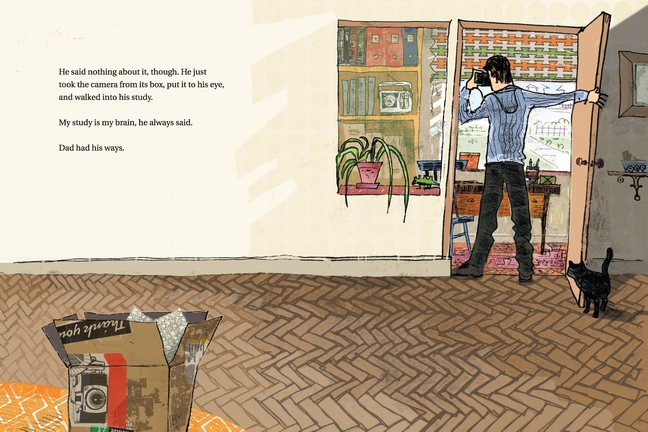
A boy’s father comes home one day with “one of those old cameras, the kind that uses film”, and starts taking pictures of the world around him. The boy and his mother don’t think much of it at first – Dad is doing funny things, like putting tools in the fridge, and milk in the cupboard; it’s what the doctor says will continue happening. As Dad continues photographing everyday objects, the boy and his mother wonder why he’s not taking pictures of them: aren’t they worth remembering, too? Dad just looks puzzled, and makes collages of his developed photos, sticking them on a window. When Dad passes, a package arrives for the boy and his mother: it’s the camera, with one photo left to be developed. The boy and his mother discover a final photo from Dad: a family portrait.

Dad’s Camera is a heartbreaking conversation about a young family struggling with Alzheimer’s, inspired by the author’s father-in-law, who developed the disease when his daughter was a tween. An author’s note explains that Ross Watkins wrote Dad’s Camera to “create a way for children and adults to talk about the confusion often surrounding Alzheimer’s, but also to celebrate the tenderness and small surprises of such difficult times”. Mission accomplished: Dad’s Camera is a series of poignant, small moments that are tender and loving; a bright spot in a family’s dark time. It’s a moving, bittersweet story of loss, grief, and the joy of memory and is a smart addition to your collections. It begins a conversation that is normally reserved for grandparents and elder family members, and provides a comforting strength for families.


Liz Anelli’s incorporates collage, watercolor, mono print, acrylic, and digital color to create a sedate atmosphere for the story, always mindful of details that readers will discover through multiple reads. A bus runs a camera film ad on its side in one spread; in the next spread, the camera arrives in a box with the same photo on the side. The colors are warm, homey, and yet, infused with a sadness and a yearning.

Dad’s Camera was originally published in the UK as One Photo (2016).

Posted in Intermediate, Non-Fiction, Preschool Reads

Show kids the excitement of cooking with Kids Cooking!

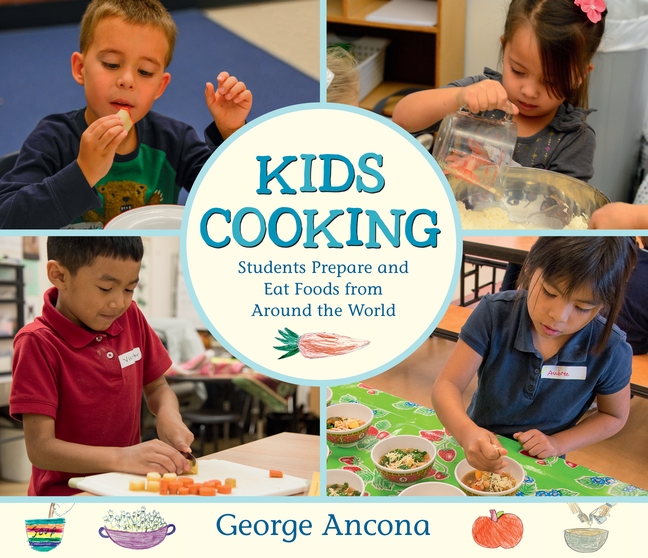
Kids Cooking: Students Prepare and Eat Foods From Around the World, by George Ancona, (Oct. 2018, Candlewick Press), $16.99, ISBN: 9780763698768

Ages 4-7

When my son (now a high schooler) was in first grade, his school participated in a great program called CookShop. The teachers ran the program, and we parents volunteered as helpers, and a couple of times a month, kids learned cooking skills: chopping (with plastic knives), mixing, and the math involved in putting together a recipe. I loved it, and he loved the process of creating meals. No, he didn’t eat anything he made (that honor went to me), but working together brought us even closer, and the whole class came together as a group to prepare and share food. I may have enjoyed CookShop more than he did – I still have my apron! – and am glad it’s still a program in NYC schools. When I read Kids Cooking: Students Prepare and Eat Foods From Around the World, I was immediately brought back to that first grade classroom and the warm memories.

Kids Cooking is photographer George Ancona’s venture into classrooms where a similar organization, Cooking with Kids, brings children from diverse backgrounds come together to prepare healthy meals from different cultures. They roast vegetables and prepare a Moroccan sauce called chermoula; make Chinese-American fried rice with sweet and sour cucumbers; work together to cook up an Italian minestrone soup with breadsticks, and learn about different tomatoes that go into making a Mexican salsa with tortillas and tamales. They draw pictures as they go; teachers use a globe to demonstrate where different meals originate, and parents and teachers make sure that everyone’s cooking experience is safe and exciting.

The book presents photos of the kids and grownups at work, along with some of the children’s artwork, and phrases from the cultures whose meals they’ve prepared. It’s a celebration of food, friendship, and different cultures: meals prepared and shared together are the best meals. An author’s note mentions the Cooking With Kids program and the schools that participated in the book.

With the holidays on the horizon, Kids Cooking is a great book to read to kids and get them talking about meals they enjoy at home. A recipe link included in the book didn’t work for me, but the Cooking with Kids website has recipes available: see if your family wants to try a few out!

You can find more of George Ancona’s photos and learn more about his children’s books here.

Posted in Fantasy, Fiction, Fiction, Graphic Novels, Intermediate, Middle Grade, Tween Reads

Comic Quests: Choose your own comic book adventure!

Quirk has such fun books, don’t they? Who else would find authors and illustrators that give us The X-Files and Buffy the Vampire Slayer pictures books, Star Wars as the Shakespearean masterpieces we all know they are, and now… Choose Your Own Adventure graphic novels in their Comic Quests series?

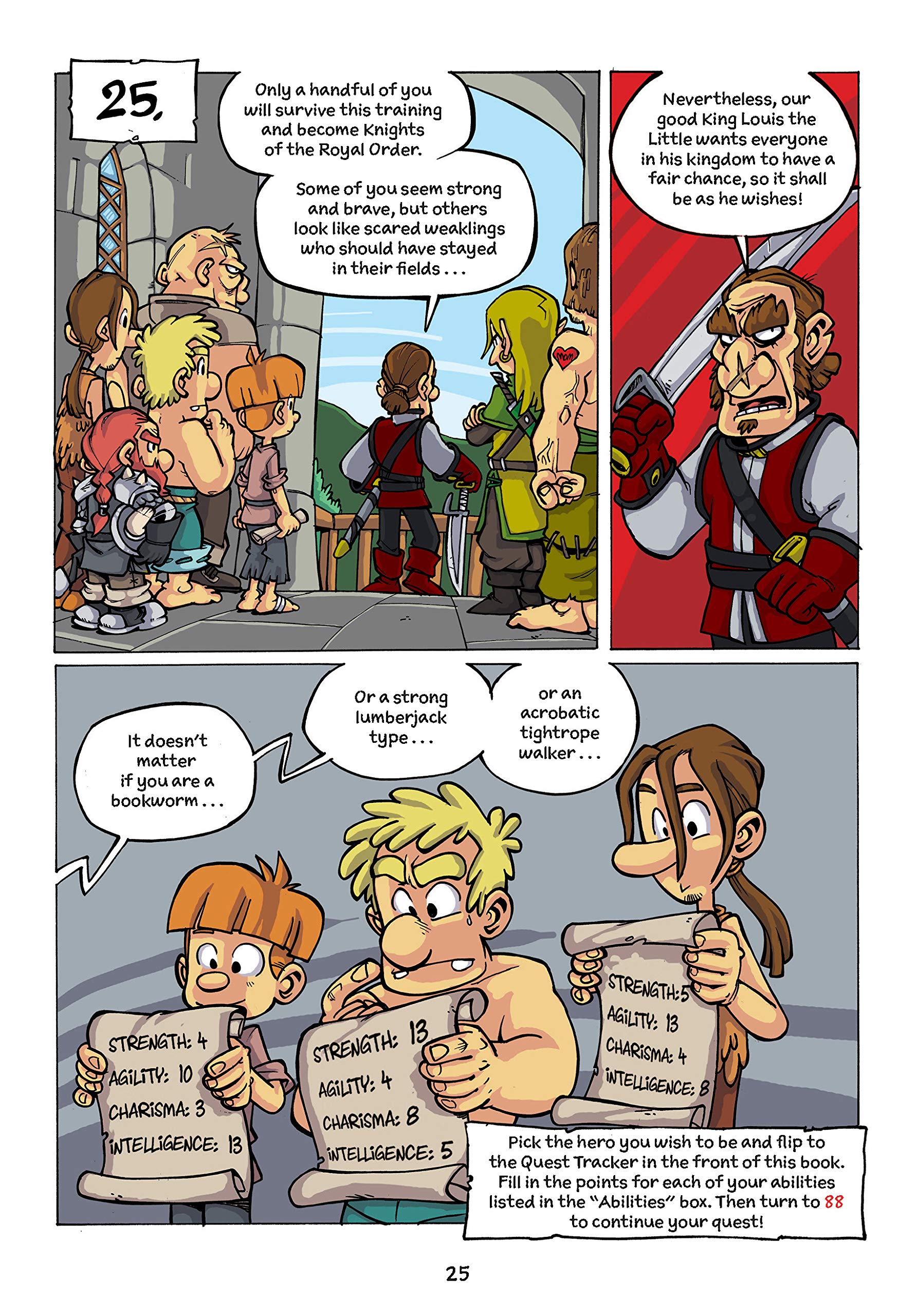
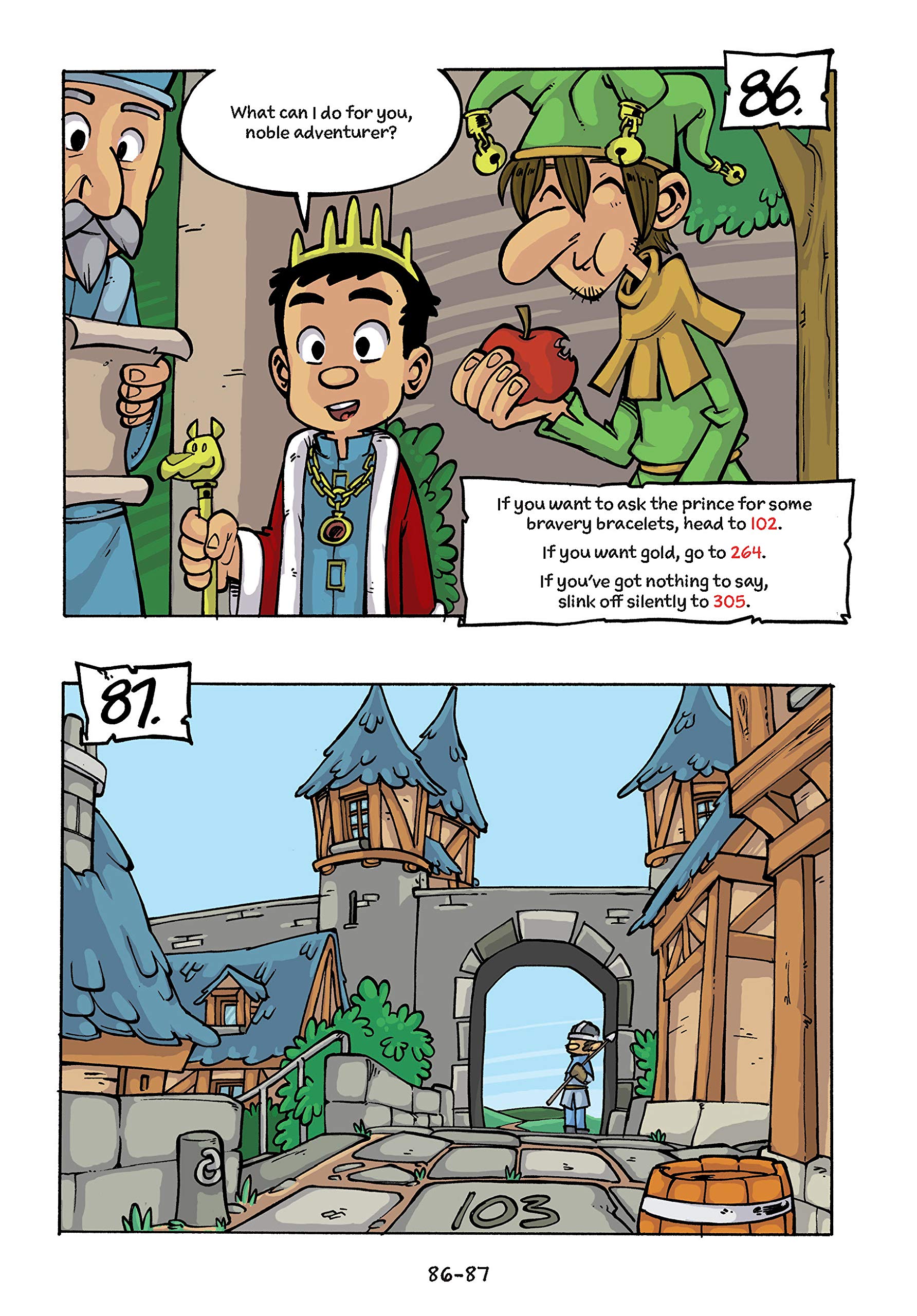
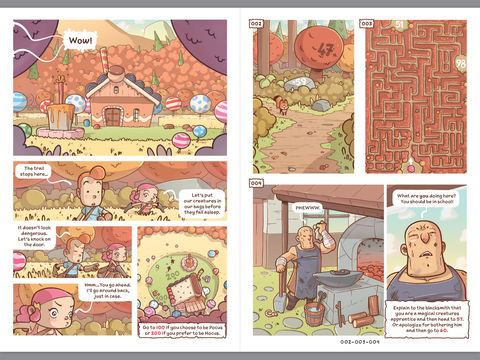
Released in September, there are two Comic Quests adventures: Knights Club and Hocus & Pocus. The rules are closer to role-playing games than merely choose your own adventure comics; readers will collect supplies, solve puzzles, and keep track of food and supplies for themselves and any familiars and pets they’re traveling with on their own handy dandy Quest Tracker – tabletop gamers will recognize the similarity to character sheets for roleplaying games like Dungeons & Dragons. Don’t worry about destroying your book, though – there are free, downloadable PDFs online. Librarians, consider putting a note on the covers of your copies to let your readers know this.

Knights Club: The Bands of Bravery, by Novy, Shuky, and Waltch/Translated by Melanie Strang-Hardy, (Sept. 2018, Quirk Books), $13.99, ISBN: 978-1-68369-057-3

Ages 8-12

Originally published in France in 2012, this first Knights Club adventure takes place in the year 1012, in the kingdom of Louis the Little. The Royal Order of Knights help keep the peace in Louis’ kingdom, and three farming brothers dream of joining their ranks. They set off to join Knights School, and that’s where the fun begins. Readers get to select which brother they want to be, and the adventure unfolds, questing through snowy mountains, dark forests, and mysterious lakes. Readers get to solve riddles, seek out magical objects, and choose their own path by following numbered panels through to the end of each tale. Panels are in color, and the storytelling pace moves along, but some challenges can be a little daunting for readers who are expecting a simple choose your own adventure story. My suggestion? Make it into a roleplaying program, and invite kids to learn how to play as they read! You may be creating your next generation of Dungeons & Dragons players, after all.

Knights Club: The Message of Destiny is the second book in the series and will be available in January 2019.

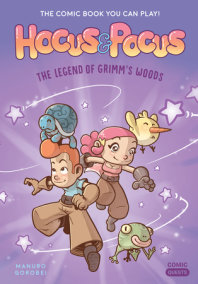
Hocus & Focus: The Legend of Grimm’s Woods, by Gorobei and Manuro, (Sept. 2018, Quirk Books), $13.99, ISBN: 9781-168369-055-9

Ages 8-12

Originally published in France in 2016, Hocus & Focus takes place in a more fairy tale-inspired fantasy world where readers can choose to be either a male (Hocus) or female (Pocus) character, choose a pet and keep it fed, and go on an adventure where you can discover gingerbread houses, make your way through a brain-teasing forest, and find missing children. There are numbered paths and riddles to be solved in order to advance, and panels are in full-color, just like the Knights Club. Gameplay can be a bit of a challenge – there’s one riddle where I had to count spots on baby wolves in order to get the next panel number that confounded me time and again (“is that a spot, or an ink blot? My ARC is black and white!”), so you may want to mark up your own ARC, if you have one, or keep a handy document of answers for kids that approach you needing help.

Hocus & Pocus: The Search for the Missing Dwarves is the second book in the series and will be available in January 2019.

All in all? A fun series of brain teasers for kids, and a nice way to side-eye anyone who says comics and graphic novels aren’t real reading!

Posted in Fiction, Intermediate, picture books

Can a good egg set a bad apple straight?

Good Egg and Bad Apple, by Henry Herz/Illustrated by Luke Graber, (Sept. 2018, Schiffer Publishing), $16.99, ISBN: 9780764356032

Ages 5-8

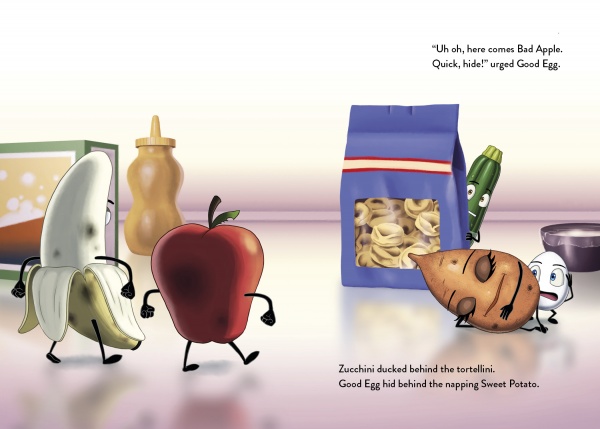
Bad Apple is a bully. He taunts all the other food, and his Second Banana – a literal banana – is right there, egging him on (no pun intended. Okay, maybe a little). Good Egg stands his ground and when the bullies start on him, Egg pulls the one weapon out of his arsenal that he thinks has a chance of working: he tells Apple a joke. Sure enough, the humor eases the tension, and Apple joins Egg’s group of friends.

Good Egg and Bad Apple is a fable of sorts, with food standing in to teach kids about bullying and why some bullies do it. In this case, the bully was bullied – sour grapes called Bad Apple names – and as the old saying goes, “hurt people hurt people”. Egg tried to reason with his bully, and it worked. It’s a perfect situation in a perfect world, but if it stops one kid from bullying another, I’ll take it.

The author also uses puns and idioms throughout the story. a glossary at the end explains both forms of speech and provides a list of wordplay used in the story, like “Let us help him”, a quote from Lettuce. The full-page artwork gives the food exaggerated expressions, with large, expressive eyes and wide open mouths (bad guys have a single tooth, to look like quintessential tough guys). Good Egg and Bad Apple works as an additional purchase for morality and bullying collections.

Posted in Fiction, Fiction, Graphic Novels, Intermediate, Middle Grade

Tiger Vs. Nightmare: Friends watch out for each other!

Tiger vs. Nightmare, by Emily Tetri, (Nov. 2018, First Second), $17.99, ISBN: 9781626725355

Ages 7-11

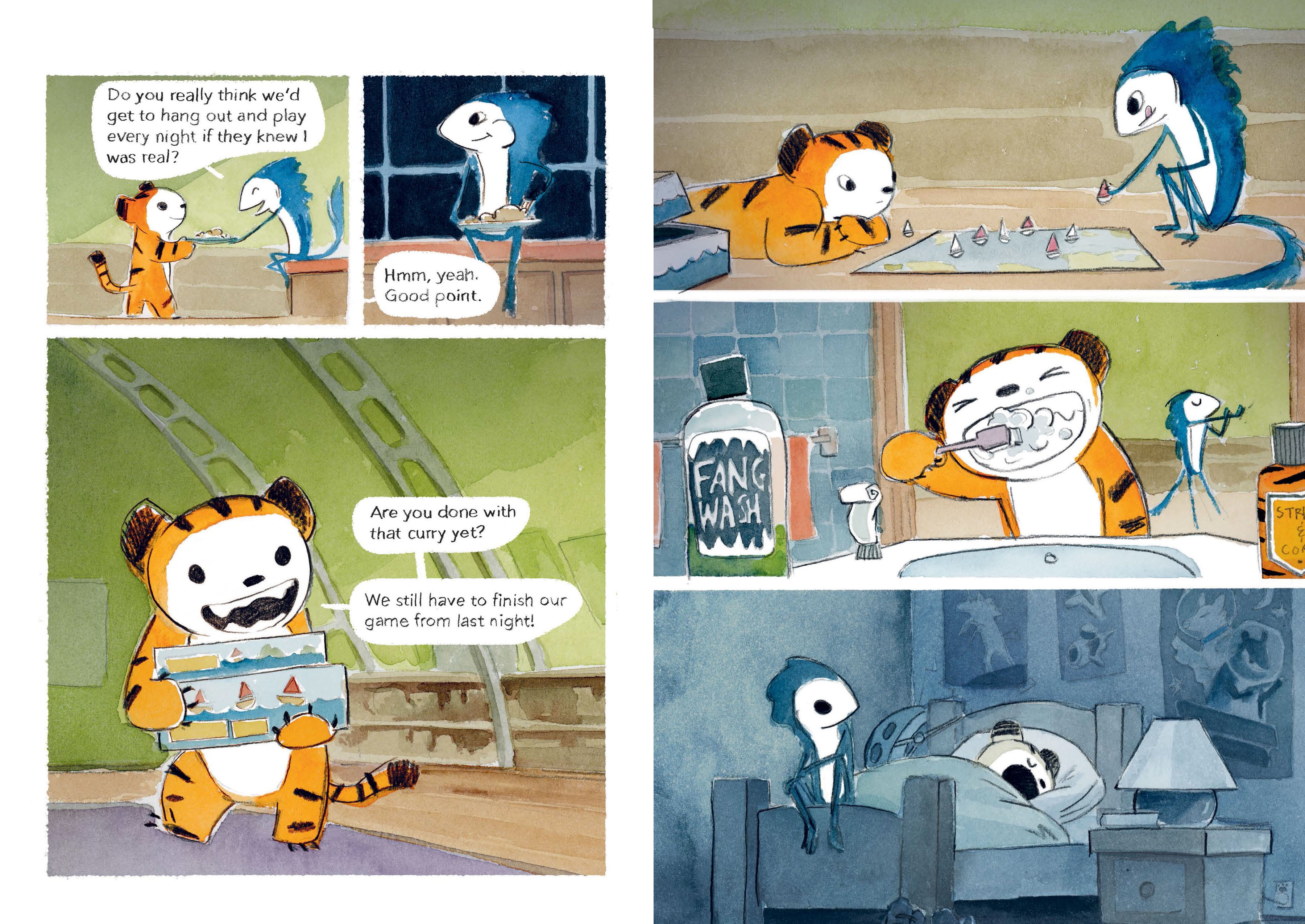
Tiger’s got a monster who lives under her bed! But it’s okay – this monster is her best friend. She shares her food with Monster, and they plays games and hang out together every night until it’s time for lights out. While Tiger sleeps, Monster scares her nightmares away. But a big nightmare is waiting in the dark, and Monster can’t fight this one alone – Monster is pretty scared, too. It’s up to the friends to work together to get rid of this nightmare for good.

Tiger vs. Nightmare is an adorable intermediate/early middle grade graphic novel about friends, bedtimes, and scaring away those big, bad nightmares. The Nightmare is spooky, but not so scary that it will give little readers nightmares. I read it with my 6-year-old, and he was fine. Honest. There are positive messages about teamwork, trial and error, facing fears, and friendship. The watercolor and pencil artwork adds a dreamy feel to the story, and the color schemes run cool blue for nightmares, warm colors for the dawn. Monster is blue, linking to the world of nightmares, but as Monster also offers support and comfort to Tiger; I think of blue as more of a bridge between the dreaming and awake worlds.

Tiger vs. Nightmare has a starred review from Kirkus.

Posted in Fiction, Fiction, Intermediate, Middle Grade, Realistic Fiction

Saving Winslow is another hit for Sharon Creech

Saving Winslow, by Sharon Creech, (Sept. 2018, Harper Collins Children’s Books), $16.99, ISBN: 978-0-06-257073-4

Ages 7-12

Louie is a gentle 10-year-old boy with a horrible history of caring for animals: worms, lightning bugs, goldfish, and several bigger animals have all perished or escaped under his care, but when his father brings home a baby donkey, orphaned at birth, from Louie’s uncle’s farm – to care for it until, “you know – until it dies”, Louie accepts the mission. He’s going to save this donkey. You see, Louie was a preemie at birth, and his parents weren’t sure he’d make it, either. Love and determination kept Louie going, and he’s sure that it will keep Winslow – the name he gives the donkey – going. And it does. Winslow struggles, but thrives under Louie’s care, to everyone’s surprise. His new neighbor, Nora, a girl grieving the losses of both her premature baby brother and her dog, is amazed, but pessimistic, warning Louie that Winslow is going to die, and not to get too attached. Louie puts everything into saving Winslow, wishing he could speak to his older brother, Gus, who’s serving in the military, about Winslow, but letters from Gus come few and far between these days, and are always signed “remember me”. As Louie saves Winslow, Winslow may save everyone around him.

Full disclosure: this is my first Sharon Creech novel. Now I get it. I get why she’s a force in kidlit, a multiple award winner, and why her books are always on my library kids’ summer reading lists. She masters feeling and emotion through eloquent, brief prose. I was hers from the opening lines in the book, and I was with her until the last phrase closed the story. I told a friend of mine that Saving Winslow broke me apart and put me back together in the way that Charlotte’s Web did when I read it the first time as a child. Sharon Creech invests readers in every single character in this book, from the baby donkey, to the pessimistic neighbor kid, to the crabby next door neighbor, but we are always focused on Louie and his story. Saving Winslow is a story of hope and perseverance, and it’s a story about the need to believe in the positive. Every library needs a copy of this book – let’s get this one on the summer reading lists, please! – and kids with gentle hearts and sad souls alike will find comfort in it. An absolute must-have, must-read.

Saving Winslow has starred reviews from School Library Journal, Publisher’s Weekly, Kirkus, and Horn Book. Sharon Creech has a Newbery Medal for Walk Two Moons (1995), and received Newbery Honors for The Wanderer (2001). Her book, Ruby Holler (2002), is a Carnegie Medal winner. Her author website offers information and links to her social media, and downloadable reading guides for most of her books.