Posted in Intermediate, Middle Grade, Non-Fiction, Non-fiction, Non-Fiction, picture books, Preschool Reads, Tween Reads

Space… The Final Frontier…

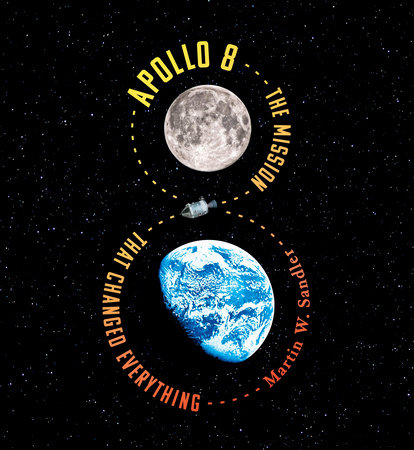
…these are the voyages of the starship Bibliomaniac. My continuing mission: to bring you the coolest books about space, while butchering a beloved TV show’s intro. This post has a books that should appeal to fiction and non-fiction lovers alike. Because it’s SPACE! Planets! Stars! Rocket ships! So whaddaya say? Join me! After all… Stardust Explores the Solar System (Stardust Science), by Bailey and Douglas Harris, (Apr. 2018, StoryBook Genius Publishing), $10.95, ISBN: 9781941434918 Ages 5-9 Stardust Science is a kids’ nonfiction series from a small-press publisher that I’ve just been turned onto. Bailey and Douglas Harris are a daughter-father team who write some pretty fun books starring a girl who loves science and is named named Stardust. Stardust Explores the Solar System is the second Stardust book, and here, Stardust takes readers on a tour of our solar system and its formation, and a trip to each planet. Spreads have a brief, informative paragraph and artwork placing Stardust on each planet, whether she’s driving an exploration craft across Venus or freezing atop Uranus. Extra fun facts focus on the possibility of extraterrestrial life, the Kuiper belt and dwarf planets, and the asteroid belt. Stardust Explores the Solar System was a successful 2017 Kickstarter (which is where I found the internal artwork for this post), and there’s a current Kickstarter for the next book, Stardust Explores Earth’s Wonders. You can pick up copies of My Name is Stardust and Stardust Explores the Solar System from the Stardust Science webpage. It’s a fun book, co-written by a 12-year old Neil DeGrasse Tyson fan, so how can you go wrong? It’s a nice additional book to big collections, and a sweet way to empower your younger readers. My 6-year-old loves this one and says he’s ready to write his own book.   The Universe Ate My Homework, by David Zeltser/Illustrated by Ayesha L. Rubio, (Aug. 2018, Carolrhoda Books), $17.99, ISBN: 978-1512417982 Ages 6-8 Abby’s a little girl who has homework to do, but UGH. She’d rather be stargazing with her dog, Cosmo, or talking to her physicist dad. He’s been thinking about universes, and how to make a baby universe, which gets Abby thinking. She sneaks into her dad’s study and works on making her own black holeout of the dreaded homework! It takes a lot of squeezing and a lot of energy, but Abby and Cosmo have done it! But what happens when a black hole’s gravity kicks in? HELP! This is an absolute fun way to explain the science of black holes to kiddos. What better way to get rid of your homework than by turning it into an actual science experiment? Kids will be squeezing the daylights out of their looseleaf for weeks to come, waiting for their own wee Big Bang. The artwork is too much fun, with something to see in every spread: the John Coltrane album and record player in the family living room; Dad’s study is loaded with things to see, including a framed picture of Marie Curie, family photo, Abby’s family drawing, and a postcard depicting a scene from  Georges Méliès’s 1902 A Trip to the Moon. The mini galaxy Abby creates unfolds for readers, starting first with swirls and stars, then with planets. It’s a fun book that makes for a great storytime, and a teacher’s note to Abby (you didn’t forget about the homework, did you?) at the story’s end will leave kids and adults alike laughing out loud. An author’s note gives a little more information about black holes and baby universes. Add this one to your collections and get your little ones contemplating astrophysics! Apollo 8: The Mission That Changed Everything, by Martin W. Sandler, (Oct. 2018, Candlewick), $24.99, ISBN: 978-0-7636-9489-0 Ages 10+ It was 1968, and the U.S. was about to make a huge gamble. America was deep into the Cold War with the USSR, and the country was fraying at the seams after the assassinations of Martin Luther King Jr. and Robert F. Kennedy; it was a country where the civil rights movement and the Vietnam War caused violent clashes. We needed something to unite us. Russia had already launched the first man-made satellite to orbit Earth, Sputnik I – in 1957, but now, they were getting ready to go to the moon. America was determined to get there first. But first, we had to get into space. Apollo 8: The Mission That Changed Everything is a brilliantly written chronicle of NASA’s mission to put a craft into orbit around the earth. Loaded with black and white and color archival photos and written by one of the most well-known names in children’s and young adult nonfiction, this is a must-have for your middle grade and middle school collections. With the 50th anniversary celebration of the Apollo 8 mission falling in December of this year, this is going to be an in-demand title in classrooms and libraries. Martin W. Sandler is an award-winning writer – a two-time Pulitzer nominee, five-time Emmy winner, and Boston Globe-Horn Book Honor winner – who makes nonfiction read as compulsively as solid fiction; There are extensive source notes and a bibliography for further reading and research.
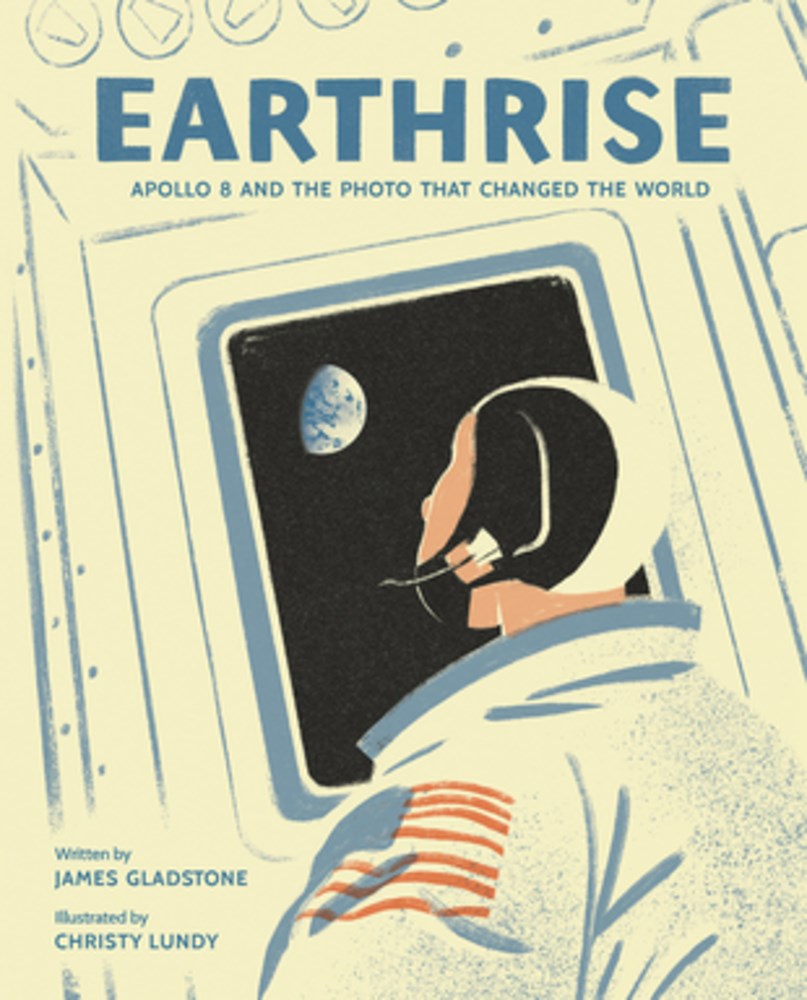
Earthrise: Apollo 8 and the Photo That Changed the World, by James Gladstone/Illustrated by Christy Lundy, (Oct. 2018, OwlKids Books), $16.95, ISBN: 9781771473163
Ages 4-8
This is the year for Apollo 8 books! Earthrise is a gorgeous picture book that tells that story of Earthrise, the history-making photo of Earth, taken from lunar orbit, taken by astronaut Bill Anders. The story shows readers how this single photo took us from a planet full of conflict to a global community – if only for a moment. We see the story from shifting perspectives: the crowds gathered in anticipation, the men in Mission Control, and an African-American family, with a little girl who dreams of being an astronaut one day.
The text is just beautiful. James Gladstone creates a mood of wonder as he writes lines like, “Now the craft was coasting on a human dream, speeding the crew off to another world”, and “The astronauts saw the whole turning Earth – no countries, no borders – floating in the vastness of space”. Back matter includes a piece on how the Earthrise photo changed the world, and an invitation to readers to share what Earthrise means to them. It’s the perfect program in a book! Show the original Apollo 8 launch broadcast, this NASA Apollo 8 documentary, and/or the broadcast Apollo 8 Christmas Eve message and ask kids to talk about what seeing the Earthrise makes them feel, 50 years later. Paired with Christy Lundy’s vintage-inspired artwork, Earthrise is a necessity in your nonfiction collections. Earthrise has a starred review from Kirkus.
To the Moon and Back, by Buzz Aldrin with Marianne J. Dyson/Paper engineering by Bruce Foster, (Oct. 2018, National Geographic), $32, ISBN: 978-1-4263-3249-4
Ages 6+
How much fun is a pop-up book about SPACE? With ROCKETS?! Buzz Aldrin, Marianne J. Dyson, and Bruce Foster take readers on a trip through “humanity’s greatest adventure”. Learn Buzz Aldrin’s nickname on the mission; read about the launch and landing; souvenirs left on the lunar surface, and the astronauts’ return, all accompanied by amazing paper engineering: pop-up rockets, fold-out lunar landings, and side flaps that offer even greater information – and a few laughs. If you’re getting this for a library or classroom collection, put it in reference; it will get beaten up pretty quickly. The book also comes with a paper Apollo 11 lunar module kids can engineer on their own. (We haven’t built that one yet.) Want to make a space fan happy? Put this on your holiday and special occasion shopping lists. Read more about the 1969 Moon Landing on NatGeo’s webpage.
Whew! Okay, that’s all I’ve got for now, go forth and explore!
Posted in Intermediate, Non-Fiction, Non-Fiction, picture books

Sewing the Rainbow: The Story of a Flag and a Movement

Sewing the Rainbow: The Story of Gilbert Baker and the Rainbow Flag, by Gayle E. Pitman/Illustrated by Holly Clifton-Brown, (May 2018, Magination Press), $16.95, ISBN: 9781433829024

Ages 5-8

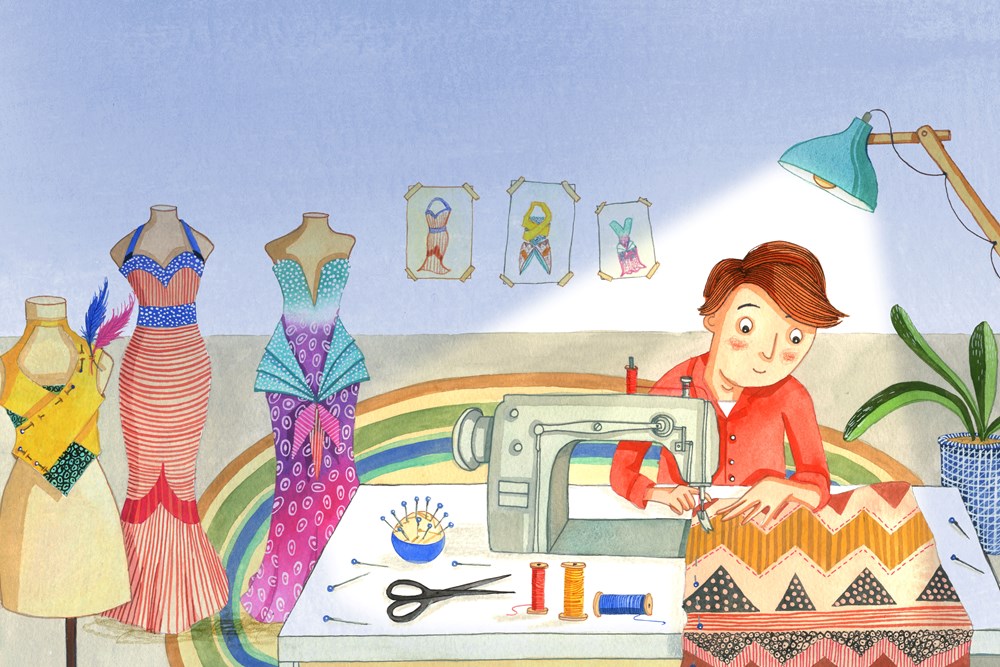
Artist and gay rights activist Gilbert Baker started out as a little boy in Kansas who “was full of color and sparkle and glitter”; a little boy who would draw gowns and costumes alongside his clothing store proprietor grandmother. But his father would destroy his drawings and push Gilbert toward more “manly” pursuits: slingshots, erector sets, and sports. Being drafted at the age of 18 made Gilbert more miserable as he suffered hazing from his fellow soldiers for refusing to carry a gun, but being arriving in San Francisco finally brought the sparkle back to Baker’s life. He taught himself to sew and began designing dresses, costumes, and banners for activists and entertainers. And then came his friend Harvey Milk, who asked him for Baker’s greatest undertaking: create a flag to unite the gay rights, or LGBT, movement.

The story of the rainbow flag is just as much Gilbert Baker’s story as it is the LGBTQ+ movement’s story. Dr. Gayle Pitman tells the story of a sensitive boy who loved art and grew up to unite the world. Holly Clifton-Brown’s colorful illustrations give us an apple-cheeked, sweet-faced boy who just wants to create; her artwork goes wonderfully hand-in-hand with Dr. Pitman’s prose to engender empathy in reader. I love and adore Dr. Pitman’s observation that our generation, and future generations, will see the flag and know that it’s okay to be your colorful, sparkly, glittery self.”

Back matter goes into more detail about Gilbert Baker and the rainbow flag (which, chosen by Baker, is in part inspired by a Bible quote: Genesis 9:13). This story pairs nicely with Rob Sanders and Steven Salerno’s book, Pride: The Story of Harvey Milk and the Rainbow Flag, which has a nice little cameo by a grown-up Gilbert. Sewing the Rainbow is a must-add to your biography collections.

Posted in Non-Fiction

Galápagos Girl/Galapagueña Blog Tour Stop: A note from author Marsha Diane Arnold!

So now that you’ve read about how I loved Galápagos Girl/Galapagueña, here’s a little somethin’ extra: a guest post from author Marsha Diane Arnold about the editorial process, and “the words that got left behind”. Enjoy the post and photos, and thank you so much to Ms. Arnold for sharing with us!

The Words I Left Behind – Galápagos Girl by Marsha Diane Arnold

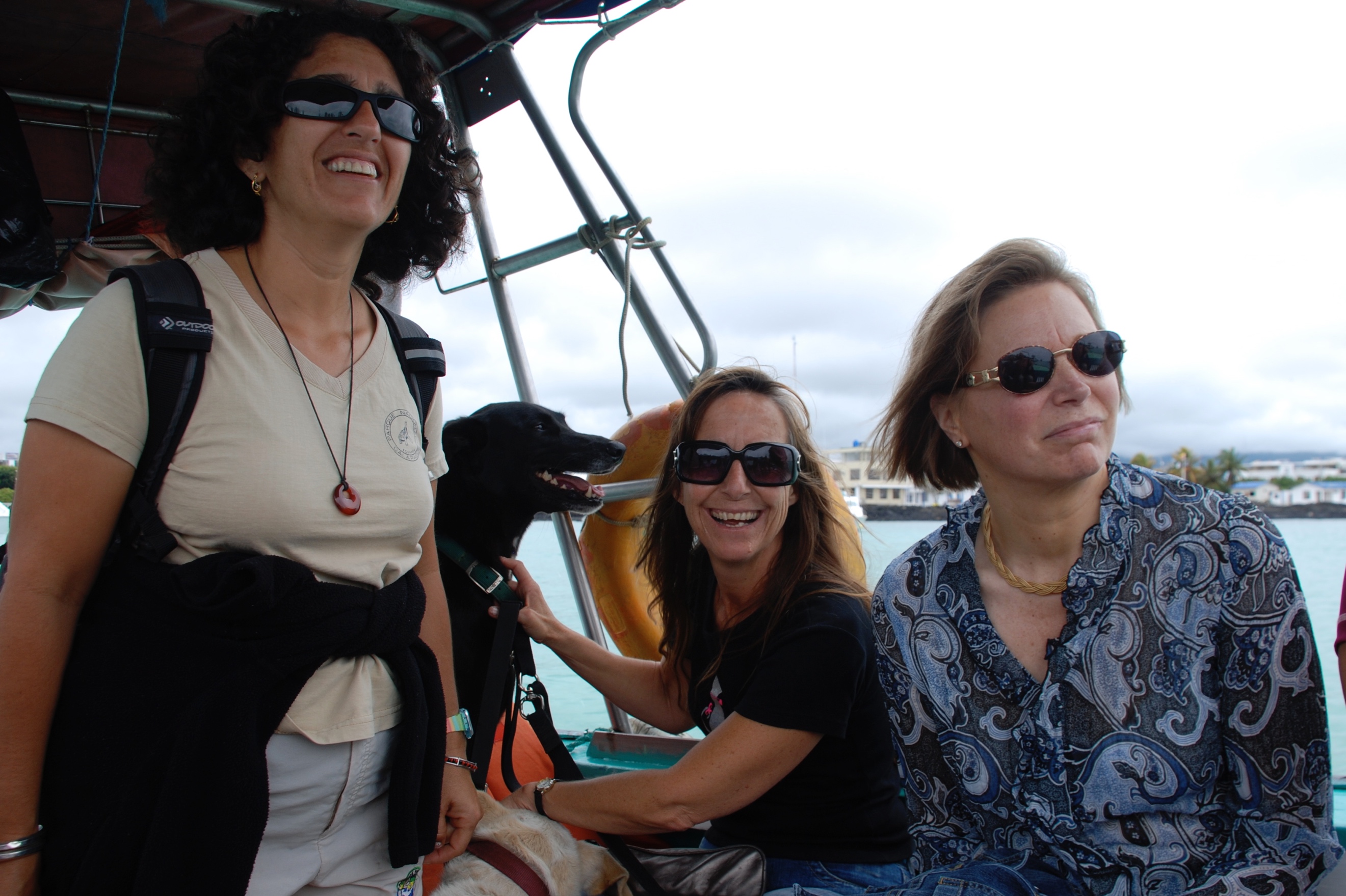
Thank you, Rosemary, for inviting me to blog about my newest picture book, Galápagos Girl, coming September 18th. This book is dear to my heart. It began on my 2007 trip to the Galápagos where I met Valentina Cruz, our naturalist guide. She was born and raised on the Galápagos Island of Floreana. She and the unique animals of the islands inspired my book. I wanted to write about the fantastic Galápagos creatures from the perspective of a young girl who grew up on the islands, surrounded by wild nature.

Valentina on left, with fellow travelers.


But it’s now 2018! This book was a long time coming. There were so many stories Valentina told me about her family and growing up on these exotic islands. I wanted to share them all with the world, but of course, I couldn’t. Cut! Cut! Cut! There are dozens of unique animals on the islands. I wanted to share them all in my book too, but they wouldn’t all fit. Cut some more!

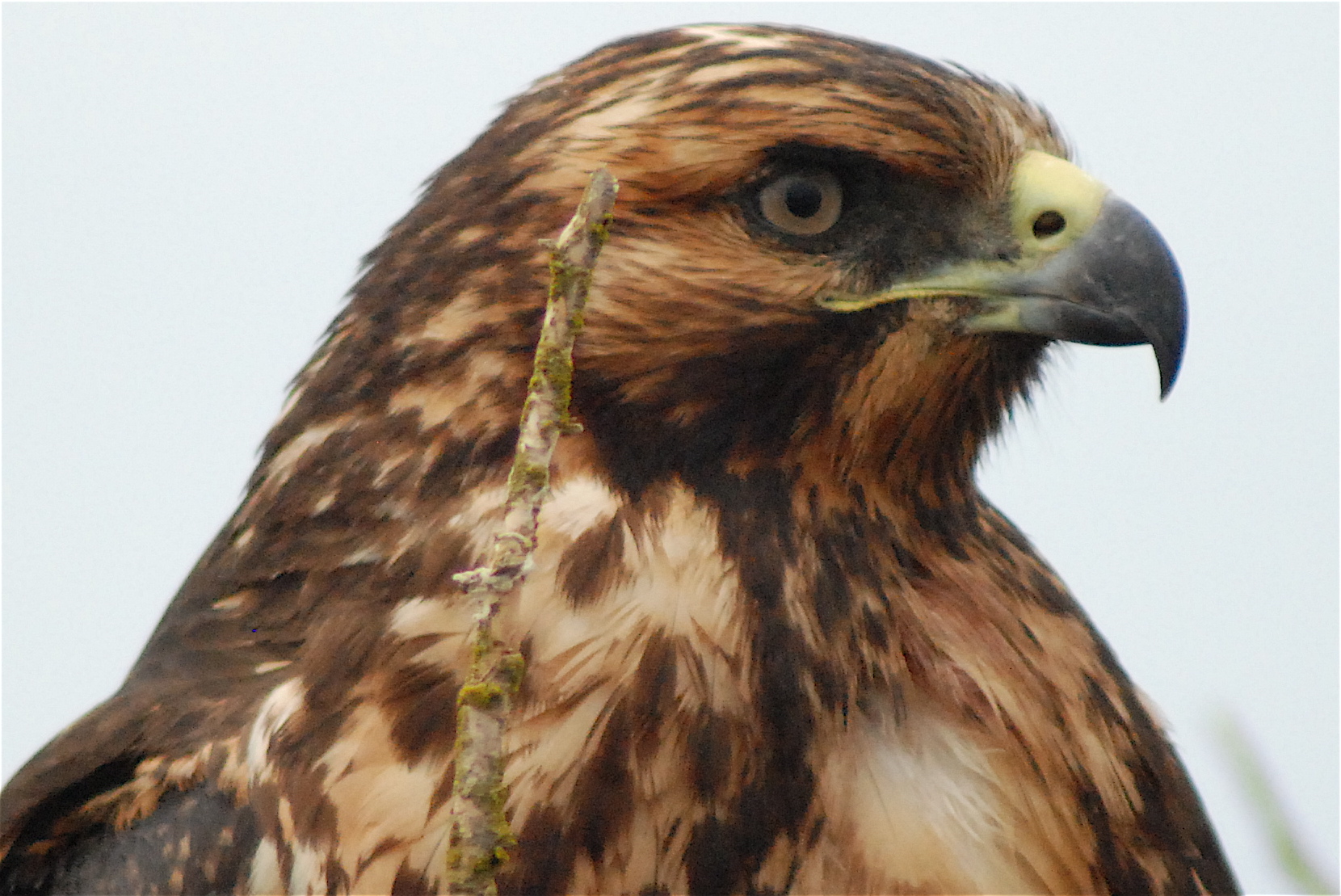
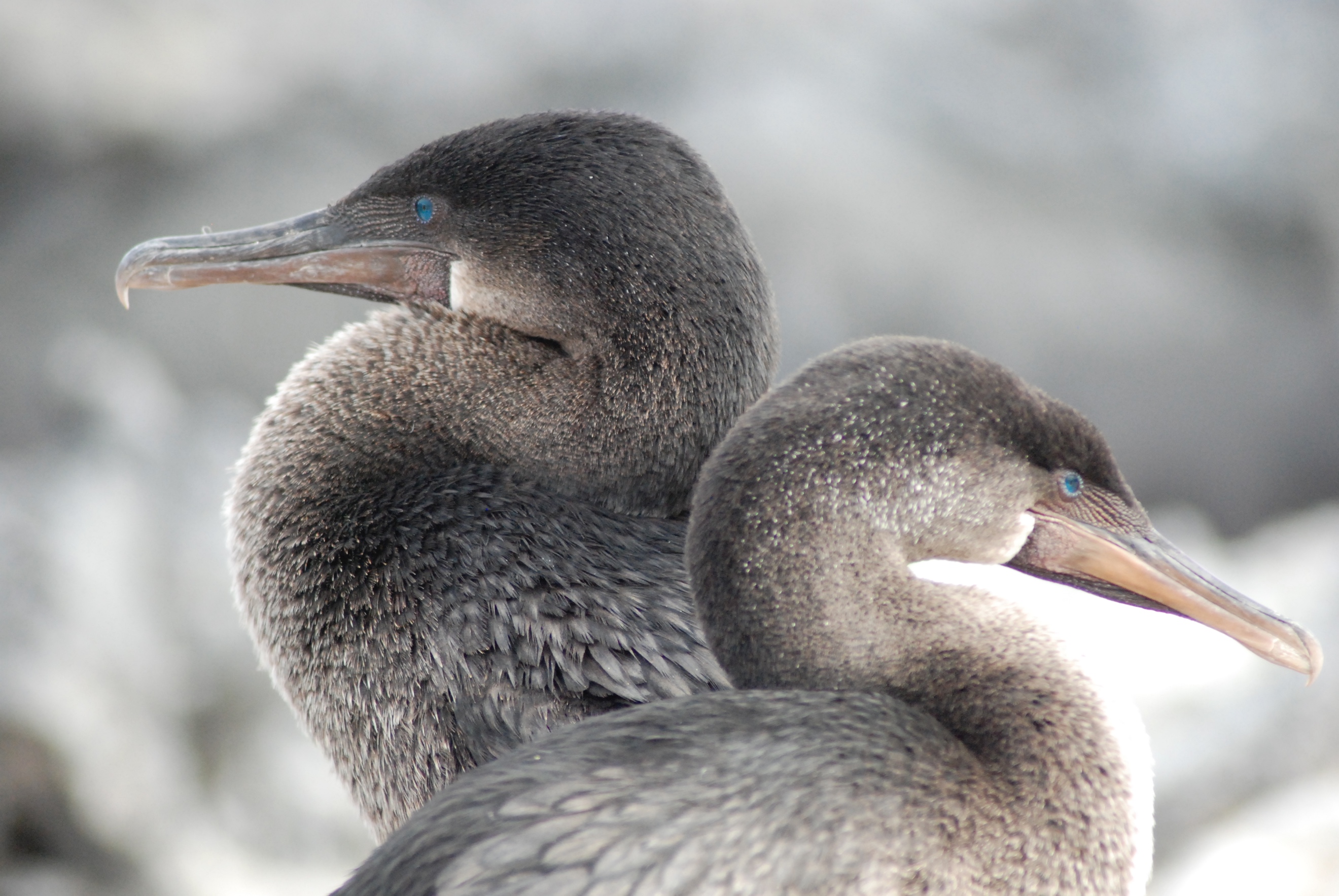
Some of the beautiful Galápagos birds that didn’t make it into the book.


Top left – Galápagos Hawk, top right – Nazca Booby


Bottom left – Oystercatcher, bottom right – Flightless Cormorant

“Kill your darlings” is advice that has long been given to writers. It’s a challenge to us to delete extraneous text and get rid of phrases we hold closest to our hearts. But our books all have to face the “killing of darlings.” Galápagos Girl was no exception.

I wrote scores of drafts, trying to decide which stories, which animals, and which words to keep. In the manuscript I submitted, Spanish words and phrases were sprinkled throughout. I’d spent hours deciding where to place these and confirming my translation was right. When it was decided to make the book entirely bilingual, most of these phrases were deleted. Also, because we were now approximately doubling the words that would fill the book, the text needed to be…Cut!

Valentina shared many stories of her father. They could easily make a book of their own. Once, she wrote to me that her father, who loved the ocean, “had the scent of the sea in his skin.” Now her young son tells her she has “the scent of the sea in her skin.” I loved this thought and included it in a few drafts. But my writers group didn’t think it worked. Cut!

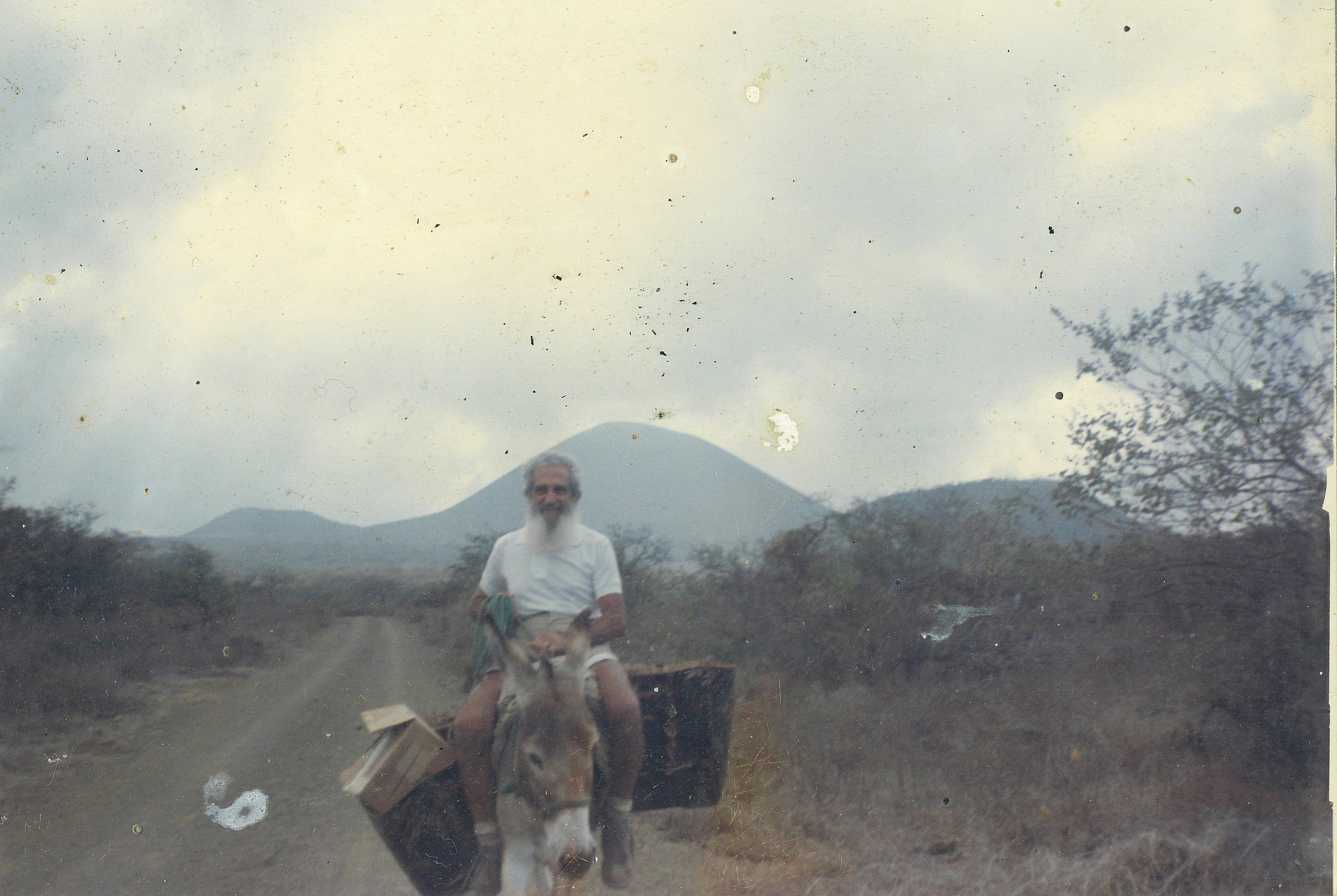
The text below is from a 2009 draft, where I again drifted toward telling Papá’s story. Valentina’s tales of him where inspiring me, just as his life had inspired her. Valentina even had an old photo of him riding their donkey, Pepegrillo. But I needed to get back to Valentina’s story. Cut!

“Papa, the teacher, the sailor, the fisherman, the farmer,

taught Valentina to read and showed her the ways of nature.

He liked to ride his donkey into the village

and take a book with him to read along the way.”

Eliecer Cruz Cevallos and Pepegrillo


Looking over more old drafts, it was obvious I wanted that cute Pepegrillo to be in my book. In a 2010 draft, I wrote:

“Sometimes Valentina walked the two miles to school barefoot,

Sometimes she wore old shoes,

Sometimes her older brother and sister carried her on their back.

On special days, she got to ride Pepegrillo, the donkey.”


You guessed it.  Pepegrillo and these lines had to be…Cut!

When I asked Valentina if there was anything she didn’t like about growing up on the Galápagos, she emphatically replied, “No.” She loved every minute of it and felt it was a privilege to be able to live there with her family. Her stories made me want to be part of her family too; these feelings show up a little in the following text. It also mentions the broken tortoise shells Valentina found, which was a plot line I had followed. Yes, this was all…Cut!

“The family’s farm was called The Well – El Pozo.

In the kitchen, Valentina helped Mamá make papaya and guava jam.

From the acacia tree, Valentina and Papá watched boats come into port.

When Valentina’s eleven older brothers and sisters

milked cows and weeded gardens,

Valentina fed bananas and plums to Santa Cruz and Isabela.

When they searched hillside caves for pirate treasure,

Valentina searched for a Floreana tortoise

to keep Santa Cruz and Isabela company.

All she found were broken shells.”

I originally called the turtles Santa Cruz and Isabela, but in the book, they are Carlitos and Isabela. There’s a story behind that too.


A few of the amazing Cruz family.


Though many stories are not in the book, we now have the delightful Galápagos Girl, thanks to my agent Karen Grencik, my editor Jessica Echeverria, the entire Lee & Low team, many helpful scientists and researchers, the wonderful artist Angela Dominguez, and, of course, Valentina Cruz.

Just a few words now, that were not cut!

“And every day she danced.

Bopping up and down

With lava lizards

Stamping her feet with

Blue-footed boobies

Twirling pirouettes

with sea lions.”


If you want to hear more Galápagos stories, I’d love to share them with you when I visit your school or festival. You can contact me on Facebook https://www.facebook.com/MarshaDianeArnoldAuthor/, www.earthsvoices.wordpress.com., or the “Write Marsha” link at  www.marshadianearnold.com, my main website, which is being restored.

Posted in Intermediate, Non-Fiction, picture books, Preschool Reads

How islands raised an activist: Galápagos Girl/Galapagueña, by Marsha Diane Arnold

Galápagos Girl/Galapagueña, by Marsha Diane Arnold/Illustrated by Angela Domínguez, translated by Adriana Dominguez, (Sept. 2018, Lee & Low Books), $18.95, ISBN: 9780892394135

Ages 4-8

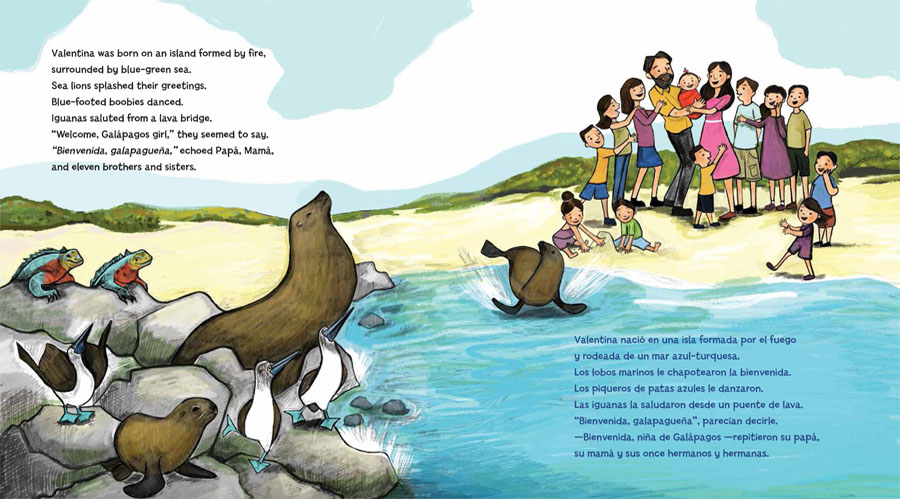
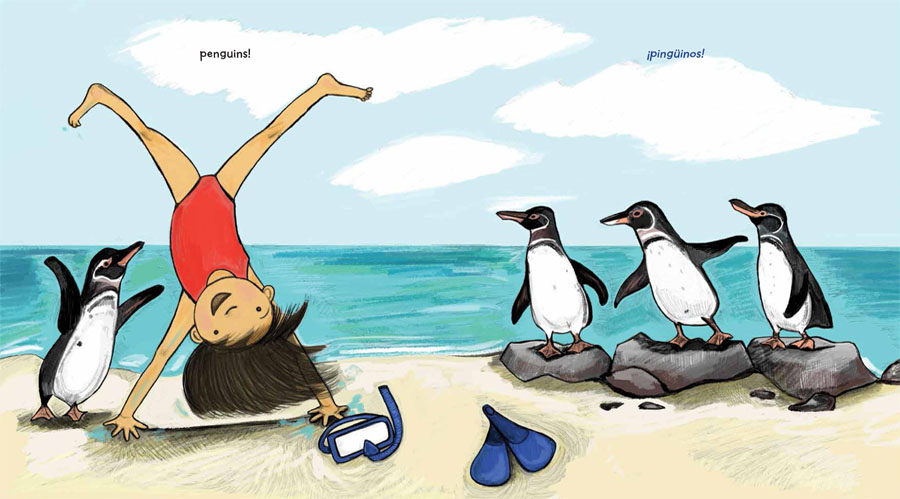
This bilingual English/Spanish story is based on the life of Galápagos Islands conservationist Valentina Cruz. Raised on the island, Valentina grew up surrounded by beauty: the blue-green sea, the playful penguins and sea lions, the sounds of the waves crashing against the rocks, and her father’s two tortoises, Carlitos and Isabela. Valentina goes away to school, but promises the animals and her islands that “I will not forget you… And I will help to keep you safe.” It’s a promise she keeps, returning to the islands on school holidays, camping out on remote islands to live and learn among the different flora and fauna, eventually becoming a biologist who returns to the islands to teach visitors to love her home as she does, and about the importance of preservation and conservation.

Author Marsha Diane Arnold met Valentina on a 2007 trip to the Galápagos and was inspired to write Galápagos Girl in the hope that readers would learn, as Valentina did, to help keep nature safe. Under threat from invasive species, active tourism, and encroaching humans, plant and animal life on the Galápagos is increasingly vulnerable. With bright, tropical colors and bold illustration, Pura Belpré Honoree Angela Dominguez transports readers to the magical islands; she communicates the feeling that we’re seeing something truly special as Valentina moves among unique plants and animals that aren’t found anywhere else on Earth. We’re given a special, secret pass to paradise as we turn each page of Galápagos Girl, and reading it with an unabashed sense of wonder will inspire that spark in a storytime group. An author’s note and a note about the Islands explains Marsha Diane Arnold’s first meeting with Valentina and provides background on the Islands. Five pages of information about the animals introduced in the story adds nice background information to the story, as does a solid bibliography. The bilingual text makes it accessible to Spanish and English-speaking readers.

The storytelling gives readers a glimpse at Valentina’s passion for conservation and illustrates how growing up with a respect for nature creates a better world for everyone. Galápagos Girl is a worthwhile add to storytime collections, bilingual collections, and natural history collections. There’s a free Animals of the Galápagos matchup download available at the Lee & Low website.

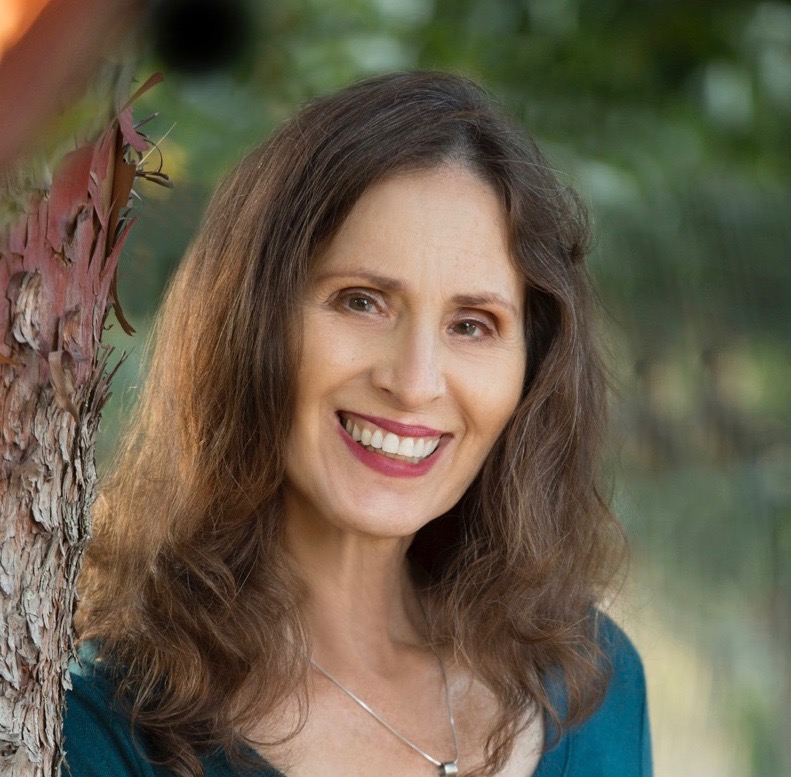
Marsha Diane Arnold is an award-winning picture-book author. Her past titles include the Smithsonian Notable Book The Pumpkin Runner and Lost. Found., which received three starred reviews. Marsha was inspired to write this story after traveling to the Galápagos Islands, where she met Valentina Cruz and had the opportunity to swim with sea lions and dolphins. She lives with her family in Alva, Florida. You can find her online at marshadianearnold.com.

Angela Domínguez is the author and illustrator of several books for children, including the Children’s Book Press title Let Me Help! / Quiero ayudar!Marta Big and Small, and Maria Had a Little Llama, which received the Pura Belpré Illustration Honor. In 2016, she received her second Pura Belpré Honor for her illustrations in Mango, Abuela, and Me by Meg Medina. When Angela is not in her studio, she teaches at the Academy of Art University, which honored her with their Distinguished Alumni Award. She lives in Virginia. Visit her online at angeladominguezstudio.com.

Posted in Graphic Novels, Intermediate, Non-Fiction, picture books

Fall means back-to-school, and new BOOKS.

Here in NY, most of the kids start school tomorrow, but the bigger news is that there are amazing books lined up for Fall!

Magnificent Birds, by Narisa Togo, (Sept. 2018, Candlewick), $20, ISBN: 9781536201697

Ages 7-12

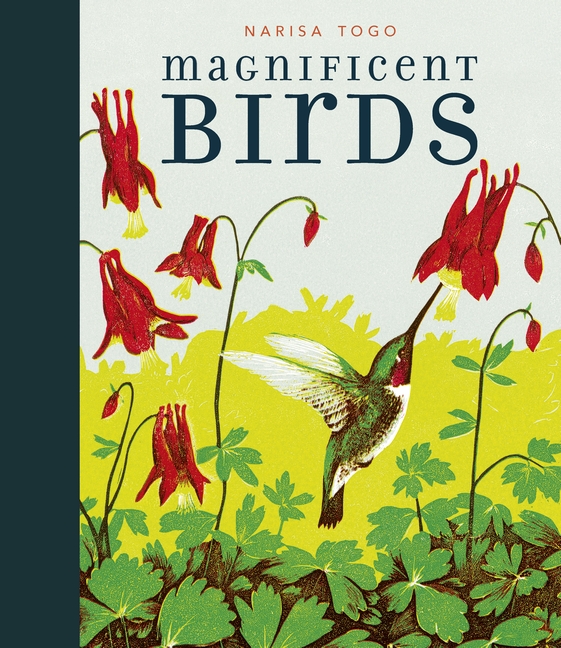
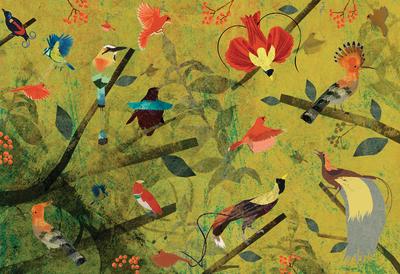
Linocut artist Narisa Togo presents readers with a gorgeous book on birds from all over the world. Fourteen beautifully colored spreads feature the familiar, including the bald eagle, flamingos, penguins, and pelicans and the exotic, such as the greater bird of paradise and the kakapo. Each spread includes the genus and species, range and habitat, and two brief, informative paragraphs about each species. The linocuts are striking, with muted colors that allow the texture of the cuts to speak. A wonderful gift for bird lovers, and a nice add to nonfiction collections. Create a beautiful display with Britta Teckentrup’s Birds and Their Feathers, Drawn from Nature, and Magnificent Creatures.

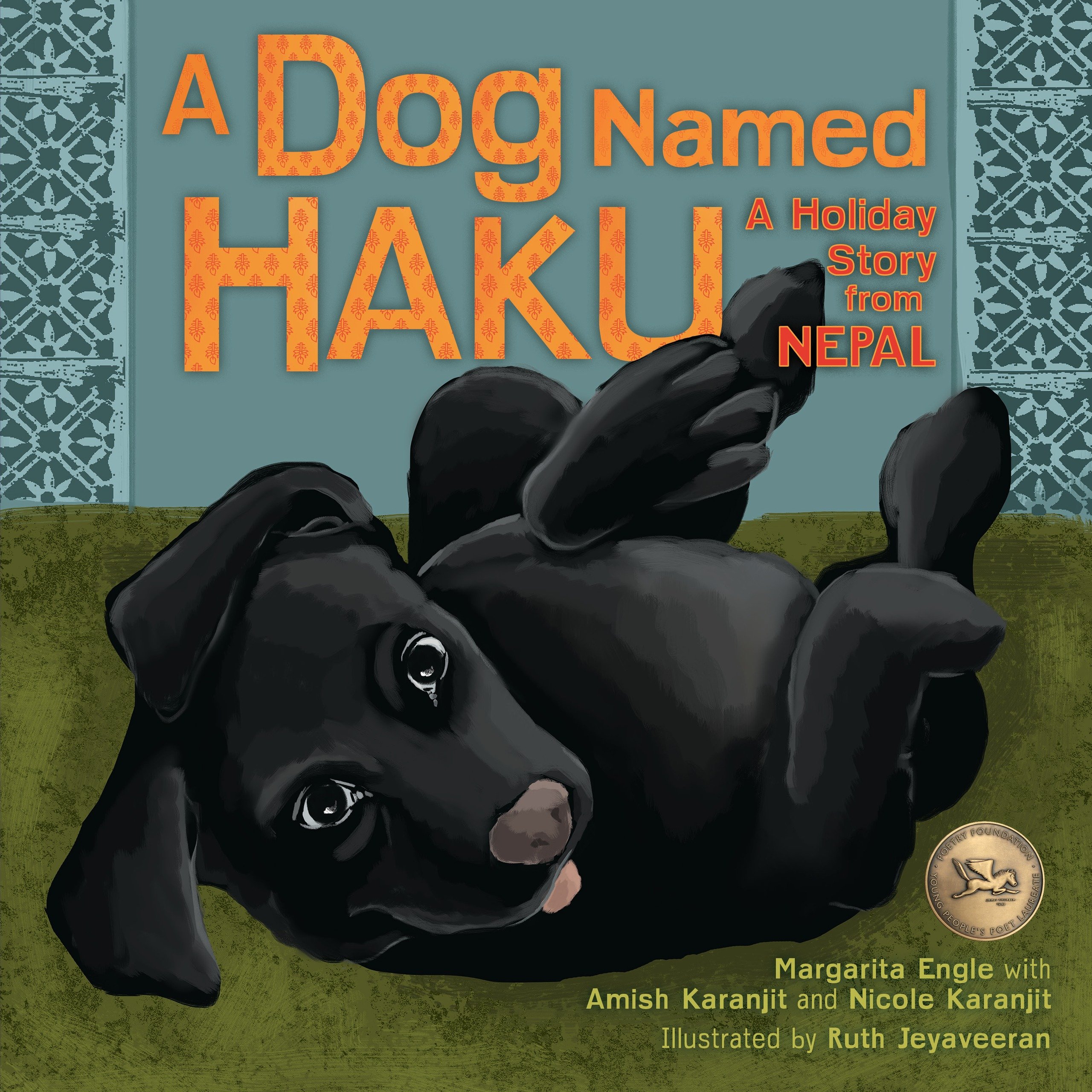
A Dog Named Haku: A Holiday Story from Nepal, by Margarita Engel, Amish Karanjit, & Nicole Karanjit/Illustrated by Ruth Jeyaveeran, (Sept. 2018, Lerner Publishing Group), $19.99, ISBN: 978-1-5124-3205-3

Ages 4-8

Two brothers search the streets of Nepal for a stray dog to feed during the festival of Kukur Tihar, a special day honoring dogs. The festival is also a remembrance of the search and rescue dogs that saved lives after the devastating 2015 earthquake. Award-winning author Margarita Engle, her daughter, Nicole Karanjit and son-in-law Amish Karanjit, come together with illustrator Ruth Jeyaveeran to create a touching story of empathy, memory, and celebration. It’s a glimpse into Nepali culture, enhanced by a glossary, further reading, and activities, and a story that emphasizes empathy and love for all creatures, great and small. Ruth Jeyaveeran’s illustrations further this study in culture, with brown-skinned people wearing Nepali clothing and animals wearing vermilion paste, a sign of holiness and blessing, on their foreheads during the celebrations.

Get this one in your libraries and classrooms, and read it for Diwali – while you hit Pinterest for some Diwali crafts. I love this accordion fold paper diya craft.

My Beijing: Stories of Everyday Wonder, by Nie Jun, (Sept. 2018, Lerner Publishing Group), $30.65, ISBN: 9781512445909

Ages 8-12

This graphic novel contains four stories of Yu’er, a young girl who lives with an unnamed disability, and her grandfather, in a small Beijing neighborhood. Yu’er want to swim in the Special Olympics, but she and grandpa need to find a pool for her practice. Another story takes Yu’er and a friend to a place filled with musical insects; in one story, Yu’er learns a story about her grandparents; finally, Yu’er and her grandfather teach a painter a lesson about enjoying life. The watercolor artwork is quiet and soothing, with a storytelling style manga fans will recognize and enjoy. It’s a positive look at the relationship between grandchild and grandparent, and the colorful characters in their neighborhood illustrate the adage that it takes a village to raise a child. Display and booktalk with Atinuke’s Anna Hisbiscus books, Saadia Faruqi’s Meet Yasmin!, and Debbie Michiko Florence’s Jasmine Toguchi books for illustrated chapter books that introduce readers to world cultures.

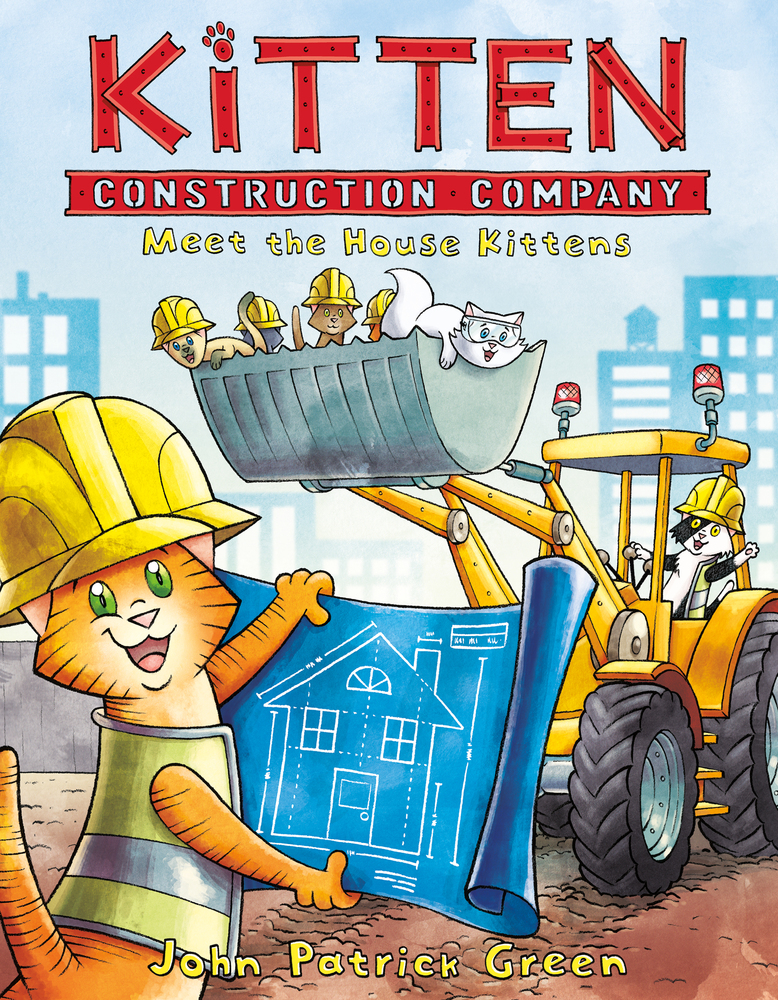
Kitten Construction Company: Meet the House Kittens!, by John Patrick Green, (Sept. 2014, First Second), $17.99, ISBN: 978162672830

Ages 7-10

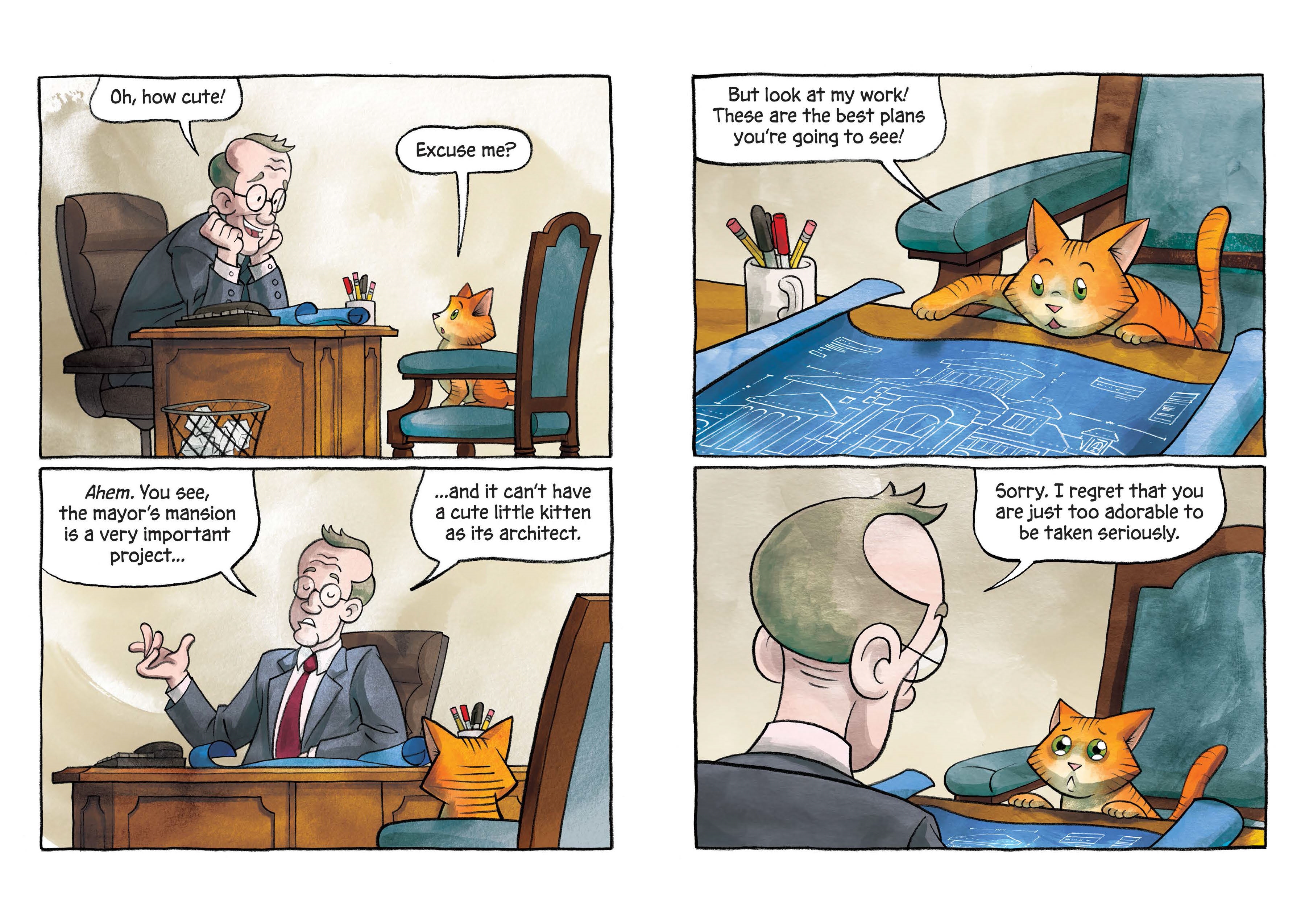
Marmalade is the best architect you’d ever want to meet – but she’s also an adorable kitten, too! How can she get anyone to take her seriously? By teaming up with an adorable group of similarly skilled kittens to form the Kitten Construction Company, of course! Sampson, an electrical engineer, Bubbles, a skilled (and easily distracted) plumber, and Professor von Wigglebottom, a carpenter with a lot of contacts, decide to build their own mansion for Mewtown’s mayor. This graphic novel is the first in a new series and it’s too much fun for younger readers. There are great sight jokes, crisp, kid-friendly cartooning, and a smart story about being taken seriously, no matter how cute you are. I can’t wait to see more of this series!
Posted in Early Reader, Graphic Novels, Intermediate, Non-Fiction, Non-Fiction, Preschool Reads

Two from TOON: Fun ways of looking at Math and Science

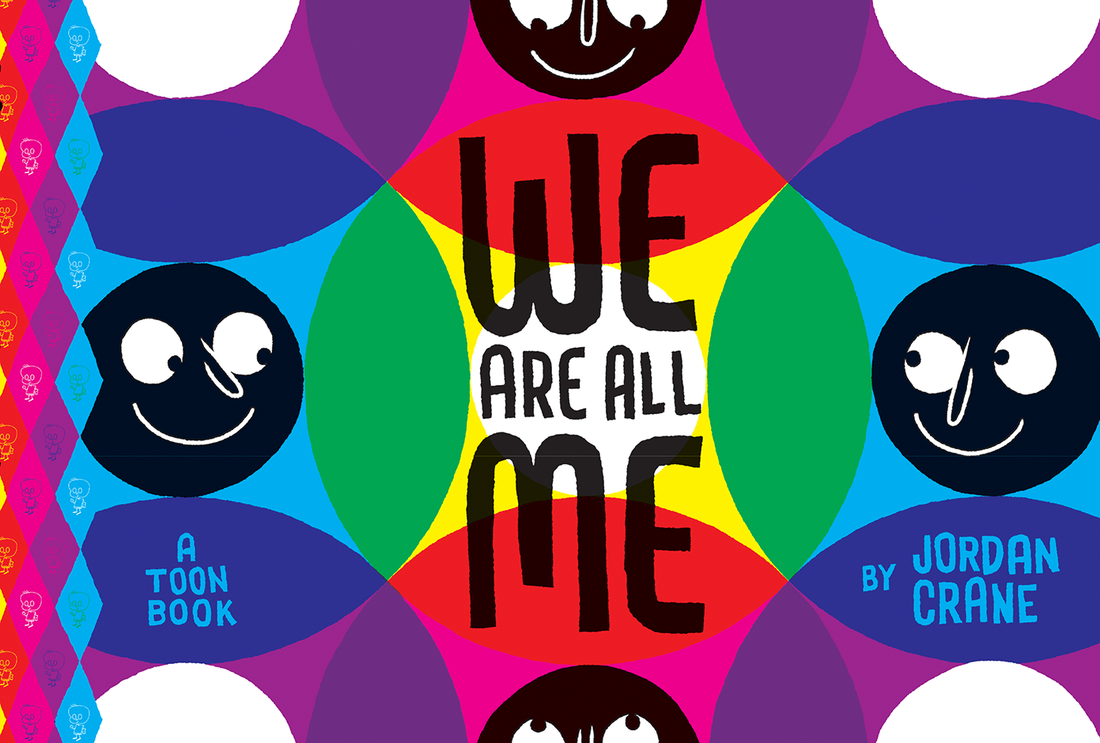
TOON’s doing it again: promoting authors and illustrators who know how to take abstract concepts and craft them into something exciting, beautiful, and fun. The two Fall graphic novels TOON has coming out: 3×4, by Ivan Brunetti, and We Are All Me, by Jordan Crane, play with multiplication, sorting, and sets; creation, DNA, and our relation to the planet and beyond. Sounds like weighty stuff, right? It is, but here’s the best part: these books are for kids, ages 3 and up. Let’s take a deeper look.

3 x 4, by Ivan Brunetti, (Sept. 2018, TOON Books), $12.95, ISBN: 9781943145348

Ages 3+

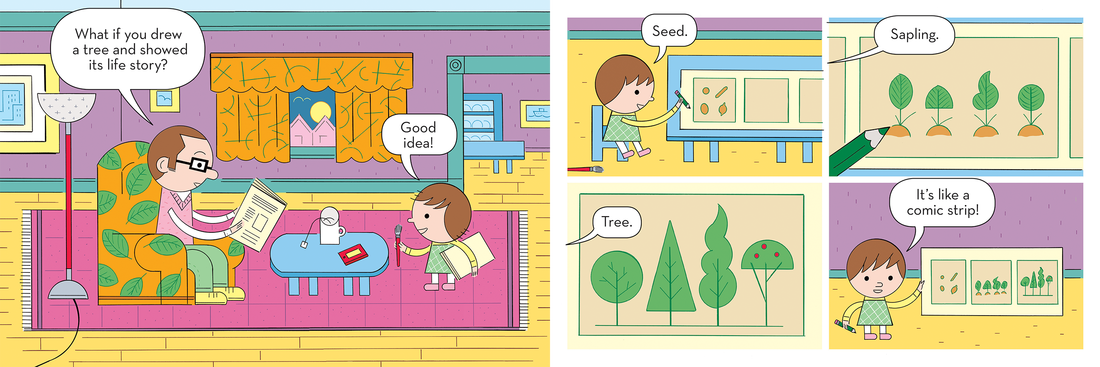
A teacher gives his class an assignment: draw 12 things, but in sets. Everything else is up to them: how many sets, what to draw, what colors to use. Annemarie, one of the girls in class, thinks deeply about what to create, as we see her classmates get to work on their sets. The book introduces readers to the beginning principles in multiplication; sorting; and thinking outside the box, as we see through the kids’ assignments. The book is so meta – it’s a math assignment within a math assignment – that teachers can easily use this as a math storytime.

Ivan Brunetti’s previous TOON book, WordPlay, played with language and compound words, and also starred Annemarie, a child of color in a diverse classroom of friends. As an art teacher, he has a gift for seeing things differently, and has the talent to make his ideas fun and relatable to a young audience. My 6-year-old read 3×4 to me, cover to cover, one night, after I read it to him and we worked through all the similarities between events in the book and what he’d done in his Kindergarten classroom the past school year. I’d love to try a math challenge for the kids in my library, asking them to start with 3 x 4, and go from there: make an art gallery and keep switching up the numbers. Have stickers and stamps and other creative materials handy!

3 x 4 has a starred review from Kirkus. As with all TOON books, a free, downloadable teacher’s guide is forthcoming.


We Are All Me, by Jordan Crane, (Sept. 2018, TOON Books), $12.95, ISBN: 9781943145355

Ages 3+

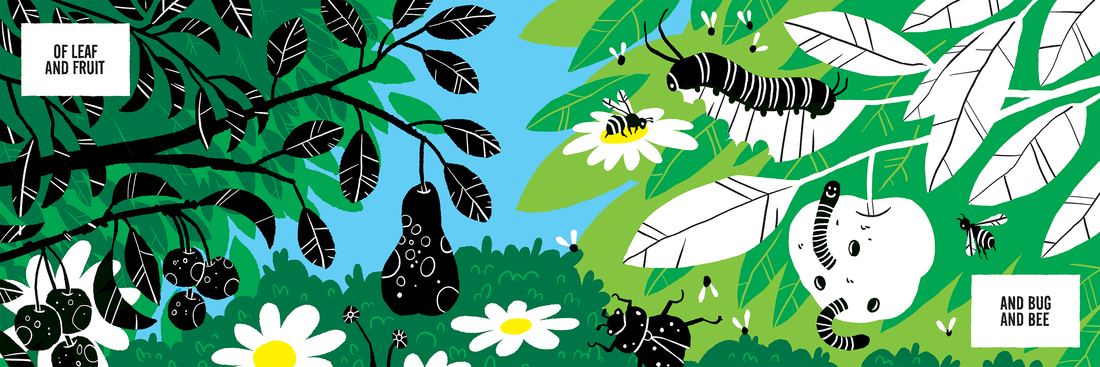
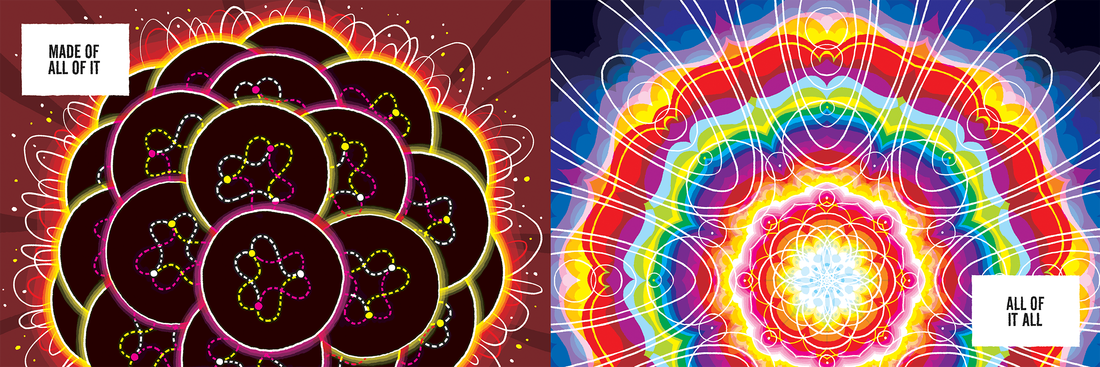
A dot forms and takes readers on a visual journey through existence. As it moves through bodies, nature, DNA, and space, readers experience evolution, our relationship to the Earth, and consciousness, all in vibrant, pulsing, day-glo pen, ink, and tablet artwork. Spare text reads lyrically, almost mantra-like, as we – via the dot – progress through time and space. The visual confirmation that we are connected to this world, and to one another, is exciting and humbling all at once; for young readers, it’s mind-blowing and beautiful. This is one of those books that left me speechless when I first read it, because it’s breathtaking and uses such brief, eloquent verbiage to explain… everything. A stunning must-have for all collections. Own it, and read it. Often.

We Are All Me has a free, downloadable teacher’s guide forthcoming.

Posted in Non-Fiction

My Wild Activity Book is BIG fun for kids!

My First Wild Activity Book, by Maxime Lebrun, (Jan. 2018, Silver Dolphin), $12.99, ISBN: 9781626869578

Ages 4+

This activity book on animals and their habitats is packed with things to do and make! Inviting kids on an adventure, the book begins with a challenge: take a journey through seven habitats around the world, and offers kids the chance to write their own profiles and draw a self-portrait. From there, the game is on! Readers can work their way through the seven habitats: rain forests, deserts, oceans, the mountains, forests, the savanna, and the polar ice by enjoying search and find activities across fold-out spreads, mazes, connect-the-dots and matching games, coloring sheets, and spot the difference challenges. There are loads of facts throughout the book, and each habitat offers a “think outside of the book” activity that parents, caregivers, and educators can enjoy with the kiddos! Sticker badges for each habitat add a little passport-y punch to the book, and two pages of animal stickers (seriously, so. many. stickers) lets readers go wild on the spreads, or, if you’ve got a kid like mine, his bed, the walls in his room, and, in one case, my laptop.

My son went through this book in just shy of a day and a half, and that’s only because I begged for mercy to make dinner when he was halfway through. We had a great time working on these activities and coloring the pages together, and our next step is to work on a few of the “outside of the book” activities: should we make a leaf collage first, or liberate some of our renegade socks, to make a snake? Maybe we’ll go for the paper plate aquarium! This one is absolute fun for families, and the projects are great for a STEM or Discovery Club at the library or in school. It’s a fun way to enhance natural science learning.

There’s a free maze and “spot the differences” printable at Silver Dolphin’s website. Enjoy!

Posted in Intermediate, Middle Grade, Non-fiction, Non-Fiction

Birds and Their Feathers brings art and STEM together

Birds and Their Feathers, by Britta Teckentrup, (March 2018, Prestel), $16.95, ISBN: 9783791373355

Ages 6+

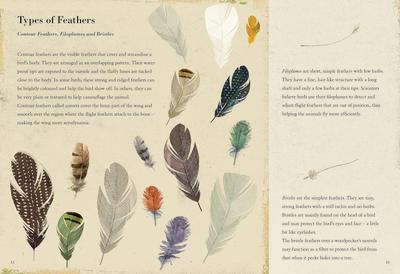
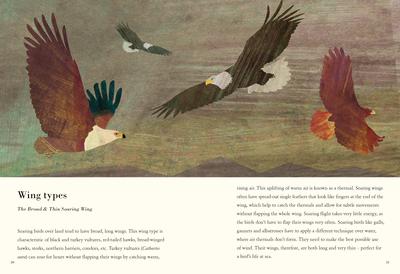
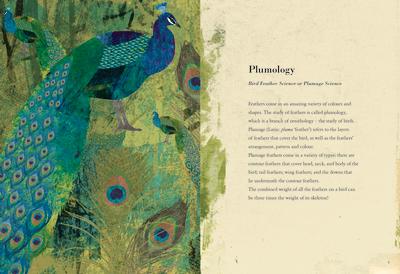
It’s always wonderful when art and science come together to show us the world in all of its natural beauty. Britta Tecktentrup’s Birds and Their Feathers is a stunning example. The book introduces readers to the science of plumology – bird feather science, or plumage science. If this is a new term for you, you’re not alone; this is a branch of ornithology that I wasn’t aware of, either! The book beautifully blends fascinating facts about plumage and birds with breathtaking artwork to give readers a wonderful introduction to this area of the natural world, with spreads dedicated to the structure and development of the feather; types and colors of feathers (they all have their own jobs!) and wings, human usage of the feather, and how humankind was so inspired by the feather, we used it to take flight on our own.

The artwork is quietly breathtaking, using earth tones and collage artwork to create soft, yet dramatic, pictures of birds and their plumage. The endpapers are covered with feather artwork so realistic, you’ll swear you can feel their softness under your fingertips. The writing is never overwhelming; rather, each page has anywhere from a few lines to a handful of paragraphs dedicated to its topic, with facts like: “The inside of a feather needs colours that help protect it and keep it durable. Such colours may include red and yellow, which can prevent bacteria from harming the feather”; “Some birds can make different sounds generated by their feathers”; and “Some fish-eating birds eat their own feathers to line their stomachs, which protects them from sharp fish bones”. This book is perfect for kids and grown-ups alike.

Perfect for a nature study or STEM project, Birds and Their Feathers is a must-add to your nonfiction shelves. Get your readers working with feathers to make their own art, and if you can find a feather or two to show off the parts of a feather up close (wear gloves if you get this from outside!), even better. I’d use this in my Discovery Club in a second. Birds and Their Feathers has a starred review from Publisher’s Weekly.


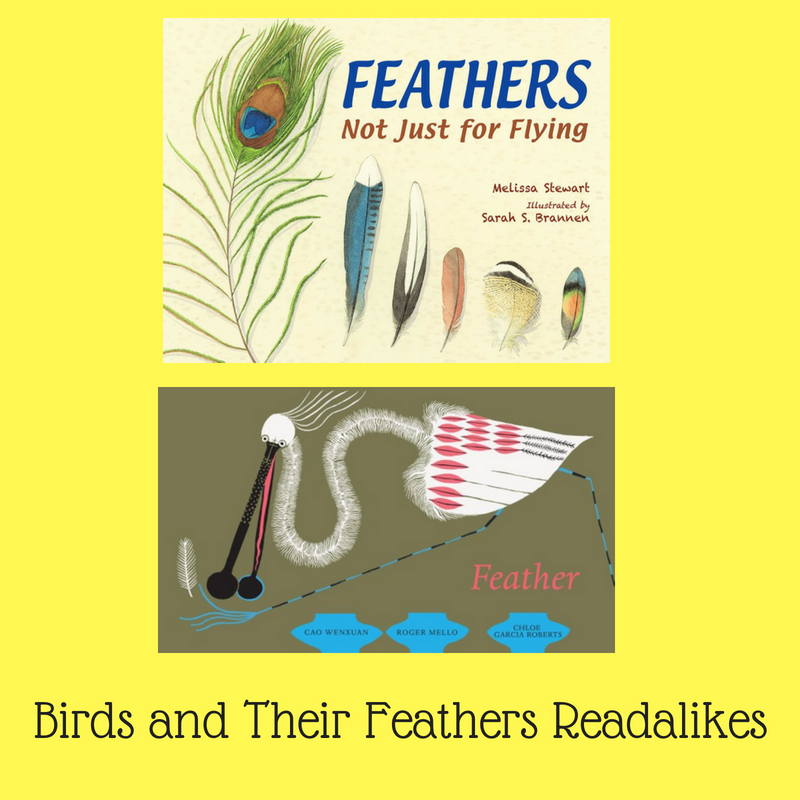
Feathers: Not Just for Flying, by Melissa Stewart/Illustrated by Sarah S. Brannen – Science picture book on how different birds use their feathers.

Feather, by Cao Wenxuan/Illustrated by Roger Mello, Translated by Chloe Garcia-Roberts – A fable about a feather trying to find its origin.


Posted in Intermediate, Middle Grade, Non-fiction, Non-Fiction, picture books

H is for Haiku and the magic of the small moment

H is for Haiku, by Sydell Rosenberg/Illustrated by Sawsan Chalabi, (Apr. 2018, Penny Candy Books), $16.95, ISBN: 978-0998799971

Ages 5+

Sydell “Syd” Rosenberg, who lived, wrote, and taught in New York City. Syd passed away in 1996, but her daughter, Amy Losak, made it her mission to see her mother’s work published. H is for Haiku, is a fun, illustrated book containing 26 “small moments” haiku: little slices of daily life. As Ms. Losak notes in her introduction, “Haiku poems make small moments big”.

Reading H is for Haiku took me back to sons’ “small moments” units in elementary school. They and I both struggled with the idea of a small moment; often puzzling over the feedback, “no, smaller”. How could a trip to the grocery store get smaller? H is for Haiku is the book to go to for those moments: a cat dreams; rain water collects in an old watering can, a girl rides a bike downhill. Syd Rosenberg captures the magic in these tiny moments, finding the poetry in the everyday and illuminating them for readers. Sawsan Chalabi’s artwork is a treat, bringing creativity and movement to these magical moments with color and bold fonts.

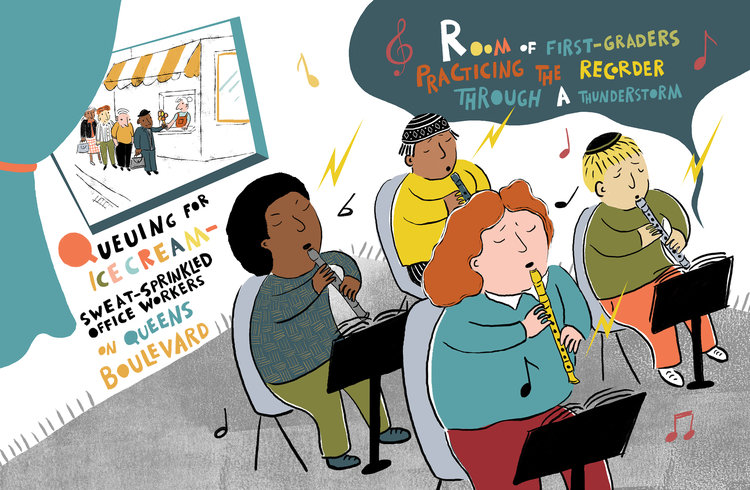
A library card’s potential, through the eyes of a new reader. I want a print of this for my library!

This is so Queens. I love it. Book samples courtesy of Penny Candy Books.

This is a great way to bring poetry, particularly haiku, to kids. It’s a great way to explain small moment writing to students, too. Consider adding H is for Haiku to your collections, or giving a copy to your poetry readers. To see more of a illustrator Sawsan Chalabi’s work, visit her website; to learn more about Amy Losak and her mother’s haiku, visit the Penny Candy website.

Posted in Early Reader, Intermediate, Non-Fiction, Non-Fiction, picture books, Preschool Reads

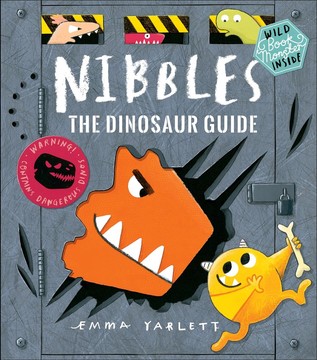
Nibbles Does Nonfiction! Nibbles: The Dinosaur Guide!

Nibbles: The Dinosaur Guide, by Emma Yarlett, (March 2018, Kane Miller),  $16.99 ISBN 978-1-61067-643-4

Recommended for readers 4-8

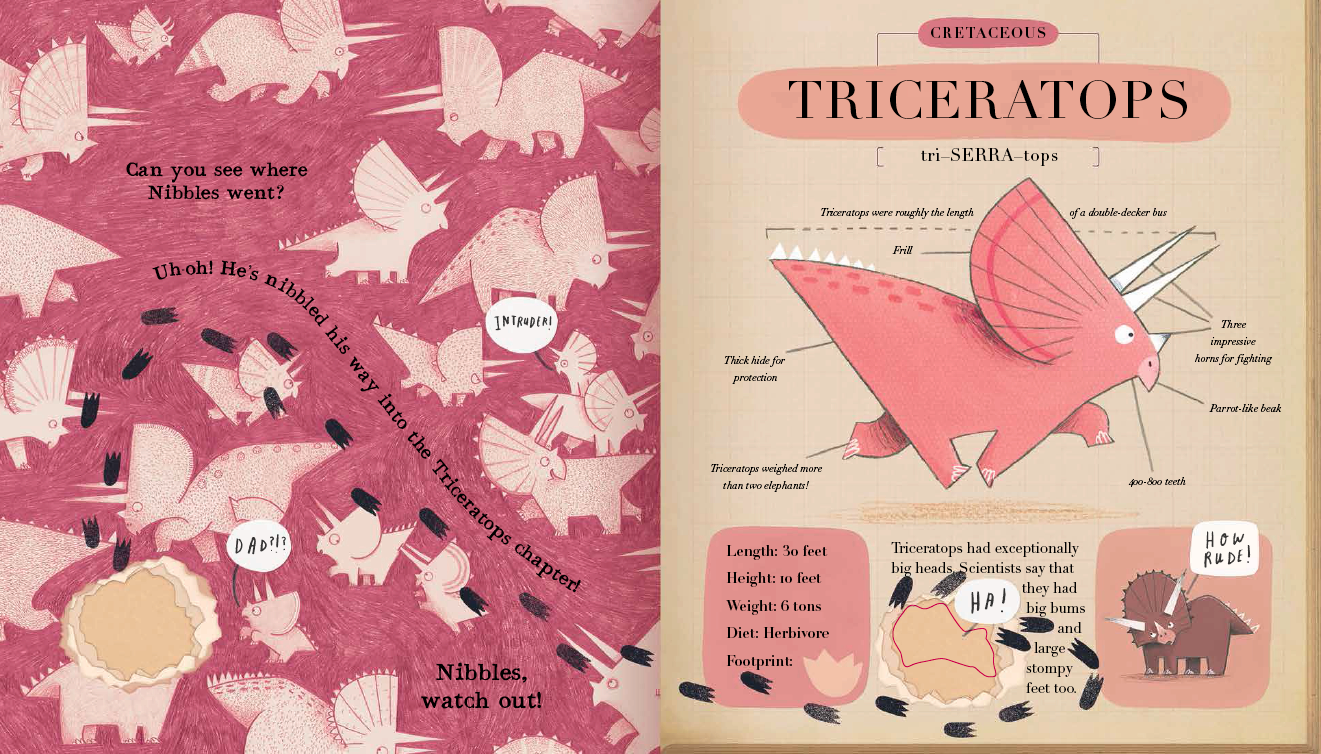
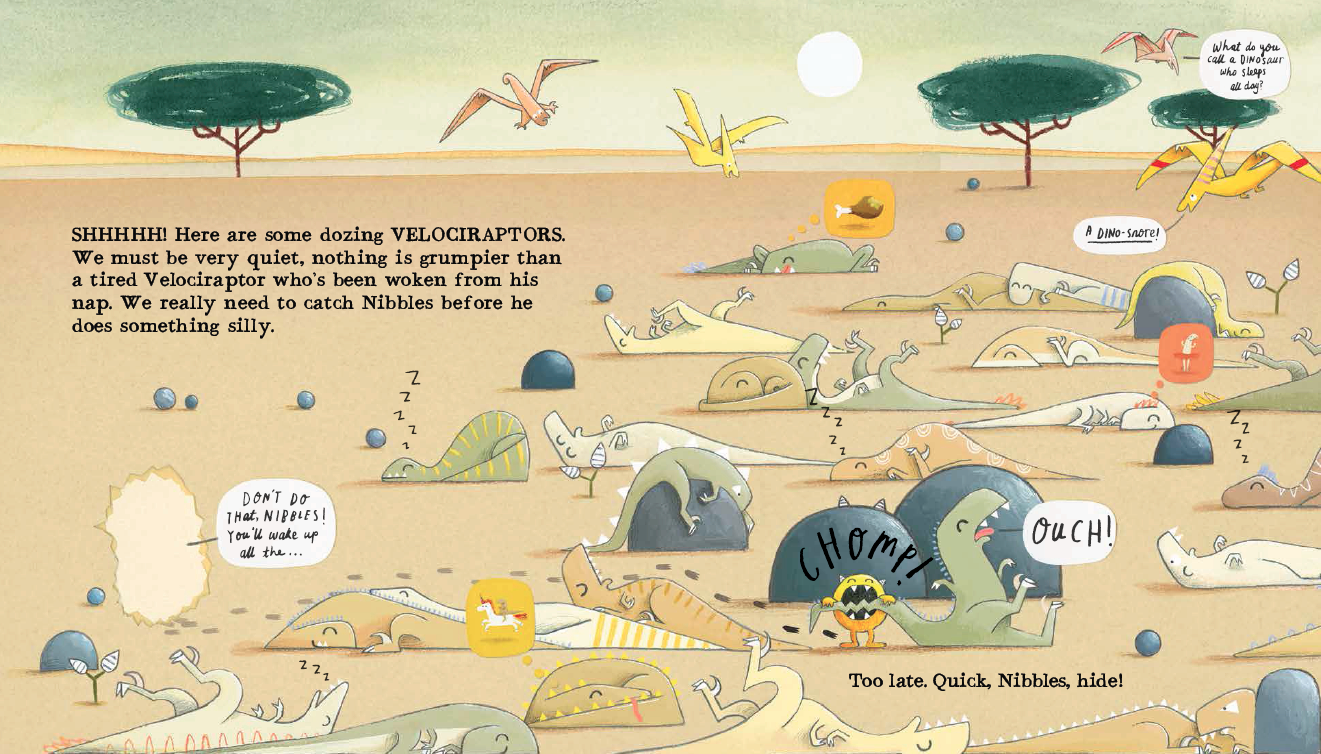
Nibbles the Book Monster is a HUGE celebrity in my home, in my storytime, and now, in my kiddo’s classroom. More on that in a sec. So, Nibbles is a little yellow monster who loves to nibble books. In his first adventure, he nibbled his way through some fairy tales, but he wanted more. Enter Nibbles: The Dinosaur Guide, which combines solid nonfiction dinosaur information, including eras, scientific names (with pronunciation), and fast facts. This is no regular dinosaur book, though: Nibbles is on another adventure, chomping and nom nom-ing his way through the prehistoric era, irritating dinosaurs and spreading mayhem as he goes! Will Nibbles end up on the menu this time?

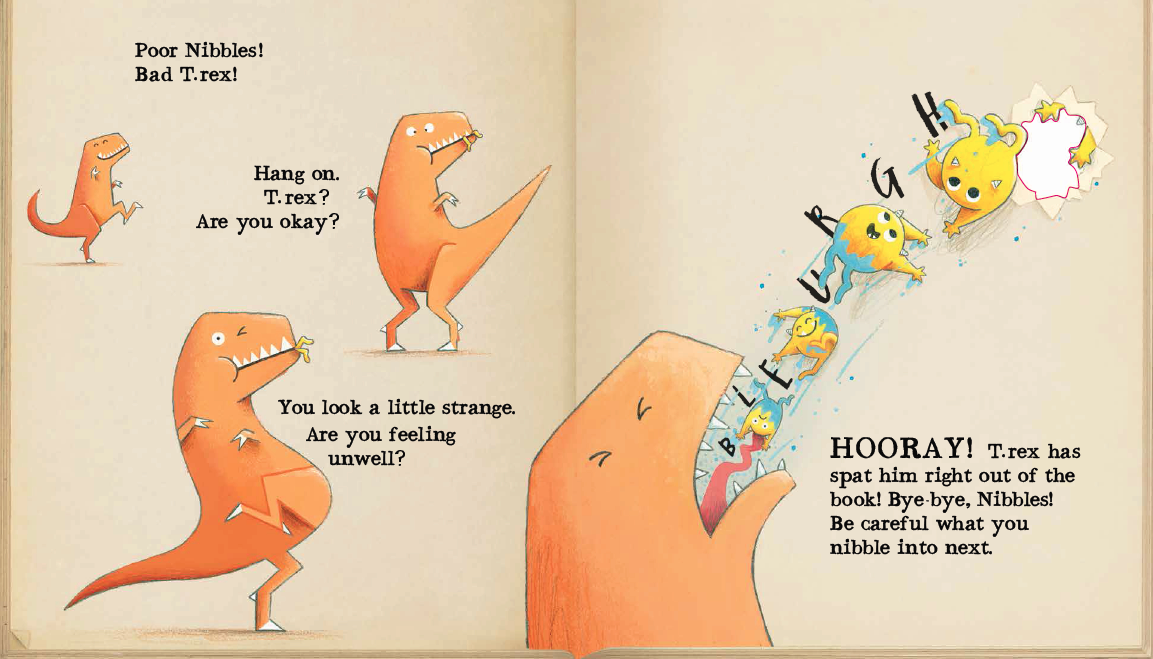
Nibbles: The Dinosaur Guide is full of the same flips and bite-sized page nibbles that makes the first book so much fun to read. Add to that, the hilarious bodily functions of dinosaurs (did you know that a single diplodocus fart could power a hot air balloon? You do now!) and a laugh-out-loud interaction with a T-Rex, and you have a dino book that kids will come back to again and again.

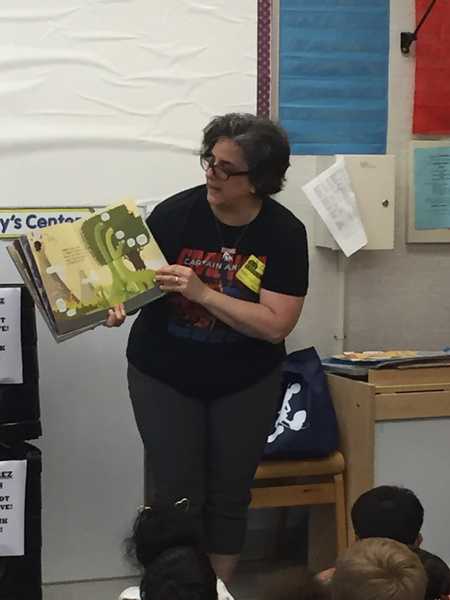
Now the fun part: I brought Nibbles: The Dinosaur Guide to my son’s kindergarten class for a storytime visit. The kids had a choice of books, and Nibbles got the overwhelming vote, so we got into circle time on the carpet and I read the story. The screaming. The hilarity. It was controlled pandemonium, and I loved every second of it. The best part of the visit was my reading the phrase, “I am the Prince of Parps!” (polite British speak for ‘fart’) and the one Scottish kid in my son’s class burst out laughing; his classmates said, “What’s a parp?”, so I looked at him and nodded. He proudly pronounced, “IT”S A FART!” and the class lost their minds. That, my friends, is how you embrace storytime.

Need more Nibbles in your life? Who doesn’t? Author Emma Yarlett’s webpage has printable activities aplenty. Go make a Nibbles bookmark!

Rocking Nibbles in the classroom