Posted in Early Reader, Fiction, Fiction, Intermediate

Blog Tour: The Missing Money, by Okeoma Moronu Schreiner

Coming off a successful Kickstarter, Money Monsters: The Missing Money is here to teach kids about handling their money – and to trust that chompy ATM machine.
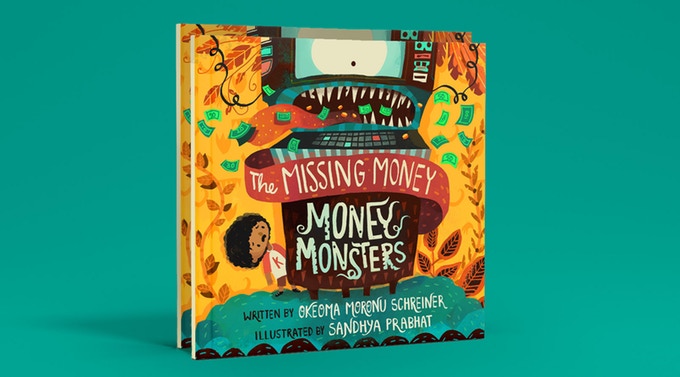
The Missing Money (Money Monsters), by Okeoma Moronu Schreiner/Illustrated by Sandhya Prabhat,
(July 2019, FinKidLit), $11.95, ISBN: 978-1733806718
Ages 4-7

Kai is a little boy who’s very excited: he has a bunch of money from his Chinese New Year red envelopes, and Dad’s promised to take him to the bank to deposit it! But – holy cow – they don’t even get into the bank when A GIANT ATM MONSTER EATS HIS MONEY! Kai is not happy about this turn of events, and puts together a plan to get his money back. When he lets his parents know, though, they’re not terribly concerned: in fact, they tell him that his money is safe and sound, and that an ATM keeps his money safe until he’s ready to use it again. They even show him a nifty phone app where he can check on his money any time he wants!

The Missing Money is an adorable introduction to money management for younger kids. “Happy Lawyer” Okeoma Moronu Schreiner is a corporate finance attorney and mom, and has a wonderful storytelling voice here. The Missing Money is a realistic, fun, and approachable way to introduce kids to money management: banks, ATMs, and bank apps! A key words section introduces new vocabulary, and conversation starters help families and caregivers start talking about money. Sandhya Prabhat’s hand-painted and digital illustrations are bright, bold, and adorable! Kai is a biracial child of color with an Asian father and brown-skinned mother, and lives in what looks like an urban environment.

A great way to start talking to our little ones about saving those pennies (and dollars). I’m looking forward to seeing other Money Monsters Ms. Schreiner and Ms. Sandhya Prabhat have in store!


 

A little Q&A with author Okeoma Moronu Schreiner…

How did financial literacy for young people become a passion of yours?
Before I was a personal finance junkie, I was an elementary school teacher. I guess you could say that I’ve always had a passion for translating seemingly complex concepts into fun, educational content. 

What advice do you have for parents interested in starting these financial discussions with their children?
Do it early and often. 

Why is it important to start these money talks with your children at a young age?
The earlier you start these conversations the more comfortable you’ll be having them throughout the many seasons of parenthood. Truth is that the conversations will only get tougher and tougher as your children get older so you want to develop the language and comfort before it’s too late. Your children are internalizing “stories” and beliefs about money that may not be true and have the potential of impacting their financial lives forever. If we, as parents, don’t help shape those stories and beliefs, our children will create their own. 

What are some concrete steps parents can take while their children are young to start their children out on the right financial path?
Take the time to involve them in your everyday money decisions. Whether it’s choosing between two products at the grocery store or choosing not to spend on something in order to save for a bigger goal, children will benefit from understanding how money decisions are made in everyday situations. 

Speak to them about in values, not figures. In our house, our kids know that the environment is very important to us so we’ll pay more for a product that is more sustainable and/or eco-friendly. Help your little ones understand your family’s values and how your money supports and reflects those values. 

Teach them contentment. This is a hard lesson that can take a lifetime to learn. In order to get your little one off on the right foot you can lead by example, help your children practice gratitude and teach them the value of giving. 
Posted in Fiction, Fiction, Graphic Novels, Humor, Intermediate, Middle Grade

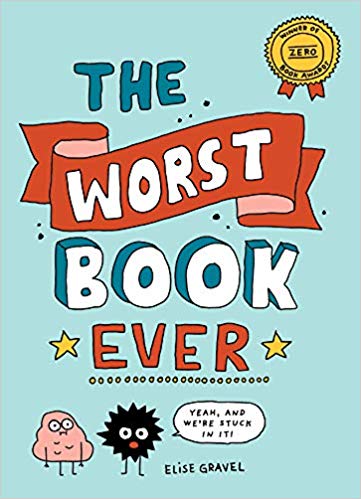
The Worst Book Ever is hilarious!

The Worst Book Ever, by Elise Gravel, (May 2019. Drawn & Quarterly), $17.95, ISBN: 9781770463639

Ages 5-10

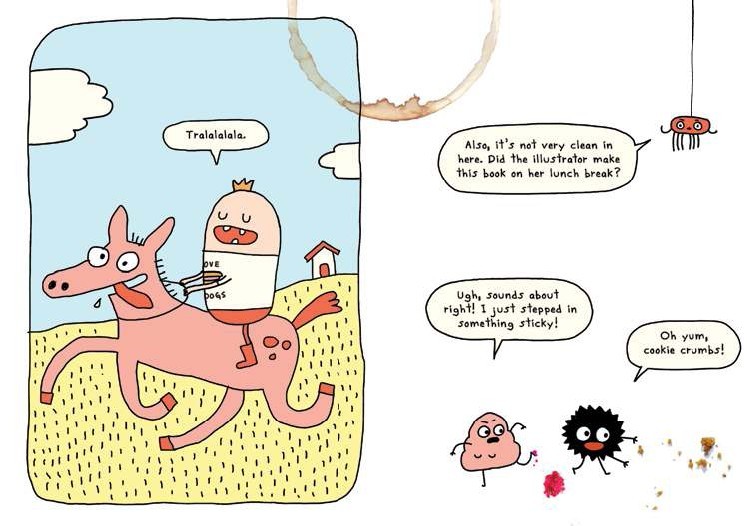
Elise Gravel’s work always makes me smile, and her newest book, The Worst Book Ever, made me laugh out loud. Three characters come together to comment on the worst fairy tale ever as it unfolds. They’re annoyed by standard fairy tale tropes, like the “beautiful prinsess and brave prinse”; they criticize typos, illustration, and writing style, all for laughs. The commentary is laugh-out-loud funny, and the visuals are bold, bright, and wonderfully odd. The fourth wall is more than broken; it’s demolished as coffee stains and cookie crumbs dot the pages and our main characters call out lack of diversity, literary clichés, and weak female characters. One character makes a list of all the spelling mistakes found in the book always good for a prize for anyone who can catch them all. As the story descends into madness, the characters become more confused, and your readers will laugh even harder.

The Worst Book Ever can be a good companion when talking about short story writing. Point out issues the characters have with the story as it develops, and see what your readers chime in with. Can they fix the narrative?

Lest I leave out the most important part: there’s bathroom humor. I quote: “Poopie Peepee Fart Booger”. So this is basically kid gold.

Add this to your graphic novel shelves and watch it fly.

Posted in Fantasy, Fiction, Humor, Intermediate, Middle School

Odd Gods – Mythic Middle School can be Heck!

Odd Gods: Misfit Myths from Mount Olympus Middle School, by David Slavin & Daniel Weitzman/Illustrated by Adam J.B. Lane, (May 2019, HarperCollins), $13.99, ISBN: 9780062839534

Ages 7-11

This mythological mashup is straight-up hilarious. Oddonis is the son of Zeus and Freya, the Nordic goddess of love. You’d think he was set, right? NOPE. He’s got a weird chin, messy hair, a third nipple, and he’s nothing like his twin brother… Adonis. Yup, THAT Adonis. Adonis, who had six-pack abs as a baby! How does that even happen? Narrated by Oddonis, Odd Gods is the story of the Odds – the not-quite godly gods – as they navigate the halls of Mount Olympus Middle School, and of Oddonis’ attempt to wrest respect from his brother and his father when he runs against Adonis for class president.

Odd Gods has a snarky bent to the narration – think Jeff Kinney’s Diary of a Wimpy Kid – with a strong undercurrent of frustration. These are the kids that have been discounted from the very beginning. We have Mathena, goddess of math and… poultry. She loves math; she breathes it, lives it, loves it, to her classmate’s ridicule. There’s also the duck and chicken following her around; that can’t help. There’s Germes, god of sniffling and snot, who can often be found hanging out in a dumpster. Don’t forget Puneous, the smallest god of them all, and Oddonis’s best friend… Gaseous. Gaseous, who can clear a room or send a group of gods flying. Together, this group of misfits will take on the established group of Mean Gods and prove, for once and for all, that there’s room on Olympus for everyone.

Absolute fun, with black and white drawings throughout that directly contribute to the story’s flow. Hand this to your Jedi Academy readers and see how they think the two schools would do in a match-up. Heroes in Training and Goddess Girls readers will love this one, too.

Posted in Fiction, Intermediate, Realistic Fiction

Extravaganza at the Plaza and a word from author Lauren L. Wohl

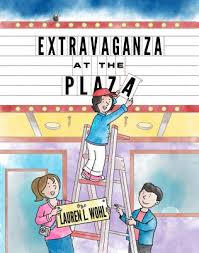
Extravaganza at the Plaza, by Lauren L. Wohl/Illustrated by Mark Tuchman, (Aug. 2018, Persnickety Press), $14.95, ISBN: 9781943978311

Ages 7-11

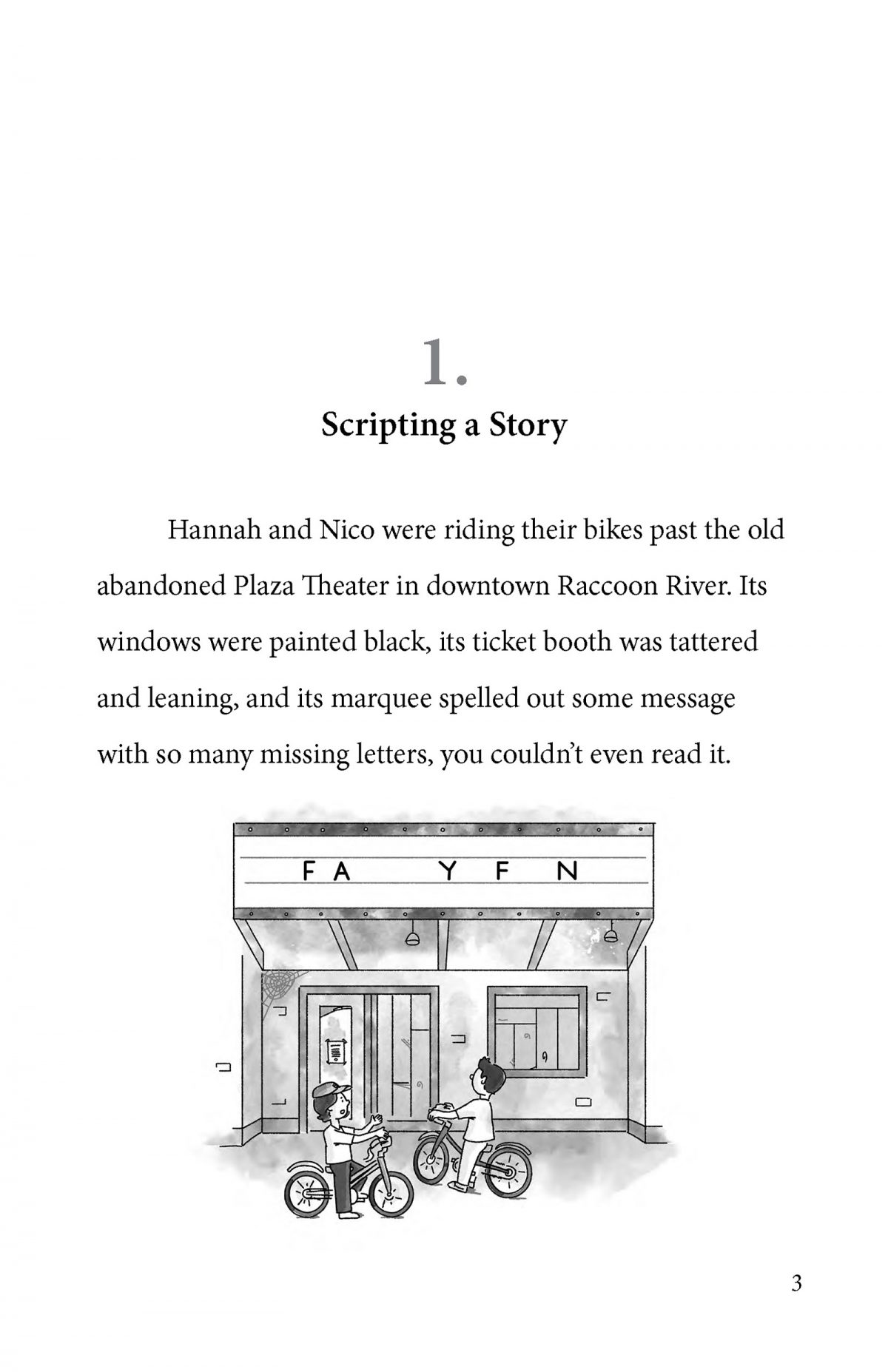
Third graders Hannah, and her best friend, Nico, walk by an abandoned theater in their neighborhood and decide it’s time to take action. Their town needs a good theater, after all: there are graduations and school concerts to be held, and everyone’s tired of traveling to nearby towns to see movies. There is a lot of work to be done, but Hannah is determined to make things happen! This companion to 2017’s Blueberry Bonanza is an upbeat story of how a community comes together with a goal in mind: to rehabilitate a public space!

Extravaganza is a good choice for middle graders. Hannah and Nico, along with their local mayor, have a lot to teach kids about taking action. The first place Hannah goes when she starts on her mission: the library! Her local librarian helps her look up the building’s owner and construction details, plus local history regarding the building. Hannah uses this information to learn what can be done, who to speak to, and how to get more help on board for her idea. Hannah is also a sympathetic character; she wants to make this her own pet project and struggles with so many people being part of it – kids will appreciate the feeling of wanting to work on a passion project, and the potential frustration of having someone else take the credit for their work. There’s discussions of fundraising, donor fatigue (when Hannah suggests sending postcards or calling people about donating, her mother steps in to gently nix that), and the necessities of renovating a building – find the owner; get it inspected; hire the right professionals – and, most importantly, the planning process for each task! Black and white illustrations throughout add a human face to the story, and the big ending will have kids wondering what they could do to make positive change in their own neighborhoods.

Lauren L. Wohl writes good stories about kids making the difference in their neighborhoods. Her Raccoon River Kids have started their own businesses (Blueberry Bonanza); motivated an entire town to come together to renovate a public space (Extravaganza at the Plaza), and, later this year, they’ll be starting a pet showcase to find homes for homeless pets (Zooapalooza). The Raccoon River books are a great precursor to books like The Donut Fix by Jessie Janowitz.


And now, a note from author Lauren L. Wohl!

MY FAVORITE LIBRARY MOMENTS

I grew up in Brooklyn, and believe me when I tell you, it was not the cool place it is today.  It was just home to many working families, made up of neighborhoods which were small and close and often built on shared values and experiences.

There was a branch of the Brooklyn Public Library eight blocks from home. For as long as I can remember, my dad and I walked to the library every Saturday morning. At each visit, he would borrow one of the color fairy tale collections by Andrew Lang. I don’t recall how many there were, but I can still picture The Blue Fairy Book,The Purple Fairy Book, and The Rainbow Fairy Book. During the week that followed, he or my mom would read one whole story every night. We had favorites in each color, and we knew that evenif tonight’s story wasn’t one of those, tomorrow’s or the next day’s would be.  

My dad also borrowed a book for himself for subway–reading back and forth to his job in Manhattan. I, too, would pick a book to read on my own. 

The next week, we would return our books to the librarian who was always interested in what I liked and what I didn’t. We engaged in conversations about the books. (I thought she had read EVERYTHING in the library.). She took my opinions seriously. That interest and that respect mattered the world to me.

By the time I was in fourth grade, the librarian started to put aside three books she picked out just for me. She knew what my preferences were from the many book discussions we had had. She picked winners just about every time. I felt so specially treated.

When I went through a period of reading books that she didn’t thinkworthy, she would make sure the second selection of that Saturday met her standard. Slowly I developed skills to find books that challenged me and pleased me; humor that made me giggle; dramas that wrapped me inside them; nonfiction that answered my questions; and family and friend stories that warmed my heart.

When the city decided it was time to develop the area where our library stood, they moved the branch closer to our house. It was easier, sure, but I missed the long walks with my dad. I was in junior high by then, old enough to walk to this new location on my own.  But I missed that old library; I still do. It’s impact was long-lasting, and many years later I know those Saturday mornings were a part of my decision to go to graduate school in library science.

When I finally completed my degree, my husband, young son and I took a vacation to Washington DC to celebrate. I wanted to explore the Library of Congress.

My husband called ahead, so that when I showed up, the library was ready for me with a special “brand-new librarian” tour. I saw rooms the public didn’t usually see. I touched history; it surrounded me. Every step was thrilling, every detail memorable. Right then was when I knew I had made the right decision.

Posted in Early Reader, Fiction, Fiction, Intermediate

More Nocturnals! Who will win The Chestnut Challenge?

The Nocturnals: The Chestnut Challenge, by Tracey Hecht/Illustrated by Josie Yee, (April 2019, Fabled Films Press), $12.99, ISBN: 978-1-944020-23-1

Ages 5-7

The latest Nocturnals easy reader is a story about playing fair. Sugar glider Bismark just loses a game of chestnut checkers to Tobin the pangolin, when a chinchilla named Chandler shows up and declares himself a chestnut champion, challining poor Tobin to a game. Tobin just likes to play for fun, but Bismark nudges him into play. Chandler causes distractions that get the group to look elsewhere so he can cheat, but Bismark finally catches him and calls him out! After confessing to cheating because he wanted to win, Tobin gently reminds him that practice makes perfect, and Dawn invites him to play with them as a group. The Chestnut Challenge addresses cheating, but it also looks at being sore losers and sore winners: we see Bismark being a sore loser, and Chandler, when cheating, gloats over his moves. Tobin doesn’t want to be in cutthroat competition, he just wants to have fun; it’s a point we should all be making when we read this with our kiddos. Winning can be fun, but cheating to win isn’t really winning. That said, being gracious and offering someone a second chance is winning, all on its own. (And, naturally, with Bismark keeping an eye out.) Back matter includes an introduction to each of the core group of Nocturnals, plus a fun fact about chestnuts.

I’m a dedicated fan of this series. Tracey Hecht has a way of reaching kids by using adorable animals with distinctive personalities to get to the heart of real-life situations kids find themselves coping with, and how to start discussions about those situations. These books are a great go-to for us grown-ups, too. The Nocturnals World website has great, free downloadables, including activity kids, coloring sheets and games, videos, and educational resources.


Posted in Fiction, Intermediate, picture books

A change in perspective: Mr. Posey’s New Glasses

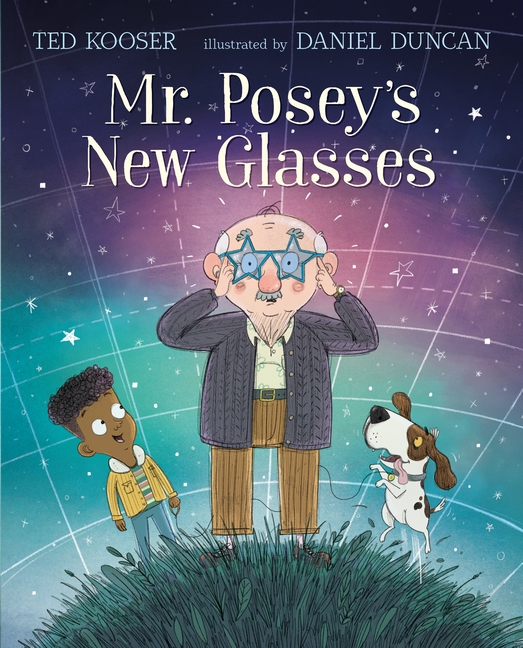
Mr. Posey’s New Glasses, by Ted Kooser/Illustrated by Daniel Duncan, (Apr. 2019, Candlewick Press), $16.99, ISBN: 9780763696092

Ages 6-9

Mr. Posey is an older gent who’s feeling down. When he puts his glasses on, everything looks boring. Everything is just the same, same, same, and he wants to do something about it! He heads to the thrift store with his young friend, Andy, and starts trying on glasses from a big barrel, with… interesting results. The star-shaped glasses transport him to a field, where he can see all the constellations in the night sky, but it’s much too dark for him. The stripy brown frames bring him underwater, where some mean-looking fish swim around him, menacingly. The big, round lenses send the room spinning, and the cat=shaped frames put him in a field, pursued by dogs! Nothing clicks for him, no matter how many frames he tries on – and then, Andy notices that his glasses are dirty. Once Mr. Posey cleans his glasses, everything is clear and colorful again! Mr. Posey’s New Glasses is all about how we see things; what filters we have in place that color how we enjoy – or are brought down by – the world around us. There’s a lovely inter-generational friendship between Mr. Posey and his young friend, Andy; Andy also helps give Mr. Posey some perspective, noticing his dirty glasses and rejuvenating his attitude. The story is fun, and meatier than most picture books; this one is good for first to third graders. The digital artwork is tinged with a tan overlay and muted colors for most of the book, letting readers experience things as Mr. Posey does, but once he clears his glasses up, color becomes more lively, with pink store signs, blue skies, and colorful buildings. The thrift store is eclectic and has a great feel to it. This is a great book to start a discussion on how one’s outlook can affect mood, and how imagination can help spice things up. (Psst… glasses craft!)

Ted Kooser is a former US Poet Laureate and has a weekly column on American life in poetry available on his website.


Posted in Early Reader, Fiction, Fiction, Intermediate

The Bossy Pirate is facing a mutiny!

The Bossy Pirate, by John Steven Gurney, (Oct. 2018, Schiffer Publishing), $16.99, ISBN: 9780764356254

Ages 6-8

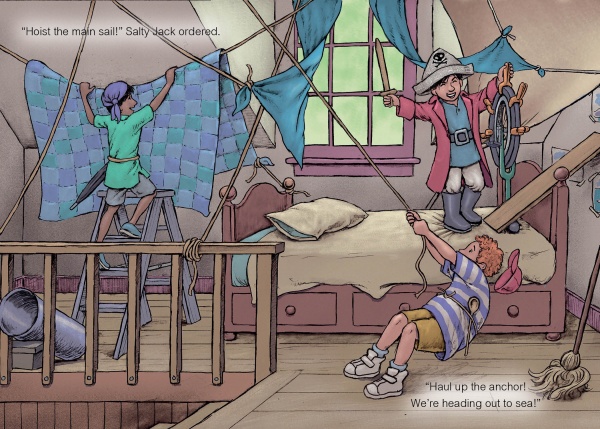
A little boy who goes by the pirate moniker “Salty Jack” plays pirate in his room, and invites – well, commands, really – his friends to come on board as his crew. As the title suggests, Salty Jack is not the greatest captain or playmate, continually reminding his friends that “I’m Captain! I give the orders!” and not letting anyone else have a say in their pirate game. When he tries to boss his sister, Millie the Mermaid, around, thought, she merely says, “Mermaids don’t take orders”, and leaves. Shortly after that, Jack’s other two friends have had it with his bossiness and leave, too. Jack broods, and blames his friends for ruining his fun; when Millie returns to ask him if his friends were having fun, too, he doesn’t answer. Jack discovers that being a solo pirate is no fun, and has a change of heart that brings all his mates back on board, where they hunt for lost treasure together.

A smart easy reader story about sharing and playing well together, The Bossy Pirate is a good read-aloud and a good independent book for newly confident readers. The sentences are slightly longer than beginning easy readers, and include imaginative words like scuttlebutt, barnacle, and nautical. Back matter includes a list of nautical terms that come up in the book, and a list of “nonsense words” that the pirate friends use. The artwork combines realistic and imaginative, with action going from Jack’s room to the high seas, where whales and dolphins glide and leap around a pirate ship. The group of friends is multicultural.

The Bossy Pirate is good fun with a smart message: it’s always better to play well together. Let the kids make their own newspaper pirate hats and have a pirate storytime.


Posted in Fiction, Fiction, Graphic Novels, Intermediate, Middle Grade

Big Nate meets Medieval Times: Max and the Midknights

Max and the Midknights, by Lincoln Peirce, (Jan. 2019, Crown Books for Young Readers), $13.99, ISBN: 978-1-101-93109-7

Ages 8-12

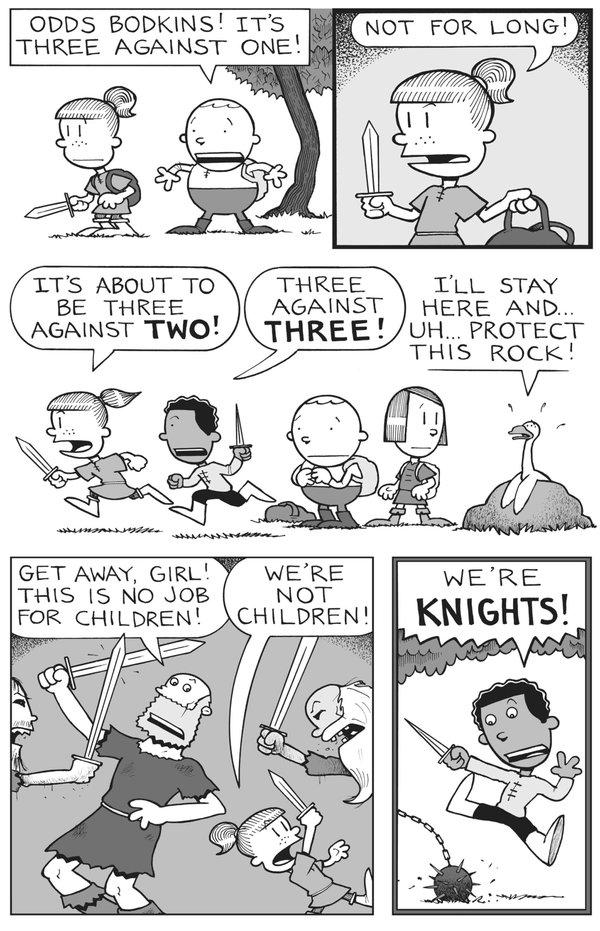
From the creator of Big Nate comes Max and the Midknights, a story about Max, a troubadour in training who really wants to be a knight; a mean king, and a group of kids determined to make things right. Throw in a magic sword and a bumbling magician, and you have Max and the Midknights, a clever blending of graphic novel and middle grade novel. Max and Uncle Budrick visit Budrick’s childhood home in the kingdom of Byjovia, only to discover that the kind King Conrad is missing and presumed dead, and his awful brother, King Gastley, is on the throne. The villagers all seem cruel and distant, and routinely rounded up and thrown in Gastley’s dungeons. Max and new friends Kevyn, Millie, and Simon, hatch a plant to save Budrick and have some exciting adventures on the way, including some interesting background on Max, epic poetry, dragons, and haunted forests.

The book is loaded with humor, very likable characters, and adventure. Big Nate fans will be happy to see Nate show up in the book’s very beginning: Max and the Midknights is his book report. I loved spending time with Max and friends, and I’m hoping to see another installment soon. Put this right up there with Dav Pilkey, Jeff Kinney (both of whom blurbed Max), and Jeffrey Brown’s books. This could be the book that gets your reluctant reader to embrace fantasy fiction!


Posted in Fantasy, Fiction, Intermediate

Polly Diamond heads to the Super Stunning Spectacular Book Fair!

Polly Diamond and the Super Stunning Spectacular Book Fair, by Alice Kuipers/Illustrated by Diana Toledano, (May 2019, Chronicle Books), $14.99, ISBN: 978-1452152332

Ages 7-10

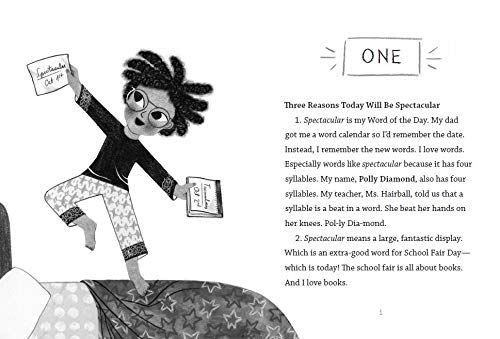
Polly Diamond and her magic notebook, Spell, are going to the school book fair in Polly’s latest adventure! As we learned in Polly’s first story, Polly Diamond and the Magic Book, Spell has the special ability to bring to life whatever Polly writes in it. So when Polly decides to liven up the book fair with some book-related excitement, it’s a lot of fun: she turns a mean babysitter into a squirrel, she calls up a roller coaster, and a Title-Tastic photo booth. But writing things down can often lead to misinterpretation, and Polly discovers things have gotten way out of control! Just imagine what Amelia Bedelia would be like if she had magical powers, and there you have it. Polly has to get things under control, and keep her kid sister safe in the process!

Polly is a biracial child of color with a white father and dark-skinned mother; her baby brother and kid sister are also children of color. Loaded with black and white illustrations, this second book in the Polly Diamond series is great fun, and filled with book-related humor and references. There’s even a list of Polly’s current favorites at the end of the book, which I love. It not only lends itself to a creative book display, but gives you a ready-to-booktalk guide for readers who want to read like Polly does. These chapter books also make for fun read-alouds; you can do a chapter a day with no problem, and let your audience’s imaginations run wild in their own (less powerful) Spell notebooks! Ask kids what they’d have Spell create for them, and invite them to contribute their own book ideas to make lists similar to Polly’s. This is the kind of series that turns readers into book lovers. Make sure you have this one on your shelves.

Alice Kuipers is an award-winning author and offers information for writers on her author website. Diana Toledano is an award-winning illustrator whose art you can see on her website.

Posted in Fantasy, Fiction, Fiction, Intermediate, Middle Grade, Middle School, Realistic Fiction, Tween Reads

Middle Grade Quick Takes: Toy Academy, Ask Emma, Confusion is Nothing New

Every now and then, I dive into my TBR, which accumulates at an astonishing rate. This week, I managed to read a few more from the TBR, and wanted to give a quick take on them, since they’ve been out for a while but still deserve some mention.

Toy Academy: Some Assembly Required (Toy Academy #1), by Brian Lynch/Illustrated by Edwardian Taylor, (Jan. 2018, Scholastic), $12.99, ISBN: 978-1-338-14845-9

Ages 7-10

This is the first in a new intermediate/middle grade series, and it’s SO much fun. Grumboldt is a stuffed animal of some sort – he has a somewhat amusing and dubious origin – and desperately wants to belong to a kid of his own. He meets a transforming car robot named Omnibus Squared, who, as it turns out, is recruiting toys for Commander Hedgehog’s Institute for Novelty Academia – The Toy Academy. Grumboldt manages to talk his way into admission, and tries desperately to be a great toy, so he’ll be assigned to a great kid, but he’s got some challenges. There’s a bully (it’s always a soldier, isn’t it?) named Rex constantly bugging him, and he can’t stay awake during Bedtime Prep. When Commander Hedgehog’s arms go missing, though, Grumboldt sees a chance to help out and make good at Toy Academy after all.

Have readers who love Toy Story? (Seriously, who doesn’t?) Give them Toy Academy. It’s sweet, hilarious, and loaded with toy references that everyone – kids and grownups alike – will recognize and get a laugh out of. Brian Lynch is a screenwriter with Minions and The Secret Life of Pets to his credit, so he knows how to write things that kids like. Edwardian Taylor’s art is a perfect match for the wacky, fun storytelling and gives us characters we’ll know and love for books to come: Grumboldt is a lovable plush with mismatched parts; Micro is a lively action figure whose collectable status limits her movement – she’s stuck in a plastic bag, because she HAS VALUE; Commandant Hedgepig is a knockoff, off-brand version of Commander Hedgehog who insists on being called his proper name rather than his emerging nickname, Bootleg. The second Toy Academy book, Ready for Action, is also available, so put these on your series purchase lists if you don’t have them already.  The kids will love them.

Ask Emma, by Sheryl Berk & Carrie Berk, (May 2018, Yellow Jacket), $16.99, ISBN: 978-1-4998-0647-2

Ages 8-12

Emma is a 13-year-old seventh grader who loves to give advice, whether or not it’s asked for. She decides to start an Ask Emma column, so she can make herself available to all of her classmates at Austen Middle School, but quickly discovers that she’s a bit tone deaf in the process; she tends to push her best friends into doing things her way. She even tries to get the cute new guy, Jackson Knight, to join all the groups she thinks he should and tell her all about himself, but he gives a little pushback, which adds to his mystery. Emma starts getting some negative comments on her blog, and things start going haywire in Emma’s real world, too. When a hurtful picture of Emma starts making the rounds around the school, she decides to nip a potential cyberbully in the bud and takes action.

This is the first book in a new series from The Cupcake Club authors Carrie Berk and Sheryl Berk, and it left me a little wanting. Emma never really sees how self-absorbed she is, or apologizes for the things she does to her best friends. Her friends turn their backs on her when another student that Emma tries to “help” lies to make herself look good, but she never has that aha! moment when she examines her own behavior. A few negative blog comments and one mean picture become an overblown cyberbullying campaign, which, in this day and age, is forward thinking – catch cyberbullying in its early stages, before it becomes something out of control – but her related blog entry makes it sound like she endured a hateful campaign where she was bullied day and night. This one is a little out of touch; maybe an additional purchase where the authors are popular. The additional characters, including Jackson Knight and Emma’s best friends, Izzy and Harriet, seem interesting and I’d like to read more of their stories.


Confusion is Nothing New, by Paul Acampora, (May 2018, Scholastic Press), $16.99, ISBN: 978-1-338-20999-0

Ages 9-13

Fourteen-year-old Ellie Magari just found out her mother, who left her and her father when Ellie was a baby, has died. Never having known her mother, Ellie tries to figure out who her mother was, especially when her father presents her with a box of her mother’s memorabilia, mysteriously sent to Ellie. She discovers that her mother was the singer in an ’80s tribute band, married her *other* high school sweetheart, and that the band is playing the local college soon. Ellie struggles with learning about her mother and how to grieve someone she never knew, while expressing frustration with her father’s reluctance to talk about her at all. Thankfully, Ellie’s friends, her principal, and an interesting new music teacher are there to help her put together the rest of the missing pieces.

Confusion is Nothing New is good, and yes, I say that partly because I love all things ’80s. (I would make a heck of a playlist to booktalk this book.) But aside from the music, it’s got a solid, readable story, and the characters have incredible heart and humor. Ellie is a likable, relatable character who takes no foolishness when a teacher treats her friend badly; she’s also vulnerable and working her way through big revelations dropped on her throughout the book. I loved her school band friends and the ease of their relationships; their humor, and their loyalty to one another. This one is a good read for tweens and teens – it’s on the cusp of being YA, but not – who want to read about another character figuring it out as best as she can.