Posted in Early Reader, Fiction, picture books, Preschool Reads, Toddler Reads

Get ready for the season with First Snow with a giveaway!

First Snow, by Nancy Viau/Illustrated by Talitha Shipman,, (Sept. 2018, Albert Whitman), $16.99, ISBN: 9780807524404

Ages 2-6

A brother and sister join their friends for a day of fun when the first snow falls.

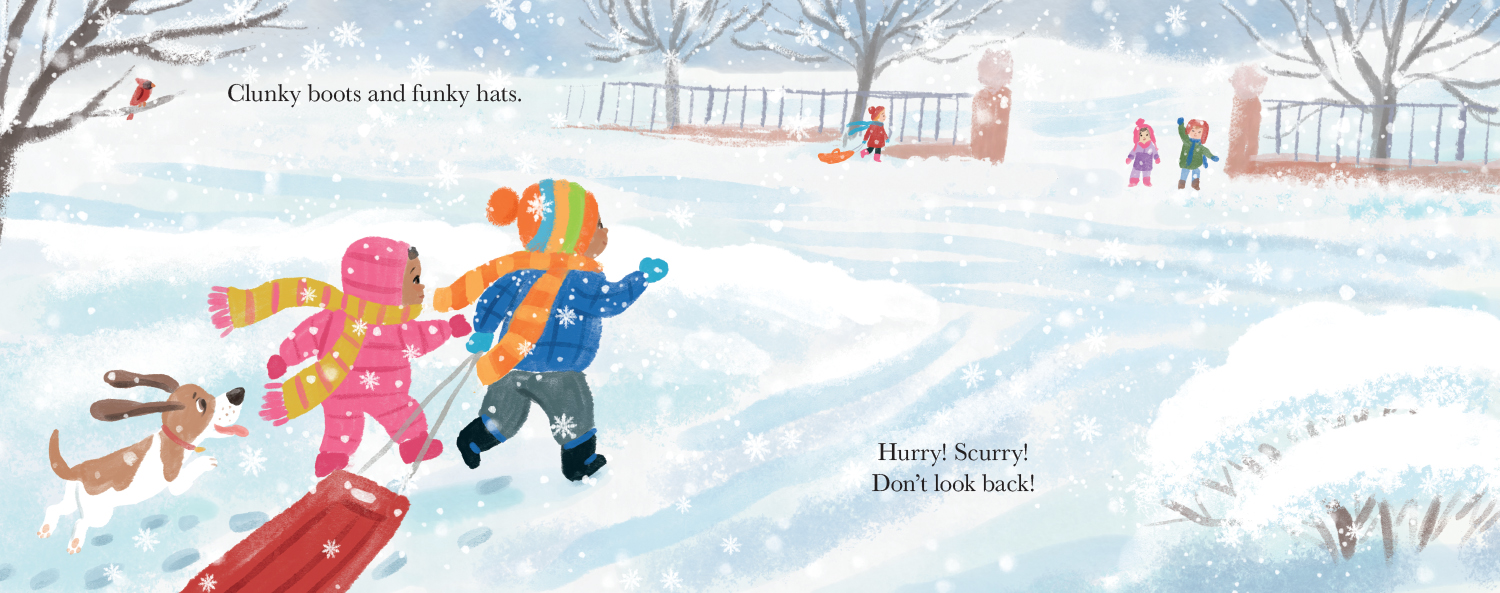
This rhyming story stars a brother and sister, both children of color, who wake up to discover that it’s snowing! With mostly two- and three-word rhyming sentences, we follow them as they get dressed and meet their friends for a day of sledding and snowplay. Their pup follows along, adding to the fun and games, and at the end of the day, the siblings and their dog head home to enjoy hot chocolate, chocolate chip cookies, and a story before bedtime.

A lovely companion to Ezra Jack Keats’ A Snowy Day, First Snow takes place in a more suburban settting than Peter’s famous city backdrop. The kids’ bright winter clothes stand out against the soft, white snow. The watercolor artwork is soft, lending a comfortable, hazy, snowy-day feel to the scenery. Brightly colored kids’ hats and mittens set the tone on the endpapers.

Perfect for snowy day reading, preferably with some hot chocolate and a warm blanket and stuffed animal. Great for toddlers and easy readers alike!
Nancy Viau is the author of five picture books, including City Street Beat, Storm Song, and Look What I Can Do!  Her middle-grade novels include her new release, Beauty and Bernice, along with Just One Thing! (2016 Foreword INDIES Book of the Year Gold Award Winner), Samantha Hansen Has Rocks in Her Head (to be reissued in the spring of 2019), and Something is Bugging Samantha Hansen (fall 2019). As a member of the Rutgers University Council on Children’s Literature, Nancy volunteers with other council members to produce the Rutgers One-on-One Plus Conference every year. She works as an assistant librarian, and when not reading or writing, she hikes, bikes, and travels wherever her frequent flyer miles take her. To learn more, and to download a free Story Hour kit for First Snow, visit her website, NancyViau.com.


Talitha Shipman graduated with an MFA in illustration from Savannah College of Art and Design in 2008. She’s illustrated several books, including You Are My Little Pumpkin Pie, Everybody Says Shalom, and Applesauce Day. Talitha lives in Indiana with her husband, daughter, and dog. She can be found at talithashipman.com.


Praise for First Snow:

“A sweet suburban/rural contrast to the snowy day enjoyed by Peter in the city.”  — Kirkus Reviews

Relive the joy of the season’s first snow in this sweet trailer!

 

One lucky winner will receive a copy of First Snow, courtesy of Albert  Whitman & Co (U.S. addresses). Just enter this Rafflecopter giveaway for your chance!


Posted in Animal Fiction, Early Reader, Fiction, picture books, Preschool Reads

Stanley the Hamster heads off to school in his latest picture book adventure

Stanley’s School, by William Bee, (Oct. 2018, Peachtree Publishers), $14.95, ISBN: 9781682630709

Ages 3-7

It’s another busy day at Stanley’s school, as he and his assistant, Hattie, get ready to welcome their students. The children follow their morning routine of hanging up their hats, bags, and teddy bears, and sit on the carpet while Stanley calls attendance. At storytime, they dress up: Sophie as a dragon, Little Woo as a knight, and Benjamin, a princess, complete with blue crown and tutu. There’s playtime, time in the garden, lunch, nap, and art to end the day, and Stanley brings his busy day to a close with supper and a bath.

The Stanley books are a hit because they’re adorable. They’re provide children with introductions to different careers, the direct, concise text is great for newly confident readers and for storytime, and the digital artwork is simple, attractive, and fun, with bright colors and bold lines. William Bee doesn’t limit gender roles in Stanley’s School, putting a kid named Benjamin in princess garb. (Jessica Spanyol’s Clive series is another good series that bucks genderized norms.)

Stanley’s School was on shelves in time for back-to-school, but it’s a great choice for storytimes now, because younger kids will recognize the students’ daily routine. It won’t be new and exciting or nerve-wracking; it’ll be familiar and comfortable. Let the kids tell you what else their daily routines include, and tell them yours. Do you, like Stanley, get home, eat, and go to bed? Maybe you play with a pet, or eat dinner with your family, or read to your kids. Stanley’s School is all about comforting routines, and a good add to your shelves.

There’s a school supply activity sheet free for download on the Peachtree website; you’ll find other Stanley activity sheets there, too. Stanley fans can find out more about Stanley’s world on the Peachtree Stanley Fan Site.

Posted in Early Reader, Fiction, picture books

Blog Tour: ERASER, by Anna Kang and Christopher Weyant

I am so excited for this blog tour stop! I’ve been a fan Anna Kang and Christopher Weyant since 2014’s You Are (Not) Small. That’s (Not) Mine (2015) and I Am (Not) Scared (2017) round out a fun trilogy on friendship and preschooler life that makes every storytime too much fun. Now, just in time for back-to-school, Kang and Weyant give readers…

Eraser, by Anna Kang/Illustrated by Christopher Weyant,
(Sept. 2018, Two Lions), $17.99, ISBN: 978-1503902589
Ages 4-8

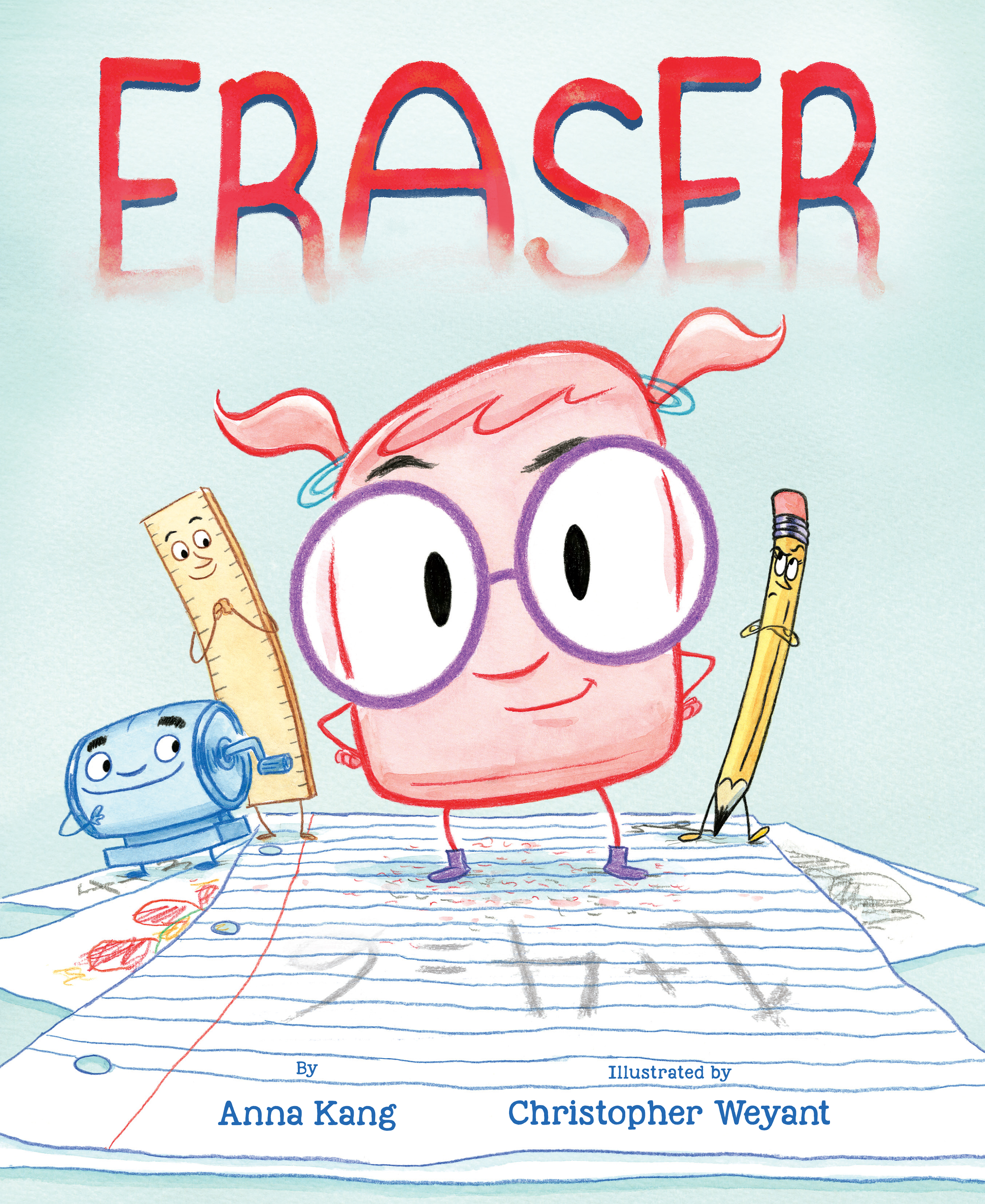
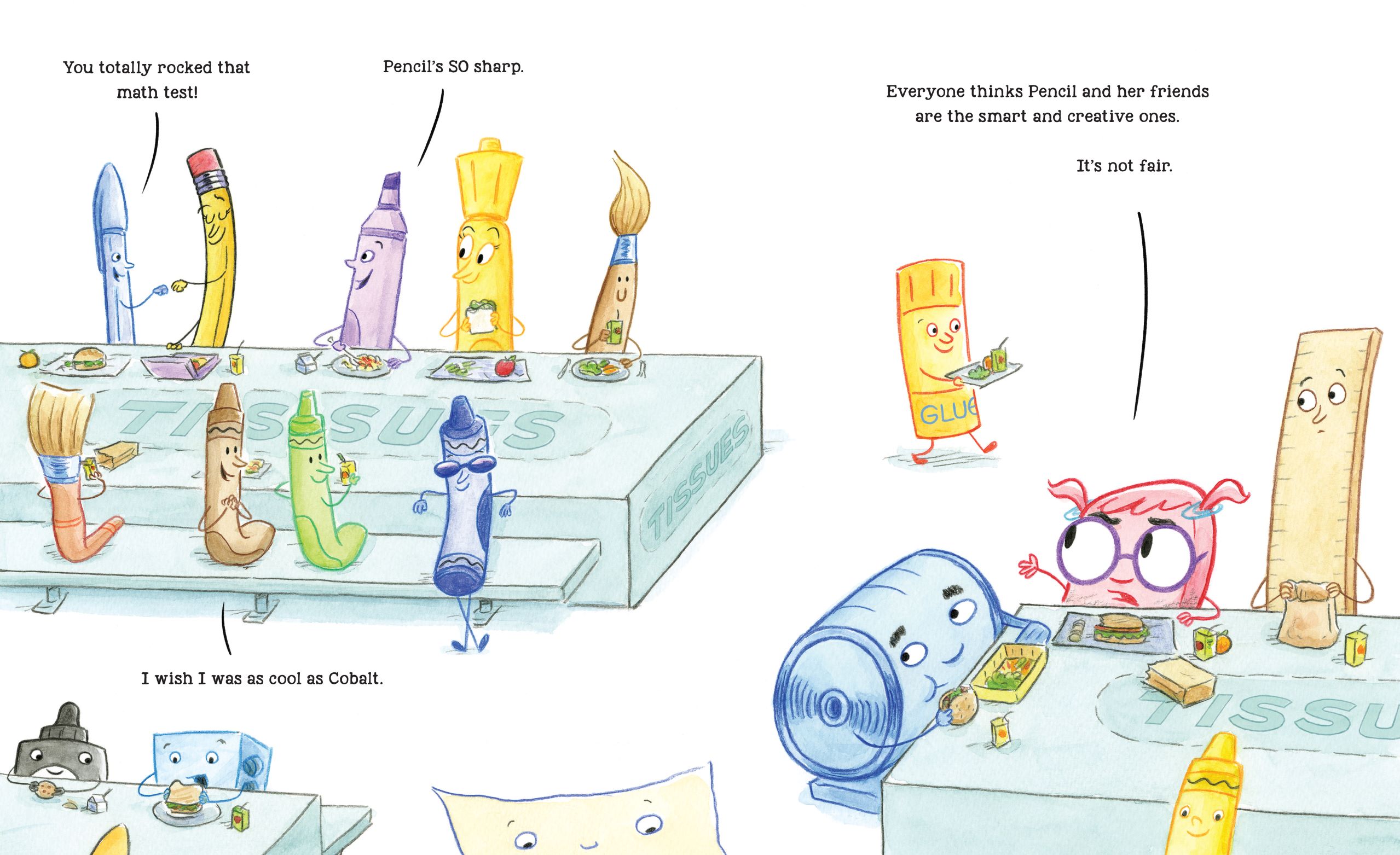
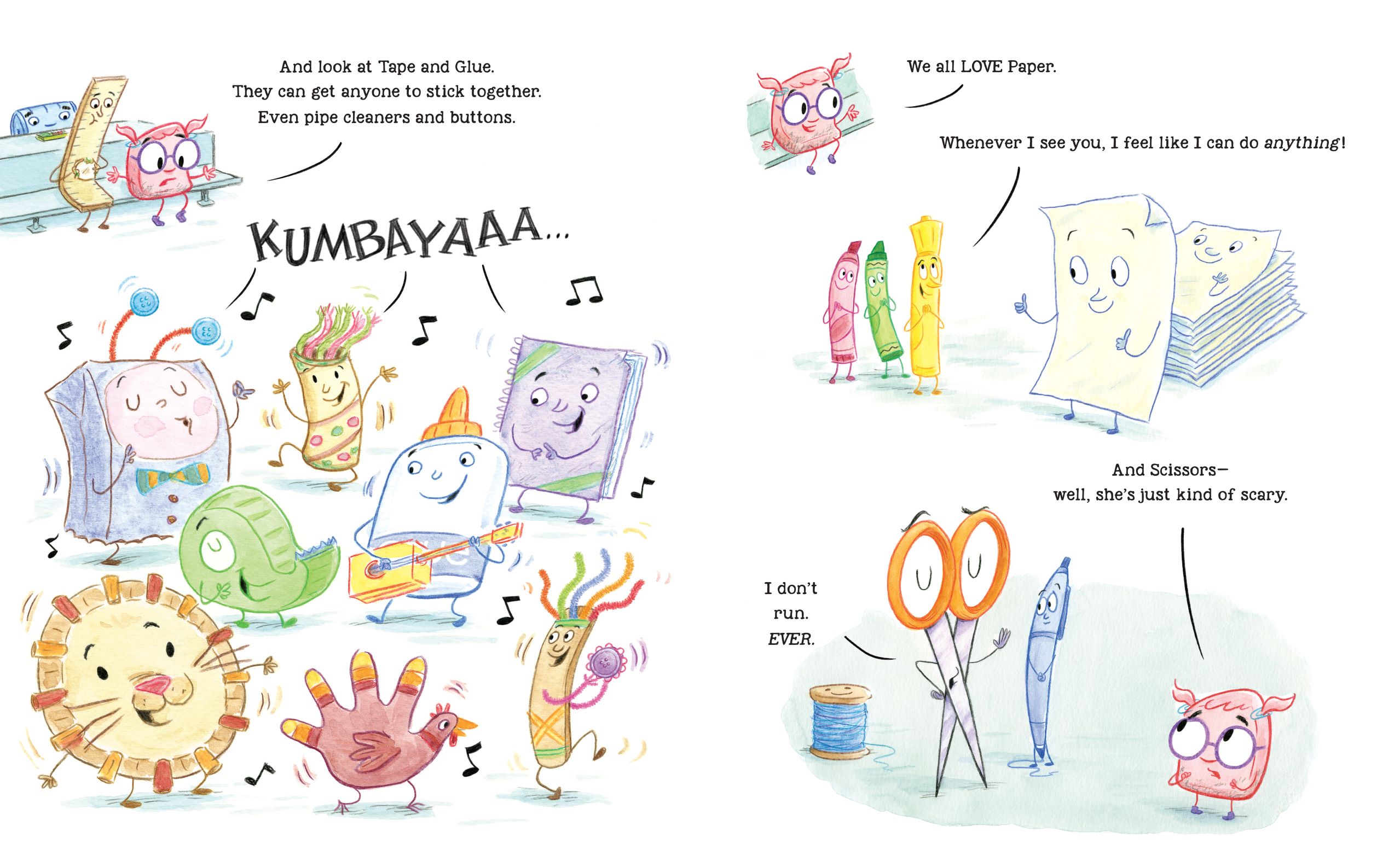
Eraser is a school supply that’s sick and tired of cleaning up everyone’s mess and getting no respect. She’s always there to help, but Pencil gets all of her glory. Her friends Sharpener and Ruler are the only two who understand her, but their encouragement isn’t enough anymore: Eraser’s tired of being on the cleanup crew. When the other school supplies snub her while holding a creative meeting, Eraser’s has HAD IT. She heads off to other adventures, leaving Pencil and the other supplies to fend for themselves. Eraser, meanwhile, meets a group of new friends that help her see where her true talent lie.

Eraser is a fun, smart story about looking beneath the surface and embracing one’s true gifts; using school supplies to tell this story is a great way to communicate this to younger readers, who may not understand how to see within themselves – or each other – those subtle gifts that make each one of us unique. Anna Kang’s got a gift for pacing and dialogue that makes her books something we return to again and again; Christopher Weyant brings the characters to life using ink and watercolor, creating instantly recognizable, with a touch of childlike fun that will have kids drawing their own school supply adventures.

The fun part about books by Anna Kang? You can give them all sorts of different voices, or invite your kids to put on their own voices and act them out. Eraser gives readers several different characters to take on, so try out a reader’s theatre! There’s a great art project contained within the story, so keep an eye out for it and invite your kiddos to create some dioramas of their own – just make sure all art supplies get their say. You know I love my activity kits, and you can find one right here.


One lucky winner will receive a 7-piece school supply kit along with a copy of ERASER, courtesy of Two Lions (U.S. addresses). Enter this Rafflecopter giveaway!

Anna Kang and Christopher Weyant are the creators of Theodor Seuss Geisel Award winner You Are (Not) Small and its follow-ups That’s (Not) Mine and I Am (Not) Scared. Christopher’s work can be seen routinely in The New Yorker magazine and his cartoons are syndicated worldwide. As an author, Anna regularly goes through first, second, and third drafts. Chris wears down many erasers while making his art. This husband-and-wife team lives in New Jersey with their two daughters and their rescue dog. Visit them at www.annakang.com and www.christopherweyant.com.


Posted in Early Reader, Graphic Novels, Intermediate, Non-Fiction, Non-Fiction, Preschool Reads

Two from TOON: Fun ways of looking at Math and Science

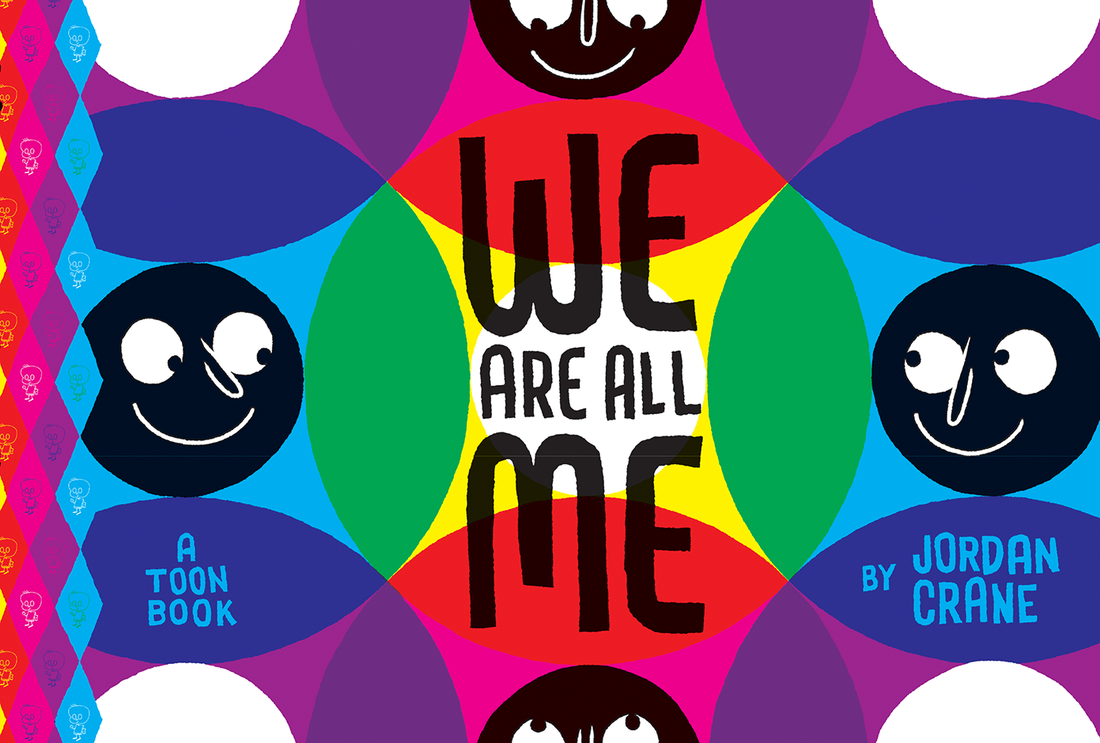
TOON’s doing it again: promoting authors and illustrators who know how to take abstract concepts and craft them into something exciting, beautiful, and fun. The two Fall graphic novels TOON has coming out: 3×4, by Ivan Brunetti, and We Are All Me, by Jordan Crane, play with multiplication, sorting, and sets; creation, DNA, and our relation to the planet and beyond. Sounds like weighty stuff, right? It is, but here’s the best part: these books are for kids, ages 3 and up. Let’s take a deeper look.

3 x 4, by Ivan Brunetti, (Sept. 2018, TOON Books), $12.95, ISBN: 9781943145348

Ages 3+

A teacher gives his class an assignment: draw 12 things, but in sets. Everything else is up to them: how many sets, what to draw, what colors to use. Annemarie, one of the girls in class, thinks deeply about what to create, as we see her classmates get to work on their sets. The book introduces readers to the beginning principles in multiplication; sorting; and thinking outside the box, as we see through the kids’ assignments. The book is so meta – it’s a math assignment within a math assignment – that teachers can easily use this as a math storytime.

Ivan Brunetti’s previous TOON book, WordPlay, played with language and compound words, and also starred Annemarie, a child of color in a diverse classroom of friends. As an art teacher, he has a gift for seeing things differently, and has the talent to make his ideas fun and relatable to a young audience. My 6-year-old read 3×4 to me, cover to cover, one night, after I read it to him and we worked through all the similarities between events in the book and what he’d done in his Kindergarten classroom the past school year. I’d love to try a math challenge for the kids in my library, asking them to start with 3 x 4, and go from there: make an art gallery and keep switching up the numbers. Have stickers and stamps and other creative materials handy!

3 x 4 has a starred review from Kirkus. As with all TOON books, a free, downloadable teacher’s guide is forthcoming.


We Are All Me, by Jordan Crane, (Sept. 2018, TOON Books), $12.95, ISBN: 9781943145355

Ages 3+

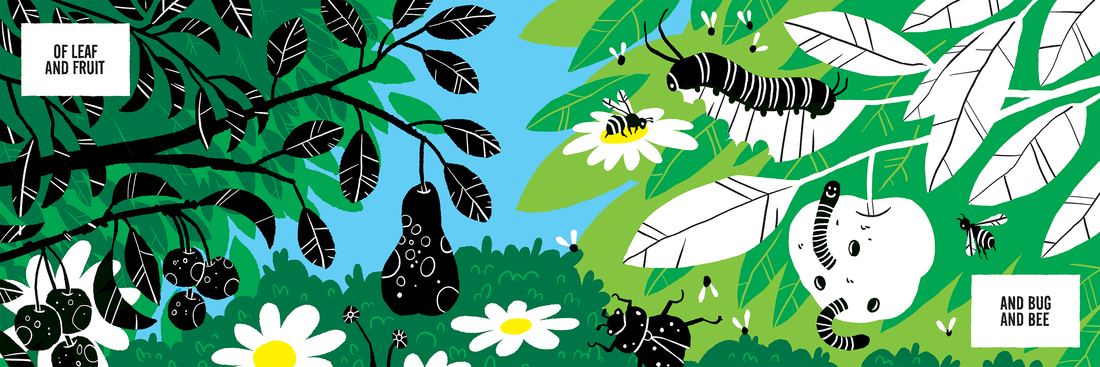
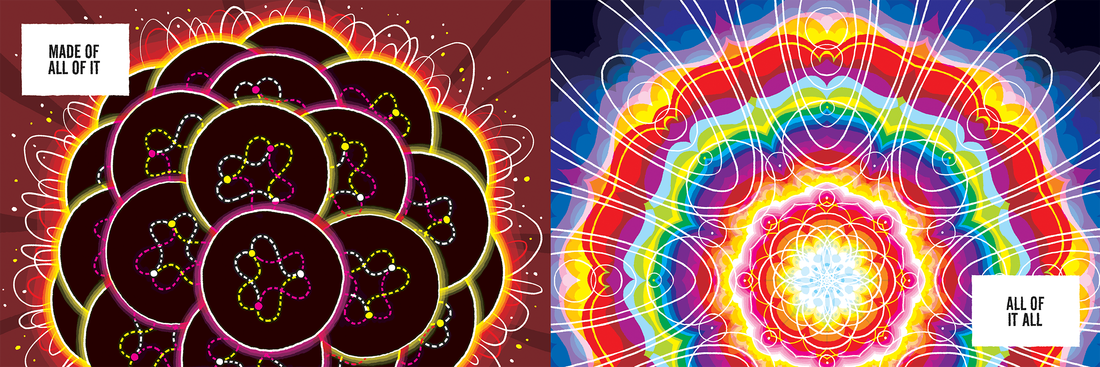
A dot forms and takes readers on a visual journey through existence. As it moves through bodies, nature, DNA, and space, readers experience evolution, our relationship to the Earth, and consciousness, all in vibrant, pulsing, day-glo pen, ink, and tablet artwork. Spare text reads lyrically, almost mantra-like, as we – via the dot – progress through time and space. The visual confirmation that we are connected to this world, and to one another, is exciting and humbling all at once; for young readers, it’s mind-blowing and beautiful. This is one of those books that left me speechless when I first read it, because it’s breathtaking and uses such brief, eloquent verbiage to explain… everything. A stunning must-have for all collections. Own it, and read it. Often.

We Are All Me has a free, downloadable teacher’s guide forthcoming.

Posted in Early Reader, Fiction, picture books

In First Laugh Welcome, Baby!, a family waits…

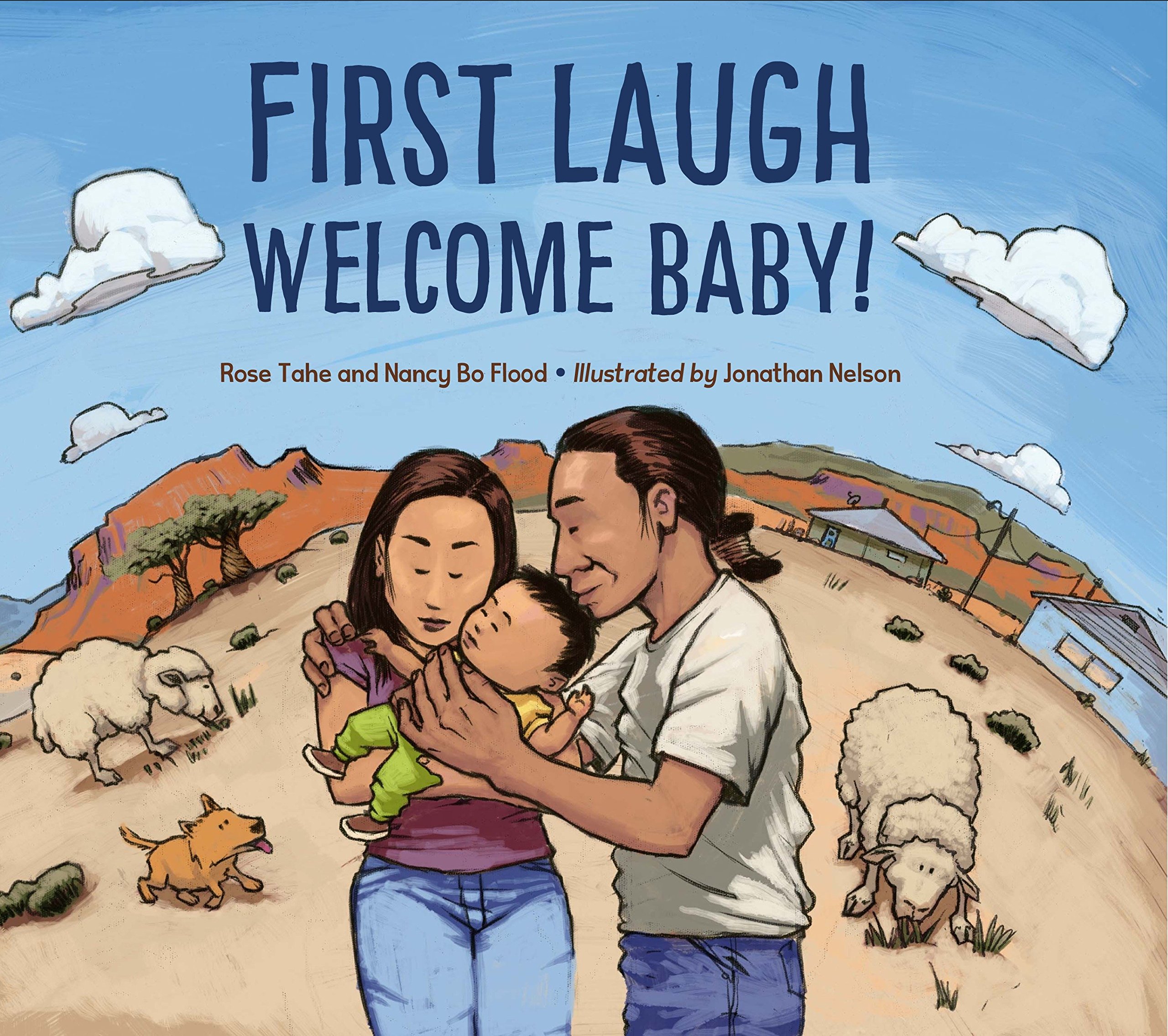
First Laugh Welcome, Baby!, by Rose Ann Tahe and Nancy Bo Flood/Illustrated by Jonathan Nelson, (Aug. 2018, Charlesbridge), $16.99, ISBN: 9781580897945

Ages 5-8

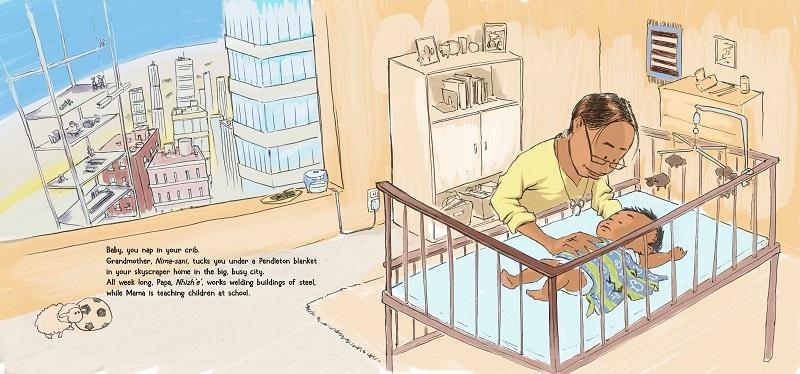
A Navajo family waits for baby’s first laugh. Who will be the first to hear it? Will nima-sami (grandmother) hear it, as she tucks Baby in for a nap? Will it be big sister (nadi), who cooks Baby a tasty meal? Maybe it will be nima (mama), who sits weaving while Baby rests in a papoose. Or will it be cheii (grandpa), who splashes Baby with water? Everyone in the family is waiting, kissing, tickling, hugging, and singing, as Baby squirms, yawns, frowns, until… suddenly… a smile! Let the First Laugh celebration begin!

First Laugh Welcome, Baby is a beautiful look at a Navajo tradition; the First Laugh Celebration is a child’s first formal welcome into a family and clans. The lyrical story is filled with Navajo words and glimpses of Navajo life, woven into a story about the joy of a baby’s first laugh and the celebration it brings to families and communities. Jonathan Nelson’s pencil, acrylic, and Photoshop artwork create a loving portrait of a family that spends time together both in the city and on a Navajo reservation; they eat together, enjoy nature together, and socialize together in settings primarily illustrated with earthy tones and bold lines.

Back matter includes author’s notes from the late Rose Ann Tahe and Nancy Bo Flood, and an illustrator’s note from Jonathan Nelson; a note about the First Laugh Celebration, and ceremonies in other cultures, including Muslim, Nigerian, and Jewish families.

Nancy Bo Flood’s Soldier Sister, Fly Home is a powerful middle grade story about a Navajo family; First Laugh is a wonderful picture book that introduces younger readers to First Nation families. Please, please, please, put these and other books by indigenous authors and illustrators in your bookshelves and in front of your readers.

Posted in Early Reader, Non-Fiction, Preschool Reads

Baby Loves Science – big ideas for little ones

I’m all for introducing science in all its wonderful forms to kids as early as possible, and all about introducing new vocabulary to kids, so science and math don’t scare them as they get bigger. I haven’t read any of the Baby Loves… Science! series by Ruth Spiro and illustrated by Irene Chan, so I started with the two newest books, Baby Loves Gravity! and Baby Loves Coding!

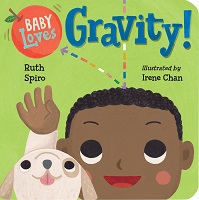
Baby Loves Gravity, by Ruth Spiro/Illustrated by Irene Chan, (June 2018, Charlesbridge), $8.99, ISBN: 9781580898362

Baby drops a noodle, and Puppy gobbles it up. How does that noodle fall? Gravity! Simple enough concept to explain to a toddler, and that’s how Baby Loves Gravity! starts out: simple and relatable. From there, we get a clear explanation of matter, mass, and gravity, and how it works on the sun, moon, and earth’s pull on us here. It’s clear and nicely illustrated, but this is a lot of information, even for toddlers, no matter how simply it’s phrased. I liked the illustrations, was pleased to see a child of color as the star of the show, but would read the beginning and ending, where baby slides down a slide, illustrating gravity, for a toddler STEAM or science storytime. I would rather test this out in a Kindergarten-level science storytime. The board book format makes for easy holding, and the illustrations are large, bright, and easily seen by a circle time group of kids. I could work with a group of kindergarteners, even pre-kindergarteners, in a science workshop using this as a companion text.


Baby Loves Coding!, by Ruth Spiro/Illustrated by Irene Chan, (June 2018, Charlesbridge), $8.99, ISBN: 9781580898843

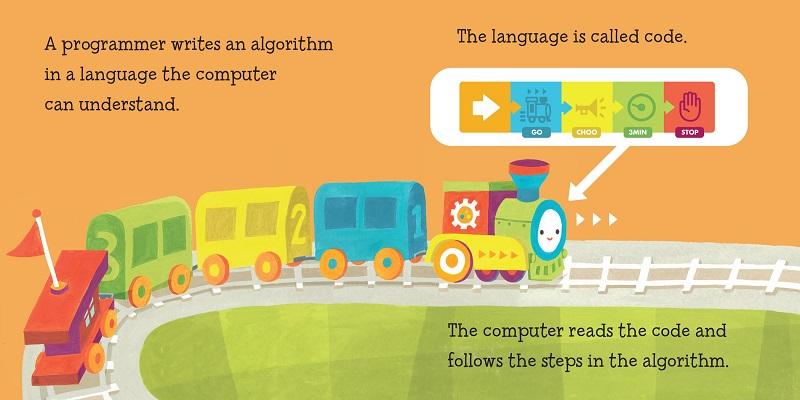
Baby’s playing choo-choo, and wants to add a red car to his train. Let’s follow him as he walks over! Baby Loves Coding features a child of cover on the cover, and is an adorably illustrated, clearly laid out way to introduce coding to kids, but this is also way above a little one’s head. The first few spreads, explaining how baby walks to the toy box, are great – you can get kids up and moving along with you on this one – but the text launches into an explanation of algorithms, programmers, and reading code, and this is just going to lose little ones. The pictures do all the work here, illustrating, with colorful interlocking blocks, how code fits together, like the cars of a train. I do love the explanations and the artwork, and the idea of getting kids up and moving works with CS Unplugged activities I’ve done in my library. I’ve used Code.org’s curriculum; CS Unplugged also has some great lesson plans and printables.

My advice? Use these with your pre-k and Kindergarten science storytimes. They’re great books for the right age.

Posted in Early Reader, Intermediate, Non-Fiction, Non-Fiction, picture books, Preschool Reads

Nibbles Does Nonfiction! Nibbles: The Dinosaur Guide!

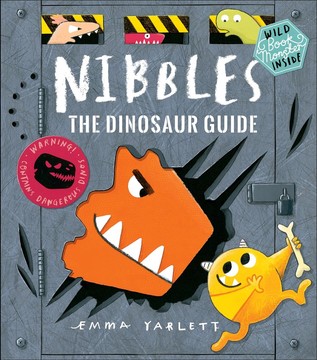
Nibbles: The Dinosaur Guide, by Emma Yarlett, (March 2018, Kane Miller),  $16.99 ISBN 978-1-61067-643-4

Recommended for readers 4-8

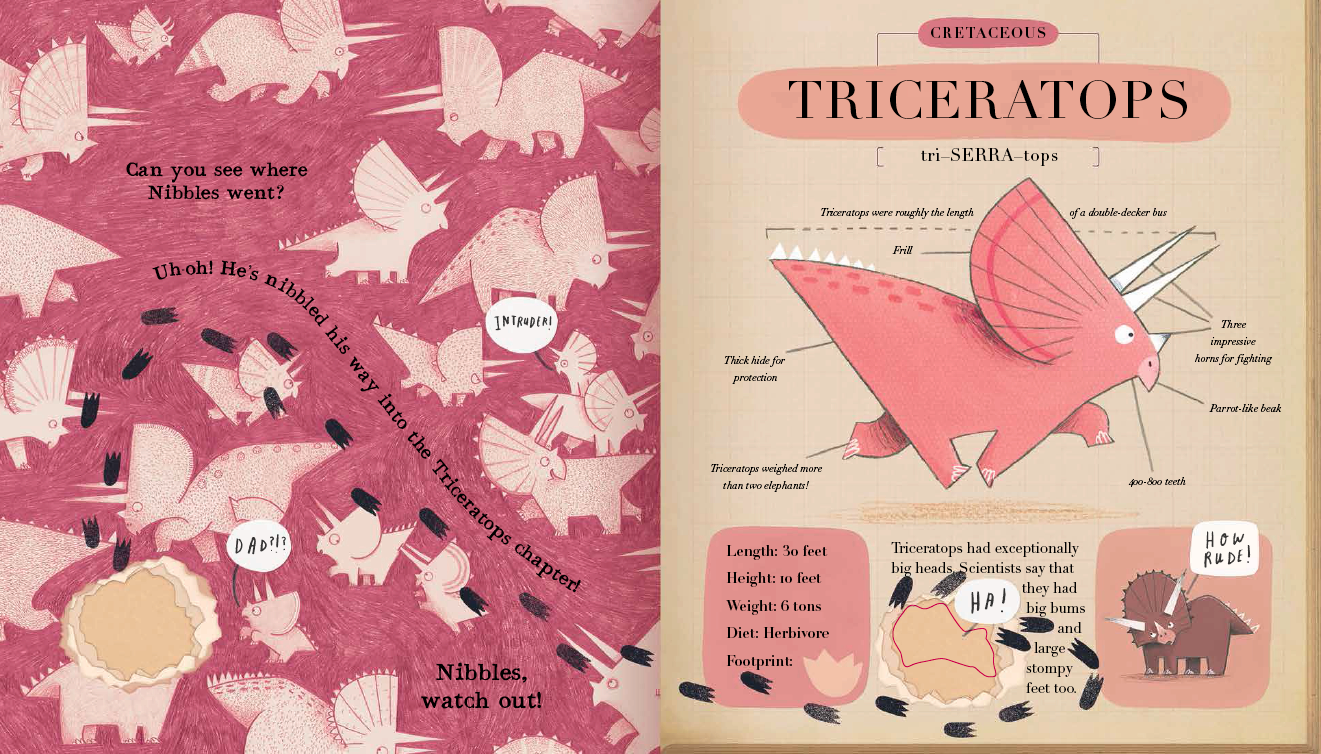
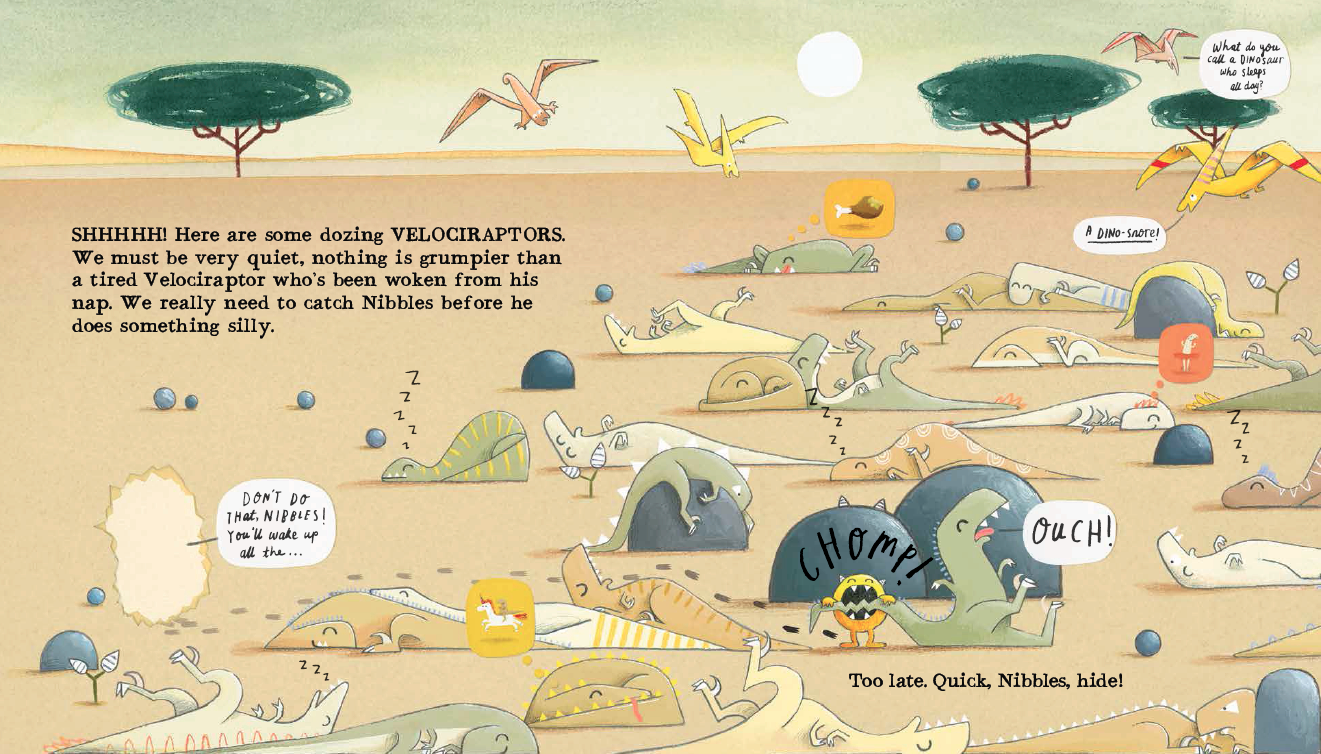
Nibbles the Book Monster is a HUGE celebrity in my home, in my storytime, and now, in my kiddo’s classroom. More on that in a sec. So, Nibbles is a little yellow monster who loves to nibble books. In his first adventure, he nibbled his way through some fairy tales, but he wanted more. Enter Nibbles: The Dinosaur Guide, which combines solid nonfiction dinosaur information, including eras, scientific names (with pronunciation), and fast facts. This is no regular dinosaur book, though: Nibbles is on another adventure, chomping and nom nom-ing his way through the prehistoric era, irritating dinosaurs and spreading mayhem as he goes! Will Nibbles end up on the menu this time?
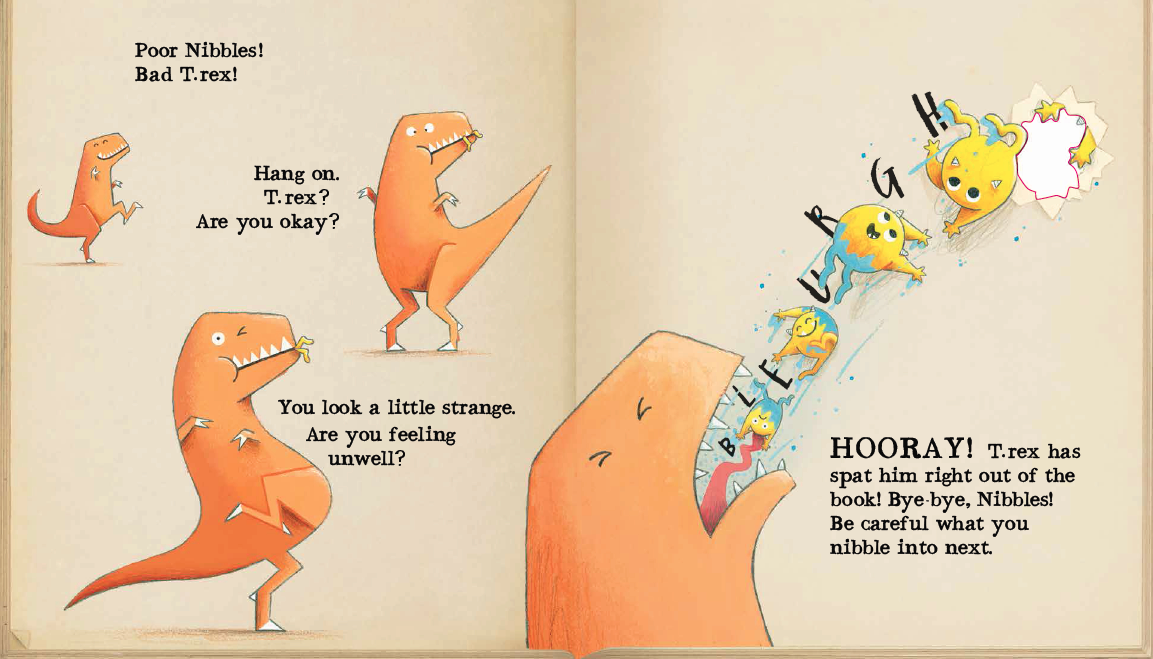
Nibbles: The Dinosaur Guide is full of the same flips and bite-sized page nibbles that makes the first book so much fun to read. Add to that, the hilarious bodily functions of dinosaurs (did you know that a single diplodocus fart could power a hot air balloon? You do now!) and a laugh-out-loud interaction with a T-Rex, and you have a dino book that kids will come back to again and again.

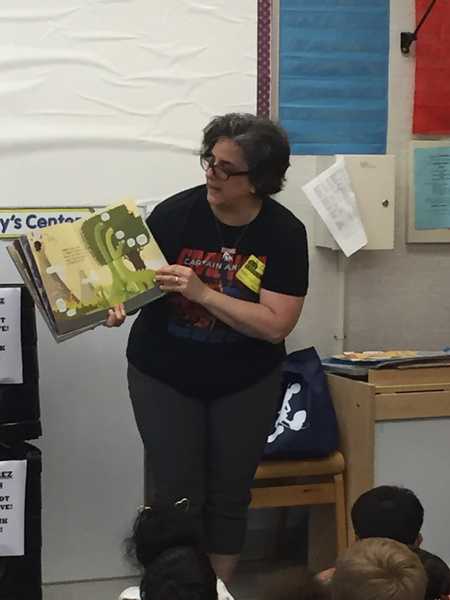
Now the fun part: I brought Nibbles: The Dinosaur Guide to my son’s kindergarten class for a storytime visit. The kids had a choice of books, and Nibbles got the overwhelming vote, so we got into circle time on the carpet and I read the story. The screaming. The hilarity. It was controlled pandemonium, and I loved every second of it. The best part of the visit was my reading the phrase, “I am the Prince of Parps!” (polite British speak for ‘fart’) and the one Scottish kid in my son’s class burst out laughing; his classmates said, “What’s a parp?”, so I looked at him and nodded. He proudly pronounced, “IT”S A FART!” and the class lost their minds. That, my friends, is how you embrace storytime.

Need more Nibbles in your life? Who doesn’t? Author Emma Yarlett’s webpage has printable activities aplenty. Go make a Nibbles bookmark!

Rocking Nibbles in the classroom

Posted in Early Reader, Fiction, picture books, Preschool Reads

Where does your mind go during class?

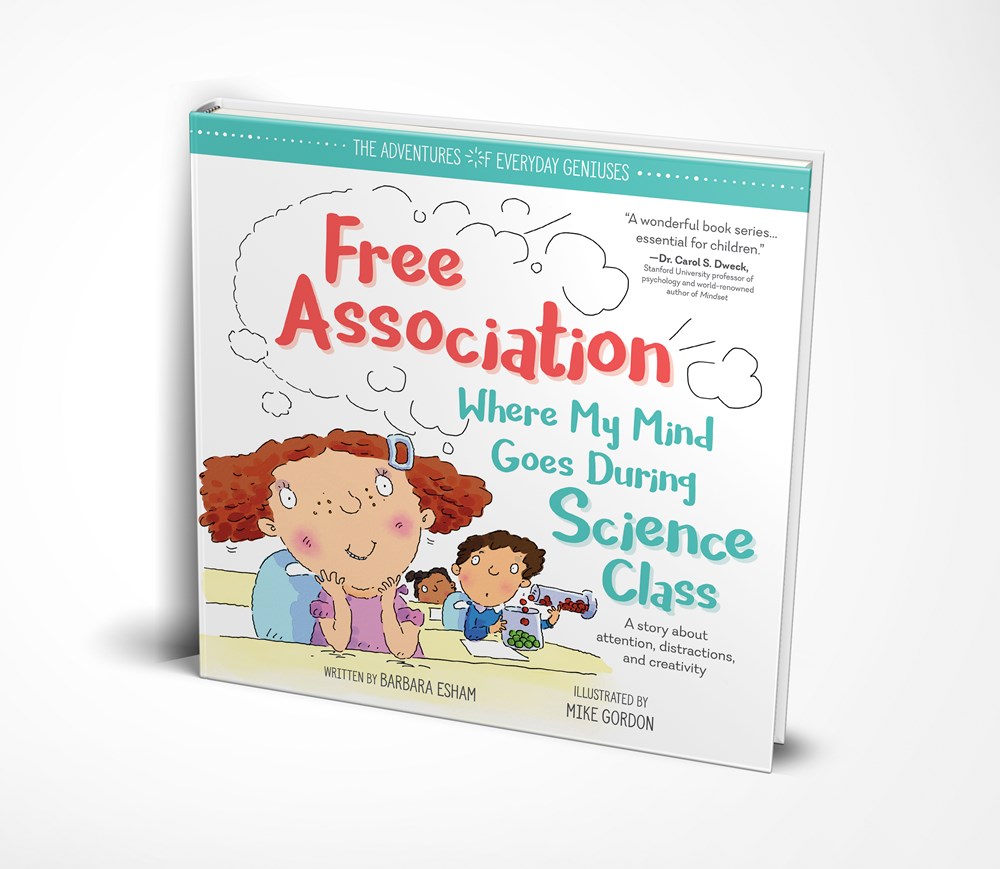
Free Association: Where My Mind Goes During Science Class (Adventures of Everyday Geniuses), by Barbara Esham/Illustrated by Mike Gordon, (May 2018, Sourcebooks), $17.99, ISBN: 9781492669951

Recommended for readers 4-8

Emily is a  young student who loves doing science: the hands-on stuff, not the rote memorization that comes with the routine school day, which tends to set her mind off, wandering. Emily wants to be like Albert Einstein, setting her off into a daydream where Einstein climbs out of a classroom poster; he ends up sticking around as a quiet mentor throughout the book. After catching Emily daydreaming again, her teacher gives her a science journal – a way to be mindful of when she’s paying attention, versus when her mind is about to wander. Emily discovers that the journal is just what she needed, and the teacher, impressed with a theory Emily comes up with in her journal, encourages the whole class to keep science journals and use their imaginations.

The Adventures of Everyday Geniuses is a series of books for kids who may learn in nontraditional ways. Where My Mind Goes During Science Class addresses everyday boredom in class – come on, we all know it happens – as well as how to reach students with ADHD. The teacher embraces creativity and imagination, and understands that journaling can lead to some pretty exciting work – bravo, teacher! Emily speaks for most kids when she grouses, “It seems like the only thing we do in science is memorize information from a book”. Who hasn’t felt like that at some point? Emily is relatable to all kids (and a heck of a lot of grownups). Back matter talks to readers who are “everyday geniuses” and offers tips for focusing and centering themselves when their minds wander. The story font is set in OpenDyslexic, a font specifically designed for readability with dyslexia; an impressive commitment by the publishers to readers. Kids may recognize illustrator Mike Gordon’s artwork – he illustrates the super-popular Robin Hill School Easy Reader series.

Find out more about the Everyday Geniuses at the series website. This looks like a good series to have in classroom and library collections, to introduce kids to different ways of learning. I’m going to request other titles in the series from my libraries, to get to know this set better. The Adventures of Everyday Geniuses series is Reading Rockets Recommended, a Parents Choice Award Winner, and an ALA Booklist Pick.

Posted in Adventure, Animal Fiction, Early Reader, Fantasy, Fiction, Fiction, Middle Grade, Tween Reads

Nocturnals for every reader!

My favorite group of nighttime dwellers, The Nocturnals, have two adventures to enjoy! Let’s see what mouthy Bismark, thoughtful Dawn, and sweet Tobin have been up to since we last met.

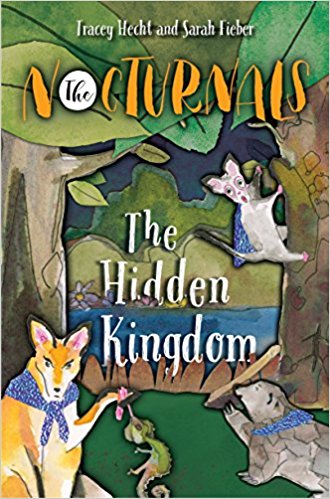
The Nocturnals: The Hidden Kingdom, by Tracey Hecht and Sarah Fieber/Illustrated by Kate Liebman,
(Feb. 2018, Fabled Films Press), $15.99, ISBN: 978-1944020118
Recommended for readers 8-12

The Nocturnals assemble in their fourth adventure to locate the source of a drought that’s ravaging their forest. The water is disappearing, animals are sick and possibly dying, and animals are convinced there’s an evil spell at work: tumbleweeds attack, sticks seemingly run away, and there’s no water to be found! Dawn, the fox, doesn’t believe in magic and knows there’s something afoot, and Tobin is desperate to save his friend, Cora, a sick wombat who needs water… FAST. What the friends discover is a hidden kingdom – right in front of their very eyes! Can they save the day, and the lives of their forest friends, once again?

This latest Nocturnals adventure has even more illustrations throughout, adding great resting points and visual interest for readers. I love the little touch of insect art throughout the book, directly tying into the storyline. Tobin, my favorite pangolin, gets some nice character development, and yes, fear not: there are fart jokes to be had, making for a laugh out loud reading selection. The theme of friendship continues to be the uniting thread in this series, and Hidden Kingdom also explores the frustration of being ignored and overlooked. There are minor consequences for acts that could have resulted in serious harm to others, but there is a concerted effort to emphasize positive solutions versus punitive measures; I think that’s an important discussion to have with kids. Were they happy with the outcome? What could have been done before the drought, to address the hurt feelings? Animal adventure fans will dig in and enjoy this latest chapter in the Nocturnals saga, and, as always, there are many opportunities for discussion here. Good characters, great humor, and a nonstop sense of adventure will keep kids coming back for more.

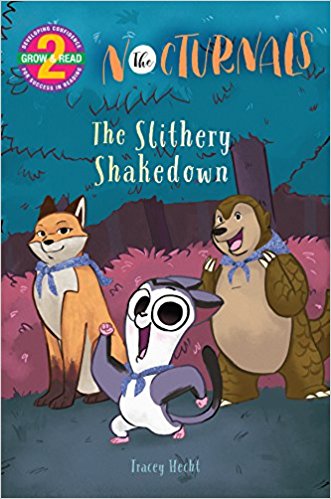
The Nocturnals: The Slithery Shakedown, by Tracey Hecht/Illustrated by Josie Yee,
(April 2018, Fabled Films Press), Paperback, $5.99, ISBN: 978-1-944020-16-3 OR Hardcover, $12.99, ISBN: 978-1-944020-17-0
Recommended for readers 5-7

The next Nocturnals Easy Reader is coming in April! I was so happy to see The Moonlight Meeting debut last year, because I always felt like younger audiences would get a kick out of these characters; particularly Bismark, the sugar glider with the larger-than-life personality! In The Slithery Shakedown, Bismark is menaced by a snake, who wants to snack on him! Thank goodness Dawn and Tobin are there to show the bully that no one messes with their friend. The Slithery Shakedown opens up the chance to talk about bullies, the importance of taking a stand, and the strength found in numbers. I’d even pair this with a reading of Kathryn Otoshi’s brilliant book, One, as part of a respect for all/anti-bullying storytime and discussion.

Josie Yee’s art makes the trio of friends adorable and soft for younger readers, and with deep colors and strong outlines to define her characters. A section about nocturnal animals and nighttime fun facts adds some nonfiction to this Level 2 reader (for grades 1 and 2). Having these books available in easy reader and novel formats also introduce the chance to have older readers and younger readers enjoy different Nocturnals stories and workshops together.

So… when do we get Nocturnals board books? Just sayin’…

Posted in Early Reader, Fiction, Non-Fiction, picture books

Science for Kindergarteners!

I’m always looking for ways to get more science in my kids’ days: my QBH Kids and my own Kindergartener alike. I’ve had some great successes and some that fell a little flat. At my previous library, I had a phenomenal early learning assistant who helped create amazing Science Storytimes, using popular storybooks to demonstrate simple science concepts for little ones: using Ellen Stoll Walsh’s Balancing Act to teach balance, while showing them a simple balance board that kids were invited to place small objects on and discover what balanced, and what tipped the sides.

I also look to fellow librarian and teacher bloggers for hints. Pinterest is a great resources, as is Education.com and Teachers Pay Teachers. Science In Storytime is one of my more recent go-tos, with loads a great book and activity ideas, and The Show Me Librarian has some fantastic programming for Pre-K and elementary programs.

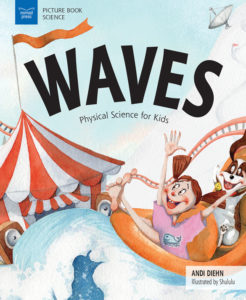
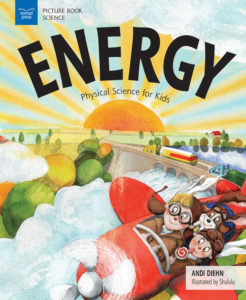
I’ve just received some new books from Nomad Press’ Picture Book Science series, too. These are a lot of fun: color artwork on every page, a fun poem to kick off each book, and my favorite part: an explanation of the scientific term, with all the uses of the term. Take, for instance, the book Waves: it starts off with the simplest interpretation of the word; a way to say hello. The book goes on to include ocean waves in that explanation, then the motion of a wave, and finally, a discussion of waves: energy, light, sound, all using questions to provoke thought, discussion, and understanding. Each book “Try This!” boxes, with simple activities kids can easily do at home or in the classroom (or during Science Storytime). Glossaries are handy to define terms that come up. There are currently four books in the Picture Book Science series: Waves, Forces, Matter, and Energy, all written by Andi Diehn and illustrated by Shululu; at $9.95 each, it’s a good and reasonable investment for our home, school, and public shelves. (Waves: 978-1-61930-635-6; Forces: 978-1-61930-638-7; Matter: 978-1-61930-644-8; Energy: 978-1-61930-641-7)


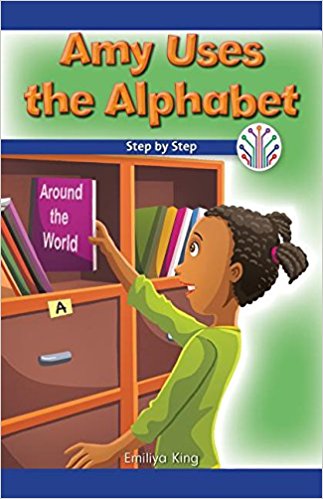
Rosen Classroom has a new series of easy readers called Computer Science for the Real World. They’re not attempting to teach Python or Scratch to the little ones (yet): these readers break the concepts needed to study computer science down for beginning readers. The three readers I received use everyday concepts – morning routines, alphabetizing books, building a birdhouse – to introduce activities that will help learn computer science; in this case, repetition and doing things step by step.


The books are leveled and contain instructional guides with include new vocabulary words, background knowledge for the specified concept, and text-dependent questions. There are independent and class activities to help kids learn through experience, and are available in English and Spanish. I really like these readers; there aren’t that many “just right books” (as my son’s school calls them) explaining science like this, and I’d love to have them in my library, but this is more of a Central library purchase, at least in my system, because you’re going to want to buy these by the collection; you can certainly buy them as single books, but having a whole set will better benefit your readers. The pricing is pretty reasonable, so I’ll be slipping this into an interoffice envelope bound for my collection development department tomorrow morning.