Posted in Early Reader, Fiction, Fiction, Intermediate

More Nocturnals! Who will win The Chestnut Challenge?

The Nocturnals: The Chestnut Challenge, by Tracey Hecht/Illustrated by Josie Yee, (April 2019, Fabled Films Press), $12.99, ISBN: 978-1-944020-23-1

Ages 5-7

The latest Nocturnals easy reader is a story about playing fair. Sugar glider Bismark just loses a game of chestnut checkers to Tobin the pangolin, when a chinchilla named Chandler shows up and declares himself a chestnut champion, challining poor Tobin to a game. Tobin just likes to play for fun, but Bismark nudges him into play. Chandler causes distractions that get the group to look elsewhere so he can cheat, but Bismark finally catches him and calls him out! After confessing to cheating because he wanted to win, Tobin gently reminds him that practice makes perfect, and Dawn invites him to play with them as a group. The Chestnut Challenge addresses cheating, but it also looks at being sore losers and sore winners: we see Bismark being a sore loser, and Chandler, when cheating, gloats over his moves. Tobin doesn’t want to be in cutthroat competition, he just wants to have fun; it’s a point we should all be making when we read this with our kiddos. Winning can be fun, but cheating to win isn’t really winning. That said, being gracious and offering someone a second chance is winning, all on its own. (And, naturally, with Bismark keeping an eye out.) Back matter includes an introduction to each of the core group of Nocturnals, plus a fun fact about chestnuts.

I’m a dedicated fan of this series. Tracey Hecht has a way of reaching kids by using adorable animals with distinctive personalities to get to the heart of real-life situations kids find themselves coping with, and how to start discussions about those situations. These books are a great go-to for us grown-ups, too. The Nocturnals World website has great, free downloadables, including activity kids, coloring sheets and games, videos, and educational resources.


Posted in Early Reader, Fiction, Fiction, Intermediate

The Bossy Pirate is facing a mutiny!

The Bossy Pirate, by John Steven Gurney, (Oct. 2018, Schiffer Publishing), $16.99, ISBN: 9780764356254

Ages 6-8

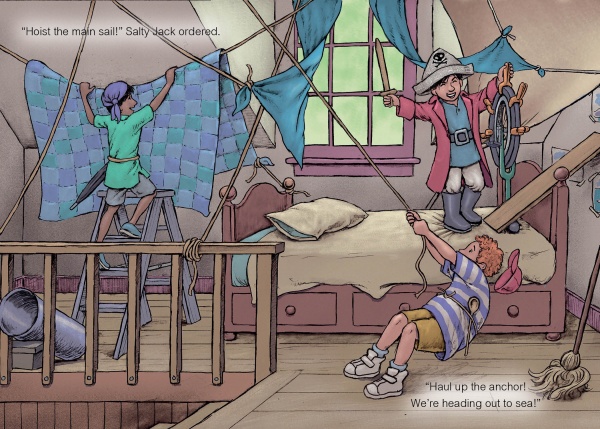
A little boy who goes by the pirate moniker “Salty Jack” plays pirate in his room, and invites – well, commands, really – his friends to come on board as his crew. As the title suggests, Salty Jack is not the greatest captain or playmate, continually reminding his friends that “I’m Captain! I give the orders!” and not letting anyone else have a say in their pirate game. When he tries to boss his sister, Millie the Mermaid, around, thought, she merely says, “Mermaids don’t take orders”, and leaves. Shortly after that, Jack’s other two friends have had it with his bossiness and leave, too. Jack broods, and blames his friends for ruining his fun; when Millie returns to ask him if his friends were having fun, too, he doesn’t answer. Jack discovers that being a solo pirate is no fun, and has a change of heart that brings all his mates back on board, where they hunt for lost treasure together.

A smart easy reader story about sharing and playing well together, The Bossy Pirate is a good read-aloud and a good independent book for newly confident readers. The sentences are slightly longer than beginning easy readers, and include imaginative words like scuttlebutt, barnacle, and nautical. Back matter includes a list of nautical terms that come up in the book, and a list of “nonsense words” that the pirate friends use. The artwork combines realistic and imaginative, with action going from Jack’s room to the high seas, where whales and dolphins glide and leap around a pirate ship. The group of friends is multicultural.

The Bossy Pirate is good fun with a smart message: it’s always better to play well together. Let the kids make their own newspaper pirate hats and have a pirate storytime.


Posted in Early Reader, Fiction, Preschool Reads

I Think I Can is a sight-word reader made for book buddies!

I Think I Can, by Karen S. Robbins/Illustrated by Rachael Brunson, (Jan. 2019, Schiffer Publishing), $14.99, ISBN: 9780764356919

Ages 5-7

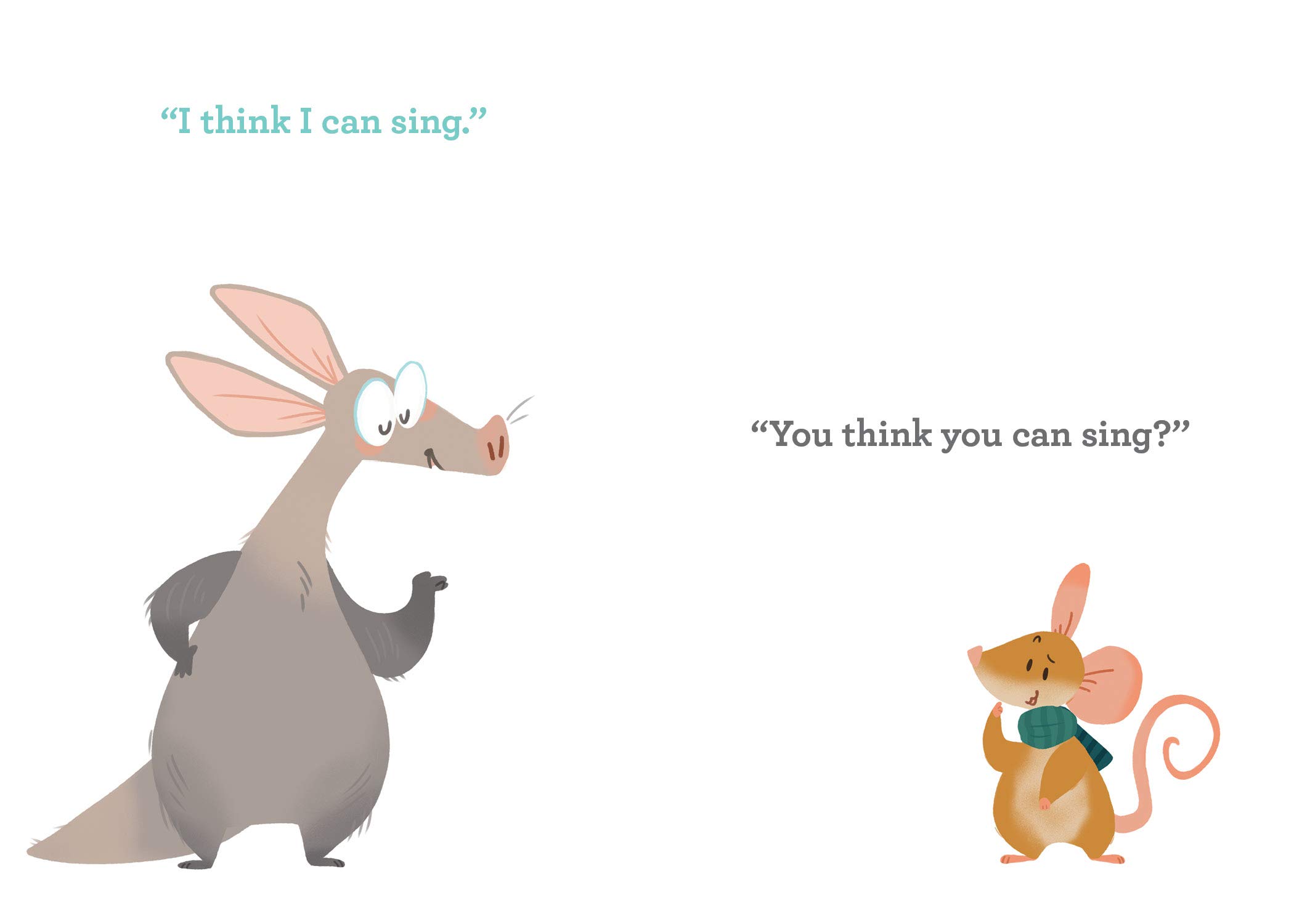
How exciting! Karen Robbins, a Romper Room teacher in the 1960s, has realized a new career as a children’s book author. I loved her THINK board book series (2017) for its fun take on concept board books. Her latest book, I Think I Can, is great for emerging readers to practice together. Aardvark is convinced he can sing; his friend, Mouse, encourages him to sing a song, and acts as a supportive audience. Written in short, color-blocked sentences largely composed of sight words, kids can take turns being Aardvark (in blue font) and Mouse (in black font). A note in the beginning of the book explains how the book works, and the sentences model question-and-answer behavior, with Mouse repeating Aardvark’s statements as questions until it’s established that Aardvark will sing.

The artwork is spare and keeps the emphasis on the characters, each on their own page, set against a plain white background. Aardvark has large, expressive eyes and body language; Mouse relies more on body language and his big smile to communicate. The story itself reminds me of how a teacher would work with young children, explaining behavior as the story progresses. For instance, when Mouse is seated, waiting for Aardvark to sing, he says, “OK. I’m sitting in the chair. I’m looking at you. Let me hear you sing your song. Let me see the surprise.”

This works just as well as a storytime for preschoolers and pre-readers; there are actions that make the story interactive: Mouse hides his eyes in anticipation of a surprise; Aardvark’s song is sung to the tune of Row, Row, Row Your Boat, allowing kids to clap along to the beat of the song, and Mouse applauds at the end, letting readers know they can jump in and clap, too.

This is a sweet story, great for pairing up your readers to practice. I hope Miss Karen has more stories like this to tell!

Posted in Early Reader, Fiction, picture books, Preschool Reads

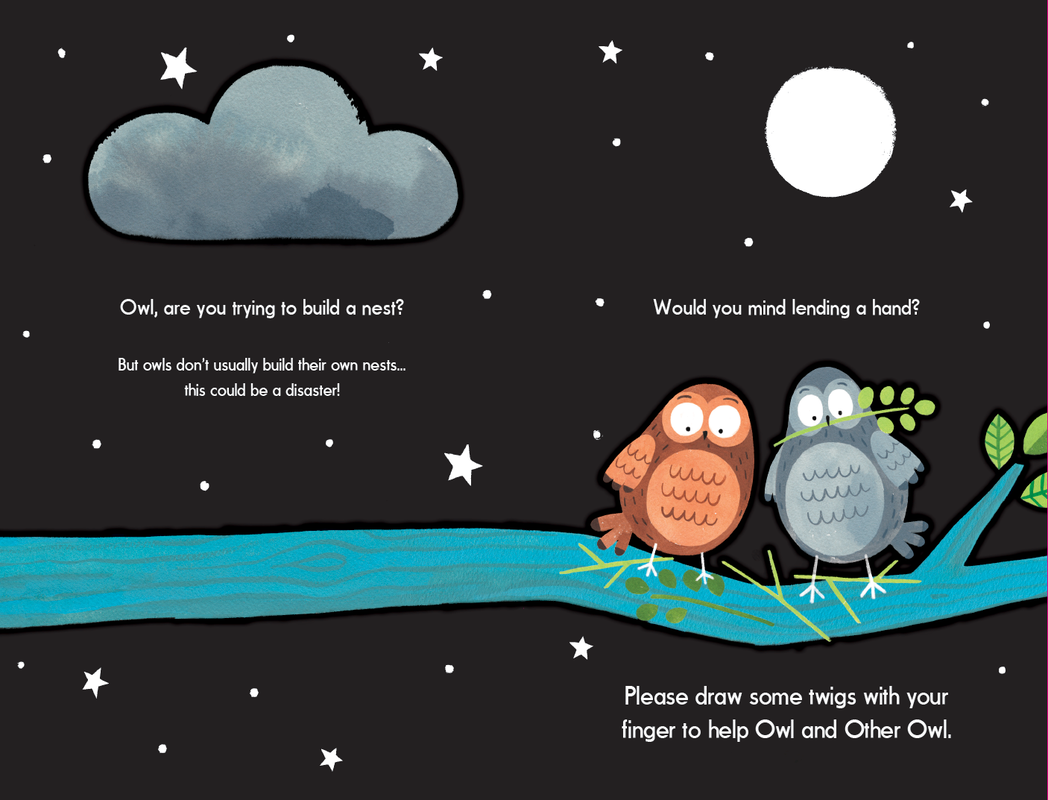
This is Owl flaps and taps its way into your heart

This is Owl, by Libby Walden/Illustrated by Jacqui Lee, (March 2019, Kane Miller), $14.99, ISBN: 9781610678964

Ages 3-7

I love a good interactive book that brings my kiddos into the storytime! Hervé Tullet got me started on the interactive book fun when I was starting out in my first preschool libraries, and it’s been something I gravitate to ever since. Here, we have Owl, asleep in a tree. Readers get to tickle Owl, play with the sun and moon, flap the pages to help Owl fly, and more. The Owl is adorable and expressive. The artwork is cartoony and bold, with bright colors leaping off a minimal background. Die cuts and half-pages make for fun reading and chances to let everyone at storytime have a turn.

There’s a mix of simple sentences and slightly more complex sentences; sight words make up a good portion of the words in the book, making this a nice read for emerging readers and a great readaloud choice for pre-readers and early readers.

This is Owl is in my storytime collection; consider it for yours. If you’re putting a copy in circulation, make sure you have a backup – this one will get passed around!


Posted in Early Reader, Fiction, Graphic Novels, Preschool Reads

Mouse takes a trip to the top of a volcano… but when can he get pizza?

A Trip to the Top of the Volcano with Mouse, by Frank Viva, (May 2019, TOON Books), $12.95, ISBN: 9781943145362

Ages 4-7

Mouse and his friend are off to explore Italy and climb Mount Etna in this second Mouse adventure! The explorer can’t wait to go start the adventure, but all Mouse can think of is pizza. Together, the friends lay out the plan: supplies (walking sticks, warm gloves, strong mountain boots, thick sweaters, and cool sunglasses) and set out for the mountain. They discover the different foods that grow at the base of the mountain (but not pizza), hike to the top, and see what types of wildlife wander around the area, before ending their day with a trip to the pizzeria.

A Trip to the Top of the Volcano is a fun mix of fiction and nonfiction, with stylish, vibrant graphics. There’s a beautiful cross-section spread, showing not only how plant life grows up the mountain, but the parts of the volcano, including the magma chamber, vents, and crater. There is information about local wildlife, plant life, and volcano characteristics, all communicated with simple, straightforward sentences that new readers will love reading and pre-readers will love listening to.

This is the second Mouse adventure from Frank Viva and TOON; the first, A Trip to the Bottom of the World with Mouse, sees the two friends off on an expedition to Antarctica. A Trip to the Top of the Volcano with Mouse has a free, downloadable Teacher’s Guide.

Posted in Early Reader, Non-Fiction, picture books, Preschool Reads

Kane Miller’s Shine-a-Light series goes to the library!

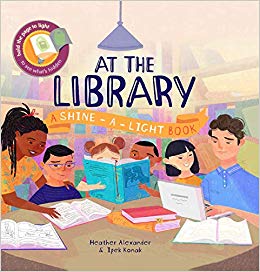
At the Library (Shine-a-Light), by Heather Alexander/Illustrated Ipek Konak, (Jan. 2019, Kane Miller), $12.99, ISBN: 9781610678230

Ages 4-8

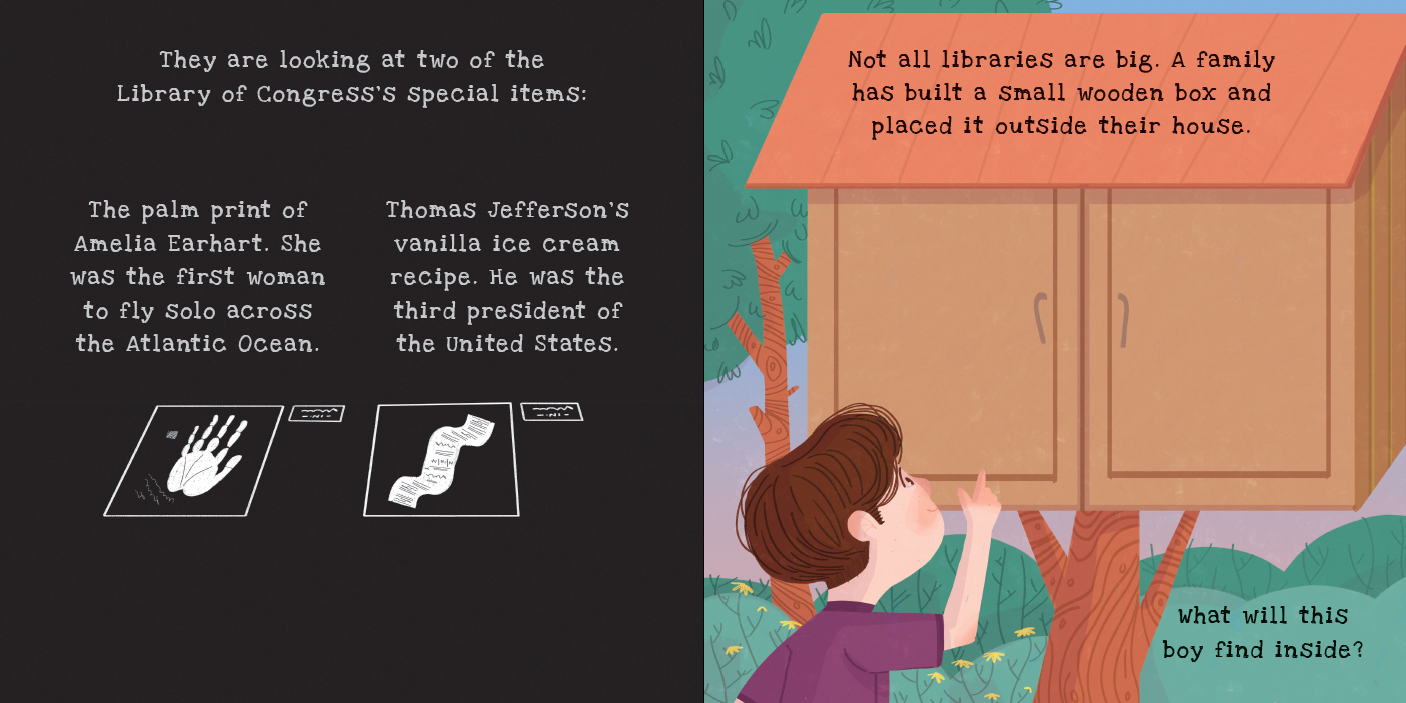
The Shine-a-Light series from Kane Miller adds a fun dimension to nonfiction reading: hold each right-hand page to the light to see a hidden image. At the Library is a nice introduction to libraries for younger readers who are new to what libraries can do and offer. Each page asks questions that can be answered by shining a light on the pages: find a mother reading to her baby; learn some of the rules of the library (we don’t really enforce that “no loud talking or making noise” business, but it is nice if you’re relatively quiet and respectful); and take in a puppet show or a storytime. The artwork within the body of the book has soft colors and black and white pages to allow for the “hidden” pictures to shine through and the questions allow for interaction between a reader and the storytime audience. The book even covers bookmobiles and little free libraries, plus a quick trip to the Library of Congress. A back section features some of the more unique items in collections around the world, including the original Winnie the Pooh stuffed bear that inspired A.A. Milne’s tales; a snow globe collection, and the contents of Abraham Lincoln’s pockets on the day he died.

My 6-year-old really enjoys this series, and my storytime group at my last library loved seeing what went on in outer space. I’ve got a class visit that I’m going to introduce to At the Library this week – let’s see how it goes! The Shine-a-Light series is a fun addition to nonfiction collections, and punches up a nonfiction storytime, and there’s a bunch to choose from.


Posted in Early Reader, Intermediate, Non-Fiction, Non-Fiction, picture books

Seashells: More Than a Home, more than decoration

Seashells: More Than a Home, by Melissa Stewart/Illustrated by Sarah S. Brannen, (Apr. 2019, Charlesbridge), $16.99, ISBN: 9781580898102

Ages 6-9

Kids love seashells. They’re the ultimate summer souvenir, coming in all shapes and sizes, with beautiful patterns and colors. Seashells: More Than a Home looks at 13 different seashells and lets readers in on their little world: their colors, patterns, and functions in protecting the marine life that live within them, keeping them safe and fed. For instance, a nautilus’s design allows it to sink and float like a submarine, while the screw-shaped burribella can anchor itself into the sand, allowing its sea snail to stay in place. Watercolor illustrations and soothing earth and sea colors make this a beautiful book to look at and learn from. Endpapers illustrate shells and a map, highlighting their locations, and back matter includes author and illustrator notes, and additional resources.

Seashells: More Than a Home is a companion to Melissa Stewart and Sarah Brannen’s book, Feathers: Not Just for Flying (2014) and a nice addition to nonfiction shelves and STEM storytimes. Get some seashells and pass them around; invite the kids to talk about what they see and feel. Melissa Stewart’s author website has free, downloadable educator activities, readers’ theatre scripts, and curriculum guides.


Posted in Non-Fiction, picture books, Preschool Reads

It’s Spring… time to raise the butterflies!

Butterflies in Room 6, by Caroline Arnold, (March 2019, Charlesbridge), $16.99, ISBN: 9781580898942

Ages 3-7

Spring is getting closer and closer, and that means that science classrooms all over the place are going to introduce their little ones to the life cycle of a caterpillar/butterfly. We’ve done it in my home, and each of my kids has done it in school, and it’s exciting every time. Butterflies in Room 6 revisits the Kindergarten students of Room 6 – a new group, since Hatching Chicks in Room 6 was published in 2017 – as they raise butterflies, starting from teeny, tiny caterpillar eggs.

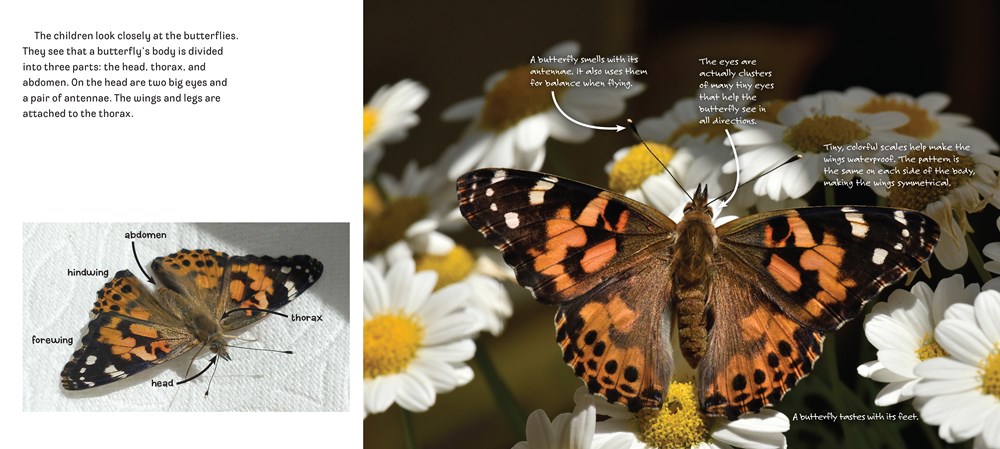
Full-color photographs and informative text take this STEM/STEAM story through the step-by-step process by which the class observed and cared for their caterpillars; feeding them, observing the stages of life, moving the chrysalises to a larger, netted environment, the exciting emergence of the painted lady butterflies from their cocoons, and their release into the world! Leaf-shaped callouts throughout the book provide additional caterpillar and butterfly facts, and back matter provides butterfly questions, vocabulary, and a nice list of online and print resources for further reading.

Butterflies in Room 6 brings a real-world look into a primary classroom – it’ll get kids excited about science, especially if this is one of your classroom projects. Pair this with The Very Hungry Caterpillar and the classic that my kids all read in their kindergarten classes, Deborah Heiligman’s From Caterpillar to Butterfly.

Posted in Early Reader, Non-Fiction, picture books, Preschool Reads

Natural world nonfiction for young learners: See to Learn: Forest

See to Learn: Forest, by Kate Moss Gamblin/Illustrated by, Karen Patkau, (March 2019, Groundwood Books), $16.95, ISBN: 9781554988792

Ages 4-7

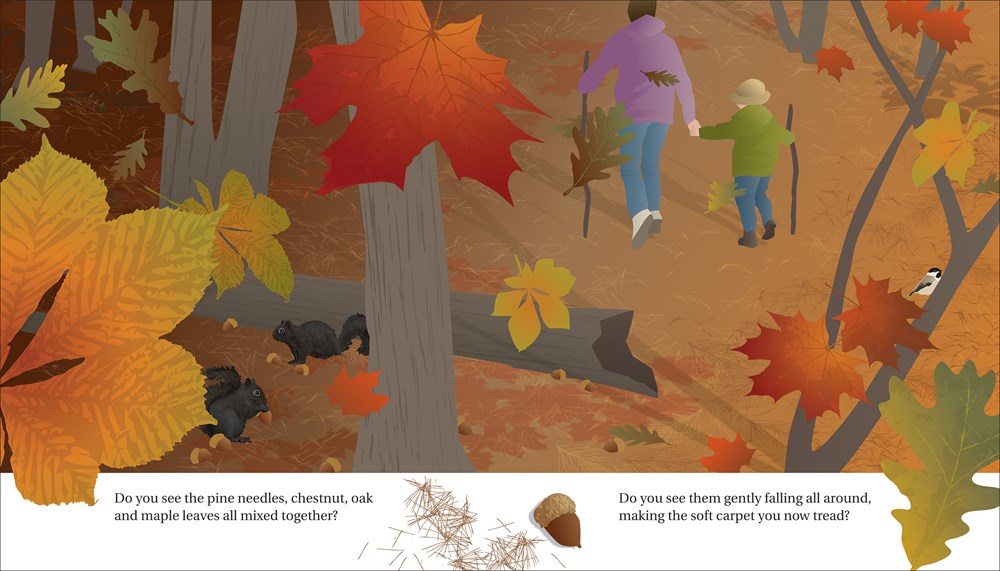
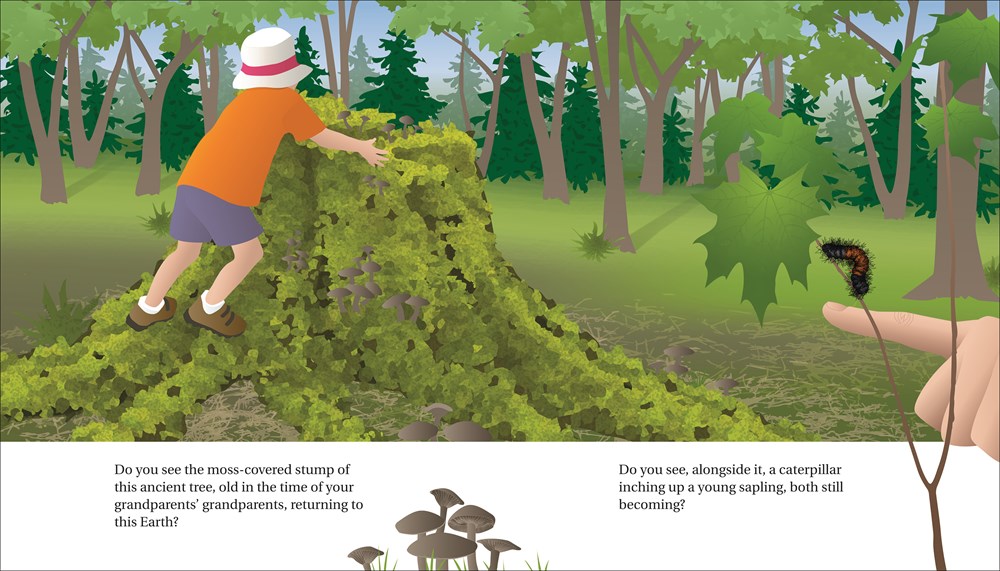
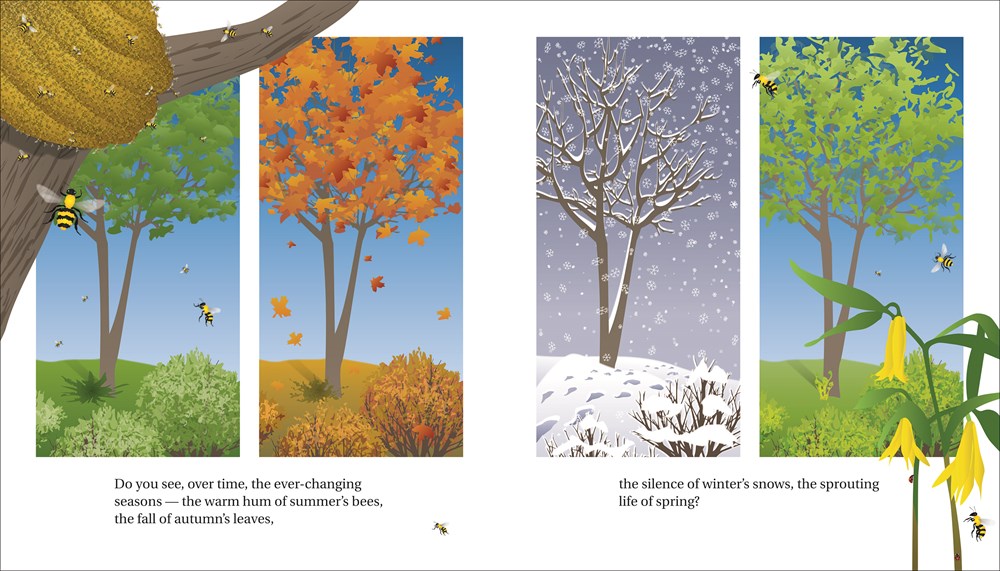
This first book in a new nonfiction picture book series encourages little learners to look at a location – in this case, a forest – and really see: see different footprints that travel the forest floor; the different leaves carpeting the ground; moss covering a stump. Forest encourages readers to think: is that moss older than your grandparents? What changes do seasons bring with them? What happens during the passage of day to night?

The quiet text promotes introspection, curiosity, and presence, and the interrelationships between nature – trees are referred to as our “cousins” – and our planet. Everything here exists for readers to observe and ponder, and Forest encourages them to think of nature, the world, and their place in it.

This is a great way to talk about the natural world and basic concepts with kids: talk about colors, talk about different functions, talk about different stages of life, whether you’re a human grandparent or a young caterpillar. We all age; we all exist; we all interact with the natural world. Let kids see themselves in nature, and they’ll respect it and care for it. Further reading provides additional resources for younger and middle grade readers. An author’s note explains the rationale and thinking points for the series.

I’m looking forward to more books in this series. See to Learn: Forest is a great addition to primary and elementary science collections and programming. This will fit nicely with Kate Messner’s nonfiction books, Over and Under the Snow, Over and Under the Pond, and Up in the Garden and Down in the Dirt, for elementary readers; for primary readers, you can’t miss with Laura Vaccaro Seeger’s books, Green and Blue; and Denise Fleming’s In the Tall, Tall Grass, and In the Small, Small Pond.

Posted in Early Reader, Non-Fiction, picture books

A math concept book with NO WRONG ANSWERS? Sign me up!

Which One Doesn’t Belong? Playing with Shapes, by Christopher Danielson, (Feb. 2019, Charlesbridge), $15.99, ISBN: 9781580899444

Ages 4-8

Math educator Christopher Danielson came up with a creative new way to get kids thinking about mathematical concepts: give them groups of shapes, and ask them, “What doesn’t belong?” The best part: NO WRONG ANSWERS. As the beginning explanation details, it’s all about the process, about critical thinking. One color could be different. A shape could be more squished, smooshed, or just look weirder than the others. It’s all in the eye, the mind, of the beholder here! Spreads alternate between layouts with shapes, and explanations on how every answer is correct, with supporting information like shapes, color, and other properties.

This is such a great way to make mathematics accessible to readers (kids and adults alike!). It doesn’t discourage anyone; it doesn’t make anyone’s answer, or rationale, wrong. Which One Doesn’t Belong shows readers how easy it is to approach things in a mathematical way: and this is coming from the lady who tells kids “the best way to do well in math is to not ask me for help with it”. Like the author himself says, “All properties count here; all ideas matter…”. Add this one to your nonfiction collections, build some programs around it for different age groups, and start making math more friendly to your readers!

Which One Doesn’t Belong? has a starred review from Kirkus and is the Winner of the Mathical Book Prize.