Posted in picture books, Preschool Reads

Rosie: Stronger Than Steel, like the ladies around her. Plus, a giveaway!

Rosie: Stronger Than Steel, by Lindsay Ward, (April 2020, Two Lions), $17.99, ISBN: 978-1-15420117947

Ages 4-8

In a nod to history, and a fitting way to send off Women’s History Month, Rosie: Stronger Than Steel salutes the American and English women who took care of business during World War II. Most of us know the iconic Rosie the Riveter, symbolic of the women who went to work in factories during the War, but not many of us in the States have heard of the British Women’s Land Army, tthat encouraged women to work in agriculture, keeping he Women’s Land Army was a British civilian organisation created during World War II so women could work in agriculture, so that Britain – an island nation that largely relied on imported food – could grow their own crops and be self-sufficient.

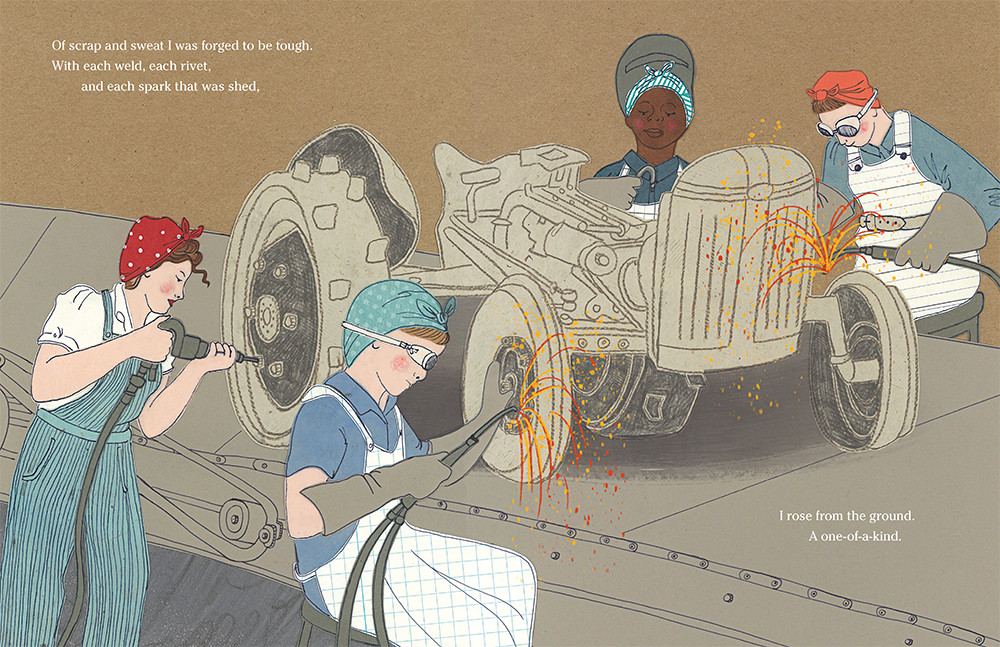
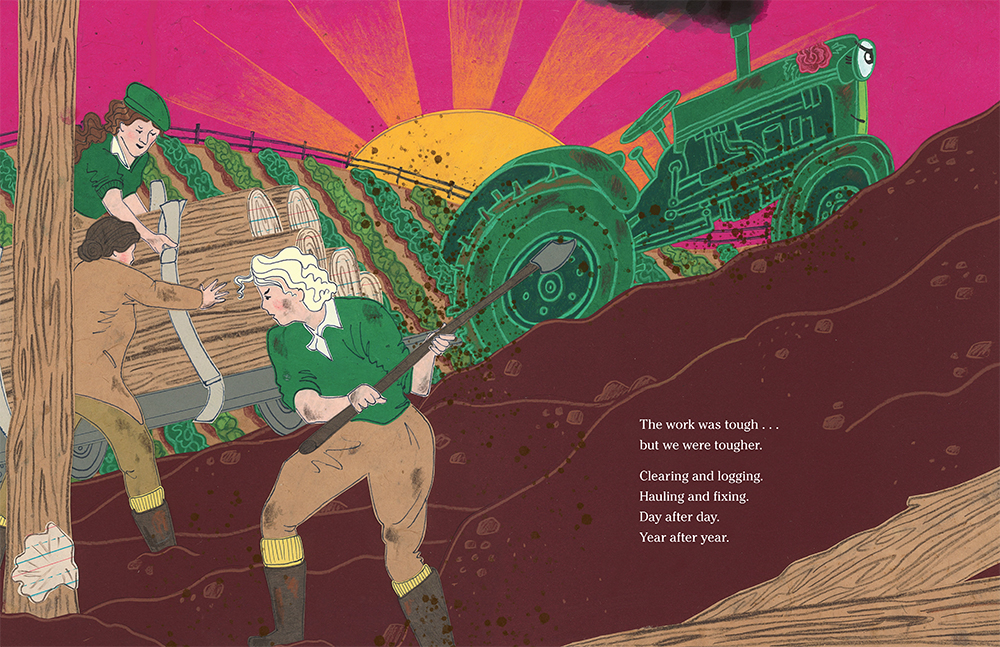
Rosie is an ode to the power of women working together. Created as a poem – part rhyme, part evocative verse – from the point of view of a tractor named Rosie, built in America by female factory workers – Rosies – and sent overseas to join the Women’s Land Army. She’s green, with a painted rose, and filled with a strong sense of purpose as she works with the women in Britain to plow fields, grow crops, and feed her new nation. She has a mantra that she clings to, repeated throughout the story: “I plow and I dig. / I dig and I plow. / No matter the job, / This is my vow. It spurs her on, as she plows in the shadow of fighter planes, through mud and muck. When the war ends, she mentors new farm machines, until the day she thinks it may all come to an end when she gets stuck in the mud… but wait! No one is going to abandon our Rosie! Like the Little Engine That Could, Rosie is truly stronger than steel, and roars back to life. A testament to women coming together to achieve great things, Rosie: Stronger Than Steel is an inspiring story about collaboration, cooperation, and determination. An author’s note tells the story of the American factory workers – our Rosie the Riveters – and the British Women’s Land Army. There’s an abbreviated  World War II timeline across the bottom of the author’s note spread.

Lindsay Ward’s colored pencil and cut paper artwork is colorful, bright, and filled with images of women (including Rosie!) working together, determined. Her art is so different here, from her colorful, cartoony artwork we see in her Dexter trilogy and Brobarians: here, we see realistic women and farmland, with a sweet-face, cartoony tractor; a blend that shows her versatility as an artist as well as an author. I really enjoyed Rosie: Stronger Than Steel and love this introduction to women’s history, for younger readers.

Rosie: Stronger Than Steel has starred reviews from Kirkus and Booklist.

Lindsay Ward is the creator of the Dexter T. Rexter series as well as This Book Is Gray, Brobarians, Rosco vs. the Baby, and The Importance of Being 3. Her book Please Bring Balloons was also made into a play. Lindsay lives with her family  in Peninsula, Ohio, where she often sees tractors from the 1930s and 1940s. Learn more about her online at www.lindsaymward.com.

Twitter: @lindsaymward


Reviewers love Rosie!

★“More than the sum of its parts, this is a wildly successful and well-researched shaping of the picture-book form to true historical sheroes.” —Kirkus Reviews (starred review)

★“This ‘little tractor that could’ sort of tale pays tribute to the iconic Rosie the Riveter persona from the US and the British Land Girls of the Women’s Land Army during WWII. Fans of Loren Long’s Otis, Virginia Lee Burton’s Katy, and like sturdy, dependable workhorses will welcome Rosie into the fold, but the historical perspective adds an unusual dimension to her story.” —Booklist (starred review)

“Vocabulary is rich, and the younger set will appreciate the intermittent rhymes. The style of Ward’s colored pencil and cut-paper illustrations reflect the period of the tale. ” —School Library Journal

One lucky winner will receive a copy of Rosie: Stronger than Steel, courtesy of Two Lions (U.S. addresses). Enter the Rafflecopter giveaway!

Posted in Fiction, Fiction, Fiction, Historical Fiction, Intermediate, Middle Grade

American Girl Trio: Melody, Nanea, and Julie

Everyone is pretty aware of American Girl, the toy and book phenomenon that sent kids running to the stores for an experience – tea party, clothing selection, matching outfits – before Build-a-Bear got involved. The American Girl novels have big fans in every library where I’ve worked, but I never thought to pick up and read any of them for myself. But I received three from the publisher, so I figured, what the heck? Let’s see what these are about. I have to say, I’m pretty happy with them.

The three books that I received seem to be a repackaging of American Girl’s BeForever line of historical novels. The original books look to have been published in 2016-2017; these new releases have updated cover art and the interiors are very emerging reader friendly, with both color photos and artwork throughout, making it even more appealing and reader-friendly to emerging chapter book readers.
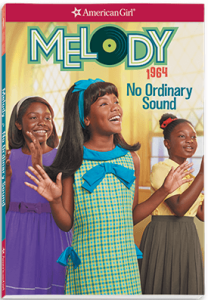
Melody: No Ordinary Sound (American Girl: Melody), by Denise Lewis Patrick, (Aug. 2019, American Girl), $7.99, ISBN: 9781683371403

Ages 8-12

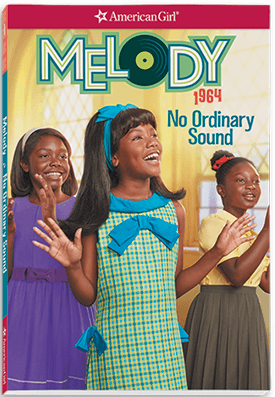
It’s 1963 in Detroit, Michigan, and 9-year-old Melody just found out that she’s going to be singing her first church solo for the Youth Day celebration. Her older brother wants to be a Motown star, while their dad wants him to go to college and pick a more stable career; her older sister comes home from college with stories of protests, marches, and registering Black voters, and her cousin’s family arrives in Detroit, because racial tension in the American South has made it almost impossible to earn a living. As Melody and her family awaken to activism, a horrific church bombing in Birmingham, Alabama takes the lives of four children and leaves Melody speechless. She has to find her voice and sing for those who can’t.

No Ordinary Sound is such powerful historical fiction for intermediate and middle grade readers. I’ve enjoyed Denise Lewis Patrick’s books in the past, so I read this American Girl book first, and am so glad I did. Her characters experience three pivotal events in civil rights history – the Detroit Walk to Freedom; the March on Washington, where Dr. Martin Luther King, Jr. gave his “I Have a Dream” speech, and the church bombing in Birmingham, Alabama – and encourage readers to see these events from a personal point of view, developing a deeper understanding of more than just the facts. Denise Lewis Patrick provides a slice of life story, where readers experience the everyday racism Melody and her family and friends experience; from being banned from buying a soda at a soda machine to being shadowed by store security at stores where they’ve been longtime customers.

No Ordinary Sound was a great introduction to the American Girl historical fiction series of books, and I’ll be sure to include this series in booklists and booktalks about civil rights and historical fiction. Melody’s books have their own page on the American Girl website, where you can read first chapter excerpts.

Civil Rights Teaching has lesson plans and resources about teaching the Civil Rights Movement, as does Facing History and Ourselves. The Grammy Museum has a lesson plan on teaching the impact of Motown. Education.com has a free, downloadable worksheet on the History of Motown, and TeachRock.org has a lesson Assembling Hits at Motown. PBS Learning Media has a teaching guide and primary source materials on The Great Migration, and National Geographic has an educator’s guide.
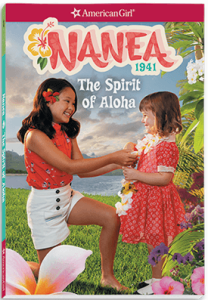
 

Nanea: The Spirit of Aloha (American Girl: Nanea), by Kirby Larson, (Aug. 2019, American Girl), $7.99, ISBN: 9781683371380

Ages 8-12

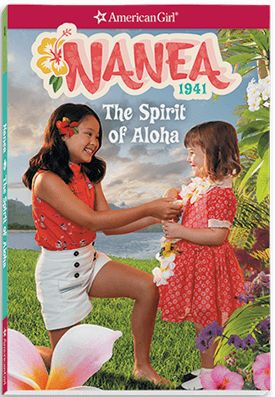
Nanea is a 9-year-old Hawaiian girl; she’s the youngest in her family, and feels frustrated that she can’t do grown-up things, like help in her family’s store. When Pearl Harbor is attacked by Japanese aircraft on December 7, 1941, Nanea discovers that she has to grow up quickly. Her father is a mechanic at Pearl Harbor, and rushes to help out; her older brother is an Eagle Scout, and heads to the site to hand out food and provide aid. Nanea’s Uncle Fudge is taken into custody because he’s Japanese, and Nanea is thrust into a different world with blackouts, curfews, and fear. She and her two best friends work to make themselves useful, especially when “nonessential personnel” must leave the island, which puts her friend at risk. With the spirit of aloha – love, understanding, and compassion – Nanea focuses on kokua – good deeds – to help everyone around her.

The Spirit of Aloha was another strong historical fiction piece. Kirby Larson has written likable, relatable female protagonists, and she’s done historical fiction before, so I was confident I was going to read a good story. Here, we have the main event, the bombing of Pearl Harbor, as a means to show how war makes children grow up overnight. Nanea sees her life change in moments: the bombing itself; the rounding up of Japanese people and the detention center; her fears for her father and brother as they head into the middle of the disaster to help; curfews and blackouts curtains, and the overall loss of a relatively peaceful, carefree existence. At the same time, she focuses on her culture’s principles of love, compassion, and good deeds. Kirby Larson adds touches of Hawaiian culture here, like the meaning of hula and tossing leis into the water to assure a return to Hawaii, and there’s a glossary of terms at the end. Nanea is biracial, with a Hawaiian mother and a Caucasian father, and this adds an additional facet to Nanea’s story, as she communicates with her mainland grandparents to let them know what’s going on in Hawaii.

The Spirit of Aloha is a good introduction to World War 2 historical fiction for younger readers. You can find excerpts and more about Nanea on the American Girl website.

Scholastic has a teaching guide on the attack on Pearl Harbor; Teachers Pay Teachers has some free, downloadable resources developed by fellow educators; the Pearl Harbor Aviation Museum has a lesson plan on developing visual literacy by analyzing photos from December 7, 1941. The New York Times has a lesson plan on using primary sources to teach the Japanese Internment, as does the Library of Congress.

 

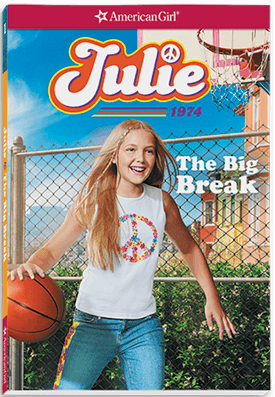
Julie: The Big Break (American Girl: Julie), by Megan McDonald, (Aug. 2019, American Girl), $7.99, ISBN: 9781683371328

Ages 8-12

Nine-year-old Julie has just moved to a new neighborhood and started at a new school after her parent’s divorce; she, her mother, and older sister live in an apartment above her mother’s new store. She starts at a new school and hears they have a basketball team, which is great! She loves basketball! The coach, however, makes no bones about it: the team is boys only, and he’s never going to let a girl play on his team. Julie, empowered by her tennis-playing older sister who tells her about tennis star Billie Jean King and Title IX, the law prohibiting gender discrimination in any educational programs receiving Federal financial assistance (read: public schools can’t refuse any boy or girl from playing on an athletic team). Julie embraces her newfound activism and takes to the streets, getting people to sign a petition to let her play.

The Big Break is a snapshot of the 1970s, when the second wave feminist movement was still pushing for equal rights in the workplace and in our schools. An interesting subplot with a Vietnam vet, who helps focus Julie’s activism by petitioning against the closing of a veteran’s hall, reminds readers that the ’70s were also about coping with the fallout from the Vietnam War and the vets who returned to homelessness, and a lack of necessary mental and physical health services. Julie’s sister is a burgeoning feminist who follows the Bobby Riggs-Billie Jean King Battle of the Sexes and tells Julie about Title IX, which opened the doors to school athletics for girls. At the same time, Julie is coping with her parent’s divorce – much more scandalous in the 1970s than it is today – and her feelings of grief and frustration with both her parents. Her mom appears to be a free spirit, with a ’60s-early ’70s flower child aesthetic; she’s a divorced woman entering the workplace and starting her own business venture: a store dedicated to handcrafted clothing and items, often repurposed. Julie’s pilot father often misses school events because he’s called to fill in for another pilot, and doesn’t initially support her bid to play on the boys’ basketball team.

The Big Break is by Megan McDonald, who everyone also knows as the author of the Judy Moody and Stink series! Here, she gives readers a glimpse into the 1970s, where things are so different, and yet, still the same. Girls still get grief from boys in the athletic sphere. Homeless veterans are still not getting the services they need. People now use Title IX to protect transgender and nonbinary students. And girls are still discovering and embracing their voices in activism. You can read more about Julie on her American Girl page, including first chapter excerpts.

TedEd has a lesson plan on Title IX that’s friendly to younger students. NEA Today has a good article on ways Title IX has helped women and girls; PBS has a video on Title IX; Scholastic Kids Press has an article on how Title IX changed girls’ sports. Teaching History has resources on teaching the Vietnam War.


Each book comes with a peek into each girls’ life: maps of their neighborhood, pictures of their families, a glimpse at someone’s room. Back matter includes overall information about each American Girls’ moment in history. American Girl makes teachers guides, readers guides, and printable activities available.


Posted in Historical Fiction, Teen, Young Adult/New Adult

The Red Ribbon finds hope in the heart of despair

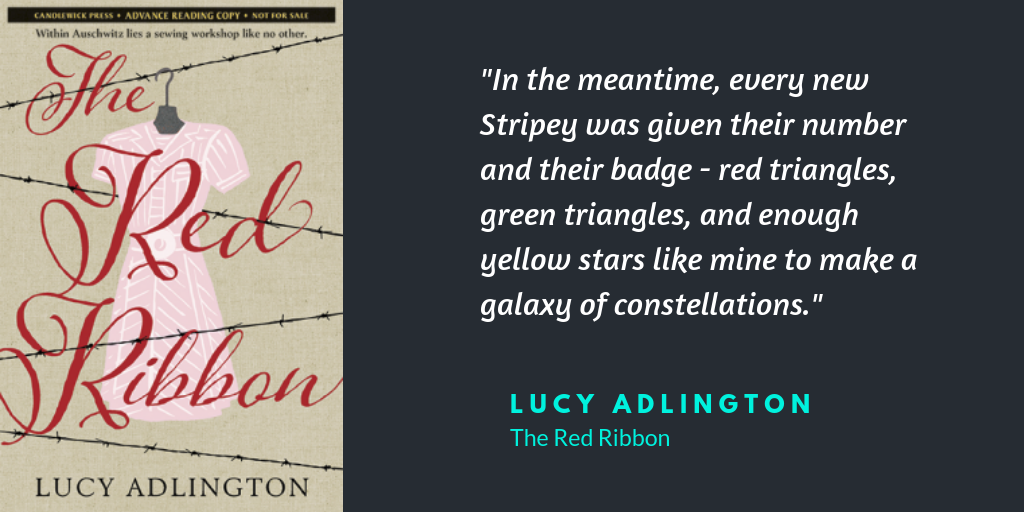
The Red Ribbon, by Lucy Adlington, (Sept. 2018, Candlewick Press), $17.99, ISBN: 9781536201048

Ages 12+

Ella is a 14-year-old young woman who lands in Auschwitz-Birkenau after being picked up on the way home from school. She lies about her age to be placed in the Upper Tailoring Studio; a dressmaking studio within the camp, where the skeletal women Ella calls “Stripeys”, referring to the prisoners’ striped uniforms, make dresses for their clients: the wives and girlfriends of the SS officers, and the female SS officers themselves. Ella has dreams of being a dressmaker and finds herself more than up to the task, but her friend Rose points out that there’s a fine line between doing what’s necessary for survival and collaborating with the enemy, no matter where one’s true passion lies.

The Red Ribbon looks at some big issues taking place during the Holocaust: there really was a dressmaking studio, where prisoners repurposed clothing taken from the arriving prisoners to make clothing for the SS wives, girlfriends, and officers. There were prisoners who acted as “prominents”: they oversaw other inmates and could be almost as cruel and demanding as their jailers. Ella’s talent for dressmaking gains her notice from one SS officer, an 18-year-old named Carla, who leaves her small gifts for trade and invites her to share birthday cake with her one time and viciously beats her another, calling her inhuman. Rose acts as Ella’s conscience, seeing through the illusion Ella desperately wants to create: an illusion where her grandmother is still safe at home and waiting to hear from her; an illusion where her dressmaking talent is valued, and the Auschwitz “Department Store” is a kind of thrift store and not a pile of stolen goods from stolen lives. Ella’s desperation to hone her dressmaking talent borders on collaboration, but she refuses to acknowledge it until a heartbreaking moment when her beloved grandmother’s sewing machine lands in front of her in the Studio. It smashes Ella’s naivete, but she and Rose bolster one another, and the women around them as they pray and wait for liberation.

There are some devastating moments in this story, and Lucy Adlington’s words weave beautiful, terrible visions. Prisoners tell each other to “Look down at your sewing, not up at the chimneys”. One prisoner is so desperate for news about her children that she asks about an SS officer’s son: “Tell us about the little boy –  how old?  My son was three when they took us.”

The book equally captures desperation and determination; hope and despair. It’s a good add where collections need YA fiction that discusses The Holocaust. Display and booktalk with Antonio Iturbe’s The Librarian of Auschwitz, The Diary of Anne Frank and John Boyne’s The Boy in the Striped Pajamas (I’ve seen this title in both Juvenile and YA collections); Elie Wiesel’s Night and Tatiana de Rosnay’s Sarah’s Key, and Art Spiegelman’s Maus. The Jewish Book Council has an excellent list of Holocaust-related YA books. There is a creative writing resource available for free download from The Hay Festival.

Posted in Fiction, Historical Fiction, Middle Grade, Tween Reads

The Turnkey of Highgate Cemetery is keeping watch

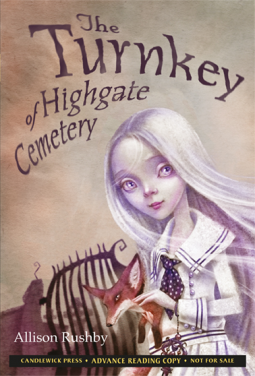
The Turnkey of Highgate Cemetery, by Allison Rushby, (July 2018, Candlewick Press), $15.99, ISBN: 9780763696856

Recommended for readers 9-12

Flossie Birdwhistle is a ghost, but that’s beside the point. She’s got a very important job as Turnkey at London’s Highgate Cemetery; making sure her fellow souls are at rest and cared for. She’s a young ghost – she’s only 11- and while some may have something to say about that, she’s good at her job. Right now, her big concern is World War II, currently raging over Britain, and disturbing her dead neighbors. Flossie encounters the ghost of a German soldier up to no good, so she starts investigating, and learns that he’s somehow managed to bridge the gap between the worlds of the dead and the living. She has got to stop him before he – and the enemy army – can destroy Britain!

This is thoroughly enjoyable historical fiction with a nice dose of the supernatural. Flossie has a nicely sketched out backstory, and we learn just enough about her fellow ghosts and familiars to keep us satisfied and turning pages. I like how author Allison Rushby incorporated Hitler’s well-documented fascination with the supernatural into the story, making this a “what if” type of alternate history novel for younger readers, and I like Flossie’s determination and ability to think while under (often literal) fire. Mystery and ghost story fans will enjoy meeting Flossie and friends. Want to give readers a fun website? Let them visit the actual Highgate Cemetery’s webpage, where they can find war graves (including soldiers from WWII), take a virtual tour of the cemetery, and visit a few luminaries.

Posted in History, Non-Fiction, Teen, Tween Reads

Voices of the Second World War connects generations

Voices From the Second World War: Stories of War as Told to Children of Today, by Candlewick Press, (March 2018, Candlewick Press), $24.99, ISBN: 9780763694920

Recommended for readers 10+

As generations grow farther and farther from World War 2, we live in danger of losing the stories of those who lived through the conflict. Voices From the Second World War collects the stories of veterans and citizens alike into one volume, but what sets this book apart from other first-person anecdotes and memories is the bridge that Voices builds: the stories are told to children from this generation; family members and students alike. Originally published in Britain, Voices began as an initiative by the British Children’s newspaper, First News, where they published these collected accounts. There are accounts from military men and women, including the Enola Gay’s navigator, telling the story of how he dropped the bomb on Hiroshima; and there are stories from civilians who endured the conflict, like the 8-year-old boy who survived that bombing, lost his mother and baby sister, and saw his father and surviving sisters die from radiation poisoning. There are stories from concentration camp survivors and German citizens who lived in fear of the Russian troops coming in after the Allied forces left. Vintage photos run throughout the book, and an index and glossary make this a necessary reference for history readers and collections.


Posted in Intermediate, Non-Fiction

Fania’s Heart is a moving, true story

Fania’s Heart, by Anne Renaud/Illustrated by Richard Rudnicki, (Apr. 2018, Second Story Press), $18.95, ISBN: 9781772600575

Recommended for readers 7-10

Sorale, a 10-year-old girl, finds a tiny heart-shaped card in her mother’s dresser and asks her where she got it. Her mother sits down and finally tells her daughter the story of her survival in the Auschwitz concentration camp. Fania tells her daughter how she was taken to the camp, tattooed, and put to work with other women in the camp. She talks about their fear and their hunger, and how, on her birthday, the women came together to give her a birthday gift: a cake, from their bread rations, and the tiny card, folded into a heart-shape, which opens into a petaled flower, inscribed with their wishes for Fania. This little book is all that Sorale’s mother has left of her life before.

Based on a true story, Fania’s Heart embraces resilience, courage, and the strength we gain through our friendships. The realistic artwork may invoke strong emotions from readers: the pain of memory; the slumped shoulders of the Auschwitz women; the determination on Fania’s face, all carry powerful reactions. An author’s note tells Fania’s story and includes photos of Fania, Sorale (Sandy), and Fania’s heart, which is on display in the Montreal Holocaust Museum. Fania’s Heart is a good additional book to add to World War II and Holocaust collections.

Posted in Fiction, Historical Fiction, Middle Grade, Realistic Fiction, Tween Reads

Social Justice, Union Organizing, Dairy Wars, and an Orphan Band!

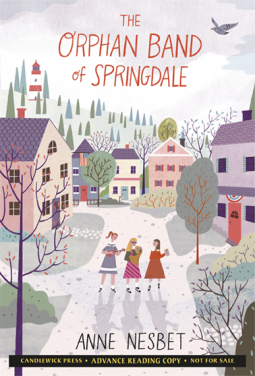
The Orphan Band of Springdale, by Anne Nesbet, (Apr. 2018, Candlewick Press), $18.99, ISBN: 9780763688042

Recommended for readers 8-12

It’s 1941, and things are tense in the U.S. as the world is at war in Europe. Eleven-year-old Gusta is on the run with her father, a German labor organizer, heading toward Maine to stay with her grandmother, when her father disappears. Gusta shows up on her grandmother’s doorstep with the clothes on her back and her beloved French horn. Her grandmother and aunt, who run an orphanage, take her in, and Gusta starts adjusting to life in a place very different from New York. American nationalism runs rampant in Maine, and Gusta’s last name and status as a newcomer brings some suspicion with it, as does her talk about unions and workers’ rights. Her uncle, a mill-worker whose hand was mangled at the factory, can’t work, so Gusta takes it upon herself to approach the owner of the mill to ask him to consider helping with her uncle’s bills. What Gusta doesn’t realize is that her desire to do the right thing puts her at odds with the mill owner, who has a history of his own with her family.

There is such rich and relevant storytelling here. Gusta is a wonderfully realized character with a strong background in social justice: a background that makes her an outsider in her own country. She comes to Small Town America during a time when there of alien registration drives (it really happened) and extreme patriotism; when something as innocuous as a last name aroused suspicion. Gusta is hyper-aware of injustice and determined to do what’s right, whether it’s bringing union reps to her town or point-blank asking for compensation for her uncle’s work-related injury. It’s her unflinching sense of right and wrong that puts her at odds in her community – and her father’s reputation certainly doesn’t help. Thank goodness her tough but loving grandmother is there to lean on. The Orphan Band of Springdale moves at a good pace, has believable characters in relatable situations, and readers can easily draw parallels between 1941 and today.

An author’s note reveals the very personal connection between the author and Gusta’s story. Readers can download a discussion guide and author’s notes from Candlewick’s website. The Orphan Band of Springdale has starred reviews from Publisher’s Weekly and the Bulletin of the Center for Chidren’s Books.


Posted in Fiction, Historical Fiction, Middle Grade, Realistic Fiction, Tween Reads

Different Days looks at German internment during World War II

Different Days, by Vicki Berger Erwin, (Oct. 2017, Sky Pony Press), $15.99, ISBN: 9781510724587

Recommended for readers 9-13

Eleven year-old Rosie lives with her mother, father, and younger brother, Freddie, in Honolulu, Hawaii. They love their home, their family, their lives, until December 7, 1941, when Pearl Harbor is attacked and everything changes, seemingly overnight. Rosie’s parents are of German descent, but are American citizens who have lived in Hawaii for most of their lives. It doesn’t matter. They’re rounded up by the military, along with Rosie’s Aunt Etta; they’re detained as German spies, their possessions confiscated. Rosie and Freddie are left alone, and suddenly, their schoolmates and neighbors don’t seem as friendly as they used to be. They’re sent to live with their emotionally distant Aunt Yvonne, who tells her neighbors they are refugee children and never admits to her own German ancestry. Luckily, Aunt Etta is released and takes the children, but this is just the beginning of the struggle: her family’s home has been sold; their possessions and properties now “in storage” or gone, and the children at the new school they attend are quick to call them Nazis. Rosie longs for her family to reunite and for things to stabilize, but these are very different days.

Different Days is based on the true story of 11-year-old Doris Berg, who watched the attack on Pearl Harbor from her home in Honolulu. The next day, her parents and aunt were taken into custody and sent to internment camps. Like Rosie and Freddie, Doris and her sister were sent to an aunt that refused to acknowledge their familial link, and lost her home and possessions. Rosie is a strong, resilient character who wishes she were like her heroine, teen sleuth Nancy Drew, so she could solve the mysteries facing her: who was responsible for informing on her parents and having them detained, and who is this shady Mr. Smith who allegedly “manages” her family’s disappearing property and possessions? She endures the prejudice of those around her, and focuses on small victories, whether it’s having something to eat that day or knowing she’ll visit her mother soon. The novel takes readers into the story of one family affected by the internment of German “persons of interest”; a moment in history not often discussed. The book includes information about Doris Berg and her family’s ordeal, and further information. Different Days is a good addition to historical fiction collections and is as relevant today, when we seek to label others and blame an entire nationality/ethnicity/religion for the actions of a few.

Vicki Berger Erwin writes for both children and adults. You can find out more by visiting her website.

Posted in Non-Fiction

Write to Me: Letters from Japanese American Children to the Librarian They left Behind

Write to Me: Letters from Japanese American Children to the Librarian They left Behind, by Cynthia Grady/Illustrated by Amiko Hirao, (Jan. 2018, Charlesbridge), $16.99, ISBN: 9781580896887

Recommended for readers 5-10

Inspired by a true story, Write to Me tells the story of Clara Breed, a children’s librarian who corresponded with her Japanese American patrons when they were sent to internment camps during World War II. She gave them postcards to let her know where they were; she visited them, wrote to them, and sent them books and crafts to help ease their minds during their confinement. She advocated for those children by writing articles and attending rallies, advocating for her kids. When the kids came home, she was waiting for them – and they came to her. She was comfort in a cruel time. Write to me tells the story of Clara Breed through conversations with her library kids; muted pencil art illustrates life in the prison camps, with excerpts from actual letters on each page to show the passage of time. Endpapers display photos from the period, including family arrivals at the camps and evacuation notices for Japanese Americans. An author’s note features a photo of Clara Breed and two of her patrons, taken at a reunion in 1991. There’s a timeline of Clara Breed’s life, including links to her articles on the war, relocation, civil liberties, and human rights, and a selected history of the Japanese People in the United States. Source notes, bibliography, and further reading are available. A touching book about a woman who touched lives, and a nice addition to biography collections.


Posted in Fantasy, Fiction, Middle Grade, Tween Reads

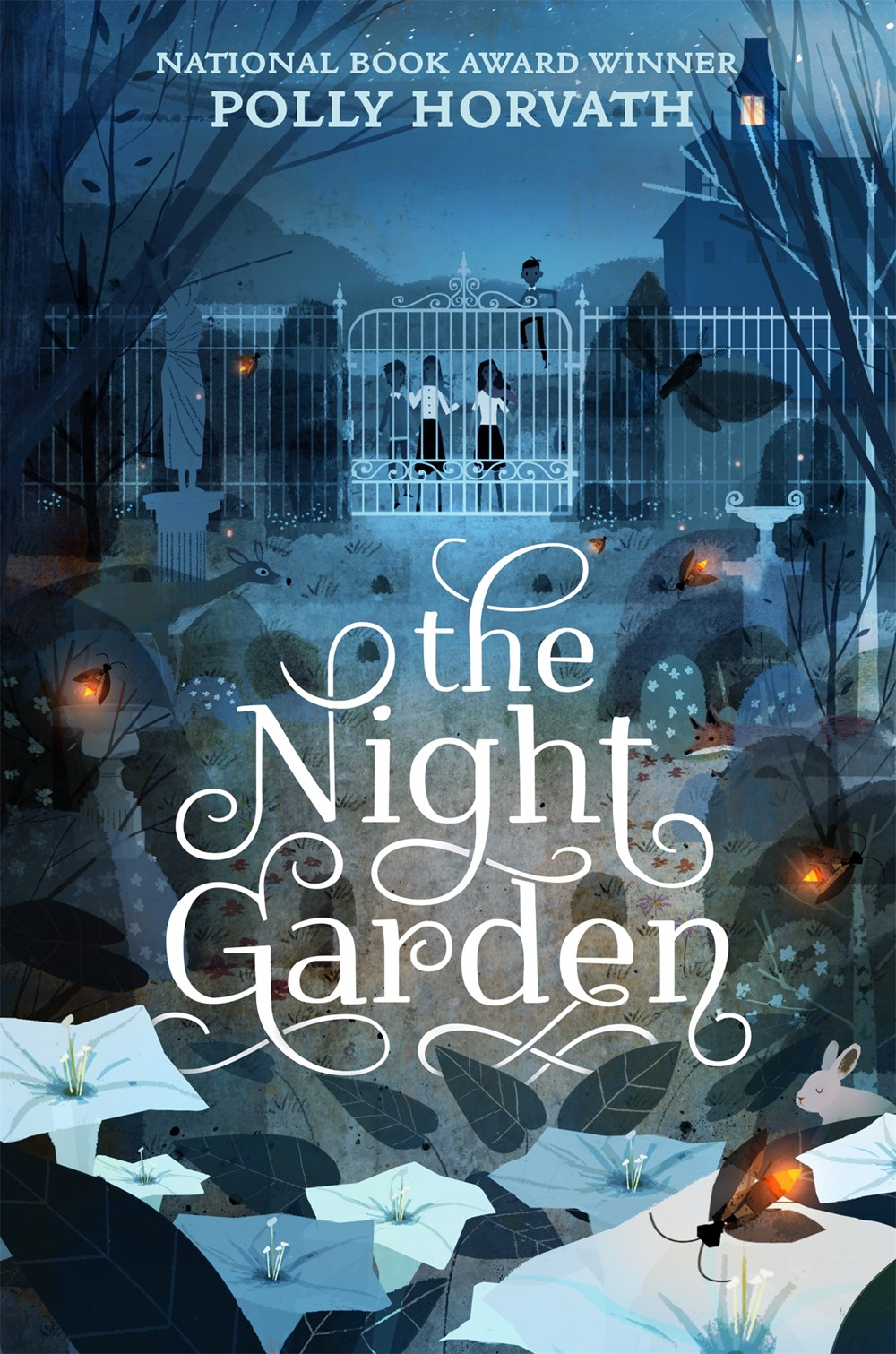
The Night Garden puts a little spark of magic into WWII-era Canada

The Night Garden, by Polly Horvath, (Sept. 2017, Farrar, Straus & Giroux), $16.99, ISBN: 9780374304522

Recommended for readers 9-13

Franny Whitekraft lives with her adoptive parents, Sina and Old Tom, on Vancouver Island while World War II rages overseas. They live a pretty quiet life until their neighbor, Crying Alice, shows up – crying – and asks to leave her three children with them while she goes to stop her mechanic husband, Fixing Bob – stationed at a military base – from doing something dumb. Zebediah, one of the children, knows what it is, but he’s not talking, and he’s not sharing the letters he gets from their father with his brother and sister, Wilfred and Winifred. Things take a sharp turn when Fixing Bob puts his plan into action, and The Night Garden seems to be everyone’s only hope in making things right. Can a garden really grant wishes? Franny and her friends are about to find out.

The Night Garden didn’t really come together for me. There are several plotlines that kind of wander in and out of the book, like Sina’s witnessing a UFO. Narrated in the first person by Franny, there’s humor throughout the novel, but overall, the story took a little too long to get there and meandering plots may keep some readers from fully committing to the book. I enjoyed the sense of humor that kept the book moving, and the characters, on their own, were a fun bunch that I enjoyed my time with. An additional purchase for collections where you have devoted magical realism readers.

Polly Horvath is the Newbery Honor and National Book Award winning-author of Everything on a Waffle. Her author website offers more information about her books, awards, and news.