Posted in Non-Fiction, Teen, Tween Reads, Women's History

Votes for Women! Suffrage was a fight every inch of the way.

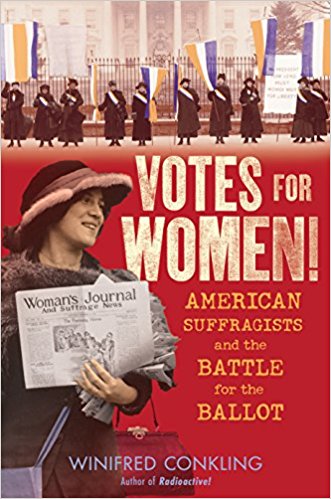
Votes for Women! American Suffragists and the Battle for the Ballot, by Winifred Conkling, (Feb. 2018, Algonquin Young Readers), $19.95, ISBN: 9781616207342

Recommended for readers 12+

Winifred Conkling is emerging as a definitive chronicler of women’s history. Passenger on the Pearl told the story of Emily Edmondson, who escaped slavery and dedicated her life to education young African-American women; Radioactive! gave long-overdue props to Irène Curie & Lise Meitner, whose work on radioactivity was often overlooked in a male-dominated field; now, Votes for Women gives us a comprehensive history of the fight for American suffrage, long before women finally won the right to vote in 1920. For readers who may only be familiar with Susan B. Anthony, this volume is indispensable, introducing readers to Elizabeth Cady Stanton; Susan B. Anthony’s counterpart and founder of the suffrage movement, and Alice Paul, who took her cue from the more action-oriented British suffrage movement, and went to jail for the cause, where she and fellow protestors suffered deplorable conditions and were force-fed. We meet Victoria Woodhull, the first female Presidential candidate, and revisit Sojourner Truth’s famous speech, “Ain’t I A Woman?” Most importantly, we learn about the beginnings of intersectional feminism; when abolitionists and suffragists found common ground – and then diverged under political fire.

This is a comprehensive book, complete with photos, primary sources, and writing that never turns away from the more difficult moments in the battle for the vote: from racism to violence, it’s all here. It’s a good book for your nonfiction collections and women’s history collections for middle school and high school, with extensive primary source references, a timeline of American women’s suffrage, a bibliography, notes, and an index. Booktalk this with the graphic novel, Sally Heathcote: Suffragette by Mary M. and Bryan Talbot, which features a fictional character from the British movement, and is a great hook to get teens interested. A Mighty Girl has a strong list of additional reading, filtered by age, on suffrage.


Posted in Early Reader, Fiction, Fiction, Intermediate

Isabella is a Girl in Charge as she channels historic women

isabella_covIsabella: Girl in Charge, by Jennifer Fosberry/Illustrated by Mike Litwin, (Oct. 2016, Sourcebooks Jabberwocky), $16.99, ISBN: 9781492641735

Recommended for ages 4-8

Isabella, the little purple-haired girl with the big imagination, is back in her fourth adventure: this time, she’s going all the way to the nation’s capital! Isabella wakes her parents up bright and early; they’ve got a big day ahead of them and Isabella doesn’t want to miss a second. As she and her family get ready to head out, Isabella imagines she’s different females politicians, first in their fields, from the first mayor to the first Supreme Court Justice. Isabella and her family have an important day to be part of: history is being made!

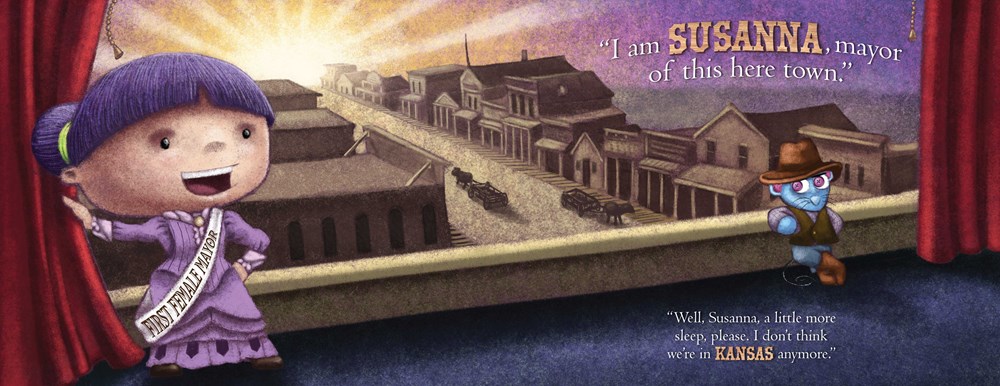
A good idea in theory, younger readers may need some prompting when first hearing the story; these names will largely be unfamiliar to them. Anyone reading the story out loud should mention beforehand that the women Isabella names are the first women in politics and what office they held. Kids will be better able to pick up subtle in-jokes in the text, too; for instance: When Isabella claims to be “Susanna, mayor of this here town,” her mother responds, “I don’t think we’re in Kansas anymore.” If the children understand that Susanna Salter was the first female mayor, and she was mayor in Kansas, it’ll be more fun for them. Isabella’s adorable stuffed friend is with her, dressed in period clothing, in each spread – see if your readers can spot him (or her, if they like)!

isabella_1

Mike Litwin’s art, done with blueline pencil and Adobe Photoshop, is fun and emphasis on key words like names and identifying characteristics adds some punch. Brief biographies, quotes, and a timeline of women in politics, along with a list of books and websites for further reference, round out Isabella’s latest adventure.

isabella_2

The book is a good start for introducing younger readers to women in politics, and how long we’ve been around! It’s more of a companion volume to a lesson rather than a standalone. I haven’t seen an educator’s guide or activity kit yet, but there are some great resources about women and politics online, including printouts at Time for Kids. Most of the available information is branded for Women’s History Month, but we’re at a historic crossroads in history – celebrate women in politics NOW!

Jennifer Fosberry and Sourcebooks both offer links to Educator Guides for other books in the Isabella series and the companion book, My Name is Not Alexander. Illustrator Mike Litwin has samples of his artwork and animation on his site.

Posted in Uncategorized

Women’s History Month: Ten Days a Madwoman

nellie blyTen Days a Madwoman: The Daring Life and Turbulent Times of the Original “Girl” Reporter, Nellie Bly, by Deborah Noyes (Feb. 2016, Viking Books for Young Readers), $18.99, ISBN: 9780803740174

Recommended for ages 12+

In 1887, a 23 year-old woman decided to show her newspaper editor that she had the chops to write more captivating stories than the latest hat and dress styles of the season. Elizabeth Jane “Pink” Cochran, who went by the pen name Nellie Bly, managed to convince a battery of bystanders, doctors, and nurses that she needed to be admitted to Blackwell’s Island, home of an infamous insane asylum, so that she could write an exposé. Sure enough, she was admitted and spent 10 horrific days in the asylum, where she later wrote about the mistreatment she received and witnessed other patients endure. Her career, so she thought, was made.

Ten Days a Madwoman is a biography on Cochran and her investigative journalism. The Blackwell’s Island piece inspired other women to pursue “stunt journalism”, where they would take on often outrageous stunts like boxing the famed Gentleman Jim Corbett, rescuing a child from a burning building, or jumping in front of a trolley car. Bly worked hard at her journalism and championing women and children in particular, but struggled throughout her career with the idea of women being taken seriously as journalists. When she decided to travel around the world in 80 Days, hoping to beat the fictional record set by Jules Verne’s Around the World in 80 Days character, Phileas Fogg, a rival newspaper sent their female reporter on the same trip, setting up a race between the two.  (Bly beat her rival and Fogg: she completed her trip in 72 days.)

Noyes explores Bly’s professional and personal life, focusing on her desire to care for her family and attain financial security in addition to gaining professional respect. Pictures and reprinted documents, with additional profiles of people, places, and events influencing or influenced by Bly, round out this must-read biography on a woman whose career may be overlooked in this age of Twitter and 24-hour news, when hard-hitting journalism tends to take a back seat to pop culture.

Ten Days a Madwoman has already received a starred School Library Journal review and includes a rich bibliography, source notes, and index. An important addition to any collection, and a great Women’s History Month spotlight.

Deborah Noyes is an award-winning author of fiction and non-fiction for children and adults. Her author webpage offers more information about her books and links to her social media. Check out an excerpt here!

Posted in Non-Fiction, Teen, Tween Reads, Uncategorized, Women's History

Radioactive! The story of two women scientists and how they changed the world.

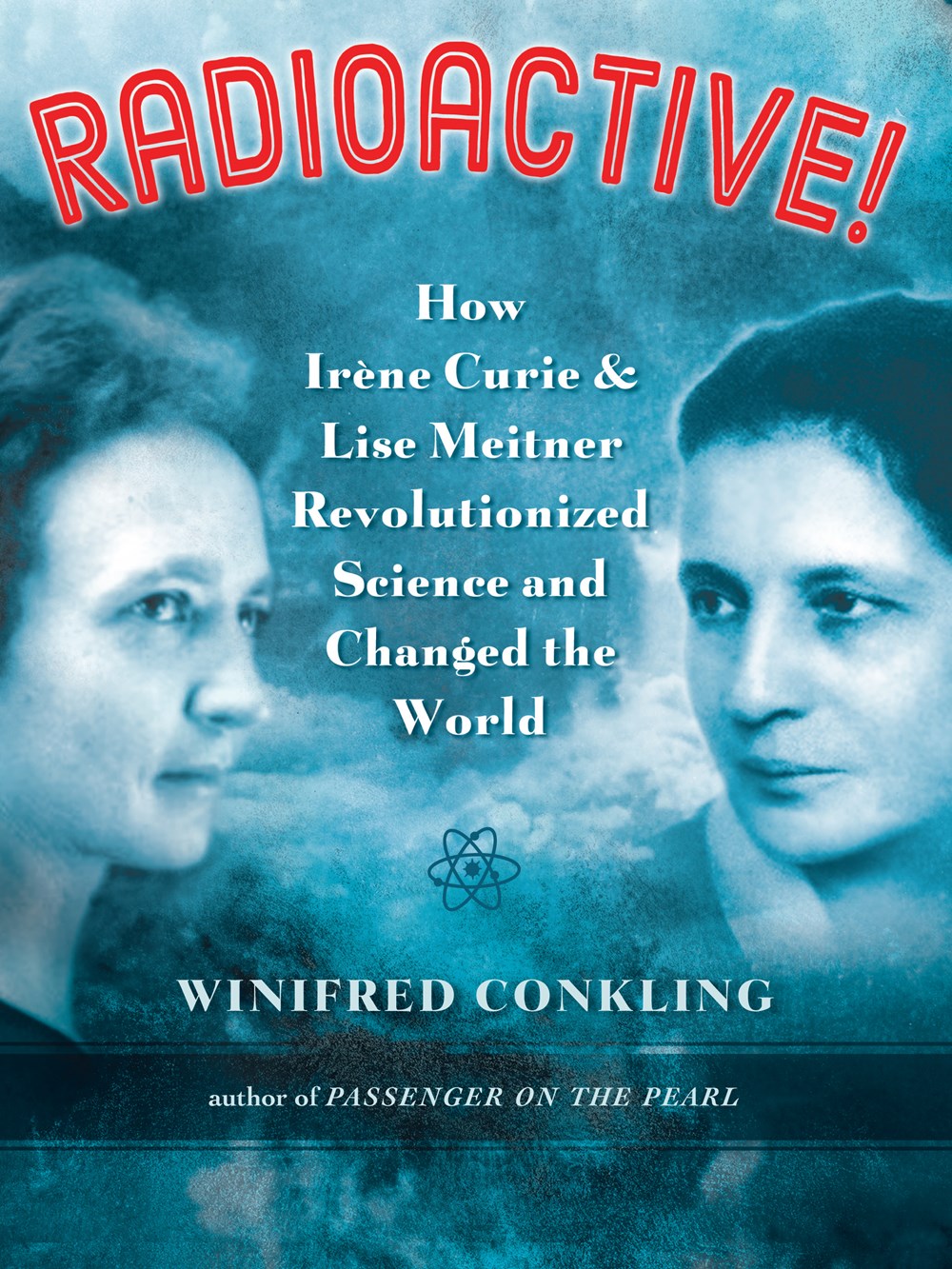
radioactiveRadioactive!: How Irène Curie and Lise Meitner Revolutionized Science and Changed the World, by Winifred Conkling (Jan. 2016, Algonquin Young Readers), $17.95, ISBN: 9781616204150

Recommended for ages 12+

Most of us know who Marie Curie was: the scientist who pioneered the study of radioactivity. But how many know that her daughter, Irène, was an accomplished scientist in her own right, whose studies on radioactivity, physics, and the transmutation of elements earned her a Nobel prize, shared with her husband? Have you heard of Lise Meitner, the physicist whose work in physics – often published in conjunction with her friend and research partner, Otto Hahn – led to the discovery of nuclear fission? She was passed over for a Nobel for several reasons, not the least of which involved her being straight-up robbed by a partner who took credit for much of her work during the World War II years, when she was exiled in Sweden.

Radioactive! tells the stories of these two very important women and their historical research. We learn Irène’s story from the beginning, as the daughter of celebrated scientist, Marie Curie. She worked by her mother’s side, operating an x-ray machine on World War I battlefields, eventually going on to further her mother’s work in radioactivity along with her chemist husband, Pierre Joliot. We learn about Lise Meitner, whose work put her in competition with Curie many times, but experienced more sexism and prejudice than Curie ever did. When Hitler rose to power in the 1930s, her Jewish heritage created problems at her research position, where former colleagues turned against her and demanded she resign; she was eventually forced her to flee Austria for Sweden or end up in a concentration camp. Although she continued to consult with Hahn on their nuclear fission research, he took credit for her work and took home the Nobel Prize for Chemistry in 1944.

I’ve been looking for biographies on women in science for my tweens and teens, and this certainly fits the bill. There are photographs throughout the book, and Ms. Conkling provides strong backgrounds on both Curie and Mietner, making them live again, making the reader care about them, and explaining physics, fission, and radioactive science in terms that we can all wrap our heads around. A valuable addition to libraries and classrooms, and a great book for anyone who wants to inspire the next generation of scientists – female OR male.

Winifred Conkling is an award-winning author of fiction and nonfiction for young readers, including Passenger on the Pearl: The True Story of Emily Edmonson’s Flight from Slavery and the middle-grade novel Sylvia and Aki, winner of the Jane Addams Children’s Literature Award and the Tomás Rivera Award. Her author website provides teacher guides for her books. There is no guide up for Radioactive yet, but I’m sure there will be one closer to the book’s publication date.