Posted in Intermediate, Non-Fiction

That’s the way the ball bounces: Bounce! is a history of rubber

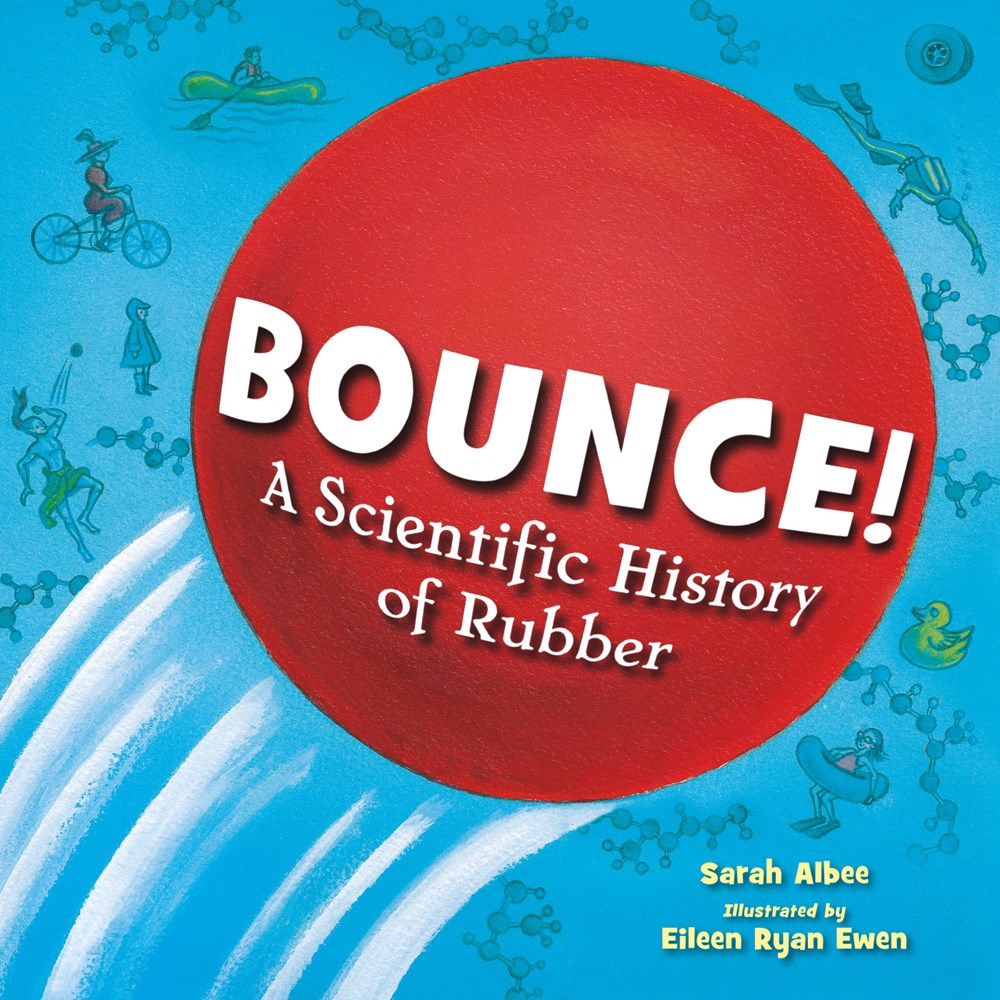
Bounce! A Scientific History of Rubber, by Sarah Albee/Illustrated by Eileen Ryan Ewen, (Oct. 2024, Charlesbridge), $18.99, ISBN: 9781623543792

Ages 6-9

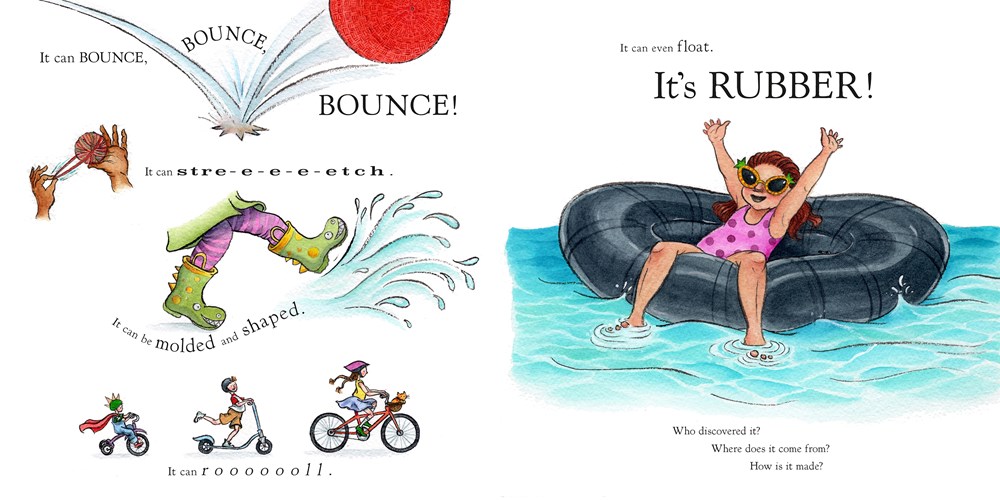
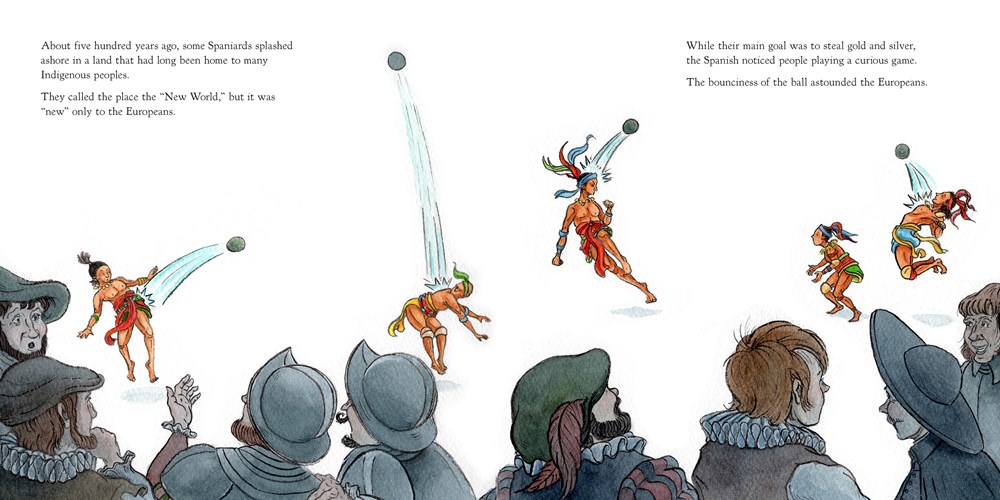
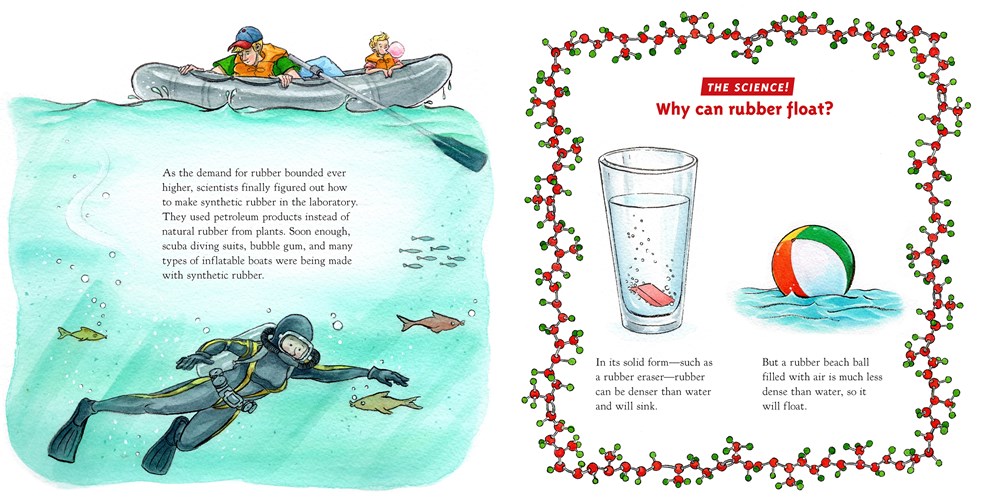
Learners who love the “why” of things will enjoy this one: illustrations and history pair with scientific explanation to deliver a concise and fascinating history of rubber. Entertainment in Europe wasn’t terribly exciting in the early days: to play ball, one had options like leather stuffed with feathers or an animal bladder stuffed with dried peas. You know where there were bouncing balls, though? The pre-Columbian Americas, where the rainforest had trees that yielded latex. The Spaniards “discovered” the balls along with everything else they “discovered”, leading to centuries of experimentation and innovation and culminating with simultaneous discoveries by American Charles Goodyear and Englishman Thomas Hancock; they discovered how to “vulcanize” rubber, making it moldable, shapable, and less likely to melt in the summer or freeze in the winter. Illustrated scientific explanations appear throughout the history, and pen, ink, and watercolor illustrations show people through the ages bicycling, sitting on inner tybes, splashing through puddles, and swimming underwater. Endpapers show a variety of balls bouncing across the spreads. Notes on history, details about rubber, a timeline, and a bilbiography round out the back matter. An excellent nonfiction resource.

Bounce! A Scientific History of Rubber has a starred review from Kirkus.


Sarah Albee is the New York Times best-selling author of more than 100 books for kids, including Troublemakers in Trousers: Women and What They Wore to Get Things Done and Accidental Archaeologists: True Stories of Unexpected Discoveries. Prior to being a full-time writer, Sarah worked at Children’s Television Workshop (producers of Sesame Street) for nine years. She played basketball in college, and then a year of semi-professional women’s basketball in Cairo, Egypt. She lives in Connecticut.

Eileen Ryan Ewen is the illustrator of many books for children, including H is for Honey BeeJonas Hanway’s Scurrilous Scandalous Shockingly Sensational Umbrella, and Nature’s Friend: The Gwen Frostic Story. http://www.eileenryanewen.com

Posted in Early Reader, Non-Fiction, picture books

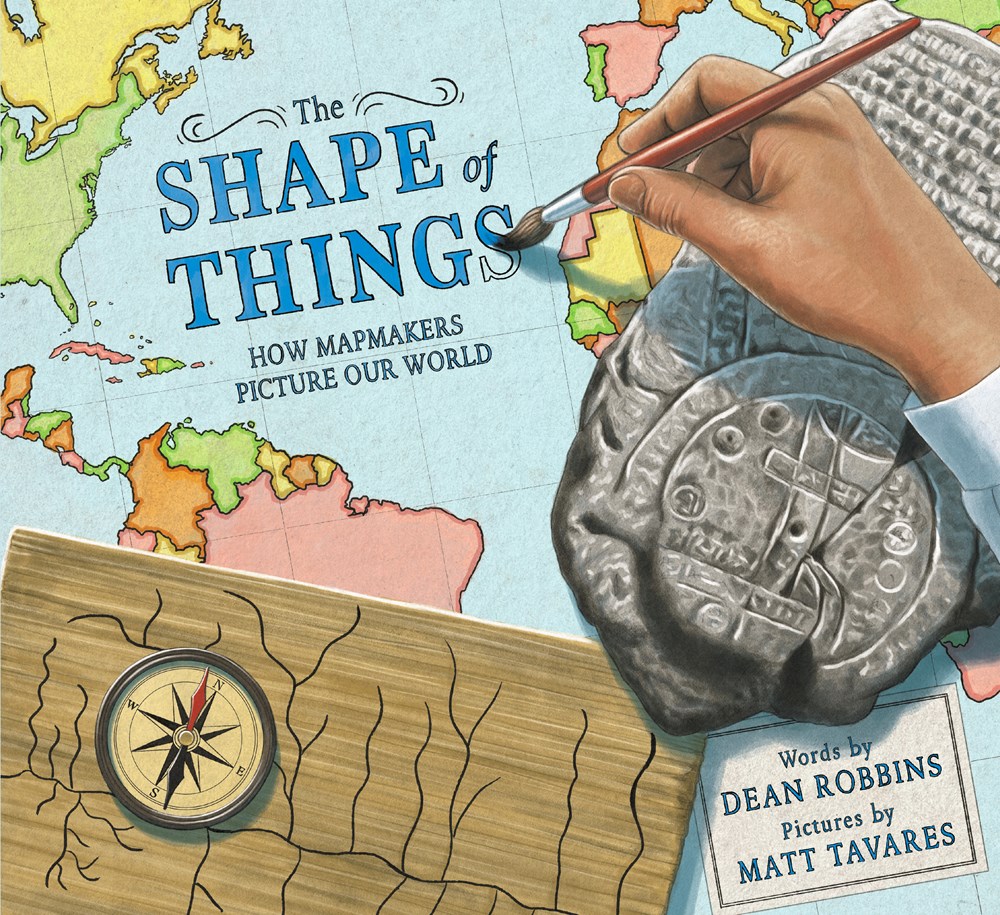
The Shape of Things: How we created maps to understand our world

The Shape of Things: How Mapmakers Picture Our World, by Dean Robbins/Illustrated by Matt Tavares, (Aug. 2024, Knopf Books for Young Readers), $19.99, ISBN: 9780593479254

Ages 4-8

An extraordinary discussion on the development of maps, Robbins provides an insight into human history as Tavares illustrates how different eras created maps to make sense of their world. Beginning with the first cultures to make maps using cave drawings and mammoth tusks, Robbins describes how mapmaking developed with humans, going from rocks to papyrus and ink to digital technology; as humans explored the planet, maps became more detailed, including paths connecting cities, rivers, and oceans. Flat, one-dimensional maps gave way to globes and tools like the compass, Gunter’s chain, and satellites, and computers. Robbins skillfully explains how humanity came together with the goal to explore and define the world we share; Tavares’s digital illustrations show realistic depictions of people through different eras creating various maps, allowing readers to see the changes in landscape, cultures, and technology. The story of maps is the story of mankind, beautifully told here. Endpapers depict shards of an early map and a  car-mounted smartphone GPS. Back matter includes an illustrated mapmaking timeline, a bibliography, and notes on mapmaking. Developing mapmakers will return to this book again and again.


“Map lovers and readers interested in the development of knowledge and technology will be drawn to Robbins’ look at how we, over millennia, have documented Earth’s shape.” —Booklist

Dean Robbins is a journalist and children’s book author. His previous books include, The Fastest Girl on Earth!Two Friends; Susan B. Anthony and Frederick DouglassMiss Paul and the President, and Margaret and the Moon. He lives in Madison, Wisconsin, with his family. To learn more, visit https://deanrobbins.net/

Matt Tavares is a New York Times bestselling author-illustrator of over twenty titles. His books have been featured in: ALA Notable, Parents’ Choice Gold Awards, and twelve were chosen for the Society of Illustrators Original Art exhibit. His artwork has been exhibited at the Brandywine River Museum, the Eric Carle Museum, and the Mazza Museum. Matt lives in Maine with his wife, Sarah, and their two daughters. Visit his website: matttavares.com

Instagram:
Dean Robbins: @deanprobbins
Matt Tavares: @tavaresbooks
Facebook:
Dean Robbins: @deanrobbins
Matt Tavares: @tavaresbooks
Twitter/X:
Dean Robbins: Dean Robbins
Matt Tavares:  Matt Tavares
Posted in Intermediate, Non-Fiction, picture books

Colossal vehicles keep the world moving

Colossal: Heavyweights of the Vehicle Universe, by Stéphane Frattini/Illustrated by Studio Muti, (Aug. 2024, Twirl Books), $19.99, ISBN: 9782408052478

Ages 5-8

Learn about the world’s largest vehicles and machines in this oversized book filled with facts and figures. There are 28 different machines included in here, including Cadillac One, trusted with carrying the President of the United States, Bagger 293, an excavator and heaviest land vehicle, and the International Space Station. Detailed illustrations are accompanied by interesting, easy-to-read facts and diagrams to show scale and detail. Did you know that Bigfoot 5, the biggest monster truck, weighs about the same as two elephants Or that a cruise ship like Harmony of the Seas has 18 decks, a helipad, and 20 restaurants, cafes, and snack bars? Colorful drawings feature cross-sections to show interior areas like the inside of a passenger airliner and spacecraft crew module, and readers will be amazed scaled illustrations that show a tractor and 30 cars weighing the same thing on a scale. An exciting addition to elementary nonfiction collections.

Colossal is the companion to Incredible: Stars of the Plant World by Benjamin Flouw and Spectacular: Miracles of Nature by Philippe Nessmann and Alex Asfour.

Posted in picture books, Preschool Reads

Opportunity, the Mars rover who charmed a planet

Hello, Opportunity: The Story of Our Friend on Mars, by Shaelyn McDaniel/Illustrated by Cornelia Li, (Sept. 2022, Page Street Kids), $18.99, ISBN: 9781645674696

Ages 4-8

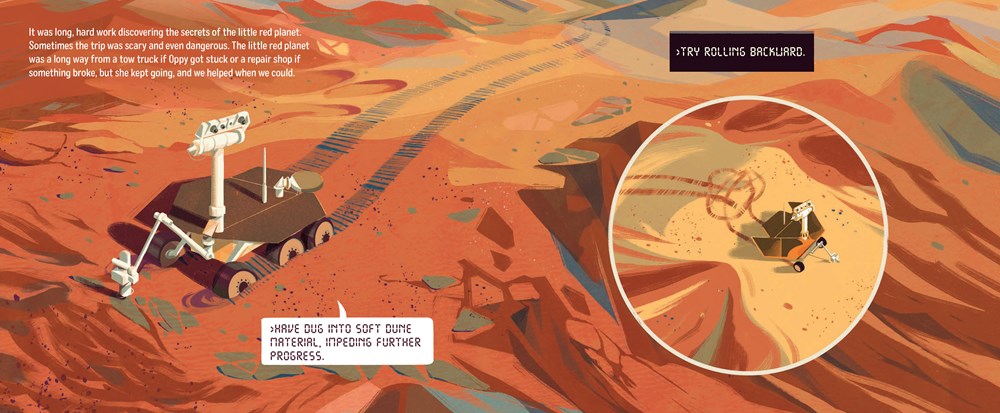
The true story of Opportunity, the Mars rover who captivated watchers on Earth, is the star of this picture book biography. Author Shaelyn McDaniel begins with a story of how humans set and achieved exploration goals: humans wanted to go to the sky, so we did. We wanted to go to the moon, so we did. But when we wanted to go to Mars, it was a little too far away, “so we sent a friend instead”. Opportunity , built by scientists, went into space and spent 15 years on what was originally 3 month mission, but a storm hit the planet, draining the rover’s batteries and shutting her down. McDaniel humanizes Opportunity with phrases like “Oppy called home often” and “she sent selfies so we would know she was okay”; as Opportunity shuts down, scientists sent a lullaby – “a kiss from her friends on Earth”. It’s an emotional moment, made more poignant by Cornelia Li’s digital illustration of a satellite broadcasting colorful musical notes into space. Much of the illustration is orange-red tinged, with and there are genuinely breathtaking moments as Opportunity roves the Red planet, groves digging into the ground and layered dunes. Endpapers show Mars from the Earth’s point of view and Earth from Mars’s point of view, and back matter includes more information about Opportunity. A bibliography is available via QR code. Hello, Opportunity will endear the rover to a new generation of sky-watchers who may be inspired to find her on Mars one day. A sweet storytime addition to your space collections. A downloadable activity kit includes games and the opportunity to send a postcard to Opportunity.

Posted in History, Middle Grade, Non-fiction, Tween Reads

Honest History gives middle graders new perspectives

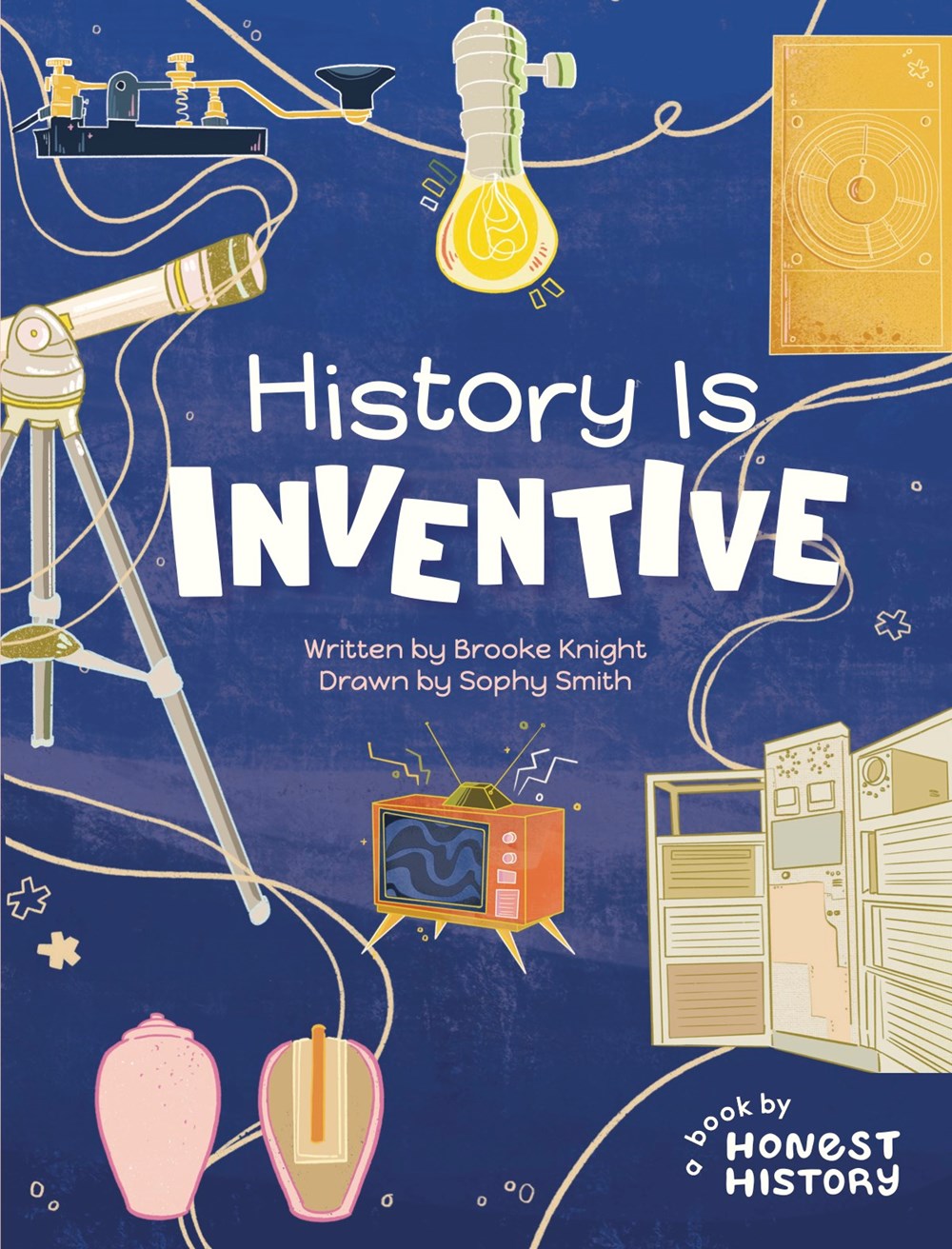
Publisher Gibbs Smith hit shelves in August with two history titles that are great gift ideas and lots of fun for your nonfiction collections: History is Delicious, and History is Inventive.

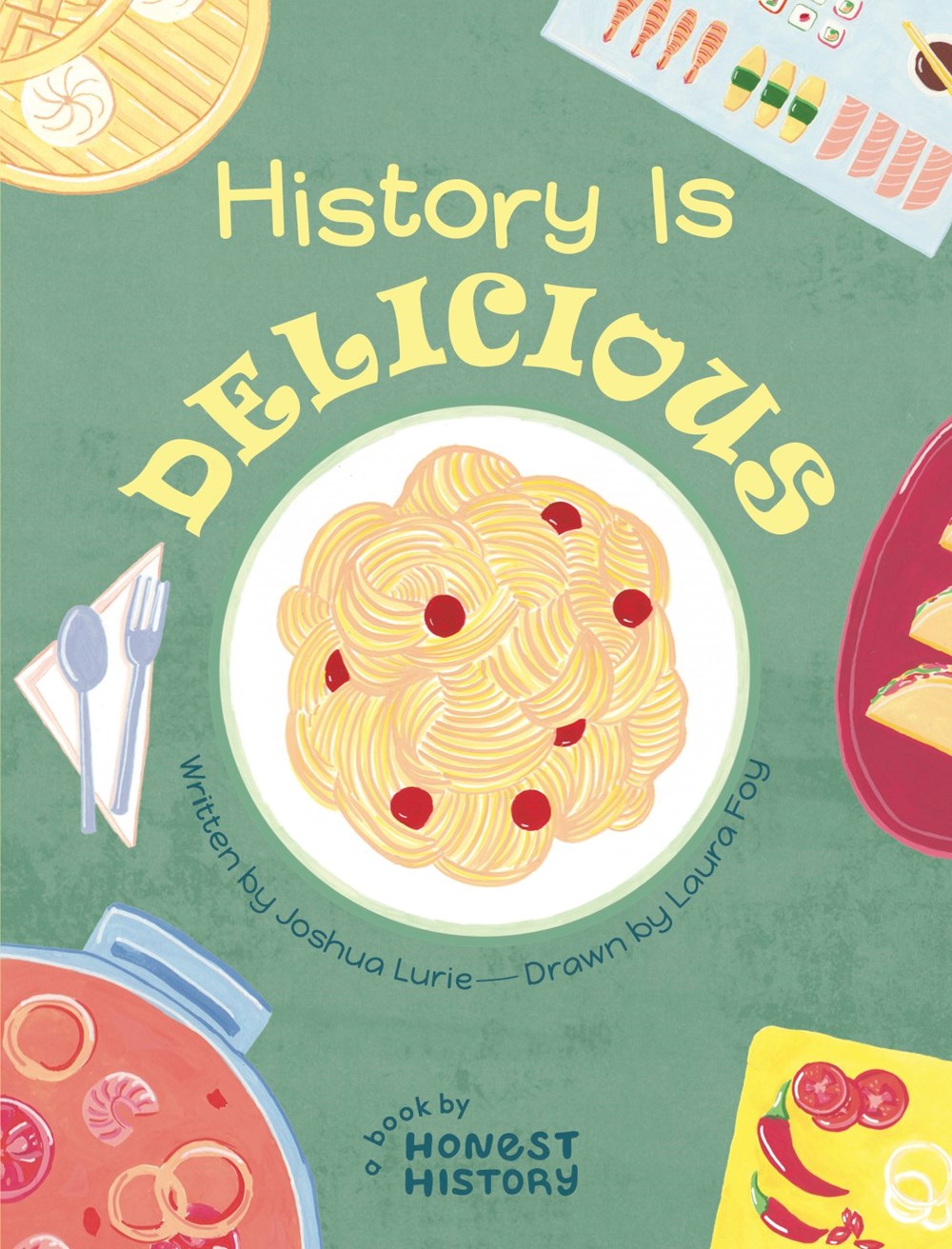
History Is Delicious, by Joshua Lurie/Illustrated by Laura Foy, (Aug. 2021, Gibbs Smith/Honest History), $19.99, ISBN: 9781736191903

Ages 8-12

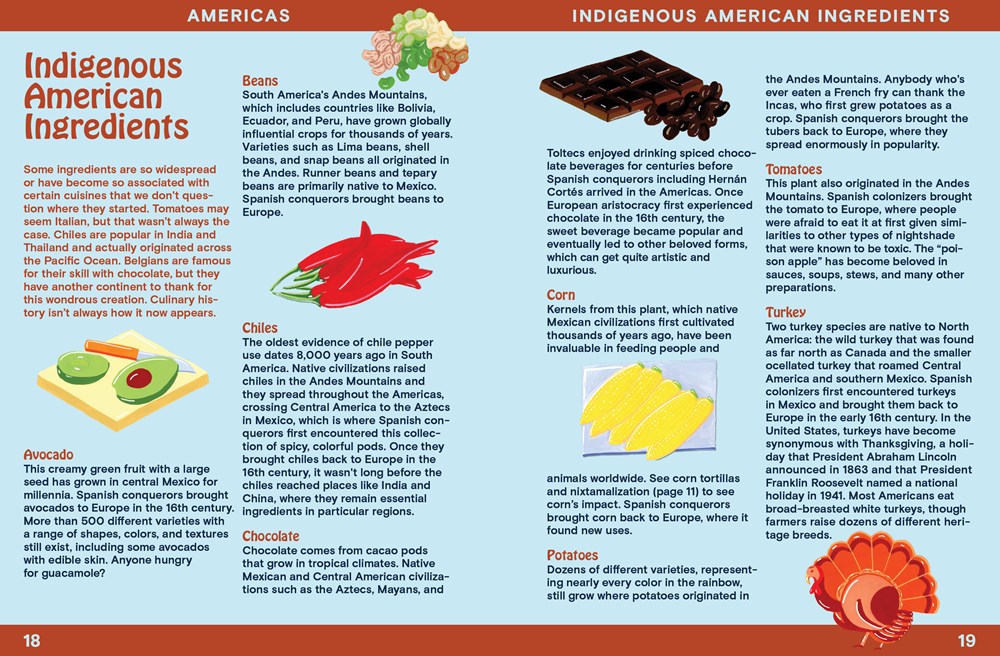
History is Delicious is a colorful, tasty trip across world history through cuisine. Food plays a part in the cultural fabric; influenced by native cultures and colonialism, the book illustrates how food brings us all together. Organized into sections highlighting the Americas, Europe, Ethiopia (and their coffee breaks!), and Asia, sections include histories of each cuisine, etiquette tips for dining across cultures, popular and “must try” dishes, and a recipe for each region. Colorful illustrations make this attractive and accessible to kids everywhere.


History is Inventive, by Brooke Knight/Illustrated by Sophy Smith (Aug. 2021, Honest History/Gibbs Smith), $19.99, ISBN: 9781736191927

Ages 8-12

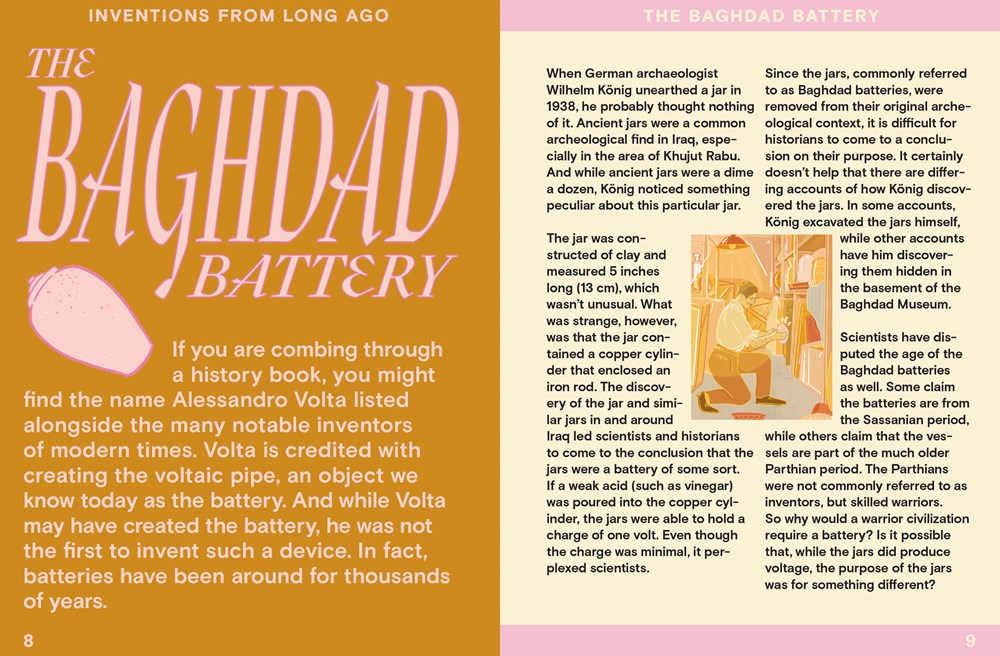
Next up, we’ve got History is Inventive, a look at inventions and their inventors that changed the world. Straightforward sections organize inventions into timeframes like “Inventions from Long Ago”, “Inventions from Not As Long Ago”, and “Inventions from Not Long Ago” to group inventions going from ancient ideas like gunpowder (9th century AD), to the piano (17th century), to wi-fi (1940s). There’s a section on famous inventors like Charles Drew, the first African American doctor to earn a Doctor of Science from Columbia University, and creator of blood banks. A “Fun Stuff” section gives readers the background and lists of materials needed to make a version of Galileo’s telescope. “Thinking it Over” sections after every profile offer thought-provoking questions. Colorful illustrations, great pacing and layout, and hands-on activities make this another great book to have in your history and STEM collections. I am looking forward to seeing what more Honest History books are coming down the pike!

Posted in Non-Fiction, Teen, Tween Reads, Young Adult/New Adult

LEGO Mindstorms books? Gotta go with No Starch Press!

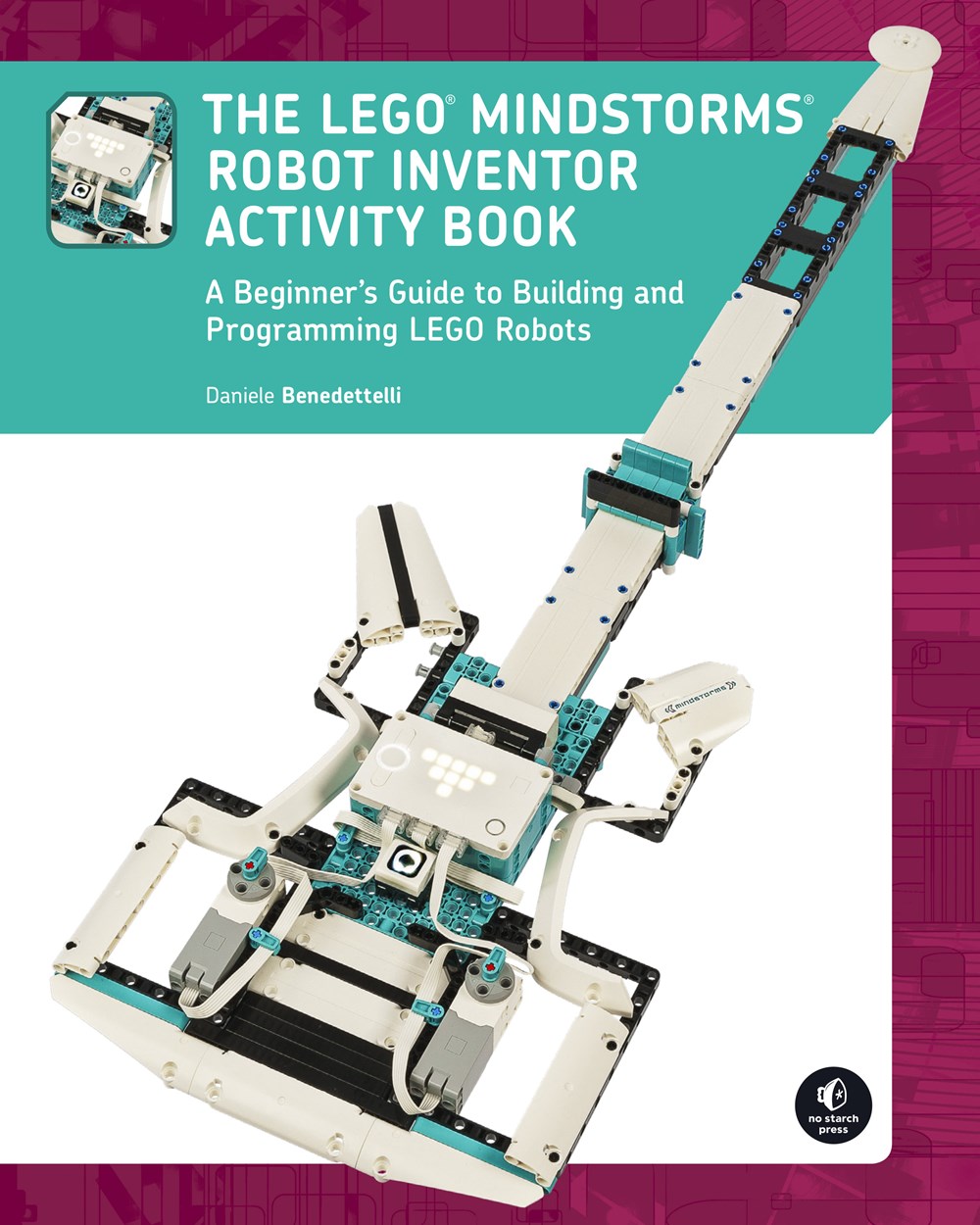
The LEGO MINDSTORMS Robot Inventor Activity Book : A Beginner’s Guide to Building and Programming LEGO Robots, by Daniele Benedettelli, (Nov. 2021, No Starch Press), $34.99, ISBN: 9781718501812
Ages 9+
I love No Starch Press for my computer and tech books. They find the best writers and illustrators to communicate tech concepts to everyone, from kids to grownups. Their manga guides to the sciences are great for my YA collection, and they move: as soon as I show a teen The Manga Guide to Calculus, I feel like I’ve done my good deed for the day. So when someone from No Starch asked me to look at the LEGO Mindstorms Robot Inventor Activity Book, I jumped! We had a robotics program at my last library, and I’m hoping to get a program going here if I can get some grant money, so a No Starch library of LEGO Mindstorms books would be a nice part of my grant.
Daniele Benedettelli delivers. He’s collaborated with LEGO Group to help develop and test LEGO MINDSTORMS, including the software for the LEGO MINDSTORMS Education EV3 set, has written several LEGO Mindstorms books. and has a YouTube channel with tutorials and experiments.
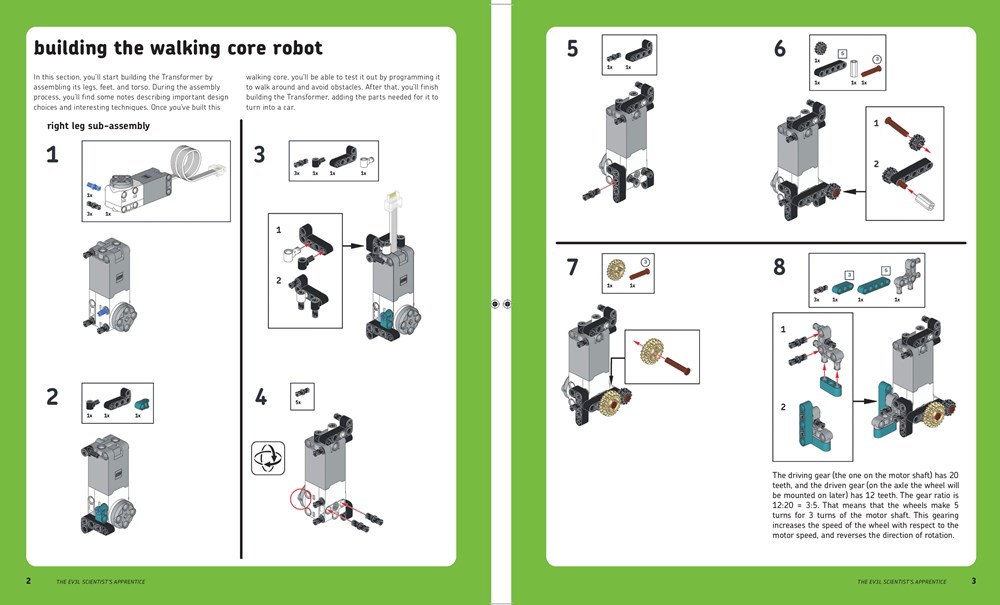
Written for beginners – no, honest – this book includes seven projects to get you up and running. Use the Robot Inventor set and the companion to to build bots like a magical monster that can answer written questions AND eat paper, a working electric guitar, or a remote-controlled transformer car that will have kids channeling their inner Optimus Prime. Pages are filled with color photos and step-by-step instructions on building and programming your robots using the Mindstorms app. Benedettelli communicates clearly and with helpful, informative detail, and clear color photos will help even the most confounded of learners .(That would be me. I’m the confounded learner.) Helpful tips and ideas abound in callout boxes. Fully indexed.
If you’re building a Mindstorms/robotics library, this is an essential book to have, especially if you haven’t run a robotics league before. Good luck!
Posted in Fiction, Middle Grade, Science Fiction, Tween Reads

Happy Book Birthday to Weird Little Robots by Carolyn Crimi!

Weird Little Robots, by Carolyn Crimi/Illustrated by Corinna Luyken, (Oct. 2019, Candlewick), $16.99, ISBN: 9780763694937

Ages 8-12

Two girls discover their mutual love of tinkering and science in this quirky, fun, illustrated novel. Eleven-year-old Penny Rose is new in town, and doesn’t really have any friends yet – unless you count the little robots she makes in her shed. She makes them out of found objects, and tinkers lovingly with them, giving them names and looking after them every day. Lark, her neighbor, is a quirky girl next door who loves birds and tinkers with found objects given to her by the crows; she makes birdhouses to keep her friends safe from the elements. The two girls become friends and create an entire town for the little robots… and when a mysterious wind sweeps through their town, it brings some surprises with it! But while Penny and Lark enjoy one another’s company, a secret science club at school offers Penny membership in their society. Penny feels the tug between her new best friend and a group of like-minded science friends, but making the wrong decisions for the wrong reasons could cost Penny her best friend and the robots that she loves so much.

This is such an unconventional, enjoyable book! I love the idea of making creations out of found objects, and the touch of magical realism infused in this story makes it a joy to read. It’s a STEM story, a friendship story, and a comforting story about second chances. The little robots have their own personalities, each reflected in their names, bestowed on them by Penny. Penny is more tech-focused, while Lark prefers the world around her, showing that making and tinkering presents endless creations. The black and white illustrations throughout give life to the story and keep readers interested as they move through the book.

There’s a downloadable guide with discussion questions and activities, making this a good idea for an ELA/Science partnership or book club/Discovery Club program. I can’t wait until my library’s copy arrives, so I can start telling kids how much they need to read this book. Maybe it’s time for a secret science society at MY library… hmmmm…


“[A]uthor Crimi infuses this unassuming transitional novel with compassion, humor, and a refreshing storyline in which girls organically weave a love for science into their everyday lives. Illustrations by Luyken add to the guileless sensibility. A contemplation on the magic of friendship told with sweetness, simplicity, and science.”—Kirkus Reviews


Carolyn Crimi enjoys snacking, pugs, Halloween, and writing, although not necessarily in that order. Over the years she has published 15 funny books for children, including Don’t Need Friends, Henry and the Buccaneer Bunnies, Where’s My Mummy?, There Might Be Lobsters, and I Am The Boss of This Chair. Weird Little Robots is her first novel.

For more information, and to download a free classroom guide for Weird Little Robots, visit her website.

Twitter: @crims10

Corinna Luyken is the author-illustrator of The Book of Mistakes. She lives with her husband and daughter in Olympia, Washington.
Posted in Fiction, Graphic Novels, Humor, Middle Grade, Middle School, Science Fiction, Tween Reads

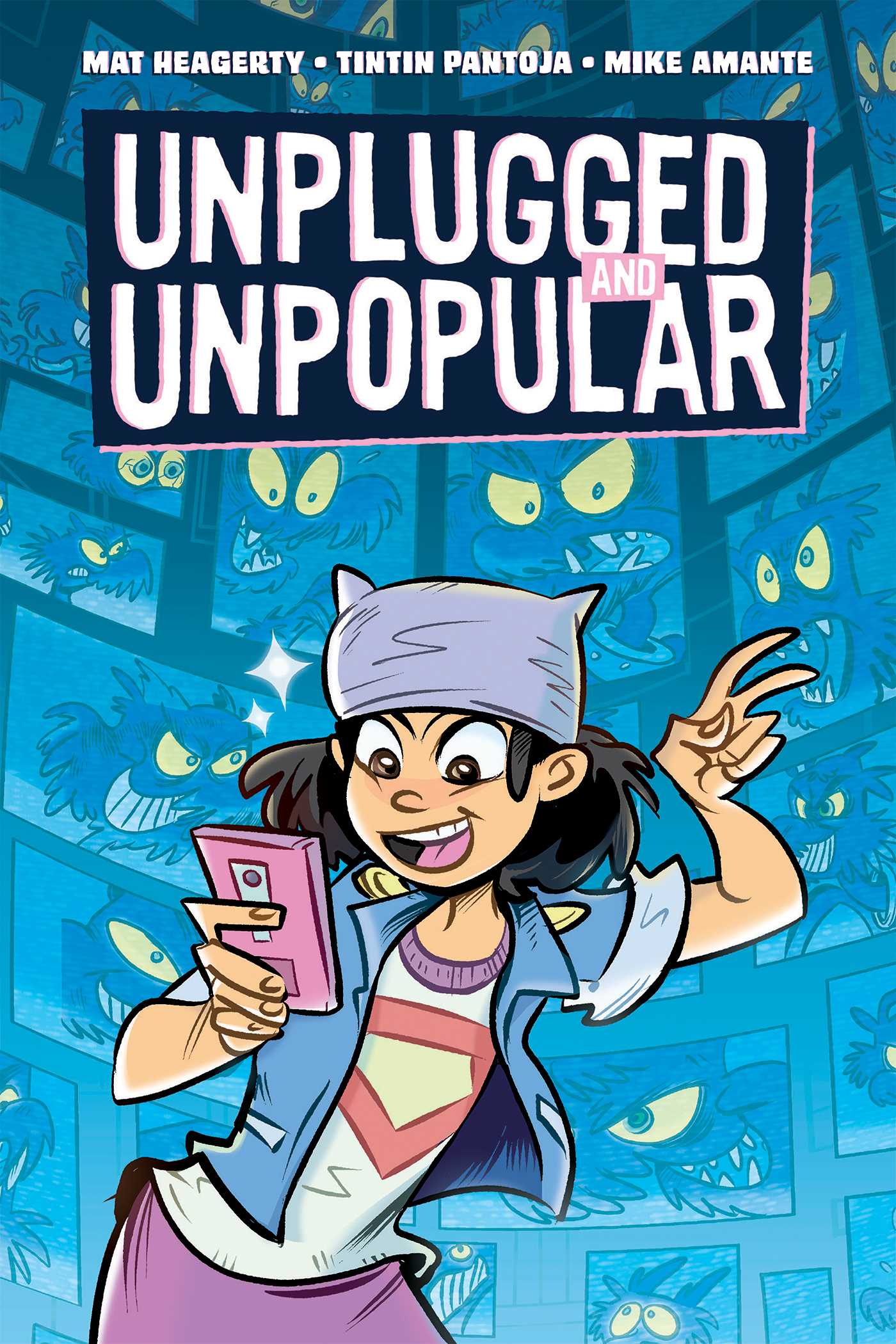
Unplugged and Unpopular: Civilization undone by cell phones!

Unplugged and Unpopular, by Mat Heagerty/Illustrated by Tintin Pantoja & Mike Amante, $12.99, ISBN: 9781620106693

Ages 10-13

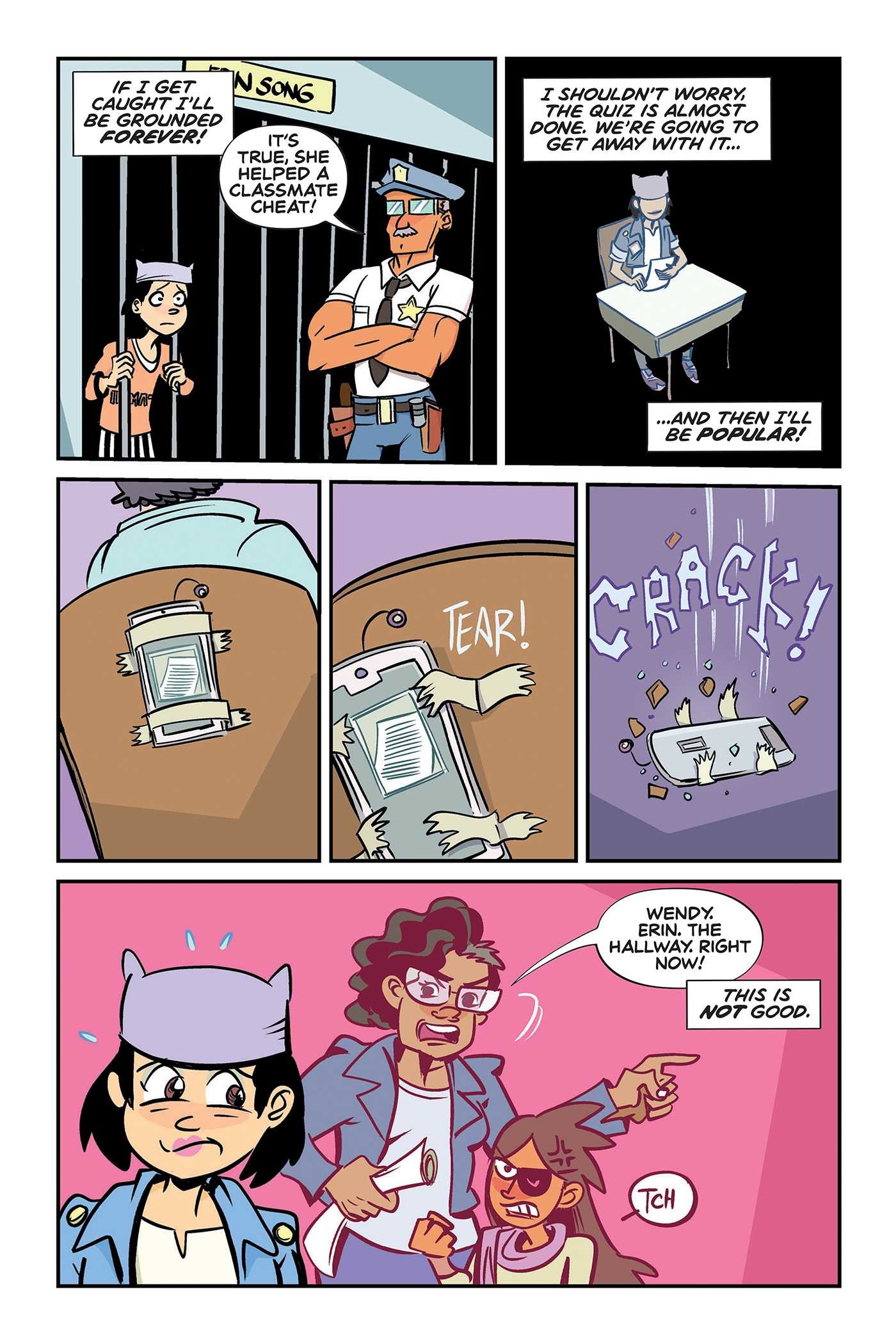
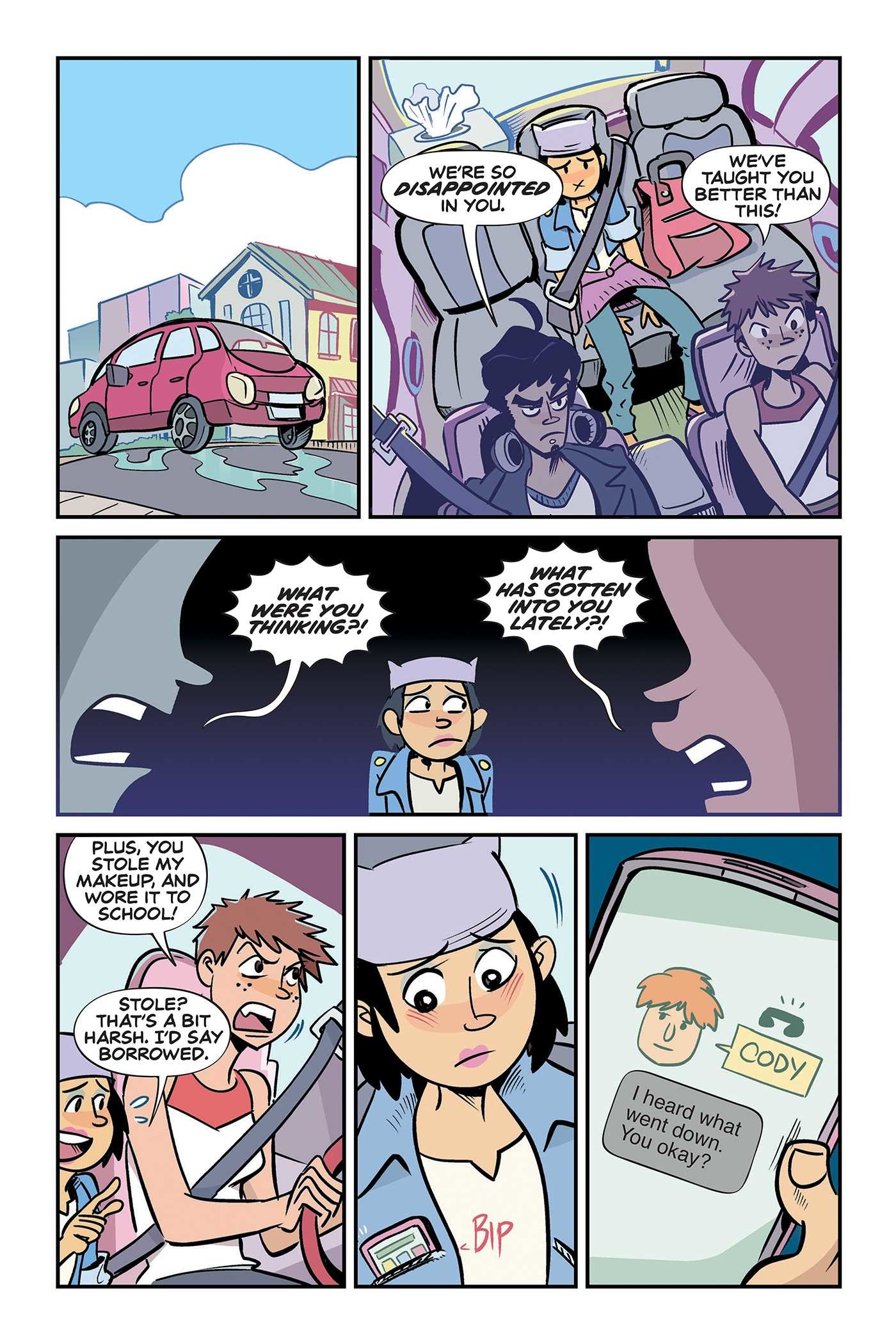
Seventh grader Erin Song lands herself in hot water with her parents after trying to help one of the popular girls cheat on a test. Erin’s parents take the hyper-connected tween’s phone away and revoke technology privileges, which – naturally – brings the pain; slowly but surely, though, Erin’s unplugged life makes her aware that fuzzy little aliens are kidnapping humans, and transmitting fake news to keep the general populace blissfully unaware! Erin joins forces with her unexpectedly rebellious grandmother and her tech-averse group of resistors to fight off the aliens and save the planet.

Unplugged and Unpopular is a comedic commentary on how wrapped up we are in our phones and other screens these days, with a a wink to the whole “fake news” travesty. A middle grade take on They Live (1988) (remember that one? Go watch it!), we have a society under siege by aliens, right under our noses, but if the news tells us everything is okay, there’s nothing to worry about. Once Erin gets out from behind the screens and starts seeing the world with her own two eyes, that’s when she understands that things aren’t what they seem, and that something is very wrong in her community. It’s a wacky, out-there story, but kids will get a kick out of it, and who knows – maybe it’ll get them to look up from their screens once in a while. The artwork is colorful and bold, and Erin is a biracial main character living in a diverse community.

This one’s an additional add; if you have heavy graphic novel circ, put it in – kids will read it.

Posted in Middle Grade, Non-Fiction, Non-fiction, Tween Reads

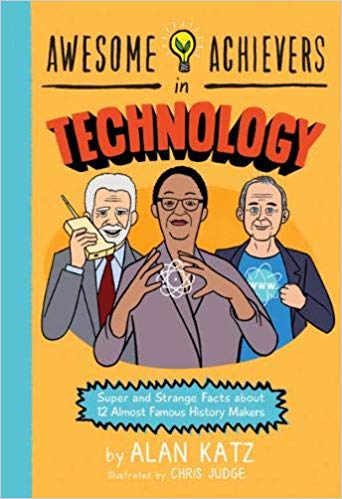
Learn about these Awesome Achievers in Technology!

Awesome Achievers in Technology, by Alan Katz/Illustrated by Chris Judge, (Aug. 2019, Running Press), $11.99, ISBN: 9780762463367

Ages 8-12

Kids have heard of the big names in Technology: Steve Jobs, Bill Gates, and, lord knows, Markus Persson (also known as Notch; Minecraft’s creator). But have they heard of Sir Tim Berners-Lee, the particle physicist who invented the World Wide Web as a way to share information with other scientists? Or Marie Van Brittan Brown, the nurse from Queens who devised the first closed circuit TV system, in conjunction with her engineer husband? Awesome Achievers in Technology is a series of short bios on some of the lesser-heralded names in technology. The book is part biography compilation, part wacky facts and silly stories, and a sprinkling of dad jokes. There are 12 profiles and 13 biographies – Adam Cheyer and Dag Kittlaus, the developers who created Siri, are included together – with black and white illustrations throughout. There are fun asides, including a “Get the couch potato back where he belongs” maze, remote control pop quiz, and wacky poems and stories from Katz’s memories.

All in all, a fun addition to biography shelves, and a good way to introduce kids to even more figures in STEM history. Awesome Achievers is going to be an ongoing series, with Awesome Achievers in Science hitting shelves on the same day as Awesome Achievers in Technology.

Posted in Middle Grade, Non-fiction

Get Ready for STEM Summer!

Sure, many libraries are doing the “Libraries Rock!” theme for Summer Reading, but that’s no reason to leave science out of the fun! I’ve got a bunch of STEM books that you’ll want to get in front of (or create programs using) your readers to have fun with this summer. Careers, facts, bios, and, most fun of all, experiments, await!
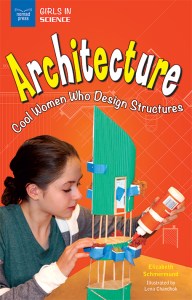
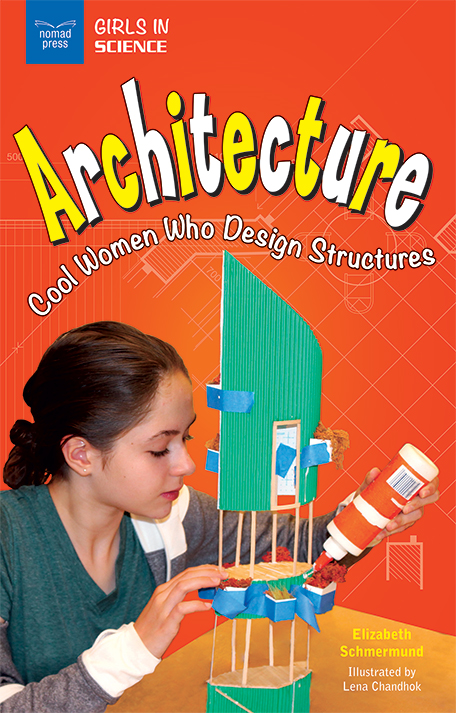
Architecture: Cool Women Who Design Structures (Girls in Science series), by Elizabeth Schmermund/Illustrated by Lena Chandhok, (Aug. 2017, Nomad Press), $9.95, ISBN: 9781619305465

Recommended for readers 9-13

I’m always looking for good career books, because I weeded my current section when I first got to my library. I really liked this book, and I’m looking forward to reading and putting more of the Girls in Science series in my book cart for future purchases. Architecture is divided into four color-coded sections: the first, a general overview of architecture; the history, styles, what the profession is like today and how to prepare for study in architecture, and women in the profession. The next three sections are devoted to profiles of a diverse group of women architects: Patricia Galván, a Project Manager; Farida Abu-Bakare, an intern architect who’s in the process of writing her exams and works with science and technology; and Maia Small, who owns and operates her own small architecture firm. In addition to the profiled female architects, there are brief bios on other women in the field. Ask & Answer sections provide thought-provoking questions, many beyond the basic material, for readers to consider. QR codes in callout sections provide links to more information. The overall narrative, and each profiled professional, addresses the gender gap and even larger diversity gap in the industry. Back matter includes a timeline of the profession, all the Ask & Answer questions in one place, a glossary, further resources, including written-out links to the QR code sections, and an index.
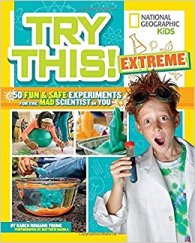
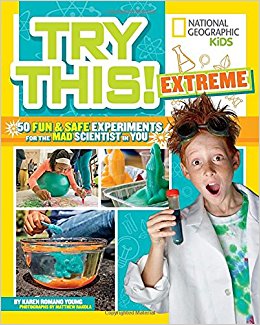
Try This! Extreme: 50 Fun & Safe Experiments for the Mad Scientist in You, by Karen Romano Young/Photographs by Matthew Rakola, (Sept. 2017, National Geographic Kids), $16.99, ISBN: 9781426328633

Recommended for readers 8+

The best part about science, I tell the kids in my programs and class visits, is making a mess, yet, no one gets mad at you (mostly). What better time to be a mad scientist than in the summer, when it’s beautiful out and you can open those windows to offset any stinky experiements? The book starts off with safety instructions and photos of the kid (and dog) scientists who tested out the 50 experiments waiting to be discovered in Try This! Extreme. Each experiment has a safety rating, a who you need rating (i.e., an adult, just you, or maybe grab a friend), and supervision rating; each experiment also lays out concepts explored, approximately how long it will take, what you need, and a step-by-step guide through the process, accompanied by full-color photos. There are callout facts, questions to ask yourself, and key terms defined throughout. Conduct a bioblitz (exploration) in your yard or a park, learn physics using marshmallow Peeps, or check the weather forecast and aim for a game of masking tape hopscotch when there’s rain predicted. There are bonus mini-experiements, Science Fair experiment prompts and guidance, K-12 science standards and how each experiment corresponds to them, an index, and metric conversion tables. Enjoy!

The STEM Quest Series from Barron’s Educational is a brand new series broken out into four books, loaded with facts and experiments:
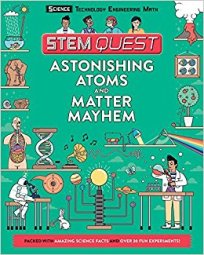
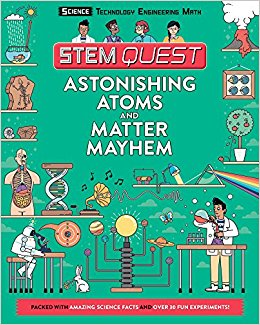
STEM Quest Science: Astonishing Atoms and Matter Mayhem, by Colin Stuart/Illustrated by Annika Brandow, (May 2018, Barron’s Educational), $10.99, ISBN: 9781438011363

Recommended for readers 8+

This volume looks at the organic side of things: biology, chemistry, physics, earth and space sciences, biochemistry, biomedicine, and biotechnology. Each section guides readers through full-color illustrated discussions on each area and includes experiments to ramp up the fun. Kids will LOVE the Marshmallow Molecules – you need a bag of marshmallows, a box of toothpicks or wooden skewers (me? I’d go with the toothpicks, but I’m in a public library), and some compound formulas. Let kids make their own formulas up and watch the fun begin! I’ll save you the search: this is where you can find the chemical compounds for farts. It’s the American Council on Science and Health’s website, so they did this for science. You’re welcome. Littler ones can make their own sundial, or spot a constellation. There are scientist profiles and fantastic facts throughout, plus a glossary and an index.
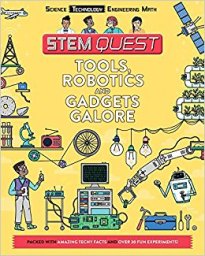
 

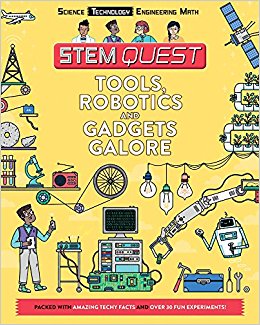
STEM Quest Technology: Tools, Robotics, and Gadgets Galore, by Nick Arnold/Illustrated by Kristyna Baczynski, (May 2018, Barron’s Educational), $10.99, ISBN: 9781438011370

Recommended for readers 8+

This volume looks at the techy side of life: construction, power and energy, agriculture and biotechnology, manufacturing, information and communication, medical and biomedical, and transportation. Learn about the evolution of tools, from the earliest hand tools to robots and space suits. Learn how a blast furnace works, and make your own plastic (adult helpers necessary), and learn how it works. Get your Project Runway on, with a section on textiles: you’ll learn to weave, tie dye, and ink print. For your more tech-inspired readers, there’s an easy Try This at Home experiment that teaches (with adult help) how to build a circuit, or how to magnetize a nail. There are great programming ideas in here: I think I’m going to look into building a planet and designing a space station, all of which can be done on a shoestring and with adult help. And since I’m the closest thing resembling an adult in the room… well, I guess that falls to me. The same format applies here (and to all of the STEM Quest books): bios on prominent scientists, loads of facts and illustrations, a glossary, and an index.
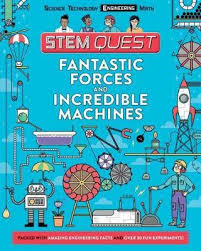
 

STEM Quest Engineering: Fantastic Forces and Incredible Machines, by Nick Arnold/Illustrated by Kristyna Baczynski, (May 2018, Barron’s Educational), $10.99, ISBN: 9781438011349

Recommended for readers 8+

Next up, engineering: systems and mechanics; materials and processes; biology, medical, agriculture and chemistry; structures; and sustainability engineering. Get the kids learning about forces and energy with experiments like Superhero Paper Clips, where they’ll make a paper clip float; a material scavenger hunt, inviting them to look around for everyday items made out of different materials; get out the old reliable straws and pipe cleaners and let them create 3-D shapes to see how they hold up under pressure, or that summer staple, the pinwheel. (The book suggests dowels; I’m here to tell you that chopsticks are a lot cheaper and just as easy to use.) There’s a great section on environmental engineering that will have you and your readers figuring out how to clean up our environment and a nuclear power lesson that has the simplest of experiments: use the sun’s nuclear energy to test your sunscreen on a piece of construction paper.
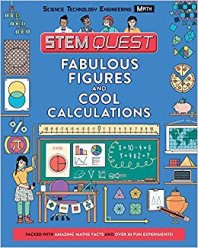
 

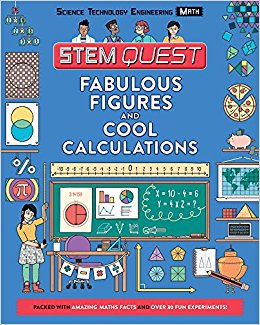
STEM Quest Math: Fabulous Figures and Cool Calcuations, by Colin Stuart/Illustrated by Annika Brandow, (May 2018, Barron’s Educational), $10.99, ISBN: 9781438011356

Recommended for readers 8+

I’m trying to get more math-related fun in front of my library kids, because it scares the bejesus out of me and I don’t want to pass that on. The parents love a good math program, too, so I know I’ll get buy-in from the community on this one. Here, we’ve got numbers and operations; measurement; problem-solving, logic and reasoning; geometry; algebra; advanced math; data, analysis and probability; and communication. I will admit that just looking at that section scared the life out of me, but once I started reading, I quickly warmed up. There are great explanations of each concept in here, addressing the quick and easy stuff like place value and column addition and subtraction, and heading all the way into bigger ideas like proofs and binary. Fun experiments and activities include a pirate treasure challenge, where, as a pirate captain, you need to use math to calculate the best place to bury your treasure; creating 3-D art and making pyramids, and averaging Olympic judge scores.

That’s a start for some STEM summer fun, but make sure to get your STEM sections and displays up and running to give readers readalikes and ways to expand on what they’re learning. The Secret Coders graphic novel series by Gene Luen Yang and Mike Holmes is great for Math and Tech fans, who want to play with coding. Science Comics has books about rockets and robots that will fit nicely with STEM displays, and I’m a big fan of the Junk Drawer Science series by Bobby Mercer. There are tons of fun STEM-related books out there!