Posted in gaming, geek, Guide, Non-Fiction, Teen, Tween Reads

Minecraft teaches kids Python, empowers future programmers

minecraftLearn to Program with Minecraft, by Craig Richardson (Dec. 2015, No Starch Press), $29.95, ISBN: 9781593276706

Recommended for ages 10+

The kids in my library are obsessed with Minecraft. From 2:30 on, as the kids storm the beachhead that is my children’s room, I hear shouts of, “Don’t touch my skin!”; “GET THE CREEPER! GET THE CREEPER!”; “OMG, get away from the Enderman!”; and “DIAMONDS!” I see the potential of Minecraft, and how it can be a fantastic tool to teach kids to create online worlds. I also, as a children’s librarian and mom of three boys, know that for the most part, they want to kill creepers and each other in some kind of 8-bit battle royale more often than not.

Books like Learn to Program with Minecraft are my gateway drug to programming with these kids. First, I get the fiction in (the GameKnight999 series by Mark Cheverton is available in English and Spanish, and they fly off my shelves), then I introduce coding programs like the Hour of Code, to show them how playing their game actually teaches them the building blocks of coding programs and apps of their own. Finally, I use part of my book-buying budget to buy coding nonfiction to keep around. I love DK’s coding books; those are especially great for my younger coders. My older kids need a little more, though, to keep them interested. That’s where the No Starch Books come in.

No Starch has great programming books for kids and teens, and Learn to Program with Minecraft is a solid addition to middle school and YA collecctions. A heads-up: you have to download Python to work with this book, but it’s a free programming language. Don’t be scared! The book will guide you along your Python/Minecraft journey, with screenshots and step-by-step bullets points that make creating much less stressful.

The book will help you create mini-games within Minecraft, take you on an automated teleportation tour around your Minecraft world, and teach you to make secret passageways. You’ll learn to make lava traps and cause floods, but be a good Minecraft citizen: no griefing.

I don’t quite have the Minecraft skills for this just yet, but I’m confident in my crafters here – I’ll be investing in this for my summer crowd, especially since we’ll be running a Google CS program here in a couple of months. Get kids to love programming, and watch what they come up with. I’m pretty psyched.

 

Posted in Fantasy, Fiction, Fiction, Intermediate, Middle Grade, Tween Reads

Science, Mystery, and Magic: The Peculiar Haunting of Thelma Bee

thelma beeThe Peculiar Haunting of Thelma Bee, by Erin Petti/Illustrated by Kris Aro McLeod, (Sept. 2016, Mighty Media), $16.99, ISBN: 9781938063725

Recommended for ages 9-13

Eleven year-old Thelma Bee is always doing something. She’s reading, she’s working on science experiments, she’s hanging out with her best friend – a guy! – Alexander. Her father runs an antique shop in town and her mother is always off on some kind of adventure, exploring and searching for different animals, so she’s got adventuring and imagination in her blood. When a dour woman shows up at her father’s shop with a small box, things start going very, very wrong: her father is kidnapped by a ghost that very night, and it’s up to Thelma, Alexander, and a local group of ghost hunters to get him back safely. It’s a scary mission, but one Thelma has to undertake – and she’ll learn a lot about herself in the process.

The Peculiar Haunting of Thelma Bee is so much fun! Middle graders are going to love the smart, spunky middle grader that doesn’t care about the mean girls and their dopey fashion choices – she has better things to do. When her dad is kidnapped by a ghost, right in front of her, she charges into action, amassing the facts she knows and researching what she needs to fill in the gaps of her knowledge and save her dad. She’s a great heroine for middle graders, girls and boys alike, because she shows that science, facts, and a clear path of reasoning will get you through some tough times.

The book is fast-paced, leading us into action pretty quickly, and not letting any lag set in. I’ll be booktalking this one hard, and pairing her with Hermione (Harry Potter) and Annabeth (Percy Jackson) for my fantasy-loving readers. Put this one right next to Neil Gaiman’s Coraline, Sally Gardner’s Wings & Co. series, and Karen Foxlee’s Ophelia and the Marvelous Boy to create a solid girl-power reading display.

The book trailer is below, and you can visit Mighty Media’s Thelma Bee page here. Erin Petti’s author page is here.

If you’re going to be at BEA/Book Con this week, I am SO envious! Have a great time, and visit Mighty Media at Booth 2170 when you get a chance! They’ll be at BookCon from 10am-6pm, and Erin Petti will be signing ARC’s of The Peculiar Haunting of Thelma Bee at 1PM, with a bookstore event to follow at 5pm at (Uncharted Books). 

Posted in Middle Grade, Non-fiction, Tween Reads

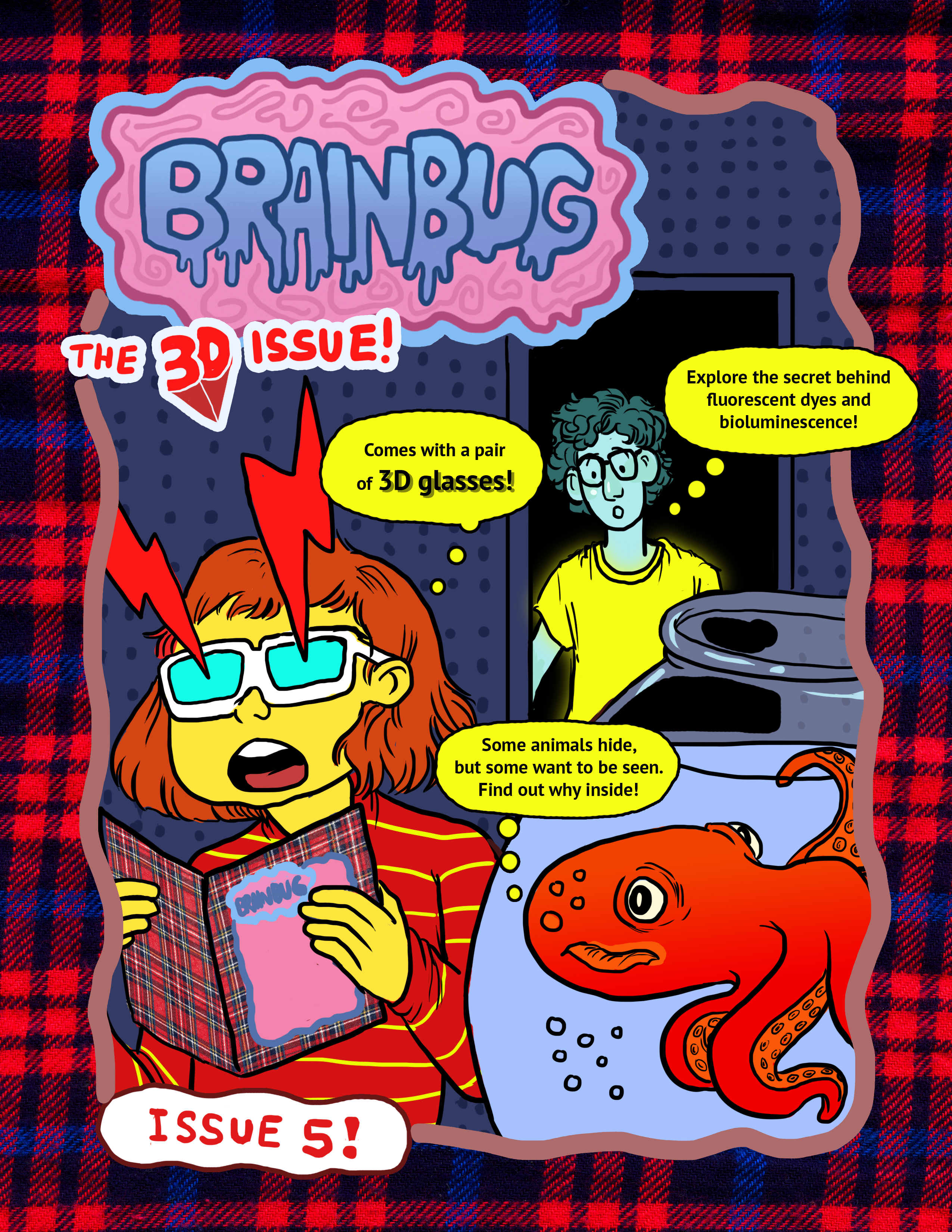
Like science news with a fun spin? Check out Brain Bug Mag!

I’m always trying to get kids to read. It’s a librarian, it’s what I do. I’m also constantly on the lookout for fun ways to get them creating and learning about science – yes, I’m one of those STEM/STEAM wannabe librarians. When Brain Bug Magazine got in touch with me and asked me to check out an issue of their “gross science magazine”, I jumped at the chance. Come on, gross science? Those two words are gold to a children’s librarian!

ISSUE 5 COVER

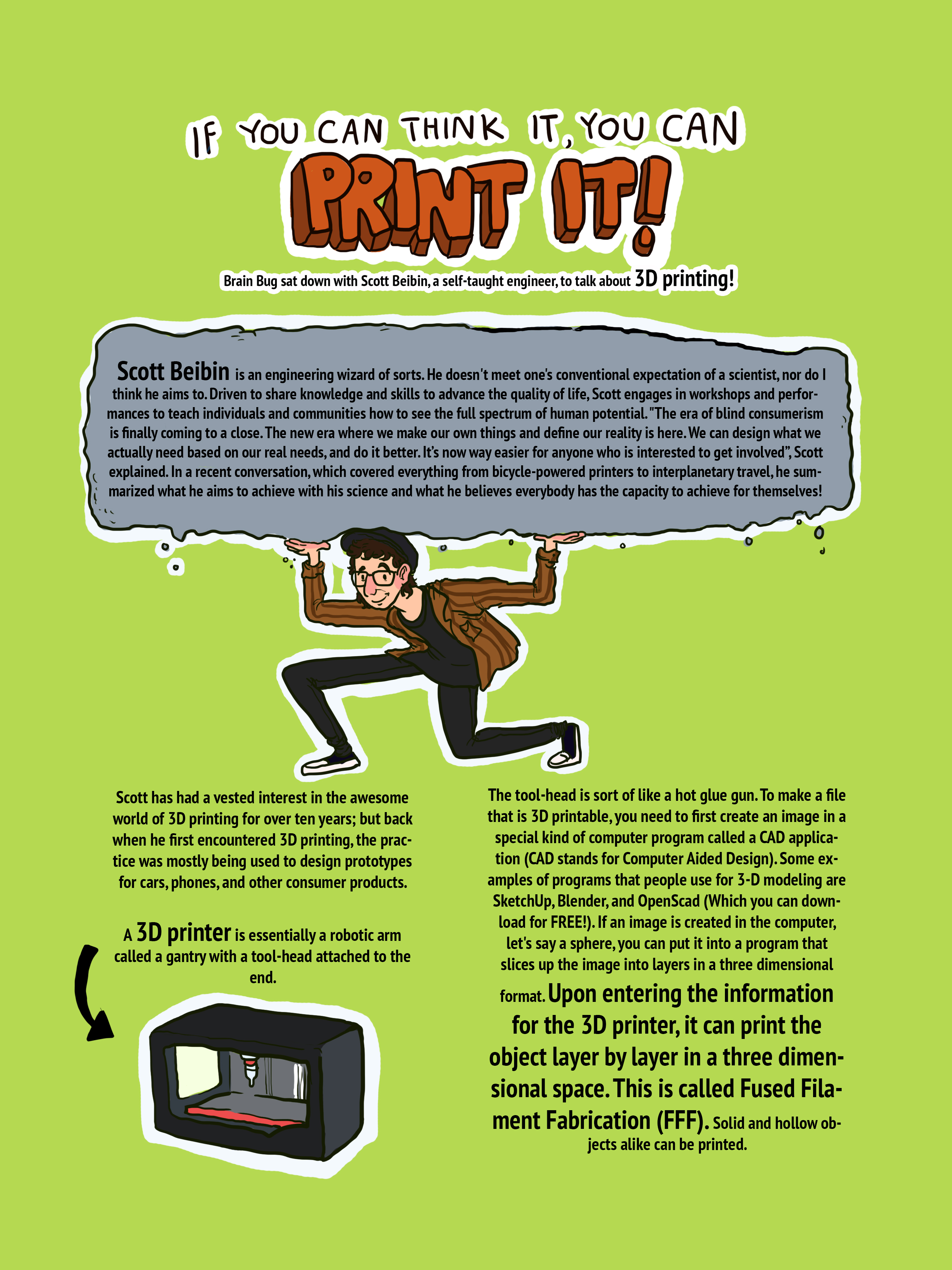
This fifth issue of Brain Bug is their 3-D issue, and comes with a nifty pair of 3-D glasses! No old school red and blue, though – these are clear, chromadepth glasses that you can use to make images in the magazine pop, and use them for cool stuff like checking out the night sky, or a picture with cooler colors in the background (like, blue) and warmer colors in the foreground (like, red). Other great features in this issue include articles on the origins of 3-D, an profile on 3-D printing, an interview with two chemists, and comics galore.

3d printing sample

The magazine is aimed at middle schoolers; I’d also suggest 4th and 5th graders. There’s a real ‘zine spirit to it, which I love; a really independent spirit, and the artwork is largely comics illustration, to appeal to all learners, especially visual learners that may be turned off by a chunks of intimidating science-y text. The interview with the two chemists, for instance, is illustrated – such a great spin on publishing a traditional interview! Brain Bug doesn’t dumb down information, either: there’s technical terms used and explained, in language that treats the kids as intelligent learners.

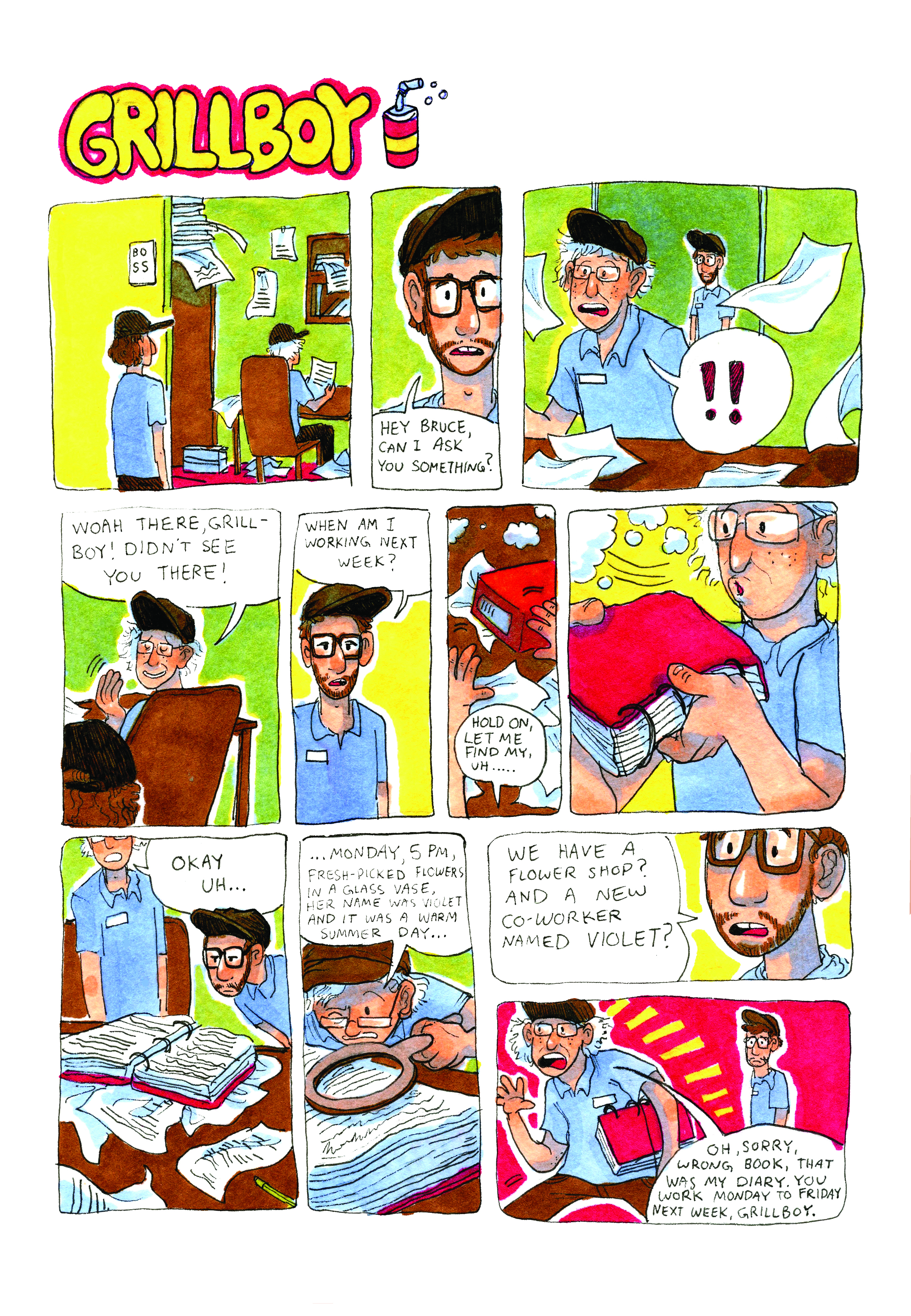
There are some fun comics in here – regular features, I’m pretty sure – including a group of Super Foods that are fighting the good fight against junk and processed foods; Grillboy, chronicling the adventures of a grill cook who’s less than enthusiastic about his job, and the Pun Police, who patrol the magazine in search of awful puns.

grillboy

I really enjoyed the magazine, but I know mine would be wrecked in circulation. I’d consider getting one subscription for myself to keep as a reference copy and let the kids look at it and pull projects and ideas from it, for sure, and I think it would be a good addition to classroom or school libraries. It’s $50 for six issues, $35 for four issues, and they offer reduced rates to librarians and educators. Check out their online store for back issues and subscription info.


Posted in Non-Fiction, Uncategorized

Hands-On Science and Math makes learning fun!

9780876596500_a5605Hands-On Science and Math – Fun, Fascinating Activities for Young Children, by Beth R. Davis (July 2015, Gryphon House), $14.95, ISBN: 9780876596500

Recommended for educators and parents of preschoolers-age 8

I’m always on the lookout for books that have fun, easy activities for my younger patrons. Being a librarian in an urban, lower community  made up largely of working class and working poor families, I’ve got a lot of parents concerned about their kids’ progress in math and science. One thing I’ve been working on putting together is a series of science workshops for my younger patrons. I’m a bit clueless in this area, so I’ve been getting some help from my colleague at our Children’s Library and Discovery Center in Jamaica (seriously, go to this library and prepare to be amazed); I also keep an eye out for blogs, websites, and books that offer some ideas. Hands-On Science and Math is one of those books.

Loaded with experiments and ideas for kids from preschool to roughly third grade (you can skew older or younger, with easy tweaks on these experiments), Hands-On Science and Math gets kids thinking and using their five senses to explore the world around them. Each experiment comes with an explanation of the scientific concepts behind the experiment, STEM lessons to be gained from the experiments, and ways to link to the math and literacy in each one. I’ve already created a few sessions for the kids in my library, including using a Matchbox car, cardboard, a pile of books, and a measuring stick to learn about simple machines; examining the world around them using a magnifying glass, and the almighty baking soda volcano (I’ll be doing that one solo, but I’ll give them instructions they can try at home). I’ll be trying these out over the winter break!

Parents and educators can recreate these experiments on a small budget: most of the ingredients and objects can be found at dollar stores or are already in your home. There’s an appendix on graphing topics, a popular math and literacy link here, including questions with concrete answers you can use to graph results. Further resources are available for anyone who wants to read more about STEM activities and young children.

Author Beth R. Davis, EdS, NBCT, holds a bachelor’s degree in elementary education; a master’s degree in teaching English to speakers of other languages, or TESOL; and an education specialist degree in computer education. She is the director of Kids 4 Kids Academy preschool in Miami, Florida. I’m thrilled that she’s got experience in working with speakers of other languages; this talent comes through in her experimentation, and allows me to create these programs with my multicultural families. She offers more science activities for kids on her website, where you can also sign up to join her mailing list.
Posted in Non-Fiction, Teen, Tween Reads, Uncategorized, Women's History

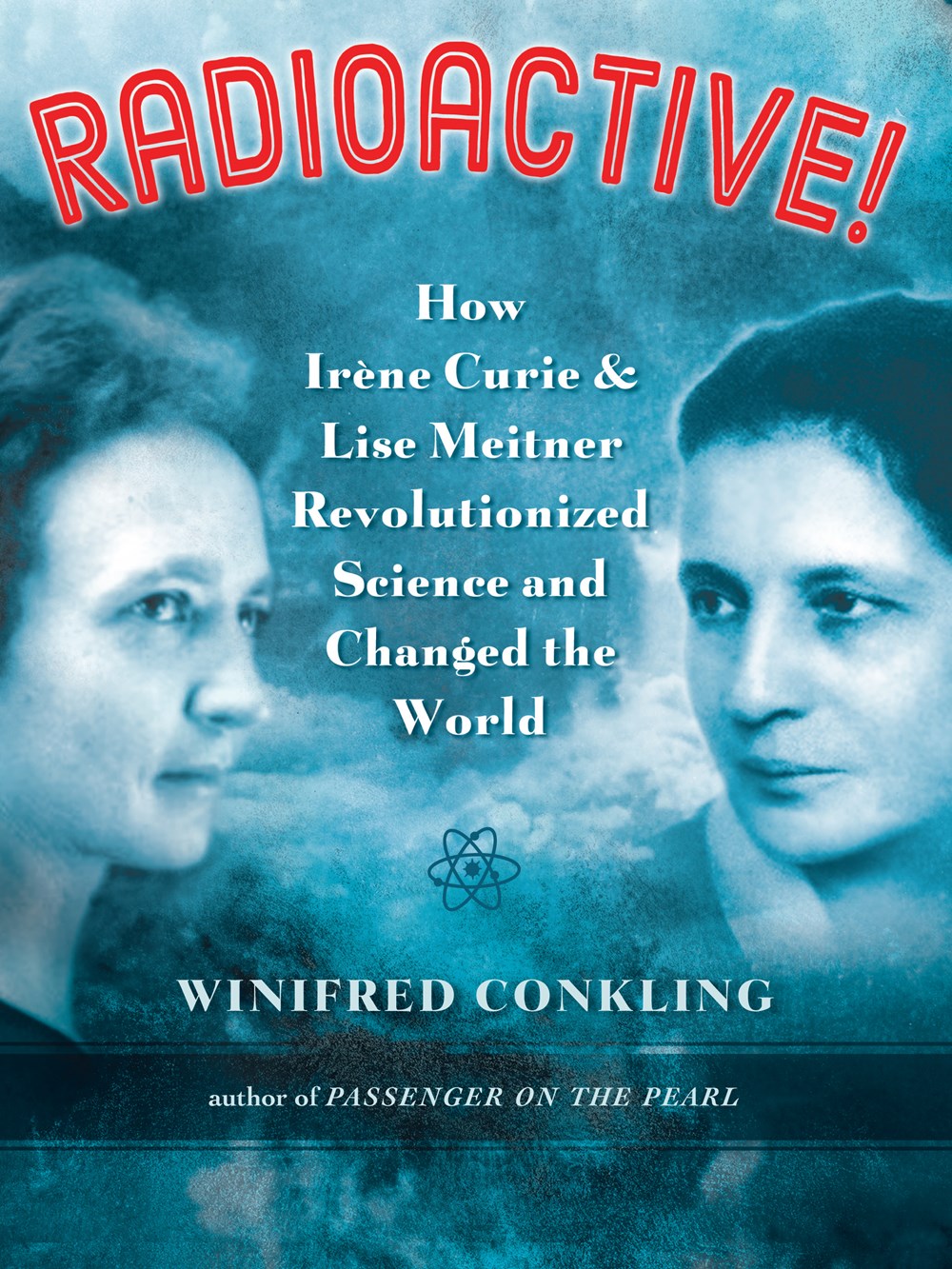
Radioactive! The story of two women scientists and how they changed the world.

radioactiveRadioactive!: How Irène Curie and Lise Meitner Revolutionized Science and Changed the World, by Winifred Conkling (Jan. 2016, Algonquin Young Readers), $17.95, ISBN: 9781616204150

Recommended for ages 12+

Most of us know who Marie Curie was: the scientist who pioneered the study of radioactivity. But how many know that her daughter, Irène, was an accomplished scientist in her own right, whose studies on radioactivity, physics, and the transmutation of elements earned her a Nobel prize, shared with her husband? Have you heard of Lise Meitner, the physicist whose work in physics – often published in conjunction with her friend and research partner, Otto Hahn – led to the discovery of nuclear fission? She was passed over for a Nobel for several reasons, not the least of which involved her being straight-up robbed by a partner who took credit for much of her work during the World War II years, when she was exiled in Sweden.

Radioactive! tells the stories of these two very important women and their historical research. We learn Irène’s story from the beginning, as the daughter of celebrated scientist, Marie Curie. She worked by her mother’s side, operating an x-ray machine on World War I battlefields, eventually going on to further her mother’s work in radioactivity along with her chemist husband, Pierre Joliot. We learn about Lise Meitner, whose work put her in competition with Curie many times, but experienced more sexism and prejudice than Curie ever did. When Hitler rose to power in the 1930s, her Jewish heritage created problems at her research position, where former colleagues turned against her and demanded she resign; she was eventually forced her to flee Austria for Sweden or end up in a concentration camp. Although she continued to consult with Hahn on their nuclear fission research, he took credit for her work and took home the Nobel Prize for Chemistry in 1944.

I’ve been looking for biographies on women in science for my tweens and teens, and this certainly fits the bill. There are photographs throughout the book, and Ms. Conkling provides strong backgrounds on both Curie and Mietner, making them live again, making the reader care about them, and explaining physics, fission, and radioactive science in terms that we can all wrap our heads around. A valuable addition to libraries and classrooms, and a great book for anyone who wants to inspire the next generation of scientists – female OR male.

Winifred Conkling is an award-winning author of fiction and nonfiction for young readers, including Passenger on the Pearl: The True Story of Emily Edmonson’s Flight from Slavery and the middle-grade novel Sylvia and Aki, winner of the Jane Addams Children’s Literature Award and the Tomás Rivera Award. Her author website provides teacher guides for her books. There is no guide up for Radioactive yet, but I’m sure there will be one closer to the book’s publication date.

Posted in Intermediate, Non-Fiction, Non-Fiction

STEM Bios – Aprille Ericsson, Aerospace Engineer

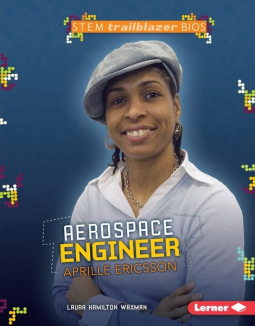
aprille_ericssonSTEM Trailblazer Bio: Aprille Ericsson, Aerospace Engineer, by Laura Hamilton Waxman (2015, Lerner Publishing Group) $26.60, ISBN: 9781467757935

Recommended for ages 8-12

Where are my science fans at? My future astrophysicists, mathematicians, and engineers? Maybe you’re still in middle school, watching episodes of Cosmos on YouTube. Are you at the museum or planetarium, or staring up at the night sky? Wherever you are, this book is for you. Get to your library and ask for it.

Aerospace engineer Aprille Ericsson started out as the kid in school who loved math and science. After taking second place at a middle school science fair, she knew she wanted to make science her life. We follow her education path, her work with NASA, and learn what she’s working on these days. There are great pictures and callout quotes from Ms. Ericsson, a timeline of her life thus far, source notes, and a glossary. For anyone interested in learning more, there are recommended books and websites.

I adore Lerner’s STEM Trailblazer biography series. They’re great books for young to intermediate readers who need biographies on people that are making discoveries and progress today. These books – these people – are introducing kids to names like Aprille Ericsson, Neil deGrasse Tyson, Steve Chen, Chad Hurley, and Jawed Karim, who founded YouTube, theoretical physicist Brian Greene, computer engineer Ruchi Sanghvi, and more. Please get these books on your shelves, teachers and librarians; parents, get to your libraries and get these books for your kids. Let the other kids be Cleopatra and Albert Einstein on Biography Day – let your kid be Aprille Ericsson!

Posted in Fiction, Middle Grade

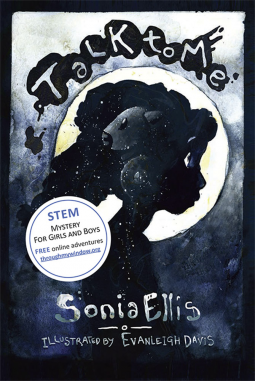
Talk to Me – What did Maddie See?

talk to meTalk to Me, by Sonia Ellis/illus. by Evanleigh Davis (2014, FastPencil) $16.99, ISBN: 9781619338821

Recommended for ages 9-14

Seven year-old Maddie Reyes is a selective mute. She can talk up a storm around her mom, dad, and older sister, Sadina. She tells all of her secrets to Bella, her robotic cat. But get her outside of her family circle, and she cannot speak. Sadina, her older sister, protects her and takes care of her as much as she can, but she can’t be with Maddie all the time.

One night, Maddie discovers an intruder in the house – an intruder who knows about Maddie. When Maddie and Sadina’s mother is accused of a corporate crime, Sadina thinks her friend Rio is behind it, but Maddie knows the truth. And now, she’s not talking at all. To find out what Maddie knows, Sadina will have to team up with her friends and find a way to make Bella, the one friend that Maddie will still speak to, talk back to Maddie.

This book drew me in right away. I love there character diversity- let’s hear it for a Latina heroine!; I found it fascinating that Ms. Ellis made Maddie a selective mute, and how she worked that into the meat of the plot. The story’s pace will keep a middle grader’s attention, and there’s enough tension in the book to keep readers guessing and thinking overtime. This is a great book for discussion groups; there’s so much to cover here. From disabilities that aren’t readily visible to corporate espionage, to the reality of animating a robotic pet, this book would be a great collaborative reading assignment for English and Science classes.

There are frequent references to technology in the book – Maddie and Sadina’s mother is an engineer, working on a new cellphone battery; Sadina and her friends are very handy in the tech lab; Rio wants new design software – but I’m not sure that qualifies this as a STEM Mystery. It’s a good story with STEM references.

Evanleigh Davis’ illustrations bring a real innocence to Maddie’s character. Her large eyes, seemingly forever gazing upward, make her look small and bewildered. Every illustration is filled with character and adds another dimension to the storytelling.

I think this will be a good book to get on the shelves at my library this summer. It’s the first book in a new series, and anything to do with kids using technology to solve problems is a book I want to have at the kids’ fingertips.