Posted in Fiction, Middle Grade, Middle School, Science Fiction, Teen, Tween Reads

Happy Book Birthday to A Time Traveler’s Theory of Relativity – and an author tour calendar!

A Time Traveler’s Theory of Relativity, by Nicole Valentine, (Oct. 2019, Carolrhoda), $17.99, ISBN: 978-1-5415-5538-9

Ages 10+

Twelve-year-old Finn’s twin sister, Faith, drowned when they were three years old. His mother up and left Finn and his father a few months ago. As his father loses himself in his academic research, Finn clings to science for a concrete hold on life, and relies on his friend, Gabi, to be his steadying constant. But one night, his grandmother tells him a secret that throws everything he’s ever known – everything he’ll ever know – into chaos: the women in Finn’s family are Travelers; women who can travel through time, and each generation is more powerful than the last. Finn’s mother didn’t leave him. She’s traveling through time trying to put things right, and she needs Finn to find her and help her, leaving him a portal for him to Travel through. He has to be careful about who he can trust, though; there are people who don’t have his family’s best interests at heart, which could lead to disastrous consequences. Can Finn put his faith in something he’s never been able to believe in before, and embrace the unknown, the abstract, in order to save his family?

Theory is a story of grief and loss, with hope and the courage to believe in a bigger worldview. Filled with plot twists and shifts that make this a good read for science fiction and fantasy fans, and readers who are ready to take a step into a bigger world, we meet Finn, is a solidly constructed character with a tragic backstory. Finn can be the reader’s entry point into the story, giving us a character who’s haunted by loss and cleaving to science: dependable, real. But when you think about it, physics is a pretty abstract science; there’s an entire branch of physics dedicated to theoretical study, and time travel theories abound when discussing quantum physics. That Finn chooses physics as his scientific field of choice is an interesting one, and shows that he’s willing to reach beyond the concrete… maybe. Gabi, Finn’s best friend, is Puerto Rican and mentions that she and her mother have had friction in the past being “newcomers” to their town, and not only because they haven’t spend their entire lives there. She’s ready to face anything with Finn. Other characters – mostly Finn’s extended family – have bits and pieces of backstory that unfold throughout the story, making them interesting and slightly mysterious. A good read for book clubs, Theory comes with some discussion questions at the end; the questions are also available through the publisher’s website, as is a chapter-by-chapter educator guide.

Give Theory a shot, and hand it to your sci-fi and fantasy readers for sure. Give it to your realistic fiction readers that are ready for a good time-traveling mystery, too. Booktalk it with A Wrinkle in Time, which also touches on the mechanics of time travel and science, or Rebecca Stead’s When You Reach Me; a great example of using time travel within a compelling realistic fiction setting.  A Time Traveler’s Theory of Relativity is a Junior Library Guild selection.

Want to meet author Nicole Valentine? She’s on tour!

Nicole Valentine (https://www.nicolevalentinebooks.com/) earned her MFA in Writing for Children and Young Adults from the Vermont College of Fine Arts and teaches writing workshops at the Highlights Foundation in Honesdale, PA. As the former chief technology officer at Figment.com and Space.com, Nicole loves science and as a writer enjoys pondering the times when science falls short of explanation and magic has room to sneak in. When not engaged in fictional world-building, Nicole can often be found with a hawk on her arm. A Time Traveler’s Theory of Relativity is her debut novel. She lives in Pennsylvania with her family. Twitter: @nicoleva IG: @nicolevalentine

Blog: https://steamg.org/

Posted in Conferences & Events, Early Reader, Graphic Novels, Intermediate, Non-Fiction, Non-Fiction

Kevin McCloskey, Giggle & Learn, Ants and Pigeon Poop: It’s all good here!

Kevin McCloskey is one of my favorite graphic novelists. What does he draw, you ask? Spidey? The Avengers? X-Men?

Nope. He creates science graphic novels for the little ones, examine such subjects as snail goo, pigeon and worm poop, and foot-long goldfish. Sometimes, he paints his pictures on recyclable grocery bags, because he believes in recycling. Most importantly, he creates nonfiction that speaks to young learners in a way that engages their minds and their funny bones, talking about the funny, gross, and awesome parts of nature and making them equally… amazing.

Ants Don’t Wear Pants!, by Kevin McCloskey, (Sept. 2019, TOON Books), $$12.95, ISBN: 9781943145454

Ages 4-7

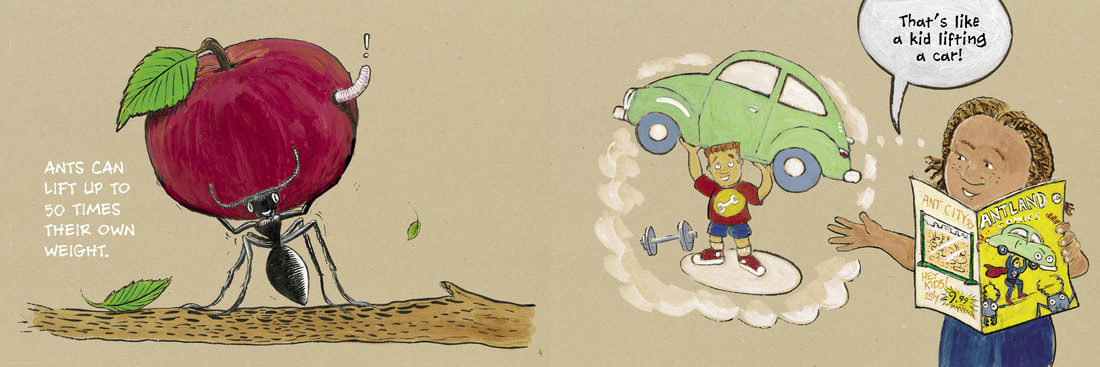
Who here hasn’t been told, “You have ants in your pants!” while growing up? With that phrase, Kevin McCloskey sets readers off on the study of ants: biology and physiology, life cycle, food, kinds of ants, and what they eat. The book is loaded with fun facts and illustrations, like the one of an ant bench pressing an apple, combined with a picture of a child lifting a car, to bring home the fact that an ant can lift up to 50 times its own weight, and what that would mean to us human folk. The front endpapers have hundreds and hundreds of ants, with one magnified under a magnifying glass, greeting readers and inviting them to come and learn. This is the newest in Kevin McCloskey’s Giggle and Learn series of graphic novels for young learners, published by TOON, and I love it. My kiddo’s first McCloskey book was We Dig Worms (2015), which I read to him when he was barely out of the toddler years, and he loved it, because the material is accessible and fun. A lesson plan is coming soon!


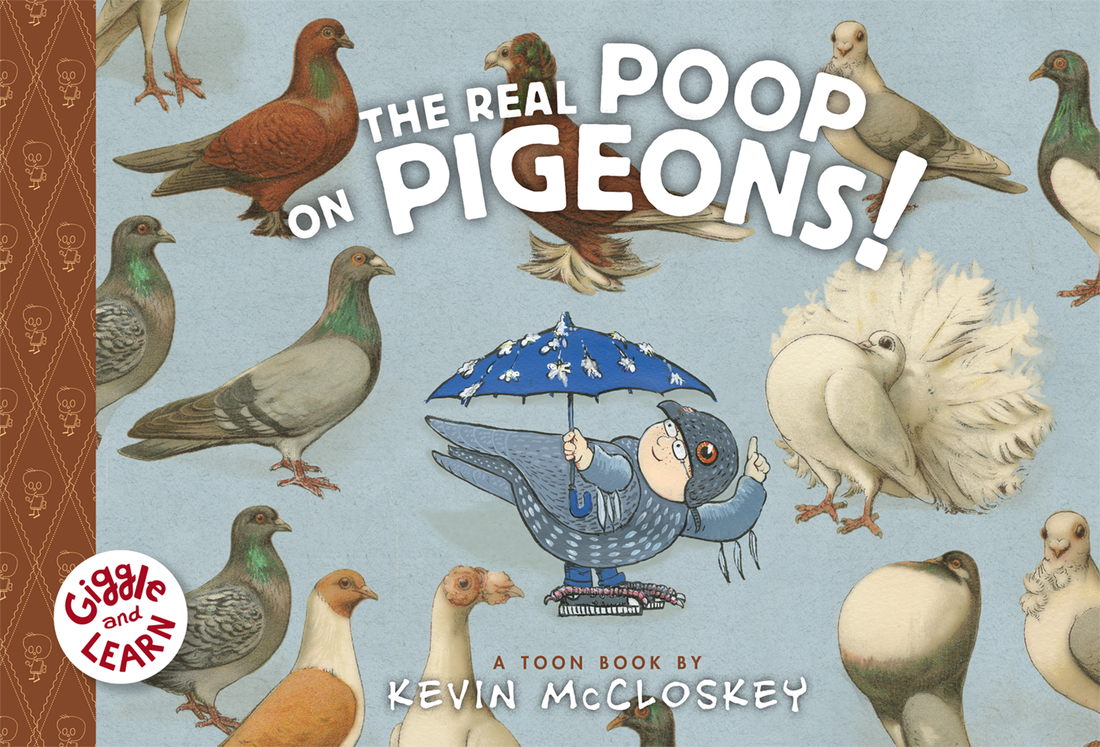
The Real Poop on Pigeons!, by Kevin McCloskey, (Sept. 2019, TOON Books), $6.99, ISBN: 9781943145430

Ages 4-7

Originally published in 2016, The Real Poop on Pigeons! is coming to paperback. When a man sitting on the park bench starts shooing pigeons away, a group of children, dressed as pigeons, show up to school him – and us readers – on pigeon history – they carried the first airmail! – and biology, breeding, and pigeon milk. (Read the book. You can’t buy this in Stop & Shop.) There are some great pigeon family tree revelations here, like the fact that the Dodo was a member of the pigeon family. A three-foot pigeon! Ever wonder why you haven’t seen a baby pigeon? Read the book! The Real Poop on Pigeons is yet another win from Kevin McCloskey, and another win for young readers.


Posted in Middle Grade, Non-fiction, Tween Reads

The truth about cats and dogs (and gerbils, birds, fish, and other pets…)

Nat Geo Kids is all about the pets these days: they’ve just released Doggy Defenders, a series of books on working dogs, and they’ve also put out some great desk references about cats, dogs, and an Big Book to get younger readers excited about the world of animal companionship. Here’s a glimpse at some of the books out.

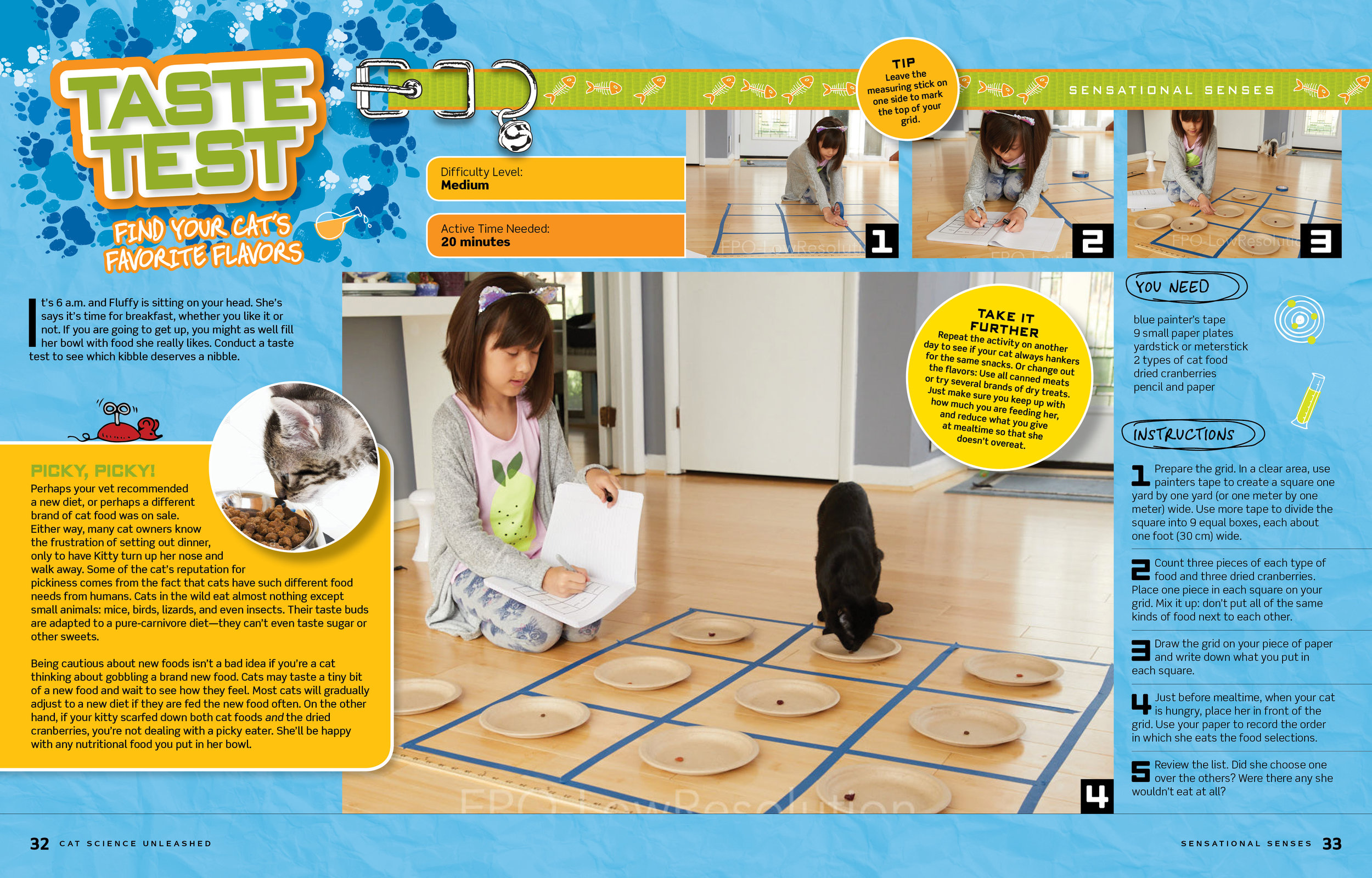
Cat Science Unleashed: Fun Activities to Do With Your Feline Friend, by Jodi Wheeler-Toppen/Photos by Matthew Rakola, (Aug. 2019, National Geographic Kids), $12.99, ISBN: 978-1-4263-3441-2

Ages 7-12

A companion to last year’s Dog Science Unleashed, Cat Science Unleashed is all about the cats, with a glimpse into cat biology and physiology, cat facts, and cat-tivities to engage the scientists in your life. Eleven kid scientists have tested their cats – you’ll meet them on a spread in the book – and invite readers to join them in discovering how cats see at night and how to discover their favorite smells. Activities include building a hiding spot for your cat’s toys (other than my living room floor? Have to get my kid on that) and making toys to test your kitty’s stalking prowess. There’s a glossary and list of further resources at the end A fun volume, and with a new science fair season on the horizon, this could be a fun way to give your kiddos’ cats the spotlight at school in addition to home.

Cat Breed Guide: A Complete Reference to Your Purr-Fect Best Friend, by Stephanie Warren Drimmer & Dr. Gary Weitzman, DVM, (Sept. 2019, National Geographic Kids), $19.99, ISBN: 978-1-4263-3439-9-

Ages 8+

This is a compact, thorough desk reference to cats, perfect for an animal lover, cat fan, and anyone either writing a report about felines or researching a new pet. The guide provides a look at feline history, with a cat family tree, a history of cats and how domesticated cats became household constants, even cat-related superstitions and folktales. There are profiles on more than 60 cat breeds, organized by short hair and long hair breeds, and each profile offers a quick “cat stats” box that provides notes on country of origin, size, coat, grooming, and “catitude”. There are gorgeous photos, fun facts, and general adorableness throughout, plus a section on cat-related careers, a glossary, and further resources. I’m always trying to keep my domestic animals/pets books stocked, so this one will be a nice add to my shelves.


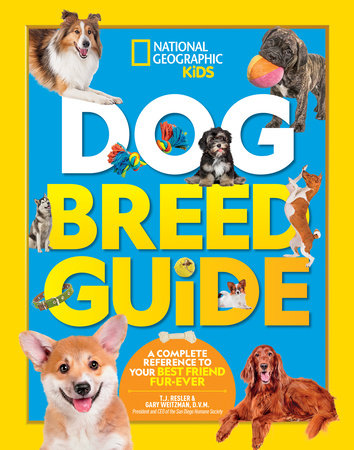
Dog Breed Guide: A Complete Reference to Your Best Friend Fur-Ever, by TJ Reser & Dr. Gary Weitzman, DVM, (Sept. 2019, National Geographic Kids), $19.99, ISBN: 978-1-4263-3445-0

Ages 8+

A companion desk reference to the Cat Breed Guide, Dr. Weitzman and TJ Reser team up to give readers a comprehensive guide to canines, from their wolfish origins to today’s modern breeds. Organized into 10 sections, dog profiles include full-color, squeal-worthy photos and stats-at-a-glance: country of origin, height, weight, coat, grooming, exercise needs, and K-9 qualities. There are sections on show dogs, canine senses, and how to talk to your dog, and a section on adopting and training a puppy. There’s a glossary and more resources.

Together, the Dog and Cat Breed Guides provide a handy reference for pet and animal lovers.


Little Kids First Big Book of Pets, by Catherine D. Hughes, (July 2019, National Geographic Kids), $14.99, ISBN: 978-1-4263-3470-2

Ages 4-8

I love the NatGeo Kids Little Kids First Big Book series! There are 17 books in the series now, and they’re great for pre-readers to look through, while emerging readers can more confidently navigate the pages. Words are bold, the pictures are big and bright, and there’s tons of fun facts, quizzes, and info to be found. The First Big Book of Pets is all about our favorite companions, from dogs and cats to birds, reptiles, fish, mice… you name it. Interactive questions throughout the book prompt discussion, games at the end of every chapter help reinforce concepts and give librarians like me an excuse to have fun, pet-related programming, and fact boxes give kids info at-a-glance about different pets. If you know a kiddo who wants a pet, but isn’t quite decided on what pet to get, hand them this guide – it’s geared toward educating kids about different pets’ needs, and our responsibilities to animals once we adopt them. A section for parents includes a recipe for baking dog biscuits, pet jokes and tips and ideas to engage kids about pets. There’s a glossary and list of additional resources. The Little Kids First Big Books are really popular with my library kids, so this one is another win for my shelves.

Posted in Middle Grade, Non-Fiction, Non-fiction, Teen, Tween Reads

Monstrous brings the science of monsters to you

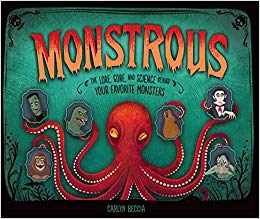
Monstrous: The Lore, Gore, and Science Behind Your Favorite Monsters, by Carlyn Beccia, (Sept. 2019, Carolrhoda Books), $19.99, ISBN: 978-1-5124-4916-7

Ages 10+

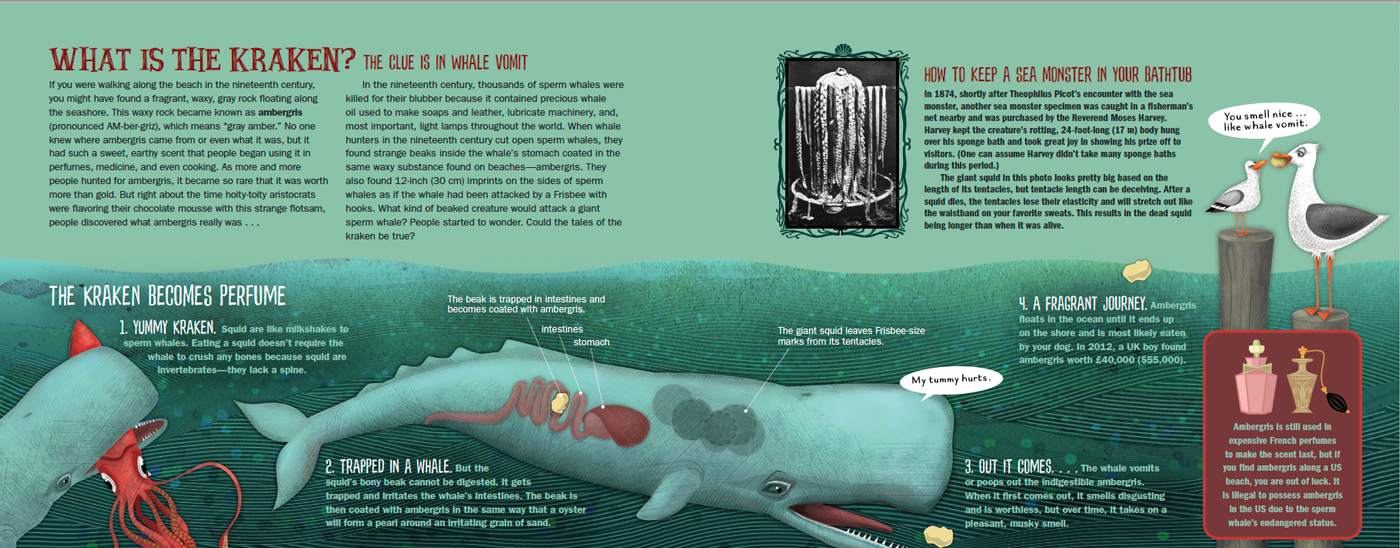
Okay, this is one of the best nonfiction reads I’ve read this summer. Eight movie monsters come together with witty writing, solid science and history, pop culture and myth, and amazing artwork to bring readers the “Science of the Monstrous”. Talk about electricity with Frankenstein’s Monster; whether or not science can make us immortal with Dracula (also, a spirited discussion on sparkly vampires); look at the zombie brain and pack a zombie preparedness kit while reading about zombie viruses; learn about math and whether or not you’re stronger than a dung beetle with King Kong; learn how to avoid – or, failing that, survive – a werewolf attack and read about the science behind the legend of werewolves; check out the ocean zones to figure out where the kraken dwells (and learn whether or not you’re about to be eaten by a giant octopus); talk evolution with Bigfoot while you scan a map of the US to see where your best chance of spotting him is; and, last but NEVER least, find out what kind of dinosaur Godzilla, King of All Monsters, is (hint: the awesome kind).

That’s the short of it. There is so much great stuff in here, I’d be here all day long if I tried to gush about how much I loved this book. I chuckled and snickered out loud behind the reference desk reading it, which brought some of my Library Kids over (the section on Why You Should Never Stress Your Mom Out made them laugh, which garnered a librarian look over the glasses from me). Everything in here is just pure gold, from the timelines like “The Monstrous History of Electricity”, where you learn that Thomas Edison used electricity on dolls to experiment with recorded sound (SO CREEPY), and a real list of radioactive creatures, like the wolves of Chernobyl and the cows of Fukushima. Carlyn Beccia’s writing is informative and whip-crack smart and funny – if I had a book like Monstrous available to me when I was in the middle grades, I’d probably be making freaky dolls talk to people in a lab today. Instead, I’ll figure out how to hold a program to let my Library Kids do it.

My Library Kids love the grossest history and science stuff out there, which I challenge myself to find on a regular basis; one of their favorites is Carlyn Beccia’s They Lost Their Heads!, along with Georgia Bragg’s How They Croaked and How They Choked, so I predict this book will disappear shortly after I say, “Hey, guys! Look what I’ve—“.

Long story short, Monstrous is a guaranteed win for your science collections, your STEM collections, and for your horror/monster/burgeoning goth fans. Check out author Carlyn Beccia’s webpage for more about her books, her art, and her social media links. Monstrous has a starred review from Kirkus.

Posted in Intermediate, Middle Grade, Non-fiction, Non-Fiction

To Infinity and Beyond! The Day the Universe Exploded My Head

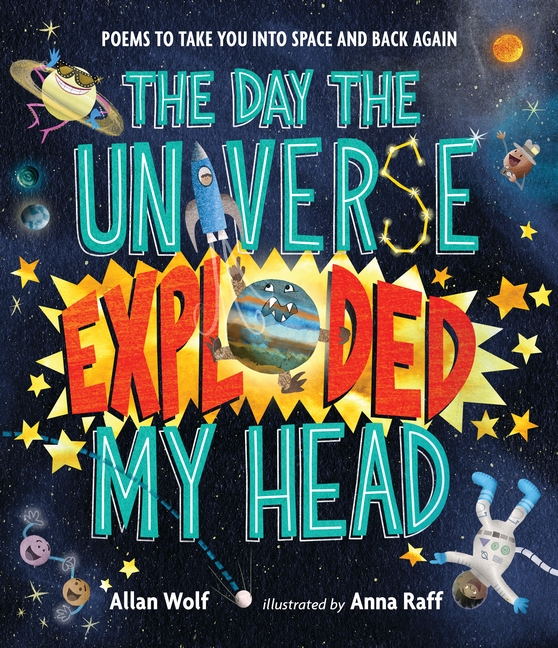
The Day the Universe Exploded My Head: Poems to Take You Into Space and Back Again, by Allan Wolf/Illustrated by Anna Raff, (March 2019, Candlewick Press), $17.99, ISBN: 9780763680251

Ages 7-12

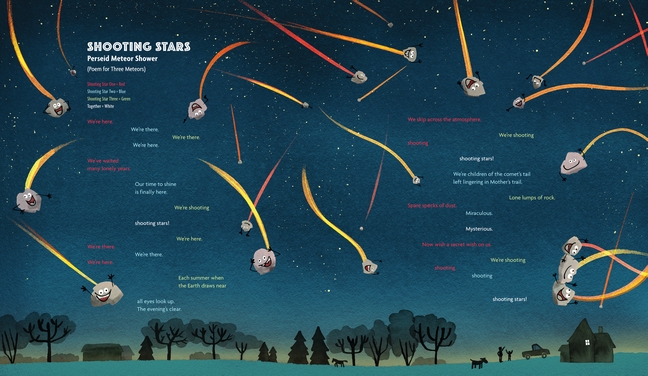
This is one of the best kids’ poetry books I’ve come across in a while! The Day the Universe Exploded My Head contains 29 poems, all about the wonder of space. Each planet gets a poem here, as do the outliers (Planet X, Charon, Pluto). There are nods to pivotal moments in space history (the 2013 meteorite over Cheylabinsk, Sputnik) natural phenomena (black holes, lunar and solar eclipses), and notable scientists (Ivan Ivanovich, Children of Astronomy). The poems are upbeat, factual, and, quite often, very funny, as with the poem, “Planet X”: “I’m one part supercilious/Another part mysterious/One part you-can’t-be-serious/They call me Planet X”. There are a wealth of poems for readers to read out loud, too: “Going the Distance” is a rap for two voices, color-coded for each speaker. The artwork: digitally assembled color collage, made from sumi ink washes, salt, pen, and pencil, explode off the page, with texture that will entice kids to see the swirls of light curling off a star and a fuzzy rings of moons around Neptune.

Non-fiction that informs and excites is aces with me, and The Day the Universe Exploded My Head is a great way to kick off and conclude a space storytime, a STEM program, or a fun read-aloud. Have some printable space coloring sheets ready to hand out, or check out illustrator Anna Raff’s webpage for super-cool activities (I like the Little Card printable for a library visit). Author Allan Wolf’s webpage also has activities, including poetry jokes.

The Day the Universe Exploded My Head has starred reviews from Kirkus and Booklist.


Posted in Middle Grade, Non-fiction, picture books

Wonders of Nature opens a museum on your bookshelf!

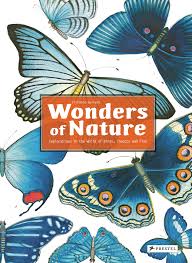
Wonders of Nature: Exploration in the World of Birds, Insects, and Fish, by Florence Guiraud, (Oct. 2018, Prestel Publishing), $25, ISBN: 9783791373652

Ages 7-11

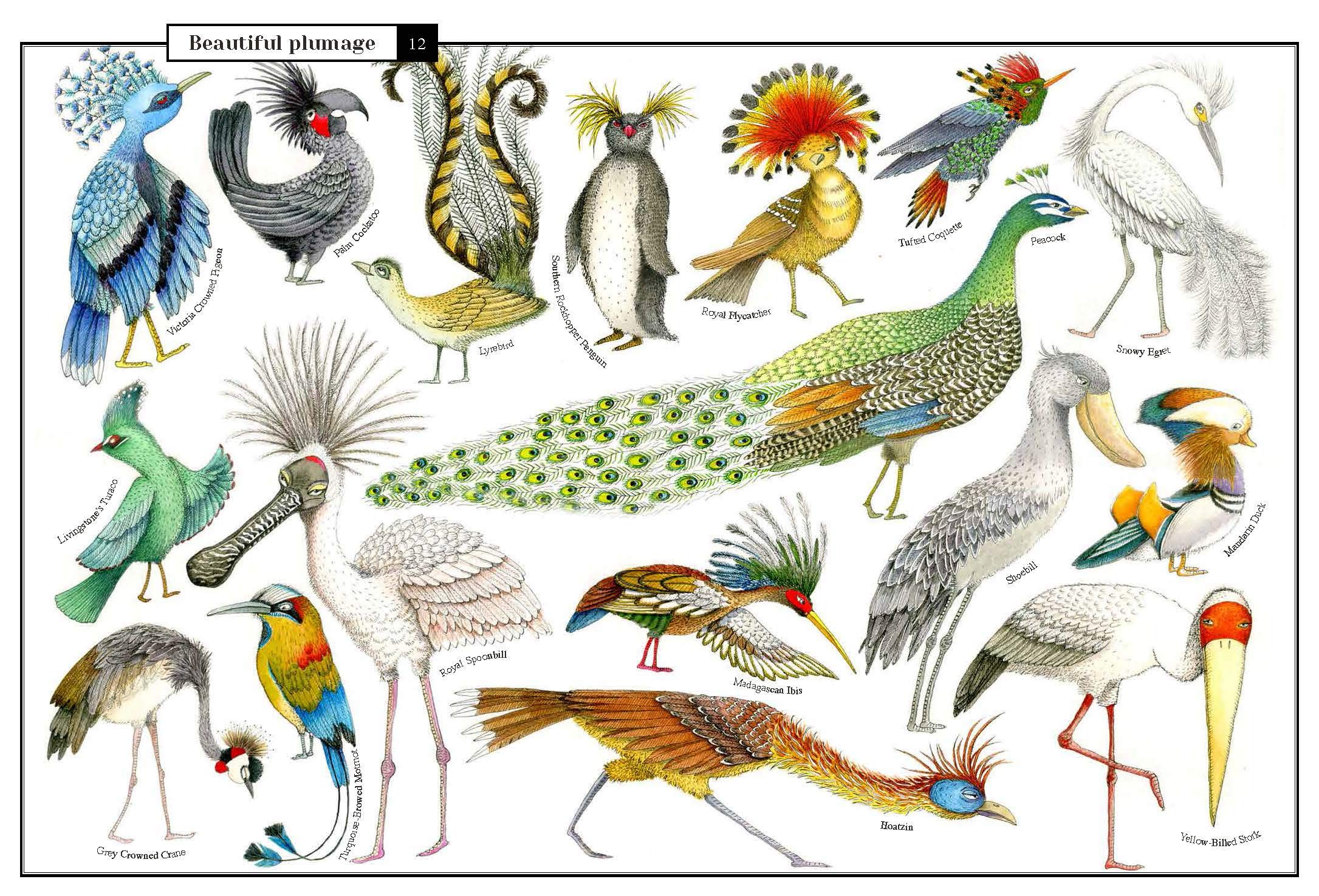
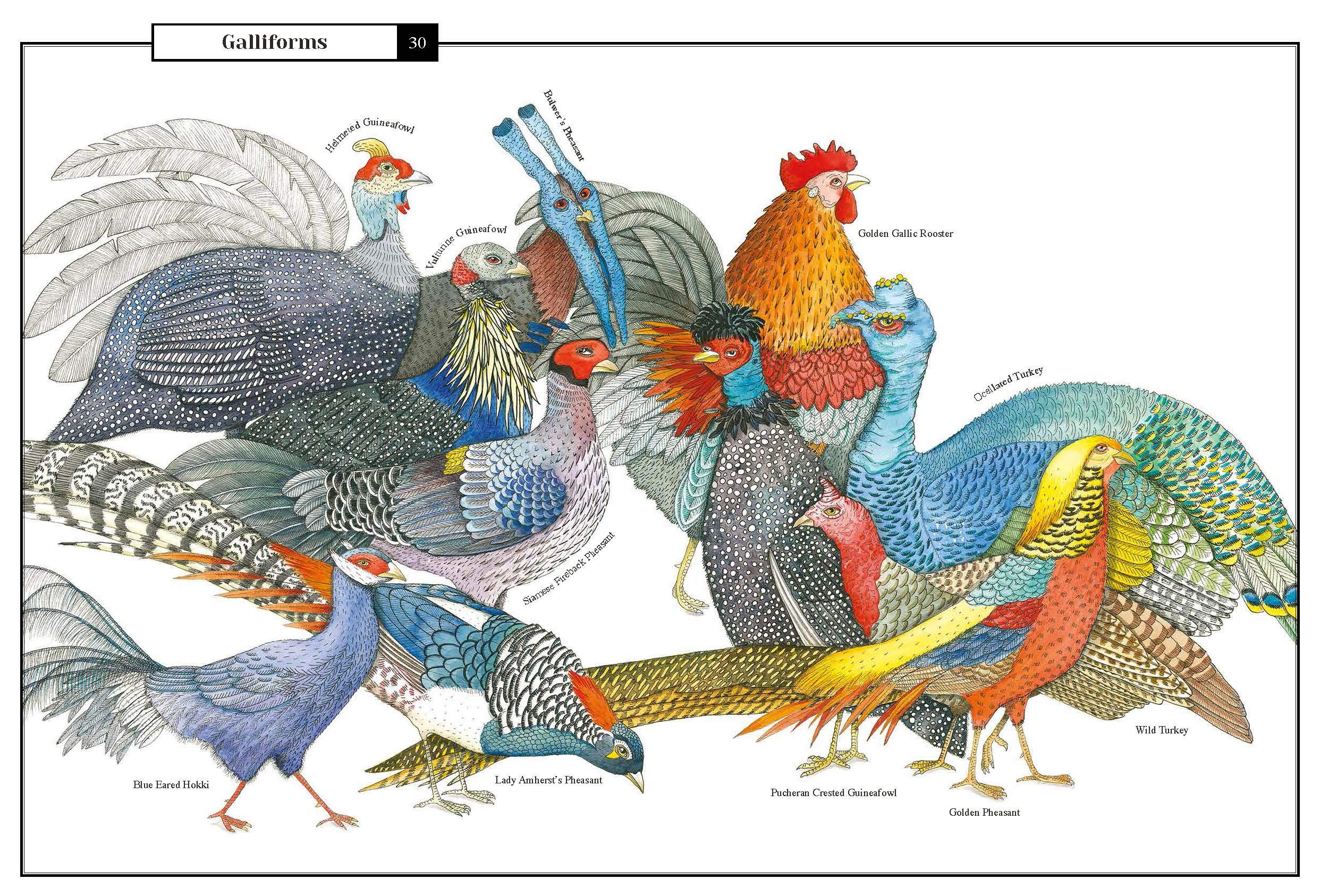
This book, originally released in French, is a stunning work of art. Inspired by 17th and 18th century natural history artwork, by scientists and explorers who hand-sketched their discoveries, Wonders of Nature is an illustrated “cabinet of curiosities”, as author/artist Florence Guiraud puts it, of the natural world. There are meditations on birds’ plumage and nests; butterflies and bugs’ wings; starfish families, and jellyfish. Seven chapters come together through 2-page spreads in watercolor and sketch artwork to create detailed, breathtaking illustrations of birds, insects, and sea life.

I’ve had the privilege of seeing some 16th and 17th century natural history sketchbooks – by the way, you can, too: the American Museum of Natural History has an online research library with Digital Special Collections, including selections from their Rare Book Collection – and one can easily see how the artwork is inspired by these early natural history explorers and scientists. This is such a great way to get kids interested in natural history; how to interest them in wandering around their local parks, zoos, and museums, notebook in hand, and encourage them to draw their world, their way.

Each section introduces a topic with informative text that entices the reader into turning the page; that turn of the page launches readers into exciting new worlds, with animals they may never have seen before. Each drawing is labeled, helping kids – and adults – expand their world. Each section concludes with a “random directory” that provides further nibbles of information about different fauna, with page references for easy location.

Learn your world, and share it. Wonders of Nature is a solid add to your natural history collections and a great gift for readers who love nature and art. Display and booktalk with Candlewick’s Welcome to the Museum books (Dinosaurium, Animalium, Botanicum, and others).

Posted in Early Reader, Non-Fiction, Preschool Reads

Baby Loves Science – big ideas for little ones

I’m all for introducing science in all its wonderful forms to kids as early as possible, and all about introducing new vocabulary to kids, so science and math don’t scare them as they get bigger. I haven’t read any of the Baby Loves… Science! series by Ruth Spiro and illustrated by Irene Chan, so I started with the two newest books, Baby Loves Gravity! and Baby Loves Coding!

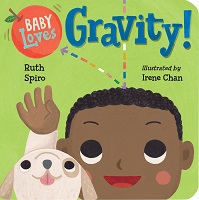
Baby Loves Gravity, by Ruth Spiro/Illustrated by Irene Chan, (June 2018, Charlesbridge), $8.99, ISBN: 9781580898362

Baby drops a noodle, and Puppy gobbles it up. How does that noodle fall? Gravity! Simple enough concept to explain to a toddler, and that’s how Baby Loves Gravity! starts out: simple and relatable. From there, we get a clear explanation of matter, mass, and gravity, and how it works on the sun, moon, and earth’s pull on us here. It’s clear and nicely illustrated, but this is a lot of information, even for toddlers, no matter how simply it’s phrased. I liked the illustrations, was pleased to see a child of color as the star of the show, but would read the beginning and ending, where baby slides down a slide, illustrating gravity, for a toddler STEAM or science storytime. I would rather test this out in a Kindergarten-level science storytime. The board book format makes for easy holding, and the illustrations are large, bright, and easily seen by a circle time group of kids. I could work with a group of kindergarteners, even pre-kindergarteners, in a science workshop using this as a companion text.


Baby Loves Coding!, by Ruth Spiro/Illustrated by Irene Chan, (June 2018, Charlesbridge), $8.99, ISBN: 9781580898843

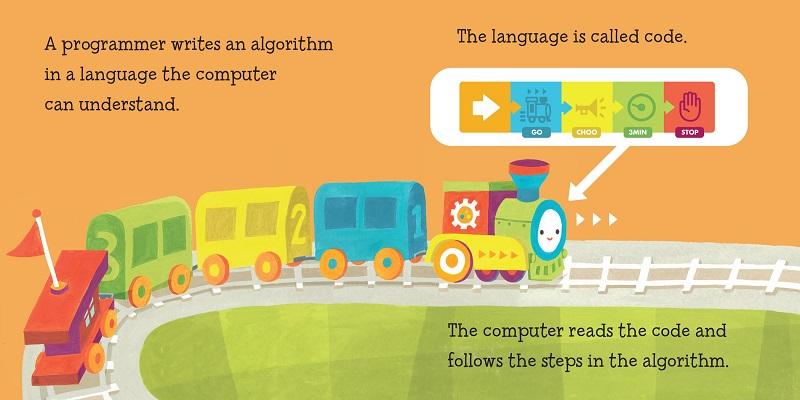
Baby’s playing choo-choo, and wants to add a red car to his train. Let’s follow him as he walks over! Baby Loves Coding features a child of cover on the cover, and is an adorably illustrated, clearly laid out way to introduce coding to kids, but this is also way above a little one’s head. The first few spreads, explaining how baby walks to the toy box, are great – you can get kids up and moving along with you on this one – but the text launches into an explanation of algorithms, programmers, and reading code, and this is just going to lose little ones. The pictures do all the work here, illustrating, with colorful interlocking blocks, how code fits together, like the cars of a train. I do love the explanations and the artwork, and the idea of getting kids up and moving works with CS Unplugged activities I’ve done in my library. I’ve used Code.org’s curriculum; CS Unplugged also has some great lesson plans and printables.

My advice? Use these with your pre-k and Kindergarten science storytimes. They’re great books for the right age.

Posted in Fantasy, Fiction, Graphic Novels, Intermediate, Middle Grade, Teen, Tween Reads

Graphic Novels coming your way in July

Yeah, you’ve got the summer reading lists (which, thank you teachers, have been getting better!), but you have to make time for pleasure reading, too! Check out some of the cool graphic novels coming out in July – perfect for sitting in the shade (or the sun, just wear your SPF) and enjoying the day.

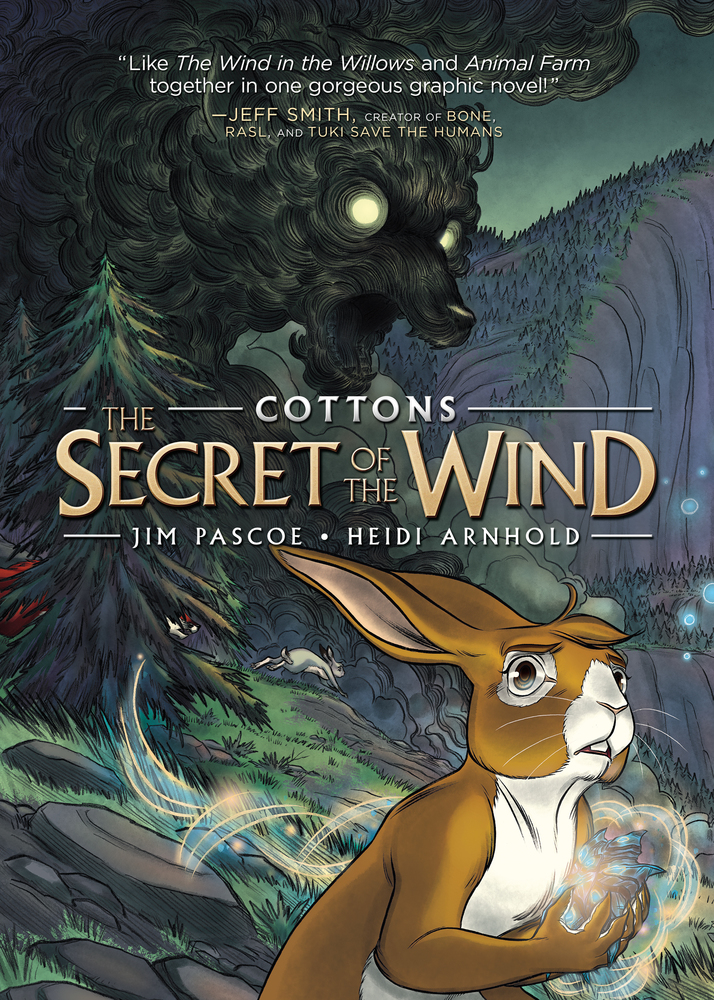
Cottons: The Secret of the Wind, by Jim Pascoe/Illustrated by Heidi Arnhold, (July 2018, First Second), $19.99, ISBN: 9781250157447

Recommended for readers 10-14

Watership Down was one of those novels that changed my life when I was a kid. I first read it at about 9, after seeing the animated movie a year before, and it just blew my mind with its beautiful, yet brutal, story. I’ve returned to the book and movie several times throughout the years, and it remains one of my favorite books. Reading this first story in Jim Pascoe and Heidi Arnhold’s new graphic novel series, Cottons: The Secret of the Wind, reminds me of Watership Down, taking place in a more magical world.

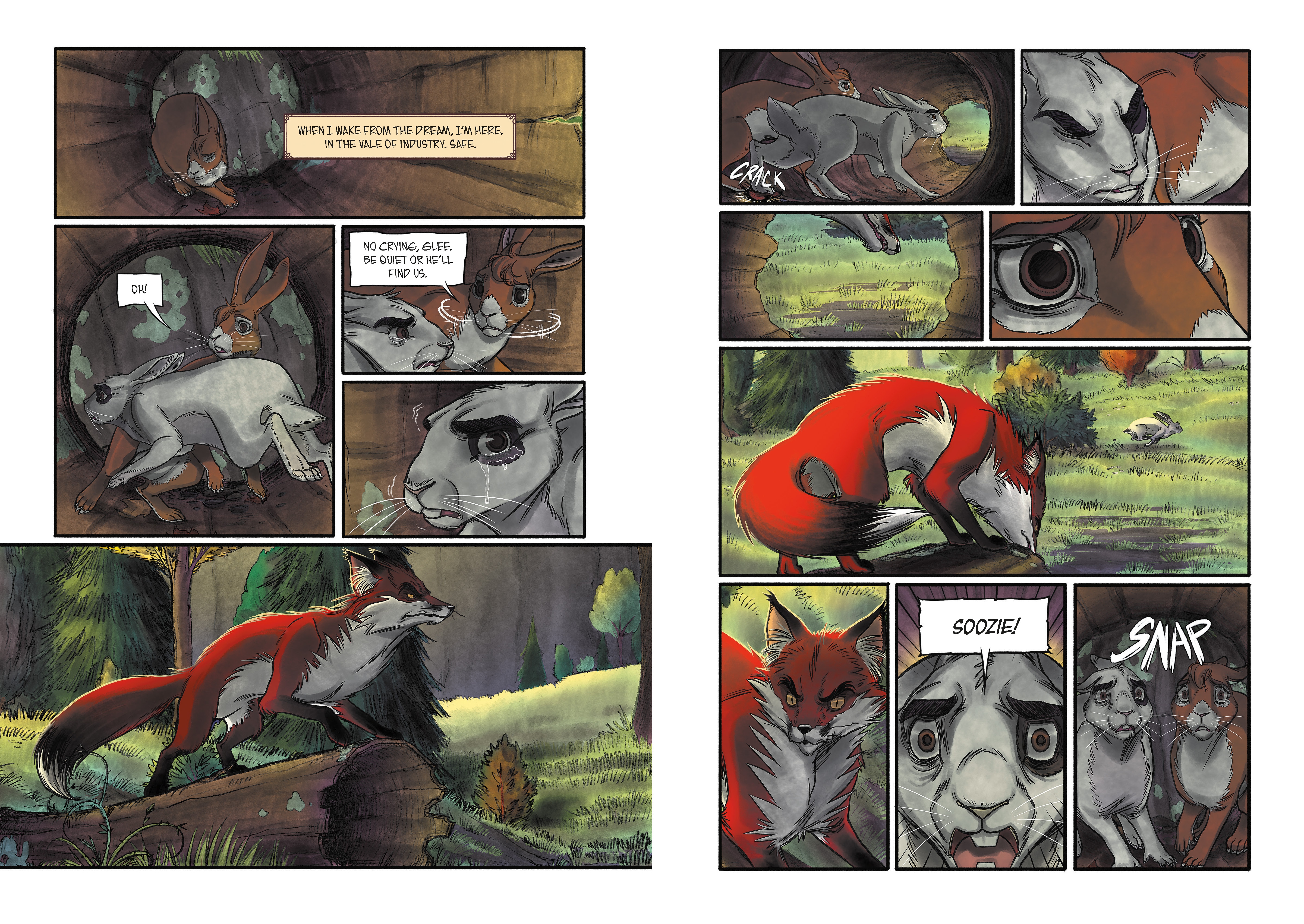
We meet Bridgebelle, a rabbit working in the carrot factory by day, caring for her sick aunt by night. She’s always on the watch for the cruel foxes who prey on the rabbits

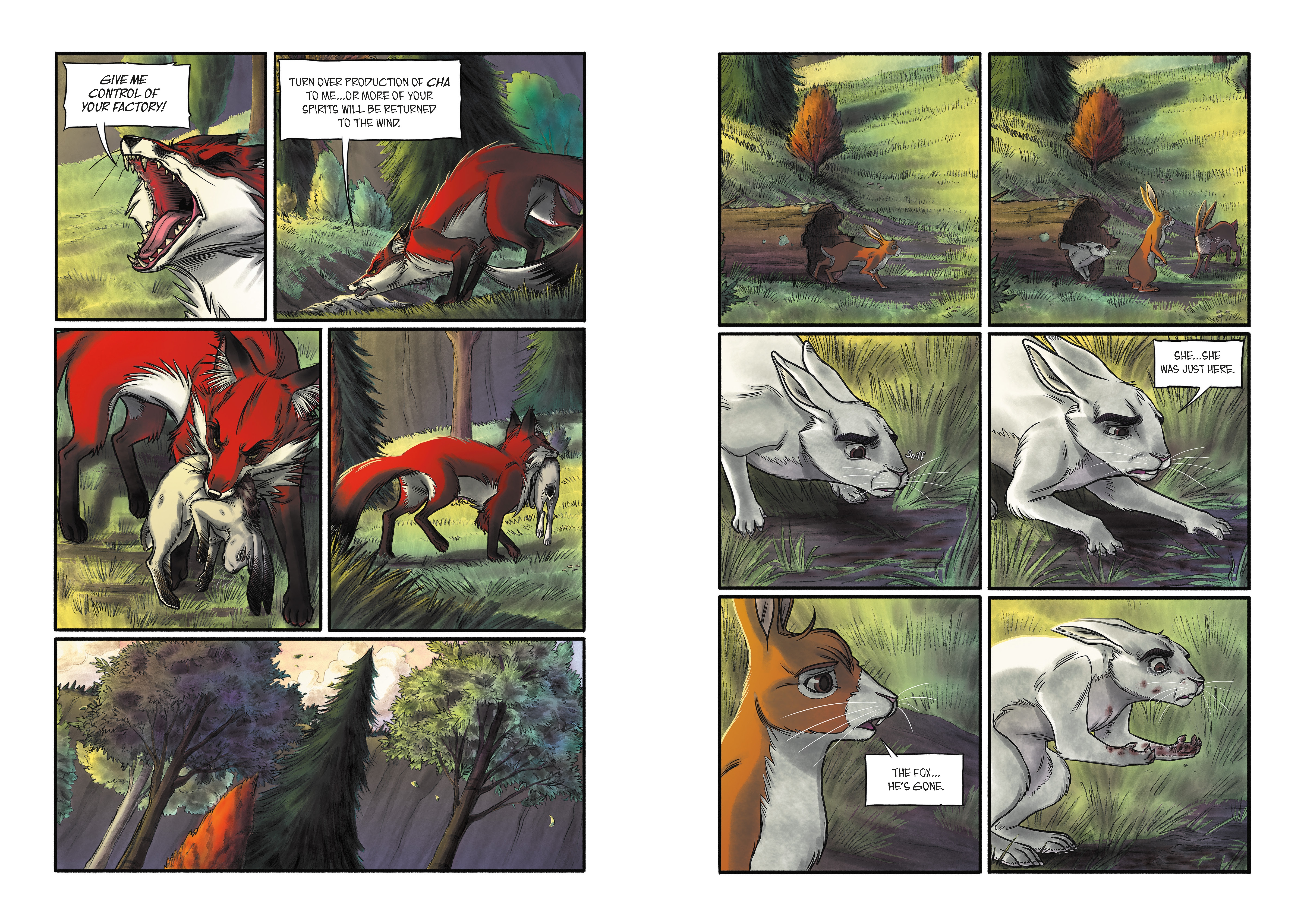
To her neighbors in the Vale of Industry, Bridgebelle is an ordinary rabbit. All day long, she toils at the carrot factory. After a hard day, she returns home to care for her ailing auntie. Bridgebelle also has a secret talent: she uses cha, the fuel that powers the rabbits’ world, to create magical artwork called thokchas. Bridgebelle must keep her magic secret, lest other rabbits in power try to use her and her power to create weapons; she also has to beware of the cruel foxes who hunt her kind.

There is a lot of storytelling here that makes the story hard to follow at times, but stick with it: it’s worth the journey. Heidi Arnhold’s beautiful artwork blends realistic animal art with fantasy and magic. Jim Pascoe sets a firm foundation to his universe here, and introduces several plots that will power readers through this new series. There is some violence – the foxes aren’t known for their mercy – so I’d recommend this one for middle grade and up. This is a nice companion to the Longburrow novels by Kieran Larwood and David Wyatt (the second book is due out in August!), for fans of animal fantasy, particularly starring rabbits.

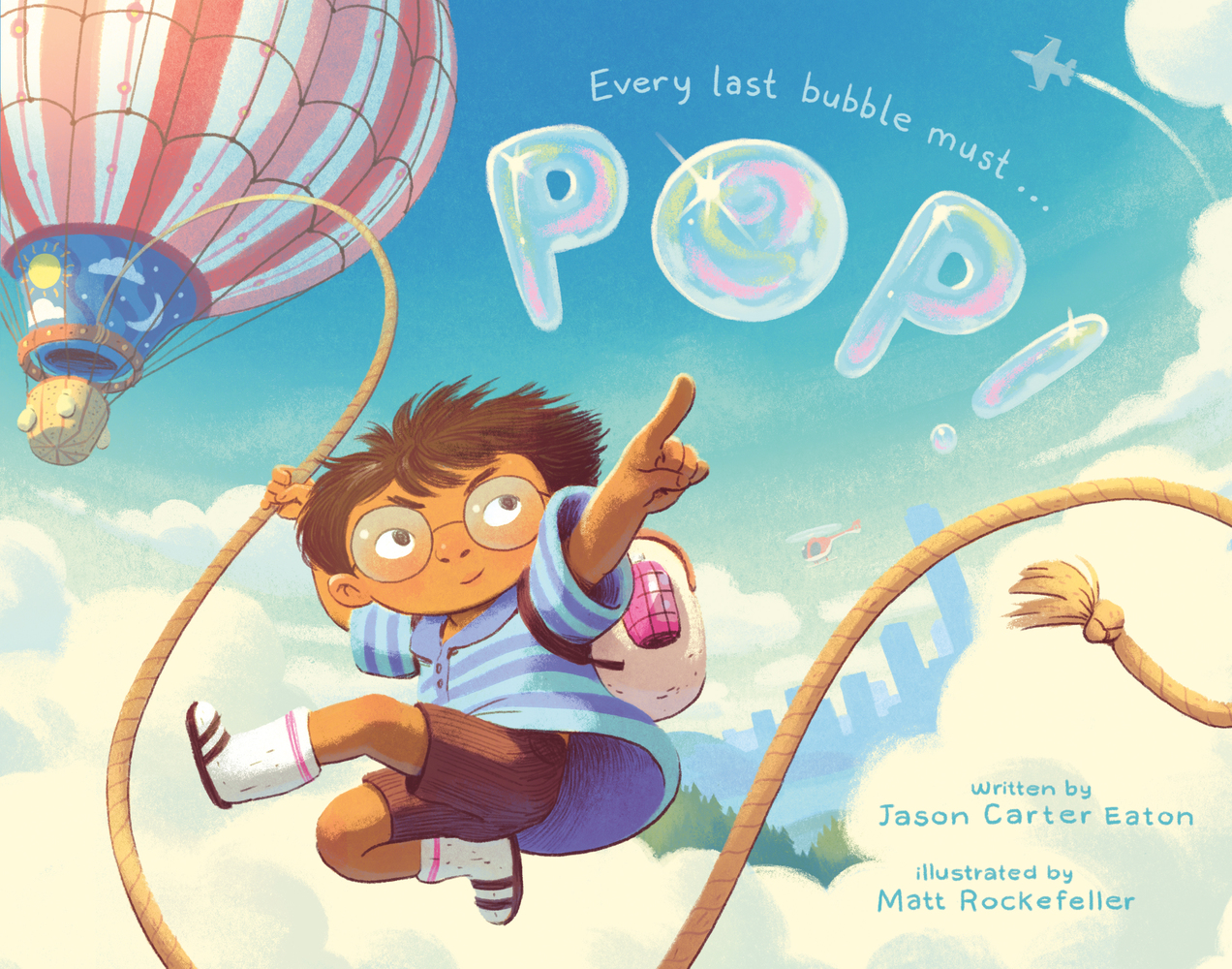
Pop!, by Jason Carter Eaton/Illustrated by Matt Rockefeller, (July 2018, First Second), $17.99, ISBN: 9781626725034

Recommended for readers 4-8

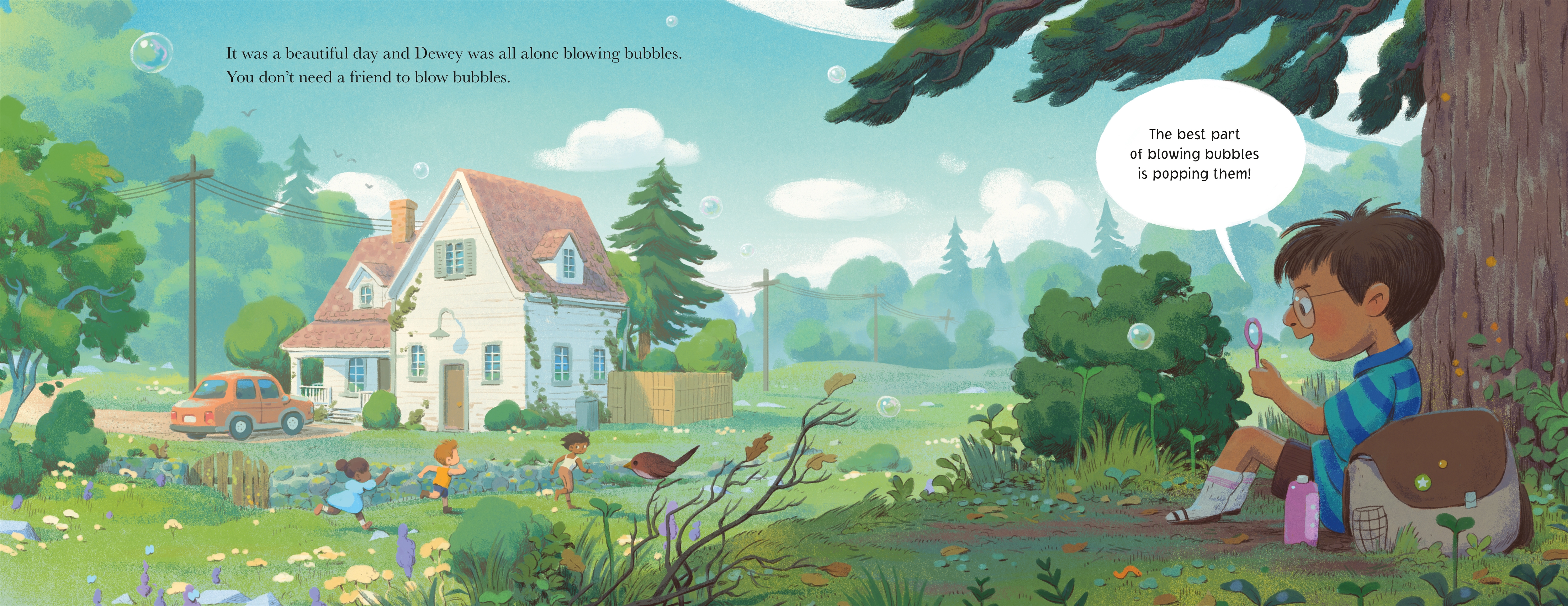
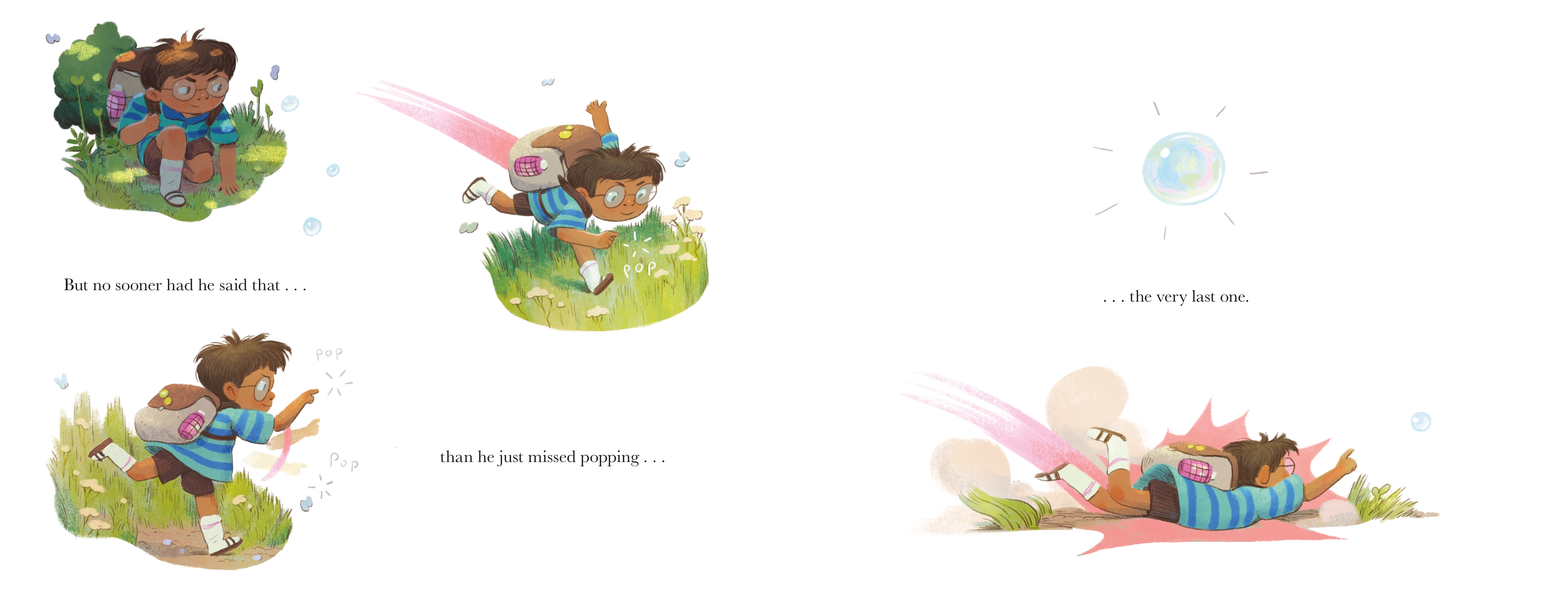
A young boy sits, relaxed, blowing bubbles on a sunny day. His favorite part about blowing bubbles is popping them – naturally! – but one bubble has other plans! The bubble takes Dewey – yes, that’s his name – on a quest that will take him to new (literal) heights via trampoline, jungle gym, even a moon shuttle. Because, like the cover says, “Every last bubble must… POP!”

This is perfect fun for a summer read. If you’re outside, break out the bubbles and let the kiddos pop them! If you’re inside, maybe just hand some out (I worry about slippery floors, but if it’s not an issue for you, go for it). The semi-realistic art gives way to shiny flights of fancy; the bubble’s sheen seems to shine right off the page. The text is simple, easy to read, and great for newly confident readers. Kids and grownups alike will enjoy the simple joy of a little boy and his quest to pop the bubble.

Geeky F@b 5: It’s Not Rocket Science! (Geeky F@b 5 #1), by Lucy & Liz Lareau/Illustrated by Ryan Jampole, (July 2018, Papercutz), $12.99, ISBN: 978-1545801222

Recommended for readers 7-11

Papercutz has another fun, original graphic novel for intermediate readers; this time, they’re going STEM with the Geeky F@b 5: 5 girls who love science and are using their skills to make Amelia Earhart Elementary School better. Lucy, a fourth grader, and her older sister, Marina, a sixth grader, have just moved to the area and are ready to start school. Lucy, who loves the environment and animals, gels with her classmates right away: AJ, who wants to be an engineer like her dad; Sofia, a glitter girl who loves coding and making apps; and Zara, forever on her headphones, and a math whiz. Lucy gets hurt in the school’s outdated playground that first day, and the principal and nurse shut the playground down: but the girls have plans! Together with their teacher, they come up with a great idea: put together a series of fundraisers to get the money to rebuild the playground! Every one of the girls has a job to do; now, if they could just get the bullying older kids on their side, things would be perfect.

Geeky F@b is the first in a new STEM-focused graphic novel series form Papercutz; Volume 2 is due in December. The book is easy and fun to read, with a reasonable plot and goal that can empower readers to be forces for positive change in their own communities. The characters are diverse and relatable; I enjoyed spending some time with them and am pretty sure they’ll be popular reading at my library. This would pair nicely with Bob Pflugfelder and Steve Hockensmith‘s Nick and Tesla series (novels, not graphic) from Quirk, the Girls Who Code chapter book series, and the Howtoons graphic novels. Fun for summer!

Posted in Middle Grade, Non-fiction

Get Ready for STEM Summer!

Sure, many libraries are doing the “Libraries Rock!” theme for Summer Reading, but that’s no reason to leave science out of the fun! I’ve got a bunch of STEM books that you’ll want to get in front of (or create programs using) your readers to have fun with this summer. Careers, facts, bios, and, most fun of all, experiments, await!
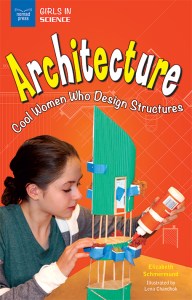
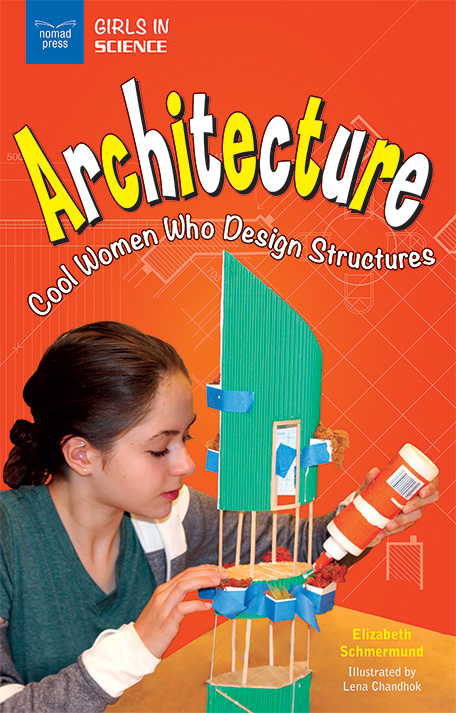
Architecture: Cool Women Who Design Structures (Girls in Science series), by Elizabeth Schmermund/Illustrated by Lena Chandhok, (Aug. 2017, Nomad Press), $9.95, ISBN: 9781619305465

Recommended for readers 9-13

I’m always looking for good career books, because I weeded my current section when I first got to my library. I really liked this book, and I’m looking forward to reading and putting more of the Girls in Science series in my book cart for future purchases. Architecture is divided into four color-coded sections: the first, a general overview of architecture; the history, styles, what the profession is like today and how to prepare for study in architecture, and women in the profession. The next three sections are devoted to profiles of a diverse group of women architects: Patricia Galván, a Project Manager; Farida Abu-Bakare, an intern architect who’s in the process of writing her exams and works with science and technology; and Maia Small, who owns and operates her own small architecture firm. In addition to the profiled female architects, there are brief bios on other women in the field. Ask & Answer sections provide thought-provoking questions, many beyond the basic material, for readers to consider. QR codes in callout sections provide links to more information. The overall narrative, and each profiled professional, addresses the gender gap and even larger diversity gap in the industry. Back matter includes a timeline of the profession, all the Ask & Answer questions in one place, a glossary, further resources, including written-out links to the QR code sections, and an index.
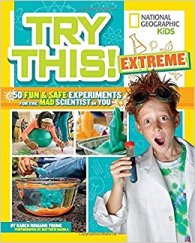
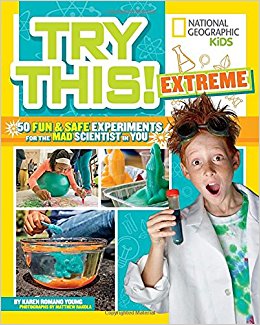
Try This! Extreme: 50 Fun & Safe Experiments for the Mad Scientist in You, by Karen Romano Young/Photographs by Matthew Rakola, (Sept. 2017, National Geographic Kids), $16.99, ISBN: 9781426328633

Recommended for readers 8+

The best part about science, I tell the kids in my programs and class visits, is making a mess, yet, no one gets mad at you (mostly). What better time to be a mad scientist than in the summer, when it’s beautiful out and you can open those windows to offset any stinky experiements? The book starts off with safety instructions and photos of the kid (and dog) scientists who tested out the 50 experiments waiting to be discovered in Try This! Extreme. Each experiment has a safety rating, a who you need rating (i.e., an adult, just you, or maybe grab a friend), and supervision rating; each experiment also lays out concepts explored, approximately how long it will take, what you need, and a step-by-step guide through the process, accompanied by full-color photos. There are callout facts, questions to ask yourself, and key terms defined throughout. Conduct a bioblitz (exploration) in your yard or a park, learn physics using marshmallow Peeps, or check the weather forecast and aim for a game of masking tape hopscotch when there’s rain predicted. There are bonus mini-experiements, Science Fair experiment prompts and guidance, K-12 science standards and how each experiment corresponds to them, an index, and metric conversion tables. Enjoy!

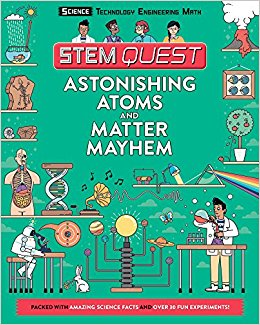
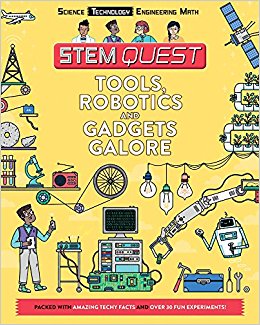
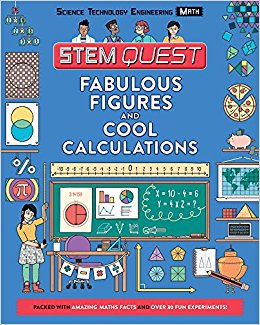
The STEM Quest Series from Barron’s Educational is a brand new series broken out into four books, loaded with facts and experiments:
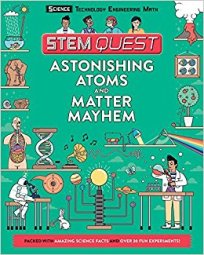
STEM Quest Science: Astonishing Atoms and Matter Mayhem, by Colin Stuart/Illustrated by Annika Brandow, (May 2018, Barron’s Educational), $10.99, ISBN: 9781438011363

Recommended for readers 8+

This volume looks at the organic side of things: biology, chemistry, physics, earth and space sciences, biochemistry, biomedicine, and biotechnology. Each section guides readers through full-color illustrated discussions on each area and includes experiments to ramp up the fun. Kids will LOVE the Marshmallow Molecules – you need a bag of marshmallows, a box of toothpicks or wooden skewers (me? I’d go with the toothpicks, but I’m in a public library), and some compound formulas. Let kids make their own formulas up and watch the fun begin! I’ll save you the search: this is where you can find the chemical compounds for farts. It’s the American Council on Science and Health’s website, so they did this for science. You’re welcome. Littler ones can make their own sundial, or spot a constellation. There are scientist profiles and fantastic facts throughout, plus a glossary and an index.
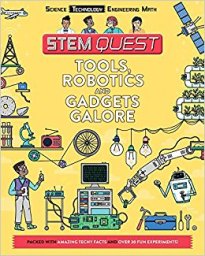
 

STEM Quest Technology: Tools, Robotics, and Gadgets Galore, by Nick Arnold/Illustrated by Kristyna Baczynski, (May 2018, Barron’s Educational), $10.99, ISBN: 9781438011370

Recommended for readers 8+

This volume looks at the techy side of life: construction, power and energy, agriculture and biotechnology, manufacturing, information and communication, medical and biomedical, and transportation. Learn about the evolution of tools, from the earliest hand tools to robots and space suits. Learn how a blast furnace works, and make your own plastic (adult helpers necessary), and learn how it works. Get your Project Runway on, with a section on textiles: you’ll learn to weave, tie dye, and ink print. For your more tech-inspired readers, there’s an easy Try This at Home experiment that teaches (with adult help) how to build a circuit, or how to magnetize a nail. There are great programming ideas in here: I think I’m going to look into building a planet and designing a space station, all of which can be done on a shoestring and with adult help. And since I’m the closest thing resembling an adult in the room… well, I guess that falls to me. The same format applies here (and to all of the STEM Quest books): bios on prominent scientists, loads of facts and illustrations, a glossary, and an index.
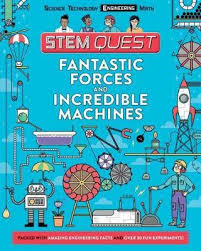
 

STEM Quest Engineering: Fantastic Forces and Incredible Machines, by Nick Arnold/Illustrated by Kristyna Baczynski, (May 2018, Barron’s Educational), $10.99, ISBN: 9781438011349

Recommended for readers 8+

Next up, engineering: systems and mechanics; materials and processes; biology, medical, agriculture and chemistry; structures; and sustainability engineering. Get the kids learning about forces and energy with experiments like Superhero Paper Clips, where they’ll make a paper clip float; a material scavenger hunt, inviting them to look around for everyday items made out of different materials; get out the old reliable straws and pipe cleaners and let them create 3-D shapes to see how they hold up under pressure, or that summer staple, the pinwheel. (The book suggests dowels; I’m here to tell you that chopsticks are a lot cheaper and just as easy to use.) There’s a great section on environmental engineering that will have you and your readers figuring out how to clean up our environment and a nuclear power lesson that has the simplest of experiments: use the sun’s nuclear energy to test your sunscreen on a piece of construction paper.
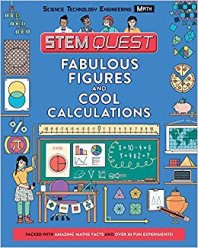
 

STEM Quest Math: Fabulous Figures and Cool Calcuations, by Colin Stuart/Illustrated by Annika Brandow, (May 2018, Barron’s Educational), $10.99, ISBN: 9781438011356

Recommended for readers 8+

I’m trying to get more math-related fun in front of my library kids, because it scares the bejesus out of me and I don’t want to pass that on. The parents love a good math program, too, so I know I’ll get buy-in from the community on this one. Here, we’ve got numbers and operations; measurement; problem-solving, logic and reasoning; geometry; algebra; advanced math; data, analysis and probability; and communication. I will admit that just looking at that section scared the life out of me, but once I started reading, I quickly warmed up. There are great explanations of each concept in here, addressing the quick and easy stuff like place value and column addition and subtraction, and heading all the way into bigger ideas like proofs and binary. Fun experiments and activities include a pirate treasure challenge, where, as a pirate captain, you need to use math to calculate the best place to bury your treasure; creating 3-D art and making pyramids, and averaging Olympic judge scores.

That’s a start for some STEM summer fun, but make sure to get your STEM sections and displays up and running to give readers readalikes and ways to expand on what they’re learning. The Secret Coders graphic novel series by Gene Luen Yang and Mike Holmes is great for Math and Tech fans, who want to play with coding. Science Comics has books about rockets and robots that will fit nicely with STEM displays, and I’m a big fan of the Junk Drawer Science series by Bobby Mercer. There are tons of fun STEM-related books out there!

Posted in Fiction, Middle Grade, Middle School, Realistic Fiction, Tween Reads

The Miscalculations of Lightning Girl is wonderful!

The Miscalculations of Lightning Girl, by Stacy McAnulty, (May 2018, Random House), $16.99, ISBN: 978-1-5247-6757-0

Recommended for readers 8-12

I am so excited to talk up this book, because it is SO GOOD. I was lucky enough to be on author Stacy McAnulty’s “street team”, so I have evangelized this book to my library kiddos, bending the ear of everyone I talk to (including grownups) at the library and at home, and generally shoving this book at people to tell them that they need to read it immediately.
Lucy is a gifted tween, thanks to a lightning strike at age seven that left her with savant abilities in math. She loves math. She sees and smells the numbers and equations; they reveal themselves to her and tell them all their secrets, but social relationships have eluded her. She struggles with OCD behaviors and has been homeschooled by her grandmother, who finally decides that Lucy develop socially, and enrolls her in middle school, which doesn’t really go over so well with Lucy, who’s more ready for college applications. But Lucy promises her grandmother that she’ll make one friend, join one activity, and read one book that isn’t a math textbook. Lucy’s OCD automatically makes her a target to the local mean girl, but she persists, finding ways to use her talents in a class project, and making two pretty good friends, while she’s at it.

I can’t find enough great things to say about Lightning Girl. Stacy McAnulty gives us a strong, funny, sweet, and complex group of characters that reader will recognize bits of themselves in; supportive parental figures that are doing their best, and parents that need a bit more work. It’s a glimpse at everyday life with a touch of the extraordinary, and it’s a touching look at the power of caring about something bigger than oneself. Lucy goes through tremendous upheaval, but she rides it out, and grows through the course of the book. Before the events that form the narrative, she sees life as a series of problems that can be worked out, but learns that some of the toughest problems bring rewarding solutions. Even if the final answer isn’t correct, the work to get there makes a difference.

The Miscalculations of Lightning Girl is compulsively readable, discussable, and perfect middle grade reading. Teachers, PLEASE put this on your Summer Reading lists, so I can hand this book to every middle grader I see this summer. Lightning Girl has starred reviews from School Library Journal, Kirkusand Publisher’s Weekly. Author Stacy McAnulty is on a book tour for Lightning Girl right now: head to her author webpage for a schedule!