Posted in Intermediate, Non-Fiction, picture books

The Faith of Elijah Cummings pays tribute to a giant

The Faith of Eljah Cummings: The North Star of Equal Justice, by Carole Boston Weatherford/Illustrated by Laura Freeman, (Jan. 2022, Random House Studio), $17.99, ISBN: 9780593306505

Ages 6-10

Congressman and civil rights advocate Elijah Cummings left an extraordinary legacy when he passed in 2019. Carole Boston Weatherford, whose numerous awards include a Newbery Medal and two NAACP Image Awards, along with NAACP Image Award winning illustrator Laura Freeman, to create a picture book biography that makes this giant of a man accessible to all ages. Beginning with the Congressman’s impoverished childhood and moving through his civil rights journey, focus on inner-city youth, and government work, we also see how Elijah Cummings’s faith and family was his anchor. Photorealistic illustrations are bold and eye-catching, and quotes from Elijah Cummings inspire readers as Carole Boston Weatherford’s narration concentrates on his humanity, choosing moments in his life like being tutored by librarians when his teachers said he would never be able to read or write well; his mother’s preaching, which inspired him to care for others in need, and the civil rights lawyer from his youth that inspired him to defend kids who needed defending. As a “Washington power broker”, he continued living in his Baltimore inner-city neighborhood and hung a campaign sign in his window so others could find him. Back matter includes an excerpt from the statement from the Congressional Black Caucus made upon the Congressman’s passing; a timeline of Elijah Cummings’s life; a bibliography, and the quote sources. Endpapers show Elijah Cummings, in profile, set against the American flag.

An incredible book for an incredible figure, and a must-add to your picture book biographies. The Faith of Elijah Cummings: The North Star of Equal Justice has starred reviews from Kirkus, School Library Journal, and Publishers Weekly.

Carole Boston Weatherford’s author webpage is a treasure trove of information, with resources and links to media related to her books. See more of Laura Freeman’s illustration work at her website. Find a biography, bibliography, and committee assignments for Elijah Cummings at the House of Representative’s website; visit Congress’s website to learn more about the legislation sponsored or co-sponsored by him, along with his remarks in the Congressional Record.

Posted in Middle School, Non-Fiction, Teen, Tween Reads

Threads of Peace and how two nonviolent activists changed the world

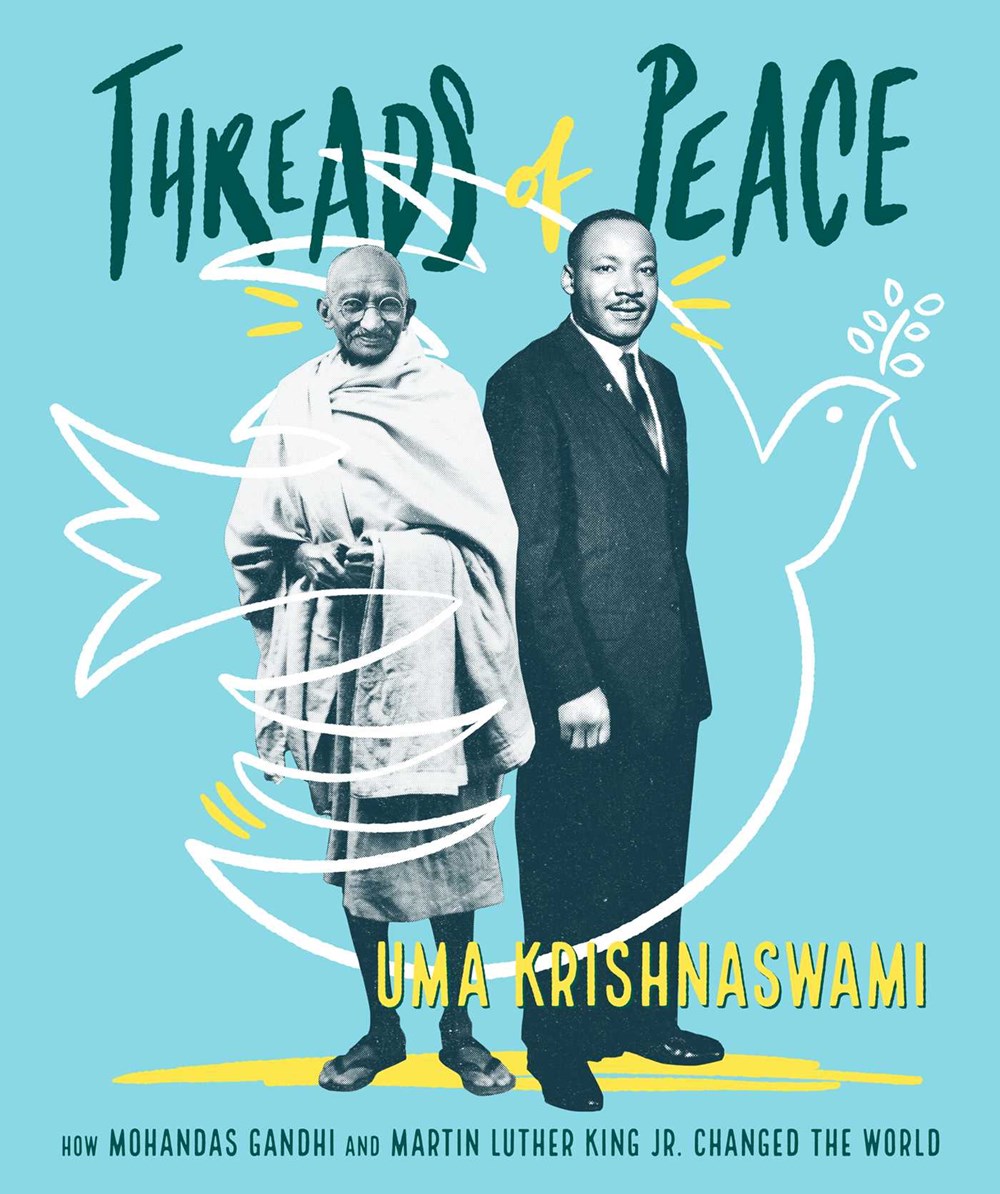
Threads of Peace: How Mohandas Gandhi and Dr. Martin Luther King Changed the World, by Uma Krishnaswami, (Aug. 2021, Atheneum/Caitylyn Dlouhy Books), $19.99, ISBN: 9781481416788

Ages 9-14

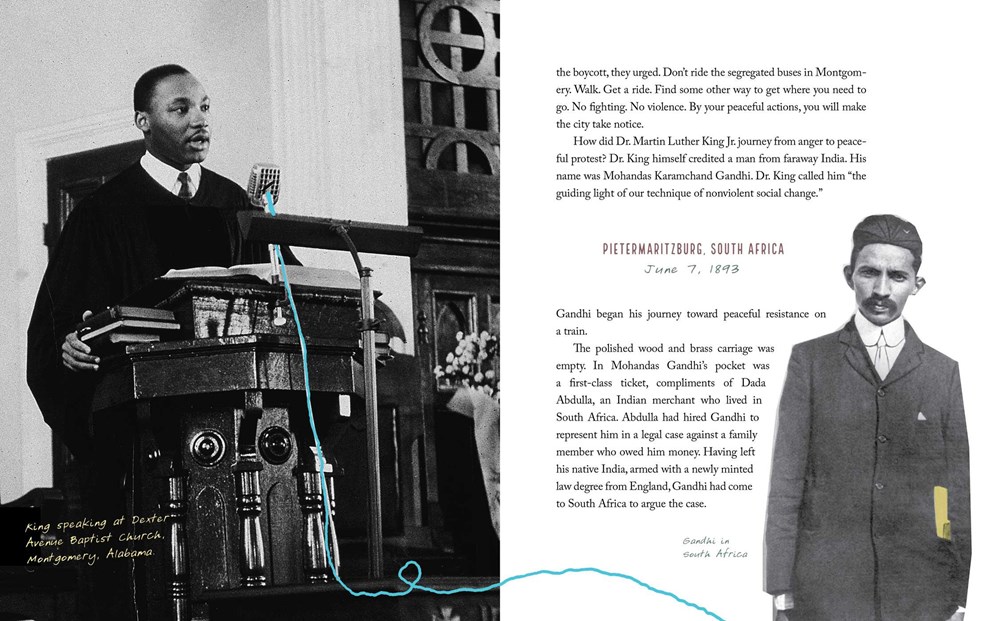
Two activists who chose peace and nonviolence; two activists whose lives were cut short by violence. As we forge ahead in this time of social unrest and protest, Threads of Peace: How Mohandas Gandhi and Dr. Martin Luther King Changed the World emerges as a book for tweens and young teens to turn to as they try to make sense of what they see on the news. Award-winning author Uma Krishnaswami profiles Gandhi and Dr. King, their paths to resistance and social justice, and their continuing influence on the world stage and nonviolence movements. Uma Krishnaswami writes about the threads that join Gandhi and Dr. King – and through them, all of us – together in a desire for social justice and freedom for all, even as their experiences – like ours – may travel different paths. Ms. Krishnaswami’s writing infuses her factual writing with emotion and empathy, investing readers in her subjects and in their mission. Black and white and color photos and colorful callout quotes and fact boxes throughout reach all interest levels. Back matter includes an author’s note, timeline of events in both Gandhi’s and Dr. King’s lives, and a glossary of terms. A bibliography, sources, and index make this an excellent research resource.

Threads of Peace: How Mohandas Gandhi and Dr. Martin Luther King Changed the World has starred reviews from Kirkus and Booklist. Display and booktalk to your middle school/early high schoolers along with Todd Hasak-Lowy’s We Are Power: How Nonviolent Activism Changes the World and Protest! : How People Have Come Together to Change the World by Emily Haworth-Booth and Alice Haworth-Booth. Unleashing Readers has some suggested questions for discussion.

Posted in picture books

Louder, for the people in the back: When We Say Black Lives Matter

When We Say Black Lives Matter, by Maxine Beneba Clarke, (Sept. 2021, Candlewick Press), $16.99, ISBN: 9781536222388

Ages 5-9

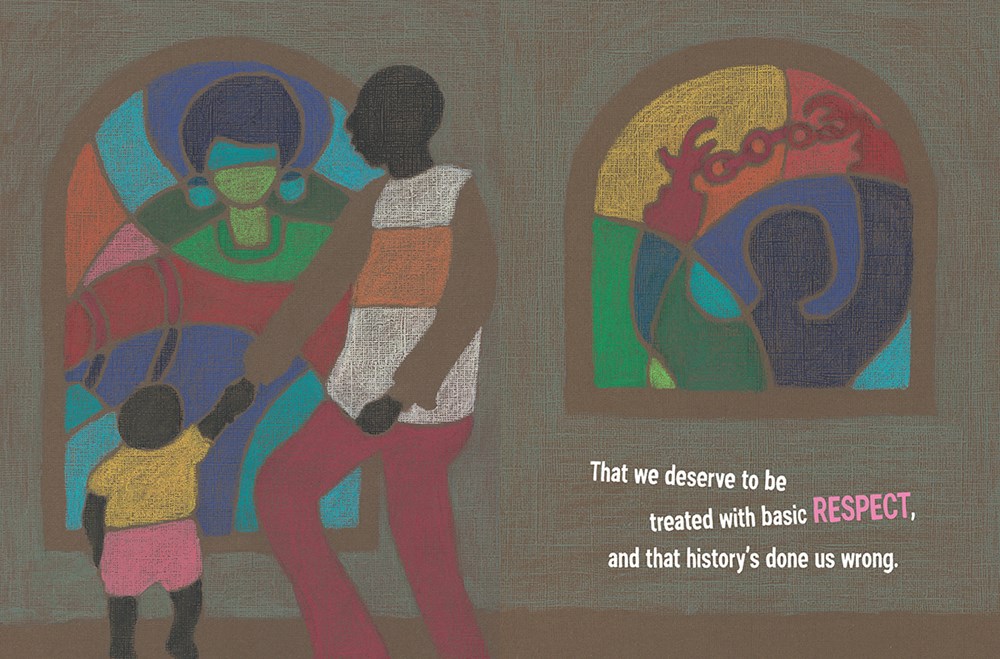
There’s been a lot of histrionics over the Black Lives Matter movement and meaning. Some folx will counter with the dreaded “all lives matter” response, and some will panic and try to accuse BLM of being terrorists. Certain school districts have gone so far as to attempting banning books that show positive portrayals of people of color. Award-winning writer and slam poet champion Maxine Beneba Clarke takes up the charge with her picture book in verse, When We Say Black Lives Matter; it’s a quiet, inspirational, powerful talk between caregiver and child, explaining the need for understanding and recognition. Loving words, like “little one”, “little love”, and “darling” lead into the many ways we can share the message: calling out Black Lives Matter; singing, screaming, sobbing, even laughing the words, and what they communicate: “When we whisper / Black Lives Matter, / we’re remembering the past. / All the terrible things / that were said and done, / we’re saying they trouble our hearts”. Each verse examines the Black Lives Matter message and what it means, throughout history, to this moment. Watercolor pencil and collage artwork inspires introspection and joy; colorful endpapers show demonstrators holding signs calling for “Love” and “Black Lives Matter”. The book celebrates Black Lives and encourages you to celebrate them, too. An essential book for all library shelves, whether they’re in your library, your classroom, or your home.

When We Say Black Lives Matter has starred reviews from Kirkus and School Library Journal.

Posted in Preschool Reads, Toddler Reads

Board books introduce MLK Jr and Rosa Parks to young readers

The Story of Martin Luther King Jr., by Johnny Ray Moore,
(Jan. 2021, Worthy Kids), $7.99, ISBN: 9781546034421
Ages 0-3

Simple text and artwork bring this biography of Martin Luther King Jr. to life for the youngest learners while addressing issues of inequity and racism that laid the groundwork for his activism – and that some adults may recognize today. The story tells readers, in brief, easy-to-understand sentences and companion illustrations, how Dr. King grew up, became a minister, and was motivated by all he saw and endured to work toward equality and ending segregation in America.

The Story of Rosa Parks, by Patricia A. Pingry/Illustrated by Steven Walker,
(Jan. 2021, Worthy Kids), $7.99, ISBN: 9781546034438
Ages 0-3
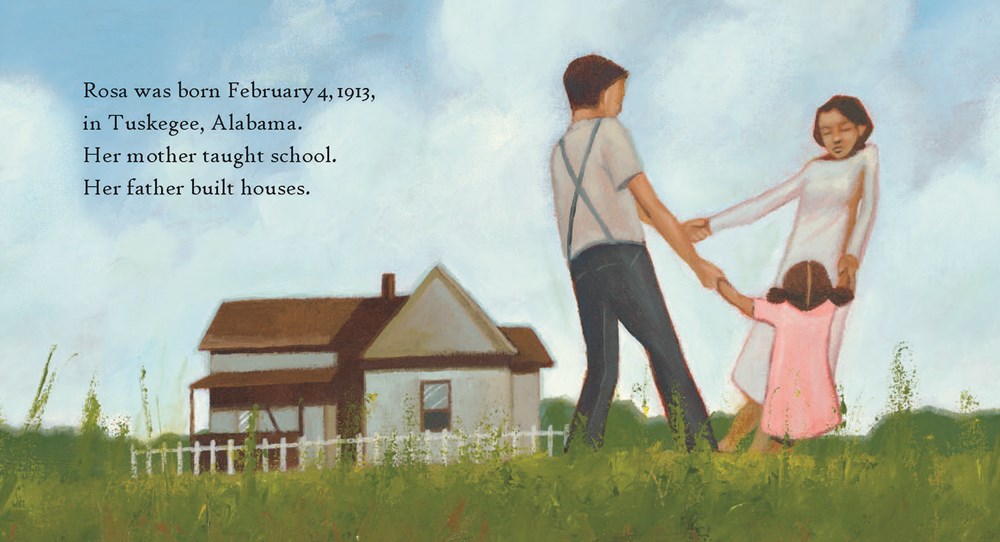
The Story of Rosa Parks introduces young learners to the civil rights icon’s childhood, leading to the moment that she made her historic stand on a bus in Montgomery, Alabama. The book shines a light on how that act, and the events that followed were a defining moment in the civil rights moment. Display and booktalk with books like A is for Activist, Antiracist Baby, and books featured on both the Social Justice Books and Act for Social Justice websites.
Posted in picture books, Preschool Reads

V is for Voting… important ALL YEAR LONG

V is for Voting, by Kate Farrell/Illustrated by Caitlin Kuhwald, (July 2020, Henry Holt & Co), $18.99, ISBN: 9781250231253

Ages 3-6

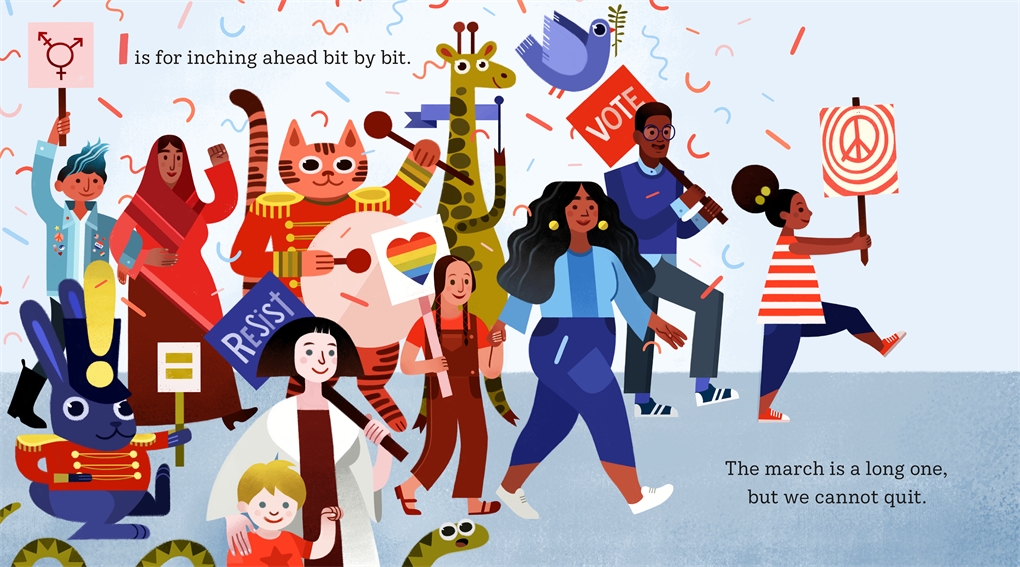
You may be looking at this title and thinking I’m really late on this one, and I am. But I also see this as a book we need to talk about NOW, because it isn’t just about voting. This ABC-edary is an introduction (or a reminder, for some… giving the eyeglasses librarian look now) to civics and what it takes to be a good citizen. V is just one letter in the alphabet, just like voting is just one part of being a good citizen. Farrell has points to make that everyone should understand and take to heart: “A is for active participation. / B is for building a more equal nation.”; “E for engagement. We all need to care. / F for a free press to find facts and share”. Digital illustrations bring vibrant, diverse communities to the pages of the book, showing communities uniting to march for justice, contributing to local communities, and yes, voting. Back matter includes a voting rights timeline and more information about people featured in the book’s illustrations, like Shirley Chisholm, Malcolm X, Takemoto Mink, and Cesar Chavez.

Essential reading. Go to your library and get a copy now, because we all need to read and discuss this book, whether it’s with our kids or among ourselves.

Posted in Realistic Fiction, Teen, Young Adult/New Adult

Sanctuary: A Plausible Dystopia from Paola Mendoza and Abby Sher

Sanctuary, by Paola Mendoza and Abby Sher, (Sept. 2020, GP Putnam & Sons), $17.99, ISBN: 9781984815712

Ages 14+

Set in a not-too-distant America where an unchecked President who advocates for hate is still in office, Sanctuary is an unsettling, often brutal, story of survival. In 2032, Americans are microchipped and tracked. Getting on the bus? You’re scanned. Going into school? You’re scanned. Some undocumented immigrants have underground chips that don’t always work: and when they malfunction, it’s bad news. Sixteen-year-old Vali and her mother are undocumented and living in Vermont. Vali’s parents crossed over into California when Vali was a toddler; her younger brother, Ernie, was born shortly after. Vali’s father was discovered, deported, and murdered, forcing Vali’s mother to flee, with her two young children, to Vermont. They’ve managed to create a life for themselves until a crackdown from the government’s Deportation Forces hits their town, sending them on the run once again. Vali’s mother’s chip malfunctions, and she’s taken away, forcing Vali and Ernie to head back toward California – a sanctuary state that’s been walled off from the rest of the United States – in the hope that their tía Luna is still alive and able to help them.

Sanctuary is a stressful, urgent, horrific book, because it’s a future that’s entirely plausible. The Wall exists in this future; people are empowered to openly hate and inform on one another, and Deportation Forces brutally enforce racist executive orders with relish. There are deportation camps in hidden areas, out of the public’s line of vision, where human beings are treated like animals, and drones hunt people down like prey. There are people all too willing to take advantage of desperation: coyotes, individuals paid to illegally transport others to California, steal and do worse. There are kind people, like the nun running an underground shelter for refugees, but they feel too few and far between. Vali is an incredible well of strength for her terrified younger brother. There are no wasted characters here: Paola Mendoza and Abby Sher create living, breathing characters that will stay with you long after you’ve closed the book and returned it to the shelf. With taut pacing and storytelling that will penetrate readers to the bone, Sanctuary is essential reading.

Paola Mendoza is an activist and co-founder of the Women’s March. Abby Sher is a YA author and You can read an excerpt thanks to Teen Vogue.

Sanctuary has starred reviews from Kirkus and School Library Journal.

Posted in Intermediate, Middle Grade, Non-fiction, Non-Fiction

No Voice Too Small lifts up kids voices

No Voice Too Small: 14 Young Americans Making History, edited by Lindsay H. Metcalf, Keila Dawson, & Jeanette Bradley/Illustrated by Jeanette Bradley, (Sept. 2020, Charlesbridge), $18.99, ISBN: 9781623541316

Ages 5-12

Fourteen outstanding young people who saw injustice and took action are celebrated here in poetry and art. Activists include Mari Copeny – “Little Miss Flint” – who demanded clean water for her community and got President Obama’s attention; Virsidiana Sanchez Santos, whose quinceañera at the Texas State Capitol called attention to the state’s stringent immigration policy; and Marley Dias, the girl who started the #1000BlackGirlBooks initative to collect books with characters who looked like her, and so many other readers looking for representation. These activists and 11 more find a place in the pages here, celebrated by luminaries including G. Neri, Nikki Grimes, Joseph Bruchac, and Lesléa Newman. Each profile includes a biographical paragraph; back matter explains the poetry forms used throughout the book, and profiles on each of the featured poets. Callout quotes invite readers to think about ways they can take action. The artwork showcases each of individual, and endpapers look like blackboards, with quotes from each activist in a chalk-white font. One percent of hardcover sales will go to TeachingforChange.org.

Posted in Fantasy, Graphic Novels, Teen, Tween Reads, Young Adult/New Adult

Superman Smashes the Klan! We could use him now.

I’ve been diving into my graphic novel stash with renewed vigor for the last couple of weeks, and DC is dominating the kids and YA original graphic novel front. Every single one I’ve read has been unputdownable, and there are some brand new characters introduced to the universe that I hope, hope, HOPE we see again, because I know my son devoured these books and that my library kids will gobble them up and ask for more. So let’s check in with DC.

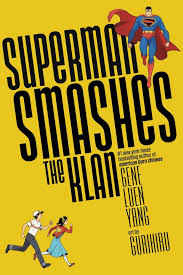
Superman Smashes the Klan, by Gene Luen Yang/Illustrated by Gurihiru, (May 2020, DC Entertainment), $16.99, ISBN: 9781779504210

Ages 10+

Inspired by a 1940 radio serial, award-winning author, artist, and former National Ambassador for Children’s Literature Gene Luen Yang takes on white supremacy and hate, with a little help from Superman. It’s 1946, and the Lee family – scientist Dr. Lee, his wife, and children, Tommy and Roberta – are moving from Chinatown into the Metropolis suburbs. While Dr. Lee and Tommy are excited about the move, Roberta and her mom are a little more reluctant. Dr. Lee pushes his wife to speak English and Tommy wants to fit in with the local kids, while Roberta and her mother are nervous about their English and miss the familiarity of Chinatown. Shortly after the family moves in, a group calling themselves the Clan of the Fiery Cross starts a reign of terror in the neighborhood, burning a cross on the Lee’s property. Police Inspector Henderson of the Metropolis police – an African-American man – gets involved, as does ace reporter Lois Lane. As the Clan increases their attacks on the Lee family, Superman shows up, too. But the Superman here is not the Superman we know and love just yet: he’s a man still learning about his powers and his heritage. When Superman reconciles who he is – Martha and Jonathan Kent’s son – with the discovery that he is also Kal-El from Krypton, all of Metropolis is in for a valuable lesson.

There’s so much going on here: strong subplots contribute to the main storyline of a white supremacist gang attacking a family and a town; we have Superman’s growing awareness of his power and the fact that he, too, is “not from here”, but “passes” because he’s a white male; Roberta, Lois Lane, and Superman working together to uncover the Clan before tragedy strikes; Tommy’s struggle to fit in; an illustration of generational racism at work; and a sinister plot afoot. Gene Luen Yang infuses the story with moments from history and his own life, and his author’s note, “Superman and Me”, at the end of the book, is an 11-page look at Superman, his place in US history, racism in US history, and the author’s own family story. A bibliography is available for further reading.

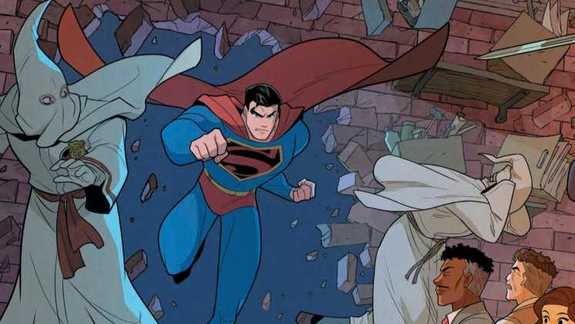
Superman Smashes the Klan is imperative reading. Gene Luen Yang’s storytelling always makes for incredible reading. Gurihiru’s artwork gives us iconic Superman moments; he calls to mind Action Comics #1 in a page where he hoists a car over his head, Roberta standing next to him, as they face shadowy, pointed hoods brandishing torches, chains, and baseball bats. Young Clark Kent lets his powers take hold of him as he defends a friend, rising in the air and letting laser vision unleash itself.  He discovers his Fortress of Solitude, this time, underwater. The Clan of the Fiery Cross is horrific as they throw their hands high, welcoming a torch of flame in front of the Lee family home. So many powerful moments; he will make Superman fans out of every reader.

The Comic Book Legal Defense Fund has a free, downloadable discussion guide. Superman Smashes the Klan is a great choice for Social Studies, US History, and ELA reading groups. Keep an eye on The Brown Bookshelf if you were unable to watch the Kidlit Rally for Black Lives on June 4th; Gene was one of the authors who spoke, along with luminaries like Jason Reynolds, Jacqueline Woodson, and Kwame Alexander; the full recording will be posted soon. There’s a Q&A with Yang on We Need Diverse Books that you shouldn’t miss, either.


Posted in professional development

Anti-Racism Resources

It’s been a scary time over the last 8 days. I’ve been trying to write posts, but just feel like anything I have to say is just… yeah. That’s where I am right now.

There’s a wealth of great information and resources available. This is m

First and foremost, The Brown Bookshelf is hosting a KidLit Rally for Black Lives, organized by award-winning authors Kwame Alexander, Jacqueline Woodson and Jason Reynolds. have organized a Kidlit Rally for Black Lives. It’s happening on June 4th, 7pm, at The Brown Bookshelf’s Facebook Live. Please spread the word about this event, and let’s give it the attendance it deserves and needs.

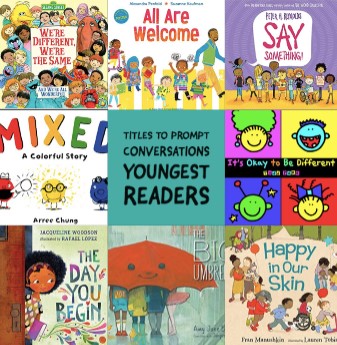
Librarian Cressida Hanson put together lists of titles to prompt conversation, organized by age group.


Kojo for Kids: Jason Reynolds Talks About Racism and The Protests – author Jason Reynolds spoke with radio journalist Kojo Nnamdi on his “Kojo for Kids” segment. The link includes a transcript and the playback of the segment.

School Library Journal/A Fuse 8 Production’s Antiracist Resources and Reads: Lists for All Ages. Elizabeth (Betsy) Bird has a fantastic compilation of reading and advice on being an ally. Resources for White Parents on raising white children is tremendously helpful. There are podcasts to listen to; films and videos to view; articles to read, and organizations to follow on social media, all suggested here. Follow her on Twitter @FuseEight.

Karen Jensen, better known as Teen Librarian Toolbox, also has a blog on School Library Journal. She’s also a force on Twitter, and her piece, Because Black Lives Matter: A Collection of Anti-Racist Reading Lists, includes resources for white readers in particular; something I find really helpful for me and my own family.

School Library Journal has a list of 15 social justice titles that address inequity and inequality, and encourage activism in younger readers.

Que(e)ry Librarians has an extensive #blacklivesmatter library, teaching, activism, and community resource list, constantly being updated; check in with this one often. It’s meticulously organized, and includes syllabi; reading lists for all ages; libguides; links to museums and archives; fact-checking resources, and so, so much more.

Embrace Race offers a list of 31 anti-racist books for children. If you wander around the website longer, you will discover, as I did, that they have an incredible wealth of resources, including webinars, reading lists, and action guides. The webinar “I [Still] Can’t Breathe: Supporting Kids of Color Amid Radicalized Violence looks like a powerful one, and it takes place on Friday, June 5th.

Books for Littles, another site I was just introduced to, has an “Anti-Racism for Beginners” list of books to read with and discuss with your kids about racial diversity. There are some great collections and topics in here; I’ve just added this to my reference resources. Check out the lesson planning resources and family action toolkits while you’re there.

A lot of white families may find it difficult to talk about race and racism with their kids. It’s been our privilege to avoid that conversation, but the time is here and now. This article from NPR on Talking Race With Young Children is a helpful start.

Medium.com has 75 ways white people can be helpful allies in the fight for racial justice.

This is what I’ve got for now. More booktalks are coming; it’s just been hard to stay focused these days.  Stay healthy, stay safe, stay strong.

Posted in Non-Fiction, Teen, Tween Reads, Young Adult/New Adult

Power to the People: We Are Power elevates nonviolent activism

We Are Power: How Nonviolent Activism Changes the World, by Todd Hasak-Lowy, (April 2020, Abrams Kids), $18.99, ISBN: 9781419741111

Ages 12+

A thought-provoking treatise on nonviolent activism, We Are Power presents six case studies throughout recent history: Gandhi, Alice Paul, Martin Luther King, Cesar Chavez, Václav Havel, and Greta Thunberg. Each section explores nonviolent resistance, the roots behind each advocate’s activism, and how the power of one person, exhorting nonviolence, can motivate thousands and create change. In an increasingly contentious world, the power of nonviolent activism, and placing this information in the hands of a generation of activists, is not only smart, it’s crucial.

Beginning with Gandhi and his theory of “soul force”, or satyagraha, each consecutive profile touches on how previous movements inspired one another. Martin Luther King in particular was influenced by Gandhi, while Alice Paul’s suffrage activism was a response to the more extreme suffagists in the UK, and her desire to be seen as calm, unflappable, and strong. Cesar Chavez understood that increasing awareness of migrant worker conditions was the best way to bring social justice to migrant workers and received a letter of encouragement from Martin Luther King, himself leading nonviolent resistance movements to bring civil rights to the country. Playwright-turned-Czech president Vaclav Havel used his art to protest; later, letters from prison, where he wrote about truth and opened people’s eyes by telling them that they were complicit in allowing their restrictive government’s rule by following the rules. Teenager Greta Thunberg began her climate change protest by being the sole student striking for climate change, and motivated a planet to take action.

A solid beginning for a discussion on social justice, activism, and civil disobedience, this is a must-have volume for middle school and high school collections. I can’t wait to put this in my order cart when my library, opens again. This would be a great Summer Reading choice, for educators who haven’t finished their lists yet. Photographs of protests and tense moments, like seeing schoolchildren attacked by dogs and being doused with hoses, make for great discussions on the use of violence against nonviolence – what stands to be gained? Comprehensive endnotes, bibliography, and index complete the book. Author Todd Hasak-Lowy’s author webpage has videos and resources for parents and educators.

We Are Power has starred reviews from School Library Journal, School Library Connection, and Kirkus.