Posted in picture books, Preschool Reads, Toddler Reads, Uncategorized

Big books for little ones: board books and more!

You know I love a board book bonanza, but I’ve got other interactive books to crow about, too! Let’s go right to it!
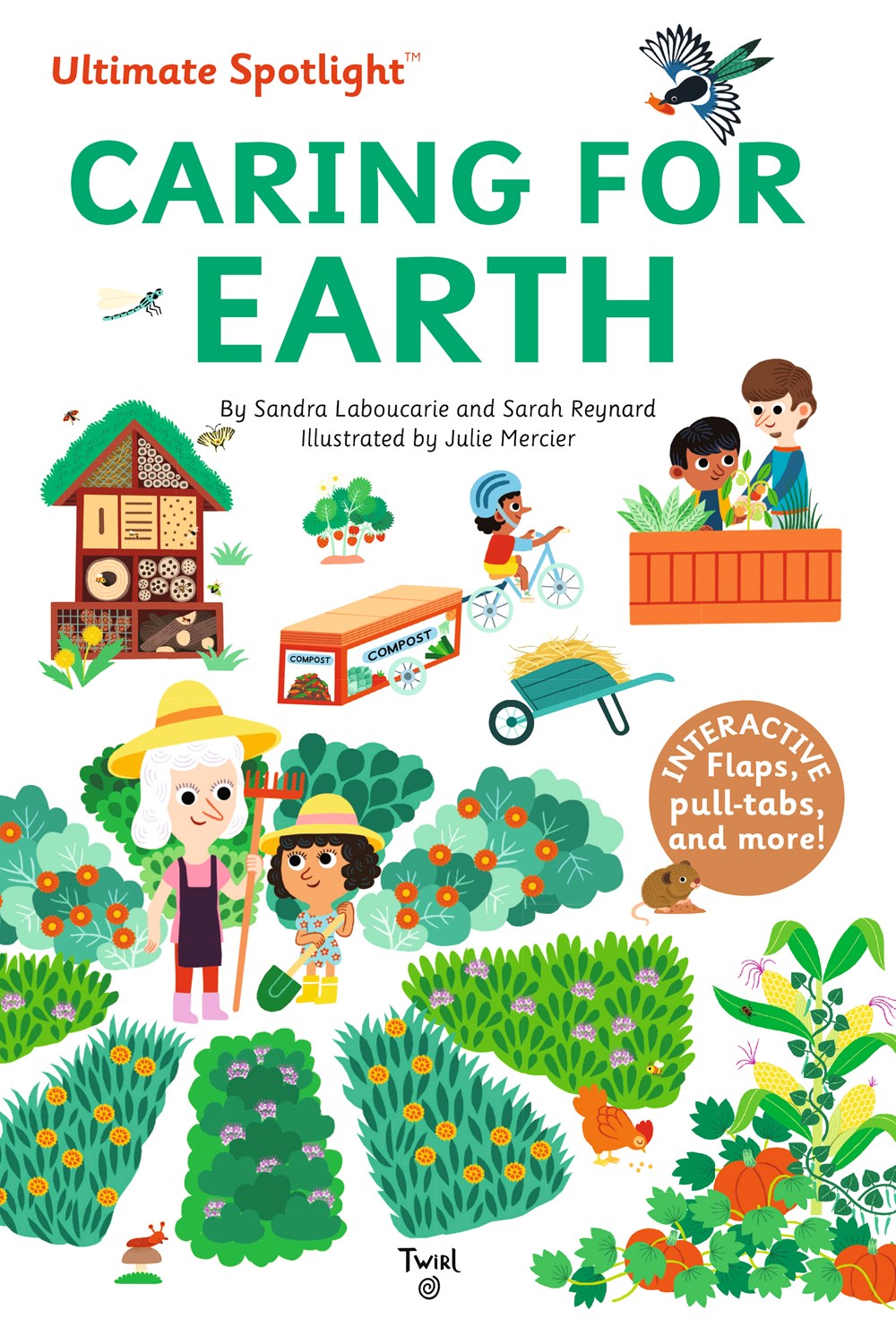
Ultimate Spotlight: Caring for Earth, by Sandra Laboucarie & Sarah Reynard/Illustrated by Julie Mercier, (March 2023, Twirl Books), $16.99, ISBN: 9791036353239

Ages 4-6

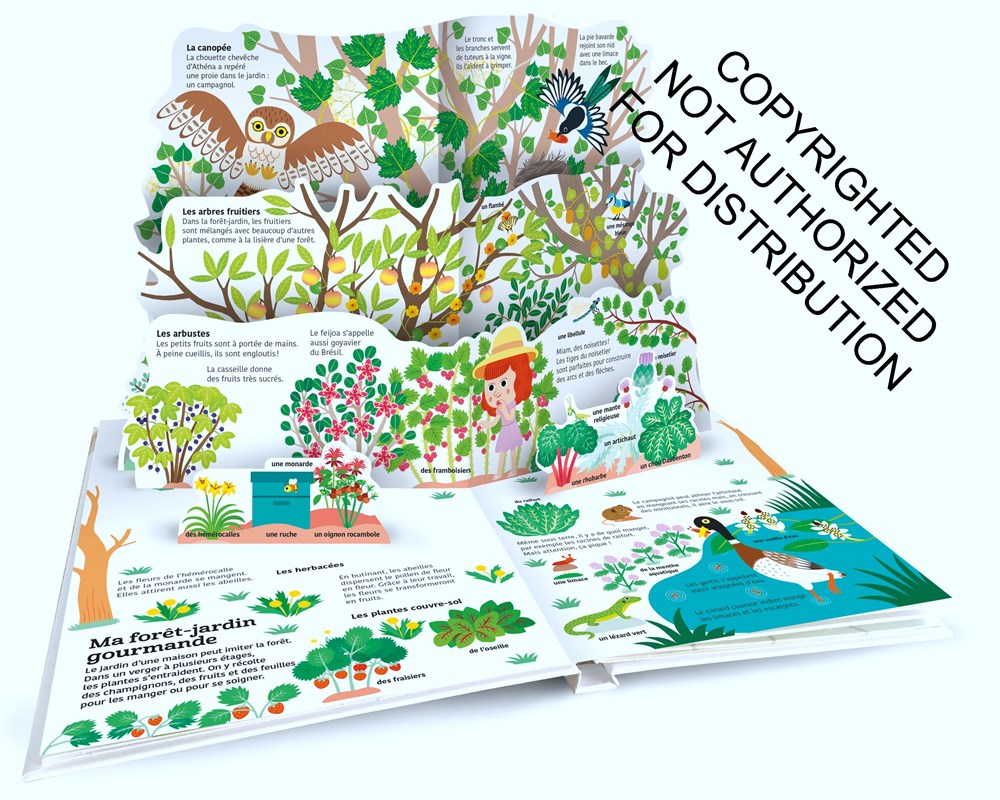
Twirl’s Ultimate Spotlight series is such fun for pre-readers and emerging readers. Loaded with interactive devices like lift-the-flaps, pull tabs, and spinners, each book is like a little adventure. Caring for Earth, the newest book in the series, is a fun and informative look into conservation and preservation. Spreads on respecting nature, creating gardens, eco-friendly living inform grown-ups and children about the many easy ways we can take action to keep our Earth green: create and support a seed library; compost food waste; switch from liquid soap to bar soap, and take a healthy walk when you can! Spreads on gardening show readers the different layers helpful in creating a layered ecosystem. Translated from the original French, the verbiage runs smoothly and is easy to read to younger learners. Flaps and pulls are sturdy and hold up to use (but I always suggest keeping an extra in your reference collection if you want to hold one for storytime and STEM programming). A good addition to a very fun series.
 

Hello Hummingbirds: Read and play in the tree!, by Hannah Rogge/Illustrated by Emily Dove, (May 2023, Chronicle Books), $12.99, ISBN: 9781797210094

Ages 2-4

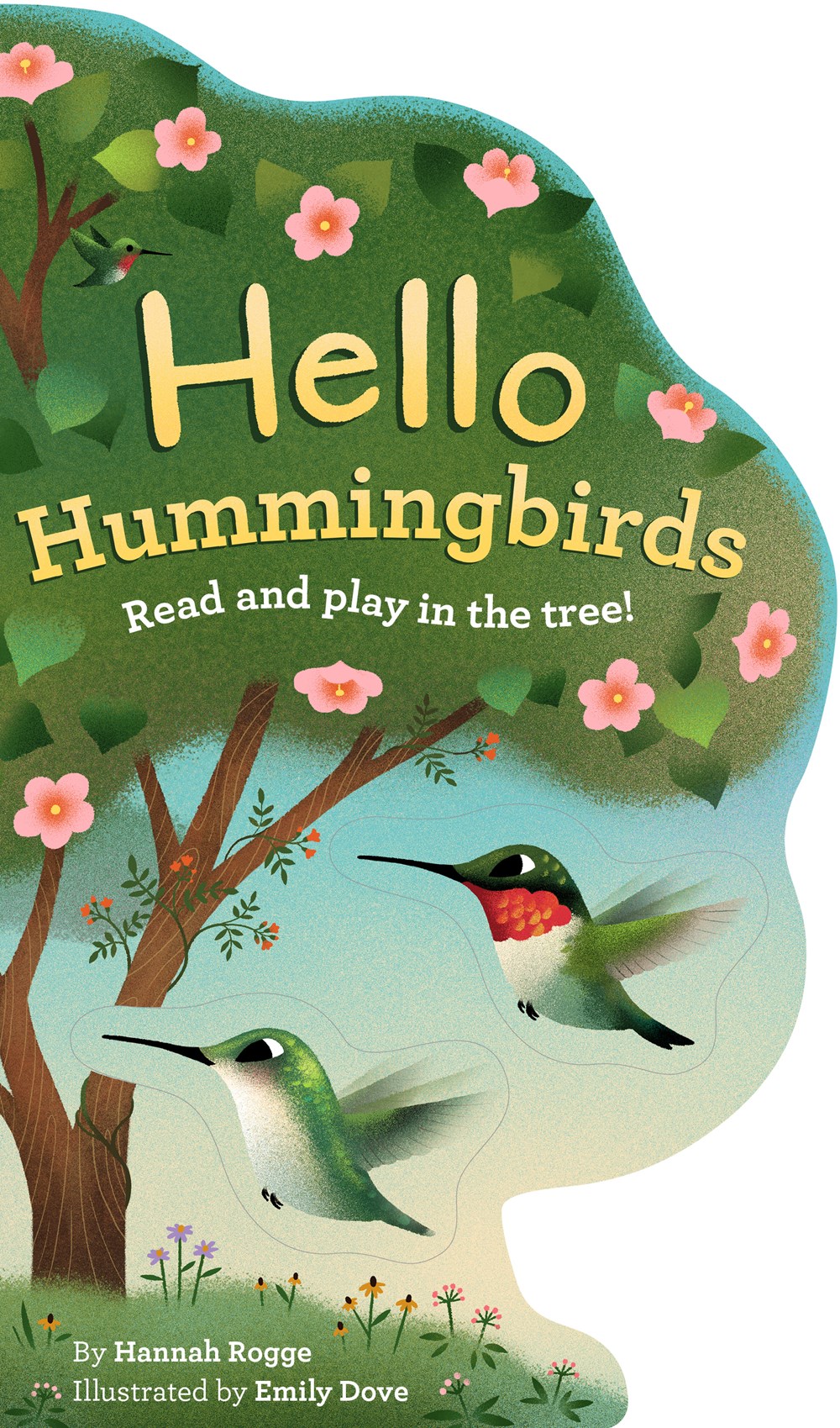
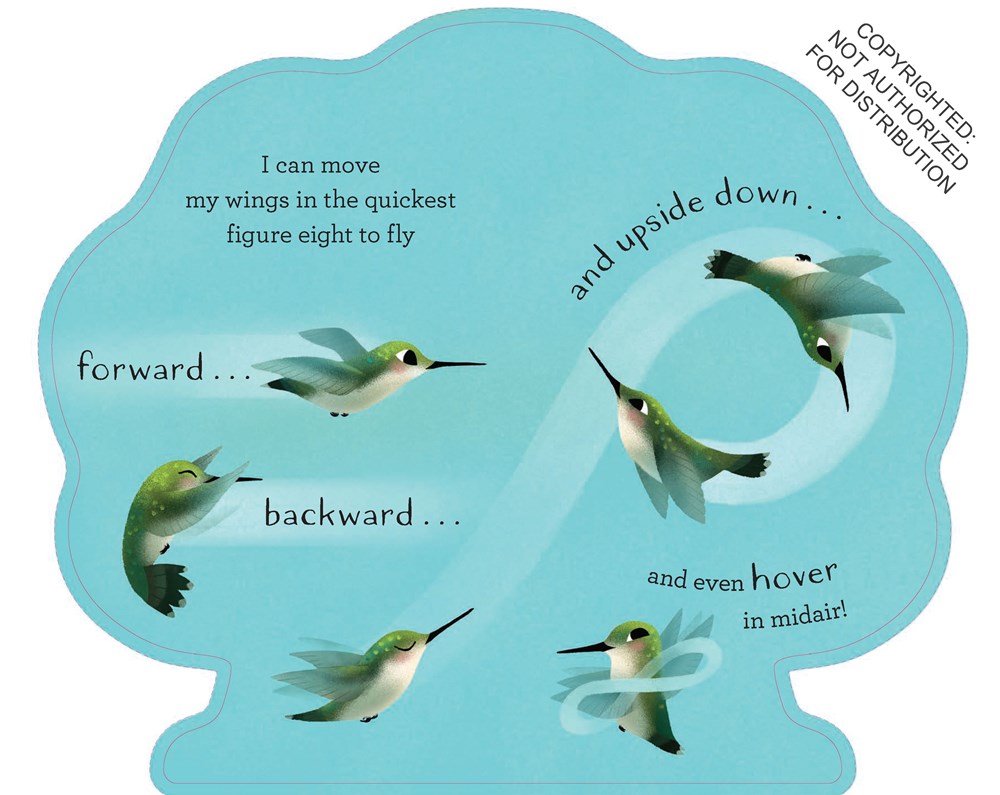
This adorable book comes with two hummingbirds, attached to ribbons, that readers can use to swoop and play with the hummingbird narrator. A friendly hummingbird greets readers and takes them through a day in the life: swooping and flying, enjoying flower nectar, sheltering and building a nest. Quick, fun facts thread through the narrative, while the colorful artwork and playful fonts engage readers. The book stands up and pages open to become a tree. The pages are sturdy and the ribbons seem to hold up to extra tugging, making this a good storytime/playtime choice.
Let’s Go to Color Camp!: Beginning Baby, by Nicola Slater, (June 2023, Twirl Books), $12.99, ISBN: 9781797218724

Ages 0-3

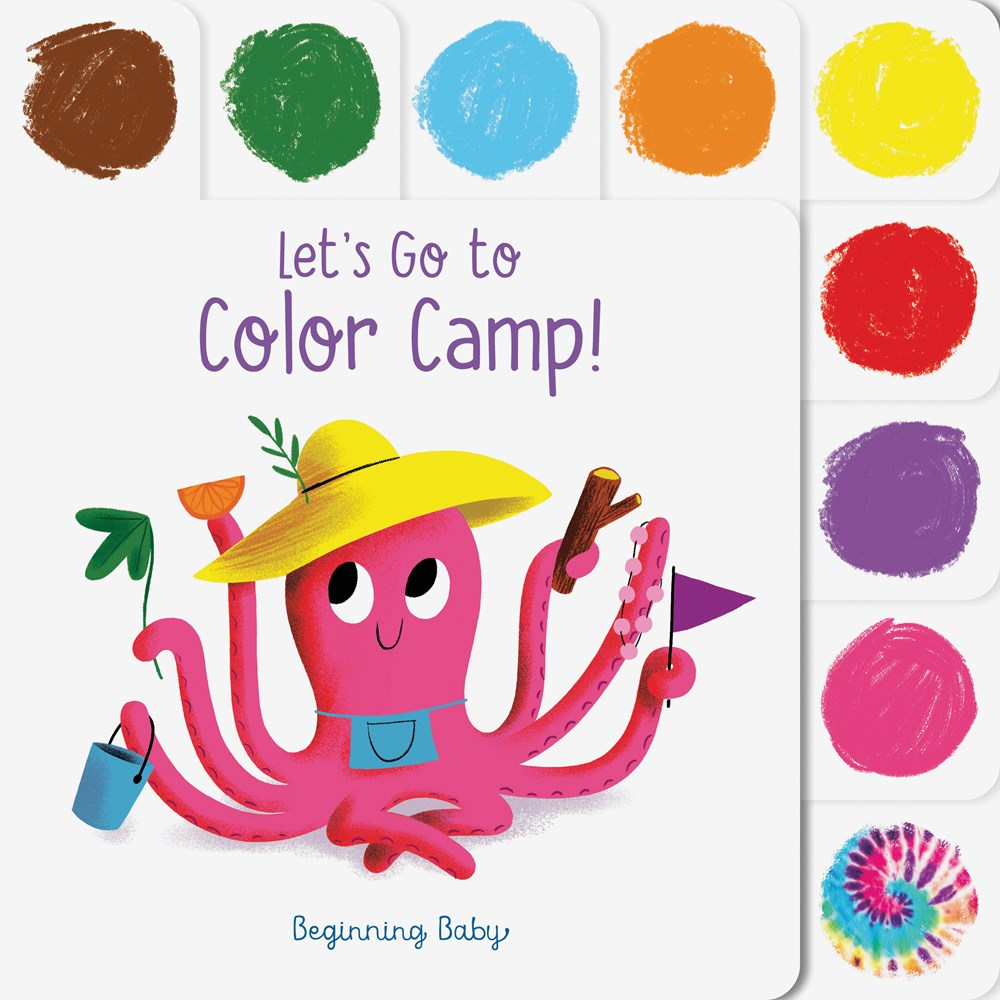
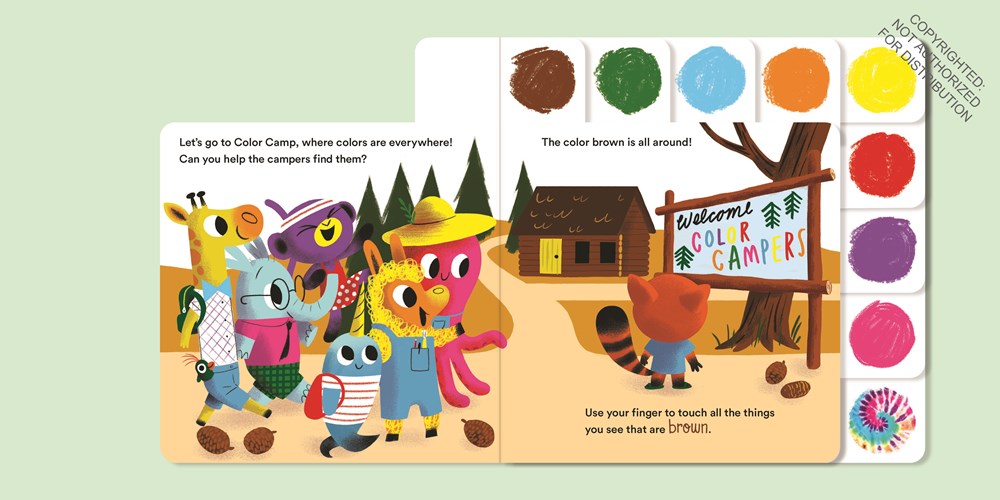
The Beginning Baby friends return on a trip to Color Camp – and they need help identifying colors! Tabbed flaps with colors help children turn to a favorite color, or they can page through the story where they’re invited to identify colors in the camp surroundings as the Beginning Baby friends paint, eat lunch, go swimming, and enjoy a day at camp. The retro art and expressive, friendly animals are eye-catching, and the sturdy pages will hold up to multiple readings. Great for a read-aloud and quiet skill-building, this is a fun addition to a fun series.
 

Posted in Intermediate, Non-Fiction, picture books

New in the Nature Book series: A Shell is Cozy

A Shell is Cozy, by Dianna Hutts Aston/Illustrated by Sylvia Long, (May 2023, Chronicle Books), $18.99, ISBN: 9781797212470

Ages 5-8

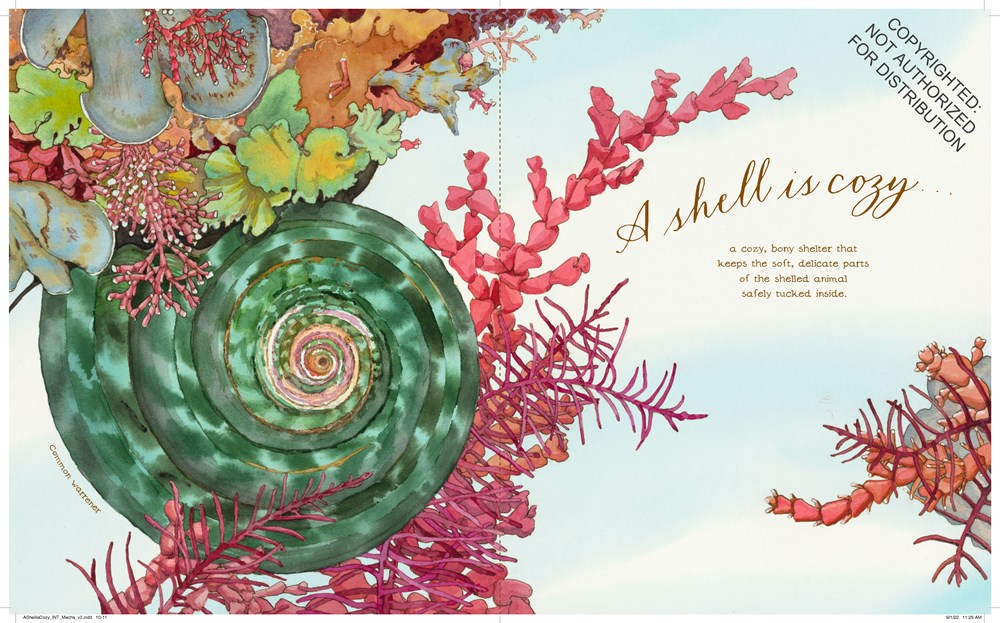
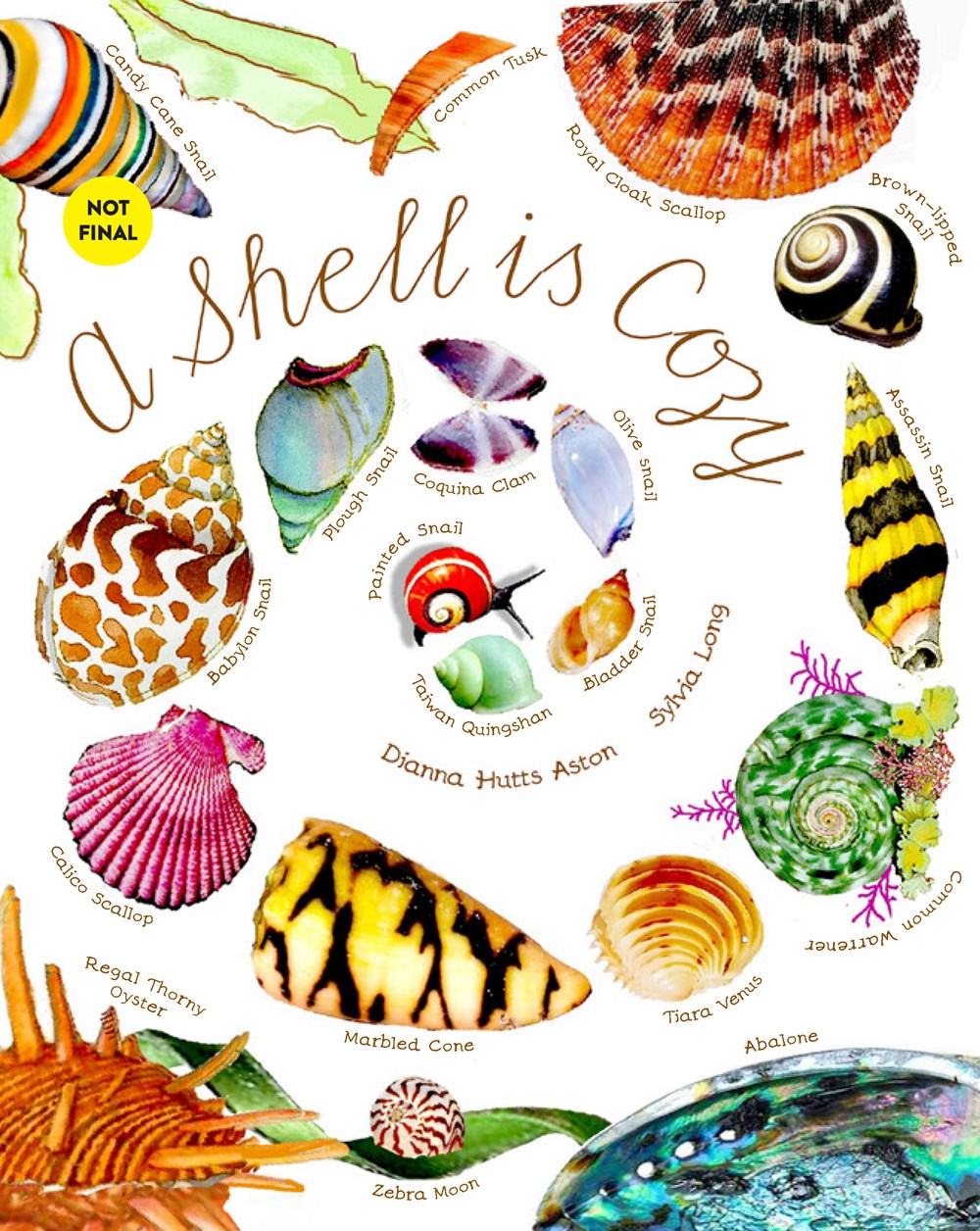
Enjoy a study on the world of shells in the newest entry in Aston and Long’s Nature Books series. Ink and watercolor illustrations bring the many types of shells to life; Aston moves between brief and meaningful observations – “A shell is cozy”; “A shell is everywhere”; “A shell is athletic” – and more informative explanations to explain her observations. Cursive font poses the initial observations; smaller, print text the explanations. Each shell is labeled, helping facilitate understanding and knowledge. Aston writes to educate and to delight, including facts like jazz musician Steve Turre using “the same shell instrument… as his Aztec ancestors did…”, or that sea scallops “clap” their shells to swim away from predators. A great addition to a long-standing, popular natural world series.

Create an activity pack with a seek and find sheet from Education.com, a set of seashell identification cards from Cara Ratner on TeachersPayTeachers, and this field journal from the American Museum of Natural History.


A Beetle is Shy, by Dianna Hutts Aston/Illustrated by Sylvia Long, (May 2023, Chronicle Books), $7.99, ISBN: 9781797215877

Ages 5-8

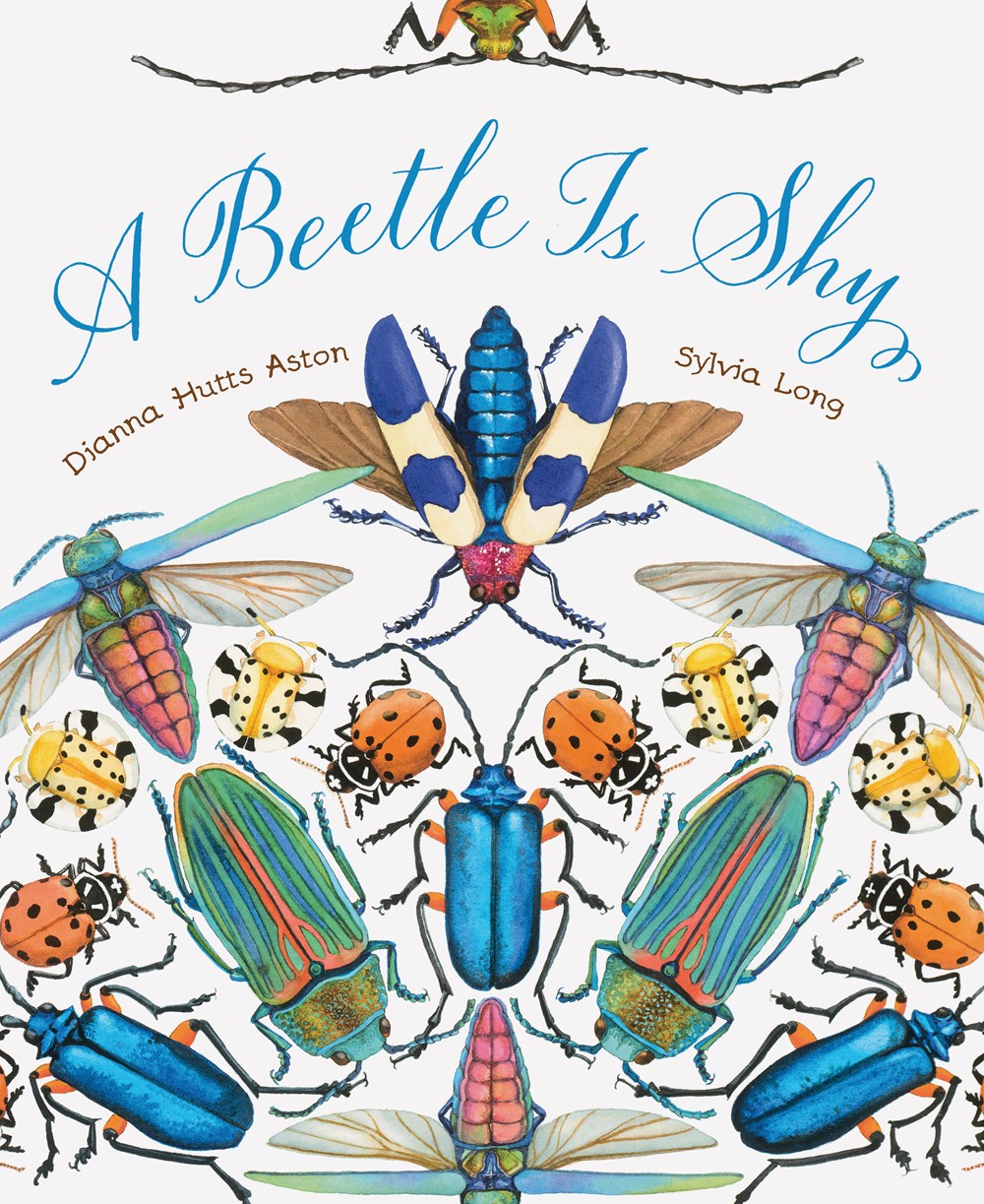
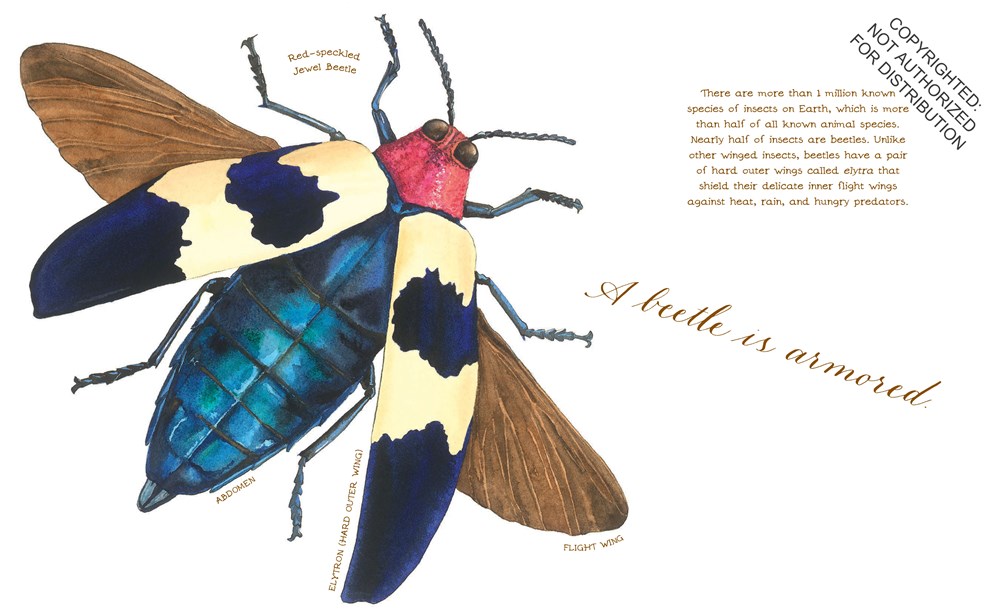
The softcover edition of the 2016 book, A Beetle is Shy, hits shelves this week and is a good choice for libraries that need a backup or whose budgets are facing some challenges. Here, Aston and Long introduce readers to the many types of beetles: their life cycles, their sizes, where and how they live. They touch on the beetle’s prehistoric origins, with a beautiful rendering of beetles preserved in amber, and discuss the many areas of the world where beetles are on the menu! The ink and watercolor art is breathtaking, with vibrant colors truly showing off beetle’s jewel-like appearances. Scripted verse observations, like “A beetle is tasty”; “A beetle is prehistoric”; “A beetle is a digger… a runner… a hopper… or a swimmer” lead to brief informational text to explain. A great addition to your nature, STEM, and insect collection.

Do you have bug fans, or want to do a program on insects? You can put together a fun learning activity pack with this Beetle Mania activity from Education.com, a beetle coloring sheet, also from Education.com, a Build a Stag Beetle activity from Teaching Resources by AJ, and a beetle lifecycle activity sheet from itsMamaMiller, both from TeachersPayTeachers. DK has a good Beetle Facts for Kids webpage, and NatGeo Kids has fact pages on both the stag beetle and the dung beetle.

Posted in Fantasy, Horror, Teen, Tween Reads, Young Adult/New Adult

Excellent Speculative Fiction: The Hitherto Secret Experiments of Marie Curie

The Hitherto Secret Experiments of Marie Curie, edited by Bryan Thomas Schmidt, (March 2023, Blackstone Publishing), $18.99, ISBN: 9781665047036

Ages 12-17

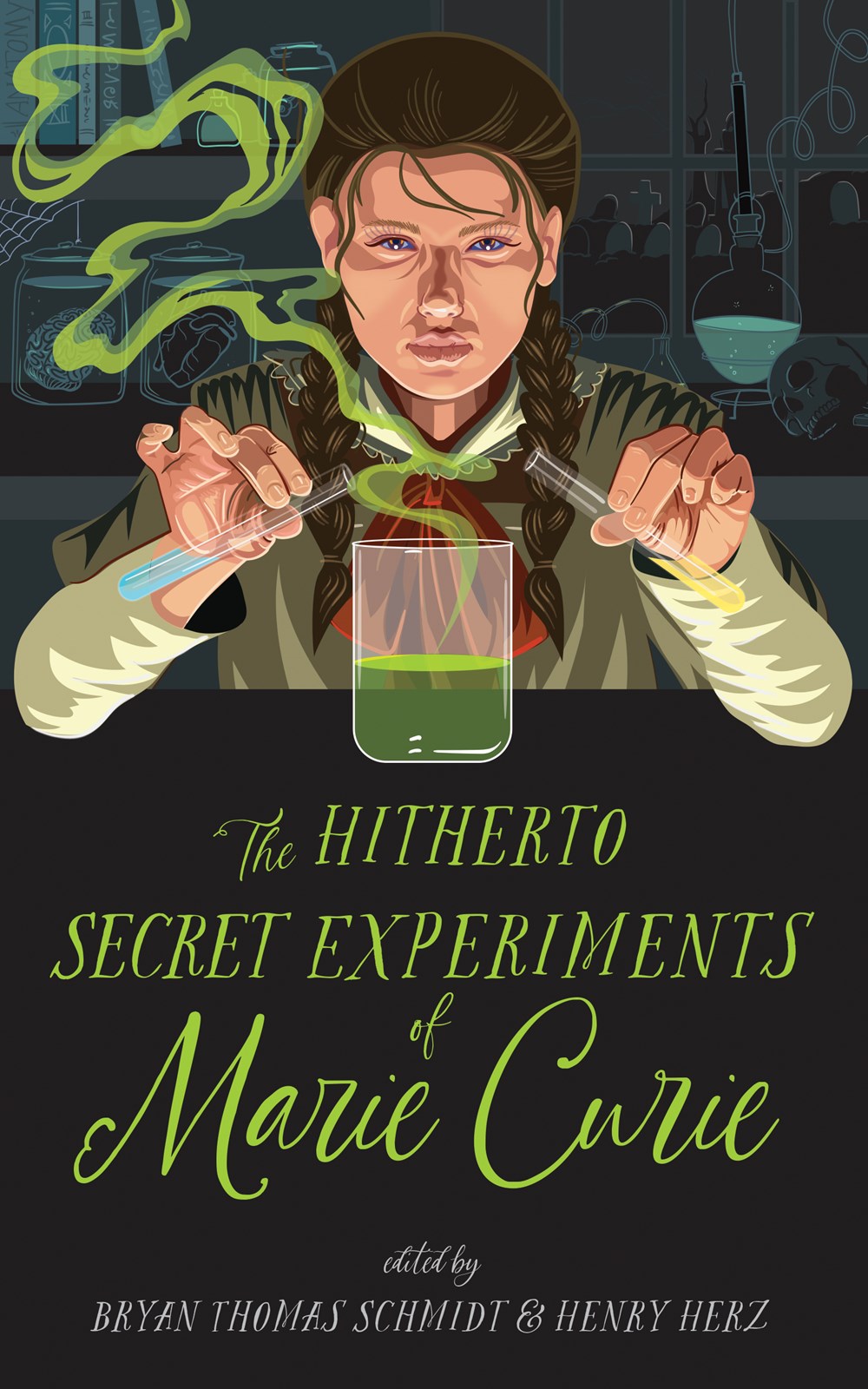
An anthology that puts the science in science fiction, The Hitherto Secret Experiments of Marie Curie brings together 20 stories by standout names – Jane Yolen, Scott Sigler, and Jonathan Maberry, to name a few – who spin dark stories about Nobel Prize winning physicist Marie Curie. Driven largely by the childhood losses of her mother and sister, the stories and poetry in Hitherto dream of scenarios that formed Curie. Set in her young adolescence, there are dark tales, supernatural tales, and straight-up unnerving tales, with several mainstays: Curie’s break with religion, the Russian occupation of her beloved Poland, and her dedication to science and learning. Stories are rooted in science, and many include Science Notes to clarify the divergence of fact and fiction. Run from the whimsical, like Alethea Kontis’s “Marya’s Monster”, where Curie confronts the literal monster under her bed with level-headedness, to the bittersweet, as with Seanan McGuire’s “Uncrowned Kings”, where Curie battles the disease-carrying beast that’s infected her town. Stories like Henry Herz’s “Cheating Death” take a turn into horror, where Curie’s obsession with halting Death leads her to disturbing experimentation, and Christine Taylor-Butler’s “Retribution” is a science murder mystery (minus the mystery).

Every single story here is an excellent read, with something for dark fantasy, horror, and thriller fans alike. Science fans will rejoice at having Marie Curie front and center in her own adventures (I know I did), and resources for further reading keeps the momentum going, with books about Curie, women in STEM, and websites to explore. An excellent choice for YA collections.

Posted in Intermediate, Non-Fiction, picture books

What About…? Great series for developing minds

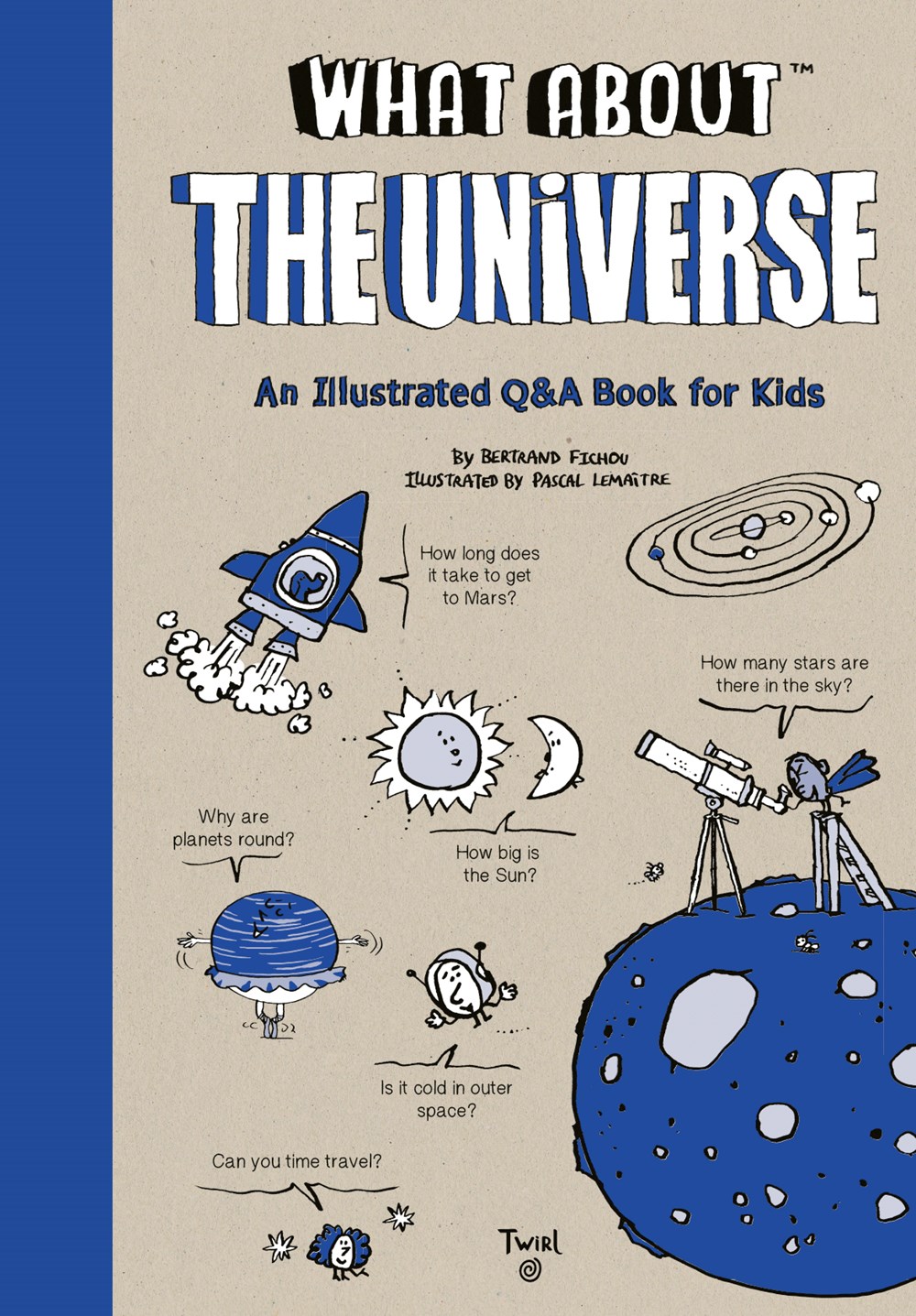
Twirl Books has been great for producing high-quality, fun, and educational board books for the littlest learners. Their What About… series, originally published in France, skews slightly older and are “Illustrated Q&A Book[s] for Kids”.

What About: The Universe, by Bertrand Fichou/Illustrated by Pascal Lemaître, (Nov. 2022, Twirl Books), $16.99, ISBN: 9791036345159

Ages 7-11

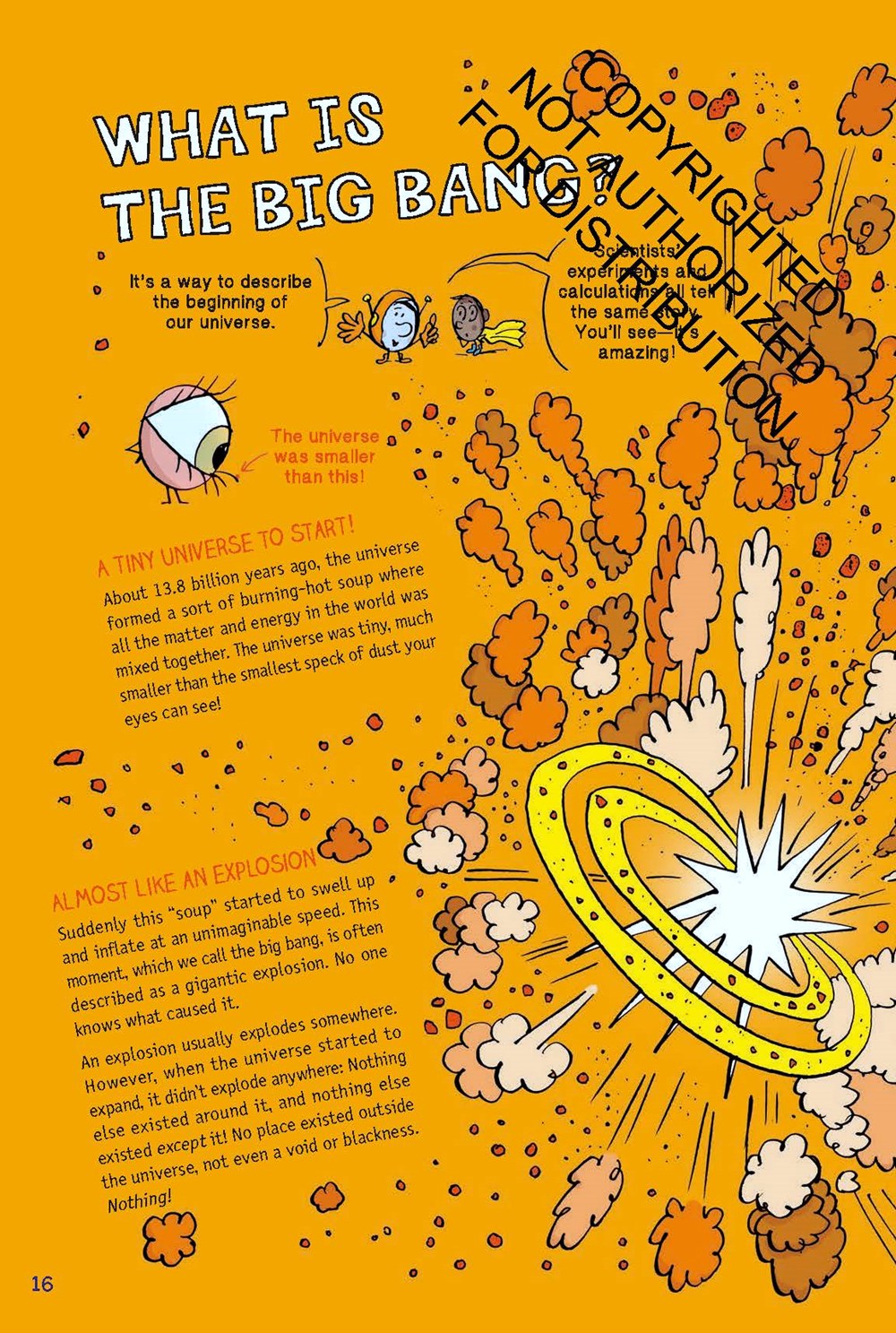
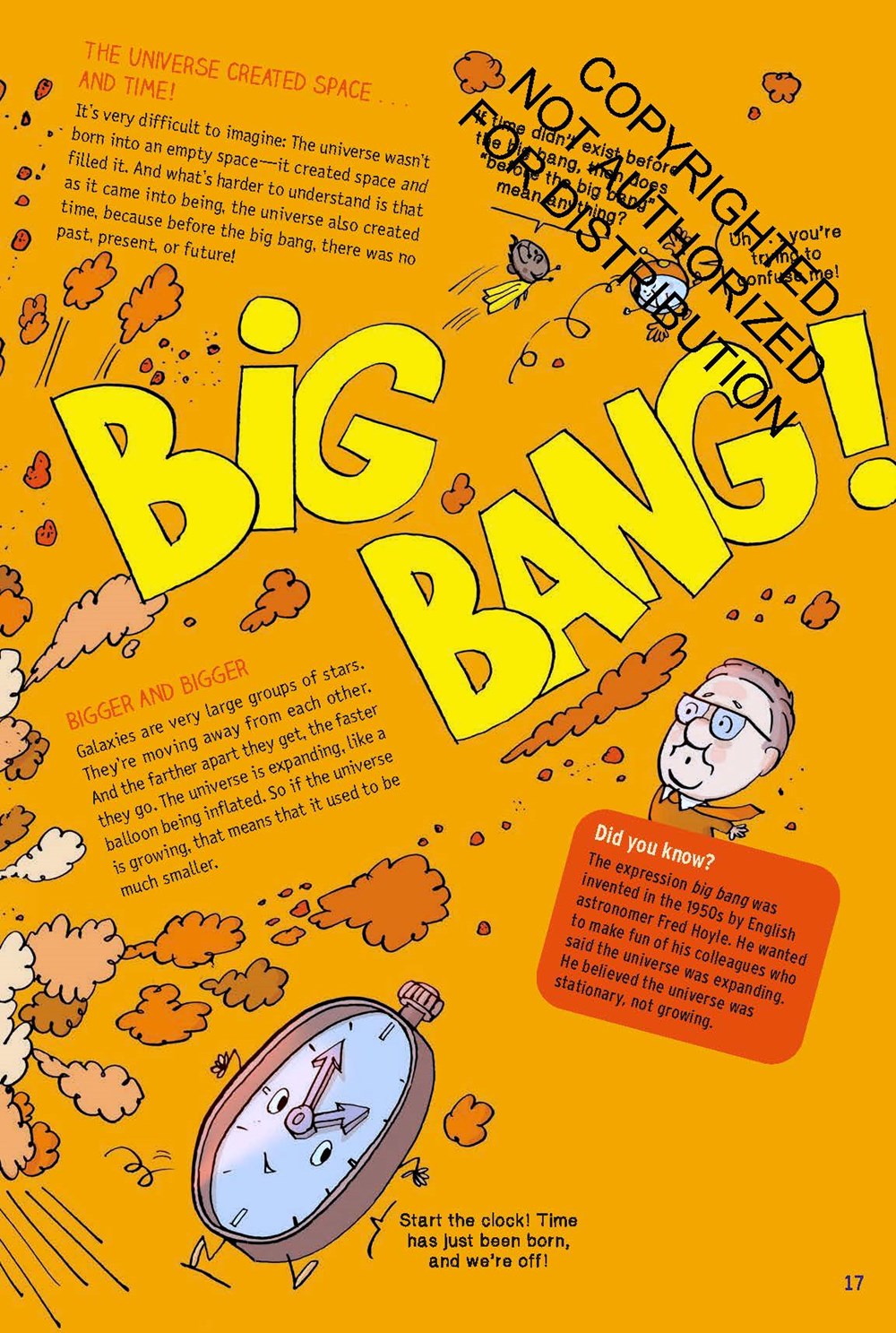
If you’ve been around kids, you’ve heard the questions: “Why don’t people on the other side of Earth fall into space?” “Is it cold in space?” “What’s in our solar system?” These questions, and many more, get answered thoughtfully and visually in What About the Universe, which begins with a glossary. I love this: get the vocabulary up front, preparing kids for words they’re going to see along the way! Answers are broken up into bite-sized, step-by-step responses, hopefully answering additional questions that pop up along the way. For instance, the answer to “How are stars born?” goes through a 5-step answer: “1) a nebula drifts through space; 2) the nebula shrinks, 3) everything starts to heat up; 4) the star ignites, and 5) planets form around the star”. Visuals make each concept easier to comprehend, and additional fun facts provide deeper context. Colorful cartoon artwork makes learning fun. An index makes searching for specific information easier, and a Table of Contents at the beginning helps readers locate their big questions with no fuss. A very good choice for reference and STEM collections.

I’m enjoying putting together activity packs these days; if you are, too, consider a few NASA coloring pages, a planets wordsearch from Ana DeSousa on TeachersPayTeachers, and this planet order worksheet from abunchofbrinsons on TeachersPayTeachers.  Have them available for any of your space fans!


What About: Philosophy, by Gwénaëlle Boulet & Anne-Sophie Chilard/Illustrated by Pascal Lemaître, (May 2023, Twirl Books), $16.99, ISBN: 9791036353086

Ages 7-11

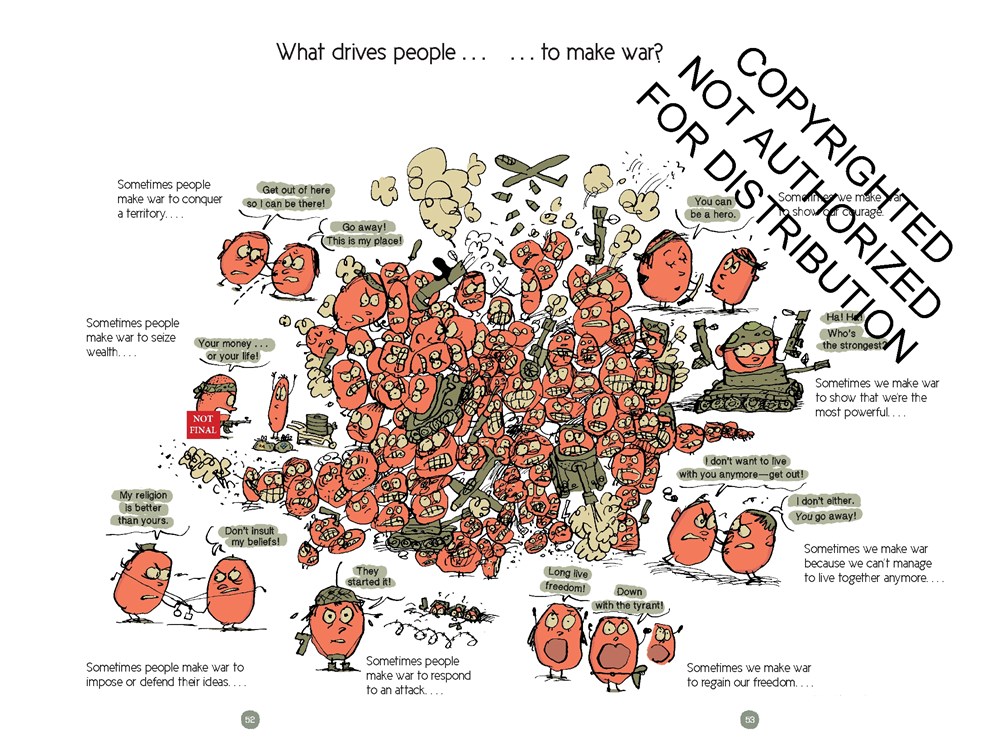
Kids are like mini-philosophers. Think of the big things they think about: “Why are there wars?” “What’s is fair or unfair?” “Why do I have to go to school?” There are 16 big questions in this book, all illustrated and considered with respect to the reader. Beginning with the biggie: “Why do humans exist?”, the book goes through age-appropriate explanations that consider existential theories and being self-aware. The authors explore concepts like being in love, being brave, and being free; what money is and why we use it, and abstract concepts like time.  Explanations are factual, non-judgmental, and age-appropriate, so younger learners will more easily be able to follow along and gain deeper understanding of emotions like anger or jealousy and how it makes a person feel. Overall, a good addition to the series and a good attempt at putting some big questions into context for younger readers. There is a table of contents, but no index in this volume.

PLATO (Philosophy Learning and Teaching Organization) is an organization that offers philosophy and ethics programming to students, educators, and families. Their philosophy toolkit offers free, downloadable lesson plans, organized by grade level, that you can share with your families and school partners.

Posted in Middle Grade, Non-Fiction, Non-fiction, Tween Reads

New nonfiction for Back to School

So the kids have been back to school for a minute. My Corona Kids are back in the library in full force – where were you all Summer, my friends? – and roaming the nonfiction stacks in search of stuff that interests them. I love this time of year, because this is the time where kids come in looking for nonfiction that relates to things they may be starting to learn about, or come across in school; whether other kids are talking about things they pick up on, they’ve seen something either in the halls or the library, or just noticed on TV. They’re in a learning frame of mind, and want nonfiction that sparks their brains. I’ve got some good picks here to share.

National Geographic Kids Dinosaur Atlas, by National Geographic, (Sept. 2022, National Geographic Kids), $24.99, ISBN: 9781426372797

Ages 7-10

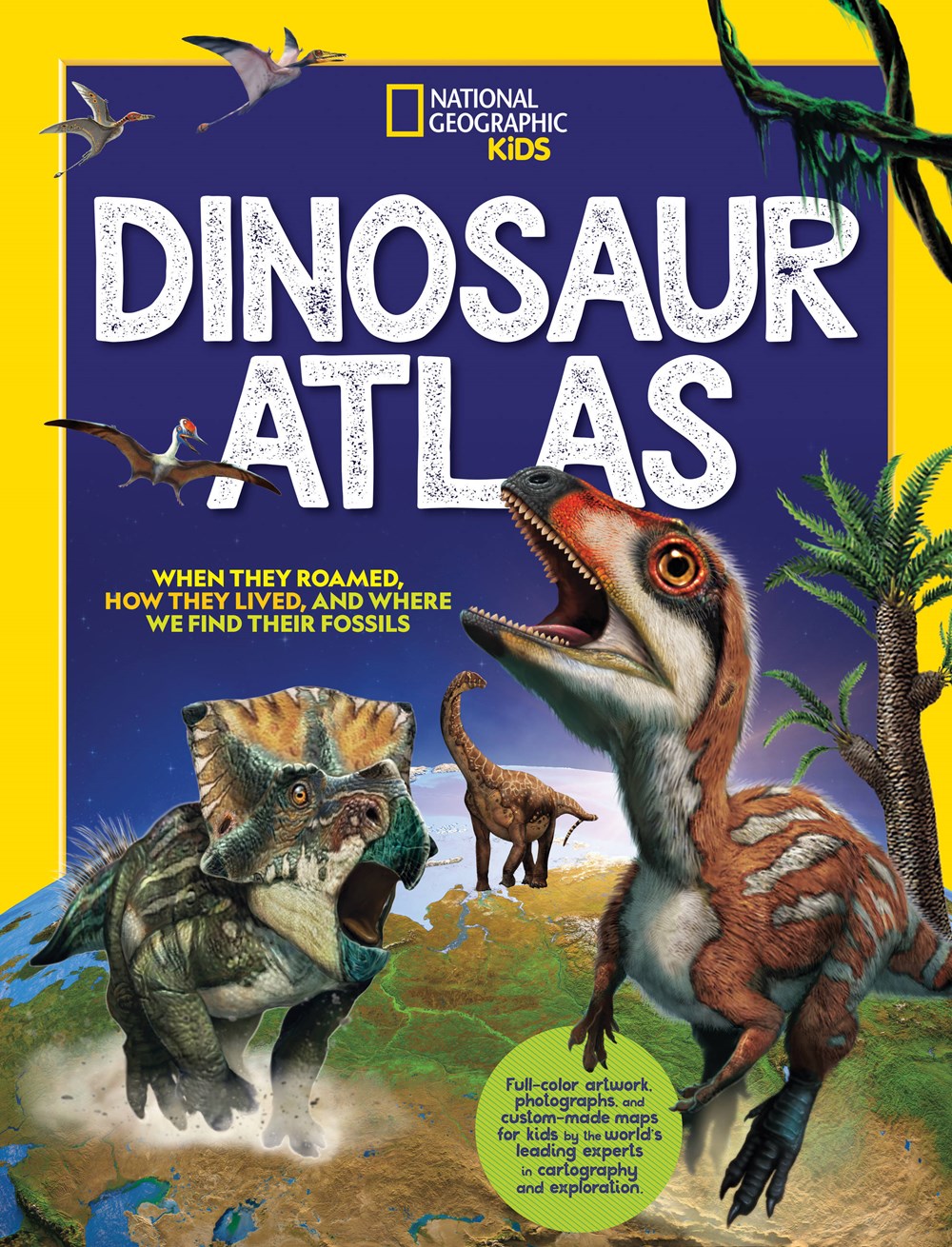
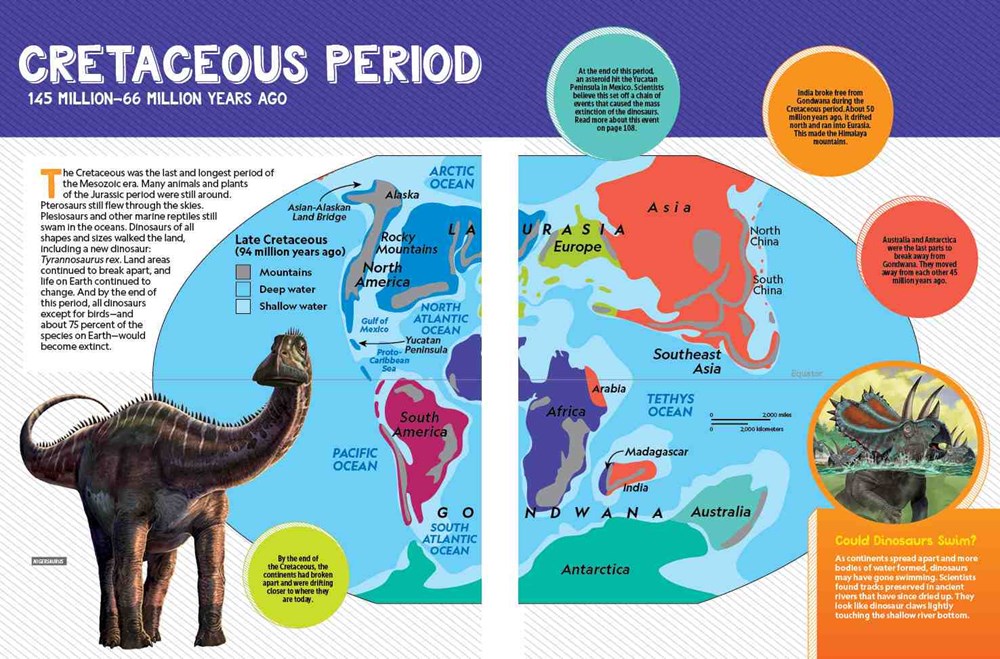
This is a no-fail, no-brainer purchase: it’s NatGeo Kids and it’s dinosaurs. Both are easily the rock stars of my nonfiction collection. The Dinosaur Atlas is everything my kids (my own and my Corona Kids) love: full-color artists’ renderings of dinosaurs (now with feathers!), vibrant color photos of fossils and fossil sites, and readable maps to highlight where featured dinosaurs lived. Organized into periods of time: Triassic, Jurassic, and Cretaceous, the “Preshistoric Planet” section is further organized into habitats, dinosaurs, and life in each era. “Finding Fossils” organizes dinosaur-centric areas of the world and further breaks down into spotlights on locations and the dinosaurs who roamed them. Fast facts, paleontologist profiles, and dino timelines run throughout the book; phonetic spelling helps reader pronounce each name. Back matter includes a Dino Dictionary, glossary, and further reading resources. This oversized reference is magic for dinosaur collections and is an essential purchase.


Can’t Get Enough Space Stuff: Fun Facts, Awesome Info, Cool Games, Silly Jokes, and More!, by National Geographic Kids, (Aug. 2022, National Geographic Kids), $14.99, ISBN: 9781426372803

Ages 7-10

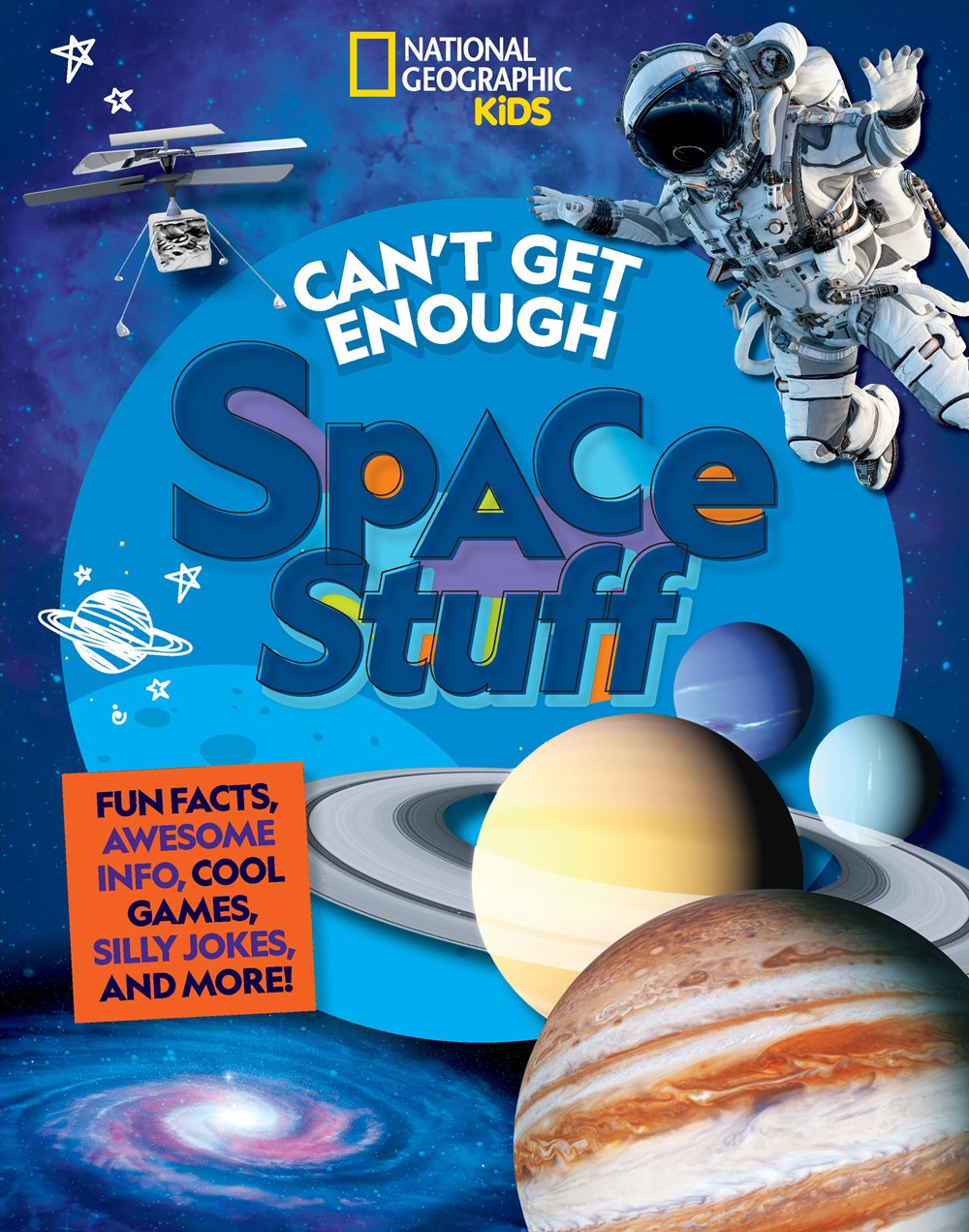
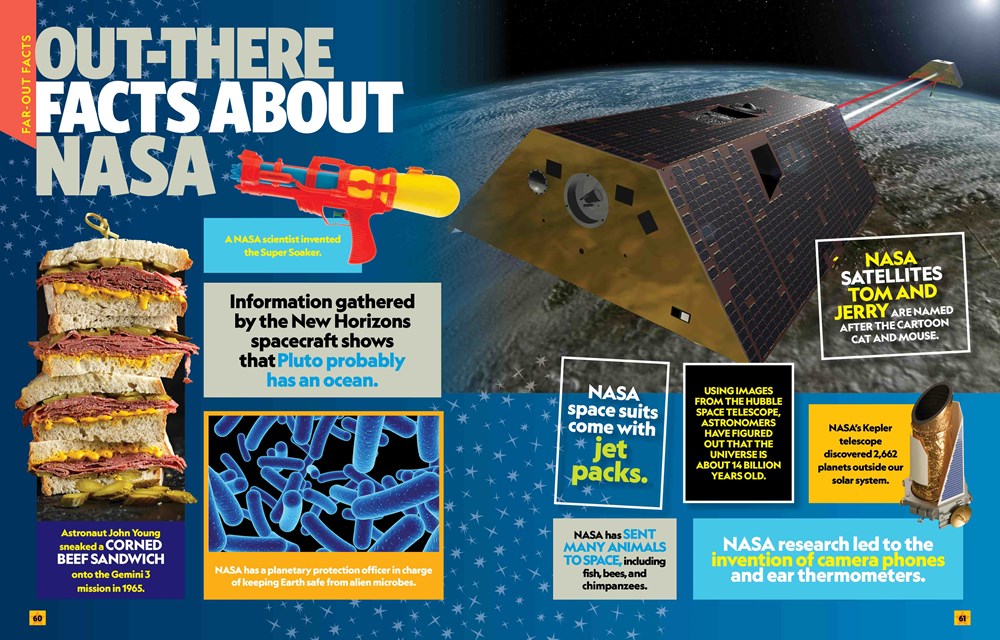
Nat Geo Kids’s Can’t Get Enough series has a new home run: Can’t Get Enough Space Stuff is loaded with photos, facts, games, and jokes about space. Great for trivia and STEM/STEAM groups: quiz your kids on astronaut facts or print out pictures of clocks to illustrate how long a day is on other planets; Try It Out! spreads help guide you and your readers through outer space crafts like a scale model of the solar system. Keep one in reference for yourself and put one in circulation. The Can’t Get Enough books are fun, loaded with facts, and just great purchases.


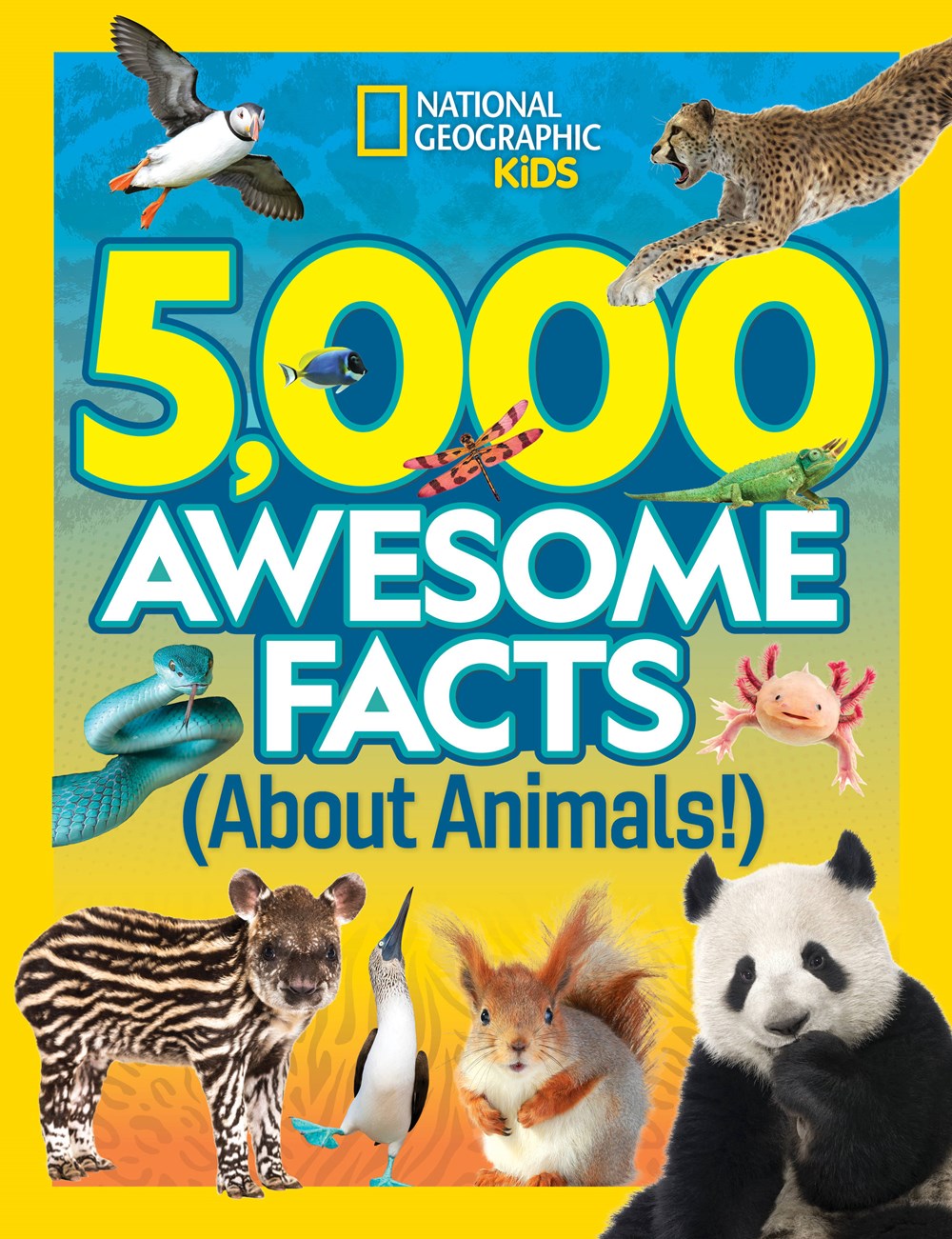
5,000 Awesome Facts About Animals, by National Geographic, (Sept. 2022, National Geographic Kids), $19.99, ISBN: 9781426372612

Ages 8-12

These facts books are a staple in my collection. My readers love fast, fun facts, accompanied by the gorgeous photos of adorable animals. This is an animal fan’s dream; a trivia fan’s delight, and a program backbone: Animal Jeopardy! Animal Question of the Day! Help, I need some extra facts for a report I’m writing on [insert animal here]! One of my Corona Kids was in last week and asked for “books with fun facts about animals”; books like this are tailor-made for those kids. Each section has a fun title to bring related facts together: “24 Burly Facts About Animal Tough Guys”; “100 Pup-ular Facts About Dogs”; “15 Facts About Animal Mascots to Cheer For”. Facts are fun and informative: Socks, the Clinton’s Presidential cat, was the first presidential pet to have a website, and the Obama’s dog, Bo, had  his own trading card. Ostriches flutter their wings to create a breeze to cool themselves down. A group of mountain gorillas is called a troop. You can have endless fun with this book, and your readers will love it.


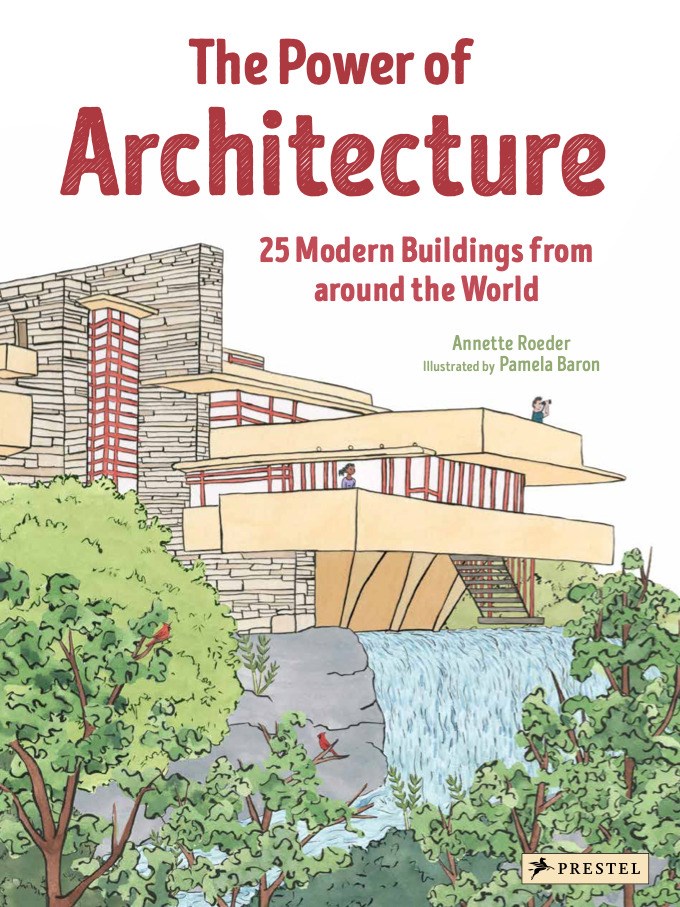
The Power of Architecture: 25 Modern Buildings from Around the World, by Annette Roeder/Illustrated by Pamela Baron (Sept. 2022, Prestel Junior), $19.95, ISBN: 9783791375144

Ages 8-12

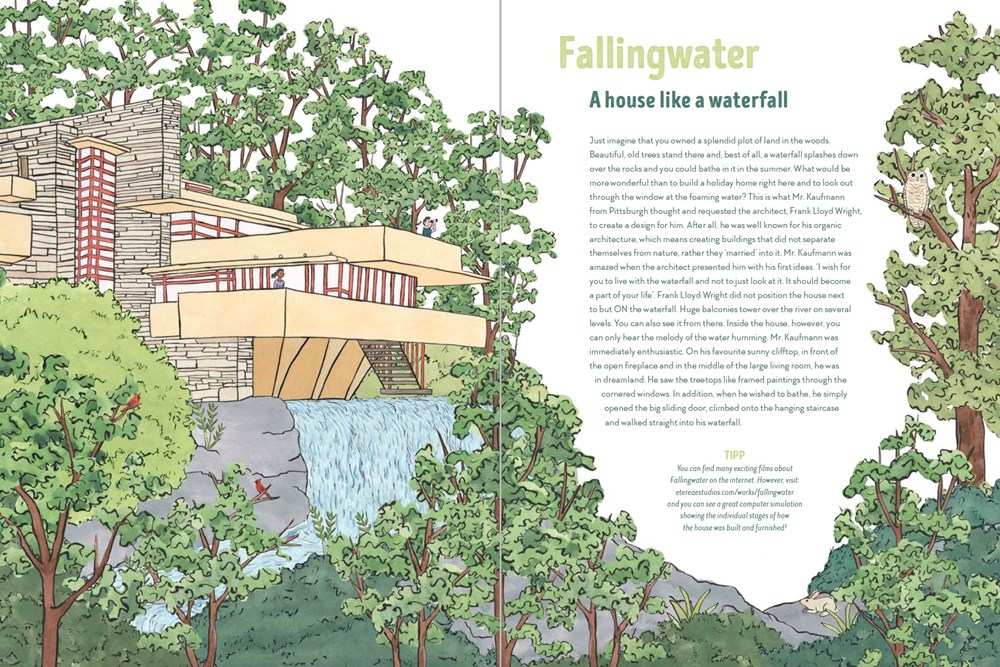
I love finding a good architecture book for middle grade. Recent picture book biographies like Maya Lin’s picture book biography, Maya Lin: Architect of Light and Lines, and Andrea Beaty’s Questioneers picture and chapter books have led to an interest in how buildings look. Plus, you know… LEGOs. The Power of Architecture showcases 25 modern buildings from all over the world: buildings like the TWA Flight Center at New York’s JFK Airport (I can confirm, it’s a beautiful building) and the Elbe Philharmonic Hall in Hamburg Germany; the scrap metal lily pads of Dandaji Regional Market in Niger, Africa, and the sustainable, environmentally beneficial Tree House in Singapore. Beautiful illustrations give each building center stage and factual, interesting text describes the buildings and what inspired their architects. Thought-provoking questions and suggestions to inspire young architects and designers run throughout the book. The beginning spread shows each building’s location on a world map and a timeline lays out each building’s construction and a biography on each architect. Prestel Junior’s books bring together art and nonfiction in the best of ways and have quickly become stars in my collection. A good purchase if you have budding builders. Put this out during your LEGO challenges and see who it inspires.

The Power of Architecture: 25 Modern Buildings from Around the World was originally published earlier this year in Germany.


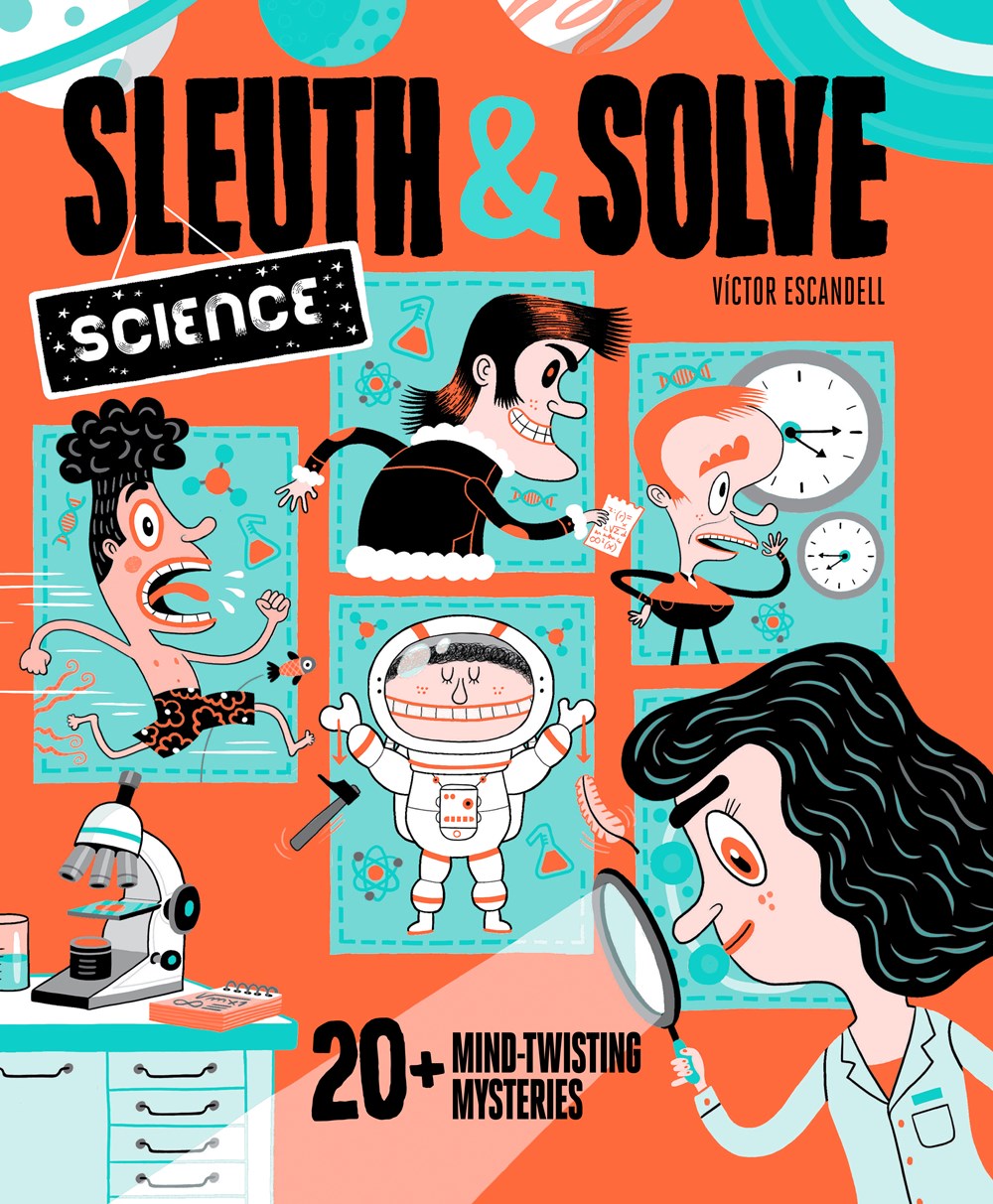
Sleuth & Solve: Science: 20+ Mind-Twisting Mysteries, by Ana Gallo/Illustrated by Victor Escandell, (Oct. 2022, Chronicle Kids), $18.99, ISBN: 9781797214559

Ages 8-12

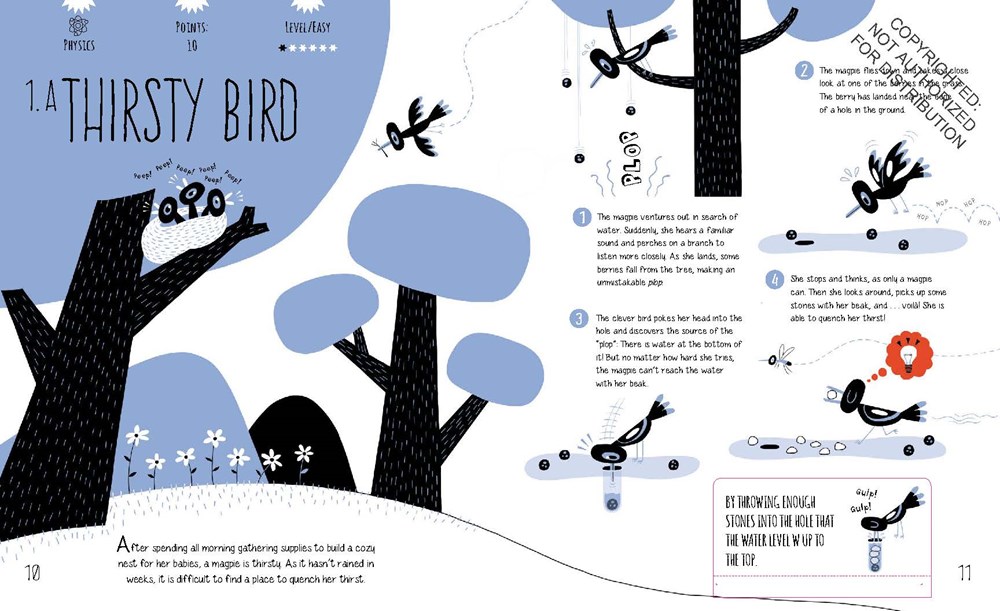
The latest Sleuth & Solve book from Ana Gallo and Victor Escandell is all about the “why”: what are the scientific causes to these 21 mysteries? Mysteries are classified by subject, with a key to the symbols used in the book. Each mystery has a difficulty grade from Easy to Difficult, and if you were interested in making this a STEM challenge (ahem!), each mystery has a point value. Mysteries are presented across every spread, with a flap disguising the solution: NO CHEATING! Mysteries include a little girl who swears she’s too sick to go to school – but what will her doctor say? Another mystery ponders whether a group of researchers will be able to set out on their journey to the polar ice caps; what does a flock of cranes have to do with this decision? The principles behind each experiment are revealed in the back matter. If you have a strong science experiment/science fair collection, this is a good one to consider.

Posted in Intermediate, Non-Fiction, picture books

I’m a Neutrino – great for science storytimes

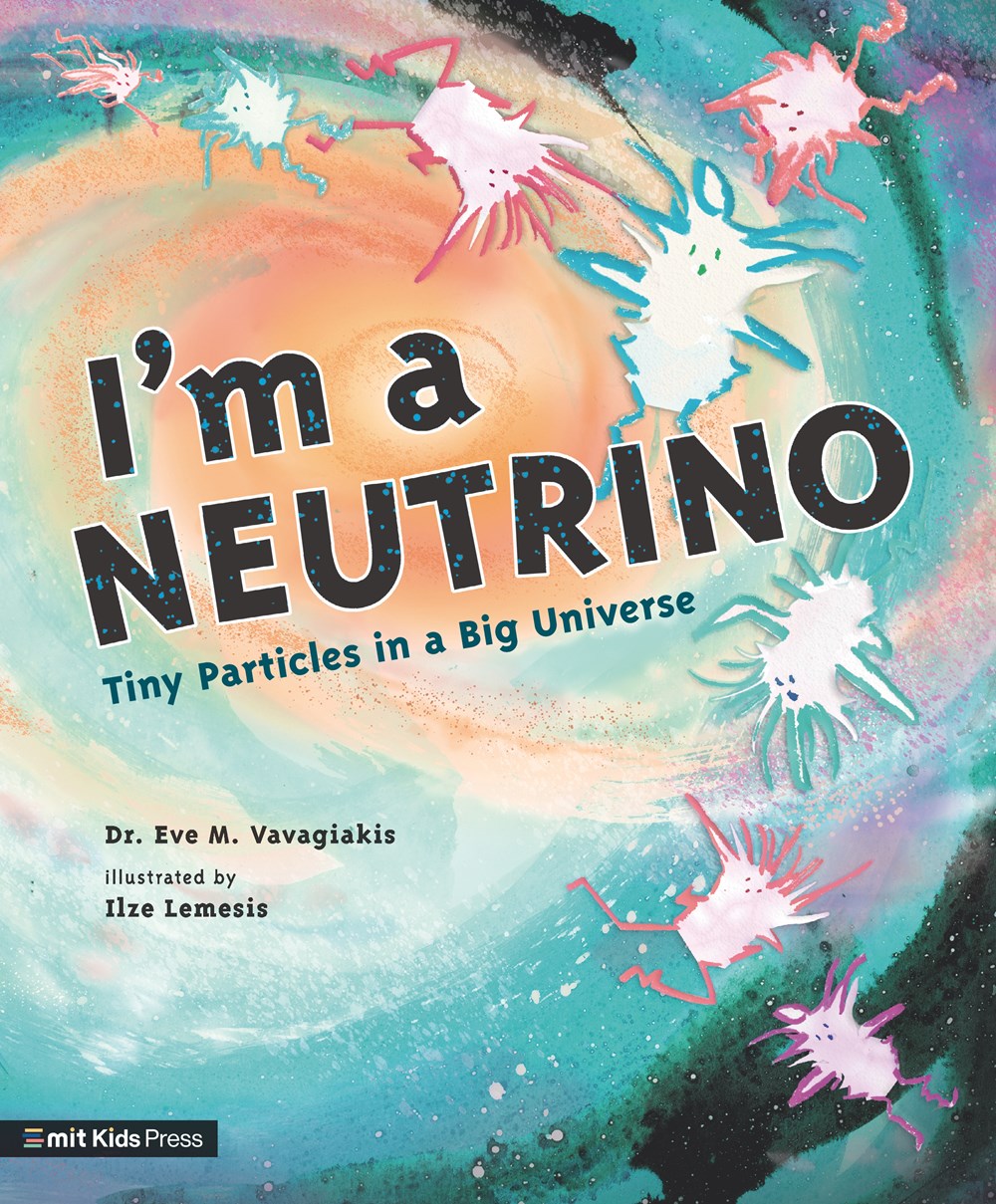
I’m a Neutrino: Tiny Particles in a Big Universe, by Dr. Eve M. Vavagiakis/Illustrated by Ilze Lemesis, (March 2022, MIT Kids Press), $18.99, ISBN: 9781536222074

Ages 7-9

If you enjoy Chris Ferrie’s Baby University books, and Ruth Spiro and Irene Chan’s Baby Loves Science board books, you’re going to flip for I’m a Neutrino, a rhyming science tale by a Cornell physicist and her illustrator mother. I’m a Neutrino  introduces burgeoning young scientists to the neutrino: “I am a particle, like electrons and light / I can pass through you without stopping my flight!” The neutrinos, depicted as bright, colorful, spiky-headed little beings, adventure throughout the story, dancing and playing across the cosmos as a diverse group of kids and adults try to unlock their mysteries. The rhyming text informs with a playful tone, and the accompanying illustrations make science exciting and fun while adding new science terms to readers’ vocabularies. A “Know Your Neutrinos” section in the back matter identifies and gives a little more factual information about the neutrinos we encounter in the story.

There isn’t a glossary of new words in this volume, so consider making some flash cards to hand out, to help readers navigate these new words. You can find more about neutrinos at Kiddle and Academic Kids.

This is the first collaboration between Dr. Vavagiakis and MIT Kids and a natural progression for readers who started reading science board books like Chris Ferrie’s and Ruth Spiro and Irene Chan’s series as toddlers and preschoolers. Great for a science storytime, Junior Discovery Club, or STEM class.

Visit Eve Vavagiakis’s webpage for more about her research and mentoring.

Posted in picture books, Preschool Reads

Earth: We’ve only got one.

What do you do when you have some really cool, new, science-y stories? You put together a supercool Science Storytime!

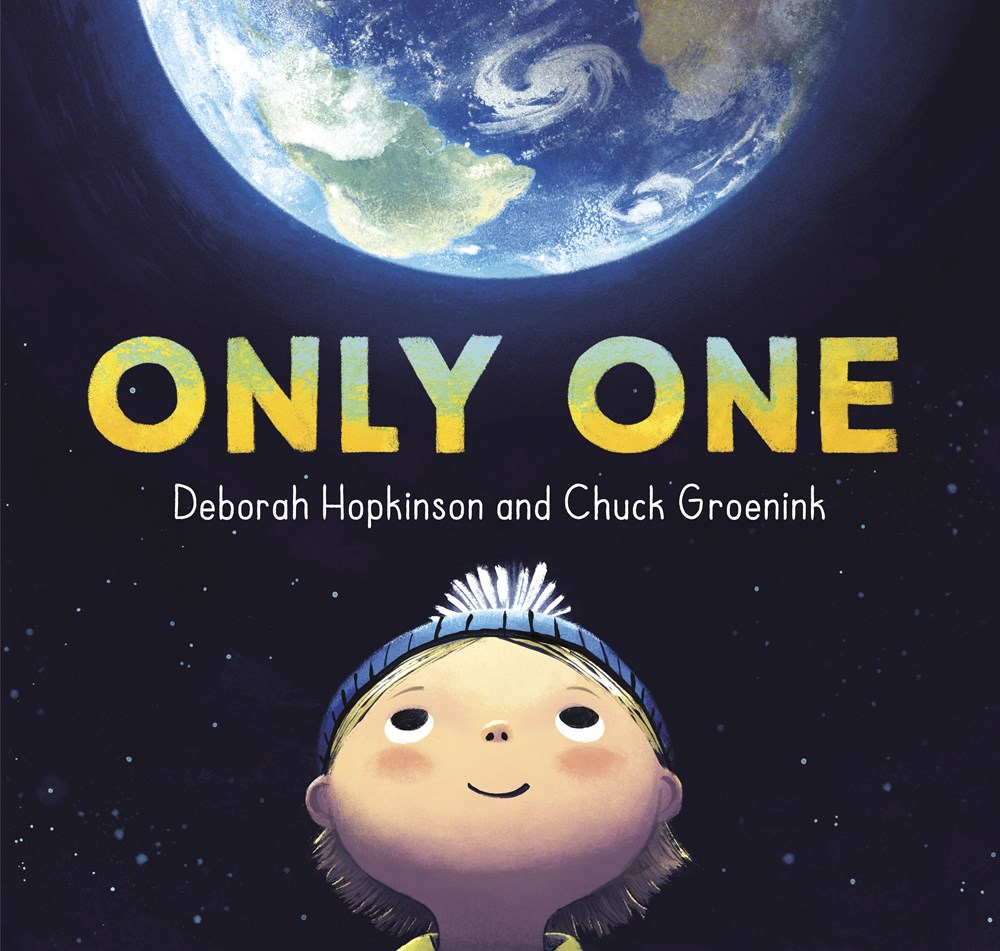
Only One, by Deborah Hopkinson and Chuck Groenik, (Apr. 2022, Anne Schwartz Books), $17.99, ISBN: 9780399557033

Ages 4-8

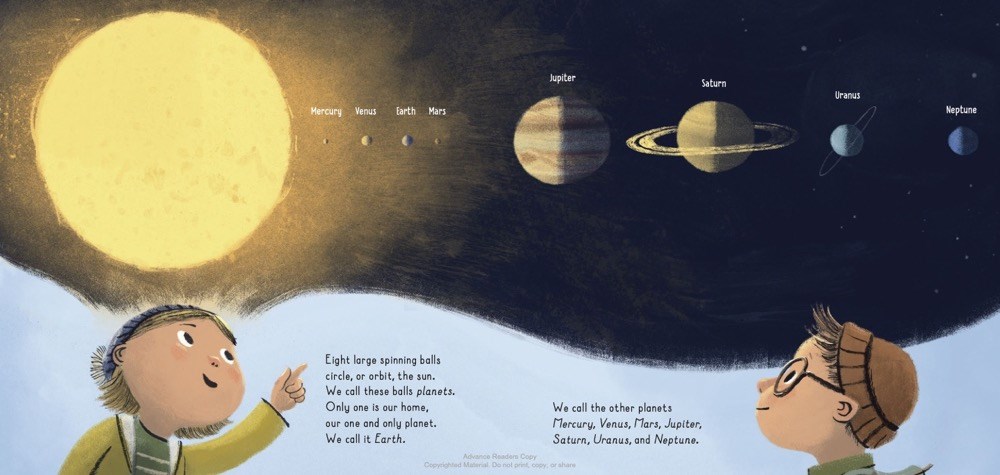
A young girl talks to her friends and family about the story of the universe from the Big Bang to the development of our big blue dot, planet Earth, and how it evolved to sustain life. As the narrative progresses, we see that she’s leading her group to a tree planting event. Only One is perfect Earth Day reading, filled with interesting observations about the formation of the universe and the planets, and about our own planet’s uniqueness and ability to host a multitude of diverse life forms: “But though there are seven billion of us, / we are unique, / with bodies, brains, fingerprints, / and feelings of our own”. Arcylic, ink, and Photoshop illustrations beautifully bring the story to life, bringing the girl’s story to life through vivid word balloons and showing the group small against the giant scale of a forest, the clouds, and the atmosphere; pulling back, a spread shifts to show a diverse group of people coming together to plant trees against a forest shore. Additional resources guide readers to more information about caring for our planet and about climate change. A lovely reminder that we have one planet and to be mindful stewards, while empowering readers to take action. Miss Becca’s Classroom on TeachersPayTeachers has a free downloadable climate change activism activity that would make a good display piece or storytime handout for readers in grades K-2.


Posted in Fiction, Middle Grade, Tween Reads

Tales from the TBR: The Mutant Mushroom Takeover

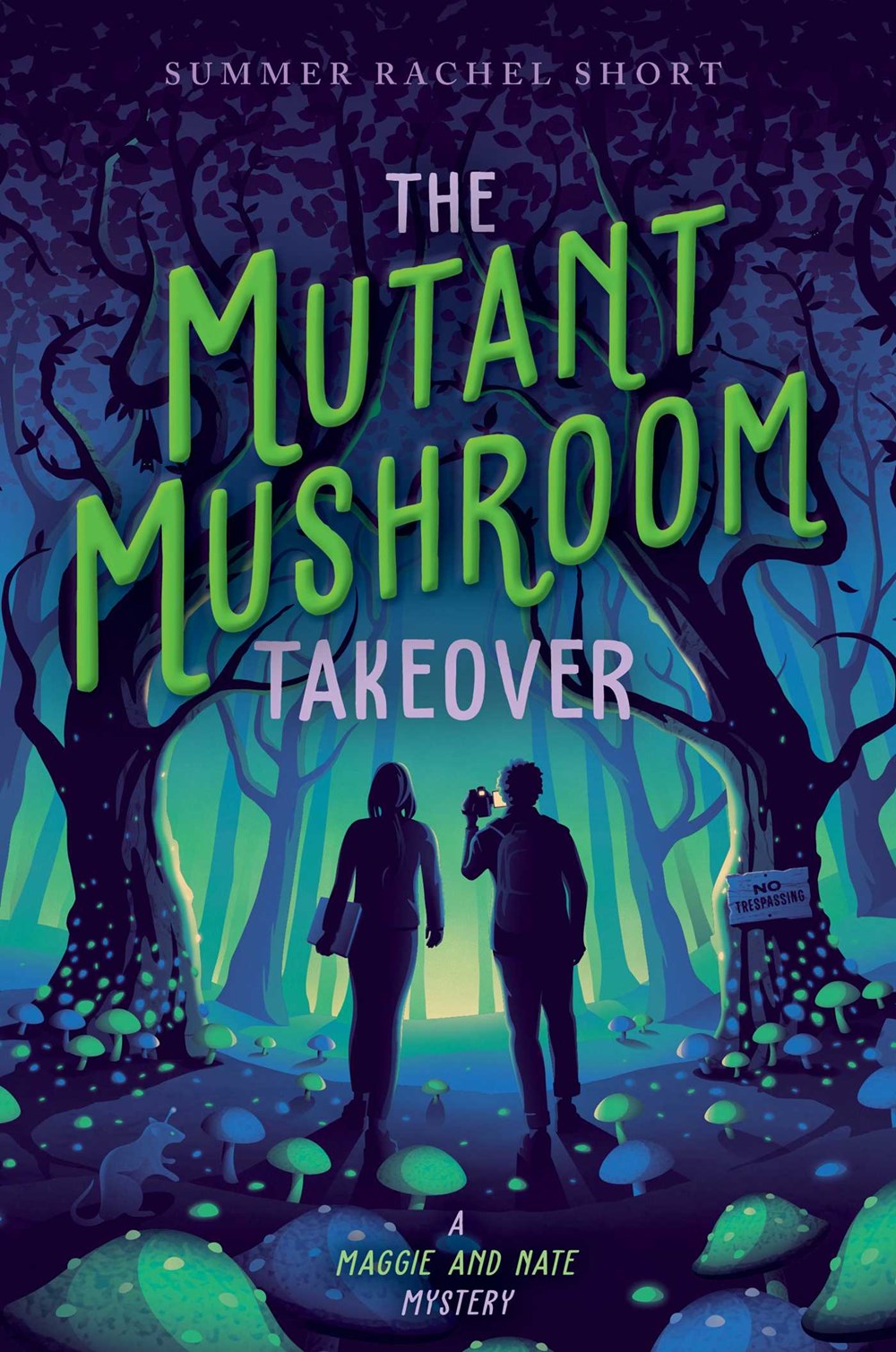
The Mutant Mushroom Takeover, by Summer Rachel Short, (Sept. 2020, Simon & Schuster), $17.99, ISBN: 9781534468658

Ages 9-12

Science thriller meets low-level horror in this first-person narrated middle grade novel. Magnolia is an aspiring naturalist who lives in Shady Pines with her older brother and grandmother after their father loses his job and has to move to another state to find work. Her best friend, Nate, is an aspiring YouTuber conspiracy theorist. The two head to Old Bell’s farm to investigate possible paranormal activity, only to stumble on something far more insidious: giant, bio-luminescent mushrooms, and Old Man Bell, who collapses after catching the kids on his property. Old Bell’s mysterious last words are unsettling enough, but Maggie’s brother, his friends, and her Shady Pines neighbors start acting strangely, prompting Maggie to start doing some investigating into the possible mutant mushroom takeover. Maggie is a smart, fully realized character; Nate is largely played for laughs as her foil, but this is the first “Maggie and Nate Mystery”, and I’m looking forward to seeing both characters develop in future adventures. There’s delightfully creepy and gross moments, filled with freaky mushroom spores, giant spiders, and bat guano, for starters. An author’s note touches on the facts inspiring the fiction and makes for a great STEM discussion book.

Visit author Summer Rachel Short’s webpage for a Mutant Mushrom Takeover discussion guide, and to read about the next Maggie and Nate mystery coming next year!


Posted in picture books, Preschool Reads

Environmentally savvy storytelling: Moles Present The Natural Tolls of Digging Holes

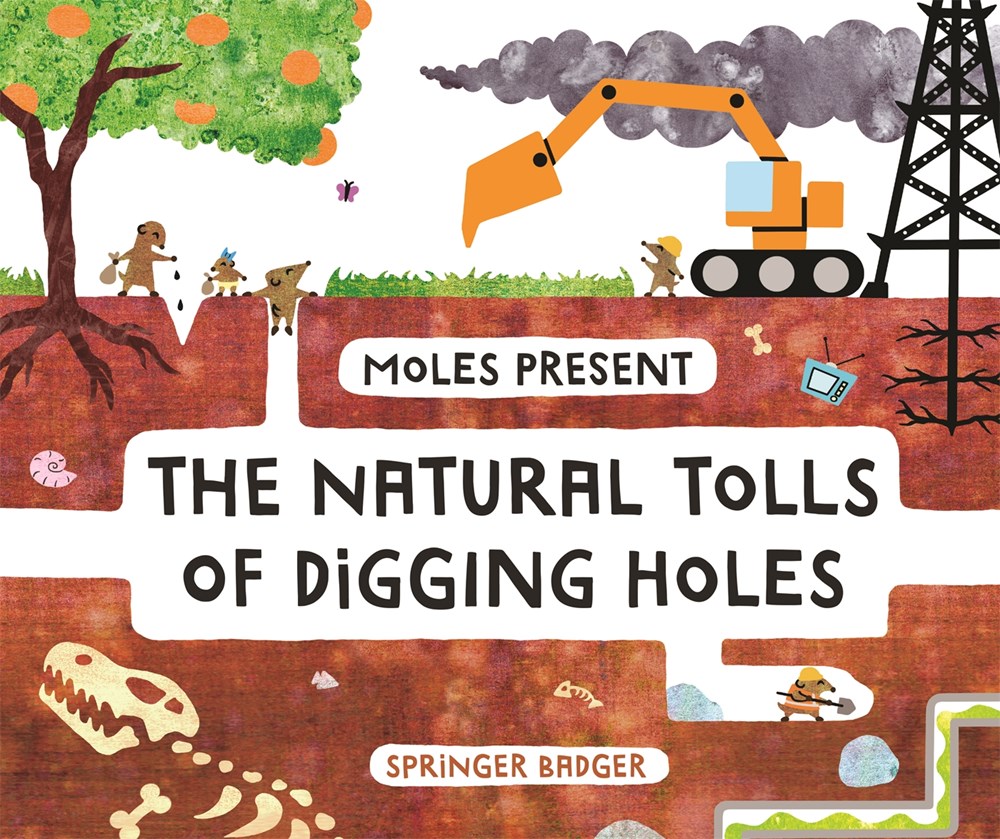
Moles Present The Natural Tolls of Digging Holes, by Springer Badger, (Nov. 2021, Page Street Kids), $17.99, ISBN: 9781645672876

Ages 4-8

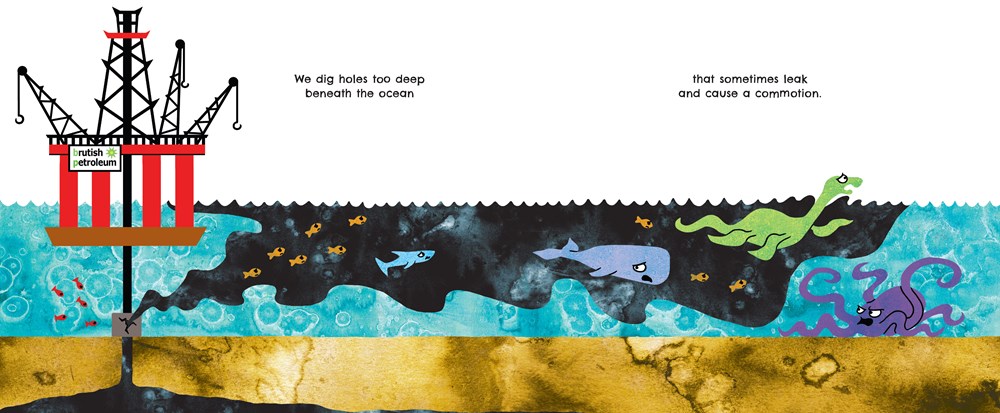
Already updating your Earth Day collections? Take a look at this rhyming tale about the holes we dig, as a group of moles illustrate the different reasons we dig: some are for fun, like to create sandboxes; some are helpful, to use as bathrooms; some are to explore and discover, like archaeologists do. But some are to put stinky or poisonous things, and sometimes, we dig too deeply, which can cause other problems. A smart, humorous rhyme pairs with amusing artwork that lets us look at what’s going on underground, from zombie moles to a school of fish panicking as one of their own nips onto a fishing pole; signage like “Brutish Petroleum” and “Exxoff” are wink to adults who will recognize gas and oil companies. An environmental call to action that younger readers will love. Make sure to have copies of the activity kit available to hand out (print on the other side of scrap paper!)

Posted in History, Middle Grade, Non-fiction, Tween Reads

Honest History gives middle graders new perspectives

Publisher Gibbs Smith hit shelves in August with two history titles that are great gift ideas and lots of fun for your nonfiction collections: History is Delicious, and History is Inventive.

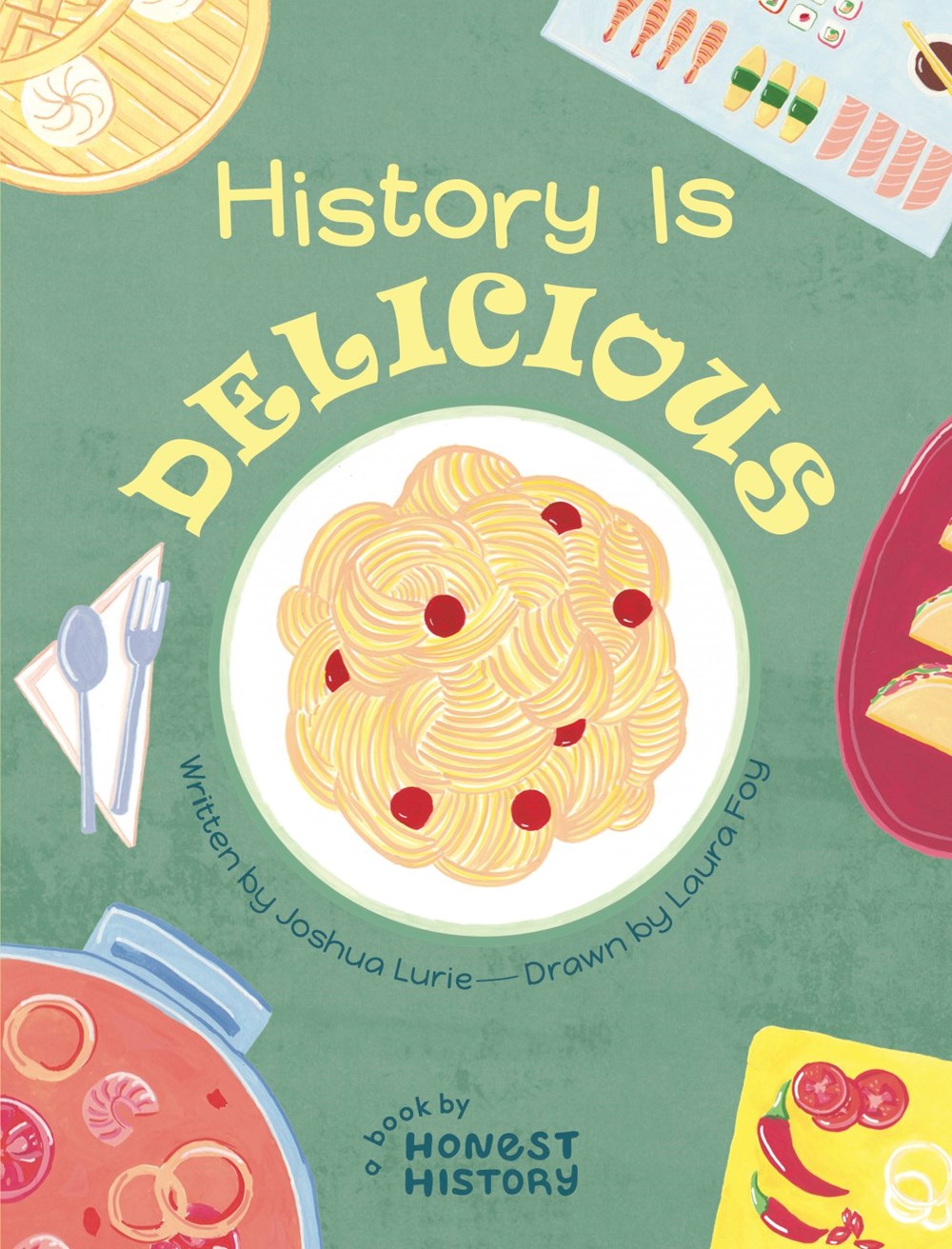
History Is Delicious, by Joshua Lurie/Illustrated by Laura Foy, (Aug. 2021, Gibbs Smith/Honest History), $19.99, ISBN: 9781736191903

Ages 8-12

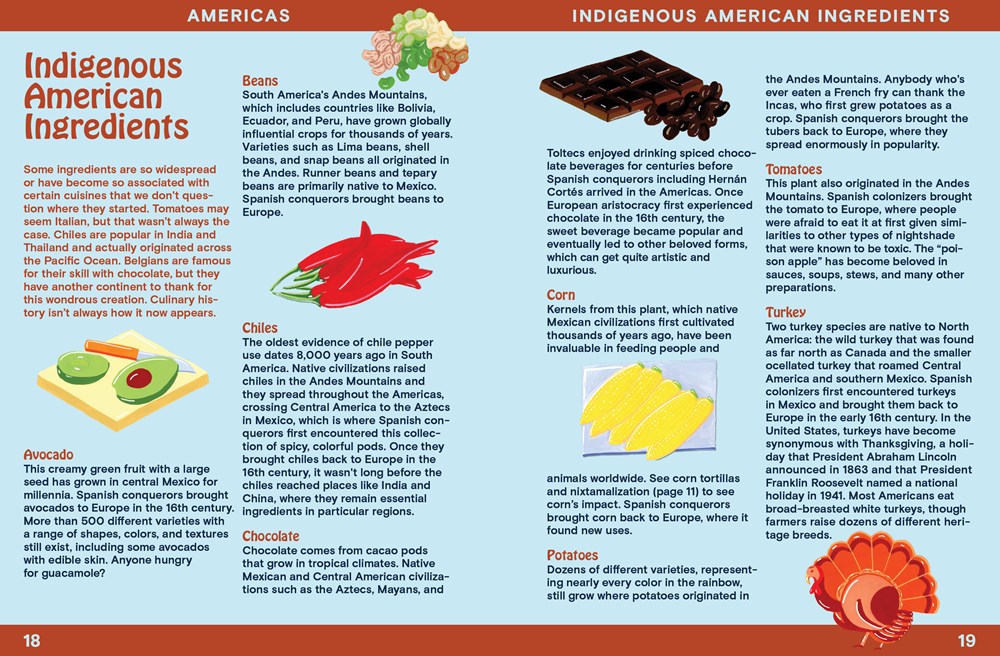
History is Delicious is a colorful, tasty trip across world history through cuisine. Food plays a part in the cultural fabric; influenced by native cultures and colonialism, the book illustrates how food brings us all together. Organized into sections highlighting the Americas, Europe, Ethiopia (and their coffee breaks!), and Asia, sections include histories of each cuisine, etiquette tips for dining across cultures, popular and “must try” dishes, and a recipe for each region. Colorful illustrations make this attractive and accessible to kids everywhere.


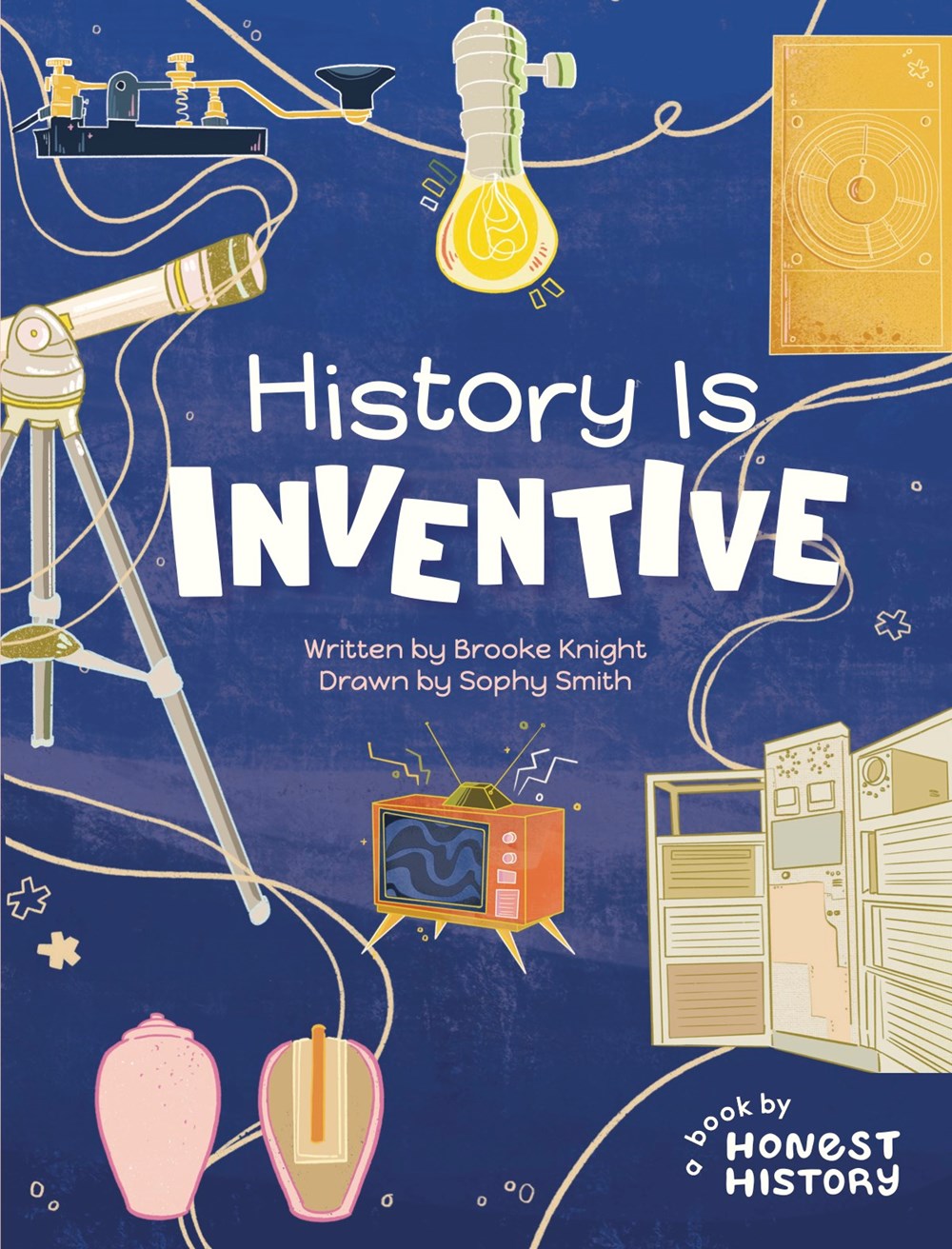
History is Inventive, by Brooke Knight/Illustrated by Sophy Smith (Aug. 2021, Honest History/Gibbs Smith), $19.99, ISBN: 9781736191927

Ages 8-12

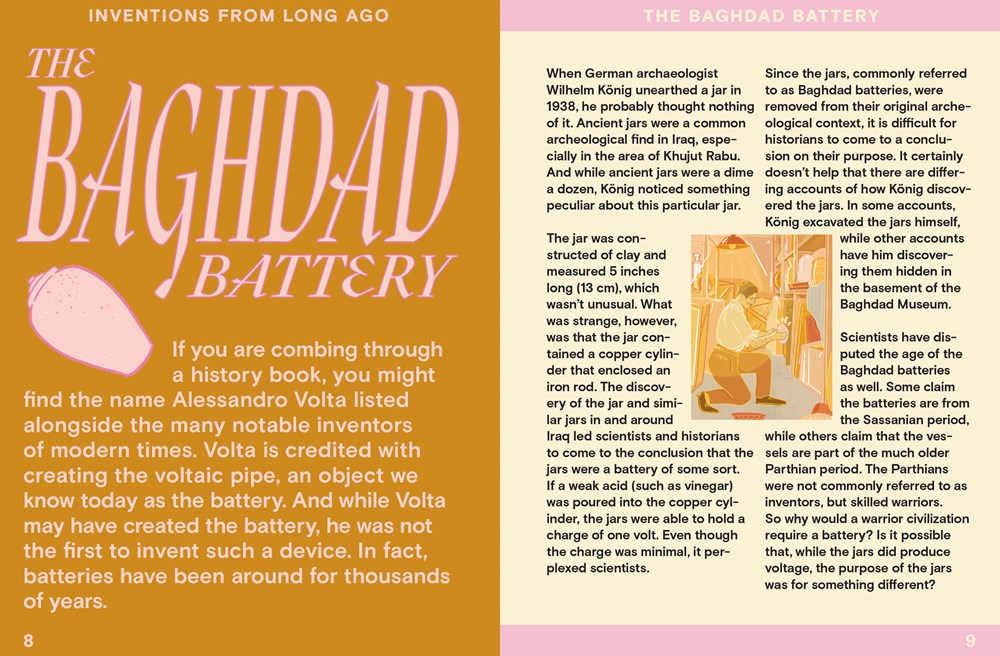
Next up, we’ve got History is Inventive, a look at inventions and their inventors that changed the world. Straightforward sections organize inventions into timeframes like “Inventions from Long Ago”, “Inventions from Not As Long Ago”, and “Inventions from Not Long Ago” to group inventions going from ancient ideas like gunpowder (9th century AD), to the piano (17th century), to wi-fi (1940s). There’s a section on famous inventors like Charles Drew, the first African American doctor to earn a Doctor of Science from Columbia University, and creator of blood banks. A “Fun Stuff” section gives readers the background and lists of materials needed to make a version of Galileo’s telescope. “Thinking it Over” sections after every profile offer thought-provoking questions. Colorful illustrations, great pacing and layout, and hands-on activities make this another great book to have in your history and STEM collections. I am looking forward to seeing what more Honest History books are coming down the pike!