Posted in Fiction, Middle School, Science Fiction, Teen, Tween Reads

Henry and the Incredibly Incorrigible, Inconveniently Intelligent Smart Human makes humans the invention.

henry and the humanHenry and the Incredibly Incorrigble, Inconveniently Intelligent Smart Human, by L.A. Messina. Tater Tot Books (2014), eBook: $3.99 ISBN: 9780984901838

Recommended for ages 10-14

Henry is a young teen robot in his 13th upgrade. He’s not the popular kid at school, and he has a faulty processor that comes from a virus that attacked his system when he was younger. When his father’s boss shows up at their home one night with a new human model to test for the market, Henry is thrilled – his own human! But this human isn’t a slack-jawed, drooling blank slate like most humans are. This one makes up words, can do things without extensively detailed commands, and doesn’t want to sleep in his box because it’s not comfortable. At first, Henry is worried – what if this human goes berserk like the one that went on a rampage in his mother’s business? – but he comes to realize that the HueManTech ETC-420- GX-2, or “E”, as Henry calls him, is a very special model.

Unfortunately, Henry’s not the only one who thinks “E” is special, which leads to a taut race to unravel the truth about E, especially when the government begins showing an interest in E and Henry’s family.

The book starts out slow as Ms. Messina establishes the drudgery of Henry’s young teen life – mocked at school, boring job at his mother’s spa, Henry is the lonely kid who takes comfort in his comic books and video games, until something exciting – E’s arrival – sparks up his life. Even then, the narrative moves at a slower pace as Henry discovers how special E really is. But once the plot kicks into motion, involving the government and the origins for both E and Henry, the story moves at a great pace that kept me turning pages and wanting to know more.

The book, available via e-book format, is a good read for tweens and young teens. It provides a wealth of opportunities to discuss what would happen in a society where robots were on the top of things and humans were the creation; it also offers chances to discuss morality and the government. It would be a good discussion group story for educators to encourage among their students and patrons.

Lynn Messina’s website offers a book trailer for Henry, along with fun extras for readers.

Posted in Fantasy, Graphic Novels, Science Fiction, Tween Reads

Legends of Zita the Spacegirl is out of this world!

legends of zitaLegends of Zita the Spacegirl, by Ben Hatke. :01 First Second (2012), $18.99, ISBN: 978-1-59643-806-4

Recommended for ages 8-14

I just realized that while I’d reviewed both Zita the Spacegirl and the upcoming Return of Zita the Spacegirl, I never wrote a review for the second book in this great series – so I re-read it in order to remedy the situation.

When we rejoin Zita in the second book in her series, she has found intergalactic fame as The Girl Who Saved Scriptorious. Creatures from all over the galaxy are clamoring to meet her, and fame has become a bit overwhelming for Zita. When she encounters a robot that looks just like her, she decides to let the robot handle fame while she and Mouse take off to relax and be anonymous for a while. The only problem is, the robot is an Imprint-o-Tron, which eventually tries to replace their targets – and when two aliens seek “Zita”‘s help in saving their planet from the interstellar scavengers, the Star Hearts, Zita-bot is all too happy to lend a hand, stirring up trouble for Zita and her friends.

I am a big Zita fan, and this second book has every bit of the spirit of fun and adventure that the first book (and the upcoming third) do. We see a slightly different Zita here -she’s overwhelmed by fame, she wants to go home, and she ultimately learns about the power of sacrifice – she’s a more mature Zita who is still, at heart, a kid. The Imprint-o-Tron reminds me of Pinocchio, who wanted to be a real boy. The Imprint-o-Tron, or as I started calling her, the Zita-bot, isn’t bad – she’s following her programming, and she really seems to want to be Zita, to face the exciting adventures that Zita does. There are some great messages to be found in this second book.

There are some great resources on the Web for using Zita materials in the classroom. Comics Are Great has a downloadable lesson plan, along with an hour-long podcast dedicated to the book, where teachers, librarians, and cartoonists discussing the book.

The Zita trilogy is a great middle-grade graphic novel series. She stands as a good role model for any girl or boy who seizes the power of imagination and inner courage.

Posted in Non-Fiction, Tween Reads

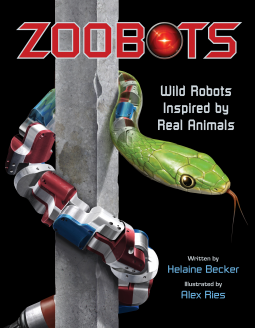
Helaine Becker’s Zoobots – The Future is Now, and there are robot snakes!

zoobotsZoobots: Wild Robots Inspired by Real Animals, by Helaine Becker/illustrated by Alex Ries. Kids Can Press (2014), $17.95, ISBN: 9781554539710

Recommended for ages 8-12

Robot Snakes. That’s the first thing that jumped out at me when I saw the cover of this book on NetGalley, and I knew that not only would my 10 year-old love this book, but so would every 10 year-old in the several library sites I oversee. That is the kind of book Zoobots is – it’s a win-win situation. You have robot animals, complete with facts about the functions and statistics on the robotic creatures, plus profiles on the animals influencing them; you also have the nonfiction aspect, which makes it compatible with Common Core focus on nonfiction texts, with the extra STEM (Science, Technology, Engineering, Mathematics) appeal that will hopefully inspire a reader or 3 to become a scientist and actually work with these robots.

Helaine Becker’s text is chunked into a dossier-type format, complete with futuristic fonts. We get the name of the robot – some include the Shrewbot, the Octobot, the Ghostbot, and the Nanobot – and what class of animal its influence belongs to (i.e., mammalia, reptilia). There are skills, specifications, and applications: the growing number of robotics dedicated to the medical industry alone is amazing, as is the idea of using pill bug-inspired robots to help prevent raging forest fires. Special Ops describes special talents these robots can use while in the field; my favorite is the Uncle Sam snake robot, who can actually assemble itself!

There is no science fiction here – all of the 12 robot animals profiled are in some sort of prototype stage, whether being developed or in existence. A section on the future wonders what further robots future minds will create, which I hope spurs some readers to start sketching and joining robotics teams. There is a glossary of terms and a full index.

I loved this book, and think it belongs in libraries and science classes throughout elementary and middle schools. The illustrations, by concept artist and illustrator Alex Ries, give life to the robotics, spotlighting their flexibility and their features. The book is only 36 pages, but the number of lesson plans and ideas that can come out of this? Boundless.

Posted in Fantasy, Graphic Novels, Humor, Science Fiction, Tween Reads

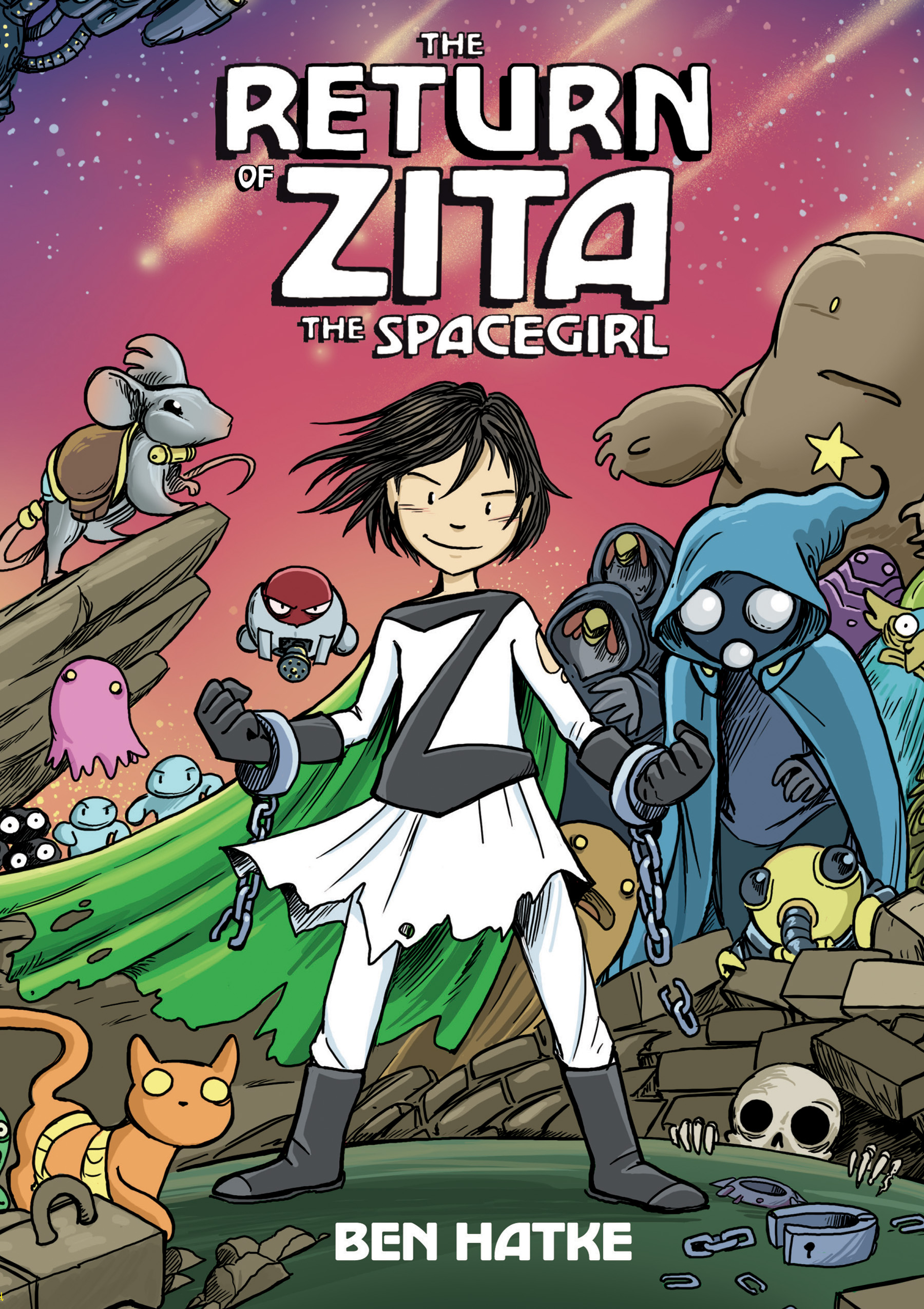
The Return of Zita the Spacegirl – A WhatchaReading Review!

Great sagas come to an end – maybe. But we’ll get to that. For anyone who hasn’t heard of Ben Hatke’s Zita the Spacegirl, I urge you to get to a library, a bookstore, or a friend with an enviable graphic novel collection and check her out, because she is fantastic. I first met her when Chuck, our editor monkey, handed me a copy of the first book and said, “You have to read this. It’s all you.” And it was. I quickly read Legends of Zita the Spacegirl, and was delighted when a review copy of Return of Zita the Spacegirl showed up on my doorstep a couple of weeks ago.

Check out my review on WhatchaReading!

zita3

Posted in Fantasy, Preschool Reads

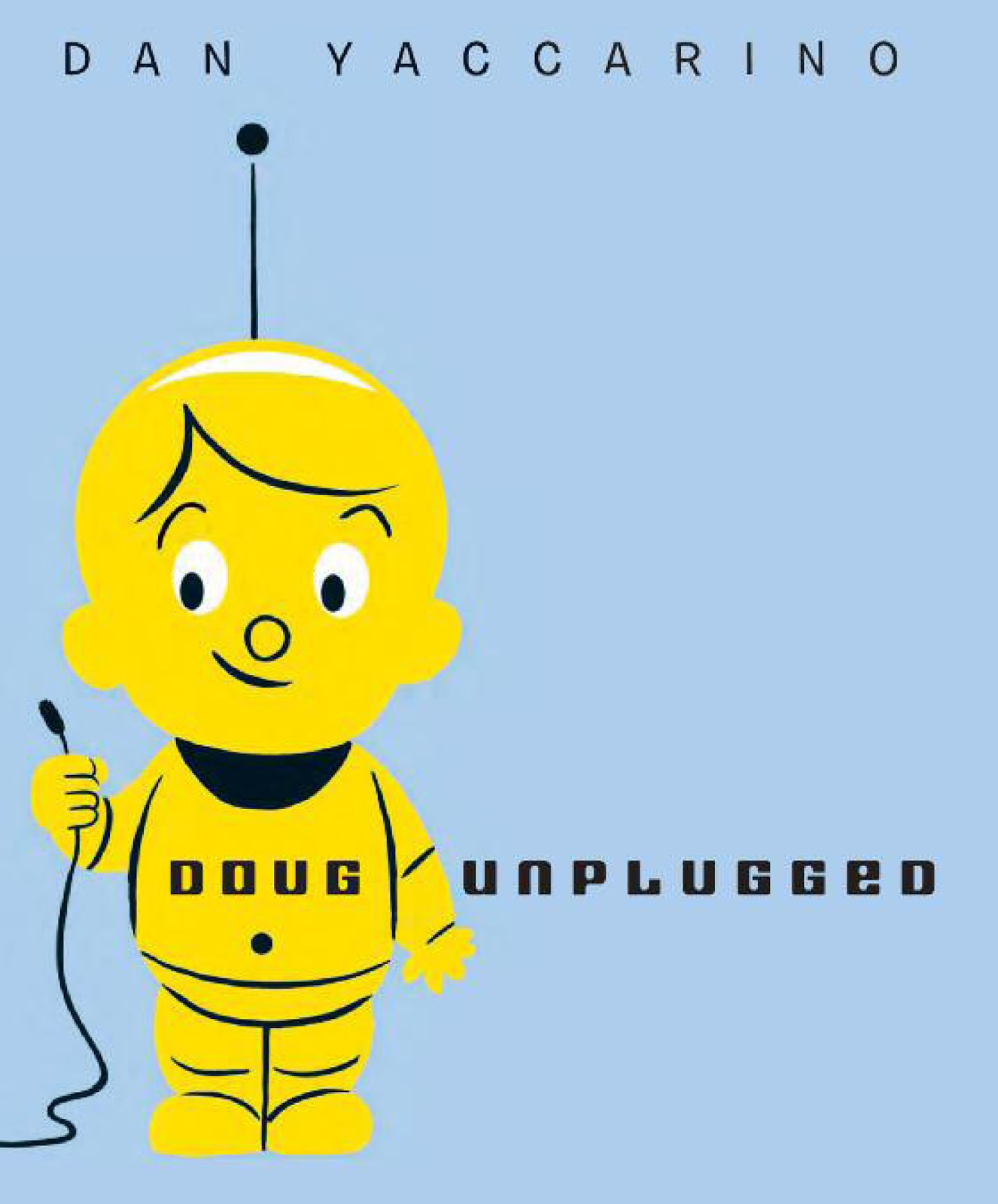
Book Review: Doug Unplugged, by Dan Yaccarino (Knopf, 2013)

Recommended for ages 4-8

Doug Unplugged!-1

This fun, retro story by Dan Yaccarino tells the story of a little robot boy who decides to “unplug” one day and explore the world. Little Doug is a robot boy whose parents plug him in every day so that he can learn while they head to work. One day, while learning about the city, Doug spies a pigeon at his window, and he’s fascinated. He unplugs himself and heads off on a day of exploration where he rides the train, scales a skyscraper, and makes a friend. After reuniting his friend with his parents, Doug decides to head home and tell his parents about his exciting day.

The story is sweet and packs a powerful message in our highly technological society. When most of our kids spend their days behind their iPads and computer screens, this simple message – unplug and learn by getting outside and doing – is a welcome sigh of relief. Packed with Yaccarino’s fun, adorable retro-futuristic artwork, Doug is a little boy on a big adventure that kids will enjoy living through vicariously. He may be a robot, but he’s easily distracted – there are many kids who can relate to the excitement of a pigeon landing on the windowsill at school or while doing homework at home. He spends a day exploring the city, yet manages to find a friend, and knows that he must go home at the end of the day. The art consists primarily of blues, greens and yellows, with other colors showing up to punch up the landscape. I read the digital version of this book, but encourage adult readers to use the physical storybook, which has smaller black font (it’s a great read-aloud book), usually at the bottom of the page or individual pictures so as not to detract from the artwork.  There are whole spreads and chunked panels throughout the book, giving a fully-fleshed-out feeling to this story. 

This would be a fun addition to a storytime on robots and would provide a more human perspective on a robot read-aloud. There are many robot printables and crafts online, and the author’s website offers information about his books, blog, social media, and speaking engagements.

Posted in Preschool Reads

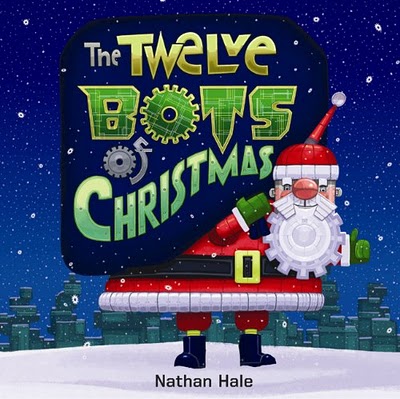
Book Review: Twelve Bots of Christmas by Nathan Hale (Walker Books for Young Readers, 2010)

Twelve Bots of ChristmasRecommended for ages 3-7

This robot variation of The Twelve Days of Christmas, complete with Robo-Santa, electronics, and droids, has the potential for an interactive read-aloud with audiences familiar with the Christmas classic, “The Twelve Days of Christmas”.  In this retelling, Robo-Santa gifts twelve days of cyber gear, from a cartridge in a gear tree, to five BOT-TO-RIES, to twelve Beat Bots thumping. The electronic gifts will be fun for a younger generation for whom computers, tablets and iPhones are common household items, and the computer-generated illustrations manage to avoid looking flat, as tends to be the case with this type of art, thanks to subtle shading that offers depth of image. The left hand page of each spread features the text, Robo-Santa, and the growing group of gifts joining him. The right page features a full-bleed image of the day’s gift. Robo-Santa and his bots have fun and often exaggerated expressions, and the subtle details contained in the pictures reward careful viewers with fun details, including little gears that take the place of stars in a night sky, and a moon that looks similar to the Death Star from the Star Wars movies. The font is a plain black font that resembles old computer print. The endpapers offer a crush of presents, preparing readers for a fun holiday read.

This would be a fun addition to a holiday read-aloud or a robot read-aloud that takes place during the holiday season. The tune of the classic song is repetitive enough that singing along should be encouraged; the repetition of the gifts given will make the song easier to pick up as the story progresses. Incorporating a flannel board with robot images could make the read-aloud even more fun for younger audiences, who can also be encouraged to hold up the number of fingers that denotes each day in the song. Oriental Trading offers robot rubber ducks or robot tattoos in bulk that could be a fun gift from Robo-Santa to attendees at the end of the read-aloud, along with a robot hand stamp.

Posted in Fantasy, Post-apocalyptic/Dystopian, Science Fiction, Tween Reads

Book Review: A Boy and His Bot, by Daniel H.Wilson (Bloomsbury, 2011)

Recommended for ages 9-12

On a class trip to a Mek Mound, an ancient Oklahoman Indian land mound reminiscent of the Egyptian pyramids, sixth grader Code Lightfall discovers Mekhos, a manufactured, experimental world inhabited by robots and long forgotten by humans. The world is under the grip of the evil tyrant Immortalis, bent on the world’s destruction; it falls to Code and Gary, an atomic slaughterbot brought to life by Code’s imagination and Mekhos technology, to find the Robonomicon and save the day.

A Boy and His Bot is a journey to Oz tale for a more modern age, complete with beautiful and deadly surroundings like the Toparian Wyldes, the beautiful forest maintained by a race of robots who trim and sculpt anything in their way, their upkeep programming overriding any other directive. Where Oz has a benevolent wizard, Boy  has Immortalis, the evil overlord who pushes all robots to the day of The Great Disassembly, when all of Mekhos will be undone. Code’s main objective, beyond stopping The Great Disassembly from taking place, is to get back home.

I have noticed that heroes in “boy books” often come from dysfunctional families, and Code is no exception. A shy boy, picked on by some classmates, ignored by others, Code is grieving the disappearance of his grandfather John a year prior. His parents are not in the picture. The only positive female force in the book is Peep, the little robotic probe that befriends him and leads him to the world of Mekhos. Gary the Slaughterbot plays the part of the all brawn, no brains protector with the heart of gold.

I wonder why it is that young male characters’ families are so flawed in YA literature. Is this an accurate reflection of the state of families today, or is this the newest hook to keep young boys reading? Is it a way to reach out to young boys that may be in crisis and refuse to speak?  The combination of robotic creatures, a manmade world on the brink of destruction, and an invention like the slaughterbot alone is enough to grab a boy’s attention on the surface, but Code’s background gives him a depth that should help boys and girls alike be interested enough in his journey to travel along with him.
Daniel H. Wilson, Ph.D. is the author of How to Survive a Robot Uprising, Where’s My Jetpack, and How to Build a Robot Army. A Boy and His Bot is his first YA novel, but he has also written Bro-Jitsu: The Martial Art of Sibling Smackdown, and his Robot books are popular with older tweens and teens. He maintains an author website.
Posted in Middle School, Post-apocalyptic/Dystopian, Science Fiction, Tween Reads

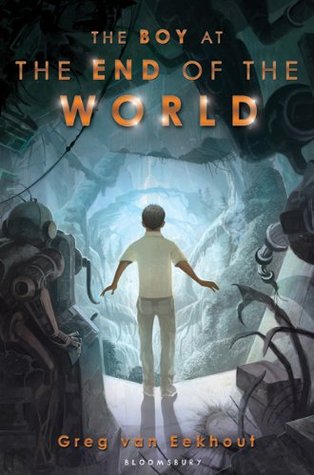
Book Review: The Boy at the End of the World, by Greg Van Eekhout (Bloomsbury Children’s Books, 2011)

Recommended for ages 9-12

A preteen boy (we are led to guess), wakes up in a pod in a devastated shelter. Destruction lies all around him; he sees being similar to himself lying dead in pods similar to his. The only other functional being is a robot, who calls out to him. The boy runs, but the robot catches up to him and reveals the boy’s name, Fisher, to him. Fisher learns that he is the only survivor of the human race.

It’s the usual post-apocalyptic story: Humans ruined the earth and nature took back her planet. Humans genetically engineered animals and more humans, putting them in gel-filled pods, with robots to oversee their care, until the time when conditions allowed for them to awake and rebuild society. The humans were individually programmed with specific survival skills to help create communities. Fisher is programmed to be a fisherman. Click, the name he gives his robot companion, tells Fisher that he has been tasked with helping Fisher “continue existing”, and the two set off to search for more humans in another Ark – the facilities were humans and animals were engineered and kept in hibernation.

Born a blank slate, Fisher learns and adapts through the story’s progression, developing not only intelligence outside of his initial programming but emotional depth. The characters they meet are not cute and cuddly woodland creatures: they’re often chilling. There are groundhogs who blame humanity for the planet’s destruction and hold a grudge; there is a robot who takes his task of preserving the human race  permanently – these characters bring a new dimension to the story of a boy and his robot. This is a survivalist tale.

It is difficult to write a postapocalyptic tale without sounding like hundreds of similar books on the market, and the “humans and technology bad, nature good” call to action beats the reader over the head throughout the book. Humans bring the planet to the brink of environmental collapse, so they leave the rest of the planet to deal with it while they go into hiding until the coast is clear. The technology that humans created to save them ultimately turns on them and brings the race to the point of near-extinction, further painting us as hapless ne’er do wells.

That said, the YA market in post-apocalyptic fiction isn’t as saturated as the adult market is yet, so perhaps a younger audience will read this story through different eyes. That said, this is a generation that has been fed this storyline since they were babies: think of Happy Feet, a movie that deceptively sold us a cute story about a penguin who didn’t fit in, and gave us a Greenpeace horror movie halfway through the picture. Think of Wall-E, where we were drowning our society in junk, so we had to go into space to get away from it.

I don’t want it to sound like I didn’t like this book, because I did. I think older middle grade readers, starting with 10-11 year olds, will see Fisher as a hero they can identify with as a young boy who needs to learn to survive, and whose robot companion acts as a friend and parent. Kids can also relate to the marriage of technology and environmental awareness contained in the book’s message.

Greg Van Eekhout knows how to write for kids – he has a Masters in Education and spent ten years developing online curricula for K-12 and college students. He is kid- and teacher-accessible, offering teachers tips on having author events at schools (and libraries), and providing his e-mail address to be contacted about school visits. He offers two presentations that he follows in his appearances. His website is geared toward grownups who are interested in reading his reviews, about his books, and where he’ll be next.