Posted in Early Reader, Fiction, Fiction, Intermediate

Isabella is a Girl in Charge as she channels historic women

isabella_covIsabella: Girl in Charge, by Jennifer Fosberry/Illustrated by Mike Litwin, (Oct. 2016, Sourcebooks Jabberwocky), $16.99, ISBN: 9781492641735

Recommended for ages 4-8

Isabella, the little purple-haired girl with the big imagination, is back in her fourth adventure: this time, she’s going all the way to the nation’s capital! Isabella wakes her parents up bright and early; they’ve got a big day ahead of them and Isabella doesn’t want to miss a second. As she and her family get ready to head out, Isabella imagines she’s different females politicians, first in their fields, from the first mayor to the first Supreme Court Justice. Isabella and her family have an important day to be part of: history is being made!

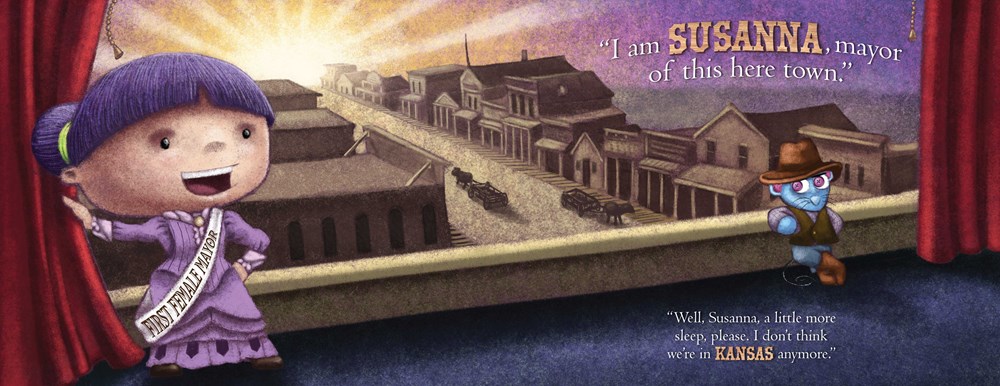
A good idea in theory, younger readers may need some prompting when first hearing the story; these names will largely be unfamiliar to them. Anyone reading the story out loud should mention beforehand that the women Isabella names are the first women in politics and what office they held. Kids will be better able to pick up subtle in-jokes in the text, too; for instance: When Isabella claims to be “Susanna, mayor of this here town,” her mother responds, “I don’t think we’re in Kansas anymore.” If the children understand that Susanna Salter was the first female mayor, and she was mayor in Kansas, it’ll be more fun for them. Isabella’s adorable stuffed friend is with her, dressed in period clothing, in each spread – see if your readers can spot him (or her, if they like)!

isabella_1

Mike Litwin’s art, done with blueline pencil and Adobe Photoshop, is fun and emphasis on key words like names and identifying characteristics adds some punch. Brief biographies, quotes, and a timeline of women in politics, along with a list of books and websites for further reference, round out Isabella’s latest adventure.

isabella_2

The book is a good start for introducing younger readers to women in politics, and how long we’ve been around! It’s more of a companion volume to a lesson rather than a standalone. I haven’t seen an educator’s guide or activity kit yet, but there are some great resources about women and politics online, including printouts at Time for Kids. Most of the available information is branded for Women’s History Month, but we’re at a historic crossroads in history – celebrate women in politics NOW!

Jennifer Fosberry and Sourcebooks both offer links to Educator Guides for other books in the Isabella series and the companion book, My Name is Not Alexander. Illustrator Mike Litwin has samples of his artwork and animation on his site.

Posted in Early Reader, Fiction, Fiction, Intermediate

Big love for My First Puppy/My First Kitten!

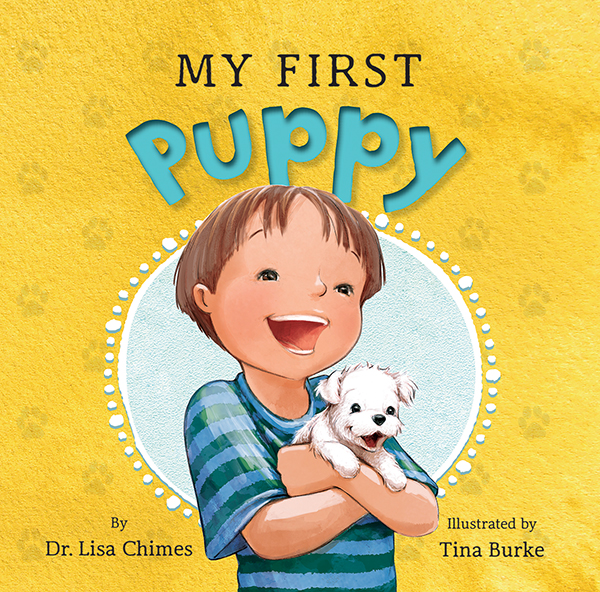
my_first_puppyMy First Puppy, by Dr. Lisa Chimes/Illustrated by Tina Burke, (2016, Kane Miller), $9.99, ISBN: 978-1610675161

My First Kitten, by by Dr. Lisa Chimes/Illustrated by Tina Burke, (2016, Kane Miller), $9.99, ISBN: 978-1610675178

Recommended for ages 4-8

Getting a pet is so exciting! Most kids love the soft purr of a new kitten, or the excited kisses from a new puppy, and this new picture book duo, written by veterinarian, Dr. Lisa Chimes, is great for  younger kids – and their parents – who are about to embark on pet parenthood.

My First Puppy and My First Kitten follow two kids – Sam and Fran – as they adopt their new pets. Each family takes this very seriously, looking into what breeds of dogs and cats would fit well with their respective families; what each pet needs when they first join the family (bowls for food and water, places to sleep, toys); and the importance of veterinary care, including great checklists of things to watch out for or talk to your vet about during a routine pet checkup.

my-first-kittenWhat I love most about the My First books? Dr. Chimes having her characters explore shelters and veterinarian offices for pets that need homes, rather than having the families to buy a cat or dog at a pet store. I loved that she drew attention to these great options, where families can find their newest member and really provide a loving home to a pet who needs it.

The art is sweet and loving, realistically rendered and brightly colored to attract a reader’s attention. Each cover stars the adopted pet and its loving new human on the cover, with little paw prints set into the background. While most of my pet books tend to run a little older, a good picture book series like this (will we be getting books for fish, birds, and lizards, too?) is great for my younger readers. Encourage families to read this one together, and pair it with books like Dr. Seuss’ What Pet Should I Get?, Mo Willems’ The Pigeon Wants a Puppy!, and Alexandra Day’s Carl series. I also love Emma Jackson’s A Home for Dixie, the true story of a rescue dog.

Posted in Early Reader, Fiction, Fiction, Intermediate

A microraptor’s adventure; Neffy and the Feathered Dinosaurs

neffy_1Neffy and the Feathered Dinosaurs, by Joe Lillington, (Oct. 2016, Nobrow), $17.95, ISBN: 9781909263895

Recommended for ages 4-10

Neffy the Microraptor is about to go for her first flight – but she doesn’t know what to do after she spreads her wings! Her brothers and sisters have flown ahead, and she needs to catch up! Join Neffy on her adventure, as she meets other dinosaurs and tries to figure out how to get airborne.

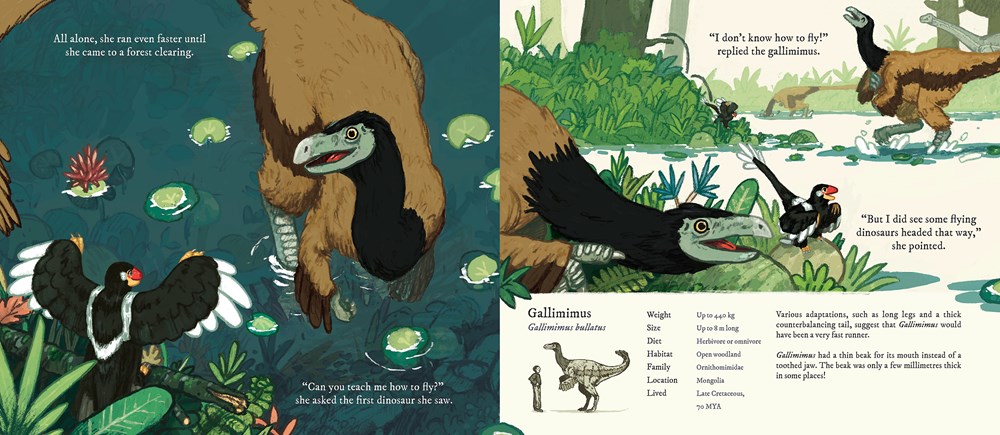
This is such a fun combination of fact and fiction. We have Neffy’s fictional story, where a young microraptor tries to learn how to fly and meets feathered dinosaurs along the way. Each dinosaur she encounters has a profile at the bottom of the page, where readers learn the dinosaur’s name and scientific name, size and weight, habitat, diet, family of dinosaurs it belongs to, geographic location and era in which the dinosaurs lived. An author’s note mentions that this isn’t supposed to be a linear book – eras are mixed and matched for fun and to introduce a number of feathered dinosaurs to readers.

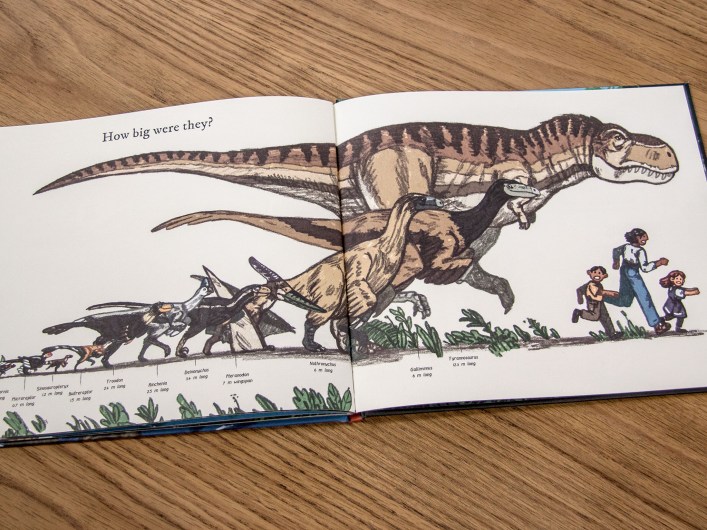
Neffy is a good book for a wide range of readers. Kids love dinosaurs, and feathered dinosaurs are a fairly recent discovery, so it’s exciting to read. Younger readers will enjoy Neffy’s story and the bright, fun artwork. Older readers will also enjoy going a little deeper an learning more about these dinosaurs, thanks to the additional information on such dinos as the sinosauropteryx, troodon, and gallimimus. A spread at the end of the book shows readers the scale of a range of dinosaurs – and some humans!

neffy_6Image courtesy of Nobrow Press

Display this one with Brenda Z. Guiberson’s Feathered Dinosaurs, and show off some more feathered dinos at the American Museum of Natural History’s site. Older readers will get a kick out of the Time for Kids article, “Fuzzy, Was He?”, that discusses the T Rex’s feathered relatives.

neffy_2

neffy_3

neffy_4

neffy_5

Joe Lillington is a UK-based author and illustrator. Check out more of his illustration at his website.

Posted in Early Reader, Fantasy, Fiction, Fiction, Intermediate, programs, Storytime, Summer Reading

Storytime: Nobody Likes a Goblin, by Ben Hatke

nobody-likes-a-goblinNobody Likes a Goblin, by Ben Hatke, (Jun 2016, First Second), $17.99, ISBN: 9781626720817

Recommended for ages 5-10

If you read my stuff enough, you know there are a few authors and illustrators that I adore; Ben Hatke is one of them. From Zita the Spacegirl to Mighty Jack and Little Robot, he creates fun, exciting characters, very human stories, and beautiful art. I am eternally grateful that he has also started sharing the love with picture book readers; first, we had Julia’s House for Lost Creatures, and now, Nobody Likes a Goblin.

It’s the sweetest little book about a homebody goblin who lives in his cozy dungeon and hangs out with his best friend, Skeleton. One day, a gang of dumb old adventurers barges in, loots Goblin’s treasure, and makes off with Skeleton – RUDE. Goblin sets out to rescue his friend despite the oft-repeated cautionary advice, “Nobody likes a goblin.” But Goblin doesn’t care, because he has a friend to save!

goblinImage Source: GoodReads

How cute is this book? It’s got adorable messages about friendship and being brave, not worrying who likes you or not, and just doing what you do. I decided to read this one to some of my slightly younger kids on a preschool-aged summer camp visit a few weeks ago, and they seemed to enjoy it. They kind of “ewwww’d” my poor Goblin at first, but when I told them that he was just a nice little guy and didn’t bother anyone, they were more sympathetic. By the end of the book, they were cheering for him. I encouraged them to hiss and boo the adventurers who were mean and went into poor Goblin’s house, breaking things up and stealing his toys, and was that very nice? NO.

Posted in Early Reader, Preschool Reads, Toddler Reads

Blog Tour: Beautiful, by Stacy McAnulty

beautiful_1Beautiful, by Stacy McAnulty, (Sept. 2016, Running Press), $16.95, ISBN: 978-0-7624-5781-6

“Every girl is unique, talented, and lovable… Every girl is BEAUTIFUL.”

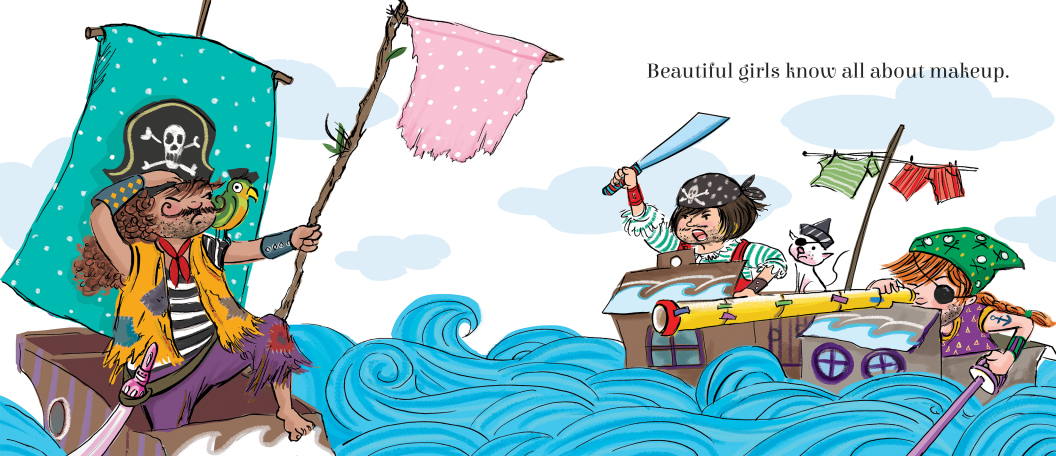
Sure, sugar and spice and everything nice, is fine for some, but snips, snails and puppy dog tails are pretty great, too. Stacy McAnulty’s Beautiful sends an empowering message: You can be beautiful when you’re dressed like a pirate, when you’re digging in the garden, or you’re creating your own robot army. Loving yourself is beautiful, and Stacy McAnulty’s empowering message is conveyed by Joanne Lew Vriethoff’s gorgeous artwork, which shows beautiful little girls in all shapes, sizes, colors, and abilities, laughing, having fun, being brilliant, and being beautiful.

This is the best kind of diverse book, because it encourages, it empowers, all kids to embrace life and joy. The message is clear, with pictures that interpret the text in the best way:

BEAUTIFUL_int.indd

BEAUTIFUL_int.indd

The endpapers carry this celebration of beauty by featuring a field of pink, with crayon-drawn butterflies and flowers, and overlaid with brightly colored frogs, bugs, and snails.

This book is for everyone: for the little girl who knows she wants to be the president-ballerina-astronaut when she grows up; for her mom, who wanted (and maybe achieved) the same. For the dad whose little princesses sing “Let it Go” while playing with their Transformers, and the brothers whose sisters are right next to them, scaling a tree on a lazy day. Boys and girls, men and women alike, all need Beautiful in their lives, to remind them to embrace all forms of beauty where they discover them.

You can pre-order Beautiful from Amazon, Barnes & Noble, or IndieBound. You can also add it to your GoodReads.

Make sure you check out the rest of the stops on the BEAUTIFUL blog tour!

8/29 Flowering Minds
8/30 Kids’ Book Review
8/31 My Word Playground
9/1 Stacking Books
9/2 Unpacking the POWER of Picture Books
9/3 MomReadIt
9/5 Enjoy Embrace Learning
9/6 Geo Librarian
9/7 A Foodie Bibliophile
9/8 MamaBelly
9/10 Diapers and Daydreams
9/11 The Late Bloomer’s Book Blog
9/12 Unconventional Librarian


Posted in Early Reader, Fiction, Preschool Reads, Toddler Reads

Blog Tour: Busy Builders, Busy Week! Interview with Jean Reidy!

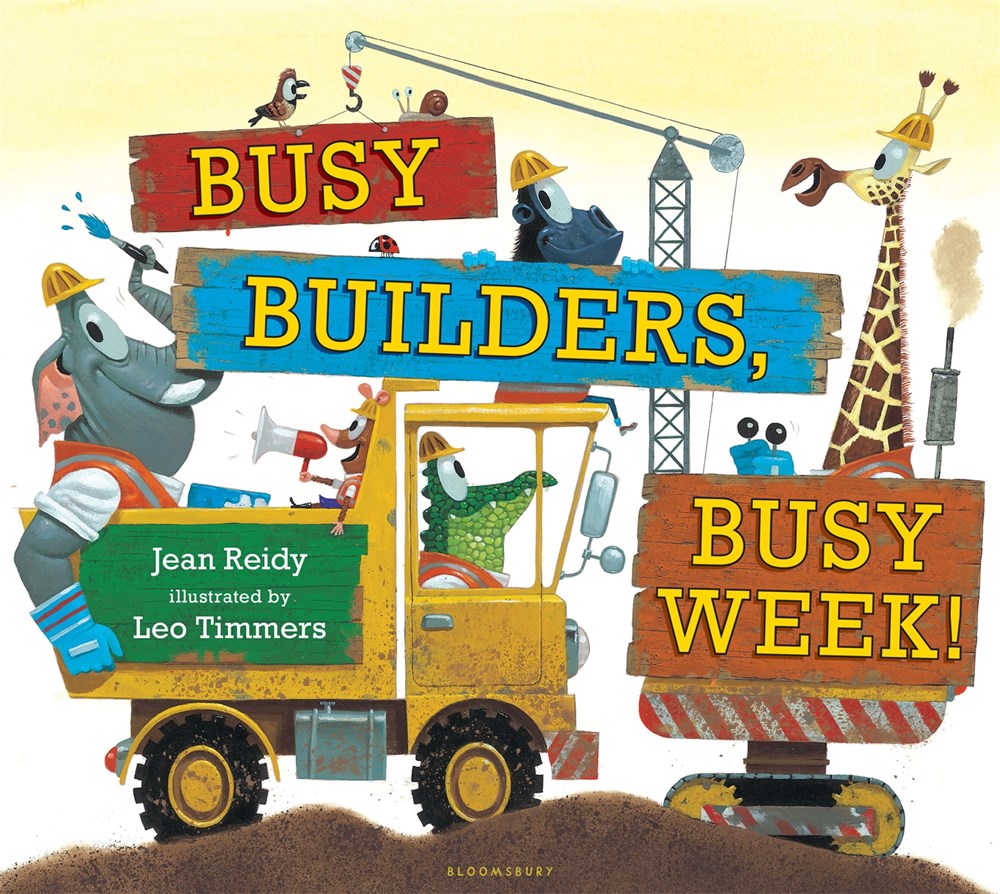
busy builders_1Busy Builders, Busy Week, by Jean Reidy/Illustrated by Leo Timmers, (June 2016, Bloomsbury), $16.99, ISBN: 978-1619635562

Sunday! Dream day! Study, scribble, scheme day. Map, measure, plan a treasure. Gather up a team day!

The author-illustrator team that brought us All Through My Town – a storytime staple at my library – comes together to bring readers a book about working together! Over the course of a week, animal characters pull together to build a brand new playground in their community. Each day brings new things to do, from planning, to digging, to fixing and planting!

This is such a fun story to read out loud, and has entered regular rotation at home. Kids can practice their days of the week and get lost in the rhyming story, which has the added benefit of showing readers how to group tasks to get things done in the best way. On Sunday, the builders come up with plans for their big job ahead; on Monday, they clear the area. Tuesday is for infrastructure: cement, pipes, boards, fixing fences. On Wednesday, we load everything up and take it on the road. Thursday is for getting the place shaped up: drills, nails, rake and spread. Friday, the plants go in and the final details, like painting and sanding, get the park ready for their big opening on Saturday!

I love Leo Timmers’ bright, bold acrylics here. The bright colors and cartoony animal characters are a perfect accompaniment to Jean Reidy’s bouncy, happy rhyming text. Even the endpapers bring on the fun, with yellow, diamond-shaped construction signs featuring different animals working at different tasks leading readers in and out of the story.

Transportation books have done well at all of my libraries, so this is a no-brainer for my collection. If your readers love books like Good Night, Good Night, Construction Site, by Sherri Duskey Rinker, and Kate and Jim McMullan’s series (I Stink!, I’m Brave!, et al), this is a perfect fit. Busy Builders also lends itself to a days of the week read-aloud, right next to fun books like John Himmelman’s Chickens to the Rescue!,  or Albert Bitterman’s Fortune Cookies.

I was lucky enough to get a few minutes with author Jean Reidy, and we talked about Busy Builders, Busy Week! Read on!


MomReadIt (MRI): I love the idea of the characters coming together to create a playground! Did you decide on the idea of building the playground as the best way to talk about the days of the week, or did the story come together separately?

Jean Reidy (JR): A little bit of both, I’d say. When my editors at Bloomsbury asked me to write a days-of-the-week book for their list, I loved the idea. So I brainstormed a variety of approaches that ranged from the mundane to the wildly weird. But that’s the way I like to work, creatively uncensored, putting all the possibilities out there. I’ve always wanted to write a construction trucks book, so when I hit on the notion of a “construction week” the only decision left was, “What can we build in a week that will resonate with a child?” Well, a playground, of course. Even better, a playground designed by illustrator Leo Timmers. And while the premise was fun and uncomplicated, the idea of a community coming together to transform an old, abandoned city lot into something fun and beautiful felt like it added an additional layer of meaning to the essential story. I like that layer. I think it gives readers more to talk about. And Leo did a fabulous job bringing it to life.

MRI: When you were working on the text, did you plot out the different phases of construction to help you group together the tasks the characters undertake each day?

JR: That would have been really smart, eh? But my process was a little looser than that. I tried to keep my free association of the topic going as long as I could before I forced it into any kind of order. I wanted to fully explore all the fun possibilities for structure and language. So, I developed word lists—starting with the days of the week and then all the construction actions, sounds, vehicles and tools I could think of. I played with those lists until I sounded out the bouncy rhythm and rhyme scheme I wanted for my young readers. From there, I made sure that the construction tasks were logically ordered and grouped so that the artwork could then bring sense to the process of building the playground.

MRI: You’ve also written a book called ALL THROUGH MY TOWN that features animals as the main characters. Do you think these two books could take place in the same storytelling universe? Could the kids from All Through My Town come and play at the new playground built in Busy Builders, Busy Week?

JR: Oh my goodness! What a brilliant idea! I love unexpected connections, surprises and meta moments in storytelling. So let’s play that out. ALL THROUGH MY TOWN is loosely modeled after the Chicago suburb in which I grew up—a self-contained town with its own shops, library, gardens, fire department and only thirty miles from Chicago. The Chicago and Northwestern train line—now called the Metra—whistled through multiple times each day, taking commuters to and from the Windy City. BUSY BUILDERS, BUSY WEEK! takes place in an urban area where the characters transform an old empty lot. So yes, let’s have our town characters hop on their train and visit their city friends—all meeting up at that brand new playground. Bloomsbury, how ‘bout it? Readers, toss me a title! Let’s do this!

 

Jean Reidy photoJean Reidy is a two-time winner of the Colorado Book Award. Especially gifted at writing for very young children, Jean is a frequent presenter at national and local literacy, writing, and education conferences and at schools across the country—in person and via Skype. She is a member of the Colorado Council International Reading Association and the Society of Children’s Book Writers and Illustrators, and she serves on the board of Reach Out and Read Colorado. Jean writes from her home in Colorado where she lives right across the street from her neighborhood library, which she visits nearly every day. Visit her at www.jeanreidy.com and on Twitter: @JeanReidy.


Follow Jean on the BUSY BUILDERS, BUSY WEEK! tour!

Mon, Aug 22 Cracking the Cover
Tues, Aug 23 Literary Hoots
Wed, Aug 24 NC Teacher Stuff
Thurs, Aug 25 Mom Read It
Fri, Aug 26 Unleashing Readers
Sat, Aug 27 Booking Mama
Mon, Aug 29 Bluestocking Thinking
Tues, Aug 30 Jean Little Library
Wed, Aug 31 Geo Librarian
Thurs, Sept 1 Mrs. O Reads Books
Fri, Sept 2 Where Imagination Grows

Click here for a free classroom curriculum guide and storytime kit!

Enter a Rafflecopter giveaway for a chance to receive a copy of BUSY BUILDERS, BUSY WEEK! (U.S. addresses, please.)

Posted in Early Reader, Fiction, Humor

The Pruwahaha Monster gives kids a little jump!

pruwahahahaThe Pruwahaha Monster, by Jean-Paul Mulders/Illustrated by Jacques Maes, Lise Braekers (Oct. 2016, Kids Can Press), $15.95, ISBN: 9781771385664

Recommended for ages 5-8

A cute story about a boy and his dad outside enjoying the autumn, The Pruwahaha Monster is a story the father tells his son while the son plays on a swing. It may be a bit high-concept for younger readers – it took me a couple of reads to put it all together – so I’d suggest reading it to school-age (Kindergarten-Grade 2) kids, rather than toddlers or preschoolers.

A dad tells his son a story about the Pruwahaha Monster – a stinky, ugly, terrible monster with a taste for children – but when the monster tracks down a little boy, all he does is laugh! The last picture in the story tells you everything you need to know about the monster and his relationship with the boy.

Originally published in Belgium, this is a sweet story about a father and son, and the joy of storytelling: especially spooky storytelling! A fun additional add to collections where kids are ready for a scary story that ends up being very safe, after all. Teach the kids how to make shadow puppets on a wall when you’re done, and let them make their own monsters!

There’s a lot of visual interest here, with bright orange artwork drawing the reader’s attention to woodland animals and leaves. Spooky monster paws fade into and out of existence. There are beautiful spreads and pages of work against light blue, bright orange, and beige backgrounds. There are so many little elements to look at and notice in each spread – you’ll find something new every time.

Jean-Paul Mulders is a Flemish journalist and writer, and the author of several books for adults; The Pruwahaha Monster is his first book for children.Jacques Maes & Lise Braekers are a graphic design, web design and illustration duo from Belgium. The Pruwahaha Monster is their first book for children.
Posted in Early Reader, Fiction, Preschool Reads

Maggie McGillicuddy’s got an eye for trouble… do you?

maggie mcgillicuddyMaggie McGillicuddy’s Eye for Trouble, by Susan Hughes/Illustrated by Brooke Kerrigan, (Oct. 2016, Kids Can Press), $16.95, ISBN: 9781771382915

Recommended for ages 4-8

This fun look at imagination appeals to a kid’s sense of play, but also teaches them to be aware of their surroundings. Maggie McGillicuddy sits on her porch, knitting away, and sees things a little differently. When she sees a shadow on the wall, she just knows it’s a hungry tiger! She clacks her knitting needles and scares that wildcat away. That’s no tree branch behind the pizza delivery girl’s bike, it’s a snake! She whacks her walking stick and scares that slippery snake right off. But when Charlie, her next door neighbor, is about to run into the street while chasing a ball, Maggie springs into action – this is no figment of her imagination!

This is such a great story about imagination and playing little games with yourself, but it makes a point about being aware, too. When Maggie sees that Charlie’s in danger, there’s no clacking of knitting needles or whacking a walking stick, she yells and gets Charlie’s attention – she makes him very aware of his surroundings! And playing games with your imagination is a fun way of being aware of what’s around you, too. Charlie and Maggie bond over their active imaginations, and invite the reader in, with repeated wink and nudge phrases like, “you see it there, don’t you?”

The artwork is rendered in watercolor, pencil crayon, gouache and collage, all coming together to give a light, fun tone to the book. Kids will recognize the places where Maggie’s and Charlie’s imaginations take root: tree roots that become snakes, shadows that become wild animals, herds of elephants out on the horizon and a dinosaur lurking behind a bush. I love the movement in illustrator Brooke Kerrigan’s work, too; Maggie’s scarf sways gently until she jumps to action: then, it swings outward, almost at attention. When all is well, the scarf gently relaxes at Maggie’s feet. Throughout the book, the scarf gets longer until both Maggie and Charlie are wearing it, looped around their necks.

Read this and talk to kids about being safe: from looking both ways before crossing a street to knowing street signs and where you are. Maybe even link this story to a book on community helpers, so kids know who to turn to if they need assistance. Have kids draw pictures of what they see in their imaginations when they look outside and make up a story of their own about what’s in the hallway!

Very good for Pre-K and elementary collections. The fun of imagination is contagious.

Posted in Early Reader, Fantasy, Fiction, Fiction, Historical Fiction, Intermediate

The power of stories: The Storyteller

storyteller-1The Storyteller, by Evan Turk (June 2016, Athenum), $18.99, ISBN: 9781481435185

Recommended for ages 5-10

Every now and then, you get an epic in storybook form. The Storyteller is such a tale. We sit down and listen to the storyteller: the narrator of the book, who tells us how the Kingdom of Morocco formed at the edge of the great, dry Sahara desert; how there were fountains of cool water, and storytellers to bring the people together. We also learn that as people forgot the perils of the desert, they forgot about the storytellers, too – except for a single boy, who happened upon a storyteller while in search of a drink of water. The storyteller spun tales for the boy, always leaving him thirsty for more stories.

Once a sacred duty to preserve a culture’s collective memory, the advent of television, movies, and the Internet whittled away at the practice of storytelling. What The Storyteller gives us is a beautifully complex, layered tale that illustrates the power of storytelling, an art that – according to the author’s note at the end of the book – is at long last making a comeback.

Mr. Turk’s art has an ancient feel to it, capturing the story’s spirit using a variety of instruments: water-soluble crayon, colored drawing pencils, inks, indigo, sugared green tea, a heat gun, and fire. The final product made me feel like I was holding a revered story scroll, reading tale straight from history.

storyteller-2

Evan Turk received the New Illustrator Honor from the Ezra Jack Keats Foundation for Grandfather Gandhi. Find more of his artwork at his author website. The Storyteller has received starred reviews from Publishers Weekly and School Library Journal.

This is a picture book more for school-age kids than little ones. The publisher suggests ages 4-8, but I’d bump it up to ages 5-10, because I feel like Kindergarteners would be better able to sit through the story and lose themselves in this tale. I also feel like this would be a great book to skew a little older with; for instance, upper elementary grades that have storytelling/fairy tales units would have great success introducing this book to classrooms.

storyteller-3


Posted in Early Reader, Fiction, Preschool Reads, Realistic Fiction

The Branch gets a new lease on life after a storm

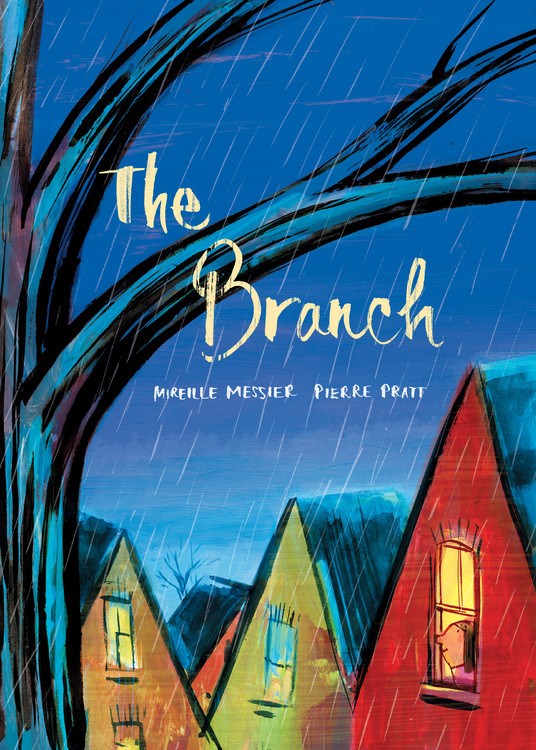
thebranchThe Branch, by Mireille Messier/Illustrated by Pierre Pratt (Sept. 2016, Kids Can Press), $16.95, ISBN: 9781771385640

Recommended for ages 3-7

A little girl’s favorite tree branch comes clattering down during an ice storm. A neighbor teaches her how to repurpose the branch, to create new memories.

What a great book to communicate so many ideas! First, we have the imagination of the tree branch. As the little girl says, the branch,”was my castle, my spy base, my ship…”, and she experiences the grief of losing the branch when she spies it on the sidewalk. She doesn’t want to part with it right away, so her mother allows her to hold onto it for a little while – long enough for the girl to encounter her neighbor, who tells her that the branch is “full of potential! …it means it’s worth keeping”, and we learn that he builds things from salvaged wood, and encourages the little girl to think about what the branch could become. When she uses her imagination and reaches into herself to reimagine the branch, she and the neighbor work together to give the branch new life.

In addition to imagination, we’ve got reusing/recycling, which is great for the environment; showing a child unwilling to discard a tree branch as a casualty of the storm, and finding ways to recreate it will get kids thinking about what they could create with objects in the world around them: cereal boxes could become robots or cities for superheroes to protect; old cans can become pencil holders; soda bottles can become terrariums. There are thousands of ideas on the Internet, so there’s no need to wait for Earth Day to come around again to make kids aware of the fun things they can make when they reduce/reuse/recycle.

Finally, we’ve got making: the whole creative process is here: sketching out plans, sawing, planing, drying the wood, waiting, waiting, waiting. It’s a great book to feature with The Most Magnificent Thing, HowToons, and fun nonfiction books, like those in the Make series. Encourage kids and parents to work together on anything from paper airplanes (great use of catalog paper) to repurposing a tree branch – large or small – of your own.

Mireille Messier is a Toronto-based author who’s had over a dozen books published in French. She’s also one of the French reviewers for the National Reading Campaign. Her website is available in English or French and offers information about her books, school visits, and her blog. Pierre Pratt is an award-winning illustrator of over 50 books for children. He lives and works in Montreal, Quebec, and in Lisbon, Portugal.