Posted in Fantasy, Fiction, Middle Grade, Tween Reads

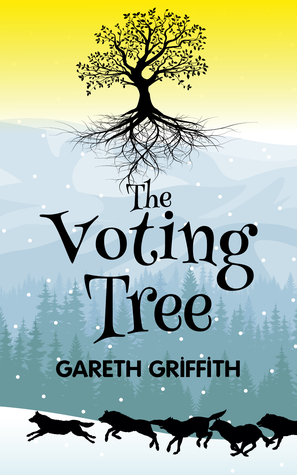
Indie Spotlight: The Voting Tree by Gareth Griffith

The Voting Tree (The Pelagius Chronicles, Book 1), by Gareth Griffith, (Nov. 2018), $10.25, ISBN: 978-1729264485

Ages 10-13

The Voting Tree is an epic fantasy taking place across two worlds: Sydney, Australia in the year 2000, and a fantasy kingdom called the Land of Pelas. In the current world, Sam Archer is a middle schooler who’s just moved to Sydney, thanks to his dad’s new job. He starts school where he meets new friends Hamish, Sylvia, Athena, and Oscar… and the local bullies, who target Sam and his group of friends for being “freaks”. In the fantasy world of Pelas, there’s open war as Lord Boreas slays his brother, the king, and his wife; their child, Pelagius, is sent into hiding and will live in exile until he’s old enough to retake his father’s throne. Back in Sydney, Sam and his friends gather around a fig tree near their school, and discover that it’s a portal to Pelas, where they meet Pelagius and join his quest. Sam and his friends all have special abilities in this fantasy world to guide them and Pelagius on their way, and time works differently here: they can spend hours in Pelas, but almost no time has passed when they return home. At times, the differences between the two worlds made for a challenging transition, especially because there isn’t a lot of involvement with each of the worlds. Their time in Pelas does lead to character growth and confidence, making this a nice hero’s journey story to recommend. Characters deal with family stress, bullying at school, and inaction on the part of the teachers. Give this to your fantasy readers who love Garth Nix.
Posted in Fantasy, Tween Reads

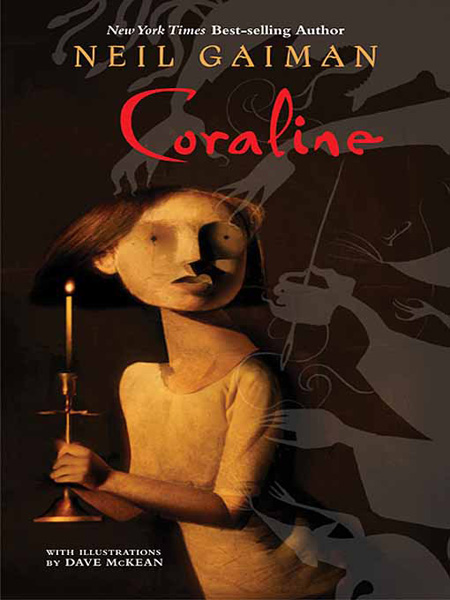
Book Review: Coraline, by Neil Gaiman (illus. by Dave McKean) (HarperCollins, 2002)

Recommended for ages 10+

Coraline is a dark fantasy created by author Neil Gaiman. It was adapated into a graphic novel (2009) and an animated feature (2009).

Coraline is a young girl who moves into a new home with her parents and feels out of place. Her parents don’t seem to have too much time for her, so she goes exploring and meets some of her odd new neighbors and the neighborhood cat. One night, she discovers a hidden doorway that leads to a parallel world; it’s here that she meets her “Other Mother”, who seems to have all of the time in the world for Coraline and always makes delicious meals. She desperately wants Coraline to stay, but there’s something… strange… about the Other Mother. As Coraline visits more often, she discovers that the Other Mother is not at all what she seems, and she’ll need the help of the neighborhood cat – who isn’t exactly what he seems, either – to save herself and her family. 

Neil Gaiman has been writing dark fantasy since the 1989, when he revived the DC Comics title The Sandman. He brings his creepy fantasy worlds to children as easily as he does to his older audience, and often makes some of his most unsettling characters adorable. His main characters often go against the grain, and Coraline is no exception – she is an independent, stubborn, curious girl who loves a good adventure; she’s also a smart heroine who can work her way out of a tight situation.
 
Mr. Gaiman creates memorable images with his words – visions of The Other Mother will stick with kids and adults alike and Coraline’s odd neighbors come with their own strange charm that smoothly made the transition from print to screen. His descriptions allow the reader’s imagination to run wild without ever worrying about going over the top – because there simply is no limit.
 
Coraline has won numerous awards, including the 2003 Hugo and Nebula Awards for Best Novella and the 2002 Bram Stoker Award for Best Work for Young Readers. Neil Gaiman’s Mouse Circus website – a Coraline reference – is geared toward his younger readers and offers information about the author, downloadable computer wallpaper, and video interviews and book trailers.
Posted in Fantasy, Post-apocalyptic/Dystopian, Science Fiction, Tween Reads

Book Review: A Boy and His Bot, by Daniel H.Wilson (Bloomsbury, 2011)

Recommended for ages 9-12

On a class trip to a Mek Mound, an ancient Oklahoman Indian land mound reminiscent of the Egyptian pyramids, sixth grader Code Lightfall discovers Mekhos, a manufactured, experimental world inhabited by robots and long forgotten by humans. The world is under the grip of the evil tyrant Immortalis, bent on the world’s destruction; it falls to Code and Gary, an atomic slaughterbot brought to life by Code’s imagination and Mekhos technology, to find the Robonomicon and save the day.

A Boy and His Bot is a journey to Oz tale for a more modern age, complete with beautiful and deadly surroundings like the Toparian Wyldes, the beautiful forest maintained by a race of robots who trim and sculpt anything in their way, their upkeep programming overriding any other directive. Where Oz has a benevolent wizard, Boy  has Immortalis, the evil overlord who pushes all robots to the day of The Great Disassembly, when all of Mekhos will be undone. Code’s main objective, beyond stopping The Great Disassembly from taking place, is to get back home.

I have noticed that heroes in “boy books” often come from dysfunctional families, and Code is no exception. A shy boy, picked on by some classmates, ignored by others, Code is grieving the disappearance of his grandfather John a year prior. His parents are not in the picture. The only positive female force in the book is Peep, the little robotic probe that befriends him and leads him to the world of Mekhos. Gary the Slaughterbot plays the part of the all brawn, no brains protector with the heart of gold.

I wonder why it is that young male characters’ families are so flawed in YA literature. Is this an accurate reflection of the state of families today, or is this the newest hook to keep young boys reading? Is it a way to reach out to young boys that may be in crisis and refuse to speak?  The combination of robotic creatures, a manmade world on the brink of destruction, and an invention like the slaughterbot alone is enough to grab a boy’s attention on the surface, but Code’s background gives him a depth that should help boys and girls alike be interested enough in his journey to travel along with him.
Daniel H. Wilson, Ph.D. is the author of How to Survive a Robot Uprising, Where’s My Jetpack, and How to Build a Robot Army. A Boy and His Bot is his first YA novel, but he has also written Bro-Jitsu: The Martial Art of Sibling Smackdown, and his Robot books are popular with older tweens and teens. He maintains an author website.