Posted in Early Reader, Intermediate, Middle Grade, Non-fiction, Non-Fiction, Non-Fiction, Preschool Reads

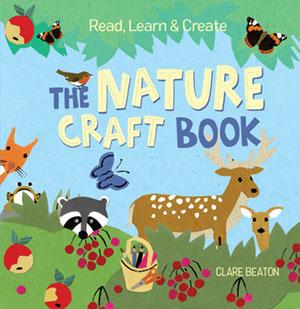
Read, Learn & Create: The Nature Craft Book is great for kids!

Hi, all! I know my posting schedule has been off the last several weeks, and I ask you all to bear with me. I’ve received a promotion and am getting into the swing of things at my new library (actually one of my first; I went back to my home away from home in Corona). I’ve been reading and furiously scribbling notes, though! More on the new digs shortly. For now, it’s back to my reviews!

The Nature Craft Book, by Clare Beaton, (May 2019, Charlesbridge), $17.99, ISBN: 978-1-58089-843-0

Ages 3=

I LOVE nature crafts, and I love easy nature crafts. My first grader has a real love for wandering the neighborhood, collecting various leaves, snail shells, sticks, rocks… anything that strikes his fancy, and we’ve gone on some great nature walks in our neighborhood and local parks. I even brought home acorns from Rochester, NY for him when I was there for a library conference. He loved them!

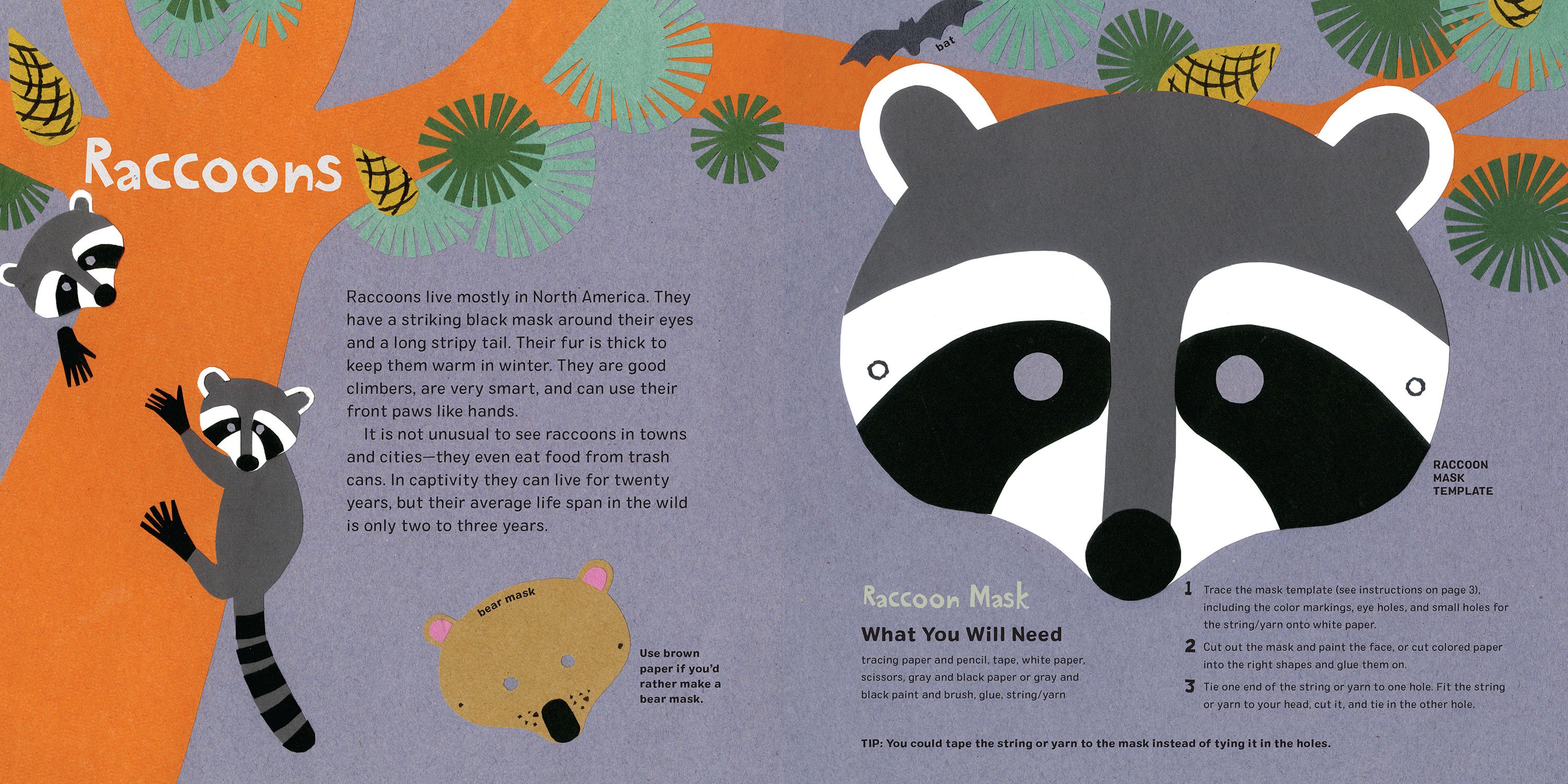
The Nature Craft Book is part of Charlesbridge’s Read, Learn & Create series (there’s an Ocean Craft Book, too!) is is loaded with ideas, templates, and facts for you and your kids to enjoy. Every craft is created with a respect for nature and our environment; a note at the beginning mentions that “it’s hard for some plants and creatures to survive where factories or farms have replaced wild places”, and encourages kids to “attract wildlife” by planting wildlife-friendly plants and flowers, putting water out for birds, and keeping nature journals. It fosters a real love and respect for our world. Activities include different bird feeders, toilet paper tube owls, leaf printing, animal finger puppets. The crafts give us a chance to reuse household objects like yogurt containers, hangers, and tissue boxes, and to create with found objects like pine combs and twigs. Even little crafters can get in on the fun, coloring and creating simple, enjoyable art.  Facts about birds, freshwater wildlife, raccoons, and other wildlife give readers a quick, overall idea of different animals and plants. The crafts are easy and can be done on a budget, which makes this spot-on for me at home or at work. My kiddo and I have already created a couple of craft projects from here and are planning winter bird feeders for our backyard. The collage artwork is adorable and labeled to introduce kids to different kinds of animals, trees, and leaves.

Grab this series for your shelves. I know I will.

Posted in Middle Grade, Non-Fiction, Non-fiction, Tween Reads

The National Geographic Kids Almanac Turns 10! Plus, a major giveaway opportunity!

Every year, the NatGeo Kids Almanac hits my library shelf, and I don’t see it for a couple of months after I put it out. It’s a little bit of everything: a desk reference; a current events recap; a guide to conservation and preservation efforts around the world; it’s loaded with gorgeous pictures of animals and amazing places all over the world, and a hilarious joke book – and that’s just for starters.

National Geographic Kids Almanac 2020, (May 2019, National Geographic Kids),
$14.99, ISBN: 9781426332814
Ages 8-12

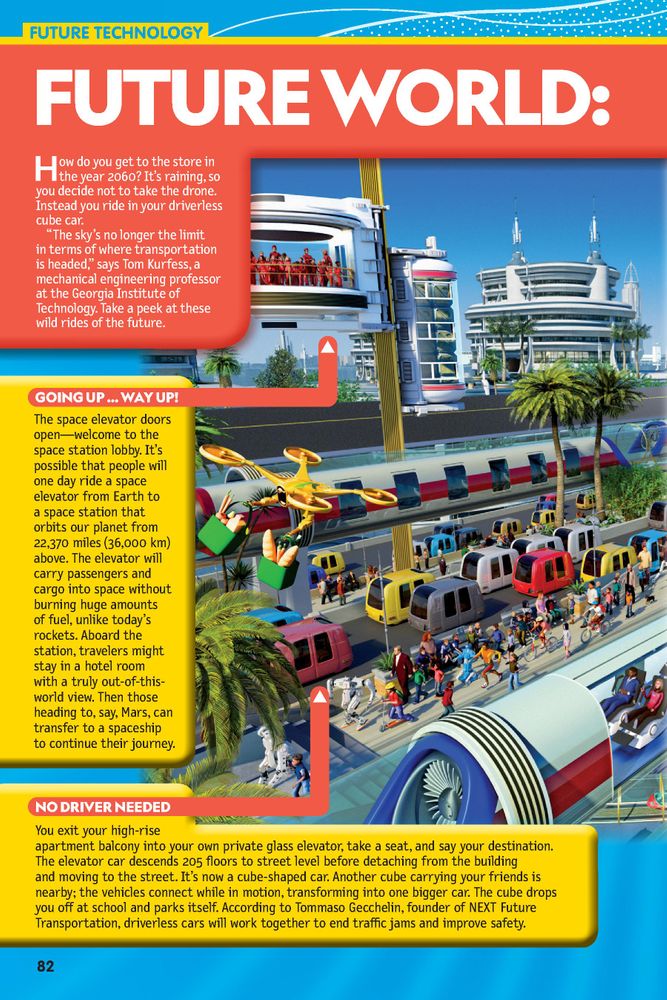
The 2020 Almanac offers all the usual facts and figures, games, and pop culture/technology/extreme exploration and conservation efforts that we’ve come to expect from NatGeo Kids, plus some new features: there are interviews with NatGeo scientists and explorers in each chapter, a special section on how the world has changed between that first NatGeo Almanac in 2010 and today, and the results of the 2019 Lions Forever Poster Contest. There’s also a new 20/20 Visionary Challenge for kids, inviting them to be futurists and imagine what the world will be like 10 years from now. It’s positive and it inspires and empowers kids to see themselves as the changemakers.

There are quizzes, homework hacks, and a section on Crafts Around the Globe that you can easily incorporate into your summer reading activities; the Space and Earth chapter fits perfectly with this year’s Universe of Stories theme, and includes a sky calendar that gives readers the heads-up on what’s happening in the coolest live show on earth: just look up to see lunar eclipses, meteor showers, supermoons, and even the International Space Station!

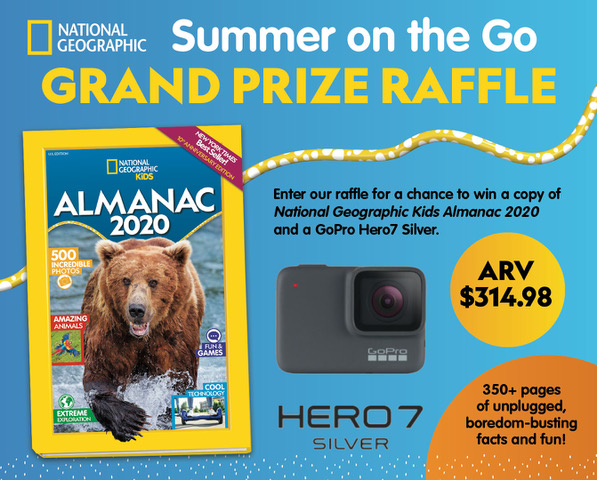
To celebrate the Almanac’s 10th Anniversary, NatGeo is hosting a Summer on the Go Almanac 2020 Grand Prize Giveaway — a GO-PRO!

Don’t miss your chance at winning your own GoPro, to capture your own extreme exploration! Enter this Rafflecopter giveaway today! (U.S. and Canada addresses only, please!)

Good luck!

Posted in Non-Fiction, picture books, Preschool Reads

Three great books about space!

The Summer Reading theme for this year is all about Space, and I am psyched. I love outer space, and I’ve got a growing list of books to add to my own readers advisory lists (I’ll put that together in the next week or two for a post). Meanwhile, Sourcebooks and Barefoot Books have three great books about space that are staggered throughout the year, and perfect for your space-faring STEM fans. Let’s check them out, shall we?
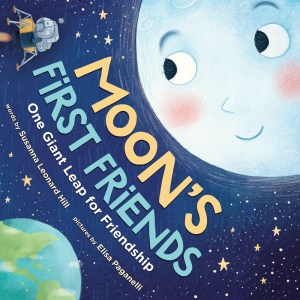
 

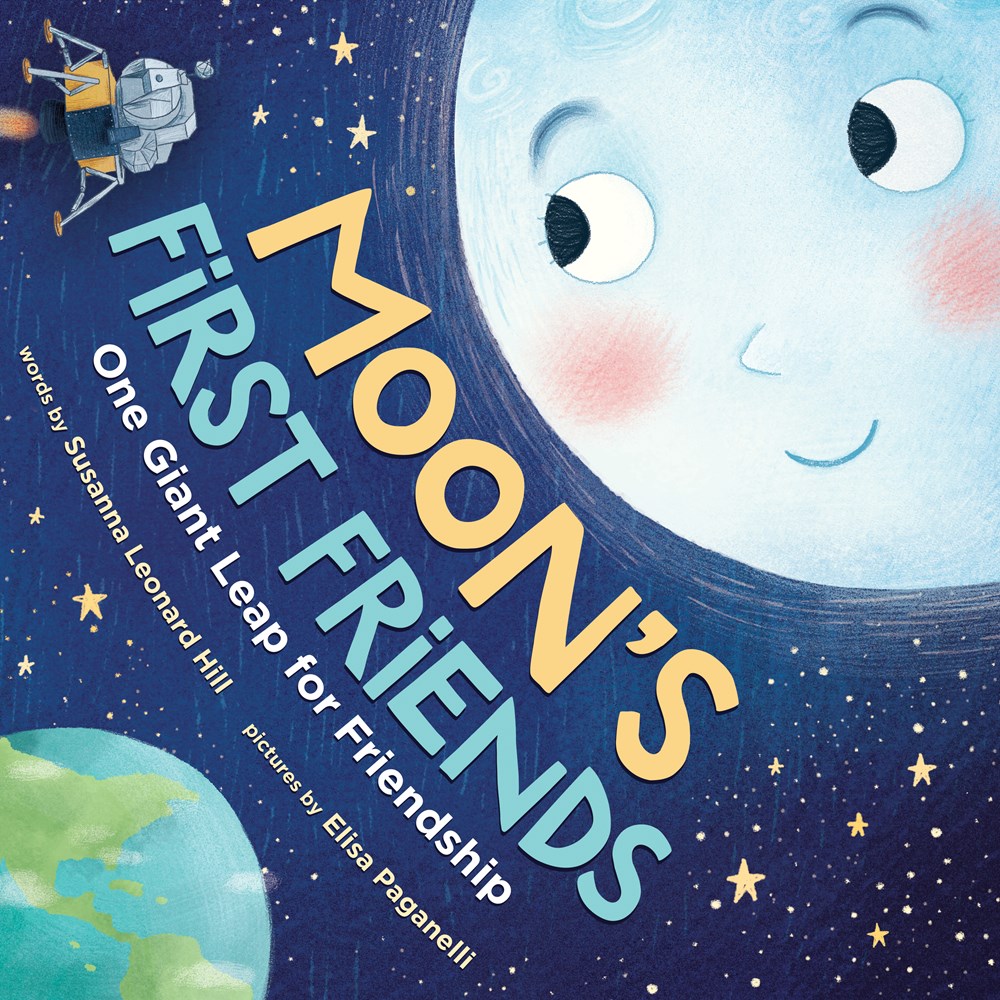
Moon’s First Friends: One Giant Leap for Friendship, by Susanna Leonard Hill/Illustrated by Elisa Paganelli, (June 2019, Sourcebooks Wonderland), $17.99, ISBN: 9781492656807

Ages 4-8

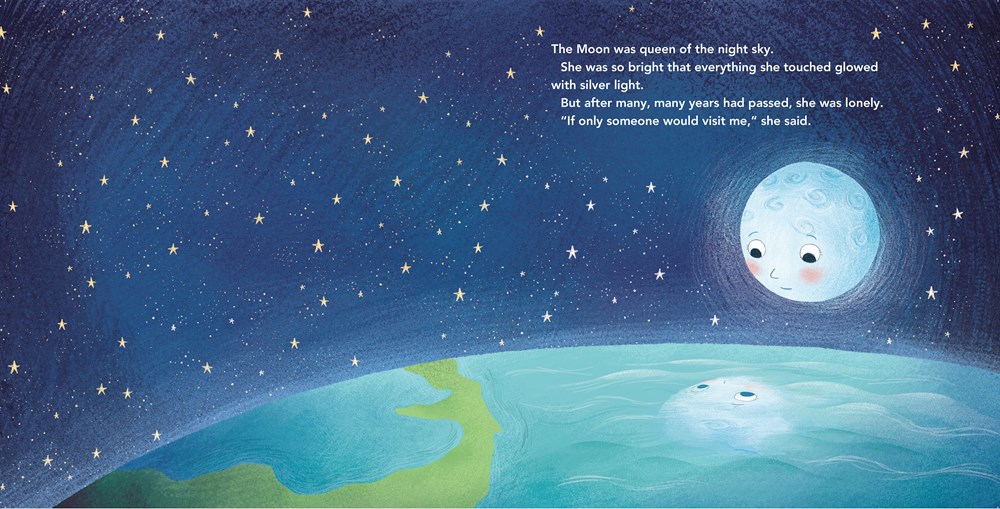
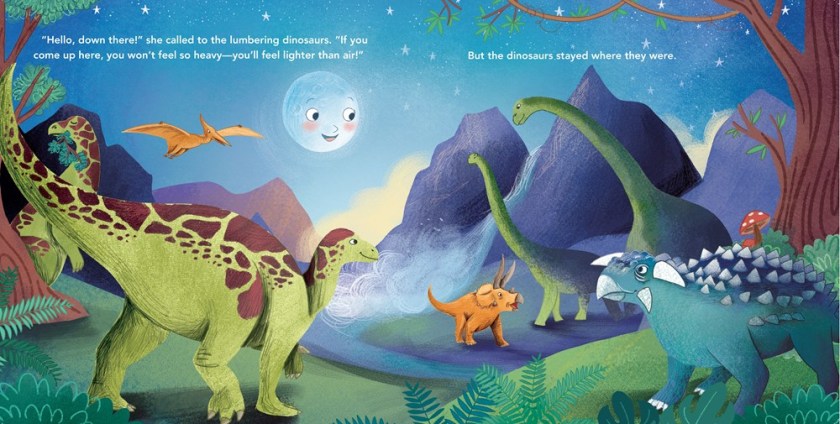
The Moon was so lonely, up in the night sky by herself. When she sees life developing on Earth, she patiently waits for someone to notice and visit her. It takes a while: the dinosaurs don’t notice; early people build pyramids and structures that just aren’t high enough. Eventually, though, she gets some visitors, and she is thrilled! She gives them presents of rocks and dust to take back to Earth, and they give her a beautiful flag and a plaque. Now, Moon is in the sky, happy and waiting for more visitors. Will you be her next guest?

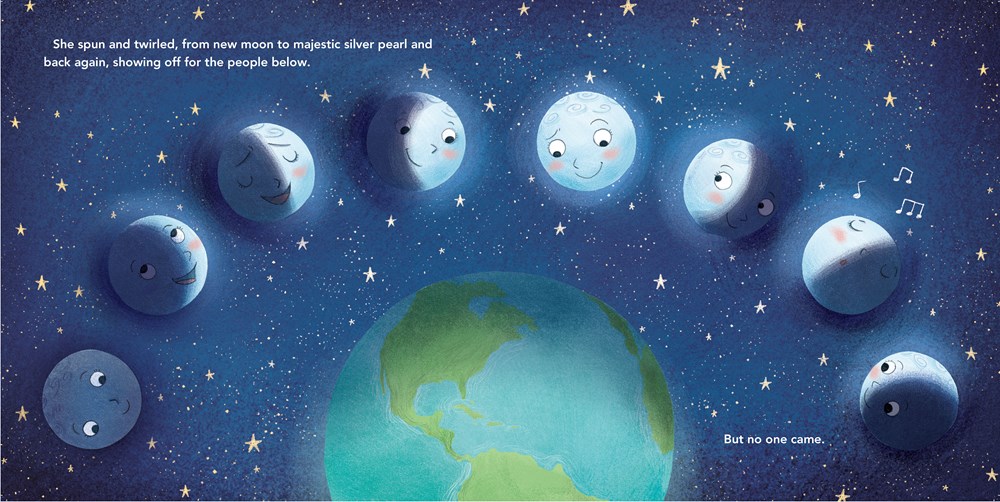
This is the sweetest story I’ve read yet on the Apollo 11 mission to the Moon. The Moon is illustrated as a softly shining, opalescent sphere with kind eyes, rosy cheeks, and a sweet smile; readers are treated to a quick history of Earth’s development as the Moon quietly observes, waiting for a friend to reach out – or up – and say hello. She even dances around the planet, showing off her phases! The actual Apollo mission takes up a brief part of the story, making this sweet book about a lonely satellite who just wants a friend an adorable storytime read for younger kids, and a fun book with solid facts for school-age kids. There’s a brief bibliography on the verso page, and back matter includes several pages dedicated to Mission Moon, the Apollo 11 voyage; moon facts, and moon phases, along with a running timeline of Earth’s formation and development. Endpapers are starry nights, where kids can imagine sailing through the stars to visit their favorite moon. Readers can also scan a QR code to hear Neil Armstrong’s historic first words from the 1969 moon landing. Gentle storytelling and adorable illustration make this a great Summer Reading addition! Display and booktalk with Stacey McAnulty’s Moon, Earth, and Sun trilogy.

 

There Was a Black Hole That Swallowed the Universe, by Chris Ferrie/Illustrated by Susan Batori, (Sept. 2019, Sourcebooks Explore), $17.99, ISBN: 9781492680772

Ages 3-8

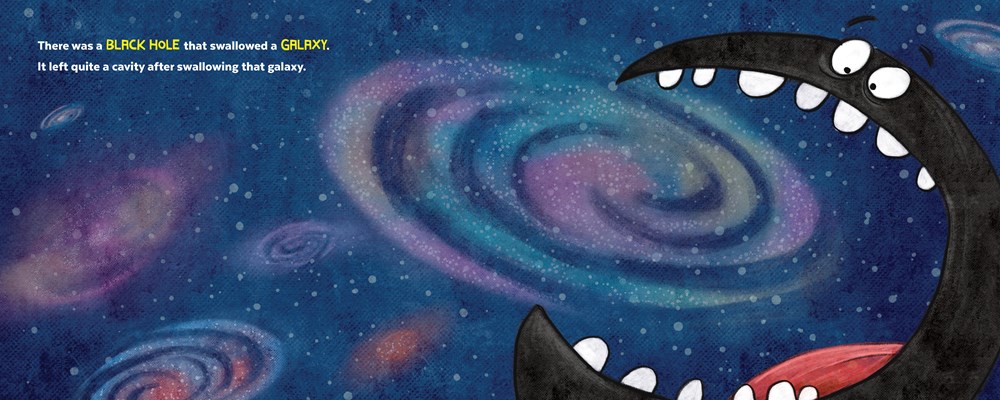
You know if Chris Ferrie is writing a book, I’m reading it. This STEM-errific take on There Was an Old Lady Who Swallowed a Fly is about a giant black hole that swallows… well, everything. He starts with a universe… it couldn’t get worse! But oh, it does: the black hole swallows planets, stars, galaxies, and atoms, molecules, and quarks along with it. Yikes!

I read this to my first grader this morning and he immediately smiled and said, “This is like The Old Lady story!”, so kids familiar with the classic tale (and all of its spin-offs) will immediately jump in and know what’s coming; how the story will progress. With each chomping, the black hole gets bigger, and the planets and heavenly bodies look hilariously terrified as they try to get away from its maw. The storytelling is fun and loaded with humor; it’s cumulative and rhyming storytelling at its scientific funniest. The illustrations are goofy, with exaggerated facial expressions that make the storytelling more dramatic and humorous as you go. Bone up on your keyword knowledge for kids who will ask during the story (neutrons, atoms, quarks, oh my!). Scientific terms are highlighted in bold yellow, and capitalized to stand out and give your readers a nice working STEM vocabulary. Shine a blacklight on the pages from back to front, and you’ll reveal a super-cool, hidden history of the universe’s creation!

Absolute fun and a must-get for your storytime collections. Be a rock star at Science Storytime! Pair this with The Universe Ate My Homework by David Zelster for more black hole-related fun.


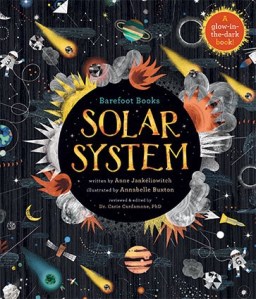
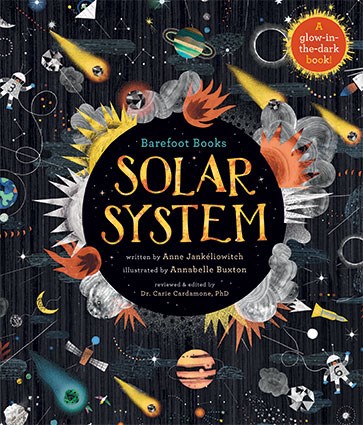
Barefoot Books Solar System, by Anne Jankéliowitch/Illustrated by Annabelle Buxton, Translated by Lisa Rosinsky, $19.99, ISBN: 9781782858232

Ages 8-12

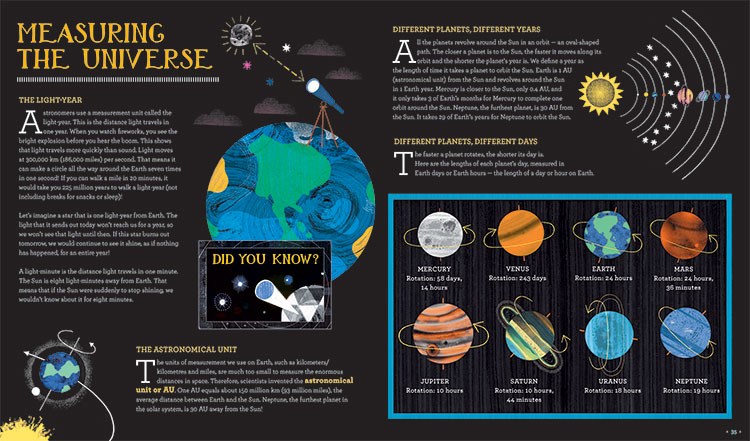
Riding high on the post-Summer Reading wave, middle grade kids can go back school and check out Barefoot Books Solar System, a glow-in-the-dark, interactive guide to our Milky Way, complete with lift the flap booklets, a pull-out map, and beautiful artwork. Originally published in French, the book has been reviewed, edited, and updated by Dr. Carie Cardamone, professor of STEM education and Boston Museum of Science teacher and educator. The text is written with a tongue-in-cheek sense of humor while delivering solid nonfiction goods to middle graders. The book covers each planet, with nicknames like :Saturn: The Space Diva”, and “Uranus and Neptune: The Icy Sisters”; the asteroid belt; differences between solid and gas planets; measuring the universe, and famous outer space voyages. The artwork is bright and bold, seeming to explode off the black pages to grab the reader’s attention.

In keeping with Barefoot’s mission of diversity and inclusivity, there is information about space exploration from around the world, making this a truly global effort. Back matter includes a comprehensive glossary of scientific terms and a note on the units of measurement used in the book. Don’t pass this one up; your 520s will shine a little brighter with Barefoot Books Solar System on your shelf.
Posted in picture books, Preschool Reads

Patience is hard: Now? Not yet!

Now? Not Yet!, by Gina Perry, (June 2019, Tundra), $17.99, ISBN: 9781101919521

Ages 3-6

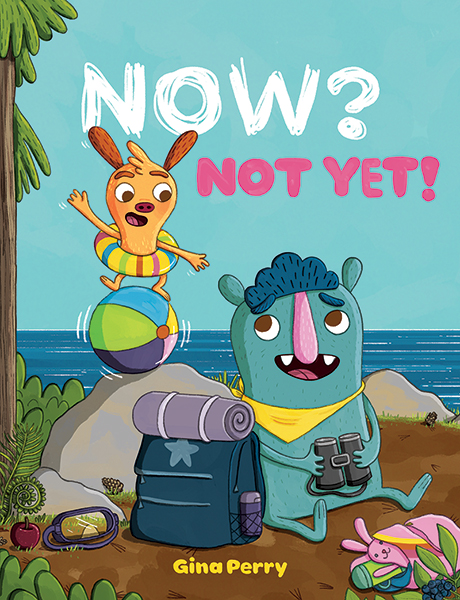
Peanut and Moe, the two monster friends from Too Much! Not Enough! are back in another story of negotiation. The two buddies are on a camping trip, and Peanut wants to go swimming. Moe has other plans, though; thus begins the back and forth of “Now?” and “Not yet”. Peanut is dying to get in the water, but Moe is methodical: Moe wants to hike; snack; set up camp, all while Peanut bounces up and down, asking the same question, until finally, in a burst of frustration, yells, “NOW! NOW! NOW!” Moe, just as frustrated, yells back, “NOT YET!” The two friends take a break from one another, during which Peanut gets camp set up, and Moe dashes by, ready for a swim. The two finish their day by a campfire, happily enjoying one another’s company over s’mores.

Now? Not Yet! beautifully captures toddler and preschooler (okay, and many, many adults) behavior. I can’t tell you how many times I’ve been out with my kids, having this same scenario play out. Every parent and caregiver will see themselves and their little ones in this story, and every kid will empathize with Peanut’s desire to do what he wants, only to be made to wait. Frustration? Kids and adults feel it, so the meltdown spread will resonate with your storytime group for sure. I’ve asked the kids in my storytime how many times they’ve felt like Peanut, and gotten loads of hollers and stomps; when I’ve asked parents if they have ever felt like Moe, I’ve gotten knowing nods and smiles. The moral of the story? Patience and compromise pay off.

Gina Perry’s books are popular with my storytime crowd: Small is still in high demand, and Now? Not Yet! really got through to kids and caregivers alike. The artwork is adorable, bright, and cherry. Peanut is small, peanut-shaped, and has floppy ears; Moe is big, blue, kind of boxy, with a long pink nose. They both have big, expressive eyes. The endpapers look like layouts of the camping excursion, each laid out by one of the duo: the front papers is more orderly, with defined art and a dotted line path to show the duo’s trip; the back papers are a hand-drawn memory of the day, with dotted lines, circling birds, campfires, s’mores, and a big lake with flippers, a beach ball, and a life preserver.

I love Now? Not Yet!, and will be putting this into regular storytime rotation. If you have toddlers and preschoolers are regular storytimes, consider adding this one. There’s a free, downloadable activity kit that includes a fun nature scavenger hunt, coloring sheets, and fun instructions to make your own indoor camping site, which I need to do with my kiddo, stat. Gina Perry’s author page has more free printables, including instructions on how to draw both Moe and Peanut.

Want more Peanut & Moe? Of course you do. Check out this adorable trailer!

Posted in Intermediate, Non-Fiction

If I Were a Park Ranger introduces kids to a green career!

If I Were a Park Ranger, by Catherine Stier/Illustrated by Patrick Corrigan, (April 2019, Albert Whitman & Co.), $16.99, ISBN: 9780807535455

Ages 4-9

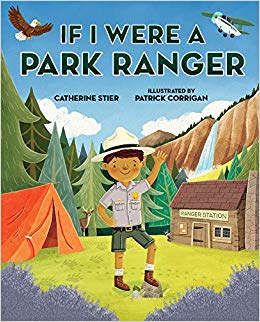
A diverse group of kids think of all the great things they’d do if they were park rangers in this picture book that takes readers across the United States for peeks at the beautiful national parks, while shedding some light on a career that you don’t often hear people talk about: the national park ranger. Catherine Stier and Patrick Corrigan provide kids with a history of the profession, and portraits of prominent figures in national parks history: Stephen Mather and Horace Albright, the founding directors of the National Park Service; Theodore Roosevelt, who created programs to protect land and wildlife, and Gerard Baker, a superintendent who brought Native American heritage to the parks, to name a few. Each child envisions himself or herself in ranger uniform, working across different locales; from desert to forest, from volcanoes to caves, battlefields and monuments; they help campers, they protect nature and wildlife, and they report emergencies that threaten our national parks.

Each spread is labeled, introducing readers to a different park. The group of rangers is racially diverse, as are the park visitors; the artwork is colorful and earth-toned, showing lush greens, calming blues, and warm browns of the lands. Deserts like Death Valley National Park get a beautiful orange and violet spreads. The author talks about her love of national parks, and how national parks contribute to STEM and art learning; there is also a note on how to become a park ranger, complete with a link to the National Park Service for becoming a Junior Ranger.

This is a fun addition to career sections, and an overall good book to introduce when talking about nature, environmentalism, and preservation. There are free, downloadable activity pages available, too! For kids interested in learning more about the US National Parks, recommend Ranger Rick’s Travels: National Parks.

Posted in Intermediate, Middle Grade, Non-fiction, Non-Fiction

New York City gets a park: A Green Place to Be

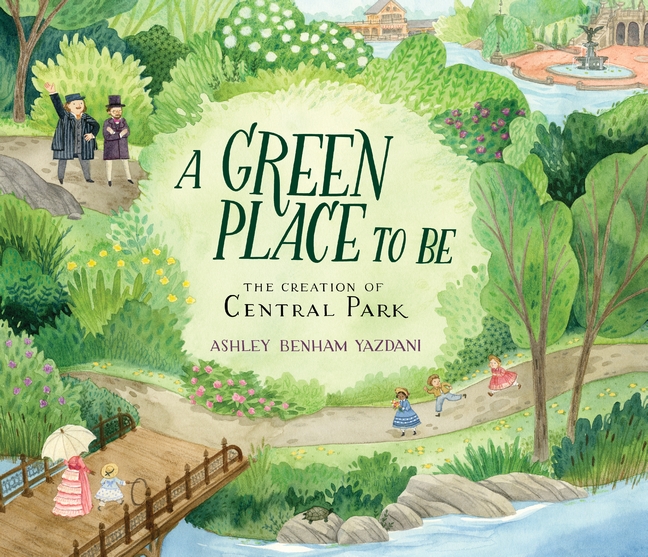
A Green Place to Be: The Creation of Central Park, by Ashley Benham Yazdani, (March 2019, Candlewick Press), $17.99, ISBN: 9780763696955

Ages 7-10
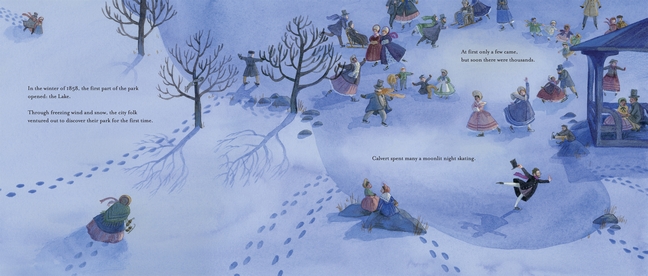
This beautiful and lushly illustrated history of Central Park starts with the land’s beginnings, as a barren area where farm animals and industrial waste left much to be desired, and the design contest devised by architect Calvert Vaux – a contest that he also entered with every intention of winning. A Green Place to Be follows Vaux’s and park superintendent Frederick Law Olmsted’s vision, focusing on their planning, execution, and invitation to artists to join in the effort. The winter of 1858 saw the first park of the park, the Lake, open for visitors; in the summer of 1859, the woodsy Ramble joined the landscape, followed by the Children’s District.

Illustrated in watercolor and pencil, this is a loving tribute to an iconic green space and the men and women who created it. Back matter includes profiles of both Olmstead and Vaux, and a Q&A on spaces within the park. Sharp-eyed readers will love returning to the illustrations again and again to find squirrels, bridges, and other affectionately placed details. There is an author’s note and bibliography for further reading.

A Green Place to Be is a love letter to New York’s green spaces and creativity. Central Park’s website has extensive information about the park, including a calendar of events and links to social media. Planetizen has a good article on teaching urban planning to preschoolers; this could be a fun activity where kids can learn and create their own green spaces! National Geographic has a fun Design a Park activity for middle grade kids, and the STAR Library Network has a printable Design a Park activity that will work with large groups of kids. It’s a fun springtime program!

Posted in picture books

An unexpected nature preserve crops up in the DMZ

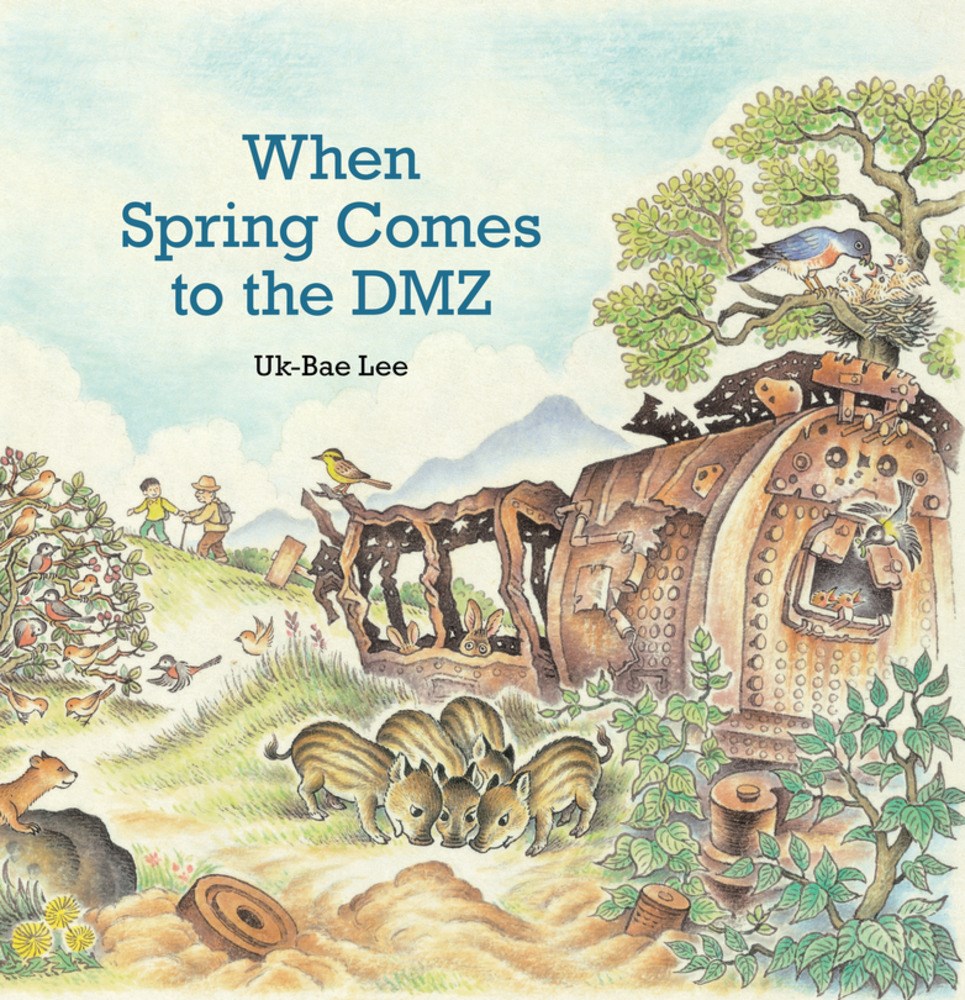
When Spring Comes to the DMZ, by Uk-Bae Lee, (March 2019, Plough Publishing), $17.95, ISBN: 9780874869729

Ages 4-8

Established in 1953, The DMZ – the demilitarized zone separating North and South Korea – has, over time, become a nature preserve, with plants and animals living and thriving amid the razor wire, soldiers, and military machines. When the Spring Comes to the DMZ introduces readers to the DMZ throughout the seasons, illustrating how wildlife lives almost effortlessly – razor wire ever-present in the background, husks of man-made machinery now home to animal families – and through the eyes of a boy and his grandfather, who visit the DMZ so grandfather can look out at his former home with bittersweet longing. It’s a reaffirmation that life goes on for some, but for others, that life is painfully halted in place, while years pass.

The artwork is beautifully subdued, with soft greens and browns dominating the pages. The story is told in simple, sweet, almost heartbreaking statements: “When spring comes to the DMZ, green shoots spring up in the meadows./But you cannot go there because the razor wire fence is blocking the way”. This spread, viewed as through a telescope, puts us in grandfather’s place, and communicates some of the heartache he must feel; having home be so close, yet unreachable.

When Spring Comes to the DMZ is a book that works for social studies and current events read-alouds, and would pair nicely with similar books about refugees and immigrants, including Anne Sibley O’Brien’s Someone New and I’m New Here and Bao Phi’s A Different Pond. Reading When Spring Comes to the DMZ alongside Nicola Davies’ When War Came allows for a discussion about the aftermath of war; while DMZ doesn’t mention the Korean War in the story itself, the back matter fills in necessary information, along with an exhortation for peace. There is little in print for children about the North Korea and the DMZ, making this an important book to include in social studies and current events collections.

When Spring Comes to the DMZ has a starred review from Kirkus. Shelf Awareness has a wonderfully detailed review.


Posted in picture books, Preschool Reads

Noah Builds an Ark brings shelter from the storm

Noah Builds an Ark, by Kate Banks/Illustrated by John Rocco, (March 2019, Candlewick Press), $16.99, ISBN: 9780763674847

Ages 3-8

A boy named Noah knows there’s a storm coming. As his parents get ready to ride out the storm and keep their family safe, so does Noah. He re-purposes his red wagon into an ark to hold his animal friends, building a roof, gathering food, and furnishing the ark to keep his garden friends safe. When the storm arrives, Noah and his family are safe and warm, and so are the frogs, birds, snakes, mice, spiders, and beetles Noah has sheltered within the ark. When the storm passes, Noah is relieved to see the animals made it through, and the garden returns to life.

This is a lovely, non-theological retelling of the famed tale. Noah is an boy of color living in an urban setting who clearly enjoys nature, as evidenced by his compassion and empathy in creating a safe space for the wildlife in his backyard and by his animal companions present throughout the process: a bird sits on the fence with him as he sees the storm clouds rolling in; a butterfly sits on his foot as he lays in his yard; a grasshoper keeps him company as he assembles the ark. The narrative moves between Noah’s parents preparations, and Noah’s, with him echoing his parents’ sentiments such as, “We need to get ready”, “Better be prepared”, and, as the storm moves in, “Come”. It’s a wonderful example of modeling that parents and caregivers will recognize and that kids will relate to.

John Rocco’s pencil, watercolor, and digital artwork is realistic and subdued. The human faces are gentle and kind, the gestures warm and pleasant. Noah Builds an Ark is a story of compassion, nature, and life, and it’s a great storytime pick. Noah Builds an Ark has a starred review from Kirkus.

Posted in Intermediate, Non-Fiction

Explore our natural world with Wilderness: Earth’s Amazing Habitats

Wilderness: Earth’s Amazing Habitats, by Mia Cassany/Illustrated by Marcos Navarro, (Apr. 2019, Prestel Publishing), $19.95, ISBN: 9783791373720

Ages 6-12

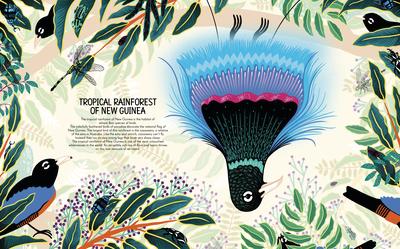
There are incredible wildernesses all over the world. Wilderness: Earth’s Amazing Habitats is an introduction to 16 rare plant and animal habitats across the world, from the Amazon Rainforest in South America to the Tropical Rainforest of New Guinea. It’s also a call to action, reminding readers that these wildernesses require protection to keep them safe; Mia Cassany cites deforestation and human intervention as having a disastrous impact on the habitats and the species that live within. So let’s take a look at, as author Mia Cassany says, “the most stunning nature show on earth”!

Beautifully illustrated endpapers bring you into the book with large, colorful tropical leaves – and eyes peeking out of the darkness – drawing you into the wildnerness from the beginning. An opening spread contains an author note on the importance of conservation and preservation, and a world map includes illustrated points where habitat is located. Two-page spreads feature stunning, full-bleed illustrations of every habitats; a brief description gives readers an idea of location and species inhabiting each spot, but it’s the art that’s front-and-center here. Bright, colorful, and lush, we see lowland gorillas peering out of the brush in Kahuzi-Biéga National Park in the Congo; a colorful, day-glo spread starring a panda, wild golden monkeys, and golden pheasants in China’s Qinling Mountains, and a stunning gecko camouflaged against leaves in the tropical rainforest in Madagascar. Back matter provides animal names, locates them on the page (they can be hard to spot!), and a brief, informative paragraph on each.

This is a beautiful coffee table book, and a nice addition to your natural history collections. It’s not a standalone book, but a gorgeous companion book to any unit on habitats and nature studies.


Posted in Family Storytimes, picture books, Preschool Reads, Storytime, Toddler Reads

Saturday Storytime: Mindfulness and Wonder

I had a Saturday storytime a couple of weeks ago, and used it as a testing ground for some new books. A nice theme of mindfulness emerged, with a smidgen of wonder underneath; the kids and parents alike seemed to really enjoy this one. I created a short YouTube playlist to show videos for the singalong parts of the storytime; you can use this one, too, or build on it. Now, onto the books!

You Are Light, by Aaron Becker, (March 2019, Candlewick), $15.99, ISBN: 9781536201154

Ages 2-8

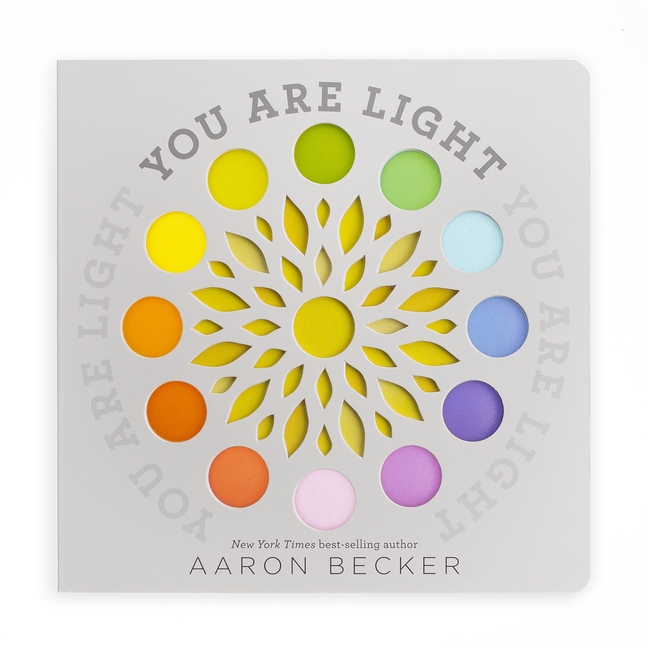
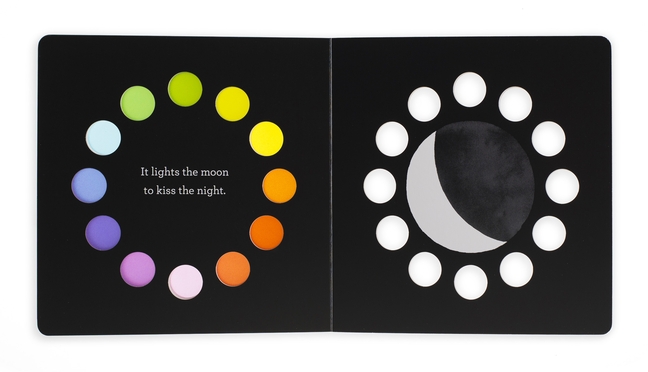
I started off with this gorgeous board book by Aaron Becker. The cover has a beautiful die-cut sun and circles; when you hold it up to the light, the effect is really stunning. The book is a rhyming meditation on the relationships between everything in our world: “This is the light that brings the dawn/to warm the sky and hug the land/It sips the sea to make the rain,/which waters wheat to grow the grain”. Each page highlights a facet of the world: sun, fire, water, wheat, leaves, a flower, the moon, and finally, a multicolored mandala with a human form inside of it. The die-cut circles shift in color as each spread progresses, always keeping the readers’ attention and reminding us that all things are connected, including us. The watercolor art is elegant, simple, and lovely; the pacing and text is thought-provoking and soothing. I saw parents cuddle their little ones while the bigger kids reveled in the shifting colors on each page. Aaron Becker does it again, bringing a board book with incredible depth for readers to love. This is going into my regular storytime rotation: it’s beautiful to look at, soothing to read and hear, and inspires thought and affection.

Aaron Becker is a Caldecott Honor-winning author of the Journey picture book trilogy and A Stone for Sascha. His author website has a wealth of free downloadables for parents, caregivers, and educators. You Are Light has starred reviews from Kirkus and School Library Journal.

The Whole Wide World and Me, by Toni Yuly, (Feb. 2019, Candlewick), $15.99, ISBN: 9780763692636

Ages 2-6

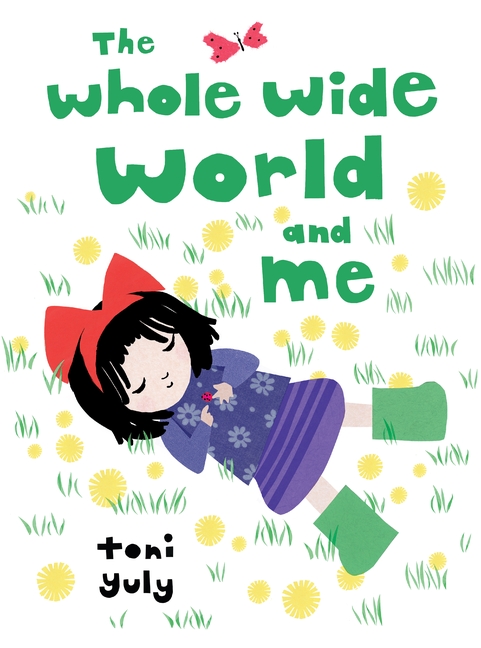
A young girl considers the world and her place in it in this beautifully illustrated book. This is another story about how we, and nature, are all connected; the story reads like a gentle meditation: “Like a flower/in a field…/like a fish…/in a pond…/like a cloud…/in the sky…/so am I”. It’s a story of being present, being mindful, and reads almost like a mantra. This would easily be as at home in a yoga or meditation storytime as it is in a traditional storytime. The ink, charcoal, torn tissue, cut paper, and digital collage artwork comes together and provides texture, with bright, bold colors adding a sweet, childhood feel that will bring the grownups in the room back to days when they would climb a tree, lay on the grass, or stick their toes in the water in a pond or at the beach. The artwork is perfect for a post-storytime craft where kids can make their own torn paper collage art.

The Whole Wide World and Me was another hit; I encouraged the kids to stretch to touch the clouds and pretend they were trees; bloom like a flower, spreading their hands wide and raising them up over their heads; and waving like a leaf floating from a tree. I’d pair this with Tiny, Perfect Things and Gina Perry’s Small for another storytime, too.

The Whole Wide World and Me has a starred review from Kirkus.

Stardust, by Jeanne Willis/Illustrated by Briony May Smith, (Feb. 2019, Nosy Crow), $16.99, ISBN: 9781536202656

Ages 3-8

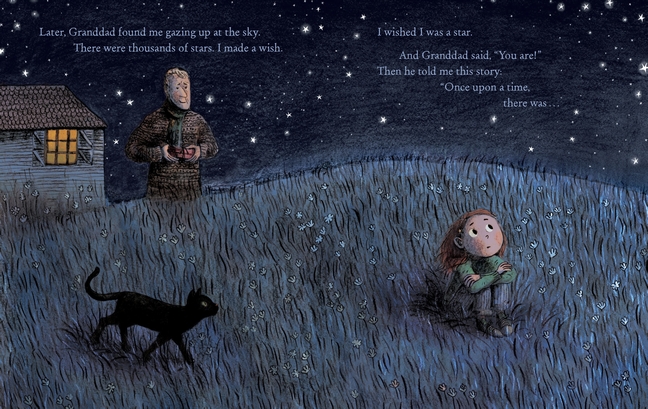
A little girl dreams of being a star, but she always ends up in her sister’s shadow. Whether it’s finding her mother’s ring, knitting a scarf for her grandfather, or entering a costume contest, the girl’s sister outshines her in everything she does, but Grandpa is in her corner, cheering her on. He tells her that of course she’s a star: he explains the Big Bang Theory to her and how we are all made of stardust, and that she just “shines in [a] different way” from her sister. It’s a message that stays with the girl, as we later discover.

Stardust is one of those stories we can all relate to: there’s always someone better, smarter, funnier… sibling or no, Stardust speaks to us all and reminds us that we all have gifts, we all have something that makes us special – we’re just special at different things. The mixed media artwork gives a multilayered feel to the story, and Briony May Smith’s use of shadows give depth to her spreads. The spreads devoted to the birth of the universe are breathtaking, and placing the girl and her grandfather within those spreads is genius; it gives a real sense of the universe and our place in it, and a source of inspiration for kids everywhere.

The kids enjoyed this one, especially the outer-space spreads. I’d pair this with The Stuff of Stars by Marion Dane Bauer and Jordan Crane’s We Are All Me for future storytimes and displays.