Posted in Early Reader, Non-Fiction, Preschool Reads

Real-Life Paw Patrol: NatGeo Kids brings you Doggy Defenders!

This has to be one of the most adorable easy nonfiction series I’ve come across yet: National Geographic Kids has a new series, Doggy Defenders, that introduces readers to working dogs: Willow, The Therapy Dog; Tiger, the Police Dog; Dolley, the Fire Dog; and Stella, the Search Dog. Look at these doggies!

from NatGeoKIDS Twitter @NGKIDS

Each book introduces us to a working dog, their humans, and takes us through a training session and a workday. Stella the Search dog and her human, Trooper Diaz, find a lost hiker; plus, she gets to ride in a helicopter and wears sunglasses! Tiger the Police Dog works with Officer Rodriguez and inspects the Washington, DC Metro. Dolley the Fire Dog and her human, Captain Herndon, teach kids about fire safety and then get to work, where Dolley sniffs out the cause of a fire. Willow the Therapy Dog and her human, Megan, cheer people up by visiting a hospital, a school, a retirement home, and a library.

Each book includes back matter on the team, including a Q&A with the human half of each team, and safety and kindness tips for readers to remember. The books have short, easy-to-read sentences with loads of sight words, making this a great step up for early readers who are ready to take on more challenging material. And the photos! The photos! Look at Stella and her sunglasses!

And here’s Willow with Megan!

I love these books, and hope we get more in this series. These work as early nonfiction career books, too; they can function as companion books to books on firefighters, police, and therapists. The kids in my library will gobble them up, and my kiddo devoured all four the day they arrived at my home. Got Paw Patrol fans? Show them these books and tell them these are the real Paw Patrol dogs! Visit National Geographic Kids’ Doggy Defenders site for a slideshow and more information about the books.


Stella the Search Dog, by Lisa M. Gerry/photos by Lori Epstein, (Aug. 2019, Natonal Geographic Kids), $9.99, ISBN: 978-1-4263-3449-8

Willow the Therapy Dog, by Lisa M. Gerry/photos by Lori Epstein, (Aug. 2019, Natonal Geographic Kids), $9.99, ISBN: 978-1-4263-3447-4

Tiger the Police Dog, by Lisa M. Gerry/photos by Lori Epstein, (Aug. 2019, Natonal Geographic Kids), $9.99, ISBN: 978-1-4263-3297-5

Dolley the Fire Dog, by Lisa M. Gerry/photos by Lori Epstein, (Aug. 2019, Natonal Geographic Kids), $9.99, ISBN: 978-1-4263-3229-9

Ages 3-7

Posted in Intermediate, Middle Grade, Non-fiction, Non-Fiction

More Weird But True Facts for all those barbecue conversations!

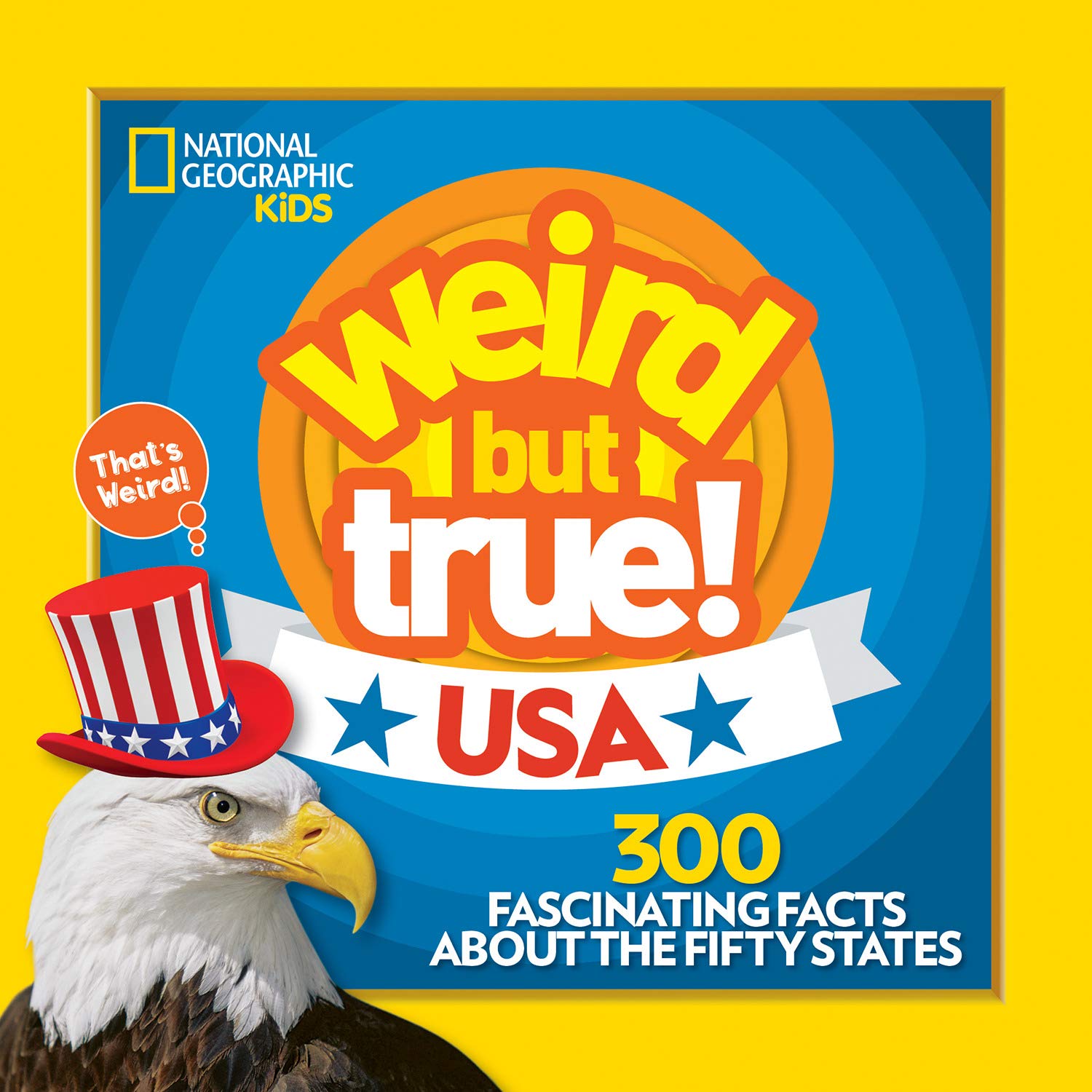
Weird But True! USA: 300 Fascinating Facts About the 50 States, by National Geographic Kids, (March 2019, National Geographic Kids), $8.99, ISBN: 9781426333712

Ages 7-12

You’ve got a lot of barbecues to hit this summer. Family, friends, someone’s having a BBQ, somewhere, and you’re invited. What better way to keep a conversation going than to bust out some weird – but true! – facts about the US of A? NatGeo Kids has kids (and grownups, too: you know you love these books) covered with their latest digest-sized Weird But True facts, easily carried in your favorite tote.

Dazzle friends and family with goodies about our states! Did you know that the average driver in New York City spends more than 100 hours a year looking for a parking spot? (I did, just ask my husband.) Or the Pledge of Allegiance was written for a magazine to help sell subscriptions? How about one of my favorites: the Washington National Cathedral has a Darth Vader gargoyle? Seriously, this this knowledge has made my day.

The NatGeo books just get better. Where do they find all these wacky facts? I hope they keep doing whatever they’re doing, because I love them, my own kids love them, and the kids in my library can’t get enough of them. Add these to your NatGeo collections and just sit at the reference desk and wait for them to come at you with their favorite facts.

Posted in Middle Grade, Non-fiction, Tween Reads

STEAM into Summer!

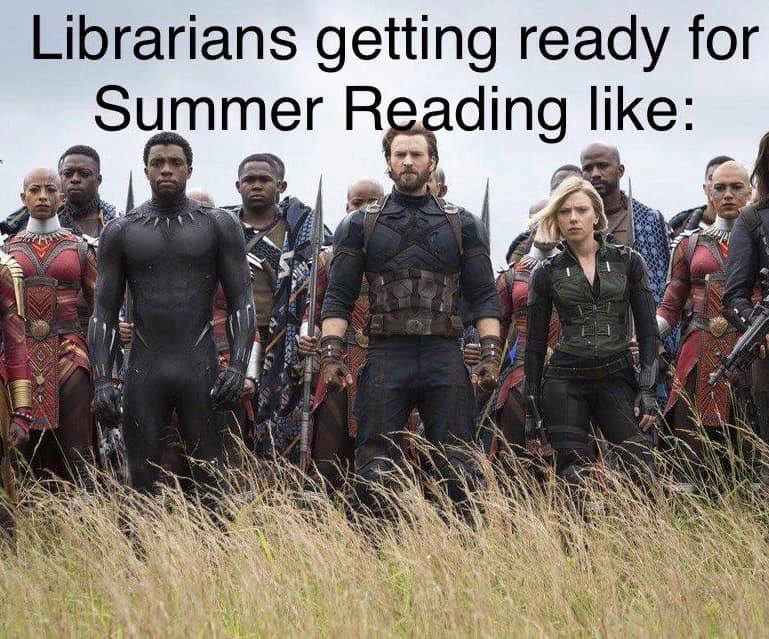
Summer Reading is the best – and craziest – time for librarians. We’re planning intense levels of programming, ordering books and putting lists together like mad, and just waiting for that last day of school, when the kids will storm the library like… well, let the Avengers tell you.

It’s real.

NatGeo Kids was kind enough to send some books my way to check out and talk up for my STEM programs this summer. Let’s take a look!


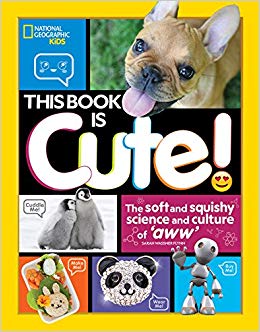
This Book is Cute! The Soft and Squishy Science and Culture of Aww, by Sarah Wassner Flynn,
(March 2019, National Geographic Kids), $12.99, ISBN: 9781426332944
Ages 5-12

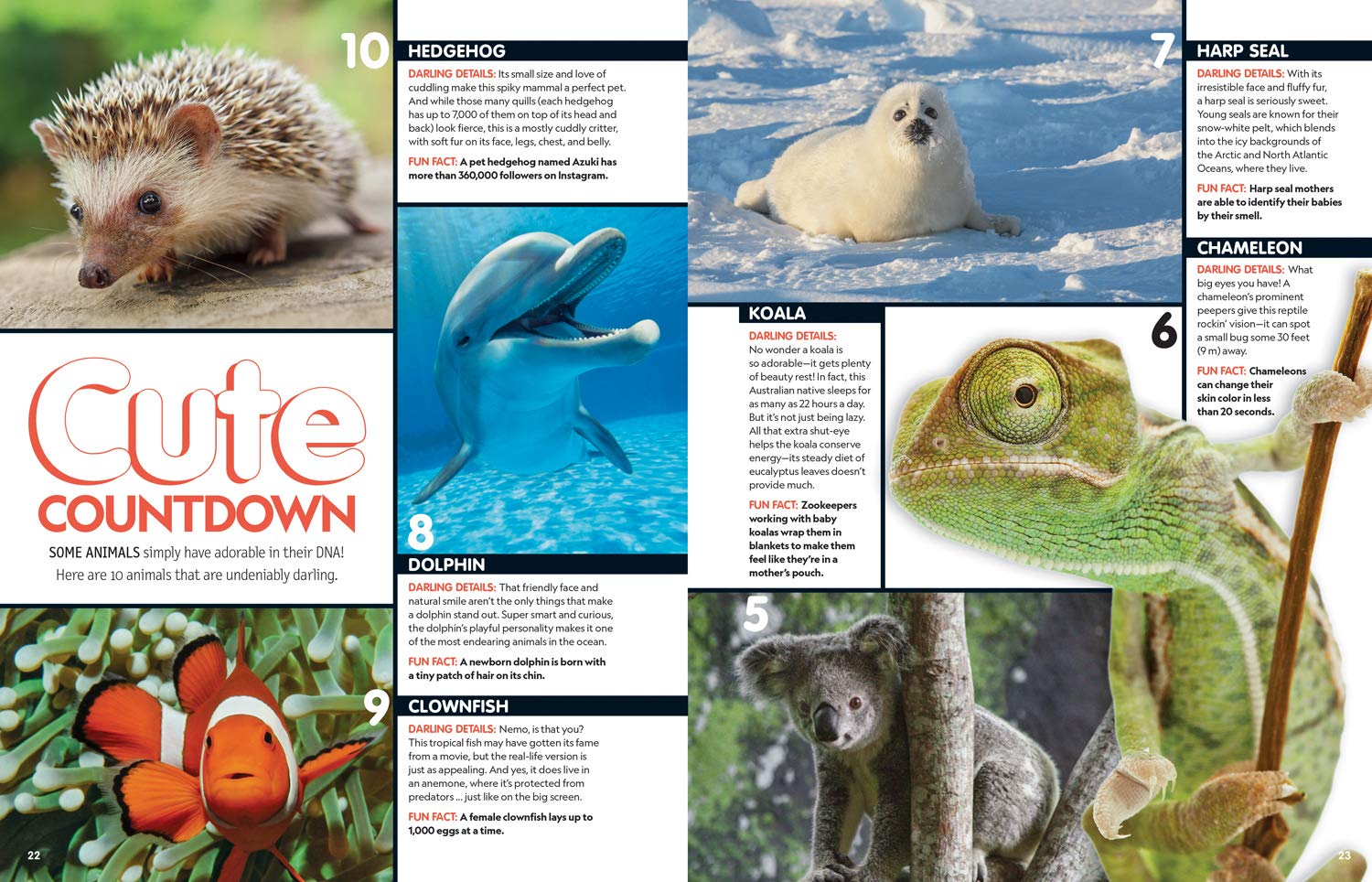
Can you believe there’s a science to cuteness? Of course NatGeo Kids would get to the bottom of this! Cute foods! (More attractive to eat!) Cute (human and animal) babies! (Trigger emotions in us that make us protect and care for them!) Cute clothes and toys! (We can’t get enough of ’em!) This Book is Cute is 112 pages of high-pitched squealing, science, and lists of cute animals, cutest jobs ever (I would like to apply for the Cat Cuddler spot, please), even appliances. Put up a bulletin board and see how many cute animals or food your kids can identify, or test their Cute IQ using the quiz in the book. This Book is Cute! is absolutely adorable; kids will go crazy for it and so will you.

Ages 8-12
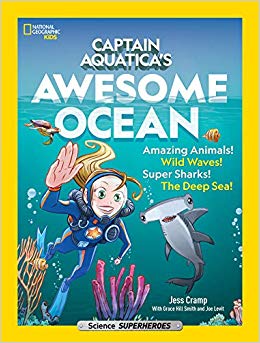
A companion to Dr. E’s Super Stellar Solar System and Dirtmeister’s Nitty Gritty Planet Earth, Awesome Ocean takes readers underwater exploring with cartoon superhero Captain Aquatica and her hammerhead shark sidekick, Finn. Shark researcher and marine conservationist Jess Cramp is the real-life version of Captain Aquatica, and leads readers through chapters on the ocean; waves, tides, and water; sharks and marine life; underwater technology; ecosystem engineering, and the critical importance of conservation. Moving back and forth between a comic book adventure and factual explanation, the book is loaded with incredible photos, fact boxes, and easy experiments that kids and families can do at home. There are scientist profiles – I love these, because they introduce readers to even more scientists than they’ll meet in our biography aisles – a glossary, index, and book and website resources for more exploration. NatGeo books are amazing because they always make sure to empower kids to make the world a better place, providing ways to get involved and start making changes. Their photos are consistently fantastic, and I love having as many of their books as possible in my library. If a parent or kid comes in looking for nonfiction about the natural world or animal book suggestions, I bring them to NatGeo books first. Display this set together, if you have them, and direct your readers to a series that looks at the big picture: earth, ocean, and space.
Luna: The Science and Stories of Our Moon, by David A. Aguilar,
(June 2019, National Geographic Kids), $17.99, ISBN: 9781426333224
Ages 8-12
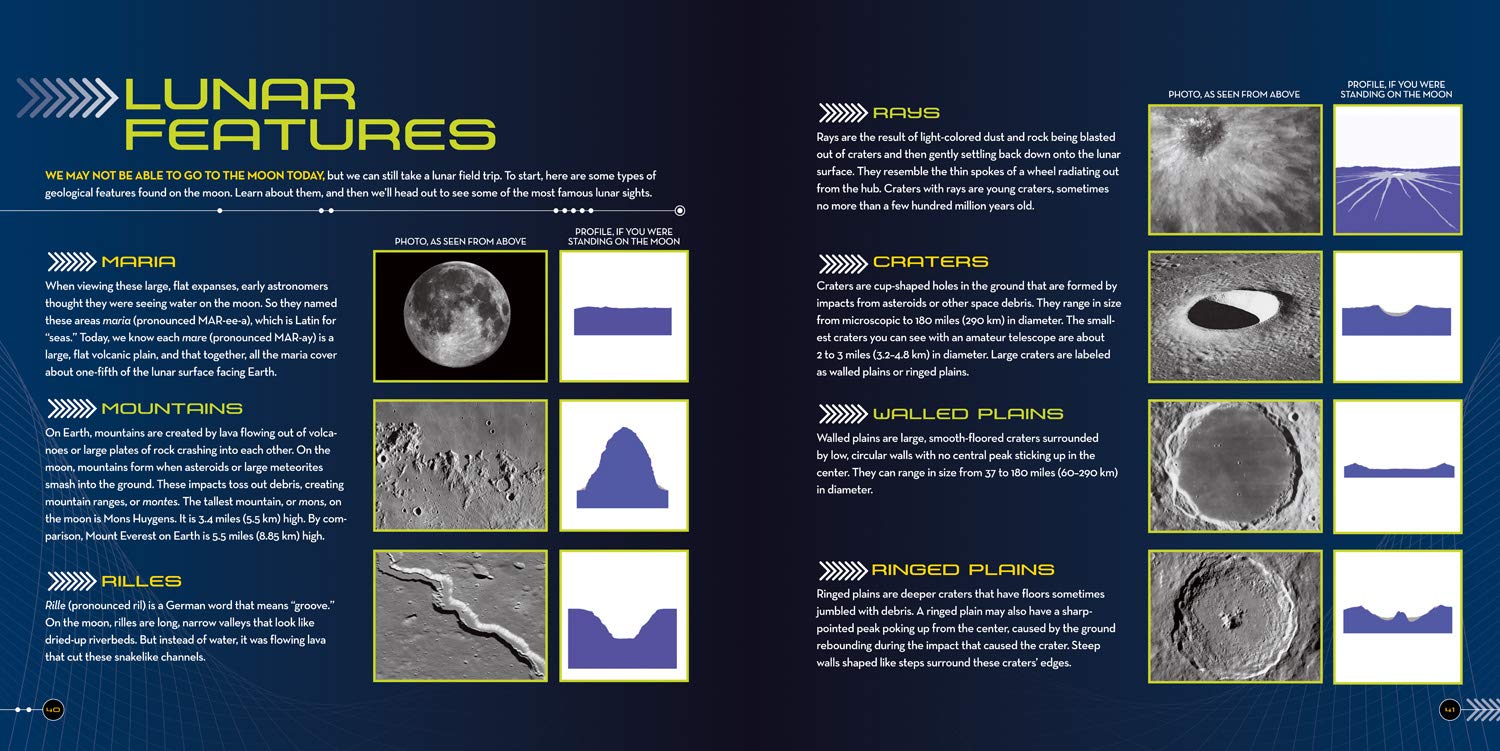
NatGeo wouldn’t let a Summer Reading theme go by without a book for us to give to the kiddos! Luna is all about our friendly satellite, the Moon. It’s a compact volume, at 64 pages, packed with all the info a middle grade space enthusiast could want. There are beautiful photos, callout quotes and facts, and full-color diagrams, and thought-provoking chapters cover topics including moon myths and hoaxes; the famous “dark side” of the moon; how our moon stacks up against other moons; lunar phases, and – naturally! – the 1969 lunar landing. There’s a fun make the moon activity (get your old t-shirts on; this one involves Plaster of Paris), a viewing guide, and tips on drawing the moon. There’s an index and a list of additional resources. This is one of the best middle grade volumes on the moon that I’ve read since Elaine Scott’s Our Moon (2015), and a solid add to your 520s. Mine are always in high demand (along with my dinosaurs), and with the outer space theme for this year’s Summer Reading, I imagine I’ll need a second copy of my own to use for programming.
Thanks again to NatGeo for always keeping nonfiction interesting and fun!
Posted in Fiction, Intermediate, Middle Grade, Non-Fiction, Non-fiction, Non-Fiction, picture books, Teen, Toddler Reads, Tween Reads

Need a gift? Give a book!

Now that the discount coupons are hitting inboxes, it’s a great time to stock up on books to give for the holidays. Here’s a look at some more books that will delight the readers in your life!

For the Little Ones:
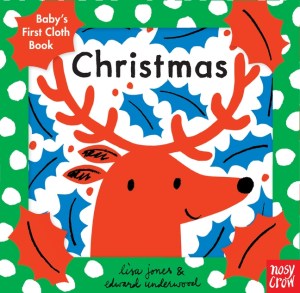
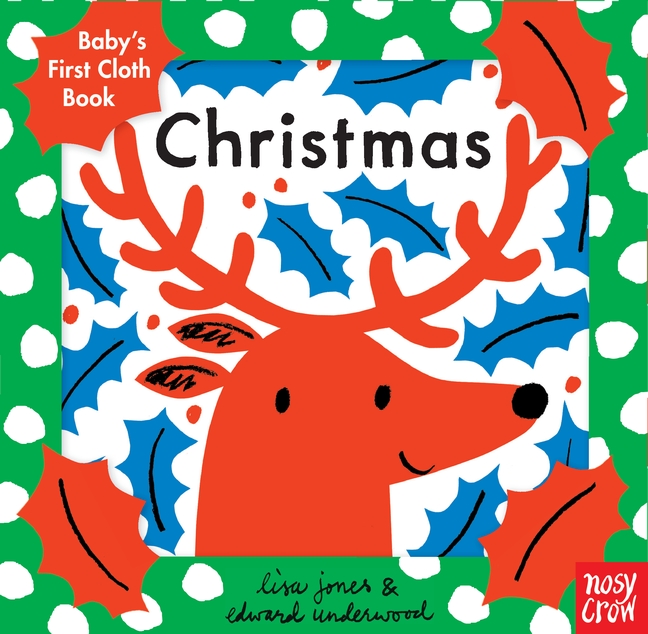
Baby’s First Cloth Book: Christmas, Ilustrated by Lisa Jones & Edward Underwood, (Sept. 2018, Candlewick), $18, ISBN: 978-1-5362-0275-5

Ages 0-2

It’s Baby Boo’s first Christmas! This 8-page book is soft and squishy, perfect for exploring little hands and mouths. Baby Boo enjoys the snow, builds a snowman with Daddy, goes back inside to warm up by the fire and gaze at the Christmas tree, and at night, Santa drops off presents! The plush book is soft, and the page featuring the snowman is crinkly; perfect for play time and engaging your little one’s senses. The colors are bright, with gentle-faced animals and people. The book comes in its on add Park, Farm, and Zoo to the list.
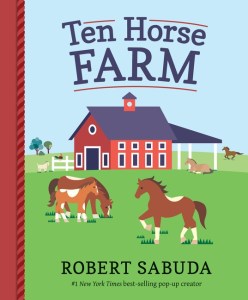
 

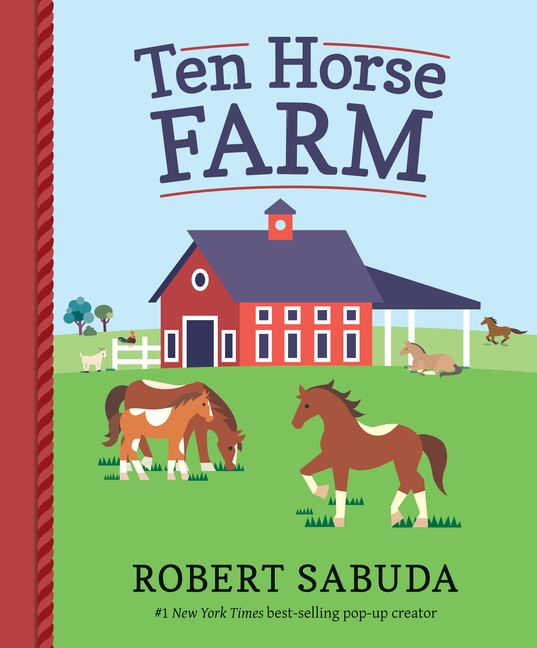
Ten Horse Farm, by Robert Sabuda, (Apr. 2018, Candlewick Press), $29.99, ISBN: 978-0-7636-6398-8

Ages 5+

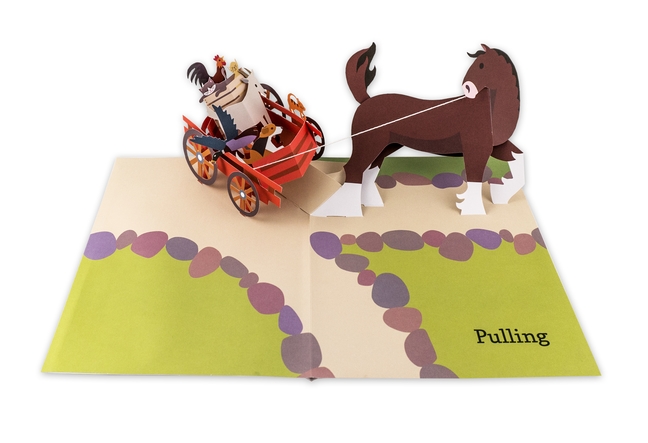
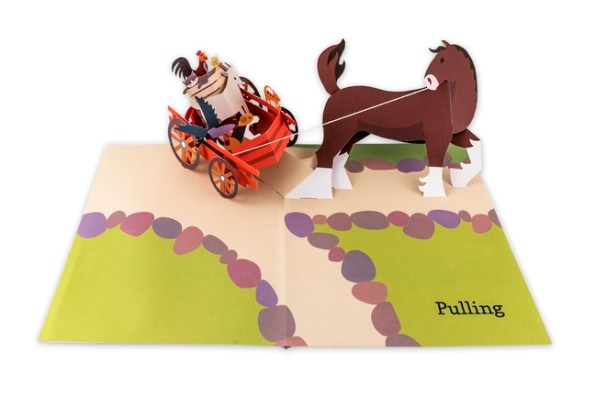
You don’t have to be a kid to love Robert Sabuda; his paper engineering is stunning to see. Ten Horse Farm is a full-color, pop-up counting book where each spread stars a different horse engaging in some kind of activity: racing, resting, jumping, or bucking. Let your kiddos count the horses as you go, and use this book in storytime to bring wonder and surprise to your readers. This fits in nicely with a horse storytime, farm storytime, animal storytime… any time storytime. Inspired by rural America, Robert Sabuda even named his upstate New York art studio Ten Horse Farm. Sabuda books are timeless gifts.

Ten Horse Farm has starred reviews from Publishers Weekly and Kirkus.
For the Dinosaur fan:

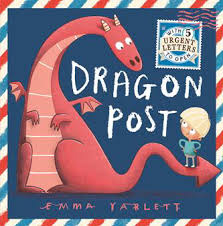
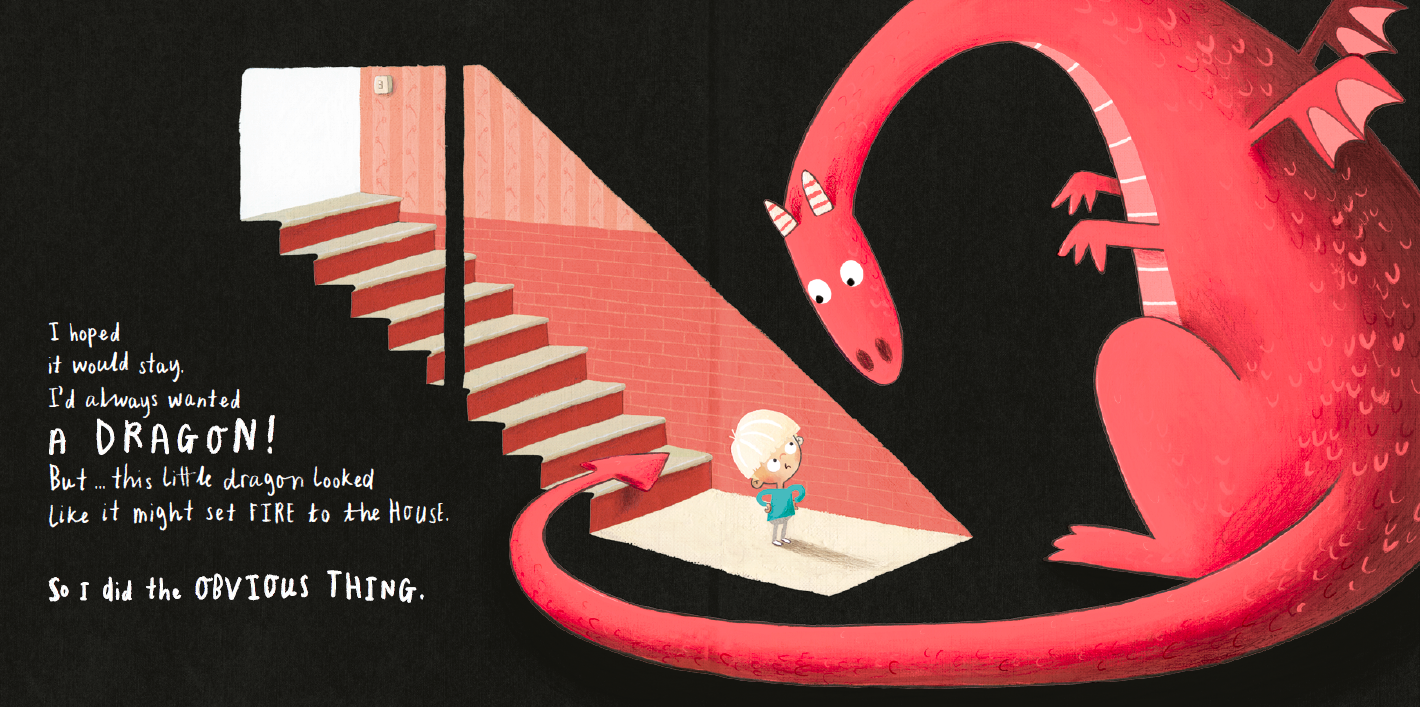
Dragon Post, by Emma Yarlett, (Dec. 2018, Kane Miller), $14.99, ISBN: 978-1-61067-818-6

Ages 6-10

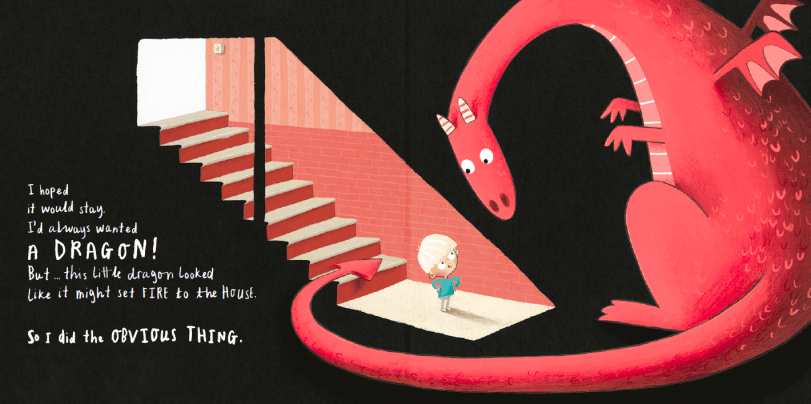
If you’re a regular reader here, you know I LOVE Emma Yarlett. Her Nibbles the Book Monster books are required reading in my home, and the kids at my library and my son’s Kindergarten class can’t get enough Nibbles. Dragon Post has the same fun spirit as we meet Alexander, a young boy who finds a dragon in his home. He’s excited, naturally, but he’s also a little concerned about fire safety. So he writes a series of letters, as different questions pop up for him. The best part? We get to read the letters!

This is an interactive book, with envelopes (lightly toasted) and letters you can pull up and read for yourself. The story is hilarious as Alexander’s predicament grows, and just when it takes a bittersweet turn, we get the hope of a sequel. The laser-cut correspondence is a fun addition to the story, and the full-color, cartoony artwork will appeal to readers. The scrawled black text reminds me of Oliver Jeffers’ lettering. Absolute fun for the holidays. If you’re buying this for your library, put it an extra copy in your storytime reference to keep one safe. This one will be loved quite a bit.
For the adventure seeker:
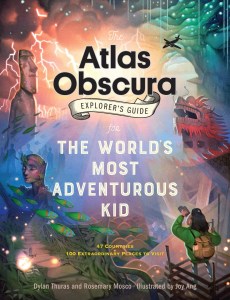
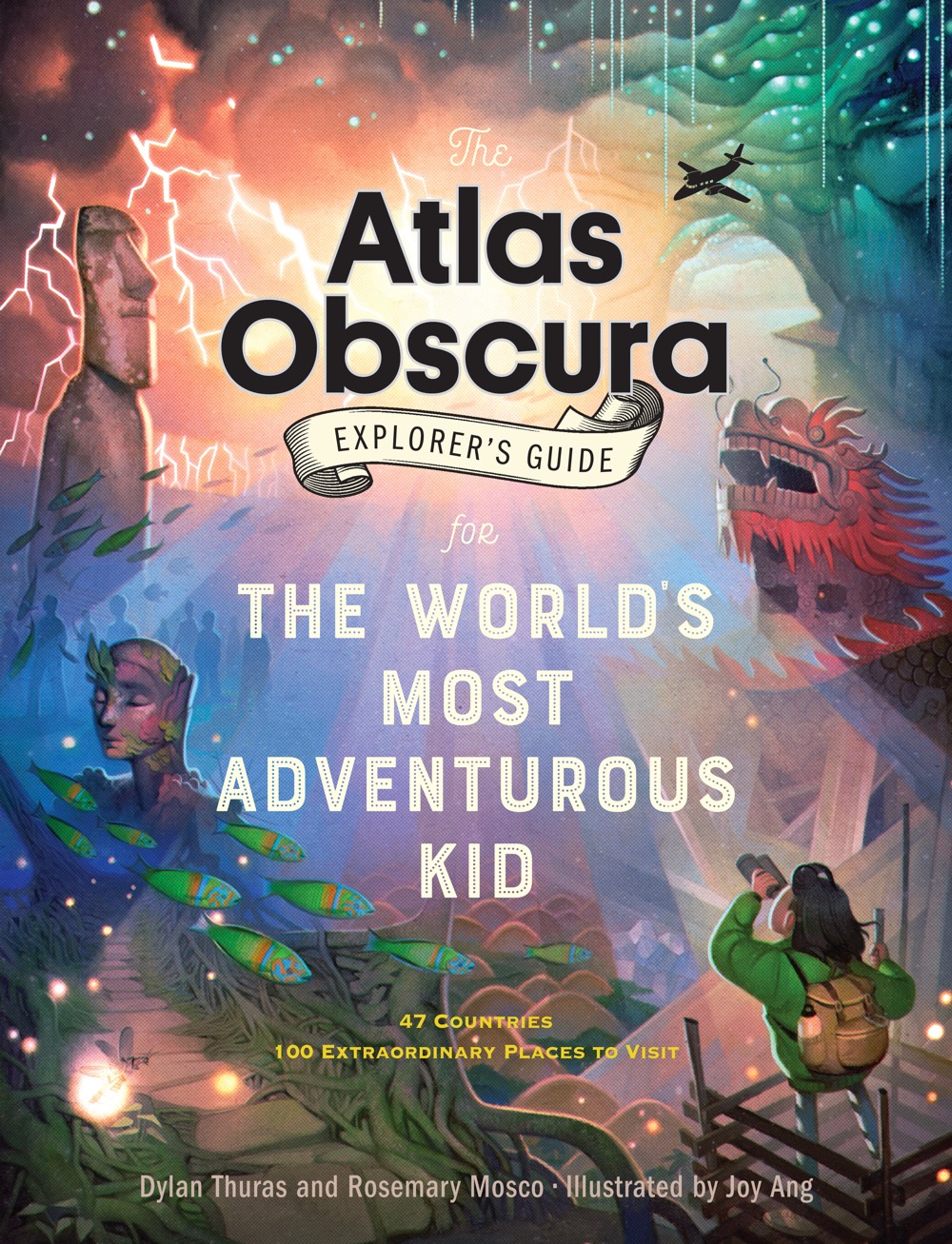
Atlas Obscura: Explorer’s Guide for the World’s Most Adventurous Kid, by Dylan Thuras and Rosemary Mosco/Illustrated by Joy Ang, (Sept. 2018, Workman), $19.95, ISBN: 978-1-5235-0354-4

Ages 8-12

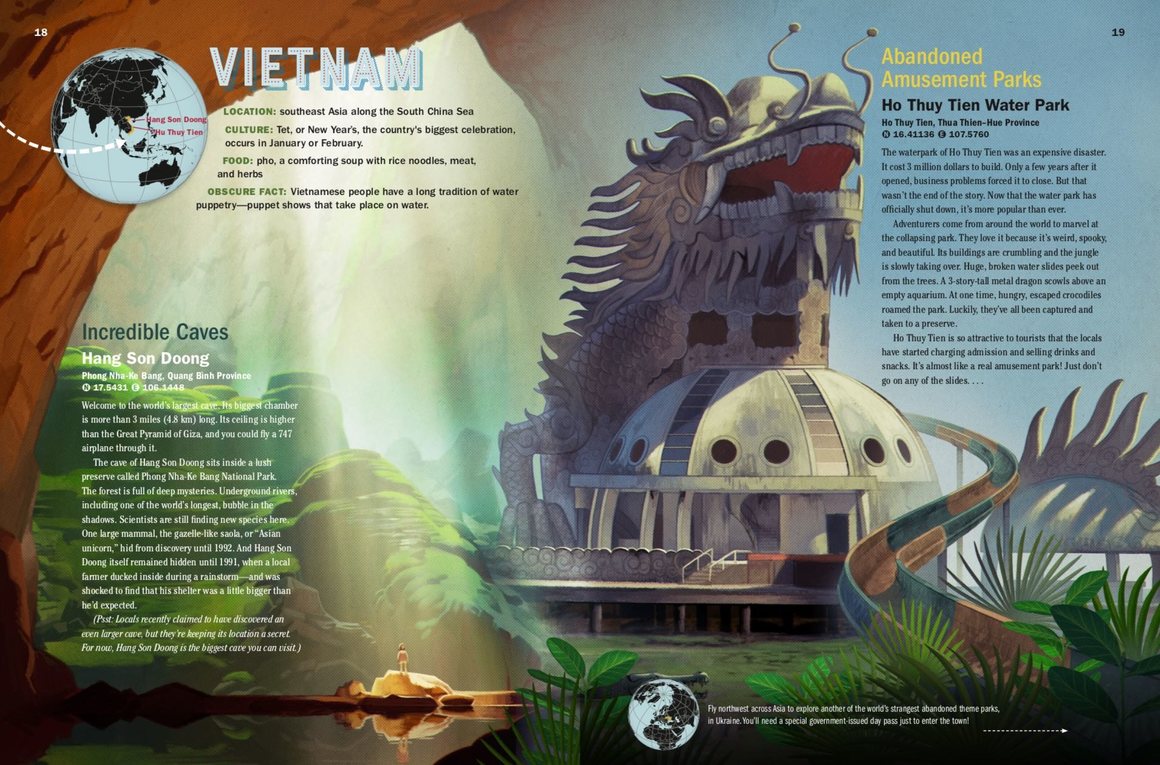
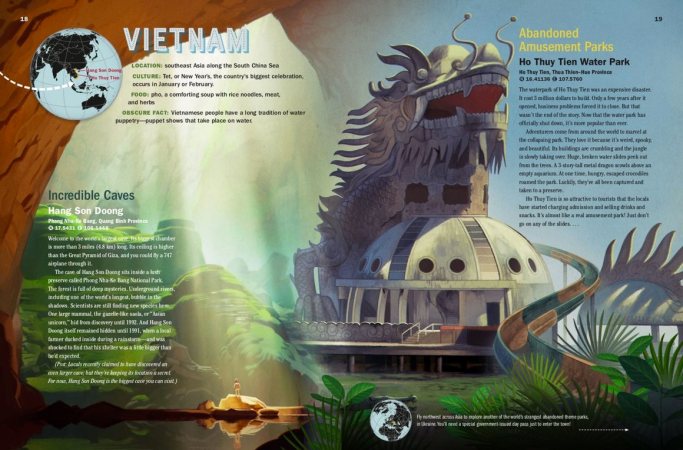
Here’s one for the kids who love the offbeat, quirky, and awe-inspiring things in life: Atlas Obscura is the kids’ companion to the website and adult guide book and is all about 100 of the most “weird but true” places on earth. Discover the Door to Hell in Turkmenistan (it’s a drilling accident gone terribly wrong), then head to Germany to ride a rollercoaster in the Wunderland Kalkar – an abandoned nuclear power plant. Check out the world’s seed bank in Norway, or visit an underwater museum near the Canary Islands.

Full-color illustrations offer an incredible point of view, and each site includes a locator globe and longitude and latitude (ahem… program in a book). A packing list – in case you’re so motivated – and explorer’s tips, along with alternate travel routes, methods of travel by speed, and height comparisons of attractions from biggest to smallest help with travel planning, and a list of further reading will have your world explorers putting up maps and pins in their rooms. This is just way too much fun. Give this to all the kids you normally hand your National Geographic gifts to, and you’ll be the favorite for another year running.
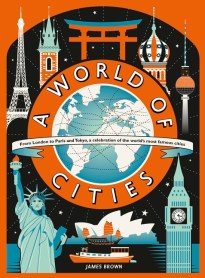
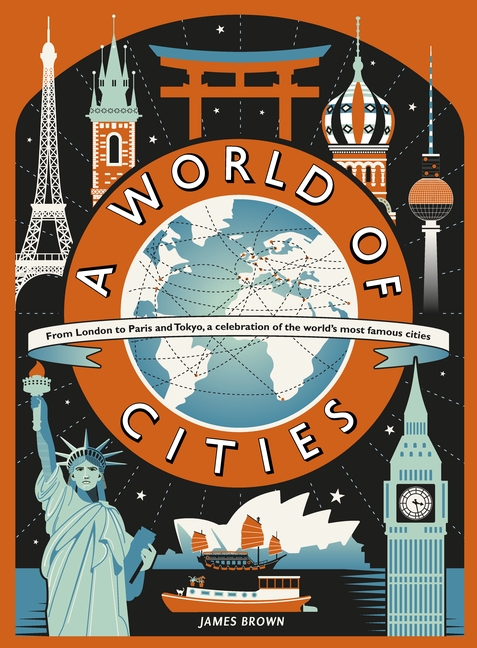
A World of Cities: From Paris to Tokyo and beyond, a celebration of the world’s most famous cities, by James Brown, (July 2018, Candlewick Studios), $25, ISBN: 9780763698799

Ages 8-12

Visit 30 of the world’s most famous cities with this book as your guide! It’s an oversize book with two- or 3-color tourism poster artwork and facts on each spread. Did you know Dubai has its own archipelago of artificial islands? Or that Albert Einstein’s eyeballs are stored in a safe-deposit box in New York City? There are tons of fun facts here, all assembled to create a stylized art book that takes armchair travelers to the bright lights and big cities of the world.

This is a follow-up to James Brown’s A World of Information, for anyone who’s a fan of infographics style information delivery.

 

For the animal lovers:
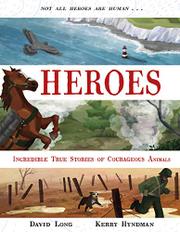
Heroes: Incredible True Stories of Courageous Animals, by David Long/Illustrated by Kerry Hyndman, (Nov. 2018, Faber & Faber), $22.95, ISBN: 978-0-5713-4210-5

Ages 9-13

I loved the companion series to this book, the more human-focused Survivors, that came out earlier this year, so I dove into Heroes when the publisher sent me a copy. If you and your kids loved Survivors, you’re going to love Heroes, with 33 stories of courageous animals (and an epilogue about London’s Animals in War Memorial). It’s more than an “I Survived” starring animals; these are stories about how we rely on animals to survive and to thrive. There’s Rip, the terrier who rescued people trapped in the rubble of the London Blitz during World War II: “…somehow having Rip around made things more bearable… if Rip could cope with the war, so they [the people]”; and Mary of Exeter, a messenger pigeon who spent five years carrying messages back and forth between England and France during World War II and who’s buried alongside Rip and Beauty, another WWII hero dog profiled here. Kerry Hyndman’s illustrations are all at once intense and beautiful, and David Long’s tributes are filled with respect for these companions. Read with a box of tissues nearby. Give to your animal fans and your adventure story fans.
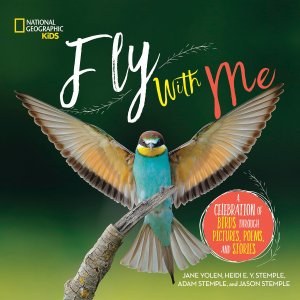
 

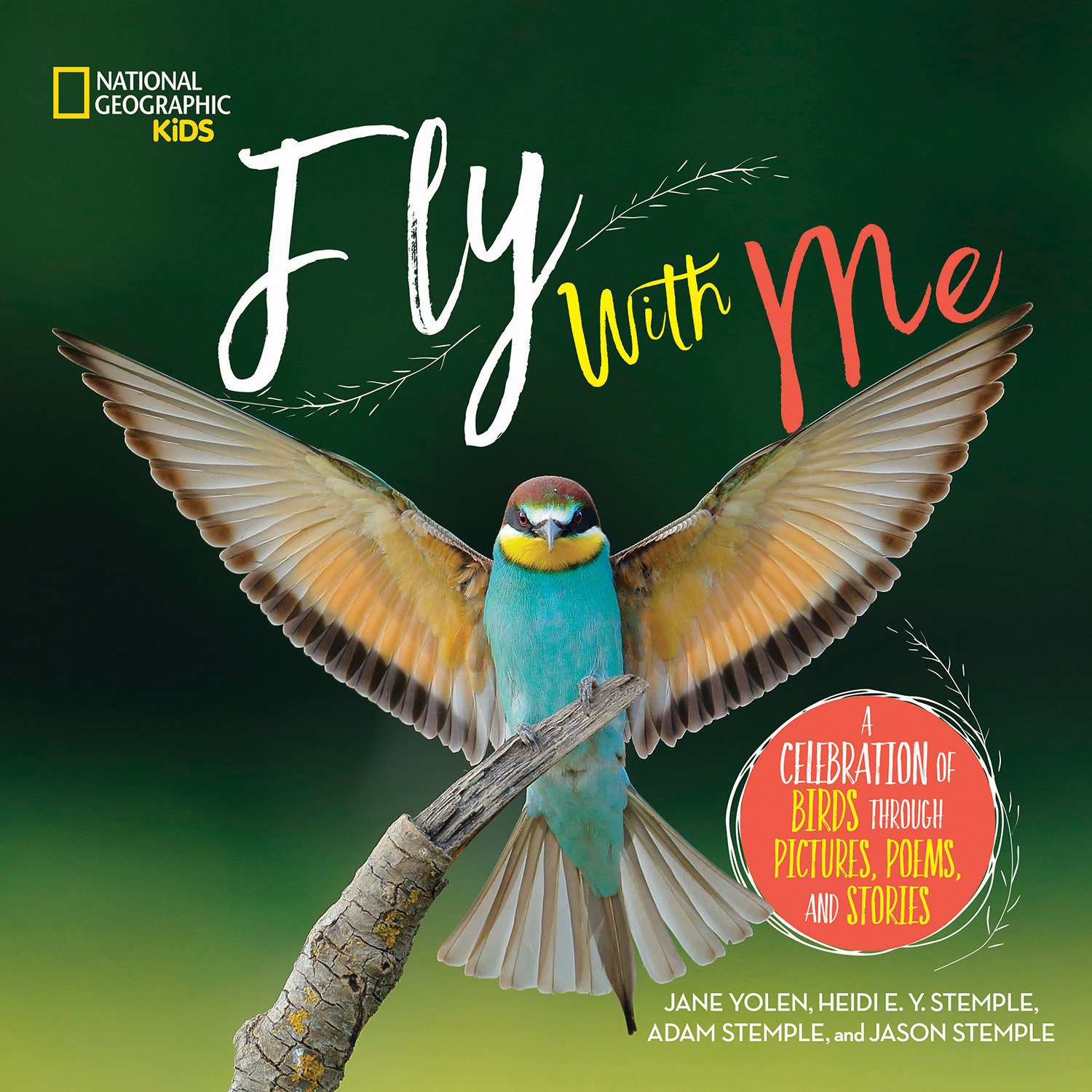
Fly With  Me: A Celebration of Birds Through Pictures, Poems, and Stories, by Jane Yolen, Heidi EY Stemple, Adam Stemple, and Jason Stemple, (Oct. 2018, NatGeo Kids), $24.99, ISBN: 978-1-4263-3181-7

Ages 8+

A compendium of all things bird for your bird-readers and watchers, Fly With Me has everything you’d want to know about birds: the physical characteristics, history (dino birds!), state bird profiles, songs, migration, and birding in your own backyard are just a few areas. There’s an emphasis on conservation and activism, and the section on birds in the arts is fantastic for your budding artists. The photos are jaw-dropping, with colors that burst off the page, and gorgeous illustrations. Endpapers are loaded with bird-related quotes, including one of my favorites: “If it walks like a duck, quacks like a duck, looks like  duck, it must be a duck”. Back matter is loaded with additional resources. Pull some of the poems out and use them in your storytimes!


For the poetry reader:
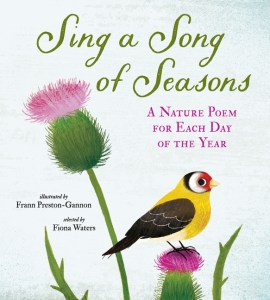
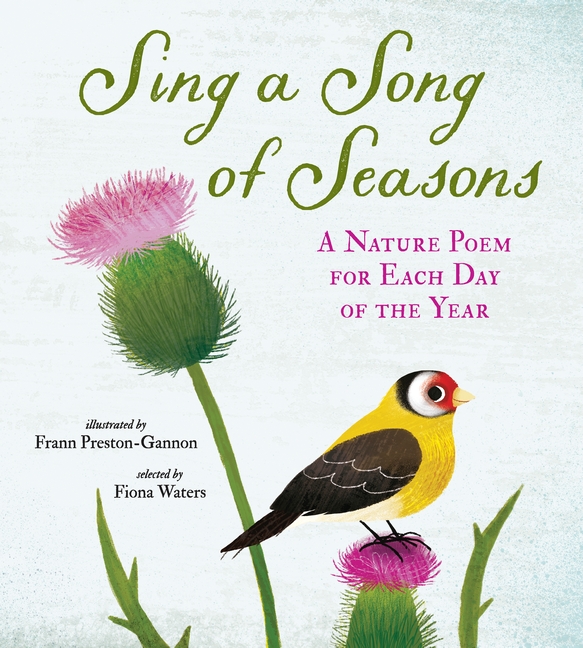
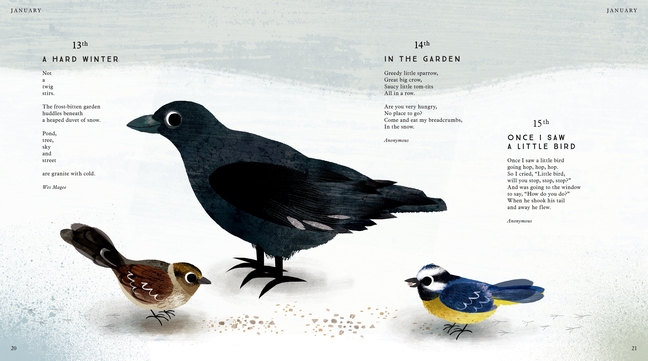
Sing a Song of Seasons: A Nature Poem for Each Day of the Year, selected by Fiona Waters/Illustrated by Frann Preston-Gannon, (Oct. 2018, Nosy Crow), $40, ISBN: 9781536202472

All Ages

There’s a poem for every single day of the year in this book. From January 1st through December 31st, greet each day with a poem and a beautiful illustration. Poets include Robert Louis Stevenson, Robert Frost, Ogden Nash, ee cummings, and John Updike, and poems are indexed by poet name, poem title, and first lines. This is a gorgeous gift: the illustrations are absolutely beautiful, with cold winter scenes, green fall forests, and colorful, shell-covered beaches. Start the day off, or end a day, snuggled up with a poem.

This one’s a great gift for grownups, too – librarians and teachers, put this on your wish list and you’ll be thrilled to add new poems and fingerplays to your storytimes. I’m currently trying to think of hand movements to add to Alastair Reid’s “Squishy Words (To Be Said When Wet)” (August 4th).

Sing a Song of Seasons has starred reviews from Publishers Weekly and Kirkus.
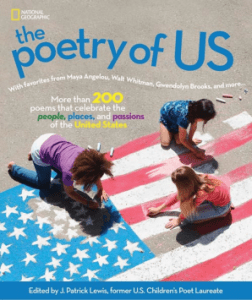
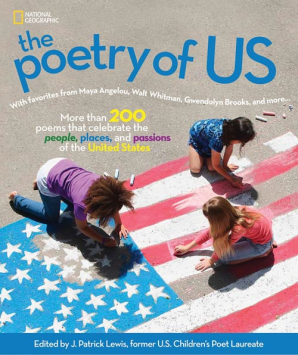
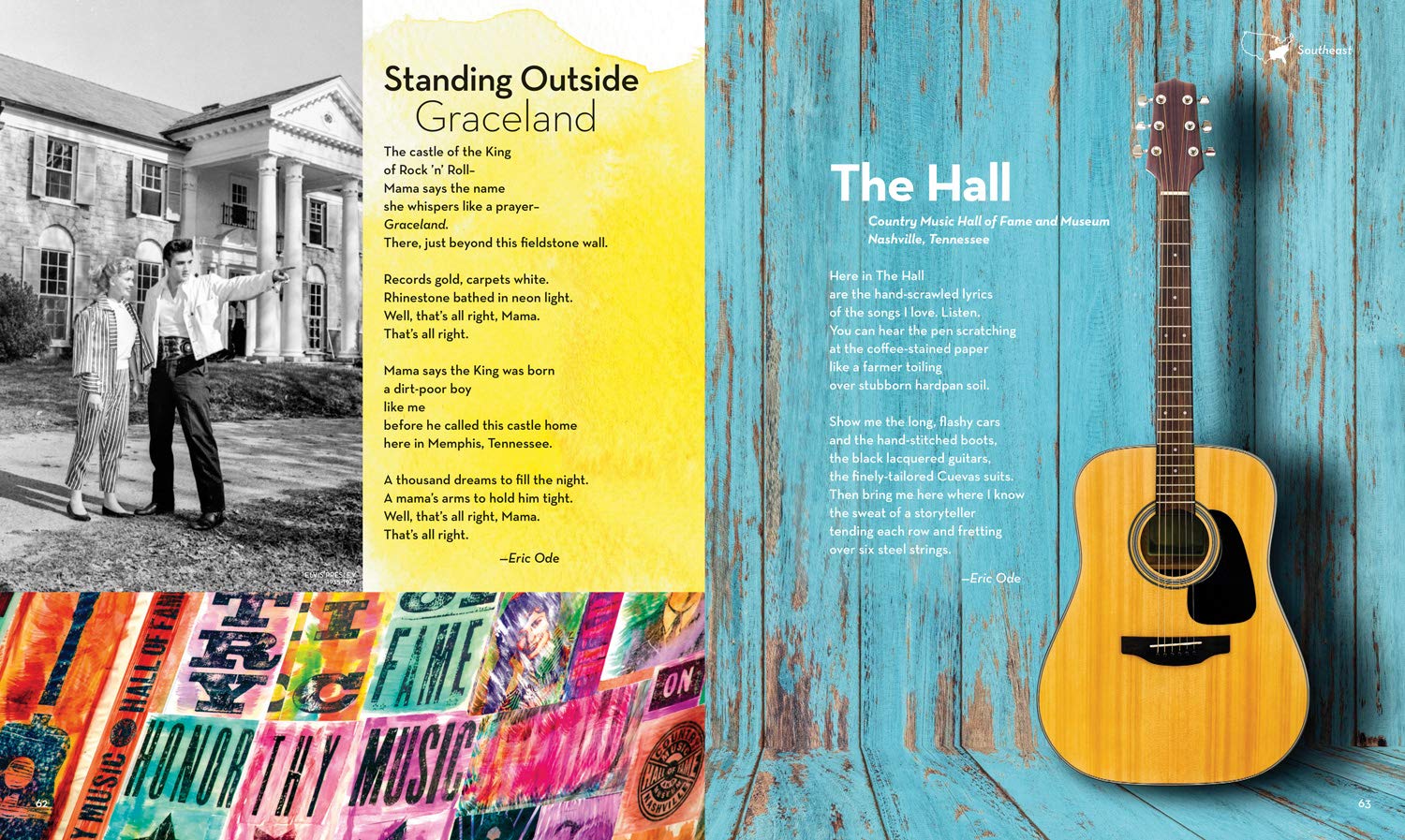
The Poetry of US: More Than 200 poems that celebrate the people, places, and passions of the United States, Edited by J. Patrick Lewis, former US Children’s Poet Laureate, (Sept. 2018, NatGeo Kids), $24.99, ISBN: 978-1-4263-3185-5

All Ages

This is another incredible poetry volume, all celebrating the United States: it’s a love letter to the country, compiled by former US Children’s Poet Laureate J. Patrick Lewis. Organized by region: New England, Mid-Atlantic, Southeast, Midwest, Great Plains, Rocky Mountain West, Pacific Coast, and Territories, over 200 poems celebrate the natural beauty of our lands and our rich cultural and diverse history. “Never Say No” by Laurie Purdie Salas is all about the perfection of a Philly cheesesteak, while Linda Sue Park’s “Asian Market” – showcased here in both English and Korean –  is a tantalizing tribute to the smells and sights of eating at an Asian food market. Reuben Jackson’s haunting “For Trayvon Martin” is side by side with J. Patrick Lewis’ “The Innocent”, a poem for Emmett Till. “Spelling Bee”, an acrostic by Avis Harley, is a nod to the Scripps Spelling Bee, and Allan Wolf’s “Champion Betty” celebrates a competitor at the Westminster Kennell Club Dog Show. There are poems about beaches and forests, Disney and weddings; there are poems in Korean and Spanish, and poems that shine a light on how far we have to go. It’s America, and these voices are why it’s beautiful.

For your reader who loves the classics:
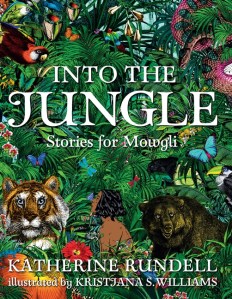
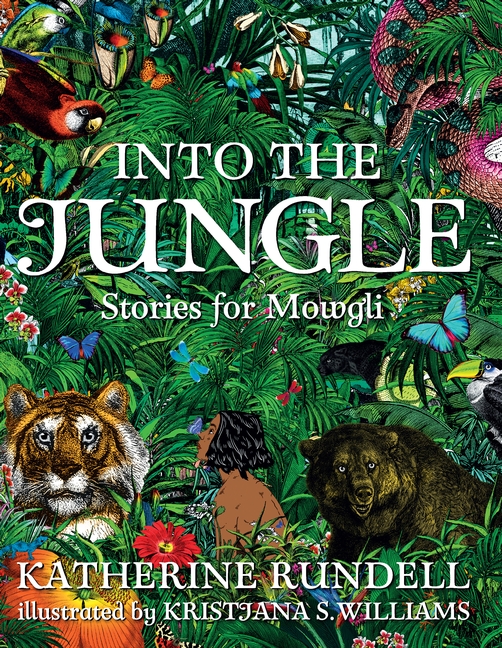
Into the Jungle: Stories for Mowgli, by Katherine Rundell/Illustrated by Kristjana S. Williams, (Oct. 2018, Walker Books), $24.99, ISBN: 9781536205275

Ages 8-12

The flap of Into the Jungle says it best: “To turn the page of The Jungle Book is to long for more tales of Mowgli the man-cub, Baheera the panther, Baloo the bear, and Kaa the python”. Into the Jungle is a companion to the classic Rudyard Kipling book, enriching readers with five more stories about Mowgli and his companions: “Before Mother Wolf Was a Mother, She Was a Fighter”; “Bagheera’s Cage”; “Baloo’s Courage”; “Kaa’s Dance”, and “Mowgli” all bring back fan favorite characters and deliver themes of empathy, kindness, and understanding across species, cultures, and genders. Katherine Rundell has given Kipling’s classic – and, by extension, his fans – new life, and new relevance in a world very different – and sadly, not so different – from 1894.

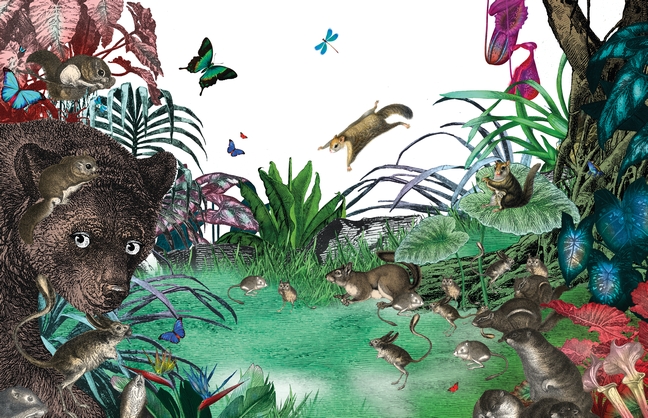
Illustrations are full-color and created in collage, using Victorian engravings, to give an historical feel with incredible texture. Humans and animals alike share expressive faces and body language, and the lush Indian jungle unfurls itself to readers, beckoning them to join them in the pages. A gorgeous gift book.
I hope that helps with some shopping lists! Happy Holidays, all!
Posted in Middle Grade, Non-fiction, Tween Reads

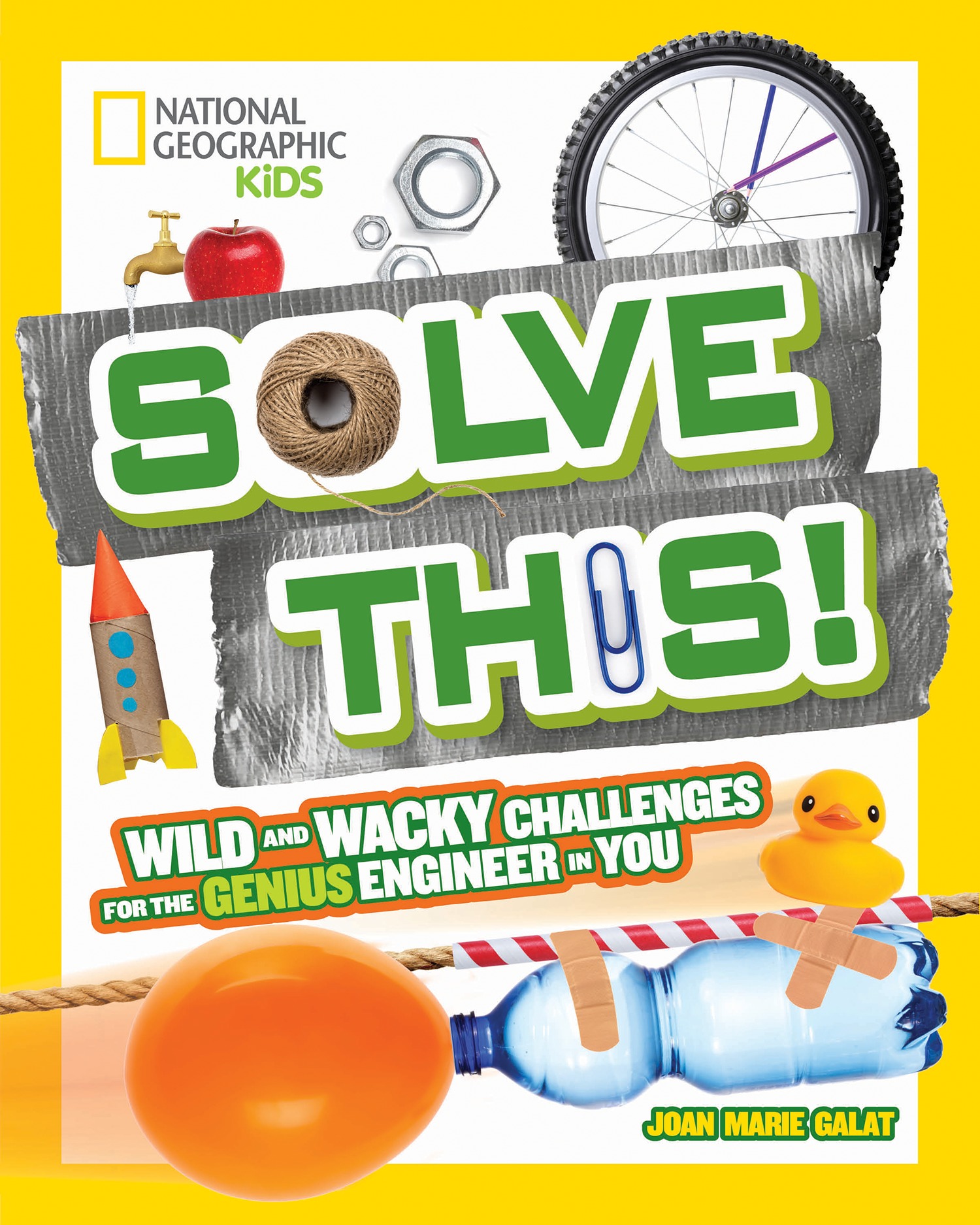
Solve This! Engineering challenges for kids!

Solve This! Wild and Wacky Challenges for the Genius Engineer in You, by Joan Marie Galat, (March 2018, NatGeo Kids), $16.99, ISBN: 9781426327322

Ages 8-13

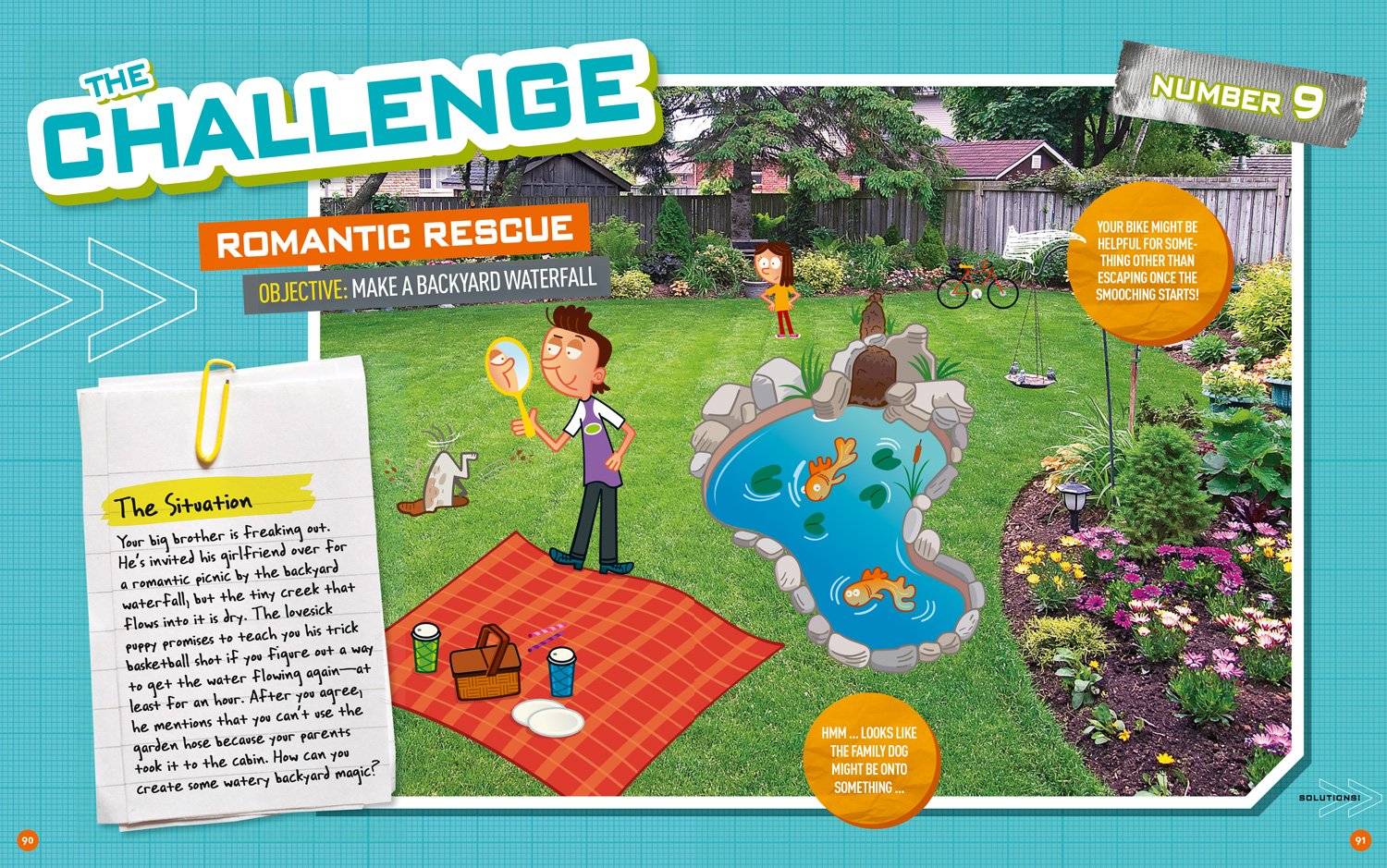
Another STEM/STEAM hit from NatGeo Kids, Solve This gets kids thinking about wacky ways to solve life’s little challenges. Need to soundproof your room for a sleepover? How about protecting your candy stash? NatGeo Kids has your back, with 14 engineering challenges that will make readers laugh and think, “Hmm… but what if hot sauce did get in the swimming pool?”

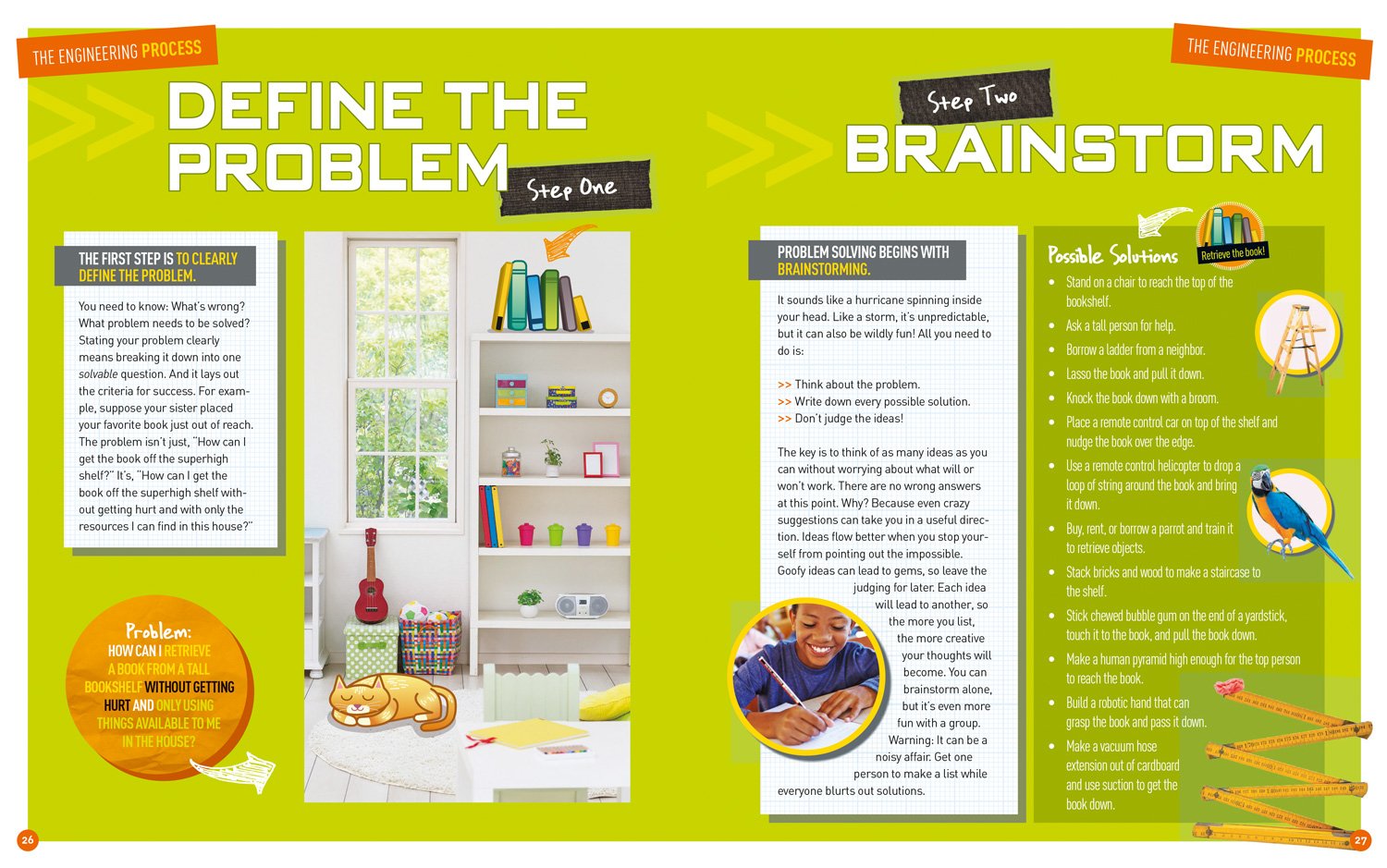
Organized into three sections, the book first introduces readers to engineers and the science of engineering, with discussions on different types of engineers and an overview of the engineering process. The fun stuff – the challenges! – happens in the Solve This! section, starting with an introduction to the Solution Panel: 13 wonderfully diverse scientists and the author. They took these challenges and offer their own tips and tricks to help kids along in the most kid-friendly and often non-conventional ways. Solutions are sketched out, putting the panel’s money where their mouths are: a kid can look at these sketches and easily work things out. Engineering Our World gives some real-life engineering successes and flops, plus a look at what we can expect from engineering in the future. Back matter includes further resources, a glossary, and an index.

STEM/STEAM fans, this is the book for you. Science classes, library programs, trying not to blow up the basement at home; this is a book you can use anywhere. Discovery Clubs, where are you? This is an entire season’s worth of library programming! A nice add to nonfiction collections and for kids who love tinkering. A handy reference to have when kids come in asking for books on simple machines, too – I have some great ones for the little learners, but this will be a good add to my middle graders’ shelves.

Posted in Middle Grade, Non-fiction, Tween Reads

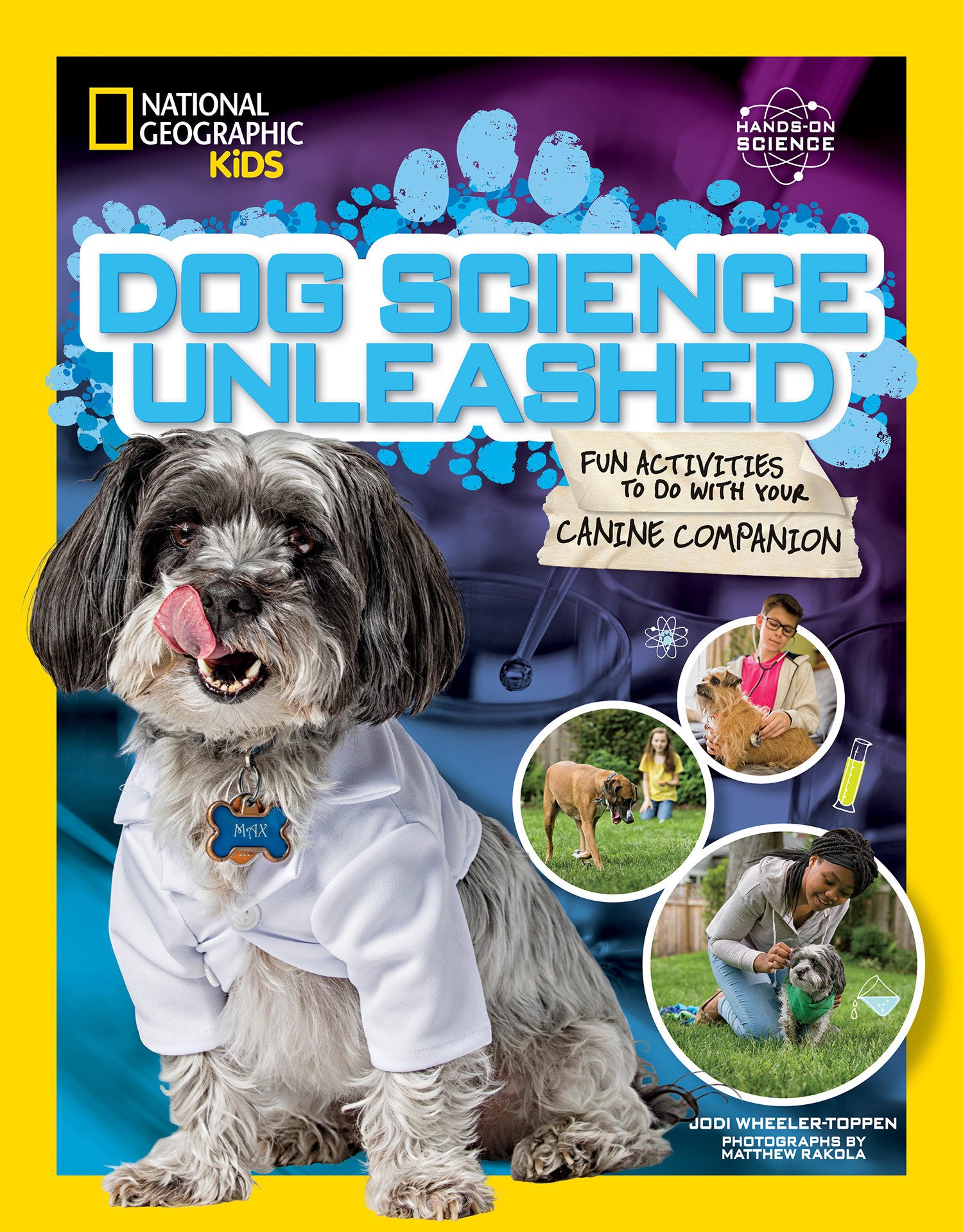
Get outside with your pup… for science! Dog Science Unleashed gives you ideas!

Dog Science Unleashed: Fun Activities To Do With Your Canine Companion, by Jodi Wheeler-Toppen/Photographs by Matthew Rakola, (Aug. 2018, National Geographic Kids), $12.99, ISBN: 9781426331534

Ages 8-13

Dog lovers and science fans will dive right into this NatGeo book that teaches kids all about their canine companions. There are 22 “safe and dog-friendly” activities in this volume, tested by 15 kid scientists and their pups, that will teach readers about their dogs’ senses, fitness, behavior, and grooming habits. There is a big emphasis on safety here, since we are talking about working and playing with dogs: notes to parents and kids remind readers about the importance of safety for humans and dogs alike, and if your dog isn’t into the activity you want to do? Respect the dog and walk away.

Every activity has a difficulty level and approximate active time, so you can gauge your energy and your dog’s energy. (When I’m half asleep first thing in the morning, my pup may be ready for a 15 minute race to see who’s faster, but I can assure you, I am not.) There are great color photos of dogs and humans being scientists together, and great callout facts to be discovered (and now I know why dogs have those slits on their noses). It’s a great way to bond with your dog and spend time learning together. A fun add to your nonfiction books, and a good gift for a dog and his or her human.

Posted in Middle Grade, Non-Fiction, Non-fiction, Teen, Tween Reads

Don’t read on an empty stomach: NatGeo Kids Food Fight

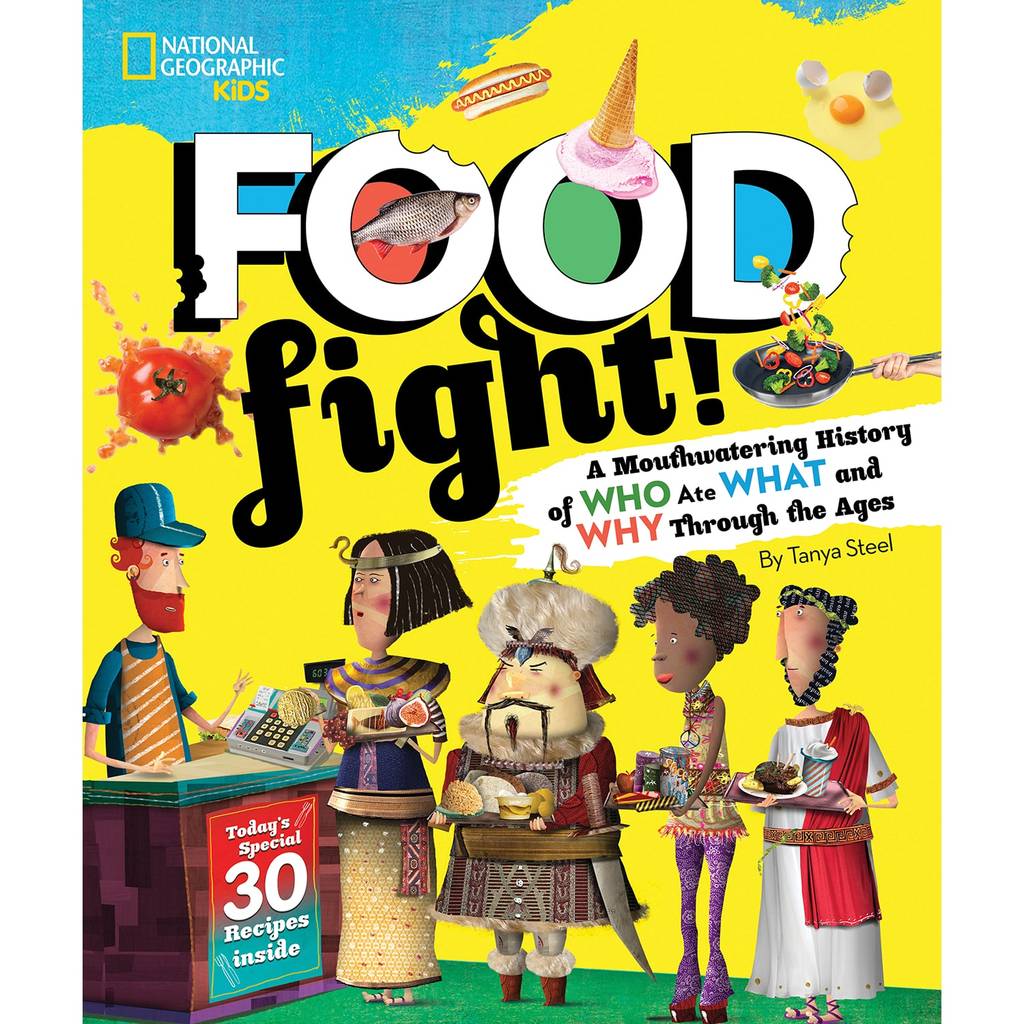
Food Fight! A Mouthwatering History of WHO Ate WHAT and WHY Through the Ages, by Tanya Steel, (Sept. 2018, National Geographic Kids), $19.99, ISBN: 9781426331626

Ages 10-14

Did you know that the Visigoths demanded 3,000 pounds of pepper as a gift when they conquered the Western Roman Empire in the 5th Century AD? Or that some medieval bakers whitened their flour with ground bones or chalk? Those are just a few of the wild food facts readers will pick up when they pick up Food Fight! by former Bon Appétit and Food & Wine editor Tanya Steel. Food Fight! is a history of food, combined with some fantastic (and frightful) facts, and recipes. The book covers food fads and eating habits from 14 different moments in history, from the prehistoric era through the 1960s, and there’s a special chapter imagining a future life (and food) on Mars! There are fun Popcorn Quizzes (you can’t have a plain pop quiz in a book about food) throughout, and amazing and hilarious photos, plus quotes from kid chefs who’ve made and enjoyed the 30 recipes you’ll find here. The book kicks off with safety tips, and a food timeline, recipe index, bibliography, and further reading and resources rounds everything out.
Kids in my library are big nonfiction fans, and Food Fight! offers history, fun, and kid-friendly recipes all in one volume. It’s a fun add to collections, and a good gift for budding chefs and food historians. (Psst… introduce older tweens and teens to Alton Brown’s excellent Food Network show, Good Eats, for more food history and cooking tips.) It’s a big plus that author Tanya Steel is a major name in the food journalism, so she knows how to write about food and food history, and she makes it accessible to younger readers. Plus, she originated the White House’s Healthy Lunchtime Challenge & Kids’ State Dinner, hosted by First Lady Michelle Obama, which brought recipes created by young chefs from each state to the White House. Kids are invited to make and upload photos of their Food Fight dishes – check out the Instagram tag #natgeofoodfight, and check out the Food Fight webpage for more info.

Posted in Middle Grade, Non-fiction

Be an Absolute Expert with NatGeo Kids

NatGeo Kids rolled out a new series of books. The Absolute Expert series helps kids become experts on a favorite, high-interest topic: current topics are Dolphins, Dinosaurs, Volcanoes, and Soccer. Experts in the field act as guides, leading readers through the info-packed books. Stunning photos, facts, and activities make each volume a great reference for science and STEM collections, and great desk references for kids who just can’t get enough of their favorite topics.

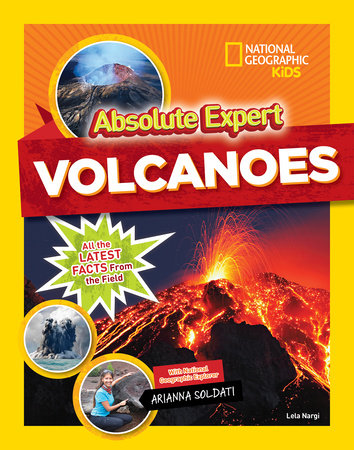
Absolute Expert: Volcanoes, by Lela Nargi and Arianna Soldati, (Aug. 2018, National Geographic Kids), $14.99, ISBN: 9781426331428

Ages 8-12

Volcanologist Arianna Soldati guides readers through a solid volume on volcanoes. Kids learn about ocean volcanoes, volcanoes in space, and deadliest eruptions (psst… Vesuvius isn’t #1!) The book explains plate tectonics and features a world map noting explosive volcanoes, and gives readers a heads-up on staying safe during a volcanic eruption, including an evacuation plan strategy exercise. Four “Get in the Flow!” sections provide activities that will take kids deeper; from building and cataloging a rock collection to creating a volcanic (soda) eruption of one’s own. Resources for further reading and an index finish up this book.

I buy all the volcano/natural disaster books I can get my hands on, because the schools here do a science unit on natural disasters, and the kids raid our libraries, usually heading for the volcano books first. I remember my first year as a librarian, hosting a class trip, and having the teacher ask me where those books were. I pointed out the shelf, and the kids swarmed me. TWO SHELVES. EMPTY. Since then, I don’t play games with my natural disaster books, and neither should you.

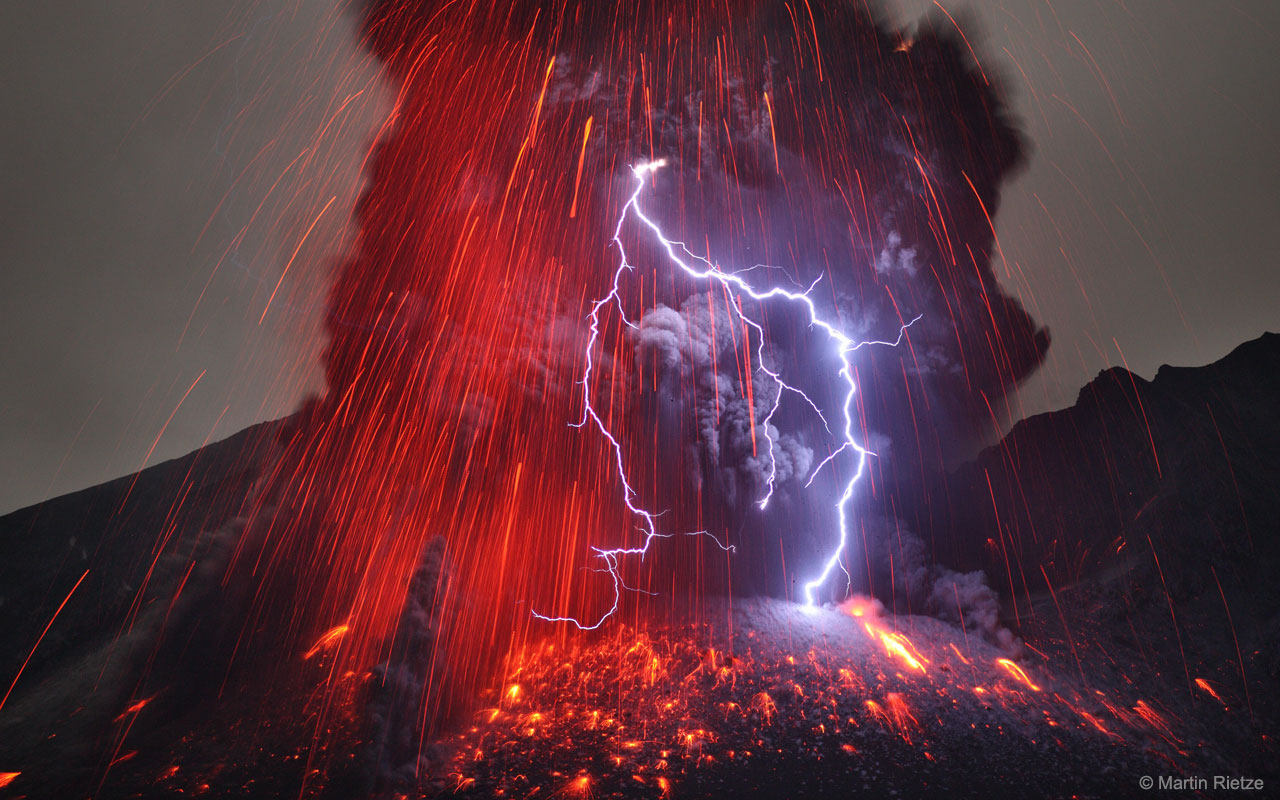
The writing is geared for middle grade to early middle school, with scientific terms that may send kids to the dictionaries (and good for that!) for new terms, while photos and illustrations provide a look at volcanoes in various stages of being, from quiet to very, very active. If seeing lightning hit a volcano spewing lava doesn’t inspire an awesome respect for nature, I don’t know what will.

NASA’s Astronomy Picture of the Day in 2013, similar to the one found in Absolute Expert: Volcanoes


Absolute Expert: Dinosaurs, by Steve Brusatte and Lela Nargi, (Aug. 2018, National Geographic Kids), $14.99, ISBN: 9781426331404

Ages 8-12

Paleontologist Steve Brusatte combines forces with author Lela Nargi to make dino EXPERTS out of readers. My favorite section? The little callout box that tries to unravel the mystery of T-Rex’s itty bitty arms. Turns out, they were incredibly strong, and have to have served some purpose, but what? We still don’t know, but there will be countless memes to entertain us until we do. There are details on some of the biggest and smallest dinosaurs; a dinosaur family tree that shows how dinosaurs evolved as history marched on, and a nice section dedicated to feathered dinosaurs, including the evolution of dinosaur feathers, with a picture of a fossilized archaeopteryx feather! Photos of fossils and dino digs make this a perfect volume for budding archaeologists, and beautiful illustrations help readers put faces to those bones they see in the museums. (Jurassic Park does a pretty good job of that, too, but the dinos are usually trying to eat people; this is much less threatening.) A world map spread points out where dino evidence has been found, worldwide, and four “Dig In” sections teach kids about dino tracking, offer quizzes, and invite kids to make their own dinosaur teeth and paleontologist field kits.

Do I even need to say this book is a given in your collections? It’s NatGeo, and it’s dinosaurs. Put this NatGeo dino page on your reference resources list of links: there are videos, activities, and games, and there’s a YouTube video playlist of nothing but dinosaurs! That is a program all by itself!


Absolute Expert: Dolphins, by Jennifer Swanson and Justine Jackson-Ricketts, (May 2018, National Geographic Kids), $14.99, ISBN: 9781426330100

Ages 8-12

Marine biologist Justine Jackson-Ricketts serves as the guide in this volume, taking readers deeper into the world of dolphins. A world map spread shows kids the waters where dolphins tend to spend their time. There are tips on becoming a dolphin trainer, what to do if one encounters a stranded animal, and important life lessons dolphins have to impart (“Thanks for the all the fish” is not one of them). As Justine Jackson-Ricketts’ research involves ecology, there’s substantial information on preservation and conservation of our waters and of our dolphins; the authors also shed some light onto the captivity debate. Four “Dolphin Deep Dive” sections help kids design a dolphin study, offers suggestions on how to move and like a dolphin, tests kids’ ability to find dolphin figures in everyday objects, and organize a beach clean-up. Resources for further reading and an index are included.

There are wonderful pictures of dolphins and orcas in here, sure to please animal fans and make some new ones. There are great call-out facts here – perfect for adding to projects and classroom/library displays, too! There’s good scientific writing that challenges readers, and some information on the National Geographic Pristine Seas Initiative; National Geographic’s commitment to explore and help save the last wild places in the ocean. This is a good site to keep in your reference links: there are videos taken on the Initiative’s expeditions, mission descriptions, and updated news events as they unfold. Conservation projects and ocean research projects can get a nice boost from this site.


Absolute Expert: Soccer, by Eric Zweig and Mark Geiger, (May 2018, National Geographic Kids), $14.99, ISBN: 9781426330087

Ages 8-12

Professional soccer referee Mark Geiger is here to talk soccer with author Eric Zweig. Conversation goes into supporting one’s team and the different ways fans around the world show their love, including the now-famous vuvuzela; soccer jargon and the 17 Laws of the Game. There are maps of the field and the positions’ places on the field, an explanation of the penalty cards, and a history of “the beautiful game”. A Soccer Around the World section celebrates the diversity of the game and its fans, and since this is a book on sports, there are World Cup numbers, results by nation, and a US map of MLS teams, for us Americans just getting on the soccer bandwagon. Facts and stats throughout give readers some extra street cred knowledge, and four “Get in the Game” activities encourage kids to make up their own game and offer quizzes. There are great photos and illustrations of soccer players and equipment through history, and there are callout biographies on major players throughout. The text is easily readable by middle grade and middle schoolers; this is a volume that soccer fans are going to love.

Check out the National Geographic World Cup 2018 website for vintage photos, World Cup facts, and articles on the science of sport. This 2014 National Geographic blog post, Why the World Cup is About More Than Soccer, puts into words how the sport brings people together, worldwide.

NatGeo, keeping it real for my nonfiction section.

Posted in Middle Grade, Non-fiction

Get Ready for STEM Summer!

Sure, many libraries are doing the “Libraries Rock!” theme for Summer Reading, but that’s no reason to leave science out of the fun! I’ve got a bunch of STEM books that you’ll want to get in front of (or create programs using) your readers to have fun with this summer. Careers, facts, bios, and, most fun of all, experiments, await!

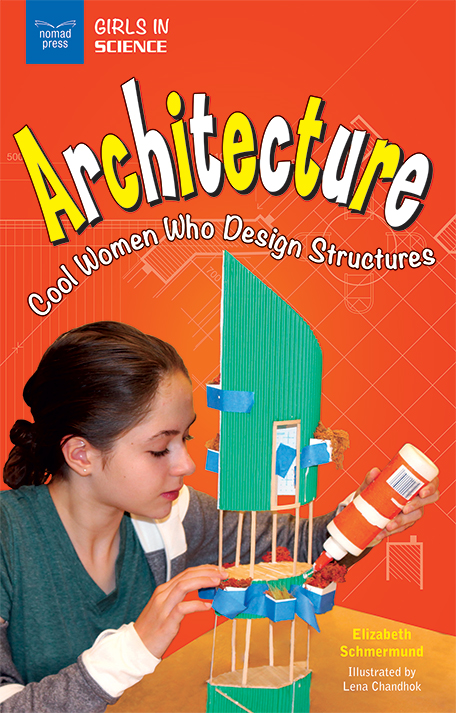
Architecture: Cool Women Who Design Structures (Girls in Science series), by Elizabeth Schmermund/Illustrated by Lena Chandhok, (Aug. 2017, Nomad Press), $9.95, ISBN: 9781619305465

Recommended for readers 9-13

I’m always looking for good career books, because I weeded my current section when I first got to my library. I really liked this book, and I’m looking forward to reading and putting more of the Girls in Science series in my book cart for future purchases. Architecture is divided into four color-coded sections: the first, a general overview of architecture; the history, styles, what the profession is like today and how to prepare for study in architecture, and women in the profession. The next three sections are devoted to profiles of a diverse group of women architects: Patricia Galván, a Project Manager; Farida Abu-Bakare, an intern architect who’s in the process of writing her exams and works with science and technology; and Maia Small, who owns and operates her own small architecture firm. In addition to the profiled female architects, there are brief bios on other women in the field. Ask & Answer sections provide thought-provoking questions, many beyond the basic material, for readers to consider. QR codes in callout sections provide links to more information. The overall narrative, and each profiled professional, addresses the gender gap and even larger diversity gap in the industry. Back matter includes a timeline of the profession, all the Ask & Answer questions in one place, a glossary, further resources, including written-out links to the QR code sections, and an index.

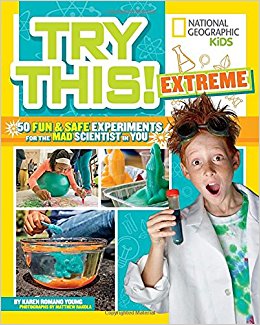
Try This! Extreme: 50 Fun & Safe Experiments for the Mad Scientist in You, by Karen Romano Young/Photographs by Matthew Rakola, (Sept. 2017, National Geographic Kids), $16.99, ISBN: 9781426328633

Recommended for readers 8+

The best part about science, I tell the kids in my programs and class visits, is making a mess, yet, no one gets mad at you (mostly). What better time to be a mad scientist than in the summer, when it’s beautiful out and you can open those windows to offset any stinky experiements? The book starts off with safety instructions and photos of the kid (and dog) scientists who tested out the 50 experiments waiting to be discovered in Try This! Extreme. Each experiment has a safety rating, a who you need rating (i.e., an adult, just you, or maybe grab a friend), and supervision rating; each experiment also lays out concepts explored, approximately how long it will take, what you need, and a step-by-step guide through the process, accompanied by full-color photos. There are callout facts, questions to ask yourself, and key terms defined throughout. Conduct a bioblitz (exploration) in your yard or a park, learn physics using marshmallow Peeps, or check the weather forecast and aim for a game of masking tape hopscotch when there’s rain predicted. There are bonus mini-experiements, Science Fair experiment prompts and guidance, K-12 science standards and how each experiment corresponds to them, an index, and metric conversion tables. Enjoy!

The STEM Quest Series from Barron’s Educational is a brand new series broken out into four books, loaded with facts and experiments:

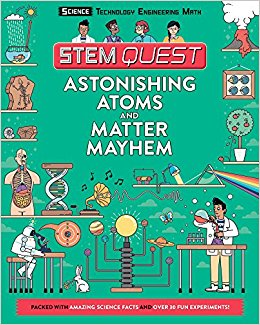
STEM Quest Science: Astonishing Atoms and Matter Mayhem, by Colin Stuart/Illustrated by Annika Brandow, (May 2018, Barron’s Educational), $10.99, ISBN: 9781438011363

Recommended for readers 8+

This volume looks at the organic side of things: biology, chemistry, physics, earth and space sciences, biochemistry, biomedicine, and biotechnology. Each section guides readers through full-color illustrated discussions on each area and includes experiments to ramp up the fun. Kids will LOVE the Marshmallow Molecules – you need a bag of marshmallows, a box of toothpicks or wooden skewers (me? I’d go with the toothpicks, but I’m in a public library), and some compound formulas. Let kids make their own formulas up and watch the fun begin! I’ll save you the search: this is where you can find the chemical compounds for farts. It’s the American Council on Science and Health’s website, so they did this for science. You’re welcome. Littler ones can make their own sundial, or spot a constellation. There are scientist profiles and fantastic facts throughout, plus a glossary and an index.


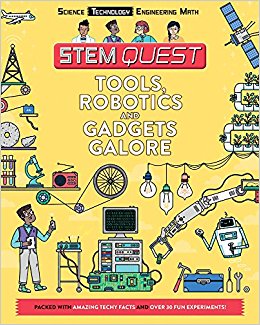
STEM Quest Technology: Tools, Robotics, and Gadgets Galore, by Nick Arnold/Illustrated by Kristyna Baczynski, (May 2018, Barron’s Educational), $10.99, ISBN: 9781438011370

Recommended for readers 8+

This volume looks at the techy side of life: construction, power and energy, agriculture and biotechnology, manufacturing, information and communication, medical and biomedical, and transportation. Learn about the evolution of tools, from the earliest hand tools to robots and space suits. Learn how a blast furnace works, and make your own plastic (adult helpers necessary), and learn how it works. Get your Project Runway on, with a section on textiles: you’ll learn to weave, tie dye, and ink print. For your more tech-inspired readers, there’s an easy Try This at Home experiment that teaches (with adult help) how to build a circuit, or how to magnetize a nail. There are great programming ideas in here: I think I’m going to look into building a planet and designing a space station, all of which can be done on a shoestring and with adult help. And since I’m the closest thing resembling an adult in the room… well, I guess that falls to me. The same format applies here (and to all of the STEM Quest books): bios on prominent scientists, loads of facts and illustrations, a glossary, and an index.


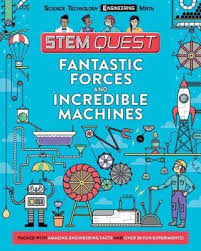
STEM Quest Engineering: Fantastic Forces and Incredible Machines, by Nick Arnold/Illustrated by Kristyna Baczynski, (May 2018, Barron’s Educational), $10.99, ISBN: 9781438011349

Recommended for readers 8+

Next up, engineering: systems and mechanics; materials and processes; biology, medical, agriculture and chemistry; structures; and sustainability engineering. Get the kids learning about forces and energy with experiments like Superhero Paper Clips, where they’ll make a paper clip float; a material scavenger hunt, inviting them to look around for everyday items made out of different materials; get out the old reliable straws and pipe cleaners and let them create 3-D shapes to see how they hold up under pressure, or that summer staple, the pinwheel. (The book suggests dowels; I’m here to tell you that chopsticks are a lot cheaper and just as easy to use.) There’s a great section on environmental engineering that will have you and your readers figuring out how to clean up our environment and a nuclear power lesson that has the simplest of experiments: use the sun’s nuclear energy to test your sunscreen on a piece of construction paper.


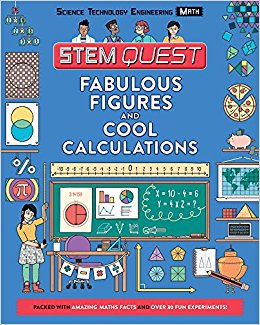
STEM Quest Math: Fabulous Figures and Cool Calcuations, by Colin Stuart/Illustrated by Annika Brandow, (May 2018, Barron’s Educational), $10.99, ISBN: 9781438011356

Recommended for readers 8+

I’m trying to get more math-related fun in front of my library kids, because it scares the bejesus out of me and I don’t want to pass that on. The parents love a good math program, too, so I know I’ll get buy-in from the community on this one. Here, we’ve got numbers and operations; measurement; problem-solving, logic and reasoning; geometry; algebra; advanced math; data, analysis and probability; and communication. I will admit that just looking at that section scared the life out of me, but once I started reading, I quickly warmed up. There are great explanations of each concept in here, addressing the quick and easy stuff like place value and column addition and subtraction, and heading all the way into bigger ideas like proofs and binary. Fun experiments and activities include a pirate treasure challenge, where, as a pirate captain, you need to use math to calculate the best place to bury your treasure; creating 3-D art and making pyramids, and averaging Olympic judge scores.

That’s a start for some STEM summer fun, but make sure to get your STEM sections and displays up and running to give readers readalikes and ways to expand on what they’re learning. The Secret Coders graphic novel series by Gene Luen Yang and Mike Holmes is great for Math and Tech fans, who want to play with coding. Science Comics has books about rockets and robots that will fit nicely with STEM displays, and I’m a big fan of the Junk Drawer Science series by Bobby Mercer. There are tons of fun STEM-related books out there!

Posted in Middle Grade, Non-fiction, Preschool Reads

NatGeo Kids is going to the dogs!

NatGeo Kids has two books on dogs out, and they are ADORABLE. We’re in the Lunar Year of the Dog, May is National Pet Month, and today is National Pet Day – so what better time to celebrate our best friends? (Full disclosure: My cat scoffed at me as I ran this by her. But she’s a cat, so…)

Dog Days of History: The Incredible Story of Our Best Friends, by Sarah Albee, (March 2018, NatGeo Kids), $19.99, ISBN: 978-1-4263-2971-5

Recommended for readers 8-13

Dogs have been our companions from the beginning: humans have had canine companions for more than 15,000 years. Dog Days of History is a kid-friendly look at that relationship through time; author Sarah Albee starts with the origins of the dog, from wolf to domesticated companion, to mixed breeds, and then takes us through an illustrated history of this long-lived relationship: from dogs in the ancient world, through the Middle Ages and Renaissance, to the present day and the future. We learn about dogs as pampered companions and hard workers; dogs like Balto, the famous sled dog who braved the Alaskan snow to bring medicine to the people of Nome, Alaska, and Laika, the canine cosmonaut who went to space in 1960.

There are great photos – it’s a NatGeo book – and fun facts aplenty throughout the book. One of my favorites is the list of common names for dogs in Ancient Egypt, which include “Good Herdsman”, “Grabber”, and “Blackie”. There are Algonquin names, too; my favorites are “Where’s That?” and “Ask Him”. Top Dog callouts highlight famous dogs in history, like Stubby, a stray bull terrier found by an American soldier in 1918, smuggled into France, and who went on to win medals of valor after warning a sleeping sergeant about a gas attack, locating wounded soldiers on the battlefield, and capturing a German spy. Want to translate dogspeak in other languages? There’s a list of how other dogs say “Bow-wow” in other languages. A comprehensive biblidography (that is not a typo) and list of rufferences (that’s not one, either), index, and further sources and places to visit make this slim volume a perfect gift for dog fans or an addition to your domestic animals collections.


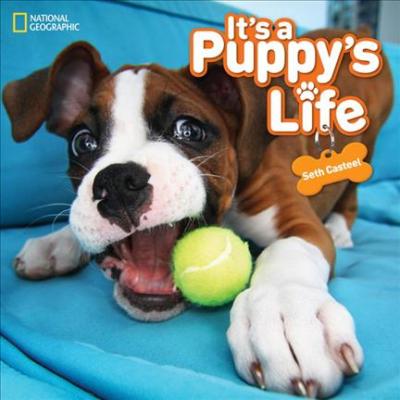
It’s a Puppy’s Life, by Seth Casteel, (March 2018, NatGeo Kids), $16.99, ISBN: 978-1-4263-3069-8

Recommended for readers 3-6

Join the cutest group of puppies ever in this easy-to-read, fully illustrated chronicle of a puppy’s day! Join these pups on a daily routine of adventure as they wake up, explore and play, nap, have a nighttime treat, and get ready for bed. Is it ruff to be a pup? You be the judge.

This is one of those books I still haven’t been able to get through without squealing. Several times. My kiddo and I will be cuddling and reading, and I’ll just squeal, “LOOK AT THIS PUPPY FACE!”, which leads to my son looking at me and saying, “Mom. You SAY THAT ALL THE TIME.” But I digress.

There are spreads and standalone pages of full-color photos of puppies eating, playing, cuddling, and sleeping. The simple text is big, easy to read and great for storytime, and has colorful backgrounds to set them apart from the rest of the page. It’s a great way to talk about daily routines: ask the kids what they have in common with puppies!

I’m currently building up my pets and domesticated animals collection at my library, so these will be a nice, eye-catching add to my shelf. Make a nice doggie display with Science Comics’ volume on Dogs, and put some fun picture books and fiction on the shelf, too. Mainstays like Clifford and Carl books are great, as are books like Peter McCarty’s Hondo and Fabian, Jane Yolen’s Henry and Mudge and Puppy Mudge Easy Readers,  Beverly Cleary’s classic, Ribsy, Ann M. Martin’s Autobiography of a Stray, and Because of Winn-Dixie. If you’re like me and don’t want to read doggie tearjerkers, From the Mixed-Up Files has a suggested “No Dead Dogs” reading list.