Posted in Fiction, Fiction, Middle Grade, Realistic Fiction

Math, Loss, and Zombie Movies: A Good Night for Shooting Zombies

A Good Night for Shooting Zombies, by Jaco Jacobs/Illustrated by Jim Tierney/Translated from Afrikaans by Kobus Geldenhuys, (March 2019, Rock the Boat), $12.95, ISBN: 9781786074508

Ages 10-14

Martin is a South African teen living with loss. His father was killed in a car crash a few years ago, and his mother hasn’t left the house since. His sister is hardly ever home, usually out with her sketchy boyfriend. All Martin has is his chickens – his nickname is Clucky – and his propensity for numbers. When the neighbor kid’s dog kills his prize chicken, he goes over to say something – and ends up making a friend instead. Vusi, whose dog, Cheetah has a taste for chicken, is a horror movie fan determined to make his own zombie movie. He’s also fighting Hodgkin’s lymphoma, but he has no interest in letting that, or his protective parents and nurse, stop him. He quickly recruits Martin as a zombie extra, and before Martin realizes it, he’s sneaking out with Vusi, shooting Vusi’s movie and even developing a crush on a schoolmate. And, bonus: the cover glows in the dark!

Jaco Jacobs knows how to pack a book. While A Good Night for Shooting Zombies is primarily about Martin’s and Vusi’s friendship, it’s also about coping with loss, as Martin and his family grieve in their own ways; it’s about potential loss, as Vusi and Martin cope with Vusi’s lymphatic cancer, and it’s got a quietly compelling subplot about a group of troublemaking teens and Vusi and Martin bumbling their way into their sights. Martin is comforted by his mathematics equations, which he uses as a coping mechanism, very similar to Willow in Counting by 7s. He and Vusi each have their comforts – Vusi’s is horror movies – and as they share these pieces of themselves, they build a deeper friendship. Jim Tierney’s black and grey illustrations add some visual interest, and Jaco Jacobs’ writing keeps pages turning; the end of the story will stick with you long after you close the book.

I became a Jaco fan after reading last year’s A Good Day for Climbing Trees. A Good Night for Shooting Zombies just sealed it. I can’t wait to read more.

A Good Night for Shooting Zombies has a starred review from Foreword Reviews. There’s a free, downloadable readers’ guide available from publisher OneWorld Publications.

Posted in Early Reader, Non-Fiction, picture books

A math concept book with NO WRONG ANSWERS? Sign me up!

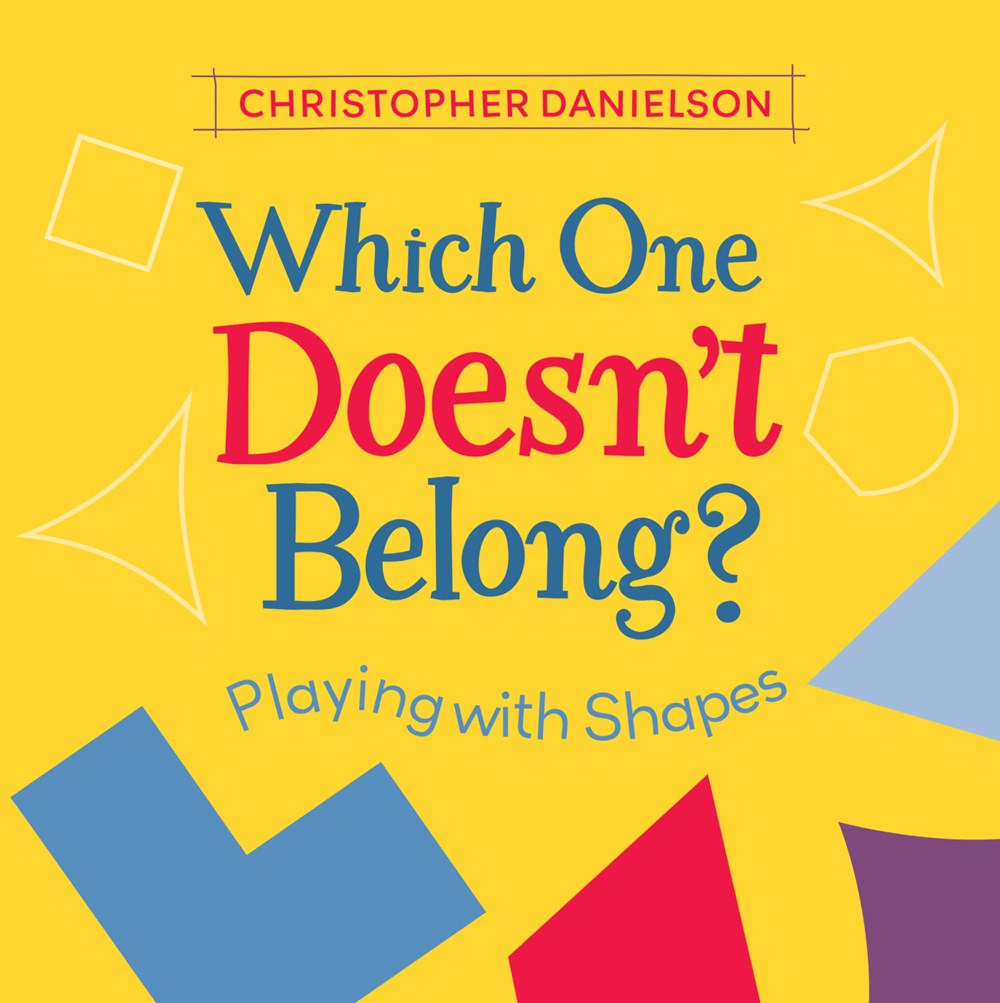
Which One Doesn’t Belong? Playing with Shapes, by Christopher Danielson, (Feb. 2019, Charlesbridge), $15.99, ISBN: 9781580899444

Ages 4-8

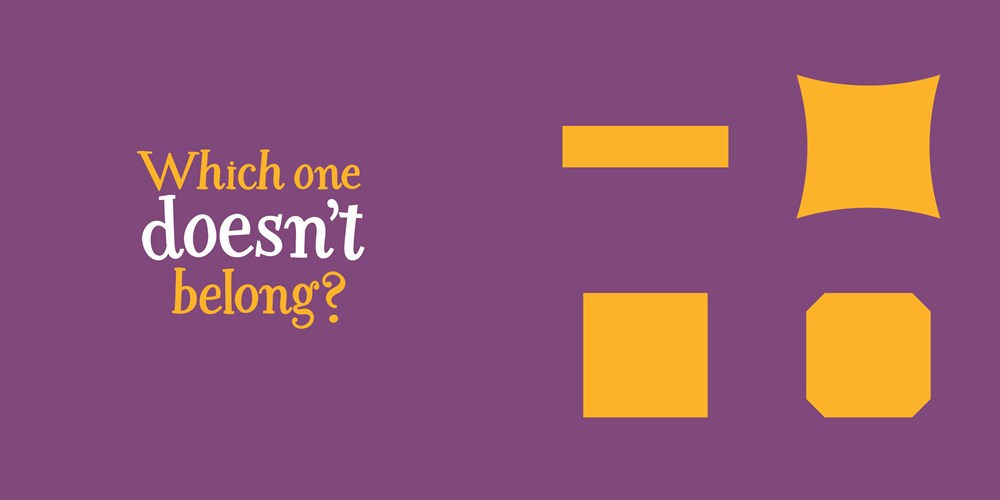
Math educator Christopher Danielson came up with a creative new way to get kids thinking about mathematical concepts: give them groups of shapes, and ask them, “What doesn’t belong?” The best part: NO WRONG ANSWERS. As the beginning explanation details, it’s all about the process, about critical thinking. One color could be different. A shape could be more squished, smooshed, or just look weirder than the others. It’s all in the eye, the mind, of the beholder here! Spreads alternate between layouts with shapes, and explanations on how every answer is correct, with supporting information like shapes, color, and other properties.

This is such a great way to make mathematics accessible to readers (kids and adults alike!). It doesn’t discourage anyone; it doesn’t make anyone’s answer, or rationale, wrong. Which One Doesn’t Belong shows readers how easy it is to approach things in a mathematical way: and this is coming from the lady who tells kids “the best way to do well in math is to not ask me for help with it”. Like the author himself says, “All properties count here; all ideas matter…”. Add this one to your nonfiction collections, build some programs around it for different age groups, and start making math more friendly to your readers!

Which One Doesn’t Belong? has a starred review from Kirkus and is the Winner of the Mathical Book Prize.

Posted in Early Reader, Graphic Novels, Intermediate, Non-Fiction, Non-Fiction, Preschool Reads

Two from TOON: Fun ways of looking at Math and Science

TOON’s doing it again: promoting authors and illustrators who know how to take abstract concepts and craft them into something exciting, beautiful, and fun. The two Fall graphic novels TOON has coming out: 3×4, by Ivan Brunetti, and We Are All Me, by Jordan Crane, play with multiplication, sorting, and sets; creation, DNA, and our relation to the planet and beyond. Sounds like weighty stuff, right? It is, but here’s the best part: these books are for kids, ages 3 and up. Let’s take a deeper look.

3 x 4, by Ivan Brunetti, (Sept. 2018, TOON Books), $12.95, ISBN: 9781943145348

Ages 3+

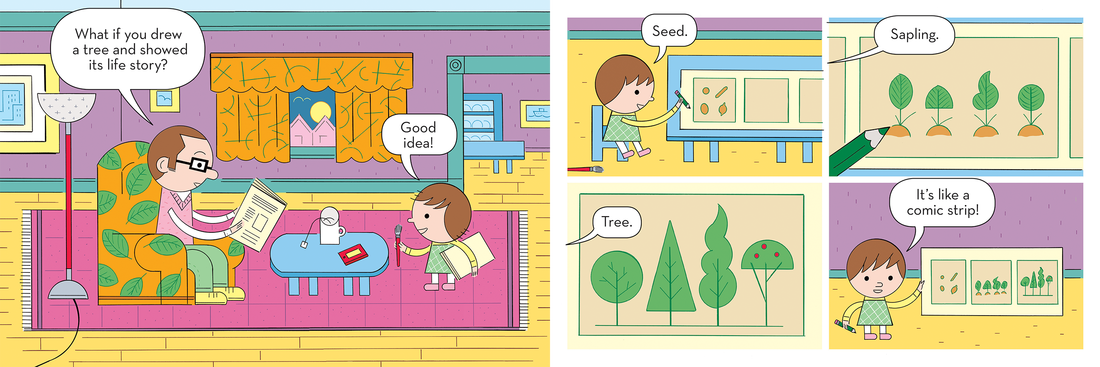
A teacher gives his class an assignment: draw 12 things, but in sets. Everything else is up to them: how many sets, what to draw, what colors to use. Annemarie, one of the girls in class, thinks deeply about what to create, as we see her classmates get to work on their sets. The book introduces readers to the beginning principles in multiplication; sorting; and thinking outside the box, as we see through the kids’ assignments. The book is so meta – it’s a math assignment within a math assignment – that teachers can easily use this as a math storytime.

Ivan Brunetti’s previous TOON book, WordPlay, played with language and compound words, and also starred Annemarie, a child of color in a diverse classroom of friends. As an art teacher, he has a gift for seeing things differently, and has the talent to make his ideas fun and relatable to a young audience. My 6-year-old read 3×4 to me, cover to cover, one night, after I read it to him and we worked through all the similarities between events in the book and what he’d done in his Kindergarten classroom the past school year. I’d love to try a math challenge for the kids in my library, asking them to start with 3 x 4, and go from there: make an art gallery and keep switching up the numbers. Have stickers and stamps and other creative materials handy!

3 x 4 has a starred review from Kirkus. As with all TOON books, a free, downloadable teacher’s guide is forthcoming.


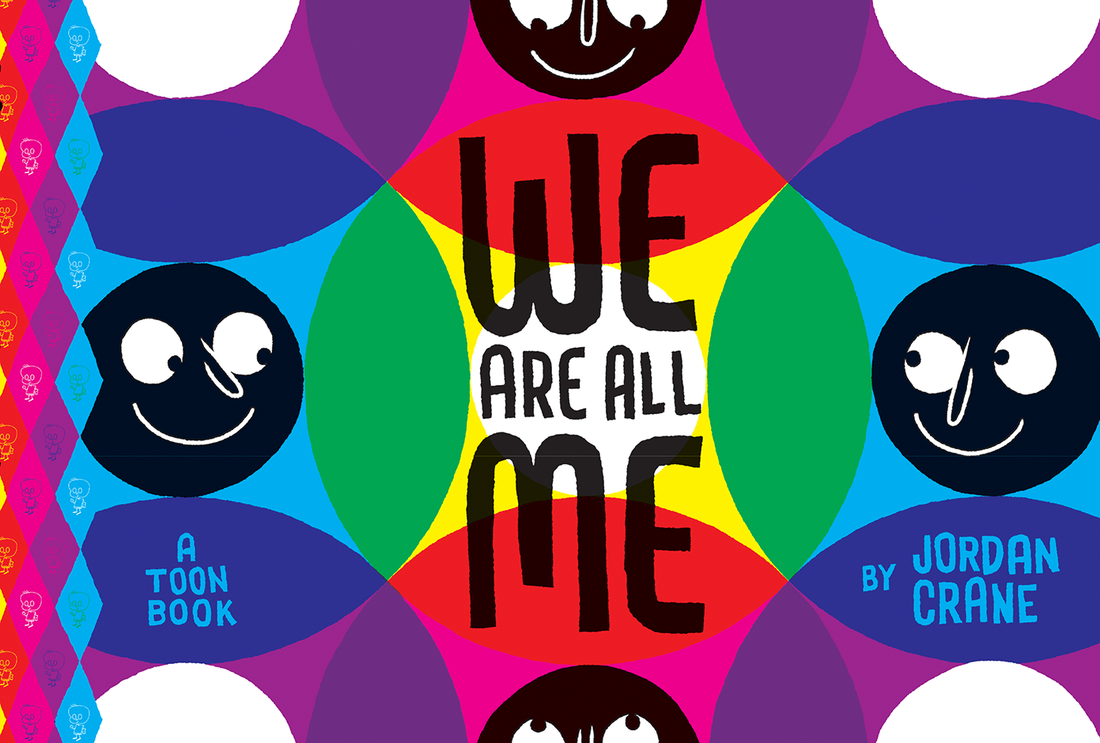
We Are All Me, by Jordan Crane, (Sept. 2018, TOON Books), $12.95, ISBN: 9781943145355

Ages 3+

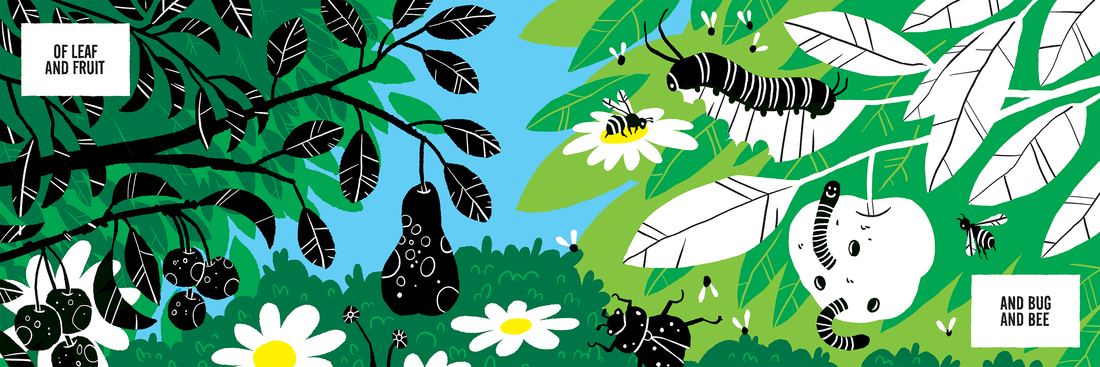
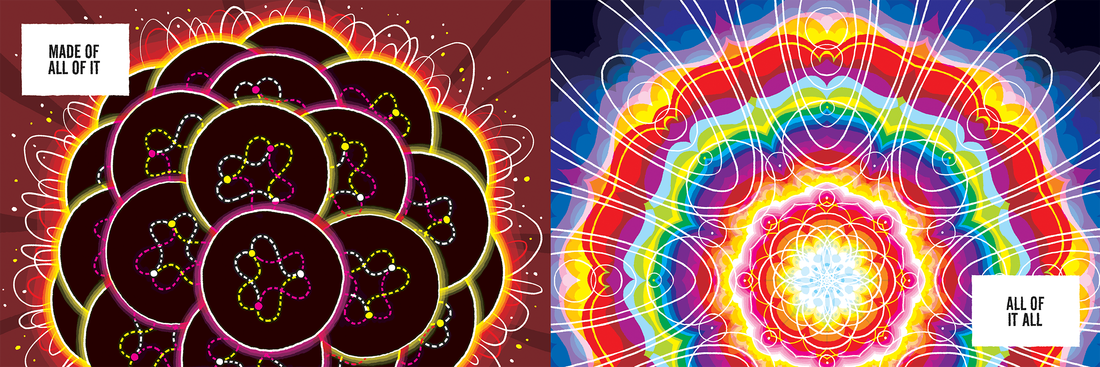
A dot forms and takes readers on a visual journey through existence. As it moves through bodies, nature, DNA, and space, readers experience evolution, our relationship to the Earth, and consciousness, all in vibrant, pulsing, day-glo pen, ink, and tablet artwork. Spare text reads lyrically, almost mantra-like, as we – via the dot – progress through time and space. The visual confirmation that we are connected to this world, and to one another, is exciting and humbling all at once; for young readers, it’s mind-blowing and beautiful. This is one of those books that left me speechless when I first read it, because it’s breathtaking and uses such brief, eloquent verbiage to explain… everything. A stunning must-have for all collections. Own it, and read it. Often.

We Are All Me has a free, downloadable teacher’s guide forthcoming.

Posted in Middle Grade, Non-fiction

Get Ready for STEM Summer!

Sure, many libraries are doing the “Libraries Rock!” theme for Summer Reading, but that’s no reason to leave science out of the fun! I’ve got a bunch of STEM books that you’ll want to get in front of (or create programs using) your readers to have fun with this summer. Careers, facts, bios, and, most fun of all, experiments, await!
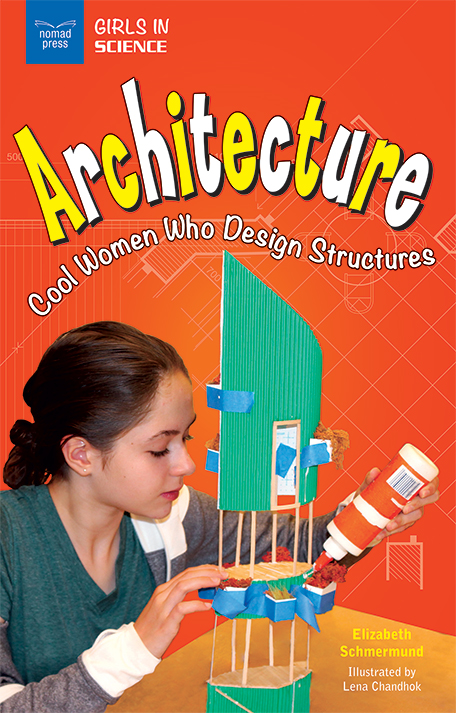
Architecture: Cool Women Who Design Structures (Girls in Science series), by Elizabeth Schmermund/Illustrated by Lena Chandhok, (Aug. 2017, Nomad Press), $9.95, ISBN: 9781619305465

Recommended for readers 9-13

I’m always looking for good career books, because I weeded my current section when I first got to my library. I really liked this book, and I’m looking forward to reading and putting more of the Girls in Science series in my book cart for future purchases. Architecture is divided into four color-coded sections: the first, a general overview of architecture; the history, styles, what the profession is like today and how to prepare for study in architecture, and women in the profession. The next three sections are devoted to profiles of a diverse group of women architects: Patricia Galván, a Project Manager; Farida Abu-Bakare, an intern architect who’s in the process of writing her exams and works with science and technology; and Maia Small, who owns and operates her own small architecture firm. In addition to the profiled female architects, there are brief bios on other women in the field. Ask & Answer sections provide thought-provoking questions, many beyond the basic material, for readers to consider. QR codes in callout sections provide links to more information. The overall narrative, and each profiled professional, addresses the gender gap and even larger diversity gap in the industry. Back matter includes a timeline of the profession, all the Ask & Answer questions in one place, a glossary, further resources, including written-out links to the QR code sections, and an index.
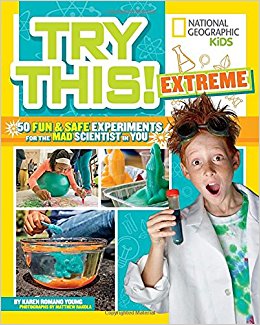
Try This! Extreme: 50 Fun & Safe Experiments for the Mad Scientist in You, by Karen Romano Young/Photographs by Matthew Rakola, (Sept. 2017, National Geographic Kids), $16.99, ISBN: 9781426328633

Recommended for readers 8+

The best part about science, I tell the kids in my programs and class visits, is making a mess, yet, no one gets mad at you (mostly). What better time to be a mad scientist than in the summer, when it’s beautiful out and you can open those windows to offset any stinky experiements? The book starts off with safety instructions and photos of the kid (and dog) scientists who tested out the 50 experiments waiting to be discovered in Try This! Extreme. Each experiment has a safety rating, a who you need rating (i.e., an adult, just you, or maybe grab a friend), and supervision rating; each experiment also lays out concepts explored, approximately how long it will take, what you need, and a step-by-step guide through the process, accompanied by full-color photos. There are callout facts, questions to ask yourself, and key terms defined throughout. Conduct a bioblitz (exploration) in your yard or a park, learn physics using marshmallow Peeps, or check the weather forecast and aim for a game of masking tape hopscotch when there’s rain predicted. There are bonus mini-experiements, Science Fair experiment prompts and guidance, K-12 science standards and how each experiment corresponds to them, an index, and metric conversion tables. Enjoy!

The STEM Quest Series from Barron’s Educational is a brand new series broken out into four books, loaded with facts and experiments:
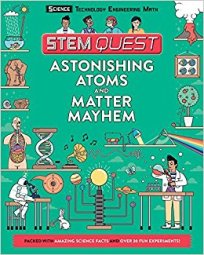
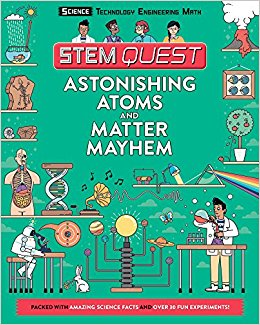
STEM Quest Science: Astonishing Atoms and Matter Mayhem, by Colin Stuart/Illustrated by Annika Brandow, (May 2018, Barron’s Educational), $10.99, ISBN: 9781438011363

Recommended for readers 8+

This volume looks at the organic side of things: biology, chemistry, physics, earth and space sciences, biochemistry, biomedicine, and biotechnology. Each section guides readers through full-color illustrated discussions on each area and includes experiments to ramp up the fun. Kids will LOVE the Marshmallow Molecules – you need a bag of marshmallows, a box of toothpicks or wooden skewers (me? I’d go with the toothpicks, but I’m in a public library), and some compound formulas. Let kids make their own formulas up and watch the fun begin! I’ll save you the search: this is where you can find the chemical compounds for farts. It’s the American Council on Science and Health’s website, so they did this for science. You’re welcome. Littler ones can make their own sundial, or spot a constellation. There are scientist profiles and fantastic facts throughout, plus a glossary and an index.
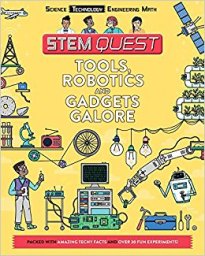
 

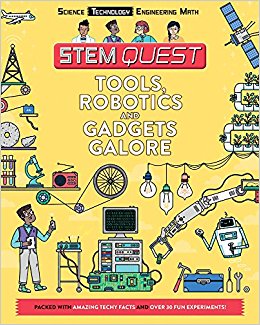
STEM Quest Technology: Tools, Robotics, and Gadgets Galore, by Nick Arnold/Illustrated by Kristyna Baczynski, (May 2018, Barron’s Educational), $10.99, ISBN: 9781438011370

Recommended for readers 8+

This volume looks at the techy side of life: construction, power and energy, agriculture and biotechnology, manufacturing, information and communication, medical and biomedical, and transportation. Learn about the evolution of tools, from the earliest hand tools to robots and space suits. Learn how a blast furnace works, and make your own plastic (adult helpers necessary), and learn how it works. Get your Project Runway on, with a section on textiles: you’ll learn to weave, tie dye, and ink print. For your more tech-inspired readers, there’s an easy Try This at Home experiment that teaches (with adult help) how to build a circuit, or how to magnetize a nail. There are great programming ideas in here: I think I’m going to look into building a planet and designing a space station, all of which can be done on a shoestring and with adult help. And since I’m the closest thing resembling an adult in the room… well, I guess that falls to me. The same format applies here (and to all of the STEM Quest books): bios on prominent scientists, loads of facts and illustrations, a glossary, and an index.
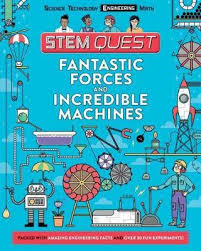
 

STEM Quest Engineering: Fantastic Forces and Incredible Machines, by Nick Arnold/Illustrated by Kristyna Baczynski, (May 2018, Barron’s Educational), $10.99, ISBN: 9781438011349

Recommended for readers 8+

Next up, engineering: systems and mechanics; materials and processes; biology, medical, agriculture and chemistry; structures; and sustainability engineering. Get the kids learning about forces and energy with experiments like Superhero Paper Clips, where they’ll make a paper clip float; a material scavenger hunt, inviting them to look around for everyday items made out of different materials; get out the old reliable straws and pipe cleaners and let them create 3-D shapes to see how they hold up under pressure, or that summer staple, the pinwheel. (The book suggests dowels; I’m here to tell you that chopsticks are a lot cheaper and just as easy to use.) There’s a great section on environmental engineering that will have you and your readers figuring out how to clean up our environment and a nuclear power lesson that has the simplest of experiments: use the sun’s nuclear energy to test your sunscreen on a piece of construction paper.
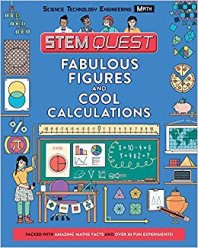
 

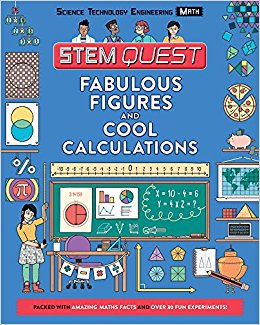
STEM Quest Math: Fabulous Figures and Cool Calcuations, by Colin Stuart/Illustrated by Annika Brandow, (May 2018, Barron’s Educational), $10.99, ISBN: 9781438011356

Recommended for readers 8+

I’m trying to get more math-related fun in front of my library kids, because it scares the bejesus out of me and I don’t want to pass that on. The parents love a good math program, too, so I know I’ll get buy-in from the community on this one. Here, we’ve got numbers and operations; measurement; problem-solving, logic and reasoning; geometry; algebra; advanced math; data, analysis and probability; and communication. I will admit that just looking at that section scared the life out of me, but once I started reading, I quickly warmed up. There are great explanations of each concept in here, addressing the quick and easy stuff like place value and column addition and subtraction, and heading all the way into bigger ideas like proofs and binary. Fun experiments and activities include a pirate treasure challenge, where, as a pirate captain, you need to use math to calculate the best place to bury your treasure; creating 3-D art and making pyramids, and averaging Olympic judge scores.

That’s a start for some STEM summer fun, but make sure to get your STEM sections and displays up and running to give readers readalikes and ways to expand on what they’re learning. The Secret Coders graphic novel series by Gene Luen Yang and Mike Holmes is great for Math and Tech fans, who want to play with coding. Science Comics has books about rockets and robots that will fit nicely with STEM displays, and I’m a big fan of the Junk Drawer Science series by Bobby Mercer. There are tons of fun STEM-related books out there!

Posted in picture books, Preschool Reads

Count along with Annie Aardvark, Mathematician!

Annie Aardvark, Mathematician, by Suzie Olsen/Illustrated by Davina “Viv” Kinney, (Jan. 2017, STEAM Publishing), $9.99, ISBN: 9780998433707

Recommended for readers 3-6

This cute counting book stars Annie, an aardvark mathematician. She loves math! She decides to count everything she finds, and takes readers on a 1-10 feast for the senses where she enjoys sniffing and tasting cucumbers, rocks, assorted bugs, berries, and plants. Each spread features a white page with black text for easy storytime reading, and a full-color page featuring Annie and her latest discovery. Kids can count along with the repetitive text, which features written numbers, illustrated things to count, and – most fun – the sounds Annie makes as she explores and investigates each treasure. She gulp, gulp, gulps beetles, slurp, slurp, slurp, slurps sticks, and has a whole bunch of snorts for leaves!

This is a cute concept book that would work really well with flannels – nature flannels are easy enough to make or find. It fits in well with a nature storytime; I’d pair this with Sue Williams’ I Went Walking. Make fun sound effects to get the kiddies giggling! The art is cute; Annie has a friendly smile and expressive eyes that will draw readers’ attention. Explain what an aardvark is, and more importantly, what a mathematician is. Pronounce the kids mathematicians and have them count!

Posted in Preschool Reads, Toddler Reads

Build that Baby STEM Library! The ABCs of Mathematics and Physics

Quantum theorist and Dad Chris Ferrie adds two more board books to his Baby University library: The ABCs of Physics and The ABCs of Mathematics!

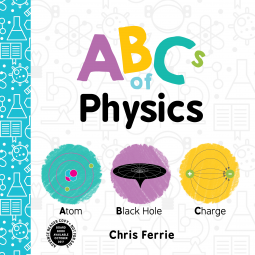
The ABCs of Physics, by Chris Ferrie, (Oct. 2017, Sourcebooks Jabberwocky), $9.99, ISBN: 9781492656241

A is for Atom; B is for Black Hole; C is for Charge… The ABCs of Physics is a bright, entertaining introduction to physics. Not your run of the mill ABCedary, The ABCs of Physics works for all ages – for babies and toddlers, it’s a pretty board book with all sorts of interesting pictures to look at. For older kids and adults, it’s an intro to physics terms and concepts. I am here to tell you, unabashedly, that I found this book fascinating. Did you know that a newton is a standard unit of force? I did NOT. I also learned that my little book scanner works thanks to photons – and you can trust and believe that I will pass on little bits of this information in my day to day at work and at home.


The ABCs of Mathematics, by Chris Ferrie, (Oct. 2017, Sourcebooks Jabberwocky), $9.99, ISBN: 9781492656289

The ABCs of Mathematics is even more little one-friendly, because it introduces basic concepts that our kids are going to be learning soon enough. A is for Addition: Addition is the mathematics of counting. D is for division: Division is the mathematics of fair sharing. It’s wonderfully to the point, and illustrations help reinforce simpler concepts like union: a Venn diagram, something that most school-age kids are familiar with, or addition, which stacks apples over numbers to illustrate the concept.

Want to close that word gap? Introduce some of these terms to your little ones. Let them explore and play with the books. Just expose them to the words and ideas in the books; if they hear it enough, it won’t be a scary thing when they hear it in school. Any book that teaches me something as much as it does my kids is a good book.

Posted in gaming, Intermediate, Middle Grade, Tween Reads

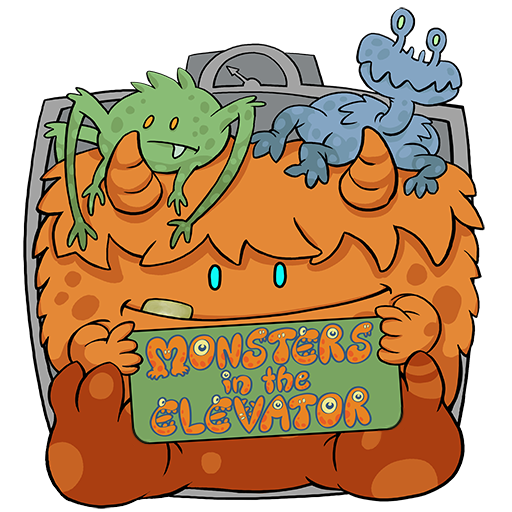
Tabletop Gaming: Monsters in the Elevator

I may have mentioned once or twice that I’ve developed a bit of a tabletop addiction. Since my last post about gaming in the library, I’ve Kickstarted… well, lot; and I’ve discovered great games by going to the Boston Festival of Indie Games every September. This past time around, we discovered yet another game that provides for laughs, smack talk, and great family time.

jasonwiser_monsterselevatoricon

Jason Wiser created Monsters in the Elevator with his 7 year-old daughter, and the premise is simple and hilarious: there’s an elevator going up and down in a building. Monsters are getting on and off the elevator. Elevators have weight limits, right? Each monster has its weight listed on a card, and you have to work together to keep that elevator from getting overloaded and crashing! There’s help along the way – certain monsters get off at certain floors; some monsters get sick and have to leave the elevator, or even better, some monsters let loose some gas that clears the elevator pretty darned fast (there is no end to the joy a card like that brings when my family plays).

It’s a math game, and it’s FUN. The fact that it’s cooperative makes it a great game for younger kids; my 4 year-old is even able to play with our help. We all work together to keep the elevator from falling. My husband got to meet Jason Wiser at BFIG last year and had nothing but great things to say, and I love that he created a family game with his own kid. It’s kid-tested, parent-approved, and now, librarian approved: my Corona Kids and I had some intense gaming sessions with my deck, and I’ll be introducing it to the Elmhurst kids very soon.

Monsters in the Elevator is available for the next five days through IndieGogo, where there are some nice backer gifts, including stickers (because seriously, monster stickers, who doesn’t love that?), and it’s also one of the five games featured on Hasbro’s Next Great Family Game Challenge. If you enjoy and want to support indie gaming, this is a fun, educational one to add to your game pile.

Posted in Early Reader, Fiction, Fiction, Humor, Intermediate, Realistic Fiction

Is Jasper John Dooley Public Library Enemy #1?

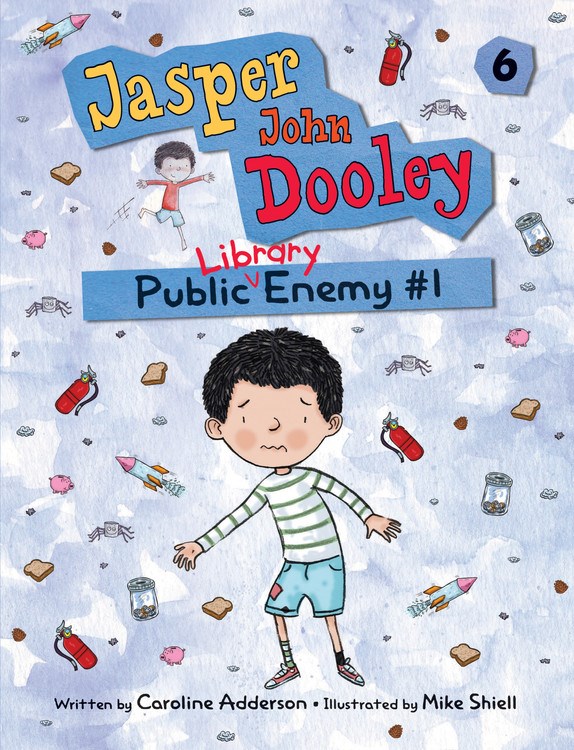
jasper john dooleyJasper John Dooley: Public Library Enemy #1, by Caroline Adderson/Illustrated by Mike Shiell (Apr. 2016, Kids Can Press), $15.95, ISBN: 9781771380157

Recommended for ages 7-10

Poor Jasper! He borrowed a book from the library, so he could practice reading. He wanted his skills to be sharp when it was his turn to sit on the big, comfy chair at the library and read to Molly the dog, that’s all! But Jasper accidentally dropped the book in the tub and drowned it, and THEN, his father set it on fire by trying to dry it in the stove. And THEN, he shot it with a fire extinguisher! Now, Jasper and his dad are Book Killers, and he’s terrified that he owes the library $2500 for the book! How can he raise that much money before Wednesday, when it’s his turn to read to Molly?

This is the sixth book in the Jasper John Dooley early chapter book series, and it’s adorable; great for young readers who are ready to advance from Easy Readers to chapter books. Jasper is very likable, and his reasoning will click with readers: his mom reads in the bathtub, so it should be easy, right? He misjudges a decimal point when trying to determine the price of the book he needs to replace, and comes up with $2500 instead of $25. He feels huge responsibility for the library book in his care, which provides opportunities for discussion about responsibility and taking care of others’ belongings, as well as realizing that everyone makes mistakes – even parents – and that, yes, accidents happen.

This is the first Jasper John Dooley book I’ve ever read, but I would like to get these on my library’s shelves, because they’re great reading. Like most series fiction for emerging and newly independent readers, you don’t need to read from book one to pick up the series; they’re independent stories with characters that you’ll get to know right away. Black and white llustrations add to the enjoyment of the story. You can easily have a read-aloud with this book: classes will get a kick out of it! Good role models, sweet humor based on misunderstanding, solid discussion points make this a good addition to your series collections.

Learn more about the Jasper John Dooley series on the Kids Can Press webpage.

Posted in Fiction, Middle Grade, Realistic Fiction, Tween Reads

Dead Possums are Fair Game – Middle Grade Math Madness!

61608104282190LDead Possums are Fair Game, by Taryn Souders (Nov. 2015, Sky Pony Press), $15.99, ISBN: 9781634501620

Recommended for ages 8-11

Fifth grader Ella is stressed out. Her math teacher has just announced that while there won’t be any more math tests for the remainder of the school year, the students will be putting on a math fair that will count as two test grades. Add to that, the fact that her awesome Aunt Willa is coming to live with her family for a month – but she’s staying in Ella’s room and brings her big, slobbery dog named Chewy (and it ain’t for Chewbacca), and you have a recipe for disaster! Ella’s a bit of a control freak who likes things in their own proper place; Willa has commandeered Ella’s bed and dresser, moved her furniture around, and taken over her bathroom. Chewy has taken over Ella’s extra mattress. Luckily, Ella’s got a great group of friends who team up with her for the math fair project, turning it into a memorial of sorts for the dead possum that became legendary during gym class. Maybe things will look up for Ella after all.

Dead Possums are Fair Game is way too much fun. Ella is a bit neurotic, which sets her up for all sorts of hilarious happenings, whether it’s being slobbered on by a big dog or stepping on a dead possum. There’s a nicely done focus on math, particularly time conversions and animal life cycles that will make teachers and parents very happy, and will hopefully show kids that math is less painful than they may think. There’s also a great discussion about how math is pretty important in every area of life; most careers require some sort of math knowledge, and it’s not a bad thing. Further information about animal lifespans at the back of the book will help English and Math teachers work together to use this book as a teaching resource.

Ms. Souders has a background in math education, and it shows not only in her ability to break down math problems to make common sense to kids, but in the interactions between kids and grownups and kids themselves. The dialogue is realistic and well-paced, and she has a neurotic kid’s inner dialogue down pat (I should know, being a former one myself). Dead Possums is a great add to your realistic fiction collections.

Taryn Souders also has a website, Whole-y Cow! Fractions are Fun, with downloadable math resources for kids.

Posted in Non-Fiction, Uncategorized

Hands-On Science and Math makes learning fun!

9780876596500_a5605Hands-On Science and Math – Fun, Fascinating Activities for Young Children, by Beth R. Davis (July 2015, Gryphon House), $14.95, ISBN: 9780876596500

Recommended for educators and parents of preschoolers-age 8

I’m always on the lookout for books that have fun, easy activities for my younger patrons. Being a librarian in an urban, lower community  made up largely of working class and working poor families, I’ve got a lot of parents concerned about their kids’ progress in math and science. One thing I’ve been working on putting together is a series of science workshops for my younger patrons. I’m a bit clueless in this area, so I’ve been getting some help from my colleague at our Children’s Library and Discovery Center in Jamaica (seriously, go to this library and prepare to be amazed); I also keep an eye out for blogs, websites, and books that offer some ideas. Hands-On Science and Math is one of those books.

Loaded with experiments and ideas for kids from preschool to roughly third grade (you can skew older or younger, with easy tweaks on these experiments), Hands-On Science and Math gets kids thinking and using their five senses to explore the world around them. Each experiment comes with an explanation of the scientific concepts behind the experiment, STEM lessons to be gained from the experiments, and ways to link to the math and literacy in each one. I’ve already created a few sessions for the kids in my library, including using a Matchbox car, cardboard, a pile of books, and a measuring stick to learn about simple machines; examining the world around them using a magnifying glass, and the almighty baking soda volcano (I’ll be doing that one solo, but I’ll give them instructions they can try at home). I’ll be trying these out over the winter break!

Parents and educators can recreate these experiments on a small budget: most of the ingredients and objects can be found at dollar stores or are already in your home. There’s an appendix on graphing topics, a popular math and literacy link here, including questions with concrete answers you can use to graph results. Further resources are available for anyone who wants to read more about STEM activities and young children.

Author Beth R. Davis, EdS, NBCT, holds a bachelor’s degree in elementary education; a master’s degree in teaching English to speakers of other languages, or TESOL; and an education specialist degree in computer education. She is the director of Kids 4 Kids Academy preschool in Miami, Florida. I’m thrilled that she’s got experience in working with speakers of other languages; this talent comes through in her experimentation, and allows me to create these programs with my multicultural families. She offers more science activities for kids on her website, where you can also sign up to join her mailing list.