Posted in Fiction, Graphic Novels, Humor, Middle Grade

Oh No! The Lunch Witch is Knee Deep in Niceness!

lunch-witchThe Lunch Witch #2: Knee-Deep in Niceness, by Deb Lucke, (Oct. 2016, Papercutz), $14.99, ISBN: 9781629915036

Recommended for ages 8-12

In this sequel to 2014’s Lunch Witch, Grunhilda is still pulling shenanigans at the school cafeteria – lately, she’s been putting chopped-up pink erasers into the ham and beans – but there’s a soft spot on that black and crusty heart of hers. She tries to hide it from her ancestors and her familiars: she gets a letter from Madison, the student she kinda sorta befriended in the first book, and keeps it hidden under her mattress. But Mr. Williams, her dog, knows something’s up, and finds the letter. Distressed, he talks the familiars into finding a cure: a meanness potion from the book that IS NOT TO BE USED BY ANYONE OTHER THAN WITCHES. What could go wrong, right? Right.

Mr. Williams mixes up a positivity potion, further illustrating why the spell book is NOT TO BE USED BY ANYONE OTHER THAN WITCHES. The positive vibes spread to the whole town; the ancestors are aghast, and Brunhilda has to fix things before her own black and crusty heart gives way to the shiny happy people business that’s running rampant.

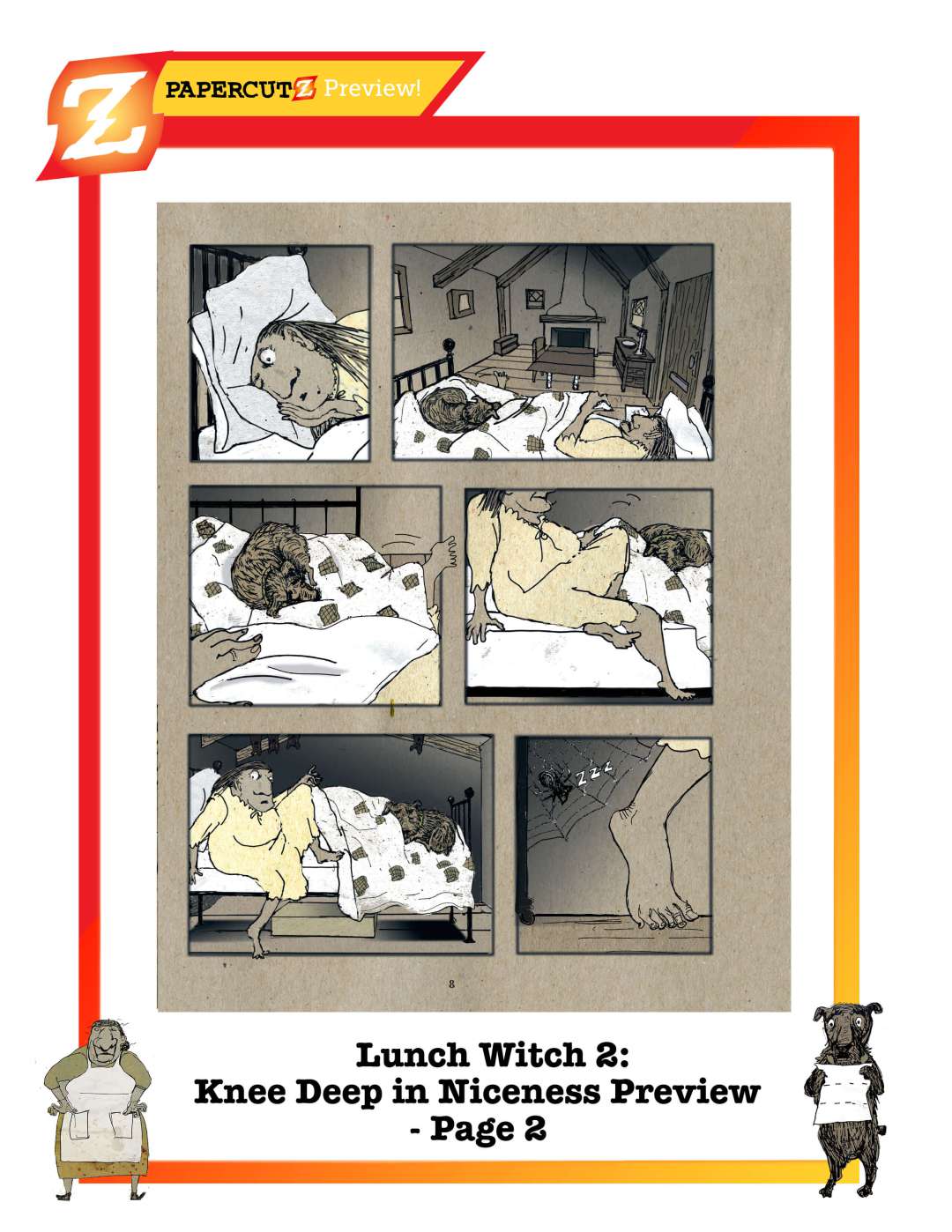
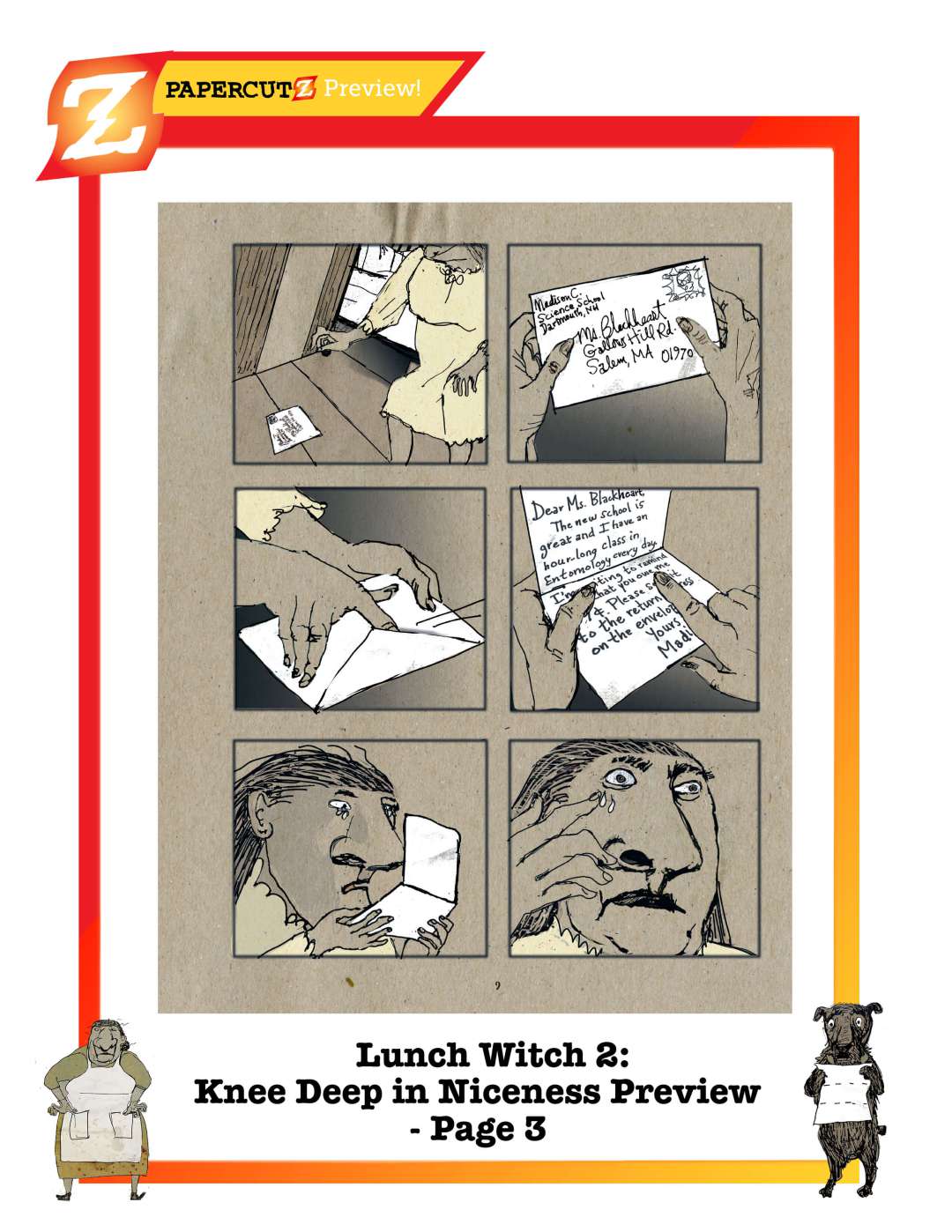
The first Lunch Witch novel is still hugely popular – it’s still circulating here in my library, and kids are still asking for it by name. Wait until I put this one up. I love the rainbow beam, almost capturing Brunhilda in its happy rays on the cover. The interior art is still wonderfully bleak, in its blacks, browns, and washed out whites; the occasional splashes of color are fun and add effect (and humor, especially when Mr. Williams has to wee). Add this one to your graphic novel collections and give a copy to your Lunch Witch fans; they’ll lap it up.

the_lunch_witch_2_preview_page_01the_lunch_witch_2_preview_page_02the_lunch_witch_2_preview_page_03


Teaching Lunch Witch in your classroom? There’s an Educator’s Guide on the Papercutz website – I hope they add one for the new book, but you can always expand on the first one by creating new vocabulary lists and creating some discussion questions about the new story. Visit The Lunch Witch’s website for “recipes”, character profiles, and a Bad Advice section.

Posted in Fiction, Fiction, Graphic Novels, Intermediate, Middle Grade

Barbie goes graphic via Papercutz: Fashion Superstar #1

barbie_1Barbie: Fashion Superstar, by Sarah Kuhn/Illustrated by Alitha Martinez, (Oct. 2016, Papercutz), $7.99, ISBN: 9781629915876

Recommended for ages 6-10

Papercutz continues their graphic novel license domination with every little girl’s (okay, just about every little girl) best friend, Barbie. In this first graphic novel under Papercutz, we get a brief history of Barbie comics (first published by Dell in 1962, later, in the ’90s, by Marvel) and an original Barbie story where she tackles a big fashion show panic with her enthusiasm and quick thinking. Her best friend, Liz, helps Barbie make everything fall right into place, and mega-fashion designer Whitney Yang is grateful when the dynamic duo save the day.

Alitha Martinez’s art is on point. It’s bright, fun, and looks consistent with other Barbie illustrated books and media. The friends talk about what inspires their creativity, embrace science (Barbie even creates a special ink to help her combine her doodling and fashion design), and think on their feet to solve problems. A diverse cast of characters makes this an all-around fun read for Barbie fans to enjoy. There’s a preview for the second volume of the Papercutz import series, Sisters, at the end.

I’ll add this one to my shelves – Barbie has a strong fan following here at my library; I can think of two sisters in particular that will be thrilled to see this appear on my graphic novels shelf. I may buy one copy for now, just to get it on the shelves, but invest in the hardcover copy when it’s published in January.

Posted in Early Reader, Fiction, Fiction, Intermediate

Isabella is a Girl in Charge as she channels historic women

isabella_covIsabella: Girl in Charge, by Jennifer Fosberry/Illustrated by Mike Litwin, (Oct. 2016, Sourcebooks Jabberwocky), $16.99, ISBN: 9781492641735

Recommended for ages 4-8

Isabella, the little purple-haired girl with the big imagination, is back in her fourth adventure: this time, she’s going all the way to the nation’s capital! Isabella wakes her parents up bright and early; they’ve got a big day ahead of them and Isabella doesn’t want to miss a second. As she and her family get ready to head out, Isabella imagines she’s different females politicians, first in their fields, from the first mayor to the first Supreme Court Justice. Isabella and her family have an important day to be part of: history is being made!

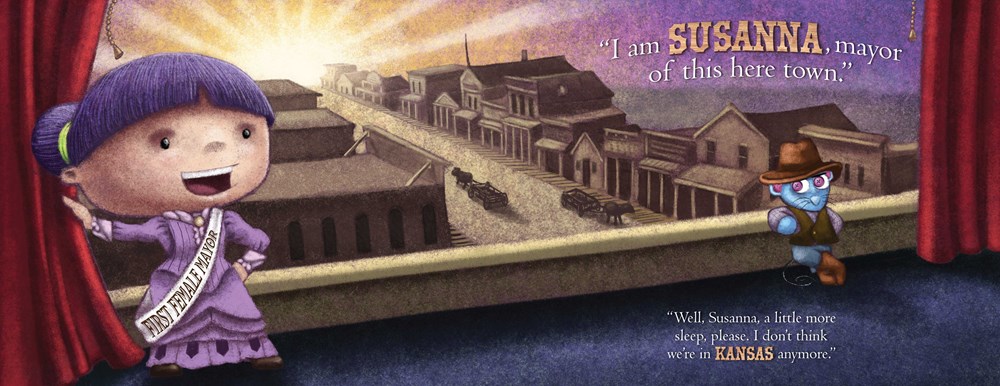
A good idea in theory, younger readers may need some prompting when first hearing the story; these names will largely be unfamiliar to them. Anyone reading the story out loud should mention beforehand that the women Isabella names are the first women in politics and what office they held. Kids will be better able to pick up subtle in-jokes in the text, too; for instance: When Isabella claims to be “Susanna, mayor of this here town,” her mother responds, “I don’t think we’re in Kansas anymore.” If the children understand that Susanna Salter was the first female mayor, and she was mayor in Kansas, it’ll be more fun for them. Isabella’s adorable stuffed friend is with her, dressed in period clothing, in each spread – see if your readers can spot him (or her, if they like)!

isabella_1

Mike Litwin’s art, done with blueline pencil and Adobe Photoshop, is fun and emphasis on key words like names and identifying characteristics adds some punch. Brief biographies, quotes, and a timeline of women in politics, along with a list of books and websites for further reference, round out Isabella’s latest adventure.

isabella_2

The book is a good start for introducing younger readers to women in politics, and how long we’ve been around! It’s more of a companion volume to a lesson rather than a standalone. I haven’t seen an educator’s guide or activity kit yet, but there are some great resources about women and politics online, including printouts at Time for Kids. Most of the available information is branded for Women’s History Month, but we’re at a historic crossroads in history – celebrate women in politics NOW!

Jennifer Fosberry and Sourcebooks both offer links to Educator Guides for other books in the Isabella series and the companion book, My Name is Not Alexander. Illustrator Mike Litwin has samples of his artwork and animation on his site.

Posted in Early Reader, Fiction, Preschool Reads

A little bedtime Shakespeare: Mabel and the Queen of Dreams

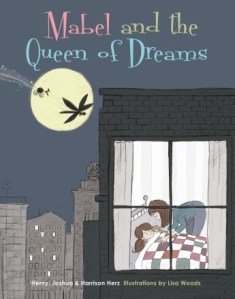
mabel_covMabel and the Queen of Dreams, by Henry, Joshua, & Harrison Herz, (July 2016, Schiffer), $16.99, ISBN: 9780764351372

Recommended for ages 4-8

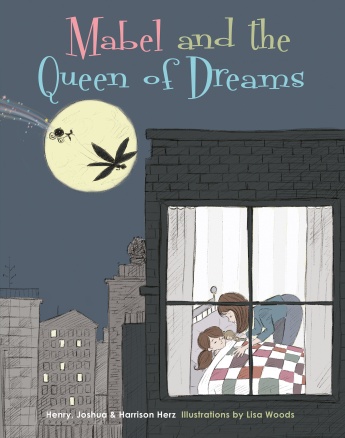
Little Mabel is an expert at not going to sleep. After she’s gone through her usual routine of excuses, she asks for a bedtime story. Mom is too happy to oblige, and spins a tale about the Fae Queen, who paints children’s dreams, but will only visit when Mabel closes her eyes, Mabel’s mom describes the Fae Queen and her hazelnut chariot; her dragonfly steed, and the dreams she paints. The words wrap themselves deliciously around Mabel – and the reader’s – imagination, drawing us into the Fae Queen’s world and leaving us all waiting for a visit.

I love this book. I love that a bedtime story for children is inspired by Shakespeare! The Fae Queen comes from Romeo & Juliet, in a soliloquy spoken by the character Mercutio, when he describes how a fairy queen influences  dreams. Lisa Woods’ artwork adds another dimension to the story, with subdued colors and sketch-like illustration; the children’s dreams are portrayed as children’s drawings with bright colors, taking us into their imaginations to see mermaids, superheroes, astronauts, and brave knights. The Fae Queens’ fantasy elements are sweet and inviting, and my favorite part – when Mom tells Mabel how she will feel the Fae Queen’s presence in different ways – are beautifully rendered. I read this to my little one and tickle his nose and neck as the Fae Queen describes hovering and traveling over Mabel. The entire story creates a bedtime experience, lending itself to sweet nighttime cuddling and the promise of a dream adventure. An author’s note at the end gives readers Mercutio’s full speech, and Hamlet’s “What dreams may come” speech.

This book is a wonderful addition to bedtime bookshelves and collections. It’s a hit in our home.

mabel_1

I was thrilled to be able to ask author Henry Herz a few questions about Mabel and the Queen of Dreams – read on!

MomReadIt: I love that you adapted Shakespeare for a picture book audience! What inspired you to create a bedtime story and use the Queen of the Fae as a character?

Henry:  There is something that tickles my funny bone about taking a familiar folk tale and tweaking it. Fractured fairy tales are quite popular – consider INTERSTELLAR CINDERELLA by Deborah Underwood or NINJA RED RIDING HOOD by Corey Rosen Schwartz. The idea popped into my head to write a picture book based on a scene from Shakespeare. As I researched, I came across that oft-forgotten (at least by me) scene in Romeo and Juliet in which Mercutio waxes poetic about the little fairy queen Mab. Queen Mab affects sleepers’ dreams as she flies past, and I thought, what a great premise for a bedtime picture book. Plus, I love getting young readers interested in fantasy, and the idea of writing an urban fantasy bedtime picture book was irresistible. I hope that MABEL AND THE QUEEN OF DREAMS may spark in young readers some interest in reading more Shakespeare.

MomReadIt: Is your main character named Mabel as a nod to Queen Mab?

Henry: That is correct. In my story, Mab is a sleep-resistant girl. In the original, tiny fairy queen Mab’s hazelnut chariot is drawn through the air by a dragonfly. And we have the original Shakespearean soliloquy by Mercutio as an author’s note, so that young readers can compare the original with this modern version.

MomReadIt: I see that your sons are co-authors. How did they contribute?

Henry: They’ve been co-authoring with me since they were about 8 and 10 years old when we first collaborated on our self-published high fantasy early chapter book, NIMPENTOAD. I draft the stories and they review them, giving me feedback from a young reader’s perspective. They have also been instrumental in selling the book at book fairs, farmers markets, etc. They’re even better salesmen than they are writers. Although now that they’re 14 and 16, doing this with Dad isn’t as cool as it used to be…

MomReadIt: I hope we’ll see some more classic works for little ones from you and your family in the future. Thank you so much!

Henry: Thank you very much, Rosemary. We appreciate your support! Readers interested in learning more about our books can visit our website at www.henryherz.com.


Posted in Fiction, Fiction, Humor, Intermediate, Middle Grade

A Dark Knight bedtime parody: Goodnight Batcave

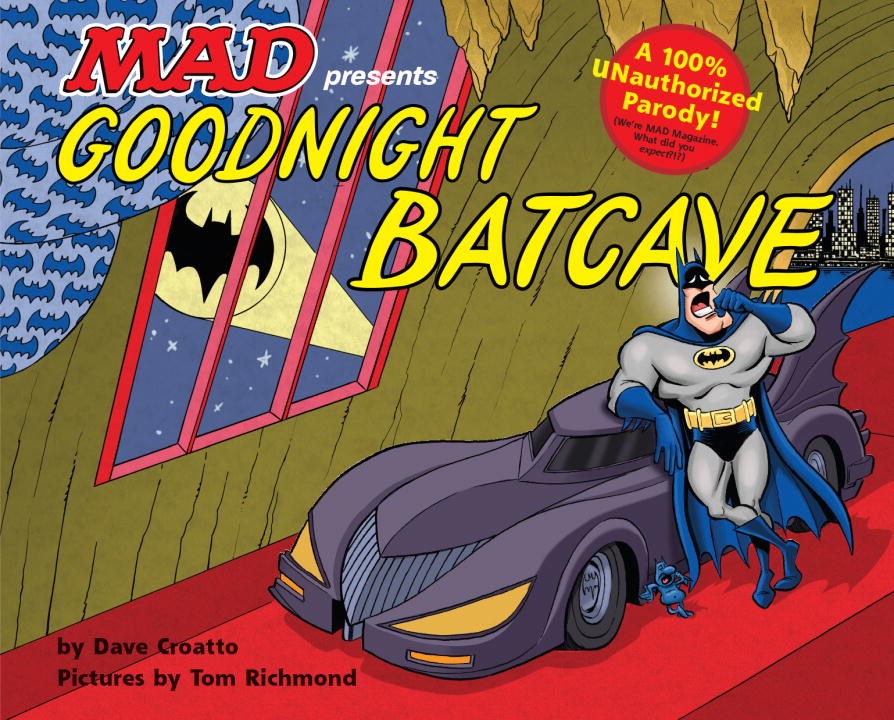
batcaveGoodnight Batcave, by Dave Croatto/Illustrated by Tom Richmond, (Oct. 2016, MAD Magazine), $14.99, ISBN: 9781401270100

Recommended for ages 5+

“In the great gray cave, there were a lot of bats, and souvenirs saved…”

Margaret Wise Brown could never have seen this coming: her sweet bedtime story has been turned into seemingly countless tongue-in-cheek retellings, including Goodnight iPad and Goodnight Goon. Goodnight Batcave is MAD Magazine’s take on the sleepytime classic and takes readers inside Batman’s inner sanctum, The Batcave. Batman’s wiped out and ready for bed, but his rogues gallery – including both fan favorites and old reliables, from Joker to Bane – just won’t behave and decide to attack the Batcave, maybe in the hopes of catching Bats unawares for the night? Using Goodnight Moon‘s familiar rhythm, Dave Croatto hilariously inserts Batman references that any fan worth their Bat-insignia pajamas will love. Bats flips and whips, knocks out knaves and bowls Penguins down the stairs. At the end of the night, Alfred is there, as always, to send Master Bruce off to sleep.

Tom Richmond’s art is classic MAD style, with exaggerated facial expressions and a superhero chin that you could land a Bat-Plane on. There are fantastic little references and Easter eggs for fans, including a nice showing by Ace, the Bat-Hound, and a quietly, ever-present Bat-mite, who snuggles up to Bats when their shift is finally over. The giant penny and T-Rex are there, and – this is MAD, after all – Alfred E. Neuman makes a cameo.

Younger Bat-fans will get a kick out of the fun take on a Bat-time story, and grown-up Batfans will love having this one on their bookshelves alongside favorite graphic novels and trade paperbacks.

Posted in Fiction, Fiction, Fiction, Intermediate, Middle Grade, Realistic Fiction

A little girl on a mission: Gertie’s Leap to Greatness

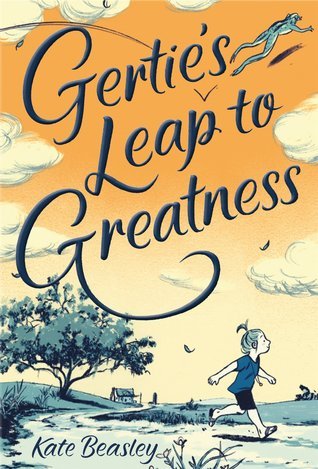
gerties-leapGertie’s Leap to Greatness, by Kate Beasley/Illustrated by Jillian Tamaki, (Oct. 2016, Macmillan), $16.99, ISBN: 9780374302610

Recommended for ages 8-12

Gertie Reece Foy is a fifth grader on a mission. She lives in Alabama with her dad, who works on an oil rig, and her great-aunt, who loves her to pieces. But Gertie’s on a mission to be the GREATEST fifth grader: she’s got quite a few plans. See, she wants to go up to her absentee mother – who lives in the same town – and let her know that she didn’t need her after all. Only one thing is standing in Gertie’s way, and that’s the new girl, Mary Sue Spivey. Mary Sue has a Hollywood director daddy and seems to have the world on a string, and she and Gertie do not hit it off at all.

This is a quick read that middle graders will enjoy. Caldecott Honor artist Jillian Tamaki’s (This One Summer) illustrations really bring a gentle life to the characters, particularly the headstrong Gertie, who takes a little bit to love, no lie. Like most middle grade protagonists, she can get a bit caught up in herself, especially considering her circumstances. Her mom abandoned her family when Gertie was just a baby, yet lives in the same town. Gertie passes her mother’s house on the bus route to school every day, and by some crazy happenstance, she and Aunt Rae only bumped into her mother once while grocery shopping at the Piggly Wiggly. I was confused as to why someone would abandon her husband and child, yet stay in the same neighborhood to continue on with her life.

Gertie becomes much more sympathetic when Mary Sue’s mean girl act kicks into high gear. Mary Sue is a truly awful mean girl. The author tried to soften her and make her  more human at the end, but I wasn’t having it, nor was I having what appeared, to me, her mother sanctioning Mary Sue and her new mean girl clique’s behavior in targeting Gertie via a “Clean Earth Club” (Gertie’s dad works on an oil rig, and Mary Sue’s mom is an environmental lobbyist.) There’s some good diversity in the book, as you’ll see in the illustrations and the descriptions of some characters.

Entertainment Weekly is calling Gertie the “next Ramona Quimby”, and that’s a great starting point for display and booktalk/readalikes. Gertie’s Leap to Greatness is a good middle grade addition to collections where realistic fiction is popular. A story thread about oil rigs and the environment provides some good discussion topics.

There’s a Gertie webpage that offers some of Gertie’s Tips for Greatness, and illustrator Jillian Tamaki’s webpage has more artwork to enjoy.

gertie

Some pages from Gertie’s Leap to Greatness, courtesy of Macmillan:

gertie_1gertie_2gertie_3gertie_4

Posted in Animal Fiction, Early Reader, Fiction, Fiction, Intermediate, Preschool Reads

The Bear Who Wasn’t There and the Fabulous Forest: unbridled optimism!

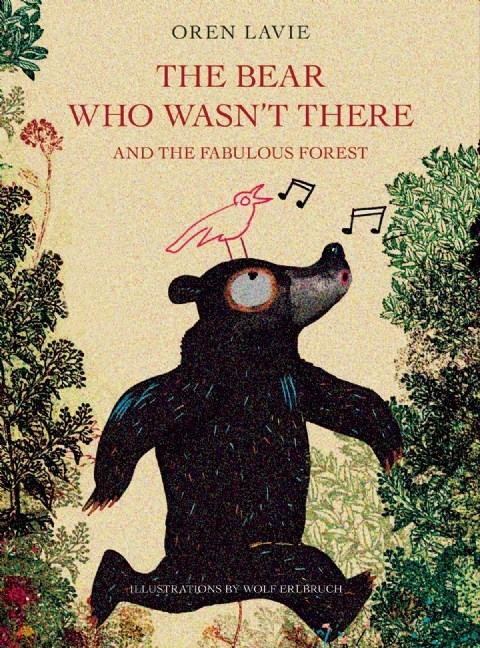
bear_covThe Bear Who Wasn’t There and the Fabulous Forest, by Oren Lavie/Illustrated by Wolf Erlbruch, (Oct. 2016, Black Sheep/Akashic), $17.95, ISBN: 9781617754906

Recommended for ages 4-8

A bear searches for himself, using clues he’s discovered scrawled on a note in his pocket: 1) I am a very nice bear; 2) I am a happy bear; and 3) Very handsome too. As he searches, he discovers more about the world around him, seeing things with a childlike sense of wonder that all readers will enjoy. Originally published in Germany, The Bear Who Wasn’t There is a debut picture book by composer and playwright Oren Lavie and illustrated by German illustrator Wolf Erlbruch, both renowned for their crafts.

I adore this bear. He’s perpetually upbeat, excited to learn more about himself and ready to explore the world around him. He’s drawn with huge, wide eyes, eager to take in everything he sees, and his mouth is curved into big, happy red smile. He wanders through the Fabulous Forest and meets other creatures who help him on his quest for self-discovery: the Convenience Cow and the Lazy Lizard; the Penultimate Penguin, and the Turtle Taxi, all of whom guide him in some way. Bear is thrilled with everyone he meets; even the snappish Penguin. Lavie’s words are lyrical, beautifully curling themselves around the characters. I love the bantering between Bear and each character; it’s sweet and gentle, and shows kids how to respond to others, as is the case with the standoffish Penguin. Bear never loses his idealism, best seen when he counts flowers, deciding that the number is “beautiful”. When he’s told that “beautiful” isn’t a number, Bear has already moved on, thinking to himself, that it’s better to smell flowers than count them, and that “Flowers are more Beautiful than they are thirty-eight.”

bear_1

This is such a happy, sweet book to read to younger kids and to older, school-age kids. Kids see things in a different way; a more inspiring, upbeat way. Books like The Bear Who Wasn’t There are a great reminder to kids and adults that sometimes, it really is better to smell flowers than to count them.

Add this one to collections where animal books are popular. The Bear Who Wasn’t There has received a starred review from Publishers Weekly.


Posted in Early Reader, Fiction, Fiction, Humor, Intermediate, Preschool Reads

What was your Worst Breakfast?

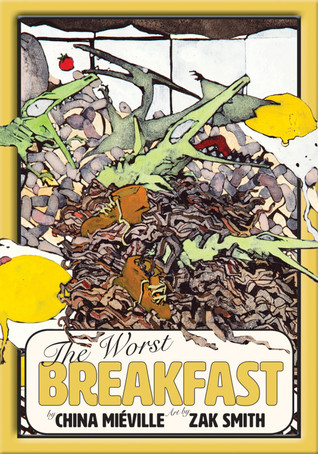
worstbreakfastThe Worst Breakfast, by China Miéville/Illustrated by Zak Smith, (Oct. 2016, Black Sheep/Akashic), $16.95, ISBN: 978-1617754869

Recommended for ages 3-8

Two sisters sit down one morning to talk about the worst breakfast they’ve ever had. It gets progressively worse, from burnt toast, to unbaked, uncooked, unclean baked beans, a steaming, slick tomato hill oozing into rancid swill. Can it get worse? It has to get better… doesn’t it?

This book is just too much fun to read by yourself or a room full of kids, who will squeal with awful glee as the awful breakfast the two sisters describe gets grosser and grosser. Award-winning author China Miéville, best known for his fantasy and science fiction tales, is brilliant as he constructs a hilarious, rhyming tale, told as a conversation between two sisters remembering the worst breakfast ever made. Building on each other’s memory, the sisters one-upping each other and – illustrated in full repulsive glory by Zak Smith – create a mountain of food so terrifying and awful that you have no choice but to squeal and giggle uncontrollably at memories of terrible meals past. And then… a glimmer of hope? Maybe breakfast can be saved, after all.

I love this book. I hope Miéville and Smith have more stories to tell, because this will be a storytime mainstay for me. This would be great for a food storytime. Pair this one with Kate McMullan’s I Stink!, where a garbage truck narrates a stomach-churning alphabet of the “food” he eats on his shift. I’d also pair this with Maurice Sendak’s In the Night Kitchen for a surrealist story session; I was reminded of Sendak’s book often as I read The Worst Breakfast. I enjoyed the back and forth between the sisters, and the different British-American references, like the differences in the pronunciation of words  like tomato and bravado: “You can’t rhyme TOMATO and BRAVADO!” “I can if we’re English. Almost. Tu-MAH-toe, bruh-VAH-doe.” I love the pictures that Miéville paints with his words and Zak Smith’s wild interpretations that give the words life on the page.

worstbreakfast_4

This is a fun tale that’s sure to get the kids interacting during a storytime. If you’ve got readers who enjoy gross humor – and who doesn’t? – this will build their vocabularies and make them howl with disgusted delight. The Worst Breakfast has received a starred review from Kirkus.


Posted in Early Reader, Fiction, Fiction, Intermediate, Preschool Reads

Disney Princess: Dream Big is a hit!

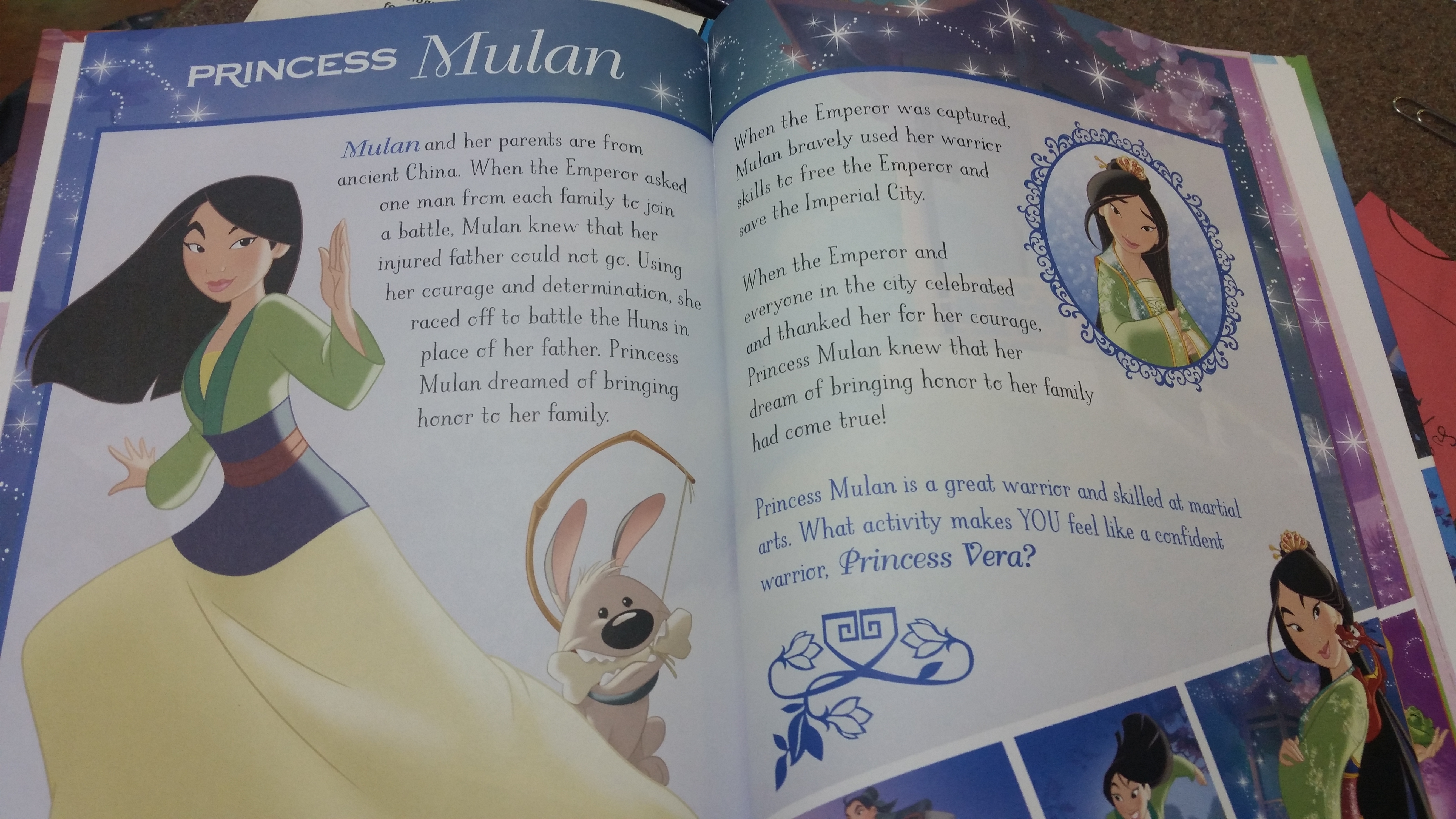
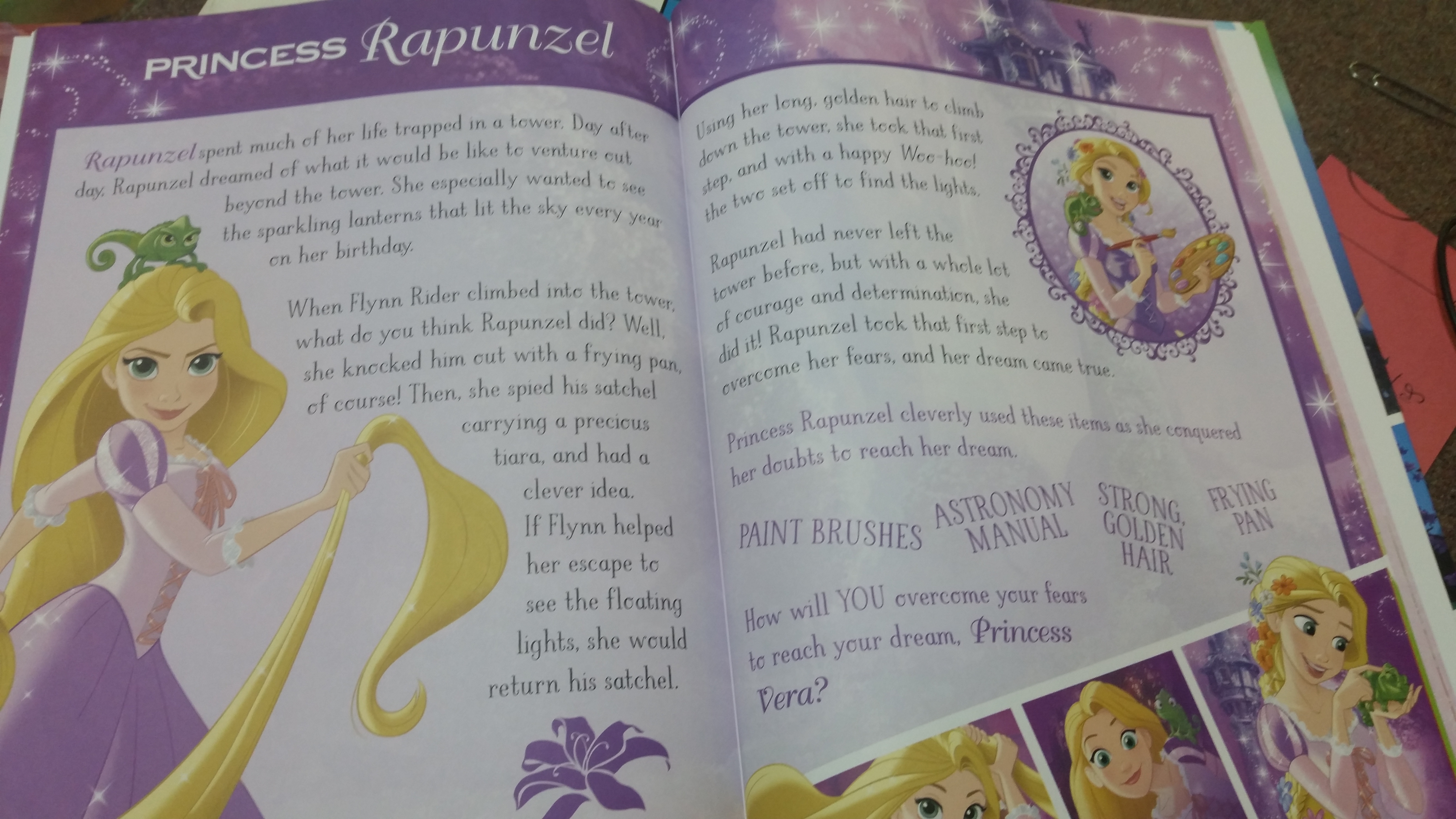
Back in July, I had a cover reveal for one of the latest books in the Put Me in the Story series, Disney Princess: Dream Big! I’m really excited, because I just received my copy in the mail, and it’s a beauty.

dream-big

Since I’d gotten softcover copies of the NatGeo books for my son back in June, I decided to check out the hardcover for my niece, who is just discovering Disney Princesses. I’m thrilled with the quality of the book! It’s a gorgeous, sturdy hardcover with quality pages that will stand up to repeated readings.

Dream Big puts readers on a mission: visit each Princess in the book; discover their dream; and check off the Princess’s name on the back of a passport that’s included in the book. You can cut out the passport – treat the book like a journal!

There are 11 Princesses in all to visit, from Ariel to Tiana. Each spread spotlights one Princess, gives a little bio on the Princess, and ends with a mention of the Princess’s dream, and an invitation to the reader to share her/his dream, too. For instance, Belle loves her books, and each one takes her on a new adventure. There’s a list of Belle’s favorite book genres, and a space for your reader to list her favorite books.

20160929_192411

The art is beautiful, colorful, and inviting. Kids are engaged by the direct invitation to connect through the text and activities in the book.

20160929_192359

20160929_192348

A final spread sums up the Princesses’ strengths and dreams, and asks readers to connect the Princess with her big dream. Readers are also invited to write or draw their own special dreams and how to make them come true. It’s a fun way to capture a moment in time that kids will look back on and smile at one day. Think of it as bullet journaling for the preschool set.

20160929_192424

As with all Put Me in the Story books, you upload pictures of your little one and give the site the name you’d like to use; they will generate a story featuring your little one that becomes a keepsake. Dream Big is a great gift, and I can’t wait to give this to my little Princess. You can get your own copy of Dream Big at the Put Me in the Story site, and seriously, look around the site; they have some great books, both fiction and non-fiction, that kids will love.

Full disclosure, I received a copy of this book free in exchange for an honest review. But I plan on adding a few Put Me in the Story books to my Christmas shopping list, because I love them and think they’re beautifully done.

Posted in Early Reader, Intermediate, Non-Fiction, Non-Fiction, Non-Fiction

Tales from the Backlist: Christy Hale’s Dreaming Up

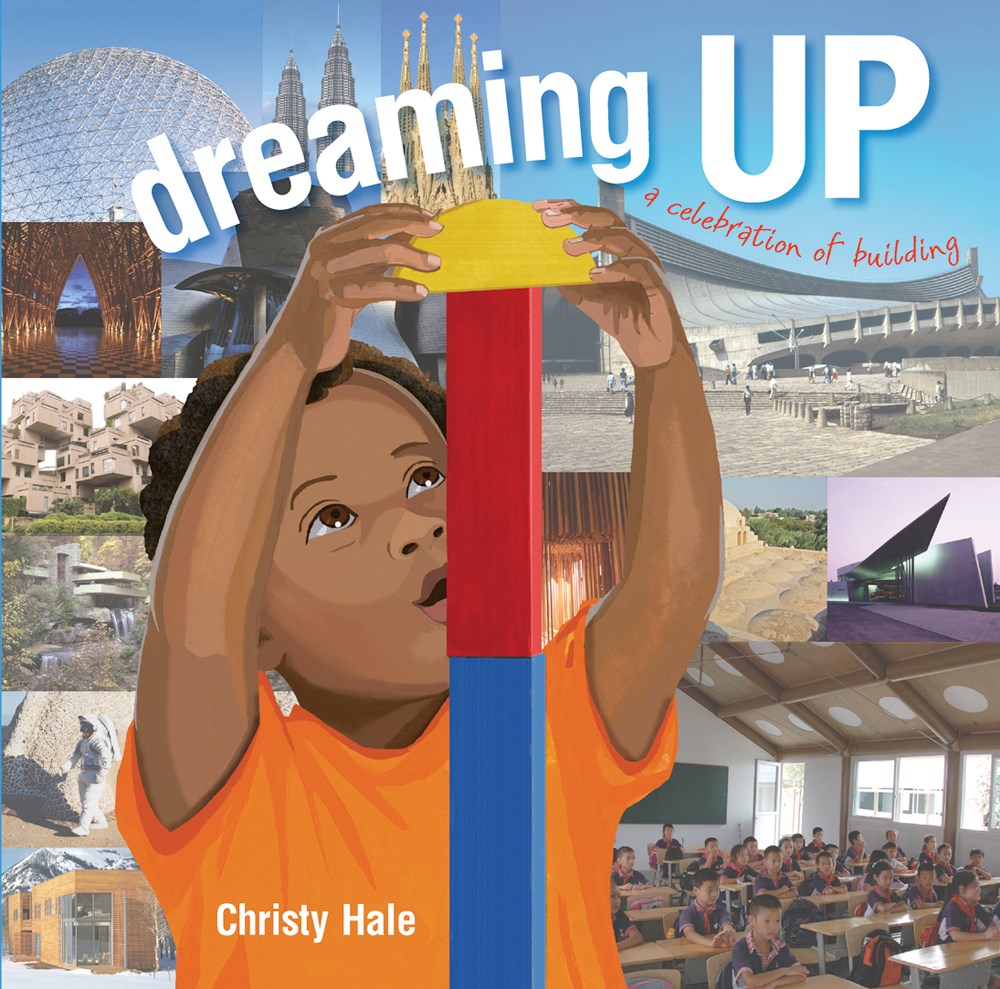
dreamingup_1Dreaming Up: A Celebration of Building, by Christy Hale, (2012, Lee & Low Books), $18.95, ISBN: 9781600606519

Recommended for ages 5-10

When I started at my current library last year, the younger kids were in the middle of a school project on architecture. I was able to give them books like the most current picture book retelling of Robert Louis Stevenson’s poem, Block City and Byron Barton’s Building a House, but after I exhausted the fiction section, I was stumped. Luckily, a quick tour of my nonfiction section brought me to Christy Hale’s beautiful book, Dreaming Up: A Celebration of Building.

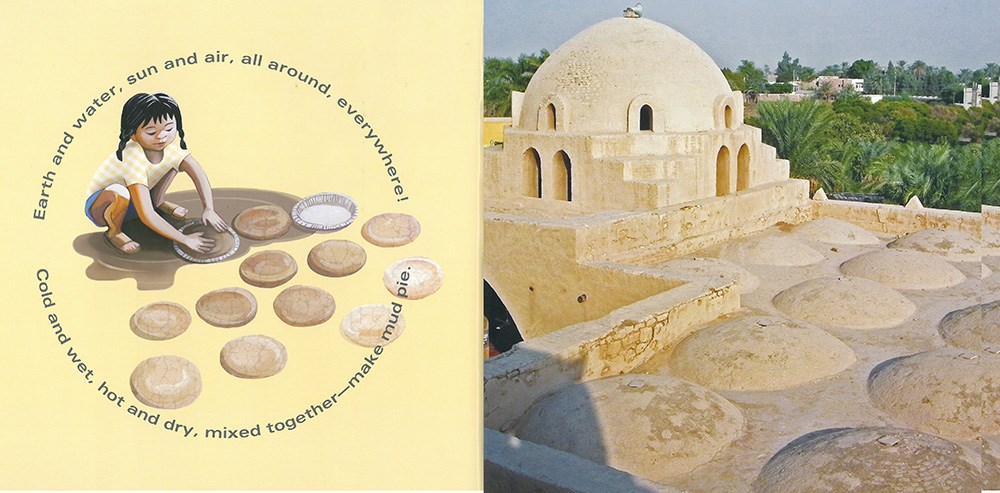
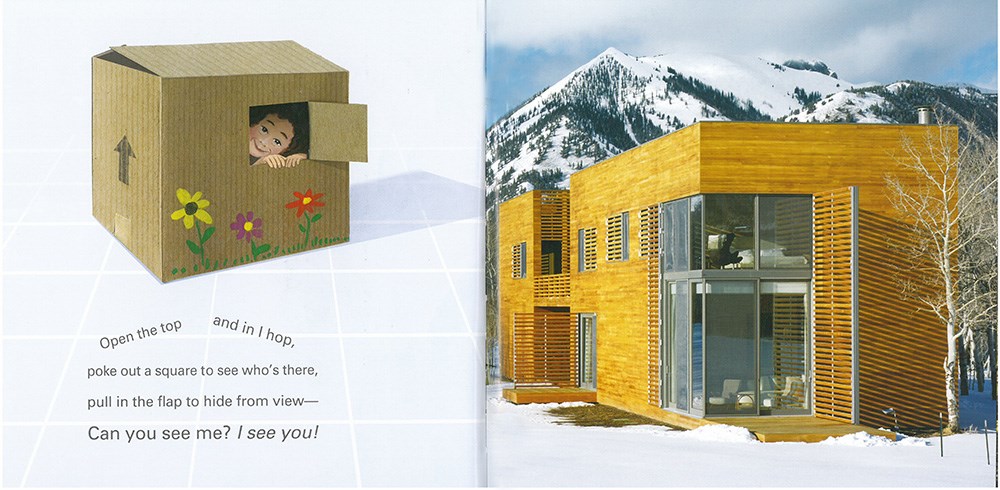
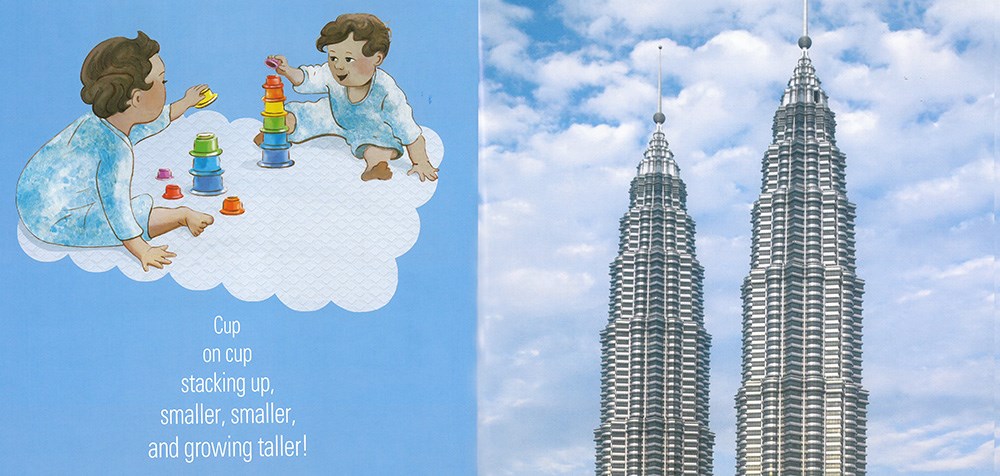
Dreaming Up combines illustrations of multiethnic children at work on their own constructions, with rhyming text building and swirling in construction of its own, and pairs each illustration with a photo and description of a notable work of architecture. Kids will experience the works of Frank Lloyd Wright and Antoni Gaudi, and they’ll see such masterpieces as the open-air church in Cartegena, Columbia, inspired by Gothic cathedrals; a temporary Chinese school constructed by students and teachers from plywood and recycled paper tubes, and New York City’s Gugghenheim Museum. It’s an exciting way to experience the world and emphasizes the importance of play in the creative process.

dreamingup_2

I put this book out during a storytime for my preschoolers, and just read the rhyming text. After storytime, I brought out stacking cups, blocks, and foam building pieces, and let the kids go to work. Watching the little ones work with their parents was amazing; there were walls, buildings, and winding roads by the time they were done. This is a great book for school-age kids, but you can easily modify it for younger ones. Booktalk it, let them draw or work with their hands, and see what the kids can create for you.

dreamingup_3

Dreaming Up has received multiple awards and honors, including Boston Globe-Horn Book Award Honors, the International Reading Association (IRA) Children’s and Young Adult Book Award Honor, and the 2012 California Book Award. It has been designated a Notable Children’s Book by the American Library Association (ALA) and was included on the Read! Build! Play! Summer Reading list of Books that Inspire Play, ALSC (Association for Library Service to Children) and LEGO.

dreamingup_4