Posted in Uncategorized

Take a trip downtown on public transportation with The Way Downtown

The Way Downtown, by Inna Gertsberg/Illustrated by Mike Lowery, (Oct. 2017, Kids Can Press), $18.99, ISBN: 9781771385527

Recommended for readers 8-12

This fun book to public transportation introduces readers to the subway; light rail transit; buses, and ferry boats as five different characters head to a mutual venue in the imaginary city of Zoom. Robbie is a 7 year-old boy visiting the city; a secret agent, Theodore Rybka, is on a secret mission – but loves to stop for a cup of tea; the Zanies are a family of digeridoo and juggling performers; Dr. Brody is a scientist, excited about her newest discovery, and Boris is a seeing-eye dog who takes good care of his companion. Maps, facts, and a diverse urban crowd make this a good additional purchase for transportation shelves.


Posted in Preschool Reads

Hispanic Heritage Month: nubeOcho picture books

If you’re a regular reader of this blog, you know I love nubeOCHO picture books. I discovered the publisher when I was at the PLA conference last year; I was a children’s librarian in a largely monolingual Spanish-speaking community, with outdated books on the shelves in their language. I was buying books in Spanish that I knew how to search for: Goosebumps, Harry Potter, Percy  Jackson – but I needed to find new books that spoke to the kids and their cultures. I found that publisher in nubeOCHO, who simultaneously publishes Spanish and English language copies of their books that are perfect for my kiddos. I could read a storytime book in English, interjecting some Spanish words where I knew how, and the parents could borrow the Spanish copy to take home and read with their kids. I am forever grateful.

This season, nubeOCHO has a couple of adorable books out – available in English and Spanish – for beginning readers and cuddlers. Enjoy.

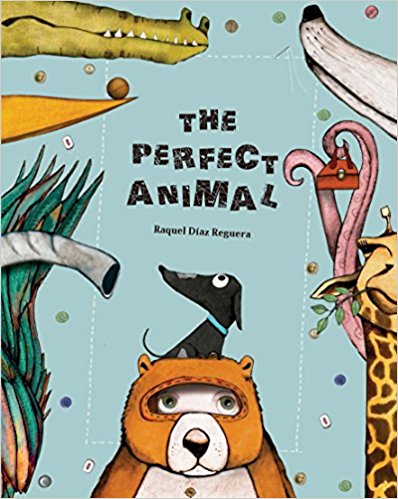
The Perfect Animal (El animal perfecto), by Raquel Diaz Reguera, (Sept. 2017, nubeOCHO), $15.95, ISBN: 978-8494633393
Recommended for readers 4-8

The kids at school have to dress up as an animal; Valentina wants to be “the perfect animal”. But what does that mean? Valentina considers several animals: elephants, bears, bats, birds, and more. She notes their strengths and their “curiosities” – noted throughout the book as fun facts, paper-clipped to the pages, written on note paper. So which one is the perfect animal? Why pick just one? There’s vibrant art throughout the book, plus fun facts kids will love (elephant are the only mammals that can’t jump, which makes really good sense). The Perfect Animal is part of nube’s Egalite imprint; publishing stories that emphasize equality and that illustrate the richness of diversity.

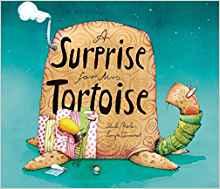
A Surprise for Mrs. Tortoise (Una sopresa para tortuga), by Paula Merlan/Illustrated by Sonja Wimmer, (Oct. 2017, nubeOCHO), $16.95, ISBN: 978-84-946333-4-8
Recommended for readers 4-8

Mrs. Tortoise sees her reflection one morning, and it really brings her down. Her shell looks old and worn out, and it’s really making her feel old and sad. Luckily for her, Birdie, her best friend, is there to cheer her up! He bops around to the sky, the flowers, the wind, and clouds to help decorate her  shell and cheer her up, but it seems like everything just makes Mrs. Tortoise feel worse; she loses her temper and snaps at Birdie, but even that doesn’t stop him. When Mrs. Tortoise goes to apologize to Birdie, she discovers that forgiveness and friendship are all that matter (and a little help from the rainbow doesn’t hurt). Washed-out watercolor art splashed across each page spread creates beautiful artwork that readers will gravitate to – especially when Mrs. Tortoise’s shell is covered in flowers! (I see art project at storytime here!) This is a sweet story about friendship and going the extra mile for a friend. A Surprise for Mrs. Tortoise is part of nube’s Somos8 imprint, exploring first sensations and challenges kids meet.

Posted in Fantasy, Graphic Novels, Middle Grade, Non-Fiction, Teen, Tween Reads

Graphic Novel Rundown: Memoir, Coders, and Fantasy

There are a bunch of good graphic novels out, so let’s jump right in – there’s something for everyone!


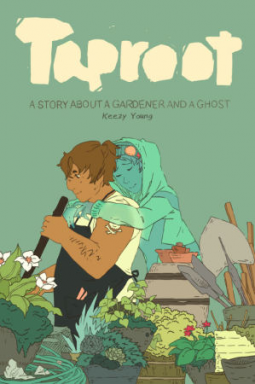
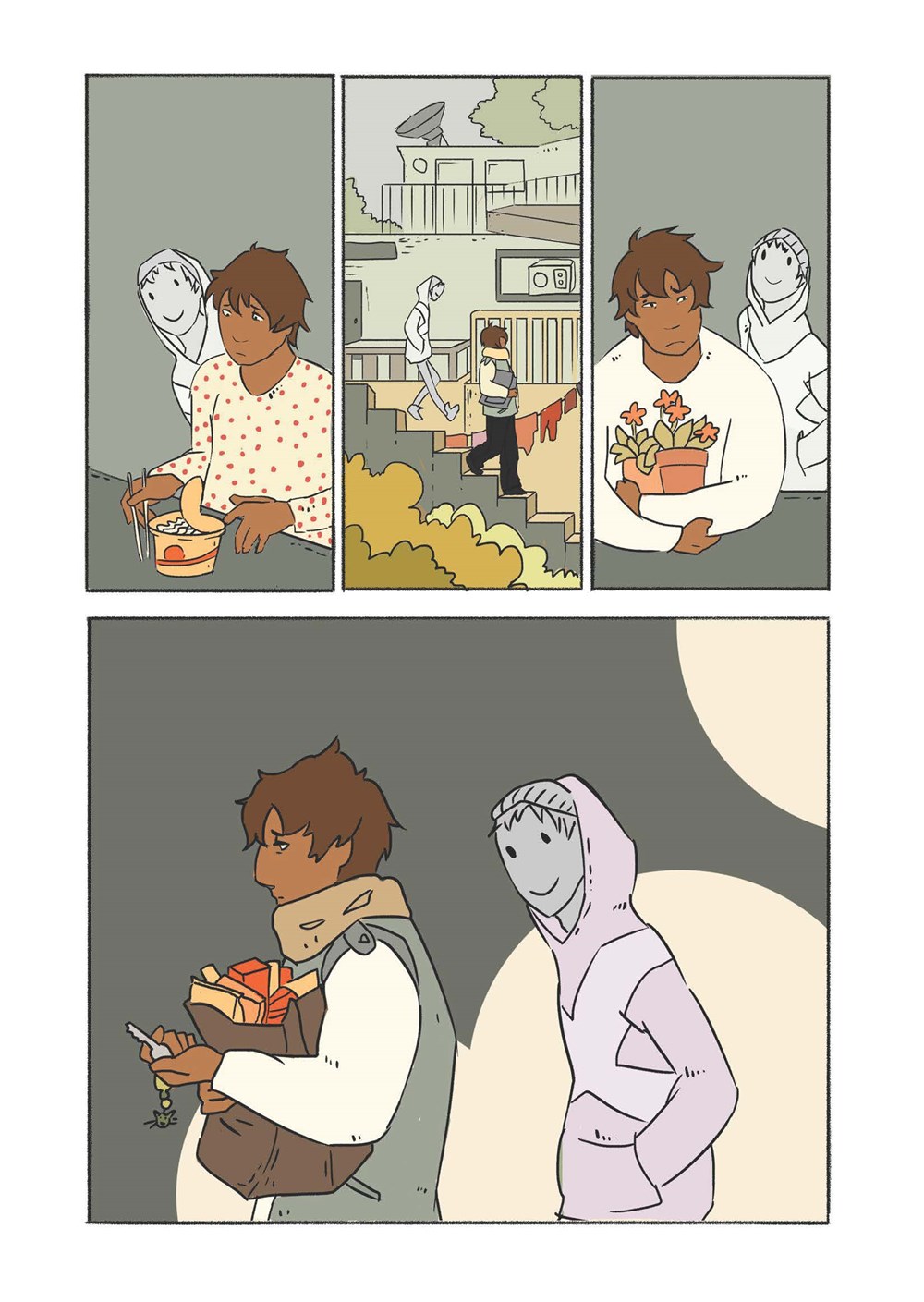
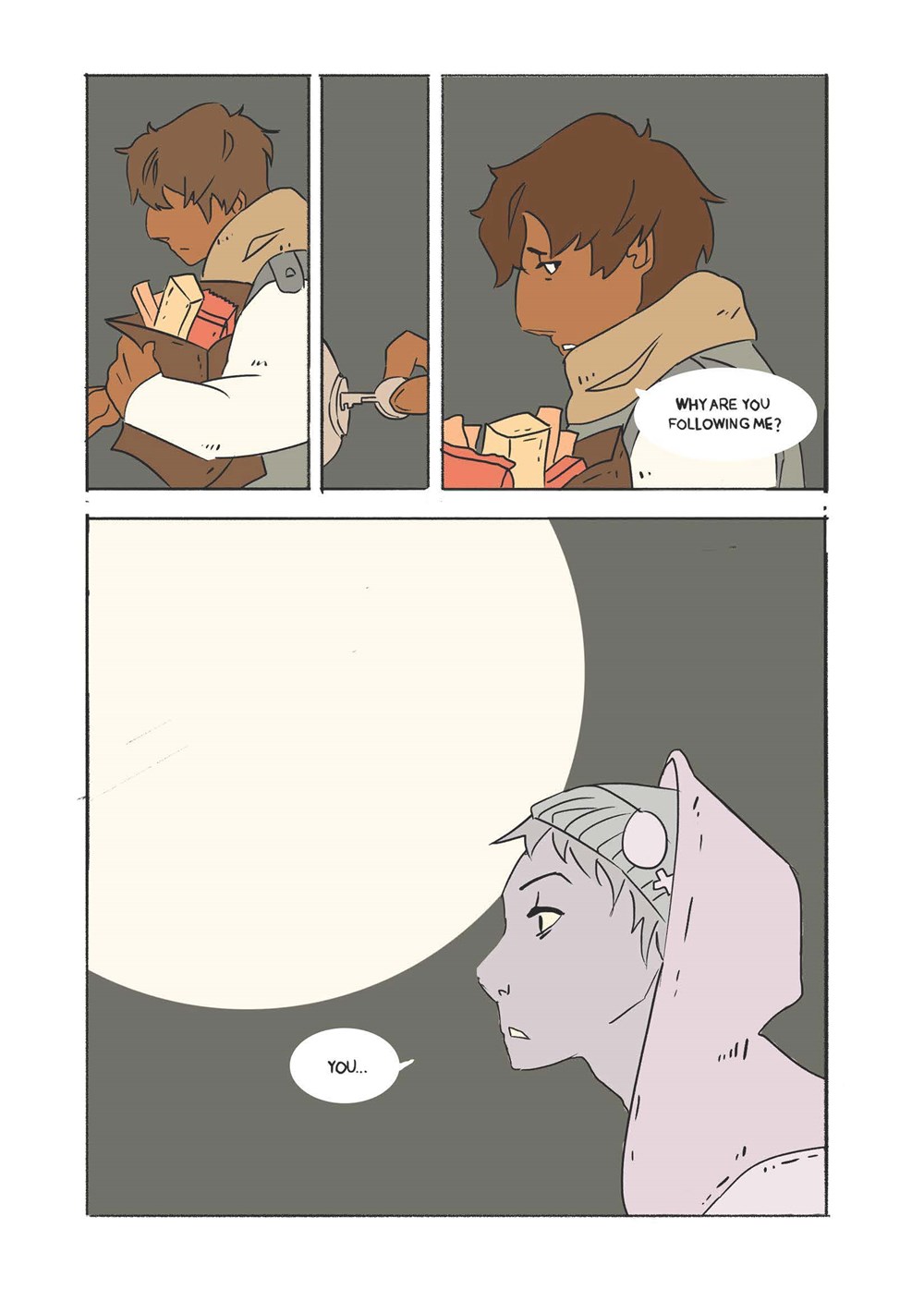
Taproot A Story About a Gardener and a Ghost, by Keezy Young, (Sept. 2017, Lion Forge), $10.99, ISBN: 9781941302460
Recommended for readers 13+

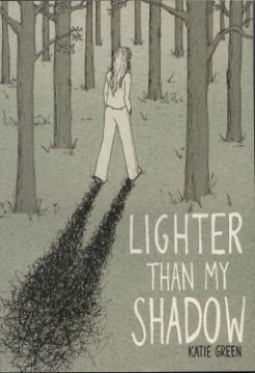
Lighter Than My Shadow, by Katie Green, (Oct. 2017, Lion Forge), $19.99, ISBN: 9781941302415
Recommended for readers 13+
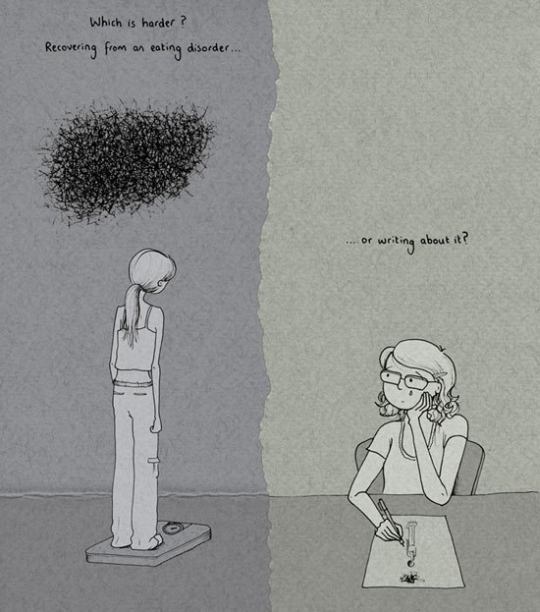
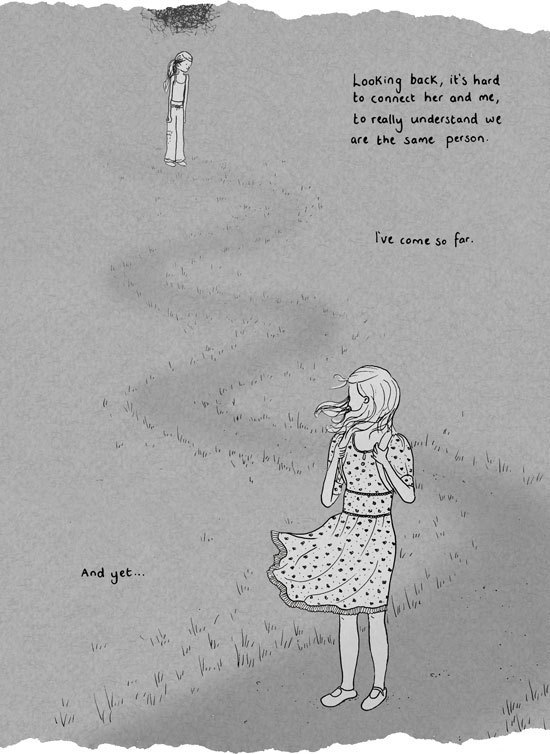
Katie Green’s graphic memoir details her years of abusing disorders, abuse at the hands of the therapist who was supposed to help her, and her recovery and reclamation of self. It’s devastating and inspirational; a life that we can all see in ourselves: cruel teasing, parental threats at the dinner table, a career you’re shoehorned into. Lighter Than My Shadow is a memoir of anxiety and depression, told in shades of grey, black and white. We see the physical manifestation of Green’s hunger and depression: a growing mouth in her stomach, a black scribble over her head, threatening to split her open. It’s an incredible story, and one that must be shared and discussed.
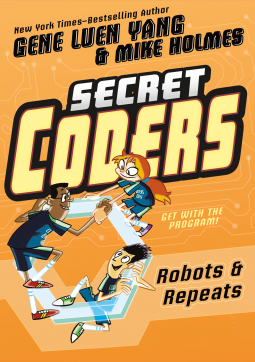
Secret Coders: Robots and Repeats, by Gene Luen Yang & Mike Holmes, (Oct. 2017, First Second), $10.99, ISBN: 9781626726062
Recommended for readers 8-12
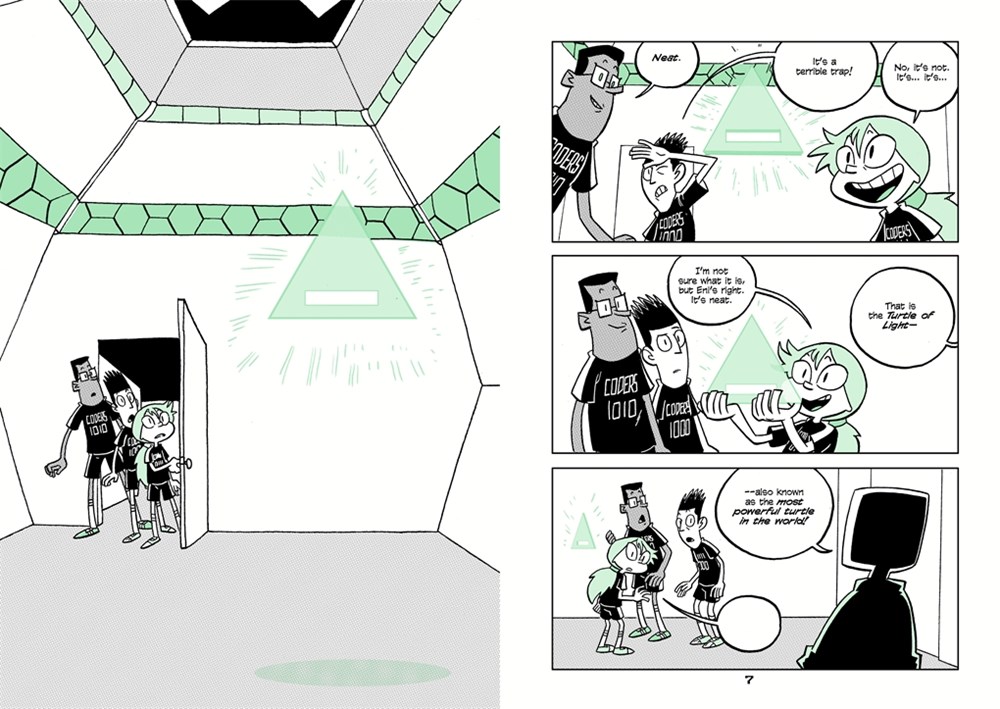
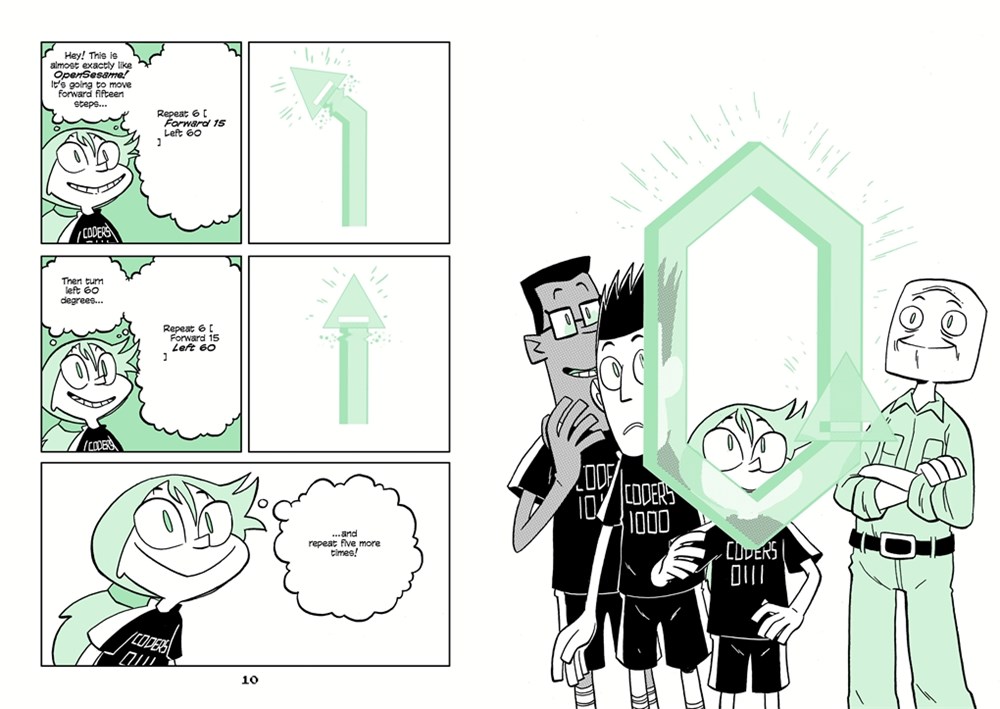
The Coders are back! Dr. One-Zero is a bane to their existence, especially with his new “Advanced Chemistry” class, where he only teaches them to make Green Pop. Hopper’s paired up with an obnoxious classmate who knows nothing about chemistry; Josh is fostering a kinda, sorta crush, and Eni’s sisters are following him around the school, reporting his every move to his overprotective parents, who want him to cut all ties with his fellow Coders. The Coders are still working together, though, and make a new discovery: The Turtle of Light. They also discover someone they’ve been looking for: Hopper’s dad, who’s under the influence of the evil Green Pop! This fourth installment is still good fun and has more coding challenges for readers; most notably, working out pattern repeats. The fifth book, Potions and Parameters, is coming in March.
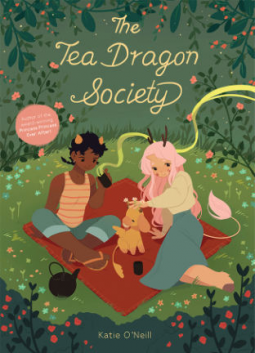
The Tea Dragon Society, by Katie O’Neill, (Oct. 2017, Oni Press), $17.99, ISBN: 9781620104415
Recommended for readers 9-13
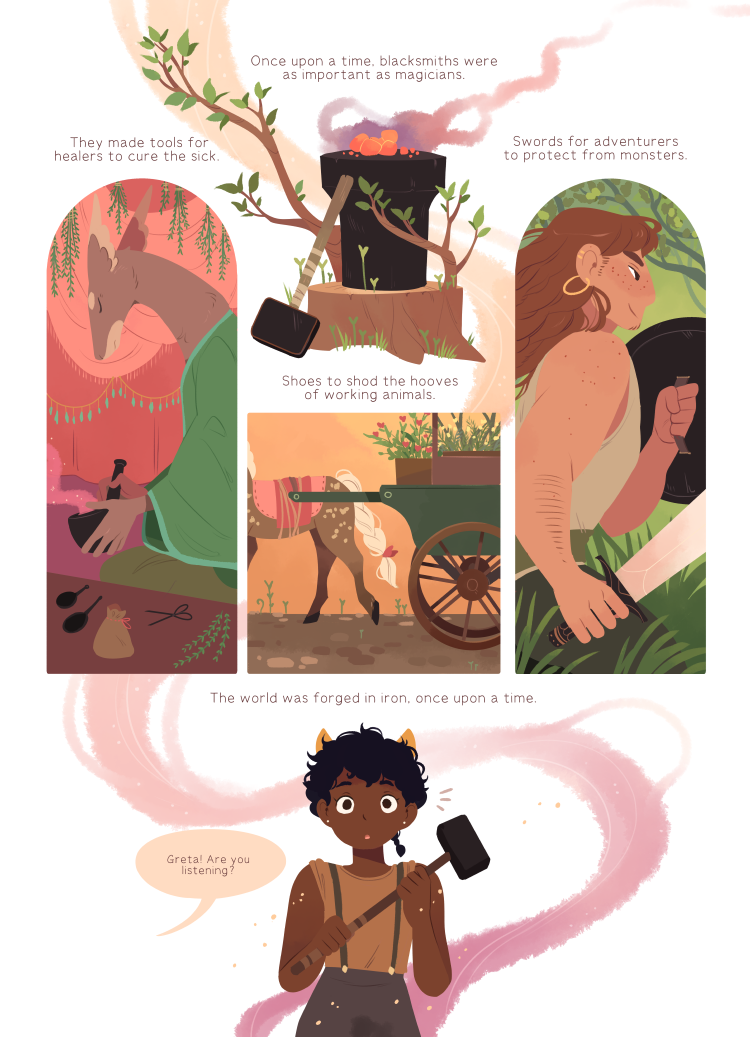
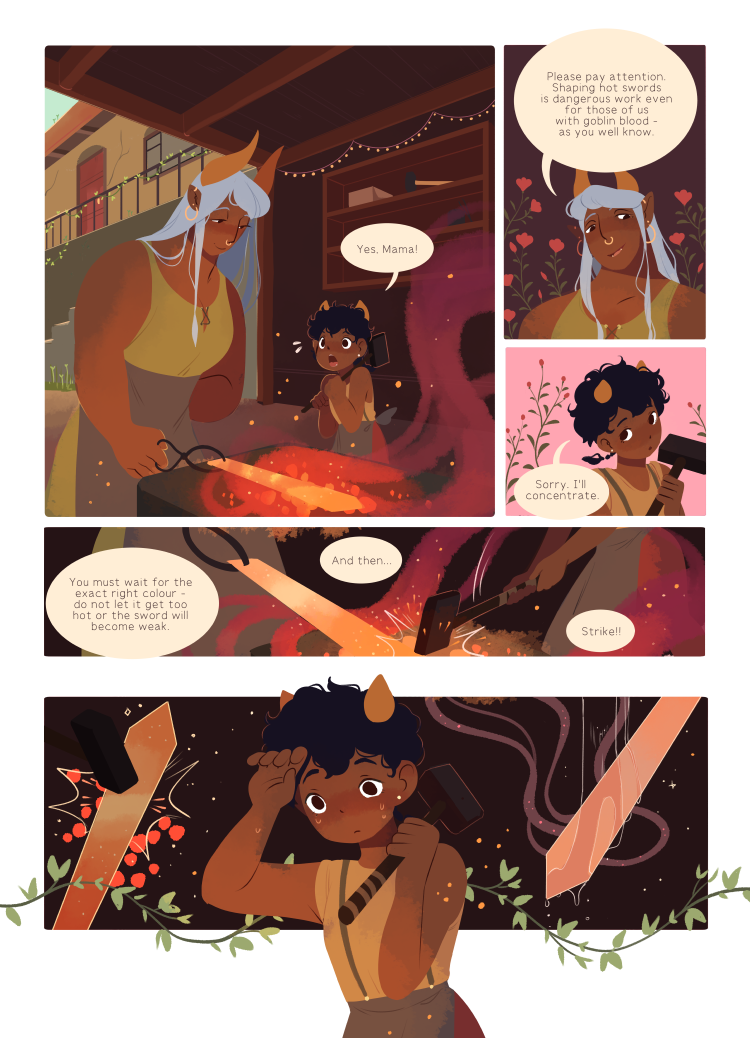
If you loved Princess Princess Ever After as much as I did, you are in for a treat with Katie O’Neill’s newest graphic novel, The Tea Dragon Society. Greta is a blacksmith’s apprentice who wonders whether her mother’s craft is even relevant anymore. She learns about another art form when she rescues a young tea dragon in a marketplace: the care of tea dragons; they’re dragons, who grow tea leaves out of their horns and antlers. The cast is beautifully illustrated and diverse; we’ve got a plethora of relationships depicted, and a storyline every fairy tale and fantasy reader will love. The backgrounds, the characters, every single piece of this graphic novel is just incredible artwork. Buy two copies for your shelves, and a copy or two for readers you love. Do. Not. Miss.


Posted in Fantasy, Fiction, Graphic Novels, Middle Grade, Tween Reads

Cucumber Quest: Bunny Siblings Save the World!

Cucumber Quest, Vol. 1: The Doughnut Kingdom, by Gigi DG, (Oct. 2017, :01FirstSecond), $14.99, ISBN: 9781626728325

Recommended for ages 8-12

If you’ve never read the webcomic Cucumber Quest, now’s your chance to dive in. The seven kingdoms of Dreamside are in trouble when the evil queen Cordelia plans to unleash some serious havoc. Cucumber – who’s all packed and ready to start his studies at Puffington’s Academy for the Magically Gifted – gets a letter from his dad, telling him that it’s up to him to save the kingdoms. His brave and way-more-heroic sister, Almond, offers to go in his place, but their mother and father seem to have some pretty outdated ideas about gender, and tells her it’s too dangerous for her. Almond joins Cucumber’s Quest, regardless, and the two head out in search of the Dream Sword: the only weapon powerful enough to defeat Cordelia’s supernatural thug, the Nightmare Knight. On the way, Cucumber and Almond meet a batty Dream Oracle, a trio of hare-brained guards, and a host of other wacky characters.

Beginning life as a webcomic (that you can still read online), Cucumber Quest: The Doughnut Kingdom collects the first 137 pages of Cucumber Quest (the Prologue and chapter 0); Cucumber Quest 2: The Ripple Kingdom will continue collecting stories from the online archive. Forty pages of additional comics, including Reader Q&A for various characters, and short bios for each character, complete with ability ratings in trading card format, concept art, and a tour of the world of Dreamside, home to the seven kingdoms.

The story is light and fun; the artwork is cute and Chibi-inspired. Manga fans will love it, as will adventure fans. Give this to your Adventure Time and Steven Universe readers; for your fantasy fans that want some lighter summer reading (or aren’t really passionate readers… YET), this will be a welcome addition to shelves.

Want to learn more? Check out the Cucumber Quest wiki and Cucumber Quest page, where you can access the complete comic archive and learn more about the characters.

Posted in Uncategorized

MAD Magazine gives Superman a Miserable, Rotten, No Fun, Really Bad Day

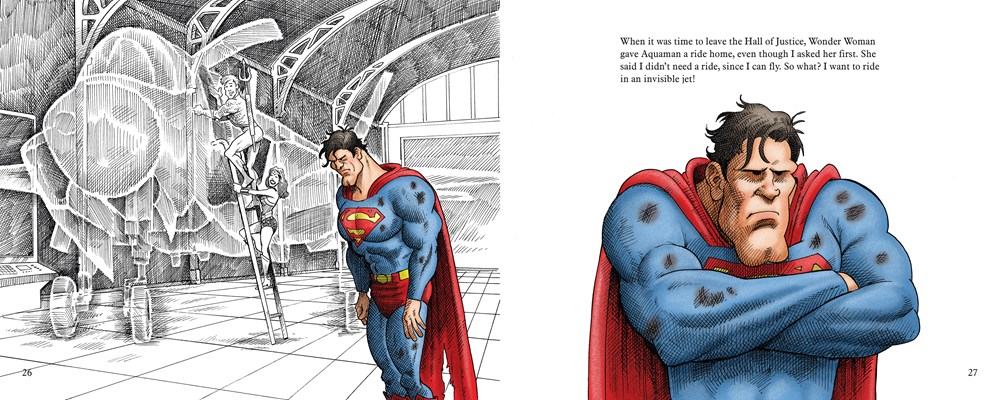
Superman and the Miserable, Rotten, no Fun, Really Bad Day, by Dave Croatto/Illustrated by Tom Richmond, (Oct. 2017, Mad Magazine), $14.99, ISBN: 9781401276119

Recommended for readers 5+

MAD Magazine, I love you. I grew up laughing at your Star Wars parodies, your Spy vs. Spy comics, and  host of jokes I probably didn’t get until I was older. And now, you bring me a series of superhero parodies based on childhood classics. You get me. You really, really get me.

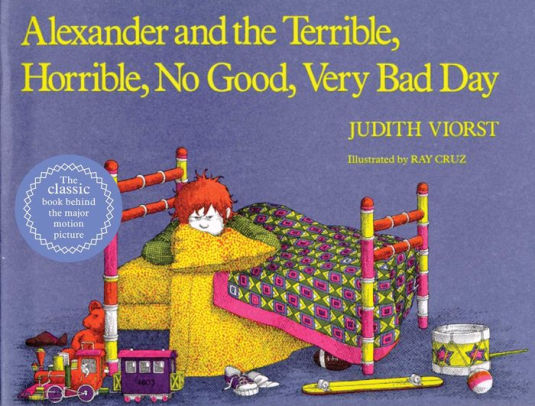
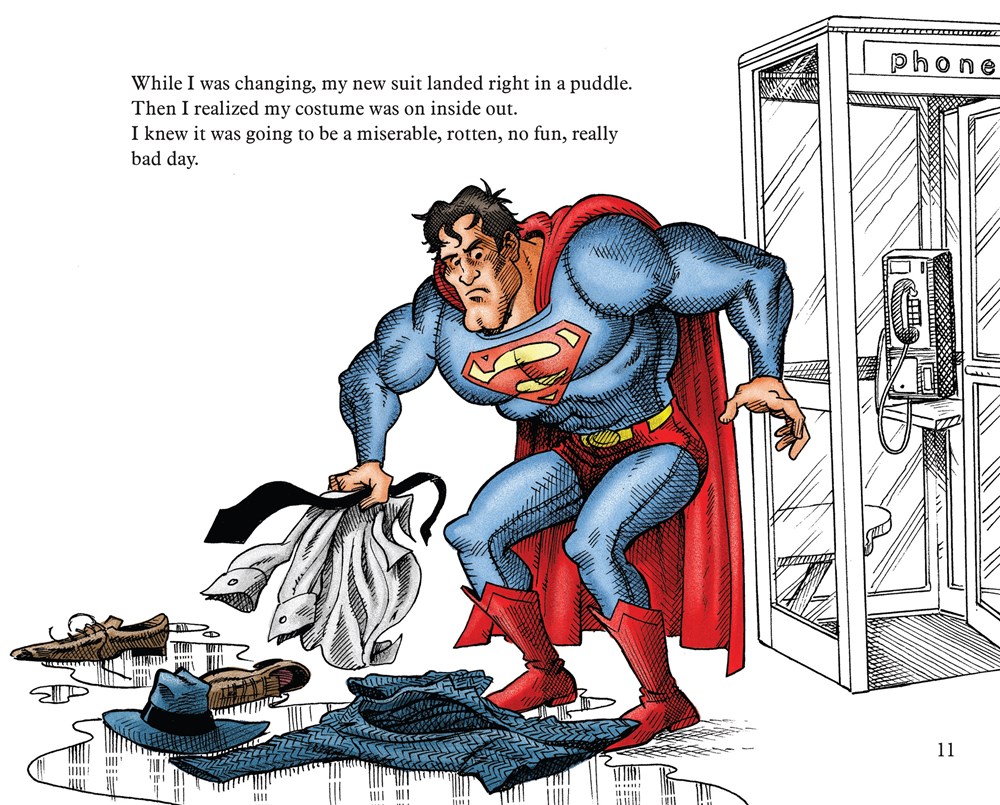
The fun began with last year’s Goodnight, Batcave: narrated in the gentle bedtime style of Margaret Wise Brown’s Goodnight, Moon, we peeked into Batman’s bedtime routine. Now, we get Superman having the lousiest day ever in the style of Judith Viorst’s Alexander and the Terrible, Horrible, No Good, Very Bad Day, and it is hilarious. Whether he’s listening to kids argue over who the better hero is – Batman or The Flash – or being relegated to monitor duty by the Justice League, Superman has the same petulant, endearing voice that makes Alexander such a fun storytime read. Supes tends to get dinged a lot by Batfans (cough, cough) that  call him a boy scout, and seeing that reflected here is just perfect. Lois and Jimmy Olsen get sent on super cool assignments, while Clark goes to a flower show. Where Alexander is ready to move to Australia, Supes is ready to abandon it all for the Fortress of Solitude. But as with all the best bedtime stories, Ma is there to tell him that some days are like that, and sends him off to bed – and hopefully, a better day the next day.

Tom Richmond’s classic MAD-style artwork meets Ray Cruz – the illustrator on Judith Viorst’s Alexander books – gives an instantly recognizable feel to the story – even the cover is a perfect sendup of the original. This is absolutely perfect for a Superhero Storytime, or just a really fun laugh-along. Read it in the same pouty voice that you use for Alexander, and make sure to be extra offended by the Batman-is-Better inferences.

What’s next? Make Way for Lanterns? Where the Amazons Are? I NEED MORE.

Posted in Intermediate, Non-Fiction, Preschool Reads, Toddler Reads

Feed your brain with picture book nonfiction!

There is so much good nonfiction out for younger readers this Fall!

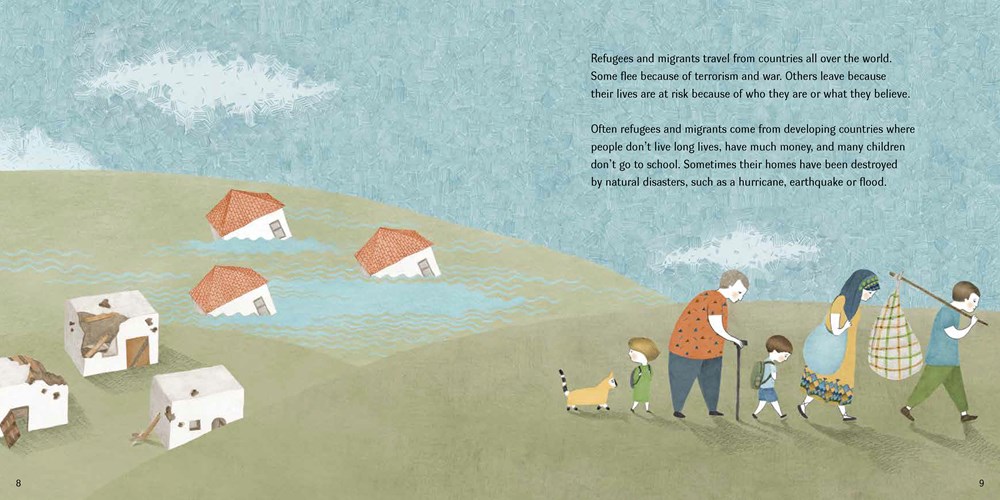
Refugees & Migrants (Children in Our World), by Ceri Roberts/Illustrated by Hanane Kai
(August 2017, Barron’s Educational Series), $9.99, ISBN: 9781438050201
Recommended for readers 6-10
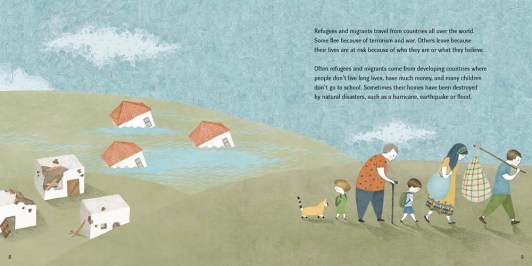
A hot-button topic today, Refugees & Migrants answers the tough questions that children ask: “Why would people leave their homes?” “What is a migrant – or a refugee?” Illustrations and concise text offer explanations that seek to foster empathy and empower kids to make a difference in the world around them. Barron’s Children in Our World series addresses difficulties that too many children in our world face today, and sensitively explain these issues to readers while giving them the power to make changes. Additional titles look at Poverty & Hunger, Racism & Intolerance (2018), and Global Conflict (2018). These books are a strong addition to elementary nonfiction shelves and provide a great opportunity to talk to your kids about what they see on the news, how they feel about it, and what we can all do, together, to make the world a better place.
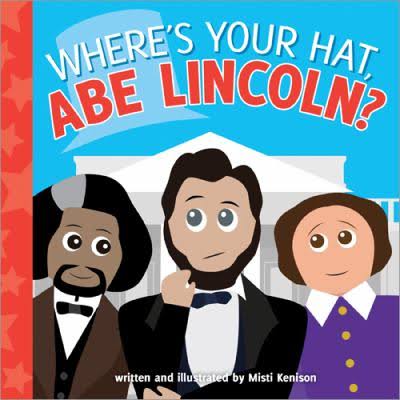
 

Where’s Your Hat, Abe Lincoln? (Young Historians), by Misti Kenison,
(Sept. 2017, Sourcebooks Jabberwocky), $9.99, ISBN: 9781492652502
Recommended for readers 2-5

Poor Abe Lincoln can’t find his hat, and he needs it in time to read the Gettysburg Address! Harriet Tubman is leading slaves to freedom, and Frederick Douglass is writing a book. Can any of his friends help him? This is the second in Misti Kenison’s Young Historians board book series (the first, being Cheer Up, Ben Franklin!). Each book features historical figures from periods in American History, with cartoony expressions and simple, one-sentence character actions that lay the groundwork for future learning. Everything ends on a happy note, and the end of the book includes historical figure profiles and a timeline. Fun for every historian’s library, no matter what your age.
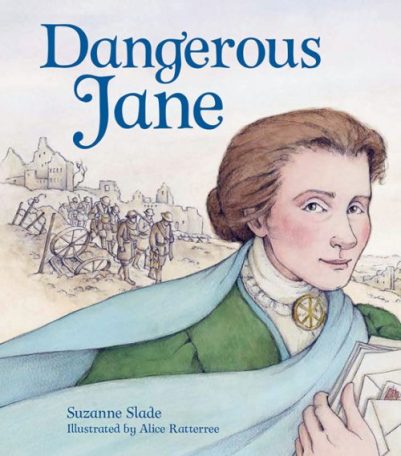
 

Dangerous Jane, by Suzanne Slade/Illustrated by Alice Ratterree,
(Sept. 2017, Peachtree Publishers), $17.95, ISBN: 978-1-56145-913-1
Recommended for readers 4-8

Jane Addams was an activist for the poor and for peace. She founded Hull House, a settlement house in Chicago, where she took care of her neighbors by providing food, childcare, English lessons – anything anyone needed to live their lives with dignity. When World War I broke out in Europe, Jane organized the Women’s Peace Party, and led the International Congress of Women, to talk about ways to bring the war and suffering to an end. She endured angry press from those who would call her a traitor; that she cared more for people overseas than in her own home – she was even named The Most Dangerous Woman in America by the FBI! Ultimately, Dangerous Jane was the first American woman to receive the Nobel peace prize. Through all the press, good and bad, Jane maintained her dignity and continued caring for others until the end of her life. Dangerous Jane is an inspiring story rendered in washed-out watercolors that communicate quiet strength, like the book’s subject. Jane stands out in her green dresses and skirts, against the bleak landscape of war and poverty. A biography, timeline, and selected bibliography completes this book.


Baby Animals Playing, by Suzi Eszterhas
(Oct. 2017, OwlKids Books), $14.95, ISBN: 9781771472975
Recommended for readers 0-6

Wildlife photographer and advocate Suzi Eszterhaus put together one of the cutest books ever. It’s all right in the title: Baby. Animals. Playing. Who wouldn’t squeal at just the expectation of what’s to come? Full-color photos of baby animals (and their parents) at play will make anyone fall in love, instantly. Brief nonfiction text gives some background information on how Momma bears teach their cubs to fish for salmon, or how jackal pups fight over who gets to play with a ball of elephant poop. Which will, doubtless, be most kids’ favorite part of this book (it was for my 5 year-old). Eszterhas invites readers to connect with animals and nature by looking at photos, reading books, and going outside and immersing themselves in nature, just like baby animals do; it’s a nice call to get the kids outside and away from TV and electronics.


Bugs From Head to Tail, by Stacey Roderick/Illustrated by Kwanchai Moriya,
(Oct. 2017, Kids Can Press), $18.99, ISBN: 9781771387293
Recommended for readers 3-7

The third book in the “From Head to Tail” series gives readers an up-close look at bugs. We get rhinoceros beetle horns and luna moth antennae; tarantula hair (eeeek) and millipede legs, and a trick question! There are more facts to discover (tarantulas flick hair from their bellies at attackers… I know it would make me run screaming), with cute, wide-eyed bugs to attract readers. Kwanchai Moriya’s paper collage art continues to be visually exciting, popping off the pages. Additional bugs profiled at the end, plus a note about arthropods – the bugs profiled in this book – make this a great addition to bug books in primary collections. And if you have a kid like this young lady, whose love of bugs got her published in a scientific journal at 8 years old, you definitely want this book around to foster them!
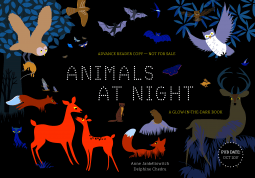
 

Animals at Night, by Anne Jankéliowitch/Illustrated by Delphine Chedru
(Oct. 2017,Sourcebooks Jabberwocky), $19.99, ISBN: 9781492653196
Recommended for readers 6-10

This is a fun look at nocturnal animals in 12 different habitats, from the forest to more urban settings. You know when you see a museum display, with information about each animal in the display? That’s how nocturnals are presented here; each spread shows animals interacting in their environment, with a descriptive paragraph about each creature in the margins. Glow in the dark adds some more fun to the mix: a question is presented in each spread, answerable when readers turn off the lights to reveal the answers (answers are also at the back of the book, for any party poopers). With bright, bold animals that stand out against their night time backgrounds and glow in the dark challenges to find answers, it’s a fun addition to nonfiction collections for intermediate readers. Originally published in French in 2016. Pair this one with Tracey Hecht’s Nocturnals books for a nice fiction/nonfiction display.


Posted in Graphic Novels, Middle School, Teen, Tween Reads

A boy deals with his grief in Cast No Shadow

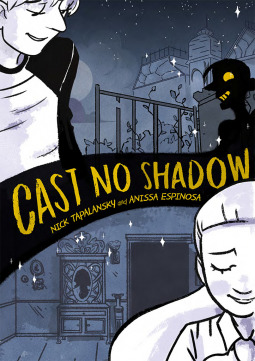
Cast No Shadow, by Nick Tapalansky/Illustrated by Anissa Espinosa, (Oct. 2017, :01FirstSecond), $16.99, ISBN: 9781596438774

Recommended for ages 12+

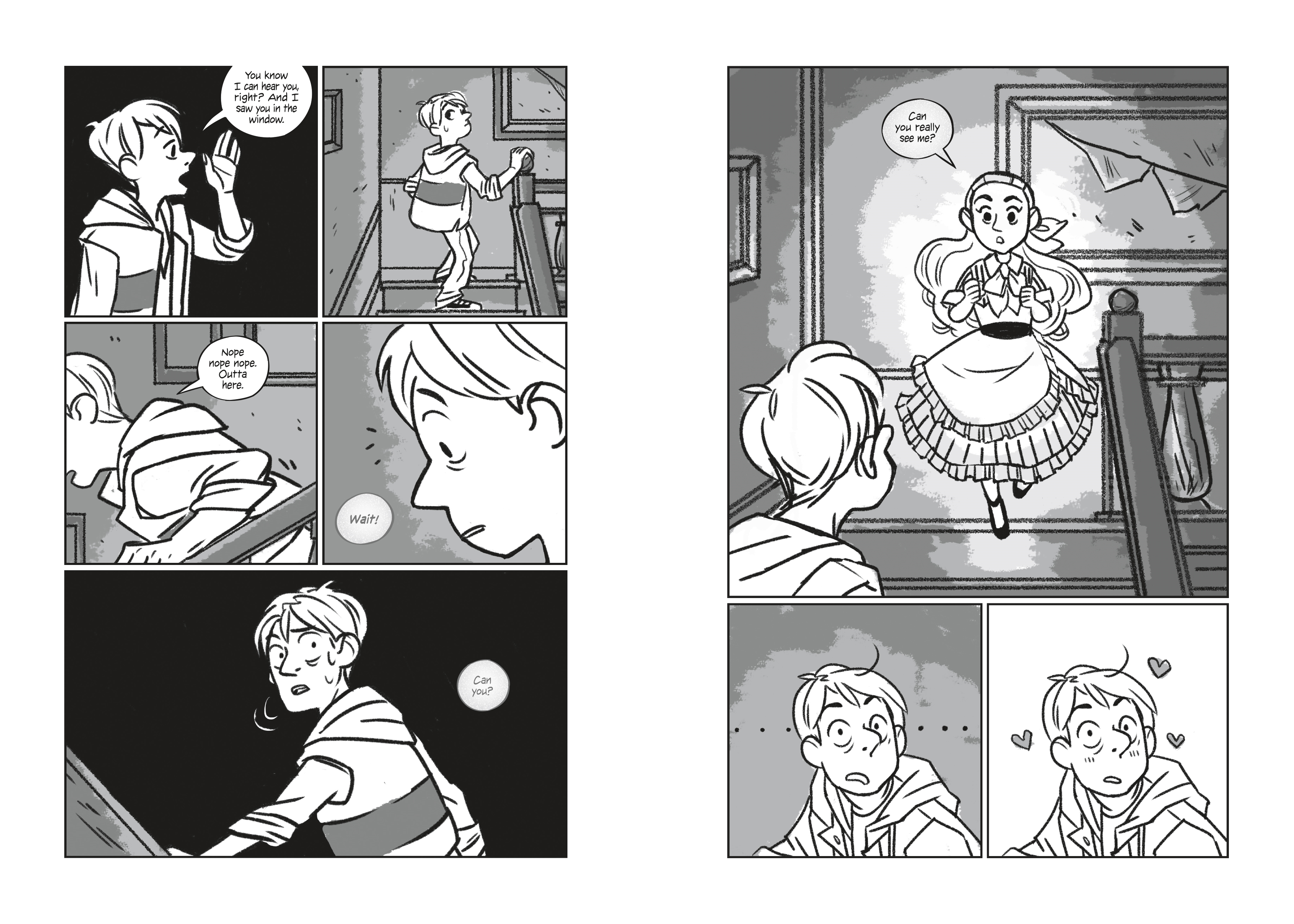
Greg and his friends live in Lancaster, in a town that’s lately become obsessed with tourist traps. This latest one is a giant hairball. No lie. Greg is kind of an attraction on his own: he was born without a shadow. He’s normal in every other way; he just doesn’t have a shadow, which just makes him one more quirky thing in a town full of quirks. When Greg explores an abandoned mansion just outside of town, he meets Eleanor, who could be the perfect girl for him – “smart, beautiful, funny, and man, she totally gets me” – if only she weren’t dead. Eleanor is a teenage ghost, living in her family’s old mansion, and chasing out the creepy living that go in and mess up her home, but she has a soft spot for Greg.

Greg’s got a lot going on in his home life, too: his dad’s girlfriend, Joyce, has just moved in, and Greg isn’t happy about it. He doesn’t want anyone taking his dead mother’s place. As he deals with the frustration of having a new person in the house, and a girlfriend who can’t leave her haunt, something is set in motion; Greg has unwittingly set a dangerous entity loose on his town. What are the chances he can save his town, smooth over his relationship with his father and Joyce, and have a happily ever after of his own?

Cast No Shadow is a touching exploration into grief and loss. Greg retreats from the world to cope with his mother’s loss and his father’s subsequent relationship; aside from his female best friend, the strongest relationship that emerges in the book is with a dead girl. Greg’s suppressed feelings find another way to emerge, causing destruction and danger for everyone around him. It’s a great story to put into older tweens’ and teens’ hands, helping them cope with feelings that may be too overwhelming to confront head-on. The black, white, and gray illustrations add a nice, ghostly feel to the story and come in handy when finer plot points fall into place.

A nice addition to middle school and teen graphic novel collections, and a good secondary reference for kids dealing with grief and loss. Find more of author Nick Tapalansky’s work at his website, and illustrator Anissa Espinosa’s work at her Tumblr.

Posted in Preschool Reads, Toddler Reads

Build that Baby STEM Library! The ABCs of Mathematics and Physics

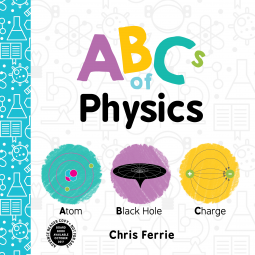
Quantum theorist and Dad Chris Ferrie adds two more board books to his Baby University library: The ABCs of Physics and The ABCs of Mathematics!

The ABCs of Physics, by Chris Ferrie, (Oct. 2017, Sourcebooks Jabberwocky), $9.99, ISBN: 9781492656241

A is for Atom; B is for Black Hole; C is for Charge… The ABCs of Physics is a bright, entertaining introduction to physics. Not your run of the mill ABCedary, The ABCs of Physics works for all ages – for babies and toddlers, it’s a pretty board book with all sorts of interesting pictures to look at. For older kids and adults, it’s an intro to physics terms and concepts. I am here to tell you, unabashedly, that I found this book fascinating. Did you know that a newton is a standard unit of force? I did NOT. I also learned that my little book scanner works thanks to photons – and you can trust and believe that I will pass on little bits of this information in my day to day at work and at home.


The ABCs of Mathematics, by Chris Ferrie, (Oct. 2017, Sourcebooks Jabberwocky), $9.99, ISBN: 9781492656289

The ABCs of Mathematics is even more little one-friendly, because it introduces basic concepts that our kids are going to be learning soon enough. A is for Addition: Addition is the mathematics of counting. D is for division: Division is the mathematics of fair sharing. It’s wonderfully to the point, and illustrations help reinforce simpler concepts like union: a Venn diagram, something that most school-age kids are familiar with, or addition, which stacks apples over numbers to illustrate the concept.

Want to close that word gap? Introduce some of these terms to your little ones. Let them explore and play with the books. Just expose them to the words and ideas in the books; if they hear it enough, it won’t be a scary thing when they hear it in school. Any book that teaches me something as much as it does my kids is a good book.

Posted in Preschool Reads

Bethan Wollvin’s Girl-Power Fairy Tales: Rapunzel

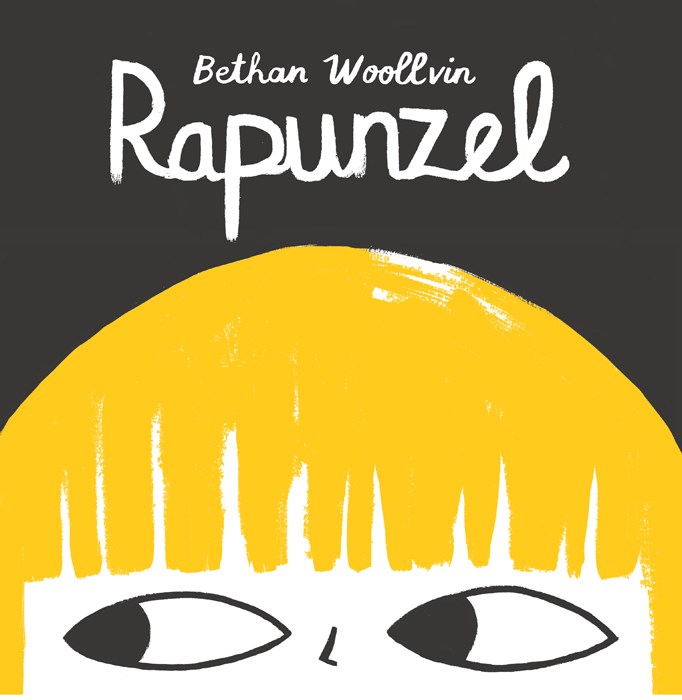
Rapunzel, by Bethan Woollvin, (Oct. 2017, Peachtree Publishers), $16.95, ISBN: 978-1-68263-003-7
Recommended for readers 3-8

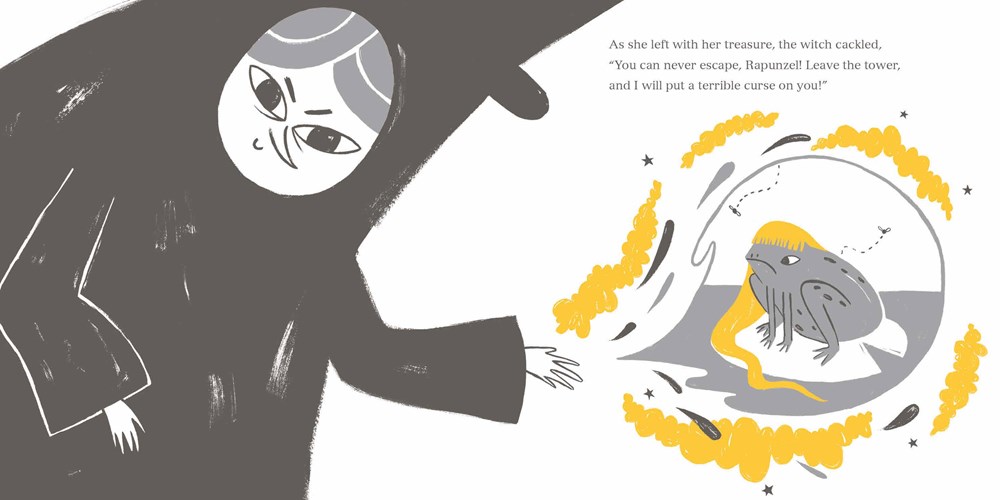
Last year, Bethan Woollvin gave readers Little Red; her spin on Little Red Riding Hood. Little Red didn’t need a huntsman to help her out; she had things handled. Woollvin’s newest tale, Rapunzel, gives us another heroine who can take care of herself.

The story starts out the same: kidnapped by a witch, living in a tower, the witch climbs up her hair, snips it to sell, and threatens her. But Rapunzel isn’t worried – she’s too smart for that. She starts figuring out that if the witch can use her hair to get in, Rapunzel can use her own hair to get out. We see her exploring the forest, reading a book called, “How to Defeat Witches”, and we just know this isn’t a princess that needs saving. Heck, no prince even shows up in this story. When the witch confronts Rapunzel after discovering she’s been out, the girl takes matters into her own hands. Literally. And that, my friends, is that: Rapunzel is free and becomes the bane of witches everywhere.

I  love Woollvin’s flipped fairy tales! The two-color art stands out; it’s dramatic and bright. Where Little Red was black and red, Rapunzel is, naturally, yellow and red. The endpapers give readers the short version of the story: the opening endpapers show a witch pursuing Rapunzel through the forest, and the closing endpapers show her masked, on a horse, with two witches hiding from her this time. The art is simple, fun, and gets to the point. Readers can make their own Rapunzels and witches (or Little Reds) with printables aplenty – hold a flipped fairy tale/girl power storytime and let your readers transform!

A great add to storytime collections and fairy tale bookshelves everywhere!

Posted in Preschool Reads, Realistic Fiction

No Water No Bread delivers a powerful message

No Water No Bread, by Luis Amavisca/Illustrated by Guridi, (Oct. 2017, nubeOCHO), $15.95, ISBN: 978-84-945971-3-8

Recommended for readers 4+

Two groups of people live on either side of a barbed wire fence. One side has water. One side has bread. Neither will share their resources, flatly stating: “This is our water.” “This is our bread.” The children gather at the fence and trade bread and water, wondering, “Why are our parents like this?” They play ball over the fence, knowing that life would be much better “without the fence”. When a new group shows up, the barbed wire fence is sectioned off into yet a third area. Again, the adults hoard their resources while the children all approach the fence, ready to share, and wonder why their parents are like this.

In a day and age where some talk about building walls, No Water No Bread asks a simple, powerful question: Why are we like this? Seen through the eyes of a child, we live in a ridiculous society. We tell our children to share, yet decide that others don’t deserve basic needs if we find them lacking: if they’re from the wrong area of the world, if they’re the wrong faith, if they’re the wrong color.

Simple art and simple words deliver a powerful message that children will understand. Let’s hope that the adults do, too.

This book is a project created in Europe by NubeOcho with the support of Amnesty International Spain and Amnesty International Italy. It is also available in Spanish (ISBN: 978-84-946333-7-9).