Posted in Intermediate, Middle Grade, Non-Fiction, Non-fiction, Non-Fiction, picture books, Preschool Reads, Tween Reads

Space… The Final Frontier…

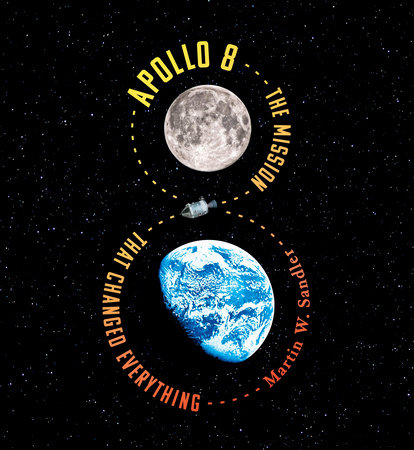
…these are the voyages of the starship Bibliomaniac. My continuing mission: to bring you the coolest books about space, while butchering a beloved TV show’s intro. This post has a books that should appeal to fiction and non-fiction lovers alike. Because it’s SPACE! Planets! Stars! Rocket ships! So whaddaya say? Join me! After all… Stardust Explores the Solar System (Stardust Science), by Bailey and Douglas Harris, (Apr. 2018, StoryBook Genius Publishing), $10.95, ISBN: 9781941434918 Ages 5-9 Stardust Science is a kids’ nonfiction series from a small-press publisher that I’ve just been turned onto. Bailey and Douglas Harris are a daughter-father team who write some pretty fun books starring a girl who loves science and is named named Stardust. Stardust Explores the Solar System is the second Stardust book, and here, Stardust takes readers on a tour of our solar system and its formation, and a trip to each planet. Spreads have a brief, informative paragraph and artwork placing Stardust on each planet, whether she’s driving an exploration craft across Venus or freezing atop Uranus. Extra fun facts focus on the possibility of extraterrestrial life, the Kuiper belt and dwarf planets, and the asteroid belt. Stardust Explores the Solar System was a successful 2017 Kickstarter (which is where I found the internal artwork for this post), and there’s a current Kickstarter for the next book, Stardust Explores Earth’s Wonders. You can pick up copies of My Name is Stardust and Stardust Explores the Solar System from the Stardust Science webpage. It’s a fun book, co-written by a 12-year old Neil DeGrasse Tyson fan, so how can you go wrong? It’s a nice additional book to big collections, and a sweet way to empower your younger readers. My 6-year-old loves this one and says he’s ready to write his own book.   The Universe Ate My Homework, by David Zeltser/Illustrated by Ayesha L. Rubio, (Aug. 2018, Carolrhoda Books), $17.99, ISBN: 978-1512417982 Ages 6-8 Abby’s a little girl who has homework to do, but UGH. She’d rather be stargazing with her dog, Cosmo, or talking to her physicist dad. He’s been thinking about universes, and how to make a baby universe, which gets Abby thinking. She sneaks into her dad’s study and works on making her own black holeout of the dreaded homework! It takes a lot of squeezing and a lot of energy, but Abby and Cosmo have done it! But what happens when a black hole’s gravity kicks in? HELP! This is an absolute fun way to explain the science of black holes to kiddos. What better way to get rid of your homework than by turning it into an actual science experiment? Kids will be squeezing the daylights out of their looseleaf for weeks to come, waiting for their own wee Big Bang. The artwork is too much fun, with something to see in every spread: the John Coltrane album and record player in the family living room; Dad’s study is loaded with things to see, including a framed picture of Marie Curie, family photo, Abby’s family drawing, and a postcard depicting a scene from  Georges Méliès’s 1902 A Trip to the Moon. The mini galaxy Abby creates unfolds for readers, starting first with swirls and stars, then with planets. It’s a fun book that makes for a great storytime, and a teacher’s note to Abby (you didn’t forget about the homework, did you?) at the story’s end will leave kids and adults alike laughing out loud. An author’s note gives a little more information about black holes and baby universes. Add this one to your collections and get your little ones contemplating astrophysics! Apollo 8: The Mission That Changed Everything, by Martin W. Sandler, (Oct. 2018, Candlewick), $24.99, ISBN: 978-0-7636-9489-0 Ages 10+ It was 1968, and the U.S. was about to make a huge gamble. America was deep into the Cold War with the USSR, and the country was fraying at the seams after the assassinations of Martin Luther King Jr. and Robert F. Kennedy; it was a country where the civil rights movement and the Vietnam War caused violent clashes. We needed something to unite us. Russia had already launched the first man-made satellite to orbit Earth, Sputnik I – in 1957, but now, they were getting ready to go to the moon. America was determined to get there first. But first, we had to get into space. Apollo 8: The Mission That Changed Everything is a brilliantly written chronicle of NASA’s mission to put a craft into orbit around the earth. Loaded with black and white and color archival photos and written by one of the most well-known names in children’s and young adult nonfiction, this is a must-have for your middle grade and middle school collections. With the 50th anniversary celebration of the Apollo 8 mission falling in December of this year, this is going to be an in-demand title in classrooms and libraries. Martin W. Sandler is an award-winning writer – a two-time Pulitzer nominee, five-time Emmy winner, and Boston Globe-Horn Book Honor winner – who makes nonfiction read as compulsively as solid fiction; There are extensive source notes and a bibliography for further reading and research.
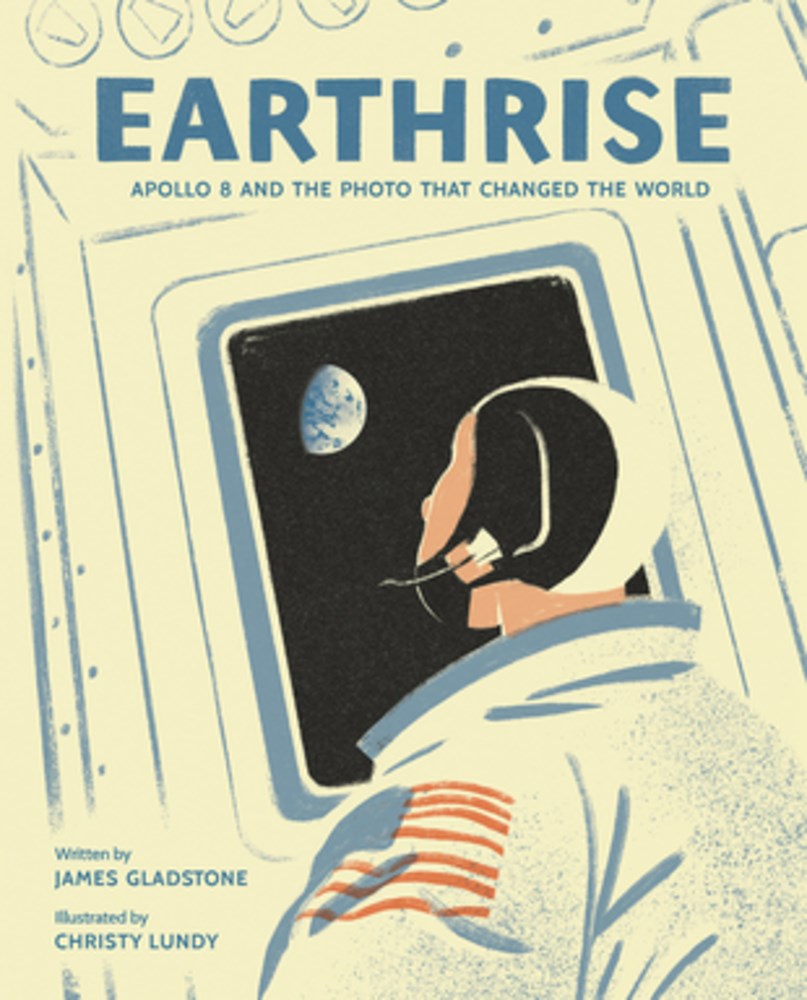
Earthrise: Apollo 8 and the Photo That Changed the World, by James Gladstone/Illustrated by Christy Lundy, (Oct. 2018, OwlKids Books), $16.95, ISBN: 9781771473163
Ages 4-8
This is the year for Apollo 8 books! Earthrise is a gorgeous picture book that tells that story of Earthrise, the history-making photo of Earth, taken from lunar orbit, taken by astronaut Bill Anders. The story shows readers how this single photo took us from a planet full of conflict to a global community – if only for a moment. We see the story from shifting perspectives: the crowds gathered in anticipation, the men in Mission Control, and an African-American family, with a little girl who dreams of being an astronaut one day.
The text is just beautiful. James Gladstone creates a mood of wonder as he writes lines like, “Now the craft was coasting on a human dream, speeding the crew off to another world”, and “The astronauts saw the whole turning Earth – no countries, no borders – floating in the vastness of space”. Back matter includes a piece on how the Earthrise photo changed the world, and an invitation to readers to share what Earthrise means to them. It’s the perfect program in a book! Show the original Apollo 8 launch broadcast, this NASA Apollo 8 documentary, and/or the broadcast Apollo 8 Christmas Eve message and ask kids to talk about what seeing the Earthrise makes them feel, 50 years later. Paired with Christy Lundy’s vintage-inspired artwork, Earthrise is a necessity in your nonfiction collections. Earthrise has a starred review from Kirkus.
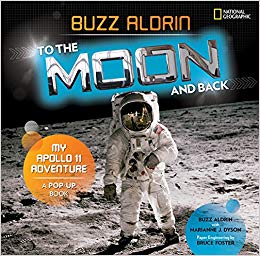
To the Moon and Back, by Buzz Aldrin with Marianne J. Dyson/Paper engineering by Bruce Foster, (Oct. 2018, National Geographic), $32, ISBN: 978-1-4263-3249-4
Ages 6+
How much fun is a pop-up book about SPACE? With ROCKETS?! Buzz Aldrin, Marianne J. Dyson, and Bruce Foster take readers on a trip through “humanity’s greatest adventure”. Learn Buzz Aldrin’s nickname on the mission; read about the launch and landing; souvenirs left on the lunar surface, and the astronauts’ return, all accompanied by amazing paper engineering: pop-up rockets, fold-out lunar landings, and side flaps that offer even greater information – and a few laughs. If you’re getting this for a library or classroom collection, put it in reference; it will get beaten up pretty quickly. The book also comes with a paper Apollo 11 lunar module kids can engineer on their own. (We haven’t built that one yet.) Want to make a space fan happy? Put this on your holiday and special occasion shopping lists. Read more about the 1969 Moon Landing on NatGeo’s webpage.
Whew! Okay, that’s all I’ve got for now, go forth and explore!
Posted in Intermediate, Non-Fiction, Non-Fiction, picture books

Sewing the Rainbow: The Story of a Flag and a Movement

Sewing the Rainbow: The Story of Gilbert Baker and the Rainbow Flag, by Gayle E. Pitman/Illustrated by Holly Clifton-Brown, (May 2018, Magination Press), $16.95, ISBN: 9781433829024

Ages 5-8

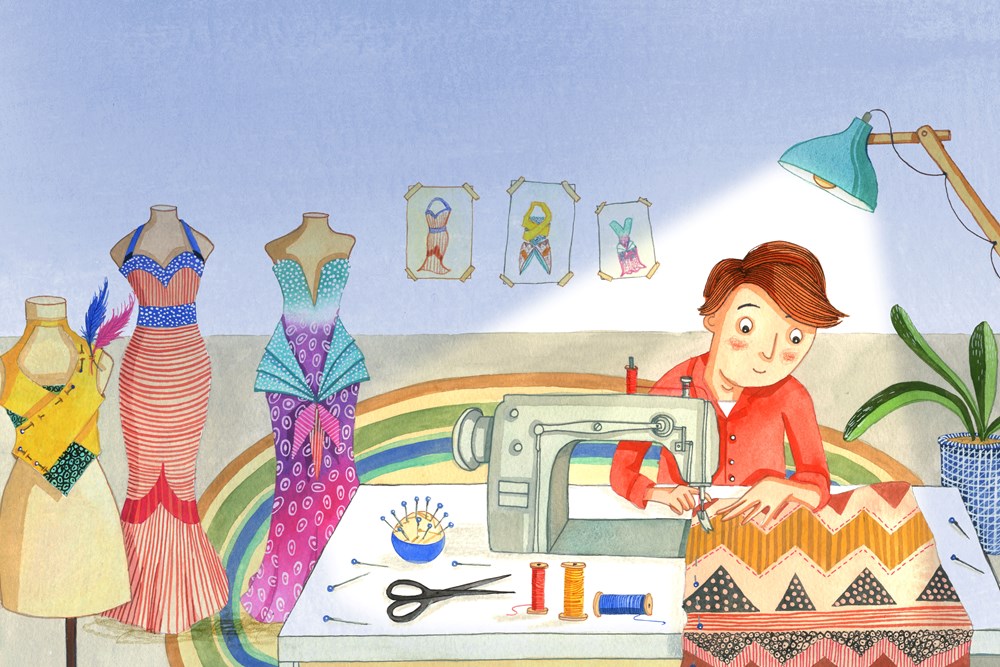
Artist and gay rights activist Gilbert Baker started out as a little boy in Kansas who “was full of color and sparkle and glitter”; a little boy who would draw gowns and costumes alongside his clothing store proprietor grandmother. But his father would destroy his drawings and push Gilbert toward more “manly” pursuits: slingshots, erector sets, and sports. Being drafted at the age of 18 made Gilbert more miserable as he suffered hazing from his fellow soldiers for refusing to carry a gun, but being arriving in San Francisco finally brought the sparkle back to Baker’s life. He taught himself to sew and began designing dresses, costumes, and banners for activists and entertainers. And then came his friend Harvey Milk, who asked him for Baker’s greatest undertaking: create a flag to unite the gay rights, or LGBT, movement.

The story of the rainbow flag is just as much Gilbert Baker’s story as it is the LGBTQ+ movement’s story. Dr. Gayle Pitman tells the story of a sensitive boy who loved art and grew up to unite the world. Holly Clifton-Brown’s colorful illustrations give us an apple-cheeked, sweet-faced boy who just wants to create; her artwork goes wonderfully hand-in-hand with Dr. Pitman’s prose to engender empathy in reader. I love and adore Dr. Pitman’s observation that our generation, and future generations, will see the flag and know that it’s okay to be your colorful, sparkly, glittery self.”

Back matter goes into more detail about Gilbert Baker and the rainbow flag (which, chosen by Baker, is in part inspired by a Bible quote: Genesis 9:13). This story pairs nicely with Rob Sanders and Steven Salerno’s book, Pride: The Story of Harvey Milk and the Rainbow Flag, which has a nice little cameo by a grown-up Gilbert. Sewing the Rainbow is a must-add to your biography collections.

Posted in Animal Fiction, picture books, Preschool Reads

Hector’s Favorite Place shows kids how to face their fears

Hector’s Favorite Place, by Jo Rooks, (Aug. 2018, Magination Press), $16.99, ISBN: 9781433828683

Ages 4-7

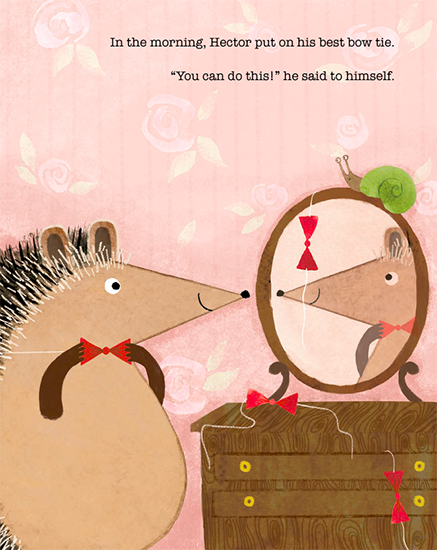
Hector is a hedgehog whose favorite place is home. He doesn’t go out that often, because everything he needs is home; home is “cozy and snuggly and safe”. At the same time, though, Hector wants to do things with his friends! He’s invited to the most exciting things: playing in the snow, ice skating, going to a party. But every time Hector accepts an invitation, he starts thinking about all the things that could go wrong, becomes anxious, and cancels plans. He decides to confront his anxiety, be brave, and head to the Winter party in the forest; when anxiety rears its ugly head again, he closes his eyes and imagines himself having fun and dancing at the party – and discovers that he’s having fun! After the party and some hot chocolate, Hector’ decides that he’s ready to take on new adventures outside of his home.

Hector’s Favorite Place is a child-friendly look at getting past fear. The author uses cute animals and age-appropriate text to communicate situations that may make kids nervous. Having Hector use creative visualization by imagining himself having fun is a great way to communicate this strategy to kids, giving them the tools to tackle worry and fear of everything from going to a friend’s party to starting the first day of school. Back matter gives parents some helpful advice on managing worry in kids and how to model helpful behaviors.

Magination Press is a publishing imprint of the American Psychological Association. The publisher’s website offers links to brochures and research from the APA, links to social media, and and links to the APA Book and APA Style blog. KidPsych is a kid- and parent-friendly site with games and activities.

I’ve been enjoying the Magination Press books for toddlers and kids. I like the topics the authors explore, and I love the way the authors and illustrators come together to create a story that appeals to kids and speaks to them in a way that respects and understands their feelings and challenges. So far, every book I’ve seen from Magination Press earns a spot in my library.


Posted in picture books, Preschool Reads

Empathy and fun make up the heart of The Sinking of Captain Otter

The Sinking of Captain Otter, by Troy Wilson/Illustrated by Maira Chiodi, (Oct. 2018, OwlKids Books), $17.99, ISBN: 9781771473118

Ages 4-7

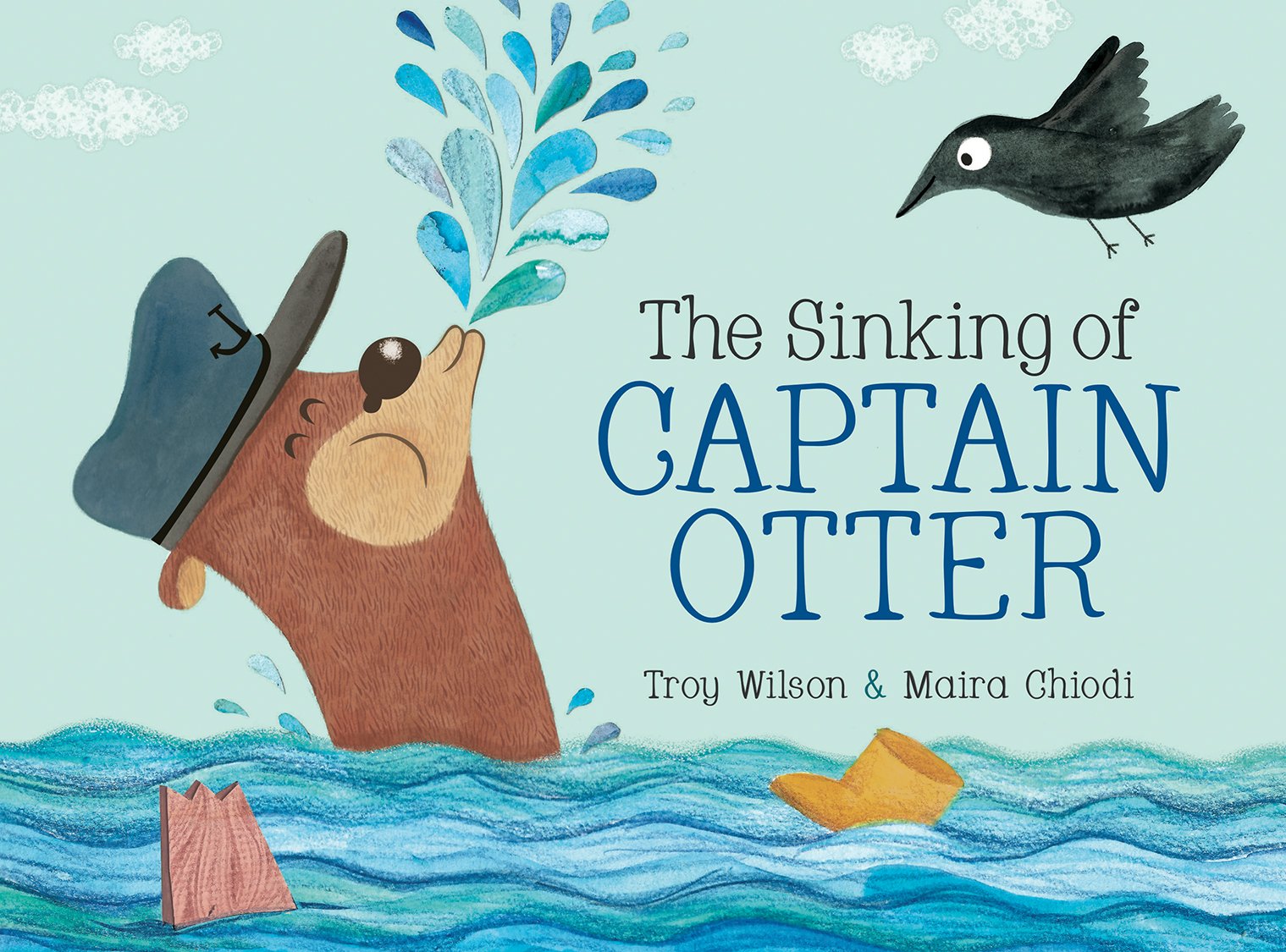
Kelpy is an otter who loves the sea and fancies himself a sea captain. He’s got the heart for it. The head for it. He’s even got the hat for it! Building a ramshackle ship from scraps, that’s everything he could ever dream of, he sails the high seas, despite the cruel jokes and jabs from pirates, sharks, other otters, even the waves themselves. Sure, he cries a little, but he loves his ship and that’s that. But one day, he meets Blistering Blastering Butterbeard, a teeny, tiny pirate on a teeny, tiny boat of his own, who challenges Kelpy. Well, Kelpy can’t help it: he laughs, too. And Butterbeard cries a little. And then he cries a lot. Kelpy knows he has to do the right thing, and proceeds to cut up his ship to make Butterbeard feel better, telling him that his cannonball sunk the ship. Face to face, the two adversaries know what they have to do: rebuild their ships and play on!

Captain Otter is a story about empathy and doing unto others (or otters, as the case may be): Kelpy knows what it’s like to be laughed at and poked fun at, so when he does it to someone else – and sees the repercussions of his actions – he makes amends, paving the way to a brand new friendship. It’s a sweet story whose repetition drives home the important points of the story, particularly persistence and devotion (“He loved his ship. He loved her from keel to cabin to crow’s nest. So he took a deep breath, straightened his hat, and sailed on”). Scuttling his own ship to make Butterbeard feel better is a completely selfless act that opens the door to a friendship between the two; something we see as the two laugh together, play together, and share tea together, along with a black bird that appears in the story. It’s a good story for storytimes and to start a discussion on doing what you love, and how our actions affect others.

Posted in Middle Grade, Non-Fiction, Non-fiction, Tween Reads

When you absolutely need to know Absolutely Everything…

Absolutely Everything! A History of Earth, Dinosaurs, Rulers, Robots and Other Things Too Numerous to Mention, by Christopher Lloyd/Illustrated by Andy Forshaw (Oct. 2018, What On Earth Books), $21.99, ISBN: 9781999802837

Ages 10-14

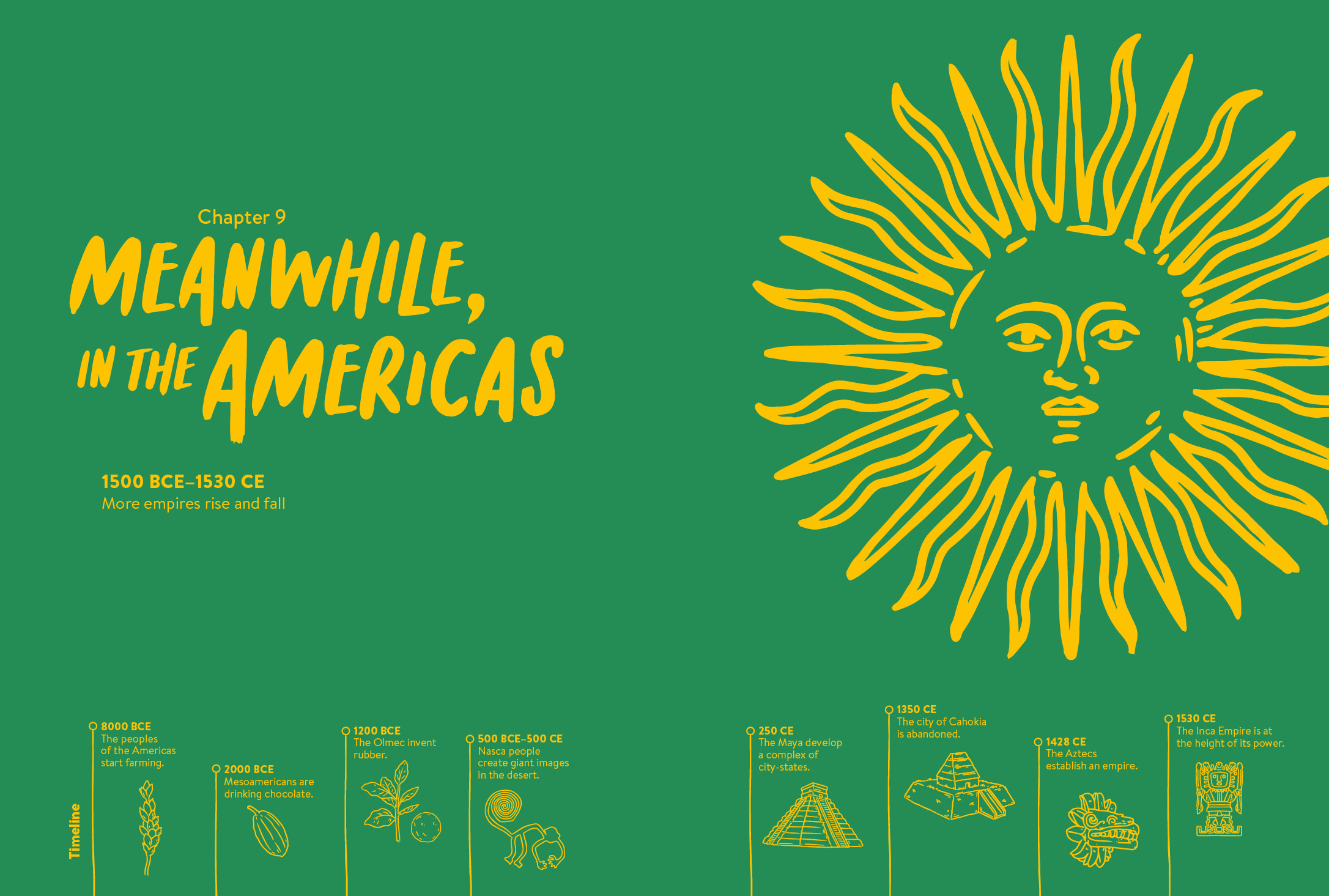
Absolutely Everything is the history of the world, organized into 15 chapters with catchy names like, “Nothing to Something” to describe the Big Bang and formation of the universe; “Meanwhile, in Asia”; “Medieval Misery”, and “To Be Continued”, which takes readers from 1945 to the present. Each chapter and era starts off with a two-page timeline of the time period covered, and is color coded along the page side, so readers can go directly to a desired time period with ease. The text is illustrated with color renderings and photos of animals, galaxies, people, and places.

The text never speaks over kids’ heads or down to them; it’s engaging, smart, and taps into the cool factor of nonfiction by inviting readers to join the author on a journey. Christopher Lloyd uses inclusive, inviting language, whether he’s inviting readers go on an imaginary dive to check out Paleozoic creatures or asking them to imagine our brains as mind-reading technology that helps decode other languages. He makes learning a cooperative activity, and he does it by letting the reader guide his or her own experience. Back matter includes further reading, a glossary, and an index.

Absolutely Everything! is a nice desktop reference for students, and is a good jumping off point for nonfiction readers to find something they like and seek out more. If you have Christopher Lloyd’s Wallbooks, get them up and displayed – those fold-out timelines are great! The What on Earth? activity zone offers free downloadable teacher guides.

Posted in Adventure, Animal Fiction, Fantasy, Fiction, Fiction, Intermediate, Middle Grade

Snazzy Cat Capers introduces a new super team-up!

Snazzy Cat Capers, by Deanna Kent/Illustrated by Neil Hooson, (Sept. 2018, Imprint Reads), $13.99, ISBN: 978-1-250-14343-3

Ages 7-10

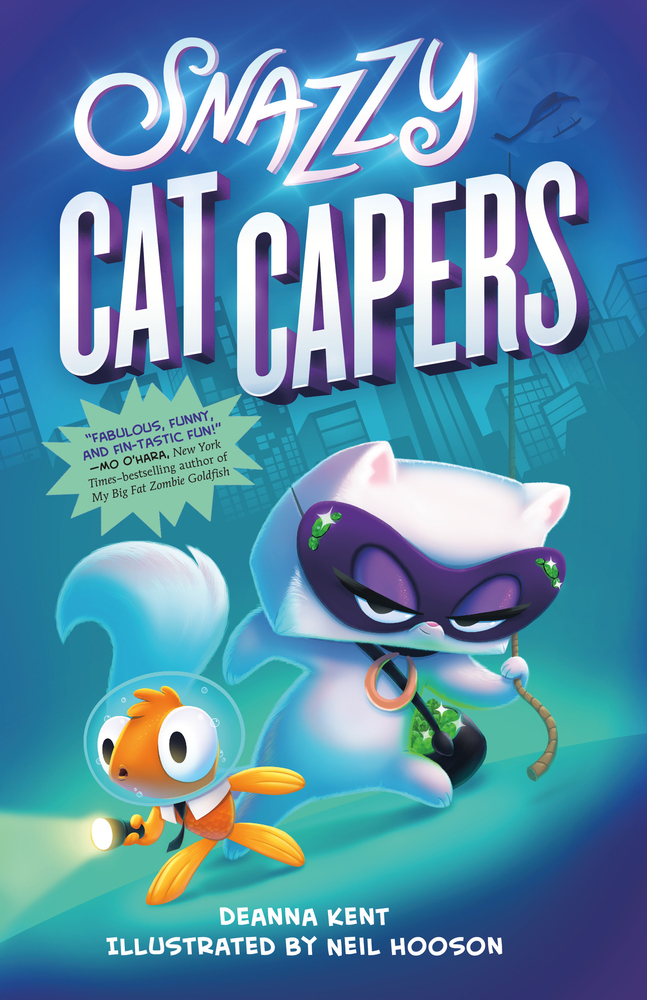
Ophelia von Hairball V is the world’s greatest cat burglar; she’s a celebrity among her peers at the FFBI (Furry Feline Burglary Institute), the bane of the Central Canine Intelligence Agency (CCIA), and the envy of her cousin and FELLOW FFBI cat burglar, Pierre. Her next challenge: steal a rare Himalayan diamond from the Belle Mew-seum in Paris for the FFBI’s Annual Purr-fect Heist Competition! There’s only one hairball: Oscar Fishgerald Gold. He’s the newest in a series of inventors the FFBI wants Ophelia to work with, but Ophelia is a one-feline show. Oscar is persistent, though, and finagles his way onto the mission. Can this cat-and-fish combo snag the diamond and win the top spot again? Will the CCIA finally catch up to Ophelia? Or will Ophelia’s scheming cousin, Pierre, outsmart Ophelia and win the diamond and the top spot for himself?

Snazzy Cat Capers is the first in a fun new intermediate/middle grade series, and it is too much fun. Ophelia von Hairball V is a fabulous diva with an eye for the good life, and even though she’s a thief, she’s not all bad: the FFBI just encourages cat burglary to keep their skills sharp; the heisted goods are always returned. Eventually. There are black and white graphic novel panels and artwork throughout the story, breaking up the narrative by communicating a chunk of story visually and giving reluctant readers a nice bridge into linear reading. Oscar is a sweet, smart sidekick who won’t give up his chance to be taken seriously – he’s kind of like James Bond’s Q. Every chapter starts off with a life quote from Ophelia that provides some wink-nudge insight into her divahood: “You can’t possibly be your best if you haven’t had a manicure. Or if you’re a dog”; “They say humility is the key. Thankfully, I can pick any lock”; “When all hope seems lost, check the last handbag you used. It might still be there”. There are a lot of laughs, some fun action and adventure, and a whodunit showdown that kids will love. The next installment is out next year, so talk this one up and get your readers on board. And show them some Kim Possible – not an animal show (except for the naked mole rat, Rufus), but still fun to watch. Booktalk and display with Jonathan Bernstein’s Bridget Wilder trilogy or Stuart Gibbs’ Spy School series.

Posted in Fantasy, Fiction, Middle Grade, Teen, Tween Reads

The Assassination of Brangwain Spurge is hilarious and thought-provoking. Like the news.

The Assassination of Brangwain Spurge, by MT Anderson/Illustrated by Eugene Yelchin, (Sept. 2018, Candlewick), $24.99, ISBN: 9780763698225

Ages 10-14

Elitist elf (is that an oxymoron?) historian Brangwain Spurge has a mission: go into goblin territory and deliver a gift – a peace offering – from the elf king to the goblin king. Oh, and he’s also supposed to spy on the kingdom, transmitting his thoughts back to the elves so they can get an elf’s-eye view of everything. He’s shot off in a large barrel, and invited to the home of goblin archivist Werfel, who extends every hospitality to Spurge, who is a culturally insensitive, rude, bumbling boob. Naturally, Spurge bungles his spying mission, setting off a cross-kingdom incident that leaves Werfel and Spurge running for their lives, and at one another’s mercies.

This brilliant socio-political comedy of errors is hilariously told by National Book Award winner M.T. Anderson and illustrated by Newbery Honoree Eugene Yelchin, and mixes action and adventure with a tale of friendship, culture clash, and intrigue. Eugene Yelchin’s mixed media, black and white illustrations let readers see what Spurge transmits back to his kingdom, but Anderson’s text lets us know that things aren’t exactly what they seem. So who’s telling the truth? Well… truth is in the eye of the beholder; something we learn as Spurge’s world seems to grow under the long-suffering Werfel’s guidance. There are false assumptions on each side that need to be cleared up, but Brangwain Spurge refuses to see the black marks on elf history, no matter how clear Werfel states it. After all, history is written by the victors.

It isn’t until Spurge creates an incident that puts his, and his host’s, lives in danger that he understands how words and memories can be manipulated. The two share a mutual love of books, and it’s there that they find common ground on which to build a relationship. That, and the fact that they need each other to survive. Want kids to understand Fake News? Put this book in their hands.

The Assassination of Brangwain Spurge is a National Book Award longlist nominee, and has starred reviews from Publisher’s Weekly, Booklist, Kirkus, and The Horn Book.


Posted in picture books, Preschool Reads

It’s all in how you see it… Do You Believe in Unicorns?

Do You Believe in Unicorns?, by Bethanie Deeney Murguia, (Sept. 2018, Candlewick), $14.99, ISBN: 9780763694685

Ages 3-7

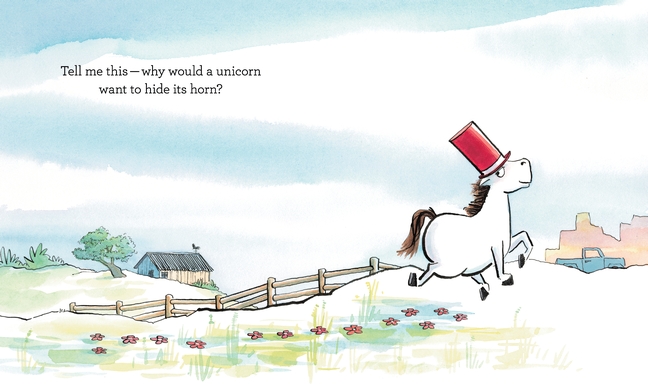
Do You Believe in Unicorns is fun and absolutely magical. It’s a visual wink that starts out with the horse on the cover: a white horse in a top hat. The story that follows is a conversation between the narrator and the reader, who we think must be a unicorn. But that’s crazy, right? It’s just a horse in a hat! Or is it? The narrator comes up with excuses as to why the horse can’t be a unicorn – his hair is a mess; he’s trying to keep dry in the rain – while our cartoony friend, sporting a knowing smile, prances through the book, eventually joined by other unicorns – HORSES! – wearing hats. But wait! The horses left their hats behind! And here’s where the joke is just perfect: the horses appear in front of spires, mountain peaks, and blades of grass. So, are those unicorns, or just expertly placed visual puns? Like the story says: “Maybe you can only see unicorns if you believe in them.”

What a way to bring magic into someone’s day. The cartoony art makes the unicorn/horse instantly kid-friendly, and its knowing smirk lets on that there may be more than meets the eye at play here. The facial expressions are an outright hoot, as our horse side-eyes other hat-wearing horses and admires himself in a mirror. It’s a lovely way to let kids know that there may be magical moments all around them, and a wonderful way to remind adults of the days when we believed in unicorns, too (and may still). And keep your eye on the lizard at the end of the story: he may be more than he appears, too. An absolute must-add to collections and great gift choice.

Do You Believe in Unicorns has starred reviews from Kirkus and the Bulletin of the Center for Children’s Books, and is a Junior Library Guild selection. I think I’m adding this to my Caldecott longlist.

Posted in picture books, Preschool Reads

A dad and son share special time during the Night Shift

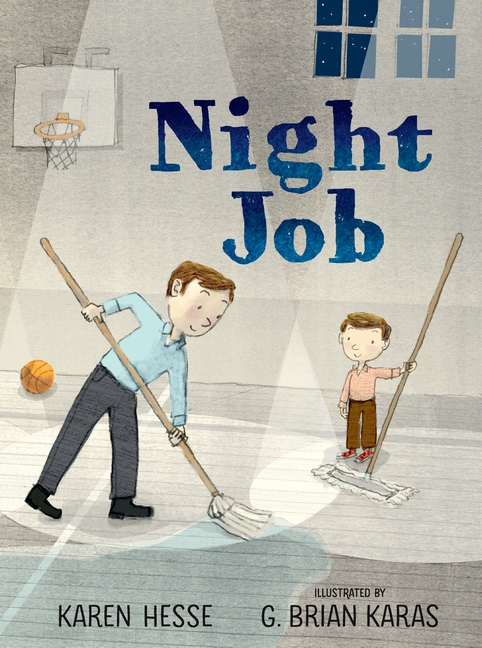
Night Shift, by Karen Hesse/Illustrated by G. Brian Karas, (Sept. 2018, Candlewick), $16.99, ISBN: 9780763662387

Ages 4-7

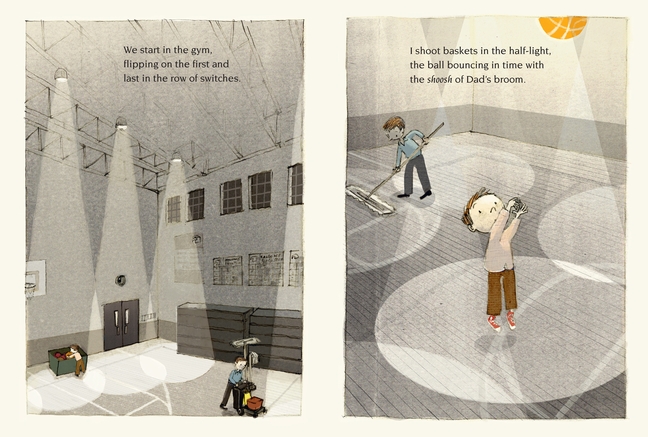
It’s a Friday night, and a boy and his dad head out at sundown for his father’s night shift as a school custodian. The pair ride to school on the boy’s father’s motorcycle, and as Dad cleans, the boy finds ways to himself busy; the two listening to a ball game on the radio. They eat their packed lunch together, and the boy reads to his father until he falls asleep on the couch. When Dad’s shift has ended, he wakes his son up, and they share a ride back home, where the boy cleans out his father’s lunch box, and curls up next to him on the recliner, drifting to sleep in his father’s embrace.

This gentle story shows a special relationship between father and son. The quiet blues and brows and mixed media are calming and provide a feeling that we’re getting a private glimpse into this family’s loving bond. The moment father and son unwrap their sandwiches and eat together is such a touching moment, the son genuinely happy to share this time with Dad as he leans into him, smiling; Dad smiling down on him. Dad gently puts his sleepy son into his jacket as they get ready to leave at 4 a.m. The boy curls into his father, head nuzzled into the crook of his father’s neck; his father’s head is turned away from readers, cheek on his son’s head. It’s a wonderful story that tells readers that quality time is what you make of it.

Narrated by the son, the prose shows a boy so aware of everything around him: the smell of the fish as they drive over the bay; the scent of the lilacs by the school; the sigh of the building as his father opens the door to the school; even what he imagines is the scene at the baseball game on the radio, “where the sun is shining on an emerald field”. Karen Hesse gives readers a feast for the senses and G. Brian Karas uses color to accent special moments throughout the text, be it the green couch that the boy naps on, his red sneakers, or the purple lilacs by the school building.

Night Job is a Junior Library Guild selection and has starred reviews from School Library Journal, Booklist, Kirkus, and the Bulletin of the Center for Children’s Books.

Karen Hesse is a Newbery Medal and the Scott O’Dell Award for Historical Fiction winner. G. Brian Karas has illustrated more than 90 children’s books.

Posted in Intermediate, Non-Fiction, picture books, Preschool Reads

How islands raised an activist: Galápagos Girl/Galapagueña, by Marsha Diane Arnold

Galápagos Girl/Galapagueña, by Marsha Diane Arnold/Illustrated by Angela Domínguez, translated by Adriana Dominguez, (Sept. 2018, Lee & Low Books), $18.95, ISBN: 9780892394135

Ages 4-8

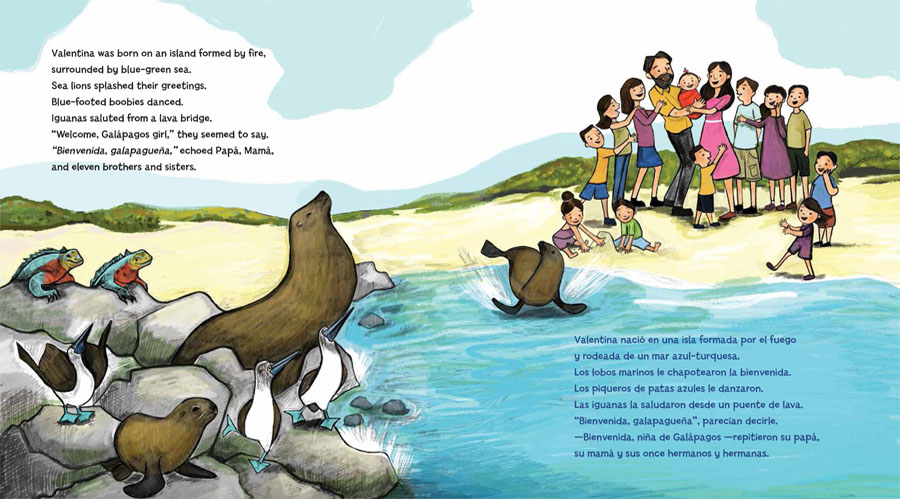
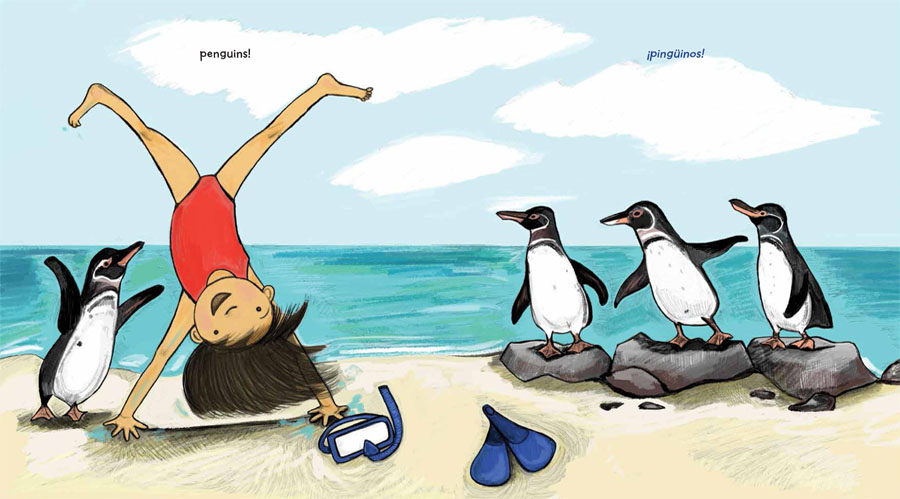
This bilingual English/Spanish story is based on the life of Galápagos Islands conservationist Valentina Cruz. Raised on the island, Valentina grew up surrounded by beauty: the blue-green sea, the playful penguins and sea lions, the sounds of the waves crashing against the rocks, and her father’s two tortoises, Carlitos and Isabela. Valentina goes away to school, but promises the animals and her islands that “I will not forget you… And I will help to keep you safe.” It’s a promise she keeps, returning to the islands on school holidays, camping out on remote islands to live and learn among the different flora and fauna, eventually becoming a biologist who returns to the islands to teach visitors to love her home as she does, and about the importance of preservation and conservation.

Author Marsha Diane Arnold met Valentina on a 2007 trip to the Galápagos and was inspired to write Galápagos Girl in the hope that readers would learn, as Valentina did, to help keep nature safe. Under threat from invasive species, active tourism, and encroaching humans, plant and animal life on the Galápagos is increasingly vulnerable. With bright, tropical colors and bold illustration, Pura Belpré Honoree Angela Dominguez transports readers to the magical islands; she communicates the feeling that we’re seeing something truly special as Valentina moves among unique plants and animals that aren’t found anywhere else on Earth. We’re given a special, secret pass to paradise as we turn each page of Galápagos Girl, and reading it with an unabashed sense of wonder will inspire that spark in a storytime group. An author’s note and a note about the Islands explains Marsha Diane Arnold’s first meeting with Valentina and provides background on the Islands. Five pages of information about the animals introduced in the story adds nice background information to the story, as does a solid bibliography. The bilingual text makes it accessible to Spanish and English-speaking readers.

The storytelling gives readers a glimpse at Valentina’s passion for conservation and illustrates how growing up with a respect for nature creates a better world for everyone. Galápagos Girl is a worthwhile add to storytime collections, bilingual collections, and natural history collections. There’s a free Animals of the Galápagos matchup download available at the Lee & Low website.

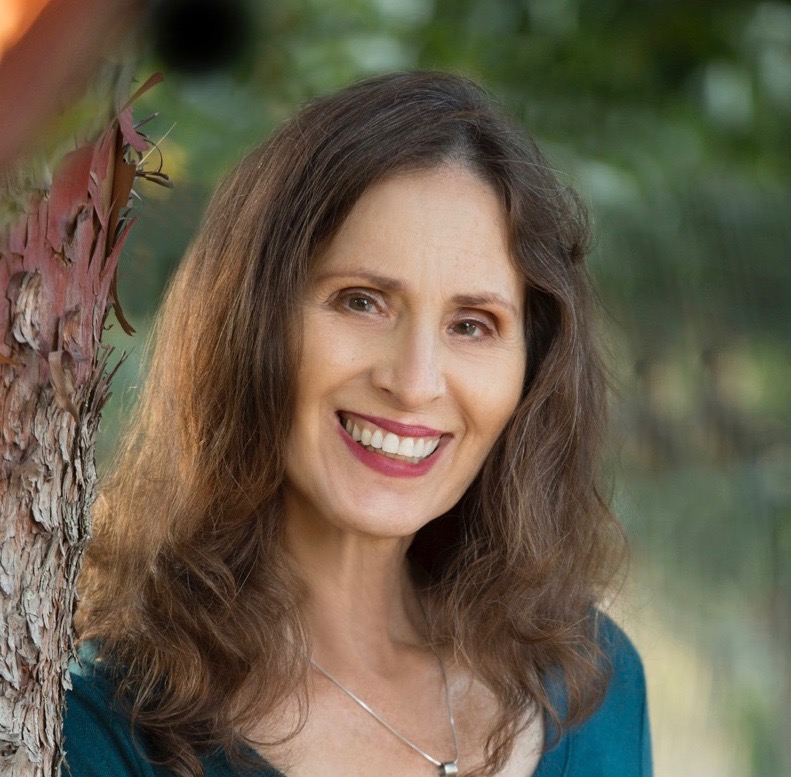
Marsha Diane Arnold is an award-winning picture-book author. Her past titles include the Smithsonian Notable Book The Pumpkin Runner and Lost. Found., which received three starred reviews. Marsha was inspired to write this story after traveling to the Galápagos Islands, where she met Valentina Cruz and had the opportunity to swim with sea lions and dolphins. She lives with her family in Alva, Florida. You can find her online at marshadianearnold.com.

Angela Domínguez is the author and illustrator of several books for children, including the Children’s Book Press title Let Me Help! / Quiero ayudar!Marta Big and Small, and Maria Had a Little Llama, which received the Pura Belpré Illustration Honor. In 2016, she received her second Pura Belpré Honor for her illustrations in Mango, Abuela, and Me by Meg Medina. When Angela is not in her studio, she teaches at the Academy of Art University, which honored her with their Distinguished Alumni Award. She lives in Virginia. Visit her online at angeladominguezstudio.com.