Posted in Fantasy, Fiction, Middle Grade, Realistic Fiction, Tween Reads

Middle Grade Quick Takes: The White Tower and Lions and Liars

Two more from the great TBR read-down! I’ve got some realistic fiction and some dark(ish) fantasy for you, right here!

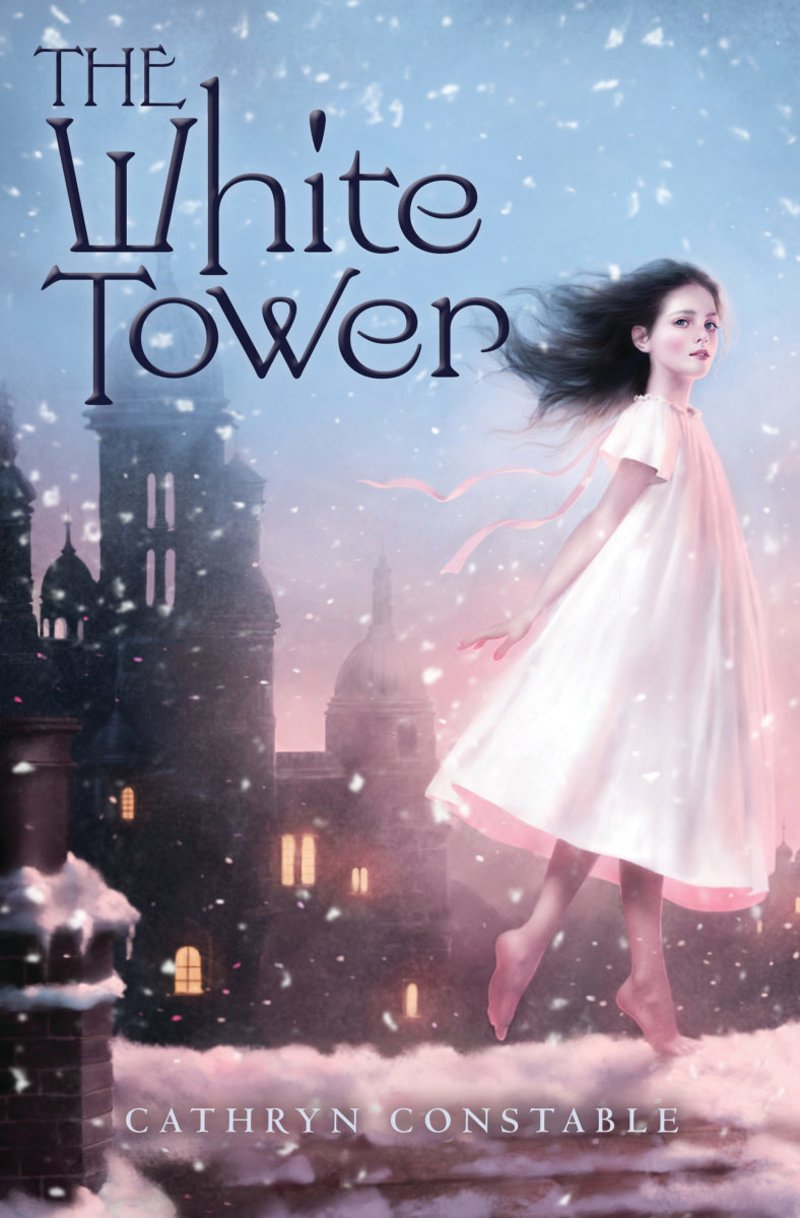
The White Tower, by Cathryn Constable, (Sept. 2017, Chicken House/Scholastic), $16.99, ISBN: 978-1-338-15746-8

Ages 8-12

Livy is a 12-year-old English girl who is still reeling from the recent death of her best friend is uprooted when her father accepts a prestigious job as the librarian at Temple College: a position that comes with a spot in the school for Livy and a new home for the family. Livy discovers the stone Sentinels – angels – on the roof of the school are tied into the school’s history, and that the school’s founder and her possible ancestor, Peter Burgess, was consumed with studies on gravity and flight. As Livy tries to fit in at school, she also finds herself drawn to the Sentinels and their secrets; a mystery between the school’s previous librarian, the current headmistress, and Peter Burgess moves the story forward.

Character development takes a back seat to the many subplots, leading to an at-times confusing story that has strong fantastic elements that I would have liked to explore more. Livy is a developing character who would have benefitted more from a stronger subplot on grief and loss, and the main plot – the Burgess mystery – being more defined, less stretched out between characters. If you have strong fantasy readers who liked Constable’s previous book, The Wolf Princess, this may work for them.


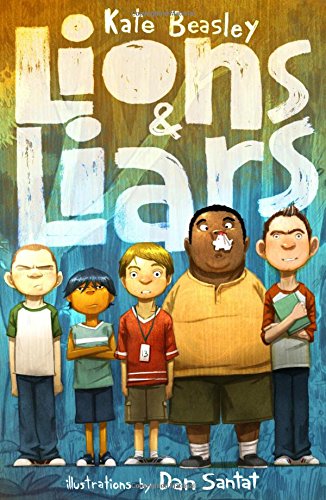
Lions & Liars, by Kate Beasley/Illustrated by Dan Santat, (June 2018, Farrar Straus Giroux), $16.99, ISBN: 978-0-374-30263-4

Ages 8-12

This case of mistaken identity at a summer camp for unruly kids is at times, hilarious; at times, touching. Fifth grader Frederick Frederickson is not the big kid on campus. He’s not even really the small kid on campus. According to his friend Raj’s “food-chain theory about life”, there are lions, like Devin; the big kid on campus. There are gazelles, the kids who are bullied by the lions. There are meerkats, who watch the world go by, and then, there are fleas, who live on the butts of the meerkats. According to Raj, Frederick is a flea. This doesn’t sit well with Frederick; things only get worse when his long-awaited family vacation is canceled because of a Category 5 hurricane threat. After his friends pull a mean prank on Frederick at a birthday party, he’s had enough, and pushes back. The only problem is, pushing back ends up with him stuck on a boat that leaves him on the shores of Camp Omagoshee, a summer camp for troubled kids. It gets worse when he’s mistaken for camper Dashiell Blackwood, whose name tag is the only one left. Assuming Dash’s identity, he finds himself in the big leagues for a change: Dash is legendary for being bad, but Frederick? He tries to convince his cabin mates, Nosebleed, Specs, The Professor, and Ant Bite, that he is every bit as tough as they come, but even Frederick isn’t sure if he’s going to be able to back up Dash’s fame. When the camp is cleared out when the hurricane starts heading in their direction, Frederick and his new group learn that they have to work together to stay safe, and maybe they’ll even become friends.

At its heart, Lions & Liars is about cliques and labels. The mistaken identity plot makes for some laugh-out loud moments, especially as Frederick tries to live up to Dashiell Blackwood’s infamous camp legend, but there’s also the stress of living a lie and the risk of being discovered. What happens when real friendships are made on the foundation of lies? The characters are nicely developed, and go beyond their “bad kid” label to show readers what constitutes a “troublesome child” in others’ eyes. Dan Santat’s black and white illustrations will keep readers turning pages. Kate Beasley has a great post about the labels kids get stuck with on the book on Nerdy Book Club.

Posted in Fiction, Fiction, Middle Grade, Realistic Fiction

Math, Loss, and Zombie Movies: A Good Night for Shooting Zombies

A Good Night for Shooting Zombies, by Jaco Jacobs/Illustrated by Jim Tierney/Translated from Afrikaans by Kobus Geldenhuys, (March 2019, Rock the Boat), $12.95, ISBN: 9781786074508

Ages 10-14

Martin is a South African teen living with loss. His father was killed in a car crash a few years ago, and his mother hasn’t left the house since. His sister is hardly ever home, usually out with her sketchy boyfriend. All Martin has is his chickens – his nickname is Clucky – and his propensity for numbers. When the neighbor kid’s dog kills his prize chicken, he goes over to say something – and ends up making a friend instead. Vusi, whose dog, Cheetah has a taste for chicken, is a horror movie fan determined to make his own zombie movie. He’s also fighting Hodgkin’s lymphoma, but he has no interest in letting that, or his protective parents and nurse, stop him. He quickly recruits Martin as a zombie extra, and before Martin realizes it, he’s sneaking out with Vusi, shooting Vusi’s movie and even developing a crush on a schoolmate. And, bonus: the cover glows in the dark!

Jaco Jacobs knows how to pack a book. While A Good Night for Shooting Zombies is primarily about Martin’s and Vusi’s friendship, it’s also about coping with loss, as Martin and his family grieve in their own ways; it’s about potential loss, as Vusi and Martin cope with Vusi’s lymphatic cancer, and it’s got a quietly compelling subplot about a group of troublemaking teens and Vusi and Martin bumbling their way into their sights. Martin is comforted by his mathematics equations, which he uses as a coping mechanism, very similar to Willow in Counting by 7s. He and Vusi each have their comforts – Vusi’s is horror movies – and as they share these pieces of themselves, they build a deeper friendship. Jim Tierney’s black and grey illustrations add some visual interest, and Jaco Jacobs’ writing keeps pages turning; the end of the story will stick with you long after you close the book.

I became a Jaco fan after reading last year’s A Good Day for Climbing Trees. A Good Night for Shooting Zombies just sealed it. I can’t wait to read more.

A Good Night for Shooting Zombies has a starred review from Foreword Reviews. There’s a free, downloadable readers’ guide available from publisher OneWorld Publications.

Posted in Fantasy, Fiction, Fiction, Intermediate, Middle Grade, Middle School, Realistic Fiction, Tween Reads

Middle Grade Quick Takes: Toy Academy, Ask Emma, Confusion is Nothing New

Every now and then, I dive into my TBR, which accumulates at an astonishing rate. This week, I managed to read a few more from the TBR, and wanted to give a quick take on them, since they’ve been out for a while but still deserve some mention.

Toy Academy: Some Assembly Required (Toy Academy #1), by Brian Lynch/Illustrated by Edwardian Taylor, (Jan. 2018, Scholastic), $12.99, ISBN: 978-1-338-14845-9

Ages 7-10

This is the first in a new intermediate/middle grade series, and it’s SO much fun. Grumboldt is a stuffed animal of some sort – he has a somewhat amusing and dubious origin – and desperately wants to belong to a kid of his own. He meets a transforming car robot named Omnibus Squared, who, as it turns out, is recruiting toys for Commander Hedgehog’s Institute for Novelty Academia – The Toy Academy. Grumboldt manages to talk his way into admission, and tries desperately to be a great toy, so he’ll be assigned to a great kid, but he’s got some challenges. There’s a bully (it’s always a soldier, isn’t it?) named Rex constantly bugging him, and he can’t stay awake during Bedtime Prep. When Commander Hedgehog’s arms go missing, though, Grumboldt sees a chance to help out and make good at Toy Academy after all.

Have readers who love Toy Story? (Seriously, who doesn’t?) Give them Toy Academy. It’s sweet, hilarious, and loaded with toy references that everyone – kids and grownups alike – will recognize and get a laugh out of. Brian Lynch is a screenwriter with Minions and The Secret Life of Pets to his credit, so he knows how to write things that kids like. Edwardian Taylor’s art is a perfect match for the wacky, fun storytelling and gives us characters we’ll know and love for books to come: Grumboldt is a lovable plush with mismatched parts; Micro is a lively action figure whose collectable status limits her movement – she’s stuck in a plastic bag, because she HAS VALUE; Commandant Hedgepig is a knockoff, off-brand version of Commander Hedgehog who insists on being called his proper name rather than his emerging nickname, Bootleg. The second Toy Academy book, Ready for Action, is also available, so put these on your series purchase lists if you don’t have them already.  The kids will love them.

Ask Emma, by Sheryl Berk & Carrie Berk, (May 2018, Yellow Jacket), $16.99, ISBN: 978-1-4998-0647-2

Ages 8-12

Emma is a 13-year-old seventh grader who loves to give advice, whether or not it’s asked for. She decides to start an Ask Emma column, so she can make herself available to all of her classmates at Austen Middle School, but quickly discovers that she’s a bit tone deaf in the process; she tends to push her best friends into doing things her way. She even tries to get the cute new guy, Jackson Knight, to join all the groups she thinks he should and tell her all about himself, but he gives a little pushback, which adds to his mystery. Emma starts getting some negative comments on her blog, and things start going haywire in Emma’s real world, too. When a hurtful picture of Emma starts making the rounds around the school, she decides to nip a potential cyberbully in the bud and takes action.

This is the first book in a new series from The Cupcake Club authors Carrie Berk and Sheryl Berk, and it left me a little wanting. Emma never really sees how self-absorbed she is, or apologizes for the things she does to her best friends. Her friends turn their backs on her when another student that Emma tries to “help” lies to make herself look good, but she never has that aha! moment when she examines her own behavior. A few negative blog comments and one mean picture become an overblown cyberbullying campaign, which, in this day and age, is forward thinking – catch cyberbullying in its early stages, before it becomes something out of control – but her related blog entry makes it sound like she endured a hateful campaign where she was bullied day and night. This one is a little out of touch; maybe an additional purchase where the authors are popular. The additional characters, including Jackson Knight and Emma’s best friends, Izzy and Harriet, seem interesting and I’d like to read more of their stories.


Confusion is Nothing New, by Paul Acampora, (May 2018, Scholastic Press), $16.99, ISBN: 978-1-338-20999-0

Ages 9-13

Fourteen-year-old Ellie Magari just found out her mother, who left her and her father when Ellie was a baby, has died. Never having known her mother, Ellie tries to figure out who her mother was, especially when her father presents her with a box of her mother’s memorabilia, mysteriously sent to Ellie. She discovers that her mother was the singer in an ’80s tribute band, married her *other* high school sweetheart, and that the band is playing the local college soon. Ellie struggles with learning about her mother and how to grieve someone she never knew, while expressing frustration with her father’s reluctance to talk about her at all. Thankfully, Ellie’s friends, her principal, and an interesting new music teacher are there to help her put together the rest of the missing pieces.

Confusion is Nothing New is good, and yes, I say that partly because I love all things ’80s. (I would make a heck of a playlist to booktalk this book.) But aside from the music, it’s got a solid, readable story, and the characters have incredible heart and humor. Ellie is a likable, relatable character who takes no foolishness when a teacher treats her friend badly; she’s also vulnerable and working her way through big revelations dropped on her throughout the book. I loved her school band friends and the ease of their relationships; their humor, and their loyalty to one another. This one is a good read for tweens and teens – it’s on the cusp of being YA, but not – who want to read about another character figuring it out as best as she can.


Posted in Uncategorized

A haunting across decades: A Promise Stitched in Time

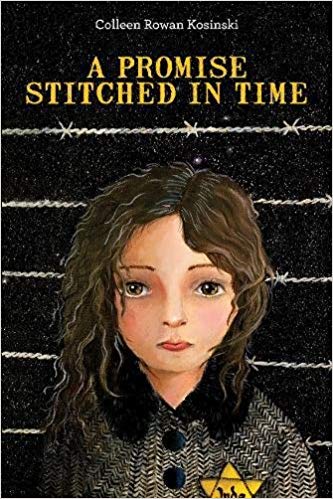
A Promise Stitched in Time, by Colleen Rowan Kosinski, (Sept. 2018, Schiffer Publishing), $12.99, ISBN: 978-0-7643-5554-7

Ages 10-13

Eighth grader Maggie McConnell is still grieving the loss of her father to cancer. The budding artist is agonizing over a project that will get her into the prestigious Peabody Academy; it was a promise she made to her father and herself. When she discovers a an old coat at her local thrift store, she’s drawn to it and buys it on the spot. Immediately, she begins having hallucinations about starving, burning chimneys, cruel voices and beatings, and terrifying dogs waiting to attack. She sees visions of a girl wearing the coat and reminding her of a promise made to a girl named Gittel. Turning to her friend Taj for help, the two try to unravel the source of the haunting. Meanwhile, Maggie is at odds with her popularity-obsessed sister, Patty, who doesn’t agree with Maggie’s choice in clothing or friends. As Maggie works toward the heart of the mystery, she discovers that Mrs. Berk, an elderly resident at a nursing home where Maggie teaches art, plays a key role.

A Promise Stitched in Time has an interesting main story that gets lost in its attempt to create a paranormal story. Having a coat haunted by a spirit of its former owner – a girl who died at Auschwitz – is an interesting concept on its own. Maggie’s father’s story seems to be more of a plot device that gets in the way, and the story’s resolution felt rushed, overcrowded in an already full narrative. It starts off strong, but ultimately left me wanting more.

Posted in Fiction, Middle Grade, Middle School, Realistic Fiction, Tween Reads

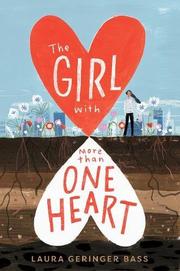
Grief and conflict collide in The Girl with More Than One Heart

The Girl with More Than One Heart, by Laura Geringer Bass, (Apr. 2018, Amulet), $16.99, ISBN: 9781419728822

Ages 10+

Briana is starting her eighth grade year when her father dies of a sudden heart problem. Her mother spirals into grief, leaving Briana with the responsibility of caring for her 5-year-old brother, Aaron, who’s on the autism spectrum. Briana thought of her father as “her” parent and her mother as “Aaron’s parent”, which introduces frustration and resentment on top of her own grief. Briana feels a “second heart” form in her stomach, which communicates to her in her father’s voice, telling her to “find” her mother, and to “let go”.

Told in the first person in Briana’s voice, this novel is a touching, sensitive look at the complicated grief process: it’s messy, frustrating, and filled with mixed emotions, especially when thrown into the volatile mix of adolescent emotions. The writing is so believable, so real, that I felt overwhelmed by both Briana’s and her mother’s grief at points. Readers receive a wealth of information through Briana’s “Before Aaron” flashbacks, back to when her mother had as much time for her as her father; back when they were a cohesive, whole family. This process also helps Briana become a more present sibling to Aaron, and to reach out to new friends when the opportunities present themselves. We get a glimpse of what grief can do to a parent, and the effect of that grief on a child, and we see how the extended family – in this case, Briana’s grandfather – have to take on roles that they may be unprepared for.

The Girl with More Than One Heart is a must-add to your realistic fiction collections, and keep this one in your booktalking pocket for books on grief and loss.


Readalikes:


Never That Far, by Carol Lynch Williams: Twelve-year-old Libby and her father work through their grief after her grandfather dies.

Ms. Bixby’s Last Day, by John David Anderson: Three school friends give their dying teacher the best day ever.

A Monster Calls, by Patrick Ness: Thirteen-year-old Conor’s mother is fighting cancer and losing; at the same time, a yew tree tells Conor stories and expects him to tell his.

The Haunted House Project, by Tricia Clasen: Andie tries to hold onto her mother’s memory by having her “haunt” the family home.

Counting by 7s, by Holly Goldberg Sloan: Twelve-year-old Willow loses both parents in a car accident, leaving her to find her place in the world.

Teen Librarian Toolbox and Pragmatic Mom have additional choices, all excellent reading.

Posted in Fiction, Middle Grade, Realistic Fiction

The Key to Everything: But will it cure?

The Key to Everything, by Pat Schmatz, (May 2018,  Candlewick Press), $16.99, ISBN: 9780763695668

Ages 9-12

Eleven-year-old Tash is angry. She doesn’t want to go to camp, but her Uncle Kevin needs to travel to Australia, and she and Cap’n Jackie, their friend and neighbor, clashed over the whole business. Tash ends up having a pretty good time at camp, after all, but returns home to find Cap’n Jackie gone: she’s had a fall and is in the hospital, and Tash’s world turns upside down overnight. She’s determined to return a special key to Cap’n Jackie; one that opens up a magical world to her, and that’ll make it all better. Cap’n Jackie even said so, so it has to be true, right?

The Key to Everything can be a bit hard to follow. We have Tash, seemingly abandoned by her mother and living her with uncle while her father is in jail. Kevin, who takes care of Tash, Cap’n Jackie, a loving and cantankerous older woman, and Nathan, Cap’n Jackie’s nephew, who lives in New York, but comes back when Cap’n Jackie is hurt. We don’t get a lot of exposition in this story, but we do learn that family is who you make it. Two major characters, Jackie and Nathan, are gay; something that’s very lightly touched on, but it’s nicely done. Tash suffers from PTSD and a fear of being alone, while Jackie struggled with agoraphobia. Readers have to put in a bit of work to make all the lines connect, but it’s a solid read about family, grief, moving on, and growing up.

Posted in Preschool Reads

A mother’s last love letter: A Bubble, by Geneviève Castrée

A Bubble, by Geneviève Castrée, (June 2018, Drawn & Quarterly), $12.95, ISBN: 9781770463219

Ages 4+

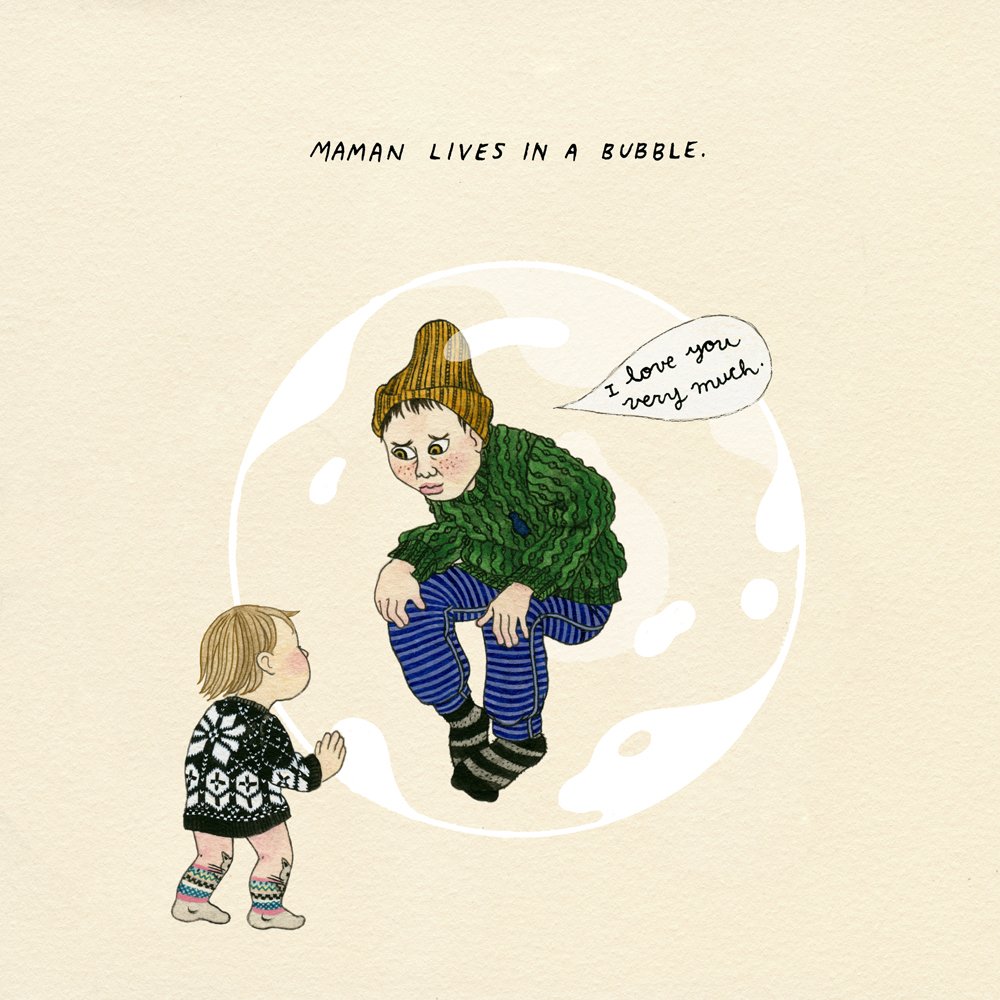
Artist and musician Geneviève Castrée passed away in 2016 after a battle with pancreatic cancer. This last project, a board book for her 2-year-old daughter, is at once a celebration of parental love and a comfort to anyone moving through grief and loss. Maman loves her daughter, but has been encased in a bubble since before the little girl can remember. She and her mother spend time in the bubble, eating together, playing together, and napping together; when daughter goes out exploring with Papa, she comes back to share what she’s done and seen with Maman, who cannot leave her bubble. As the story unfolds, we see the family’s activities change as Maman’s illness progresses; the story ends with hugs, kisses, and going for ice cream: a last, loving moment between mother and daughter.

The Bubble is simple and exquisite. I ache reading every page of this brief book and the final note from Castrée’s singer-songwriter husband, Phil Elverum. The artwork is focused on Castrée and her daughter; their loving relationship, the bubble, and the intrusion of the outside world. Narrated by the child, each page has 1-3 sentences, describing her relationship with her mother. It’s a comfort to children coping with loss and a testament to the everlasting love between a parent and child. I’ve read this book at least 5 times now, each time with a lump in my throat and an ache in my chest. It’s beautiful, and a good book to give to children – and parents – dealing with grief.

Posted in Fiction, Middle Grade, Realistic Fiction, Tween Reads

The Dollar Kids: Starting over, and fitting in

The Dollar Kids, by Jennifer Richard Jacobson/Illustrated by Ryan Andrews, (Aug. 2018, Candlewick), $17.99, ISBN: 9780763694746

Recommended for readers 9-13

Lowen Grover is a 12-year-old artist is using his comic book artwork to cope with the gun-related death of his young friend, Abe. He just wants to get away: away from the memories of Abe and the shooting; away from his neighborhood, where everyone knows. When he sees an article about a former mill town, Millville, holding a lottery of dollar homes to bring new life into the town, he mentions it to his parents, who apply and secure a home. It’s a chance for his family to own their own home, and a chance for his mother to start up a business, but rural life isn’t what Lowen expected, and the Millville families aren’t as welcoming to the new “Dollar Kids” and their families as he’d hoped. As the Grovers and the other new families try to make inroads into their new town, Lowen works through his grief and tries to rediscover friendship, his love for art, and his place in the community.

The Dollar Kids unpacks a lot of ideas and moments, and it’s beautifully done by author Jennifer Richard Jacobson and illustrator Ryan Andrews. It’s a book about grief and loss, and the guilt that comes with grief. It’s also about friendship, and accepting friendship, even when one doesn’t think he or she deserves it. It’s a book about family. Finally, it’s a book about acceptance. Lowen is grieving the loss of a kid who was somewhat of a friend; a younger kid who hung around him constantly; he embraces this chance to start a new life in a rural town, but he and his family discover that a dollar home takes a great emotional and financial toll; the families in Millville don’t like change much, even when it’s to benefit their town, and feel almost contemptuous toward the newcomers. The characters are realistic and relatable, with the author giving as much attention to her supporting characters as she does her main characters. The comic book artwork by Ryan Andrews is an outlet for Lowen, and helps readers work through his grief with him.

A great middle grade book for realistic fiction readers. Explain to readers that dollar homes do, in fact, exist, and what the stigmas associated with buying a foreclosed home could entail: how may the Millvillians see the families that purchase them, in light of the town’s history? I’d booktalk this with Beth Vrabel’s Blind Guide to Stinkville and The Doughnut Fix by Jessie Janowitz, both of which look at life in a rural community, and The Thing About Jellyfish by Ali Benjamin and Lisa Graff’s Lost in the Sun for addressing grief.

Posted in Fiction, Intermediate, picture books, Preschool Reads

June Picture Book Roundup

There are so many good books for Summer Reading hitting shelves in June! Let younger readers explore new worlds and meet new friends with some of these picture books.

Seven Pablos, by Jorge Luján/Illustrated by Chiara Carrer, Translated by Mara Lethem, (June 2018, Enchanted Lion Books), $17.95, ISBN: 9781592702534

Seven boys share the same name. Seven short vignettes share the stories of seven lives, taking readers from the copper mines in Chile to a refugee family living in Mexico, from a garbage dump in Peru to a streets of the Bronx, New York. Seven Pablos sheds light on the living conditions of children around the world in sparse, quietly powerful text. Graphite pencil art creates a dreamlike atmosphere for this lyrical story by Poet Jorge Luján.

Seven Pablos is deeply moving and continues to call attention to the plight of migrant and refugee families around the world. One scene expresses the rage these kids hold within them, as one Pablo tells a visiting poet that he wants to be a “big guy in a uniform” so he can “beat people up and get away with it”. A refugee Pablo recites a poem – in actuality, written by a 9-year-old Argentine child – where he imagines soldiers crushing roofs with their boots. Luján ends his story with the beautiful reminder that there are many Pablos in the world, and each one has a heart that beats with the rhythm of our world.

The Turtle Ship, by Helena Ku Rhee/Illustrated by Colleen Kong-Savage, (June 2018, Lee and Low Books), $17.95, ISBN: 9781885008909
Recommended for readers 6-12
This folk tale is based on Korean history. A boy named Sun-sin dreams of seeing the world with his pet turtle, Gobugi, and discovers his chance when the king announces a contest: design the best battleship to defend the land. The winner will receive ten bags of copper coins and the chance to travel with the royal navy. After a few failed attempts at a design, Sun-sin notices that his turtle is strong, slow, and steady, and decides that the best design will be based on Gobugi. At first, he’s laughed at in the king’s court, but when a cat tries to attack the turtle, the king and his court all see that there is something to the boy’s idea. Thus, the Korean Turtle Ships were created, and the boy grew to be famed Admiral Yi Sun-sin.
The story is best served by the incredible paper collage artwork, created using paper from all over the world. The art gives the story drama, color, and texture, and the story itself is as good for read-alouds as it is for independent reading. This is a nice addition to historical collections and cultural folktales. An author note on the Korean Turtle Ships provides some background on the legend of Yi Sun-sin and the Turtle Ship design.

Johnny, by Guido van Genechten, (June 2018, Clavis Publishing), $17.95, ISBN: 9781605373775

Recommended for readers 3-5

Johnny is an adorable spider with a secret to share, but everyone’s afraid of him! Wanna know his secret? It’s his birthday, and he wants to share his cake! This adorable book by Guido van Genechten is a good story to read when talking to kids about judging others based solely on appearances.

I have to admit, I needed to read this one a couple of times because I felt so bad for Johnny! It’s his birthday, and he’s all alone because everyone’s afraid of him! And then I figured it out: that’s the point. I mean, I know it was the point to begin with, but having Johnny celebrate with only the reader by the story’s end leaves a reader feeling badly – and that’s the time to talk about empathy. Ask kids how they would feel if people didn’t want to be near them because someone didn’t like the way they looked. Ask how they would feel if they had a birthday party and no one came! And then, for heaven’s sake, throw Johnny a birthday party: have some cupcakes and fruit punch, and sing Happy Birthday to the poor guy. He deserves it. Guido van Genechten’s cute, expressive, boldly outlined artwork is instantly recognizable and appealing to younger readers.


Swim Bark Run, by Brian & Pamela Boyle/Illustrated by Beth Hughes, (June 2018, Sky Pony Press), $16.99, ISBN: 9781510726963

Recommended for readers 3-7

Daisy the Bulldog is so proud of her humans, Brian and Pam, when they compete in triathlons. She wonders if she could train and compete like they do, and decides to enlist the help of her fellow doggie buddies, Rascal, Atticus, and Hobie, to hold their own Dog-Athlon! Daisy is full of energy at first, but when she starts getting tired, a familiar face at the finish line gives her the boost she needs!

Swim Bark Run is a cute book about physical activity, competition and cooperation, and determination. The digital artwork is bright and cute, giving the dogs happy, friendly faces and includes a nice amount of action as the pups train for their big day. There are positive messages about working together and encouraging one another. This is a cute additional add for readers who like animal books and books about physical fitness.

Seven Bad Cats, by Moe Bonneau, (June 2018, Sourcebooks Jabberwocky), $17.99, ISBN: 9781492657101

Recommended for readers 4-7

A child gets ready to go out on a fishing boat, but seven bad cats make progress very difficult. I love this rhyming, counting tale of seven cats who do what cats do best: get in the way! They eat from the traps, take naps on the oars and steal the child’s gloves, and generally make themselves a nuisance until the boat flips over, and the cats band together to save the day. The book counts up from one to seven until the boat flips everything over, including the story, and the countdown from seven back to one ends the fun. The watercolor artwork adds a nice, watery feel to this seafaring tale, and the cats are hilarious, using their whole bodies to get up to all sorts of no good; even appearing in mug shots on one page. They sprawl, they curl, they stretch, and they swim – they may not like it, but a cat’s gotta do what a cat’s gotta do! This one is a thoroughly enjoyable add to storytime and concept collections. Give this to your cat loving kids! (Also good for a readaloud with flannels or beanie babies.)


Finn’s Feather, by Rachel Noble/Illustrated by Zoey Abbot, (June 2018, Enchanted Lion), $17.95, ISBN: 9781592702398

Recommended for readers 4-8

In this touching story about grief, loss, and remembrance, a young boy named Finn finds a feather at his doorstep. It’s white, amazing, perfect. It has to be from his brother, Hamish, and Finn tells his mother and his teacher, who take a deep breath and smile; Finn doesn’t understand why they aren’t as excited as he is. His friend Lucas is, though: it’s got to be an angel’s feather, it’s so perfect, and the two friends take Hamish with them on the playground, running with the feather as if it were an additional friend. Finn uses the feather as a quill to write a note to Hamish that evening, and sets the envelope holding the letter in a tree, so the wind will carry it to Hamish.

Inspired by author Rachel Noble’s loss, this moving story about a sibling grieving and remembering is gentle, understanding, and an excellent book to have available for children moving through grief. The soft pencil artwork and gentle colors provide a calming, soothing feel to the story.


Ready to Ride, by Sébastien Pelon, (June 2018, words & pictures), $17.95, ISBN: 9781910277737

Recommended for readers 3-7

A young boy finds himself bored on a day home, until his mother sends him out to play. An imaginary friend joins him, and together, they learn to ride a bike! This is a fun, light story about imagination and getting outdoors to play. The imaginary friend is a big, white, two-legged figure – think yeti without the shag – wearing a pointy pink hat and protectively towers over the boy, helping him learn to ride the bike. When the boy heads home after a day of play, his new friend disappears, which is a bit of a letdown. Maybe he’ll show up again. There’s a “Certificate for a Super Cyclist” at the end of the book; a cute prize for kids who learn to ride. This one is an additional add if you’ve got kids who like bike-riding.

Posted in Fiction, Fiction, Historical Fiction, Middle Grade, Realistic Fiction, Tween Reads

Never That Far: They never really leave us

Never That Far, by Carol Lynch Williams, (Apr. 2018, Shadow Mountain), $16.99, ISBN: 978-1-62972-409-6

Recommended for readers 9-12

Twelve-year-old Libby is devastated when her best friend, her grandfather, dies at home. Crippled by grief, her father can barely get out of bed to work in the family’s Florida orange groves. On the night of Grampa’s funeral, though, Libby has a visitor: Grampa’s spirit shows up in her room, telling her that “the dead ain’t never that far from the living”, and that she has to search the lake for something he left for her. Sadly, he tells her that her father can’t see him; he doesn’t believe. To him, “the Dead are dead”. Libby joins forces with her friend, Bobby, to discover the treasure at the lake, but her father spirals further into grief and depression and threatens to derail Libby’s entire mission.

Never That Far has a touch of the supernatural set into a realistic fiction about grief, loss, and family. The Sight, Libby’s family gift, allows her to see and speak with dead family members. Her father has been worn down by grief, enduring the deaths of his siblings, wife, mother, and now, father; he has spent years arguing with his family about their “gift”, refusing to accept it for what it is. Libby’s revelation is unbearable to him, threatening an even greater rift between father and daughter when he tries to stop her from her mission. Together, Libby and Grampa, with some help from Bobby, work to save Libby’s father, who’s in danger of becoming a shell of a person and leaving Libby alone in the world.

The characters are gently realized, revealing themselves to readers little by little over the course of the book and packing powerful emotional punches as they come. Libby witnesses her grandfather’s grief at not being able to connect with his son in a scene that will have readers reaching for tissues. Taking place in the late 1960s in rural Florida allows the plot to remain character-driven. This is a moving story of grief, loss, and renewal that will appeal to certain readers: it’s a good book to have handy for your tough times lists, and for comfort reading. It’s spiritual, rather than overtly religious, and is soothing for readers experiencing loss and moving on.