Posted in Fantasy, Fiction, Fiction, Intermediate, Middle Grade, Uncategorized

Polly and Buster prove that witches and monsters should be friends

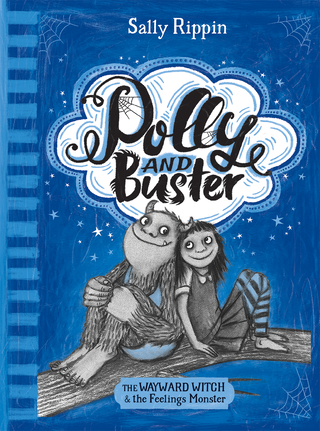
Kane Miller sent me a middle grade fantasy trilogy about Polly & Buster, a young witch and a young monster who are best friends despite monster and witch society not always seeing eye to eye.

Polly and Buster: The Wayward Witch and the Feelings Monster (Book 1), by Sally Rippin, (Sept. 2019, Kane Miller), $6.99, ISBN: 978-1-61067-926-8

Ages 7-11

The first book in the series introduces us to Polly, a 9-year-old witch who just can’t seem to get her witching schoolwork right. Her older sister, Winifred, is the star sibling, and her widowed mother is often frustrated by Polly’s inability to excel like Winifred, and by her friendship with Buster, the monster next door. Polly and her family are still reeling from her father’s death in the mines a few years ago, which seems to be the tipping point for witch-monster tensions. When Polly casts a powerful spell while trying to protect Buster from bullies, her actions are misinterpreted, and the relationship between witches and monsters grows dangerous. Polly and Buster have to work together to salvage their own relationship and keep one another safe as witches and monsters choose sides in what could be a brewing war.

I was pulled right into this easily readable adventure. Polly exhibits some ADHD, dyslexic, and OCD tendencies, which could be linked to her burgeoning witch power: think Percy Jackson and the similar issues exhibited by demi-gods in that series. Buster is a kind-hearted monster who tries to hide his sensitivity from other monsters; his feelings manipulate his size and color, leaving him open to bullying. Witch and monster society in this series is symbolic of our own society: racism, intolerance, and exclusion abounds in witch society, while monsters grow increasingly tired and angry of being considered second-class citizens. Throw in a mean girl bully, and her equally mean, manipulative mother, and Polly and Buster goes from being a sweet story about acceptance and friendship to a powerful look at inequality and revolt.


Polly and Buster: The Mystery of the Magic Stones (Book 2), by Sally Ripkin, (Sept. 2019, Kane Miller), $6.99, ISBN: 978-1-61067-927-5

Ages 7-11

The second book in the Polly and Buster series brings the action and the tension up several notches as readers witness the breakdown of relations in witch-monster society. Polly and Buster are on the run from witches who have determined that Buster is dangerous and needs to be taken prisoner (or worse); Polly turns to her favorite teacher, the sympathetic Miss Spinnaker, for help. Meanwhile, a handful of mysterious stones that Polly’s father left to her start to glow and feel warm to the touch; Polly feels them beckoning her… to the mines where her father died?

The Mystery of the Magic Stones brings the action on quickly – witch and monster society are breaking down, and the story has a very Harry Potter feel as a group of vigilante witches start taking policing matters into their own hands as monsters form gangs to protect one another and defend themselves against witches. There’s a feeling of urgency throughout the story, as Polly tries to unravel the mystery of the stones while she and Buster are running and hiding for their lives. No sophomore syndrome here; the second book in the Polly and Buster series will leave readers waiting to find out how this is all going to shake out: make sure you have that third book ready to give them.


Polly and Buster: The Seach for the Silver Witch (Book 3), by Sally Ripkin, (Sept. 2019, Kane Miller), $6.99, ISBN: 978-1-68464-095-9

Ages 7-11

The third book in the Polly and Buster series brings things to a big close. Polly and Buster have been on the run through all of the second book as relations between witches and monsters threaten to descend into violence. Polly has made discoveries about herself that will change how others see her – if she can stay safe long enough! Seeking out her aunt – an outcast from witch society – for answers, Polly hopes to unload the burden the stones have put on her. Meanwhile, there’s a dark power brewing in Polly and Buster’s neck of the woods, and it’s making everything worse!

In this third book, Polly learns that she’s far stronger than she ever dreamed – her inner strength will give her the power she and Buster need to make things right between their two communities, and will help her defend everyone she loves against the biggest danger that her village has ever faced. Polly has her hero’s journey across these three books, but Buster also comes into his own as a monster who accepts his feelings and can put aside his own fear to jump in and help when he’s needed.

The whole series, originally published in the UK, is great for emerging readers who are ready for a little more of a challenge in terms of book content and length. It’s an intermediate-level series with more heft and big social issues to unpack. There’s fantastic world-building, solid character development, and sympathetic heroes and villains alike. Black and white illustrations throughout will keep readers interested, and help with pacing and imagining. This series will be super-popular with your fantasy readers. U.S. publisher Kane Miller has a bunch of extras, including a free word search, discussion questions and activities, and some discussions points from the author herself.

Posted in Graphic Novels, Middle School, Realistic Fiction, Teen, Tween Reads

Go With the Flow needs to be in every school, in every library, available to everyone, everywhere

Go With the Flow, by Lily Williams and Karen Schneemann/Illustrated by Lily Williams, (Jan. 2020, First Second), $14.99, ISBN: 9781250143174

Ages 12+

Hazelton High School has a problem: there are never feminine hygiene products available to their students. There never seems to be funds available to get these products in stock for students. But there always seems to be money to get new uniforms or equipment for the football team. What the heck? Sophomores Abby, Brit, Christine, and Sasha are 100% DONE with the leadership in their school blowing off their complaints and their needs, so they take matters into their own hands in this brilliant graphic novel by the creators of The Mean Magenta webcomic Lily Williams and Karen Schneemann.

Go With the Flow is crucial reading for everyone, because the problem of access to and affordability of feminine hygiene products is a growing crisis. Using a microcosm of high school, Go With the Flow illustrates the value placed on sports programs versus providing free and accessible pads and tampons to their students. As the girls come together to brainstorm solutions, they realize that this isn’t just a schoolwide problem, it’s a global problem. Using statistics, research, and infographics, Lily Williams and Karen Schneemann blend these facts and figures in with a storyline that will empower and rile up female-identifying readers – and hopefully male- and non-binary-identifying readers, too! There’s an LGBTQ+ positive subplot, fleshed-out, likable and relatable characters (I cringed in sympathetic recognition as the new girl bleeds through her pants on her first day at school). The two-color artwork will be familiar to Mean Magenta readers. Back matter includes comprehensive information about menstrual equality, including links to further reading.

Give this to your realistic graphic novel readers first and let them spread the word. Have menstrual equity resources available for anyone who wants them. Here are a few to start:

The ACLU’s Menstrual Equity Handbook

Period.org: The Menstrual Movement

PBS.org: How Access to Period Products Removes a Barrier to Education

Girls Scouts NY: These Girl Scouts Brought “Menstrual Equity” to 200 Brooklyn Schools

BRAWS.org: Bringing Resources to Aid Women’s Shelters

Tennessean: Lack of Feminine Hygiene Products Keep Girls Out of School


Posted in Fiction, Middle Grade, Middle School, Realistic Fiction, Tween Reads

The Tornado takes on a tough question about bullies

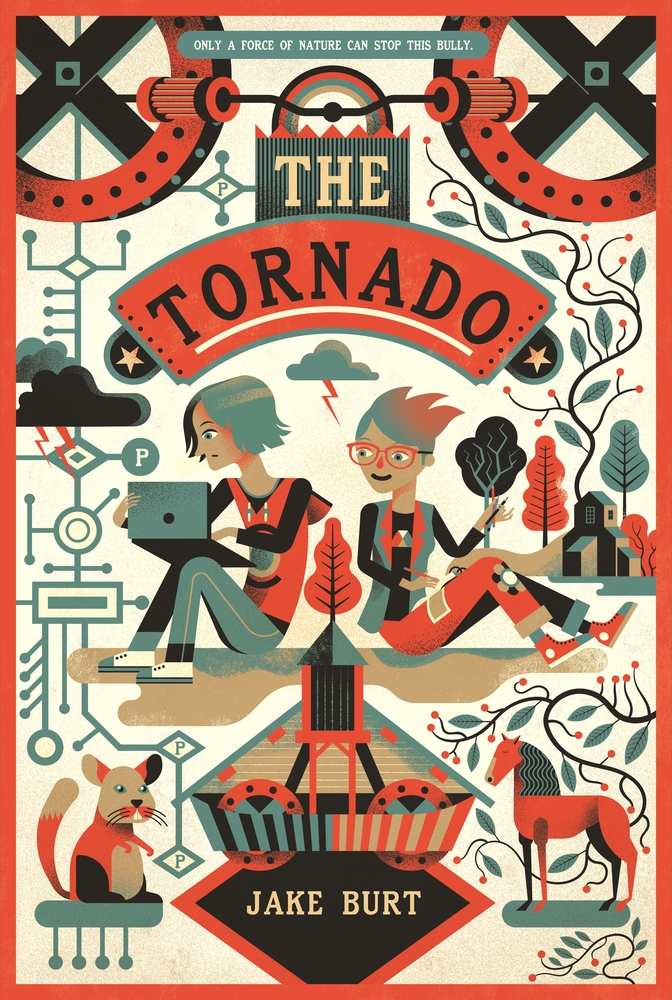
The Tornado, by Jake Burt, (Oct. 2019, Feiwel & Friends), $16.99, ISBN: 978-1-250-16864-1

Ages 10-14

Fifth grader Bell Kirby loves systems and structure. He uses them to excel in his school’s Creator’s Club, he creates an enviable habitat for his pet chincilla, Fuzzgig, and he stays under the radar, away from the school bully, Parker Hellickson – who also happens to be the principal’s son. When Daelynn Gower shows up – a new kid in town, straight out of homeschool, with rainbow-colored hair and a personality to match – and befriends Bell, she puts all of his hard work and systems at risk. Because Daelynn can’t help but be noticed. But when Daelynn finds herself in the bully’s sights, Bell finds himself at a crossroads: back in Parker’s good graces if he stands by and lets the next kid take the abuse, or stand up for himself and his new friend.

This is a strong story about bullying, looking at it from a less examined point of view. What happens when your bully moves on to another kid? Bell struggles with this because he’s relieved, but he knows that even standing by, pretending not to see the bullying, is wrong. When he learns that he was another kid’s relief from being in Parker’s sights, he knows, even more, that he has to take a stand. It’s a topic that can contribute to a meaningful class discussion. Jake Burt gives us fully realized characters here. Bell loves building and creating things to order his world, likely influenced by his military parents, who pass that love for structure onto him: he messages with his father, who’s stationed overseas and sends him engineering puzzles to figure out; his mother, a major in the US Army, is working on her Ph.D. and is referred to as a “mad scientist” by Parker. Parker is an unrepentant bully who uses the fact that his father has his own blind spot when it comes to his son’s bullying, brushing aside repeated complaints and believing the thinnest of excuses while letting readers glimpse into a home life that may not be ideal for Parker, either. His father talks down to Bell’s mother on several occasions, and she needs to correct him about her rank in the Army on at least one occasion, noting that she outranks her husband.

Woven into this story is Bell’s interest in systems and creating, and bringing a great STEAM challenge into the plot. The Creator Club challenge for this school year is to recreate one of Leonardo DaVinci’s creations, DaVinci-era style. No Internet. No electricity. Working by candlelight and looking up information in books. It’s a great subplot about friendship, teamwork, and cooperation. There’s also some great references to The Wizard of Oz throughout the book – see how many you can find, and challenge your readers. The one question that came up for me multiple times throughout the reading: Who is the Tornado here? I don’t know about you, but I got a different answer each time I considered it.

Author Jake Burt’s website offers updates and more information about his books. John Schu has an interview with Jake Burt available at Watch.Connect.Read, and The Tornado has a starred review from School Library Journal.


Posted in Animal Fiction, Early Reader, Fiction, Fiction, Intermediate

Nocturnals Easy Readers are back with The Tasty Treat and The Kooky Kinkajou!

Regular readers know how much I love Tracey Hecht’s The Nocturnals series from Fabled Films Press. There are four great middle grade novels about the three adventuring animal friends, and there have been four easy readers so far, which has been fantastic for my second grader, who loves reading them. There are positive messages in each book, and the Fabled Films friends have really put the time in to create lesson plans and learning games that address kindness and compassion among kids, using the series’ characters to communicate the message. Here’s a look at the two latest books in the Nocturnals series.

The Nocturnals: The Kooky Kinkajou, by Tracey Hecht/Illustrated by Josie Yee, (Sept. 2019, Fabled Films Press), $5.99, ISBN: 9781944020248

Ages 4-7

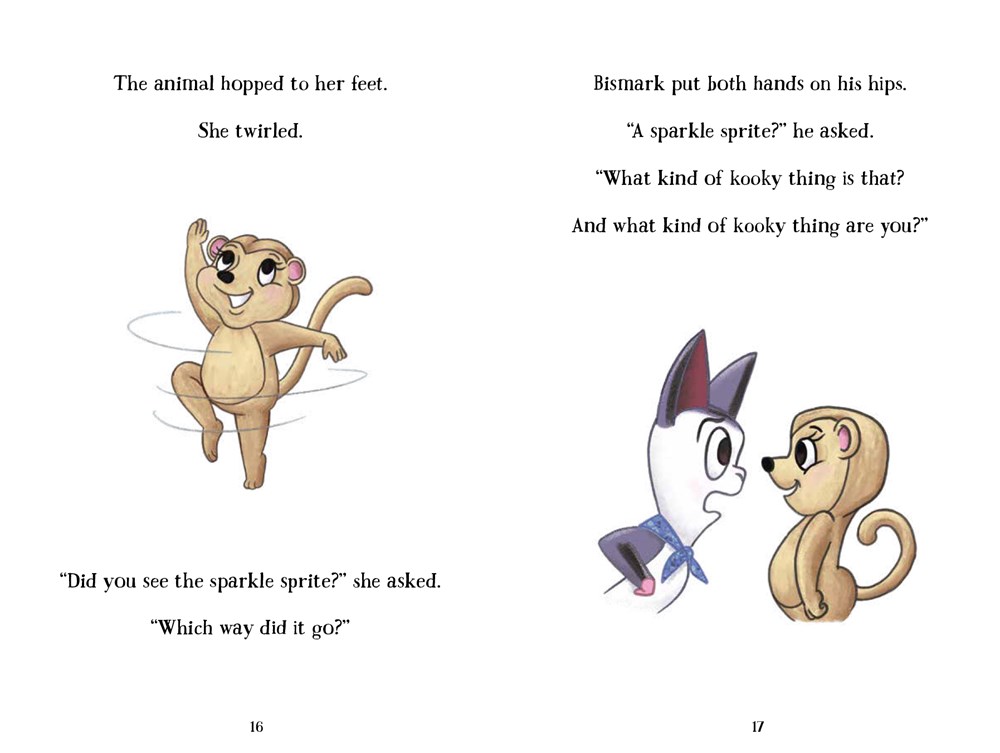
The Nocturnals Brigade meets a Karina, a careening kinkajou, while stargazing one night. Naturally, Bismark is his usual churlish self at first, but Karina leads the group through imaginative play through the forest, enchanting them with her exciting way of seeing things: a weeping willow tree becomes a rainfall; bent tree, a rainbow. Even Bismark can’t stay cranky with Karina’s contagious enthusiasm and creative way of looking at things. Nocturnals fun facts and new words make up the back matter. This makes a good readaloud for preschoolers, indulging and encouraging their imaginations and creative play, and is a Grow & Read Level 3, making it spot-on for newly independent readers.

There are great moments for discussion within the story. Bismark always makes for good “what not to do” moments; Tobin’s sweet innocence makes him the first to commit to Karina’s game, and makes him the perfect character to inspire readers to see shapes in the clouds, make up stories with the stars, and jump over rocks in an imaginary riverbed. Josie Yee’s art really captures the playful spirit of each character, making them soft, approachable, and cuddly for younger readers (especially my son, who made off with my plush Dawn months ago). Another win for my favorite group of nocturnal friends!

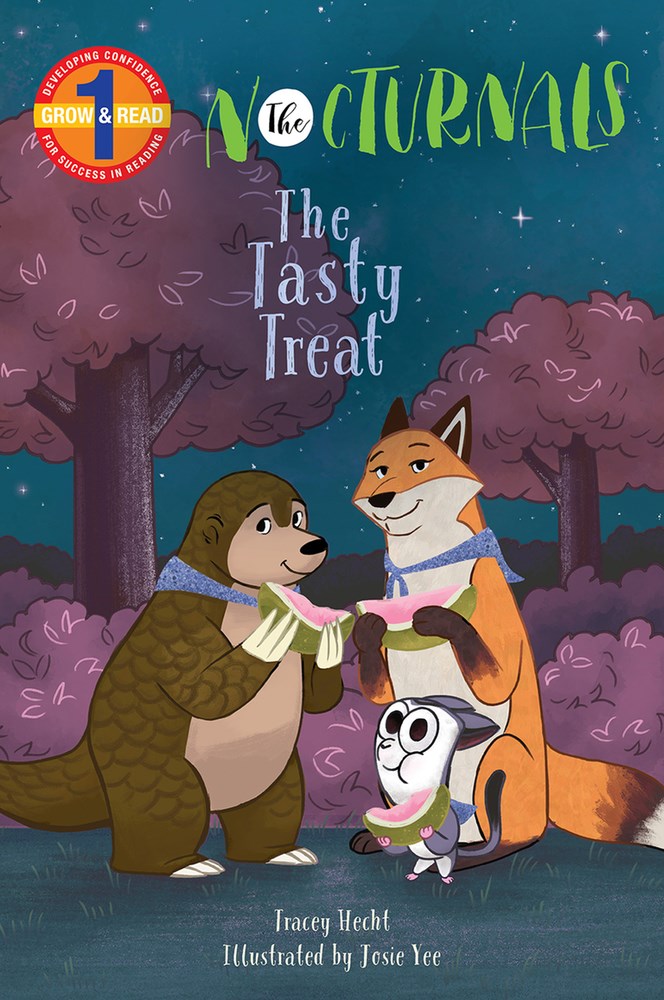
The Nocturnals: The Tasty Treat, by Tracey Hecht/Illustrated by Josie Yee, (Oct. 2019, Fabled Films Press), $5.99, ISBN: 9781944020309

Ages 4-7

The friends share a tasty treat – a pomelo, a favorite that shows up in many Nocturnals books – in this Level 1 reader. Short, simple sentences make this a good choice for pre-readers and new readers to start with, giving them some new vocabulary words and introducing them to the Nocturnals. The story revolves around Dawn, the fox, as she seeks and finds her friends one evening. Bismark has a pomelo, which he graciously offers to share, and the friends sit down to a pomelo picnic. Nocturnals fun facts reinforce character traits and introduce new words. Josie Yee’s artwork always makes the Nocturnals feel like cozy friends that kids will love spending time with. Bismark’s wide-eyed, exaggerated facial expressions are perfect for his blustering character with a heart of gold; Dawn’s all-knowing fox always has a slight smile, like she knows something most don’t (especially Bismark), and Tobin is the picture of shy but sweet, with eyes that gaze upward and a shy smile on his face.

This is a good introduction to The Nocturnals for new readers, and a great way to illustrate sharing.

The Nocturnals webpage has educator resources and activity kits, with Common Core activities and discussion questions and science activities that meet Next Generation Science standards. Activity Kits include word games, printable masks, and face-painting kits.


Posted in Fiction, Middle Grade, Science Fiction, Tween Reads

Happy Book Birthday to Weird Little Robots by Carolyn Crimi!

Weird Little Robots, by Carolyn Crimi/Illustrated by Corinna Luyken, (Oct. 2019, Candlewick), $16.99, ISBN: 9780763694937

Ages 8-12

Two girls discover their mutual love of tinkering and science in this quirky, fun, illustrated novel. Eleven-year-old Penny Rose is new in town, and doesn’t really have any friends yet – unless you count the little robots she makes in her shed. She makes them out of found objects, and tinkers lovingly with them, giving them names and looking after them every day. Lark, her neighbor, is a quirky girl next door who loves birds and tinkers with found objects given to her by the crows; she makes birdhouses to keep her friends safe from the elements. The two girls become friends and create an entire town for the little robots… and when a mysterious wind sweeps through their town, it brings some surprises with it! But while Penny and Lark enjoy one another’s company, a secret science club at school offers Penny membership in their society. Penny feels the tug between her new best friend and a group of like-minded science friends, but making the wrong decisions for the wrong reasons could cost Penny her best friend and the robots that she loves so much.

This is such an unconventional, enjoyable book! I love the idea of making creations out of found objects, and the touch of magical realism infused in this story makes it a joy to read. It’s a STEM story, a friendship story, and a comforting story about second chances. The little robots have their own personalities, each reflected in their names, bestowed on them by Penny. Penny is more tech-focused, while Lark prefers the world around her, showing that making and tinkering presents endless creations. The black and white illustrations throughout give life to the story and keep readers interested as they move through the book.

There’s a downloadable guide with discussion questions and activities, making this a good idea for an ELA/Science partnership or book club/Discovery Club program. I can’t wait until my library’s copy arrives, so I can start telling kids how much they need to read this book. Maybe it’s time for a secret science society at MY library… hmmmm…


“[A]uthor Crimi infuses this unassuming transitional novel with compassion, humor, and a refreshing storyline in which girls organically weave a love for science into their everyday lives. Illustrations by Luyken add to the guileless sensibility. A contemplation on the magic of friendship told with sweetness, simplicity, and science.”—Kirkus Reviews


Carolyn Crimi enjoys snacking, pugs, Halloween, and writing, although not necessarily in that order. Over the years she has published 15 funny books for children, including Don’t Need Friends, Henry and the Buccaneer Bunnies, Where’s My Mummy?, There Might Be Lobsters, and I Am The Boss of This Chair. Weird Little Robots is her first novel.

For more information, and to download a free classroom guide for Weird Little Robots, visit her website.

Twitter: @crims10

Corinna Luyken is the author-illustrator of The Book of Mistakes. She lives with her husband and daughter in Olympia, Washington.
Posted in Fantasy, Fiction, Graphic Novels, Middle Grade, Teen, Tween Reads

Truckus Maximus: Bread, Circuses, and Gladiator Monster Trucks!

Truckus Maximus, by Scott Peterson/Illustrated José Garcia, (Oct. 2019, First Second), $16.99, ISBN: 9781596438149

Ages 12+

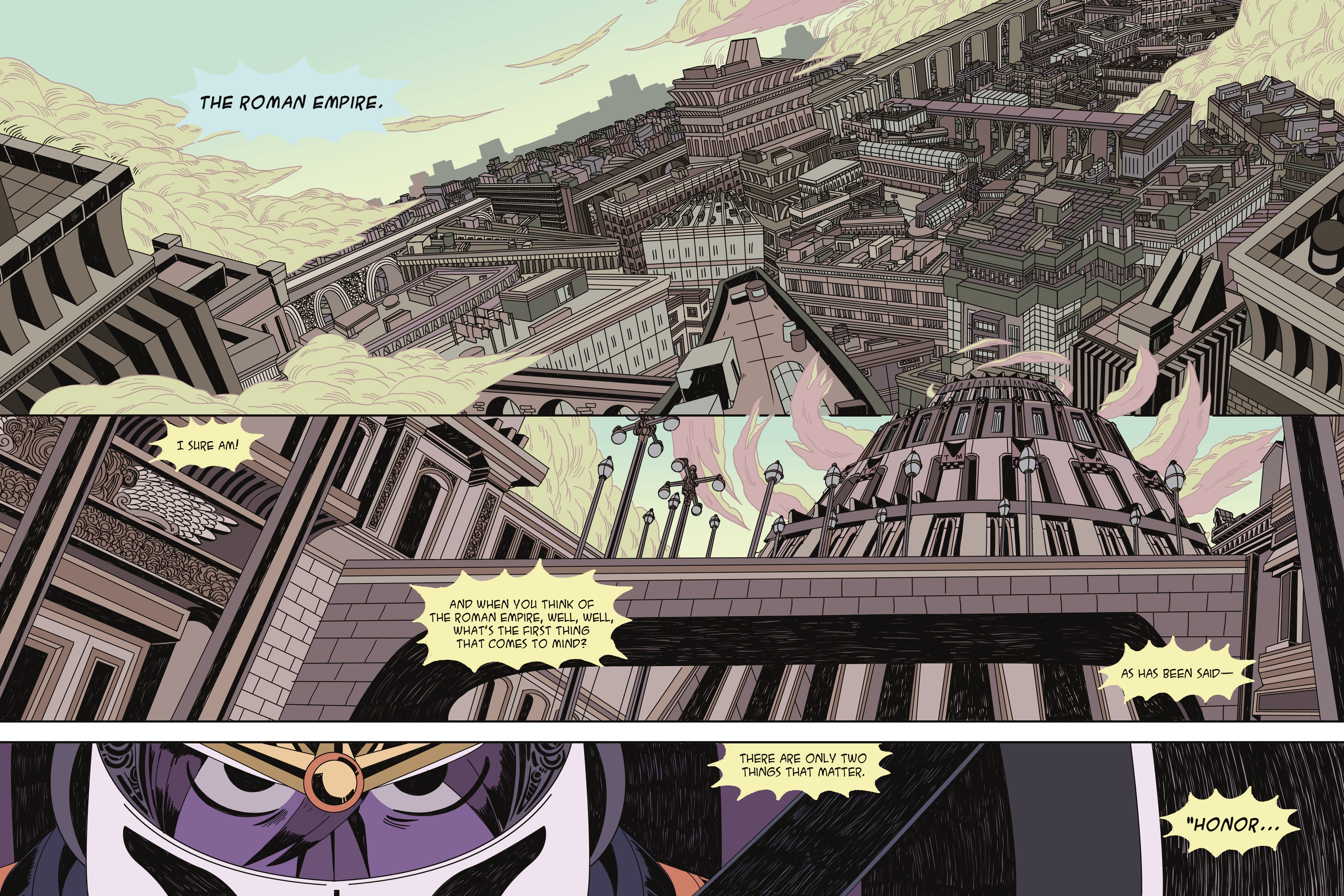
In this dystopian YA graphic novel, the Roman Empire never fell and now, gladiators duke it out on the track: Truckus Maximum is a competition where combatants race monster trucks to the death (Gen Xers, think Rollerball meets Death Race 2000). Team Apollo leader Axl is the best driver who can pull a win out in the worst of circumstances and adheres to a strict moral code. If he wins his 1000th match, he’ll be free – but at what cost to his teammates? Piston is a racer that’s new to Team Apollo. She takes chances, she lives and drives recklessly, and Axl sees something in her that no one else does. Can he teach her to rein herself in before she gets herself traded off to a worse fate than the track?

If you have manga fans, give them this one! The artwork is very manga-inspired, and the storyline is fast-paced, with car aerodynamics and explosions aplenty. There’s good world-building – I like the idea of the Roman Empire’s enduring and not moving past this whole entertainment-or-death business. It’s a popular dystopian theme, from The Running Man to The Hunger Games, and fits where we are as a media-obsessed, “if it bleeds, it leads” society. Axl is an interesting character, with his stoicism and the big moral choice ahead of him. In a society where everyone is corrupt, the good guy becomes the outlaw – and the team owner and the emperor himself are all in, trying to sway Axl. Piston is Axl’s foil, made of passion where Axl represses everything. Her bad decisions get her tossed off one team, and leave her future with Team Apollo pretty tenuous until she starts to harness her own power and channel it in more positive ways. But having a bit of that wild streak also means pulling out some big risks, and that may be what Team Apollo needs.

Truckus Maximus is a fun read, and should be popular with tweens and young teens. I’d like to see this as an animation.

Posted in Fiction, Humor, Middle Grade, Middle School, Realistic Fiction, Teen, Tween Reads

Jamie Sumner’s Roll With It gives life with CP a face and a story

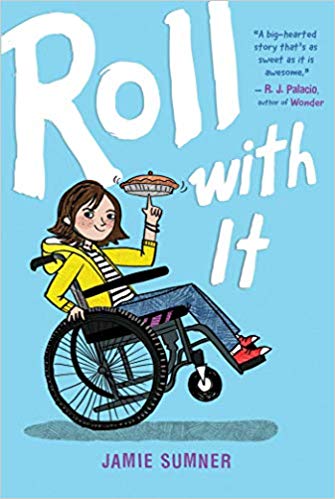
Roll With It, by Jamie Sumner, (Oct. 2019, Atheneum), $17.99, ISBN: 9781534442559

Ages 10-14

Twelve-year-old Ellie loves to bake. She writes letters to famous chefs and cookbook authors, asking questions to make her own art better. She’s frustrated by her overprotective mom, having to go to the bathroom at school with the help of an aide, and her father, who exists in theory, not so much in practice. Ellie also has cerebral palsy, or CP, which keeps her wheelchair-bound, but never out of the game. After her grandfather, who has dementia, drives his car into a local supermarket, Ellie’s mom packs up and heads to Eufala, Oklahoma, to live with and help out. Ellie’s grandmother is thrilled to have her family for a visit, but makes it clear that she’s not putting her husband into a home. Ellie starts school and a new life in Oklahoma, befriending Coralee and Bert; schoolmates who have their own eccentric flairs, and taking on a school that isn’t ready for Ellie.

Inspired by her son, Roll With It is author Jamie Sumner’s first novel, and with it, she has given us a main character who is upbeat, smart, funny, and darned independent. She’s a tween on the verge of teenhood, coping with adolescent feelings and frustrations on top of family worries, like her grandfather’s increasing dementia, concern about her grandmother, and a father that she’s disappointed in and hurt by. On top of that, she has the struggles that come with being in a school ill-equipped to work with her needs, and being the new kid in the middle of a school year. How does she cope? She lets you know what’s going on! Her voice is strong and clear, in her fantastic tweenage snark and honesty. Her friends Coralee and Bert have fully-realized backstories, giving them life beyond being Ellie’s friends in the background. Ellie’s grandparents and mother emerge as realistic, three-dimensional characters with big concerns of their own: family health, an absent spouse, bills, bills, bills.

A story about fitting in and standing out, following a dream and making your own way, Ellie is a character you want to cheer for and your kids will want to hang out with. Hand this to any of your realistic fiction readers, especially the kids that love Aven’s adventures in Insignificant Events in the Life of a Cactus by Dusti Bowling or Sharon Draper’s Out of My Mind; for your baking aficionados, give to readers who loved Jessie Janowitz’s The Doughnut Fix/The Doughnut King, and Anna Meriano’s Love Sugar Magic books. Talk this up to your teacher visitors, and suggest they take a look at it (I’m always ready to push good Summer Reading list ideas).

Roll With It has starred reviews from Kirkus and Publisher’s Weekly. Check out Jamie Sumner’s author webpage, where you can sign up to receive her newsletter and download a free discussion guide.


Posted in Fiction, Graphic Novels, Middle Grade, Realistic Fiction, Tween Reads

Jen Wang does it again with Stargazing!

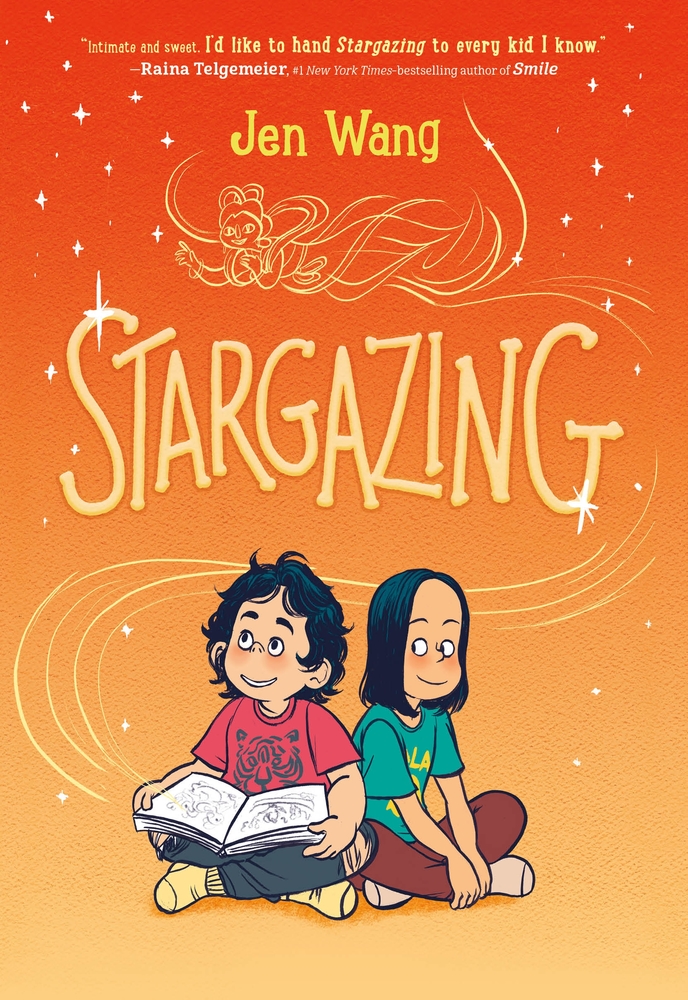
Stargazing, by Jen Wang, (Sept. 2019, First Second), $12.99, ISBN: 9781250183880

Ages 9-13

Jen Wang’s given us cyberpunk fantasy with In Real Life (2014) and high fantasy with The Prince and the Dressmaker (2018). With Stargazing, readers get a more contemporary story with, as Kirkus notes, a true portrayal of the diversity within the Asian-American community.

Christine is a Chinese-American girl from a more traditional Chinese family. She is focused on school and her music, until her family moves YuWen Lin and her daughter, Moon, into the in-law apartment where Christine’s grandfather used to live. YuWen and Moon are a struggling family, and the hospitality offered by Christine’s family is much appreciated. Christine and Moon are encouraged to spend time together, but the two are polar opposites: Moon is a vegetarian Buddhist who loves K-Pop and is rumored to get into fights. Despite their differences, Christine and Moon grow close, with Moon introducing Christine to a lighter, more fun side of life, letting her relax and let her guard down. Moon confides in Christine, telling her that she belongs in outer space, and that beings from space speak to her. When Moon meets a Caucasian girl that shares many of her interests, Christine’s jealousy takes control, and she puts Moon into an embarrassing situation; Moon reacts with her fists, which leads to an episode that lands Moon in the hospital.

Jen Wang weaves an intricate story of family expectations, social groups, and the complexity of navigating friendships in Stargazing, giving us some of her best storytelling yet. Influenced by events in her childhood and growing up in an Asian-American family, the story has depth and incredible emotion. Whether she’s giving us cyber farmers (In Real Life) or a friendship between two schoolgirls who love K-Pop, Jen Wang always manages to make her character’s humanity the central focus of her stories. Christine and Moon are so real, so strong, that their voices come right off the page and speak to readers; telling them about their stories, their lives, their struggles. When Christine writes that she doesn’t consider Moon Asian, we see the conflict between a traditional Chinese household versus a more contemporary, Westernized Chinese-American household. Christine’s mother holds Chinese lessons in her home; YuWen runs a plant nursery and watches TV with her daughter at night. While Christine listens to more Westernized music, Moon embraces K-Pop and dance routines. The two families present a glimpse into the diversity of Asian-American families, both connected to the culture in different ways.

Stargazing is a definite must-read and has starred reviews from Kirkus and Publisher’s Weekly. Newsarama has an interview with Jen Wang that’s worth reading.


Posted in Fantasy, Fiction, Humor, Middle Grade, Middle School, Tween Reads

All hail Doug, King of the Mole People!

King of the Mole People, by Paul Gilligan, (Aug. 2019, Henry Holt & Co.), $13.99, ISBN:  978-1-250-17134-4

Ages 8-12

Doug Underbelly just wants to be a normal seventh grader, but the fates are stacked against him: he and his dad live in a house that looks straight out of a scary movie, and the only meals his dad makes are from the eels that are plentiful around the house grounds; the weird girl at school follows him around, too. And it doesn’t help that he’s covered in mud and worms most of the time… but that’s what happens when one is king of the mole people, as Doug is. He doesn’t really want to be their king, but it was thrust upon him, and even though the throne is awfully uncomfortable and his royal advisor most definitely is plotting against him, he’s doing his best. But there’s trouble rumbling down below: the Slug People are getting fidgety and fussy, and it looks like the Mushroom Folk and the Stone Goons are going to get involved, too. What happens when giant worms start rising up and wrecking everything above ground? Doug has to get things under control, and quick – and maybe that weird girl will be more of a help than he expects.

This laugh-out-loud middle grade book is the first in a new series that kids are going to devour. It’s got gross-out humor, there’s some touching moments, and Doug is the underdog character that we all love to cheer for (and laugh at). He’s got a fatalistic yet snarky outlook on life, and his attempts to be normal – from signing up for sports and drama, to deciding he’ll crush on a popular girl, because everyone else does – are sweetly hilarious and painfully relatable. Magda, the “weird girl”, is a goth girl with brains and depth, and she keeps Doug on his toes. Doug’s royal entourage/mole people buddies are sweetly literal and not terribly bright, but loyal.

Kirkus says it best: “The Wimpy Kid’s got nothing on the King of the Mole People—he’s got more laughs and more mud”. Betsy Bird has a fun interview with author Paul Gilligan on School Library Journal, and you can find an excerpt, trailer, and downloadables – including your own crown – at the publisher’s King of the Mole People website.


From Macmillan’s website

Posted in Fantasy, Fiction, Graphic Novels, Middle Grade, Tween Reads

The team-up I’ve been waiting for: Mighty Jack and Zita the Spacegirl!

Mighty Jack and Zita the Spacegirl, by Ben Hatke, (Sept. 2019, First Second), $14.99, ISBN: 9781250191731

Ages 8-12

The latest Ben Hatke graphic novel brings together two of his best series: Zita the Spacegirl and Mighty Jack. It’s a team-up he teased in 2017’s Mighty Jack and the Goblin King, and I have been waiting patiently for two years to find out what was going to happen.

After Zita and her friends arrive from their space-hopping adventures, Jack and his family have been housing and feeding the group. Lily, Jack’s neighbor, who helped him fight the giants and rescue Maddy, his sister, is on edge, though. Is she jealous of Zita, or is there something more to it? Meanwhile, the giants are growing stronger and getting ready to invade above-ground: the gate between worlds is growing weaker, and they’re ready to use it to their advantage. Zita, Jack, Lily, and Maddy have to get ready to battle once more.

I’ve been a fan of Ben Hatke since 2012, when I first read Zita the Spacegirl. I love Hatke’s art, I love his storytelling and world-building, and I love sharing his books with the kids at my libraries. Hatke is a great storyteller, giving each of his characters a rich backstory and exciting quest. He also weaves the fantastic with the everyday, giving us robots, dragons, giants, goblins alongside a terrified mother, the complexity of navigating tween friendships, and the frustration of being “ordinary”.

Mighty Jack and Zita the Spacegirl is a wonderful chapter in the Zita/Jack saga. Is it the end? Well… you just have to pick it up and read it for yourself. Mighty Jack and Zita the Spacegirl has a starred review from Kirkus.