Flip the Bird, by Kym Brunner, (Noc. 2016, HMH Books for Young Readers), $17.99, ISBN: 9780544800854
Recommended for ages 11+
Issues with hunting, falconry, and animal rights activism all come together in Kym Brunner’s Flip the Bird. Fourteen year-old Mercer Buddie wants two things out of life right now: he wants a girlfriend, and he wants to be a falconer, like his father and brother. He’s training as an apprentice to his father, a master falconer, but feels like his dad favors his jock of an older brother and is too critical of him. He captures a red-tailed hawk that he names Flip – to show his dad that falconry doesn’t always have to be a Very Serious Business – and has a few short weeks to train him for the big falconry meet; he’s got his eye on the Best Apprentice Award. Then he meets Lucy, who’s gorgeous and has a great personality and seems to be just as interested in him; the only problem is that she and her family are part of a fanatical animal rights organization called HALT. Mercer tries to play both sides to stay in Lucy’s and his family’s good graces, but sooner or later, the two halves of his life are going to converge. His mother is a scientist at a university lab doing medical research, and his father has a raptor rehabilitation center in addition to being a falconer – which means, a hunter. There are a lot of difficult choices in Mercer’s immediate future.
Flip the Bird brings together a lot of hot button topics to create a moving story about family and going with the crowd. Told in the first person by Mercer, the narrative is humorous while discussing the frustrations of being the little brother; the struggle to be treated like a responsible young adult, and the difficulty in making decisions that may be unpopular with the people you want to impress the most. To impress Lucy, Mercer joins the HALT collective she forms at school, but this puts him at direct odds with his family, and they let him know it. There are consequences to his actions, and we see Mercer grow as he faces those consequences. There’s interesting information about falconry and raptor rescue here, which will appeal to fans of animal fiction and birds. While the author gives a shout-out to some of her research sources in her acknowledgements, and does emphasize the extreme commitment that falconry requires, I’d have liked to see links to information about raptor rescue at the end of the book. I did some quick searching and came up with a quick list for anyone interested: The Raptor Trust, Wild Bird Fund, and A Place Called Hope. PBS’ Falconer’s Memoir page offers a map of states permitting falconry and links to classroom activities for using “A Falconer’s Memoir” in the classroom. The World Wildlife Fund is an organization that works with wildlife conservation and endangered species, and most large zoological preserves pioneer conservation and rehabilitation practices for animals in the wild. Kym Brunner is also a seventh grade teacher, and her author website offers presentations that you can use in the classroom.
I enjoyed the book and the characters. I’ll be adding this to my shelf; if you’ve know realistic fiction, animal fiction, or middle schoolers looking for something new and different to read, add this one to your shelves and shopping lists.
Isabella for Real, by Margie Palatini/Illustrated by LeUyen Pham, (Oct. 2016, HMH Books for Young Readers), $16.99, ISBN: 9780544148468
Recommended for ages 9-13
Isabella Antonelli has a BIG problem. Her cousin made a documentary about her real, slightly wacky, New Jersey Italian-American family for a class. He uploaded it to YouTube, and it’s become a viral sensation. The problem? Isabella’s friends at her new school have heard a very different story, and she’s about to be exposed, BIG TIME.
The book goes back and forth between past and present to give readers the full story, narrated by Isabella. It’s a quick read, a fun, often cackle-worthy, comedy of errors with family members you’ll love as much as your own crazy family. LeUyen Pham’s black and white graphic novel-type interludes take the story off the page, giving us visuals for some of the most hilarious interactions between Isabella, her friends, and family.
This one’s a fun read for middle graders who love some good, humorous writing, and who enjoy a gentle, loving poke at our quirky families. I’d booktalk this with Emma Shevah’s books, Dara Palmer’s Major Drama and Dream On, Amber, which also have fun, dramatic main characters and their multigenerational, multicultural families.
Margie Palatini’s got a fun author website with information about her books, some activities, and contact info.
The Last Cherry Blossom, by Kathleen Burkinshaw, (Aug. 2016, Sky Pony Press), $16.99, ISBN: 9781634506939
Recommended for ages 10-14
Narrated in the first person by 12 year-old Yuriko, The Last Cherry Blossom tells the story of a family living in Hiroshima during the last year of World War II. Yuriko lives with her widowed father, her aunt Kimiko, and obnoxious 5 year-old cousin, Genji. She and her best friend Machiko stealthily listen to American Jazz records; Machiko’s father got rid of (almost) all of their records because the government wants to be rid of any American influence. She’s used to the air raid drills, even if they annoy her, but when her neighbor is called to fight for Japan, and then Machiko is called to leave school to work at the factory, Yuriko starts feeling the impact of war. She hears whispers from the neighborhood – and her father does run a newspaper – that Japan is not faring as well as the radio and newspapers would have you believe. When the true horror of war is brought to Yuriko’s door, we see, through her eyes, the devastation that the bombing of Hiroshima brought.
The Last Cherry Blossom is powerful. Even as an account of a family’s life during World War II, it’s a strong book, because it shows readers – in parallels we can make today – that the “enemy” isn’t an entire country; an entire group of people. The enemy were children teasing one another, rolling their eyes at annoying aunts and cousins, worried about their parents remarrying, and secretly listening to music that their parents may not approve of. The enemy loved eating sweet treats and held celebrations and cried when they lost people they loved in war, just like we did. Inspired by the author’s mother’s own life living as a child in Hiroshima, Ms. Burkinshaw writes so beautifully, yet packs a literary gut-punch that left me biting back tears.
There has been some strong World War II realistic/historical fiction for middle grade in the last couple of years, for which I am grateful. I’m very happy to see fiction that explores life outside the U.S. during World War II: we need perspective; reminders to look outside ourselves; to see the cost that war demands on everyone.
An author afterword tells readers about the author’s mother, and how her daughter’s class visits eventually led to the book being written. There’s also a bibliography, notes on the use of honorifics in the story, a glossary, and statistics about Hiroshima, complete with sources.
This is a good add to historical and realistic fiction collections. Booktalk with Sandy Brehl’s World War II books, taking place in Norway under the Nazi occupation; Sharon McKay’s End of the Line, taking place in Amsterdam, and most closely related to Burkinshaw’s work, Sadako and the Thousand Cranes (and please have tissues available).
Radical, by E.M. Kokie, (Sept. 2016, Candlewick), $17.99, ISBN: 9780763669621
Recommended for ages 14+
Bex is in a constant state of readiness. She just knows the Big Thing is coming – worldwide crisis, breakdown of society, whatever you want to call it – it’s coming, and she’s going to be ready. She trains, she preps, she plans. She’s the only one in her family that seems to have her eyes open, after all. Until her older brother Mark discovers Clearview, a new group that seems to take survival as seriously as she does. She’s not sure how she feels about a stationery place, at first; she feels like she’d do best on the move, in a smaller group, but she’s drawn in by the group, who seem to welcome her. They don’t appear to be like most survivalist camps – they don’t have a problem with Black members, for starters, and no one seems to care that she doesn’t look like most girls should – at least, according to what her mother thinks a girl should look like.
Bex is training and working at her uncle’s gas station when she meets Lucy – Lucy, who doesn’t have a problem holding her hand in public or with kissing another girl. While Bex lets herself get lost in Lucy, her brother, Mark, is falling in with some more extreme members at Clearview. He’s becoming more hostile and more secretive. Bex knows she should say something, but she’s used to her parents choosing Mark over her. There will come a time where Bex has to draw the line, though: can she save herself, even if it comes at the cost of her family?
Radical is a different kind of novel on several levels. Bex is a brilliant, breakout character, for starters. She’s a butch lesbian, a character we don’t normally see in LGBTQ YA fiction. She’s comfortable with herself, and frustrated with the discomfort of everyone around her: most notably, her mother, who constantly compares her to her more feminine, average teen cousin. Her father shares some of Bex’s survivalist interests, but treads between loving Bex for who she is and trying to smooth things between Bex and her mother; sadly, both parents fail her where their son is concerned. Her Uncle Skip is a strong supporting character and is the parental figure Bex needs: concerned and loving, he knows to give Bex her space while communicating his concerns about Clearview.
The novel has elements of YA romance in it, to be sure, but it’s not a YA romance. It’s a gritty, taut work of realistic fiction that takes readers into the mind of a teenage survivalist who finds herself questioning everything she’s understood to be true: who to trust, what to believe, and whether or not family is forever. Radical is a strong entry into YA fiction and breaks new ground in LGBTQ fiction. Add this to your LGBTQ collections and booktalk this as the breakout work it is.
Author E.M. Kokie’s website has information about all of her books, links to social media, her blog, and an events calendar.
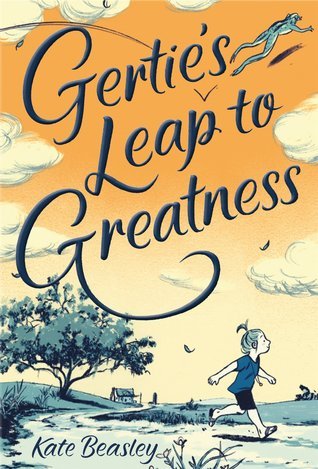
Gertie’s Leap to Greatness, by Kate Beasley/Illustrated by Jillian Tamaki, (Oct. 2016, Macmillan), $16.99, ISBN: 9780374302610
Recommended for ages 8-12
Gertie Reece Foy is a fifth grader on a mission. She lives in Alabama with her dad, who works on an oil rig, and her great-aunt, who loves her to pieces. But Gertie’s on a mission to be the GREATEST fifth grader: she’s got quite a few plans. See, she wants to go up to her absentee mother – who lives in the same town – and let her know that she didn’t need her after all. Only one thing is standing in Gertie’s way, and that’s the new girl, Mary Sue Spivey. Mary Sue has a Hollywood director daddy and seems to have the world on a string, and she and Gertie do not hit it off at all.
This is a quick read that middle graders will enjoy. Caldecott Honor artist Jillian Tamaki’s (This One Summer) illustrations really bring a gentle life to the characters, particularly the headstrong Gertie, who takes a little bit to love, no lie. Like most middle grade protagonists, she can get a bit caught up in herself, especially considering her circumstances. Her mom abandoned her family when Gertie was just a baby, yet lives in the same town. Gertie passes her mother’s house on the bus route to school every day, and by some crazy happenstance, she and Aunt Rae only bumped into her mother once while grocery shopping at the Piggly Wiggly. I was confused as to why someone would abandon her husband and child, yet stay in the same neighborhood to continue on with her life.
Gertie becomes much more sympathetic when Mary Sue’s mean girl act kicks into high gear. Mary Sue is a truly awful mean girl. The author tried to soften her and make her more human at the end, but I wasn’t having it, nor was I having what appeared, to me, her mother sanctioning Mary Sue and her new mean girl clique’s behavior in targeting Gertie via a “Clean Earth Club” (Gertie’s dad works on an oil rig, and Mary Sue’s mom is an environmental lobbyist.) There’s some good diversity in the book, as you’ll see in the illustrations and the descriptions of some characters.
Entertainment Weekly is calling Gertie the “next Ramona Quimby”, and that’s a great starting point for display and booktalk/readalikes. Gertie’s Leap to Greatness is a good middle grade addition to collections where realistic fiction is popular. A story thread about oil rigs and the environment provides some good discussion topics.
There’s a Gertie webpage that offers some of Gertie’s Tips for Greatness, and illustrator Jillian Tamaki’s webpage has more artwork to enjoy.
Some pages from Gertie’s Leap to Greatness, courtesy of Macmillan:
One great thing about being able to have my own little corner of the blogosphere is discovering all these great, smaller publishers I may never have discovered before. I hope that by sharing these books, authors, and publishers with you,that you enjoy discovering them, too.
Everton Miles is Stranger Than Me is the sequel to 2014’s The Strange Gift of GwendolynGolden. It’s the continuing story of a teenage girl who discovers that she’s got an incredible gift – but there are always strings attached, and being able to fly comes with some pretty big strings. It’s a fun tale of magical realism, family, and friendship, and you don’t need to have read the first one to pick up the second; the book fills you in on the basics that you need to know to enjoy the story. I enjoyed visiting Gwendolyn, Everton and their friends; they’re characters you genuinely like and want to see good things happen for them. The supporting characters are all strong and empathetic; I especially love Gwendolyn’s headstrong younger sister, Christine.
If you’ve got readers who enjoy a little bit of magic in their daily lives – Rebecca Stead’s When You Reach Me is a great read-alike here – add the Night Flyers series to your bookshelves.
Everton Miles is Stranger Than Me, by Philippa Dowding, (Oct. 2016, Dundurn Press), $9.99, ISBN: 9781459735286
Recommended for ages 10-14
I was lucky enough to have author Philippa Dowding put together a fun Q&A for this post. Read and enjoy!
The 5 Questions No One Has Asked Me About This Book – Yet!, by Philippa Dowding
1. What’s your new book about? Everton Miles is Stranger than Me (Dundurn Press), is a sequel to my 2014 title, The Strange Gift of Gwendolyn Golden, which was nominated for the OLA Red Maple award in 2015. In the first book, Gwendolyn, my 14-year-old protagonist, wakes up one morning on the ceiling of her bedroom, which is odd, but doesn’t particularly shock her. Floating around is just another weird thing that seems to be happening to her during puberty. As the story develops, however, she realizes she’s part of a larger community of Night Flyers, and that her dead father was a Night Flyer, too.
In the new sequel, I pick up where we left off: Gwendolyn has one year to decide whether or not she will become a Night Flyer forever. As she enters grade nine, she has all the problems of a regular teenager, PLUS she’s also part of this magical community of Night Flyers, which imbues everything with a sense of wonder, and a little darkness too, frankly. Everton Miles shows up at the beginning of school, a grade older, much cooler than her, and surprise, surprise … he’s a Night Flyer, too! The two mismatched teenagers are thrown together, and as Gwendolyn discovers more about the death of her father, she and Everton have to face Abilith, a fallen Rogue Spirit Flyer, kidnap, and the unspeakable horror of the Shade, together. Gwen discovers that with the help of Everton Miles, her community, and The Night Flyer’s Handbook, she might actually survive grade nine!
2. The series is called The Night Flyer’s Handbook. Why did you choose that as a series name?
Part of the new story is built around an 800-page book, The Night Flyer’s Handbook, that Gwendolyn’s mentor, Mrs. Forest, hands her. It’s quite hilariously the exact opposite of the flimsy 3-page brochure for the Less-than-Willing-Reader that Gwen received in book 1, (which ended up being entirely unhelpful). The much larger Handbook is intended to help her understand her new life as a Night Flyer, if she chooses to become one forever. Gwen isn’t a great reader, and finds the book daunting just to look at, but she does slowly read it, as the story progresses.
I’ve been both an academic and a copywriter in my life, and have written probably thousands of brochures, as well as a few academic papers in university. I thought it would be fun to introduce a tiny taste of academic-style writing into the story, since it couldn’t be more different from the useless 3-page brochure Gwen gets in book one. The Handbook has hilariously earnest chapter headings, like “Enemies and Entities,” or “History and Hysteria.”
Here’s a sample: “There appears to have been spirited rejection of the medieval European Night Flyer population, and as Professor Gertrude L. Lisquith (N.F., PhD, Oxford), concludes in her lengthy and definitive 1963 study, The Dialectic Presented by the Earliest Records of Night Flying/Non-Witch Identified Populations in Medieval England, France, Germany and Belgium, (Oxford University Press, pp. 816–865), although Night Flyers most likely existed before 1437, we have virtually no written record of them…”
Gwen finds it mystifying, but she doesn’t give up. The Handbook also has illustrations by a mythical 15th century illustrator, “T. Bosch,” who is a fictional, lesser-known relative to Hieronymus Bosch. As Gwen’s story progresses, and she eventually finishes the enormous Handbook, she realizes that it actually does help her, and is a valuable tome about her Night Flyer community. The message? You can still find the answers to life’s questions in books!
3. The teenagers in the story build a beautiful bottle garden with thousands of recycled glass bottles. Where did you get the idea for a bottle garden?
I was reading an article about wind catchers. There’s a low-tech wind-maker people create, using plastic bottles with the ends cut off, poked neck-first into plywood, which catches the breeze. This led to more reading about what to do with bottles, and I was astonished to discover the beauty of glass bottle garden sculptures.
One of the characters in both books, Mr. McGillies, is an old bottle collector. He has a fairly large role in Everton Miles is Stranger than Me, so I wanted to do something useful with all the bottles he hoarded on his property, plus I wanted to show that teenagers are remarkably resourceful, and beauty can pop up in the most unusual ways. I also wanted a tip of the hat to recycling.
Search “glass bottle sculpture” on the web, you’ll be amazed!
4. You HAVE to choose a favourite character from the book. Who is it, and why?
Abilith the Rogue, hands down. He was fascinating to write, and who doesn’t love creating a brilliant, powerful, menacing sociopathic antagonist, a fallen outcast from a race of immortals? For more about Abilith the Rogue, you can follow my blog tour this week, the schedule is on my blog: http://www.phdowding.blogspot.ca
5. What are you publishing next?
I have a middle-grade series with Dundurn Press called Weird Stories Gone Wrong, so I am currently expanding on those three books, hopefully there will be two more in the next year. I’m also considering a third book in The Night Flyer’s Handbook series, so stay tuned on that!
Enjoy a book trailer for The Strange Gift of Gwendolyn Golden right here!
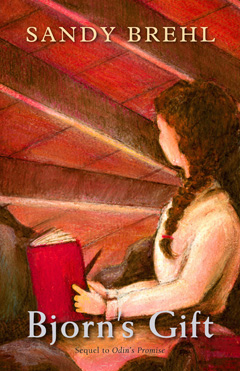
A couple of years ago, I was a first round Cybils judge for Middle Grade realistic fiction, so I had the chance to read a lot of new, independent fiction that I never would have discovered otherwise. One of the books, Odin’s Promise by Sandy Brehl, is the story of a young girl and her beloved dog, Odin, living in Norway during the Nazi occupation during World War II. The sequel – the second in a planned trilogy! – continues the story of Mari and her family, living under the tightening yoke of the Nazi invasion.
We see Mari, her family and friends, staying strong as the Nazis move into Mari’s home and encroach on every facet of her life. Her friend, Leif, is thrilled to be a member of the Unghird – Norway’s answer to Hitler Youth – and insists on reminding Mari that she should be honored to receive his attention. The families are faced with increased rationing, book banning, and watching friends and neighbors disappear under the Nazi regime, yet engage in quiet acts of resistance; Bestemor still has her radio to receive BBC broadcasts, her father shelters refugees in the attic; and, most importantly, Mari’s brother Bjorn is a full-fledged member of the resistance. Although absent throughout the story, Bjorn’s presence is strongly felt through Mari’s journal, taking the form of letters to him, and his carved toys that give Mari and her friend, Per, the strength to carry on.
If you haven’t had the pleasure of reading Odin’s Promise yet, I highly recommend it. It’s a reminder that the Nazi occupation and their reign of terror against anyone of the Jewish faith or those who would dare to disagree with their policies was not limited to Germany. It’s an uplifting story about how everyone makes a difference in face of overwhelming odds. And Bjorn’s Gift is every bit as heart-rending and inspirational as its predecessor. I was so happy to revisit Mari and her family, and am so grateful to know that I will get to meet them again in one more novel.
Look Past, by Eric Devine, (Oct. 2016, Running Press), $16.95, ISBN: 978-0-7624-5921-6
Recommended for ages 15+
A teenage girl is brutally murdered and left to be found. Mary was the daughter of a prominent pastor and was in love with Avery, a transgender teen. Shattered by Mary’s death, Avery is hell-bent on finding her killer, but it turns out that Mary’s murder was a message to Avery: repent, or you’re next. As the messages become more repulsive and the killer begins contacting Avery, letting him know that his every move is being watched, Avery has big decisions to make. Does he betray himself by doing what the killer wants? And will that really keep him safe?
Look Past is an intense, brutal book. Mary’s murder is the catalyst, setting everything in motion, and is relived throughout the book. Religious fundamentalism and the violence hate can breed play a big part in Look Past, as does identity and the importance of being true to yourself. There are points in this book where it’s almost too much to take. Avery is a character I wanted to scream at and root for; at the same time, the intensity of Devine’s writing made me want to put the book down and take a break to just breathe – and I couldn’t I finished this book in two sittings, broken up only by the need to go to sleep so I could get to work the next day.
Look Past is a gritty novel about murder in which the main character is transgender. That’s TREMENDOUS. Avery’s a strong, queer character with a supportive family that’s not without their struggles, but ultimately loves their son and supports him. Avery’s best friend and girlfriend stand with him, even when it’s a hard choice; even when it could mean their lives on the line. It’s an unputdownable novel that thriller readers will love and LGBTQ readers will embrace.
This is the second Eric Devine novel I’ve read, the first being Press Play, which looked at hazing and violence in team sports. Eric Devine attacks issues of the day with gusto and doesn’t shy away from grim details or uncomfortable situations. He writes compulsively readable novels that teens and adults alike should read – take a break from your run-of-the mill thrillers and give Look Past a shot.
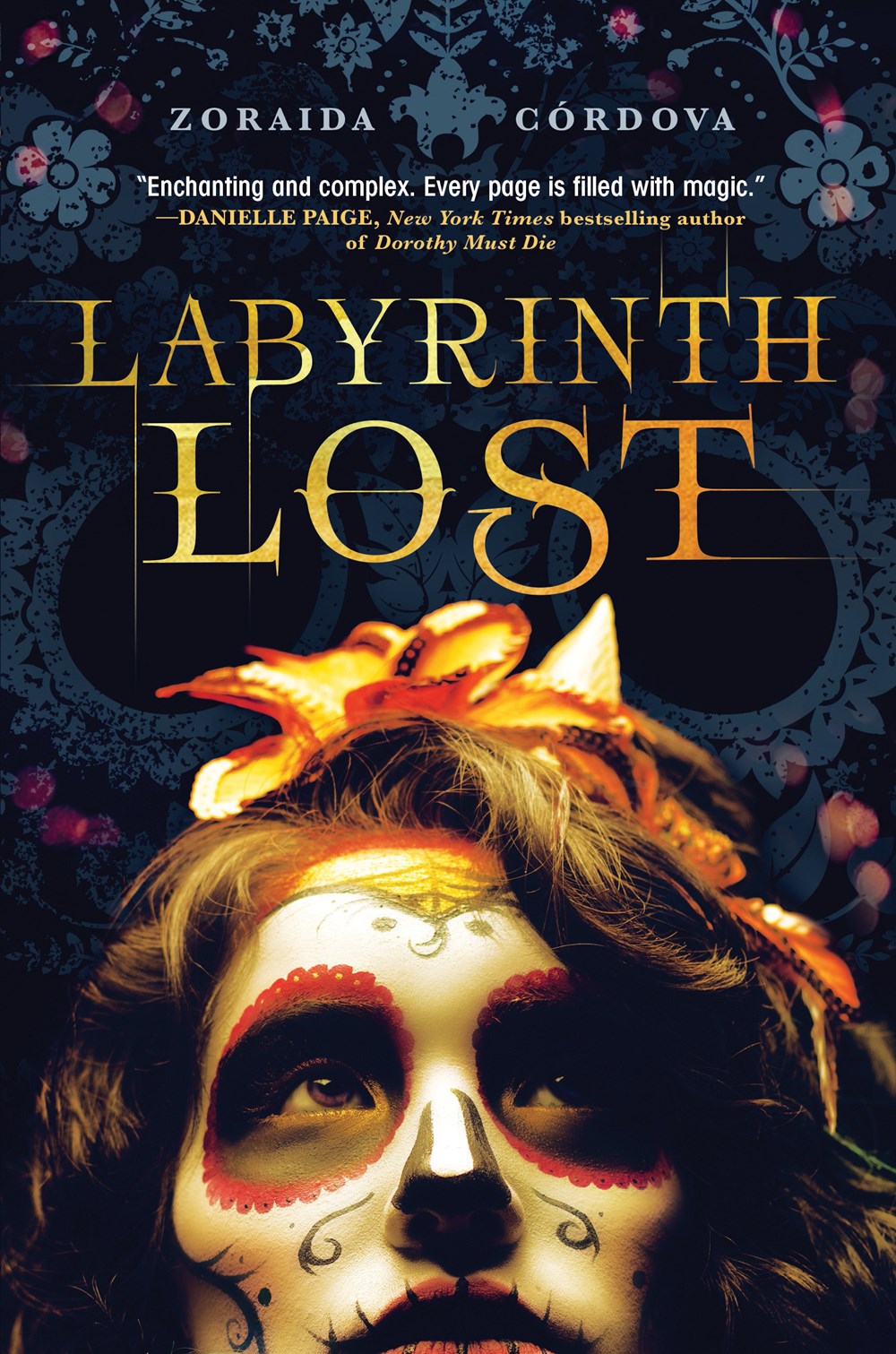
Labyrinth Lost (Brooklyn Brujas #1), by Zoraida Cordova, (Sept. 2016, Sourcebooks Fire), $17.99, ISBN: 9781492620945
Recommended for ages 13+
Alex lives in Brooklyn with her mom and her sisters. Her dad disappeared a few years ago, and she’s taking it hard, feeling responsible. She’s about to turn 16, so the family is planning her big party. Her Death Day party. Alex and her sisters are Brujas – witches – and they’re the very real thing. But Alex doesn’t want this power. In fact, she suppresses it as much as she can – but keeps that from her family – because she’s afraid of what would happen if she were to let it go. Again.
At her Death Day party, Alex thinks she’s going to cast a spell that would leave her powerless, but something goes haywire, and her entire family vanishes right before her eyes. Now, she’s forced to get help from a Brujo named Nova; they have to travel to the in-between world of Los Lagos to bring her family back, but can Alex even trust Nova? He’s got a lot of secrets and seems to be working from his own playbook.
I loved, loved, LOVED Labyrinth Lost: it’s easily one of the best books I’ve read this year. The story is narrated in Alex’s voice, and she is hilarious. She’s full of snark – “resting witchface” is now a term I need to put into regular rotation – and she wields it like a weapon, guarding herself from the fears that plague her. Unchecked, her power makes her the most powerful witch in her family, and it frightens her, because she’s seen that power loosed once. Zoraida Cordova has a gift for breathing life into her characters; every single character in Labyrinth Lost is amazing. I love the interactions between Alex and her sisters and between Alex and her mother; the Lady and Nova; the characters she meets as she travels through Los Lagos, everyone. Cordova gives us wild fantasy with a realistic tale of a young woman struggling with adolescence. Her adolescence comes with dead relatives, portals to limbo, and witchcraft, but still, adolescence. Steeped in Latin American knowledge and tradition and filled with rich characters, Labyrinth Lost draws you into a world you won’t want to leave. Thankfully, it’s the first in a new series, so hopefully we’ll be visiting with the Brujas again sooner rather than later.
If you haven’t already added this to your YA collections, WHY? If you haven’t picked this up and read it yourself, stop reading this review immediately and go get a copy.
Zoraida Cordova has a great webpage where you can sign up for her newsletter, read interviews and learn more about her books, and follow her on social media.
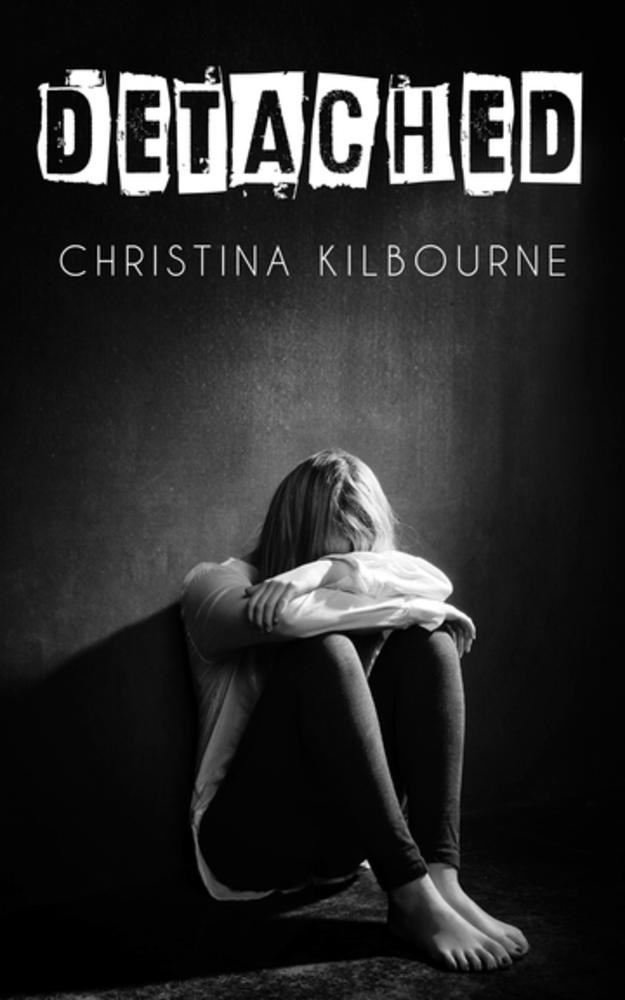
Detached, by Christina Kilbourne, (Sept. 2016, Dundurn), $12.99, ISBN: 9781459734319
Recommended for ages 13+
Anna is a high school student who doesn’t feel like she fits in. She’s got friends and family who love her, and she’s a talented artist; she seems to have everything going for her, but she doesn’t feel anymore. She’s detached from everything around her; she’s just going through the motions. She doesn’t want to live like this any longer, but she doesn’t want to hurt the people she leaves behind. She’s got plans written out, and finally, once her parents are out for the night, she overdoses on painkillers. A neighbor discovers her and gets medical intervention in time, but now the journey back to life begins, not just for Anna, but for everyone whose lives she touches.
Detached is a painful and accurate look at depression and how it affects everyone. Chapters alternate between Anna’s, her mother’s, and her best friend’s points of view, all told in the first person. Aliya, Anna’s best friend, notices Anna acting strangely, but is worried that saying something will alienate Anna. Anna’s mother, still grieving her own mother’s death, worries about her daughter, but doesn’t seem to grasp the gravity of Anna’s situation until it’s almost too late – and then, we read how Anna’s journey out of the black hole of depression affects a parent. It’s achingly real and it’s scary because it’s something we see in the headlines every day. Are we bad parents if we intervene? Are we bad parents if we don’t? I’d love to see parents and kids read this together and see how the other half thinks.
One of the most important messages coming out of Detached is this: depression is not the sufferer’s fault. It’s not a parent’s fault. It is an illness, just like any other, and it needs to be treated without stigma, with medication, therapy, love, understanding, and care. No one asks for depression to hit. This isn’t a gift, and sometimes, it’s just not possible to find the voice to ask for help. This is the power of Detached: to be that plea for help, for understanding, and to start dialogues that will shed light on an insidious disease.
Detached is an important addition to YA collections, particularly because it does talk so openly about a subject people are often uncomfortable addressing. Display and booktalk with Jay Asher’s 13 Reasons Why (which also has a very good companion website) and Julie Anne Peters’ By the Time You Read This, I’ll Be Dead.
 Flip the Bird, by Kym Brunner, (Noc. 2016, HMH Books for Young Readers), $17.99, ISBN: 9780544800854





 Mom Read It