Recommended for ages 9-12
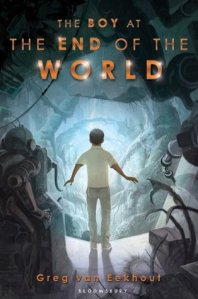
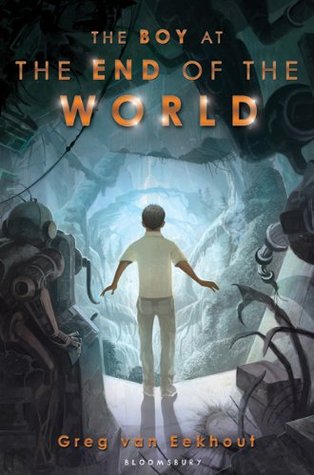
A preteen boy (we are led to guess), wakes up in a pod in a devastated shelter. Destruction lies all around him; he sees being similar to himself lying dead in pods similar to his. The only other functional being is a robot, who calls out to him. The boy runs, but the robot catches up to him and reveals the boy’s name, Fisher, to him. Fisher learns that he is the only survivor of the human race.
It’s the usual post-apocalyptic story: Humans ruined the earth and nature took back her planet. Humans genetically engineered animals and more humans, putting them in gel-filled pods, with robots to oversee their care, until the time when conditions allowed for them to awake and rebuild society. The humans were individually programmed with specific survival skills to help create communities. Fisher is programmed to be a fisherman. Click, the name he gives his robot companion, tells Fisher that he has been tasked with helping Fisher “continue existing”, and the two set off to search for more humans in another Ark – the facilities were humans and animals were engineered and kept in hibernation.
Born a blank slate, Fisher learns and adapts through the story’s progression, developing not only intelligence outside of his initial programming but emotional depth. The characters they meet are not cute and cuddly woodland creatures: they’re often chilling. There are groundhogs who blame humanity for the planet’s destruction and hold a grudge; there is a robot who takes his task of preserving the human race permanently – these characters bring a new dimension to the story of a boy and his robot. This is a survivalist tale.
It is difficult to write a postapocalyptic tale without sounding like hundreds of similar books on the market, and the “humans and technology bad, nature good” call to action beats the reader over the head throughout the book. Humans bring the planet to the brink of environmental collapse, so they leave the rest of the planet to deal with it while they go into hiding until the coast is clear. The technology that humans created to save them ultimately turns on them and brings the race to the point of near-extinction, further painting us as hapless ne’er do wells.
That said, the YA market in post-apocalyptic fiction isn’t as saturated as the adult market is yet, so perhaps a younger audience will read this story through different eyes. That said, this is a generation that has been fed this storyline since they were babies: think of Happy Feet, a movie that deceptively sold us a cute story about a penguin who didn’t fit in, and gave us a Greenpeace horror movie halfway through the picture. Think of Wall-E, where we were drowning our society in junk, so we had to go into space to get away from it.
I don’t want it to sound like I didn’t like this book, because I did. I think older middle grade readers, starting with 10-11 year olds, will see Fisher as a hero they can identify with as a young boy who needs to learn to survive, and whose robot companion acts as a friend and parent. Kids can also relate to the marriage of technology and environmental awareness contained in the book’s message.
Greg Van Eekhout knows how to write for kids – he has a Masters in Education and spent ten years developing online curricula for K-12 and college students. He is kid- and teacher-accessible, offering teachers tips on having author events at schools (and libraries), and providing his e-mail address to be contacted about school visits. He offers two presentations that he follows in his appearances. His website is geared toward grownups who are interested in reading his reviews, about his books, and where he’ll be next.

 Mom Read It