Posted in Graphic Novels, Middle Grade, Non-Fiction, Non-fiction, Tween Reads

First Second brings you Science Comics!

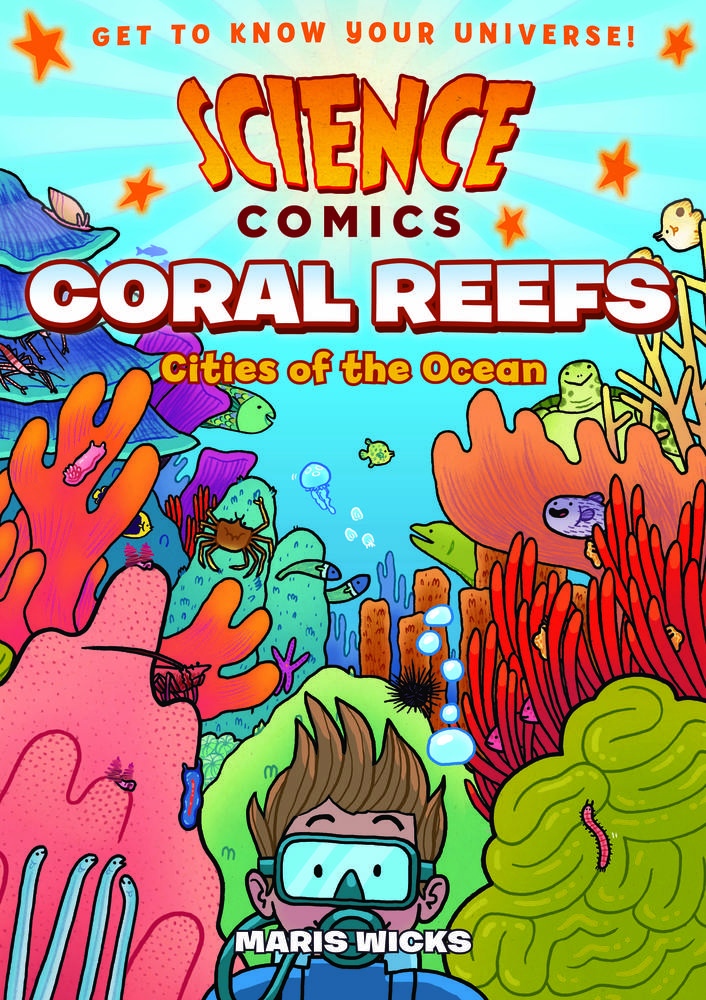
First Second’s got a line of Science Comics coming to stores beginning in May with the releases of Coral Reefs and Dinosaurs. The books are beautifully illustrated and bring nonfiction to the next level with information, wit, and fun for readers.

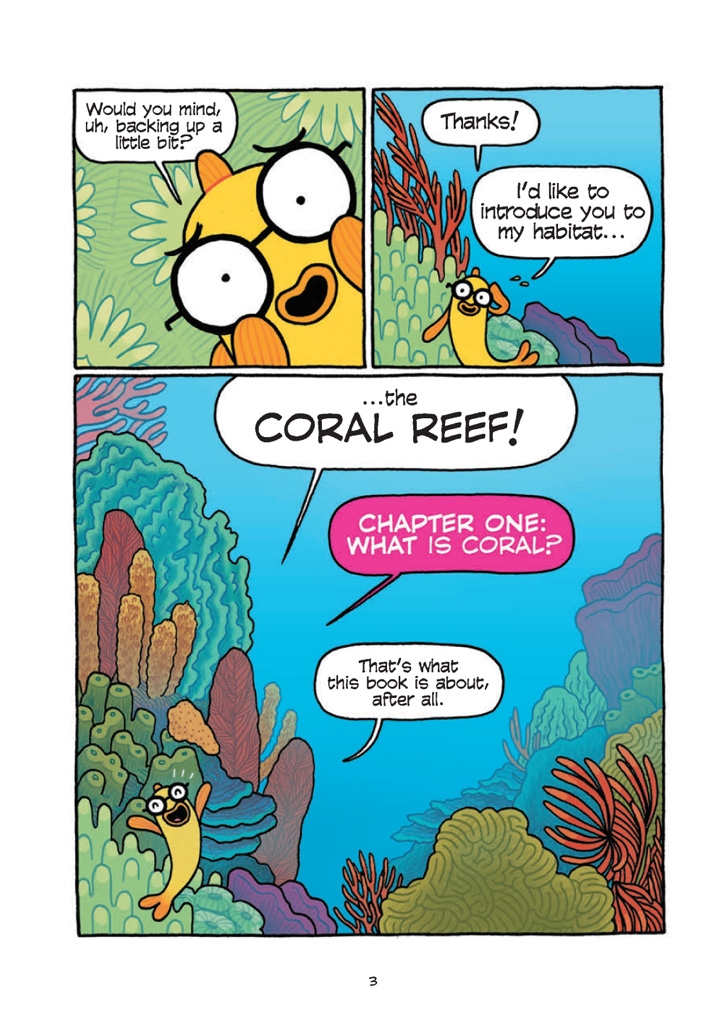
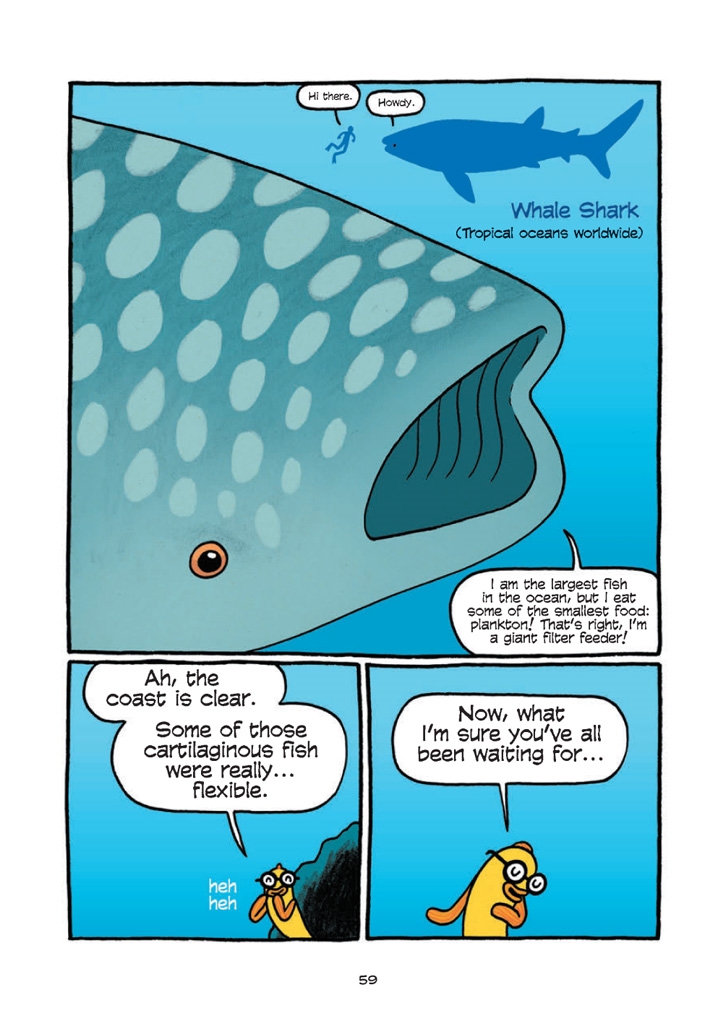
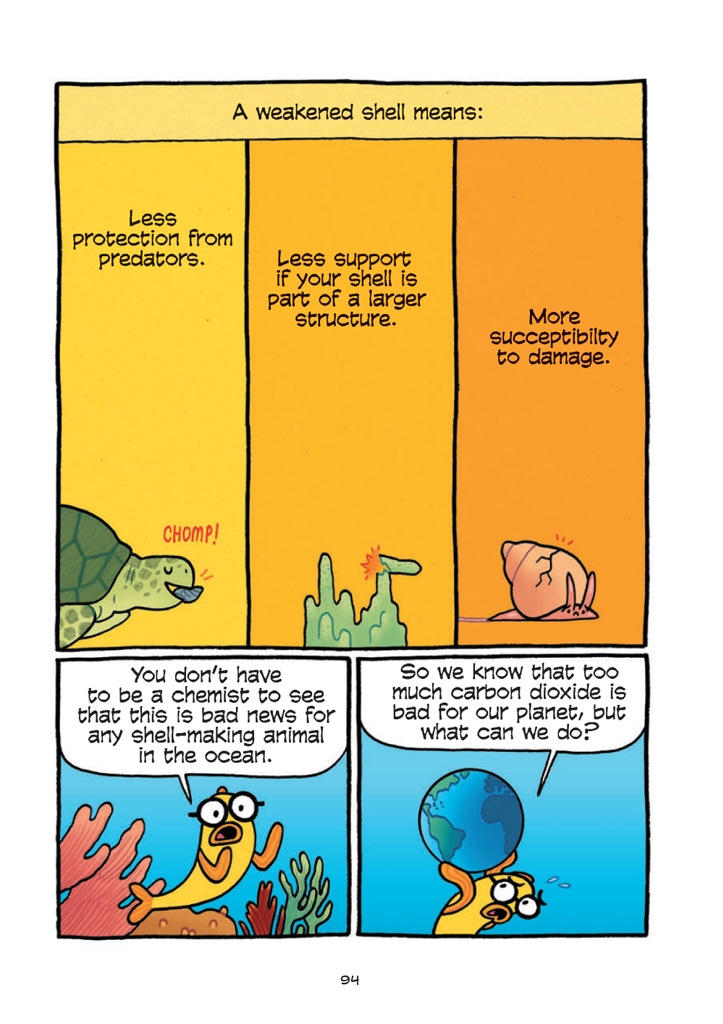
coral reefsCoral Reefs, by Maris Wicks ($9.99, ISBN: 9781626721456) introduces readers to the world of coral reefs! With an adorable fish acting as emcee and guide, readers get a look at the biology of coral, the different types of reefs, sea creatures that live in and around the reefs, and the ecological importance that the reefs play in our world. Maris Wicks, who also gave us the brilliant and informative Human Body Theater last year, is back with her combination of smart and funny writing and eye-catching, bright art.

The science is solid and there are tons of take-away facts for kids and adults alike. Did you know that some reefs take millions of years to grow?  That coral reefs are home to a quarter of all the animals found in the ocean? Wicks also discusses climate change and its impact on the environment, with emphasis ramifications like coral bleaching and ocean acidification. Anyone can help in any way; Wicks provides examples that include reducing carbon emissions (take a walk! carpool! bike ride!); reusing and recycling plastics; composting, and planting trees and flowers. There’s a great message about environmentalism and conservation to be told here, and Wicks ends on an upbeat note: “Caring for ourselves and our environment is the first step to caring for the rest of the world.” With a foreword from Randi Rotjan, Ph.D., Associate Research Scientist with the New England Aquarium, a glossary, bibliography, and additional resources, Science Comics: Coral Reefs is a great companion to any unit on the oceans, sea life, conservation, and ecology. Strongly recommended for public, school and home collections.

Check out Maris Wicks’ website for fiction and nonfiction artwork!


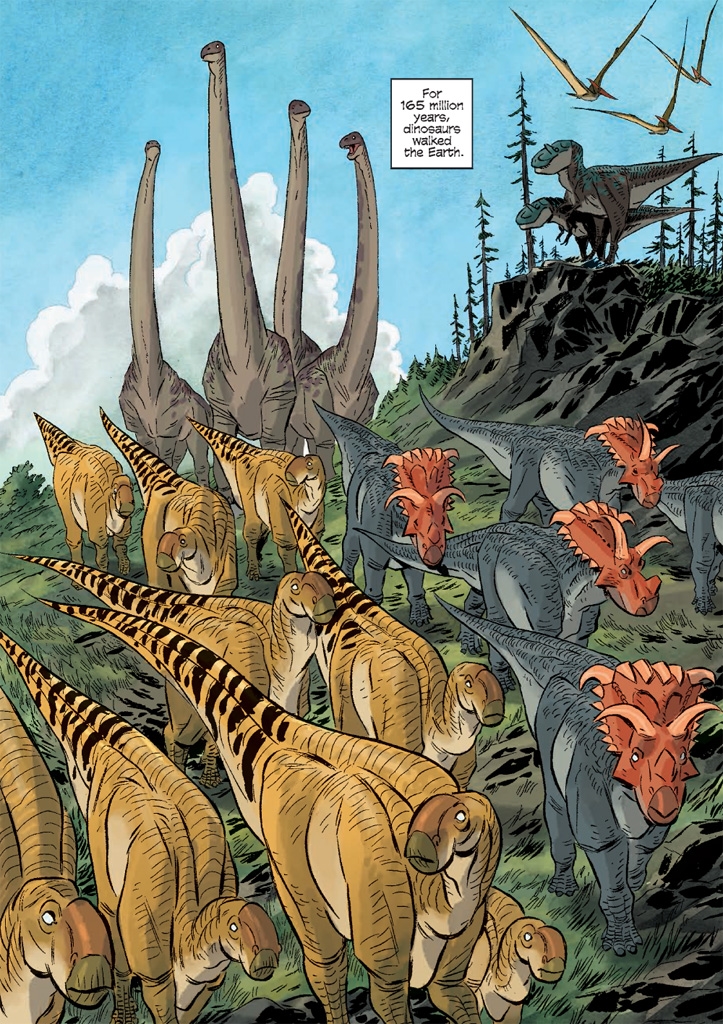
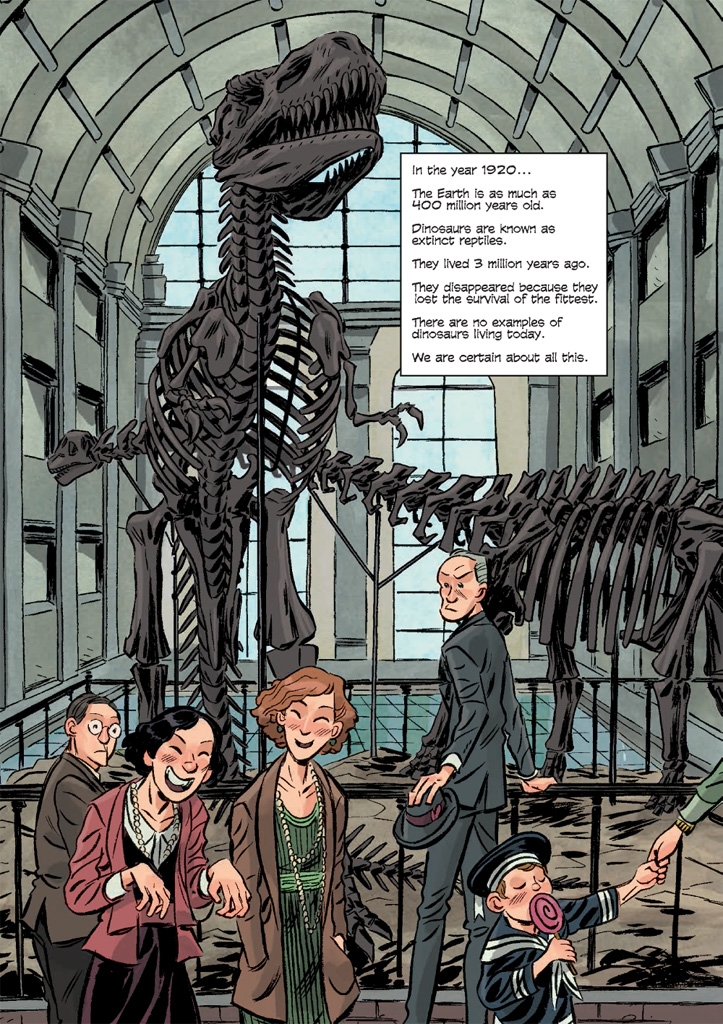
dinosaurs_cScience Comics: Dinosaurs, by award-winning author MK Reed and illustrated by Joe Flood ($9.99, ISBN: 9781626721432) takes an omniscient narrator approach, walking readers through the history of paleontology, including the many rivalries between scientists that led, in some cases, to some major classification errors, like the poor Brontosaurus, a victim of the infamous Bone Wars between paleontologists O.C. Marsh and Edward Drinker Cope, whose bitter rivalry and rush to beat one another to publishing led them to create a dinosaur that didn’t really exist – it was later discovered that an Apatosaurus body had a Camarasaurus head stuck onto the skeleton, in a rush to complete the work.

With a series of repeated timelines that show facts that society “definitely knew” at different times, we see how much we’ve really learned about the true age of the earth, the fossil record, and the origins of dinosaurs themselves. Joe Flood’s art is less cartoony than Maris Wicks, but captures the tremendous scale and brightly colored dinosaurs that we now understand roamed the earth. There are some incredible graphs and charts in here, illustrating common ancestors and evolutions. A foreword by Leonard Finkelman, Ph.D., Associate Professor in Philosophy of Science at Linfield College, plus a glossary, additional charts, and further resources make this a must-have for any dinosaur collection. Buy two – you know kids love their dinosaurs.

So much more than simple graphic novels, Science Comics is a series that deserves a place in any nonfiction section AND any graphic novel section. The next book in the series, Volcanoes, is due out in October. Recommended for ages 8 and up.

MK Reed’s author webpage has more information about the author and her books, including a link to her anthology on women gamers, Chainmail Bikini.

Sneak peek at Coral Reefs:

coral reefs_1coral reefs_2coral reefs_3coral reefs_4coral reefs_5coral reefs_6coral reefs_7coral reefs_8

Sneak peek at Dinosaurs:

dinosaurs_1dinosaurs_2dinosaurs_3dinosaurs_4dinosaurs_5dinosaurs_6dinosaurs_7dinosaurs_8


Posted in Animal Fiction, Preschool Reads, Toddler Reads

Help Babysaurus find Mamasaurus!

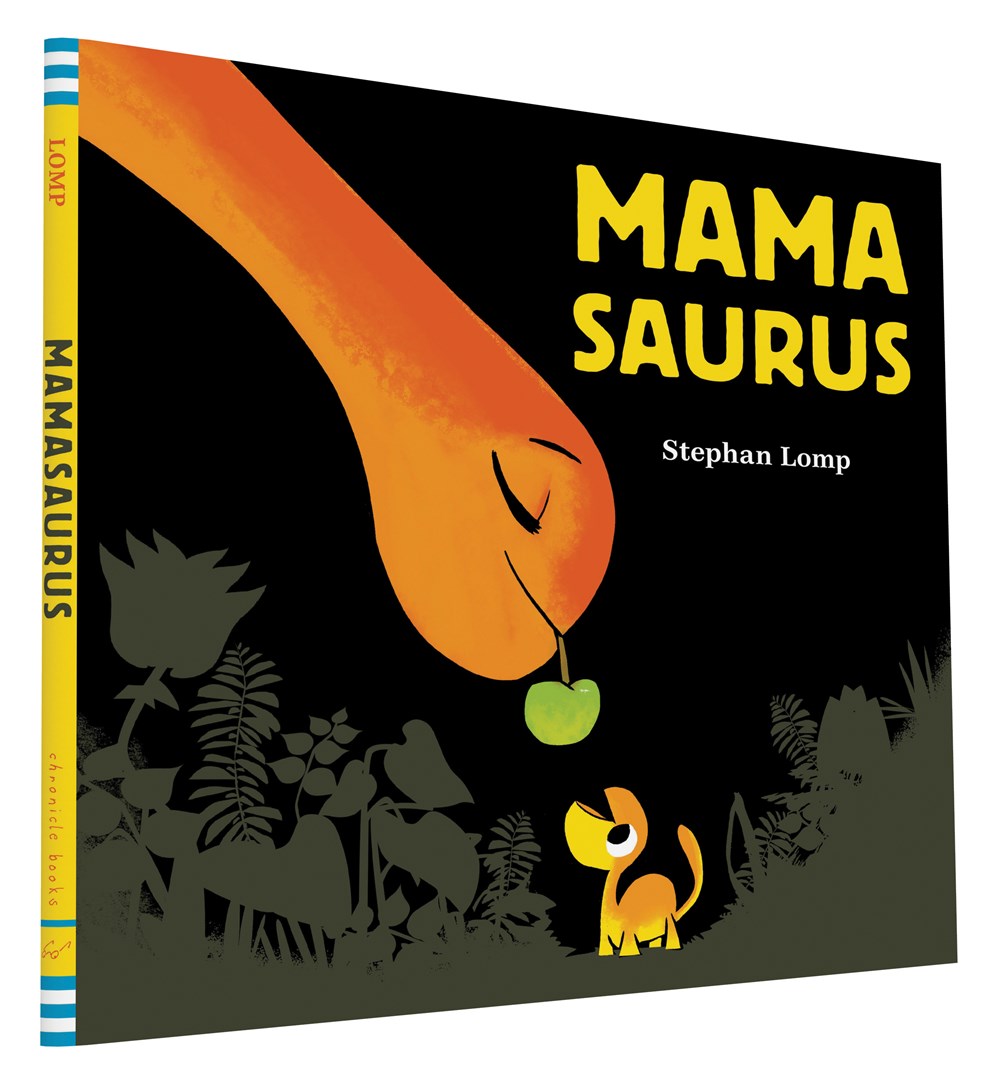
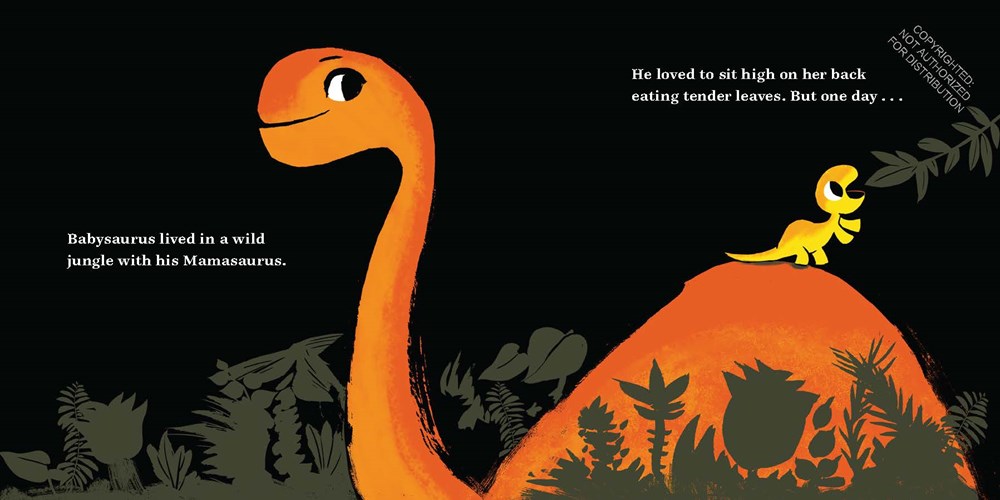
mamasaurus_coverMamasaurus, by Stephan Lomp (March 2016, Chronicle Books), $16.99, ISBN: 9781452144245

Recommended for ages 3-6

Babysaurus is out and about with Mamasaurus one day, snacking on leaves and hanging out on Mamasaurus’ back, when WHOOPS! He slides off, and can’t find her! Reminiscent of P.D. Eastman’s Are You My Mother, Babysaurus asks everyone he can find if they’ve seen his Mamasaurus, and they compare her to their own moms: does she fly the highest, like Ptero’s mom? Is she the loudest, like Rexy’s mom? No, but she’s Mamasaurus, and she’s the best Mamasaurus in the jungle.

Mamasaurus has been there all along, by the way – you know, like when your little one “loses” you in the department store, when you’re two steps away. And that’s what makes this story such a great read-aloud. It’s relatable to both parents and little ones. They’ll know what it’s like to lose Mom in public, and they’ll know that each Mom is the best Mom there is, because she’s their Mom. I loved this story so much, and so did my 3 year old, who snuggled up in my lap while I read it with him. The artwork is adorable; the dinos have huge eyes and friendly faces, cartoony and lovable, appealing to little ones. The white font jumps off the page, making it an easy storytime read.


mamasaurus_1
Author and illustrator Stephan Lomp is a German illustrator and comic book artist. Check out some more of his artwork on his website.
Posted in Animal Fiction, Preschool Reads

Storytime: Dinosaurs!

This is a short storytime I did at for my preschool classes. Because this was a week where they had library time, I only read one story and sang one song, but the kids loved the story!

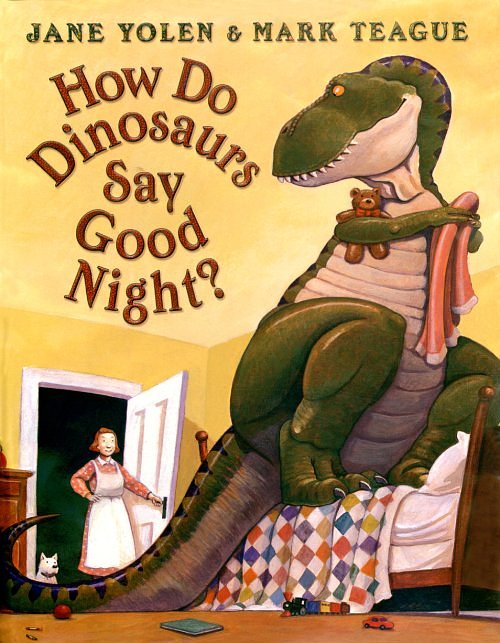
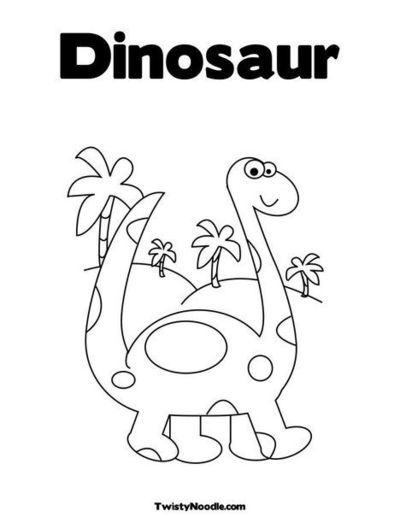
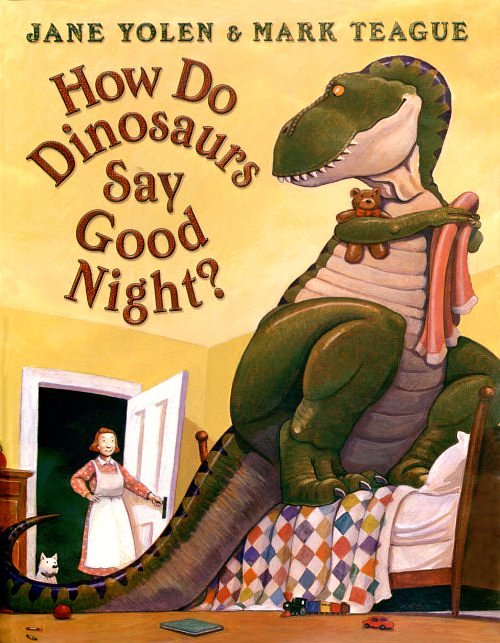
It’s hard to go wrong with How Do Dinosaurs Say Good Night? by Jane Yolen/illustrated by Mark Teague. The kids were largely unfamiliar with the book, so they really got a kick out of seeing the dinos storm and stomp and pout and, ultimately, kiss Mama and Papa good night. I gave everyone a fun coloring sheet from  Twisty Noodle, and we were off to the library!

how-do-dinosaurs-say-goodnight      twistynoodle dino


We also sang a fun song about dinosaurs, to the tune of Ten Little Indians:

10 Big Dinosaurs

1 big, 2 big, 3 big dinosaurs,
4 big, 5 big, 6 big dinosaurs,
7 big, 8 big, 9 big dinosaurs,
10 big dinosaurs!

There are great dinosaur songs on the Bry-Back Manor blog!

Posted in Preschool Reads

If You Happen to Have a Dinosaur… You Could Really Get A Lot Done.

if you happen to have a dinosaurIf You Happen to Have a Dinosaur, by Linda Bailey/Illustrated by Colin Jack. Tundra Books (2014), $17.99, ISBN: 9781770495685

Recommended for ages 3-7

Part owner’s manual, part wish list, If You Happen to Have a Dinosaur is a running list of all the amazing things you could do if only you had a dinosaur. Worried about burglars? No longer! They’re also built-in gardening help, coffee grinders and potato mashers, umbrellas, snowplows, and more. But be careful – there are also somethings that dinosaurs are NO GOOD FOR. Like, anything to do with food.

I loved this book. Dinosaurs are very popular with children, and Ms. Bailey’s writing style, which calls Laura Numeroff’s If You Give… series to mind, will get readers ready to anticipate what’s coming next. The art, rendered digitally, is very retro-1970s, and absolutely enjoyable. The dinosaurs are colorful and have goofy expressions; the people in the book have friendly faces with big expressions. The black font is fairly plain with a little flourish, which will draw the attention of new and fledgling readers, and make for a fun storytime for littler listeners. The art stands out against the white background of the pages, with the exception of a spread or two.

This would be a great read-aloud book for preschoolers. I’d love to put some plush dinosaurs around the story room for the kids to enjoy as I read. The story lends itself to a fun discussion about what other uses there are for dinosaurs; it may even be a fun craft idea to let the kids draw some uses for dinosaurs. There are some great dinosaurs songs and fingerplays online, and there are virtually hundreds of coloring printables for a takeaway.

The author’s webpage offers information about her author talks and her books, an FAQ, and contact information. If You Happen to Have a Dinosaur hits shelves on May 13. The book’s ending makes me hopeful that this will be a new series, so let’s keep an eye out!

Posted in Preschool Reads

Book Review: Dinosaur Train, by John Steven Gurney (HarperCollins, 2002)

dinosaur trainRecommended for ages 3-6

A young boy loves dinosaurs and trains. One night, a dinosaur train shows up and takes him on a ride.

Dinosaurs and trains are both very popular themes for young readers – there’s a PBS show called Dinosaur Train, unrelated to this book – and putting the two together in a Polar Express-type of situation is a great idea. Jesse is a young boy who loves dinosaurs and trains. He draws them, he plays with them, he thinks about them constantly. When he gets ready for bed one Thursday night, he hears a loud noise, and his house begins to shake – a train full of dinosaurs has pulled up outside his window, and he’s been invited along for a ride! He hops on for a brief adventure. The artwork, done in oils and finished in Photoshop, detailed and bright, standing out against the plain backgrounds. The dinosaurs all have pleasant faces and are wearing people-like clothes – engineer’s overalls and caps, a ticket taker with a change belt, and jeans and dresses. Jesse is dwarfed by the huge dinosaurs, but there is never a moment where we worry for his safety.


dinosaur train_2

Dinosaurs and trains could be a fun storytime idea to explore further, with this book linking the two concepts. There are many train-related and dinosaur-related songs and fingerplays available; Everything Preschool has themes devoted to both.  It may be fun to stock the play area with toy trains and dinosaurs, and allow for a dinosaur train playtime after the story, or even arrange for a viewing of the PBS show.

Posted in Preschool Reads, Toddler Reads

Book Review: T is for Terrible, by Peter McCarty (Henry Holt, 2004)

t is for terribleRecommended for ages 2-4

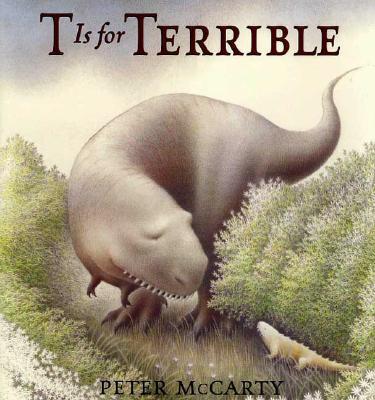
A T-Rex feels badly about being a “terrible lizard” and wonders if he would be less terrible if he were pink or blue. He is like other creatures, being hatched from an egg and having a mother. If he had the choice, he would be a vegetarian, but that is not in his nature. There is humor to the dinosaur just as there is a healthy dose of understanding what it is that makes him terrible: animals run from him, the ground shakes when he walks, and he has large, sharp teeth. Mr. McCarty’s illustrations, muted pencil-on-watercolor-paper drawings make the dinosaur look soft, not very threatening at all, even sensitive. The textured lines and soft shading give a beautiful sense of depth to the animals and their surroundings. The plain black font on a white background is brief, allowing readers to pay more attention to the beautiful pictures and making this a very good read-aloud choice.

This would be a great choice for a dinosaur read-aloud. This could be a great unconventional dinosaur read-aloud, with stories about dinosaurs who don’t just rampage and eat whatever is in their way. There are many dinosaur songs and fingerplays. The Perry Public Library has I Love Dinosaurs storytime suggestions with stories and songs, and there are dinosaur printable sheets on many websites. The author’s website information about his other books, plus links to his blog and events.

Posted in Toddler Reads, Uncategorized

Book Review: How Do Dinosaurs Say Good Night? by Jane Yolen/Illus. Mark Teague (Blue Sky Press, 2000)

how-do-dinosaurs-say-goodnightRecommended for ages 2-5

Do dinosaurs really act up when it’s bedtime? A host of dinosaurs, acting much like preschoolers, react to bedtime and show readers how a dinosaur should say good night.

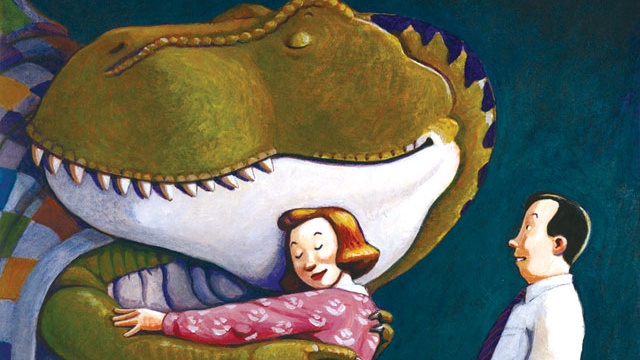
Dinosaurs are a popular topic among young audiences, and these dinosaurs, loaded with personality, will connect with young readers. Young audiences will see themselves reflected in the dinosaurs and how they approach bedtime. The earthy, colorful paintings offer varying perspectives – some dinosaurs are viewed from up high, some tower over everything around them – and multicultural families will appeal to all families. Dinosaur names are cleverly offered in each room, providing the chance for a fun name hunt. The endpapers illustrate all the dinosaurs found in the story, along with their names.

This is a great story for either a dinosaur-related read-aloud or a bedtime tale, where children and parents/guardians can talk about how they good night in their homes. There are numerous bedtime songs and fingerplays to use in conjunction with the book, and Massachusetts Honor Books offers a fun activity where children can write down “good night” in different languages, posting them on a map of the world.

The book has received numerous accolades, including the ALA Notable Children’s Books: 2001, Colorado: Children’s Book Award Nominees: 2002, Helbie Award: 2001, Maryland: Children’s Book Award Honors: 2003, Missouri: Building Block Picture Book Award Nominees: 2001, Nevada: Young Readers’ Award Nominees: 2003, Tennessee: Volunteer State Book Award Nominees: 2003, Texas: and the 2×2 Reading List: 2001.

The author’s website offers information about her other books, book trailers, and resources for teachers and storytellers. The How Do Dinosaurs series includes How Do Dinosaurs Eat Their Food?, How Do Dinosaurs Go To School?, and How Do Dinosaurs Play With Their Friends?


timthumb