Posted in Fiction, Fiction, Graphic Novels, Intermediate, Middle Grade, Non-fiction, Non-Fiction

Graphic Novel rundown

As I continue scaling Mount TBR, I’ve got some good graphic novels to share!

Batcat, by Meggie Ramm, (March 2023, Amulet Books), $13.99, ISBN: 9781419756573

Ages 7-10

Batcat is a round, pink, half-bat and half-cat who lives alone in their oak tree home on Spooky Island. They love mushroom pizza and junk food, video games, and being alone – until the day when a ghost decides to haunt their home. Batcat is besides themselves: the ghost is SO RUDE! The ghost is constantly talking, and commits the cardinal sin of eating Batcat’s ice cream. Fed up, Batcat heads to the Island Witch for a spell to get rid of the ghost, and ends up on a journey for the ingredients to mix up the spell. First, Batcat has to go to the Cavernous Caves, where bats tell Batcat that they aren’t batty enough to be a bat. Then, it’s off to the Whispering Cemetery, where the cats that live there tell Batcat that they’re not committed to being cat enough. Batcat is frustrated and sad: why do they have to be one thing or the other? That’s the whole point of Batcat: it’s perfectly fine to be yourself, and don’t let anyone pressure you into being something you’re not comfortable with. Batcat is a delightful story about embracing our own individuality, delivering a strong, sweet message to readers throughout the story: “The Island Witch was neither a good witch nor a bad witch. She was somewhere in between. Batcat liked that, as they were neither one thing nor another themselves”. This message runs throughout the story, and some readers may notice the bright, vibrant colors running throughout the story map to the colors of the Nonbinary flag. Full of humor and moments of self-awareness and acceptance, Batcat is an adorable story about finding friendship and discovering our place in the world.

Batcat has a starred review from School Library Journal.


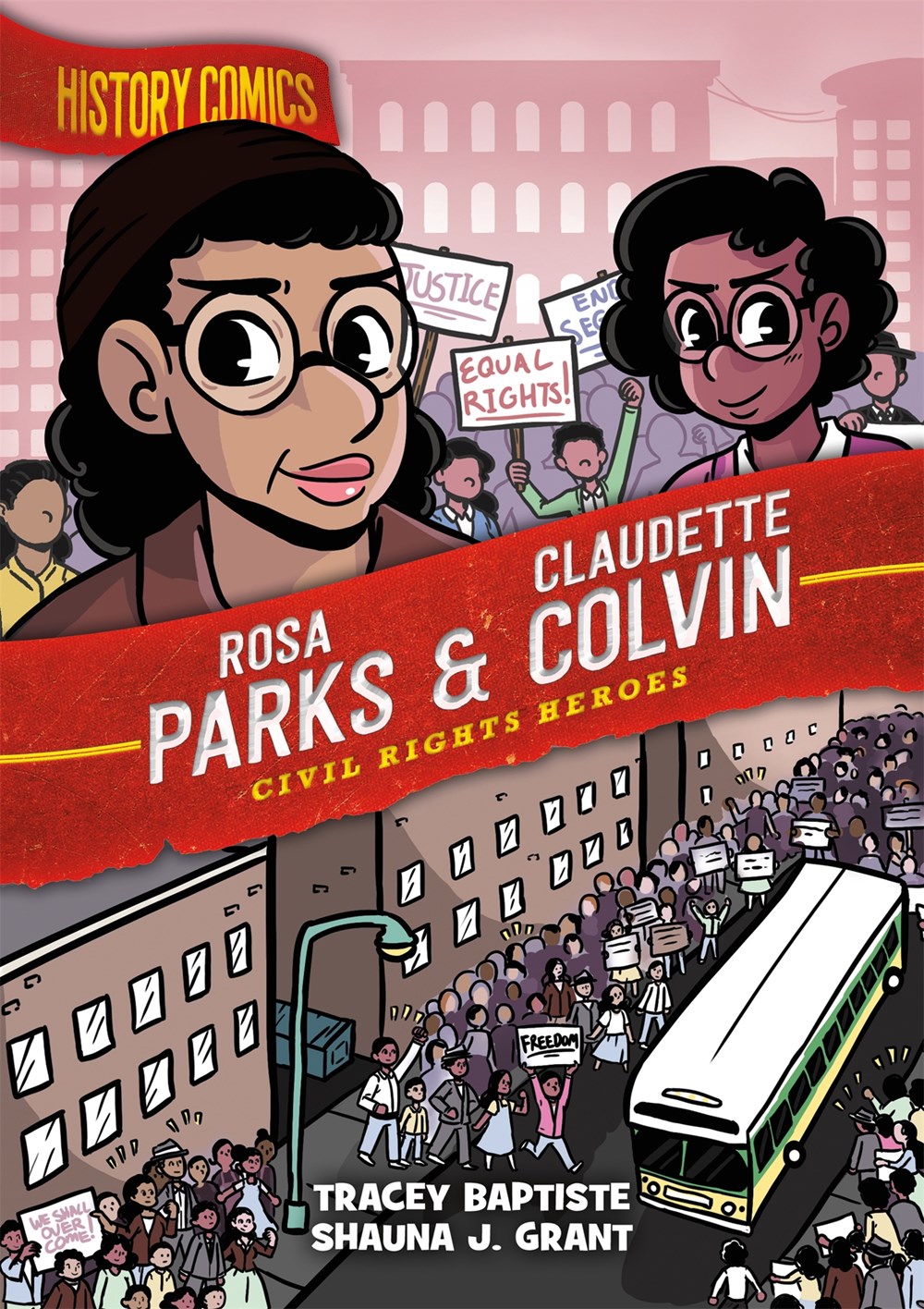
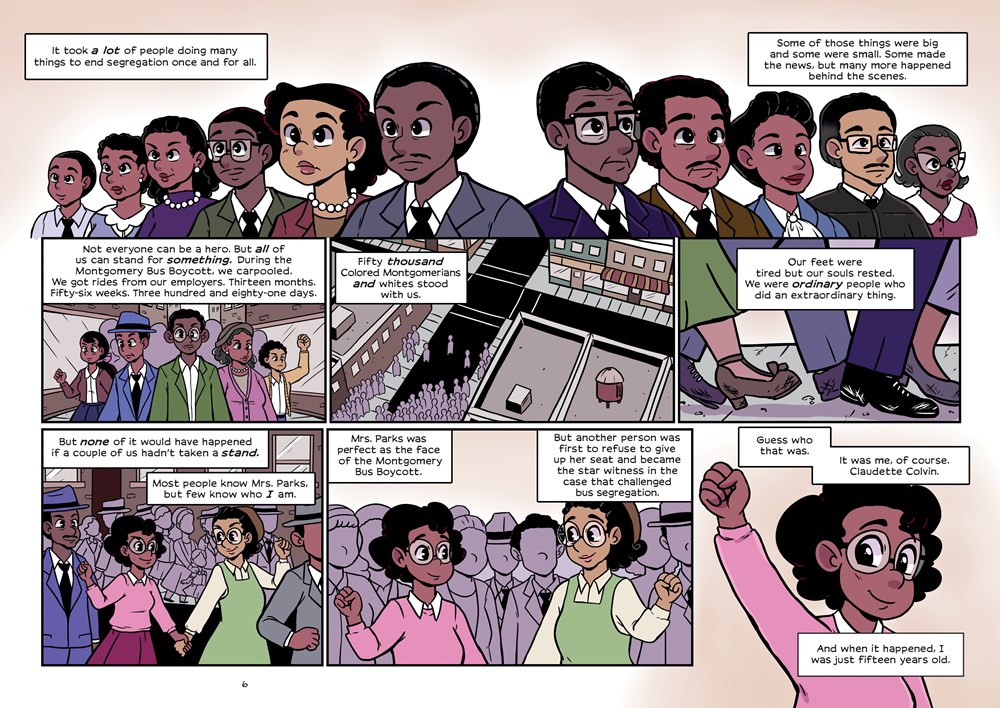
History Comics: Rosa Parks & Claudette Colvin: Civil Rights Heroes, by Tracey Baptiste/Illustrated by Shauna J. Grant, (Jan. 2023, First Second), $19.99, ISBN: 9781250174215

Ages 9-13

The History Comics series is another nonfiction graphic novel win. The kids in my library love them, and First Second’s strong author and illustrator teams make for a winning combination of solid writing, pacing, and art. Rosa Parks & Claudette Colvin: Civil Rights Heroes brings Claudette Colvin’s story to the forefront. Most people think that Rosa Parks was the first person to refuse to move to the back of the bus during the Jim Crow South, but 15-year-old Claudette Colvin was actually the first. Narrated in Colvin’s voice, readers get a summation of life during segregation and the seeds of activism planted by her teacher, Mrs. Lawrence, who told her class the unvarnished truth about history: “Are you who theysay you are? Or are youwho you say you are?” The narrative moves into Colvin’s arrest and trial, her civil rights work, and how Parks and Colvin knew one another long before Rosa Parks’s defining moment in Montgomery, which led to the Montgomery bus boycott. While covering history, Baptiste also gives a glimpse into Colvin’s and Parks’s life, providing a look at the people behind the legends. Baptiste, a bestselling middle grade author, knows how to write for her audience and provoke feelings of frustration, anger, and the desire for change. She does not shy away from the ugly side of history, touching on Emmett Till’s violent murder and Recy Taylor’s rape at gunpoint. Grant’s expressive illustrations bring Baptiste’s words to life and keep readers engaged. Afterwords from Baptiste and Grant complete the back matter. An essential addition to civil rights, social justice, and graphic novel nonfiction collections.

The Zinn Education Project has webpages dedicated to Colvin, including a Day in History link to March 2, 1955, when she refused to give up her bus seat, with links to more resources. There is a wealth of information on the Montgomery Bus Boycott, including History.com, Encyclopedia Britannica, the National Women’s History Museum, and the Encyclopedia of Alabama.
 

Codex Black (Book One): A Fire Among Clouds, by Camilo Moncada Lozano, (Apr. 2023, IDW Publishing), $16.99, ISBN: 9781684059591

Ages 12+

Set in 15th century Mesoamerica, the first book in the Codex Black series is an adventure bringing together Donají, a teen Zapotec girl who sets out on a journey to find her father, and Itzcacalotl, a teen Mexica warrior, who happens to have wings. Together, along with the god that lives inside Donají’s poncho, the two face monsters and defend villages, while trying to solve the mystery behind Donají’s father’s disappearance. Originally a webcomic on Tapas, Codex Black: A Fire Among Clouds makes a seamless transition to graphic novel. Lozano weaves a hero/heroine’s journey with fantastic and historical elements, rich in pre-Columbian history. The vibrant artwork, the expressive characters, the historical clothing, and cultural details are all breathtaking. Perfect for middle school into high school readers, this is what to hand your readers that have moved beyond (but never away from) Rick Riordan and Rick Riordan Presents adventures.

Want to learn more about the differences between Webtoons and Tapas? Check out this helpful article. Teachers Pay Teachers has some good resources for Mesoamerican studies, too: Tony the Tourist has reading passages; Teaching to the Middle has passages on Mayan religions; Mama Made Resources has reading comprehension on the Olmecs; Carroll’s Curations has a Mesoamerican Overview presentation on Powerpoint, and SimplyKristalClear has a Mesoamerican Geography document.


What Happens Next?: Talent Show Troubles, by Jess Smart Smiley, (Apr. 2023, First Second), $12.99, ISBN: 9781250889263
Ages 7-10

The Choose Your Own Adventure model works so well with this funny graphic novel about Megan, a tween targeted by seagulls and determined to do her part in making the school talent show a success. As readers make choices throughout the story, they’ll encounter dogs pooping backstage, a sick stage manager (or is it more?) and a wanted bandit – and that’s just a few of the wacky events in store for readers. Each turn of the page brings new decisions and consequences; there are over 100 paths and 29 endings available, meaning a LOT of re-reads in this book’s future. Bold cartoon art and hilarious dialogue makes this a graphic novel that readers are going to enjoy the first time and the hundredth time. What Happens Next?: Science Fair Frenzy just hit shelves in June, so pair them up. Booktalk this one to your storytellers who enjoy having some control over the outcome of a story.

Jess Smart Smiley’s webpage has links to events, animated stickers, and info on joining his First Readers Club, where readers can read his newest books for free while giving him feedback.

More to come!
Posted in Non-Fiction, picture books

Blog Tour: LOVE IS LOUD: How Diane Nash Led the Civil Rights Movement

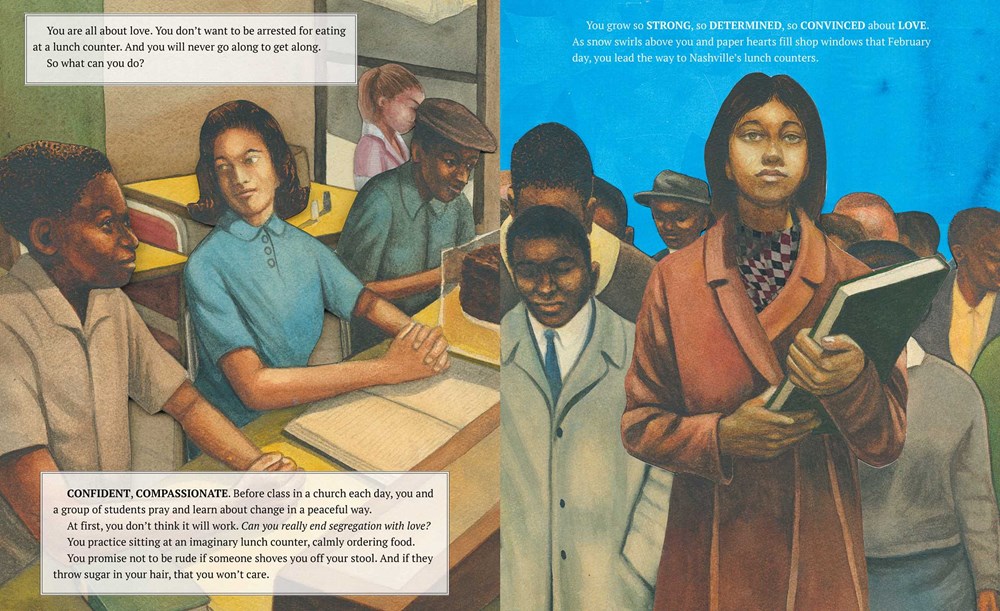
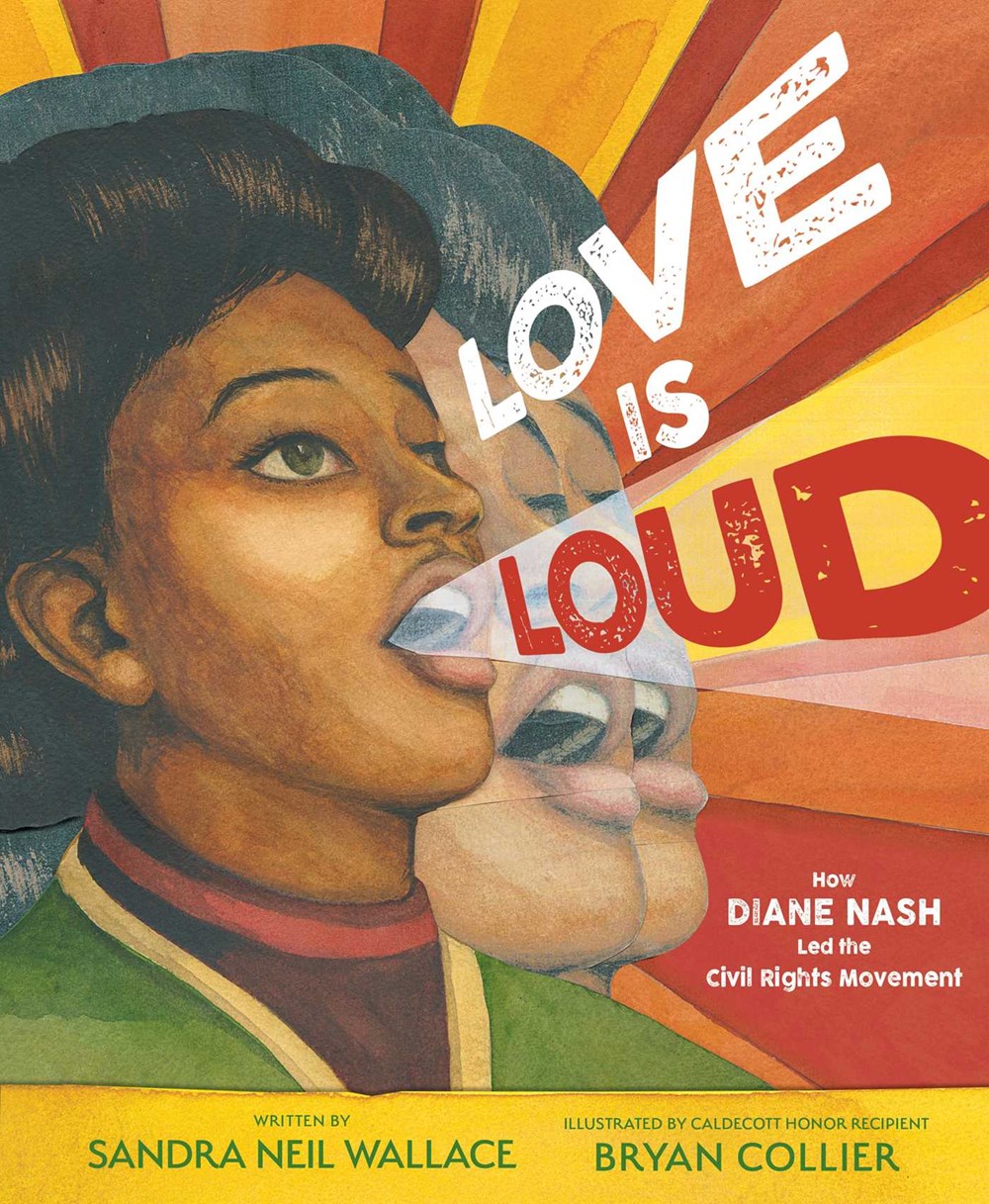
Diane Nash is a civil rights leader who was a Freedom Rider; a lunch counter protestor, and a 2022 Presidential Medal of Freedom recipient. Sandra Neil Wallace and four-time Caldecott Honor recipient Bryan Collier bring her story to vibrant life in Love is Loud.

Love is Loud, by Sandra Neil Wallace/Illustrated by Bryan Collier,
(Jan. 2023, Simon & Schuster), $18.99, ISBN: 9781534451032
Ages 4-8


Born in 1938 in Chicago’s South Side, Diane Nash was a child of the diaspora; her parents refusing to raise a family in the segregated South. Enveloped in love and surrounded by diversity, she experienced Jim Crow laws once she moved to Tennessee to attend college. Angry and humiliated, she refused friends’ attempts to tell her “it’s always been this way” and “go along to get along”, and took action, enduring abuse at Nashville’s lunch counters and joining the Freedom Riders to protest segregated bus terminals. Wallace writes a tribute to Nash’s accomplishments, with key words and phrases bolded and capitalized to invoke strength and power in readers: “ELATION, INVIGORATION”; “NO HIDING. NO FIGHTING BACK”; “LEADING, PROCEEDING”. Bryan Collier’s watercolor and collage illustrations bring texture and realism to spreads, creating both warm and dramatic moments in Nash’s life. Back matter includes notes from the author and illustrator, a timeline of Nash’s life, and resources for further reading.


An inspiring picture book biography that shouldn’t be missed, Love is Loud is an essential addition to picture book biography collections. Put this one front and center in your Black History Month displays and booklists.

Love is Loud has starred reviews from Kirkus, Publishers Weekly, and The Horn Book.

Sandra Neil Wallace writes about people who break barriers and change the world. She is the author of several award-winning books for children, including Between the Lines: How Ernie Barnes Went from the Football Field to the Art Gallery, illustrated by Bryan Collier, which received the Orbis Pictus Book Award and was an ALA Notable Book. A former ESPN reporter and the first woman to host an NHL broadcast, she is the recipient of the Outstanding Women of New Hampshire Award and creates change as cofounder of The Daily Good, a nonprofit bringing twenty thousand free, culturally diverse foods to college students each year through its Global Foods Pantries. Visit Sandra at SandraNeilWallace.com.
Bryan Collier is a beloved illustrator known for his unique style combining watercolor and detailed collage. He is a four-time Caldecott Honor recipient for Trombone ShortyDave the PotterMartin’s Big Words, and Rosa. His books have won many other awards as well, including six Coretta Scott King Illustrator Awards. His recent books include By and By,ThurgoodThe Five O’Clock Band, and Between the Lines. He lives in New York with his family.
*”A poignant and powerful portrayal of the life and work of an unsung civil rights activist….Wallace’s text lends buoyancy to the narrative, making it a memorable read-aloud.”

— Kirkus Reviews, STARRED REVIEW

*”Wallace’s emotive second-person text condenses Nash’s extensive activism into an inspiring meditation on love as the heart of justice, while Collier’s watercolor and collage illustrations bring artful dimension to Nash’s nonviolent resistance.”
— Pubishers Weekly, STARRED REVIEW

*“During the 1960s, Diane Nash was one of the most influential and effective leaders of the Civil Rights Movement, yet most people don’t know who she is.” Wallace’s latest picture-book collaboration with Collier seeks to correct that ….the book opens with images of Nash’s parents cradling her as a baby and then of Nash, as a small child, being hugged by her grandmother, highlighting the love that encouraged her activism.
— The Horn Book — STARRED REVIEW

Posted in Middle Grade, Non-fiction, Tween Reads

Pauli Murray: An activist’s life in verse

Pauli Murray: The Life of a Pioneering Feminist & Civil Rights Activist, by Rosita Stevens-Holsey & Terry Catasús Jennings, (Feb. 2022, little bee books), $18.99, ISBN: 9781499812510

Ages 8-12

Haven’t heard of Pauli Murray before? Remedy that and pick up this biography in verse, written by one of the civil rights activist’s nieces and Terry Catasús Jennings, author of the Definitely Dominguita chapter book series. Born in 1910, Pauli Murray chafed under the Jim Crow South and what she called “Jane Crow”: further prejudice against women. She would become a friend to Eleanor Roosevelt and a voice for the oppressed; she created arguments that would eventually form the Brown vs. Board of Education Topeka backbone (with no credit) and the 1964 decision that won workplace equality for women (credited, thanks to Ruth Bader Ginsburg).

Pauli Murray is told in verse, giving poetic gravitas to her life from her early childhood; the early death of her mother and separation of the siblings, which saw Pauli Murray  move to Baltimore to live with her aunt, who eventually adopted her; her life in the Jim Crow South, which awakened the activist in her, and her work to dismantle the white male patriarchy that sought to “other” her and hold her, and other women and people of color, down. Queer and Black, she was a force for positive change. She went to jail for refusing to sit in a broken seat in the back of a bus long before Rosa Parks, and, like Martin Luther King Jr., was inspired by Ghandhi’s promotion of protest through nonviolence.

Back matter includes author’s notes, a timeline of Murray’s life, endnotes, and a bibliography. An eloquent, powerful biography for upper middle graders and middle schoolers.

Read more about Pauli Murray at the Pauli Murray Center for History and Social Justice’s website and the National Women’s History Museum. VideoNotes and More has a free mini doc on Pauli Murray at TeachersPayTeachers.

Posted in Intermediate, Non-Fiction, picture books

The Faith of Elijah Cummings pays tribute to a giant

The Faith of Eljah Cummings: The North Star of Equal Justice, by Carole Boston Weatherford/Illustrated by Laura Freeman, (Jan. 2022, Random House Studio), $17.99, ISBN: 9780593306505

Ages 6-10

Congressman and civil rights advocate Elijah Cummings left an extraordinary legacy when he passed in 2019. Carole Boston Weatherford, whose numerous awards include a Newbery Medal and two NAACP Image Awards, along with NAACP Image Award winning illustrator Laura Freeman, to create a picture book biography that makes this giant of a man accessible to all ages. Beginning with the Congressman’s impoverished childhood and moving through his civil rights journey, focus on inner-city youth, and government work, we also see how Elijah Cummings’s faith and family was his anchor. Photorealistic illustrations are bold and eye-catching, and quotes from Elijah Cummings inspire readers as Carole Boston Weatherford’s narration concentrates on his humanity, choosing moments in his life like being tutored by librarians when his teachers said he would never be able to read or write well; his mother’s preaching, which inspired him to care for others in need, and the civil rights lawyer from his youth that inspired him to defend kids who needed defending. As a “Washington power broker”, he continued living in his Baltimore inner-city neighborhood and hung a campaign sign in his window so others could find him. Back matter includes an excerpt from the statement from the Congressional Black Caucus made upon the Congressman’s passing; a timeline of Elijah Cummings’s life; a bibliography, and the quote sources. Endpapers show Elijah Cummings, in profile, set against the American flag.

An incredible book for an incredible figure, and a must-add to your picture book biographies. The Faith of Elijah Cummings: The North Star of Equal Justice has starred reviews from Kirkus, School Library Journal, and Publishers Weekly.

Carole Boston Weatherford’s author webpage is a treasure trove of information, with resources and links to media related to her books. See more of Laura Freeman’s illustration work at her website. Find a biography, bibliography, and committee assignments for Elijah Cummings at the House of Representative’s website; visit Congress’s website to learn more about the legislation sponsored or co-sponsored by him, along with his remarks in the Congressional Record.

Posted in Preschool Reads, Toddler Reads

Board books introduce MLK Jr and Rosa Parks to young readers

The Story of Martin Luther King Jr., by Johnny Ray Moore,
(Jan. 2021, Worthy Kids), $7.99, ISBN: 9781546034421
Ages 0-3

Simple text and artwork bring this biography of Martin Luther King Jr. to life for the youngest learners while addressing issues of inequity and racism that laid the groundwork for his activism – and that some adults may recognize today. The story tells readers, in brief, easy-to-understand sentences and companion illustrations, how Dr. King grew up, became a minister, and was motivated by all he saw and endured to work toward equality and ending segregation in America.

The Story of Rosa Parks, by Patricia A. Pingry/Illustrated by Steven Walker,
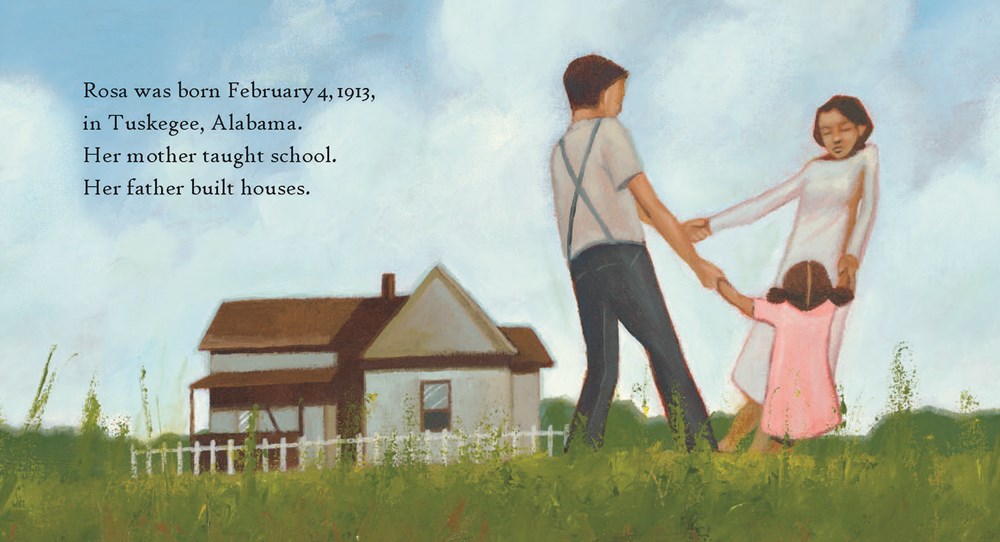
(Jan. 2021, Worthy Kids), $7.99, ISBN: 9781546034438
Ages 0-3
The Story of Rosa Parks introduces young learners to the civil rights icon’s childhood, leading to the moment that she made her historic stand on a bus in Montgomery, Alabama. The book shines a light on how that act, and the events that followed were a defining moment in the civil rights moment. Display and booktalk with books like A is for Activist, Antiracist Baby, and books featured on both the Social Justice Books and Act for Social Justice websites.
Posted in Intermediate, Non-Fiction, picture books

Black Lives, Black History

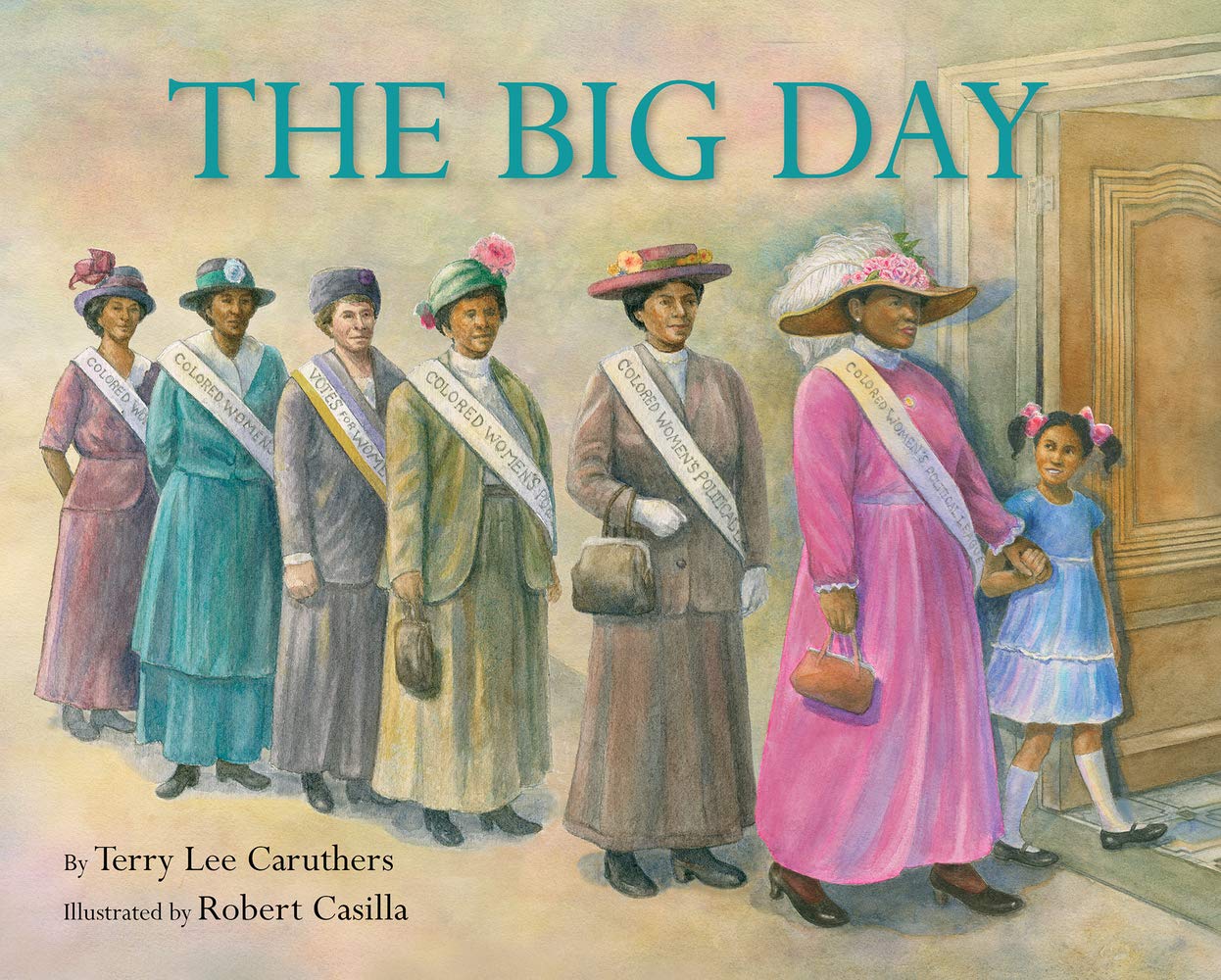
The Big Day, by Terry Lee Caruthers/Illustrated by Robert Casilla, (Oct. 2020, Star Bright Books), $16.99, ISBN: 978-1-59572-913-2

Ages 5-8

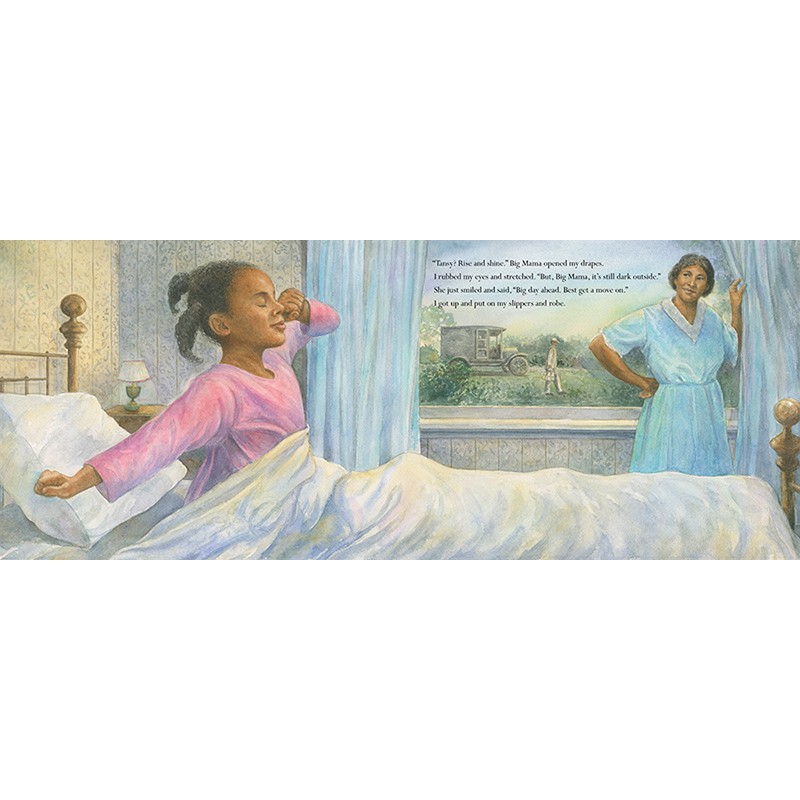
This celebration of suffrage and Black women voters is a fictionalized story of Agnes Sadler, the first Black woman to legally vote in Knoxville, Tennessee, in 1919. Agnes, called Big Mama here, wakes her daughter Tansy up and urges her to get moving; today is a “big day”, after all. Tansy and Big Mama dress in their finest, get on the bus, and head to the polls; it’s voting day and women have the vote! A lovely tribute to Black women’s suffrage, Agnes and the other women voters proudly wear sashes; the Black women belong to the “Colored Women’s Political League”, and the white women wear “Votes for Women” sashes. The artwork is colorful, soft, and carries a beautiful, historic feel to it. Endpapers are made up of newspaper articles about women’s suffrage, and back matter provides more information about Agnes Sadler, women’s suffrage and Black women’s role in suffrage, and sources for further reading. A great introduction to Black women’s history, and a good picture book biography on a little-known figure in Black suffrage.
For more information about African American Women and the suffrage movement, visit the Suffragist Memorial, the Black Women’s Suffrage Digital Collection, and National Geographic.

A Voice Named Aretha, by Katheryn Russell-Brown/Illustrated by Laura Freeman, (Jan. 2020, Bloomsbury Kids USA), $17.99, ISBN: 9781681198507

Ages 5-8

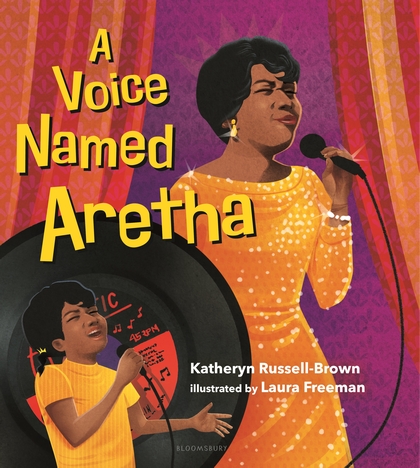
All hail the Queen of Soul! This picture book biography on Aretha Franklin starts from her beginnings, singing in her father’s church choir through her singing for President Barack Obama (and bringing him to tears). Covering Aretha’s social justice work, Katheryn Russell-Brown notes that Aretha refused to perform for “whites only” audiences and her work with civil rights groups and philanthropy. Laura Freeman’s artwork brings Aretha Franklin to life with rich colors and passionate renderings; Aretha’s head thrown back as she sings and plays the piano at 12; clasping her hands to her chest as she belts out a song in the choir, and Barack Obama wiping a tear away as he listens to a lushly garbed Franklin sing onstage. Endpapers are a feast of vinyl and gold records on a deep purple background. Back matter provides more information about Aretha Franklin’s life and music and some of her hit songs. A must-have in your picture book biography section, this is an excellent introduction to a music and civil rights icon.
A Voice Named Aretha has starred reviews from Kirkus and School Library Journal.


William Still and His Freedom Stories: The Father of the Underground Railroad, by Don Tate, $18.99, ISBN: 978-1-56145-935-3

Ages 5-8

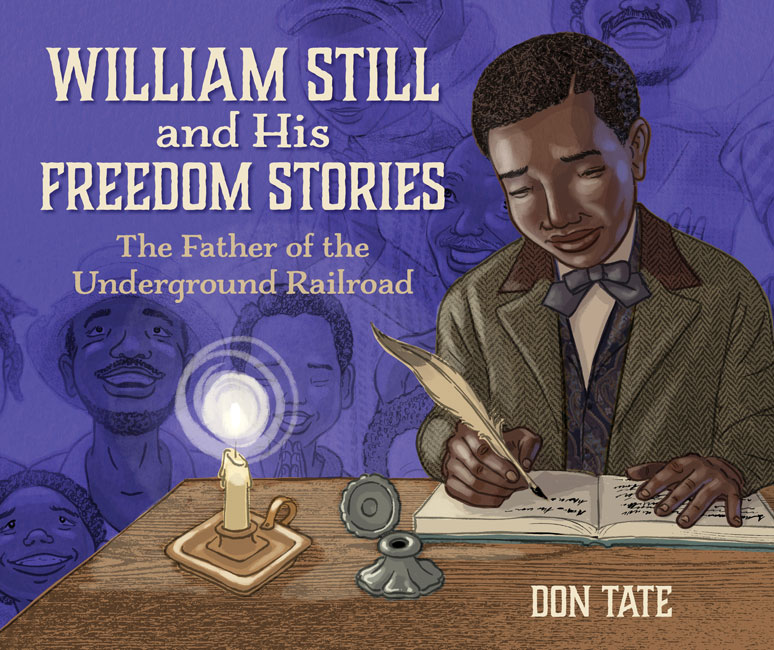
Written in free verse, Don Tate’s biography of William Still, abolitionist, member of the Underground Railroad, and archivist of stories that reunited families, is simply incredible. Born to former slaves living in New Jersey, William Still grew up with a desire to learn and a desire for justice. He moved to Philadelphia and worked with the Anti-Slavery Society, where he took on greater roles, ultimately becoming part of the Underground Railroad. When he reunited his long-lost brother with his family, Still began keeping extensive notes on the people he spoke with, leading to more reunions. The verse is concise but packs emotional punches, like this moment where he meets his brother, Peter: “The man was middle-aged. / Stooped back. Furrowed brow. / Threadbare clothes. / His name was Peter. / He was looking for his mother, his family.” Endpapers include excerpts from Still’s observations. Digital illustrations are emotional and expressive. Another must-have picture book biography. Publisher Peachtree has an excerpt, teacher’s guide, and poster on their website.

William Still and His Freedom Stories: The Father of the Underground Railroad has starred reviews from School Library Journal, Booklist, and Publisher’s Weekly.


Mary Seacole: Bound for the Battlefield, by Susan Goldman Rubin/Illustrated by Richie Pope, (Oct. 2020, Candlewick Press), $17.99, ISBN: 9780763679941

Ages 8-11

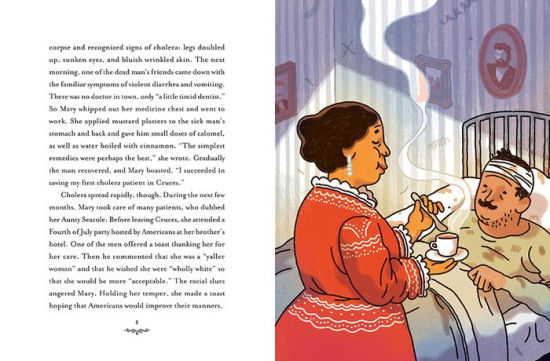
This intermediate picture book biography on Crimean War figure Mary Seacole, born in Kingston, Jamaica, begins with her childhood in Kingston, watching her healer mother care for soldiers with herbal remedies and hoping to be like her one day, through her own healing work with soldiers during the Crimean War and cholera patients in Panama. The book deep dives into the racism she encountered as a biracial woman, including a run-in with Florence Nightingale, who scoffed at her remedies and cures and refused her services. Drawn from Mary Seacole’s own writing, this biography is comprehensive for younger readers, with richly colorful and evocative illustrations. Back matter includes sources notes and a bibliography. An important biography for younger readers.


Northbound: A Train Ride Out of Segregation, by Michael S. Bandy & Eric Stein/Illustrated by James E. Ransome, (Oct. 2020, Candlewick Press), $17.99, ISBN: 9780763696504

Ages 6-8

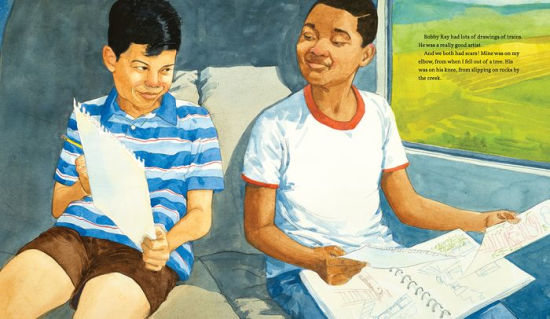
Inspired by author Michael S. Bandy’s memories of taking the train as a child of color during segregation, Northbound tells the story of a boy of color and a white boy becoming friends on a train ride from Alabama to Cincinnati, amid the shifting segregation seating on the train. Young Michael boards the train and goes to the “colored only” section, but when the train leaves Atlanta, the signs come down and he’s free to roam the train. He meets Bobby Ray, a boy his own age and from his own town, and the two become instant friends. Once the train approaches Chattanooga, though, the signs go back up and the new friends are separated. A heart-rending story of separation and segregation, Northbound ends with a spark of hope. The story explains segregation in its most basic terms to children, and encourages discussion about how the story – and our past – parallels with our present. James A. Ransome’s watercolor and collage artwork creates splendid scenery as the train speeds along and the two boys become friends over the course of a train ride; moments of racism, as when the conductor leads Michael out of the “whites only” car when the train approaches Chattanooga, are emotional; the “whites only” harsh white sign stands out like an ugly scar across a lovely painting. An author’s note explains the Interstate Commerce Act and how segregation played into it.

Northbound: A Train Ride Out of Segregation has starred reviews from Kirkus and Publishers Weekly.

Posted in Non-Fiction, Teen, Tween Reads, Young Adult/New Adult

Power to the People: We Are Power elevates nonviolent activism

We Are Power: How Nonviolent Activism Changes the World, by Todd Hasak-Lowy, (April 2020, Abrams Kids), $18.99, ISBN: 9781419741111

Ages 12+

A thought-provoking treatise on nonviolent activism, We Are Power presents six case studies throughout recent history: Gandhi, Alice Paul, Martin Luther King, Cesar Chavez, Václav Havel, and Greta Thunberg. Each section explores nonviolent resistance, the roots behind each advocate’s activism, and how the power of one person, exhorting nonviolence, can motivate thousands and create change. In an increasingly contentious world, the power of nonviolent activism, and placing this information in the hands of a generation of activists, is not only smart, it’s crucial.

Beginning with Gandhi and his theory of “soul force”, or satyagraha, each consecutive profile touches on how previous movements inspired one another. Martin Luther King in particular was influenced by Gandhi, while Alice Paul’s suffrage activism was a response to the more extreme suffagists in the UK, and her desire to be seen as calm, unflappable, and strong. Cesar Chavez understood that increasing awareness of migrant worker conditions was the best way to bring social justice to migrant workers and received a letter of encouragement from Martin Luther King, himself leading nonviolent resistance movements to bring civil rights to the country. Playwright-turned-Czech president Vaclav Havel used his art to protest; later, letters from prison, where he wrote about truth and opened people’s eyes by telling them that they were complicit in allowing their restrictive government’s rule by following the rules. Teenager Greta Thunberg began her climate change protest by being the sole student striking for climate change, and motivated a planet to take action.

A solid beginning for a discussion on social justice, activism, and civil disobedience, this is a must-have volume for middle school and high school collections. I can’t wait to put this in my order cart when my library, opens again. This would be a great Summer Reading choice, for educators who haven’t finished their lists yet. Photographs of protests and tense moments, like seeing schoolchildren attacked by dogs and being doused with hoses, make for great discussions on the use of violence against nonviolence – what stands to be gained? Comprehensive endnotes, bibliography, and index complete the book. Author Todd Hasak-Lowy’s author webpage has videos and resources for parents and educators.

We Are Power has starred reviews from School Library Journal, School Library Connection, and Kirkus.


Posted in Fiction, Fiction, Fiction, Historical Fiction, Intermediate, Middle Grade

American Girl Trio: Melody, Nanea, and Julie

Everyone is pretty aware of American Girl, the toy and book phenomenon that sent kids running to the stores for an experience – tea party, clothing selection, matching outfits – before Build-a-Bear got involved. The American Girl novels have big fans in every library where I’ve worked, but I never thought to pick up and read any of them for myself. But I received three from the publisher, so I figured, what the heck? Let’s see what these are about. I have to say, I’m pretty happy with them.

The three books that I received seem to be a repackaging of American Girl’s BeForever line of historical novels. The original books look to have been published in 2016-2017; these new releases have updated cover art and the interiors are very emerging reader friendly, with both color photos and artwork throughout, making it even more appealing and reader-friendly to emerging chapter book readers.

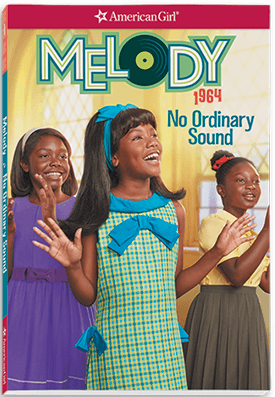
Melody: No Ordinary Sound (American Girl: Melody), by Denise Lewis Patrick, (Aug. 2019, American Girl), $7.99, ISBN: 9781683371403

Ages 8-12

It’s 1963 in Detroit, Michigan, and 9-year-old Melody just found out that she’s going to be singing her first church solo for the Youth Day celebration. Her older brother wants to be a Motown star, while their dad wants him to go to college and pick a more stable career; her older sister comes home from college with stories of protests, marches, and registering Black voters, and her cousin’s family arrives in Detroit, because racial tension in the American South has made it almost impossible to earn a living. As Melody and her family awaken to activism, a horrific church bombing in Birmingham, Alabama takes the lives of four children and leaves Melody speechless. She has to find her voice and sing for those who can’t.

No Ordinary Sound is such powerful historical fiction for intermediate and middle grade readers. I’ve enjoyed Denise Lewis Patrick’s books in the past, so I read this American Girl book first, and am so glad I did. Her characters experience three pivotal events in civil rights history – the Detroit Walk to Freedom; the March on Washington, where Dr. Martin Luther King, Jr. gave his “I Have a Dream” speech, and the church bombing in Birmingham, Alabama – and encourage readers to see these events from a personal point of view, developing a deeper understanding of more than just the facts. Denise Lewis Patrick provides a slice of life story, where readers experience the everyday racism Melody and her family and friends experience; from being banned from buying a soda at a soda machine to being shadowed by store security at stores where they’ve been longtime customers.

No Ordinary Sound was a great introduction to the American Girl historical fiction series of books, and I’ll be sure to include this series in booklists and booktalks about civil rights and historical fiction. Melody’s books have their own page on the American Girl website, where you can read first chapter excerpts.

Civil Rights Teaching has lesson plans and resources about teaching the Civil Rights Movement, as does Facing History and Ourselves. The Grammy Museum has a lesson plan on teaching the impact of Motown. Education.com has a free, downloadable worksheet on the History of Motown, and TeachRock.org has a lesson Assembling Hits at Motown. PBS Learning Media has a teaching guide and primary source materials on The Great Migration, and National Geographic has an educator’s guide.


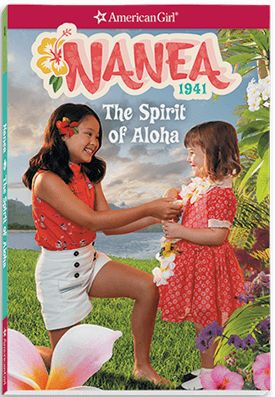
Nanea: The Spirit of Aloha (American Girl: Nanea), by Kirby Larson, (Aug. 2019, American Girl), $7.99, ISBN: 9781683371380

Ages 8-12

Nanea is a 9-year-old Hawaiian girl; she’s the youngest in her family, and feels frustrated that she can’t do grown-up things, like help in her family’s store. When Pearl Harbor is attacked by Japanese aircraft on December 7, 1941, Nanea discovers that she has to grow up quickly. Her father is a mechanic at Pearl Harbor, and rushes to help out; her older brother is an Eagle Scout, and heads to the site to hand out food and provide aid. Nanea’s Uncle Fudge is taken into custody because he’s Japanese, and Nanea is thrust into a different world with blackouts, curfews, and fear. She and her two best friends work to make themselves useful, especially when “nonessential personnel” must leave the island, which puts her friend at risk. With the spirit of aloha – love, understanding, and compassion – Nanea focuses on kokua – good deeds – to help everyone around her.

The Spirit of Aloha was another strong historical fiction piece. Kirby Larson has written likable, relatable female protagonists, and she’s done historical fiction before, so I was confident I was going to read a good story. Here, we have the main event, the bombing of Pearl Harbor, as a means to show how war makes children grow up overnight. Nanea sees her life change in moments: the bombing itself; the rounding up of Japanese people and the detention center; her fears for her father and brother as they head into the middle of the disaster to help; curfews and blackouts curtains, and the overall loss of a relatively peaceful, carefree existence. At the same time, she focuses on her culture’s principles of love, compassion, and good deeds. Kirby Larson adds touches of Hawaiian culture here, like the meaning of hula and tossing leis into the water to assure a return to Hawaii, and there’s a glossary of terms at the end. Nanea is biracial, with a Hawaiian mother and a Caucasian father, and this adds an additional facet to Nanea’s story, as she communicates with her mainland grandparents to let them know what’s going on in Hawaii.

The Spirit of Aloha is a good introduction to World War 2 historical fiction for younger readers. You can find excerpts and more about Nanea on the American Girl website.

Scholastic has a teaching guide on the attack on Pearl Harbor; Teachers Pay Teachers has some free, downloadable resources developed by fellow educators; the Pearl Harbor Aviation Museum has a lesson plan on developing visual literacy by analyzing photos from December 7, 1941. The New York Times has a lesson plan on using primary sources to teach the Japanese Internment, as does the Library of Congress.


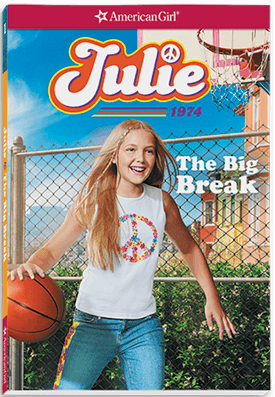
Julie: The Big Break (American Girl: Julie), by Megan McDonald, (Aug. 2019, American Girl), $7.99, ISBN: 9781683371328

Ages 8-12

Nine-year-old Julie has just moved to a new neighborhood and started at a new school after her parent’s divorce; she, her mother, and older sister live in an apartment above her mother’s new store. She starts at a new school and hears they have a basketball team, which is great! She loves basketball! The coach, however, makes no bones about it: the team is boys only, and he’s never going to let a girl play on his team. Julie, empowered by her tennis-playing older sister who tells her about tennis star Billie Jean King and Title IX, the law prohibiting gender discrimination in any educational programs receiving Federal financial assistance (read: public schools can’t refuse any boy or girl from playing on an athletic team). Julie embraces her newfound activism and takes to the streets, getting people to sign a petition to let her play.

The Big Break is a snapshot of the 1970s, when the second wave feminist movement was still pushing for equal rights in the workplace and in our schools. An interesting subplot with a Vietnam vet, who helps focus Julie’s activism by petitioning against the closing of a veteran’s hall, reminds readers that the ’70s were also about coping with the fallout from the Vietnam War and the vets who returned to homelessness, and a lack of necessary mental and physical health services. Julie’s sister is a burgeoning feminist who follows the Bobby Riggs-Billie Jean King Battle of the Sexes and tells Julie about Title IX, which opened the doors to school athletics for girls. At the same time, Julie is coping with her parent’s divorce – much more scandalous in the 1970s than it is today – and her feelings of grief and frustration with both her parents. Her mom appears to be a free spirit, with a ’60s-early ’70s flower child aesthetic; she’s a divorced woman entering the workplace and starting her own business venture: a store dedicated to handcrafted clothing and items, often repurposed. Julie’s pilot father often misses school events because he’s called to fill in for another pilot, and doesn’t initially support her bid to play on the boys’ basketball team.

The Big Break is by Megan McDonald, who everyone also knows as the author of the Judy Moody and Stink series! Here, she gives readers a glimpse into the 1970s, where things are so different, and yet, still the same. Girls still get grief from boys in the athletic sphere. Homeless veterans are still not getting the services they need. People now use Title IX to protect transgender and nonbinary students. And girls are still discovering and embracing their voices in activism. You can read more about Julie on her American Girl page, including first chapter excerpts.

TedEd has a lesson plan on Title IX that’s friendly to younger students. NEA Today has a good article on ways Title IX has helped women and girls; PBS has a video on Title IX; Scholastic Kids Press has an article on how Title IX changed girls’ sports. Teaching History has resources on teaching the Vietnam War.


Each book comes with a peek into each girls’ life: maps of their neighborhood, pictures of their families, a glimpse at someone’s room. Back matter includes overall information about each American Girls’ moment in history. American Girl makes teachers guides, readers guides, and printable activities available.


Posted in picture books

Black History, Baseball, and Boston: Waiting for Pumpsie

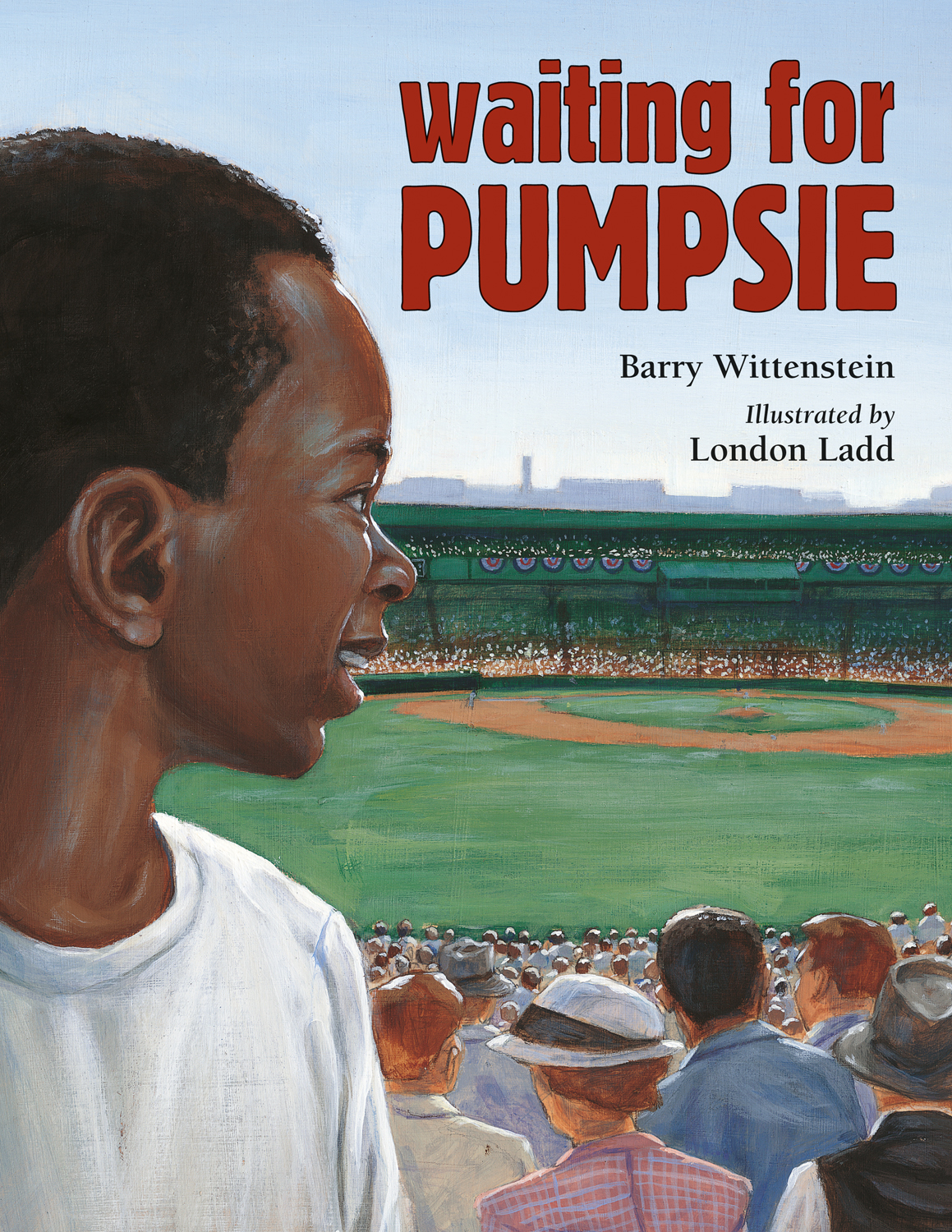
Waiting for Pumpsie, by Barry Wittenstein/Illustrated by London Ladd, (Feb. 2017, Charlesbridge), $16.99, ISBN: 9781580895453

Ages 5-9

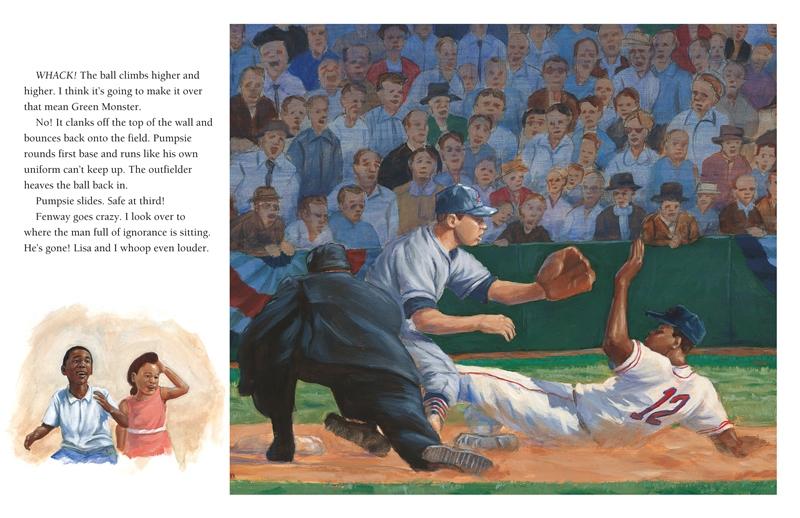
It’s 1959, and Bernard is a kid living in Boston who is crazy for the Red Sox. As much as he loves the Sox, though, he doesn’t understand why the Giants have Willie Mays, and the Dodgers had Jackie Robinson, but the Sox don’t have a black player. His dad agrees that it’s an excellent question, but seemingly one with no answer. Bernard and his baseball-loving family head to to Fenway Park for a Red Sox vs. New York Yankees game, but when the family cheers for Yankee Elston Howard – Mama encourages Bernard and his family to cheer for every African-American player, regardless of their team – they’re shouted down by a white fan, who tosses in a slur or two; a police officer tells Bernard and his family that “you people need to learn how to behave”, without a word to the instigator. Mama says change is coming soon, but Bernard has a hard time believing it when things like this happen, and when the Sox won’t even sign a black player. That changes when Pumpsie Green, a black player in the minor leagues, starts making the news. The Red Sox management seem to be dragging their feet on Pumpsie, and the fans – black AND white alike – start putting public pressure on the team to give Pumpsie a chance. It works, and Bernard and his family gather around the radio to listen to Pumpsie’s first game, an away game in Chicago. The Red Sox lose, but Pumpsie’s arrival is selling tickets and making news. Bernard and his family make sure to be at the next home game, to cheer on Pumpsie, and Bernard gets to see him play and see the Sox win! As Bernard heads home, he sees fans waving Pumpsie flags and holding up a picture of Ted Williams and Pumpsie, together in the dugout. Bernard has hope for the future. Looks like Mama was right after all.

Based on the story of baseball player Pumpsie Green’s 1959 arrival in Major League Baseball, Waiting for Pumpsie is powerful because it’s shown through a child’s eyes. Told in the first person by Bernard, we see how important representation is. Bernard says, after seeing Pumpsie play, that “one day, I’ll tell my kids how long we waited for Pumpsie Green. I’ll tell them how he dug his heels into the batter’s box. I’ll tell them how I pretended it was me, Bernard, sliding into third”. He and his family cheer for every African-American player, regardless of team affiliation, because they support civil rights and integration. It was time. It was long past time. An author’s note offers a little background on Pumpsie Green and the Red Sox’s long refusal to sign players of color, and the role of civil rights and fan pressure in their decision. There are some good sources for further reading. There’s a free, downloadable curriculum guide available.

The acrylic paint artwork uses warm colors and gives a vintage feel to the book, with baseball cards and tickets lending a scrapbook feel within the larger story.  If you don’t already have this in your collection, get it in there. Waiting for Pumpsie has a starred review from Kirkus.

Barry Wittenstein has tended bar, driven a taxi, worked at CBS Records and CBS News back in the day, spent a decade writing music and lyrics, toiled six years as a web editor and writer for Major League Baseball, and three years as a substitute elementary school teacher.  He could be Walter Mitty’s brother.
Barry loves to write narrative nonfiction picture books. He is the author of Waiting for Pumpsie and The Boo-Boos That Changed the World. In 2019, he will publish two more nonfiction picture books—Sonny’s Bridge, about the legendary jazz saxophonist Sonny Rollins; and A Place to Land (with illustrations by Caldecott Medalist Jerry Pinkney) about how Martin Luther King Jr. wrote his “I Have a Dream” speech. He is currently working on a YA novel. He lives in New York City with his wife. To learn more, and to download free curriculum guides, visit his website: https://onedogwoof.com/ or follow him on Twitter: @bwittbooks
Posted in Intermediate, Non-Fiction, picture books, Preschool Reads

Nonfiction rundown: October and November

Picture book nonfiction just gets better and better. In October and November, we get two more biographies on people of color that have, until now, been largely overlooked by history. It’s disheartening on one hand, but I choose to be glad that books are coming forward now to liven up our nonfiction shelves and give readers even more role models across all walks of life to learn about and be inspired by. I’ve also got some fun alphabet books and some nature and science. Pull up a chair, brew a warm beverage of your choice, and enjoy!


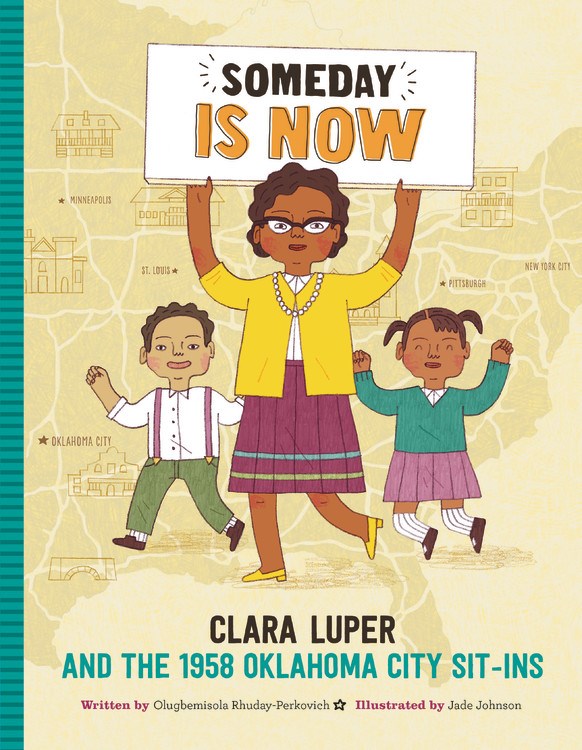
Someday is Now: Clara Luper and the 1958 Oklahoma City Sit-Ins, by Olugbemisola Rhuday-Perkovich/Illustrated by Jade Johnson, (Aug. 2018, Seagrass Press), $17.95, ISBN: 9781633224988

Ages 6-9

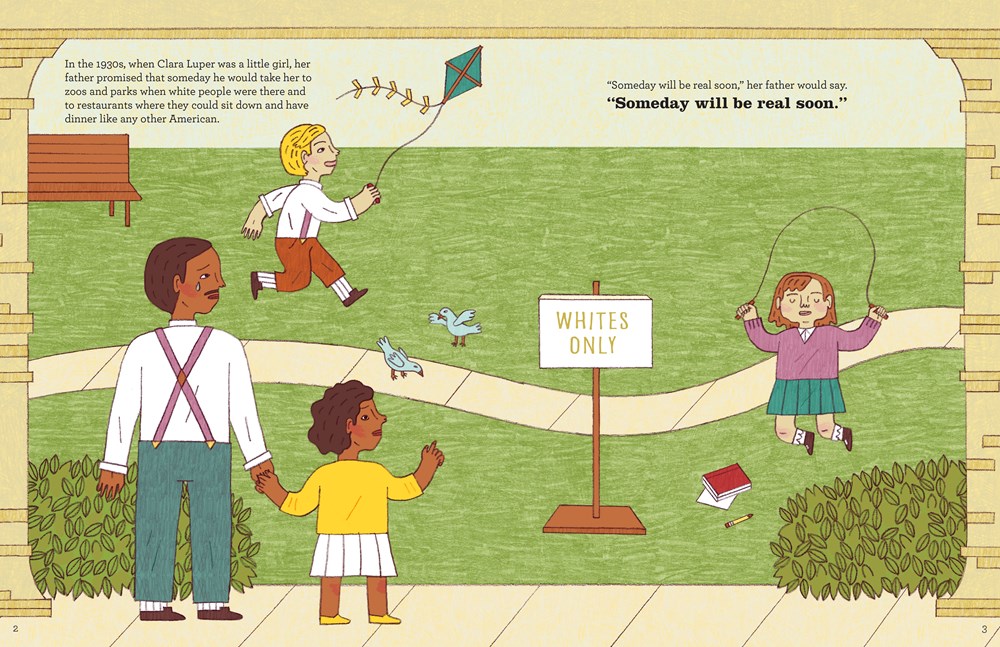
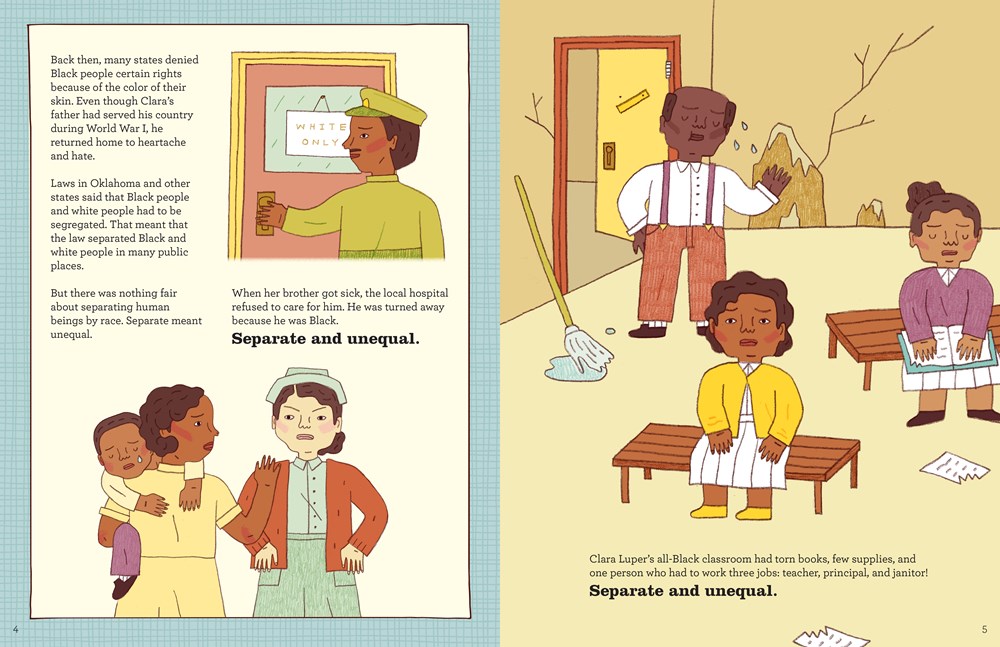
I missed this one the first time around, but I’m glad I caught it when I went back through my Edelweiss account to check up on my TBR. This picture book biography of civil rights activist Clara Luper (nee Clara Mae Shepard) is a great addition to your picture book biographies. Growing up in segregated Oklahoma, Clara saw her World War I veteran father diminished by the very country he fought for: her brother turned away from a local hospital because it was a whites-only facility; she was educated in a run-down classroom with torn books and a teacher who also served as the principal and janitor; restaurants dictated where Blacks could eat. Everywhere she looked, Clara saw things were “separate and unequal”, a phrase repeated throughout the book in bold, large font to drive home the message. Ms. Luper became a teacher who pushed for change, working with the NAACP Youth Council and participating in lunch counter protests with her students after a trip to non-segregated New York. Back matter includes an encapsulated biography of Ms. Luper.

This is the first picture book biography on Clara Luper: everything else I found online is decades old. Let’s get more civil activist bios into the hands of our kids, so they can see for themselves how many voices led to change. Someday is Now has a starred review from Kirkus.

Author Olugbemisola Rhuday-Perkovich is the co-author of the NAACP Image Award nominated Two Naomis and the forthcoming Naomis Too and is the editor of The Hero Next Door, an anthology from We Need Diverse Books. You can see more of Jade Johnson’s illustration work, including downloadable coloring pages, on her website.


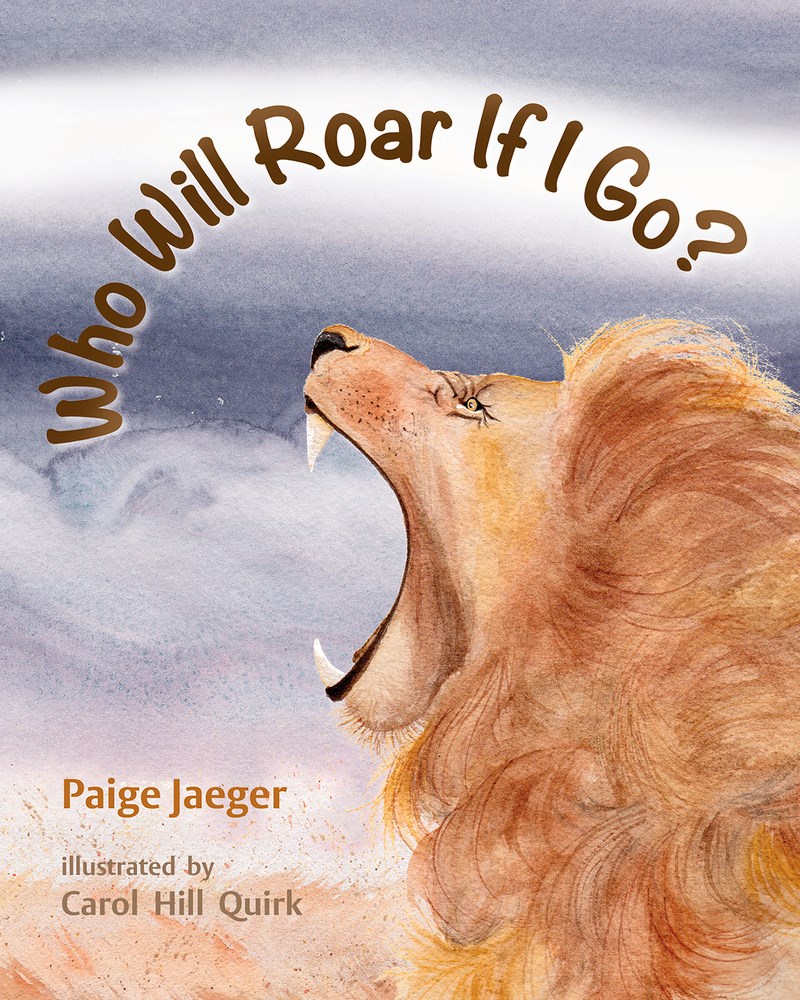
Who Will Roar If I Go? (If We’re Gone, Book 1), by Paige Jaeger/Illustrated by Carol Hill Quirk, (June 2018, Boutique of Quality Books), $18.95, ISBN: 9781945448157

Ages 5-7

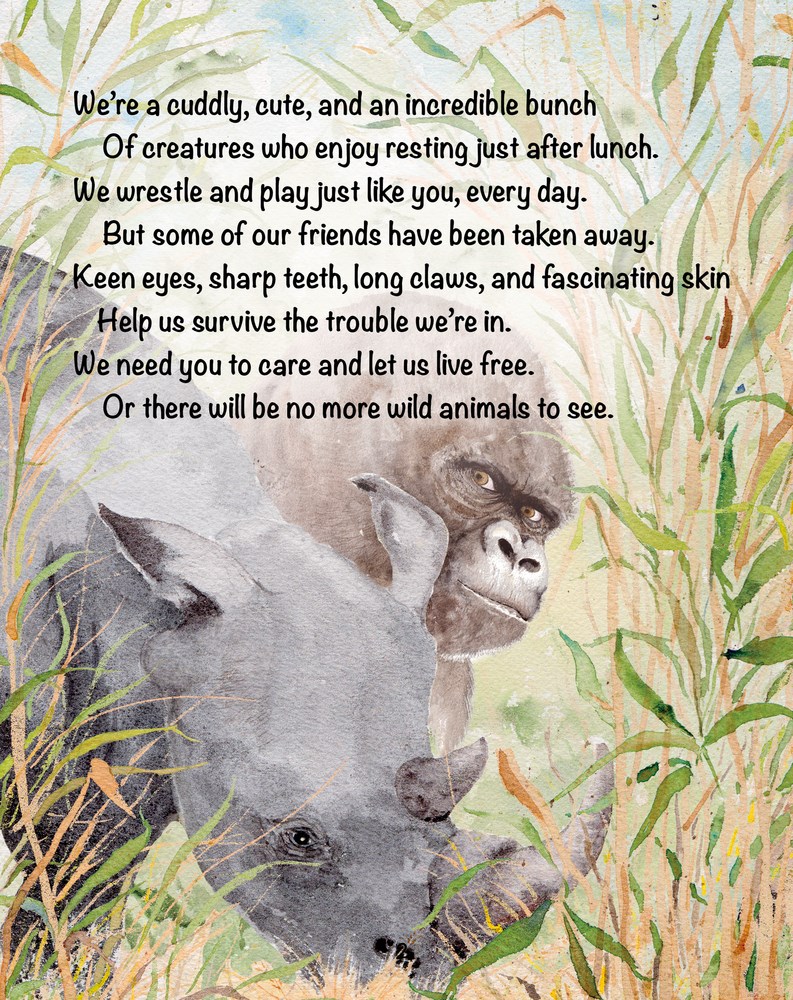
This rhyming story, the first in a planned series, is a plea to readers from endangered animals suffering from a multitude of human-based maladies, most commonly, the disappearance of their habitats and hunting, be it for trophies or luxury dining. Thirteen animals ask humans for help in their quest for survival; each rhyme provides readers with a little background on the animal and why it needs help. The elephant’s page reads: “I sure am an enormous creature; With ivory tusks my most attractive feature; For these long, tapered tusks that I hold dear; Thousands of friends were lost last year; No one needs my tusks but me; Go make some in a factory”.

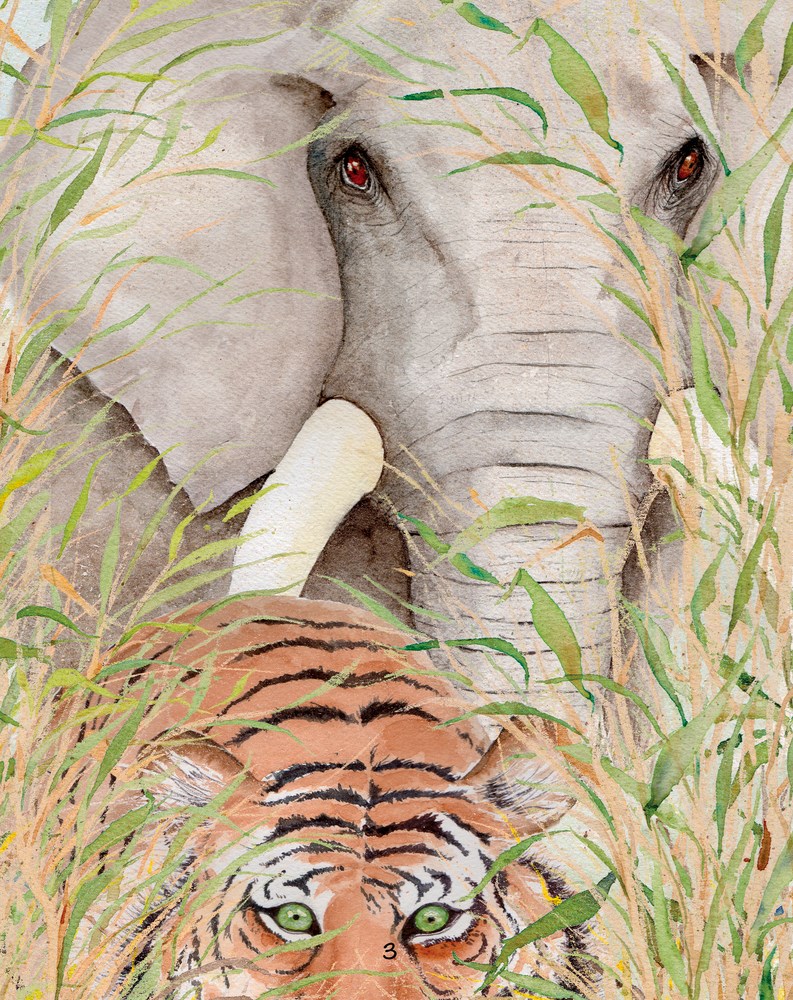
Back matter includes a glossary of terms and an animal footprint guessing game. Each animal gets its own spread, including its geographic location and footprint, related to a game in the back matter. The watercolor artwork is realistic and showcases each animal in its natural environment. Who Will Roar If I Go? is a good introduction to endangered animals and the need for conservation and preservation; it’s a good additional add to your picture book nonfiction.

The Who Will Roar webpage offers free, downloadable educator resources.


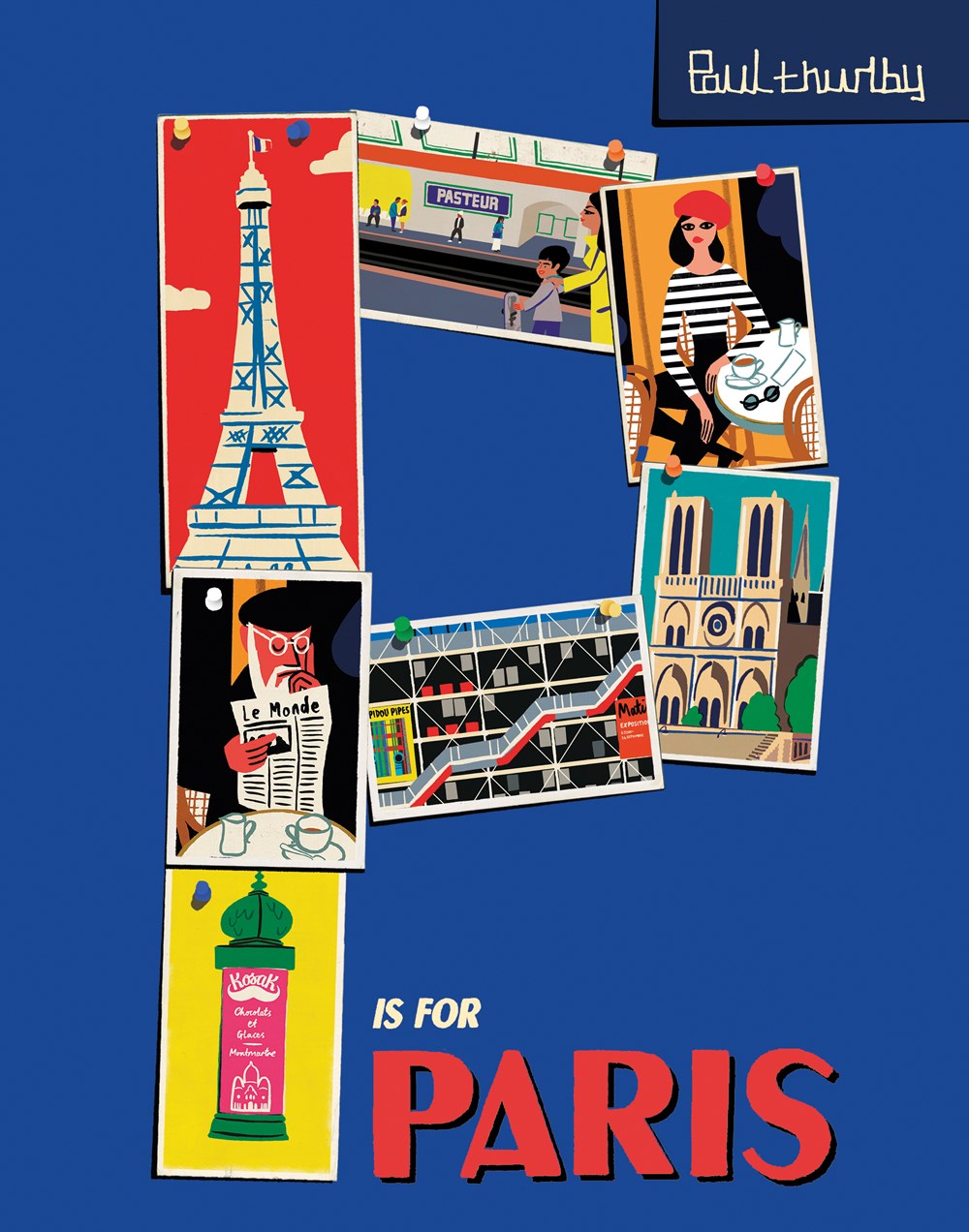
P is for Paris, by Paul Thurlby, (Oct. 2018, Sourcebooks Jabberwocky), $19.99, ISBN: 9781492668152

Ages 5-8

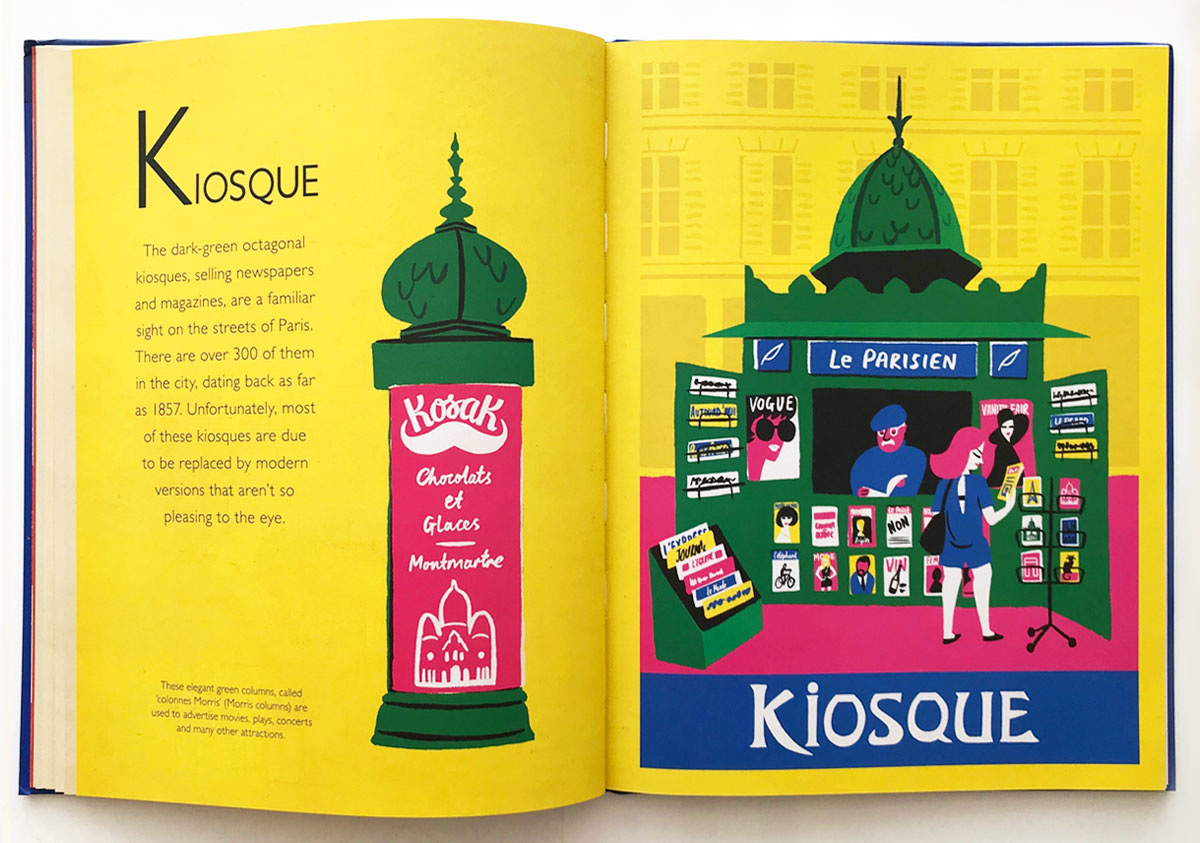
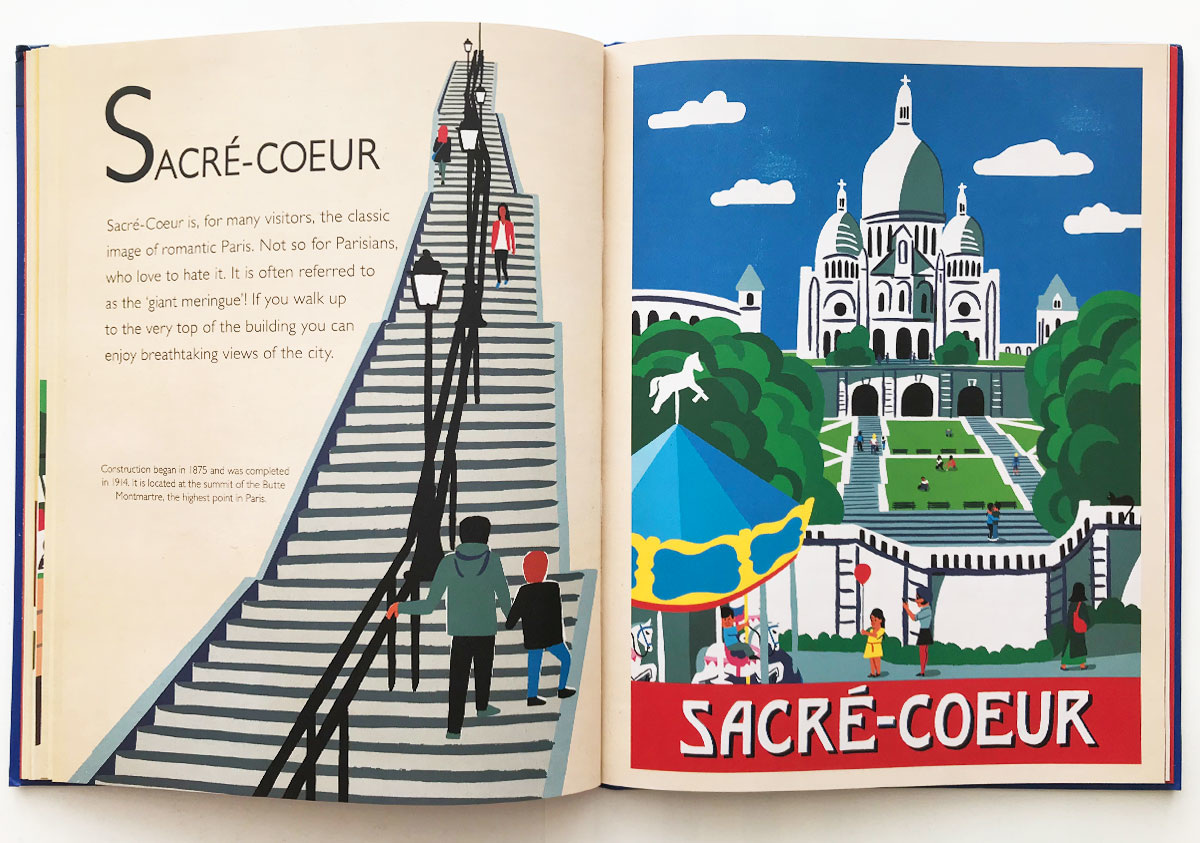
The latest book in Paul Thurlby’s ABC Cities series brings readers on an alphabetical tour of the City of Lights: Paris. Beautiful, bright artwork brings to mind vintage travel posters, and little bites of Parisian history on each page make this a fun addition to your picture books and world sections. Adults will enjoy this one as much as the kids will; references are equally accessible to kids and grownups. From the Abbesses to the Zoo De Vincennes, this is a nice addition to Thurlby’s Cities set. Endpapers provide a map to Paris, with attractions throughout the book numbered for reference. The author provides a concise explanation of the city’s organization into arrondissments. This easily works for both concept sections and geography sections, but don’t mistake this for a beginner’s abecedary; it’s a little more complex and better for Kindergarteners and up.

Check out Paul Thurlby’s webpage for more artwork and information on his other books. Take your armchair travelers on a picture book trip around the world with Thurlby’s books and Miroslav Sasek’s books.


Flow, Spin, Grow: Looking for Patterns in Nature, by Patchen Barss/Illustrated by Todd Stewart, (Oct. 2018, OwlKids), $18.95, ISBN: 9781771472876

Ages 5-7

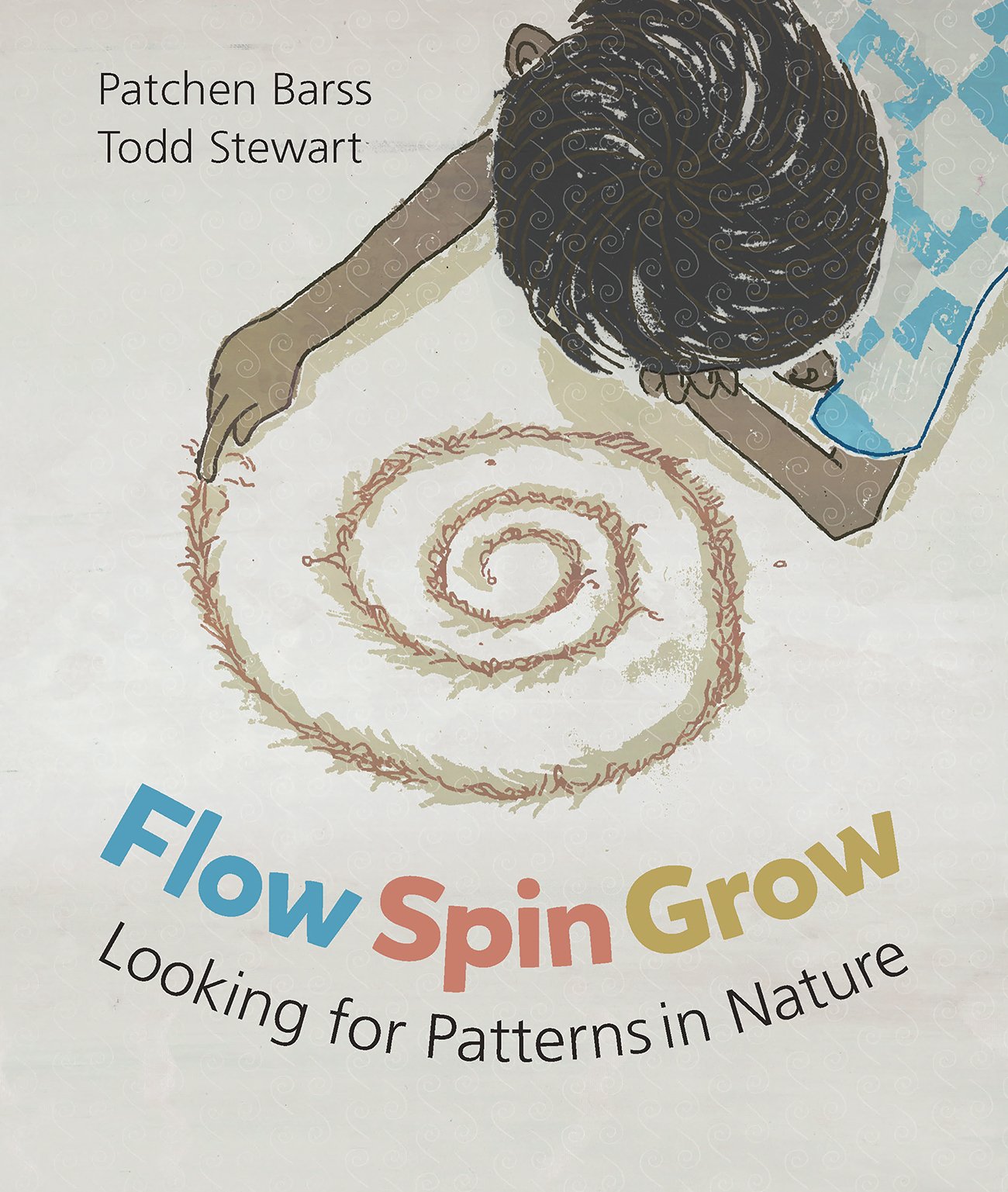
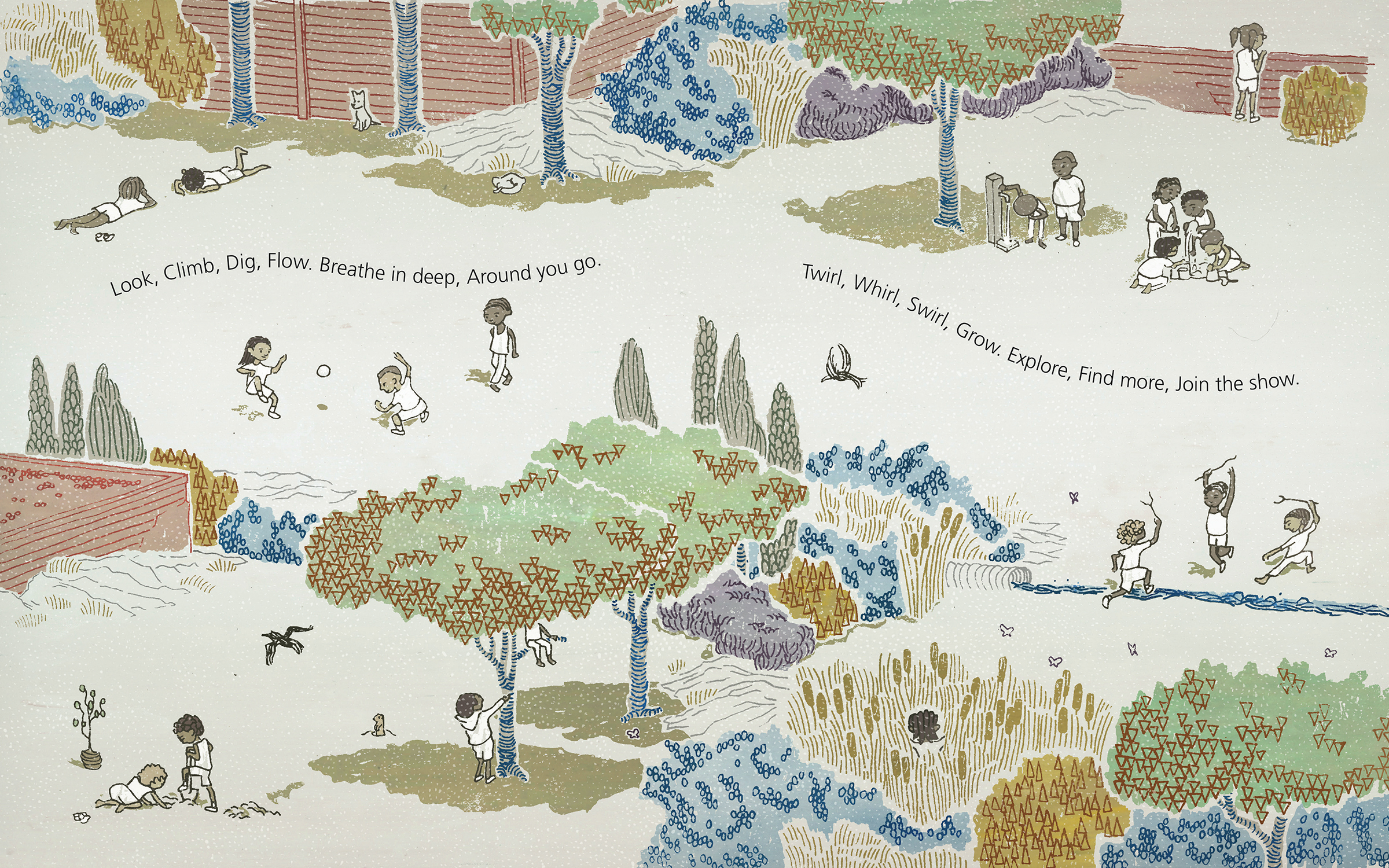
Readers are encouraged to explore patterns in nature in this mindful rhyming book. A diverse group of children play and relax in an open park area in the opening spread. The text playfully crawls around the scene, encouraging kids to “Look, climb, dig, flow. Breathe in deep, around you go. Twirl, whirl, swirl, grow. Explore, find more, join the show.” The text inspires readers to look for patterns everywhere: observe, dig, explore, climb; a tree trunk splits, branches split, and below the ground, roots split and grow; water branches off into smaller bodies of water, and our own lungs have little branches like mini-trees, reaching for air. Nature twirls and whirls, like the galaxies in space or two friends at play; pine cones, storm clouds, and snail shells all swirl. It’s an interesting way to introduce scientific inquiry to burgeoning scientists. An author’s note goes further into the “secret code” hidden in the shapes of things, and suggests additional resources for more reading.

The artwork is the star in this book. Multilayered screen prints and muted colors create a setting where patterns gently emerge, waiting for readers to spot them: triangles on a tree or bush; cracks in the dirt and roots underground reach out. Flow Spin Grow is a good purchase for primary science collections; I also love Joyce Sidman and Beth Krommes’ award-winning Swirl by Swirl: Spirals in Nature, and Jane Brocket’s Spotty, Stripy, Swirly: What Are Patterns?

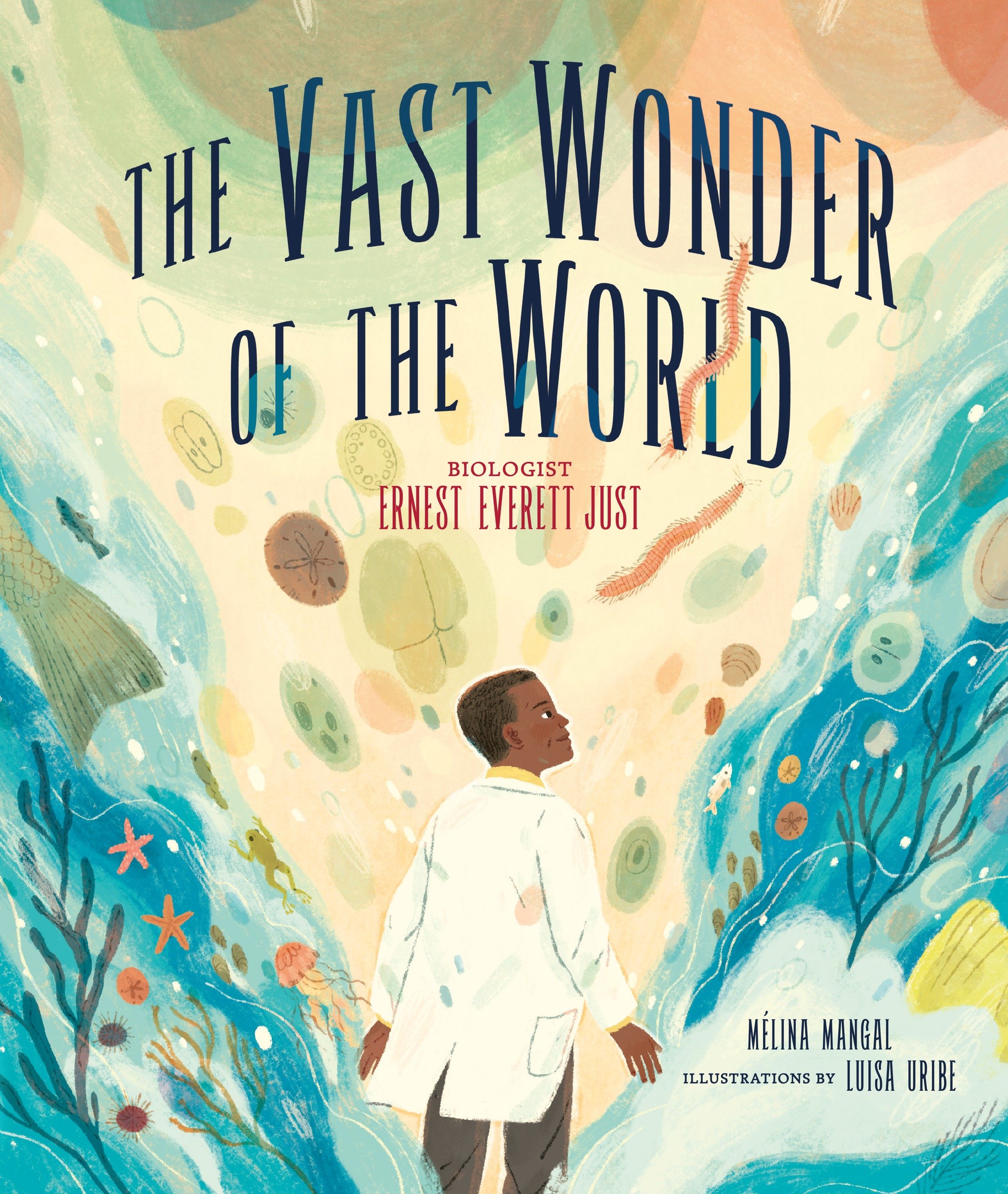
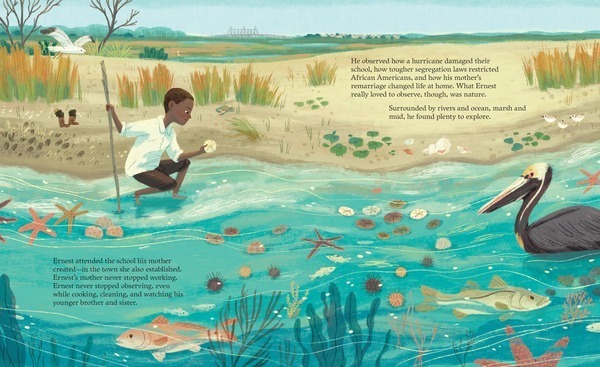
The Vast Wonder of the World: Biologist Ernest Everett Just, by Mélina Mangal/Illustrated by Luisa Uribe, (Nov. 2018, Lerner Publishing Group), $19.99, ISBN: 9781512483758

Ages 7-9

This bio on biologist Ernest Everett Just is just what your picture book biography section needs. He came of age in the Jim Crow South, paying his way through Dartmouth College while supporting his siblings after his mother’s passing. He “unlocked the mysteries of how the different parts of the cell worked together as new life developed”, and found success as a Howard University professor, embryologist, and cytologist, working in both Europe and the States. The Vast Wonder of the World tells his story, introducing him to a new generation of budding scientists who will be inspired by his determination and success in the face of racism and adversity. The muted pencil and digital artwork, in shades of blue, creates a sense of wonder and beauty, giving readers a real appreciation for Just and his place in science history. An author’s note, a timeline, and source notes complete this solid addition to science biography sections. Display and booktalk – PLEASE – with Gwendolyn Hudson Hooks and Colin Bootman’s Tiny Stitches: The Life of Medical Pioneer Vivien Thomas, and – if you can find it (can we please get this book back in print?) – May Chinn: The Best Medicine, by Ellen Butts and Joyce R. Schwartz, illustrated by Janet Hamlin.

The American Society for Biochemistry and Molecular Biology (ASBMB) has a good feature story on Dr. Just, with references to further reading, by W. Malcolm Byrnes.

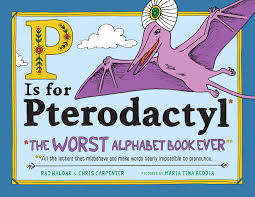
P is for Pterodactyl, by Raj Haldar & Chris Carpenter/Illustrated by Maria Beddia, (Nov. 2018, Sourcebooks Jabberwocky), $17.99, ISBN: 9781492674313

Ages 6-10

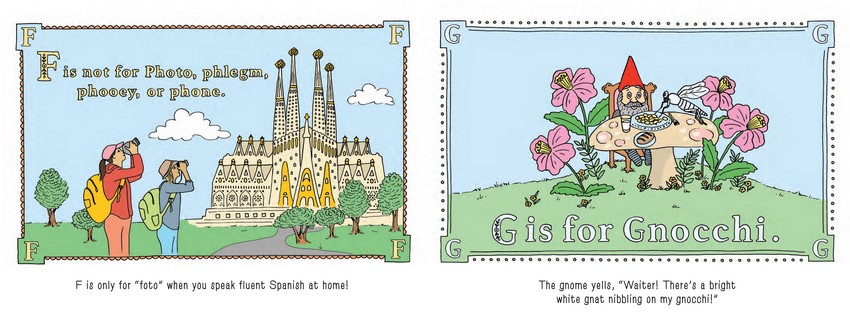
Calling itself “The Worst Alphabet Book Ever”, P is for Pterodactyl is a smirk, wink, and nudge at rebel words in the English language: words that don’t follow the rules. The book uses humor, alliteration, and amusing artwork to get its point across, as with E is for Ewe, which depicts sheep at a wake: “Eileen the ewe was so euphoric with wolves were eaten, she even gave the eulogy” (keep reading the book for more on Eileen); or L is not for Elle, which shows an elevated subway car transporting some elephants across the city of El Paso: “An elephant named Elle rode the el train halfway to El Paso and dined on hearts of palm with her folks”. It’s not a basic concept book for new learners, but it’s sure fun to read it out loud and watch kids laugh and play with language. My 6-year-old cracks up at this one, and it helps when he tries to figure out new words.

P is for Pterodactyl has a starred review from Foreword Reviews.