Posted in Non-Fiction, picture books, Preschool Reads

It’s Spring… time to raise the butterflies!

Butterflies in Room 6, by Caroline Arnold, (March 2019, Charlesbridge), $16.99, ISBN: 9781580898942

Ages 3-7

Spring is getting closer and closer, and that means that science classrooms all over the place are going to introduce their little ones to the life cycle of a caterpillar/butterfly. We’ve done it in my home, and each of my kids has done it in school, and it’s exciting every time. Butterflies in Room 6 revisits the Kindergarten students of Room 6 – a new group, since Hatching Chicks in Room 6 was published in 2017 – as they raise butterflies, starting from teeny, tiny caterpillar eggs.

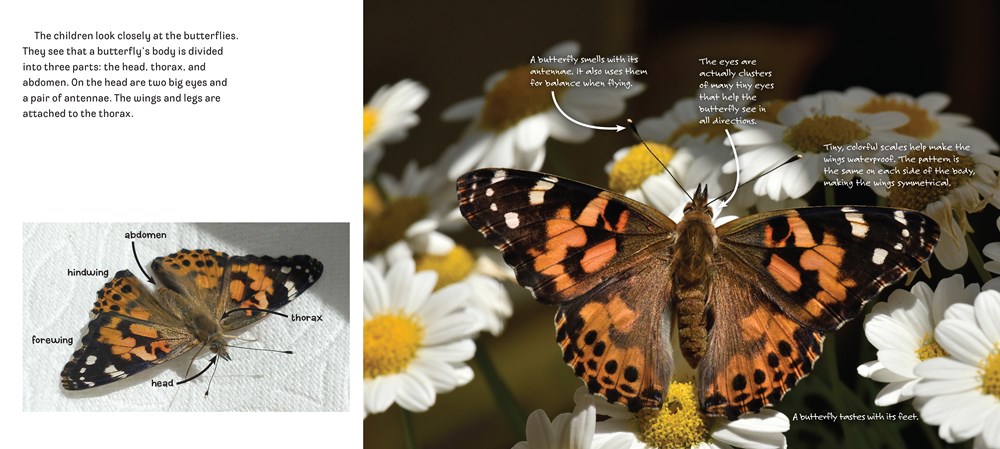
Full-color photographs and informative text take this STEM/STEAM story through the step-by-step process by which the class observed and cared for their caterpillars; feeding them, observing the stages of life, moving the chrysalises to a larger, netted environment, the exciting emergence of the painted lady butterflies from their cocoons, and their release into the world! Leaf-shaped callouts throughout the book provide additional caterpillar and butterfly facts, and back matter provides butterfly questions, vocabulary, and a nice list of online and print resources for further reading.

Butterflies in Room 6 brings a real-world look into a primary classroom – it’ll get kids excited about science, especially if this is one of your classroom projects. Pair this with The Very Hungry Caterpillar and the classic that my kids all read in their kindergarten classes, Deborah Heiligman’s From Caterpillar to Butterfly.

Posted in Early Reader, Non-Fiction, picture books

A math concept book with NO WRONG ANSWERS? Sign me up!

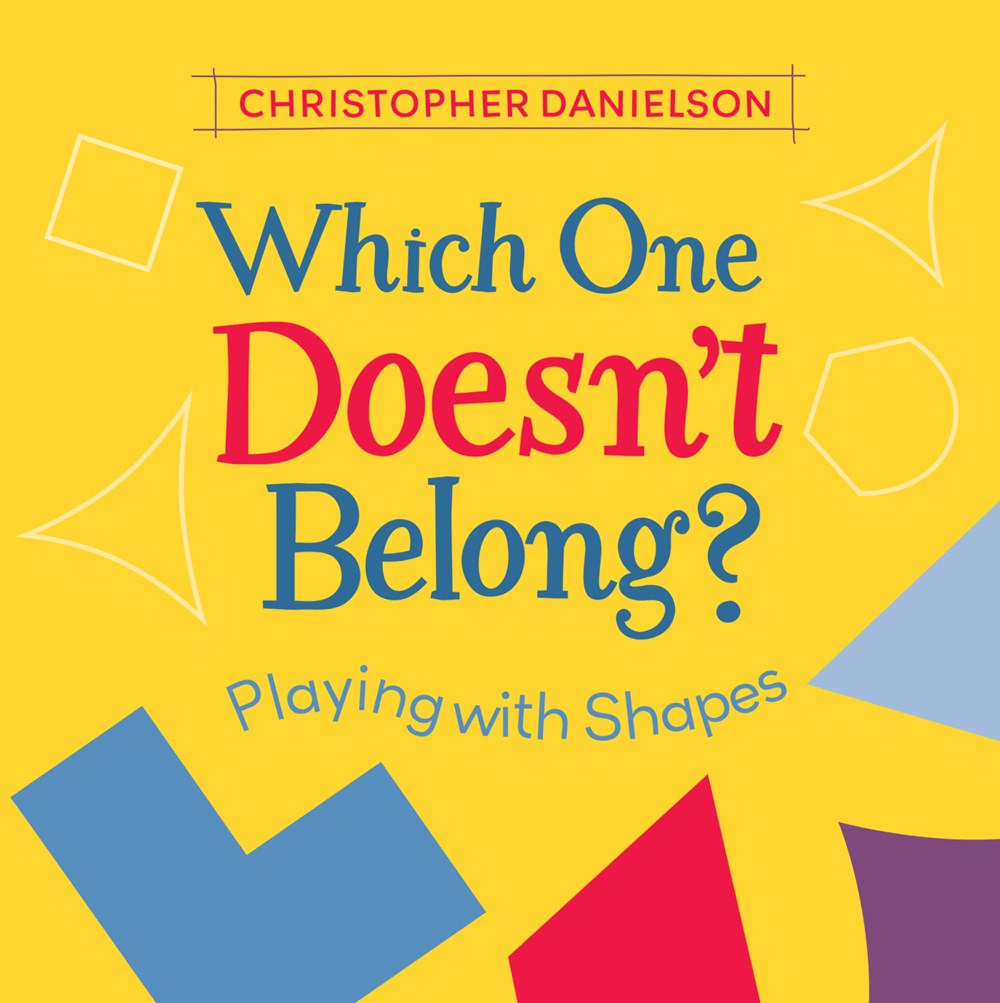
Which One Doesn’t Belong? Playing with Shapes, by Christopher Danielson, (Feb. 2019, Charlesbridge), $15.99, ISBN: 9781580899444

Ages 4-8

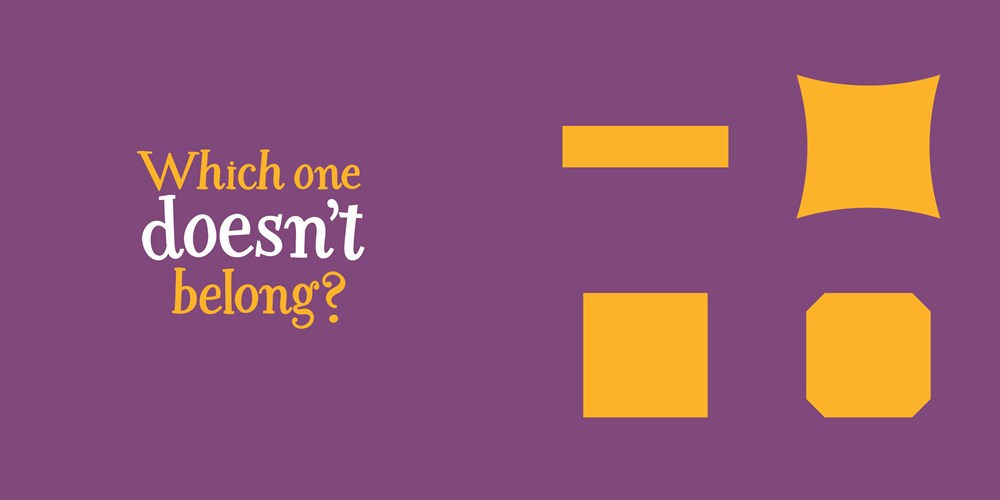
Math educator Christopher Danielson came up with a creative new way to get kids thinking about mathematical concepts: give them groups of shapes, and ask them, “What doesn’t belong?” The best part: NO WRONG ANSWERS. As the beginning explanation details, it’s all about the process, about critical thinking. One color could be different. A shape could be more squished, smooshed, or just look weirder than the others. It’s all in the eye, the mind, of the beholder here! Spreads alternate between layouts with shapes, and explanations on how every answer is correct, with supporting information like shapes, color, and other properties.

This is such a great way to make mathematics accessible to readers (kids and adults alike!). It doesn’t discourage anyone; it doesn’t make anyone’s answer, or rationale, wrong. Which One Doesn’t Belong shows readers how easy it is to approach things in a mathematical way: and this is coming from the lady who tells kids “the best way to do well in math is to not ask me for help with it”. Like the author himself says, “All properties count here; all ideas matter…”. Add this one to your nonfiction collections, build some programs around it for different age groups, and start making math more friendly to your readers!

Which One Doesn’t Belong? has a starred review from Kirkus and is the Winner of the Mathical Book Prize.

Posted in picture books

Black History, Baseball, and Boston: Waiting for Pumpsie

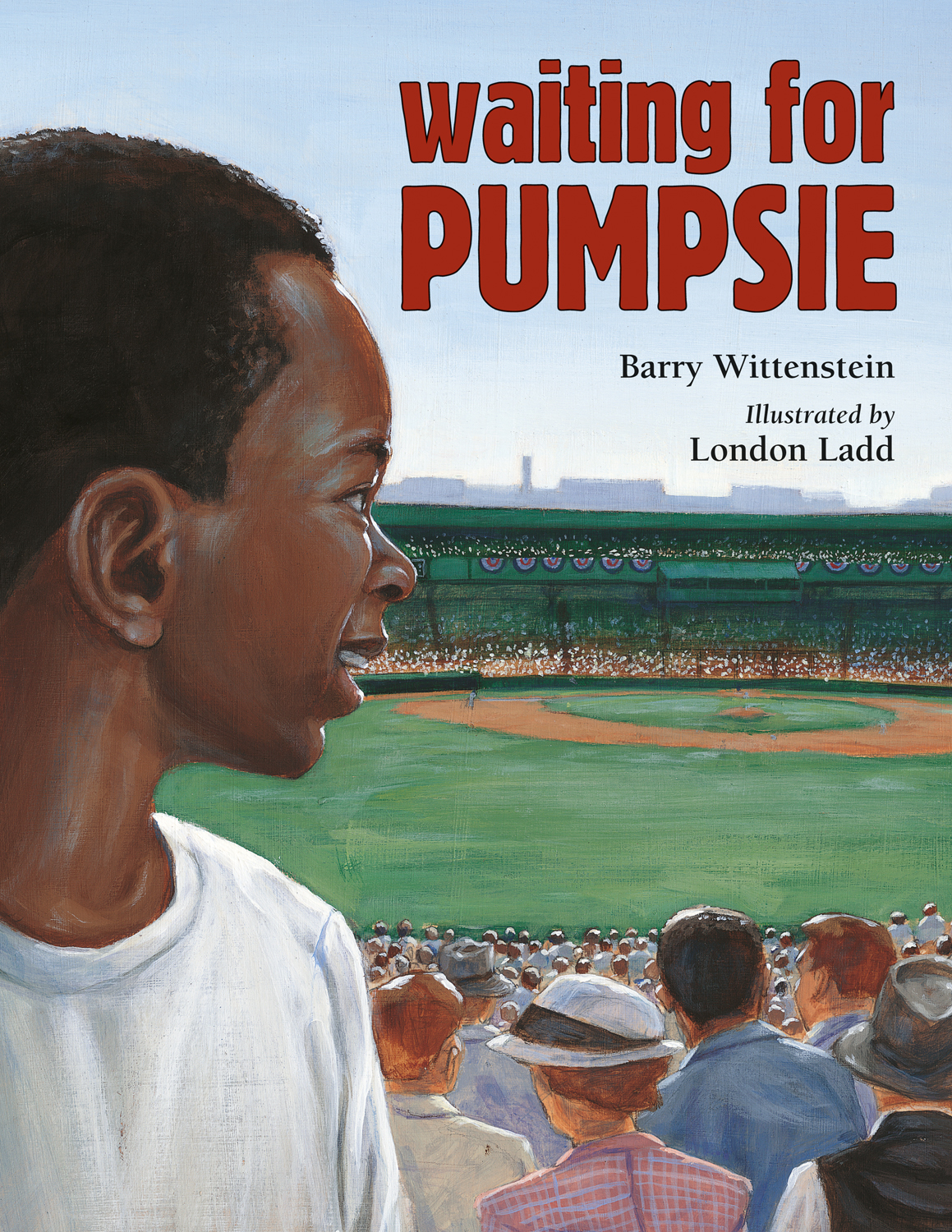
Waiting for Pumpsie, by Barry Wittenstein/Illustrated by London Ladd, (Feb. 2017, Charlesbridge), $16.99, ISBN: 9781580895453

Ages 5-9

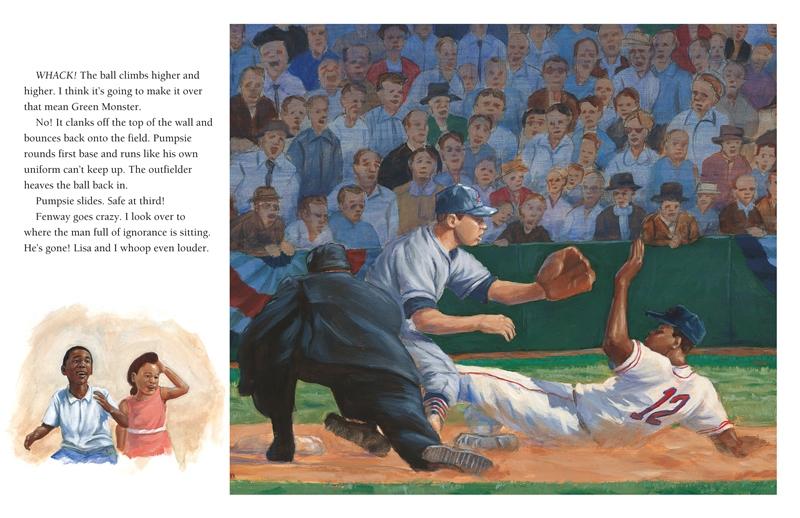
It’s 1959, and Bernard is a kid living in Boston who is crazy for the Red Sox. As much as he loves the Sox, though, he doesn’t understand why the Giants have Willie Mays, and the Dodgers had Jackie Robinson, but the Sox don’t have a black player. His dad agrees that it’s an excellent question, but seemingly one with no answer. Bernard and his baseball-loving family head to to Fenway Park for a Red Sox vs. New York Yankees game, but when the family cheers for Yankee Elston Howard – Mama encourages Bernard and his family to cheer for every African-American player, regardless of their team – they’re shouted down by a white fan, who tosses in a slur or two; a police officer tells Bernard and his family that “you people need to learn how to behave”, without a word to the instigator. Mama says change is coming soon, but Bernard has a hard time believing it when things like this happen, and when the Sox won’t even sign a black player. That changes when Pumpsie Green, a black player in the minor leagues, starts making the news. The Red Sox management seem to be dragging their feet on Pumpsie, and the fans – black AND white alike – start putting public pressure on the team to give Pumpsie a chance. It works, and Bernard and his family gather around the radio to listen to Pumpsie’s first game, an away game in Chicago. The Red Sox lose, but Pumpsie’s arrival is selling tickets and making news. Bernard and his family make sure to be at the next home game, to cheer on Pumpsie, and Bernard gets to see him play and see the Sox win! As Bernard heads home, he sees fans waving Pumpsie flags and holding up a picture of Ted Williams and Pumpsie, together in the dugout. Bernard has hope for the future. Looks like Mama was right after all.

Based on the story of baseball player Pumpsie Green’s 1959 arrival in Major League Baseball, Waiting for Pumpsie is powerful because it’s shown through a child’s eyes. Told in the first person by Bernard, we see how important representation is. Bernard says, after seeing Pumpsie play, that “one day, I’ll tell my kids how long we waited for Pumpsie Green. I’ll tell them how he dug his heels into the batter’s box. I’ll tell them how I pretended it was me, Bernard, sliding into third”. He and his family cheer for every African-American player, regardless of team affiliation, because they support civil rights and integration. It was time. It was long past time. An author’s note offers a little background on Pumpsie Green and the Red Sox’s long refusal to sign players of color, and the role of civil rights and fan pressure in their decision. There are some good sources for further reading. There’s a free, downloadable curriculum guide available.

The acrylic paint artwork uses warm colors and gives a vintage feel to the book, with baseball cards and tickets lending a scrapbook feel within the larger story.  If you don’t already have this in your collection, get it in there. Waiting for Pumpsie has a starred review from Kirkus.

Barry Wittenstein has tended bar, driven a taxi, worked at CBS Records and CBS News back in the day, spent a decade writing music and lyrics, toiled six years as a web editor and writer for Major League Baseball, and three years as a substitute elementary school teacher.  He could be Walter Mitty’s brother.
Barry loves to write narrative nonfiction picture books. He is the author of Waiting for Pumpsie and The Boo-Boos That Changed the World. In 2019, he will publish two more nonfiction picture books—Sonny’s Bridge, about the legendary jazz saxophonist Sonny Rollins; and A Place to Land (with illustrations by Caldecott Medalist Jerry Pinkney) about how Martin Luther King Jr. wrote his “I Have a Dream” speech. He is currently working on a YA novel. He lives in New York City with his wife. To learn more, and to download free curriculum guides, visit his website: https://onedogwoof.com/ or follow him on Twitter: @bwittbooks
Posted in Fiction, Intermediate, Realistic Fiction

Celebrate holidays with Ellie May!

Ellie May on President’s Day, by Hillary Homzie/Illustrated by Jeffrey Ebbeler, (Nov. 2018, Charlesbridge), $14.99, ISBN: 9781580898195

Ages 6-10

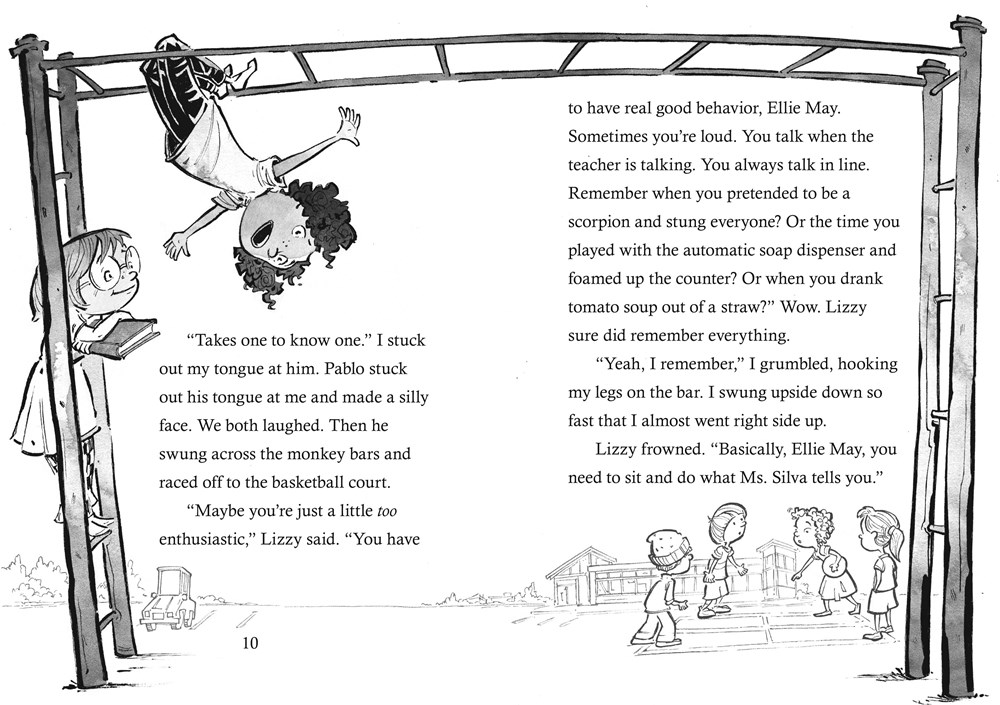
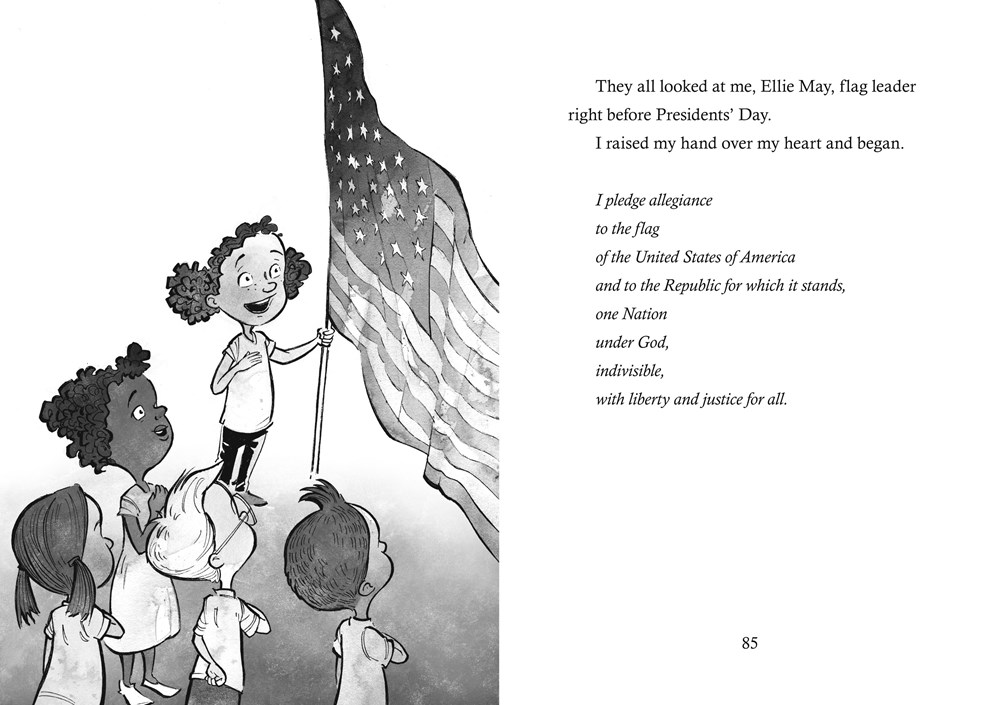
Second grader Ellie May loves learning about the US Presidents and is desperate to show her patriotism during Presidents’ Week at school. She just has to be flag leader during the Pledge of Allegiance during this week! She is on a mission to be presidential and to make sure her teacher, Ms. Silva, knows it; this way, she’ll be sure to get picked. But Ellie can’t seem to catch a break, whether she’s chopping the class plant (a cactus!) while trying to relive George Washington and the cherry tree, or taking apart the pencil sharpener and making a big mess, while attempting to tinker like Abraham Lincoln. Don’t even ask about how she tried to make her little sister, Midge, a flag, so she could teach her the Pledge at home. Ellie’s got a good heart and means well – she just has to learn to let that shine through, and most importantly, to be patient.

This is a brand new chapter book series that celebrates popular classroom holidays, and stars a dynamic, funny child of color named Ellie May. Second graders will love her, and they’re sure to see themselves reflected in her and her quest to be noticed. Patience? Who needs patience, when you’re eager? Ellie discovers she has a lot to learn as each of her attempts to show off for her teacher end in near catastrophe, but she’s surrounded by supportive friends, family, and teachers who are there to slow Ellie down and put her on the right path. Written in the first person from Ellie’s point of view, and illustrated with black and white sketches throughout, kids will enjoy this one – and it’s a great series to feature in classrooms and libraries. back matter includes the history of the Pledge of Allegiance, and of the Presidents’ Day holiday.


Ellie May on April Fools’ Day, by Hillary Homzie/Illustrated by Jeffrey Ebbeler, (Dec. 2018, Charlesbridge), $14.99, ISBN: 9781580898201

Ages 6-10

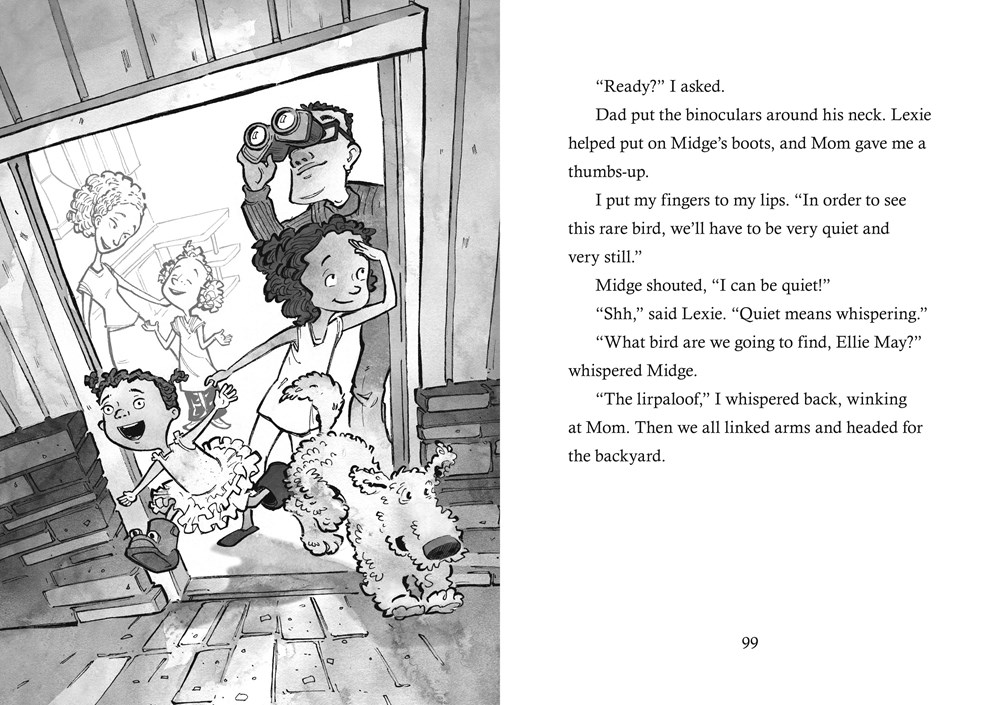
Ellie May is back, and is ready for April Fools’ Day! Her class is allowed to celebrate, as long as the pranks are made in good fun. Ellie decides she’s going to prank her friend, Ava, whose birthday celebration is taking place on the same day! After a few attempts at pranks fall flat at home and at school, she’s ready for the big day: but this is Ellie May, after all, and her attempt at a silly goof goes awry when she gets carried away in the classroom. After sitting it out and thinking it over, Ellie May starts understanding the true meaning of a good-natured prank, apologizes to her friend, Mo, and to Ava, and celebrates April Fool’s Day with her whole class as her teacher takes them outside for a rare bird sighting!

This second Ellie May story is every bit as fun as the first one. Ellie is trying so hard to make a name for herself that she gets a little carried away, but it’s never mean-spirited, and she’s always got someone there to point her in the right direction. Kids will see themselves and their classmates in this one, and the story lends itself to a good discussion about how getting carried away can lead to hurt feelings or hurt body parts. The teacher’s April Fools’ Day activity is a fun one – I may have to try that one in the library. Back matter includes an explanation on April Fools’ Day’s history and traditions. Black and white illustrations throughout add to the fun and promote reader interest.

This series is going on my to-buy list. Chapter books do really well here at my library, and books about classroom holidays – holidays, in general, for my growing readers – are always in high demand. I’ll have to mention this series to a few visiting teachers, too!


Posted in Early Reader, Fiction, picture books

In First Laugh Welcome, Baby!, a family waits…

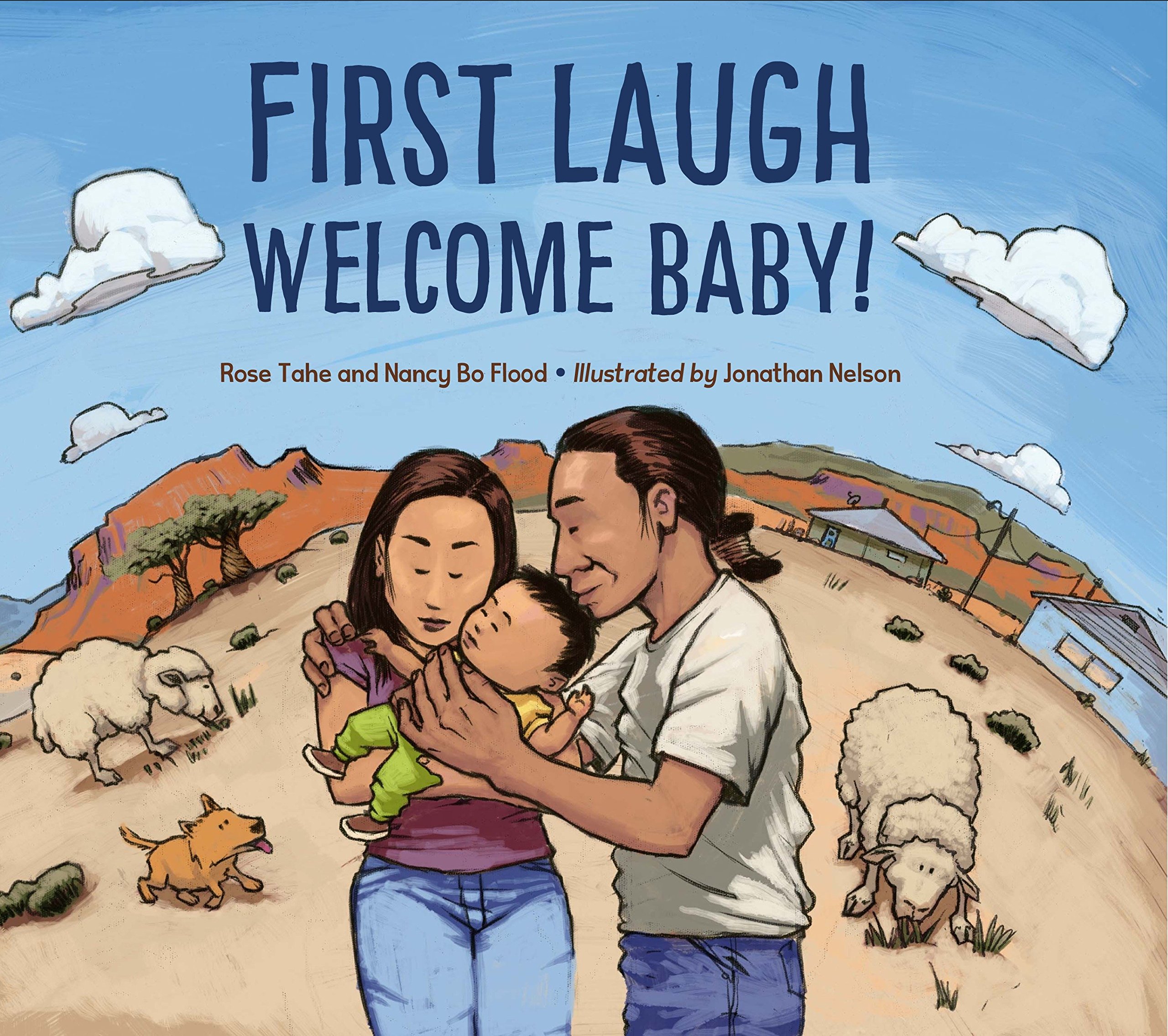
First Laugh Welcome, Baby!, by Rose Ann Tahe and Nancy Bo Flood/Illustrated by Jonathan Nelson, (Aug. 2018, Charlesbridge), $16.99, ISBN: 9781580897945

Ages 5-8

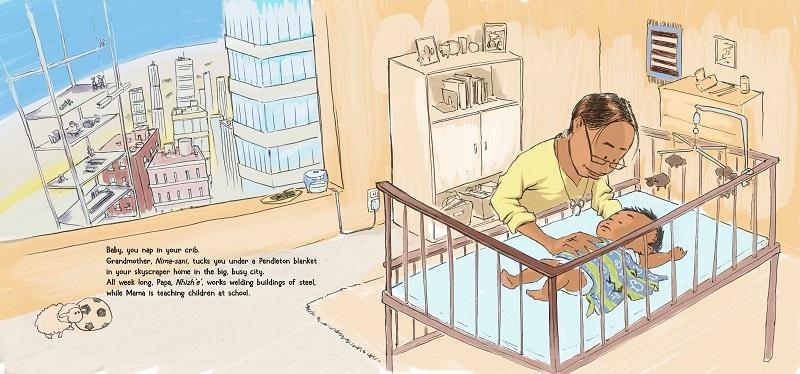
A Navajo family waits for baby’s first laugh. Who will be the first to hear it? Will nima-sami (grandmother) hear it, as she tucks Baby in for a nap? Will it be big sister (nadi), who cooks Baby a tasty meal? Maybe it will be nima (mama), who sits weaving while Baby rests in a papoose. Or will it be cheii (grandpa), who splashes Baby with water? Everyone in the family is waiting, kissing, tickling, hugging, and singing, as Baby squirms, yawns, frowns, until… suddenly… a smile! Let the First Laugh celebration begin!

First Laugh Welcome, Baby is a beautiful look at a Navajo tradition; the First Laugh Celebration is a child’s first formal welcome into a family and clans. The lyrical story is filled with Navajo words and glimpses of Navajo life, woven into a story about the joy of a baby’s first laugh and the celebration it brings to families and communities. Jonathan Nelson’s pencil, acrylic, and Photoshop artwork create a loving portrait of a family that spends time together both in the city and on a Navajo reservation; they eat together, enjoy nature together, and socialize together in settings primarily illustrated with earthy tones and bold lines.

Back matter includes author’s notes from the late Rose Ann Tahe and Nancy Bo Flood, and an illustrator’s note from Jonathan Nelson; a note about the First Laugh Celebration, and ceremonies in other cultures, including Muslim, Nigerian, and Jewish families.

Nancy Bo Flood’s Soldier Sister, Fly Home is a powerful middle grade story about a Navajo family; First Laugh is a wonderful picture book that introduces younger readers to First Nation families. Please, please, please, put these and other books by indigenous authors and illustrators in your bookshelves and in front of your readers.

Posted in Early Reader, Non-Fiction, Preschool Reads

Baby Loves Science – big ideas for little ones

I’m all for introducing science in all its wonderful forms to kids as early as possible, and all about introducing new vocabulary to kids, so science and math don’t scare them as they get bigger. I haven’t read any of the Baby Loves… Science! series by Ruth Spiro and illustrated by Irene Chan, so I started with the two newest books, Baby Loves Gravity! and Baby Loves Coding!

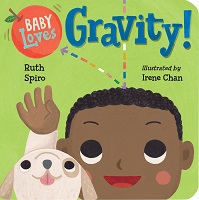
Baby Loves Gravity, by Ruth Spiro/Illustrated by Irene Chan, (June 2018, Charlesbridge), $8.99, ISBN: 9781580898362

Baby drops a noodle, and Puppy gobbles it up. How does that noodle fall? Gravity! Simple enough concept to explain to a toddler, and that’s how Baby Loves Gravity! starts out: simple and relatable. From there, we get a clear explanation of matter, mass, and gravity, and how it works on the sun, moon, and earth’s pull on us here. It’s clear and nicely illustrated, but this is a lot of information, even for toddlers, no matter how simply it’s phrased. I liked the illustrations, was pleased to see a child of color as the star of the show, but would read the beginning and ending, where baby slides down a slide, illustrating gravity, for a toddler STEAM or science storytime. I would rather test this out in a Kindergarten-level science storytime. The board book format makes for easy holding, and the illustrations are large, bright, and easily seen by a circle time group of kids. I could work with a group of kindergarteners, even pre-kindergarteners, in a science workshop using this as a companion text.


Baby Loves Coding!, by Ruth Spiro/Illustrated by Irene Chan, (June 2018, Charlesbridge), $8.99, ISBN: 9781580898843

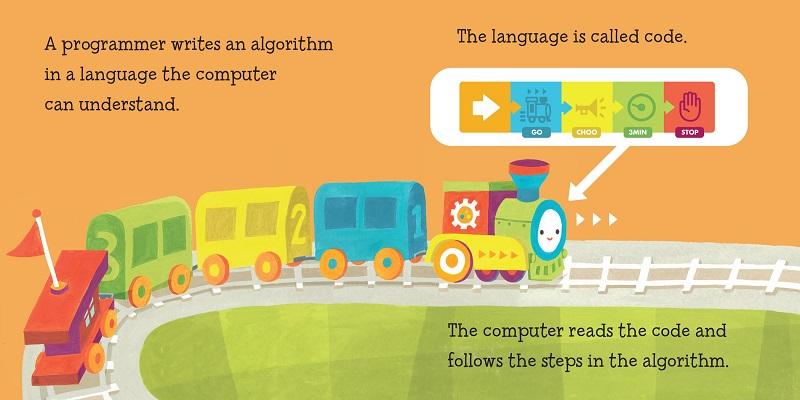
Baby’s playing choo-choo, and wants to add a red car to his train. Let’s follow him as he walks over! Baby Loves Coding features a child of cover on the cover, and is an adorably illustrated, clearly laid out way to introduce coding to kids, but this is also way above a little one’s head. The first few spreads, explaining how baby walks to the toy box, are great – you can get kids up and moving along with you on this one – but the text launches into an explanation of algorithms, programmers, and reading code, and this is just going to lose little ones. The pictures do all the work here, illustrating, with colorful interlocking blocks, how code fits together, like the cars of a train. I do love the explanations and the artwork, and the idea of getting kids up and moving works with CS Unplugged activities I’ve done in my library. I’ve used Code.org’s curriculum; CS Unplugged also has some great lesson plans and printables.

My advice? Use these with your pre-k and Kindergarten science storytimes. They’re great books for the right age.

Posted in Intermediate, Middle Grade, Middle School, Non-Fiction, Non-fiction, Non-Fiction, Tween Reads

BIG Summer Nonfiction Reads Roundup!

From sharks, to space, to stories of survival in the wild, I’ve got books for all sorts of nonfiction tastes! Let’s start with the oogie stuff and go from there.

They Lost Their Heads! What Happened to Washington’s Teeth, Einstein’s Brain, and Other Famous Body Parts, by Carlyn Beccia, (Apr. 2018, Bloomsbury), $18.99, ISBN: 9780802737458

Recommended for readers 10+

If you have readers who loved Georgia Bragg and Kevin O’Malley’s books, How They Croaked: Awful Ends of the Awfully Famous, and How They Choked: Failures, Flops, and Flaws of the Awfully Famous, this is a home run! Learn what happened to the famous body parts of 17 famous folks, and pick up some knowledge about other body parts and how they influenced science medicine. If you’ve ever ever wanted to know what happened to Thomas Edison’s last breath or Van Gogh’s missing ear, this is the place to go. You also learn cool stuff like what rots first after you die (psst… it’s the intestines). Loaded with black and white drawings, funny footnotes, sources, an index, and a bibliography. This one’s a hit for upper elementary readers, all the way through high school. They Lost Their Heads! has a starred review from Booklist.

StarTalk with Neil DeGrasse Tyson (Young Readers Edition), by National Geographic, (March 2018, National Geographic), $17.99, ISBN: 9781426330872

Recommended for readers 10+

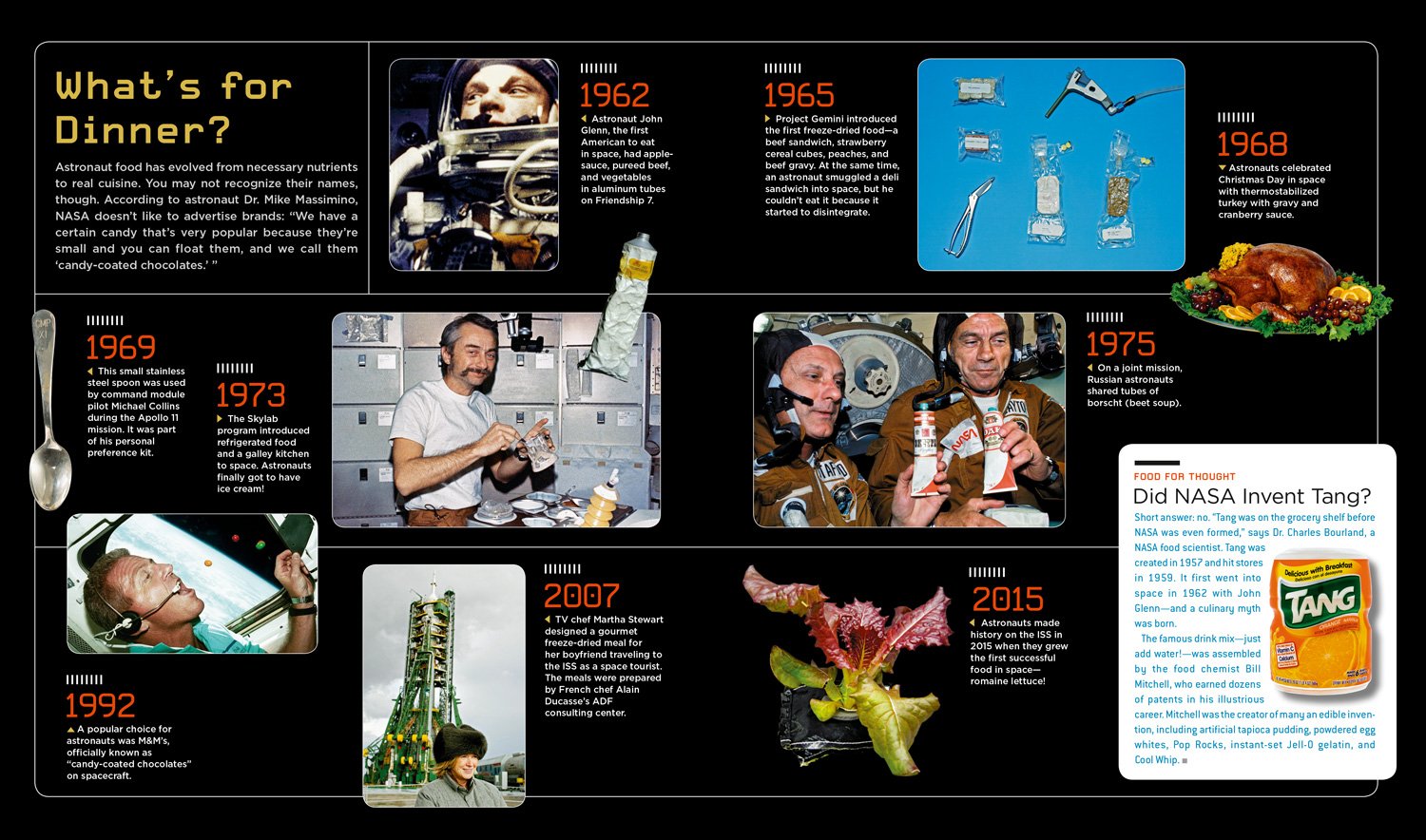
I LOVE Neil DeGrasse Tyson and evangelize his StarTalk Radio podcast any chance I get. (Seriously, it’s great stuff.) NatGeo’s Young Readers edition of the StarTalk book is must-booktalk summer reading. Get your Summer Reading budget and buy some astronaut ice cream; while you and the kids feast, read the section on why you can’t get a pulled pork sandwich in space; find out what the Vomit Comet is; and read mini-bios on scientists like Carl Sagan. Not so much with the food? There are also sections on zombies and superheroes. Debate the eternal question: Could the Death Star really blow up a planet? There’s so much to discover in this book that every kid is darn near guaranteed to find something to interest him or her. (Psst… get an extra copy for yourself. You’ll thank me.)


Survivors: Extraordinary tales from the Wild and Beyond, by David Long/Illustrated by Kerry Hyndman, (Sept. 2017, Faber & Faber), $19.95, ISBN: 9780571316014

Recommended for readers 9-13

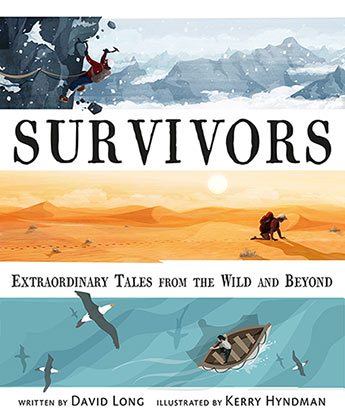
Do you know fans of Lauren Tarshis’ I Survived series? I’ve never been able to keep those books on the shelves, no matter which library I’ve been at. Middle graders go berserk for that series, and they’ll LOVE this oversized, illustrated anthology of true survival tales. There are 23 stories in here; the most famous being explorer Ernest Shackleton, who saved his crew when a 1914 Antarctic expedition put their lives in danger. There’s also the story of Hugh Glass, a “fur trapper and adventurer” who made the critical error of surprising a mother bear and her cubs by the Missouri River in 1823, or Mauro Prosperi, a runner competing in the 1994 Marathon of the Sands through the Sahara Desert, found himself in the middle of a sandstorm. Not crazy enough for your readers? There’s also a Hollywood pilot who crashed INSIDE a Hawaiian volcano in 1992. The stories are fast-paced, beautifully illustrated in color, and are perfect for adventure fans. Best part? All the stories are TRUE.


The Ultimate Book of Sharks, by Brian Skerry, Elizabeth Carney, & Sarah Wassner Flynn, (May 2018, National Geographic Kids), $19.99, ISBN: 9781426330711

Recommended for readers 7-13

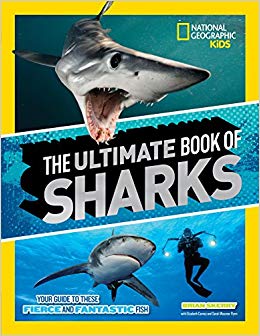
Kids love sharks. This is a fact. The Ultimate Book of Sharks has all the info and pictures your shark-loving fans crave, just in time for Shark Week, which kicks off on July 22 (get your printables and programs lined up – I’ll do a separate post about Shark Week as it gets closer). The NatGeo folks bust myths about sharks, give us a look at shark anatomy, and – as always – provide loads of information about conservation and preservation, and how we can all help keep sharks, and our waters, safe and clean. This volume is chock full of fast facts and lists, with Up-Close Encounters, where marine wildlife photojournalist and author Brian Skerry shares some of his stories with readers. There’s an index at the end. This volume is an absolute must-add to your science and nature collections.


Red Alert! Endangered Animals Around the World, by Catherin Barr/Illustrated by Anne Wilson, (July 2018, Charlesbridge), $17.99, ISBN: 9781580898393

Recommended for readers 7-11

This is such a fun book. Think of a Choose Your Own Adventure about endangered animals, and you’ve got Red Alert! Red Alert! profiles 15 animals on the International Union for Conservation of Nature’s (IUCN) list. A beginning note explains the organization’s “Red List”: a list of endangered plants, animals, and fungi, and lists some of the categories mentioned in the book. Colorful endpapers start the fun: the first, a map of the world, with the 15 profiled animals drawn into their world regions; final endpapers highlight a plethora of endangered animals. From here, readers can pick a place to explore: deserts, forests, mountains, grasslands, rivers, or oceans; pick a creature from each of these regions, and go to its page to read further. You can also read the book straight through. Spreads include the animals’ scientific names, facts, endangered category, and factors contributing to the endangerment of the species. A section at the end provides resources for more information on taking conservation action. A solid introduction to environmental action for younger readers.


National Geographic Kids Almanac (2019 Edition), (May 2018, National Geographic Kids), $14.99, ISBN: 9781426330131

Recommended for readers 8-13

Another guaranteed must-have from NatGeo Kids, this latest edition of their Kids Almanac shows readers a baby animal “tweet-off” between several zoos and aquariums (it’s from 2017, but who doesn’t want to revisit that simpler, lovelier time?), talks about updates in robotics and technology, dwarf planets, and has a Special Gross Edition of their Just Joking feature. Facts, quizzes, updated maps and stats, and homework help ideas all in one volume? This is one desk reference every kid should have – put one on your shelves, and keep one in your reference area, to be on the safe side.


How’s that for a start? Next time a kid comes in, stressed about needing a nonfiction book, consider yourself ready.

Posted in picture books, Preschool Reads

Someone New shows students welcoming new friends

Someone New, by Anne Sibley O’Brien, (July 2018, Charlesbridge), $16.99, ISBN: 9781580898317

Recommended for readers 4+

I’m New Here (2015) explored immigration from the points of view of three young newcomers: Maria, Jin, and Fatima. Someone New now flips the dialogue and shows us how new classmates perceive – and eventually befriend – these new kids in town. At first, Maria, Jin, and Fatima are shy, a bit withdrawn, and their classmates don’t know how to work with that. Understandable; these are kids we’re dealing with. Strong and honest statements like, “I feel uncomfortable”; “I don’t know what to do”; and “I can’t figure out to help” give kids words to put to the new feelings they may experience when meeting kids they don’t know.

Since kids are so much smarter than we are, though, they figure it out quickly: Jesse, a blonde white boy, invites Maria to play soccer with his group and discovers that she’s really good! Jason, a dark-skinned boy, can’t read what Jin writes, but smiles, prompting Jin to smile back; eventually, Jin teaches Jason how to write his name in Korean – it’s like a secret code! – and they draw comics together. Emma, a blonde white girl, draws a picture of her classmate, Fatima, and her together, giving Fatima the comfort and safety she needs to open up to Emma about her family. Each of these new children have things to share; they just needed the safety of that first effort. As Jason learns, when Jin smiles at him, “Maybe a smile is like a superpower.” The watercolor and digital illustrations stand out against the plain white space to make these characters stand out.

Someone New tells its story in brief, eloquent sentences with word balloons that allow characters to communicate in their own words. It is a book that needs to be on every shelf in every library and school. You’ll notice I recommend this book for ages 4+; I think it’s a book that all adults should be reading right now. Pick up the award-winning I’m New Here and make sure you tell these stories to anyone within earshot. Someone New has a starred review from Kirkus.

Posted in Non-Fiction, Non-Fiction, picture books

The Boo-Boos That Changed the World: An accidental invention!

Kids love Band-Aids, right? My kids have all come to me, asking for a fistful of Band-Aids for some nearly invisible wound. I remember covering my own teddy bears with Band-Aids when I played with my doctor kit. Working around books and paper as much as I do, I can tell you that there have been days where I’m walking around with two or three of the suckers on various fingers, especially when I’m doing program prep and put literal blood, sweat, and tears into a project I’m working on for the kids. Whether they’re the original plain, or decorated with Transformers, Band-Aids are a great example of an invention that fills a need and became so much more – so how did this happen?

The Boo-Boos That Changed the World: A True Story About an Accidental Invention (Really!),
by Barry Wittenstein/Illustrated by Chris Hsu,
(Feb. 2018, Charlesbridge), $16.99, ISBN: 978-1-58089-745-7

Recommended for readers 6-10

In the 1920s, a cotton buyer for Johnson & Johnson named Earle Dickson married Josephine, settled in New Brunswick, New Jersey, and started their lives together. But Josephine was a bit accident-prone; she’d cut herself while cooking, bumped and bruised herself going about her daily business, you get the drift. (C’mon, though: who hasn’t grated knuckles, fingernails, and the occasional fingertip on those savage cheese graters?) Poor Josephine was going through dishrags at an astonishing rate, and Earle, being the loving husband he was, started looking for solutions. He took a long piece of adhesive tape and stuck sterile gauze to them every few inches: voila! The Band-Aid prototype was born! The bandages evolved for easier and quicker application and were made easier to apply and reached worldwide usage, going overseas during World War II to the soldiers fighting in Europe, even as kids were testing their limits with scratches and cuts at home. The End. (Really.)

I enjoy a good nonfiction book I can give to younger readers; I’ve had big success with everyday inventions like hot chocolate and earmuffs, thanks to Easy Readers on the topics, and Boo-Boos is a great addition to younger nonfiction collections. Big enough to spotlight the mixed media and Photoshop artwork, all of which is sepia-toned to give a real vintage-y feel to this story. I love the Band-Aid endpapers that bring you in and escort you out of the story, and the sweet love story at the heart of this invention story is just adorable. I love the kid-like narration, which starts and stops with each major moment: “The End. Actually, no, wait…” It’s like listening to my own 5 year-old, or any of my library kiddos, describing a movie, big happening at school, or family event. There’s an author’s note, Earle Dickson time line, a timeline of medical inventions from the 1920s and 1930s, and a list of further resources for anyone who wants to learn more.

The Boo-Boos That Changed the World is good reading, and just good fun. Hand out some Band-Aids (licensed characters, please, we’re not cruel) at a storytime, or raffle off a box of them for a great reader report! There’s a downloadable curriculum guide on the way, and you can listen to a Charlesbridge podcast interview with author Barry Wittenstein right here. The book has a starred review from Kirkus.

Giveaway!

Want a shot at your own copy of Boo-Boos? Enter this Rafflecopter giveaway! (US addresses only, please.)
Author Barry Wittenstein has always been involved with writing, from contributing to his high school and college newspapers, to writing and performing poetry on stage in San Francisco, songwriting, sports writing, and now picture books. He has worked at CBS Records, CBS News, and was a web editor and writer for Major League Baseball. He is now an elementary-school substitute teacher and children’s author.

Barry particularly likes nonfiction, and profiling mostly unknown people and events whose stories have never been told in children’s literature. He is the author of Waiting for Pumpsie and The Boo-Boos That Changed the World. He lives in New York City. To learn more, visit his website: https://onedogwoof.com/ or on Twitter: @bwittbooks


Praise for THE BOO-BOOS THAT CHANGED THE WORLD

★”Appealingly designed and illustrated, an engaging, fun story about the inspiration and inventor of that essential staple of home first aid.” — Kirkus Reviews (starred review)

Posted in Preschool Reads, Toddler Reads

Spring Books for Toddlers!

There are so many great toddler and preschoooler books hitting shelves this Spring! There are picture books, board books, lift the flap books, and slide books – all sorts of books for little ones to explore and enjoy. Let’s take a look at a few.


The Three Little Pugs, by Nina Victor Crittenden,
(March 2018, little bee), $17.99, ISBN: 978-1-4998-05279-1
Recommended for ages 2-7

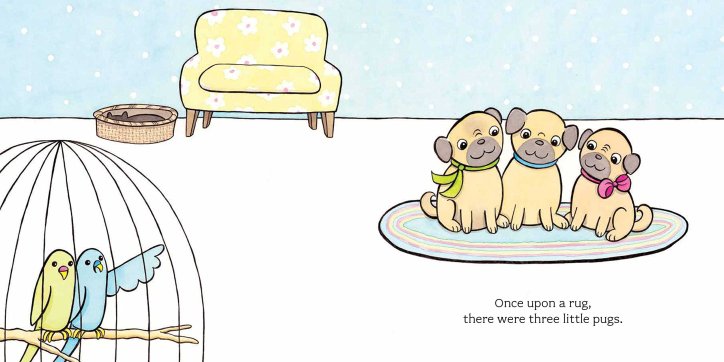
Three little pugs – Gordy, Jilly, and Zoie – love to play, and they really love to nap in their big cozy basket. One day, they head over to their basket for their morning nap, but – oh no! – the big bad cat is in their basket! The three little pugs each devise a plan to get the cat out of their basket, using straws, sticks, and bricks: sound familiar? This cute little take on the classic fairy tale, The Three Little Pigs, ends up a lot happier for all, with decidedly less huffing and puffing. Kid-friendly art makes for a fun read-aloud or quiet time; endpapers add to the fun, with framed photos of the pugs, cat, and other pets looking warily at one another at first; closing endpapers have everyone posing in harmony. I’d pull out some plush cats and dogs (bean-bag size would be great) for small storytimes to play with, and read as part of a pet storytime or the original Three Little Pigs.


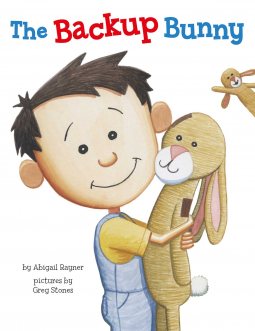
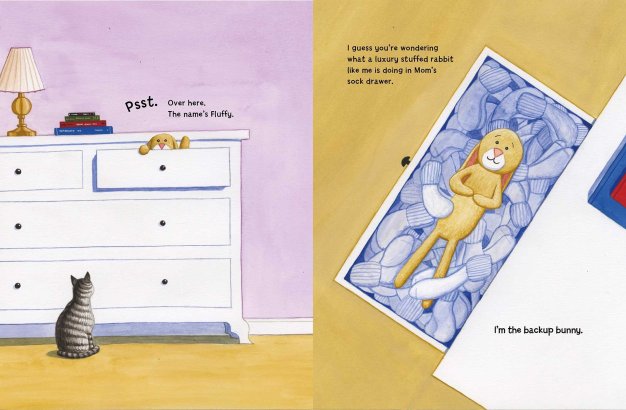
The Backup Bunny, by Abigail Rayner/Illustrated by Greg Stones,
(March 2018, North South Books), $17.99, ISBN: 9780735842823
Recommended for readers 3-8

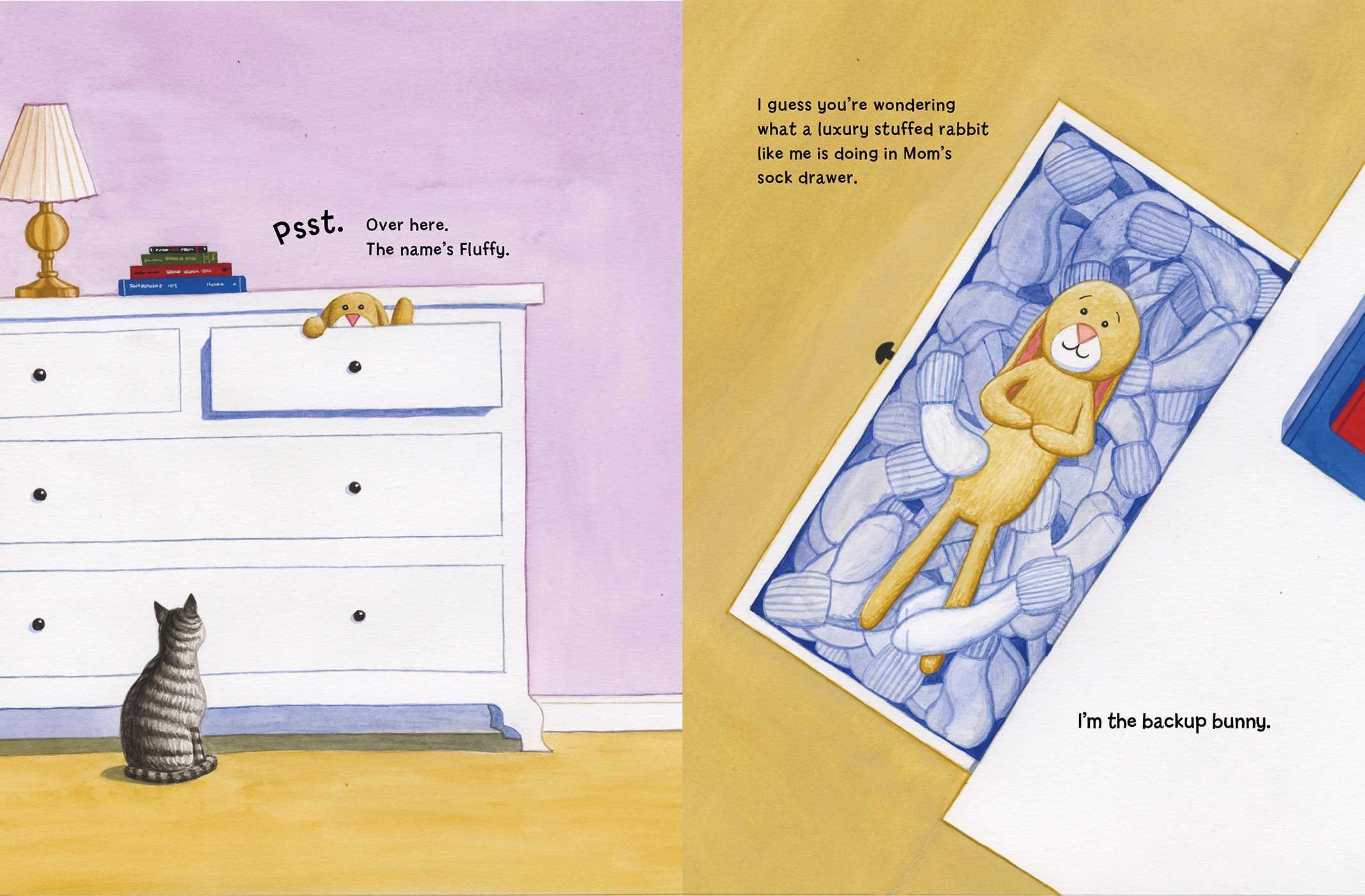
Meet Fluffy. He’s soft and lush, and he lives in Mom’s sock drawer. You see, he’s the backup bunny. Parents, you know the Backup Bunny – the one we’ve got just in case the Luvvie/Lovey goes missing; the one we hope will stave off the tears. That’s exactly what happens when Max misplaces Bunny, and Fluffy’s called into service. But Fluffy isn’t right! His ears don’t feel right – he’s too new, he hasn’t been loved enough. Imagine how poor Fluffy feels, after waiting all this time to be played with; to be thrown on the floor, hung by his ears on a clothesline, and dunked in the mud – but wait! That’s the key! As Max plays with Fluffy, he breaks him in – and before Fluffy realizes it, Bunny’s been found, and Fluffy finds himself part of the new Lovey rotation. Kids will love The Backup Bunny because they’ll get it: the stress of missing a beloved toy and the frustration of a toy that isn’t quite right. The artwork is gentle and soft, with warm browns, and soft blues inviting the reader into a world of stuffed toys, cushiony beds, and soft sock drawers. The endpapers are adorable, with Fluffy hanging out, waiting by himself on the front papers, only to be part of the Max/Bunny group on the back pages. Caregivers will appreciate The Backup Bunny, because we’ve all been there. Overall, a nice addition to picture book collections, and a fun addition to storytimes where kids bring their own stuffies to cuddle.
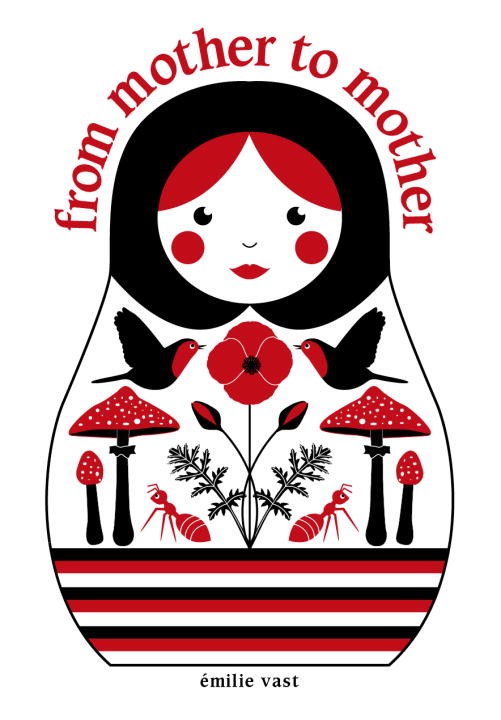
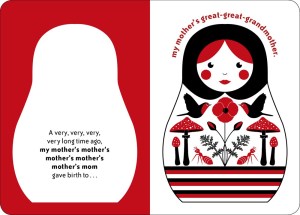
From Mother to Mother, by Émilie Vast,
(March 2018, Charlesbridge), $7.99, ISBN: 9781580898133
Recommended for readers from 0-4

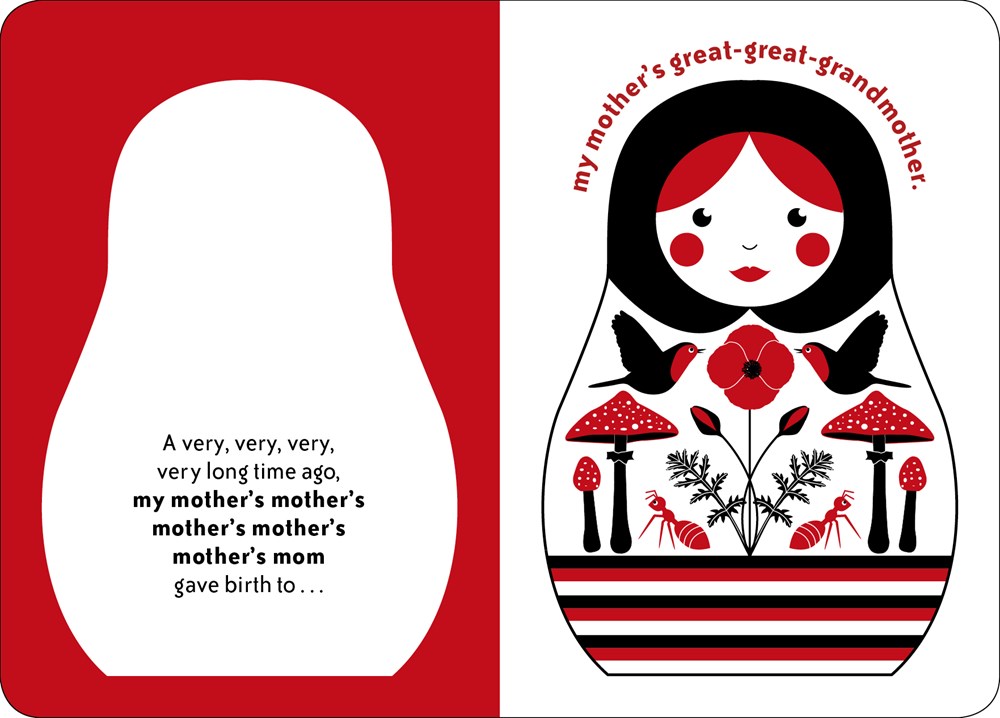
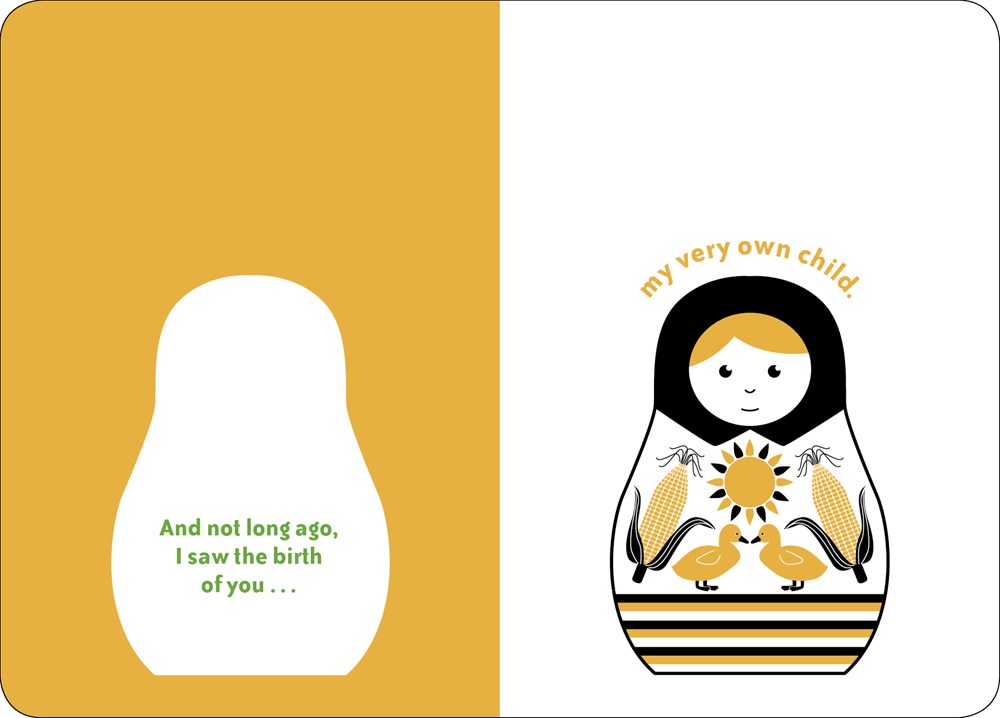
Émilie Vast has two adorable board books out this month, celebrating the relationship between generations. From Mother to Mother uses Russian matryoshka nesting doll artwork to illustrate ancestry. Narrated as a mother to a child, each page traces a new branch in the family tree: from mother’s great-great-grandmother to “my own child”. Each nesting doll becomes progressively smaller, with the child being the smallest doll; each doll and its accompanying artwork is a different color, with unique artwork.
 

From Father to Father, by Émilie Vast,
(March 2018, Charlesbridge), $7.99, ISBN: 9781580898140
Recommended for readers from 0-4

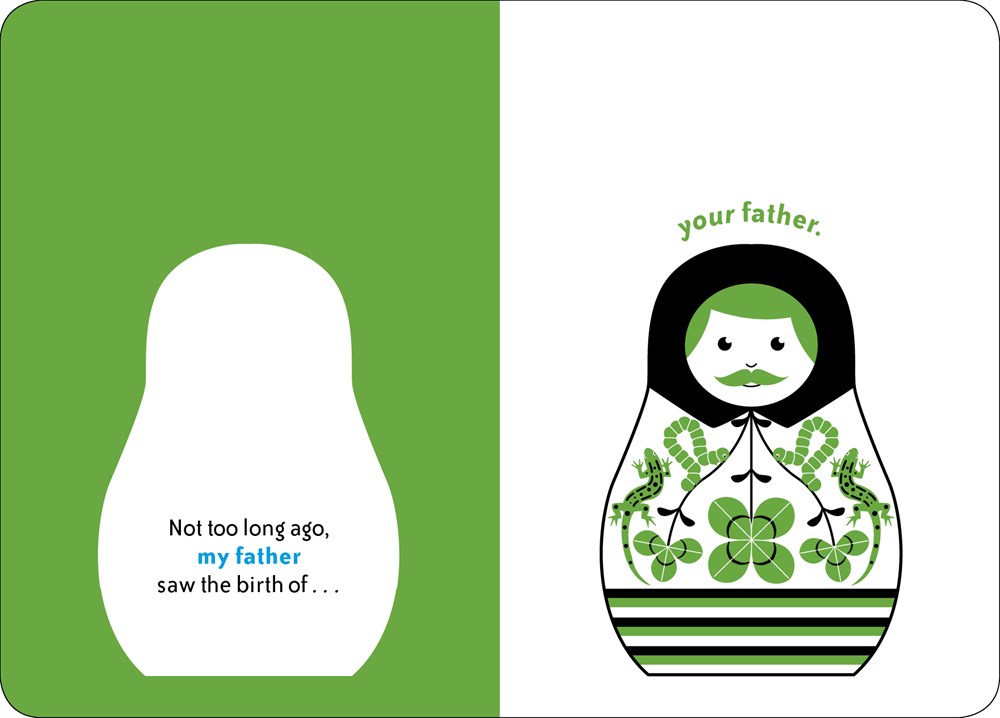
Émilie Vast’s From Father to Father, the companion to From Mother to Mother, celebrates the link between fathers. Using male nesting dolls and narrated by a father to his son, each spread describes one generation’s link to another, from the birth of a great-great-grandfather to the narrator’s own son.  The artwork, as with From Mother to Mother,  is inspired by nature and changes color and design with each generation; dolls grow smaller from great-grandparents to child, throughout the book.

These are adorable board books that will resonate with kids as easily as they will with adults, and it’s a wonderful way to show children the relationship between parents, grandparents, and beyond. I can’t wait to get these on my shelves (and possibly, my bookshelf at home) at my library, where my community often sees grandparents as caregivers for the little ones. Books like this form beautiful bonds.


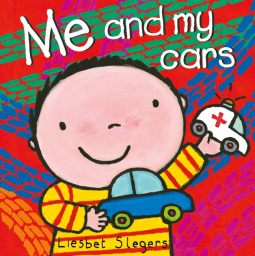
Me and My Cars, by Liesbet Slegers,
(Apr. 2018, Clavis Publishing), $11.95, ISBN: 9781605373997
Recommended for readers 1-4

A little boy takes readers along with him on a tour of all different types of cars: vehicles that get us from one place to another, like buses and vans; vehicles that help others, like ambulances and police cars; vehicles that get hard work done, like tractors and street sweepers; and vehicles that race, like racecars and Formula 1 racecars. Perfect for cars and truck fans, this is going to be a staple in my early childhood area. The colors are bright, the lines and fonts are bold, and books about vehicles are a home run for little readers.
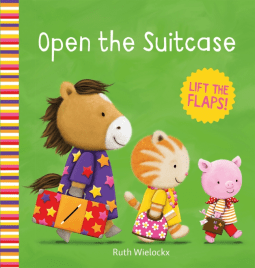
 

Open the Suitcase, by Ruth Wielockx,
(Apr. 2018, Clavis Publishing), $17.95, ISBN: 9781605374017
Recommended for readers 3-5

Different animals have different jobs! Can you guess which animal has which job based on their suitcase?  (The clothing hints help.) Meet different friends with different jobs, with a fun flap on each spread that gives readers a peek inside their work bag. See what a teacher, a magician, a doctor, and a car mechanic take to work with them! There’s an opportunity to talk to readers about what they would pack in an overnight bag for a sleepover; use that as a chance to talk about what goes in your bag when you go on vacation; what goes in Mom’s or Dad’s bag, and what different people in careers may have in their bags. What about what goes in a diaper bag? (Eww! Not stinky diapers, I hope!) A fun addition to toddler and preschooler bookshelves and a chance to talk about different careers.


My Bed, by Anita Bijsterbosch,
(Apr. 2018, Clavis Publishing), $14.95, ISBN: 9781605373874
Recommended for readers 3-5

It’s nighttime, and all the animals are tired and ready for bed. Reindeer tries out every bed he sees, but they’re not his! He grows more and more tired – will he ever find his own bed? This is an adorable lift-the-flap book that reveals the different animals whose beds Reindeer tries out. The animals are wearing bright, eye-catching pajamas that match their bedding, so kids can match up the animals with repeated reads. The nature of the book – Reindeer searching for his bed – and the lift the flap format makes for a great interactive read; invite the kids to call out whether or not they think it’s Reindeer’s bed. Give some exaggerated yawns as you continue reading, illustrating how tired Reindeer is getting. My library kiddos (and my own kiddo) love Anita Bijsterbosch’s previous lift-the-flap books, When I Grow Up and Do You See My Tail, so this one is a go for me.
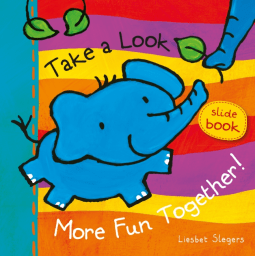
 

Take a Look. More Fun Together!, by Liesbet Slegers,
(April 2018, Clavis Publishing), $12.95, ISBN: 9781605373829
Recommended for readers 2-5

Sure, you can have fun on your own, but some things are even better with friends! Six different individuals are by themselves, but a slide of the board book reveals more friends! A cat plays with yarn, but with a pull of the slide, there’s another cat joining in the fun! Clavis board books tend to be sturdy, and the slides will hold up to repeated use. I’ve got  a few in my children’s room that have circulated quite a bit, and they’re still good to go. Liesbet Slegers books never disappoint, either: her artwork is bold and bright, and toddlers love it. This one’s a solid add to collections that let kids explore their world through interactive books.