Posted in picture books, Preschool Reads, Toddler Reads

Happy Book Birthday to Sleep, My Bunny – new Rosemary Wells!

Sleep, My Bunny, by Rosemary Wells, (Nov. 2018, Candlewick Press), $14.99, ISBN: 9780763692629

Ages 2-7

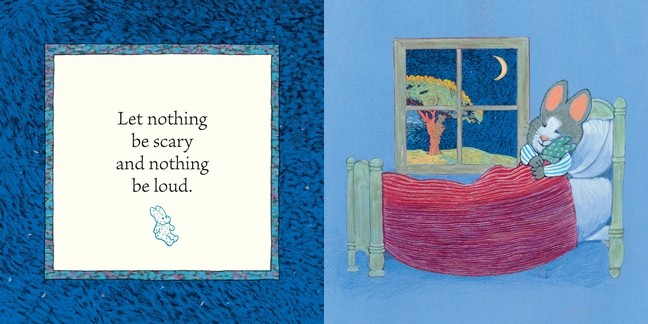
A delicate lullaby for bedtime, Sleep, My Bunny – originally published in 1977 as “Good Night, Sweet Prince” in Don’t Spill it Again, James – is Rosemary Wells’ newest picture book. A bunny family goes through their bedtime routine as the sun sets and night falls. As the words describe the sounds of the evening: crickets and owls sing together; the wind takes the moon for a ride; the pictures show a young bunny and his parents putting toys away, choosing pajamas, having a bath, and selecting a story before a little song and dance, and then, sleep.

The gentle pastels and mixed media artwork starts bold and bright, as the bright sun shines outside during sunset; gradually, the sky grows darker in each spread – the sky in the depicted window in each scene mirrors the text’s background on the accompanying pages – until a midnight blue brings bedtime to a sleepy Bunny. The family is loving and playful, delighting in one another; everyone’s smiles are wide and they have gentle, loving gazes for each other, making this a wonderful cuddle time book. Endpapers set the mood, with a tinge of sun in the lower left-hand corner of the front endpapers; a midnight blue sky and a hazy crescent moon shine on the back endpapers.

Sleepy, My Bunny is a gentle story for toddlers, preschoolers, and Kindergarteners; early readers can help at bedtime by reading this to a sibling (or pet, or lovey). Another classic from Rosemary Wells.

Posted in Intermediate, Middle Grade, Non-fiction, Non-Fiction

The Holiday Shopping has started… buy some books!

It’s that time of year again, where I dig deep to find all sorts of great books to add to your holiday shopping lists. This is the first round, so I’m thinking this post will suggest books and goodies to bring when you celebrate Thanksgiving, or the Fall Harvest, with your families and friends. These books will be fun for the kiddie table – before the food, naturally!

City, by Ingela P. Arrhenius, (Sept. 2018, Candlewick Press), $22, ISBN: 9781536202571

Ages 3-7

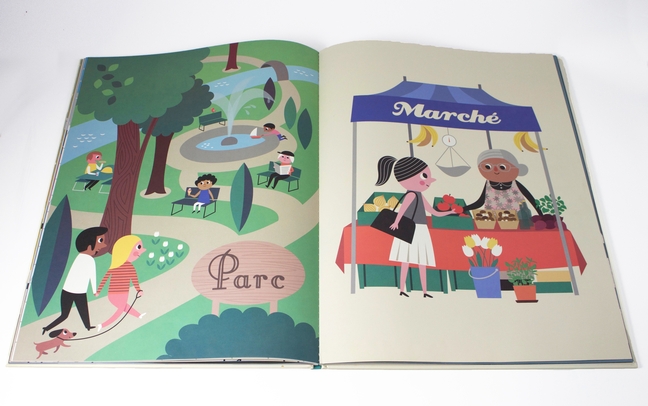
This book is just too much fun. First of all, it’s huge: over 40 inches high by over 17 inches wide, making it almost as big as some of the kids you’ll be seeing this holiday season! My niece giggle-shrieked when I stood the book up next to her, and that was that. She was hooked. It’s a gorgeous, funky concept book, introducing readers to different sights of city life: streetlamps, subways, coffee shops, fountains, zoos, even skateboarders are all here, with retro chic, bright art. The only words are the descriptive words for each picture; the endpapers are loaded with pictures of the smaller details of city life: a cat, a server, a scale, a shrub.

Put this in front of the kids, and let them have at it. My niece and my son loved talking about things they recognized: my niece remembers taking a train to work with her mom, and my son talked up the subway when I took him into the city on our winter break. And they both pretended that I was in the coffee shop and the bookstore, so it’s nice to know they think of me.

City is a gorgeous gift book that can be a coffee table art book for kids, or a prompt for creativity. Its only limit is the imagination.
The Smithsonian Exploration Station sets are fantastic gifts. Bring one or two of these with you, and set the kids up in their own personal science labs while the food cooks.

Smithsonian Exploration Station: The Human Body, (Nov. 2018, Silver Dolphin Books), $21.99, ISBN: 9781626867215

Ages 4-10

The Smithsonian sets are contained in a nice, sturdy box that holds a lot of stuff. The Human Body box includes a 56-page fact book, 30 stickers, a plastic model skeleton kids can put together, and 25 fact cards. It’s similar to the Adventures in Science kit Silver Dolphin put out earlier this year, and my son loved them both. Learn what makes your blood pump, your muscles stretch and how your different systems come together to make you walk, run, eat, sleep, and play. Older kids can help younger kids with some basic terms and reading, and the littlest ones can still enjoy putting the stickers on the skeleton body while bigger kids help put the skeleton together.


Smithsonian Exploration Station: World Atlas, (Nov. 2018, Silver Dolphin Books), $21.99, ISBN: 9781626867208

Ages 4-10

This set was hands-down my son’s favorite set. A blow-up globe, a world map and stickers of landmarks from all over the world, and cardstock puzzles of the Eiffel Tower, Taj Mahal, and a Mayan Pyramid? Plus, a 56-page fact book that tells readers all about the cool landmarks as they decorate their maps? SOLD. We spent three days working on the map, at which time he told me that he wants to see every single one of these sights. We built the cardstock models, which called for much dexterity – so I called my eldest son in to help, because I tend to become a little exuberant, shall we say, with my papercrafting. My son also loves his inflatable globe, and asks me to point out cool places to him; some from the map, some, the countries that his friends at school hail from, some, names of places he hears about on TV. It’s a great set.
 

Smithsonian Exploration Station: Space!, (Nov. 2018, Silver Dolphin Books), $21.99, ISBN: 9781626867222

Ages 4-10

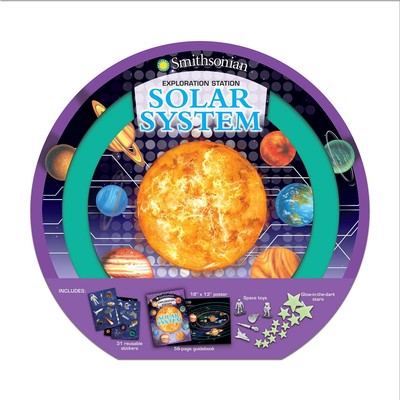
Kids love planets! The Space! Exploration Station includes a 56-page fact book, astronaut and rocket plastic figurines, stickers, and glow in the dark stars to make their own constellations. There are incredible, full-color photographs and text that explains the makeup of our solar system, galaxies, planets, and constellations. Let the kids decorate your dining room to and eat under the stars!

Every single one of these kits is such fun, and urges kids to be curious and explore the world inside them and around them. If you have the budget for it, throw these in your distributor cart and get a few sets for your STEM/STEAM programming, too. The Smithsonian has a good science education channel on YouTube, with kid-friendly videos that make for good viewing.


Where’s Waldo? The Spectacular Spotlight Search, by Martin Handford, (Oct. 2018, Candlewick Press), $18.99, ISBN: 9781536201765

Ages 5-9

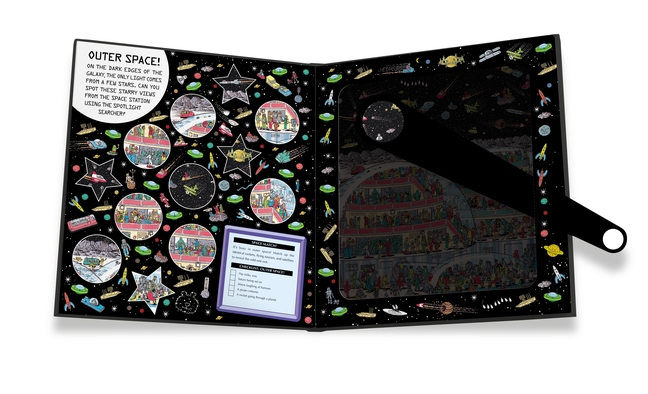
Waldo’s back with a new trick: this time, the spreads have all gone dark! Luckily, the Spectacular Spotlight Search comes with a cool spotlight viewer to help you find him, and the challenges he sets out for you. There are six puzzles and a magic slider that slides into the scene to “light up” small sections – like a spotlight. Find Waldo and other familiar characters, plus other hidden challenges and games on each spread.  My 6-year-old and my 3-year-old niece had a blast with this book, eventually recruiting me for my Waldo-finding skills (narrator: The children were better.)

If you have puzzle and game fans in your family, this is a great gift to bring along. If you’re looking at it for your library, I suggest keeping it in reference; that spotlight will go missing or get beaten up in no time. But it’s good Waldo fun.
I have so much more to come, but I think this is a good start. A little something for everyone and plenty of hands-on fun!

Posted in Intermediate, Non-Fiction, Preschool Reads

Show kids the excitement of cooking with Kids Cooking!

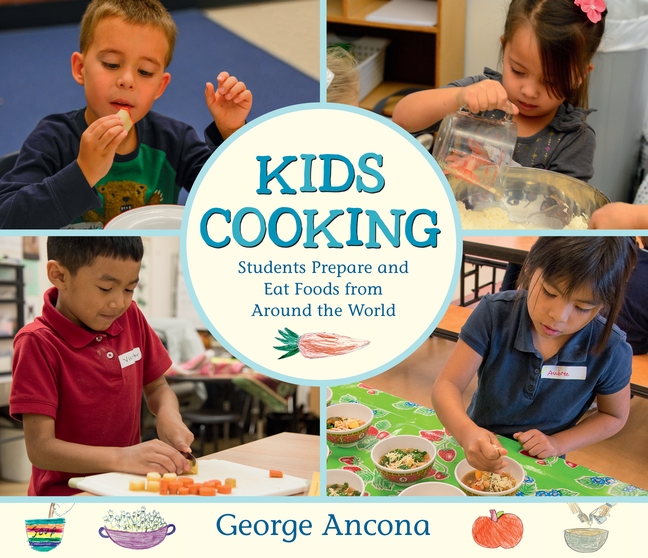
Kids Cooking: Students Prepare and Eat Foods From Around the World, by George Ancona, (Oct. 2018, Candlewick Press), $16.99, ISBN: 9780763698768

Ages 4-7

When my son (now a high schooler) was in first grade, his school participated in a great program called CookShop. The teachers ran the program, and we parents volunteered as helpers, and a couple of times a month, kids learned cooking skills: chopping (with plastic knives), mixing, and the math involved in putting together a recipe. I loved it, and he loved the process of creating meals. No, he didn’t eat anything he made (that honor went to me), but working together brought us even closer, and the whole class came together as a group to prepare and share food. I may have enjoyed CookShop more than he did – I still have my apron! – and am glad it’s still a program in NYC schools. When I read Kids Cooking: Students Prepare and Eat Foods From Around the World, I was immediately brought back to that first grade classroom and the warm memories.

Kids Cooking is photographer George Ancona’s venture into classrooms where a similar organization, Cooking with Kids, brings children from diverse backgrounds come together to prepare healthy meals from different cultures. They roast vegetables and prepare a Moroccan sauce called chermoula; make Chinese-American fried rice with sweet and sour cucumbers; work together to cook up an Italian minestrone soup with breadsticks, and learn about different tomatoes that go into making a Mexican salsa with tortillas and tamales. They draw pictures as they go; teachers use a globe to demonstrate where different meals originate, and parents and teachers make sure that everyone’s cooking experience is safe and exciting.

The book presents photos of the kids and grownups at work, along with some of the children’s artwork, and phrases from the cultures whose meals they’ve prepared. It’s a celebration of food, friendship, and different cultures: meals prepared and shared together are the best meals. An author’s note mentions the Cooking With Kids program and the schools that participated in the book.

With the holidays on the horizon, Kids Cooking is a great book to read to kids and get them talking about meals they enjoy at home. A recipe link included in the book didn’t work for me, but the Cooking with Kids website has recipes available: see if your family wants to try a few out!

You can find more of George Ancona’s photos and learn more about his children’s books here.

Posted in picture books, Preschool Reads

There’s a dinosaur on the 13th Floor!

There’s a Dinosaur on the 13th Floor, by Wade Bradford/Illustrated by Kevin Hawkes, (Oct. 2018, Candlewick Press), $16.99, ISBN: 978-0-7636-8665-9

Ages 4-7

Poor Mr. Snore! The poor musician is exhausted when he checks into the Sharemore Hotel, but when the bellhop shows him to his room, there’s a mouse sleeping on his pillow! Mr. Snore complains to the front desk, and is given a room on the second floor – but there’s a literal hog hogging the blankets! So begins a journey through the hotel, where Mr. Snore encounters fish, spiders, giraffes, and more, until he reaches an empty room on the 13th floor – and proceeds to fall asleep. But wait! The dinosaur on the 13th floor calls the front desk, complaining that someone is sleeping on his pillow!

This is an adorable, light story for storytime or one-on-one reading. Endpapers bring readers into the story with illustrations of a city scene: a cab driving away from a concert hall, and the Strathmore Hotel, its lobby light on, like a beacon, in the night. Mr. Snore walks into the hotel wearing a tuxedo and holding a violin case, letting readers use context clues to figure out that he’s a musician. It’s a nice added touch. The arylic and ink artwork has a nice retro feel; the bellhop looks like someone out of a Busby Berkeley movie, and the hotel has jungle-meets-art deco touches to it that really creates an atmosphere for readers. Mr. Snore is played for laughs; he’s got a small stature and a giant nose; a pair of glasses perched precariously on the end.

I have way too much fun with this story, which has entered regular bedtime reading rotation at my house. Let kids try out different snores for the mouse (squeak), pig, (snore), fish (blub blub), and other animals. This could be a fun flannel story, letting kids add different animals to a big bed. Put the song “Ten in the Bed” into your storytime for a fun, crowded bed song. This one’s a fun add to your picture book and storytime collections.

Author Wade Bradford has free, downloadable resources, including plays for kids, on his author website. Kevin Hawkes is an award-winning illustrator. Visit his website for more of his artwork and information about his books.

Posted in Fiction, Realistic Fiction, Teen, Young Adult/New Adult

Hearts Unbroken is strong, smart #ownvoices YA

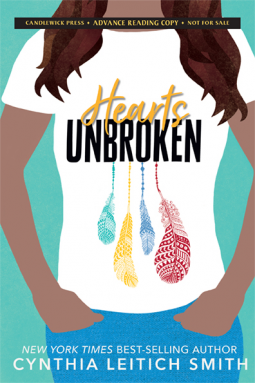
Hearts Unbroken, by Cynthia Leitich Smith, (Oct. 2018, Candlewick), $17.99, ISBN: 9780763681142

Ages 13+

High school senior dumps her jock boyfriend when he makes disparaging comments about Natives in front of her. You see, she’s Native: Creek nation – Muscogee – to be precise. She shakes off his badmouthing and focuses on the school year: she’s on the school newspaper staff and she’s paired with Joey Kairouz, the new photojournalist. Her brother, Hughie, is a new freshman at the same school, too, and lands a coveted spot in the school play: he’s going to be the Tin Man in the school production of The Wizard of Oz. Not every parent is thrilled with the diverse casting, though: a group calling themselves Parents Against Revisionist Theater starts lodging complaints and pressuring local businesses against supporting the play. Hughie and other actors of color start receiving anonymous hate mail. Battle lines are drawn throughout the student body and faculty. Joey and Louise try navigating a relationship while they work on the paper together, but Louise’s worries about “dating while Native” may cause more hurt to Joey than she expects.

Hearts Unbroken is just consuming. I didn’t want to put it down until I finished it. There are such rich, realistic characters, and Louise is just brilliant. She’s no simpering heroine – the book starts with her breaking up with her boyfriend for disparaging Natives, and she never looks back. Cynthia Leitich Smith creates such textured, layered characters and educates readers on Native life and language, giving me an even deeper respect for #ownvoices work than I already had. She gives Louise and her family challenges both common and unique: Louise has a bad breakup; she is self-absorbed and isn’t a mindful friend when her friend Shelby needs her; she works through her feelings about sex and when she will be ready. Louise and her family also deal with racism and whitewashing among their own neighbors and classmates. Hughie agonizes over discovering that L. Frank Baum, who created the wonderful world of Oz, so rich in its own diversity, was a virulent racist who published pro-genocide editorials surrounding the death of Sitting Bull and the massacre at Wounded Knee. It’s heartbreaking and infuriating to read, but it’s real, and she transfers this ache and this anger to her characters, giving them big decisions to make on their own while educating readers, too.

Cynthia Leitich Smith, who, like Louise is a citizen of the Muscogee (Creek) Nation, provides a Mvskoke/English Glossary to help readers with some of the phrases that appear in the book, and an author’s note that talks about parallels between Louise and herself, and the writing of Hearts Unbroken. Dr. Debbie Reese has a fantastic write-up of Hearts Unbroken on her page, American Indians in Children’s Literature.

An absolute must-add to your YA collections. Read a sample chapter and the author’s note on the Candlewick page.
Posted in Fantasy, Fiction, Middle Grade, Teen, Tween Reads

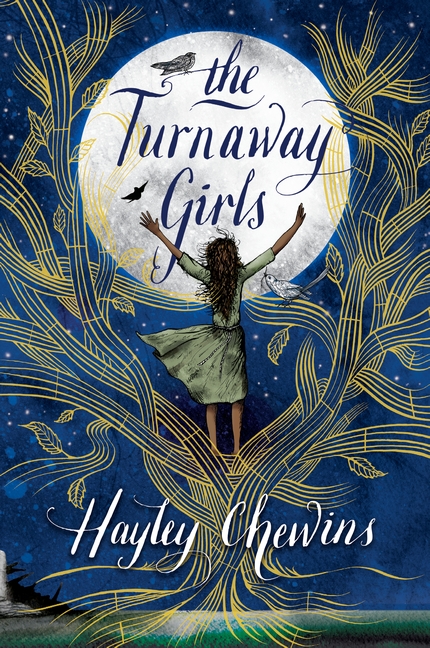
Blog Tour and Giveaway: The Turnaway Girls, by Hayley Chewins

Raised in a shelter cloister with other young women, Delphernia Undersea is a 12-year-old Turnaway Girl: girls raised to be silent, invisible; to weave male Masters’ music into gold they call “shimmmer”. Delphina is well aware of her place in society – Mother Nine beats it into her regularly enough – but still has a rebellious streak in her. While she can’t make shimmer, she can sing; a forbidden action in this world. Girls are told that the sea waits to swallow girls with musical throats, but Delphernia must sing, so she does so in secret until the day a young Master named Bly comes to claim her. Once out of the cloister, Delphernia’s world opens up, befriending a trans girl named Linna, who calls herself a Master and wears a dress covered in bells. Delphernia spends time with Bly, discovering more about him and his sister, the Childer-Queen, and in so doing, discovers more about herself and the society she moves through. It’s time for rebellion, and Delphernia holds the key.

Wow. This book is high literary fantasy that has the gift of empowering readers. Delphernia is a strong, intelligent heroine who motivates those around her. This is a male-driven society that doesn’t want music, free thought, or questions. They twist the truth to suit their means, but this next generation of children is about to bring it all down. Hayley Chewins’ weaves gold – shimmer – with words that nearly brought me to tears as I read. I was Facebooking and texting passages from this book to my friends, family, and coworkers over the last two days, because I could not keep these words inside me.


This is how you talk to middle graders. This is how you write middle grade fantasy that makes a statement, always respecting your readers. This is fantasy that holds our society up to a mirror and lets readers see for themselves how change is theirs to make. Diverse and gender fluid characters, discussions about gender roles and corrupt leaders, and a tale of self-discovery, magic, and music put this firmly on my must-read, must-have list, and my Newbery and Hugo watch lists.

The Turnaway Girls has a starred review from Kirkus. Author Hayley Chewins has a playlist for the book available on her blog.

Want your own copy of The Turnaway Girls? Enter this Rafflecopter giveaway!


Blog Tour Roll Call! Visit these book bloggers for their The Turnaway Girl thoughts.

October 8 – Purple Readers

October 9 – YA Books Central

October 10 – Cheyenne Reads

October 11 – Mom Read It

October 12 – Wizard Library


The Turnaway Girls, by Hayley Chewins, (Sept. 2018, Candlewick Press), $16.99, ISBN: 9780763697921
Ages 10+

Posted in Fantasy, Fiction, Middle Grade, Teen, Tween Reads

The Assassination of Brangwain Spurge is hilarious and thought-provoking. Like the news.

The Assassination of Brangwain Spurge, by MT Anderson/Illustrated by Eugene Yelchin, (Sept. 2018, Candlewick), $24.99, ISBN: 9780763698225

Ages 10-14

Elitist elf (is that an oxymoron?) historian Brangwain Spurge has a mission: go into goblin territory and deliver a gift – a peace offering – from the elf king to the goblin king. Oh, and he’s also supposed to spy on the kingdom, transmitting his thoughts back to the elves so they can get an elf’s-eye view of everything. He’s shot off in a large barrel, and invited to the home of goblin archivist Werfel, who extends every hospitality to Spurge, who is a culturally insensitive, rude, bumbling boob. Naturally, Spurge bungles his spying mission, setting off a cross-kingdom incident that leaves Werfel and Spurge running for their lives, and at one another’s mercies.

This brilliant socio-political comedy of errors is hilariously told by National Book Award winner M.T. Anderson and illustrated by Newbery Honoree Eugene Yelchin, and mixes action and adventure with a tale of friendship, culture clash, and intrigue. Eugene Yelchin’s mixed media, black and white illustrations let readers see what Spurge transmits back to his kingdom, but Anderson’s text lets us know that things aren’t exactly what they seem. So who’s telling the truth? Well… truth is in the eye of the beholder; something we learn as Spurge’s world seems to grow under the long-suffering Werfel’s guidance. There are false assumptions on each side that need to be cleared up, but Brangwain Spurge refuses to see the black marks on elf history, no matter how clear Werfel states it. After all, history is written by the victors.

It isn’t until Spurge creates an incident that puts his, and his host’s, lives in danger that he understands how words and memories can be manipulated. The two share a mutual love of books, and it’s there that they find common ground on which to build a relationship. That, and the fact that they need each other to survive. Want kids to understand Fake News? Put this book in their hands.

The Assassination of Brangwain Spurge is a National Book Award longlist nominee, and has starred reviews from Publisher’s Weekly, Booklist, Kirkus, and The Horn Book.


Posted in Intermediate, picture books

The Day War Came, by Nicola Davies and Rebecca Cobb

The Day War Came, by Nicola Davies/Illustrated by Rebecca Cobb, (Sept. 2018, Candlewick), $16.99, ISBN: 9781536201734

Ages 6-9

A brown-skinned girl with black hair has breakfast with her parents and baby brother, sits at her desk at school, singing songs about tadpoles and learning about volcanoes, when war comes to her world. In an instant, everything she knows, everything she loves, is gone. She begins an arduous journey on foot, by truck, by bus, and by boat to a strange, new place; searching for a place where war can’t reach, she only encounters closed doors and hard faces. Even a school turns her away, telling her there are no chairs for her. As she loses hope, a boy finds her and brings her a chair so that she can come to school; his friends have brought chairs, too, so all children can come to school. Together, the children provide support for our protagonist, “pushing back the war with every step”.

This book is heartbreaking. The artwork, so childlike in itself, makes it even more powerful: the hunched over girl at her desk, braids blown back and artwork flying off her desk as the giant gray-black cloud envelops the facing page; the girl on her knees at the rubble of her home; the girl huddled under a blanket in an empty hut, turned away from a school for want of a chair. the our realization that she is the only survivor of that happy family eating breakfast together is almost too much to take. The pencil and watercolor art is stunning, using grays and blacks to communicate the horror. Orange flames compete with orange flowers in a destroyed city landscape. And the quiet gift from one child to another brings with it new color: green seats, red seats, blue and white striped seats. Color becomes hope.

The Day War Came is a poem Nicola Davies wrote after reading about a refugee child denied entry to a school because there was no chair for her. This gave birth to the #3000chairs movement, where thousands of people posted photos of empty chairs in solidarity with these children who had lost everything, including a chance at education. Nicola Davies’ poem is eloquent, heartbreaking, and ultimately, hopeful. Writing in the child’s voice brings home the impact of war on children.

She never names the child, nor does she name the child’s country of origin. The child is any refugee child from any number of countries where children are forced out of childhood far too soon. As the author says in her 3000 Chairs blog post, “In an ideal world there wouldn’t be children without parents. In an ideal world hospitals wouldn’t be bombed because they looked a bit like something else. In an ideal world everything would be sweet and smooth and we could all afford to be as selfish as we liked and it wouldn’t matter.”

An important addition to all collections. The Day War Came has a starred review from Booklist. There is a downloadable free discussion guide available through the publisher.

Posted in Fiction, Middle Grade, Realistic Fiction

The Key to Everything: But will it cure?

The Key to Everything, by Pat Schmatz, (May 2018,  Candlewick Press), $16.99, ISBN: 9780763695668

Ages 9-12

Eleven-year-old Tash is angry. She doesn’t want to go to camp, but her Uncle Kevin needs to travel to Australia, and she and Cap’n Jackie, their friend and neighbor, clashed over the whole business. Tash ends up having a pretty good time at camp, after all, but returns home to find Cap’n Jackie gone: she’s had a fall and is in the hospital, and Tash’s world turns upside down overnight. She’s determined to return a special key to Cap’n Jackie; one that opens up a magical world to her, and that’ll make it all better. Cap’n Jackie even said so, so it has to be true, right?

The Key to Everything can be a bit hard to follow. We have Tash, seemingly abandoned by her mother and living her with uncle while her father is in jail. Kevin, who takes care of Tash, Cap’n Jackie, a loving and cantankerous older woman, and Nathan, Cap’n Jackie’s nephew, who lives in New York, but comes back when Cap’n Jackie is hurt. We don’t get a lot of exposition in this story, but we do learn that family is who you make it. Two major characters, Jackie and Nathan, are gay; something that’s very lightly touched on, but it’s nicely done. Tash suffers from PTSD and a fear of being alone, while Jackie struggled with agoraphobia. Readers have to put in a bit of work to make all the lines connect, but it’s a solid read about family, grief, moving on, and growing up.

Posted in Fiction, Historical Fiction, Middle Grade, Realistic Fiction, Tween Reads

My Year in the Middle: Relevant then, relevant now

My Year in the Middle, by Lila Quintero Weaver, (July 2018, Candlewick), $15.99, ISBN: 9780763692315

Ages 8-11

Sixth-grader Lu Olivera and her Latin American family find themselves in the middle of a civil rights struggle in their Red Grove, Alabama neighborhood one hot summer in 1970. The tensions run high in her integrated school: black kids sit on one side of the room, white kids on the other; she sits in the middle row. She’s in the the middle child, smack dab between her older, activist sister and younger twin siblings; she’s in the middle when it comes to local politics: many of the white families want to re-elect segregationist governor George Wallace, while Lu and her family support incumbent Albert Brewer. Many of her classmates are leaving their school to go to a private, white school. When Lu befriends fellow track runner Belinda Gresham, an African-American girl, and her classmates turn on her, she decides it’s time to take a stand.

Inspired by the author’s Alabama childhood, My Year in the Middle is a story of civil rights and finding one’s voice. Lu puts up with the passive racism in her community, with remarks like, “she’s from South America, she doesn’t mind going to school with Negroes”. But seeing how her African-American friends are treated by her fellow classmates, and by the general public in her town, pushes her buttons. Lu is a character who stands out: she’s a character of color stuck in the middle of the Civil Rights Movement, but because she’s not African-American, she’s tolerated: until she digs in her heels and says, “No more”. She gives and receives support from her black classmates and from Sam, her classmate and crush, a white preacher’s son who is bullied for his civil rights stance.

Lu is at once relatable and a mirror for our society today. We’re still divided, and more and more people are forced from the middle to take a stand. Readers may recognize recent political speeches and attitudes in George Wallace’s condescending stumping and the racial tension that permeates Lu’s classroom. My Year in the Middle is a solid work of historical fiction that provides excellent discussion topics for readers on civil rights, social justice, and where we’ve gone versus where we are.