Posted in History, Non-Fiction

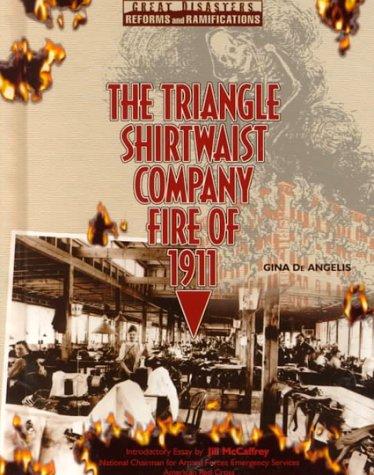
Book Review: The Triangle Shirtwaist Factory Fire of 1911, by Gina De Angelis (Chelsea House, 2001)

Recommended for ages 10+

The shirtwaist was a high-necked, long-sleeved blouse design popularized by the iconic Gibson Girl image in the early 1900s. At this time, New York boasted about 450 shirtwaist factories, but building codes and labor laws left a lot of room for interpretation. As a result, on March 25, 1911, a fire broke out in the Triangle Shirtwaist Company in the Asch Building in downtown Manhattan. Multiple factors – locked doors to prevent workers from leaving early or stealing materials; ineffective and too few fire escapes and elevators, and crowded office conditions among them – caused the deaths of 146 workers, mostly women, many recent immigrants. The fire and the ensuing trial – which exonerated the company’s owners – gave rise to movements pushing for stronger building safety standards and unionization of garment workers, which would help them lobby for better working conditions and better pay.

The Triangle Shirtwaist Company Fire of 1911 tells the story of the fire and the aftermath. Black and white photos taken at the scene and the makeshift morgue bring home the pain of the event and drive home the magnitude of the fire. Readers learn that the owners, Max Blanck and Isaac Harris, went on to continue business and continue the business violations that caused so many deaths at the Asch Building, having been cleared of any wrong doing because the Asch Building was legally sound. The owners made money after the insurance settlement, causing an outcry among the deceased’s family members. The book also details the story of the garment workers labor movement and takes the reader into present-day sweatshop conditions and the continued fight for safe working conditions and a living wage. 

Cornell University’s Kheel Center for Labor Documentation’s web exhibit with primary and secondary sources, a link to a transcript of Blanck and Harris’ trial, and a bibliography. Nonprofit organization Remember the Triangle Fire Coalition, seeking a permanent memorial to the victims, offers an open archive where contributors add their own modern-day remembrances and information and a names map which lists the name, country of origin, New York address, and final resting place of the identified victims.

Short PBS documentary on the Triangle Fire.

Posted in History, Non-Fiction, Tween Reads

Book Review: Little House in the Big Woods, by Laura Ingalls Wilder (HarperCollins, 1971)

Recommended for ages 8+

Most people know Laura Ingalls Wilder’s stories, if not through her books, then through the long-running television series, Little House on the Prairie. A a pioneer child who wrote down her experiences and later had them published, Ms. Wilder wrote nine Little House books, originally published between 1932 and 1943. The series resonated with girls and young women and is popular to this day.

Little House in the Big Woods is the first book in the Little House series, and introduces the reader to the Ingalls family: Laura, her older sister, Mary, baby sister, Carrie, and parents, Ma and Pa (Caroline and Charles). The family lives in the Big Woods in Wisconsin in the later part of the 19th Century, shortly after the Civil War. (Laura even mentions a family member who is “wild since he came back from the army”.)

We go through each of the seasons with the Ingalls family and learn how families lived, ate, and had fun. There are family dances and visits, trips to town, and encounters with bears and bees. There is always time for work, though, and this is where the book acts as a primer. Laura details the process of preserving meats and vegetables to keep the family fed through the lean winter months; how Pa prepares an animal skin to be used as leather goods; how to get sap from a tree, and how to smoke bees out of a hive to be able to get to the honey. It’s a fascinating look at a different time, and while it is written with a girl’s voice, this is should not be considered a “girl’s book”: boys and girls alike can learn much about the wildnerness life.

Laura writes in a clear voice, drawing her readers in because her stories are real. The love of family and nostalgia as she looks back on her life bring to mind the feeling a child gets when listening to a parent or grandparent talking about their childhood. Black and white drawings by Garth Williams add to the book.

There is a wealth of information about Laura Ingalls Wilder online. Wilder’s home in Rocky Ridge Farm in Mansfield, Missouri, where she wrote the Little House books, is now the Laura Ingalls Wilder Historic Home and Museum and word finds, quizzes and coloring pages. The Little House Books website features a family tree tracking the girls of the Little House series from Laura’s great-grandmother to her daughter, Rose. The site also offers games and craft ideas, as well as information for teachers interested in teaching the book.

Posted in Fantasy, Humor, Tween Reads

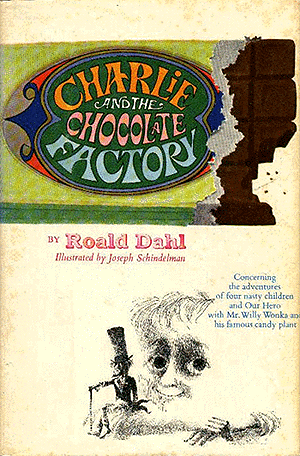
Book Review: Charlie and the Chocolate Factory, by Roald Dahl (Bantam, 1977)

Recommended for ages 8-12 (and ageless)

This was one of my favorite books growing up, and reading it again all these years later, I find that I love it as much now as I did when I was 8. Having spent the last few years watching multiple viewings of Willy Wonka and the Chocolate Factory (Gene Wilder is Willy Wonka), I ended up surprised on a few occasions when I realized that scenes from the movie – such as the Fizzy Lifting Drinks scene when Charlie and Grandpa have to belch their way down from certain doom – were not in the book after all! While the movie retained much of Roald Dahl’s dark comic humor, nothing beats the book, and Dahl’s wry observations on rude children and the parents who indulge them, and how the meek inherit… well, if not the earth, at least a lifetime’s supply of chocolate.

Charlie Bucket is starving – no, really, he is. He lives with his mother, father, and four sickly grandparents, who are so old and sick that they never get out of bed. Father has a menial job screwing the caps onto toothpaste tubes, and they family is very poor. They are so poor, all they can eat is cabbage soup, and Charlie refuses to take more than his share. Every day he walks past the famous chocolatier Willy Wonka’s chocolate factory and lifts his nose, inhaling the delicious smells; the only time he gets to enjoy a Wonka bar is on his birthday.

It all changes when Willy Wonka announces a contest where five winners will be allowed to tour the chocolate factory – and Charlie is holding one of the Golden Tickets. Grandpa Joe, his elderly grandfather who retains the joy and wonder of youth, jumps out of bed and insists that he go with him, and they’re off. Charlie meets the four other winners – the gluttonous Augustus Gloop, spoiled brat Veruca Salt, TV addict Mike Teavee, and boorish Violet Beauregarde – and their overly indulgent parents at the gates of the factory, and when Willy Wonka’s gates open for the first time in years, the fun really begins. Who will make it through the factory tour?

Dahl’s writing weaves words into pictures that are enhanced by Joseph Schindelman’s black and white illustrations. From Willy Wonka’s mysterious origins to the Oompa Loompa’s cautionary songs, this book is Mr. Dahl’s morality play. It’s a great reminder of the golden rules as children enter into the middle grades: be polite. Don’t be a bully. Share. Don’t be a glutton or have bad manners. Modesty and a humble demeanor reap their own rewards. Reading Dahl is like Emily Post for kids, but with chocolate rivers and candy flowers.

Roald Dahl is a well-known classic children’s author. There is an inactive wiki that appeared to be the start of a comprehensive body of work  with 106 articles; there is a call to revive it on the home page. There is also a wonderful Roald Dahl website that is animated and features links to the Roald Dahl store, museum, and his children’s charity. The site features a “book chooser” that will match kids with a “splendiferous read” of his, a biography on the author, and a “Wonkalator” – a calculator game that asks kids to help Wonka with his latest magical formula.

Posted in Fiction, Humor, Tween Reads

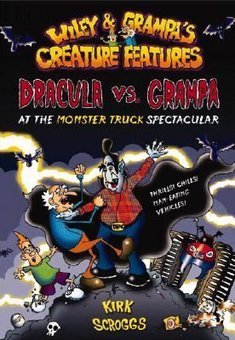
Book Review: Wiley & Grampa’s Creature Features, by Kirk Scroggs (Little, Brown, 2006)

Recommended for ages 8-12

The Wiley & Grampa books take the sting out of scary books for kids by making them hilarious and gross. They got in early on the ‘potty humor makes boys read’ trend that I have seen time and again, but author Kirk Scroggs gets it, and he writes well.

The stories revolve around young Wiley, a boy who lives with his grandmother and grandfather, in what appears to be “good ole boy country”. Wiley and his grandfather loves Pork Cracklins and monster trucks, and his grandmother is always after them to finish chores. Somehow, Wiley and Grampa always end up in trouble with the supernatural.

In the first book, Dracula vs. Grampa at the Monster Truck Spectacular, Wiley and Grampa sneak out to go to a monster truck show, despite Gramma’s telling them that with the storm coming, no one is going any where. They meet Dracula himself, and get the sneaking suspicion that Dracula’s very interested in Gramma, who just happens to resemble Drac’s dead wife. If that isn’t enough to entice readers, there are monster trucks. That run on blood.
In Grampa’s Zombie BBQ, Wiley, Grampa and Gramma are having barbecue and Gramma’s making her famous honey paprika barbecue sauce. When a horde of zombies shows up and shows an appetite for Gramma’s food, all is fine – until the food runs out, leaving Wiley and his grandparents to fend for themselves. But can the school lunch lady and her toxic beet borscht save the day?

The books are great for younger readers who are still getting into the swing of chapter books, for readers who want a good laugh, or readers who want their monsters a little less threatening. Wiley and his family are funny, and they are never really in any danger, giving more skittish readers reassurance. The books are illustrated with blackand white sketches on every page and the characters are drawn as exaggerated, caricature-like people.
There are ten Wiley & Grampa books available, the last of which came out in 2009. Kirk Scroggs’ website has a section dedicated to the series and links to more content.
Posted in Fiction, Humor, Middle School, Tween Reads

Book Review: Dork Diaries: Tales from a Not-So Popular Party Girl by Rachel Renee Russell (Aladdin, 2010)

Recommended for ages 9-12

Dork Diaries: Tales from a Not-So-Popular Party Girl has been hailed as “Wimpy Kid for girls”, and I’m inclined to agree. The book is writtten in similar format – a middle-schooler’s journal – and is complete with illustrations and “OMG!” moments in a pre-teen’s life. Nikki, the protagonist, is not the slacker that Wimpy Kid Greg is, but is definitely not in the cool crowd. She and her friends Chloe and Zoey wish they could be in the CCP (Cute, Cool and Popular) crowd, but Nikki’s nemesis, Mackenzie – a spoiled, rich, mean girl – will do anything and everything to ruin Nikki’s life – including canceling the school Halloween dance just to make Nikki look bad. Nikki and her friends need to pull together to make it happen, and Nikki hopes to get the attention of her crush, Brandon Roberts. The only trouble is, Mackenzie has her sights set on Brandon, too.

The book is fun. Nikki is a vibrant narrator, who speaks fluent middle-school – girls will love her. She writes from a very female point of view, as opposed to the more gender-friendly Wimpy Kid, so I don’t know if boys will get on board with the series (especially as this book has a purple cover). The black and white drawings make you believe you are looking at a ‘tween girl’s diary, as do the script and handwriting fonts. All around, a fun book with a spunky heroine that girls will enjoy – and grown-up girls will laugh along with the more cringe-worthy memories of their own middle school years.

The Dork Diaries website features information on the Dork Diaries books and has a countdown clock for the next book’s release. There is a link to the music inspired by the book, and the Nikki has a blog where she recaps memories (from the books), links fan videos, and features fun contests and printables.

Posted in Humor, Science Fiction, Tween Reads

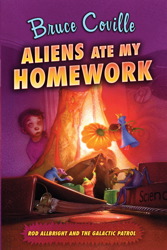
Book Review: Aliens Ate My Homework, by Bruce Coville (Aladdin, 1993)

     Recommended for ages 9-12

Sixth-grader Rod Albright, better known as Rod the Clod among his classmates, is a target for the two bullies at school and the go-to babysitter for his toddler twin brother and sister at home. One day, while working on a science project for school, a miniature alien spaceship crashes into his window, and Rod is commandeered into helping the alien crew in their search for BKR, an intergalactic criminal infamous for his cruelty – and who just happens to be hiding out in Rod’s neighborhood. Can Rod, who is incapable of lying, keep his alien visitors a secret and help them succeed in their mission while getting his science project done on time?

Told from Rod’s point of view, Aliens Ate My Homework is a fun read for kids ages 9-12. As the first book in a four-book series, Coville sets up the story line and introduces the reader to a full cast of characters: Rod, Thing One and Thing Two, the toddler twins, their mother, the crew of the Ferkel, and BKR, the intergalactic villian. The crew of the Ferkel is a diverse group of aliens, illustrating that diversity is welcome in all parts of the universe; Grakker, the Ferkel’s captain, is a borderline hostile military man, but the crew and Rod all learn how to work with him – and vice versa. BKR, the criminal wanted across the galaxy, is guilty of cruelty. Says Ferkel ambassadaor Madame Pong of BKR’s crimes,  “Millions have wept.” There are lessons to be learned within Coville’s bright narrative – different personalities and people and capable of working together; cruelty is wrong; and every being, no matter how powerful or how small, needs help.

Aliens Ate My Homework is the first in Bruce Coville’s 4-book series, Rod Albright’s Alien Adventures; the other books in the series are I Left My Sneakers in Dimension X; The Search for Snout; and Aliens Stole My Body. Coville’s website also offers printable door hangers and bookmarks, crossword puzzles, and information about all of Coville’s books.

Posted in Fiction, Humor, Tween Reads

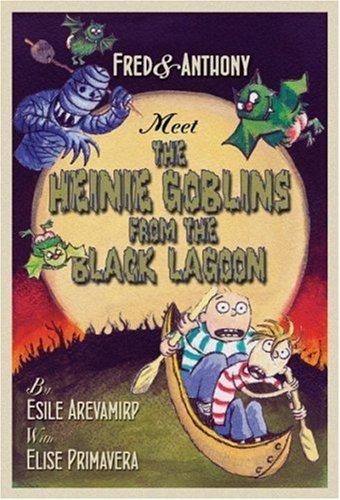
Book Review: Fred & Anthony Escape from the Netherworld and Fred & Anthony Meet the Heine Goblins from the Black Lagoon, by Elise Primavera (Hyperion, 2007 & 2008)

Recommended for ages 9-12

I am writing one review for both of these books as they are by the same author and from the same series.

Fred and Anthony are two kids with one big wish: find someone to do their homework for them so they can relax, eat Chex Mix and Pez, and watch horror movies. In their first adventure, Escape from the Netherworld, they decide to make money so that they can afford to pay someone; because they already have a reputation for botched and unfinished jobs im their own neighborhood, they strike out for a new neighborhood and end up discovering The Netherworld when Anthony falls through a bathroom portal. Luckily, Fred has the foresight to grab a Guide to the Netherworld to help them navigate their way past evil dentists, deceptively dressed werewolves, and Count Dracula himself. They make their way back home only to discover that a ghost has followed them – so they hire him as a ghost writer (get it?) to write about their adventures. Their get rich quick plan is under way!
 
Their third adventure, Fred & Anthony Meet the Heinie Goblins from the Black Lagoon, catches readers up on the first two books, so readers can come in on any book in the series and not feel lost. Fred and Anthony are sent off to Camp Plenty Wampum summer camp in Heinie Goblins; naturally, the camp brochure is a ruse and the camp, run by two Wise Guys named Carmine and Vinnie, is a dump serving cold Hot Pockets with warm water, forcing recreation time in leaky canoes on the questionable Lake Gitchie Lagoonie, and haunting them by dressing up as The Burnt Marshmallow Mummy and The Lone Short-Sheeting Stranger. While out on Lake Gitchie Lagoonie, the boys’ canoe capsizes and they end up back in The Netherworld for a brief time, until their escape from the Creature from the Black Lagoon leads them back up to the Camp.
 
Deciding that they can make money by charging kids for trips to The Netherworld, the boys launch their next career venture. In The Netherworld, they meet the Heinie Goblins – cute, purple-feathered little batlike creatures with bare backsides. Despite the Guide to the Netherworld’s warning about the goblins being “a pain in the butt”, the boys allow a goblin to accompany them back to the camp, but the goblin brings friends along, who menace the other campers. When Carmine and Vinnie show up dressed as the Lone Short-Sheeting Stranger and the Burnt Marshmallow Mummy, the goblins become jealous of losing the audience’s attention – the book is, after all, named for them – and attack, leaving the boys to figure out a way to make things right.
 
The books are written with the lower end of the age range or the reluctant reader in mind, with black and white illustrations on every page and a mixture of graphic novel and chapter book format. Gross humor will appeal to boys (or girls!) who giggle at a good bathroom joke. The books are slightly more than 100 pages in length, making them easy and quick reads for younger children.
 
The author and illustrator, Elise Primavera, “ghost wrote” these books under the name Esile Arevamirp. There are four Fred & Anthony titles, but was surprised that the author’s website had no mention of them; I even attempted to find a website for her alter ego but found nothing. Turning to YouTube, discovered Rat Chat Reviews, an animated video review site for children’s books; the rats posted an interview with Fred and Anthony on the cancellation of their series. Regardless of whether or not there are any more Fred & Anthony books in the future, the series is still a fun set of books for a younger or reluctant reader.
Posted in Fantasy, Post-apocalyptic/Dystopian, Science Fiction, Tween Reads

Book Review: A Boy and His Bot, by Daniel H.Wilson (Bloomsbury, 2011)

Recommended for ages 9-12

On a class trip to a Mek Mound, an ancient Oklahoman Indian land mound reminiscent of the Egyptian pyramids, sixth grader Code Lightfall discovers Mekhos, a manufactured, experimental world inhabited by robots and long forgotten by humans. The world is under the grip of the evil tyrant Immortalis, bent on the world’s destruction; it falls to Code and Gary, an atomic slaughterbot brought to life by Code’s imagination and Mekhos technology, to find the Robonomicon and save the day.

A Boy and His Bot is a journey to Oz tale for a more modern age, complete with beautiful and deadly surroundings like the Toparian Wyldes, the beautiful forest maintained by a race of robots who trim and sculpt anything in their way, their upkeep programming overriding any other directive. Where Oz has a benevolent wizard, Boy  has Immortalis, the evil overlord who pushes all robots to the day of The Great Disassembly, when all of Mekhos will be undone. Code’s main objective, beyond stopping The Great Disassembly from taking place, is to get back home.

I have noticed that heroes in “boy books” often come from dysfunctional families, and Code is no exception. A shy boy, picked on by some classmates, ignored by others, Code is grieving the disappearance of his grandfather John a year prior. His parents are not in the picture. The only positive female force in the book is Peep, the little robotic probe that befriends him and leads him to the world of Mekhos. Gary the Slaughterbot plays the part of the all brawn, no brains protector with the heart of gold.

I wonder why it is that young male characters’ families are so flawed in YA literature. Is this an accurate reflection of the state of families today, or is this the newest hook to keep young boys reading? Is it a way to reach out to young boys that may be in crisis and refuse to speak?  The combination of robotic creatures, a manmade world on the brink of destruction, and an invention like the slaughterbot alone is enough to grab a boy’s attention on the surface, but Code’s background gives him a depth that should help boys and girls alike be interested enough in his journey to travel along with him.
Daniel H. Wilson, Ph.D. is the author of How to Survive a Robot Uprising, Where’s My Jetpack, and How to Build a Robot Army. A Boy and His Bot is his first YA novel, but he has also written Bro-Jitsu: The Martial Art of Sibling Smackdown, and his Robot books are popular with older tweens and teens. He maintains an author website.
Posted in Fiction, Humor, Middle School, Tween Reads

Book Review: Middle School – The Worst Years of My Life, by James Patterson and Chris Tebbetts (Little, Brown, 2011)

Recommended for ages 10-14
 

Rafe Katchadorian is having a tough year: his mom is working double shifts at her diner job in order to support him, his sister, and her lazy, unemployed fiance, and he’s already attracted the attention of the school bully during his first week of middle school. What’s a kid to do? Make a name for himself, of course!

With some prodding by his best friend, Leonardo the Silent, Rafe decides that he’s going to break every single rule in the middle school code of conduct. There are guidelines to follow, though – he’s got to have witnesses every time he breaks a rule; he’s got three “lives” – he loses one if he passes up an opportunity to break a rule – and finally, he can’t hurt anyone in his quest to break the rules. How bad can a good kid get, and how far is Rafe willing to go to break all the rules, and will he break his own in the process?
 
I started this book expecting a light, humorous tale and was amazed at the punch Patterson and Tibbett packed into this middle school story. Rafe’s family issues aside, there are a multitude of issues in his life. In reality, he would be considered an at-risk tween with a need for a solid support system. Two major plot developments may suprise readers, but these are important stories for tweens and young teens to be exposed to – children with similar life stories may appreciate a literary figure they can relate to, and other readers will glimpse into another kid’s world, possibly starting a dialogue or creating a new sensitivity among them.
 
 Chris Tebbetts is a YA author whose love of books and libraries began as a child. His website suggests links for writerw and readers, and provides a list of Good Reads for young readers and teens.
 

James Patterson is best known for his Alex Cross mystery series, but he is a Children’s Choice Award-winning author, receiving the award in 2010 for his book Max, one of the books in his popular Maximum Ride series. His Daniel X series has been praised by Good Morning America as being some of the best books for boys, and the first book in his Witch & Wizard series spent five weeks on the New York Times bestseller list. Patterson’s website, ReadKiddoRead, is dedicated to getting kids reading and suggests titles for all ages and interests.

Posted in Guide, Humor, Tween Reads

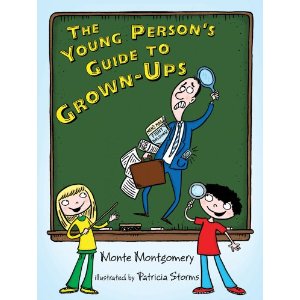
The Young Person’s Guide to Grown-Ups, by Monte Montgomery, illustrated by Patricia Storms (Bloomsbury, 2012)

Recommended for ages 9-12
Being a kid is tough. What if there were some sort of guide to figuring out the grown-ups in their lives? Monte Montgomery and Patricia Storms have created a field guide to the average grown-up to help children navigate these strange people who seem to hold so much sway over them.
The book examines grown-ups as seen through a child’s eyes and includes basic similarities and differences between grown-ups and kids: adults, for instance, have stopped growing taller and started growing wider, but have never stopped feeling like the kid they used to be, providing the reader with an entry point with which to relate.
Set up like a Grown-Ups for Dummies book, complete with callout Tactics boxes spotlighting tools for dealing with different situations and line drawings throughout, Young Person’s Guide takes kids through everything they need to know about grown-ups at home, at school, and “in the wild”. Descriptions of various adults in each of these settings and an FAQ flesh out each section. Montgomery imparts Three Universal Truths that kids and adults alike should know and includes an in-depth, illustrated guide to various classes of adults, like atheletes, dentists, police officers and millionaires (complete with Donald Trump-like caricature).
Young Person’s Guide is a fun book that will help younger children feel like they have some handle on why grown-ups say and do the things they do, while helping them understand that adults and kids have much more in common than they may think. It is a fun book that can start conversations both at home and in the classroom.
Patricia Storms’ webpage are as much fun as her illustrations. Infused with bright graphics and personal information, the reader can see that the illustrator takes the message of Young Person’s Guide to heart and keep in touch with the kid that used to look back from the mirror.