Posted in Early Reader, Fiction, Non-Fiction, picture books

Science for Kindergarteners!

I’m always looking for ways to get more science in my kids’ days: my QBH Kids and my own Kindergartener alike. I’ve had some great successes and some that fell a little flat. At my previous library, I had a phenomenal early learning assistant who helped create amazing Science Storytimes, using popular storybooks to demonstrate simple science concepts for little ones: using Ellen Stoll Walsh’s Balancing Act to teach balance, while showing them a simple balance board that kids were invited to place small objects on and discover what balanced, and what tipped the sides.

I also look to fellow librarian and teacher bloggers for hints. Pinterest is a great resources, as is Education.com and Teachers Pay Teachers. Science In Storytime is one of my more recent go-tos, with loads a great book and activity ideas, and The Show Me Librarian has some fantastic programming for Pre-K and elementary programs.

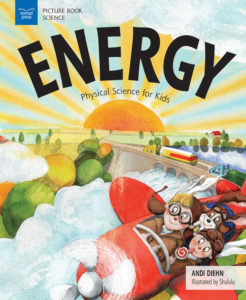
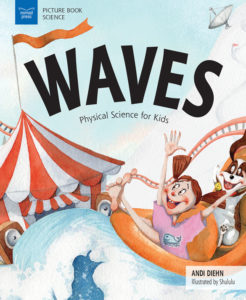
I’ve just received some new books from Nomad Press’ Picture Book Science series, too. These are a lot of fun: color artwork on every page, a fun poem to kick off each book, and my favorite part: an explanation of the scientific term, with all the uses of the term. Take, for instance, the book Waves: it starts off with the simplest interpretation of the word; a way to say hello. The book goes on to include ocean waves in that explanation, then the motion of a wave, and finally, a discussion of waves: energy, light, sound, all using questions to provoke thought, discussion, and understanding. Each book “Try This!” boxes, with simple activities kids can easily do at home or in the classroom (or during Science Storytime). Glossaries are handy to define terms that come up. There are currently four books in the Picture Book Science series: Waves, Forces, Matter, and Energy, all written by Andi Diehn and illustrated by Shululu; at $9.95 each, it’s a good and reasonable investment for our home, school, and public shelves. (Waves: 978-1-61930-635-6; Forces: 978-1-61930-638-7; Matter: 978-1-61930-644-8; Energy: 978-1-61930-641-7)


Rosen Classroom has a new series of easy readers called Computer Science for the Real World. They’re not attempting to teach Python or Scratch to the little ones (yet): these readers break the concepts needed to study computer science down for beginning readers. The three readers I received use everyday concepts – morning routines, alphabetizing books, building a birdhouse – to introduce activities that will help learn computer science; in this case, repetition and doing things step by step.

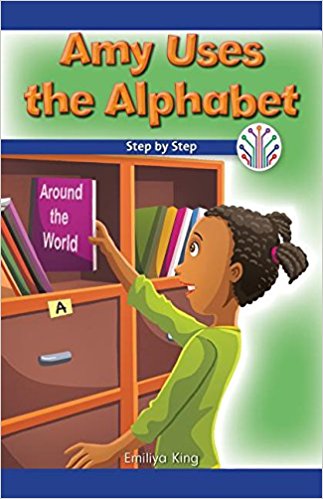
 

The books are leveled and contain instructional guides with include new vocabulary words, background knowledge for the specified concept, and text-dependent questions. There are independent and class activities to help kids learn through experience, and are available in English and Spanish. I really like these readers; there aren’t that many “just right books” (as my son’s school calls them) explaining science like this, and I’d love to have them in my library, but this is more of a Central library purchase, at least in my system, because you’re going to want to buy these by the collection; you can certainly buy them as single books, but having a whole set will better benefit your readers. The pricing is pretty reasonable, so I’ll be slipping this into an interoffice envelope bound for my collection development department tomorrow morning.
Posted in Early Reader, Fiction, Preschool Reads

My Dad is a Clown heals bodies and souls

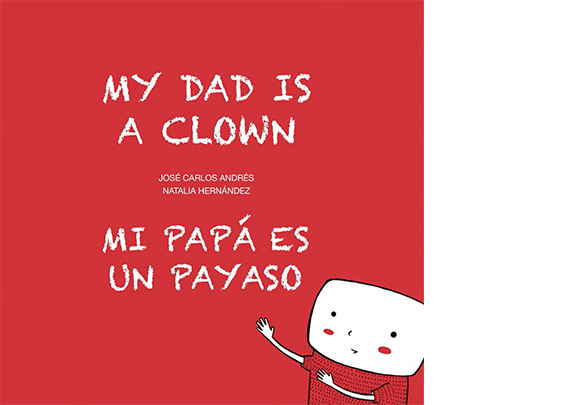
my-dad-is-a-clown-coverMy Dad is a Clown/Mi papá es un paysaso, by José Carlos Andrés/Illustrated by Natalia Hernández, (Jan. 2017, NubeOcho), $14.95, ISBN: 978-84-944137-6-6

Recommended for ages 4-8

A boy with two dads is proud of what they do for a living, and wants to be like them both when he grows up. Both of the boy’s dads are healers: one dad, Pascual, is a doctor and heals his patients’ bodies; his other dad, whom he refers to as simply “Dad”, is a clown, and heals people’s souls. Pascual and the boy sneak into Dad’s rehearsal one day, where the boy realizes the hard work that goes into being a performer, and decides that he will combine the best of his fathers’ professions when he grows up.

This is a sweet story about a boy who loves and is proud of his parents. We also see a loving relationship between the boy’s parents, who happen to both be men. The cartoony two-color art, primarily black and white with reds added for visual interest and emphasis, is both sweet and dramatic. The family is tender with one another, unafraid to show affection. It’s a gratifying, emotional read, particularly when the family reunites after Dad’s rehearsal and they share happy tears.

This third edition of the story is a bilingual edition, translated into English and includes the Spanish text directly beneath the English text, both featured in a highlighted typewriter font that makes for easy independent and cuddle time reading. It’s good for English and Spanish language learners, and is a sweet story about family love to add to your bilingual collections and your storytime rotation. Put this 0ne on your shelves: there are families out there who need and deserve to have their stories told.

Posted in Early Reader, Preschool Reads, Toddler Reads

Mexican Folk Art and Concepts meet with Animal Talk!

animal talkAnimal Talk: Mexican Folk Art Animal Sounds in English and Spanish, by Cynthia Weill/Art by Rubi Fuentes and Efrain Broa (March 2016, Cinco Puntos Press), $14.95, ISBN: 9781941026328

Recommended for Infants-5

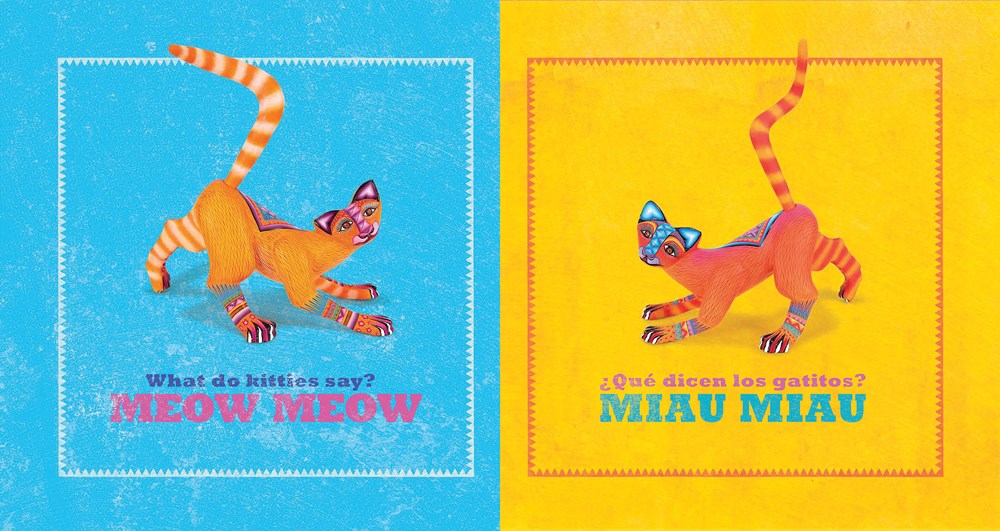
Animals talk in all sorts of languages! Animal Talk translates animal sounds in Spanish and English, using beautiful folk art to illustrate the concepts. It makes sense that different languages would interpret animal sounds differently, after all – when an English speaker hears a cat meow, a Spanish speaker hears a cat miau. A rooster greets the dawn in the U.S. by hollering, “cock-a-doodle-doo!”, and in Spanish countries, he calls out, “ki-kiri-ki!” It’s a wonderful way to see how sounds are the same, yet different, between two cultures.

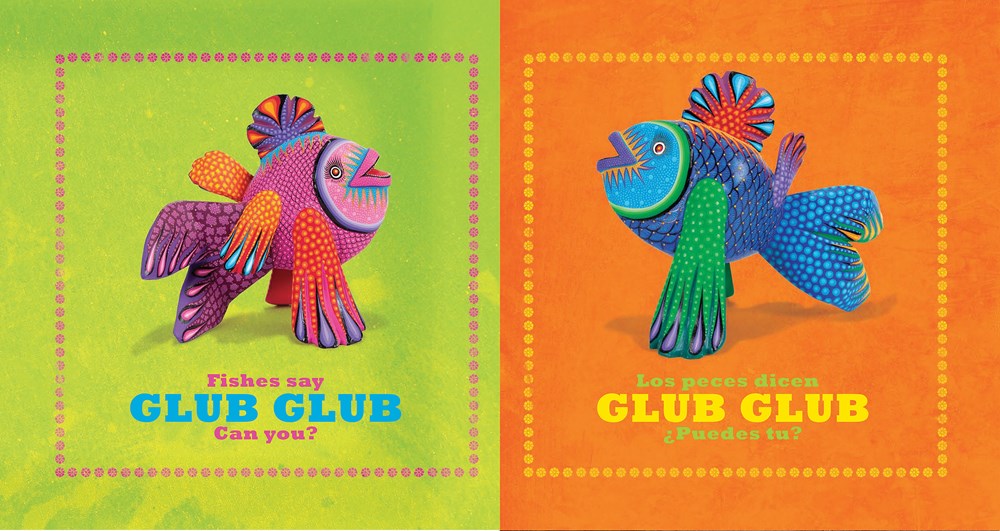
I love this series. Doctor Cynthia Weill has written several concept books featuring Mexican folk art, including Opuestos, Colores de la Vida, and ABeCedarios. Animal Talk is her fifth book in this series, and it’s a fantastic addition for a library like mine, in a neighborhood densely populated with Central and South American families, and it’s a great library addition to any library where you have little ones ready for a storytime. The artwork is breathtaking. Mexican folk art is vibrant, lively, and bright – eye-catching to little eyes and minds! Animal sounds make for great storytimes; teaching animal sounds in different languages makes for even more fun. It lends itself to a great interactive experience!

The books themselves are works of art; not even an exaggeration. Craftsman Rubí Fuentes and Efraín Broa from the Mexican state of Oaxaca create these beautiful images, and you’ll want to buy an additional book just to frame the artwork in here.

One thing I desperately need is for these books to come out in board book. They’re beautiful hardcovers, but I’ve got lots of little hands that would get even better use out of them if moms, dads, and librarians didn’t have to worry about torn pages so much.

Put this in your animal storytime, and throw in a round of Old MacDonald Had a Farm while you’re at it – and make the animal sounds in both languages!

Cynthia Weill’s author webpage features a video about the artists who made the wood carvings for her book, Opuestos. Show this video to your older patrons and students to show them the work that goes into these beautiful books. Take a look at more of the gorgeous art from Animal Talk right here!

Posted in Uncategorized

Book Review: All Aboard the Circus Train!: A Foldout Book with Flaps! (Dora the Explorer), by Laura Driscoll (Simon Spotlight/Nickelodeon, 2004)

ImageRecommended for ages 0-4

Dora the Explorer and her friend, Boots the Monkey, are riding a train to the circus and need help finding their way there and in avoiding Swiper the Fox. Readers also get to count from one to three in English and Spanish with circus animals. Dora is always a good choice for toddlers and preschoolers, and this book is no exception. The lift the flaps create interest, and there are bilingual lessons in every book.