Posted in picture books, Preschool Reads

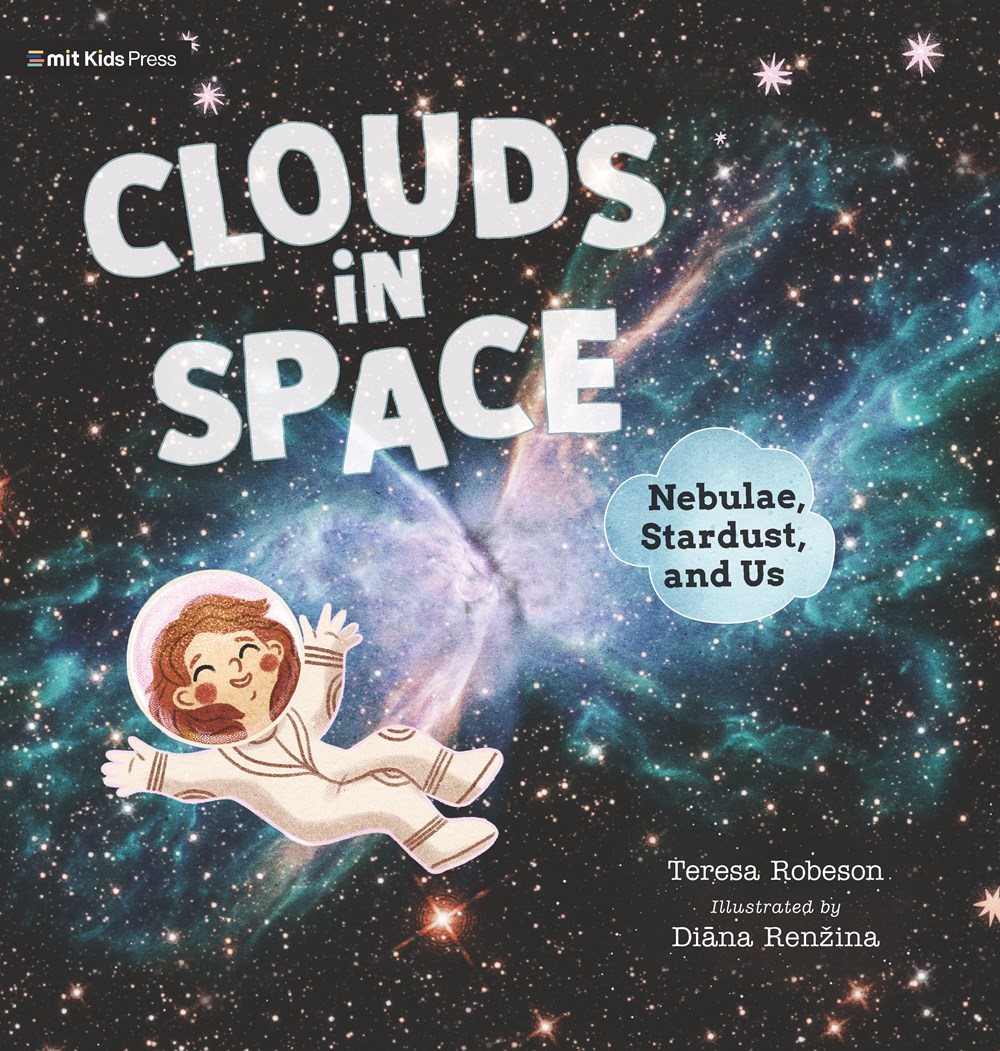
Clouds in Space: Meet Nebula!

Clouds in Space: Nebulae, Stardust, and Us, by Teresa Robeson/Illustrated by Diāna Renžina, (Aug. 2024, MIT Kids Press), $17.99, ISBN: 9781536225372
Ages 7-9

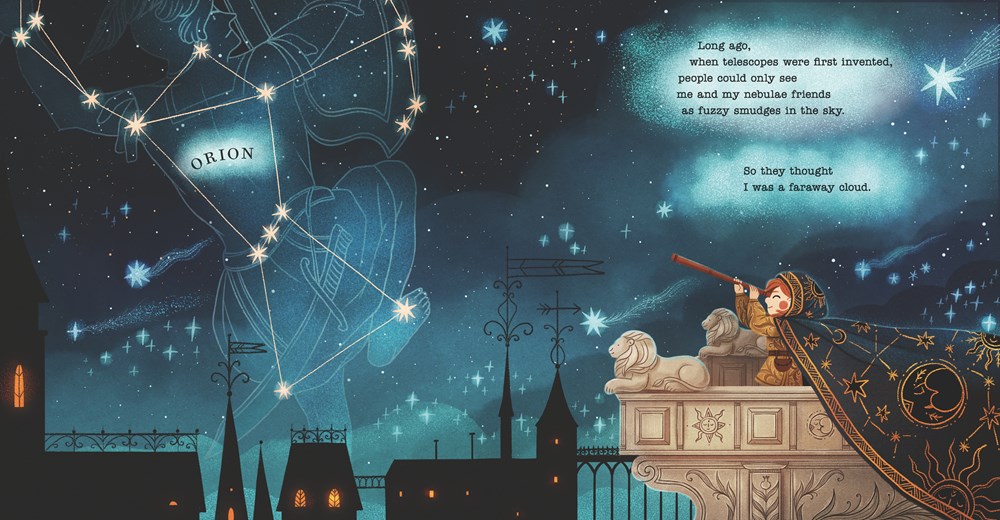
The secret is out: there are things we can’t see beyond the clouds. But Nebula, our narrator, is here to tell us everything! Nebula means “cloud” in Latin, and she guides us – and a young astronomer featured in the story – through an outer space trip to marvel at the beautiful nebulae scattered across the universe. Stunning digital illustrations incorporate actual photos of nebulae to paint vibrant pictures across the black sky. Renžina adds shapes to Butterfly and Elephant nebulae and allows a kaleidoscope of color to shimmer forth from our guide Nebula’s entire being; Robeson creates non-fiction poetry to describe the incredible beauty of the universe with phrases like “You are grown from scattered stardust, / sprouted in a stellar nursery. / I AM THE STARDUST / AND THE NURSERY”. Back matter includes details about nebulae, with photos of the nebulae featured in the book, and resources for further exploration. A stunning book that works as a storytime selection as easily as it does a non-fiction resource.

Clouds in Space: Nebulae, Stardust, and Us has a starred review from School Library Journal.

Posted in Librarianing

Solar Eclipse resources

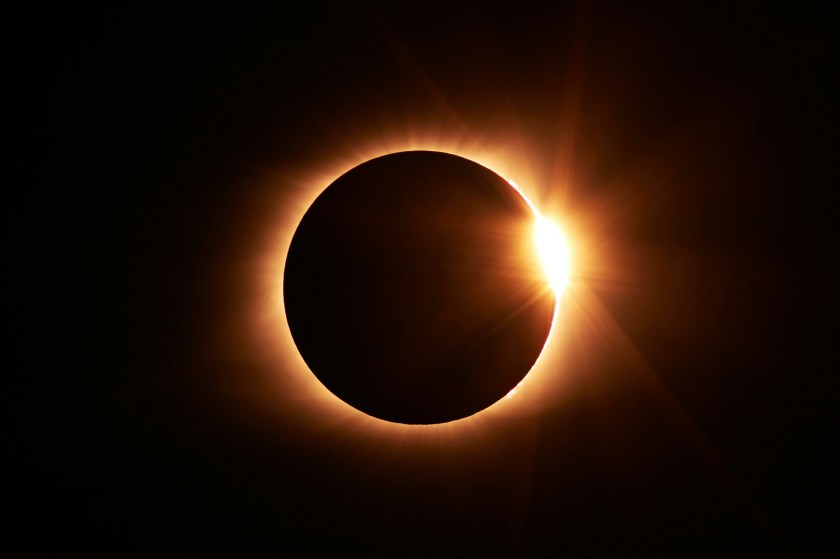
Yes, the solar eclipse is upon us… again. We thought we’d get a break after the 2017 Eclipse Glasses Madness, but it’s back and libraries everywhere are  besieged with phone calls and visitors asking the eternal question, “Do you have any of those eclipse glasses?”

We’re out, but we’re getting more on Monday, just in time for the event itself. For those of you still in the heat of handing out glasses, stay strong. In the meantime, here are links to fun eclipse activities and resources for you to share.

TeachersPayTeachers is a treasure trove. Here are a few I’ve downloaded:

Traci Clausen has a very cute informational activity and craft.

What’s an eclipse day without a cool hat? Katie Mense has a cute hat kids can color in and wear.

Amanda Richardson has a hat AND props to re-enact your own solar eclipse!

Teaching Tiny Smiles has a word search.

Need coloring pages? Check out Looped Into Literacy and In Our Middle School Era.

TeachersPayTeachers has a language filter, so make use of it! My community is primarily Spanish-speaking, so I’ve downloaded some crowns from Dee Teaches, activity sheets from Angie’s Schoolhouse, and crowns and coloring pages from Bilingually Ever After.

Crayola has a fun activity showing kids how to create an eclipse with chalk and construction paper.

NASA’s Space Place has games, videos, and activities for kids and NASA Scope through Arizona State University has activities for grownups and kids alike. Check out some great photography on NASA’s Eclipses Gallery!

Above all, be safe and enjoy your eclipse experience.

Photo courtesy of Jongsun Lee on Unsplash

Posted in Intermediate, Non-Fiction, picture books

What About…? Great series for developing minds

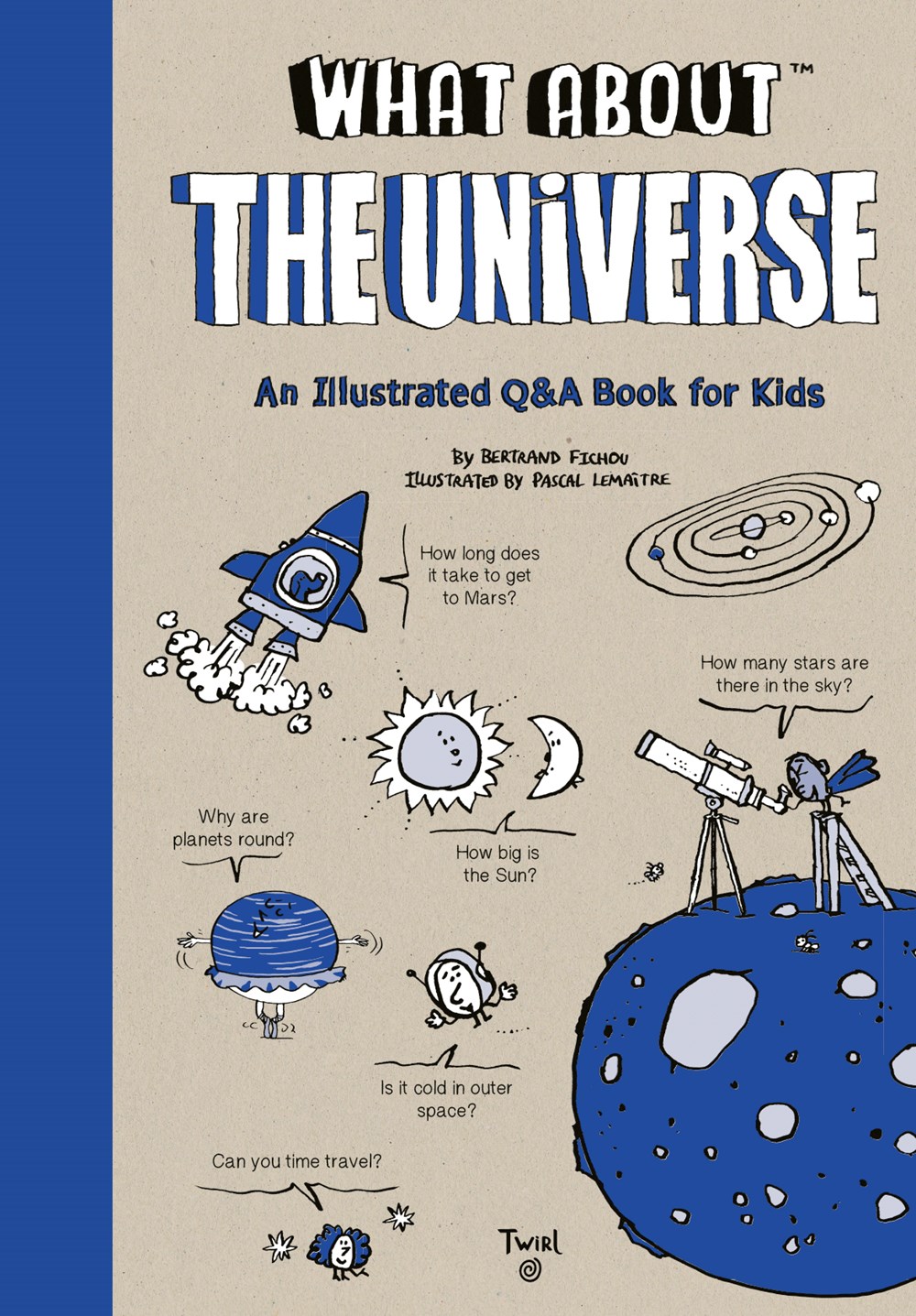
Twirl Books has been great for producing high-quality, fun, and educational board books for the littlest learners. Their What About… series, originally published in France, skews slightly older and are “Illustrated Q&A Book[s] for Kids”.

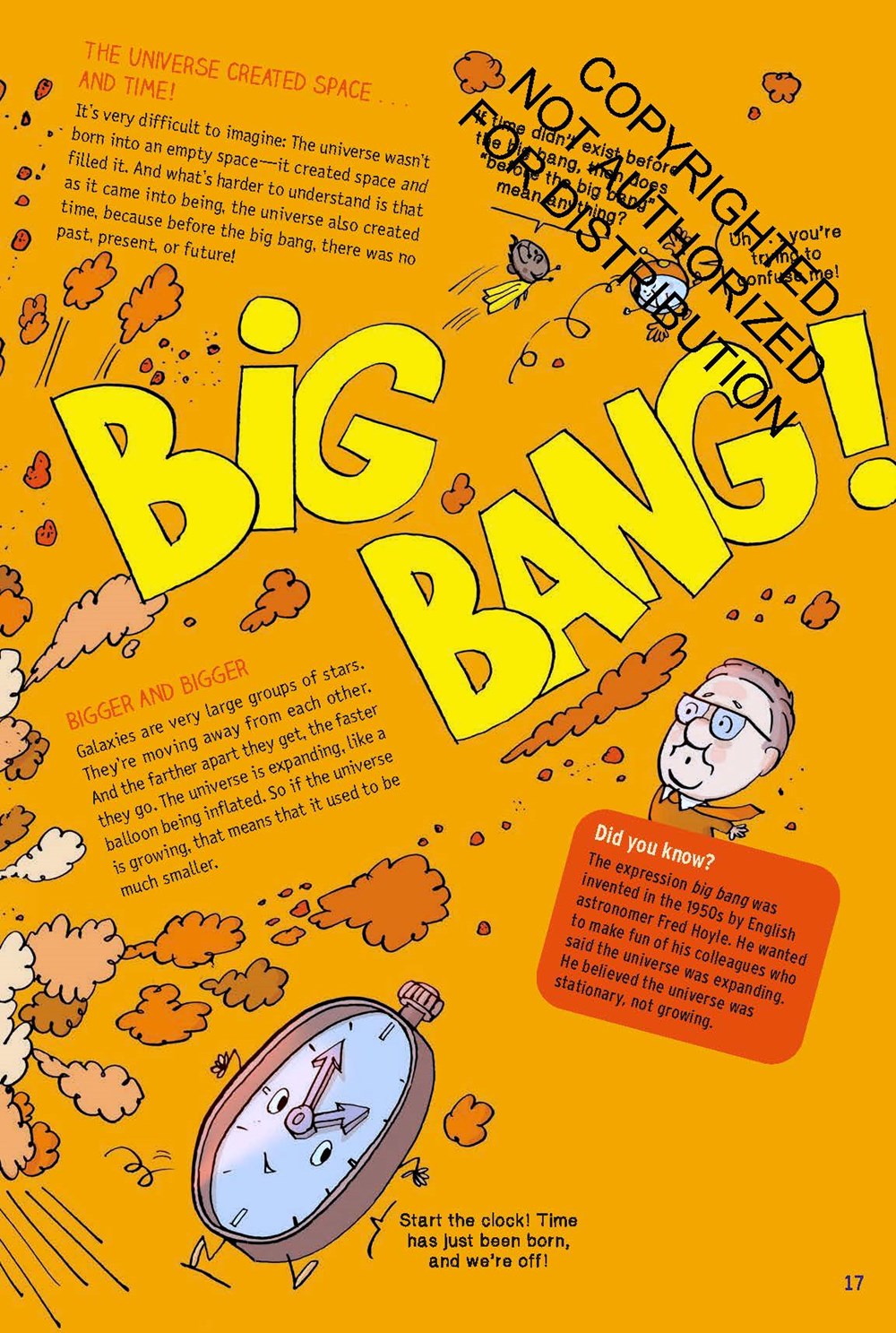
What About: The Universe, by Bertrand Fichou/Illustrated by Pascal Lemaître, (Nov. 2022, Twirl Books), $16.99, ISBN: 9791036345159

Ages 7-11

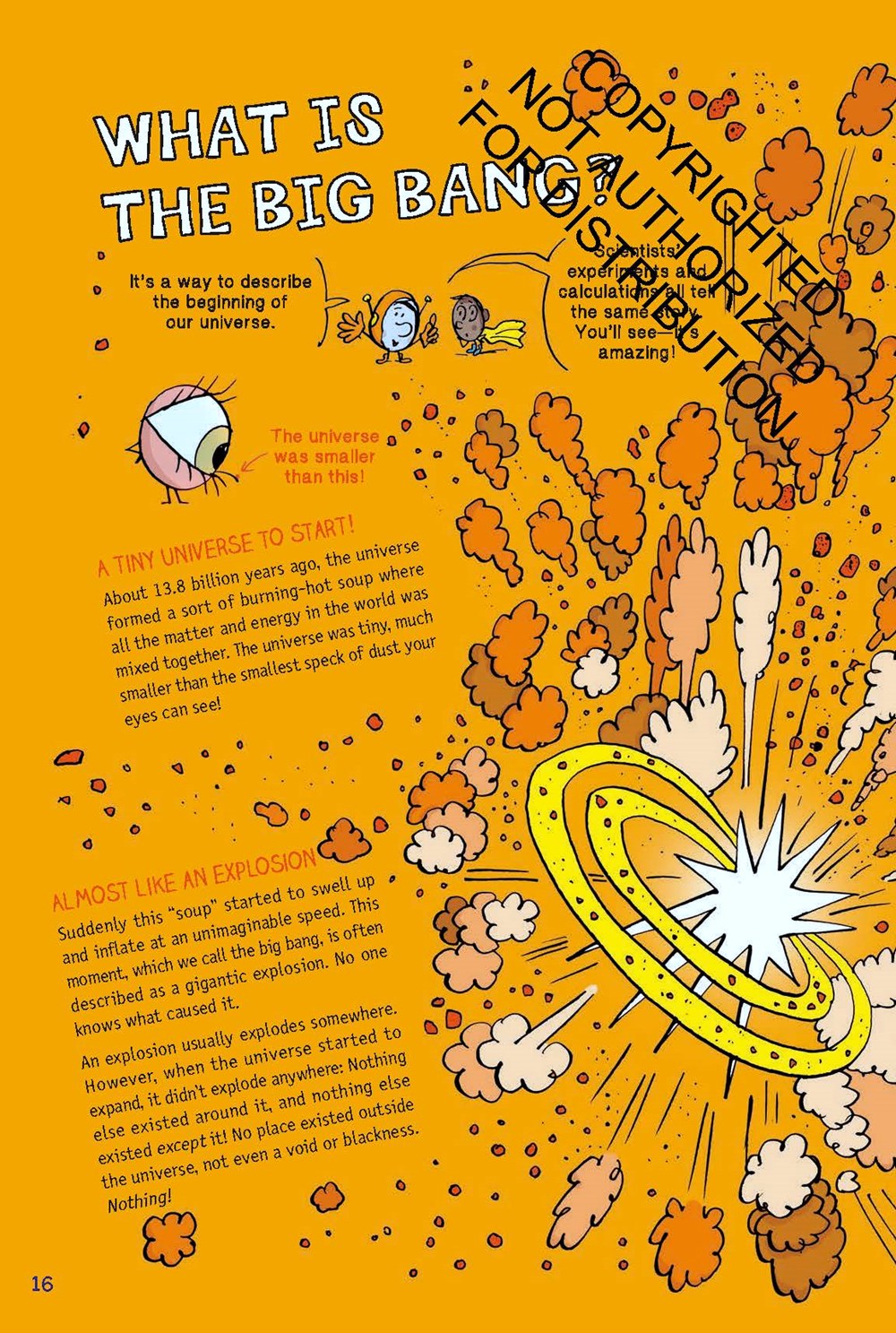
If you’ve been around kids, you’ve heard the questions: “Why don’t people on the other side of Earth fall into space?” “Is it cold in space?” “What’s in our solar system?” These questions, and many more, get answered thoughtfully and visually in What About the Universe, which begins with a glossary. I love this: get the vocabulary up front, preparing kids for words they’re going to see along the way! Answers are broken up into bite-sized, step-by-step responses, hopefully answering additional questions that pop up along the way. For instance, the answer to “How are stars born?” goes through a 5-step answer: “1) a nebula drifts through space; 2) the nebula shrinks, 3) everything starts to heat up; 4) the star ignites, and 5) planets form around the star”. Visuals make each concept easier to comprehend, and additional fun facts provide deeper context. Colorful cartoon artwork makes learning fun. An index makes searching for specific information easier, and a Table of Contents at the beginning helps readers locate their big questions with no fuss. A very good choice for reference and STEM collections.

I’m enjoying putting together activity packs these days; if you are, too, consider a few NASA coloring pages, a planets wordsearch from Ana DeSousa on TeachersPayTeachers, and this planet order worksheet from abunchofbrinsons on TeachersPayTeachers.  Have them available for any of your space fans!


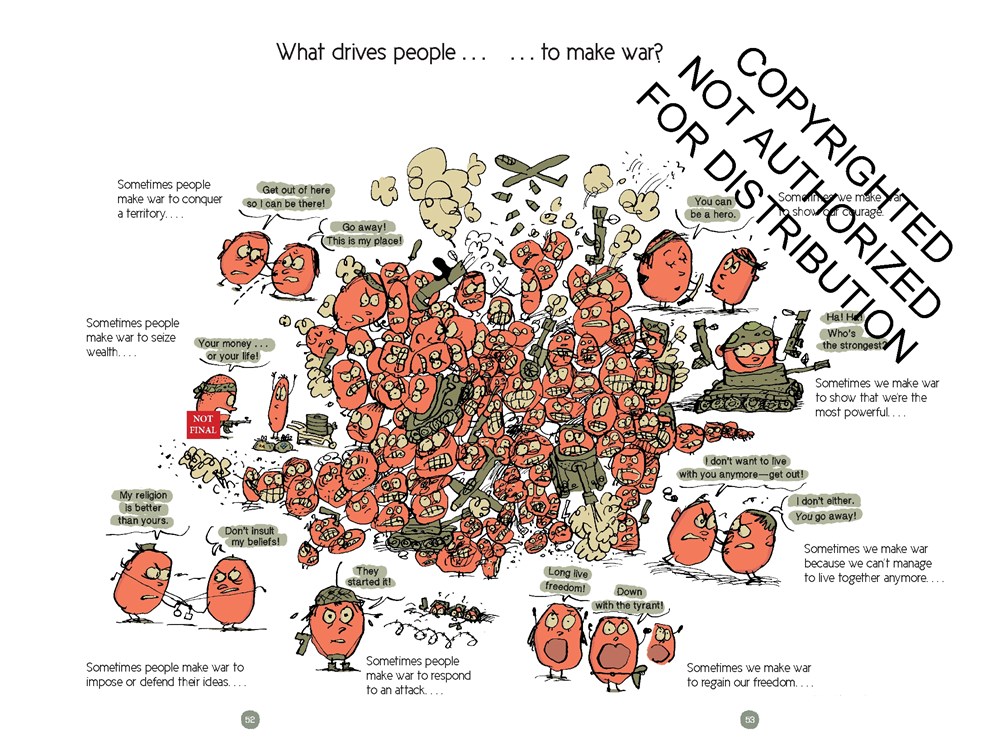
What About: Philosophy, by Gwénaëlle Boulet & Anne-Sophie Chilard/Illustrated by Pascal Lemaître, (May 2023, Twirl Books), $16.99, ISBN: 9791036353086

Ages 7-11

Kids are like mini-philosophers. Think of the big things they think about: “Why are there wars?” “What’s is fair or unfair?” “Why do I have to go to school?” There are 16 big questions in this book, all illustrated and considered with respect to the reader. Beginning with the biggie: “Why do humans exist?”, the book goes through age-appropriate explanations that consider existential theories and being self-aware. The authors explore concepts like being in love, being brave, and being free; what money is and why we use it, and abstract concepts like time.  Explanations are factual, non-judgmental, and age-appropriate, so younger learners will more easily be able to follow along and gain deeper understanding of emotions like anger or jealousy and how it makes a person feel. Overall, a good addition to the series and a good attempt at putting some big questions into context for younger readers. There is a table of contents, but no index in this volume.

PLATO (Philosophy Learning and Teaching Organization) is an organization that offers philosophy and ethics programming to students, educators, and families. Their philosophy toolkit offers free, downloadable lesson plans, organized by grade level, that you can share with your families and school partners.

Posted in geek, geek culture, Graphic Novels, Guide, Intermediate, Middle Grade, Non-Fiction, picture books, Preschool Reads

Find gift ideas here!

It’s another roundup: you’ll find a few more ideas here, I hope, if you’re in “just one more person… gift… book” mode, or, if you’re like me, you’re eyeballing your December book budgets and in “I’ve got a little bit more left, I can fit one more book in this cart” mode. Either way, I hope you enjoy.

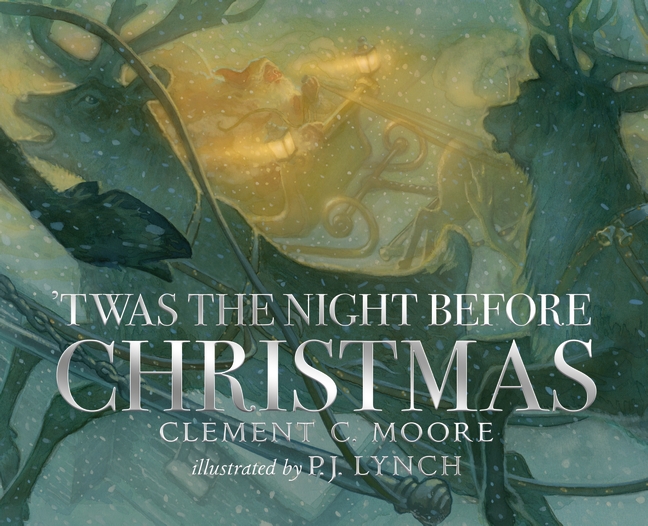
‘Twas the Night Before Christmas, by Clement C. Moore/Illustrated by PJ Lynch, (Nov. 2021, Candlewick Press), $17.95, ISBN: 9781536222852

Ages 3+

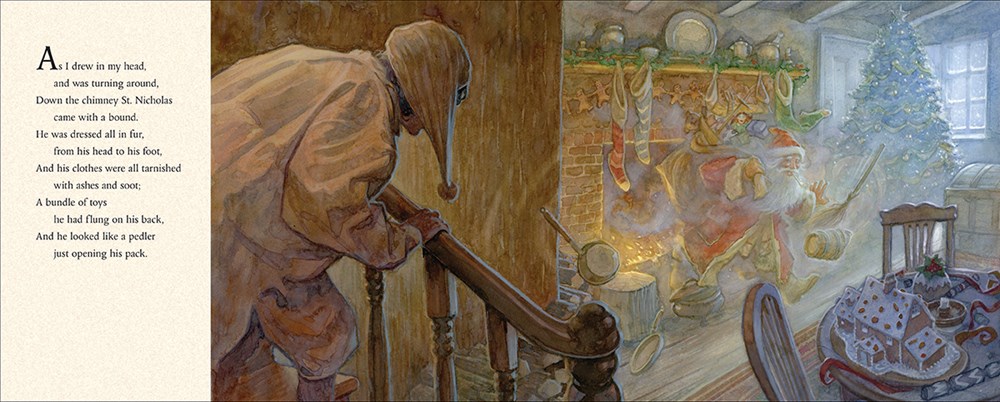
The latest release of Clement C. Moore’s classic 1823 Christmas poem, PJ Lynch imagines a sweeping Christmas tale, with watercolor and gouache illustrations rendered in shades of greens and blues to set the sleepy, evening mood. Saint Nick arrives on the scene, bringing warm reds and oranges. Lifelike artwork brings the team of reindeer to life, with texture and movement as they dance across the sky, carrying Santa and his sleigh full of toys. This telling of Moore’s A Visit from St. Nicholas is set in what looks like pre-Victorian England, in the time the poem was written. The artwork beautifully captures the stillness of Christmas Eve and St. Nicholas’s Christmas magic.

Every Christmas Eve, I read two stories to my own kiddos (yes, one is 22 and one is 18, but they still humor me): Chris Van Allsburg’s The Polar Express and Clement Moore’s A Visit from St. Nicholas. I’m looking forward to reading PJ Lynch’s version this year.


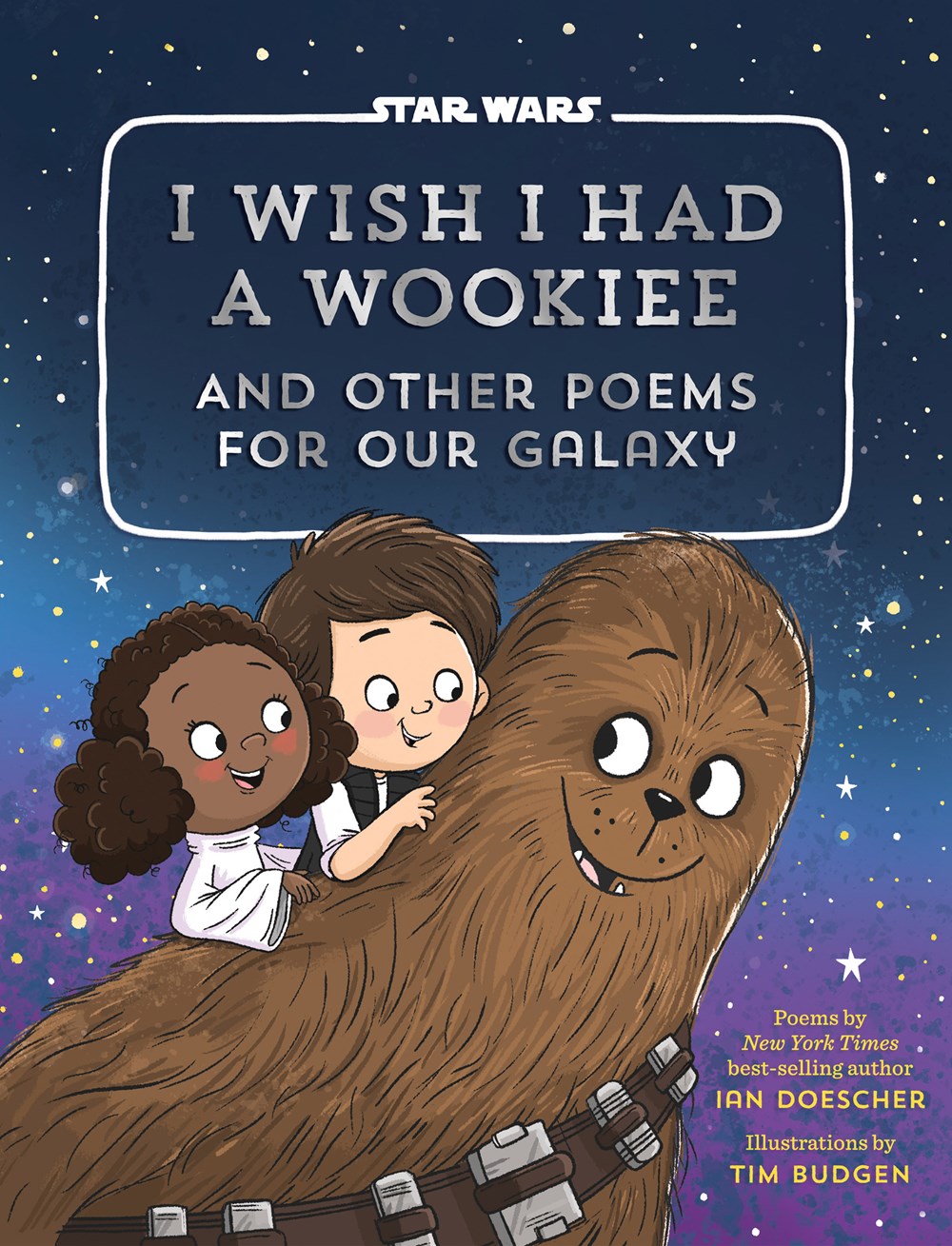
I Wish I Had a Wookiee And Other Poems for Our Galaxy, by Ian Doescher/Illustrated by Tim Budgen, (Sept. 2021, Quirk Books), $19.99, ISBN: 9781594749629

Ages 6+

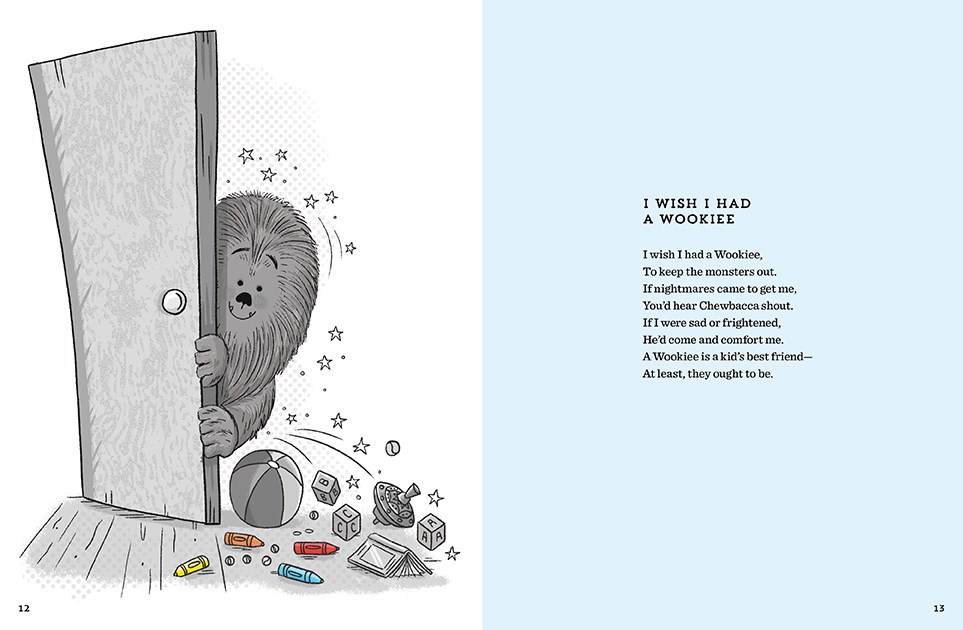
Ian Doescher – Star Wars fans will recognize the name as the scribe of William Shakespeare’s Star Wars saga – is here to delight readers with his Star Wars poems created especially for kids (of all ages). He celebrates fandom with over 100 poems, complete with illustrations by Tim Budgen, whose artwork will appeal immediately to readers familiar with Jeffrey Brown’s Jedi Academy graphic novel series. He covers each of the three trilogies and embraces all the characters – and fans – of the Star Wars Universe, with poems like “Resourceful Sith”, where a child gets hold of supplies to make themselves into Darth Maul; “Snow Day on Hoth”, where kids enjoy a snow day in the greatest of ways: “My sister was a rebel leader, / And I was Luke in my snowspeeder. / The neighbor twins were Empire troops, / Approaching us in AT-AT groups”. He remembers us parents with poems like “Dad’s Luke Skywalker Figurine”, “Mom, the Medic Droid”, and “Old Mr. Jones and His Star Wars Collection”. Illustrations in black, white, and color are on almost every page. Put this right next to your Shel Silverstein and Jack Prelutsky books, and make sure to have some fun Star Wars coloring pages available. For all of us who imagined their rooms as the Millennium Falcon’s cockpit, this book’s for you.


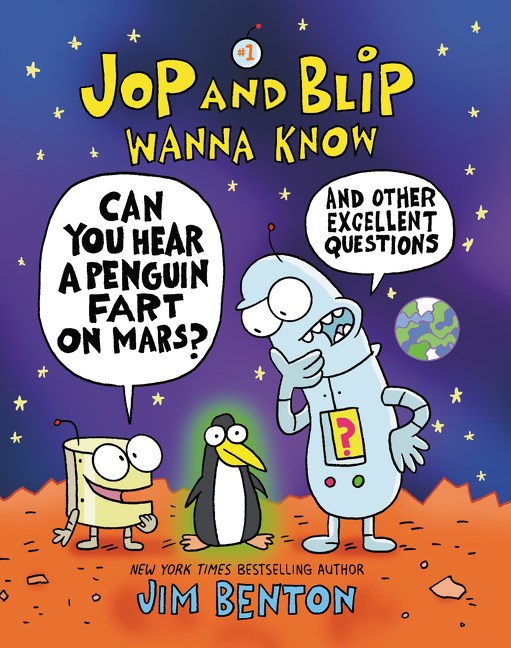
Jop and Blip Wanna Know #1: Can You Hear a Penguin Fart on Mars?: And Other Excellent Questions, by Jim Benton, (June 2021, HarperAlley), $12.99, ISBN: 9780062972927

Ages 6-10

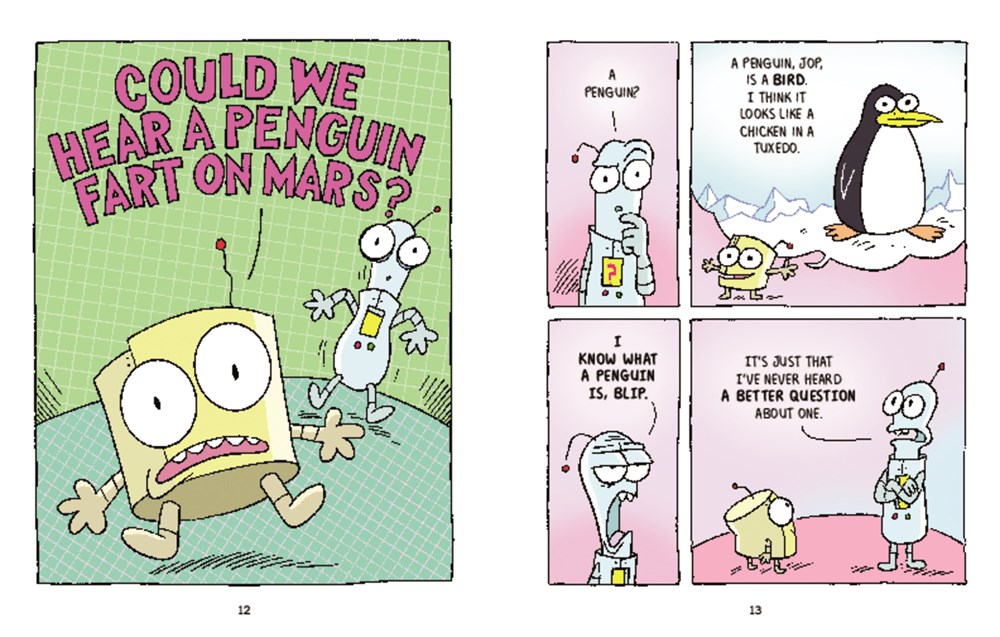
Jop and Blip are two robots with an insatiable thirst for knowledge. They have the deep questions here in this first volume of Jop and Blip Wanna Know, a new series from graphic novelist Jim Benton. Here, they take the science apart to learn whether or not we could hear a penguin fart on Mars; if one could eat a dragon sandwich, and why we have two of sensory organs like nostrils, eyes, and ears. Panels are vibrant and the back-and-forth dialogue is fun to follow: kids who love the Elephant and Piggie books will jump right in here. The sillier side of science inspires these questions, sure, but the reasoning is solid and there’s so much to learn packed in here, including the origin of the sandwich, what dinosaurs really looked like, and yes – whether or not we can hear a penguin farting on Mars. This first book is organized into three chapters, each exploring a different question, with an activity at the end of each. Like Blip says, “…everything is worth knowing”! Think of this as a Science Comics series for your newly independent readers, and add it to your collections.

Fun learner-led program: If you have access to World Book Online through your library, check out the Webquests in the Educator Tools area. They’re printable activities on different topics that challenge readers to follow step-by-step directions to navigate the database and learn about the topic by watching videos, seeing images, and reading the text (which can also be read out loud via the database). While there are no “farting penguins” Webquests (yet), it’s a fun way to introduce research and navigating databases. This Dinosaurs Webquest is a good place to start.

Jop and Blip Wanna Know: Can You Hear a Penguin Fart on Mars? has a starred review from Kirkus.

Where’s Waldo? Santa Spotlight Search, by Martin Handford, (Sept. 2021, Candlewick Press), $18.99, ISBN: 9781536220131

Ages 5-9

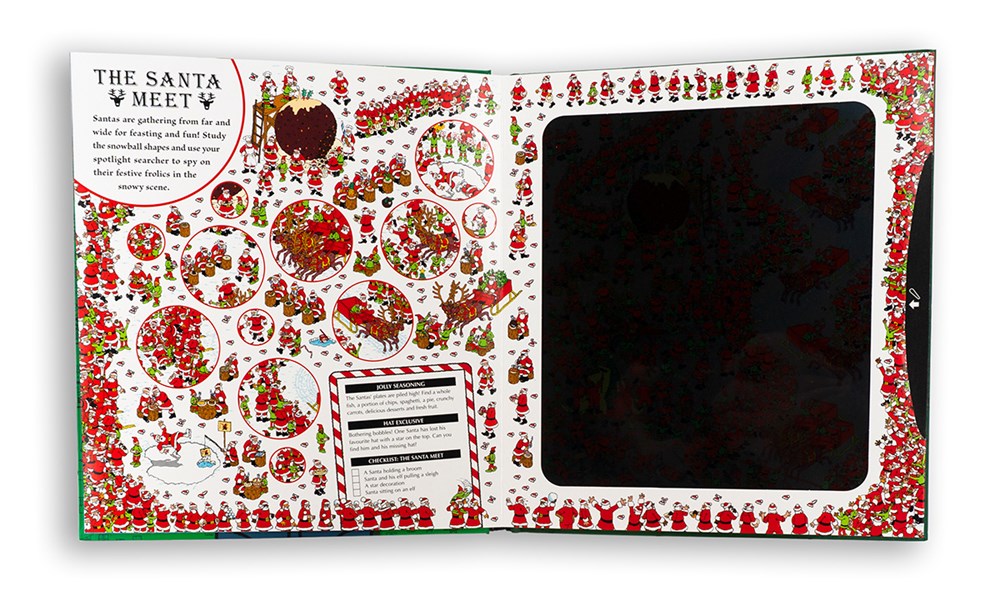
The holiday season brings a new Waldo adventure. The Spotlight books are fun because they add a little more detective work into the mix; dark plastic “winter scenes” on each spread call for a special Spotlight Searcher to slip in and shed a white background against the searching area. There are 6 scenes (including the one on the opening spread) to search, and every challenge calls for readers to search the crowds for Santa, Waldo and friends, and a changing list of objects, from a hatless Santa Claus to solving a jumble by finding letters on building blocks. Visit a Santa Meet and Santa’s Workshop; go Christmas Shopping; enjoy some Festive Baking; join a Jolly Jamboree, and get ready for Christmas Eve. A great learner-directed book to have in a Waldo Corner in your children’s room, and a great way to keep kids busy during Christmas gatherings.

Brightly has Where’s Waldo? printables available, and Nerd Craft Librarian, whose blog I miss, had a great Where’s Waldo? Scavenger Hunt that you can still be inspired by here.


Do You Know? Space and Sky, by Virginie Loubier/Illustrated by Robert Barborini, Audrey Brien, Hélène Convert, Christian Guibbaud, & Cristian Turdera (Oct. 2021, Twirl Books), $16.99, ISBN: 9782408029166

Ages 5-8

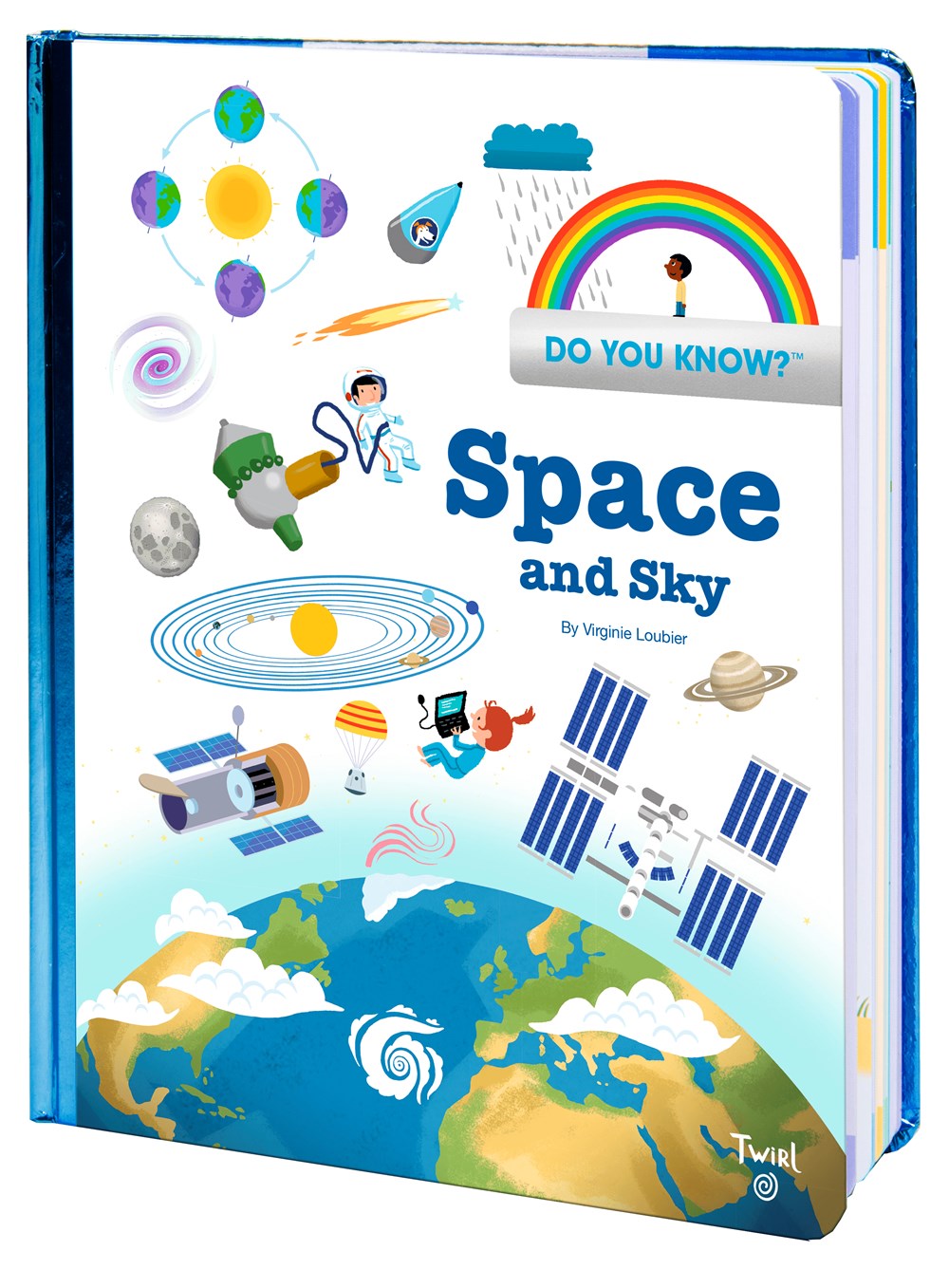
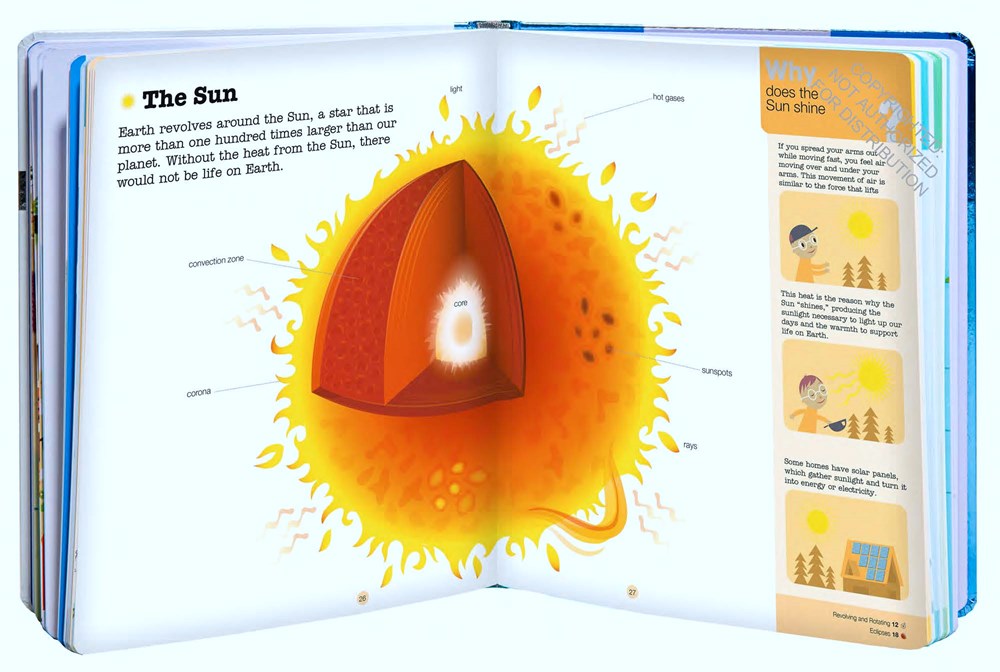
I really enjoy this Do You Know? series for intermediate and middle grade readers, and Space and Sky – the latest – is another hit. Organized into four areas – The Sky, The Solar System, Studying the Universe, and Exploring Space – Space and Sky takes a lot of information and makes it readable and organized for younger learners. Space and Sky covers everything from Earth’s water cycle, weather, and seasons to the planets, space exploration, and how we use technology to study the earth. It’s a funnel type of learning, going from the small to the large, and it helps readers understand where we are in relation to our universe. Let’s Review pages at the end of every section provide learning activities, and colored boxes at the bottom of right hand pages direct readers to related topics in the book. Colorful artwork throughout provides fun images of people and nicely detailed maps and infographics. A full index helps readers locate what they’re looking for.

If you have a puzzle area in your children’s room, consider a Space Day and display Space and Sky along with books like Stacy McAnulty’s planets and space series, Nat Geo Kids’s Space Encyclopedia, and a fun puzzle, like the NASA puzzles (if you have the space) or Melissa & Doug’s Solar System puzzle (we use a lot of Melissa & Doug at my library – so sturdy!).


Posted in Fiction, Fiction, Intermediate, Middle Grade, Non-fiction, Non-Fiction

A gift for every learner!

It’s that time of year, expect the gift guides to be coming at you fast and furious. Let’s see what’s making my lists this year.

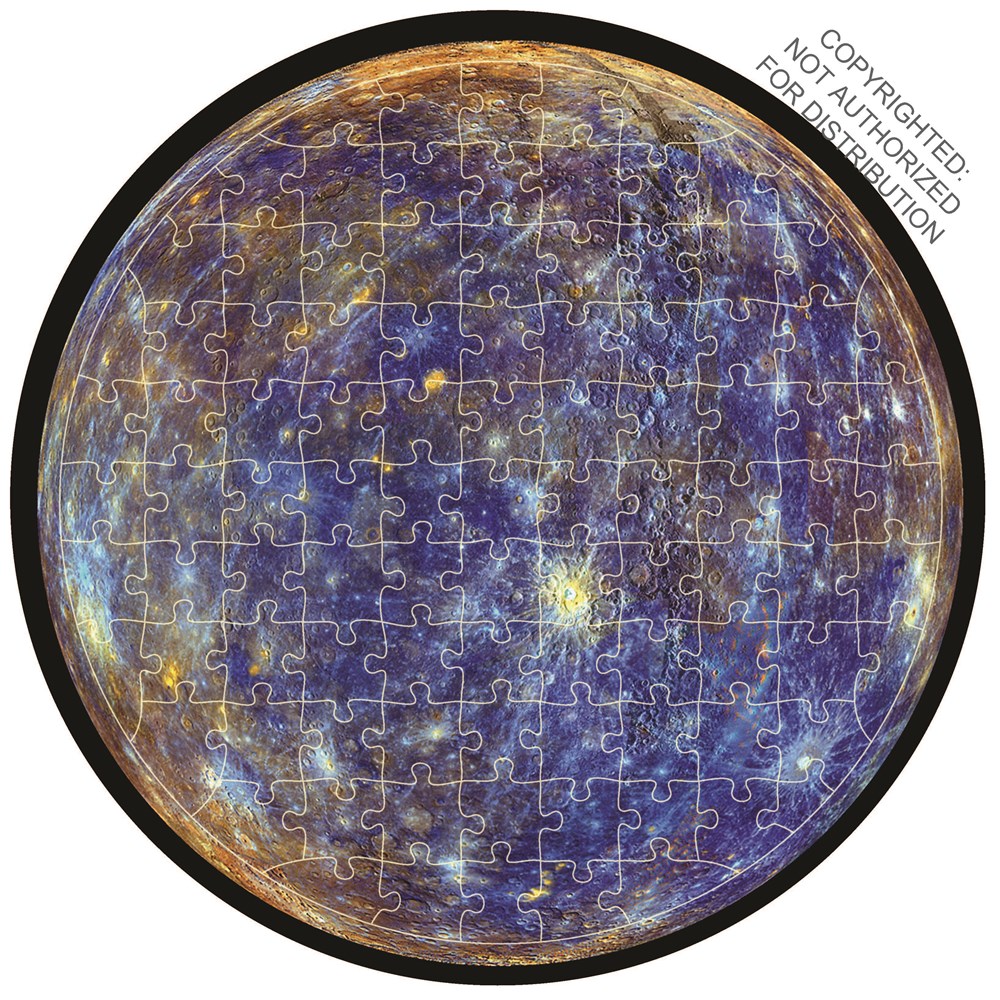
Mercury: 100 Piece Puzzle (Featuring Photography from the Archives at NASA), (Aug. 2021, Chronicle Books), $19.99, ISBN: 9781797210346

Ages 6+

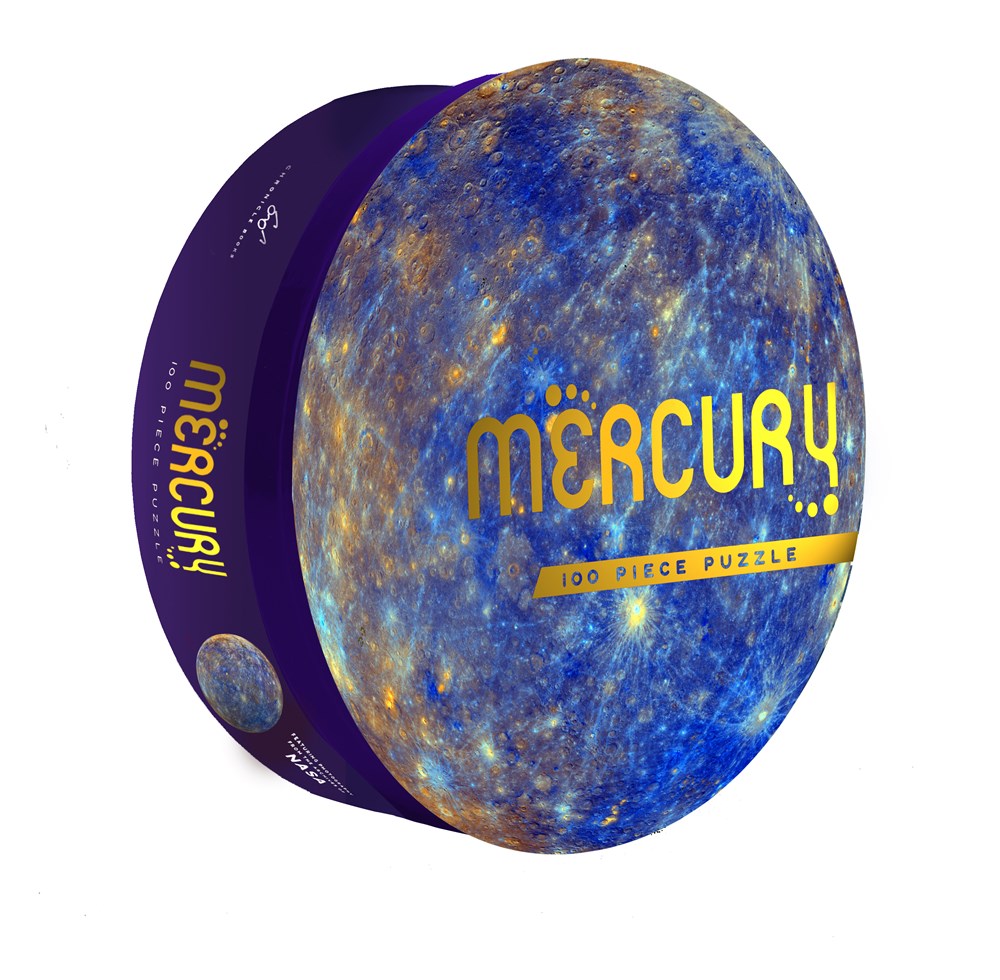
Puzzle fans, astronomy fans, science fans, everyone will love the next planetary puzzle from Chronicle Books. Mercury is the newest 100-piece puzzle using photography from the Archives at NASA, a follow-up to April’s Earth puzzle (which my kid and I still haven’t solved). It’s a beautiful photo of Mercury, and it is huge: 2 1/2 feet in diameter, so clear off a table for Thanksgiving/holiday gatherings and let the family and friends have at it. Puzzle pieces are sturdy, and they’re a good size, inviting little hands to help out, too. It’s a round puzzle, so you can somewhat figure out the outside of Mercury, but don’t forget: it’s a photo, so have fun trying to figure out which crater is goes where (G, my kiddo, and I are still arguing over them).


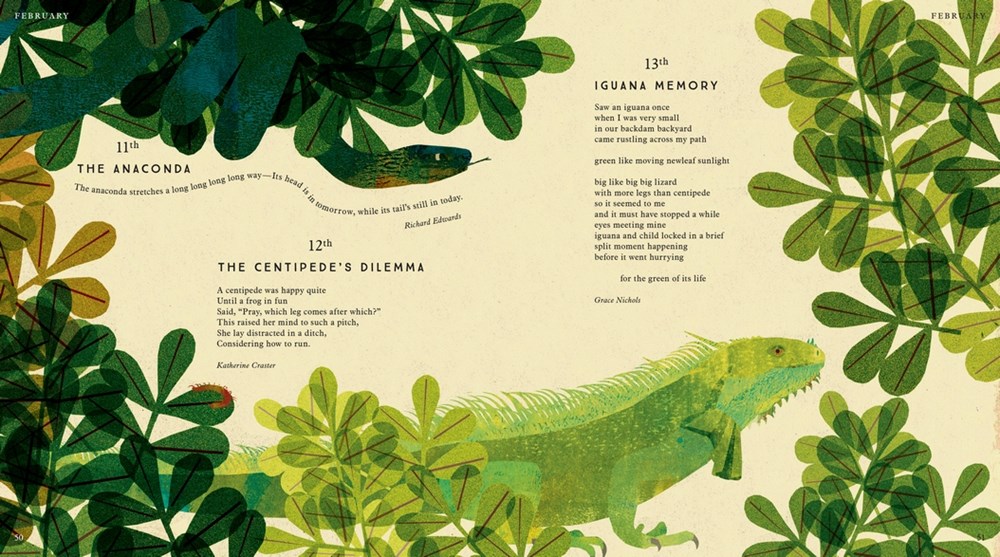
Tiger, Tiger, Burning Bright! An Animal Poem for Each Day of the Year, selected by Fiona Waters/Illustrated by Britta Teckentrup, (Oct. 2021, Nosy Crow), $40.00, ISBN: 9781536217186

Ages 3-8

This is a beautiful collection of animal poems for readers, poetry fans, and animal lovers. There are 366 poems – one for every day, including Leap Year – organized by month. Each month begins with a table of contents that lays out each poem and author by day. The spreads are beautiful and the poems are related on each spread, giving a feeling of cohesion. January 1-3 have poems about polar bears; 4-5 about whales; the action moves through the days, with spreads turning to sheepdogs on guard, wolves, and more. Britta Teckentrup’s artwork is just beautiful, with cold, quiet winter spreads moving into warm, home interiors; crocodiles lurk on one spread, gazelles leap through grass in another. Colorful, not overwhelming, the artwork brings the ideas in each poem to life. Endpapers offer lush, green leaves, inviting us in, and closing their doors behind us. Read a few a time, or savor them day by day.


The Wind in the Willows, by Kenneth Grahame/Illustrated by Grahame Baker-Smith, (Nov. 2021, Templar Books), $19.99, ISBN: 9781536219999

Ages 7-12

The classic children’s novel gets a gift hardcover release just in time for the holidays! If you’ve never read The Wind in the Willows, you’re missing out. The adventures of Mr. Toad, Mole, Ratty, and Badger have been delighting readers since its publication in 1908. This hardcover gift version has illustrations from Kate Greenway Medal winner Grahame Baker-Smith that give gorgeous life to the story; some are sepia-toned, some rendered in shades of blue, green, or brown, some in rich, warm, earth colors. The cloth cover looks like a copy of the book I found on my own public library’s shelves a lifetime ago; just running my hand over the cover brought back memories of sitting down with it and wandering into Mr. Toad’s magic world. Give this to a younger reader, give it to a grownup who needs to go back in time, even if just for a moment.

Posted in Intermediate, Non-Fiction, picture books

Vera Rubin, The Stuff Between the Stars, and a Giveaway!

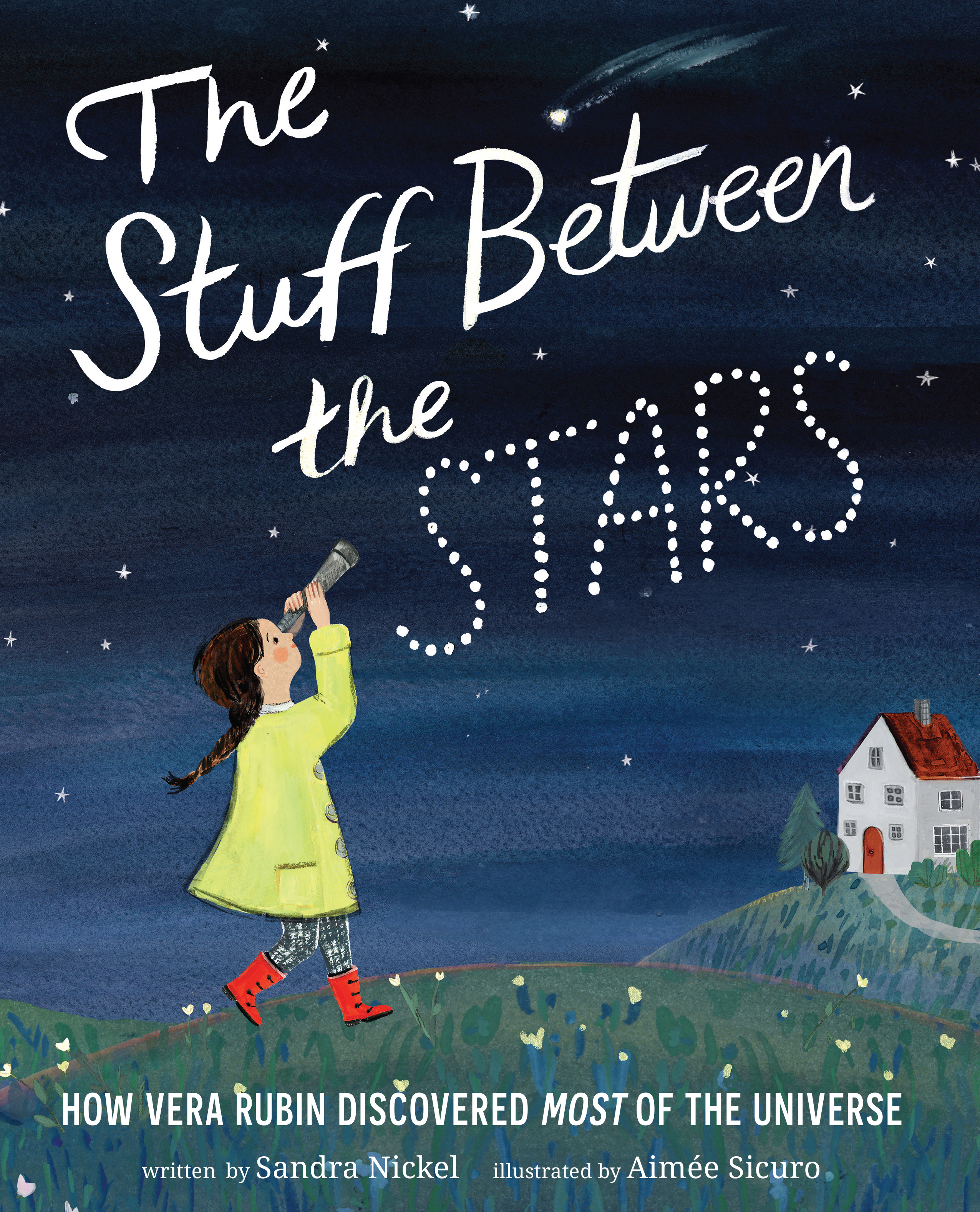
The Stuff Between the Stars: How Vera Rubin Discovered Most of the Universe, by Sandra Nickel/Illustrated by Aimée Sicuro, (March 2021, Abrams Books for Young Reader), $18.99, ISBN: 9781419736261

Ages 6-9

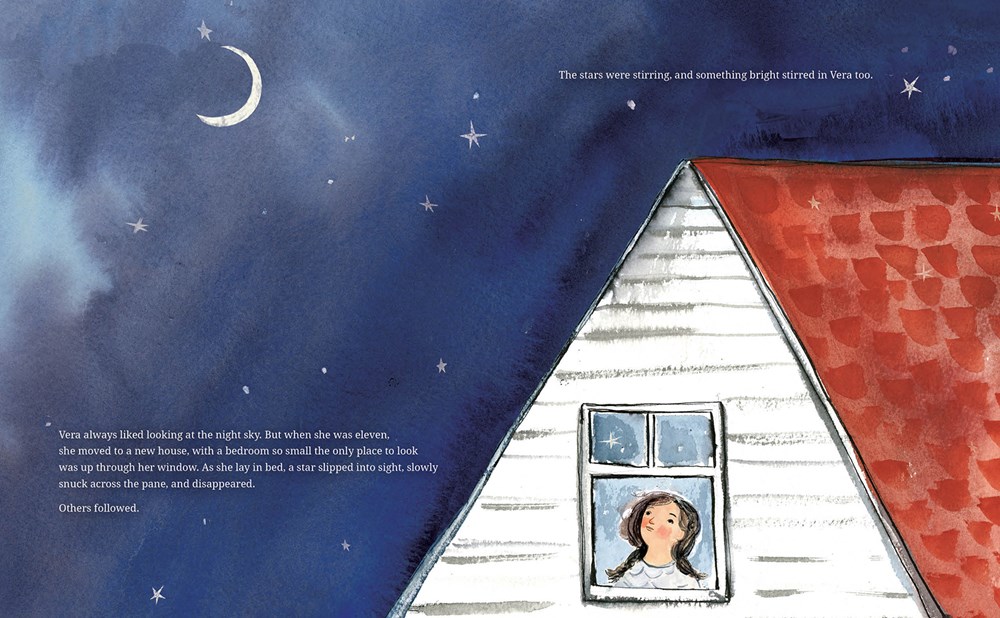
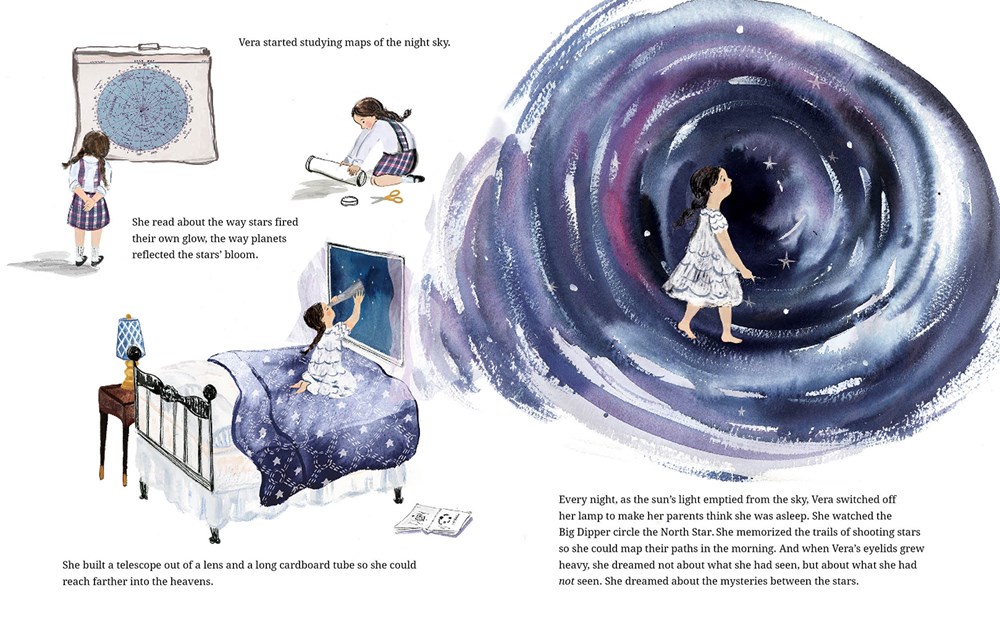
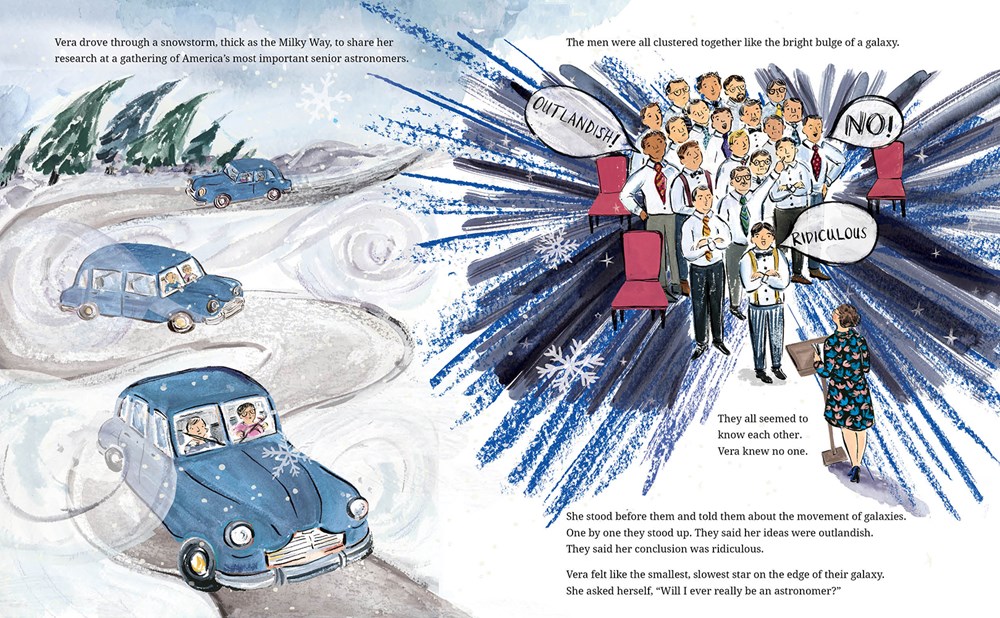
The Stuff Between the Stars is the picture book biography of Vera Rubin, the astronomer who discovered and named dark matter. It also touches on the sexism and ignorance she encountered from the male scientists in her field who called her ideas “ridiculous” and “outlandish”; she persisted, taking pictures of galaxies in motion, proving her groundbreaking theory and forcing the men in her field to admit she was right and concede that they had only been studying a fraction of the actual universe. A vanguard whose time has come, this biography is best for early grade schoolers. Watercolor, ink, and charcoal artwork bring the magic of the night sky to life, with colorful endpapers and artwork throughout. The images of Vera Rubin standing alone against a group of men helps readers feel the intimidation Vera Rubin must have fought off every day of her career, but she stands firm. Back matter includes an author’s note, a timeline of Vera Rubin’s life, notes, and a bibliography. Read this with Marion Dane Bauer’s The Stuff of Stars (2018) for a beautiful perspective on our connection to the universe.


Sandra Nickel says that story ideas are everywhere; you just have to reach out and grab them.  She holds an MFA in writing for children and young adults from Vermont College of Fine Arts. Her first book, Nacho’s Nachos: The Story Behind the World’s Favorite Snack, was a Golden Kite Award finalist. Sandra lives in Chexbres, Switzerland, where she blogs about children’s book writers and illustrators at whatwason.com. To learn more, visit https://sandranickel.com/.

Twitter:  @senickel

Facebook: @sandranickelbooks

Instagram: @sandranickelbooks


Aimée Sicuro is an illustrator, picture book maker, and surface pattern designer who received a BFA in Illustration from Columbus College of Art and Design. She lives in Brooklyn with her husband and young sons. Visit her website to learn more.

Twitter: @aimeesicuro

Instagram: @aimeesicuro

One lucky winner will receive a copy of The Stuff Between the Stars courtesy of Abrams Books for Young Readers (U.S. addresses). Enter this Rafflecopter giveaway!

Posted in Non-Fiction, picture books, Preschool Reads

Three great books about space!

The Summer Reading theme for this year is all about Space, and I am psyched. I love outer space, and I’ve got a growing list of books to add to my own readers advisory lists (I’ll put that together in the next week or two for a post). Meanwhile, Sourcebooks and Barefoot Books have three great books about space that are staggered throughout the year, and perfect for your space-faring STEM fans. Let’s check them out, shall we?


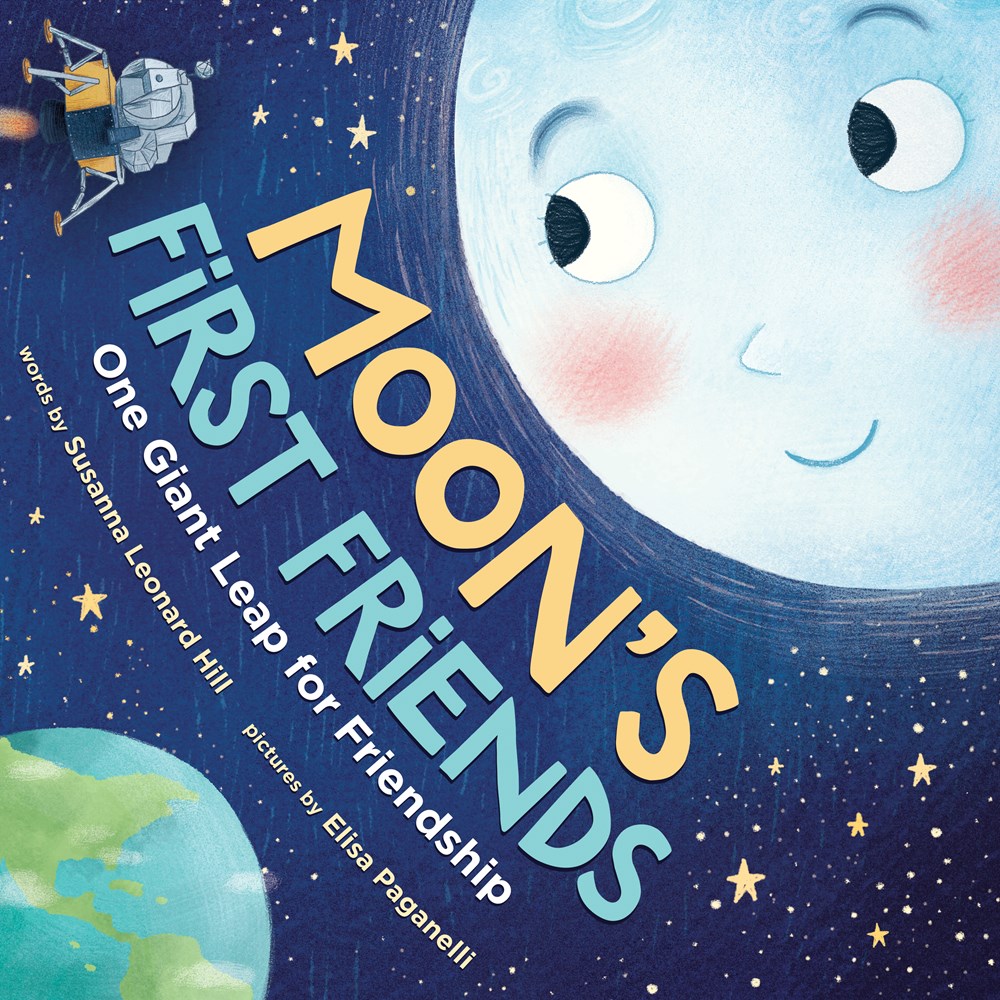
Moon’s First Friends: One Giant Leap for Friendship, by Susanna Leonard Hill/Illustrated by Elisa Paganelli, (June 2019, Sourcebooks Wonderland), $17.99, ISBN: 9781492656807

Ages 4-8

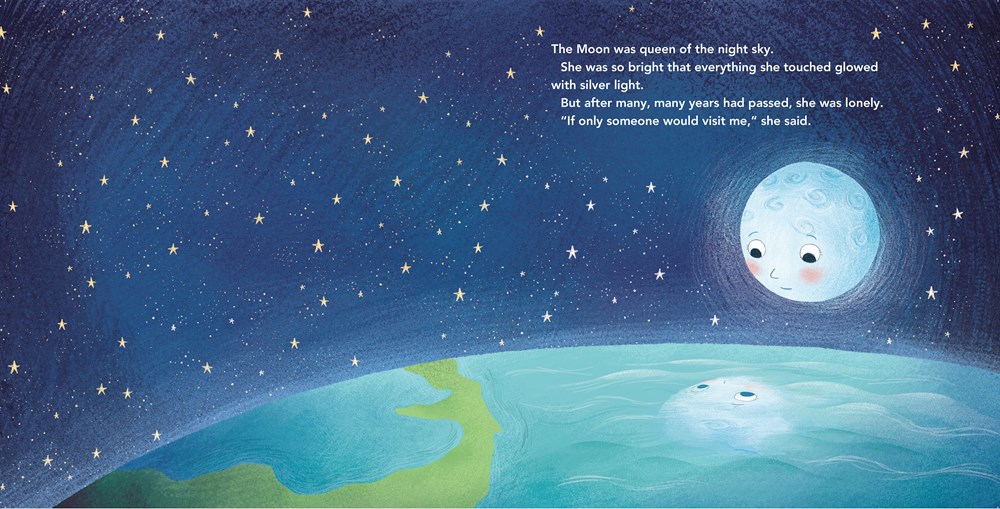
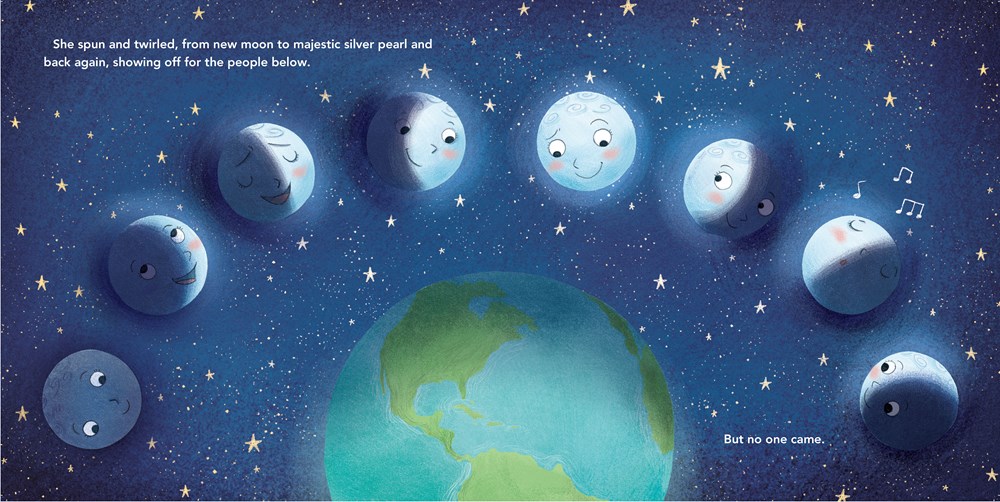
The Moon was so lonely, up in the night sky by herself. When she sees life developing on Earth, she patiently waits for someone to notice and visit her. It takes a while: the dinosaurs don’t notice; early people build pyramids and structures that just aren’t high enough. Eventually, though, she gets some visitors, and she is thrilled! She gives them presents of rocks and dust to take back to Earth, and they give her a beautiful flag and a plaque. Now, Moon is in the sky, happy and waiting for more visitors. Will you be her next guest?

This is the sweetest story I’ve read yet on the Apollo 11 mission to the Moon. The Moon is illustrated as a softly shining, opalescent sphere with kind eyes, rosy cheeks, and a sweet smile; readers are treated to a quick history of Earth’s development as the Moon quietly observes, waiting for a friend to reach out – or up – and say hello. She even dances around the planet, showing off her phases! The actual Apollo mission takes up a brief part of the story, making this sweet book about a lonely satellite who just wants a friend an adorable storytime read for younger kids, and a fun book with solid facts for school-age kids. There’s a brief bibliography on the verso page, and back matter includes several pages dedicated to Mission Moon, the Apollo 11 voyage; moon facts, and moon phases, along with a running timeline of Earth’s formation and development. Endpapers are starry nights, where kids can imagine sailing through the stars to visit their favorite moon. Readers can also scan a QR code to hear Neil Armstrong’s historic first words from the 1969 moon landing. Gentle storytelling and adorable illustration make this a great Summer Reading addition! Display and booktalk with Stacey McAnulty’s Moon, Earth, and Sun trilogy.


There Was a Black Hole That Swallowed the Universe, by Chris Ferrie/Illustrated by Susan Batori, (Sept. 2019, Sourcebooks Explore), $17.99, ISBN: 9781492680772

Ages 3-8

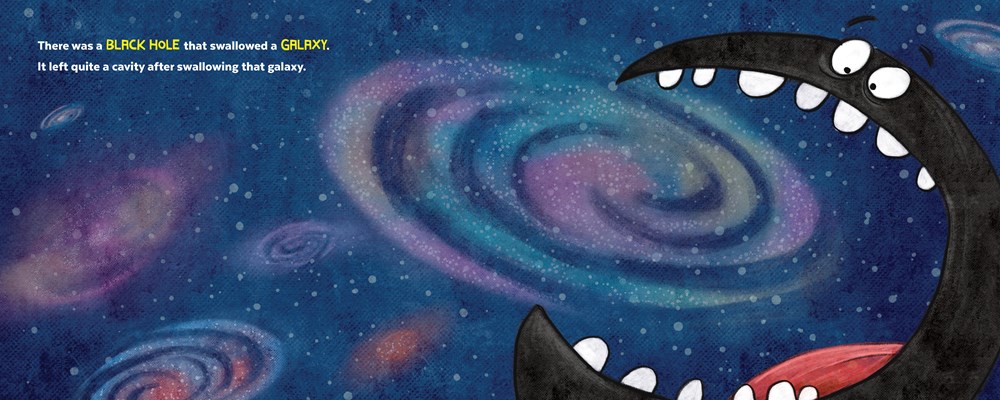
You know if Chris Ferrie is writing a book, I’m reading it. This STEM-errific take on There Was an Old Lady Who Swallowed a Fly is about a giant black hole that swallows… well, everything. He starts with a universe… it couldn’t get worse! But oh, it does: the black hole swallows planets, stars, galaxies, and atoms, molecules, and quarks along with it. Yikes!

I read this to my first grader this morning and he immediately smiled and said, “This is like The Old Lady story!”, so kids familiar with the classic tale (and all of its spin-offs) will immediately jump in and know what’s coming; how the story will progress. With each chomping, the black hole gets bigger, and the planets and heavenly bodies look hilariously terrified as they try to get away from its maw. The storytelling is fun and loaded with humor; it’s cumulative and rhyming storytelling at its scientific funniest. The illustrations are goofy, with exaggerated facial expressions that make the storytelling more dramatic and humorous as you go. Bone up on your keyword knowledge for kids who will ask during the story (neutrons, atoms, quarks, oh my!). Scientific terms are highlighted in bold yellow, and capitalized to stand out and give your readers a nice working STEM vocabulary. Shine a blacklight on the pages from back to front, and you’ll reveal a super-cool, hidden history of the universe’s creation!

Absolute fun and a must-get for your storytime collections. Be a rock star at Science Storytime! Pair this with The Universe Ate My Homework by David Zelster for more black hole-related fun.


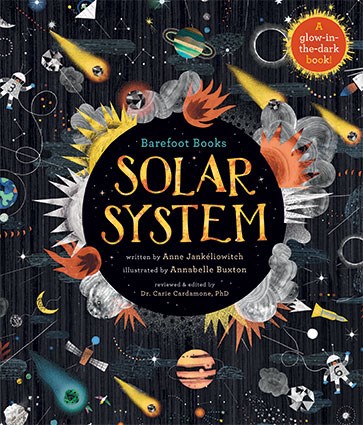
Barefoot Books Solar System, by Anne Jankéliowitch/Illustrated by Annabelle Buxton, Translated by Lisa Rosinsky, $19.99, ISBN: 9781782858232

Ages 8-12

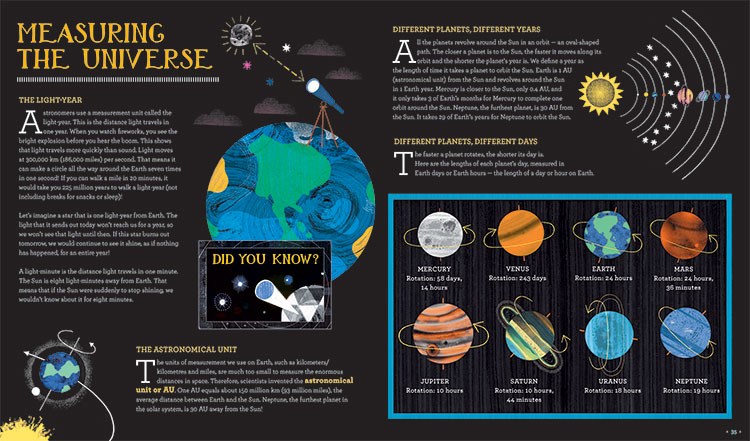
Riding high on the post-Summer Reading wave, middle grade kids can go back school and check out Barefoot Books Solar System, a glow-in-the-dark, interactive guide to our Milky Way, complete with lift the flap booklets, a pull-out map, and beautiful artwork. Originally published in French, the book has been reviewed, edited, and updated by Dr. Carie Cardamone, professor of STEM education and Boston Museum of Science teacher and educator. The text is written with a tongue-in-cheek sense of humor while delivering solid nonfiction goods to middle graders. The book covers each planet, with nicknames like :Saturn: The Space Diva”, and “Uranus and Neptune: The Icy Sisters”; the asteroid belt; differences between solid and gas planets; measuring the universe, and famous outer space voyages. The artwork is bright and bold, seeming to explode off the black pages to grab the reader’s attention.

In keeping with Barefoot’s mission of diversity and inclusivity, there is information about space exploration from around the world, making this a truly global effort. Back matter includes a comprehensive glossary of scientific terms and a note on the units of measurement used in the book. Don’t pass this one up; your 520s will shine a little brighter with Barefoot Books Solar System on your shelf.

Posted in Intermediate, Middle Grade, Non-fiction, Non-Fiction

To Infinity and Beyond! The Day the Universe Exploded My Head

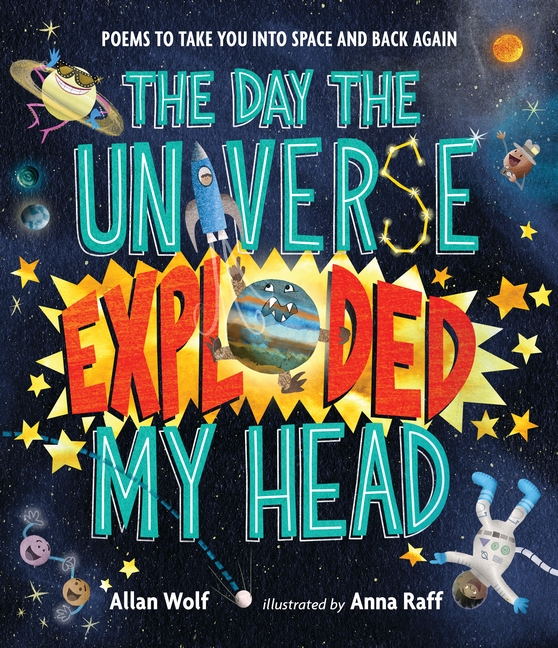
The Day the Universe Exploded My Head: Poems to Take You Into Space and Back Again, by Allan Wolf/Illustrated by Anna Raff, (March 2019, Candlewick Press), $17.99, ISBN: 9780763680251

Ages 7-12

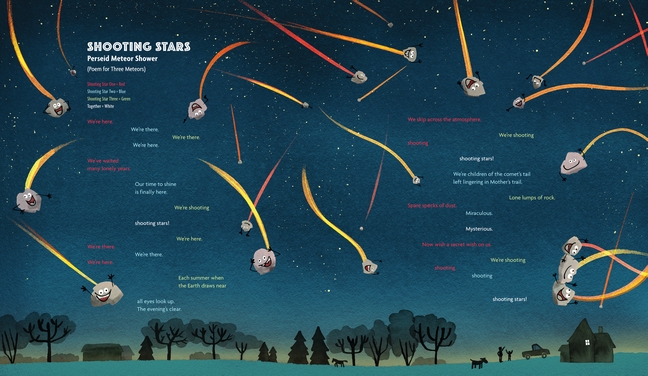
This is one of the best kids’ poetry books I’ve come across in a while! The Day the Universe Exploded My Head contains 29 poems, all about the wonder of space. Each planet gets a poem here, as do the outliers (Planet X, Charon, Pluto). There are nods to pivotal moments in space history (the 2013 meteorite over Cheylabinsk, Sputnik) natural phenomena (black holes, lunar and solar eclipses), and notable scientists (Ivan Ivanovich, Children of Astronomy). The poems are upbeat, factual, and, quite often, very funny, as with the poem, “Planet X”: “I’m one part supercilious/Another part mysterious/One part you-can’t-be-serious/They call me Planet X”. There are a wealth of poems for readers to read out loud, too: “Going the Distance” is a rap for two voices, color-coded for each speaker. The artwork: digitally assembled color collage, made from sumi ink washes, salt, pen, and pencil, explode off the page, with texture that will entice kids to see the swirls of light curling off a star and a fuzzy rings of moons around Neptune.

Non-fiction that informs and excites is aces with me, and The Day the Universe Exploded My Head is a great way to kick off and conclude a space storytime, a STEM program, or a fun read-aloud. Have some printable space coloring sheets ready to hand out, or check out illustrator Anna Raff’s webpage for super-cool activities (I like the Little Card printable for a library visit). Author Allan Wolf’s webpage also has activities, including poetry jokes.

The Day the Universe Exploded My Head has starred reviews from Kirkus and Booklist.


Posted in Intermediate, Middle Grade, Non-fiction, Non-Fiction

The Holiday Shopping has started… buy some books!

It’s that time of year again, where I dig deep to find all sorts of great books to add to your holiday shopping lists. This is the first round, so I’m thinking this post will suggest books and goodies to bring when you celebrate Thanksgiving, or the Fall Harvest, with your families and friends. These books will be fun for the kiddie table – before the food, naturally!

City, by Ingela P. Arrhenius, (Sept. 2018, Candlewick Press), $22, ISBN: 9781536202571

Ages 3-7

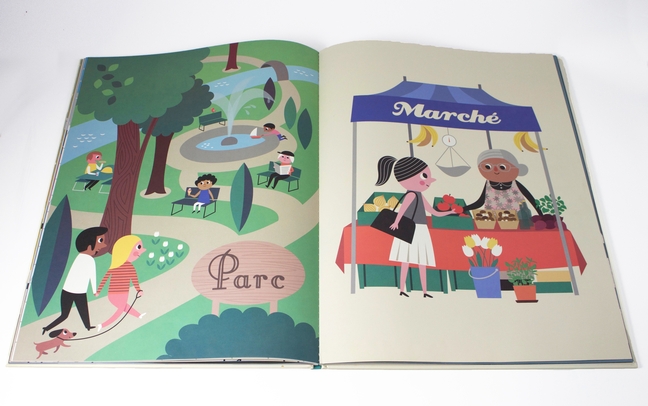
This book is just too much fun. First of all, it’s huge: over 40 inches high by over 17 inches wide, making it almost as big as some of the kids you’ll be seeing this holiday season! My niece giggle-shrieked when I stood the book up next to her, and that was that. She was hooked. It’s a gorgeous, funky concept book, introducing readers to different sights of city life: streetlamps, subways, coffee shops, fountains, zoos, even skateboarders are all here, with retro chic, bright art. The only words are the descriptive words for each picture; the endpapers are loaded with pictures of the smaller details of city life: a cat, a server, a scale, a shrub.

Put this in front of the kids, and let them have at it. My niece and my son loved talking about things they recognized: my niece remembers taking a train to work with her mom, and my son talked up the subway when I took him into the city on our winter break. And they both pretended that I was in the coffee shop and the bookstore, so it’s nice to know they think of me.

City is a gorgeous gift book that can be a coffee table art book for kids, or a prompt for creativity. Its only limit is the imagination.
The Smithsonian Exploration Station sets are fantastic gifts. Bring one or two of these with you, and set the kids up in their own personal science labs while the food cooks.

Smithsonian Exploration Station: The Human Body, (Nov. 2018, Silver Dolphin Books), $21.99, ISBN: 9781626867215

Ages 4-10

The Smithsonian sets are contained in a nice, sturdy box that holds a lot of stuff. The Human Body box includes a 56-page fact book, 30 stickers, a plastic model skeleton kids can put together, and 25 fact cards. It’s similar to the Adventures in Science kit Silver Dolphin put out earlier this year, and my son loved them both. Learn what makes your blood pump, your muscles stretch and how your different systems come together to make you walk, run, eat, sleep, and play. Older kids can help younger kids with some basic terms and reading, and the littlest ones can still enjoy putting the stickers on the skeleton body while bigger kids help put the skeleton together.


Smithsonian Exploration Station: World Atlas, (Nov. 2018, Silver Dolphin Books), $21.99, ISBN: 9781626867208

Ages 4-10

This set was hands-down my son’s favorite set. A blow-up globe, a world map and stickers of landmarks from all over the world, and cardstock puzzles of the Eiffel Tower, Taj Mahal, and a Mayan Pyramid? Plus, a 56-page fact book that tells readers all about the cool landmarks as they decorate their maps? SOLD. We spent three days working on the map, at which time he told me that he wants to see every single one of these sights. We built the cardstock models, which called for much dexterity – so I called my eldest son in to help, because I tend to become a little exuberant, shall we say, with my papercrafting. My son also loves his inflatable globe, and asks me to point out cool places to him; some from the map, some, the countries that his friends at school hail from, some, names of places he hears about on TV. It’s a great set.
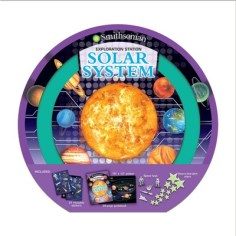
 

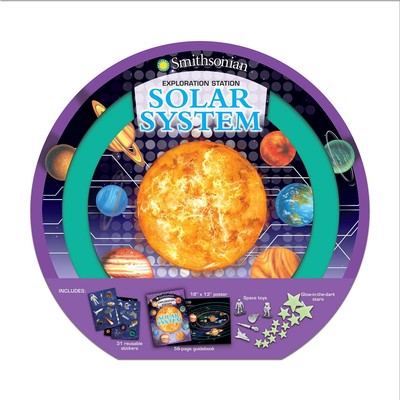
Smithsonian Exploration Station: Space!, (Nov. 2018, Silver Dolphin Books), $21.99, ISBN: 9781626867222

Ages 4-10

Kids love planets! The Space! Exploration Station includes a 56-page fact book, astronaut and rocket plastic figurines, stickers, and glow in the dark stars to make their own constellations. There are incredible, full-color photographs and text that explains the makeup of our solar system, galaxies, planets, and constellations. Let the kids decorate your dining room to and eat under the stars!

Every single one of these kits is such fun, and urges kids to be curious and explore the world inside them and around them. If you have the budget for it, throw these in your distributor cart and get a few sets for your STEM/STEAM programming, too. The Smithsonian has a good science education channel on YouTube, with kid-friendly videos that make for good viewing.


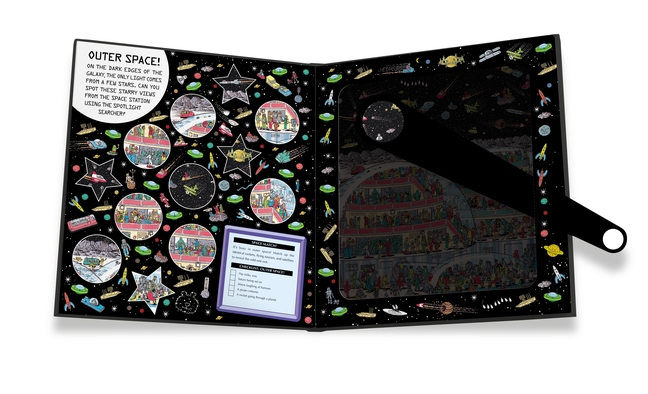
Where’s Waldo? The Spectacular Spotlight Search, by Martin Handford, (Oct. 2018, Candlewick Press), $18.99, ISBN: 9781536201765

Ages 5-9

Waldo’s back with a new trick: this time, the spreads have all gone dark! Luckily, the Spectacular Spotlight Search comes with a cool spotlight viewer to help you find him, and the challenges he sets out for you. There are six puzzles and a magic slider that slides into the scene to “light up” small sections – like a spotlight. Find Waldo and other familiar characters, plus other hidden challenges and games on each spread.  My 6-year-old and my 3-year-old niece had a blast with this book, eventually recruiting me for my Waldo-finding skills (narrator: The children were better.)

If you have puzzle and game fans in your family, this is a great gift to bring along. If you’re looking at it for your library, I suggest keeping it in reference; that spotlight will go missing or get beaten up in no time. But it’s good Waldo fun.
I have so much more to come, but I think this is a good start. A little something for everyone and plenty of hands-on fun!
Posted in picture books, Preschool Reads

Explore the Starry Skies!

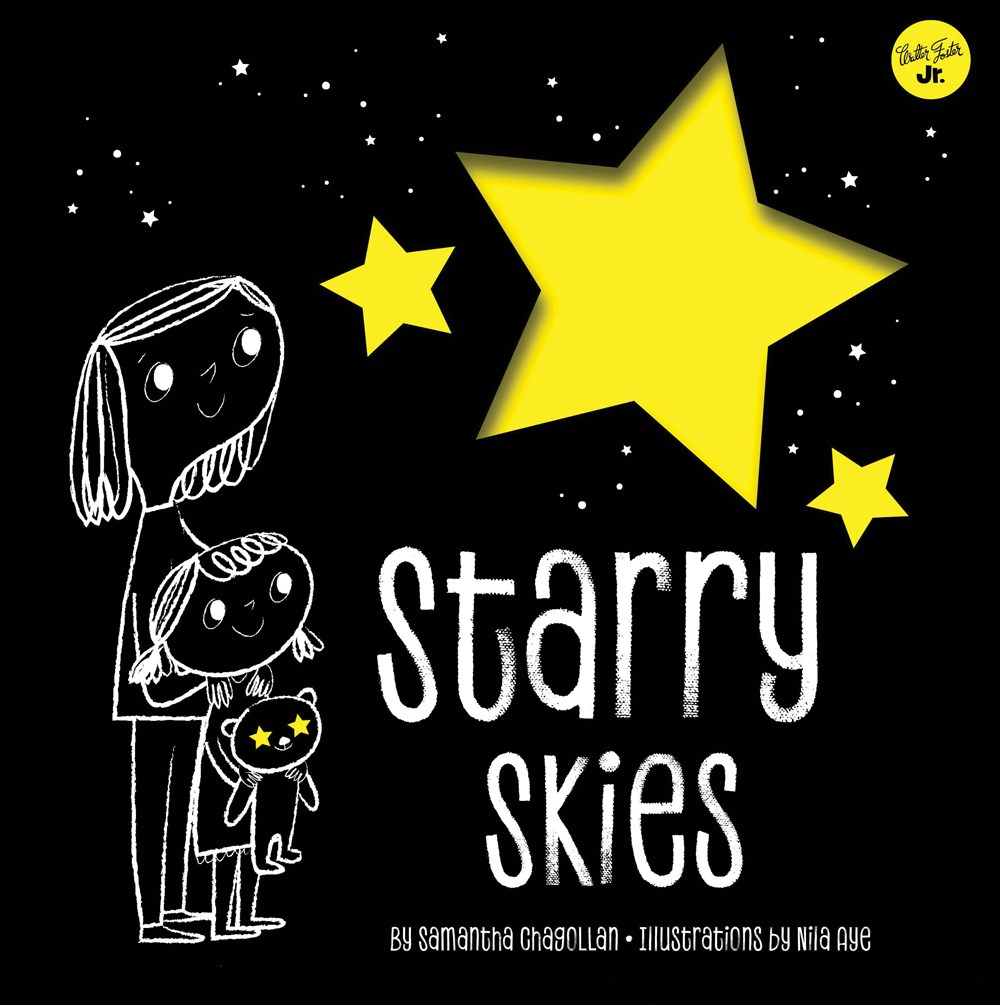
Starry Skies: Learn About the Constellations Above Us, by Samantha Chagollan/Illustrated by Nila Aye, (April 2018, Walter Foster Jr.), $16.95, ISBN: 9781633225091

Recommended for readers 4-6

I remember my first book on constellations. It’s still around today: Find the Constellations, by H.A. Rey (the Curious George author!); and it endures because it’s diligently updated (5 updates, including a 2017 version) and because constellations are fascinating. They’re pictures in the sky; they’re maps in the sky; they’re stories, waiting to be revealed. Starry Skies is a great companion – an introduction to constellations for the preschool set – to the well-loved Rey book.

Beginning with the sentence, “Every night, the sky is filled with stars that tell a thousand stories,” Starry Skies launches into spreads features a different individual starring in his or her own story: a boy battles a dragon (Draco); a cat sees herself as Leo, the lion; a girl gets ready to fly on Pegasus. Each spread features a black sky, dotted with stars, and a white line drawings of the dreamers and their constellations. It’s a preschool-friendly entry to stargazing, astronomy, and mythology. Readers enjoy 14 constellations in all, plus a star map of the for the Spring/Summer and Fall/Winter seasons.