Posted in Animal Fiction, Fiction, Middle Grade, Tween Reads

Magical Realism meets middle grade: The Unicorn in the Barn

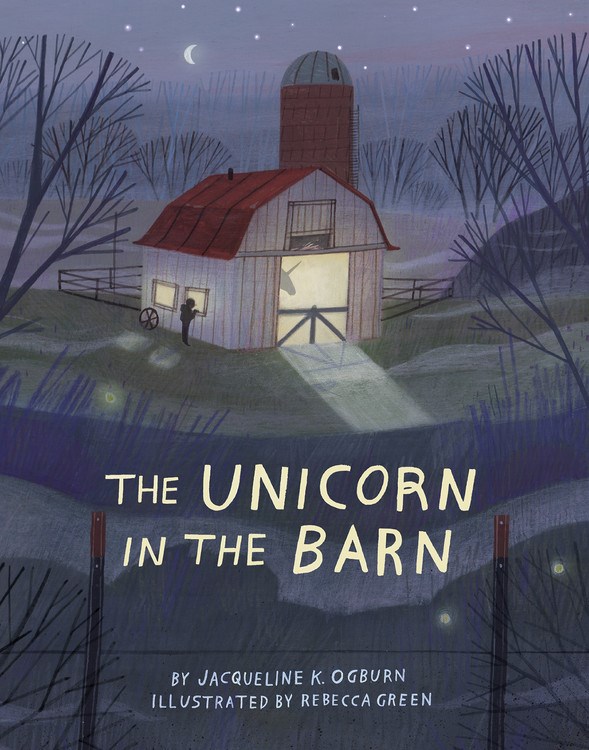
The Unicorn in the Barn, by Jacqueline Ogburn/Illustrated by Rebecca Green, (July 2017, HMH Books for Young Readers), $16.99, ISBN: 9780544761124

Recommended for ages 10-12

Eric Harper lives with his dad and his brother on a farm near Chinaberry Creek. His grandmother lived in the house near theirs, too, but she’s gone into a rest home and now, a veterinarian and her brusque daughter, Allegra, live there. When Eric spots a unicorn in the woods one night, he and Allegra become partners in caring for Moonpearl – the name they give the unicorn – and the twins she’s carrying. Dr. B is no ordinary vet – she takes care of everyone’s pets, sure, but she also has a gift for magical creatures, and they seem to know how to find her. Eric adores Moonpearl and tries to spend every moment he can with her, but he is also too aware of the magical healing properties that unicorns possess; the temptation to use Moonpearl’s magic to make things better for his friends and family is strong.

The Unicorn in the Barn is magical. It’s a beautifully told story of love and loss; of friendship and new life, of beginnings and endings. The black and white illustrations throughout are soft and add an extra dimension to the story. Eric is so earnest, so passionate about making life better for everyone and so in love with Moonpearl, that he often finds himself at odds with the somewhat bossy and bullish Allegra, who would rather keep her mother and Moonpearl to herself. The story is as much about the evolution of their friendship as it is about Eric’s journey through a critical point in his life. A beautiful middle grade work of magical realism. Booktalk with Me and Marvin Gardens to add some magic into your audience’s reading.
Posted in Adventure, Fantasy, Fiction, Humor, Middle Grade

Magic, madness, and a cow-ostrich romance!

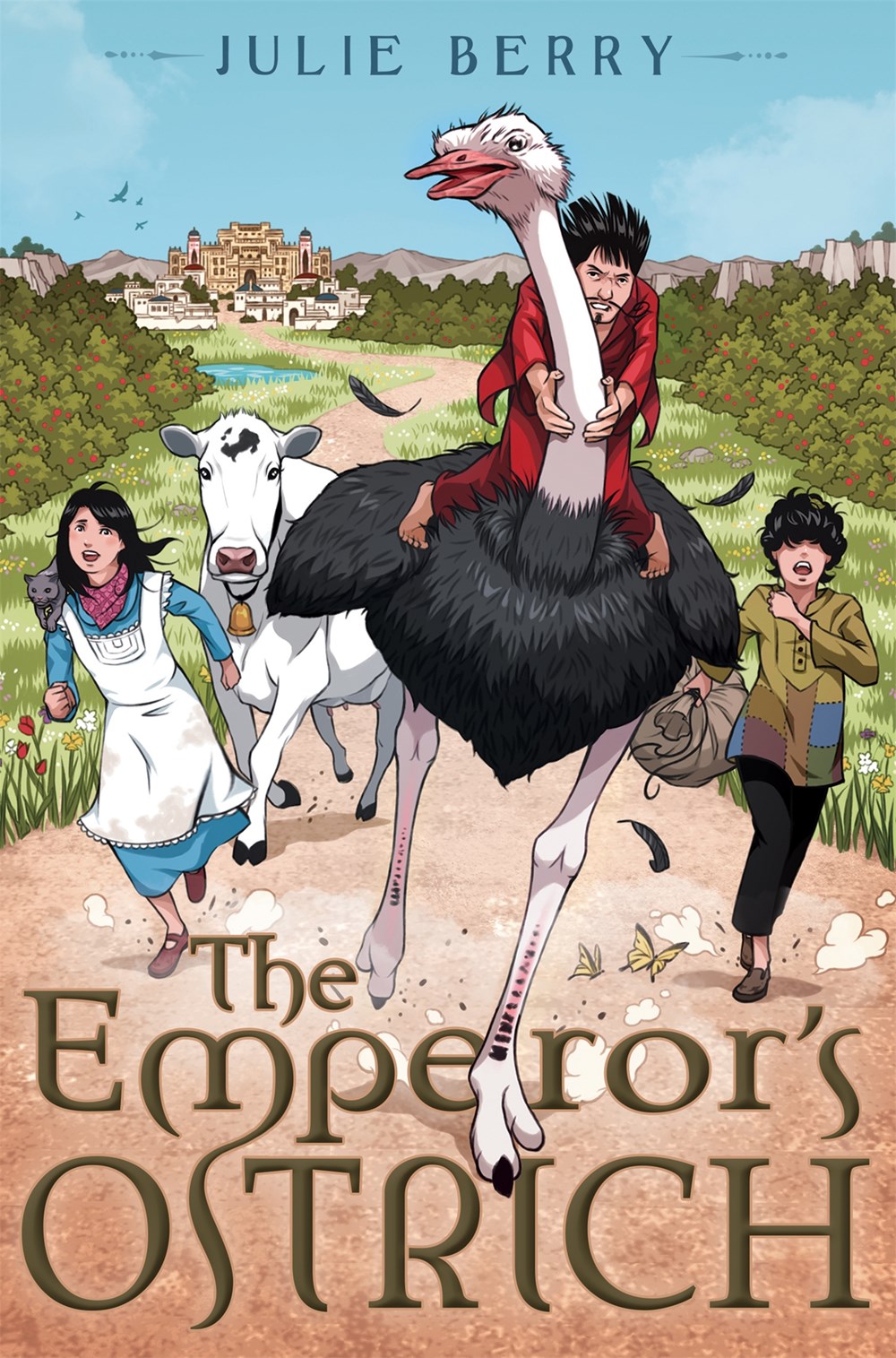
The Emperor’s Ostrich, by Julie Berry, (June 2017, Roaring Brook Press), $16.99, ISBN: 9781596439580

Recommended for readers 8-12

A zany fantasy romp with a dairy maid in search of her lost cow puts readers on the path to an adventure that will introduce them to a self-described romantic hero, a spoiled emperor on the run, and his ostrich, who forms a bond with the runaway cow. Begonia, the dairy maid, is a responsible young woman who helps her mother care for the family farm and her younger sister; when her cow, Alfalfa, meanders away, Begonia sets out to find her and ends up on a magical quest that will put the responsibility for saving the emperor and the kingdom squarely on her shoulders. Thank goodness she has help from Key, a wandering young man who describes himself as a romantic hero; and two magical beings, who oversee the adventure from a distance.

The story is a fun fantasy adventure with nods to magic, corruption, feminism, and commentary on overindulged wealth. Readers will enjoy the lovestruck cow and ostrich, the banter between Key and Begonia, and the host of characters they encounter on their adventure. Booktalk this with Lloyd Alexander’s fantasy novels: author Julie Berry calls The Emperor’s Ostrich her love letter to his books.

Julie Berry’s book, The Passion of Dolssa, is a 2017 Printz Honor title. The Emperor’s Ostrich received starred reviews from Booklist and School Library Journal.

Posted in Early Reader, Fiction, Preschool Reads

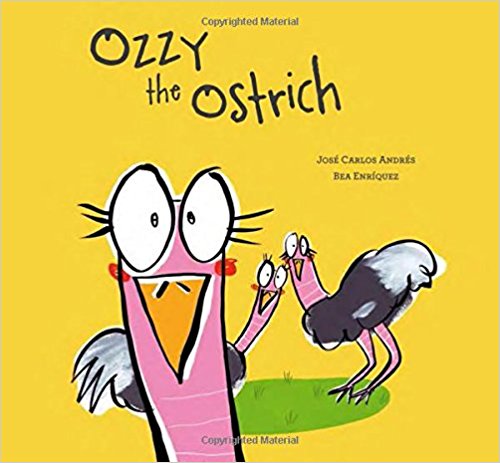
Ozzy the Ostrich teaches kids to stand up to bullies

Ozzy the Ostrich, by José Carlos Andrés/Illustrated by Bea Enríquez, (June 2017, NubeOCHO), $15.95, ISBN: 978-8494541599

Recommended for readers 3-6

Ozzy Ostrich and two friends trot across the plain, munching on flowers, until three lions threaten to eat them! Ozzy – who also has an egg to defend – stands up to the bullies, scaring the so badly that one loses his teeth, one loses all of his fur, and one turns completely white. The former bullies befriend the ostriches, but what happens when another pride of lions shows up to menace the group?

Ozzy the Ostrich is a good introduction to the concepts of bullying and standing up for oneself and others. When the first group of lions bullies Ozzy, she stands up for herself and the bullies back down. When the next group comes along, Ozzy sees that her actions resonate. The art is bright, vibrant, and bold; both lions and ostriches have exaggerated facial expressions that readers will enjoy and laugh at (especially when the chastised lions react).

Originally published in Spanish under the title Un avestruz con much luz (2016), Ozzy the Ostrich makes a good social issues read-aloud for storytime. Pair with Kathryn Otoshi’s One for an anti-bullying storytime message.

Posted in Animal Fiction, Preschool Reads

On Duck Pond, there is chaos… and then peace.

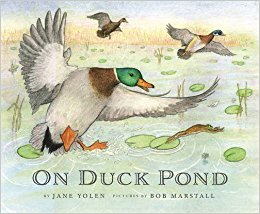
On Duck Pond, by Jane Yolen/Illustrated by Bob Marstall, (Apr. 2017, Cornell Lab Publishing Group), $15.95, ISBN: 978-1-943645-22-0

Recommended for readers 3-7

A boy and his dog walk by a duck pond in the morning, when nature is at peace; when a quack of ducks appear, they splash, they chitter and chatter, and the pond’s inhabitants scramble in the momentary chaos. The boy notes that even his reflection looks different in the disturbed water. When the ducks move on, the pond returns to its peaceful setting, the pond life resumes, and the boy, contemplative, heads home.

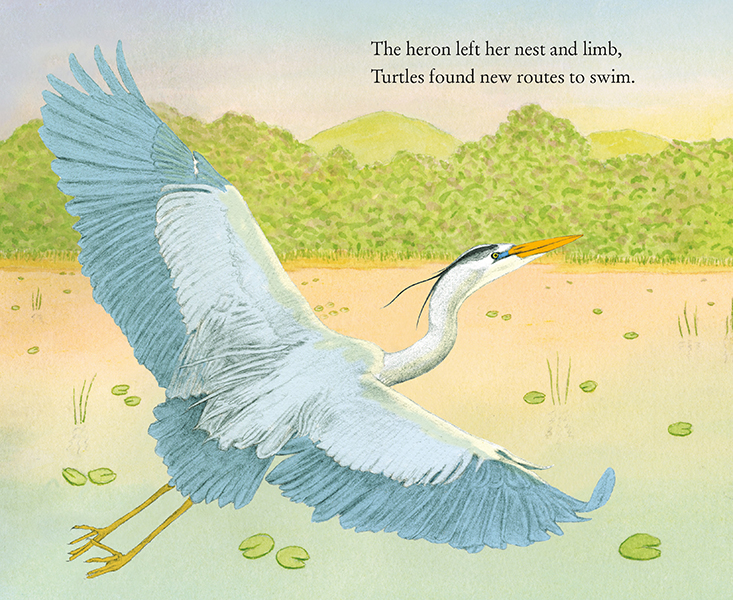
This rhyming tale is a sequel to On Bird Hill, but it’s not necessary to have read it to enjoy this quiet nature tale. Award-winning author Jane Yolen gives readers a wonderful rhyming tale of quiet and chaos, coming up with fun, descriptive terms like “a quack of ducks”, and evocative phrases like, “Old Duck Pond, once still and quiet/Now seemed battered by the riot”, and, of the boy’s reflection, “Every part of me was changed/I looked like I’d been re-arranged”. She captures the riot of noise and blunder of movement that disturbs the quiet  morning, and the gradual pace with which nature recovers when the ducks move on, all witnessed by the boy and his dog. We meet some of the pond’s inhabitants – turtles, herons, frogs, and tadpoles – during the course of the story; the realistic illustrations introduce us to even more wildlife. There are lovely, detailed drawing of the pond from various angles, from close-ups of lily pads to sweeping vistas. The ducks’ descent is beautifully rendered, with wings spread, water splashing, beaks open, communicating the movement and noise they bring to the scene. A section on pond habitats and birds, and information about the ducks and other birds and animals featured in the story, adds a nice non-fiction section to the book.

This is a great read-aloud for storytimes – the rhyming text provides a nice cadence for readers to listen to – and for introductions to habitats for younger readers. Kirkus captures the spirit of the narration by referring to it as a “sense of wonder” book.

Pair this with some of Jane Yolen’s  more nature-oriented books, like On Bird Hill or Owl Moon for an author study, or display with books like Denise Fleming’s In the Small, Small Pond and Henry Cole’s I Took a Walk.

Posted in Animal Fiction, Fiction, Middle Grade

Happy #Nocturnals Day!

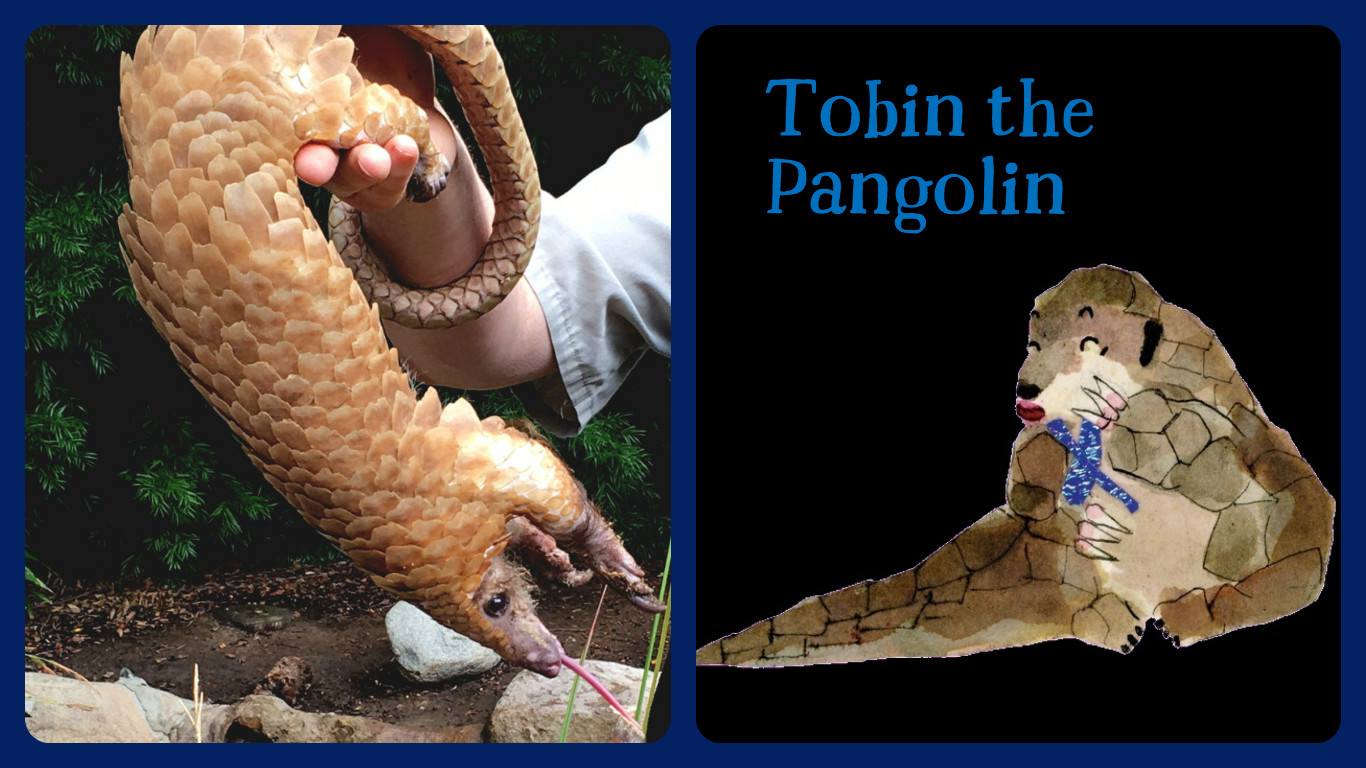
It’s the Nocturnals, Book 3: The Fallen Star‘s book birthday today, and I’d like to shine a (soft) spotlight on my favorite Nocturnal, Tobin! Fabled Films put together a little writeup about pangolins that I thought I’d share with you. Enjoy!

In The Fallen Star, the third installment of the non-episodic middle grade series, The Nocturnals, all of the forest’s pomelos have been inexplicably poisoned. Iris, a mysterious aye-aye, claims that monsters from the moon are to blame. When Tobin the pangolin falls ill, the Nocturnal Brigade must race to find answers, and the cure, before this possibly unearthly predicament threatens to harm them all.

Tobin is one of the main characters of The Nocturnals series, and many of our readers write to us saying that they have never heard of the critically endangered pangolin before reading our books. Here are some interesting facts about pangolins that help inform and develop Tobin’s character.

Pangolins are funny-looking creatures, but everything about them is designed to help them survive and protect themselves. All of their physical features perform a specific job.

Pangolins look like they wear an armor, and that’s because they are covered in scales made of keratin, which is the same thing that our human fingernails are made of. Just like our fingernails, the keratin on a pangolin is hard and forms a protective shell. Whenever Tobin is scared, he curls up as a way of protecting himself.

Not only does Tobin curl himself up for protection with his scales when he’s scared, but he also sprays something smelly to ward off predators. This smell comes from the scent glands on his tail end. Remember when Bismark complained how stinky Tobin was when they first met? That was because Tobin sprayed something because Bismark had startled him. When Tobin is afraid, he sprays an unpleasant smell from his scent glands. This reaction also helps deter the thing that he’s afraid of. Tobin is sometimes embarrassed by this bad smell, but he shouldn’t be, because spraying that smell helps him survive (especially if the smell has been enhanced by a poisoned pomelo, like in The Fallen Star!).

Pangolins have very poor eyesight. When Tobin first meets the bats in The Mysterious Abductions, he thinks that they’re the same creatures as Bismark because he can’t see very well. But Tobin has other senses like smell and hearing that compensate for his poor eyesight. His very long snout makes his nose very sensitive. Instead of seeing something, he can detect its presence by smelling it.

To read more about pangolins and their special features, check out these resources:

“Mammals.” Animal Encyclopedia: 2,500 Animals with Photos, Maps, and More! Washington, D.C.: National Geographic, 2012. 47. Print.

(http://www.iucnredlist.org/ ;

(http://animaldiversity.org/)

(Macdonald, David W. “Pangolins.” The Princeton Encyclopedia of Mammals. Princeton, NJ: Princeton UP, 2009. 476-77. Print.)


Posted in Adventure, Animal Fiction, Fantasy, Fiction, Middle Grade

The Nocturnals Return in The Fallen Star

The Nocturnals (Book 3): The Fallen Star, by Tracey Hecht/Illustrated by Kate Liebman, (May 2017, Fabled Films Press), $15.99, ISBN: 9781944020057

Recommended for readers 8-12

The lovable group of Nocturnal sleuths is back in their third adventure, this time with high stakes: the forest’s pomelos have been poisoned, and the flowers that cure the sickness are disappearing! As the group watches a star fall one evening, they meet a mysterious aye-aye, Iris, who declares that the forest is being invaded and monsters from space have poisoned the pomelos! Dawn, ever the thoughtful and skeptical fox, is suspicious, and seeks a more down-to-earth reason, but things become more tense when they discover that animals in the forest are getting sick, including poor Tobin, who’ve all eaten pomelos. The blue flowers that help cure the sickness are disappearing, and a strange blue glow shows up right before the flowers start disappearing. This sounds like a job for the Nocturnals!

This third book in the animal friends series takes no prisoners: things are tense, with the friends racing against time to help their sick friends and find out the truth behind the poisoned fruit and disappearing cure. Bismark is in full narcissist with a heart of gold mode, proclaiming he speaks alien (and then slipping and admitting it was gibberish) and wooing Dawn every chance he gets. Dawn is still the most focused and perceptive member of the group, and sweet, gentle Tobin is the source of possibly the greatest fart joke in the history of children’s literature, giving readers much-needed comic relief throughout the white knuckle moments The Fallen Star is filled with.

We also meet some more animals in this book; most notably, an Aye-aye named Iris, and the woylies, a group of small marsupials who pitch in to help the Nocturnals. You can find more information about Aye-ayes at Zooborns.com, and Whiteman Park, a conservation center in Australia, has a downloadable fact sheet available on the endangered woylie.

This Aye-aye has its eyes on you! (source: Zooborns.com)
Woylie: Now say it with an Australian accent! (Source: whitemanpart.com.au)

Teamwork, friendship, and determination sees the friends through this latest adventure, and there’s a lovely message about tolerance that is especially important reading.

Things have started taking off for Nocturnals since the first book published last year!  The Nocturnals World website offers Boredom Busters, face painting tips, and a wealth of educational resources for classrooms and libraries, and the New York Public Library, in conjunction with Fabled Films, launched a read-aloud writing program in New York City public schools.

Posted in Preschool Reads, Toddler Reads

Blog Tour: Share, Big Bear, Share! And Giveaway!

Big Bear has a big pail of yummy blueberries! His friends would like some, too, but Big Bear seems to be a bit clueless. The old oak tree tells him to SHARE, BIG BEAR, SHARE!, but Bear is so enamored of his blueberries, he’s not really listening – and hears something different each time! Will he finally realize that a good friend shares, and invite his pals to have some berries?

Share, Big Bear, Share!, by Maureen Wright/Illustrated by Will Hillenbrand, (Apr. 2017, Two Lions), $17.99, ISBN: 978-1503951006. Recommended for readers 3-7

Share, Big Bear, Share! is a great story for preschoolers and kindergarteners, who are developing social skills and learning to share and work together. Big Bear is a nice bear, he’s just a little unaware; when the Old Oak Tree tells him – multiple times – to share, Big Bear – who’s not really listening; he’s got an entire bucket of blueberries! – half-hears the message, with hilarious results. The message for readers is twofold: sharing is important, but so is paying attention! I think a round of the old game, Telephone is a perfect accompaniment to this story: a teacher, parent, or educator whispers something into one child’s ear and has the message go around the group, until the last player states what he or she heard, which is usually something very different from the original statement!

The story makes it point in a sweet, funny way that appeals to young readers. Will Hillenbrand’s graphite pencil artwork, fleshed out with digital media, gives Bear and his woodland friends a cuddly quality that kids will love. Old Oak Tree looks wonderfully wise and his facial expressions are perfect and accurate. Kids will have seen that face on their caregivers many times!

Share, Big Bear, Share! is the third Big Bear book by Maureen Wright and Will Hillenbrand (Sleep, Big Bear, Sleep! and Sneeze, Big Bear, Sneeze!) Display this one with books like Anna Dewdney’s Llama Llama, Time to Share and Leo Lionni’s It’s Mine! for readalikes; build a social skills library by adding Beth Ferry’s Stick and Stone, Rowboat Watkins’ Rude Cakes, and Julie Gassman’s You Get What You Get.

There’s a Help Big Bear SHARE Game, available through illustrator Will Hillenbrand’s website, for you to download, print, and hand out.

GIVEAWAY! Want a chance to win your own copy of Share, Big Bear, Share? Enter here!

WILL HILLENBRAND has written and/or illustrated over 60 books for young readers including Down by the Barn, Mother Goose Picture Puzzles and the Bear and Mole series. He has lived almost all of his life in Cincinnati, Ohio, where he grew up as the youngest of four boys. He now lives in Terrace Park and was recently honored as Author/Illustrator in Residence at Kent State University.

Information about his books, selected readings, art process videos and activity ideas can be viewed at www.willhillenbrand.com. Connect with Will at www.facebook.com/willhillenbrandbooks.


Posted in Animal Fiction, Preschool Reads

Bow-Wow-Meow takes a sensitive look at identity

Bow-Wow-Meow, by Blanca Lacasa/Illustrated by Gómez, (May 2017, nubeOCHO), $16.95, ISBN: 978-84-94515-7-5

Recommended for readers 4-8

Fabio’s a dog that really isn’t into doggish things. He doesn’t play fetch, he doesn’t roll over to have his belly tickled, he doesn’t wag his tail, and he doesn’t bark. His family tries to teach him how to act like a dog: they throw sticks, they roll around on the floor, and they bark at him. Fabio is uninterested. One night, Max, a little boy in the family, discovers that Fabio is going out at night, and follows him: right into a group of cats engaging in very catlike behavior, from coughing up hairballs to playing cards (hey, are you with your cat 24/7?). Max can’t believe how happy Fabio is as he sharpens his claws, climbs drainpipes, chases mice, and bow-wow-meows along with his feline friends. The next morning, when Max’s parents try to get Fabio to act like a dog, Max quietly acknowledges Fabio, making him the happiest member of his family.

Recognition and visibility are important. When Max acknowledges Fabio, when he sees Fabio for who he really is, Fabio’s whole world changes; Max’s world widens that much more. Bow-Wow-Meow sensitively handles identity and diversity for young readers. By telling Fabio’s story using dogs and cats, kids are entertained and enlightened in a sweet, fun way that leaves the pathways open for discussion again and again. Gómez’s bold artwork is fun and expressive and will appeal to storytime audiences. Younger readers may struggle with some pages, where the black text is superimposed over a dark background.

I’d love to read this with Jules Feiffer’s Bark, George, for a good storytime on diversity and animals. You can also display and pair this with books like Morris Micklewhite and the Tangerine Dress, by Christine Baldacchino, or Jacob’s New Dress, by Sarah and Ian Hoffman. Mothering.com has a good article with recommendations for kids’ books that defy gender.

Posted in Early Reader, Fiction, Preschool Reads, Toddler Reads

The jungle heat begs for The Perfect Siesta

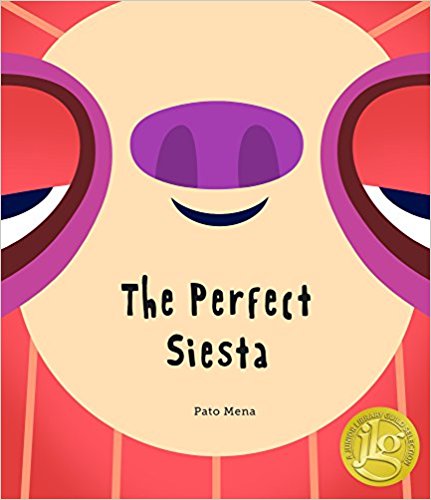
The Perfect Siesta, by Pato Mena, (June 2017, NubeOCHO), $15.95, ISBN: 978-84-945415-3-7

Recommended for readers 3-7

It’s a hot day in the jungle, so when a lovely, cool breeze blows through, a jaguar seizes the moment to take a nap. He has things to do, though, so he asks a coati to wake him in 10 minutes. The coati doesn’t want to say no to a jaguar, out of a healthy sense of self-preservation, but that breeze is just sooo nice… so he asks a cockatiel to wake him up in 10 minutes, who then goes on to ask a sloth. The poor sloth feels the pressure to stay awake, but can’t fight it anymore and lets out a giant SNORE that keeps everyone’s promise!

The Perfect Siesta has entered regular storytime reading at home, and I’m planning a great nap-centric read-aloud to debut this one at my library. It’s hilarious and I love the art, especially the giant, sleepy sloth’s eyes (shown on the cover). Snoring is up there with farts in terms of read-aloud humor, so let your loudest snore rip when you’re reading – the text will support you!

The collage-style artwork will catch readers’ attention and makes for a great read-aloud to large groups as well as small groups. The animals are native to South America, so this also makes for a good rainforest storytime, with extra fun if you have plush or flannels to add to the atmosphere.

Originally published in Spanish, The Perfect Siesta translates hilariously into English and makes for a fun bedtime, naptime, anytime read. The Perfect Siesta is a Junior Library Guild selection.

Posted in Animal Fiction, Fiction, Intermediate, Non-Fiction, Realistic Fiction

#AnimalPlanetAdventures mix fiction and fact for maximum fun!

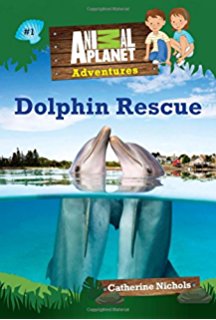
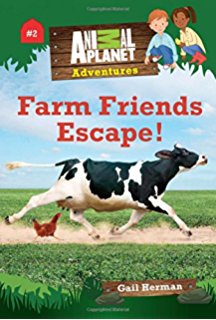
Animal Planet has great nonfiction for kids. I particularly love their Animal Bites series, which looks at animals from different habitats, and offers a rich mix of beautiful photos and easy-to-read facts. For those beginning readers who want to feel part of an animal adventure, Liberty Street – Animal Planet’s publisher, a division of Time Inc. Books – introduced Animal Planet Adventures chapter books earlier this year. I read the first two adventures, Dolphin Rescue and Farm Friends Escape!

Animal Planet Adventures: Dolphin Rescue, by Catherine Nichols, (Feb. 2017, Liberty Street), $5.95, ISBN: 978-1-61893-417-8

Dolphin Rescue introduces us to siblings Maddie and Atticus, who live off the coast of Maine with their single dad and volunteer at the local aquarium. While trying to solve a rash of trash dumping incidents happening throughout their town, they notice a pod of dolphins in the nearby cove, looking very distressed. They’ll need to use their knowledge of animals, plus their problem-solving skills to help the pod out.


Animal Planet Adventures: Farm Friends Escape!, by Catherine Nichols, (Feb. 2017, Liberty Street), $5.95, ISBN: 978-1-61893-416-1

In Farm Friends Escape!, we meet cousins Luke and Sarah, who spend every summer at their grandparents’ farm. This year, their grandparents put them in charge of running the farm’s petting zoo. They’re thrilled, even if they don’t always agree on how to get things up and running. A mysterious kid lingers around the farm, though; and while they’re trying to figure him out, they discover that somehow, the animals have all gotten loose! The cousins need to track down each of the petting zoo escapees, relying on their animal knowledge and deduction skills – and they need to figure out how they got loose in the first place.

Animal Planet Adventures is a great way to reach readers who may struggle with nonfiction, but love a good story. There’s a little bit of mystery in each storyline, so your series fiction fans who love books like Ron Roy’s A to Z Mysteries, Capital Mysteries, and Calendar Mysteries will gobble these up. Books are in full color – both story illustration and nonfiction sections – and feature the beautiful photography that we already love in Animal Planet books. Nonfiction sections are spread evenly throughout the book, so it flows with the overall narrative of the story, often fleshing out information contained in the plotline. I don’t know if future books (there are two more adventures – Puppy Rescue Riddle and Zoo Camp Puddle – releasing in September) will introduce more new characters or if we’ll meet Mattie, Atticus, Luke, and Sarah again, but the character pair-ups are fun and appeal to both boys and girls. I’ve just ordered a set of Adventures for my library, because series fiction and animal nonfiction is aces around here. Display with your series mystery fiction and your animal nonfiction – it all works!