Posted in picture books, Preschool Reads

Two Books to Read This Shabbat

Kalaniot Books has been putting out some great books representing Jewish culture. I’ve been reading them, enjoying them, and sharing them with my library kids. Here are two to take home to read this Shabbat.
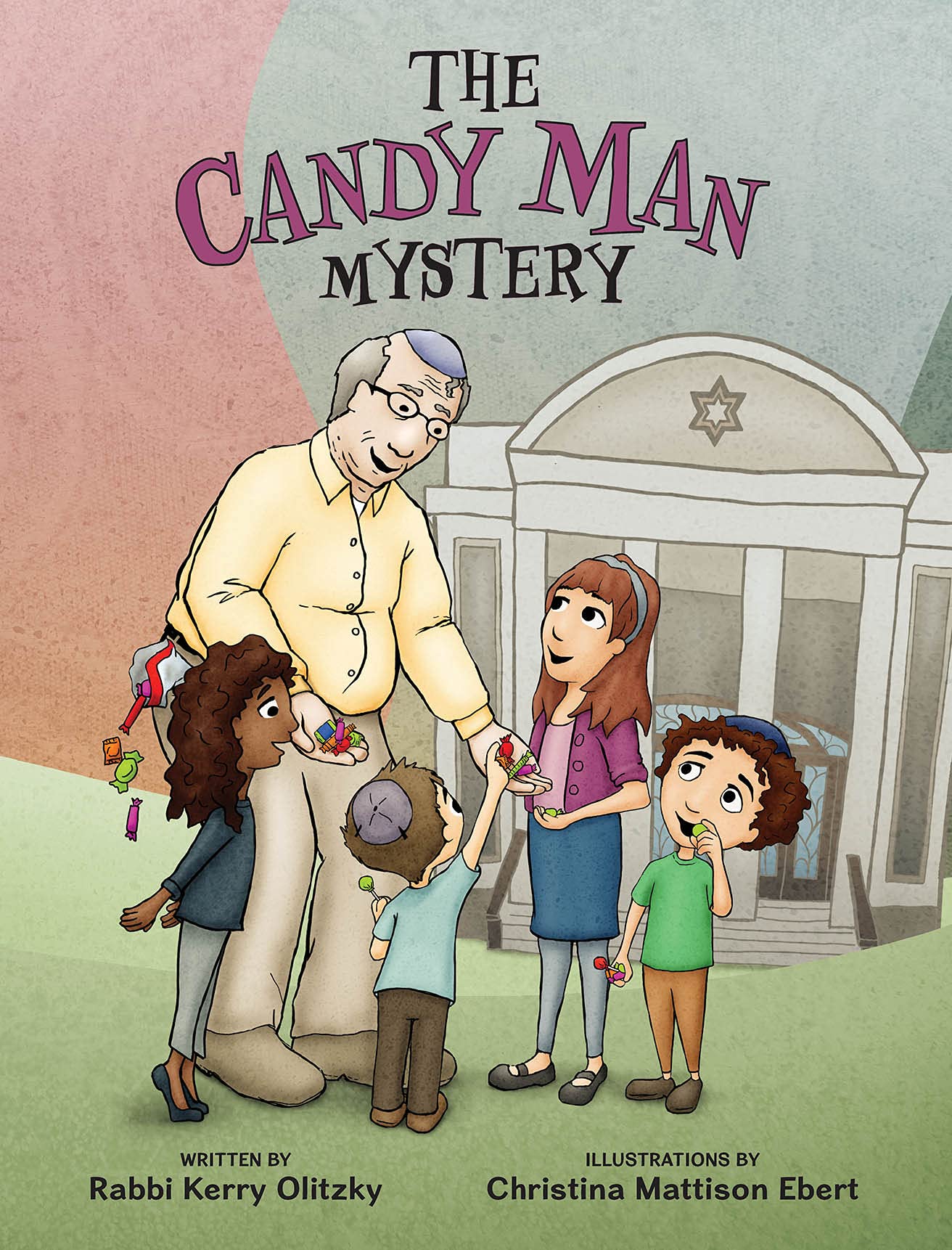
The Candy Man Mystery, by Rabbi Kerry Olitzky/Illustrated by Christina Mattison Ebert, (Sept. 2021, Kalaniot Books), $19.99, ISBN: 978-1-7350875-2-8

Ages 4-8

Josh and Becky enjoy going to synagogue, and Mr. Sharansky – The Candy Man – makes it even more special, handing out candy after services every week! When Mr. Sharansky isn’t at Temple Shalom this week, Josh and Becky are worried and determined to get to the bottom of this mystery. When they find Mr. Sharansky, it’s a sweet reunion in every way. A touching story of faith and multigenerational friendship, The Candy Man Mystery is a great readaloud on empathy and sharing. Josh and Becky connect with members of their synagogue community, and we learn something about everyone they come into contact with, including a child learning a prayer in American Sign Language (ASL), so he can say them with his mother, who is deaf. The congregation is invested in one another, and the Rabbi is a warm figure who respects children and adults alike. Back matter includes a word on the Shema, a glossary, and how to use ASL to sign the Shema. A lovely addition to Jewish culture and empathy-focused collections.

Visit Kalaniot’s webpage to download a free educator’s guide for The Candy Man Mystery.
 

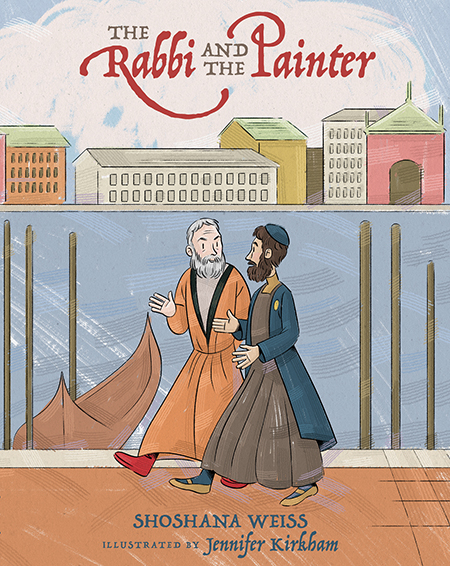
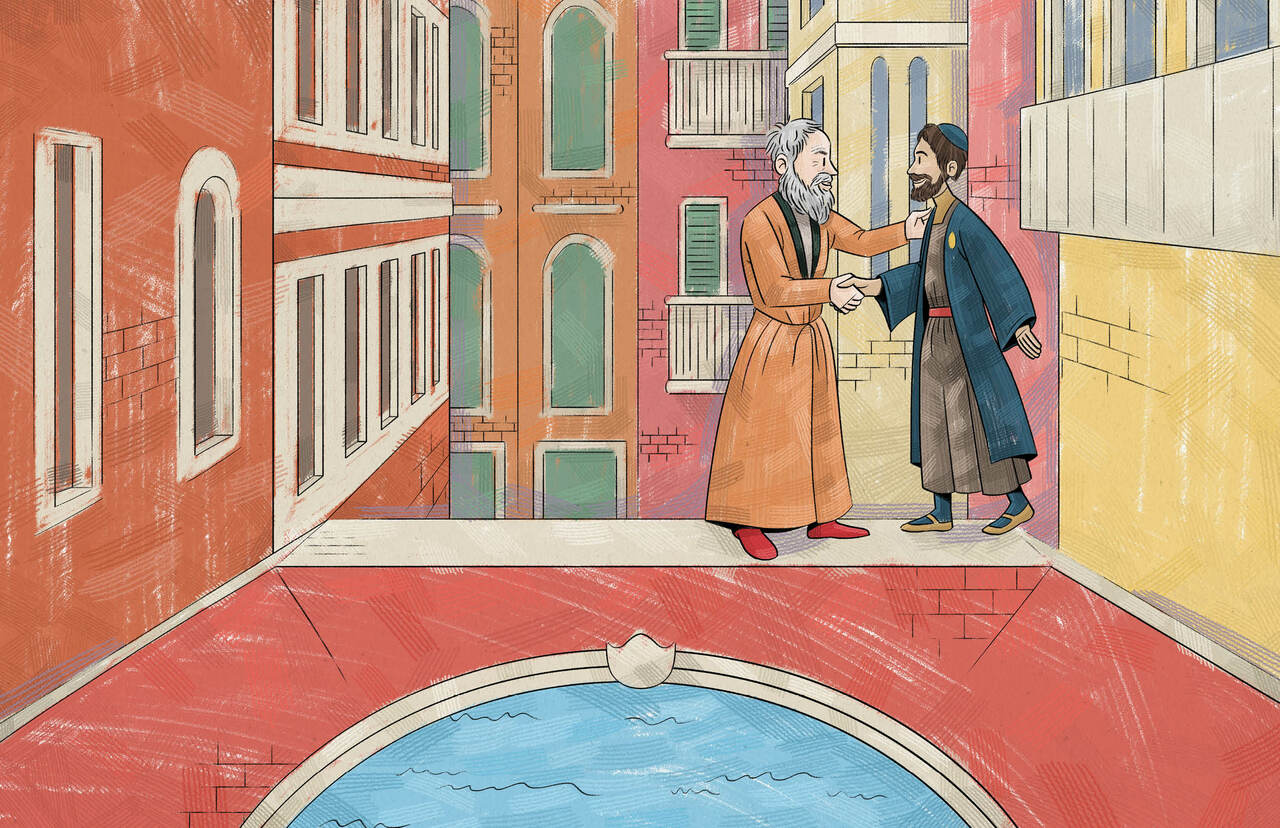
The Rabbi and the Painter, by Shoshana Weiss/Illustrated by Jennifer Kirkham, (Sept. 2021, Kalaniot Books), $19.99, ISBN: 978-0-9988527-8-2

Ages 5-8

Based on the true story of the relationship between 16th-Century Venetian painter Tintoretto (also known as “Il Furioso”) and Rabbi Leon Modena (also known as Yahuda Araya), formed when the Rabbi was a boy who found a clay doll the painter used as a model. The Rabbi became fluent in both Italian and Hebrew, helping the Venetian government draft contracts in Hebrew as needed and eventually helping Tintoretto with one of his famous pieces, The Last Supper. The story explores the friendship between the two men while focusing on their individual talents, resulting in a story about how blending cultures can lead to great things. Back matter includes historical notes and further resources. Illustrations are engaging and focus on collaboration and creativity. A smart addition to historical picture books.

Download a free educator guide at Kalaniot’s website.
Posted in picture books, Preschool Reads, Uncategorized

Discover Israel with this rhyming tour

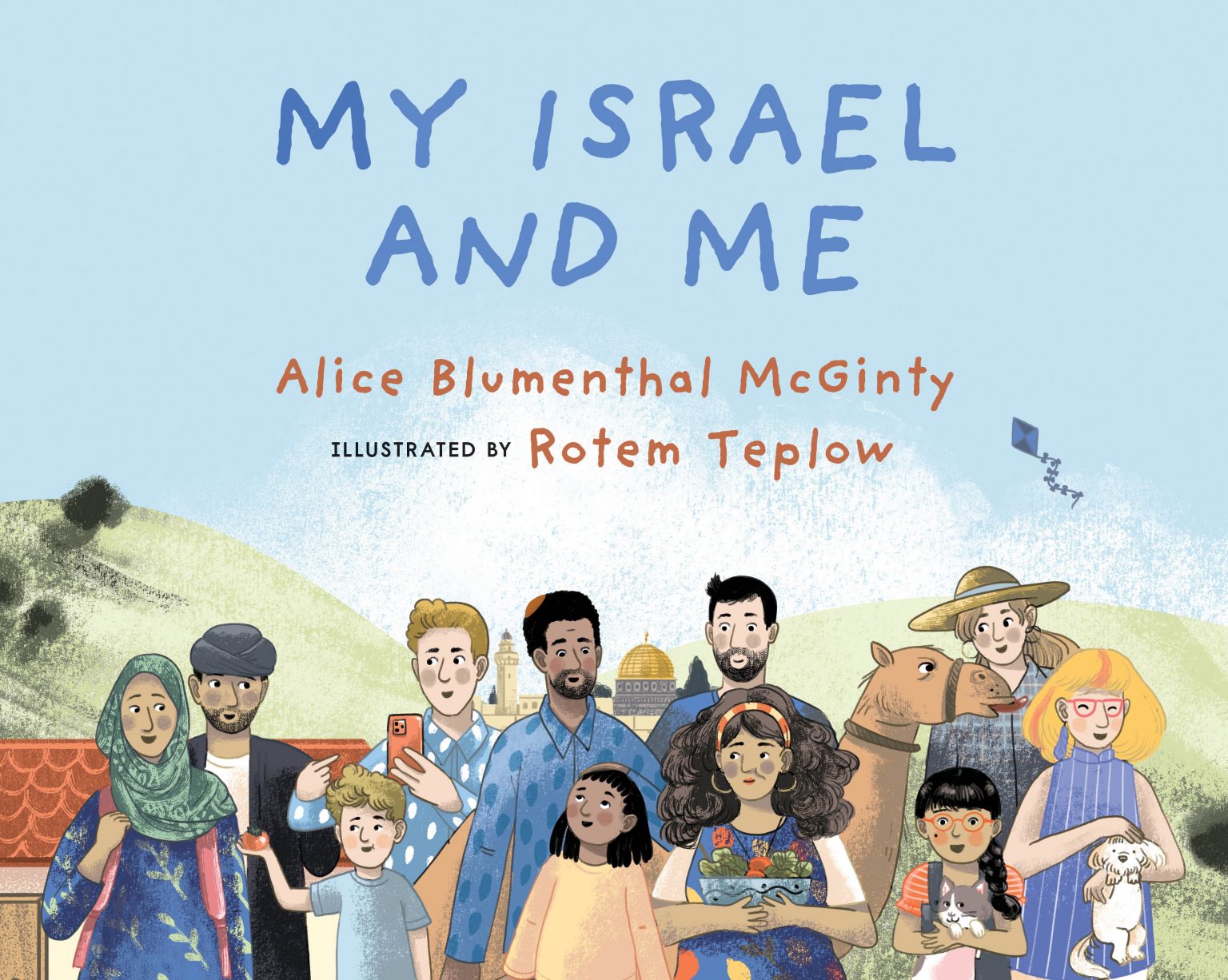
My Israel and Me, by Alice Blumenthal McGinty/Illustrated by Rotem Teplow, (Sept. 2021, Kalaniot Books), $19.99, ISBN: 978-1-7350875-3-5

Ages 3-8

Told in verse through the eyes of the diverse groups of people living in and visiting Israel, My Israel is a celebration of both the ancient and modern-day country.  Verse shares space with factual information about areas like The Dead Sea, the modern city and Israel’s status as a “Start-Up Nation”, kibbutzes, Biblical history, and more. Alice Blumenthal McGinty celebrates Jewish and Muslim culture and family life, and Rotem Teplow’s colorful artwork takes readers on a journey across the small country with a big history. Endpapers show a plethora of objects to take readers on a visual journey, like camels, kites, olive leaves, and cats, all of whom are waiting to be discovered in the pages.

To extend a lesson on Israel, visit TeachersPayTeachers, where you can find a map of ancient Israel from Taylor Beck; an Israel Activities Pack from Marshal Jewish Learning Center, and more! Download a free educator kit from Kalaniot’s website.

Author Alice Blumenthal McGinty is an award-winning author. You can find educator guides on her website, along with more information on her books, and information about school visits. Visit illustrator Rotem Teplow’s website for more of her artwork.

Posted in picture books, Preschool Reads

A Snake, a Flood, a Hidden Baby: Bible Stories for Children

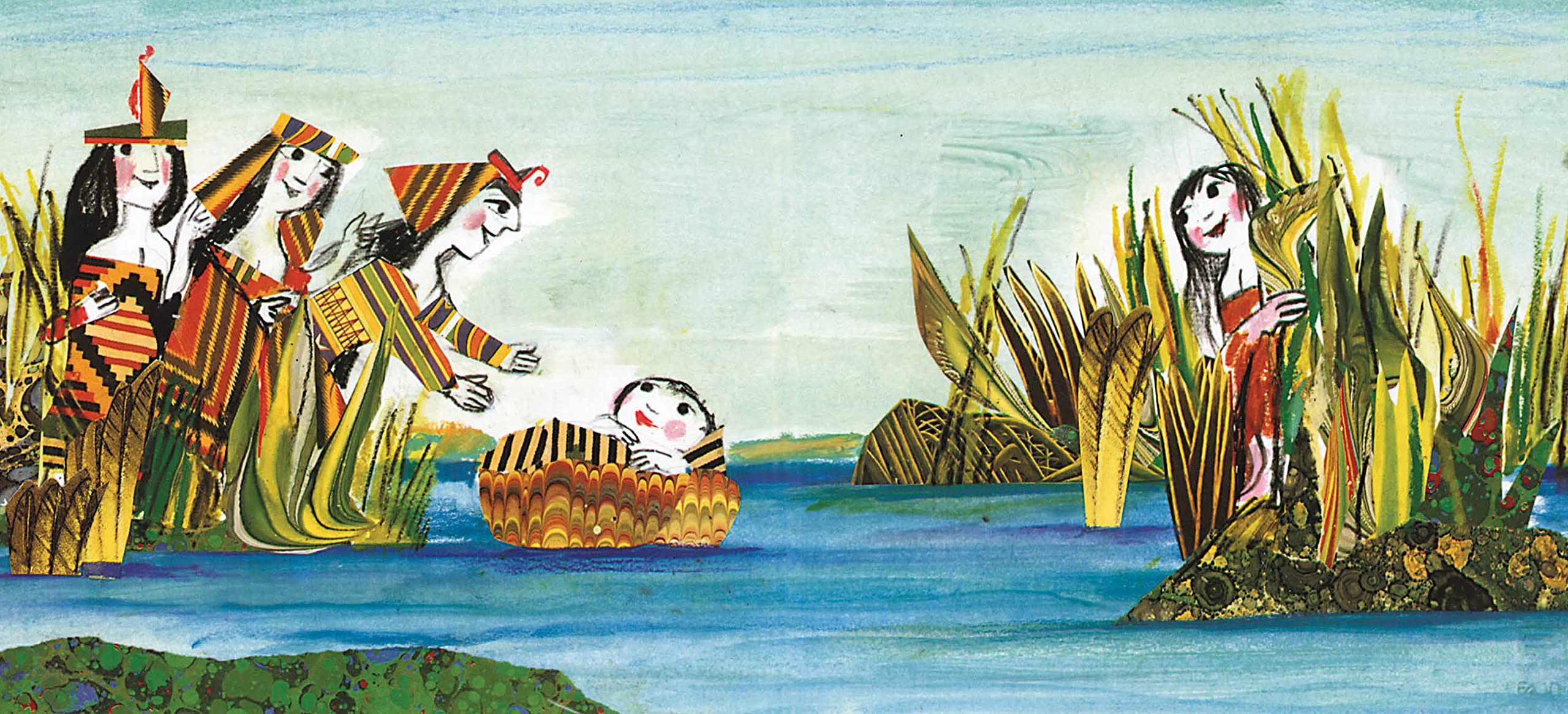
A Snake, a Flood, a Hidden Baby: Bible Stories for Children, by Meir Shalev/Illustrated by Emanuele Luzzati, Translation by Ilana Kurshan, (Sept. 2021, Kalaniot Books), $21.99, ISBN: 978-0-9988527-9-9

Ages 3-8

Originally published in Hebrew in 1994, this English translation of six Bible stories from the Hebrew Bible are delightfully translated into English for younger listeners and readers. Featuring the stories of The Tree of Knowledge, Noah’s Ark, The Tower of Babel, Abraham and Sarah, Joseph and His Brothers, and Moses in the River, the stories are told with a sense of humor and personality. Colorful illustrations bring the stories to life with vibrant spreads, one-page illustrations, and pop-ups throughout the text. Key phrases an quotes throughout each story are emphasized in size and colorful font, making this an accessible, wonderful book of stories to share.

Visit Kalaniot’s book detail page for A Snake, a Flood, a Hidden Baby to download a free educator’s guide.

Posted in Early Reader, Fiction, picture books

Don’t Miss: Little John Crow

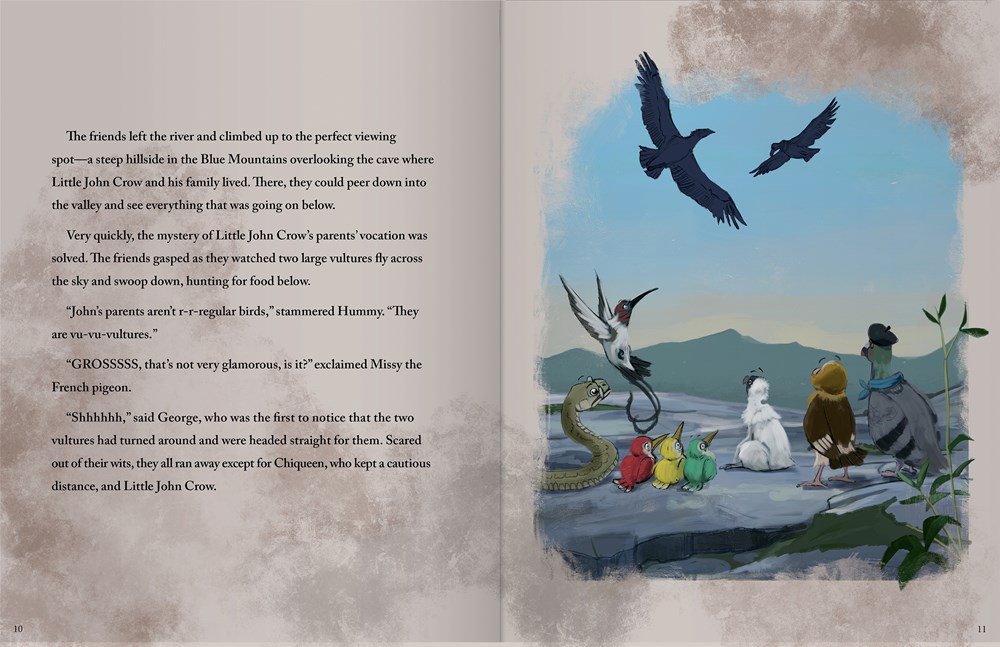
Little John Crow, by Ziggy and Orly Marley/Illustrated by Gordon Rowe, (Nov. 2021, Akashic Books), $18.95, ISBN: 9781617759802

Ages 5-8

Young vulture Little John Crow happily lives with his parents in Bull Bay, on the edge of Blue Mountains in Jamaica. Initially, he has no idea what his parents do for a living, but discovers – along with his friends – that his parents are vultures. Scavengers. This makes him an outcast among his friends, and a tragedy sends John off on his own, where he meets other vultures who welcome him into their kettle (a group of vultures!). With John and his parents no longer part of the Bay, the ecosystem is disrupted and the remaining animals realize that they were too quick and too harsh to judge their friend. They set out to find him and hope that he’ll be able to restore things to normal.

Vibrant artwork and emotional storytelling come together to create a readable, unputdownable story about prejudice, acceptance, and family – the families we’re born into and found families, with a subplot about disrupting ecosystems. A good addition to collections where animal stories are popular.

Ziggy Marley is a musician, philanthropist, and children’s book author, and the eldest of reggae artist Bob Marley’s children. Visit his website for more about his career. Orly Marley is Ziggy Marley’s wife, is also an entrepreneur and music industry manager. Gordon Rowe is a hip-hop influenced illustrator and designer. You can find his Instagram here.

Posted in picture books, Preschool Reads

A new age-old question: How Did Humans Go Extinct?

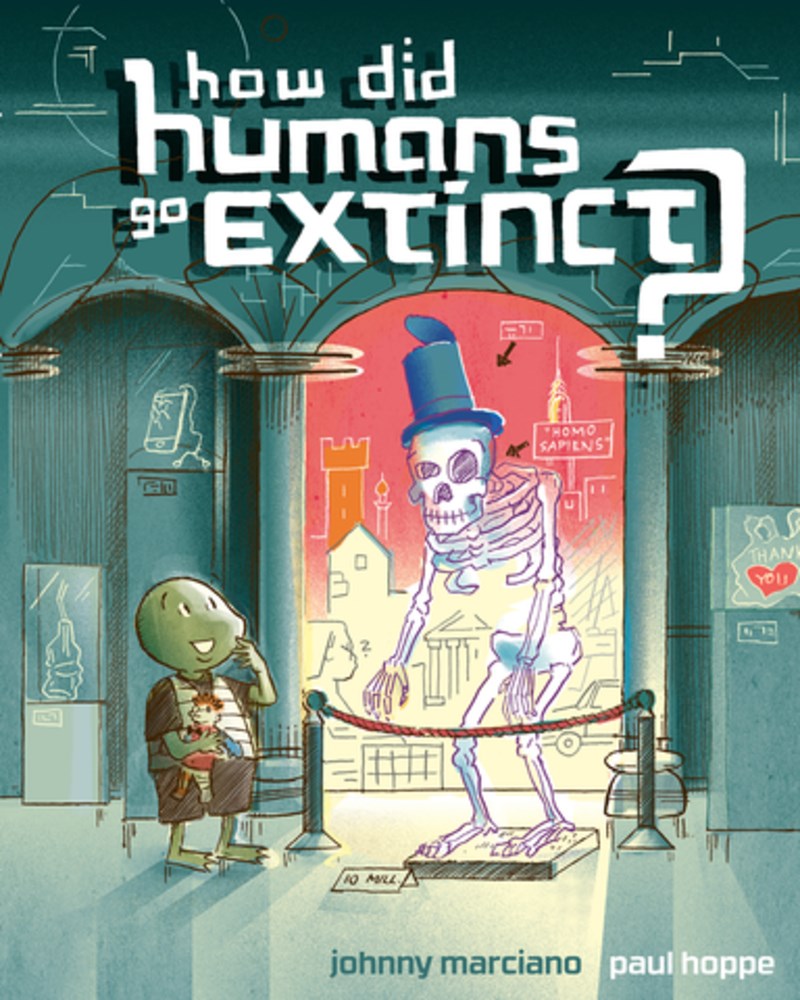
How Did Humans Go Extinct?, by Johnny Marciano/Illustrated by Paul Hoppe (Oct. 2021, Black Sheep), $16.95, ISBN: 9781617759277

Ages 3-7

Ten million years, the Earth looks a little different. It looks really futuristic, and the inhabitants? Well, they look a little amphibious. They’re Nøørfbløøks, and according to the science museum, the theory is that they’ve evolved from frogs. But our story revolves around young Plib, a Nøørfbløøk who loves humans, as is obvious from his favorite human stuffie, Frank, and his books and movies (Human Park, How Do Humans Say Good Night, Planet of the Humans). He wants to know how humans went extinct, but his mother is reticent to tell him: it’s really not a story for kids, after all. But when Plib presses, she relents and tells him some pretty uncomfortably plausible theories: pollution, war, and worst of all, they just stopped caring about one another. Plib is crushed at these heartbreaking theories, but Mom shushes his fears away by offering her own theory, which is more comforting. But it’s food for thought, isn’t it? Comic book style artwork has great little details on what archaeologists may find in about 10 million years, and the reasons for our extinction are food for thought and discussion. A smart call to action from a different point of view.

Johnny Marciano is a New York Times best-selling author and illustrator, and the grandson of Ludwig Bemelmans, author and illustrator of the Madeline books. Marciano has continued the series with Madeline and the Old House in Paris, Madeline at the White House, and Madeline and the Cats of Rome. Paul Hoppe is an award-winning illustrator whose artwork regularly appears in the New York Times. See more of Paul Hoppe’s illustration work at his website.

Posted in picture books, Preschool Reads

’80s storytime: Good Times Roll

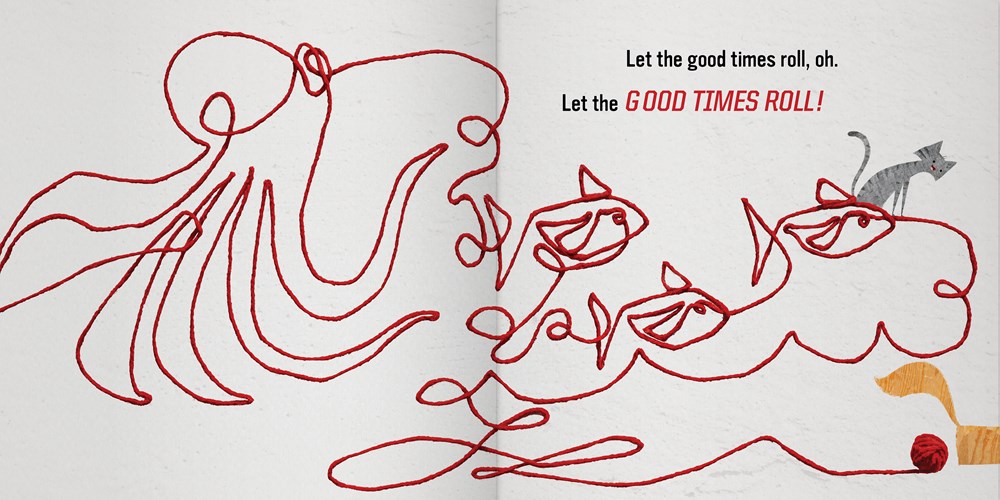
Good Times Roll, by Ric Ocasek/Illustrated by Rob Sayegh Jr., (Oct. 2021, Akashic Books), $16.95, ISBN: 9781617758485

I’m a 70s and 80s kid, and Akashic’s LyricPop books give me such joy. This latest one is based on The Cars’s 1978 hit, “(Let the) Good Times Roll”. Rob Sayegh Jr. brings a playful spin to this song with two cats, a ball of yarn, and a lot of imagination. The two cats play together as they create waves, rainbows, and zooming planets and stars with the yarn, frolicking through lyrics like, “Let them leave you up in the air. / Let them brush your rock and roll hair. / Let the good times roll”. It’s playful, it’s bright, it’s just fun: just what your ’80s storytime needs.

Posted in picture books, Preschool Reads

Wordless wonder: Grand Isle

Grand Isle, by Kate Samworth, (Sept. 2021, Black Sheep), $18.95, ISBN: 9781617759765

Ages 3-8

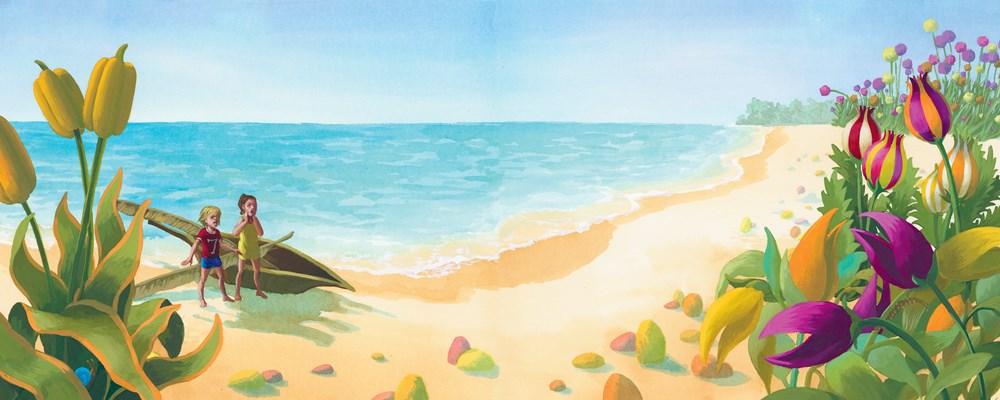
In the great tradition of wordless adventure stories, Grand Isle takes readers on a big adventure, joining two sisters on a day at the beach for a day of fun. They discover a giant seed pod that just begs to be a canoe; sure enough, they climb aboard and journey to a mysterious island where everything is huge, from the plants to the bugs! When their seed pod canoe gets pulled back to sea, they discover they’re stranded: are they resourceful enough to get back home?

In the vein of books like Aaron Becker’s Journey trilogy, Grand Isle uses illustration to transport readers: the pages burst with color and scale; the characters go from typical size, as they build a sand castle together and roam the coastline, to smaller as they discover the seed pods and arrive at the hidden island. The shift is subtle, with no grand reveal; it’s never disruptive. When the girls arrive at the island, they are tiny and discover giant flora and fauna around them! The illustrations are lush and have beautiful movement to them. A rich story that invites readers to tell you what they see.

See more of Kate Samworth’s work at her website.

Posted in Uncategorized

Picture book series help kids Dealing with Feelings

I’m in a pandemic state of mind these days. Call it the post-holiday surge, added to the fact that I’ve been quarantining at home because what I thought was just a cold wasn’t exactly just a cold, and throw in a dash of watching the numbers and panic rise again. As kids go in and out of remote learning, and as schools go back and forth on whether to stay open or shift to remote learnintg this year, I know there are a lot of stressful feelings. Poet and children’s author Deborah Fannie Miller has been writing books in a new series, “Dealing with Feelings”, to help kids and families navigate these emotions.

Grappling with the Grumblies, by Deborah Fannie Miller/Illustrated by Diane Jacobs, (Sept. 2013, Frontenac House), $12.95, ISBN:  978-1927823002

Ages 4-7

A girl’s mom wakes her up too early, setting off a grumpy mood – and a Grumblie appears! It’s a spiky little purple monster who says one word: “Grump!” The Grumblie follows the girl around, feeding off of her bad mood and growing larger and larger, pushing the girl out of her own room! Mom recognizes the sign of a Grumblie, and deflects the situation by inviting her daughter to wiggle, dance, and laugh that Grumblie back to size. Kids will recognize how a Grumblie can just show up and take over their whole day, feeding off a bad mood, and it’s important for parents to see how they can recognize a Grumblie at work, and help de-escalate a situation by acknowledging that something’s going on, and helping their kids get their attention away from the bad mood. Illustrations are subdued and colorful, and the Grumblie is a creature kids can easily draw; invite them to create their own Grumblies to help them talk about what they’re feeling.


Juggling the Jitters, by Deborah Fannie Miller/Illustrated by Danielle Bazinet, (Sept. 2013, Frontenac House), $10.10, ISBN: 978-1927823026

Ages 4-7

A boy named Jacob goes to bed, excited for a birthday party he’s attending the next day. But just when he tries to sleep, the Jitters creep in: what if his friend doesn’t like her present? Will he make new friends? Will he get a balloon? There’s so much to worry about, and the Jitters multiply and cause a ruckus, jumping on Jacob’s bed and turning the lights on. Papa comes in to find out what’s going on, and realizes what’s going on; he takes Jacob into his arms and consoles him, and teaches him some deep breathing to relax him. Those spiky, mean-spirited Jitters keep trying to get Jacob’s attention, but as he and Papa do a little dance together to shake them away, the Jitters head out the window, where they turn into Glitters: bright yellow stars. Another good story about how nerves and anxiety can disrupt one’s sleep and peace of mind, Juggling the Jitters is also important in illustrating to parents how to react; not with anger, but with comfort and a touch of whimsy. The breathing practices are a great idea for putting kids in a calming headspace, and the dancing is light and playful, putting kids at ease.

If you have additional funding for social-emotional books, these are a good additional purchase.


Posted in picture books, Preschool Reads

Life in the Extraordinary Pause

The Extraordinary Pause, by Sara Sadik/Illustrated by Karine Jaber, (Sept. 2021, Eifrig Publishing), $16.99, ISBN: 9781632333070

Ages 4-8

As we finish up Year 2 of… *sweeping gesture* all of this, it’s comforting to have a book remind you of things we’ve gained. The Extraordinary Pause is one of those books. Beginning with a recap of where we were before: our nonstop society, consumed by devices, had stopped noticing our surroundings; even each other. And at that point, the virus – depicted as a spiky orange monster – creeped in, and we all stayed home, where we discovered each other – and our surroundings – once again, on a more personal level. We cooked together, played together, learned together, and slowly, that “extraordinary pause” brought everything back. Sure, things are different now, but we’re figuring out how to live with things the way they are now. Illustrator Karine Jaber brings Sara Sadik’s quiet storytelling to life, touching on things kids will remember most from the pause that went for almost two years: empty classrooms, shuttered stores, isolated parks and playgrounds. Together, they also mention the things kids will remember with fondness, like learning at home, parents at their sides; sharing family time; and most important of all, those hugs we missed when reunited with family and friends. Karine Jensen uses color with great thought, giving weight to the things we “forgot” before the pause, like green spaces, as we rush around in our monochromatic lives. Home spaces and interactions are warmly colored. Back matter includes questions to think about with readers, inviting them to think and talk about how their lives changed during the pause. A QR code lets readers scan for more resources.

A good addition to social-emotional learning collections, and a strong testament to what we’ve come through.

Posted in Graphic Novels, Science Fiction, Teen, Young Adult/New Adult

Pixels of You considers friendships between AI and human

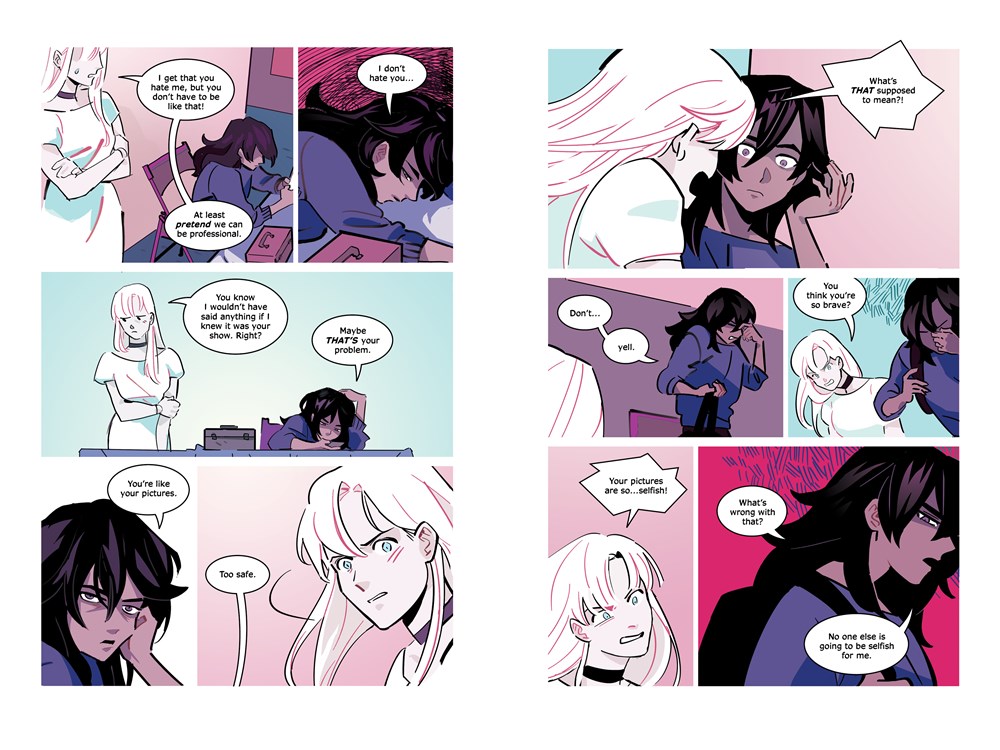
Pixels of You, by Ananth Hirsh & Yuko Ota/Illustrated by J.R. Doyle, (Feb. 2022, Amulet Paperbacks), $16.99, ISBN: 9781419749575

Ages 14+

The team behind 2016’s graphic novel, Lucky Penny, are back with a story about AI, humans, and the relationship that forms between one pair. Indira is a human artist, a photographer, who’s been cybernetically augmented after a car accident took one of her eyes at the age of 10. Fawn is the first human-presenting AI, also a photographic artist, who interns at the same gallery as Indira. The gallery owner puts them together on a project after the two have a very public disagreement over their work, the gallery owner – their mentor – puts them to the ultimate test: work on a project together, or leave the gallery. Period. At first, the collaboration is forced, grudging, but slowly, as the two artists get to know one another, a friendship forms, allowing each to see the world through the other’s eyes. Largely illustrated in shades of rose and violet, black pages with white text that record key moments in AI/Human history capture the reader’s attention and act as chapter heads, giving readers an idea of what may lie ahead. The characters are hard to get to know in the first pass – the story is interesting, but hard to connect to at first; I felt like I “got” them better as I went on in the story. I re-read the book, and the knowledge I’d gained from the first pass definitely helped me feel more for the characters from the outset, so you may want to give a solid booktalk on what’s going on in human history – touch on the paranoia that exists between humans and AI, for starters – at the time the story is set, to give tweens and teens more context to build on. There’s a slow-burn sapphic romance subplot that’s so subtle, some readers may not pick up on it for a while, but it is a satisfying close. Fawn’s robot parents are a surprise hit in the story. Give this one a shot. Talk about perspective, and how photography factors into the story of “seeing” others. I think it’ll find a dedicated audience.