Posted in Adventure, Fiction, Middle School, Tween Reads

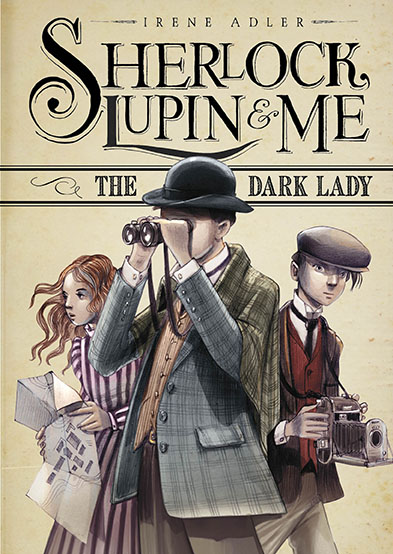
Young Sherlock and Irene Adler Face Off in Sherlock, Lupin, and Me: The Dark Lady

sherlock lupin meSherlock, Lupin and Me: The Dark Lady, by Irene Adler. Capstone Young Readers (2014), $12.95, ISBN: 9781623700409

Recommended for ages 9-14

Written by Irene Adler herself, this middle-grade novel details the first time Irene Adler, a young American girl living abroad and vacationing with her mother in a French coastal town, meets Sherlock Holmes and his friend, Lupin. The three become quick friends; when a dead body washes up on the beach one morning, they decide to solve the mysteries surrounding the dead man: who was he? Was this a suicide or a murder, and why?

Woven into the story’s fabric is background information on Holmes and Adler, offering glimpses into life events that led to the adults they become. Adler lives with her mother and her butler, Horatio Nelson, who seems to double as a chaperone/bodyguard. Young Irene is headstrong and willful, seemingly at endless odds with her mother. Sherlock is a quiet, somewhat surly, brilliant boy who’s reticent to discuss his home life; he has an older brother and a younger sister that annoy him. Arsene Lupin, the son of an acrobat, is a reckless young man who has an eye for Irene, but may eventually find himself at odds with the great Sherlock Holmes.

I really enjoyed this story. Middle graders who have already begun studying Sherlock Holmes will enjoy seeing the character development written into this young, teenage Sherlock, and those unfamiliar with Holmes will doubtless enjoy this introduction, easing them into the great sleuth’s world. The writing is fun and accessible to younger readers, and the sets itself up for a potentially exciting continuing series. For starters, will we find out more about Lupin, who ends up being one of the most famous thieves in literature? Will we meet a young Moriarty? A young Lestrade or Watson? And will we find out more about Irene Adler’s parents, who seem very secretive about something to do with Irene?

Jacopo Bruno’s Victorian-type illustrations add a Holmesian feel to each chapter, setting a mood for the reader.

I love the pairing of the world’s greatest detective with the world’s best gentleman thief as teenagers – I can’t wait to see where this series is going to go.

The Capstone Kids site should be getting a minisite up soon, but I didn’t see anything on Sherlock, Lupin and Me at the moment.
Posted in Fantasy, Graphic Novels, Humor, Science Fiction, Tween Reads

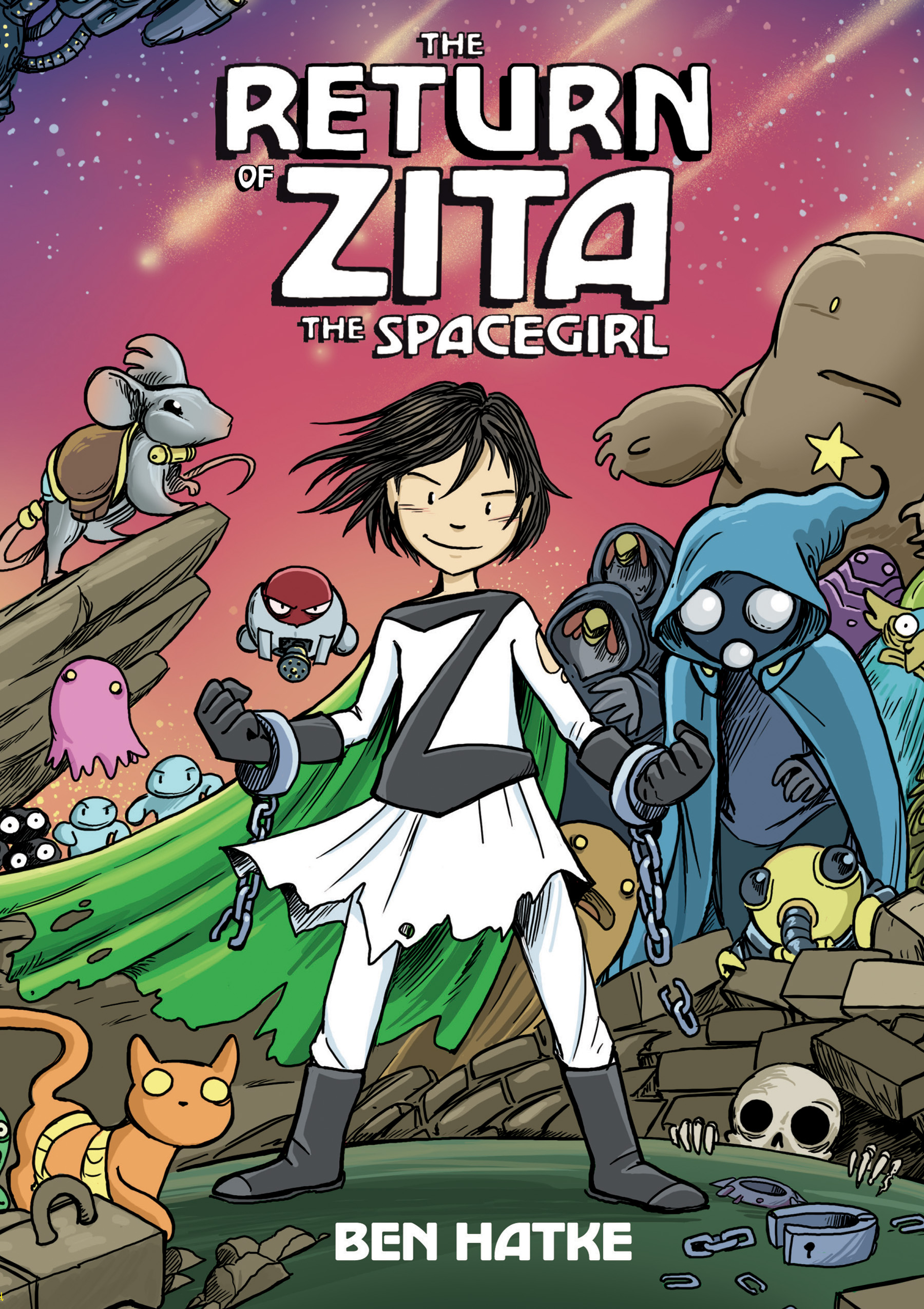
The Return of Zita the Spacegirl – A WhatchaReading Review!

Great sagas come to an end – maybe. But we’ll get to that. For anyone who hasn’t heard of Ben Hatke’s Zita the Spacegirl, I urge you to get to a library, a bookstore, or a friend with an enviable graphic novel collection and check her out, because she is fantastic. I first met her when Chuck, our editor monkey, handed me a copy of the first book and said, “You have to read this. It’s all you.” And it was. I quickly read Legends of Zita the Spacegirl, and was delighted when a review copy of Return of Zita the Spacegirl showed up on my doorstep a couple of weeks ago.

Check out my review on WhatchaReading!

zita3

Posted in Fiction, Tween Reads, Uncategorized

Minerva Mint: The Order of the Owls

minervamintMinerva Mint: The Order of the Owls, by Elisa Puricelli Guerra/illus. by Gabo Leon Bernstein, Capstone Young Readers Group (2014), $9.95, ISBN: 9781623700386

Recommended for ages 8-10

Minerva Mint: The Order of the Owls is the first book in a new middle-grade series about an eccentric young girl named Minerva Mint, her two friends, Thomasina Crowley and Ravi Kapoor, and the mysteries that the group solves together; the most important being to find Minerva’s parents.

Minerva was found, as an infant, in a bag in Victoria Station. She lives in Lizard Manor -a large, ramshackle mansion that has seen better days – with Mrs. Flopps, the station custodian who discovered Minerva. Minerva meets Ravi and Thomasina, and the three become fast friends. Thomasina shares Minerva’s adventurous spirit and Ravi, a bit more level-headed and fearful, comes along for the ride at first because of his crush on Thomasina. He grows into himself during the group’s first adventures, but I’m pretty sure we’ll still see him as the voice of reason in the group.

This first book establishes the characters and the underlying mystery that will permeate the series – who are Minerva’s parents, and why did they leave her as an infant? There are some clues in the bag Minerva was found in, and she tries to put the pieces together. Thomasina and Ravi are sworn to help her, but Minerva is no damsel in distress; she can handle after years of fending off various long lost “parents” who come to the home in search of the valuable real estate and imagined riches in Lizard Manor.

The story is fast-paced and light, perfect for a middle-grade read about friendship with some mystery thrown in. Minerva is a quirky, fun character that will appeal to girls who want to step outside the “girly” model. Thomasina – pretty, blonde, wealthy Thomasina – is an adventurous spirit and a friendly, outgoing girl, which is a relief if you’re tired of the seemingly obligatory mean girls popping up as dramatic foils. Ravi is a shy, fearful boy who allows himself to be drawn out by the two girls. The group’s valued friendship sends a good message to younger readers about sticking together.

Gabo Leon Bernstein’s black and white illustrations are adorable and add to the story, giving us characters to bond with and creepy, fun landscapes. His illustrations advance the plot and fire up the imagination.

I look forward to more Minerva Mint books, and luckily, there are a two in progress: Merlin’s Island and The Legend of Black Bart. The publishers website offers extras, including character profiles, a book trailer, and downloadable clues sheet and a secret club contract that readers can use for their own secret societies!

Posted in Fantasy, Fiction, gaming, geek, geek culture, Humor, roleplaying, Science Fiction, Teen, Young Adult/New Adult

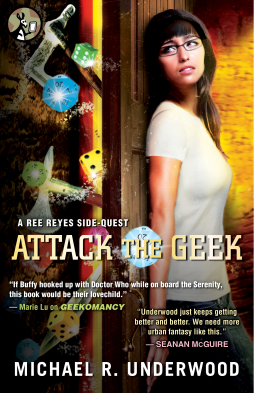
Attack the Geek: Geek Culture Gone Wild!

attackthegeekAttack the Geek, by Michael R. Underwood. Gallery, Threshold, Pocket Books (2014), $2.99, ISBN: 9781476757780

Recommended for 18+

Attack the Geek is more of a New Adult read than it is a YA read, but there are plenty of pop culture, gaming, and garden variety geek references in there that will appeal to younger audiences. There’s a content heads-up for language, but it’s nothing the kids aren’t screaming at each other these days.

Attack the Geek is a side adventure to a series created by Michael R. Underwood; his previous two books, Geekomancy and Celebromancy, are available via digital download on Amazon for a very reasonable price. I haven’t read the two previous books which could be a reason why I felt off-kilter with Attack the Geek.

For any gamers out there – did you ever have a roleplaying session where one bar fight or battle took up hours of your campaign? If you know what I’m talking about, that’s how I felt while reading Attack the Geek. It’s a single combat story, with barista Ree Reyes, the heroine and protagonist of the series, and her fellow geekomancers coming under attack at Grognards, the establishment owned by Ree’s boss, Grognard. The geekomancers have the ability to channel the power of geek culture by consuming it – Ree, for instance, keeps clips from her favorite movies, like X-Men or Spider-Man, to draw upon when she needs power – and she’ll be able to shoot webs or toss people with telekinesis. There are props aplenty, including working Star Trek phasers and Star Wars lightsabers, and collectible card game cards merely need to be torn to release their  magic in this world, if channeled by the geekomancer. So when they come under attack from a Strega witch named Lucretia, it’s a hairy battle, loaded with pop culture references and witty banter.

This being a side adventure is my own issue – I am unfamiliar with the geekomancy power and these characters, so in a sense, I was at a disadvantage. But I also thought the book was trying to be too witty, throw too many references in, for its own good. The references took over the plot, and after a while, I was just reading about a battle where there was Spider-Man web slinging, Star Trek phasers, and lots of collectible card game references. This just wasn’t my book. For anyone who’s a devoted sci-fi/fantasy/gaming/comic book fan, it’s worth a shot. It’s why I requested it from NetGalley, after all, and I may read Geekomancy now just to see if having more of a background will help me better grasp the book.

Posted in Non-Fiction, Teen, Tween Reads

Daniel Stefanski Teaches Us How to Talk to An Autistic Kid

HowToTalkToAnAutisticKidHow to Talk to an Autistic Kid, by Daniel Stefanski/illustrated by Hazel Mitchell. Free Spirit Publishing (2011), $12.99, ISBN: 978-1575423654

Recommended for 8+

Daniel Stefanski, an autistic teen, wrote this book to teach other kids (and adults!) about autism from a more personal point of view. There are many guides and books out on the market, but Daniel’s personal approach and point of view, combined with Hazel Mitchell’s friendly, two-toned digital illustrations, make a greater impact. He isn’t using clinical speech and medical language, nor is he a parent taking sides in a debate. He’s a kid who wants other kids to understand him, befriend him, like him, and understand, befriend, and like other kids with autism. He explains behaviors that other kids may not understand, like flapping or humming, for instance; he discusses issues including eye contact, personal space, and most importantly, how other kids can reach out to and connect with autistic kids in their lives.

This book is only 48 pages, and can be quickly and easily read, but the information is invaluable in teaching children and adults to see things from another person’s point of view. As Stefanski himself says, “Even though my brain is different, I’m still a kid. I like to have fun and I want to have friends.” This is a book that needs to be available not only in public libraries, but in school and classroom libraries, where it is easily accessible and kids are actively encouraged to read it.

TalktoAutisticKid-800

Posted in Fantasy, Fiction, mythology, Tween Reads

Neil Gaiman’s Odd and the Frost Giants: In which Thor, Loki and Odin get into trouble AGAIN.

odd and the frost giantsOdd and the Frost Giants, by Neil Gaiman/illustrated by Brett Helquist. HarperCollins (2008), $14.99, ISBN: 978-0061671739

Recommended for ages 8-12

Neil Gaiman takes on Norse mythology with his tale of a lame young Norse boy named Odd, who encounters a bear, a fox, and an eagle in the frozen woods one day, only to discover that they are Thor, Loki, and Odin, on the run after Asgard is overrun by Frost Giants. They need Odd’s help to regain the kingdom and end the forever winter that the Frost Giants have spread throughout Midgard (and possibly, all of the realms). Is Odd smart enough to outwit the Frost Giants?

Gaiman adapts his storytelling voice for this story (as opposed to his dark fantasy voice that you can read in works like Coraline and Graveyard Book). The book is filled with his wry humor, especially in the interactions between Thor, Loki, and Odin – he gives Loki a particularly amusing voice, being the God of Mischief in the guise of a wily fox. Gaiman also excels at writing quiet, mild characters that achieve greatness through intelligence – Odd is yet another quiet Gaiman hero. Quiet kids will love how Odd uses his wits to save the day, rather than charging around Asgard swinging a war hammer and screaming for blood.

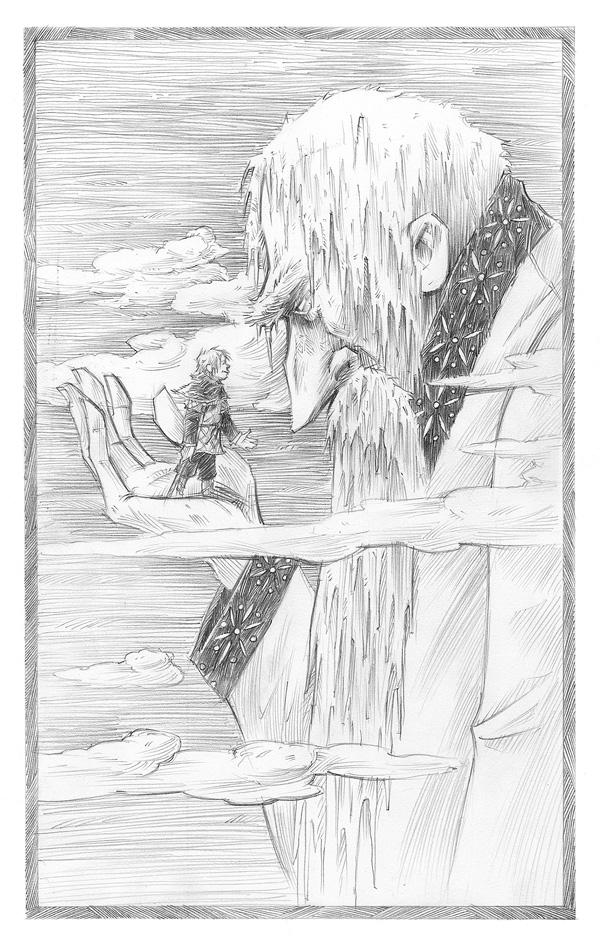
Brett Helquist’s art enhances Gaiman’s story with beautiful black and white sketches. The artwork lends a real authenticity to the Norse tale; the work could hail from a hoary, old tome, found in an old castle, it has such a wise old sense of timeliness about it.

9780061671739-oddfrosts16_zoom

I love Gaiman’s storytelling, and Odd is right there with his other work. This could enhance a unit on storytelling as easily as it could a unit on Norse mythology, and there are many activities to get kids writing that this book could inspire, including a Write Your Own Myth workshop, or asking the kids to put themselves in Odd’s place – how would they save Asgard? What would they do if they discovered three gods in the woods? Do you identify with Odd? What makes a hero heroic? There are many discussion topics that work for this book.

Posted in Fiction, Humor, Middle School, Science Fiction, Tween Reads

M.E. Castle’s The Clone Chronicles concludes with Game of Clones

gameofclones_3 Game of Clones: The Clone Chronicles, #3, by M.E. Castle. Egmont USA (2014), $15.99, ISBN: 9781606842348

Recommended for ages 8-12

In M.E. Castle’s third installment of the Clone Chronicles, seventh grader Fisher Bas and his clone, Fisher-2, put aside their differences to team up and fight Three, the Fisher clone created by the evil Dr. X. Three’s gone rogue, with plans for world domination on his mind, and he’s on track to make it happen – will Dr. X make an appearance? Is the enemy of Fisher’s enemy a friend?

The book is a fast-moving action-adventure series that should appeal to both middle grade boys and girls. Fisher and Fisher-2 have allies in their classmates, Amanda and Veronica, both of whom serve as the boys’ crushes and as intelligent, strong females in the series. Fisher tends to be an overthinker, and Alex struggles to define his own personality despite being a Fisher clone. This struggle runs throughout the book, and mirrors many a tween’s burgeoning identity and personality clashes and crises; where Fisher-2 is a clone, a tween pushes back against being merely “the son” or “the daughter”. Three wreaks havoc in Fisher’s neighborhood and school, forcing him to think of creative solutions and seek help outside of his gadgets; he realizes the power of friendship and of reaching out to ask for help, and it makes him a better person.

Overall, it’s a fun book in a popular series that tweens will enjoy. Game of Clones is part of The Clone Chronicles series; the first two books are Popular Clone and Cloneward Bound.

Posted in Post-apocalyptic/Dystopian, Science Fiction, Teen

Ann Brashares The Here and Now gives us time travel and dystopia.

cover35542-mediumThere Here and Now, by Ann Brashares. Random House Children’s (2014), $18.99, ISBN: 9780385736800

Recommended for ages 14+

Ann Brashares, author of the Sisterhood of the Traveling Pants series, gives us a well-constructed story with dypstopian elements, time travel, and a race through the past, present and future to stop a terrifying future.

Prenna is a 17 year-old Traveler – she, her mother, and a group of her people came to our present time to escape a future where a blood plague ravaged the population. The Travelers live under a restrictive list of rules that appear to exist more for their power-hungry leaders rather than the actual good of the people (or the Natives – people in the right timeline – that the rules are supposed to protect). When Prenna finds herself growing closer to her friend Ethan, she starts questioning not only the rules, but the entire structure their society was built on – and she and Ethan find themselves drawn into a race against time to put a stop to the dismal future from which Prenna came, all the while pursued by the leaders who want to silence Prenna, possibly for good.

The Here and Now has elements of The Giver – the post-apocalyptic society governed by rules really spoke to me – and is one of those books that I couldn’t put down. I needed to know what was going to happen next; Ms. Brashares constructed a compelling narrative with enough mystery to keep me going for that famous “one page more”. Within the overall story structure, there are mini-mysteries that the two teens have to unravel to get the next piece of the puzzle; add to that the internal conflict Prenna feels at duty to her family and the love she and Ethan feel for one another, and you have a great read for teens that can spawn interesting conversations about the implications of time travel: what would happen if you went back in time and changed things, even if they were for the better? What kind of society would develop if a blood-borne plague spiraled out of control? More than a teen romance, The Here and Now offers the opportunity to draw teens into complex conversations about the world around them.

Posted in Science Fiction, Teen, Uncategorized

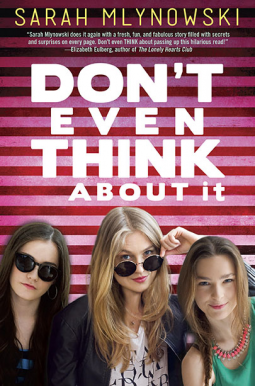
Don’t Even Think About It – Talk About Your Strange Side Effects!

Don’t Even Think About It, by Sarah Mlynowski, Random House Children’s (2014), 9780385737388, $17.99

dontthinkaboutitRecommended for ages 16+

I was lucky enough to be chosen by Random House to review an advanced copy of this book, by Sarah Mlynowski, who I fondly remember from her Red Dress Ink chick lit days. I thoroughly enjoyed her book Milkrun, so I was excited to see that she was writing YA. The plot is certainly different: a group of New York teens, attending Bloomberg Public High school down in Tribeca, develop ESP after receiving a tainted batch of flu shot at school.

Ms. Mlynowski has her ensemble cast: Cooper and Mackenzie the young lovers, one of whom has a secret; Pi, the overachiver; Olivia, the shy girl; BJ, the pervert; Tess, the one with the unrequited love for her best friend – these personalities and more are all here, which gives a feeling of familiarity to those reading the book. You know these kids – we’ve been these kids, in many cases. The characters aren’t soul-searching, and don’t require that depth of character for this quick read. It’s a situational piece of fiction.

What interested me was not the superficial teens, because they mostly are – even “the brain”, Pi, who uses her powers to try and get ahead of the number one student in the school so she can get the vaunted Harvard acceptance letter – it was how they dealt, on their own levels, with their newfound abilities. They didn’t take to Twitter, Instagram, or Facebook to discuss it with the world. They kept it quiet. They didn’t want anyone to know, because they live in a day and age where they know they’d be poked and prodded like test animals, or even worse, have their ability – something to give them an edge, to make them special – taken away from them. At the same time, Mlynowski creates an interesting portrait of what these abilities do to their bearers. It’s not always predictable, and it was enjoyable to see things play out.

The book is suggested for 16 and over for some language and situations. For a quick, light read between tests and papers, Don’t Even Think About It will fit nicely in your backpack.

Posted in Graphic Novels, History, Tween Reads

Hidden: A Child’s Story of the Holocaust tells a powerful tale, gently for younger readers.

Hidden: A Child’s Story of the Holocaust, by Loic Dauvillier (First Second, 2014), ISBN: 978-1-59643-873-6, $16.99

Pub Date: April 1, 2014

hiddenRecommended for ages 8-12

Hidden is a graphic novel, tells the story of the Holocaust as it stormed through Vichy France, from a child’s eyes.

Elsa is a little girl who discovers her grandmother deep in thought one night. She curls up on her lap, and her grandmother tells her why she’s been feeling sad. Doumia, Elsa’s grandmother, has had a nightmare, and proceeds to tell Elsa about her life as a little girl.

Doumia was a happy child, living in France, going to school, and had friends and a loving family. One day, her father tells Doumia that they are to become “a sheriff’s family”, as her mother sews yellow stars on their clothing. She later learns, when her friends and her own teacher ignore her, that the yellow star is not a sheriff’s star, but the mark of being a Jew. Nazi soldiers harass people in the streets; Doumia’s father loses his job, and, fearing for her safety, Doumia leaves school to be homeschooled by her parents.

Doumia’s parents scramble to hide her when the Nazis come for them. She is discovered by a neighbor, who, with a network of the French Resistance, change her name and send her, along with her neighbor, to a farm to wait out the danger. When the War ends, we wait, as Doumia does, to learn her parent’s fate.

This is a powerful, emotional, story of the Holocaust because it is told through a survivor’s eyes, but the eyes of a child. We hear this story, as Elsa does, in the safe, warm embrace of a  grandparent, with Marc Lizano’s and Greg Salsedo’s gentle cartoon art, with subdued colors, easing younger readers into history. Where is difficult in parts, there are bright spots to keep younger readers interested and happy – Doumia living safely in the French countryside with women who care for her; the farm animals she helps care for, reunions with lost family members. It’s a safe place to talk about a horrific event.

An afterword by Hellen Kaufmann, the President of AJPN – an organization dedicated to telling the stories of rescue and solidarity during World War II – gives us an overview of Vichy France during World War II.

This is a fantastic pick for younger readers, particularly with the difficult task of finding interesting, captivating, non-fiction to fit with the Common Core Learning Standards. The book is a valuable teaching tool for parents and educators alike.