Posted in Early Reader, Fiction, Fiction, Intermediate

Mapping My Day brings back the lost art of mapmaking

Mapping My Day, by Julie Dillemuth/Illustrated by Laura Wood, (March 2017, Magination Press), $15.95, ISBN: 978-1-4338-2333-6

Recommended for readers 5-10

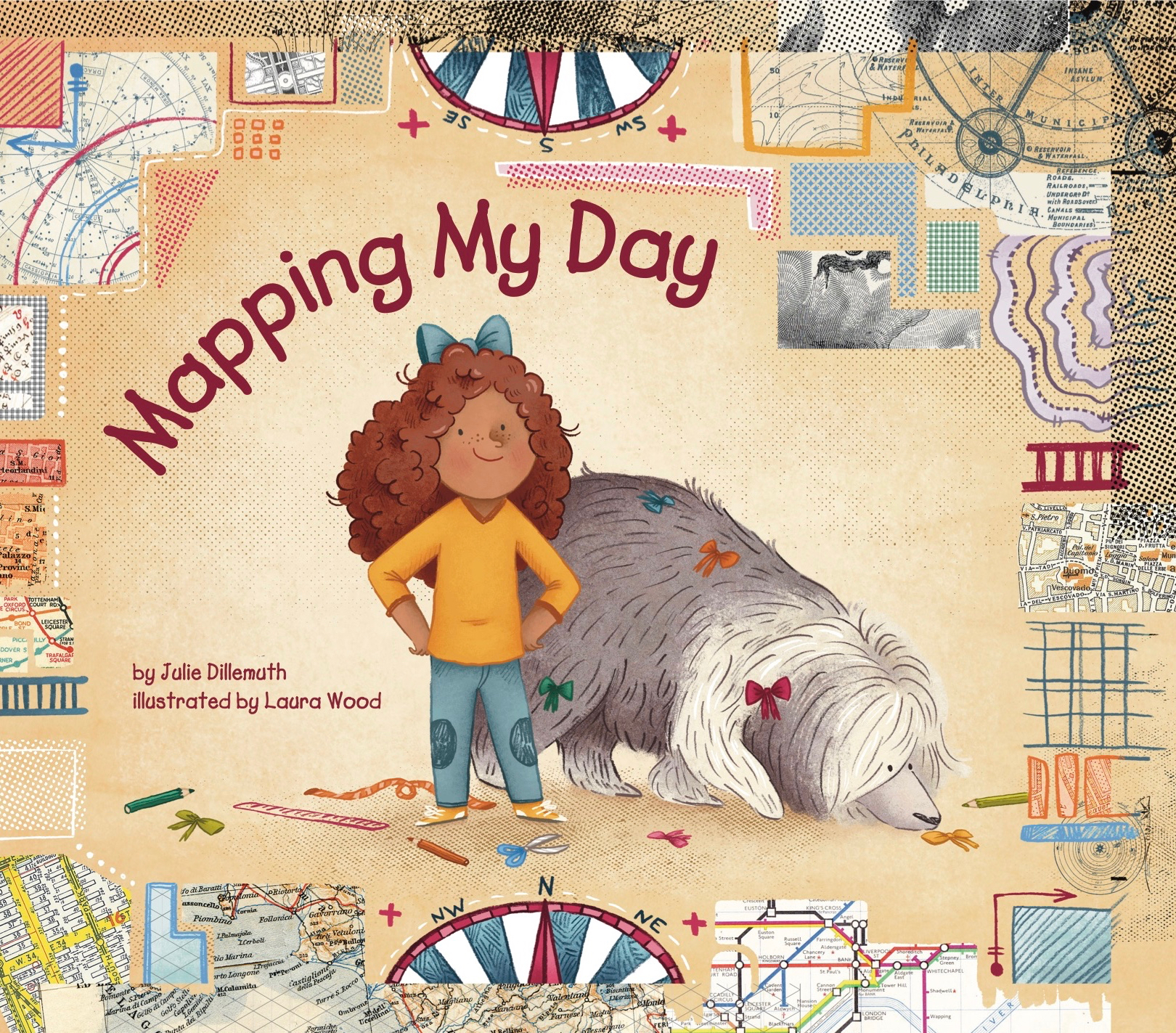
Flora is a girl who loves making maps. From sun-up to sundown, Flora maps her day and invites readers to see how she does it! Starting with an early morning wake-up thanks to the sun streaming through her bedroom window, Flora explains and illustrates terms like cardinal directions, map scales, landmarks, even seating plans.

I remember when I was a kid and learning about maps in Social Studies. That whole one inch = 1 mile thing made me want to bang my head against the desk in frustration. If I’d had a book like Mapping My Day to start me off, things would have gone a lot easier with those issues of Scholastic News. The book brings readers right into Flora’s circle. It’s like having a friend show you her journal, where she writes out how she watches her grandmother’s show poodles train on their obstacle course, or map out her school playground, or how she manages to beat her brother to the bathroom in the morning.

There are no frustrating measurements, no rulers necessary. It’s a great invitation to start mapping out our world – something that may be seen by some as a dying art in this age of GPS, but is a critically important skill to have. We should all know how to lay out a space; what our cardinal directions are and how to find them, and the importance of landmarks when you’re finding your way. For librarians and teachers, this is a lesson or a program in a book: the activities at the end of the book are even available for download so you can get a head start on planning. A note to parents, caregivers, and professionals explains the importance of mapping, diagramming, and understanding spatial relations, and includes ideas for incorporating them into kids’ play.

The art is friendly and fun. Flora is a biracial child from a multiethnic family. The family eats at the table together and enjoys time with extended family members. Spreads move between Flora’s story – driving in a car with family, eating at the table with family, playing at school – and Flora’s maps, which have a hand-drawn/handwritten appearance. Key words appear bolded.

Julie Dillemuth was mystified by maps until she figured out how to read them and make them, and it was a particularly difficult map that inspired her to become a spatial cognition geographer. She lives with her family and writes children’s books in Santa Barbara, California, where the west coast faces south. Visit her at her website: http://juliedillemuth.com.

One lucky winner will receive a copy of MAPPING MY DAY (U.S. addresses). Enter this giveaway for your chance!

https://goo.gl/forms/yiZyHr8CNDC7iVWg1

Posted in Early Reader, Fantasy, Fiction, Fiction, Intermediate

An overscheduled princess takes a day off: Princess Cora and the Crocodile

Princess Cora and the Crocodile, by Laura Amy Schlitz/Illustrated by Brian Floca, (March 2017, Candlewick Press), $16.99, ISBN: 978-0-7636-4822-0

Recommended for readers 4-8

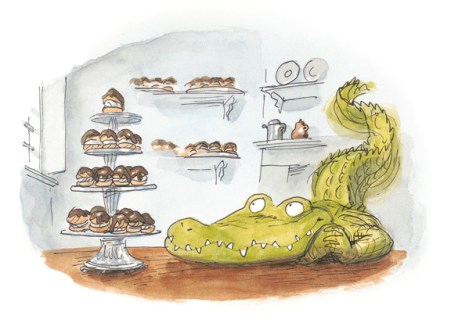
A king and queen have a baby that they coo and marvel over – until they realize that she’s clearly not ready to run an entire kingdom. From that moment on, Princess Cora’s life is a nonstop schedule of lessons, physical training, and nonstop bathing (seriously, her nanny’s got a bit of a complex). Cora writes to her fairy godmother in desperation, and the response, while not necessarily what Cora expected, is exactly what she needs. A crocodile shows up to take Cora’s place for a day; while Cora takes a day off to enjoy being a kid, the crocodile sets to teaching the king, queen, and nanny a thing or two.

Newbery Medalist Laura Amy Schlitz and Caldecott Medalist Brian Floca have joined their considerable forces to create a book that parents need to read (cough, cough, and education administrators, cough, cough) as much as their children do. Princess Cora and the Crocodile is all about the stresses our kids face today: the lack of time to enjoy being a kid, doing kid things. The king and queen are so stressed out about what Cora’s not ready for, they strip the joy not only from Cora’s childhood, but rob themselves of the chance to enjoy watching Cora grow up; of playing on the floor with her as an infant, climbing trees and running around their considerable lands with her, of reveling in the carefree fun that parents should embrace.

When Cora’s fairy godmother sends a crocodile to her family, the croc immediately – if a bit roughly – sets to whipping Cora’s family into shape, with hilarious results. While the croc wreaks havoc at home, Cora spends the day picking strawberries, climbing trees, even stepping in a cow pie, and enjoying every moment of it. Every. Unscheduled. Moment. Brian Floca’s ink, watercoor, and gouache artwork is fun, hilarious, and every bit as free and joyful as the story’s text.

Image courtesy of Brian Floca
Parents, read this one. Please. It’s as much for us as it is for our kids. Schlitz and Floca created this fairy tale to let kids know that it’s okay to be a kid, but the message here is for us adults, because we’re the ones who can make the changes kids need to be happy – to be kids – again.

Princess Cora and the Crocodile received starred reviews from School Library Journal, Booklist, and Publisher’s Weekly.

Illustrator Brian Floca has a fantastic webpage, with lots of online extras, information about school visits, and upcoming events.

Posted in Infant/Baby, Storytime

Baby Storytime: A World of Love and Fun

I’ve been enjoying my month of lapsit storytimes. Being part of a 3-librarian children’s room, March was my turn with the babies; for April, one of my colleagues takes over and I’ll have time to craft more storytimes. I’ve been using the same songs each week, which has been great; I’ve seen the parents get the hang of the songs and fingerplays and we’ve had a great time together.

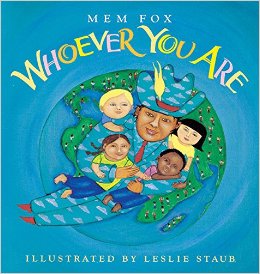
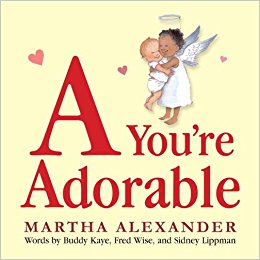
I’ve been trying to stick less to a story-specific theme, more of an overall theme of using one concept book, one fun book, and one book that addresses diversity. This week, we read Shhh! This Book is Sleeping, by Cedric Ramadier; Wherever You Are, by Mem Fox; and A You’re Adorable, by Martha Alexander. The families loved the interactivity of Shhh! This Book is Sleeping. As I read Whoever You Are, there was plenty of opportunity for families to cuddle, and seeing my storytime group of families from all over the world playing not only with their own little ones, but the little ones around them, made my morning. I was amazed at how well A You’re Adorable went over: families repeated each verse after me, bouncing, kissing, and tickling their babies as we went along.


It’s been a lovely month of storytimes, and I’ve come away with an excited new perspective, thanks to Storytime Underground. I’ll be working on toddler and preschooler themes next.


Posted in Early Reader, Preschool Reads

A mirror unites a boy’s homes in The Mirror in Mommy’s House/The Mirror in Daddy’s House

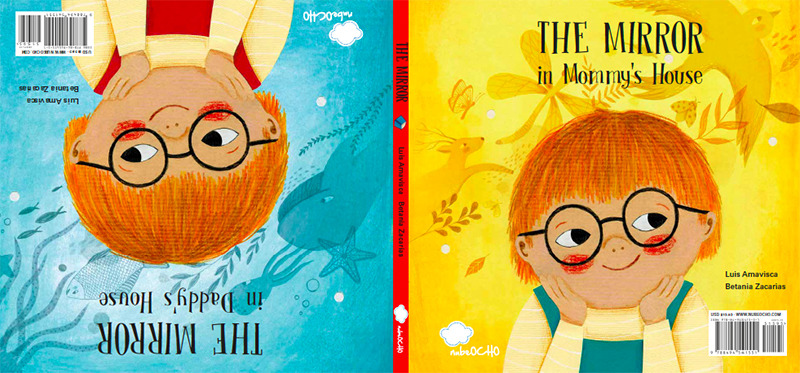
The Mirror in Mommy’s House/The Mirror in Daddy’s House, by Luis Amavisca/Illustrated by Betanía Zacarías, (Apr 2016, nubeOCHO), $15.95, ISBN: 978-84-945415-5-1

Recommended for readers 4-8

A child talks about growing up in a home in the midst of a marital breakup, and how a mirror provided an escape into a wonderful land with no arguing parents. Now that the child lives in two houses, things are much better. Mom and Dad are happier, and so is the child. There are pictures of the entire family at both houses, and a very special mirror at each house; plus, Mom and Dad each share something very special: their child!

We don’t need to talk about the 51% divorce rate to illustrate the need for books like The Mirror. This is a positive book for families going through divorce for a number of reasons: it illustrates the stress on kids living with parents who argue constantly; it’s not singling out either gender – the child can easily be male or female; and the parents care enough about their child to make sure that photos of the entire family – rather than a single parent with the child – have real estate in the child’s room, along with the special mirror that’s become a touchstone. The book is a two-in-one, giving kids a chance to read about each parent’s home and what makes it special. When you finish reading about the mirror in Mommy’s house, just flip it over to read about the mirror at Daddy’s house.

The art appears to be mixed media, with some artwork appearing to be drawn in crayon; it gives the book a comfortable feeling, as if the child created these books himself or herself.

Originally published in Spanish in 2016, nubeOCHO published The Mirror book(s) in English this year and still makes the Spanish language edition available (978-84-945415-6-8). Additional books for families going through divorce to read with young children include Dinosaurs Divorce, by Laurie Krasny Brown and Marc Brown, Nancy Coffelt’s Fred Stays with Me, and Karen Stanton’s Monday, Wednesday, and Every Other Weekend.

Posted in Fiction, Fiction, Historical Fiction, Middle Grade, Realistic Fiction, Tween Reads

Historical middle-grade fiction: Snakes and Stones

Snakes and Stones, by Lisa Fowler, (Nov. 2016, Sky Pony Press), $15.99, ISBN: 978-1-5107-1031-3

Recommended for readers 9-12

The year is 1921, and Chestnut Hill, a 12 year old girl, travels with her father and 7 year-old triplet siblings (also named after nuts) across the American south, putting on medicine shows so her daddy can sell his elixir. Daddy’s a snake oil merchant, and Chestnut is sick and tired of living in a cramped wagon, wearing clothes to rags, and going to bed with a rumbling stomach. She’s mad at Daddy from stealing her and her siblings away from their Mama, who must be out of her mind with grief right now. Even when the Hill family meets up with Abraham, a friend of her father’s, who tells her that there’s a lot Chestnut doesn’t know about her Daddy, she refuses to believe it and decides to take matters into her own hands, setting off a chain of events that will change her and her family.

I was happy to see a middle grade historical fiction piece take place in the early ’20s – it’s an interesting time that hasn’t seen a lot of middle grade storytelling just yet. Lisa Fowler has several strong characters here, most notably, Chestnut, who narrates the story. Her father is a seeming ne’er do well, a con man with a heart of gold, who just doesn’t know how to take care of his family; Abraham, an African-American character, allows for a look at the everyday racism and segregation in the South. Readers may get tired of Chestnut’s firm belief that her father’s the bad guy, especially when there’s clearly more to the story that Abraham knows but won’t discuss. While Abraham is a potentially strong character to highlight the racial issues in the Southern U.S., readers may be put off by the way his speech is written, which can be construed as negative stereotyping rather than striving for historical accuracy.

Overall, it’s a story that means well but gets caught up in melodrama and possibly troubling characterization.


Posted in Realistic Fiction, Teen, Young Adult/New Adult

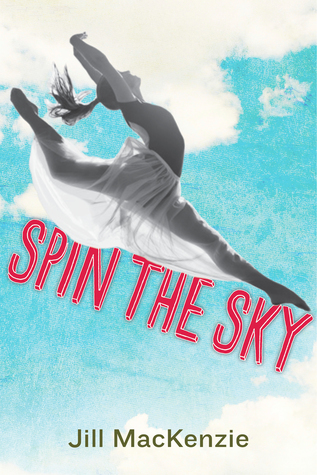
Dance like your life depends on it: Spin the Sky

Spin the Sky, by Jill MacKenzie, (Nov. 2016, Sky Pony Press), $17.99, ISBN: 978-1510706866

Recommended for readers 14+

Eighteen year-old Magnolia Woodson and her older sister, Rose, have to live with the sins of their drug addict mother, who abandoned them after a tragedy a year before. Living in a small clamming town in Oregon, everyone knows who they are and what happened; the only folks who seem to think differently are Magnolia’s childhood best friend, George, and his mother, who’s taken care of the girls whenever their mother fell short. To change the way the town sees Magnolia and her sister, she decides she need to win the reality dance show, Live to Dance. She and George head to Portland to audition, but they make it! Now the real work begins: will the competition be too much for Mags? Will her friendship with George survive the stress of the show, and will she be able to live in the fishbowl that is reality television, especially with a secret she doesn’t want made public?

Spin the Sky has a strong premise that isn’t afraid to tackle some hot-button topics like drug addiction, sexuality, abortion, and miscarriage. Some of your more conservative readers may shy away from this one; steer them toward books like Sophie Flack’s Bunheads, Lorri Hewett’s Dancer, or Sarah Rubin’s Someday Dancer. Magnolia is a tough character to crack: she’s consumed with what other people think of her, and obsesses over winning the competition, seemingly just so that the town will accept her and her sister. She has a complicated love-hate relationship with her mother (understandably), and she has an unrequited crush on George, who she thinks is gay – and is really upset when it seems that isn’t the case. The other contestants all have their own issues that the author briefly touches on throughout the novel.

If you have readers who love reading about dance and are interested in reality television, Spin the Sky is a good backup for your shelves.

Posted in Fantasy, Science Fiction, Teen, Tween Reads, Young Adult/New Adult

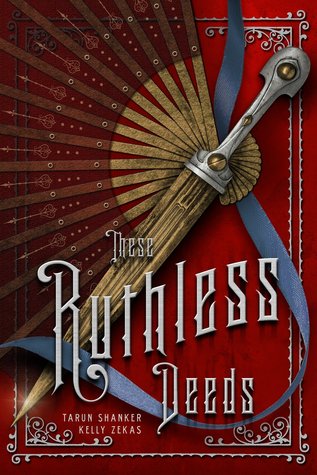
Regency, betrayal, superpowers: These Ruthless Deeds

These Ruthless Deeds (These Vicious Masks #2), by Tarun Shanker and Kelly Zekas, (March 2017, Macmillan), $10.00, ISBN: 9781250127952

Recommended for readers 12+

The sequel to These Vicious Masks (2016) picks up shortly after the first novel leaves off. Evelyn is grieving the loss of her sister and finds herself working with a secret society that promises her they are devoted to protecting and working with Evelyn and her friends: friends with special abilities. She’s reunited with Mr. Kent, and even manages to locate Mr. Braddock. Her reputation is intact, even if she does have to be around the awful Mrs. Atherton, who is somehow involved with the society’s work. Still, Evelyn has a bad feeling about things. She’s going to have to take a deeper look into the society, and what she finds may not sit so well with her, after all.

I loved These Vicious Masks, and was excited for the sequel. While it did take a little bit of reading to get as into the second book as I did the first, it was worth it. If you haven’t picked up These Vicious Masks, I suggest you read it before diving into These Ruthless Deeds – you’ll be at a disadvantage in terms of key characters and situations otherwise. Everything that made book one such a strong read is here: secret organizations, heroes and villains (and you may not always know who is who), intrigue, betrayal, witty banter, and a strong heroine.

Display and booktalk with Alison Goodman’s Lady Helen series (Dark Days Club and Dark Days Pact), and Gail Carriger’s Finishing School series, for readers with a craving for more steampunk.

Posted in Early Reader, Fiction, Preschool Reads

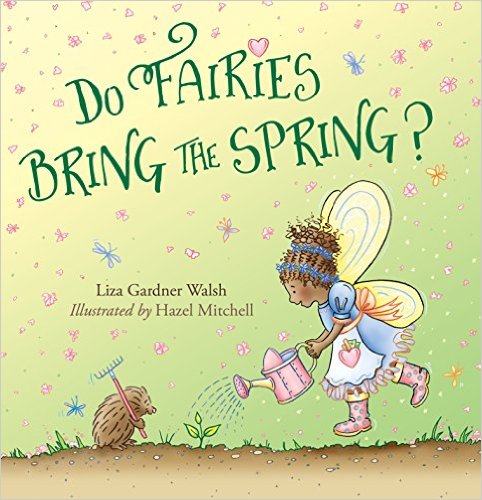
Do Fairies Bring the Spring? Let’s find out!

Do Fairies Bring the Spring?, by Liza Gardner Walsh/Illustrated by Hazel Mitchell, (Feb. 2017, Down East Books), $16.95, ISBN: 978-1-60893-633-5

Recommended for readers 3-7

Do fairies bring the spring? This adorable picture book poses the question while infusing nature with a little bit of magic, as Liza Gardner Walsh’s rhyming text suggests that fairies are behind the scenes, working to bring spring to the world. Suggestions for attracting fairies to your own gardens in the spring, at the end of the book, encourage you to dig into nature with your little ones and take care of your little corner of the world.

Hazel Mitchell’s illustrations of diverse, adorable little fairies and their woodland friends infuse this Spring story with all the charm and wonder that makes a preschool/Kindergartner story a success.

Invite some magic into your life this spring with this sweet springtime story! Little ones will love the soothing rhyme and the adorable pictures. Encourage parents to get outside with their little ones and enjoy nature while respecting it –  no littering, please! This is a great story to read and follow up with a planting activity, whether it’s going out in the yard with your little one, or planting some seeds in recyclable egg cartons and bringing them home to start a container garden. Hand out fairy coloring sheets, or print small fairy pictures out on card stock, let the kids color them in, and mount them on popsicle sticks to give your new  plants extra fairy protection!

Liza Gardner Walsh is a former librarian (whoo hoo!) and has a companion book, Where Do Fairies Go When It Snows? (2015). Her website, Moss & Grove, encourages parents and kids to get outside and embrace nature. See more of illustrator Hazel Mitchell’s work at her website.

Posted in Early Reader, Fiction, Preschool Reads

Duck and Hippo brave the rain together!

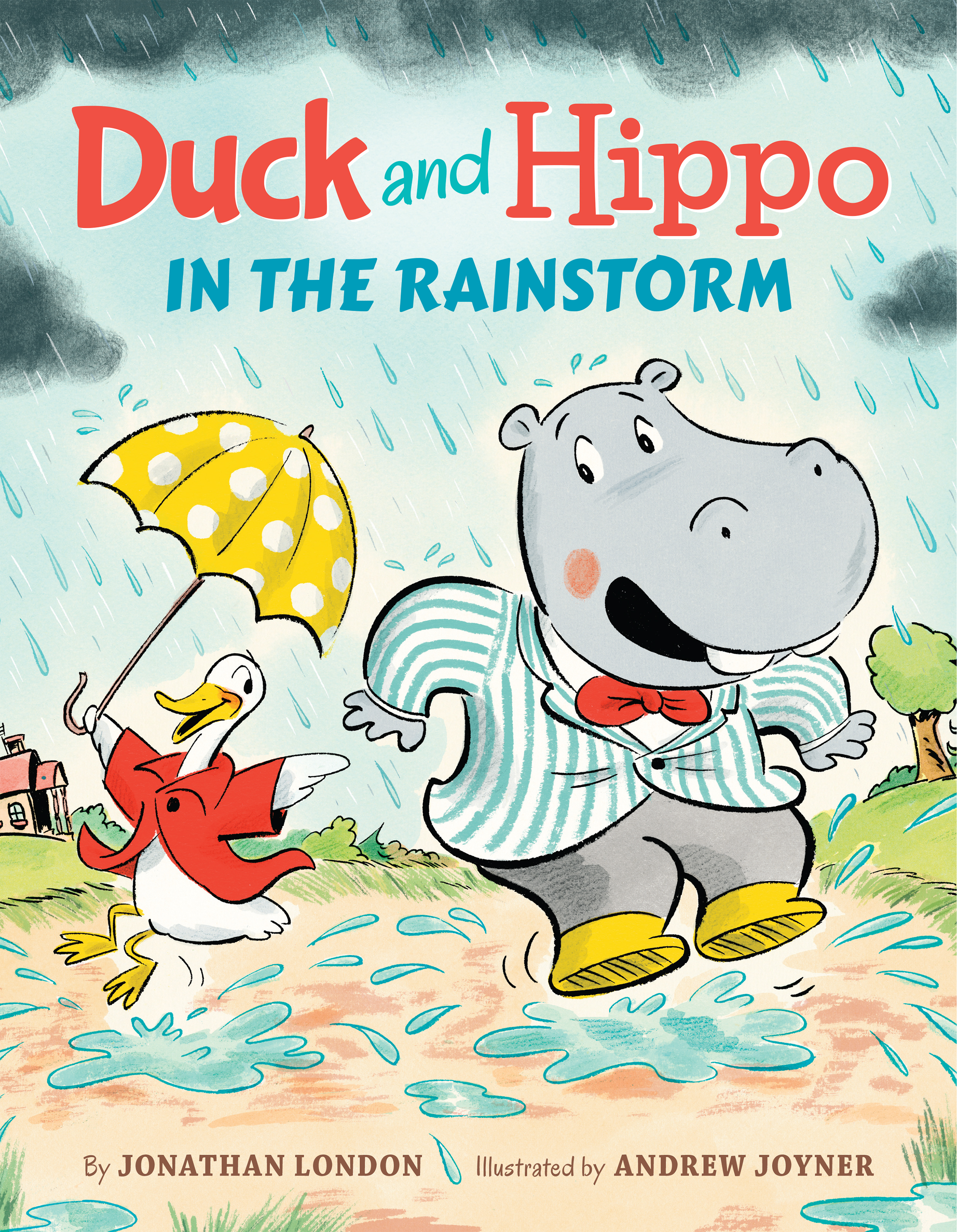
Duck and Hippo In the Rainstorm, by Jonathan London/Illustrated by Andrew Joyner, (March 2017, Two Lions/Amazon), $17.99, ISBN: 978-1-5039-3723-9

Duck and Hippo are the best of friends, and want to go for a walk in the rain. But the umbrella isn’t big enough for them both! Luckily, the two friends find a solution and go off on a rainy day walk, filled with adventures, until a strong gust of wind sends one of them up in the air!

Jonathan London is best known for his Froggy series, most of which end up on my library kids’ summer reading lists every year. Booktalking Duck and Hippo will be a breeze – the author already has a tremendous fanbase. Then, we have Andrew Joyner’s brush and ink illustration, with wash and pencil, then digitally colored; which it makes me happy just looking at it. It’s classic illustration; hearkening to timeless books like Frog and Toad and Danny and the Dinosaur. colors are soothing with bright touches, like Duck’s red jacket and yellow umbrella, which matches Hippo’s yellow rain boots. The definitive outlines make each piece, each character, step off the page. Sound effects are in playful font sizes and colors, swirling along like the water in a creek or coming down with the rain.

This book is a fun read-aloud about friendship and sharing. Read and display with Frog and Toad, James Marshall’s George and Martha, or Sue Gallion’s Pug Meets Pig. Hand out a Duck and Hippo coloring sheet, courtesy of Andrew Joyner’s website – and give your bigger readers Joyner’s How to Draw Duck and Hippo instructions!

About the Author and Illustrator

Jonathan London is the author of more than one hundred children’s books, including the bestselling Froggy series, illustrated by Frank Remkiewicz. Many of his books explore nature, among them Flamingo Sunset, illustrated by Kristina Rodanas, and Little Penguin: The Emperor of Antarctica, illustrated by Julie Olson. He is currently writing a middle-grade series, which started with Desolation Canyon, illustrated by his son Sean London. Jonathan lives in Graton, California. Learn more online at www.jonathan-london.net.

Andrew Joyner is an illustrator, author, and cartoonist based in South Australia. He has illustrated a number of picture books, and he wrote and illustrated a chapter book series about a warthog named Boris. He has also illustrated for newspapers and magazines, including the Wall Street Journal, Reader’s Digest, and Rolling Stone magazine, among others. Learn more online at www.andrewjoyner.com.au.

Enter this Rafflecopter giveaway for a chance to win your own copy of Duck and Hippo in the Rainstorm!

Posted in Early Reader, Fiction, Preschool Reads, Toddler Reads

See the animal mommies, count the baby animals!

Count the Baby Animals, by Guido van Genechten, (March 2017, Clavis Publishing), $17.95, ISBN: 978-1605-37324-9

Recommended for readers 2-5

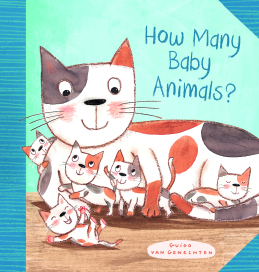
This fun die-cut book shows a pregnant animal mommy; with a flip of the page, she’s surrounded by her babies! Sweet rhyming text throughout invites readers to count each group of animals while offering descriptive details.

This is an adorable book to introduce to toddlers, who can point to and name animals as you read along. Encourage them to make animals sounds for each one to extend the fun. There are oodles of fun animal coloring sheets and activities available online; matching games with moms and babies would be a great choice for older toddlers and early preschoolers. You can pair this with books like P.D. Eastman’s classic, Are You My Mother?, or Nancy Tafuri’s All Kinds of Kisses (one of my personal faves).

Originally published in 2016, this is the English translation of Guido van Genechten’s original Dutch. His artwork is child-friendly, with gentle, cartoony faces and smiles. Endpapers with frolicking baby animals bring the reader right into the fun, and the sturdy paper stock will hold up to exploring little hands, who will love turning the half pages back and forth to see each mommy animal with a round belly, and later, surrounded by her babies.

How Many Baby Animals is a fun addition to toddler bookshelves and would make a fun sibling-to-be gift, too.