Posted in Intermediate, Non-Fiction, Preschool Reads

The Big Question, answered: What Do They Do With All That Poo?

What Do They Do With All That Poo?, by Jane Kurtz/Illustrated by Allison Black, (June 2018, Simon & Schuster), $R17.99, ISBN: 9781481479868

Recommended for readers 4-7

We all know that I’ve got the sense of humor of a -year-old kid, so you know this book is a hit at home and in the library for me. It’s an honest-to-goodness nonfiction book about POO, and what happens to poo once it’s… pooped. This book can be readable in two different ways: there’s a fun, rhyming text about different animals and how they poo, and how poo contributes to science; there’s also more complex text about different animals and their varying gastrointestinal goings-on.

Kids are going to scream at the pictures – the one of the hippo, using its tail to create a “dung shower” to mark its territory, had my living room in an uproar. Kids get to see different scats for different animals, sure, but the big thing here is what happens to it after it’s collected and boxed up: it’s donated to science! Turns out, there’s a lot to do with all that poo: veterinarians and scientists study it; it’s turned into compost, to help vegetable and flower gardens grow (and keep pests away); it’s even recycled and turned into paper!

With bright, big-eyed animals, fun rhyming text, and short, direct nonfiction explanatory text, What Do They Do With All That Poo is a smart STEM/STEAM add to your libraries and bookshelves. Do not miss this one; your inner 5-year-old demands it.

Jane Kurtz was born in Portland, Oregon (where she now lives), but when she was two years old, her parents decided to move to Ethiopia, where she spent most of her childhood. Jane speaks about being an author at schools and conferences – in all but 11 of the United States so far, and such places as Uganda, Nigeria, Kenya, France, Germany, Romania, Russia, Oman, England, Indonesia, Cambodia, the Philippines, and Japan. She helped start Ethiopia Reads, a nonprofit that is planting libraries for children and printing some of the first easy-reader books in local languages in Ethiopia. She is the author of many books for children, including Water Hole Waiting and River Friendly River Wild, winner of the SCBWI Golden Kite Award for picture book text. To learn more, visit her website.

Want to win your own copy of What Do They Do With All That Poo?, courtesy of Beach Lane Books? (U.S. addresses only, please!) Check out this Rafflecopter giveaway!

Posted in Fantasy, mythology, Teen, Young Adult/New Adult

The story of Midas, continued: A Touch of Gold

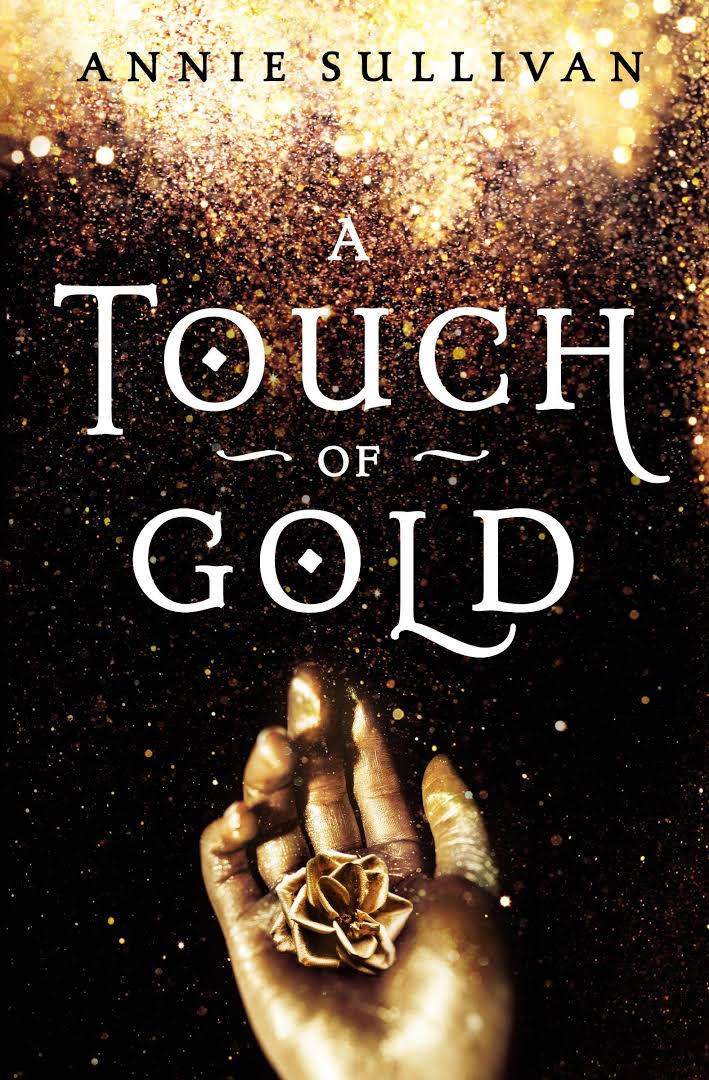
A Touch of Gold, by Annie Sullivan, (Aug. 2018, Blink YA), $17.99, ISBN: 978-0-310-76635-3

Recommended for readers 12+

I mentioned A Touch of Gold in my Argos review last week, as part of my Go Greek! summer reading post. I was still reading it at the time, but I’m all done and dying to talk this one up. Let’s dive in!

We all know the story of King Midas, right? Has the ability to turn anything he touched to gold, which sounds pretty great at first, but try to eat a candy bar, or have a swig of water: see where I’m going? Literally everything he touched turned to gold, which was stressful enough, but when his daughter went to him and transformed into a golden statue, that was it. He begged the god Dionysus to take away the Golden Touch, but gods have a sense of humor – which is where A Touch of Gold begins.

You see, Midas needed to bathe everything he turned to gold in a nearby river. Being a loving dad, he grabbed Kora, his daughter, first. Once he saw she was okay, nothing else mattered. Except to Dionysus, who tends to be a stickler for playing by his rules. Midas didn’t bathe the other objects in the river, so Kora’s skin became gold. Not a statue again; more of a gold sheen, and Midas was condemned to keep the other gold objects nearby, or he’d be weakened to the point of death. Kora, now a teen, has been sheltered within the palace walls for most of her life; her father’s brother, Phaeus, taking on most of the day-to-day crown duties, while Midas grows weaker, needing more time close to his gold, to retain any energy. When someone sneaks in, kills a guard, and steals the gold, Kora must undertake the quest of a lifetime: find the gold and restore her father’s health. Along with her would-be suitor, Aris, and her cousin, Hettie, Kora sets out aboard a ship captained by Aris’ sometime friend, Royce. Kora quickly finds herself up against a superstitious and fearful crew, a bloodthirsty pirate who collects skulls, and someone working from within to bring harm to Kora and her family.

A Touch of Gold moves along at a good pace, building on an established story and adding new adventure, romance, and intrigue. Narrated by Kora, readers meet a heroine who is strong but vulnerable, smart but unsure, who undertakes her own heroine’s quest to grow into herself. She feels like an outcast; she’s treated like an outcast, until she believes in herself: a relatable character with a nice growth path. Readers may or may not see the villains coming, but A Touch of Gold is a good summer read that your Percy Jackson fans who are ready to take on something more will enjoy.

Posted in Intermediate, Middle Grade, Middle School, Non-Fiction, Non-fiction, Non-Fiction, Tween Reads

BIG Summer Nonfiction Reads Roundup!

From sharks, to space, to stories of survival in the wild, I’ve got books for all sorts of nonfiction tastes! Let’s start with the oogie stuff and go from there.

They Lost Their Heads! What Happened to Washington’s Teeth, Einstein’s Brain, and Other Famous Body Parts, by Carlyn Beccia, (Apr. 2018, Bloomsbury), $18.99, ISBN: 9780802737458

Recommended for readers 10+

If you have readers who loved Georgia Bragg and Kevin O’Malley’s books, How They Croaked: Awful Ends of the Awfully Famous, and How They Choked: Failures, Flops, and Flaws of the Awfully Famous, this is a home run! Learn what happened to the famous body parts of 17 famous folks, and pick up some knowledge about other body parts and how they influenced science medicine. If you’ve ever ever wanted to know what happened to Thomas Edison’s last breath or Van Gogh’s missing ear, this is the place to go. You also learn cool stuff like what rots first after you die (psst… it’s the intestines). Loaded with black and white drawings, funny footnotes, sources, an index, and a bibliography. This one’s a hit for upper elementary readers, all the way through high school. They Lost Their Heads! has a starred review from Booklist.

StarTalk with Neil DeGrasse Tyson (Young Readers Edition), by National Geographic, (March 2018, National Geographic), $17.99, ISBN: 9781426330872

Recommended for readers 10+

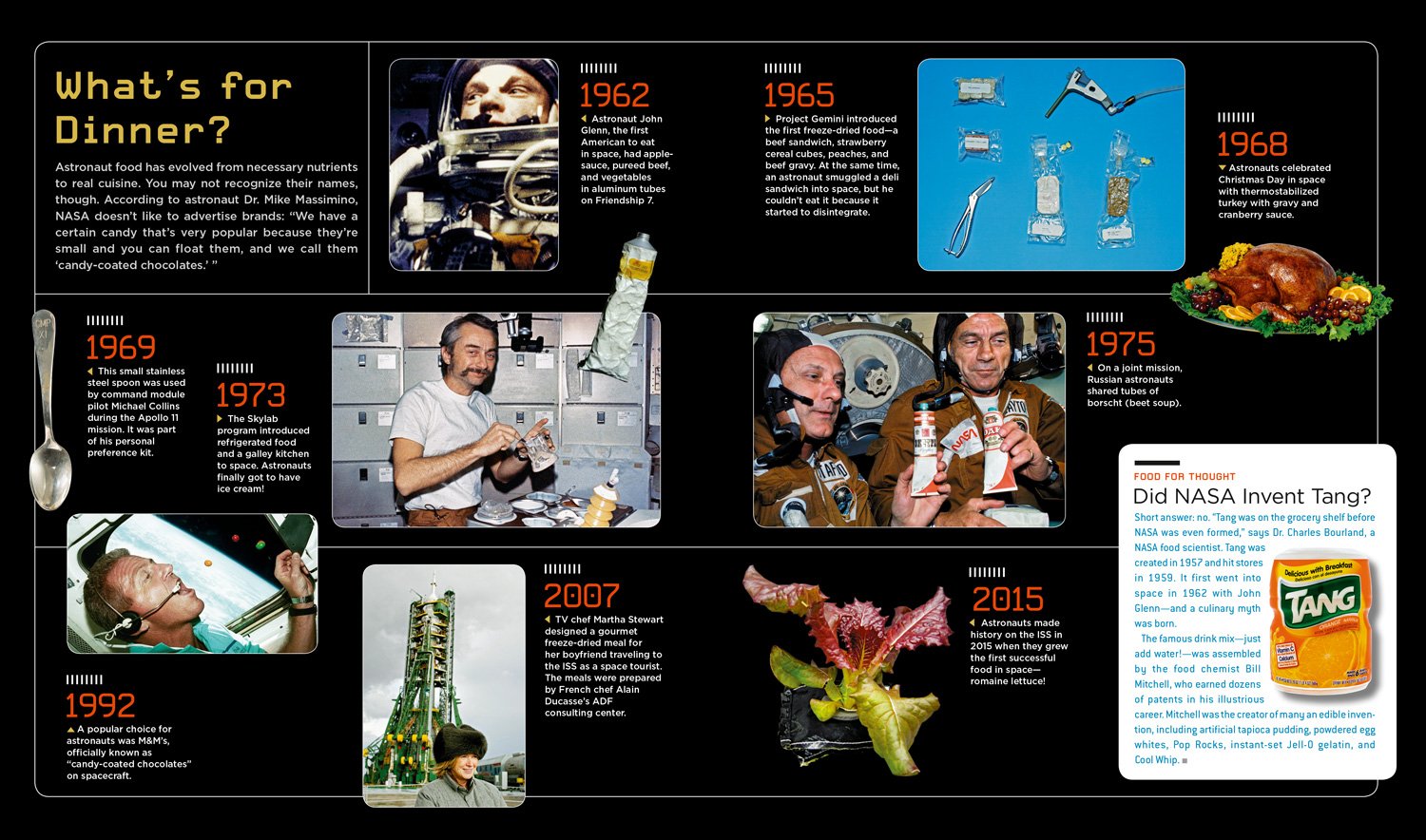
I LOVE Neil DeGrasse Tyson and evangelize his StarTalk Radio podcast any chance I get. (Seriously, it’s great stuff.) NatGeo’s Young Readers edition of the StarTalk book is must-booktalk summer reading. Get your Summer Reading budget and buy some astronaut ice cream; while you and the kids feast, read the section on why you can’t get a pulled pork sandwich in space; find out what the Vomit Comet is; and read mini-bios on scientists like Carl Sagan. Not so much with the food? There are also sections on zombies and superheroes. Debate the eternal question: Could the Death Star really blow up a planet? There’s so much to discover in this book that every kid is darn near guaranteed to find something to interest him or her. (Psst… get an extra copy for yourself. You’ll thank me.)


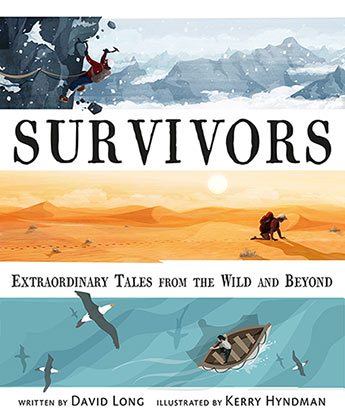
Survivors: Extraordinary tales from the Wild and Beyond, by David Long/Illustrated by Kerry Hyndman, (Sept. 2017, Faber & Faber), $19.95, ISBN: 9780571316014

Recommended for readers 9-13

Do you know fans of Lauren Tarshis’ I Survived series? I’ve never been able to keep those books on the shelves, no matter which library I’ve been at. Middle graders go berserk for that series, and they’ll LOVE this oversized, illustrated anthology of true survival tales. There are 23 stories in here; the most famous being explorer Ernest Shackleton, who saved his crew when a 1914 Antarctic expedition put their lives in danger. There’s also the story of Hugh Glass, a “fur trapper and adventurer” who made the critical error of surprising a mother bear and her cubs by the Missouri River in 1823, or Mauro Prosperi, a runner competing in the 1994 Marathon of the Sands through the Sahara Desert, found himself in the middle of a sandstorm. Not crazy enough for your readers? There’s also a Hollywood pilot who crashed INSIDE a Hawaiian volcano in 1992. The stories are fast-paced, beautifully illustrated in color, and are perfect for adventure fans. Best part? All the stories are TRUE.


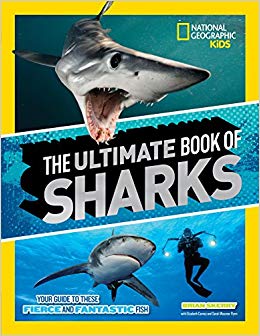
The Ultimate Book of Sharks, by Brian Skerry, Elizabeth Carney, & Sarah Wassner Flynn, (May 2018, National Geographic Kids), $19.99, ISBN: 9781426330711

Recommended for readers 7-13

Kids love sharks. This is a fact. The Ultimate Book of Sharks has all the info and pictures your shark-loving fans crave, just in time for Shark Week, which kicks off on July 22 (get your printables and programs lined up – I’ll do a separate post about Shark Week as it gets closer). The NatGeo folks bust myths about sharks, give us a look at shark anatomy, and – as always – provide loads of information about conservation and preservation, and how we can all help keep sharks, and our waters, safe and clean. This volume is chock full of fast facts and lists, with Up-Close Encounters, where marine wildlife photojournalist and author Brian Skerry shares some of his stories with readers. There’s an index at the end. This volume is an absolute must-add to your science and nature collections.


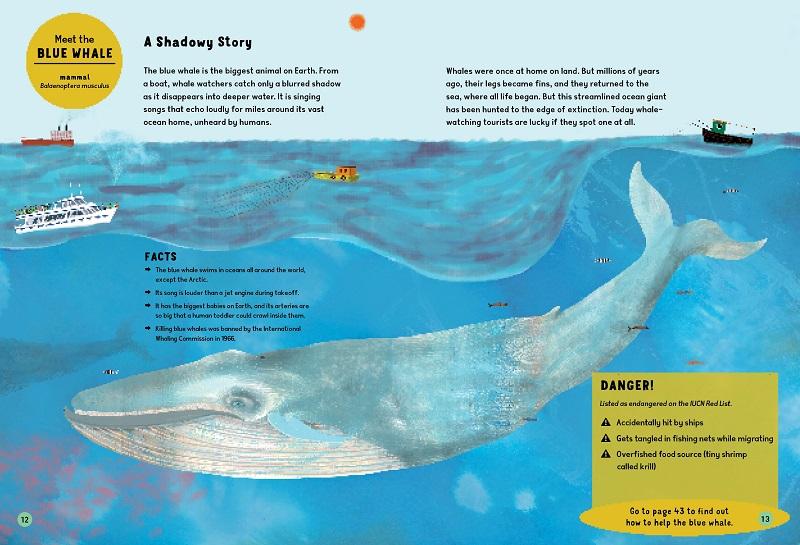
Red Alert! Endangered Animals Around the World, by Catherin Barr/Illustrated by Anne Wilson, (July 2018, Charlesbridge), $17.99, ISBN: 9781580898393

Recommended for readers 7-11

This is such a fun book. Think of a Choose Your Own Adventure about endangered animals, and you’ve got Red Alert! Red Alert! profiles 15 animals on the International Union for Conservation of Nature’s (IUCN) list. A beginning note explains the organization’s “Red List”: a list of endangered plants, animals, and fungi, and lists some of the categories mentioned in the book. Colorful endpapers start the fun: the first, a map of the world, with the 15 profiled animals drawn into their world regions; final endpapers highlight a plethora of endangered animals. From here, readers can pick a place to explore: deserts, forests, mountains, grasslands, rivers, or oceans; pick a creature from each of these regions, and go to its page to read further. You can also read the book straight through. Spreads include the animals’ scientific names, facts, endangered category, and factors contributing to the endangerment of the species. A section at the end provides resources for more information on taking conservation action. A solid introduction to environmental action for younger readers.

 

National Geographic Kids Almanac (2019 Edition), (May 2018, National Geographic Kids), $14.99, ISBN: 9781426330131

Recommended for readers 8-13

Another guaranteed must-have from NatGeo Kids, this latest edition of their Kids Almanac shows readers a baby animal “tweet-off” between several zoos and aquariums (it’s from 2017, but who doesn’t want to revisit that simpler, lovelier time?), talks about updates in robotics and technology, dwarf planets, and has a Special Gross Edition of their Just Joking feature. Facts, quizzes, updated maps and stats, and homework help ideas all in one volume? This is one desk reference every kid should have – put one on your shelves, and keep one in your reference area, to be on the safe side.


How’s that for a start? Next time a kid comes in, stressed about needing a nonfiction book, consider yourself ready.

Posted in Fiction, Historical Fiction, Teen, Young Adult/New Adult

The Unbinding of Mary Reade

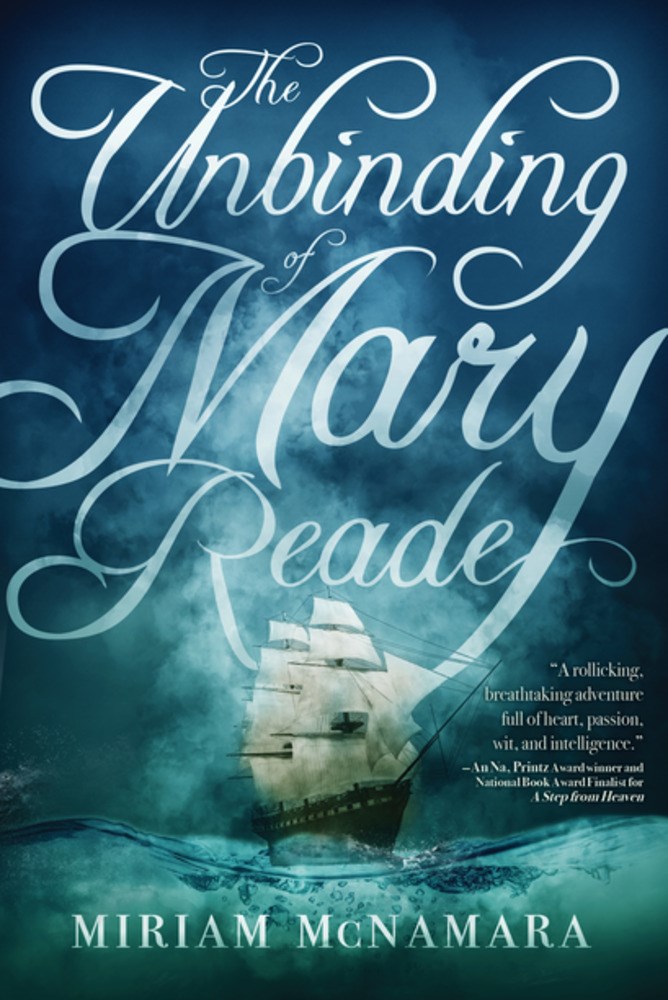
The Unbinding of Mary Reade, by Miriam McNamara, (June 2018, Sky Pony Press), $16.99, ISBN: 9781510727052

Recommended for readers 14+

Raised as a boy to take the place of her dead brother, Mary Reade spent her formative years as Mark, mainly to get her drunken mother money from her wealthy grandmother, who would never name a female heir. Eventually, Mary took to the high seas, where her life depended on passing as male. She joined pirate Calico Jack Rackham and Anne Bonny after they raided a merchant ship she sailed with, finding herself fascinated with the fiery redheaded Bonny, who wore dresses and wielded weapons with pride and bravado.

This could have been so much more. I found the nonbinary, bisexual Mary Reade storyline brilliant, capturing the sheer terror of living in a male-dominated, homophobic society. Mary is constantly afraid for her life because of who she is, and the men around her shove their hands down her trousers and pull up her shirt, seemingly at will, to confirm rumors. She’s powerless to say or do anything, because in this society, different equals death, and it’s always over her head. She finds relief in living as a male, yet feels uncomfortable being gendered at all – despite the fact that the novel always refers to Reade as “she”. Anne is a study in frustration, appearing as a tragic, yet scheming, woman who attaches herself to any male – or male figure – that will help her navigate 18th Century society. Is she bisexual, or is she just using her sex to gain favor? There’s a lot of slow burn relationship work here between Mary and her childhood love, Nat, and some tumultuous relationship beginnings with Anne Bonny that never quite gain footing. I wish the book concentrated more on the two pirates’ adventures together, and that Anne emerged as a stronger female character. Mary’s gender confusion and self-doubt may resonate with nonbinary and trans readers, and engender empathy in all readers. It’s an add to consider for historical fiction and LGBTQ collections.


Posted in picture books, Preschool Reads

Someone New shows students welcoming new friends

Someone New, by Anne Sibley O’Brien, (July 2018, Charlesbridge), $16.99, ISBN: 9781580898317

Recommended for readers 4+

I’m New Here (2015) explored immigration from the points of view of three young newcomers: Maria, Jin, and Fatima. Someone New now flips the dialogue and shows us how new classmates perceive – and eventually befriend – these new kids in town. At first, Maria, Jin, and Fatima are shy, a bit withdrawn, and their classmates don’t know how to work with that. Understandable; these are kids we’re dealing with. Strong and honest statements like, “I feel uncomfortable”; “I don’t know what to do”; and “I can’t figure out to help” give kids words to put to the new feelings they may experience when meeting kids they don’t know.

Since kids are so much smarter than we are, though, they figure it out quickly: Jesse, a blonde white boy, invites Maria to play soccer with his group and discovers that she’s really good! Jason, a dark-skinned boy, can’t read what Jin writes, but smiles, prompting Jin to smile back; eventually, Jin teaches Jason how to write his name in Korean – it’s like a secret code! – and they draw comics together. Emma, a blonde white girl, draws a picture of her classmate, Fatima, and her together, giving Fatima the comfort and safety she needs to open up to Emma about her family. Each of these new children have things to share; they just needed the safety of that first effort. As Jason learns, when Jin smiles at him, “Maybe a smile is like a superpower.” The watercolor and digital illustrations stand out against the plain white space to make these characters stand out.

Someone New tells its story in brief, eloquent sentences with word balloons that allow characters to communicate in their own words. It is a book that needs to be on every shelf in every library and school. You’ll notice I recommend this book for ages 4+; I think it’s a book that all adults should be reading right now. Pick up the award-winning I’m New Here and make sure you tell these stories to anyone within earshot. Someone New has a starred review from Kirkus.

Posted in Intermediate, Middle Grade, Non-fiction, Non-Fiction

Bookjoy, Wordjoy, Reading Joy!

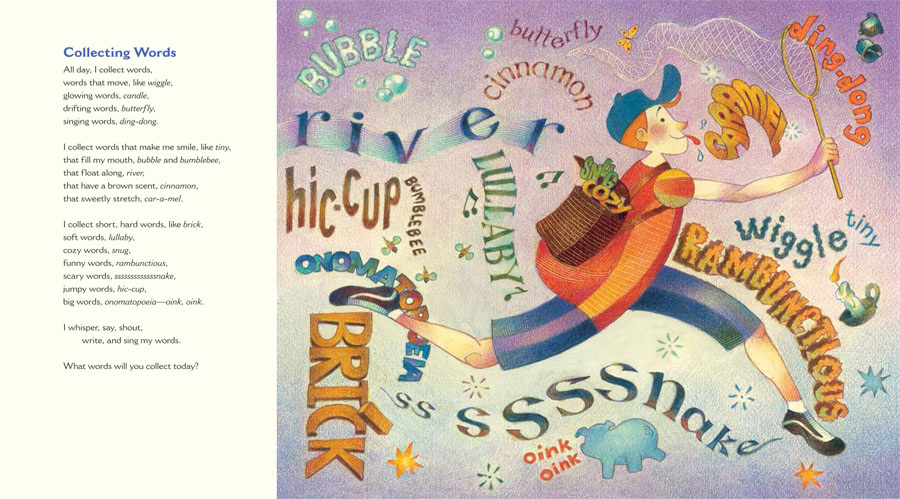
Bookjoy, Wordjoy, by Pat Mora/Illustrated by Raúl Colón, (May 2018, Lee & Low), $17.95, ISBN: 9781620142868

Recommended for readers 5-9

Fans of words and language will enjoy this book of poems by award-winning author and poet Pat Mora, beautifully illustrated by award-winning children’s book artist Raúl Colón. Each spread presents vibrant, colorful artwork with accompanying wordplay celebrating books, words, and the fun of playing with language; English and Spanish words come together like old friends; or, as Mora would have it, “toast and jelly/o queso y tortillas”. Most of the poems flow in free verse, and every selection is upbeat and loaded with a sense of play. Artist Raúl Colón’s images have a lovely Mexican influence, with bright colors coming together and communicating in rich visuals.

This is a great jumping-off point for introducing younger readers and writers to poetry, particularly free verse poetry, which demands less rigor and allows more freedom and imagination. Give kids visual points and ask them to think up their own poems, or flip the tables and introduce them to mural art by taping some butcher paper (or the blank side of an old roll of wrapping paper) across a wall, a table, or another long, flat surface. Let them go wild, and then ask them to talk about what they see. You’ll be amazed at a kid’s natural poetry.

Posted in Fantasy, Fiction, Graphic Novels, Intermediate, Middle Grade, Teen, Tween Reads

Graphic Novels coming your way in July

Yeah, you’ve got the summer reading lists (which, thank you teachers, have been getting better!), but you have to make time for pleasure reading, too! Check out some of the cool graphic novels coming out in July – perfect for sitting in the shade (or the sun, just wear your SPF) and enjoying the day.

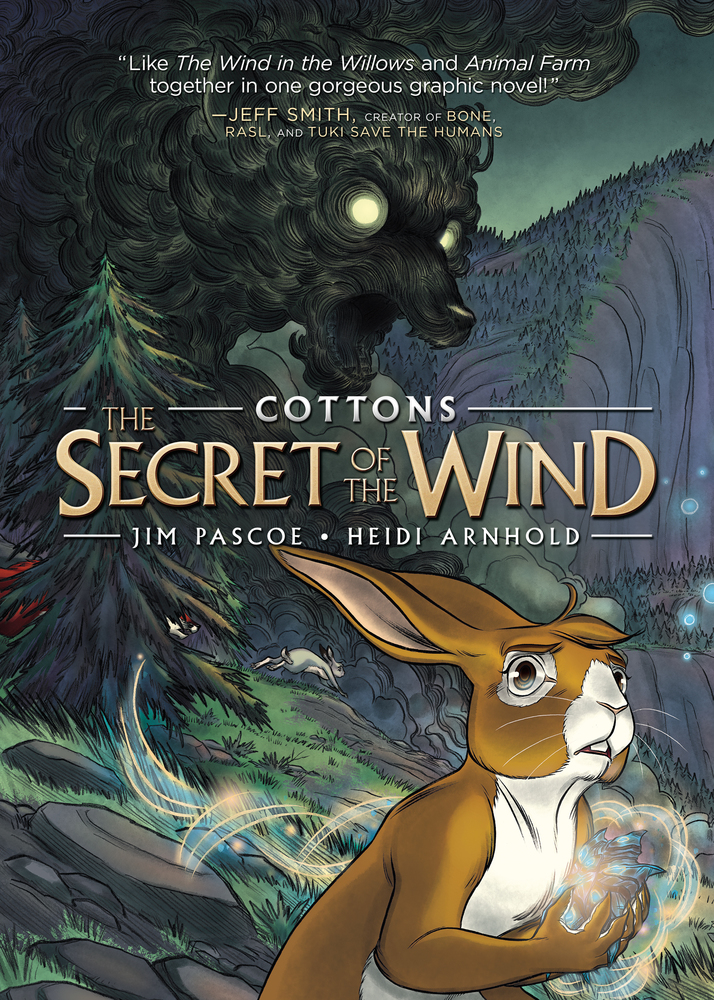
Cottons: The Secret of the Wind, by Jim Pascoe/Illustrated by Heidi Arnhold, (July 2018, First Second), $19.99, ISBN: 9781250157447

Recommended for readers 10-14

Watership Down was one of those novels that changed my life when I was a kid. I first read it at about 9, after seeing the animated movie a year before, and it just blew my mind with its beautiful, yet brutal, story. I’ve returned to the book and movie several times throughout the years, and it remains one of my favorite books. Reading this first story in Jim Pascoe and Heidi Arnhold’s new graphic novel series, Cottons: The Secret of the Wind, reminds me of Watership Down, taking place in a more magical world.

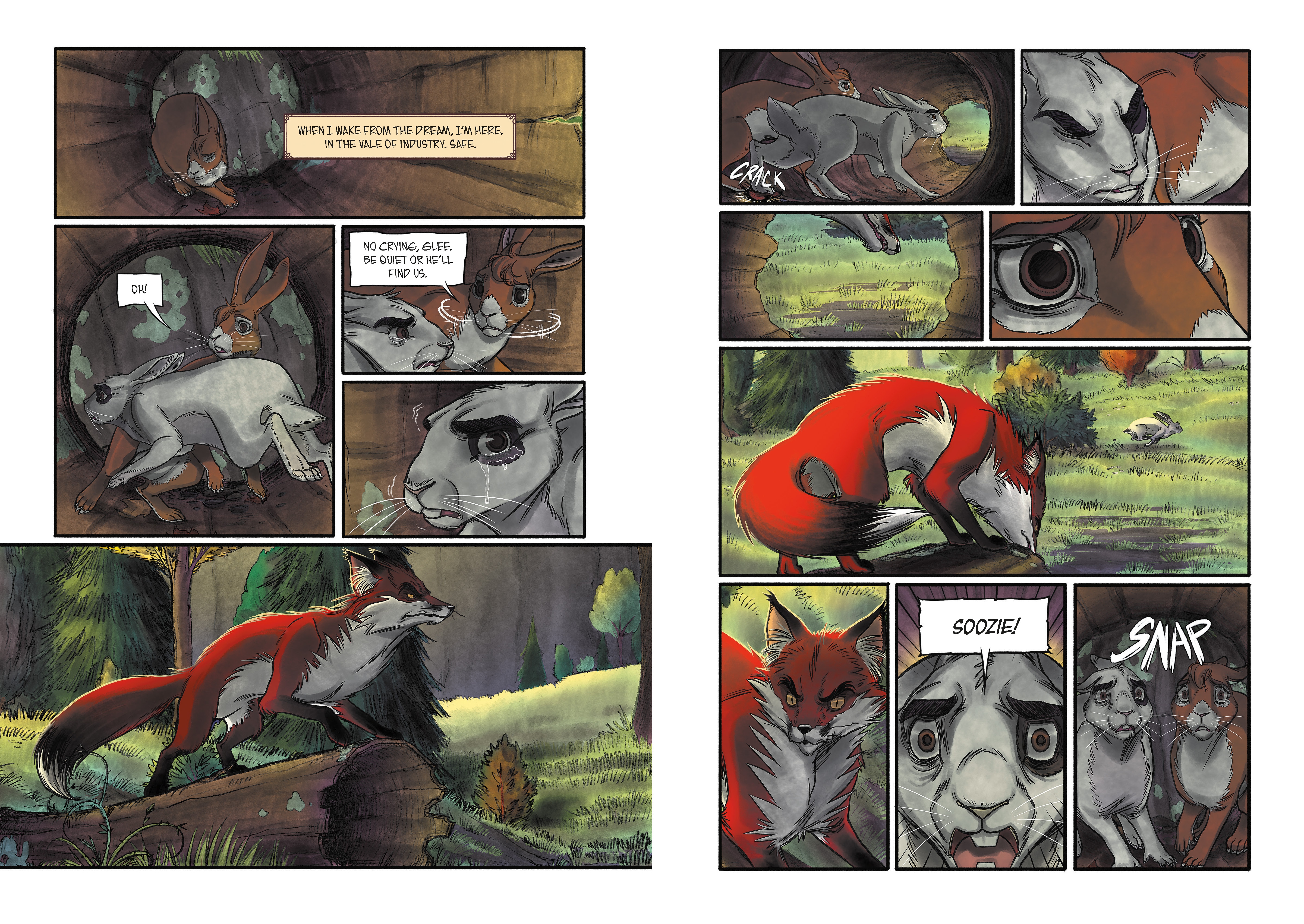
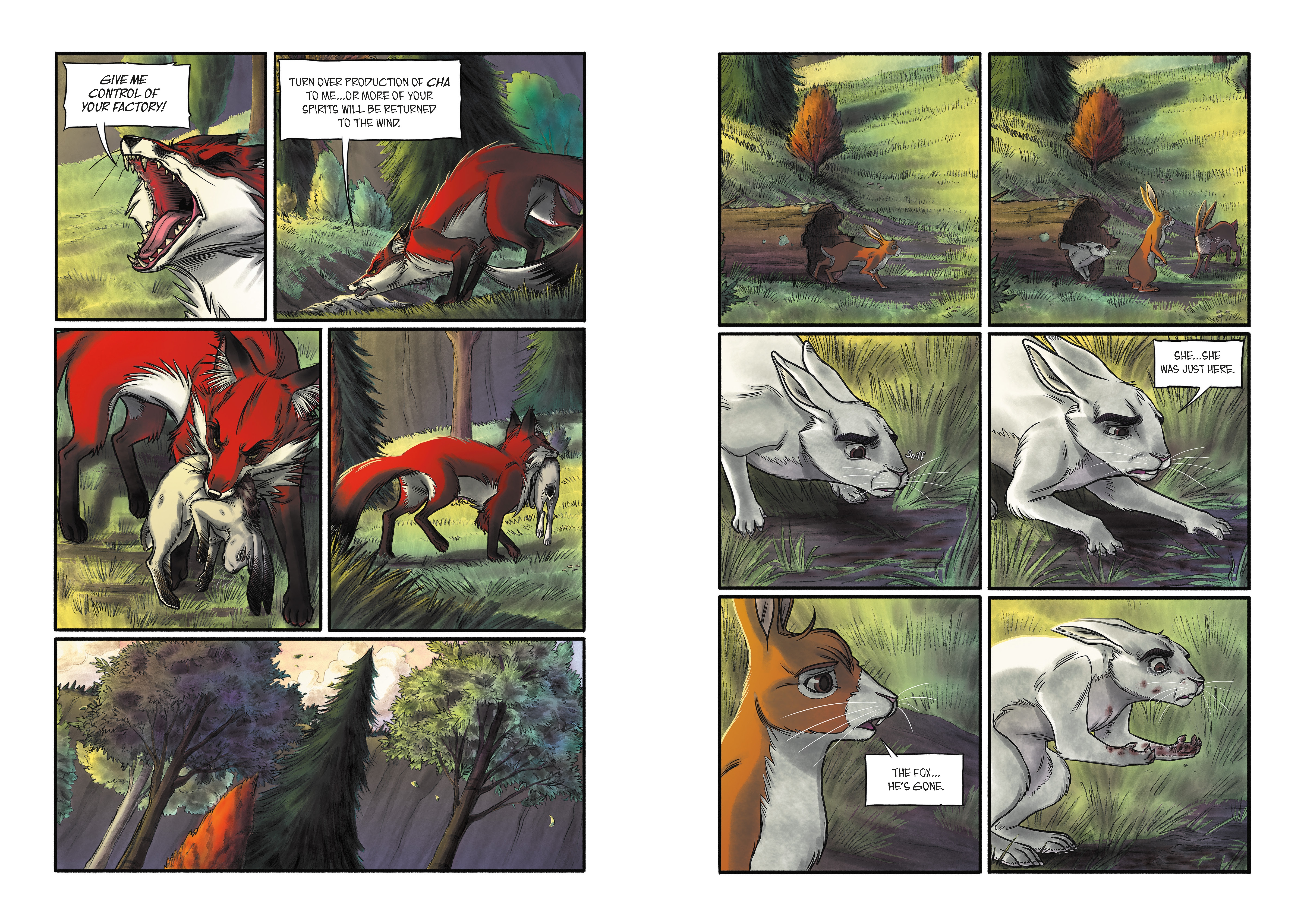
We meet Bridgebelle, a rabbit working in the carrot factory by day, caring for her sick aunt by night. She’s always on the watch for the cruel foxes who prey on the rabbits

To her neighbors in the Vale of Industry, Bridgebelle is an ordinary rabbit. All day long, she toils at the carrot factory. After a hard day, she returns home to care for her ailing auntie. Bridgebelle also has a secret talent: she uses cha, the fuel that powers the rabbits’ world, to create magical artwork called thokchas. Bridgebelle must keep her magic secret, lest other rabbits in power try to use her and her power to create weapons; she also has to beware of the cruel foxes who hunt her kind.

There is a lot of storytelling here that makes the story hard to follow at times, but stick with it: it’s worth the journey. Heidi Arnhold’s beautiful artwork blends realistic animal art with fantasy and magic. Jim Pascoe sets a firm foundation to his universe here, and introduces several plots that will power readers through this new series. There is some violence – the foxes aren’t known for their mercy – so I’d recommend this one for middle grade and up. This is a nice companion to the Longburrow novels by Kieran Larwood and David Wyatt (the second book is due out in August!), for fans of animal fantasy, particularly starring rabbits.

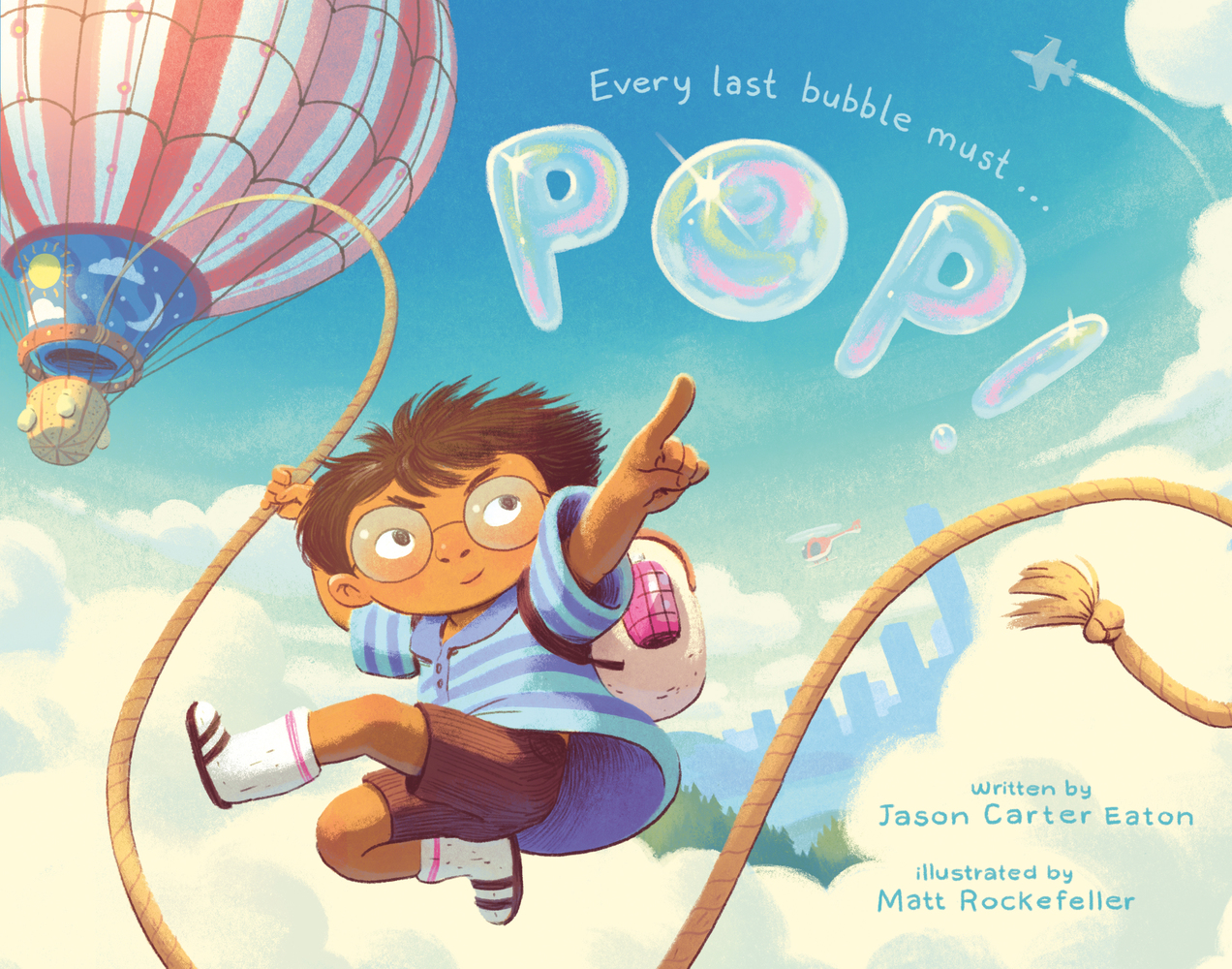
Pop!, by Jason Carter Eaton/Illustrated by Matt Rockefeller, (July 2018, First Second), $17.99, ISBN: 9781626725034

Recommended for readers 4-8
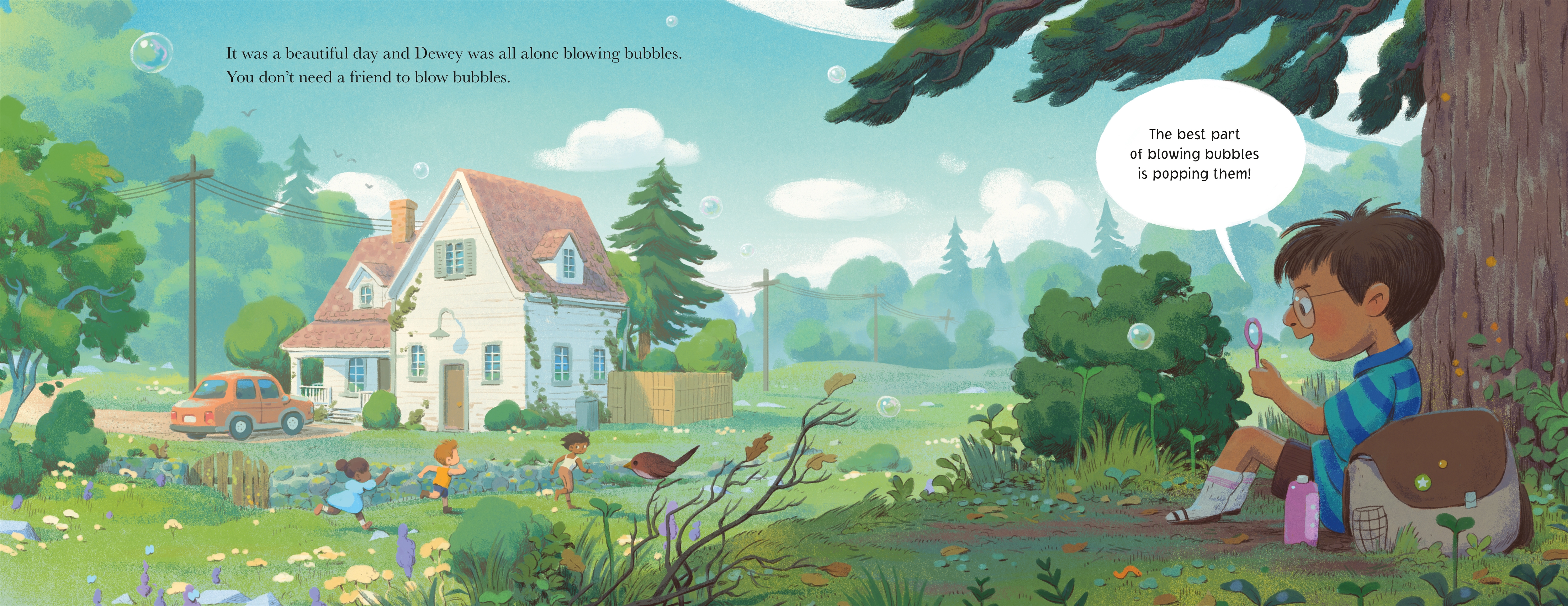
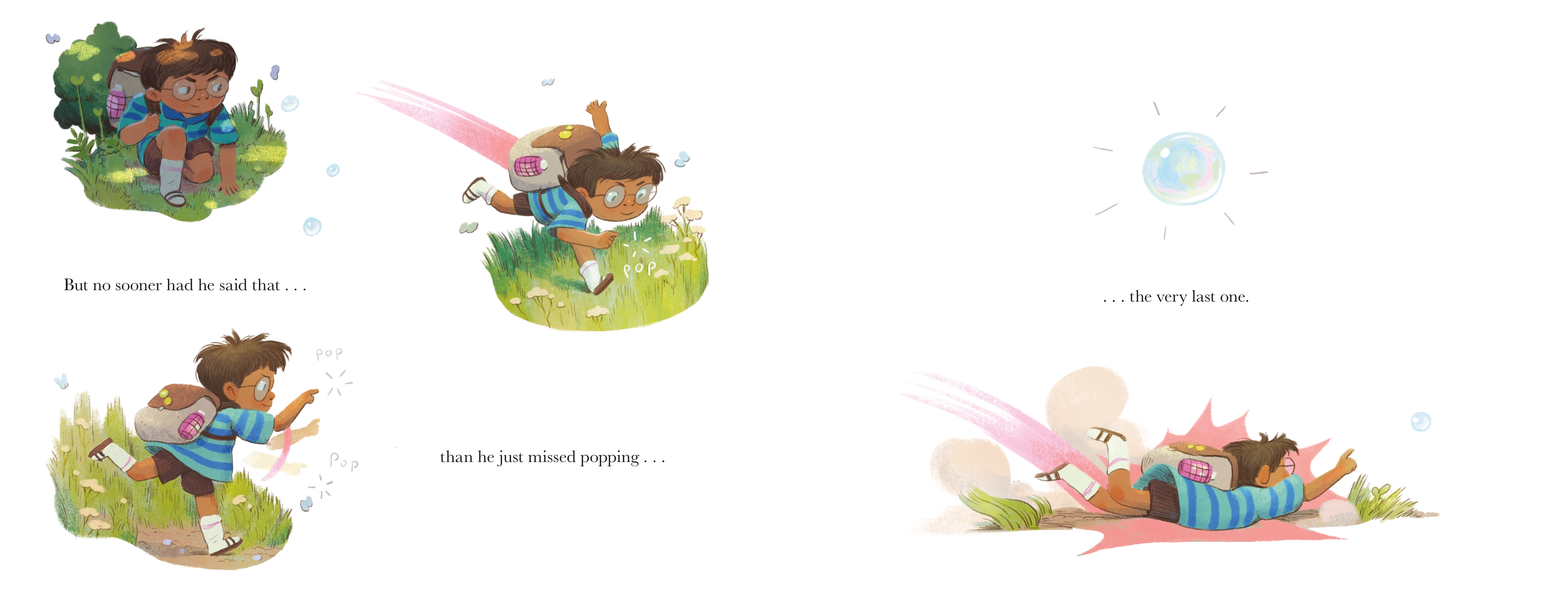
A young boy sits, relaxed, blowing bubbles on a sunny day. His favorite part about blowing bubbles is popping them – naturally! – but one bubble has other plans! The bubble takes Dewey – yes, that’s his name – on a quest that will take him to new (literal) heights via trampoline, jungle gym, even a moon shuttle. Because, like the cover says, “Every last bubble must… POP!”

This is perfect fun for a summer read. If you’re outside, break out the bubbles and let the kiddos pop them! If you’re inside, maybe just hand some out (I worry about slippery floors, but if it’s not an issue for you, go for it). The semi-realistic art gives way to shiny flights of fancy; the bubble’s sheen seems to shine right off the page. The text is simple, easy to read, and great for newly confident readers. Kids and grownups alike will enjoy the simple joy of a little boy and his quest to pop the bubble.

Geeky F@b 5: It’s Not Rocket Science! (Geeky F@b 5 #1), by Lucy & Liz Lareau/Illustrated by Ryan Jampole, (July 2018, Papercutz), $12.99, ISBN: 978-1545801222

Recommended for readers 7-11

Papercutz has another fun, original graphic novel for intermediate readers; this time, they’re going STEM with the Geeky F@b 5: 5 girls who love science and are using their skills to make Amelia Earhart Elementary School better. Lucy, a fourth grader, and her older sister, Marina, a sixth grader, have just moved to the area and are ready to start school. Lucy, who loves the environment and animals, gels with her classmates right away: AJ, who wants to be an engineer like her dad; Sofia, a glitter girl who loves coding and making apps; and Zara, forever on her headphones, and a math whiz. Lucy gets hurt in the school’s outdated playground that first day, and the principal and nurse shut the playground down: but the girls have plans! Together with their teacher, they come up with a great idea: put together a series of fundraisers to get the money to rebuild the playground! Every one of the girls has a job to do; now, if they could just get the bullying older kids on their side, things would be perfect.

Geeky F@b is the first in a new STEM-focused graphic novel series form Papercutz; Volume 2 is due in December. The book is easy and fun to read, with a reasonable plot and goal that can empower readers to be forces for positive change in their own communities. The characters are diverse and relatable; I enjoyed spending some time with them and am pretty sure they’ll be popular reading at my library. This would pair nicely with Bob Pflugfelder and Steve Hockensmith‘s Nick and Tesla series (novels, not graphic) from Quirk, the Girls Who Code chapter book series, and the Howtoons graphic novels. Fun for summer!

Posted in Intermediate, Non-Fiction, picture books

Happy Pride! Pride: The Story of Harvey Milk and the Rainbow Flag

Pride: The Story of Harvey Milk and the Rainbow Flag, by Rob Sanders/Illustrated by Steven Salerno, (Apr. 2018, Random House), $17.99, ISBN: 9780399555312

Recommended for readers 5-8

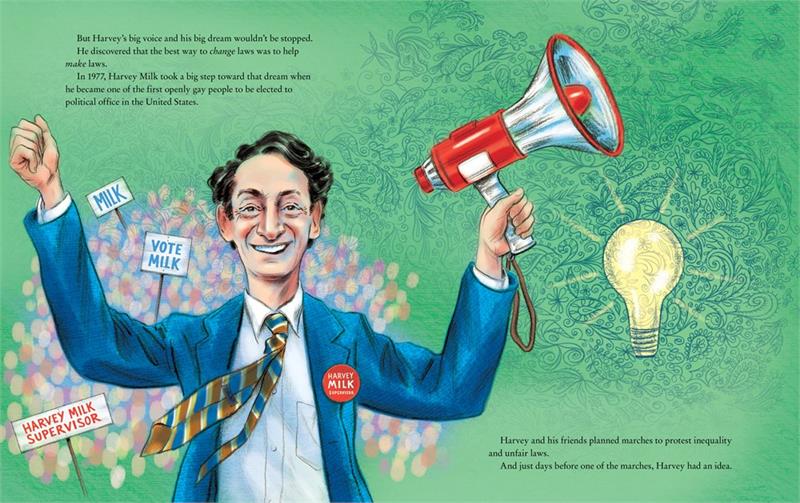
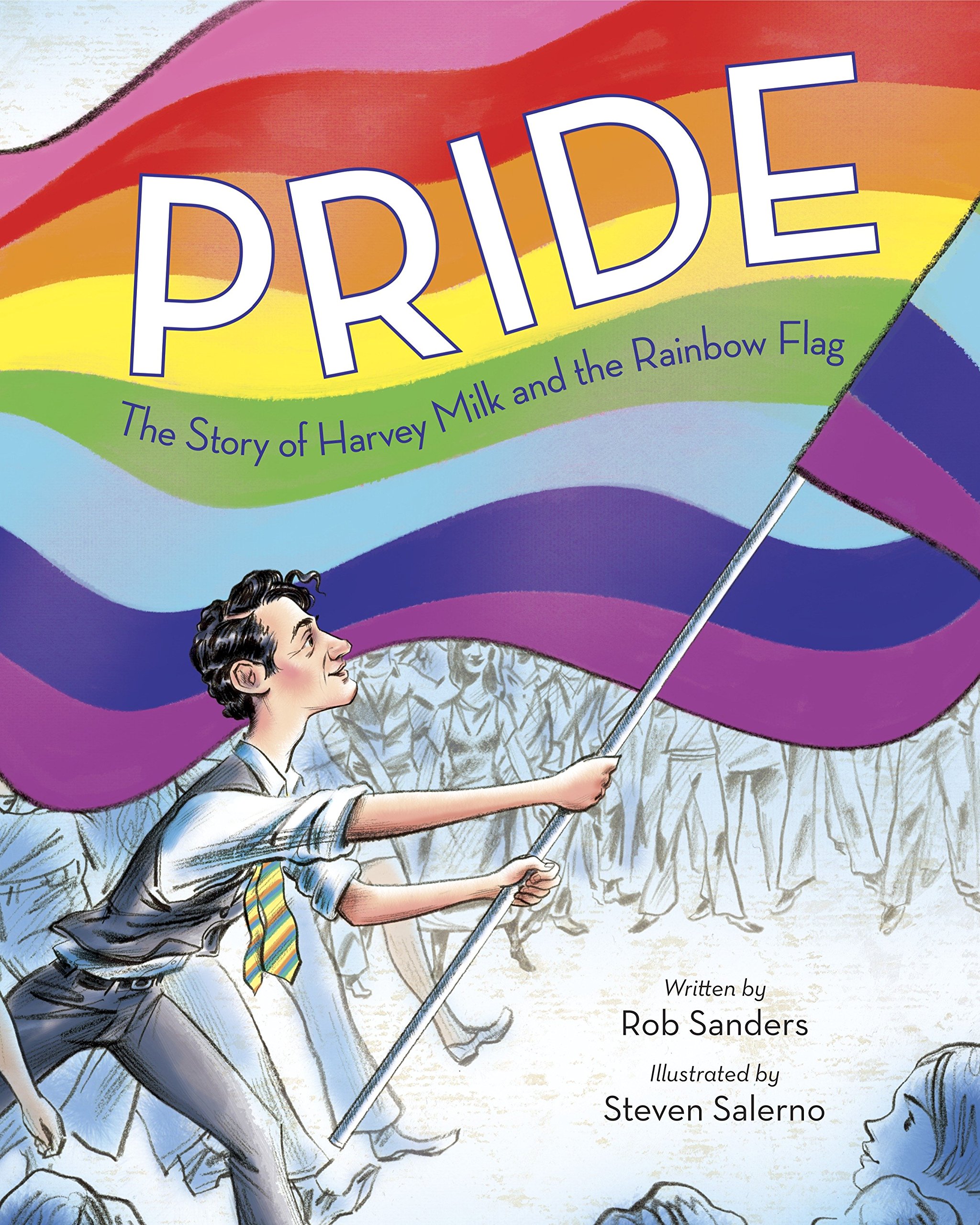
The story of Harvey Milk, gay rights activist and the man behind the rainbow flag, gets to shine in this picture book biography. Written in short, readable sentences with quotes from Harvey Milk throughout, this is an inspirational story about a movement propelled by love. That’s it. Love, and the right to love, is at the heart of the gay rights movement, and while Harvey Milk dreamed of a world where we could all love whoever we choose, he also put that dream into action by speaking out, becoming involved in politics to help change laws, and finally, to rally the world behind a flag that is beautiful and bright and sends a message that reverberates to this day.

Pride is about the creation of the rainbow flag, and how the movement is still strong, even after Harvey Milk’s assassination. He shared his pride with the world, and gave us an icon.  In 2015, the day that the United States Supreme Court ruled in favor of gay marraige, the White House was awash in the colors of the flag, and you can find that flag in cities and countries all over the world: New York; Chicago; London; Singapore; Turkey; Russia. Biographical notes on Harvey Milk and Gilbert Baker, who actually designed the flag, timelines for both Harvey Milk’s life and the rainbow flag, and further research resources are available at the end of the book, as are photos of Harvey Milk, the Rainbow White House, and gay pride parades.

This is a strong picture book biography that speaks respectfully to readers and provides solid information on the gay rights movement, Harvey Milk’s role in it, and the origin of the iconic rainbow flag. It’s a must-have for picture book biography collections. Pride: The Story of Harvey Milk and the Rainbow Flag has a starred review from Shelf Awareness and rave reviews from School Library Journal, Out.com, Kirkus, and Gay Times magazine, among others.

Posted in Animal Fiction, Fantasy, Fiction, Middle Grade, mythology, Teen, Tween Reads

Go Greek this Summer!

Ready to move on from Percy Jackson? (Just kidding, you’re never ready to move on from Percy Jackson.) I’ve got a new book for you:

Argos, by Ralph Hardy, (March 2018, Harper) $6.99, ISBN: 9780062396792
Recommended for readers 9-12

Set in the world of the Greek classic, The Odyssey, by Homer, Argos tells the story of Odysseus’s 20-year trip home after the Trojan War, through the eyes of his beloved dog, who waited for him. Argos is a strong, loyal dog who protects his master’s home and family and tells readers all about his beloved Odysseus, the awful suitors who pursue Odysseus’ wife, Penelope, night after night, and Telemachos, Odysseus’ young son, who grows to manhood throughout the story.

Narrated from Argos’ point of view, we get the full story of The Odyssey through reports Argos gleans from animals – primarily birds – who have encountered the hero and his crew on their ill-fated journey home. We also walk with Argos as he hunts those who would do his family ill – wolves and men alike. He has his own fame on the island Ithaka, too: he’s known as the Boar Slayer after being found as the sole surviving pup in his litter, gnawing on the body of a dead boar who slaughtered his family. We read along as he falls in love and experiences heartbreak, and we read his frustration and sadness as he ages and fears dying, leaving no one to protect his human family, and never laying eyes on his master again. If you’ve read The Odyssey, you know what’s coming; if you haven’t, this is an excellent entry point to the Greek classics. Argos is a noble and wonderfully fleshed-out character, given a history of his own that Homer would likely be proud of. Perfect for animal fiction fans and fans of Greek mythology and adventure books. I’m going to booktalk this one to my many, many Percy fans this week!


Next up will be a YA novel I’m currently reading, also set in Ancient Greece, so I’ll just give a quick summation here: Annie Sullivan’s A Touch of Gold tells the story of King Midas’ daughter, Kora. Turned into gold by her father, she remembers dying and coming back to life when the curse was broken, but the gods have an interesting sense of humor. Her skin is gold, and she has secret powers whenever she’s near gold. She lives, sheltered from society, to escape the looks and whispers of curses, and to avoid coming into contact with gold, until her father falls ill and she’s the only one who can save him. So far, I’m enjoying this novel, but I’ll report back when I’m finished with it, soon enough. It’s not due out until August, so you have time: go read Argos! It’s great for tweens and teens alike. Display and booktalk with The Illiad and The Odyssey: there are versions available for young readers. Ask kids if they think the gods are any different between these books and the Riordan universe. See what you learn!

A Touch of Gold, by Annie Sullivan, (Aug. 2018, Blink YA), $17.99, ISBN: 978-0-310-76635-3


Posted in picture books, Preschool Reads

Can you help Yoga Frog cheer up?

Yoga Frog, by Nora Carpenter, (May 2018, Running Press Kids), $14.99, ISBN: 9780762464678

Recommended for readers 4-10

Yoga Frog likes to start his day off with some stretching, but sometimes he’s grumpy. He’s not much of a morning frog, and frankly, I don’t blame him. But Yoga Frog has a secret mood lifter for those tough to drag yourself out of bed mornings: yoga!

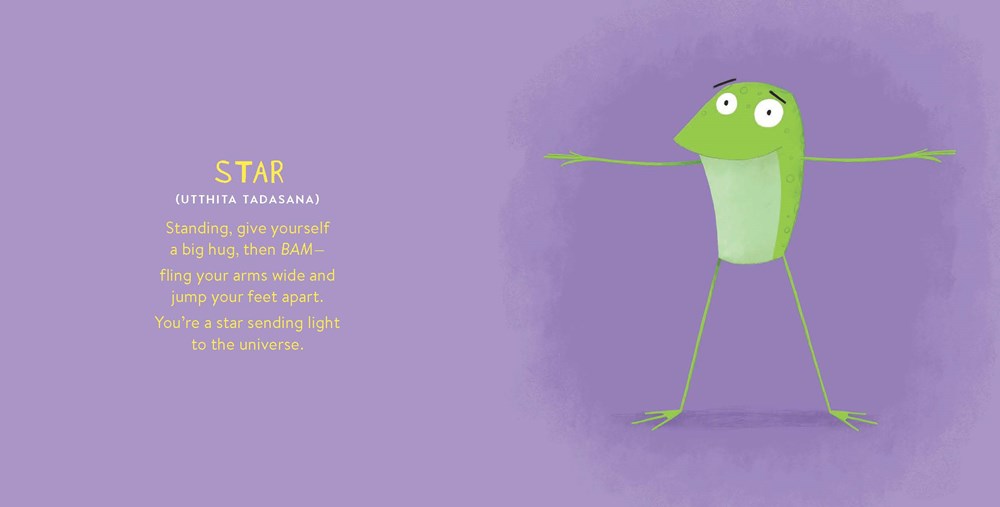
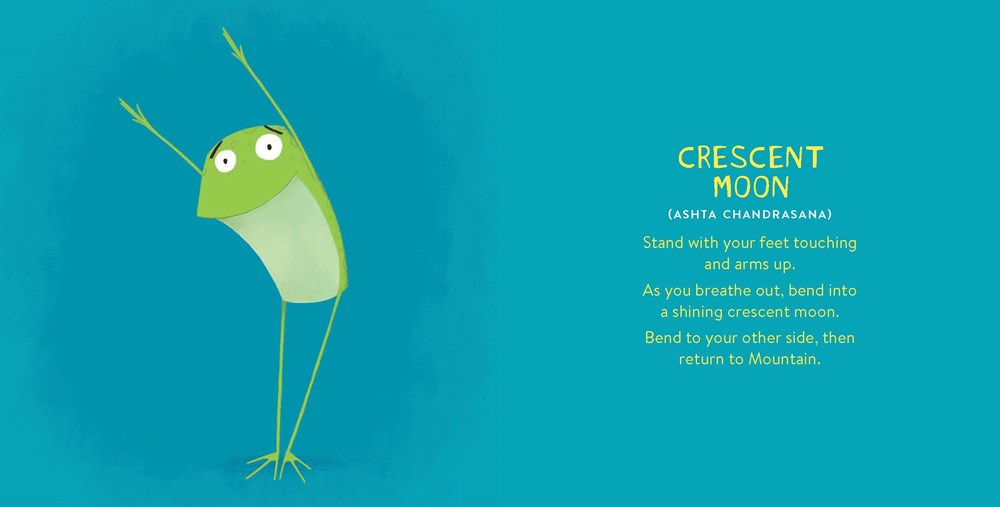
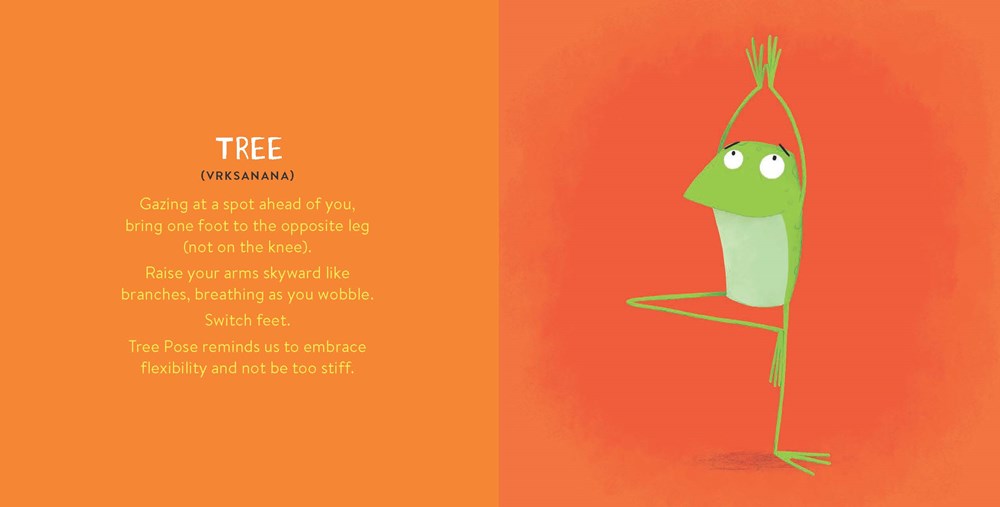
Yoga Frog introduces young readers to 18 different poses, each illustrated by our friend and guide, Yoga Frog. Each spread is brightly colored, with one page describing the pose, and the pose’s name in both English and Sanskrit; the facing page has our green amphibian yogi demonstrating the pose. Not every pose maps to its “real” English name; for instance, what grownups may know as “warrior” is “giraffe” here, in keeping with the nature-themed names. It doesn’t matter here, it’s gives the kids something fun to relate to and envision as they stretch and bend, releasing those endorphins and giving them a spot of Zen. The digital art is simple and sweet, with a big-eyed, friendly frog working his way through his asanas. A note to parents reminds caregivers about the benefits of yoga and breath awareness, and there’s a fun poster depicting the poses – not in order – that you can hang up and have kids refer to during a yoga storytime.

This nicely fits in with my yoga storytime books as a nice instructional. If you have a yoga storytime program, this is a nice add; ditto, if you need some yoga books for your collection. There’s a lovely emphasis on building childhood mindfulness lately – and it’s well-needed – so I’d jump on it.