Posted in Early Reader, Non-Fiction, Preschool Reads

Baby Loves Science – big ideas for little ones

I’m all for introducing science in all its wonderful forms to kids as early as possible, and all about introducing new vocabulary to kids, so science and math don’t scare them as they get bigger. I haven’t read any of the Baby Loves… Science! series by Ruth Spiro and illustrated by Irene Chan, so I started with the two newest books, Baby Loves Gravity! and Baby Loves Coding!

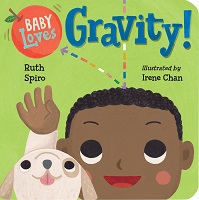
Baby Loves Gravity, by Ruth Spiro/Illustrated by Irene Chan, (June 2018, Charlesbridge), $8.99, ISBN: 9781580898362

Baby drops a noodle, and Puppy gobbles it up. How does that noodle fall? Gravity! Simple enough concept to explain to a toddler, and that’s how Baby Loves Gravity! starts out: simple and relatable. From there, we get a clear explanation of matter, mass, and gravity, and how it works on the sun, moon, and earth’s pull on us here. It’s clear and nicely illustrated, but this is a lot of information, even for toddlers, no matter how simply it’s phrased. I liked the illustrations, was pleased to see a child of color as the star of the show, but would read the beginning and ending, where baby slides down a slide, illustrating gravity, for a toddler STEAM or science storytime. I would rather test this out in a Kindergarten-level science storytime. The board book format makes for easy holding, and the illustrations are large, bright, and easily seen by a circle time group of kids. I could work with a group of kindergarteners, even pre-kindergarteners, in a science workshop using this as a companion text.


Baby Loves Coding!, by Ruth Spiro/Illustrated by Irene Chan, (June 2018, Charlesbridge), $8.99, ISBN: 9781580898843

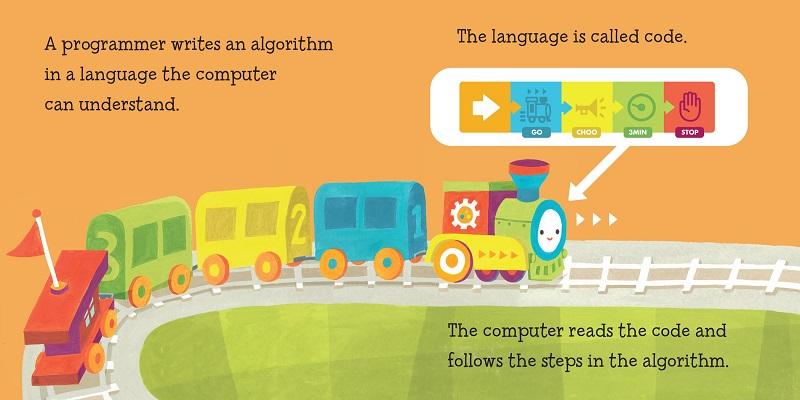
Baby’s playing choo-choo, and wants to add a red car to his train. Let’s follow him as he walks over! Baby Loves Coding features a child of cover on the cover, and is an adorably illustrated, clearly laid out way to introduce coding to kids, but this is also way above a little one’s head. The first few spreads, explaining how baby walks to the toy box, are great – you can get kids up and moving along with you on this one – but the text launches into an explanation of algorithms, programmers, and reading code, and this is just going to lose little ones. The pictures do all the work here, illustrating, with colorful interlocking blocks, how code fits together, like the cars of a train. I do love the explanations and the artwork, and the idea of getting kids up and moving works with CS Unplugged activities I’ve done in my library. I’ve used Code.org’s curriculum; CS Unplugged also has some great lesson plans and printables.

My advice? Use these with your pre-k and Kindergarten science storytimes. They’re great books for the right age.

Posted in picture books

Magnificent Creatures: Animals on the Move!

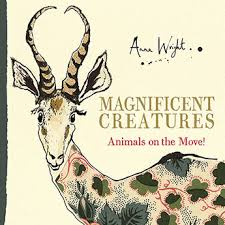
Magnificent Creatures: Animals on the Move!, by Anna Wright, (July 2018, Faber & Faber), $17.95, ISBN: 9780571330683

Ages 5-10

If you have readers who love beautiful illustration, this is a book for them (and you). Anna Wright’s Magnificent Creatures: Animals on the Move is all about beautiful design and illustrating movement and texture. Featuring 12 animals, from sea turtles and springboks, to Monarch butterflies and fireflies, each spread contains a brief explanatory paragraph on each animal, but the real star is the pen and ink illustration, enhanced with textiles to create stunning art. Springboks roam the African plains with striped and floral fabric bodies; checkered, chevroned, and polka dotted zebras spread out in search of food. Southern Carmine bee-eaters have a hint of gold crowning their feathered heads, and fireflies dance with gold leaf wings.

The art is beautiful and begs kids to use their own imagination, plus any scrapbooking paper, fabric, yarn, or ribbon you may have in your craft boxes, to create animals of their own. Could be a fun Summer Reading challenge! The text is easy to read and would be a nice, eye-catching addition to an animal storytime. There are some great, unique facts about each animal, too: every zebra’s stripe pattern is unique, like a human fingerprint; herring can swim in a school of up to 3 billion!

Pair this one with Helen Aphornsiri’s Drawn from Nature to let readers explore nature through artwork – from nature. Pair paper with leaves, flowers, sticks, and fabric to come up with 2-D and 3-D creations. Let your minds run wild! Get some more inspiration from Anna Wright’s website.

Posted in Fiction, Middle Grade, Realistic Fiction

The Key to Everything: But will it cure?

The Key to Everything, by Pat Schmatz, (May 2018,  Candlewick Press), $16.99, ISBN: 9780763695668

Ages 9-12

Eleven-year-old Tash is angry. She doesn’t want to go to camp, but her Uncle Kevin needs to travel to Australia, and she and Cap’n Jackie, their friend and neighbor, clashed over the whole business. Tash ends up having a pretty good time at camp, after all, but returns home to find Cap’n Jackie gone: she’s had a fall and is in the hospital, and Tash’s world turns upside down overnight. She’s determined to return a special key to Cap’n Jackie; one that opens up a magical world to her, and that’ll make it all better. Cap’n Jackie even said so, so it has to be true, right?

The Key to Everything can be a bit hard to follow. We have Tash, seemingly abandoned by her mother and living her with uncle while her father is in jail. Kevin, who takes care of Tash, Cap’n Jackie, a loving and cantankerous older woman, and Nathan, Cap’n Jackie’s nephew, who lives in New York, but comes back when Cap’n Jackie is hurt. We don’t get a lot of exposition in this story, but we do learn that family is who you make it. Two major characters, Jackie and Nathan, are gay; something that’s very lightly touched on, but it’s nicely done. Tash suffers from PTSD and a fear of being alone, while Jackie struggled with agoraphobia. Readers have to put in a bit of work to make all the lines connect, but it’s a solid read about family, grief, moving on, and growing up.

Posted in Fantasy, Science Fiction, Teen

Garrison Girl: YA in the Attack on Titan universe!

Garrison Girl: An Attack on Titan novel, by Rachel Aaron, (Aug. 2018, Quirk Books), $12.99, ISBN: 978-1-68369-061-0

Ages 12+

Humanity lives in walled cities while giant titans roam the earth. They’re without sense, without intelligence, motivated by a ravenous hunger for human flesh. The military guards the walls, always watching, always waiting. Rosalie Dumarque is the daughter of a wealthy, prominent general; her only purpose in life is to marry well and bring honor to her family, but that’s not going to work for Rosalie. She graduated from military school with honors, and she wants to fight titans, not get married. She convinces her father to let her serve for the six months before her wedding; he sends her to the Wall Rose Garrison in the hopes that she’ll be scared off. With titans wandering too close to the wall, death is always a possibility; under the command of Jax Cunningham, it’s more of a certainty. But Rosalie, along with new friends Willow and Emmett, are determined to stick it out and improve. At first, Rosalie is looked down on as the rich girl, but her commitment to the wall and Rose Garrison quickly makes her part of the team. She even manages to get through to Jax, who starts seeing her as more than a spoiled rich girl. The specter of her engagement looms as a romance blooms between the two, and when Rosalie decides that six months isn’t enough for her, she risks losing her father’s respect and her family’s support. BUT WHO CARES? THERE ARE TITANS, MAN!

Garrison Girl is a YA novel set in the Attack on Titan universe. Look, I’d never seen an episode or cracked open an Attack on Titan manga in my life before Ivy at Quirk sent me this book; I had a vague notion of what the story is about, so that was good enough for me. I finished the book in a day and a half. I refused to put it down, it was so good. These are original characters in a familiar universe, but if you’ve never set foot in that universe before, fear not! The book gets you up to speed pretty quickly with everything you need to know, and the action hits fast, hard, and brutally. I turned to my 14 year-old, who watches anime and reads manga, and said, “HE ATE A GUY!” My son sagely nodded and said, “Yup. Like a carrot.” I threw the book down on the couch in the break room at work and yelled at the end, and had a coworker comment, “You read books like people watch movies”. Well, yes, I do, and if you read this book, you will too. There are characters you will love and want to shield with your own body, and there are characters you will want to punch until a titan walks by and munches on them like potato chips. The book moves fast, the characters are well-thought out and written, and the action and tension are equally high. Fantasy fans, add this to your TBR. Put this on your Attack on Titan displays.

And, Rachel and Ivy? We’re getting more of this, right? RIGHT?

Posted in Fiction, Historical Fiction, Middle Grade, Realistic Fiction, Tween Reads

My Year in the Middle: Relevant then, relevant now

My Year in the Middle, by Lila Quintero Weaver, (July 2018, Candlewick), $15.99, ISBN: 9780763692315

Ages 8-11

Sixth-grader Lu Olivera and her Latin American family find themselves in the middle of a civil rights struggle in their Red Grove, Alabama neighborhood one hot summer in 1970. The tensions run high in her integrated school: black kids sit on one side of the room, white kids on the other; she sits in the middle row. She’s in the the middle child, smack dab between her older, activist sister and younger twin siblings; she’s in the middle when it comes to local politics: many of the white families want to re-elect segregationist governor George Wallace, while Lu and her family support incumbent Albert Brewer. Many of her classmates are leaving their school to go to a private, white school. When Lu befriends fellow track runner Belinda Gresham, an African-American girl, and her classmates turn on her, she decides it’s time to take a stand.

Inspired by the author’s Alabama childhood, My Year in the Middle is a story of civil rights and finding one’s voice. Lu puts up with the passive racism in her community, with remarks like, “she’s from South America, she doesn’t mind going to school with Negroes”. But seeing how her African-American friends are treated by her fellow classmates, and by the general public in her town, pushes her buttons. Lu is a character who stands out: she’s a character of color stuck in the middle of the Civil Rights Movement, but because she’s not African-American, she’s tolerated: until she digs in her heels and says, “No more”. She gives and receives support from her black classmates and from Sam, her classmate and crush, a white preacher’s son who is bullied for his civil rights stance.

Lu is at once relatable and a mirror for our society today. We’re still divided, and more and more people are forced from the middle to take a stand. Readers may recognize recent political speeches and attitudes in George Wallace’s condescending stumping and the racial tension that permeates Lu’s classroom. My Year in the Middle is a solid work of historical fiction that provides excellent discussion topics for readers on civil rights, social justice, and where we’ve gone versus where we are.

Posted in Fantasy, Teen, Young Adult/New Adult

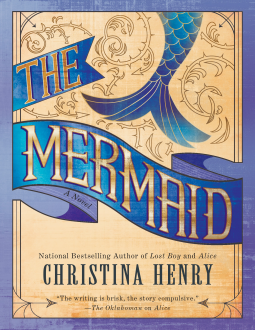
Crossover YA: The Mermaid by Christina Henry

The Mermaid, by Christina Henry, (June 2018, Berkley Publishing Group), $16, ISBN: 9780399584046

Ages 16+

A mermaid walks out of the sea to live with a man she’s fallen in love with. Years later, the sea takes him away from her. That’s the beginning of the story in Christina Henry’s newest fairy tale for young adults and grownups, The Mermaid. Living in a small seafaring Maine town, most of her neighbors are respectful of Amelia’s – the name her husband gave her – privacy, but rumors have a way of spreading; this time, they spread all the way to New York, and to the ears of none other than The Greatest Showman himself, P.T. Barnum. Barnum dispatches his partner, Levi Lyman, to Maine to talk to the “mermaid” and convince her to become one of Barnum’s spectacles. Amelia, a strong, smart woman in a time when women have no voice, no property, and no agency of their own, she decides – after sending Lyman on his way – to make her way to New York and negotiate with Barnum. She wants to travel the world, and she agrees to work with Barnum on her own terms for six months, in order to be able to finance it. The partnership between the two headstrong characters is tenuous, and Lyman finds himself falling in love with Amelia. The Mermaid is amazing storytelling that has a distinctly feminist voice.

The Mermaid gives us a Barnum that isn’t quite so friendly and fun as Hugh Jackman’s portrayal in The Greatest Showman; this Barnum is concerned with money, who’s paying it out, and how much of it he can make off the back of his “spectacles”. He’s recovering from the backlash of one of his exhibits gone wrong, and trying to recover his reputation; he’s known as a liar and a “humbug” (not exactly untrue); he treats his wife and daughters shabbily, and cares little for anyone outside of himself. That’s enough about him.

Amelia is the star of this story. She’s a real mermaid who touches the lives of those who lay eyes on her. Charity, Barnum’s put-upon wife, resists believing in her at first, but later comes to treasure her friendship with Amelia, finding her own voice to stand up against her bulldozing husband. Caroline, Barnum’s young daughter, is enchanted with the idea of knowing a mermaid, and discovers her own young voice thanks to Amelia. Levi Lyman finds his scruples and love in her stormy eyes. Amelia refuses to be taken advantage of, and demands to be heard. She empowers those around her. She reminds Barnum that at any moment, she can walk away from him and he’ll never find her: she’s a mermaid, for crying out loud, and the Earth is 75% water; good luck finding her. We don’t learn about her family or her people; she is the focus of the novel and the narrative. She stands alone. An adult novel, this can easily cross over into YA/Teen for fantasy readers. There are discussion questions available at the end of the book.

Want more circus and sideshow books? Booktalk and display with Sara Gruen’s Water for Elephants and H.P. Wood’s Magruder’s Curiosity Cabinet. Want more of Christina Henry’s fairy tales? Check out her website and learn about her other books.


Water for Elephants

Magruder’s Curiosity Cabinet

Posted in picture books, Preschool Reads

Doesn’t matter what you think you see, Lulu is a Rhinoceros.

Lulu is a Rhinoceros, by Jason Flom & Allison Flom/Illustrated by Sophie Corrigan, (June 2018, Wicked Cow Studios), $16.99, ISBN: 9780692070987

Ages 4-7

Lulu may look like an bulldog to you and me, but when she looks in the mirror, she sees a rhinoceros. In her heart, her fluffy, soft fur is really thick skin, and her nubby little tail is actually whiplike. The only thing she needs is a horn: then everyone will know she’s really a rhino! But as she searches for her horn, others laugh at her and cruelly mock her; her Cinderella-like search for the perfect horn takes a few sweet, giggle-worthy turns, especially at the ice cream cart. When Lulu wanders into a rhino enclosure at a zoo, she meets a friend who uses common sense to see her for who she is, and they come together to form a mutually beneficial, wonderful, friendship.

This sweet story is perfect for everyone: in addition to addressing gender identity, Lulu speaks to readers who don’t feel like they quite fit in; readers who don’t want to go with the crowd. The message is strong: be true to yourself. It also extols the virtue of finding – or being – that one friend who can see through the exterior to who you are inside. The softly drawn artwork has muted colors, bringing a sense of calm to the story and allows readers to focus on Lulu’s internal dialogue. The story addresses social issues like introspection, friendship, social issues, tolerance, and yes, gender identity, and I love it. A portion of all the proceeds from sales of Lulu is a Rhinoceros are being donated to the African Wildlife Foundation to help protect Africa’s endangered wildlife and their habitat, so you’re doing two good deeds by buying the book! There’s an interview with authors Jason and Allison Flom (with real-life Lulu!) on the African Wildlife Foundation’s webpage. Pair this one with Bow-Wow Meow, by Blanca Lacasa.

Posted in Preschool Reads

A mother’s last love letter: A Bubble, by Geneviève Castrée

A Bubble, by Geneviève Castrée, (June 2018, Drawn & Quarterly), $12.95, ISBN: 9781770463219

Ages 4+

Artist and musician Geneviève Castrée passed away in 2016 after a battle with pancreatic cancer. This last project, a board book for her 2-year-old daughter, is at once a celebration of parental love and a comfort to anyone moving through grief and loss. Maman loves her daughter, but has been encased in a bubble since before the little girl can remember. She and her mother spend time in the bubble, eating together, playing together, and napping together; when daughter goes out exploring with Papa, she comes back to share what she’s done and seen with Maman, who cannot leave her bubble. As the story unfolds, we see the family’s activities change as Maman’s illness progresses; the story ends with hugs, kisses, and going for ice cream: a last, loving moment between mother and daughter.

The Bubble is simple and exquisite. I ache reading every page of this brief book and the final note from Castrée’s singer-songwriter husband, Phil Elverum. The artwork is focused on Castrée and her daughter; their loving relationship, the bubble, and the intrusion of the outside world. Narrated by the child, each page has 1-3 sentences, describing her relationship with her mother. It’s a comfort to children coping with loss and a testament to the everlasting love between a parent and child. I’ve read this book at least 5 times now, each time with a lump in my throat and an ache in my chest. It’s beautiful, and a good book to give to children – and parents – dealing with grief.

Posted in Fiction, Middle Grade, Realistic Fiction, Tween Reads

The Dollar Kids: Starting over, and fitting in

The Dollar Kids, by Jennifer Richard Jacobson/Illustrated by Ryan Andrews, (Aug. 2018, Candlewick), $17.99, ISBN: 9780763694746

Recommended for readers 9-13

Lowen Grover is a 12-year-old artist is using his comic book artwork to cope with the gun-related death of his young friend, Abe. He just wants to get away: away from the memories of Abe and the shooting; away from his neighborhood, where everyone knows. When he sees an article about a former mill town, Millville, holding a lottery of dollar homes to bring new life into the town, he mentions it to his parents, who apply and secure a home. It’s a chance for his family to own their own home, and a chance for his mother to start up a business, but rural life isn’t what Lowen expected, and the Millville families aren’t as welcoming to the new “Dollar Kids” and their families as he’d hoped. As the Grovers and the other new families try to make inroads into their new town, Lowen works through his grief and tries to rediscover friendship, his love for art, and his place in the community.

The Dollar Kids unpacks a lot of ideas and moments, and it’s beautifully done by author Jennifer Richard Jacobson and illustrator Ryan Andrews. It’s a book about grief and loss, and the guilt that comes with grief. It’s also about friendship, and accepting friendship, even when one doesn’t think he or she deserves it. It’s a book about family. Finally, it’s a book about acceptance. Lowen is grieving the loss of a kid who was somewhat of a friend; a younger kid who hung around him constantly; he embraces this chance to start a new life in a rural town, but he and his family discover that a dollar home takes a great emotional and financial toll; the families in Millville don’t like change much, even when it’s to benefit their town, and feel almost contemptuous toward the newcomers. The characters are realistic and relatable, with the author giving as much attention to her supporting characters as she does her main characters. The comic book artwork by Ryan Andrews is an outlet for Lowen, and helps readers work through his grief with him.

A great middle grade book for realistic fiction readers. Explain to readers that dollar homes do, in fact, exist, and what the stigmas associated with buying a foreclosed home could entail: how may the Millvillians see the families that purchase them, in light of the town’s history? I’d booktalk this with Beth Vrabel’s Blind Guide to Stinkville and The Doughnut Fix by Jessie Janowitz, both of which look at life in a rural community, and The Thing About Jellyfish by Ali Benjamin and Lisa Graff’s Lost in the Sun for addressing grief.

Posted in Fantasy, Fiction, Humor, Middle Grade, Middle School, Tween Reads

The Mortification of Fovea Munson is hilarious Summer Reading!

The Mortification of Fovea Munson, by Mary Winn Heider/Illustrated by Chi Birmingham, (June 2018, Disney-Hyperion), $16.99, ISBN: 9781484780541

Ages 9-13

From the opening line, “Dead bodies are the worst”, you just know you’re in for a good time with this book. Fovea Munson is the 12-year-old daughter of two doctors: cadaver surgeons. They operate on dead folks, and they teach medical students how to work their craft on dead folks. They’ve got the corniest senses of humor, a never-ending love for Hippocrates, the father of medicine, and they’ve just hired Fovea to be their receptionist for the summer. This is bad enough for a 12-year-old who’s already feeling tragically uncool, but wait: three heads in the cadaver lab start talking to her. Death isn’t necessarily final, after all, and Lake, McMullen, and Andy – the three heads in question – want to start a barbershop quartet, hit a recording studio, and have a release party, and it’s up to Fovea to make it happen. Quickly. Because that receptionist that quit left a lovesick, slightly unhinged cremator, behind, and he’s got information that will ruin Fovea’s family. The heads know something, so it’s a little quid pro quo in action.

Is this madcap? Absolutely! Is it hilarious? Without question! Fovea narrates this laugh-out-loud story of a summer vacation gone sideways with a priceless, put-upon tween voice as she navigates her relationship with her parents, her friends (both dead and living), and her scooter-riding grandmother. There’s an unexpected amount of pathos here as Fovea comes to care for a classmate and the trio of cadaver heads in her care, and a bittersweet realization that some friendships aren’t meant to last. There are black and white illustrations throughout, adding some visual humor to the story, and chapters titles remind us how much Hippocrates has influenced Fovea’s life. The end of the book leaves me hopeful that we’ll get some more fun with Fovea down the road, and an appendix (snicker) includes amusing little in-jokes that readers will get a kick out of.

The Mortification of Fovea Munson is a perfect summer read, especially for kids who think their parents are weird (which is, honestly, most of ’em). Don’t miss it. Add it to your STEM reading – cadavers science is a thing!