Posted in Uncategorized

Porcupine’s Pie: Friendship is the best ingredient of all!

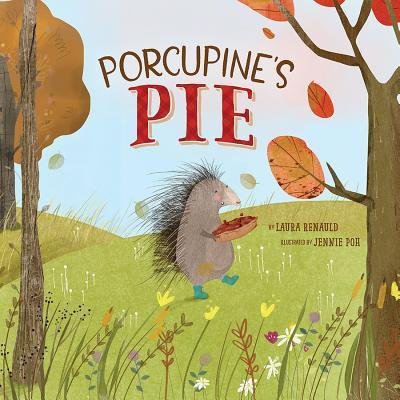
Porcupine’s Pie, by Laura Renauld/Illustrated by Jennie Poh, (Oct. 2018, Beaming Books), $16.99, ISBN: 9781506431802

Ages 3-7

It’s Fall Feast Day, and Porcupine is so excited: she’s going to make her famous Cranberry Pie! She sets out to wash her cranberries, and comes across her friends Squirrel, Bear, and Doe, along the way, each of whom has their own delicacy Porcupine is looking forward to. Each of her friends is missing a crucial ingredient for their signature dish, so sweet Porcupine offers them use of her stocked pantry. But when Porcupine arrives at the river – oh no! – she discovers that her pail of cranberries is empty, something sharp-eyed readers will notice as they read along. When Porcupine’s friends find out about Porcupine’s cranberries, everyone comes to the rescue with ingredients of their own, and Porcupine makes the best pie of all: Festive Friendship Pie!

This is a sweet story of friendship and sharing that kids will love and that makes for a great Thanksgiving/Harvest storytime. Jennie Poh’s illustration has a lovely, textured feel to it and concentrates on details like the burlap feel of a sack on one shelf, the cloth of Porcupine’s apron, and the oh-so silent falling of her cranberries as she heads to the river. There’s a sweet little ladybug who shows up in every spread and on the endpapers: challenge your readers to find it! The colors are warm autumn shades of green, brown, and dark red; the titular “Pie” appears in a dark red plaid tablecloth filling, with a big, bold font. The story font alternates between plain black and plain white (against a darker background), not interfering with the story, allowing the atmosphere to take center stage.

Porcupine’s Pie is a sweet book about friendship and being grateful, and it’s perfect for preschoolers and Kindergarteners. A recipe for Friendship Pie at the end is the perfect ending to the story, and an invitation to some holiday baking. Display and with readalikes, Karma Wilson’s Bear Says Thanks, and Stone Soup.

Author Laura Renauld’s author website offers links to the KidLit community, her blog, and information about her books. You can see more of Jennie Poh’s illustration on her Instagram.

Posted in Intermediate, Non-Fiction, Preschool Reads

Show kids the excitement of cooking with Kids Cooking!

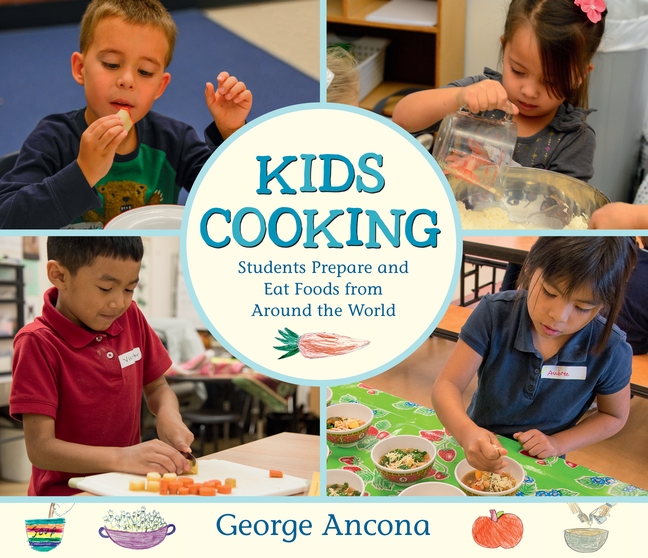
Kids Cooking: Students Prepare and Eat Foods From Around the World, by George Ancona, (Oct. 2018, Candlewick Press), $16.99, ISBN: 9780763698768

Ages 4-7

When my son (now a high schooler) was in first grade, his school participated in a great program called CookShop. The teachers ran the program, and we parents volunteered as helpers, and a couple of times a month, kids learned cooking skills: chopping (with plastic knives), mixing, and the math involved in putting together a recipe. I loved it, and he loved the process of creating meals. No, he didn’t eat anything he made (that honor went to me), but working together brought us even closer, and the whole class came together as a group to prepare and share food. I may have enjoyed CookShop more than he did – I still have my apron! – and am glad it’s still a program in NYC schools. When I read Kids Cooking: Students Prepare and Eat Foods From Around the World, I was immediately brought back to that first grade classroom and the warm memories.

Kids Cooking is photographer George Ancona’s venture into classrooms where a similar organization, Cooking with Kids, brings children from diverse backgrounds come together to prepare healthy meals from different cultures. They roast vegetables and prepare a Moroccan sauce called chermoula; make Chinese-American fried rice with sweet and sour cucumbers; work together to cook up an Italian minestrone soup with breadsticks, and learn about different tomatoes that go into making a Mexican salsa with tortillas and tamales. They draw pictures as they go; teachers use a globe to demonstrate where different meals originate, and parents and teachers make sure that everyone’s cooking experience is safe and exciting.

The book presents photos of the kids and grownups at work, along with some of the children’s artwork, and phrases from the cultures whose meals they’ve prepared. It’s a celebration of food, friendship, and different cultures: meals prepared and shared together are the best meals. An author’s note mentions the Cooking With Kids program and the schools that participated in the book.

With the holidays on the horizon, Kids Cooking is a great book to read to kids and get them talking about meals they enjoy at home. A recipe link included in the book didn’t work for me, but the Cooking with Kids website has recipes available: see if your family wants to try a few out!

You can find more of George Ancona’s photos and learn more about his children’s books here.

Posted in Fantasy, Fiction, Fiction, Graphic Novels, Intermediate, Middle Grade, Tween Reads

Comic Quests: Choose your own comic book adventure!

Quirk has such fun books, don’t they? Who else would find authors and illustrators that give us The X-Files and Buffy the Vampire Slayer pictures books, Star Wars as the Shakespearean masterpieces we all know they are, and now… Choose Your Own Adventure graphic novels in their Comic Quests series?

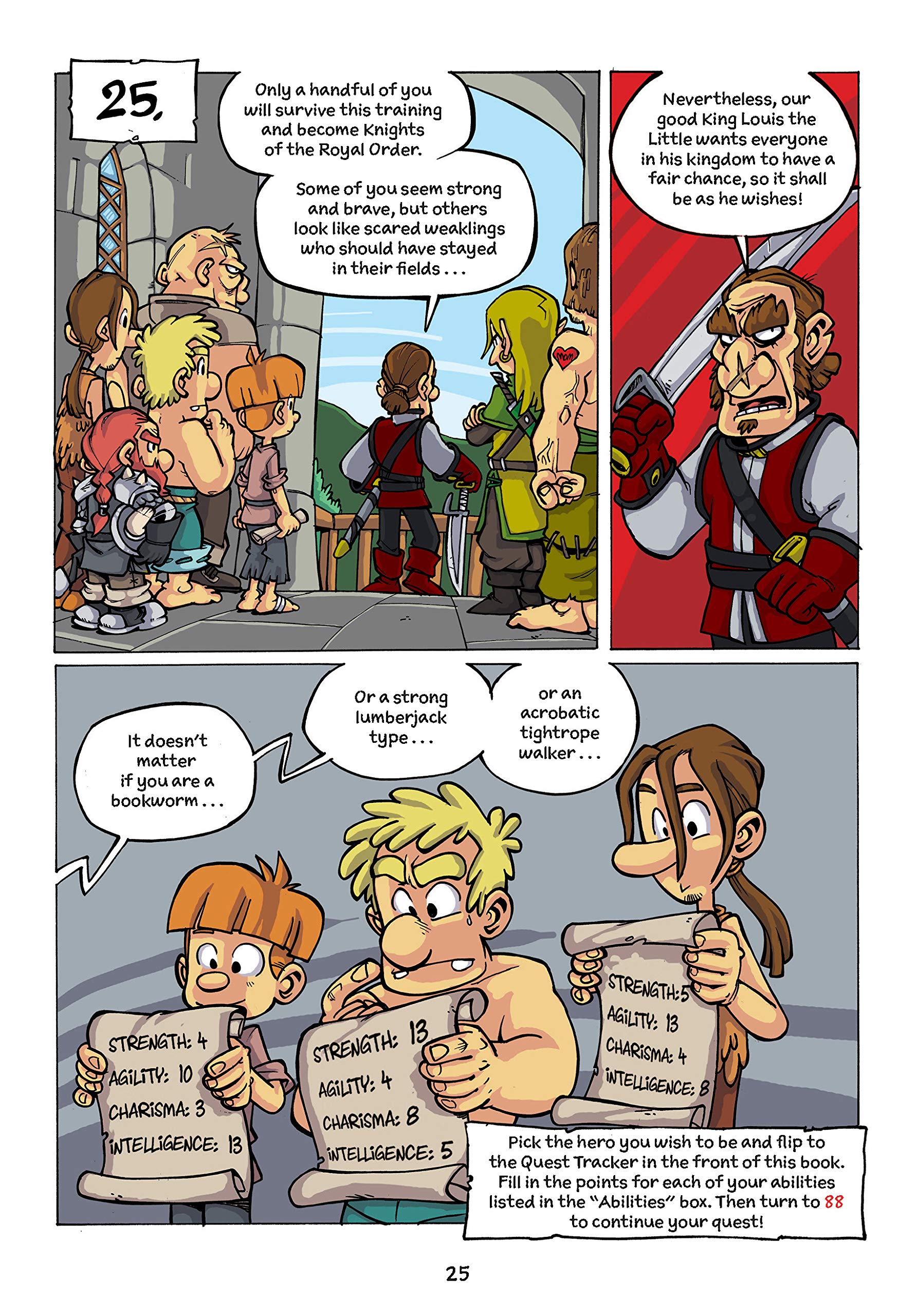
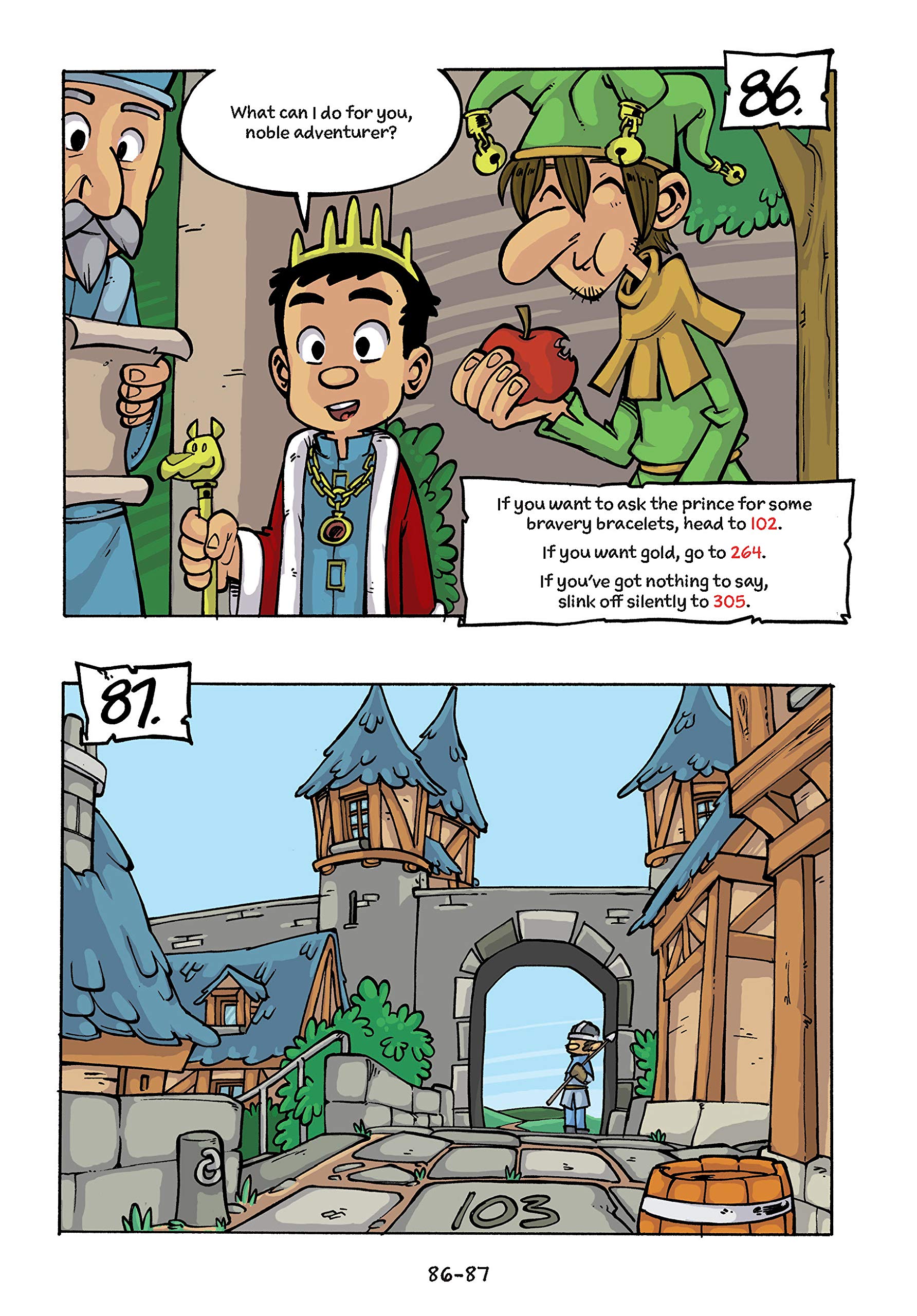
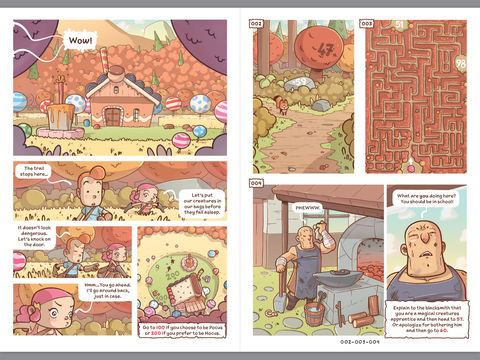
Released in September, there are two Comic Quests adventures: Knights Club and Hocus & Pocus. The rules are closer to role-playing games than merely choose your own adventure comics; readers will collect supplies, solve puzzles, and keep track of food and supplies for themselves and any familiars and pets they’re traveling with on their own handy dandy Quest Tracker – tabletop gamers will recognize the similarity to character sheets for roleplaying games like Dungeons & Dragons. Don’t worry about destroying your book, though – there are free, downloadable PDFs online. Librarians, consider putting a note on the covers of your copies to let your readers know this.

Knights Club: The Bands of Bravery, by Novy, Shuky, and Waltch/Translated by Melanie Strang-Hardy, (Sept. 2018, Quirk Books), $13.99, ISBN: 978-1-68369-057-3

Ages 8-12

Originally published in France in 2012, this first Knights Club adventure takes place in the year 1012, in the kingdom of Louis the Little. The Royal Order of Knights help keep the peace in Louis’ kingdom, and three farming brothers dream of joining their ranks. They set off to join Knights School, and that’s where the fun begins. Readers get to select which brother they want to be, and the adventure unfolds, questing through snowy mountains, dark forests, and mysterious lakes. Readers get to solve riddles, seek out magical objects, and choose their own path by following numbered panels through to the end of each tale. Panels are in color, and the storytelling pace moves along, but some challenges can be a little daunting for readers who are expecting a simple choose your own adventure story. My suggestion? Make it into a roleplaying program, and invite kids to learn how to play as they read! You may be creating your next generation of Dungeons & Dragons players, after all.

Knights Club: The Message of Destiny is the second book in the series and will be available in January 2019.

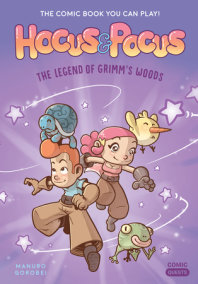
Hocus & Focus: The Legend of Grimm’s Woods, by Gorobei and Manuro, (Sept. 2018, Quirk Books), $13.99, ISBN: 9781-168369-055-9

Ages 8-12

Originally published in France in 2016, Hocus & Focus takes place in a more fairy tale-inspired fantasy world where readers can choose to be either a male (Hocus) or female (Pocus) character, choose a pet and keep it fed, and go on an adventure where you can discover gingerbread houses, make your way through a brain-teasing forest, and find missing children. There are numbered paths and riddles to be solved in order to advance, and panels are in full-color, just like the Knights Club. Gameplay can be a bit of a challenge – there’s one riddle where I had to count spots on baby wolves in order to get the next panel number that confounded me time and again (“is that a spot, or an ink blot? My ARC is black and white!”), so you may want to mark up your own ARC, if you have one, or keep a handy document of answers for kids that approach you needing help.

Hocus & Pocus: The Search for the Missing Dwarves is the second book in the series and will be available in January 2019.

All in all? A fun series of brain teasers for kids, and a nice way to side-eye anyone who says comics and graphic novels aren’t real reading!

Posted in Early Reader, Fiction, picture books, Preschool Reads, Toddler Reads

Get ready for the season with First Snow with a giveaway!

First Snow, by Nancy Viau/Illustrated by Talitha Shipman,, (Sept. 2018, Albert Whitman), $16.99, ISBN: 9780807524404

Ages 2-6

A brother and sister join their friends for a day of fun when the first snow falls.

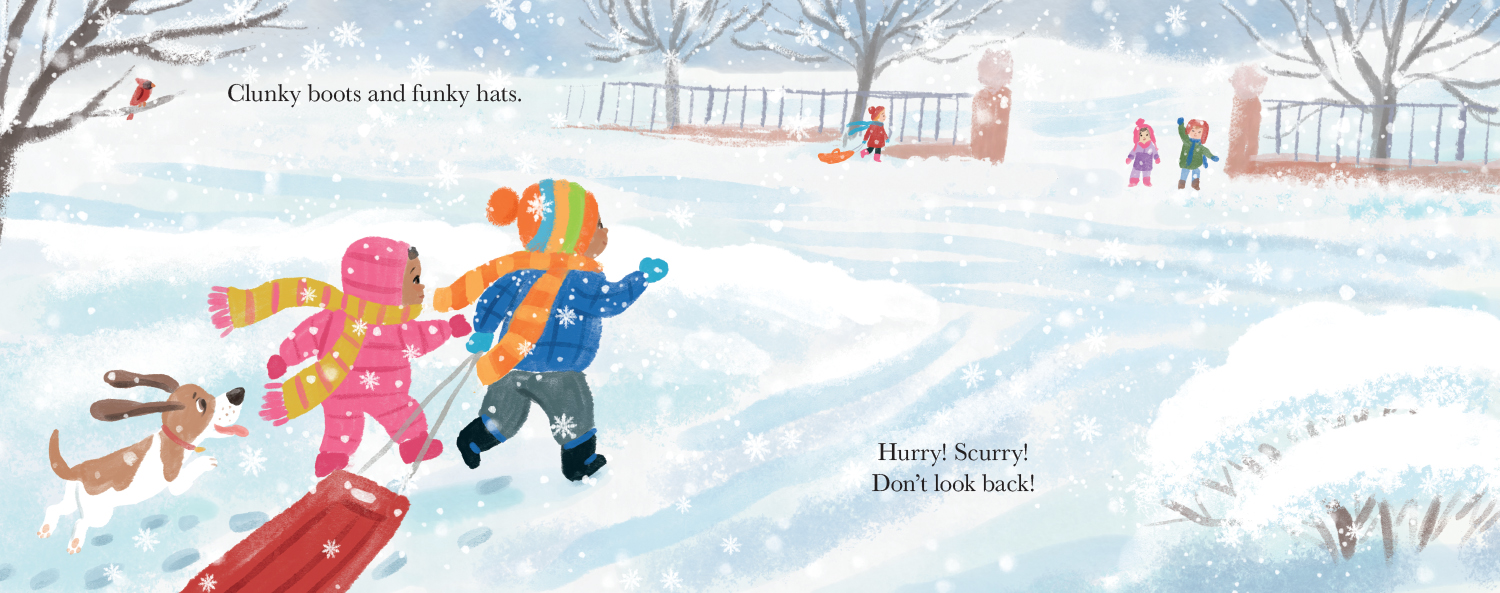
This rhyming story stars a brother and sister, both children of color, who wake up to discover that it’s snowing! With mostly two- and three-word rhyming sentences, we follow them as they get dressed and meet their friends for a day of sledding and snowplay. Their pup follows along, adding to the fun and games, and at the end of the day, the siblings and their dog head home to enjoy hot chocolate, chocolate chip cookies, and a story before bedtime.

A lovely companion to Ezra Jack Keats’ A Snowy Day, First Snow takes place in a more suburban settting than Peter’s famous city backdrop. The kids’ bright winter clothes stand out against the soft, white snow. The watercolor artwork is soft, lending a comfortable, hazy, snowy-day feel to the scenery. Brightly colored kids’ hats and mittens set the tone on the endpapers.

Perfect for snowy day reading, preferably with some hot chocolate and a warm blanket and stuffed animal. Great for toddlers and easy readers alike!

Nancy Viau is the author of five picture books, including City Street Beat, Storm Song, and Look What I Can Do!  Her middle-grade novels include her new release, Beauty and Bernice, along with Just One Thing! (2016 Foreword INDIES Book of the Year Gold Award Winner), Samantha Hansen Has Rocks in Her Head (to be reissued in the spring of 2019), and Something is Bugging Samantha Hansen (fall 2019). As a member of the Rutgers University Council on Children’s Literature, Nancy volunteers with other council members to produce the Rutgers One-on-One Plus Conference every year. She works as an assistant librarian, and when not reading or writing, she hikes, bikes, and travels wherever her frequent flyer miles take her. To learn more, and to download a free Story Hour kit for First Snow, visit her website, NancyViau.com.


Talitha Shipman graduated with an MFA in illustration from Savannah College of Art and Design in 2008. She’s illustrated several books, including You Are My Little Pumpkin Pie, Everybody Says Shalom, and Applesauce Day. Talitha lives in Indiana with her husband, daughter, and dog. She can be found at talithashipman.com.


Praise for First Snow:

“A sweet suburban/rural contrast to the snowy day enjoyed by Peter in the city.”  — Kirkus Reviews

Relive the joy of the season’s first snow in this sweet trailer!


One lucky winner will receive a copy of First Snow, courtesy of Albert  Whitman & Co (U.S. addresses). Just enter this Rafflecopter giveaway for your chance!


Posted in picture books, Preschool Reads

A little post-Halloween fun: Bear’s Scare

Bear’s Scare, by Jacob Grant, (June 2018, Bloomsbury), $16.99, ISBN: 9781681197203

Ages 3-6

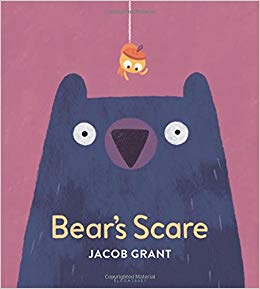
Bear keeps a tidy house for himself and his friend, a stuffed bear named Ursa. He loves to clean the house every day, but one day, he notices something: a cobweb! As he searches his home, he notices another web! And another! Convinced he has a spider problem, Bear works himself into a frenzy – the spider is covering the house with webs! It’s making it sticky mess! – and tears his home apart, searching for the spider. The pictures belie what Bear imagines is happening, as we see the spider very politely knitting, painting, and reading a book as Bear turns his house upside down. In his panic to get the messy spider out of his house, Bear traps Ursa’s arm under a chair and tears it off when he pulls her. Stunned into realization, Bear focuses on getting Ursa some first aid, only to discover that the spider has stitched Ursa’s arm together with its own silk. Bear discovers that getting to know someone is a much better way to determine one’s character, and embraces his new friend – who invites some more new friends to visit.

Bear’s Scare is an adorable story about how our own perceptions can get away from us, and the havoc it wreaks. The charcoal and crayon artwork lends a hand-crafted feel to the story, with digital coloring adding a depth of warm color. Bear is a deep navy blue; he stands out against his earth-toned home yellow spider neighbor. Pages are mostly bright white, with the artwork standing out against the background, with some full bleed spreads, usually for a more dramatic moment. The plain black font lets the artwork tell the full story while the text is there to let the storyteller be as tongue-in-cheek as they want to be.

Bear’s Scare is adorable fun with a smart message about friendship and judging others on appearances. It’s a nice add to picture book collections where kids enjoy a little wink, wink, nudge, nudge humor.

See more of Jacob Grant’s artwork and information about his books at his website.

Posted in picture books, Preschool Reads, Toddler

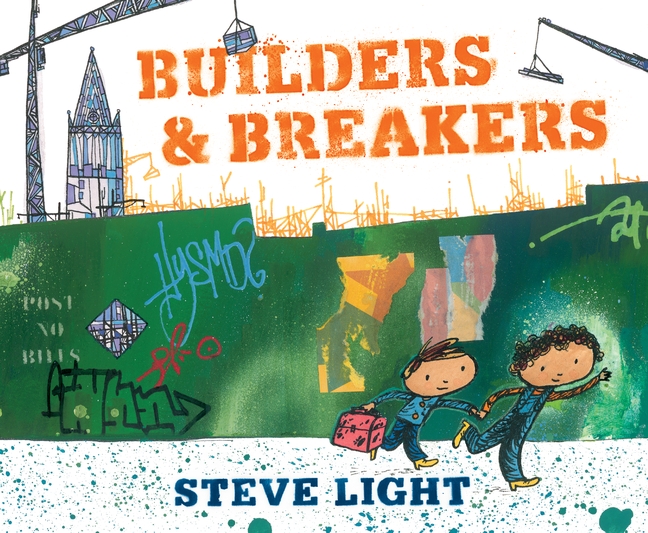
Construction fun with Builders & Breakers

Builders & Breakers, by Steve Light, (Oct. 2018, Candlewick), $16.99, ISBN: 9780763698720

Ages 2-6

Dad’s off to work at the construction site, but – oh no! – he’s forgotten his lunch! Two siblings take the lunchbox and run to meet their father at work, setting the stage for this vibrant story about construction sites and all the activity they embody.

Sparsely worded, this is a great book for toddler storytimes, proving that board books aren’t the only choice when reading to little ones. Each scene is boldly outlined and inked, popping off the plain white page, to create a cityscape where cranes hoist, wheelbarrows carry, and children search.

Because this is a Steve Light book, the beauty is in the small details. The endpapers are blueprints for the building Dad must be working on; the story starts on the title page, where Dad kisses Mom goodbye as his lunchbox sits on the floor. Mom discovers the lunchbox on the verso page, and sends the kids after dad right under the dedication. There’s no wasted space here; there’s storytelling to be found everywhere.

City kids will recognize the omnipresent green wall and “post no bills” stenciling that runs across one spread. The kids search for their dad in the background on subsequent spreads, always giving the reader something to look for. Sound effects invite readers to rat-a-tat-tat-tat along with jackhammers and spark! spark! spark! with welders, and two spreads flip the book lengthwise to show readers a different perspective. A digger reveals treasures on the sides of the dig, including several fossilized dinosaurs, a bike, and a car. When the kids reunite with their father, it’s snack time! Steve Light talks about his architectural influences in an author’s note at the end.

Display and booktalk with Steve Light’s own Diggers Go!, Sherri Duskey Rinker’s Goodnight, Goodnight, Construction Site, and its companions; Byron Barton’s Machines at Work is a nice companion for toddler storytimes about vehicles and construction, and I can’t get enough of Christy Hale’s Building Up. Get out your toy trucks and blocks for some play time after your construction storytime!

Educators and caregivers interested in a Steve Light author study can check out Steve Light’s author website, where he has a free downloadable author study guide available.


Posted in picture books, Preschool Reads, Toddler Reads

Heads and Tails – an animal who’s who guessing game

Heads and Tails, by John Canty, (Oct. 2018, Candlewick), $16.99, ISBN: 9781536200331

Ages 2-6

Ready for a guessing game? Heads and Tails gives readers clues, plus a rendering of an animal’s hindquarters, to help them figure it out. Every spread offers a watercolor rendering of an animal’s rear end, with three typewriter-font clues (emphasized with color), to help them guess. On the following page, the animal’s front end is revealed! The clues are descriptive: “I have long furry ears and a small nose. I live in a burrow in the ground. I have a white fluffy tail. I am a…” The reveal and the “I am a…” phrase is set in a handwritten, large black font, making this a good storytime read that clues kids in and follow along. The artwork is done is subdued watercolors, and all illustrations are adapated from 19th-century artwork. The tails are more opaque, less detailed, than the heads, almost like a fade-in to the animal reveal. There are two curve balls thrown in, which left my first grader and I scratching our heads, but it seems like it was a chance to draw out the mystery. The final mystery guest is the reader himself or herself: “I love to play. I learn new things every day. I am growing. I am… ME!”

This one’s a nice choice for toddler storytimes; there are few words, short sentences, and the chance to let kids call and act out their favorite animals. It’s a nice additional add for the artwork, which is lovely. I’d pair this one with Simms Taback’s fold-out animals books, which provide similar clues and reveal each animal through vertical and horizontal page unfolding. My toddler times love a dramatic reveal! Display with other fun Who-Am-I books, like my old reliable, Katie Davis’ Who Hops?, another guessing game story, albeit with a lot more laughs and a similar reveal at the end. And there’s always Steve Jenkins’ Who Am I?

Posted in picture books

Henry is Kind encourages acts of kindness

Henry is Kind: A Story of Mindfulness, by Linda Ryden/Illustrated by Shearry Malone, (Oct. 2018, Tilbury House Publishers), $16.95, ISBN: 9780884486619

Ages 5-8

Henry is a young boy whose teacher, Mrs. Snowden, assigns a Kindness Project. The students have to illustrate a kind act they’ve done for someone – or something – that week. Henry’s friends all do wonderful things, like cleaning up litter, setting the table, and giving balloons to siblings, but Henry is upset because he can’t think of a single kind thing he’s done. Luckily, his friends are all there to remind him about the kind things he’s done for them, like reaching books on high shelves, sharing snacks, and talking to a new student. Mindfulness and heartfulness educator Linda Ryden’s story speaks to younger kids that may not always recognize the everyday ways they demonstrate kindness to one another. Henry is Kind encourages kids to seek out ways to be mindful and kind to one another while recognizing that even the seemingly smallest acts are meaningful, remembered, and appreciated.

Shearry Malone’s illustrations are soft and expressive, featuring a comfortable classroom decorated with encouraging slogans like, “You could play with someone who looks lonely”, “Plant kindness and gather love”, and my favorite, “Don’t believe everything you think”. There is diversity among the kids and teacher.

An author note at the end offers ways to encourage mindfulness and heartfulness, and includes a list of additional resources to explore. It’s a bit word-heavy for younger independent readers, but this would be a nice mindfulness/kindness storytime selection or book discussion choice for a school-wide reading. Author Linda Ryden’s Peace of Mind website offers training for educators and caregivers and a Peace of Mind curriculum series. Videos help show kids how to engage in mindful breathing. Kiddie Matters has a free kindness scavenger hunt printable that lets kids check off acts of kindness as they complete them. With World Kindness Day happening on November 13, this is a great book and activity to keep in mind.


Posted in Uncategorized

Deogratias is a graphic retelling of the Rwandan massacre

Deogratias, by JP Stassen, (Nov. 2018, First Second), $21.99, ISBN: 9781250189646

Ages 16+

Originally published in the States 2000, Deogratias is a brutal retelling of the Rwandan genocide. Deogratias is a young Hutu teen whose story is told in flashbacks. In love with Tutsi half-sisters, Apollinaria and Benina, he finds himself caught in the middle of a violent conflict when tensions between the two groups explodes. When he plays a part in Benina’s death, he begins spiraling into alcoholism and insanity. Deogratias is a hard read. There are panels depicting poverty, prostitution, and violence. The author doesn’t shy away from coarse language, or the core subject matter of the book: genocide. It’s painful to watch Deogratias’ decline, but Deogratias remains a solid choice for putting a human face on the Rwandan genocide. This one is for mature teens and up. Deogratias has starred reviews from Kirkus and Publishers Weekly and has received multiple awards, including the Goscinny Prize for outstanding graphic novel script (2000), and designations as one of the American Library Association Best Books for Young Adults, YALSA Great Graphic Novels for Teens, YALSA Great Graphic Novel for Teens, and ALA Best Books for Young Adults.

Posted in Fiction, Intermediate, picture books

Can a good egg set a bad apple straight?

Good Egg and Bad Apple, by Henry Herz/Illustrated by Luke Graber, (Sept. 2018, Schiffer Publishing), $16.99, ISBN: 9780764356032

Ages 5-8

Bad Apple is a bully. He taunts all the other food, and his Second Banana – a literal banana – is right there, egging him on (no pun intended. Okay, maybe a little). Good Egg stands his ground and when the bullies start on him, Egg pulls the one weapon out of his arsenal that he thinks has a chance of working: he tells Apple a joke. Sure enough, the humor eases the tension, and Apple joins Egg’s group of friends.

Good Egg and Bad Apple is a fable of sorts, with food standing in to teach kids about bullying and why some bullies do it. In this case, the bully was bullied – sour grapes called Bad Apple names – and as the old saying goes, “hurt people hurt people”. Egg tried to reason with his bully, and it worked. It’s a perfect situation in a perfect world, but if it stops one kid from bullying another, I’ll take it.

The author also uses puns and idioms throughout the story. a glossary at the end explains both forms of speech and provides a list of wordplay used in the story, like “Let us help him”, a quote from Lettuce. The full-page artwork gives the food exaggerated expressions, with large, expressive eyes and wide open mouths (bad guys have a single tooth, to look like quintessential tough guys). Good Egg and Bad Apple works as an additional purchase for morality and bullying collections.