Posted in picture books, Preschool Reads, Toddler Reads

Storytime Fiesta: One is a Piñata!

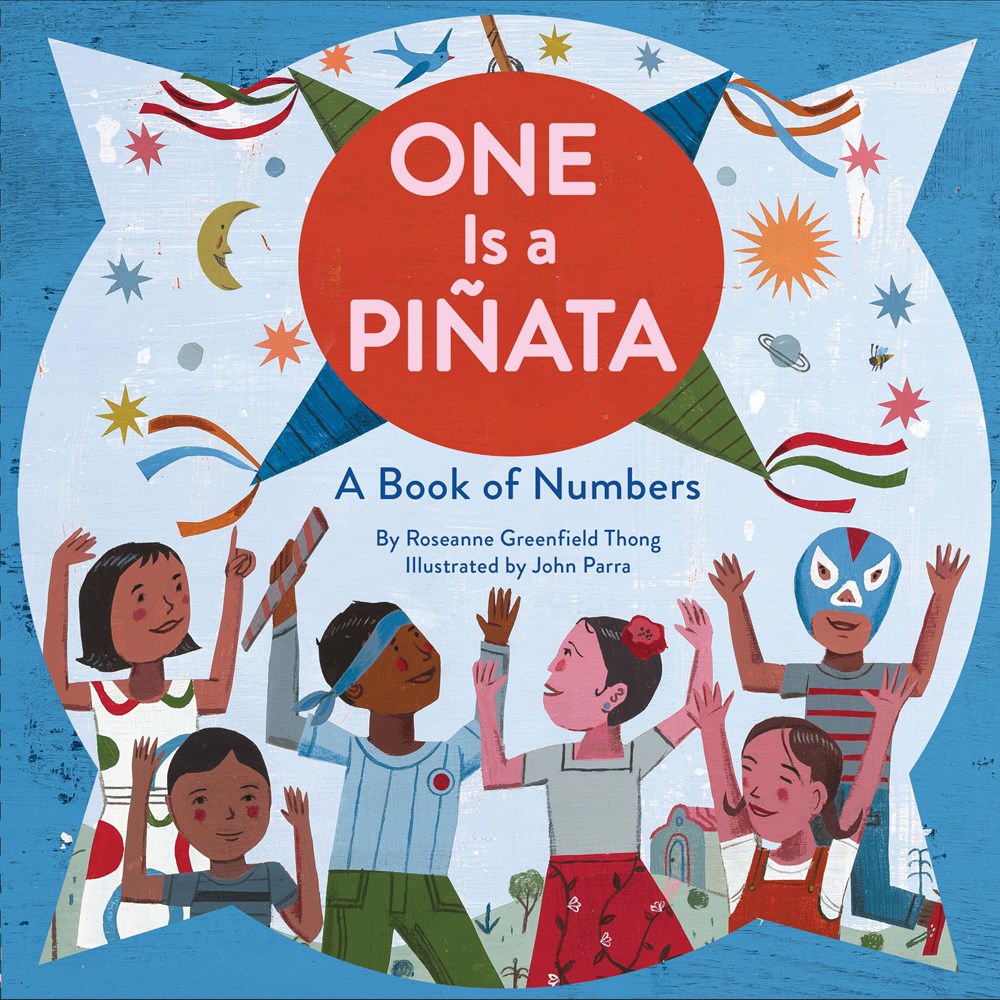
One is a Piñata, by Roseanne Greenfield Thong/Illustrated by John Para, (March 2019, Chronicle Books), $16.99, ISBN: 9781452155845

Ages 3-5

The duo behind concept books Round is a Tortilla and Green is a Chile Pepper are back with a counting book! This rhyming, bilingual English/Spanish concept book takes readers through the preparation for a fiesta, with maracas, calaveras, salsas, and plenty of sonrisas! The illustrations’ rich colors and the story’s lively, upbeat text will have readers counting down to a part of their own. There are wonderful Latinx touches to the artwork, including luchador masks and caleaveras; papel picado decorates the background, and a string of twinkling lights dangle across the endpapers. Count from 1 to 10, uno al diez, with your storytime group.

I love Roseanne Greenfield Thong’s multicultural concept series, and am so happy to see a counting book join her shapes and colors books. Invite your school-age kids to make their own papel picado to display, and let the little ones color some Sesame Street Spanish/English flash cards. Back matter includes a glossary with phonetic pronunciation of the Spanish-language words used in the book.

So… does this mean Roseanne Greenfield Thong and Grace Lin will team up on a counting book to accompany Round is a Mooncake and Red is a Dragon?

Roseanne Greenfield Thong is an award-winning author of over a dozen children’s books, including ‘Twas Nochebuena, Día de Los Muertos, and her multicultural concept books, Round is a Mooncake, Red is a Dragon, Round is a Tortilla, and Green Is a Chile Pepper.  John Parra is an award-winning illustrator who has three Pura Belpré Illustrator Honor awards, including one for Green is a Chile Pepper.

Posted in Uncategorized

Cultures collide, and blend, in When I Found Grandma

When I Found Grandma, by Saumiya Balasubramaniam/Illustrated by Qin Leng, (March 2019, Groundwood Books), $17.95, ISBN: 9781773060187

Ages 5-8

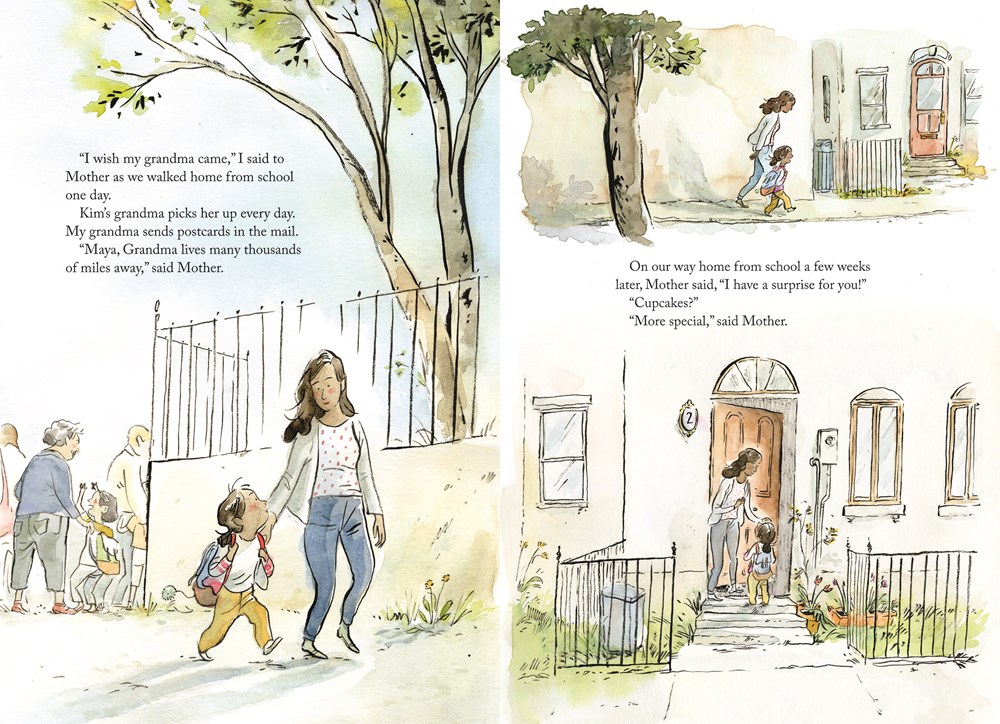
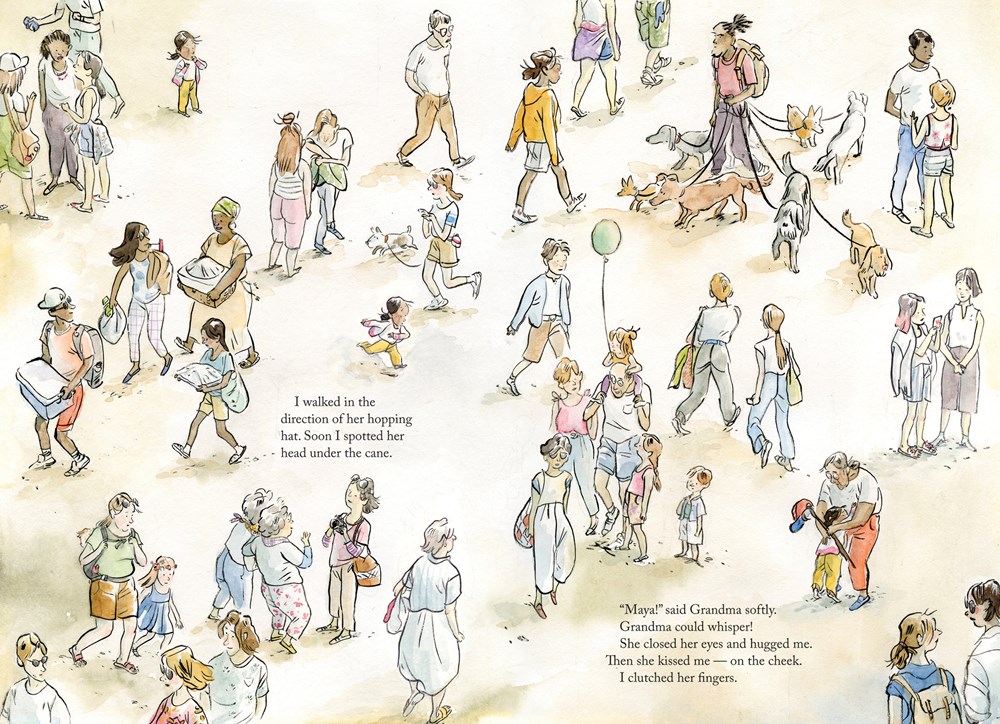
Maya is an Indian girl living in America with her family. She’s thrilled when her Grandma arrives from India for a visit, but she quickly finds things that rub her the wrong way. She doesn’t want Grandma to call her by her full name, Mayalakshmi, and she wishes Grandma didn’t wear her sari and noisy bangle bracelets when she pops in for a visit to Maya’s classroom. She isn’t crazy about the food Grandma makes, and she really, really doesn’t like her family’s decision to celebrate the Holi festival by visiting a temple so Grandma can pray, rather than go for their planned trip to a fair. But it turns out that when Maya needs help, Grandma’s the first one on the scene.

Two generations work things out together in this sweet, authentic story about a grandmother and granddaughter; it’s a cultural and inter-generational story of understanding, compromise, and, above all, love. The story text will resonate with kids and adults alike, and opens so many avenues for discussion between generations and cultures. The soft ink and watercolor artwork reflects emotions touched on the book; namely, familial love. The cover is a beautiful expression of intimacy and affection between grandmother and grandchild; something ever-present in both the text and artwork.

In a library system as diverse as mine, this is a must-add to collections. In less diverse areas, it’s an important book for generating understanding and respect for other cultures and how we look at our elders.


Posted in Early Reader, Non-Fiction, picture books, Preschool Reads

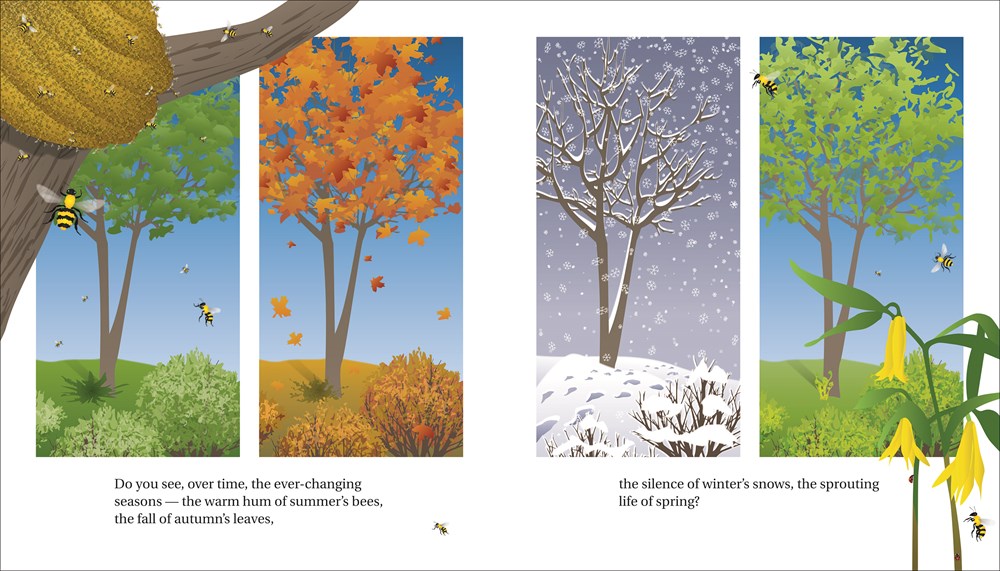
Natural world nonfiction for young learners: See to Learn: Forest

See to Learn: Forest, by Kate Moss Gamblin/Illustrated by, Karen Patkau, (March 2019, Groundwood Books), $16.95, ISBN: 9781554988792

Ages 4-7

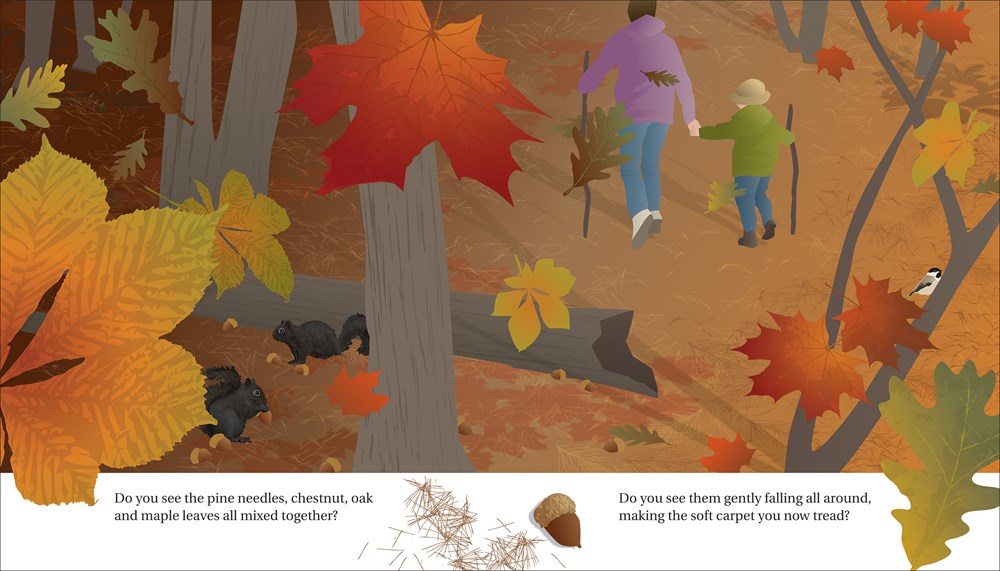
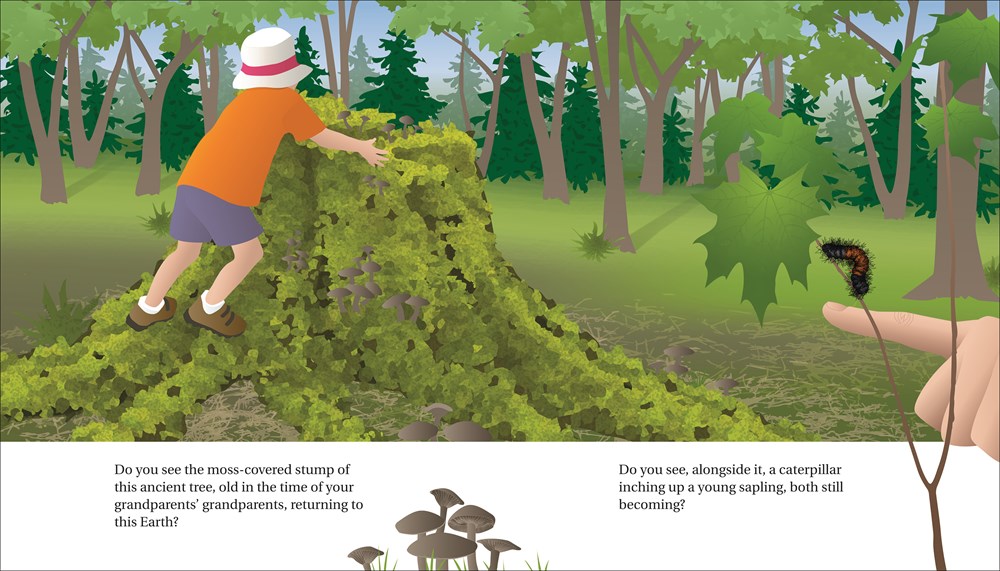
This first book in a new nonfiction picture book series encourages little learners to look at a location – in this case, a forest – and really see: see different footprints that travel the forest floor; the different leaves carpeting the ground; moss covering a stump. Forest encourages readers to think: is that moss older than your grandparents? What changes do seasons bring with them? What happens during the passage of day to night?

The quiet text promotes introspection, curiosity, and presence, and the interrelationships between nature – trees are referred to as our “cousins” – and our planet. Everything here exists for readers to observe and ponder, and Forest encourages them to think of nature, the world, and their place in it.

This is a great way to talk about the natural world and basic concepts with kids: talk about colors, talk about different functions, talk about different stages of life, whether you’re a human grandparent or a young caterpillar. We all age; we all exist; we all interact with the natural world. Let kids see themselves in nature, and they’ll respect it and care for it. Further reading provides additional resources for younger and middle grade readers. An author’s note explains the rationale and thinking points for the series.

I’m looking forward to more books in this series. See to Learn: Forest is a great addition to primary and elementary science collections and programming. This will fit nicely with Kate Messner’s nonfiction books, Over and Under the Snow, Over and Under the Pond, and Up in the Garden and Down in the Dirt, for elementary readers; for primary readers, you can’t miss with Laura Vaccaro Seeger’s books, Green and Blue; and Denise Fleming’s In the Tall, Tall Grass, and In the Small, Small Pond.

Posted in picture books, Preschool Reads

Your heart cannot handle the adorableness of Tiny T. Rex!

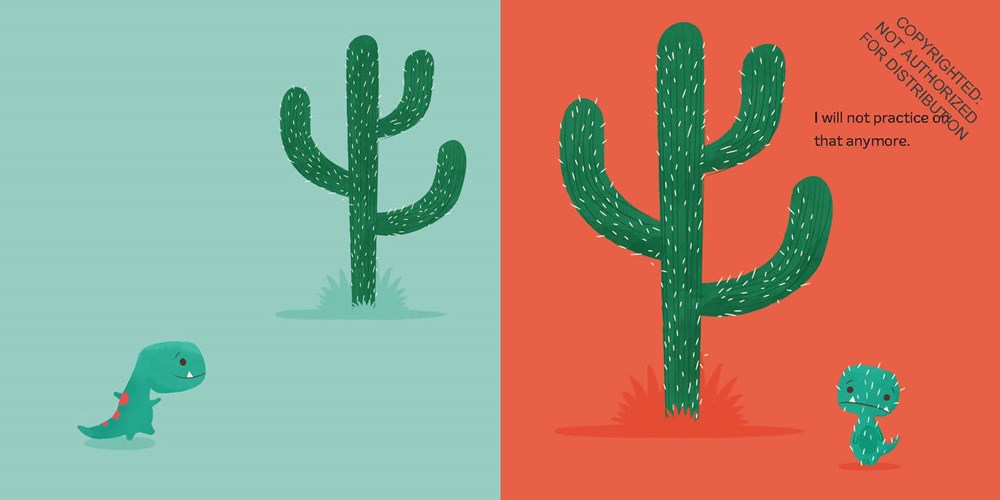
Tiny T. Rex and the Impossible Hug, by Jonathan Stutzman/Illustrated by Jay Fleck, (March 2019, Chronicle Books), $15.99, ISBN: 9781452170336

Ages 3-7

Tiny T. Rex wants to hug his sad friend, Pointy the Stegosaurus, but there’s one problem: he has very tiny arms! He seeks advice from his parents, aunt, and siblings, and ultimately decides that practice makes perfect: but it’s sometimes precarious!

I have been squealing about this book since I first saw it at a Book Buzz a couple of months ago. A combination of smart writing and adorable cartoony artwork makes Tiny T. Rex one of the cutest, funniest books I’ve ever read. Tiny T. Rex is every kid, from preschool age on up, who has to contend with weird adult responses to big childhood dilemmas. When he asks his new age-y Aunt Junip for hugging advice, she recommends “balance and freshly squeezed cucumber juice”, to which T. Rex responds, “That is disgusting. I will ask my mother for help instead”. Mom’s advice isn’t much more helpful; she falls back on the traditional mom answer (which I’ve used quite a few times, myself): “It’s okay if you can’t hug. You are good at many other things… You are tiny, but your heart is big!” You can almost see his little eyes roll when he responds, “I cannot hug with my heart, mother”. When T. Rex decides to take his siblings’ advice and practice, he creates a hug strategy blackboard that kids will love: he’s considering being shot out of a cannonball, parachuting into the hug, and several other hilariously adorable ways to accomplish the hug. As he starts putting his ides into practice, he learns that trial and error can be a little painful, but ultimately, that the best hugs are the ones given with all the love you have to give. The artwork is heart-exploding levels of adorable. T. Rex and his fellow family and friends are bright and bold, with bright, cheerful foliage all around them.

It’s impossible not to squeal when you first lay eyes on this book: I have a dining room full of librarians and educators that backed me up, when Chronicle debuted this at the book buzz. With a sweet storyline about compassion and determination, eye-catching graphics that kids and adults alike will love, and text that was made for storytime reading, Tiny T. Rex and the Impossible Hug is a home run. Now, we wait for another adventure…

Illustrator Jay Fleck has a video on drawing Tiny T. Rex – invite your storytime kiddos to give it their best!

Posted in Early Reader, Non-Fiction, picture books

A math concept book with NO WRONG ANSWERS? Sign me up!

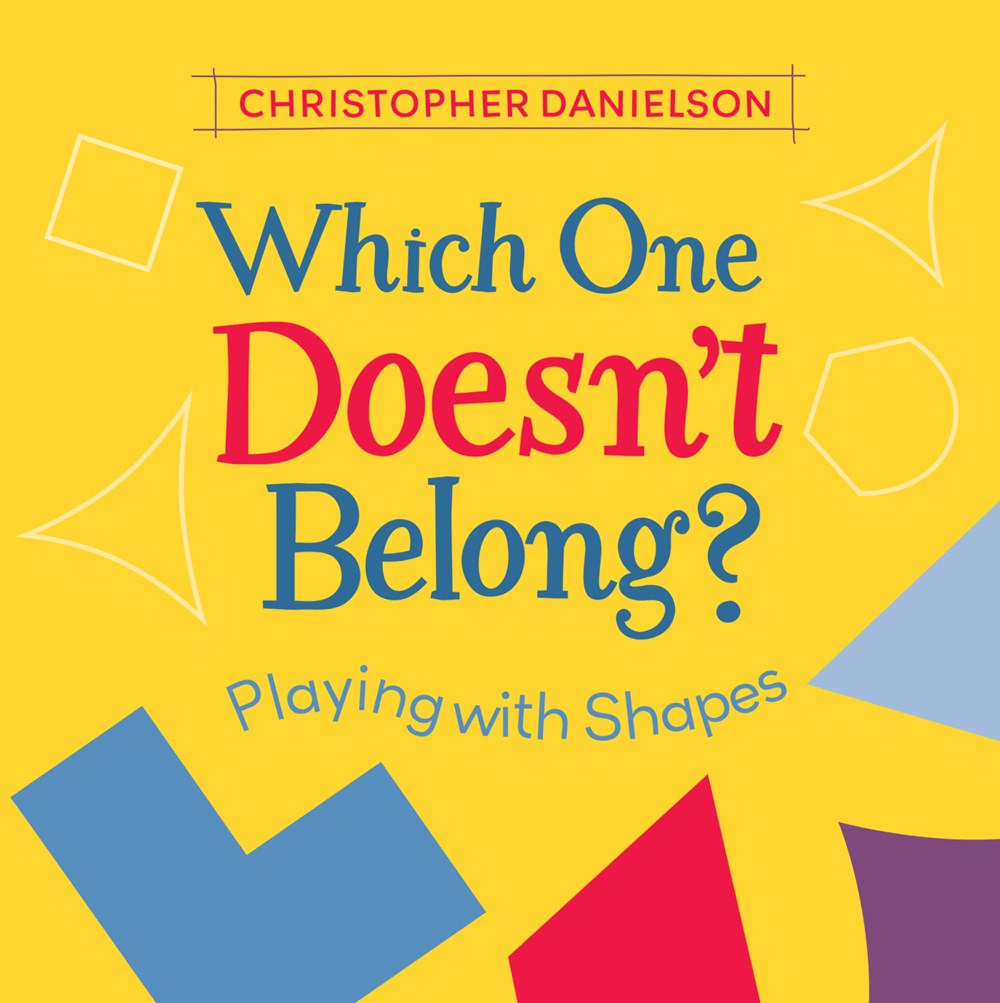
Which One Doesn’t Belong? Playing with Shapes, by Christopher Danielson, (Feb. 2019, Charlesbridge), $15.99, ISBN: 9781580899444

Ages 4-8

Math educator Christopher Danielson came up with a creative new way to get kids thinking about mathematical concepts: give them groups of shapes, and ask them, “What doesn’t belong?” The best part: NO WRONG ANSWERS. As the beginning explanation details, it’s all about the process, about critical thinking. One color could be different. A shape could be more squished, smooshed, or just look weirder than the others. It’s all in the eye, the mind, of the beholder here! Spreads alternate between layouts with shapes, and explanations on how every answer is correct, with supporting information like shapes, color, and other properties.

This is such a great way to make mathematics accessible to readers (kids and adults alike!). It doesn’t discourage anyone; it doesn’t make anyone’s answer, or rationale, wrong. Which One Doesn’t Belong shows readers how easy it is to approach things in a mathematical way: and this is coming from the lady who tells kids “the best way to do well in math is to not ask me for help with it”. Like the author himself says, “All properties count here; all ideas matter…”. Add this one to your nonfiction collections, build some programs around it for different age groups, and start making math more friendly to your readers!

Which One Doesn’t Belong? has a starred review from Kirkus and is the Winner of the Mathical Book Prize.

Posted in picture books, Preschool Reads

Josh Funk’s latest fractured fairy tale takes on Hansel and Gretel! Plus, a Giveaway!

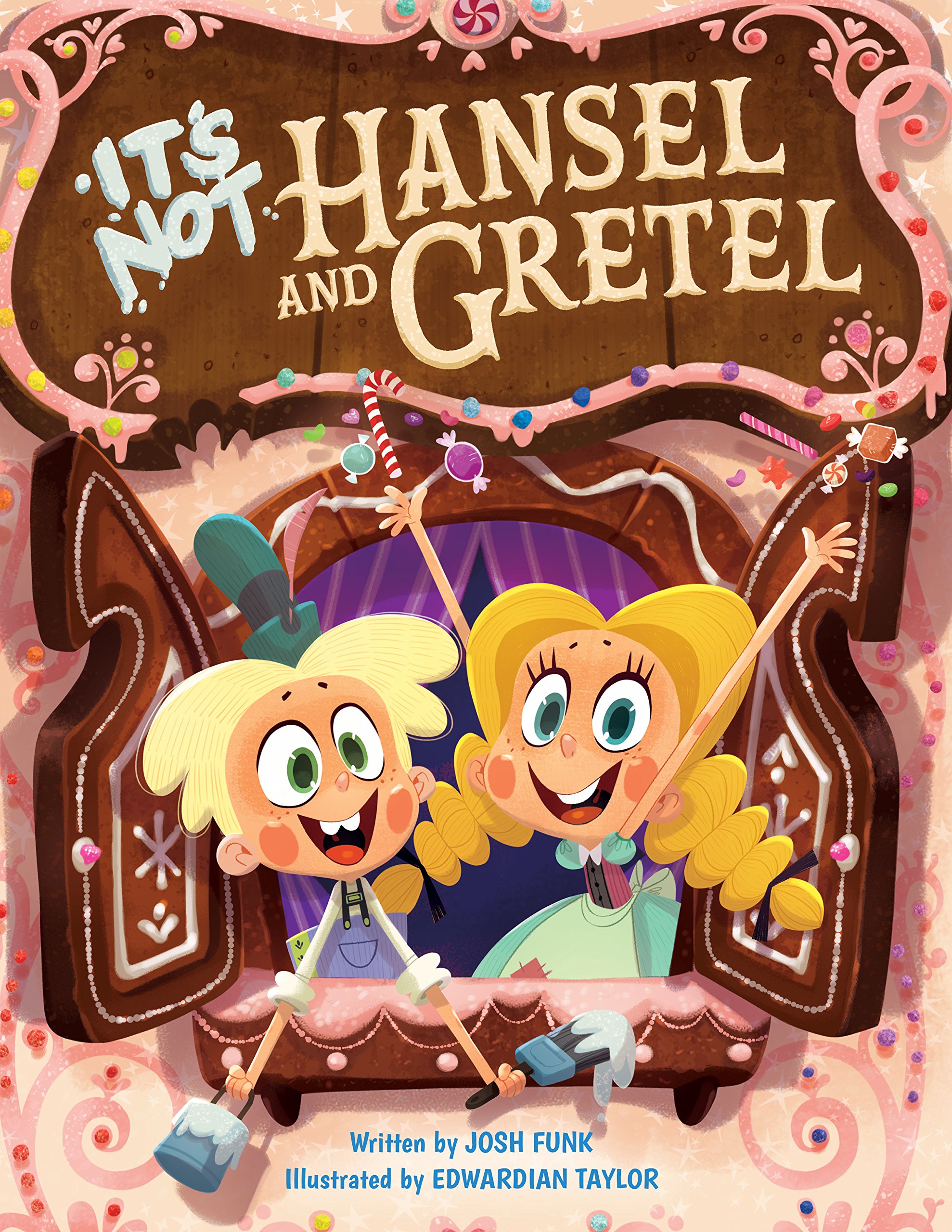
It’s Not Hansel & Gretel, by Josh Funk/Illustrated by Edwardian Taylor, (March 2019, Two Lions), $17.99, ISBN: 9781503902947

Ages 4-8

One of my favorite picture book people, Josh Funk – seriously, have you followed him on Twitter? – has another entry into his fractured fairy tales “It’s Not…” series. This time, he’s setting his sights on Hansel and Gretel, who just can’t believe their loving parents would hatch an evil plot to leave them in a dark forest all alone, or that a sweet old lady who’s doling out candy could possibly be an evil witch!

Set up as a back and forth between our omniscient narrator and the characters, the story is set in motion. The narrator has a lot more information about the story handy than do our characters, and the back and forth between them is laugh out loud funny. Gretel chastises the narrator for making Hansel cry at the very insinuation that their parents have an evil plot to get rid of them; the narrator is exasperated when the kids go to town on all the candy that the witch puts out for them. Gretel adds a smart, feminist slant to the story, asking why it’s always “Hansel and Gretel”, when Gretel clearly comes first alphabetically; she also points out that Hansel gets to sit around and gorge himself while she, the girl, has to cook and clean, exclaiming, “Get with the times-this is the fifteenth century!” There’s a wink, nudge nod to jokes about food allergies, a fabulous unicorn makes a guest appearance, and a Happily Ever After that will satisfy and amuse readers.

Sharp-eyed readers will spot some great fairy tale cameos (was that a flying monkey I saw), and the endpapers are loaded with enough candy and treats to tempt any reader into sampling what lies inside. Josh Funk’s got a gift for snappy, fun dialogue, and Edwardian Taylor’s bright, digital art is fun and explodes with the energy Josh Funk loads his story with. I read this with my 6 year old; he voiced the characters, I voiced the narrator, and we had a blast together. A perfect add to your fractured fairy tales shelves!
 

Want a shot at winning your own copy of It’s Not Hansel and Gretel? Try this Rafflecopter giveaway!


Like Hansel and Gretel, Josh Funk doesn’t like being told how stories should go—so he writes his own. He is the author of a bunch of picture books, including the popular Lady Pancake & Sir French Toast series, illustrated by Brendan Kearney, and recently, How to Code a Sandcastle, illustrated by Sara Palacios, and Lost in the Library: A Story of Patience & Fortitude, illustrated by Stevie Lewis. He lives in New England with his wife and children. Learn more about him at www.joshfunkbooks.com and follow him on Twitter @joshfunkbooks.


Edwardian Taylor has worked as a visual development artist and character designer in the game and animation industry. He illustrated the picture book Race!, written by Sue Fliess and the chapter book Toy Academy: Some Assembly Required, written by Brian Lynch. He lives in Texas with his partner and their four dogs. Learn more about him at www.edwardiantaylor.com and follow him on Tumblr, Instagram, and Twitter @edwardiantaylor.


Posted in Animal Fiction, Fiction, Fiction, Graphic Novels, Intermediate, Middle Grade, Non-Fiction, Teen, Young Adult/New Adult

Springtime reading: April Graphic Novels

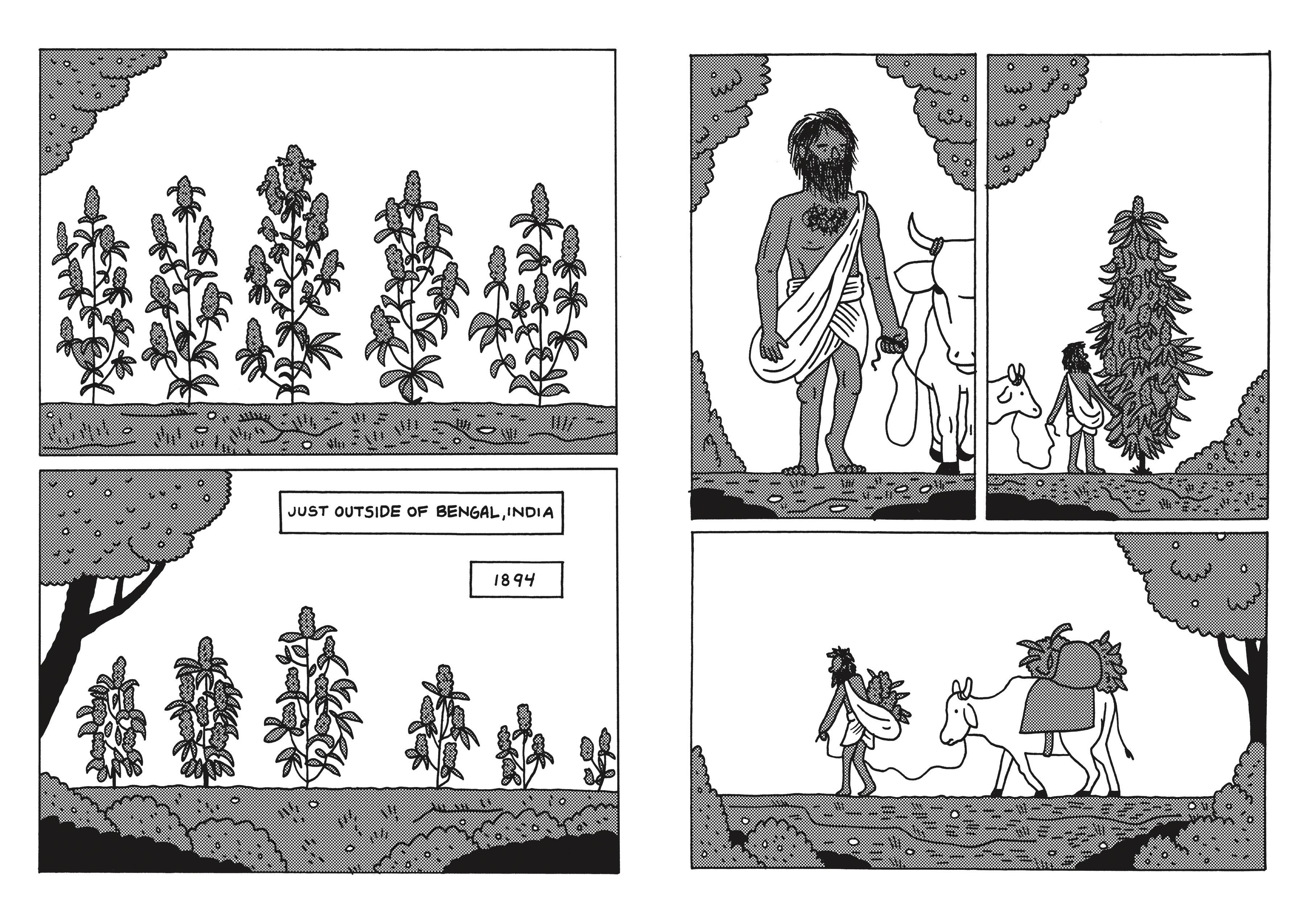
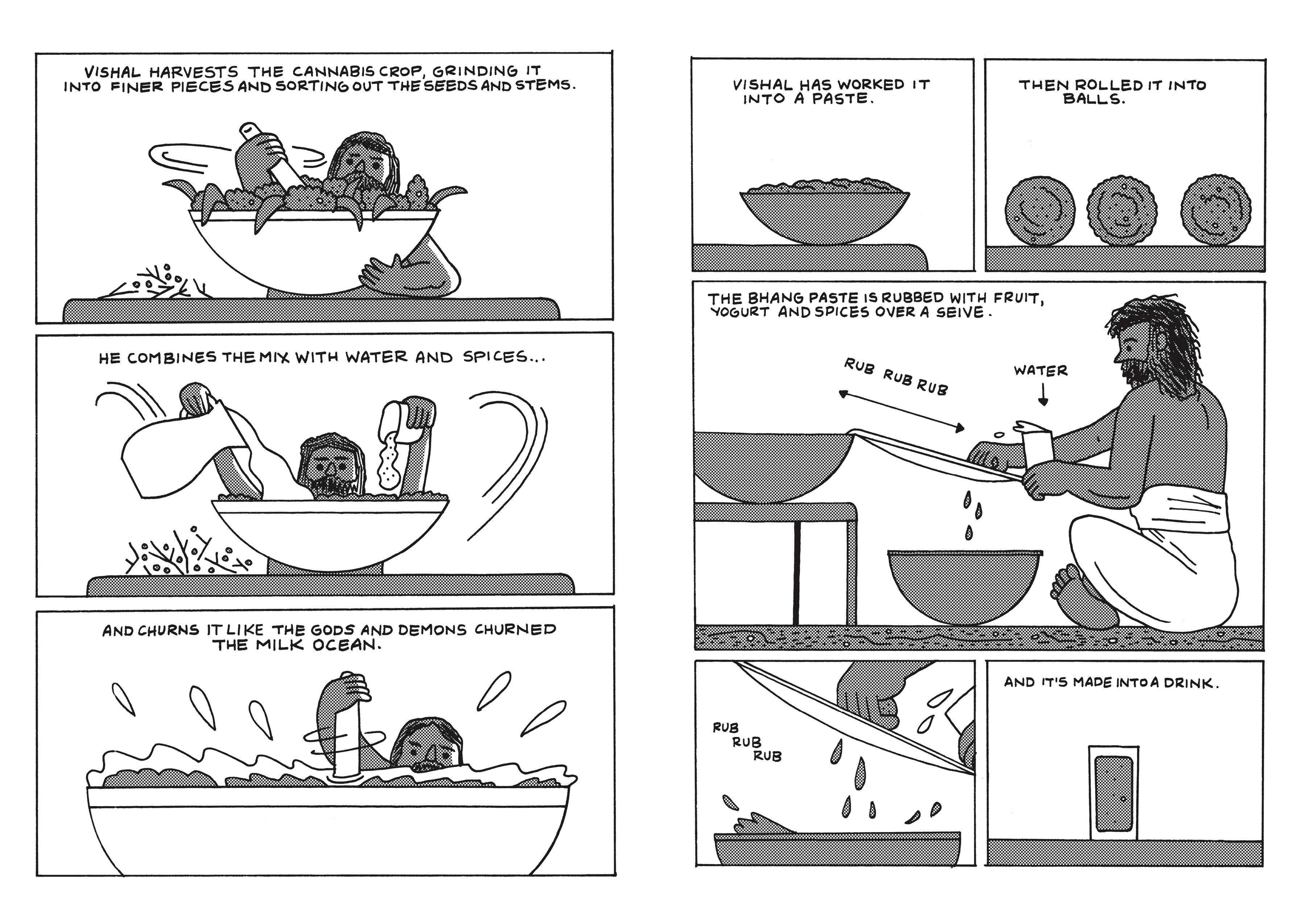
Cannabis: The Illegalization of Weed in America, by Box Brown, (Apr. 2019, First Second), $24.99, ISBN: 9781250154088

Ages 14+

Award-winning graphic novelist Box Brown is back with the real story of how cannabis – weed, marijuana, reefer – went from being a plant used for spiritual purposes to being labeled a gateway drug that caused “reefer madness”. How did it happen, you say? Racism. Politics. Propaganda.  Scare tactics. The usual song and dance. Box Brown has done his research and, combined with his minimalist artwork, presents a tale that will have you seeing the politics of marijuana (the origin of that name is in here, too, and it’s a doozy) in an entirely new light.

The War on Drugs started long before Nancy Reagan went on Diff’rent Strokes and told kids to “just say no”, and the fallout has targeted minorities – primarily young black men – and left thousands imprisoned for minor infractions. Studies have purposely included falsified data and allowed Harry J. Anslinger, the first commissioner of the Federal Bureau of Narcotics, to perpetuate his war against narcotics by weaponizing moral outrage and using propaganda to get the plant a schedule 1 classification, putting it on par with heroin.

Ignatz Award winner Box Brown has a gift for nonfiction. While he’s primarily done biographical graphic novels thus far, including Andre the Giant, Andy Kaufman, and the rise of the video game Tetris, Cannabis is a thoroughly researched, fully realized, history of marijuana, from its earliest recorded uses through the present day. It’s a good add for your young adult/new adult collections and could be a good selection for a book group, especially with its increasing legality and medicinal usage.

Peter and Ernesto: The Lost Sloths, by Graham Annable, (Apr. 2018, First Second), $17.99, ISBN: 9781626725720

Ages 6-10

It’s the return of my favorite sloth buddies! Peter and Ernesto are back, and they’ve got a new adventure when a hurricane blows their beloved tree away! Peter, Ernesto, and the rest of their sloth friends must set out to find a new tree. A great tree. A tree just like the one they had, preferably. As they journey through the jungle, there are new dangers to brave: angry ants, slithering snakes, running pigs, and a very hungry jaguar! Ernesto is up to the challenge, but poor Peter… well, Peter’s going to need his best friend next to him as they lead their friends to a new tree. And maybe, a new friend or two along the way.

I love this new series! The two friends are like the Bert and Ernie of sloth civilization, with idealistic, upbeat Ernesto and cautious, nervous Peter acting as counterbalances to each other. The new animals the group meets as they venture through the jungle are hilarious, and the twist near the end will have your readers cheering. It’s emotional to see the sloths survey the damage to their tree, and it adds a depth to Peter’s and Ernesto’s characters as they take on the responsibility of shepherding their group to a new home. It’s just as emotional to see them find a new tree and the final resolution will just make you feel good. Peter and Ernesto is feel-good reading, and who doesn’t need more of that?

I can’t wait to see where life takes them next. Add this to your graphic novels collections and talk them up! Make a Best Friends display and make sure to include Frog & Toad, Elephant and Piggie, Narwhal & Jelly, and Duck and Porcupine.

Posted in picture books, Preschool Reads

A search for the Biggest Puddle in the World and a lesson on the water cycle!

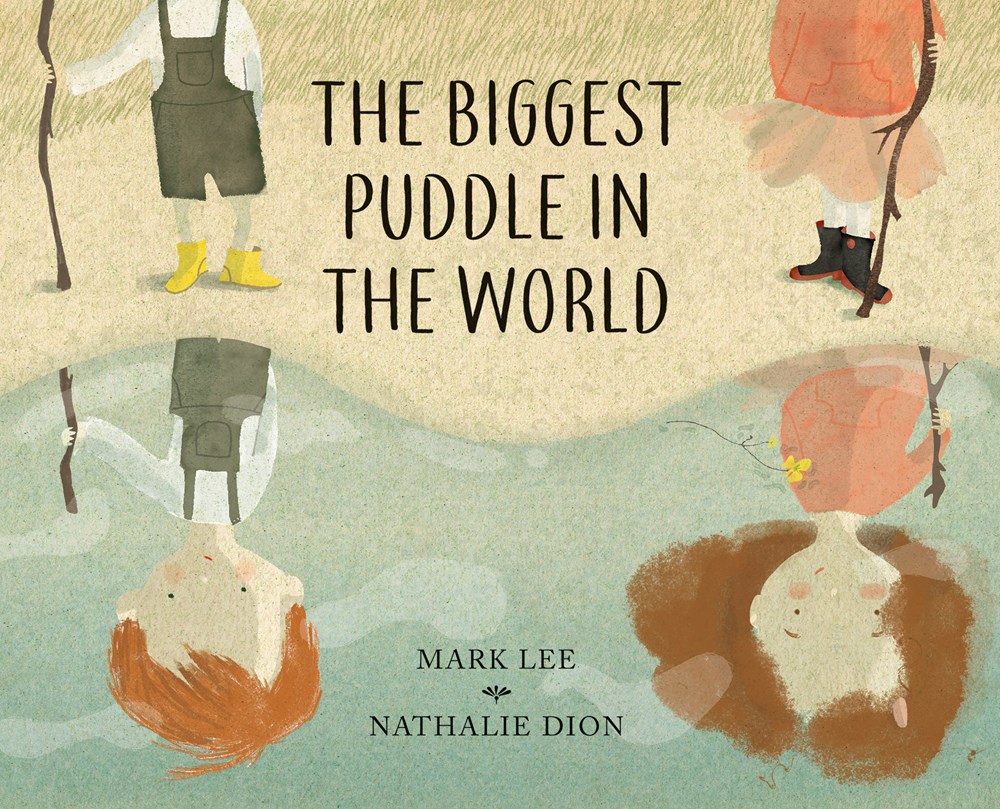
The Biggest Puddle in the World, by Mark Lee/Illustrated by Nathalie Dion, (March 2019, Groundwood Books), $18.95, ISBN: 9781554989799

Ages 4-7

Siblings Sarah and Charlie go to stay with their grandparents for six days; at first, it rains, allowing the two to explore the old house, but they’re itching to get outside and wander. Finally, the weather lets up, and they head out, with their grandfather, on a nature walk. Big T, their grandfather, promises to show them the biggest puddle in the world, and encourages Sarah to keep a puddle map; all the while, explaining the water cycle: the rain comes down and collects in the puddles; the water in the air become the clouds in the sky. The clouds are made up of water from ponds and rivers and the biggest puddle in the world, which, the kids discover, is the ocean!

This is a great way to lead in to a discussion and/or lesson about the water cycle. The story and illustrations are all about the joy of being a kid: they enjoy spending time with grandparents; jump in puddles; explore nature, and find ways to keep themselves occupied when stuck inside on rainy days. Big T gives them a simple, illustrative way to understand the water cycle and how puddles collect, form bigger puddles, and eventually, become part of the clouds, which bring the rain. He encourages learning, and invites the kids to use hands-on learning by exploring and mapping their day.

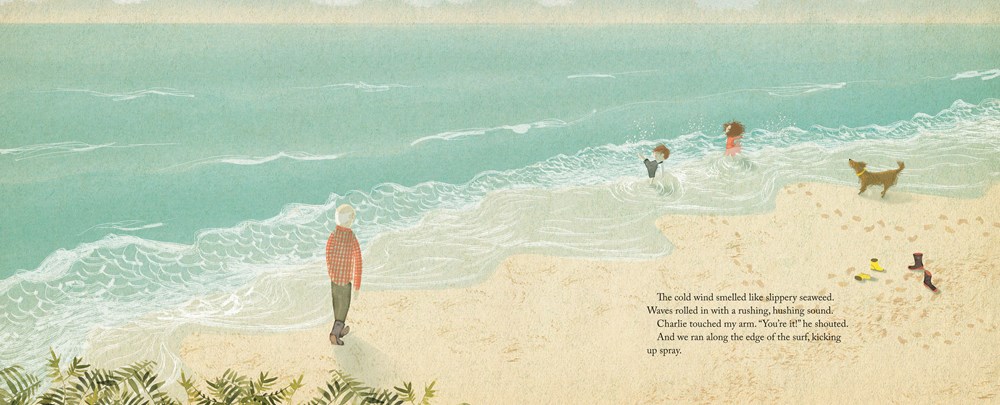
The real and digital watercolor artwork is soft, with earth tones and faded colors, allowing nature to calmly take its place as the focal point of the story. Grasses gently move in an imagined breeze; the ocean stretches across a spread as Big T watches his grandchildren and their dog play, boots left on the sand.

A nice bridge between fiction and nonfiction, and a good addition to science storytime.

Posted in picture books, Preschool Reads

A loving Moon watches and wishes…

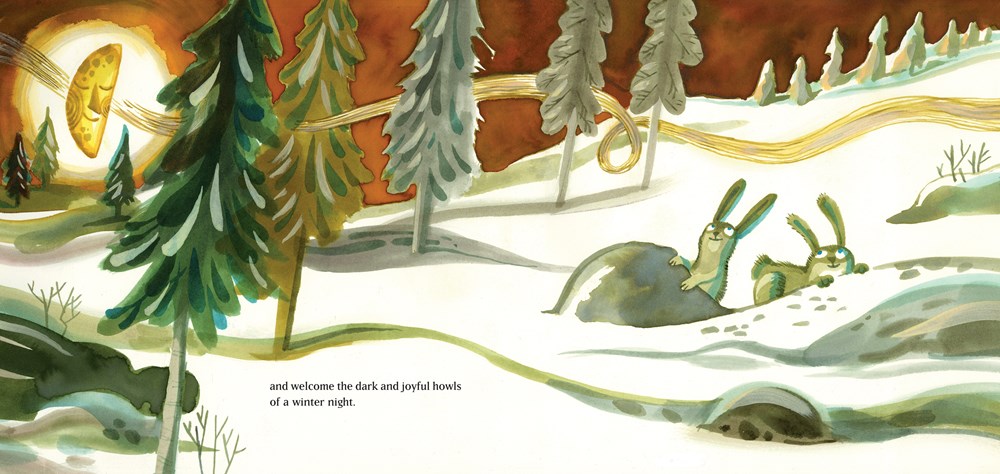
Moon Wishes, by Patricia Storms & Guy Storms/Illustrated by Milan Pavlovic, (March 2019, Groundwood Books), $17.95, ISBN: 9781773060767

Ages 4-7

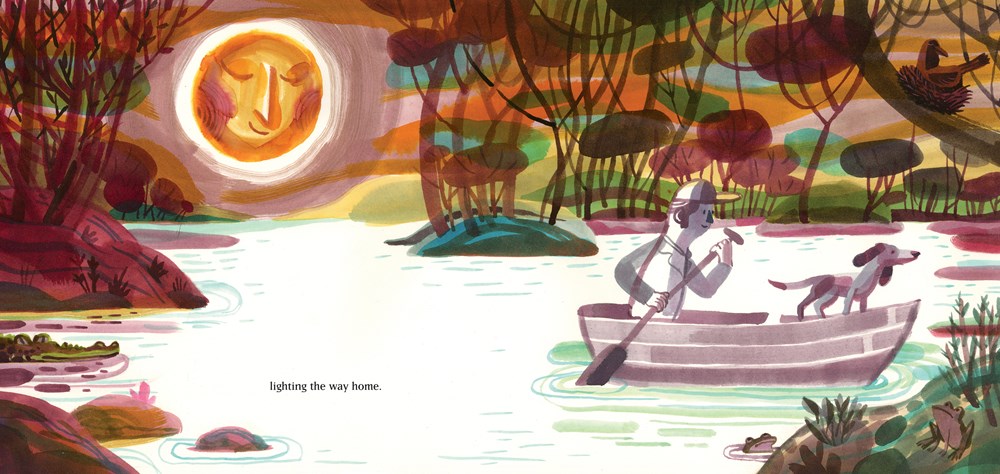
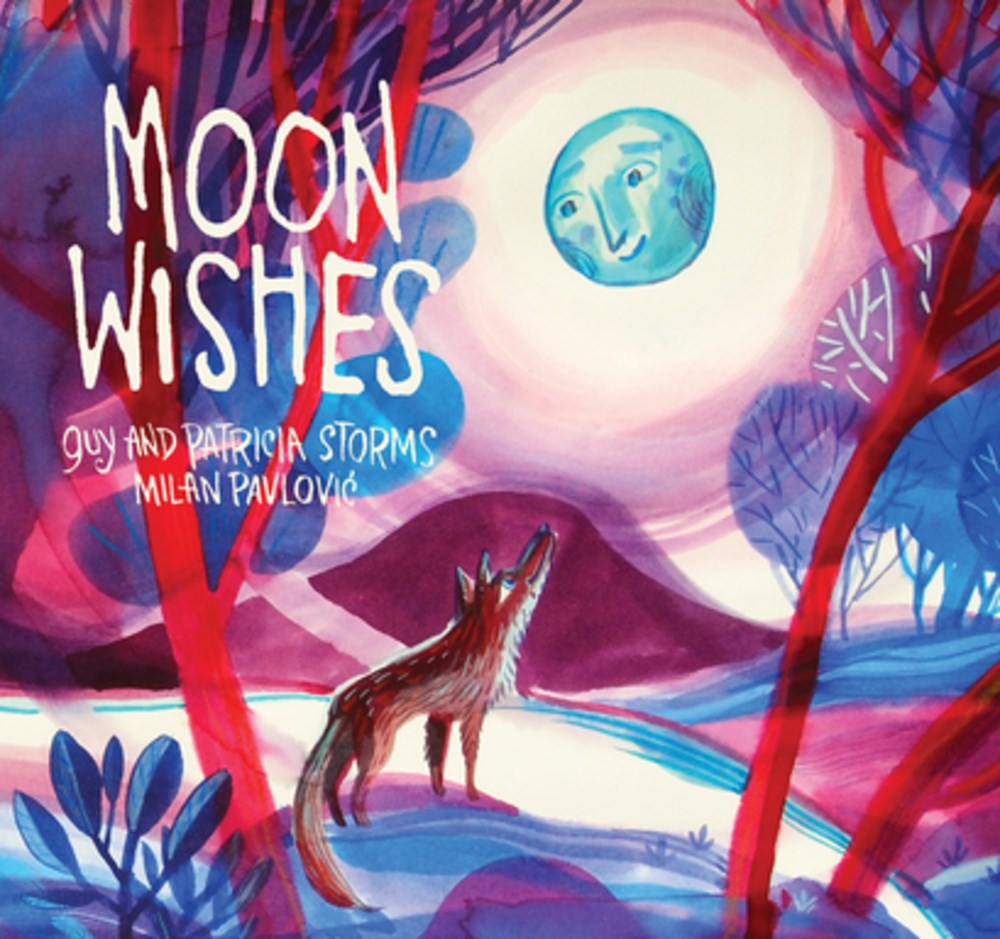
A sweet bedtime story, a loving meditation from caregiver to child, Moon Wishes sees a gently illuminated moon overseeing nature, animals, and humans alike, and wishing all that’s good upon all it touches. The poetic text reads like a parent or caregiver’s loving murmur to a sleepy child, with phrases like, “If I were the moon, I would paint ripples of light on wet canvas and shimmer over dreams of snow…”, and “…if I were the moon, I would make myself big and bright and strong with love so that I could shine on you”. It’s soothing and gentle, comforting and and perfect to read to the little ones curled up in your lap or surrounding your storytime circle.

The watercolor illustrations give a dreamlike depth to the authors’ voices, presenting gently illuminated landscapes, a kind-faced moon lighting the way for animals and humans alike. The colors are soft and bright, landscapes moving from snowy icebergs through waters, forests, and towns. A lovely addition to picture book collections and bedtime storytime.

Posted in picture books, Preschool Reads

Want to catch a unicorn? It’s not easy!

How to Catch a Unicorn, by Adam Wallace/Illustrated by Andy Elkerton, (March 2019, Sourcebooks Jabberwocky), $10.99, ISBN: 9781492669739

Ages 4-8

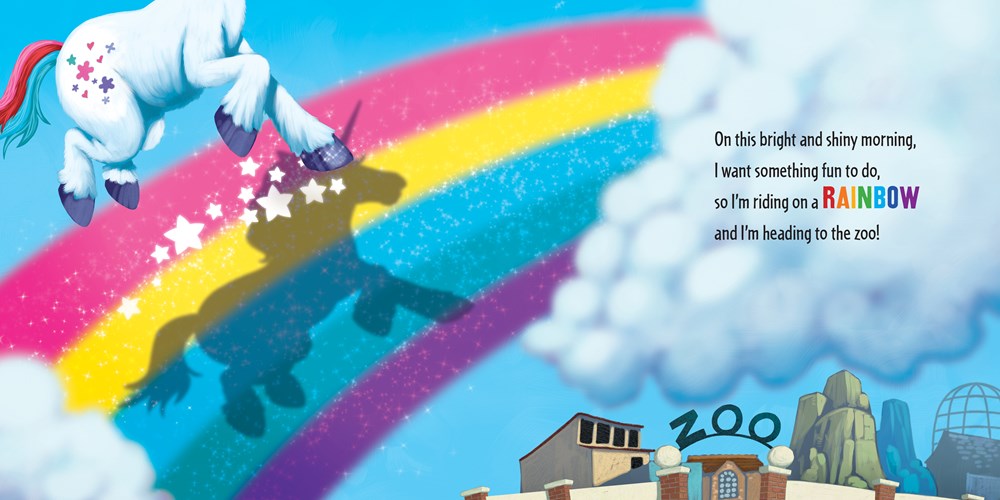
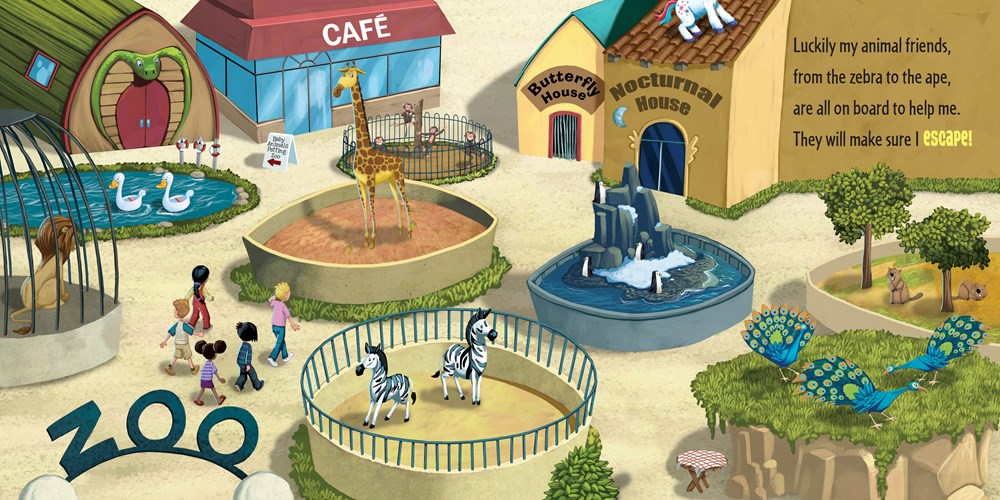
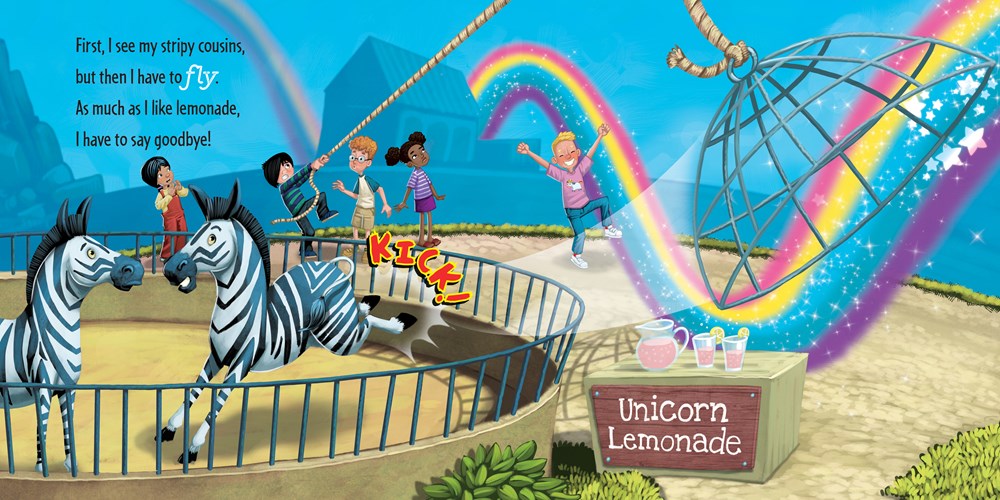
The latest How to Catch… book from Adam Wallace and Andy Elkerton is all about catching the mythical, magical unicorn. Narrated by the unicorn, this rhyming tale takes readers on a wild unicorn chase through a zoo, where a group of kids try their best to use traps, treats, and tricks to capture the unicorn. The unicorn deftly maneuvers around each attempt, keeping his magic safe and entertaining readers with fun storytelling in rhyme, bright and bold colors, and, naturally, glitter fart jokes.

This is a fun book with bright, rainbow colors and cheery artwork. The unicorn is constantly on the move throughout the book; have your kids point out where they find him as the book progresses – his hindquarters are in most spreads, giving movement to the story as he escapes yet another trap; he also shrinks down and shows up in shadow, switching things up to keep readers excited and engaged.

Read and/or display with Do You Believe in Unicorns? by Bethanie Deeney Murguia and Kenny Loggins’s picture book take on his song, Footloose. I’m going to keep adding books from this series to my collection, because they’re just fun reading.